Skip to content
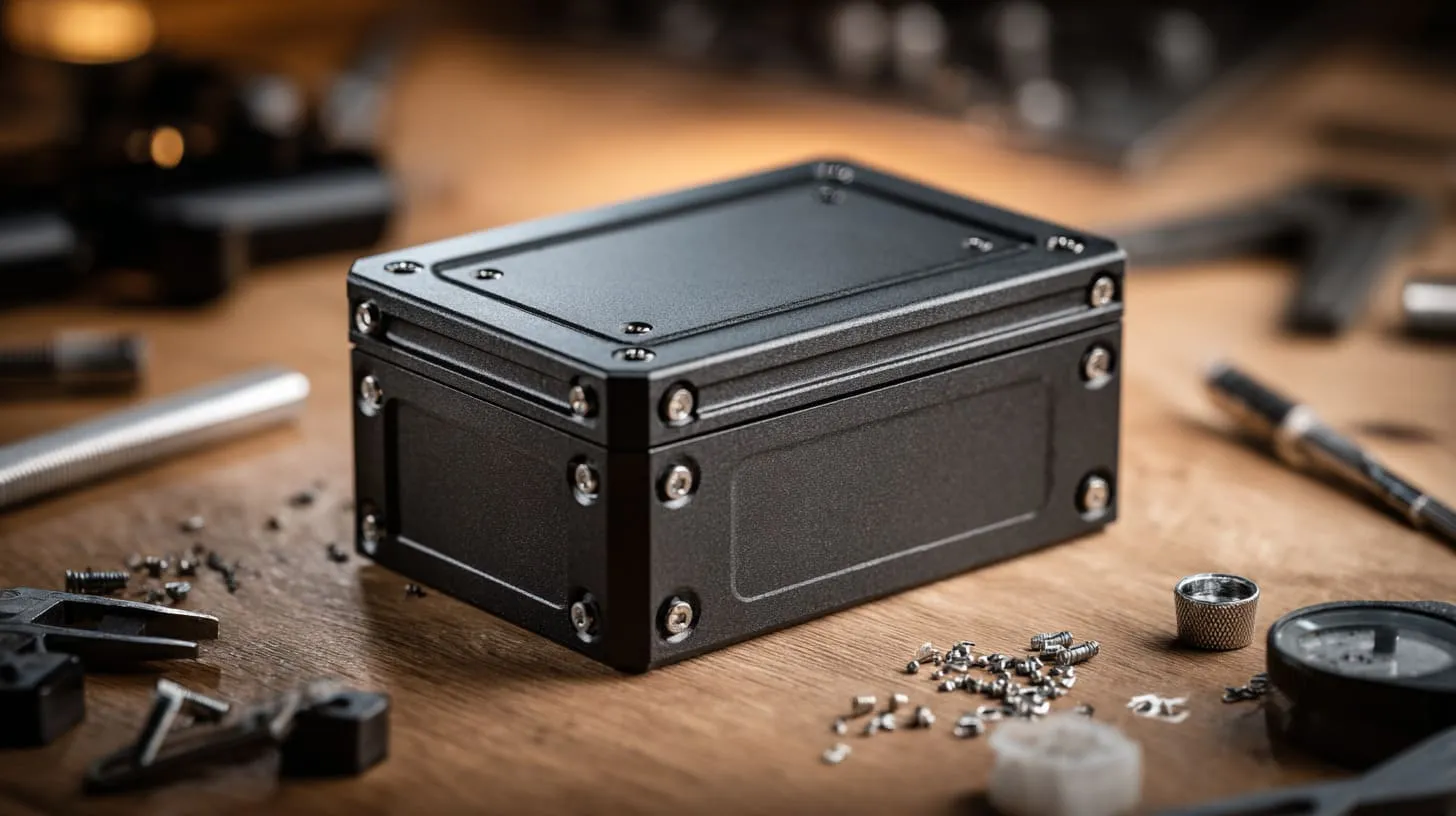
ABS is one of those materials that can make a project feel easy at the beginning.
The price looks friendly.
The molding process is mature.
The surface can look clean.
The enclosure feels light in the hand.
The customer asks, “Can we use ABS to reduce the cost?”
I understand that question very well.
In custom electronic enclosure projects, cost is never a small thing. A buyer like David may need 1,000 pieces for a new product launch. John may be building a new board and wants a custom plastic or aluminum case that does not eat too much of his budget. A re-brand customer may need logo printing, custom packaging, and stable supply. Every dollar matters.
But I have also learned something less comfortable:
ABS is useful, but ABS is not magic.
It can work very well for many indoor electronic enclosures. But it can also become the wrong choice when the product faces heat, sunlight, chemicals, heavy stress, EMI issues, fire safety rules, or premium appearance requirements.
A plastic enclosure does not fail only because the material is “bad.” More often, it fails because the material was used in the wrong place.
For me, the real question is not, “Is ABS good or bad?”
The better question is:
“What does this enclosure need to survive?”
That small question changes everything.
The way I judge ABS is simple: I do not only look at the sample on the table; I imagine the enclosure after six months of heat, dust, handling, vibration, sunlight, screws, cleaning, and customer complaints.
That is where the truth usually shows up.
In this article, I want to talk about when you should not use ABS for electronic enclosures. I will also share how I think through material choices in real projects, especially for OEM buyers, product engineers, and custom enclosure customers who need a case that works beyond the first nice-looking sample.
Let us start with the reason ABS became so popular in the first place.
What Makes ABS a Popular Choice for Enclosures?
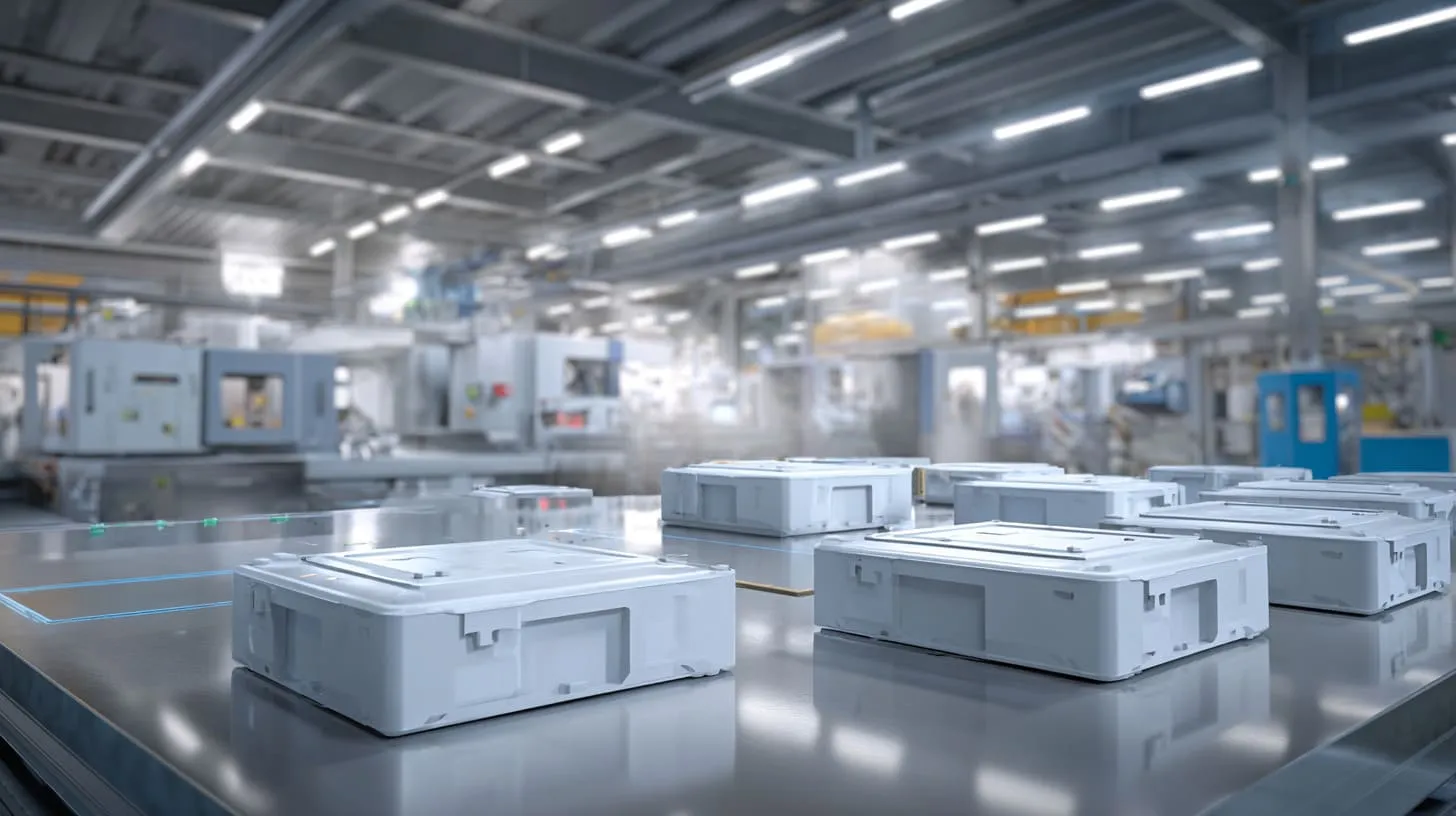
ABS is popular because it solves many basic problems at the same time.
It is not expensive.
It is easy to mold.
It has decent strength.
It looks clean.
It insulates electricity.
It can be made into many shapes.
That is why many customers first think about ABS when they need a plastic enclosure for an electronic device.
And honestly, I cannot blame them.
If the enclosure is used indoors, away from high heat, away from strong sunlight, and away from harsh chemicals, ABS can be a very practical choice.
Cost and Manufacturing Advantages
ABS is friendly to mass production.
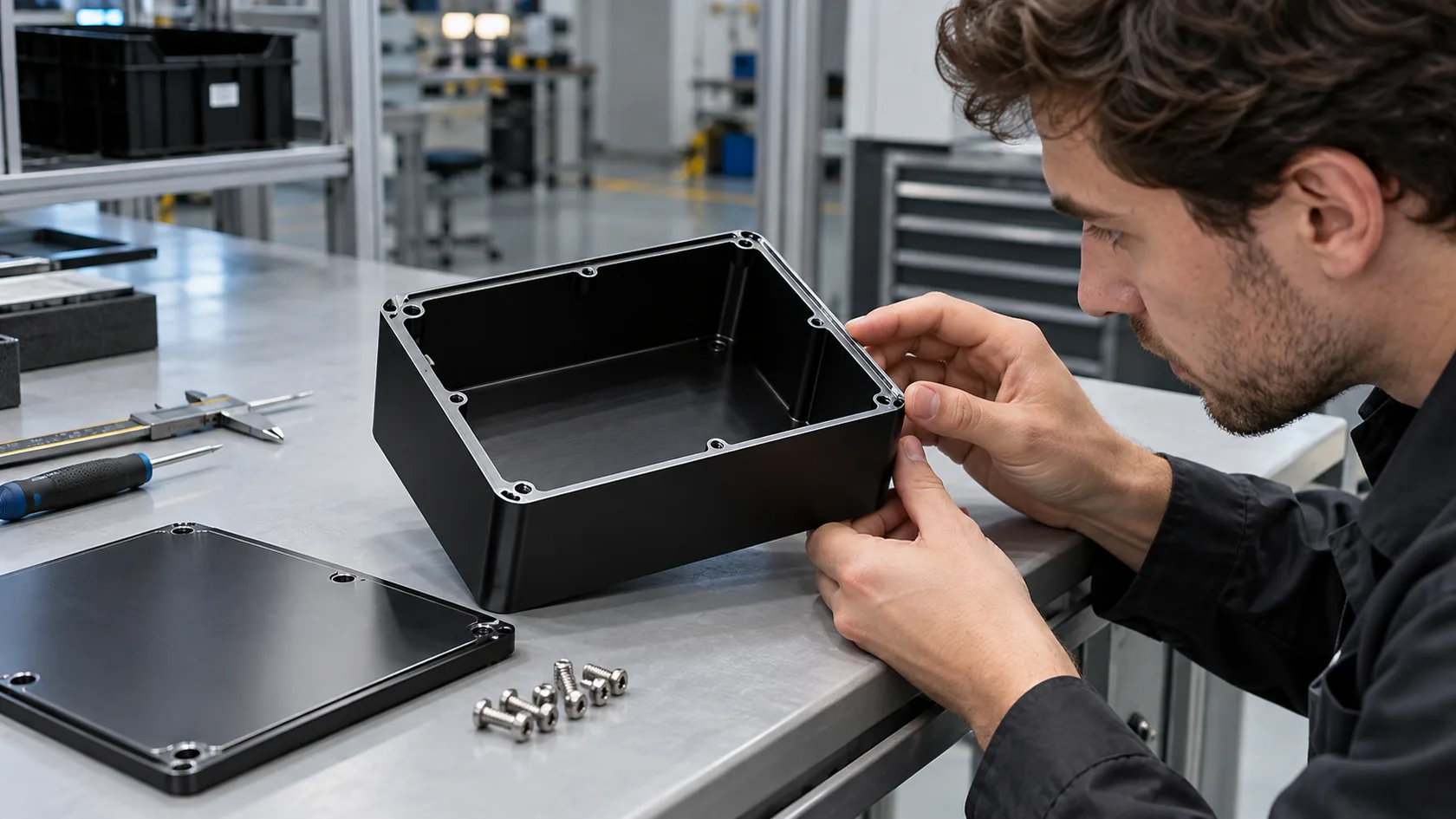
For injection molded enclosures, the material flows well in the mold. It can create stable shapes, clean edges, screw bosses, ribs, clips, and small details. This makes it useful for projects where the buyer needs many pieces and wants to control cost.
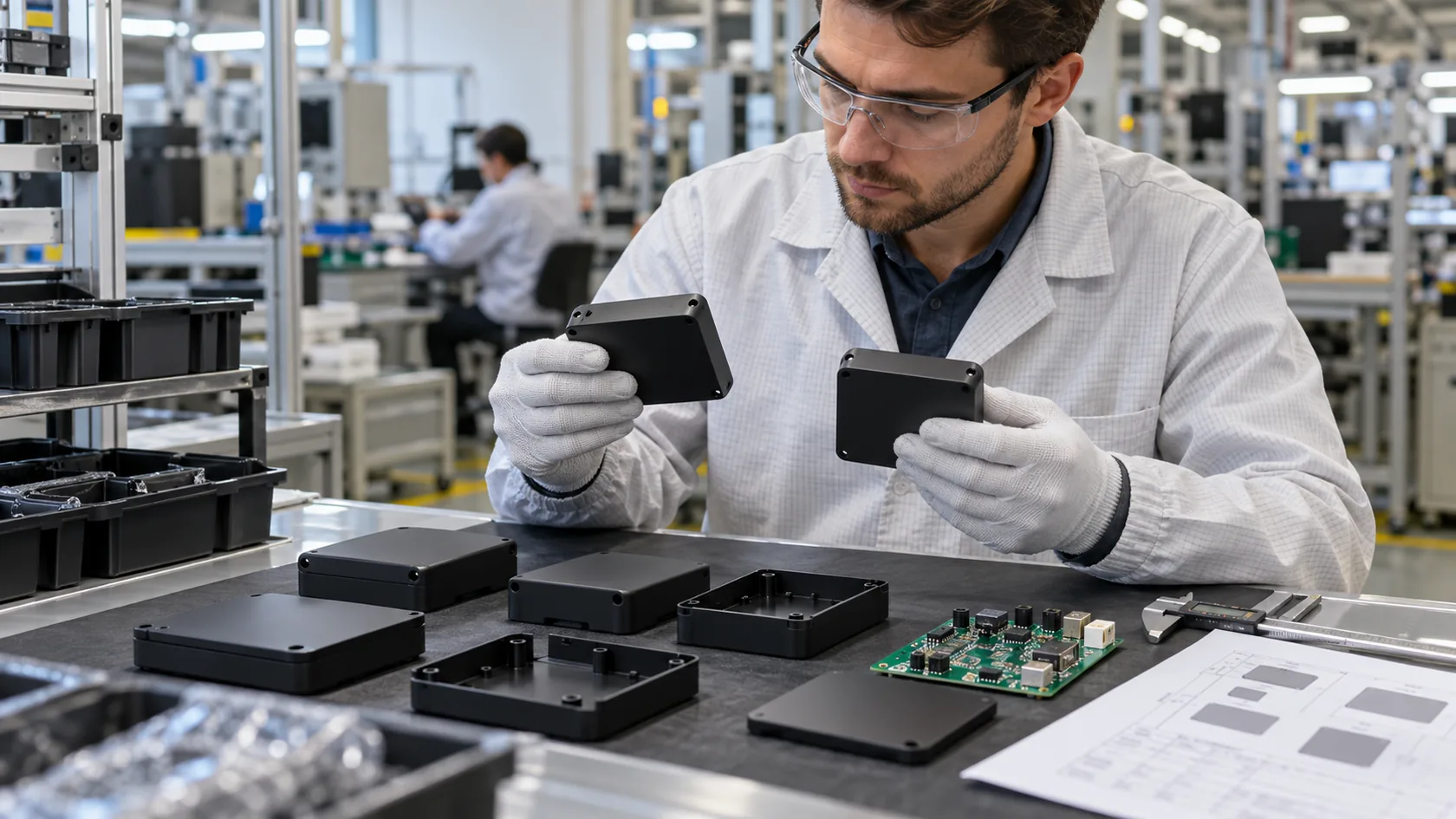
For example, if a customer asks us to make a simple indoor control box, sensor housing, or small electronic case, ABS may be one of the first materials we discuss.
| ABS Advantage | Why Buyers Like It | What I Still Need to Check |
|---|---|---|
| Lower material cost | Helps reduce unit price | Is the environment simple enough? |
| Easy molding | Good for custom shapes | Are there thin walls or weak screw posts? |
| Good surface finish | Looks clean after production | Will the surface scratch in daily use? |
| Lightweight | Easy to ship and handle | Does the product need more strength? |
| Easy color matching | Useful for branding | Will UV exposure change the color? |
A low-cost material is only a good choice when the working condition is also low-risk.
That is the part many buyers miss.
Mechanical Properties
ABS has good impact resistance for normal indoor use.
It can handle daily handling better than many brittle plastics. It does not feel too soft. It does not feel too fragile. For many small electronic products, this is enough.
But “enough” is a dangerous word in enclosure design.
Enough for what?
Enough for a desk device?
Enough for a wall-mounted industrial controller?
Enough for a power supply box near heat?
Enough for a product that workers open and close every week?
These are not the same situations.
ABS can be strong in one project and weak in another. The material does not change. The environment changes.
Electrical Insulation
ABS is naturally non-conductive.
This is one of its real strengths. For electronics, electrical insulation is often useful. It helps reduce the risk of electrical contact between the enclosure and the internal circuit.
This is why ABS is often used for:
- Small indoor electronic boxes
- Consumer device housings
- Sensor enclosures
- Control panels
- Power adapter shells
- Small project cases
- Low-voltage device housings
But there is one hidden trade-off.
Because ABS is non-conductive, it does not provide natural EMI shielding. If the product needs electromagnetic protection, ABS may not be enough by itself.
I have seen buyers choose ABS because it was cheaper than aluminum. Then later, during testing, they found signal or interference problems. At that moment, the “cheap” enclosure became expensive.
Where ABS Usually Works Well
| Use Condition | ABS Suitability | My Comment |
|---|---|---|
| Indoor use | Good | Usually safe if heat is controlled |
| Low heat device | Good | Still check PCB and power parts |
| Light handling | Good | Fine for many consumer products |
| Outdoor sunlight | Poor | UV can damage ABS over time |
| Strong chemicals | Poor | Solvents and oils can attack it |
| High EMI requirements | Poor | Needs coating or metal alternative |
| Premium heavy-duty product | Limited | May not match customer expectation |
ABS is like a good city car. It is useful, affordable, and easy to drive. But I would not take it into a rocky mountain road and blame the car later.
The same idea applies to enclosures.
And the first “mountain road” for ABS is heat.
When High Temperature Is a Concern
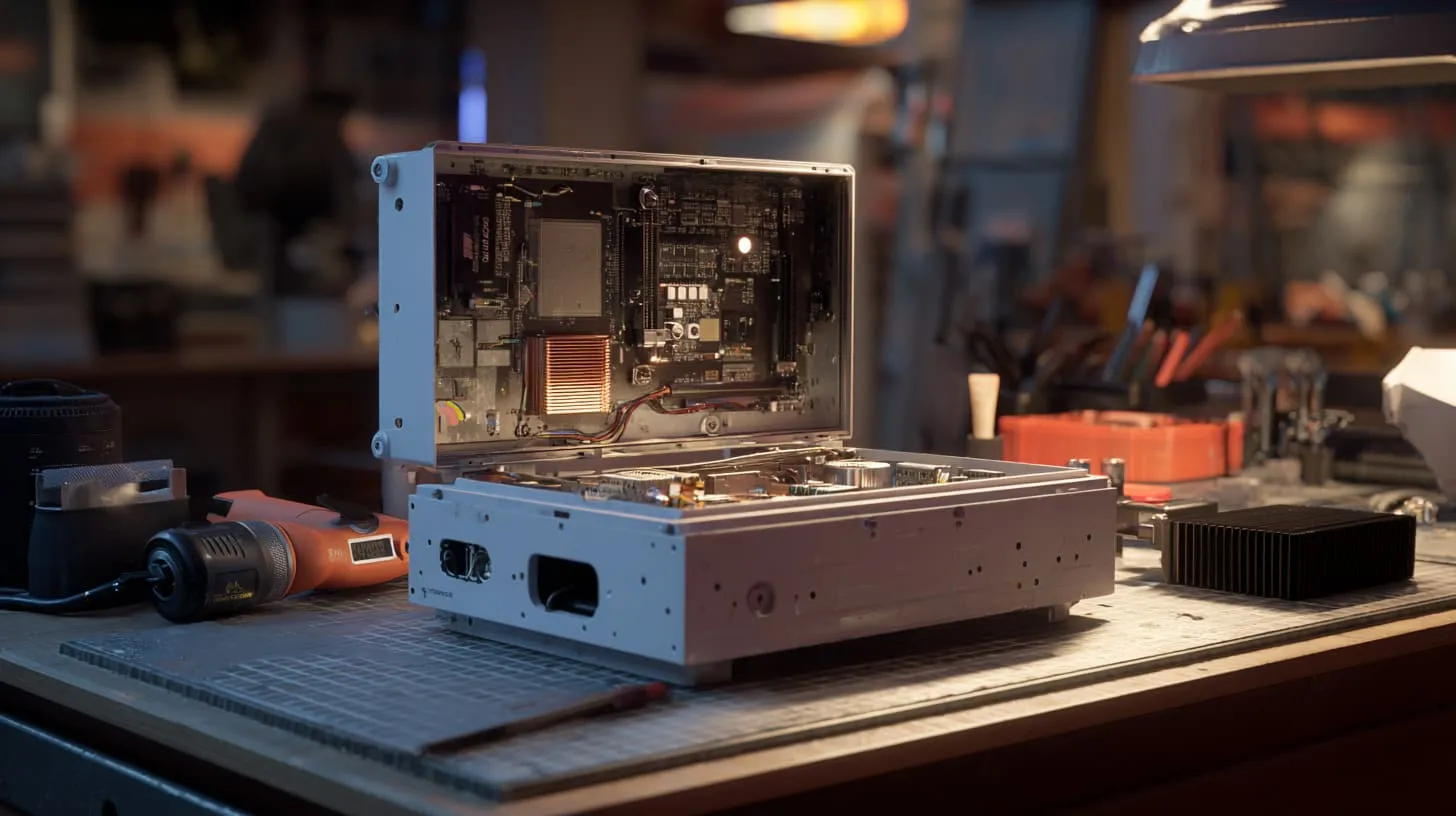
Heat is one of the first things I check before I feel comfortable with ABS.
A plastic enclosure may look fine at room temperature. The sample may fit well. The screws may close nicely. The logo may look clean.
Then the device runs for hours.
The PCB warms up.
The power module warms up.
The processor warms up.
The air inside the enclosure becomes trapped.
The plastic starts to live in a different world.
The customer does not see the problem on day one. But after time, the enclosure may warp, soften, deform, or lose its original fit.
A small heat problem can slowly turn into a big reliability problem.
Heat Resistance Limitations of ABS
ABS is not a high-temperature material.
Many ABS grades have a heat deflection temperature around 80–100°C, depending on grade, wall thickness, load, and testing condition. This does not mean every ABS enclosure will fail at 80°C. But it means we should be careful when the working temperature gets close to that range.
The dangerous part is not only peak temperature.
Long-term heat matters too.
A product may not reach a scary temperature in a short test. But if it works every day in a warm environment, the material can age faster. The enclosure may slowly change shape. Screw posts may lose strength. Snap-fit parts may become loose.
| Heat Factor | Why It Matters | ABS Risk |
|---|---|---|
| Internal heat | PCB and power parts heat the enclosure from inside | Warping or softening |
| External heat | Sunlight, machines, or nearby equipment add heat | Faster aging |
| Closed structure | Heat cannot escape easily | Higher internal temperature |
| Thin walls | Less material strength under heat | Deformation |
| Screw stress | Screws apply pressure over time | Cracking around bosses |
A sample test in an air-conditioned room does not tell the whole story.
Enclosure Heat Build-Up Risks
Electronic enclosures often trap heat.
This is especially true when the enclosure must be sealed against dust or moisture. A sealed box protects electronics, but it also blocks airflow. That is the trade-off.
I often see this in custom projects.
A customer sends a drawing. The design looks beautiful. The walls are smooth. The cover is clean. The product has no vents because the customer wants a clean appearance or better dust protection.
Then I ask about the internal components.
Is there a power supply?
Is there a processor?
Is there a battery?
Is there a motor driver?
How many hours does it run each day?
Will it sit inside another machine?
These questions are not decoration. They decide whether ABS is safe or risky.
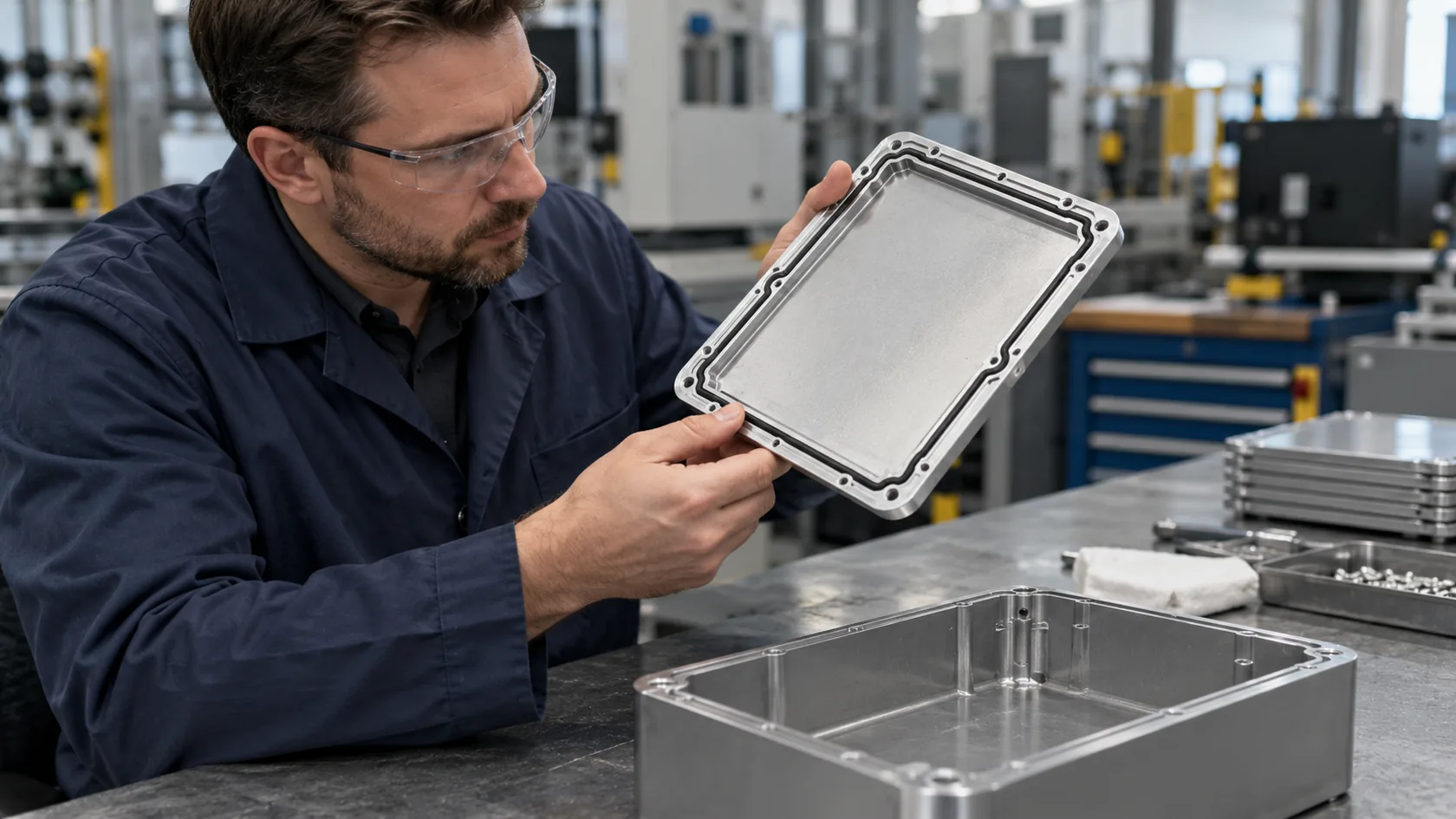
ABS vs Aluminum Under Heat
| Feature | ABS Enclosure | Aluminum Enclosure |
|---|---|---|
| Heat dissipation | Poor | Good |
| Weight | Light | Heavier than ABS |
| Cost | Lower | Higher |
| Electrical insulation | Good | Needs internal insulation planning |
| EMI shielding | Poor | Good |
| High-temperature stability | Limited | Better |
| Surface durability | Moderate | Strong with anodizing or coating |
Aluminum is not always better. It costs more. It may need more machining. It may need insulation planning to protect the PCB.
But when heat matters, aluminum often gives me more confidence.
Better Alternatives
If the project has serious heat concerns, I usually consider these options:
| Requirement | Better Material Option | Why |
|---|---|---|
| Better heat dissipation | Aluminum | It helps move heat away |
| Higher plastic heat resistance | Polycarbonate | It usually handles heat better than ABS |
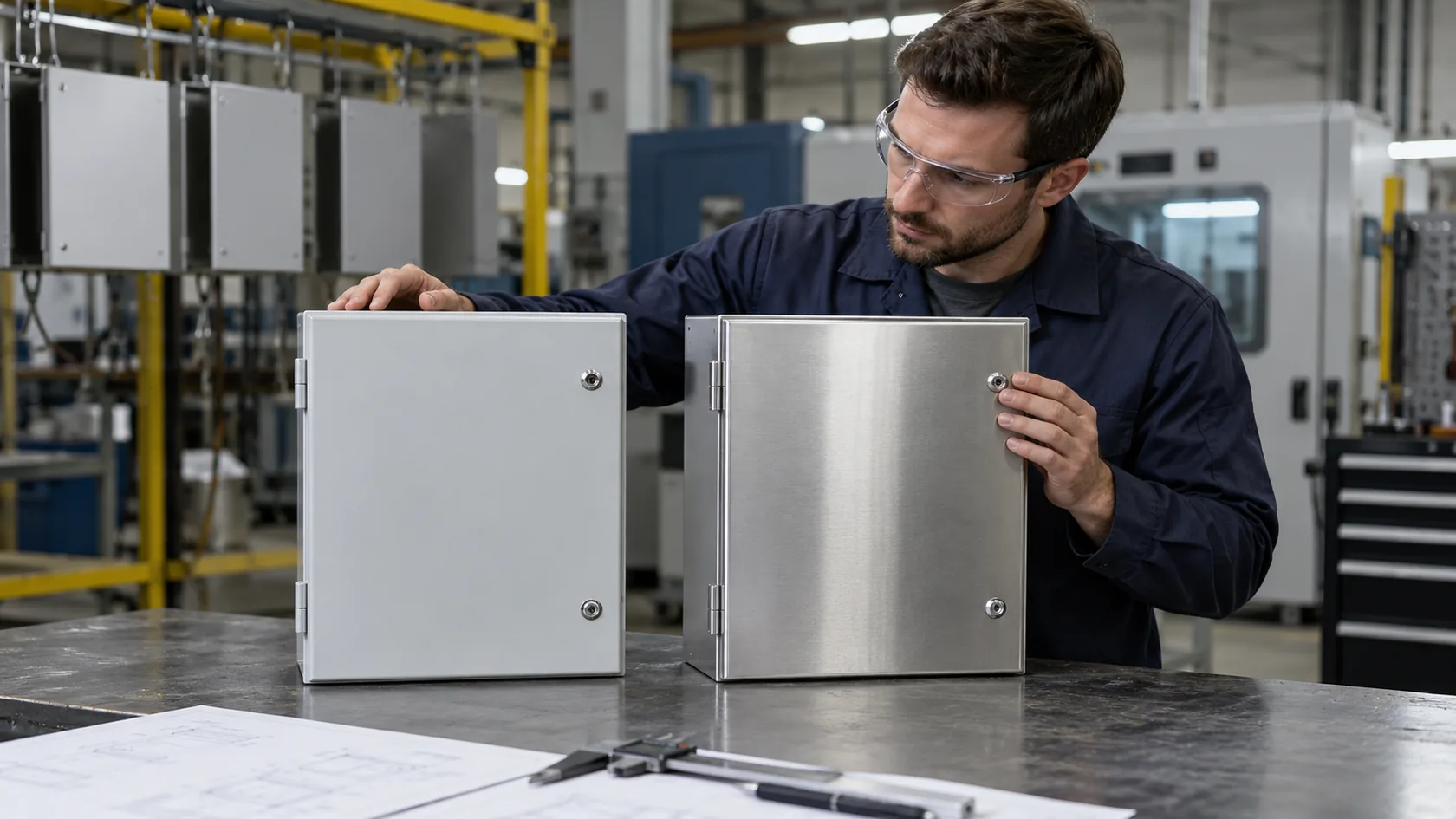
| Strong sealed industrial case | Aluminum or steel | Better long-term strength |
| Cost-sensitive but warmer device | Higher-grade plastic | Grade selection becomes important |
ABS can still work in some warm environments if the design is careful. We may add vents. We may increase wall thickness. We may move hot components away from plastic walls. We may use heat sinks. We may choose a better ABS grade.
But if the heat problem is serious, I do not like forcing ABS into the project just to save cost.
A cheaper enclosure that deforms is not cheaper anymore.
Heat is quiet. It does not argue during the design meeting. It waits inside the product. Then it shows the bill later.
Sunlight can be just as patient.
When UV Exposure or Outdoor Use Is Required
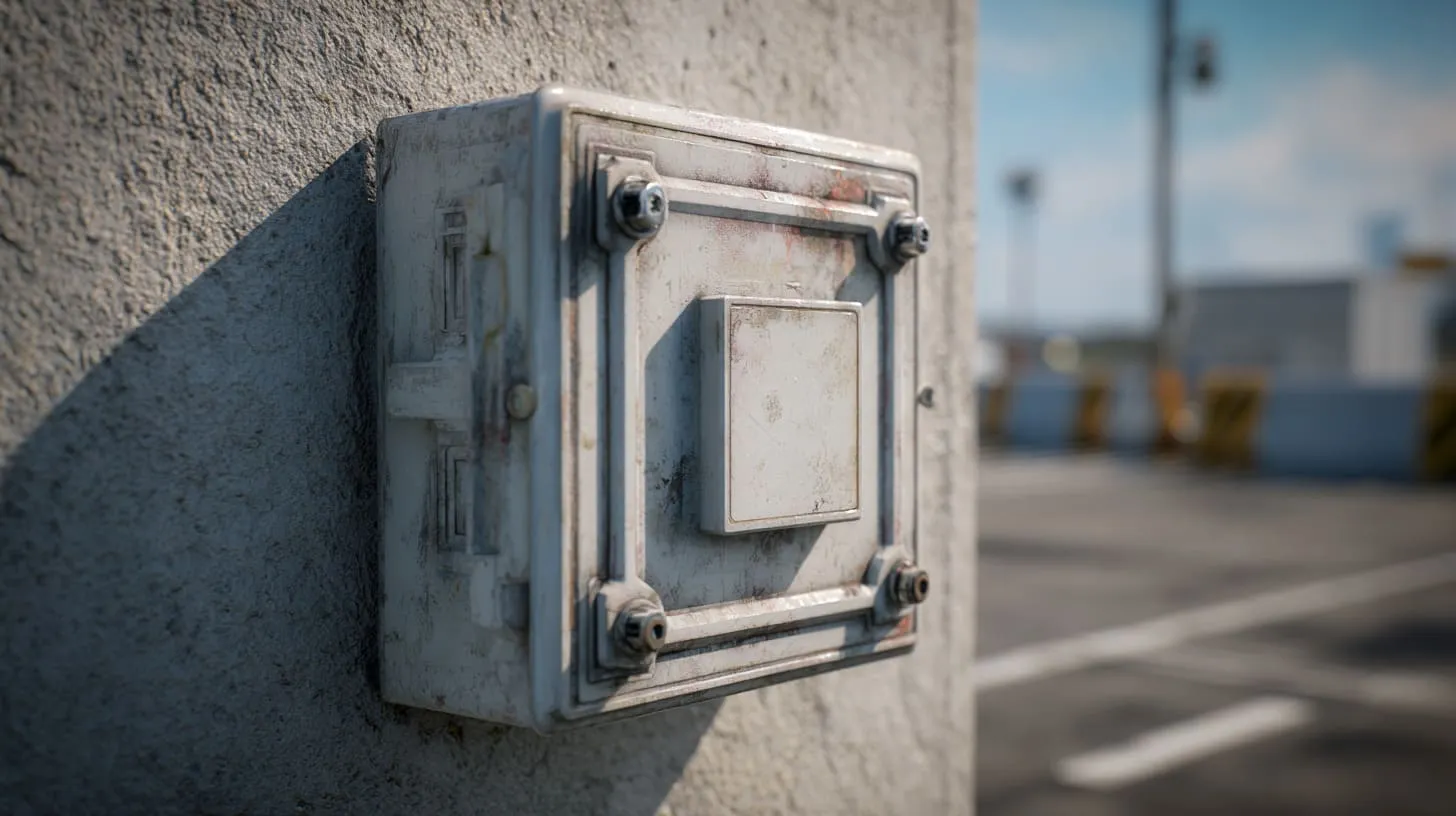
ABS does not enjoy long-term sunlight.
That sounds simple, but it is a common mistake in enclosure projects.
A buyer may say, “The enclosure is only outside under a roof.”
Then I ask more questions.
Will sunlight hit it in the afternoon?
Will it be near a window?
Will it be installed on a machine outside?
Will it be used in a parking area, garden system, solar project, or outdoor sensor?
Many outdoor failures start with the words “only a little sunlight.”
For outdoor use, I pay close attention to where the enclosure will sit during the hottest and brightest part of the day, not only where it looks safe on the installation drawing.
UV Degradation Issues
Standard ABS can degrade under UV exposure.
The surface may discolor. White may turn yellowish. Dark colors may fade. The plastic may become brittle. Small cracks may appear. Corners and screw areas may lose strength.
This does not always happen quickly. That is why it is easy to ignore.
A sample may look perfect after one week. It may still look fine after one month. But long-term outdoor use is not a showroom test.
It is a slow fight with sunlight, temperature change, rain, dust, and time.
| UV Problem | What the Customer Sees | What It Means |
|---|---|---|
| Color fading | Product looks old | Brand image becomes weaker |
| Yellowing | Light-colored case looks dirty | Material is aging |
| Brittleness | Corners crack more easily | Strength is reduced |
| Surface cracks | Fine lines appear | Long-term durability is poor |
| Logo damage | Branding looks cheap | Re-brand value drops |
For re-brand customers, this matters a lot.
A cracked or yellowed enclosure does not only hurt the device. It also hurts the brand printed on the surface.
Weather Resistance Limitations
Outdoor use is not only sunlight.
Outdoor products may face:
- Rain
- Humidity
- Heat
- Cold
- Dust
- Temperature change
- Wind
- Cleaning
- Human handling
- Installation stress
ABS may not be the best material for this kind of life unless it is specially modified or protected.
Sometimes a buyer only asks, “Can ABS be waterproof?”
But waterproof is only one part of outdoor performance.
A box can block water and still fail because the material becomes brittle under UV. That is why I do not judge outdoor enclosures only by gasket design or IP rating. I also judge the base material.
Better Alternatives
For outdoor enclosure projects, I usually consider ASA, UV-stabilized polycarbonate, aluminum, or stainless steel depending on the application.
| Outdoor Need | Material I Prefer | Reason |
|---|---|---|
| Good UV resistance | ASA | Better outdoor aging than standard ABS |
| Transparent cover | UV-stabilized PC | Strong and clear option |
| Heat plus sunlight | Aluminum | Better heat and weather performance |
| Harsh outdoor industrial use | Stainless steel or aluminum | Stronger and more reliable |
| Cost-sensitive light outdoor use | UV-stabilized plastic | Better than standard ABS |
ASA is often discussed as a better outdoor plastic because it is more weather-resistant than standard ABS. Polycarbonate can also work well when the correct UV-stabilized grade is used.
Aluminum is stronger and more durable, but it costs more and has different design needs.
So the right answer depends on the full project.
But if a customer says the product will stay outside for years, standard ABS usually makes me uncomfortable.
Outdoor damage is like a slow leak in a boat. At first, nothing looks serious. Later, everyone asks why nobody checked it earlier.
Chemicals can create the same kind of surprise, but faster.
When Strong Chemical Resistance Is Needed
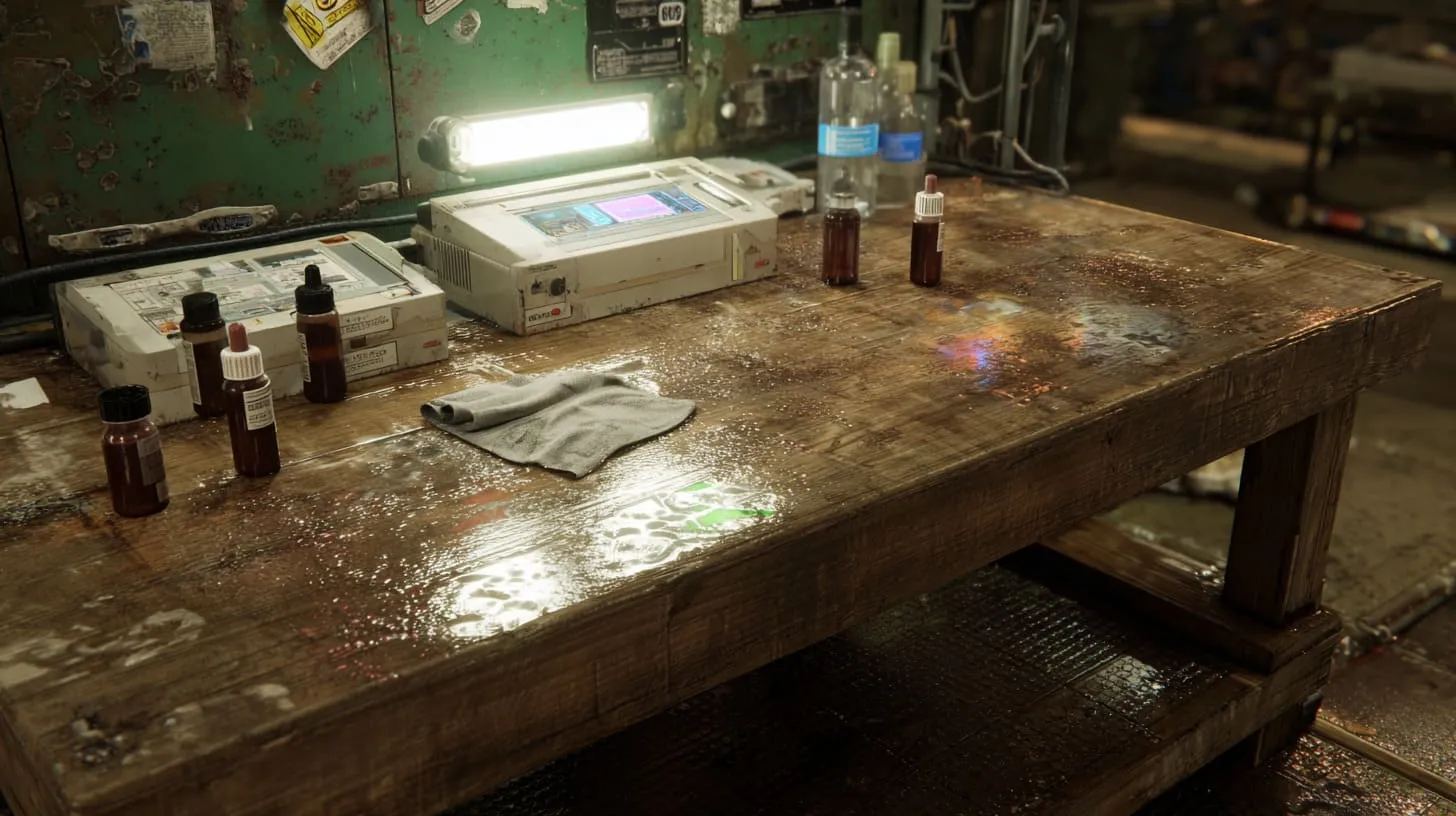
ABS can be sensitive to chemicals.
This matters more than many people think.
A lot of electronic enclosures are not used in clean offices. They are used in workshops, factories, warehouses, repair rooms, machines, kitchens, vehicles, farms, and industrial control areas.
In those places, the enclosure may touch oil, grease, coolant, cleaning liquid, alcohol, solvents, or other chemicals.
The scary part is that chemical damage does not always look dramatic at first.
The surface may become dull.
A small crack may appear near a screw.
A corner may become weak.
The plastic may feel different.
The customer may blame the molding quality.
But the real reason may be chemical exposure.
One thing I ask early is simple: who will clean this enclosure, and with what liquid?
ABS Sensitivity to Chemicals
ABS has decent resistance to some common substances, but it is not a strong chemical-resistant material for every environment.
Some solvents can attack it. Some oils and cleaners can cause stress cracking. Some chemicals can make the surface weak or ugly.
This is especially risky around stressed areas.
For example:
- Screw bosses
- Snap-fit clips
- Sharp corners
- Thin walls
- Mounting holes
- Hinges
- Areas under constant pressure
When chemical exposure meets mechanical stress, the failure risk becomes much higher.
| Area of Enclosure | Why It Is Sensitive | Possible Failure |
|---|---|---|
| Screw boss | Stress from screw tightening | Cracking |
| Clip area | Repeated bending | Breakage |
| Mounting hole | Load from installation | Crack growth |
| Corner | Stress concentration | Surface cracking |
| Thin wall | Less strength | Warping or damage |
A material can look strong in a normal impact test and still fail in a chemical environment.
That is why I never treat material strength as one single number.
Industrial Environment Risks
Factories are not gentle places.
Coolant mist can float in the air. Oil can land on surfaces. Workers may wipe machines with strong cleaners. Dust may mix with grease. A maintenance team may use whatever cleaning liquid is nearby.
This is real life.
A buyer may design the enclosure for “indoor use,” but indoor does not always mean safe. A clean office and a CNC workshop are both indoor environments. But they are not the same world.
| Indoor Environment | ABS Risk Level | My Thinking |
|---|---|---|
| Office desk device | Low | Usually fine |
| Home electronics | Low to medium | Depends on heat and handling |
| Warehouse scanner housing | Medium | Drops and cleaning matter |
| Machine-side control box | Medium to high | Oil and vibration matter |
| CNC workshop device | High | Coolant and chemicals matter |
| Food processing area | High | Cleaning chemicals matter |
This is where buyers sometimes make a costly mistake.
They choose ABS because the product is “indoor.” But they forget to define the real indoor environment.
Better Alternatives
If chemical resistance matters, I usually consider other materials.
| Requirement | Better Option | Why |
|---|---|---|
| Better chemical resistance | Polycarbonate or Nylon | More suitable for some industrial uses |
| Very harsh environment | Aluminum or stainless steel | Strong surface and structure |
| Oil and coolant exposure | Metal enclosure | Better long-term confidence |
| Repeated cleaning | PC, metal, or special plastic | Depends on cleaning liquid |
| Low-cost indoor use | ABS may still work | Only if chemical exposure is low |
No material is perfect. Even polycarbonate has chemicals it does not like. Metal can corrode if the finish is wrong. Nylon can absorb moisture.
So the best choice always depends on the chemical list, the temperature, and the mechanical design.
But if the customer cannot clearly control what chemicals will touch the enclosure, I become careful with ABS.
A plastic case in a clean room and a plastic case beside a machine may look the same in a photo. In real use, they age like two different products.
After chemicals, the next hidden risk is physical stress.
When High Mechanical Strength or Load-Bearing Is Required
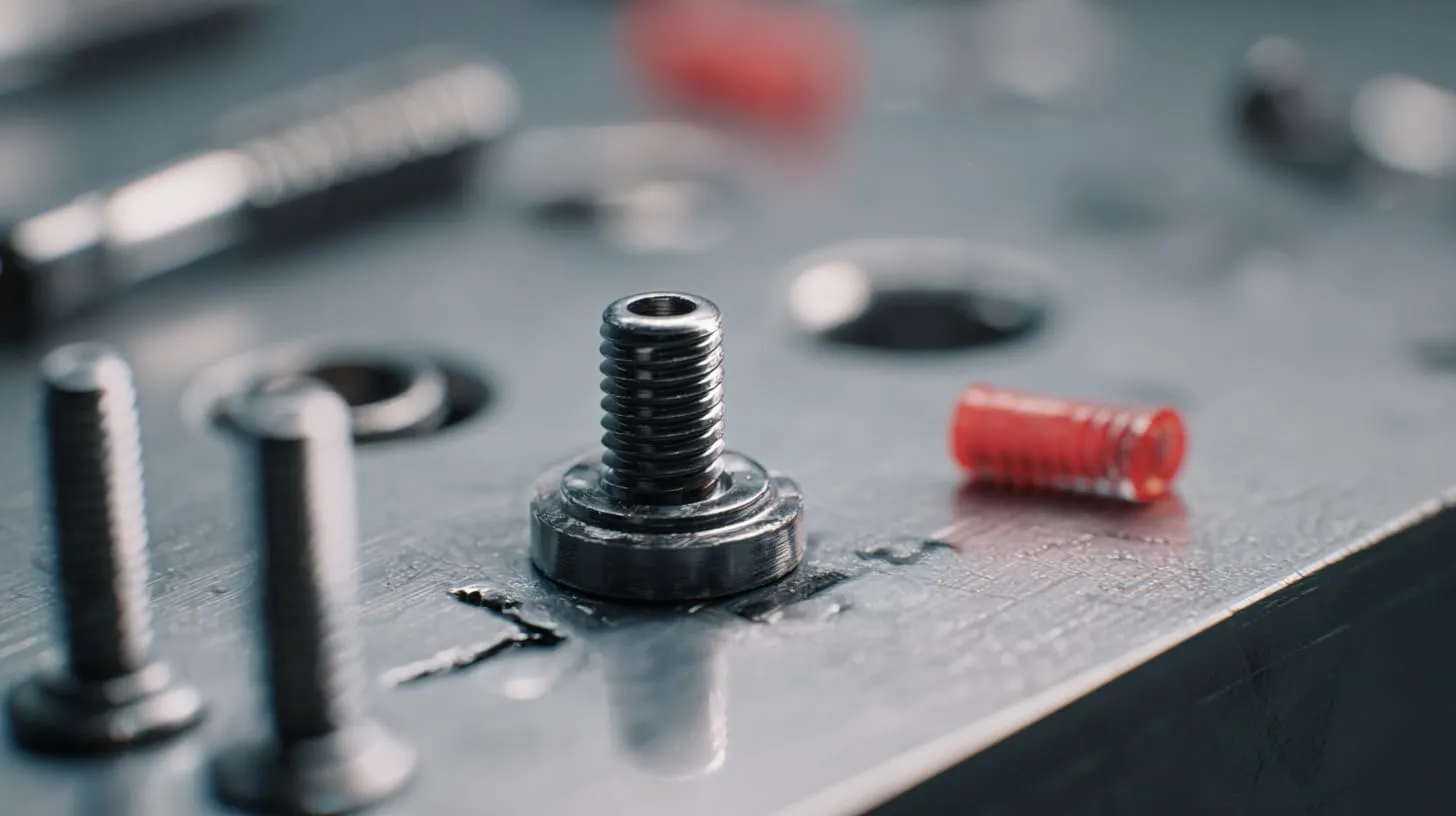
ABS has useful strength, but it is not a heavy-duty structural material.
This is one of the most important points for custom enclosure buyers.
A small enclosure may feel strong when you hold it in your hand. But real use can be harsher than hand feeling.
The enclosure may be mounted on a wall.
A cable may pull on one side.
A worker may open the cover many times.
A screw may be over-tightened.
The product may vibrate inside a machine.
A heavy internal component may press against the base.
The first sample can pass. The problem appears after repeated use.
Before I trust ABS for a structural enclosure, I look at the screws, ribs, mounting points, and cable stress before I look at the outside beauty.
Structural Limitations of ABS
ABS has moderate strength and good impact resistance for many normal products. But it has limits.
It may not be suitable when the enclosure must carry heavy loads, resist strong vibration, support large components, or survive rough installation.
A common weak point is the screw boss.
Many buyers only check whether the cover closes. I also check how the screw boss will behave after repeated tightening. This is because a broken screw boss can turn the whole enclosure into waste.
| Structural Feature | Risk With ABS | Design Question |
|---|---|---|
| Screw boss | Cracking or loosening | Is the boss thick enough? |
| Mounting ear | Breakage under load | Will the enclosure hang on a wall? |
| Snap-fit clip | Fatigue after repeated use | How often will users open it? |
| Thin wall | Deformation | Is the wall too thin for cost saving? |
| Large flat cover | Warping | Does it need ribs? |
| Cable entry | Stress cracking | Will cable pulling happen? |
Good plastic design is not only about shape. It is about stress.
Stress always finds the weak corner.
Real-World Failure Scenarios
I once saw a buyer focus very hard on the surface finish of a plastic case. The color needed to be exact. The logo needed to sit perfectly. The packing needed to look clean.
All of that mattered.
But the real problem came from a mounting point.
The product was installed with screws on a working machine. The case looked fine during inspection. After use, vibration and installation force created cracks around the mounting area.
Nobody cared about the nice logo after that.
This is why I like to ask boring questions early.
How is it mounted?
Who installs it?
Will workers use electric screwdrivers?
Will the product vibrate?
Will the cable pull the enclosure?
Will the user open it often?
Boring questions save money.
Better Alternatives
For higher mechanical strength, aluminum, steel, or reinforced plastic may be better choices.
| Need | Better Material | Reason |
|---|---|---|
| Wall-mounted industrial product | Aluminum or steel | Strong mounting points |
| Heavy internal components | Aluminum | Better structural support |
| Strong vibration | Metal or reinforced plastic | Better fatigue resistance |
| Repeated opening | Metal inserts or stronger material | Better screw life |
| Large enclosure | Aluminum or sheet metal | Better shape stability |
| Cost-sensitive but stronger plastic | Glass-filled plastic | More strength, but design changes needed |
Reinforced plastics can help, but they also create new trade-offs. They may be harder to mold. They may have surface differences. They may affect impact behavior. They may increase tool wear.
So I do not choose reinforced material casually.
If the product is small and light, ABS may be enough. If the enclosure becomes part of the structure, I prefer to be more careful.
A weak enclosure does not always break in the factory. It breaks in the customer’s hands. That is the worst place to discover a material mistake.
Now let us talk about a problem that cannot be seen by the eye: EMI.
When EMI Shielding Is Required
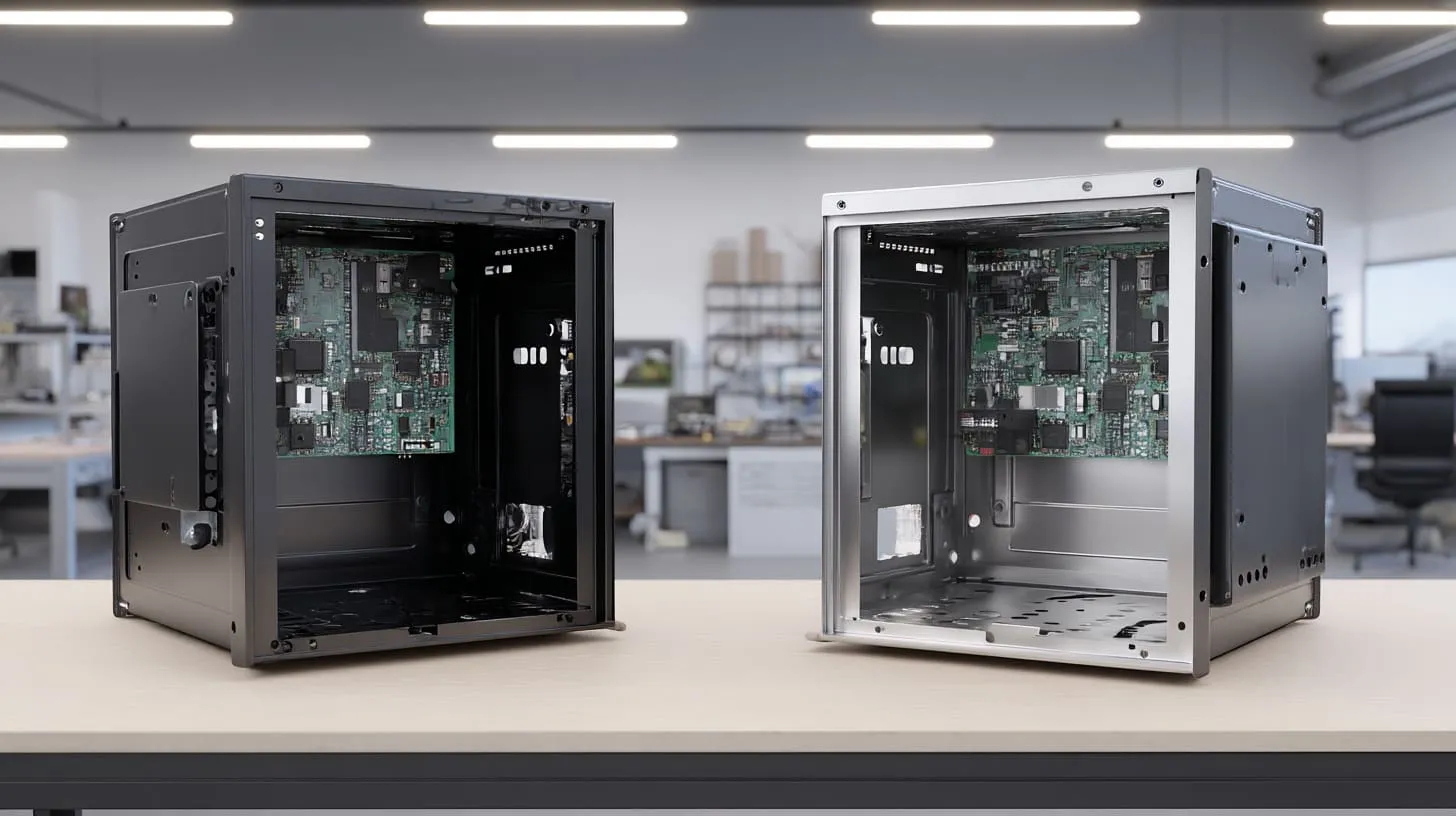
ABS does not provide natural EMI shielding.
This point is easy to forget because EMI is invisible.
A cracked cover is visible. A yellow surface is visible. A broken screw boss is visible.
But electromagnetic interference can hide inside testing reports, unstable signals, communication problems, or certification delays.
The enclosure may look perfect and still fail the project.
When a device has wireless modules, communication ports, high-speed circuits, or sensitive signals, I do not treat the enclosure as only a protective shell; I also think about what the enclosure blocks or allows.
ABS as a Non-Conductive Material
ABS is an electrical insulator. That is good for safety, but not good for natural shielding.
Metal enclosures, especially aluminum and steel, can help block electromagnetic interference. ABS cannot do this by itself.
This does not mean ABS is impossible for EMI-sensitive products. It means the design may need extra solutions.
For example:
- Conductive coating
- Copper or aluminum foil
- Internal shielding parts
- Grounding design
- Metal inserts
- Shielded cable glands
- PCB-level EMI control
Each solution adds cost, process steps, and quality control points.
So the cheap plastic enclosure may become less cheap.
Risks in Sensitive Electronics
EMI issues can be painful because they often appear late.
A product may pass mechanical checks. It may pass assembly. It may look ready for shipment.
Then testing begins.
The signal becomes unstable.
The device affects nearby equipment.
The product does not pass compliance.
The engineer starts looking for the reason.
The enclosure becomes part of the discussion again.
This is where time gets expensive.
| Product Type | EMI Risk | ABS Concern |
|---|---|---|
| Simple low-speed electronics | Low | ABS may be fine |
| Raspberry Pi style case | Medium | Depends on ports, board, and use |
| Industrial controller | Medium to high | Shielding may be needed |
| Communication device | High | ABS alone may not be enough |
| Medical or test equipment | High | Compliance is very strict |
| Power electronics | Medium to high | Noise control matters |
A product engineer may already know this. But in cost meetings, EMI is often pushed aside because it does not look urgent.
Until it becomes urgent.
Better Alternatives
If EMI shielding is important, aluminum is usually a strong option.
| Solution | Benefit | Trade-Off |
|---|---|---|
| Aluminum enclosure | Natural EMI shielding | Higher cost and machining needs |
| Steel enclosure | Strong shielding and structure | Heavier |
| Conductive coated ABS | Keeps plastic shape with shielding | Extra process and QC |
| Internal metal shielding | Targeted protection | More assembly work |
| PCB-level shielding | Controls source of EMI | Needs engineering design |
For many custom Raspberry Pi cases, aluminum is chosen not only because it looks premium. It also helps with heat and shielding. That is why I often discuss aluminum when the project has heat, durability, or EMI concerns.
ABS can still work if the EMI risk is low or if shielding is handled somewhere else.
But I do not like assuming “the plastic case is just a box.”
In electronics, the box can quietly affect the whole system.
And if the product needs certification, another serious topic appears: fire safety.
When Fire Safety and Compliance Matter
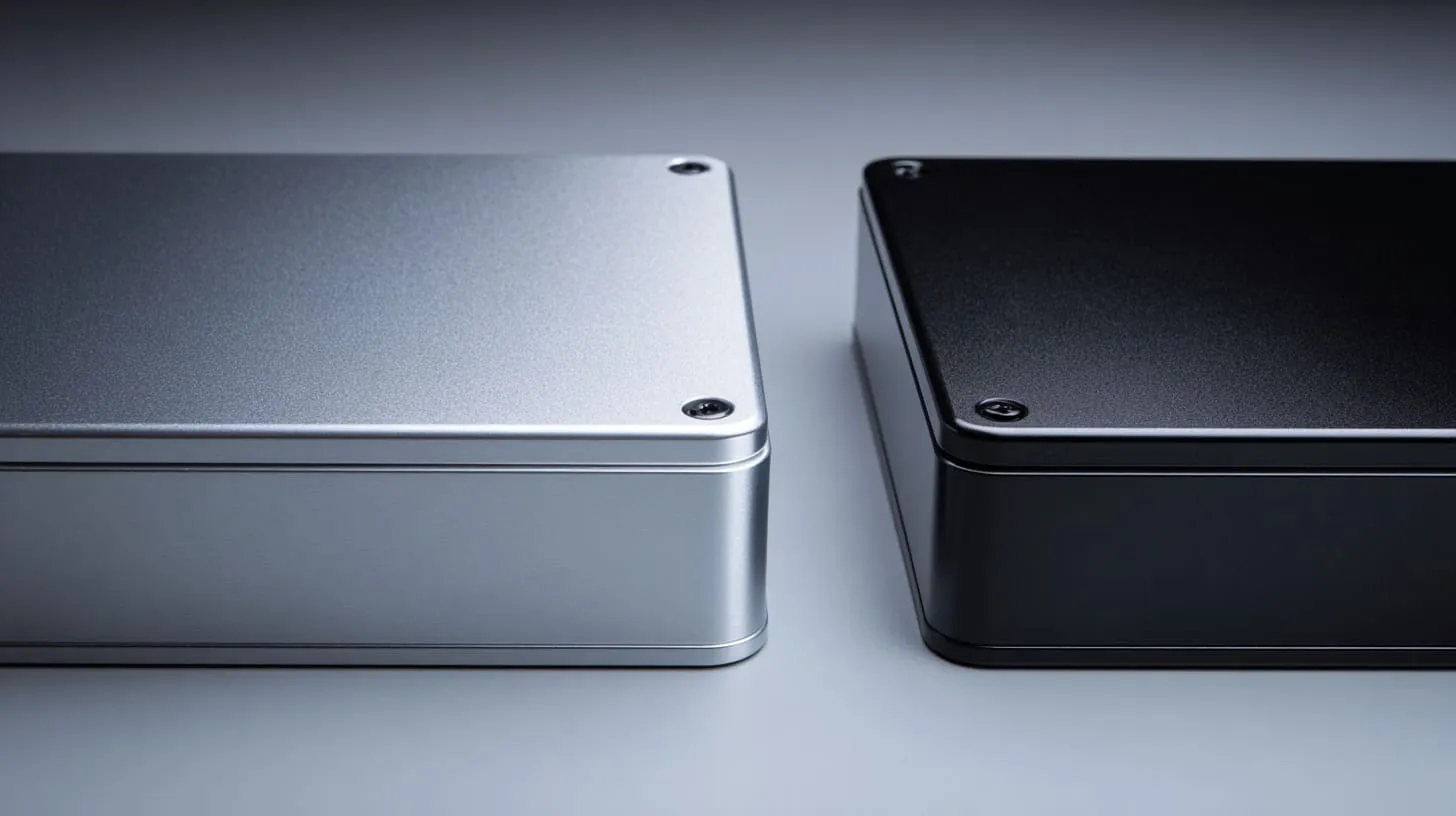
Fire safety is not a place where I like to guess.
Standard ABS is not always flame retardant. Some grades burn more easily than others. Some grades may not meet the flame rating required by the project.
This matters for products sold in the EU, the US, industrial markets, power-related applications, or any project where safety certification is part of the plan.
A buyer may say, “We just need a plastic enclosure.”
But I need to ask, “What standard does your product need to pass?”
That question can change the material immediately.
If a project involves power, heat, public use, or certification, I would rather discuss flame rating early than explain a failed test later.
Flammability Concerns
ABS comes in different grades.
Some are standard grades. Some are flame-retardant grades. Some may meet UL94 HB. Some may meet UL94 V-0, depending on formulation and thickness.
The grade matters.
The thickness matters.
The supplier data matters.
The testing condition matters.
The final product design matters.
A buyer should not assume all ABS is the same.
| ABS Type | Fire Safety Level | Common Concern |
|---|---|---|
| Standard ABS | Basic | May not meet strict requirements |
| FR-ABS | Better | Higher cost than standard ABS |
| UL94 HB grade | Limited | May not be enough for some markets |
| UL94 V-0 grade | Stronger flame rating | Must confirm grade and thickness |
| Unknown recycled ABS | Risky | Hard to control compliance |
This is also why material certificates and stable supply are important.
If the factory changes material grade without control, the enclosure may look the same but perform differently.
That is a dangerous kind of sameness.
Regulatory Risks
Compliance problems are expensive because they come late.
The mold may already be finished.
The first production may already be planned.
The customer may already be preparing the launch.
Then certification asks for material proof or flame rating.
If the material is wrong, the project may need a new material, new tests, or even mold adjustments.
That delay hurts everyone.
| Market or Product Situation | Fire Safety Concern |
|---|---|
| EU market | CE-related safety expectations may apply |
| US market | UL requirements may be requested |
| Power supply enclosure | Heat and flame risk matter |
| Industrial control box | Safety and compliance matter |
| Public-use equipment | Liability risk is higher |
| Battery-related product | Material selection must be careful |
I do not treat compliance as paperwork only.
Compliance is a design requirement. If it is ignored early, it becomes a project delay later.
Better Alternatives
If fire safety matters, there are several options.
| Requirement | Possible Material | Why |
|---|---|---|
| Plastic enclosure with flame rating | FR-ABS | Keeps ABS advantages with better fire performance |
| Higher heat and flame performance | Flame-retardant PC | Often better for demanding products |
| Strong safety and durability | Aluminum or steel | Non-plastic structure, better heat handling |
| Cost-sensitive project | Confirm proper ABS grade | Do not use unknown material |
FR-ABS can be a good option, but it is not the same as standard ABS. It costs more. It may process differently. It may have different color or surface behavior.
So I do not want buyers to say “ABS” too generally.
The correct question is: which ABS grade?
A material name without grade details is like a shipping address without a street number. It sounds useful, but it can still send the project to the wrong place.
Fire safety protects the user. Appearance protects the brand. Both matter.
When Premium Appearance or Long-Term Durability Is Critical
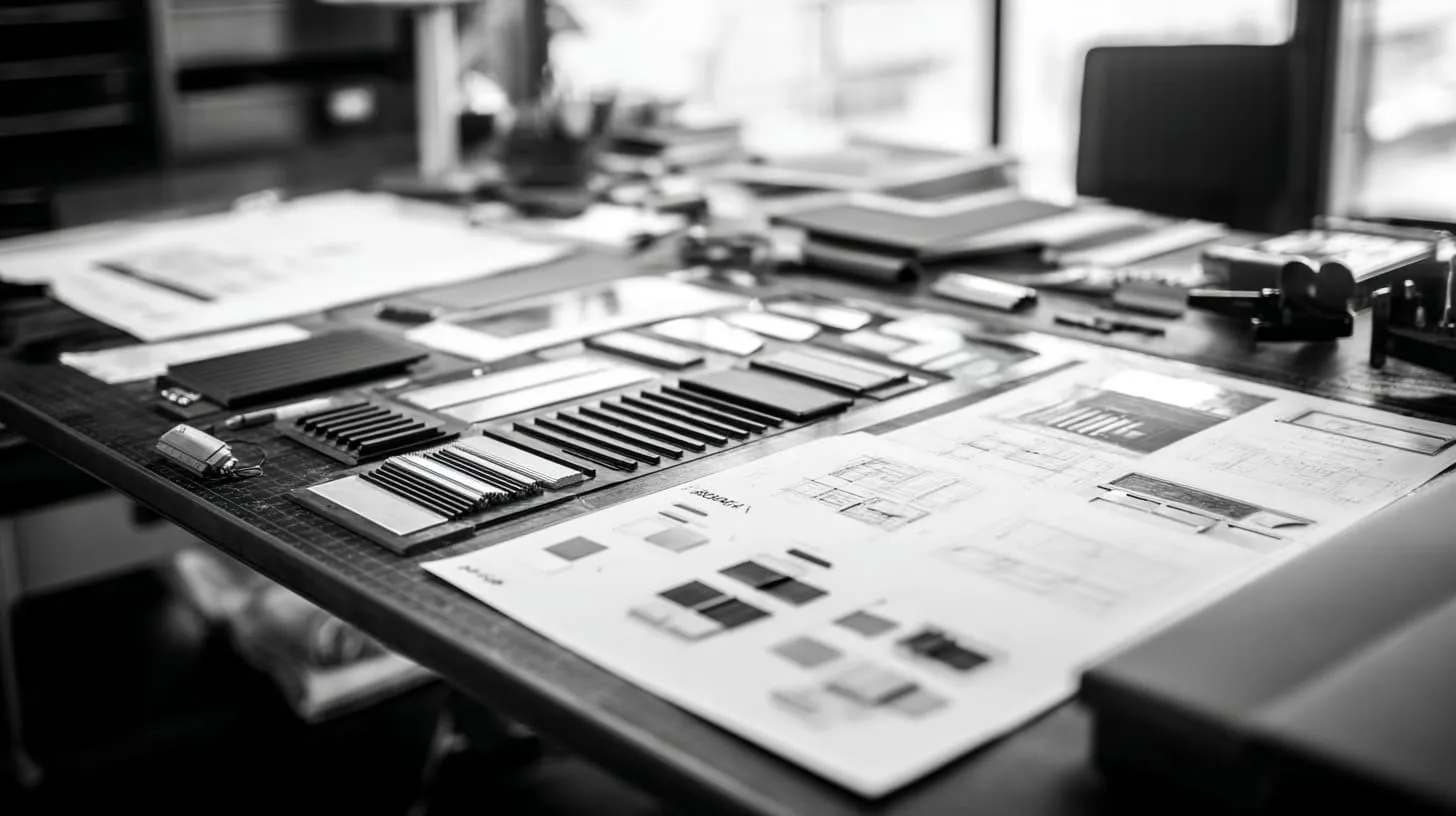
ABS can look good.
A fresh ABS enclosure can have a clean surface, nice color, smooth shape, and tidy logo printing. For many products, that is enough.
But some products need more than “good enough.”
They need a premium hand feel.
They need strong scratch resistance.
They need long-term surface stability.
They need to support a brand position.
They need to feel like part of a higher-value device.
This is where ABS may feel limited.
For re-brand customers, I do not only ask what the enclosure costs; I ask what feeling the customer wants to sell when the buyer opens the box.
Surface Aging and Wear
ABS surfaces can scratch and wear over time.
This depends on the surface texture, color, usage, and environment. A matte texture may hide small scratches better. A glossy finish may show marks more easily. Dark colors may reveal scratches more clearly than light colors.
Handling matters too.
If the enclosure is used on a desk and rarely touched, ABS may age well enough. But if the product is carried, installed, cleaned, opened, or rubbed against tools, the surface may lose its clean look faster.
| Surface Situation | ABS Concern |
|---|---|
| Glossy black finish | Shows scratches and fingerprints |
| Frequent handling | Surface wear appears faster |
| Tool contact | Scratches or dents may appear |
| Outdoor use | Color fading and aging |
| Harsh cleaning | Surface damage risk |
| Re-brand product | Appearance affects customer trust |
A buyer may think surface aging is cosmetic.
Sometimes it is.
But for a branded product, cosmetic damage can become a business problem.
The customer may not know the material name. They only know the product feels old too soon.
Perceived Product Value
Material affects how customers judge value.
ABS is practical, but it may not always feel premium. Aluminum feels cooler, stronger, and more solid. Powder-coated steel feels tough. Anodized aluminum can look very clean and professional.
This matters for products sold on Amazon, retail channels, industrial catalogs, or B2B project markets.
A customer may not say, “This enclosure has poor perceived value.”
They may just choose another product.
That is how the market talks.
| Product Position | ABS Fit | Better Option |
|---|---|---|
| Low-cost indoor device | Good | ABS |
| Simple control box | Good | ABS or PC |
| Premium Raspberry Pi case | Limited | Aluminum |
| Industrial equipment | Limited | Aluminum or steel |
| Outdoor branded product | Poor | ASA, PC, or metal |
| High-end OEM device | Depends | Aluminum often feels stronger |
I have seen customers change from plastic to aluminum not because plastic failed, but because the product needed to feel more serious.
That is a real reason too.
Not every decision is about failure. Some decisions are about market position.
Better Alternatives
For premium appearance and long-term durability, aluminum is often a strong choice.
| Need | Better Material or Finish | Why |
|---|---|---|
| Premium feel | Anodized aluminum | Clean, solid, professional |
| Better scratch resistance | Powder-coated metal | Stronger surface |
| Outdoor brand stability | UV-resistant material | Better aging |
| High-end electronics | CNC aluminum | Better perceived value |
| Industrial durability | Sheet metal enclosure | Strong and stable |
ABS can also be improved with texture, coating, better color selection, or careful packaging. I do not reject ABS only because it is plastic.
But I do reject ABS when the product needs to carry a premium message that plastic cannot support well enough.
A case is not just a cover. Sometimes it is the first handshake between your product and your customer.
After looking at heat, sunlight, chemicals, strength, EMI, fire safety, and appearance, the real question becomes simpler: how do we decide?
How to Decide If ABS Is the Wrong Choice
I do not choose enclosure material by habit.
I choose it by risk.
That may sound simple, but it changes the whole discussion. Many projects start with a preferred material before the real use condition is clear. The buyer says ABS. The designer says aluminum. The purchasing team says lower cost. The engineer says heat may be a problem.
Everyone is partly right.
The material decision should not be a debate about personal preference. It should be a clear look at the product’s real life.
The fastest way I judge ABS is by asking where the enclosure will fail first if the customer uses it harder than expected.
Key Evaluation Checklist
Before I agree that ABS is suitable, I like to check several points.
| Question | Why I Ask It | If the Answer Is Risky |
|---|---|---|
| What is the operating temperature? | Heat can deform ABS | Consider PC or aluminum |
| Is it used indoors or outdoors? | UV can damage ABS | Consider ASA, UV-PC, or metal |
| Will it touch chemicals? | Chemicals can crack ABS | Consider PC, Nylon, or metal |
| Will it carry load? | ABS has structural limits | Consider metal or reinforced plastic |
| Does it need EMI shielding? | ABS does not shield naturally | Consider aluminum or coating |
| Does it need flame rating? | Standard ABS may not comply | Use FR-ABS, PC, or metal |
| Is appearance premium? | ABS may feel less high-end | Consider anodized aluminum |
This checklist is not meant to make ABS look bad.
It is meant to protect the project.
A good material choice should feel boring after production. No drama. No surprise. No emergency meeting.
Practical Decision Framework
I like to divide enclosure projects into three groups.
Group One: ABS Is Usually Fine
ABS is often fine when the product is:
- Used indoors
- Low heat
- Light duty
- Low chemical exposure
- No strong EMI requirement
- No strict flame rating requirement
- Cost-sensitive
- High-volume
Examples may include small desktop electronics, simple indoor sensor boxes, light control housings, and general plastic cases.
Group Two: ABS Needs Careful Review
ABS needs more review when the product has:
- Moderate heat
- Some vibration
- Some cleaning exposure
- Repeated opening
- Logo and surface requirements
- Light industrial use
- Larger enclosure size
In these cases, the answer may still be ABS, but the design must be careful.
We may need thicker walls, ribs, better screw bosses, inserts, vents, better grade selection, or more testing.
Group Three: ABS Is Usually Not My First Choice
ABS is usually not my first choice when the product has:
- High heat
- Outdoor sunlight
- Harsh chemicals
- Heavy mechanical load
- Strong vibration
- EMI shielding needs
- Fire safety certification
- Premium long-term appearance requirement
For these projects, I usually look at aluminum, steel, polycarbonate, ASA, Nylon, or reinforced plastics.
| Risk Level | ABS Decision | Typical Action |
|---|---|---|
| Low risk | ABS can be suitable | Confirm design and grade |
| Medium risk | Review carefully | Improve design or material |
| High risk | Avoid standard ABS | Choose better material |
| Unknown risk | Do not rush | Ask more use-condition questions |
Prototype Performance Is Not Enough
A prototype can lie.
Not because anyone is dishonest. It lies because it lives an easy life.
It may sit on a clean desk. It may be touched gently. It may run for a short time. It may not face sunlight, oil, vibration, heat, or careless installation.
Mass production lives a harder life.
This is why I do not make material decisions only from one good-looking sample.
I ask how the enclosure will behave during:
- Assembly
- Shipping
- Installation
- Daily use
- Cleaning
- Maintenance
- Heat cycling
- Long-term aging
If ABS can survive these steps, I feel comfortable.
If not, I would rather change the material early.
Changing material before tooling is a discussion. Changing material after failure is a problem.
Conclusion
ABS is not a bad material.
I want to say that clearly.
ABS is practical, affordable, easy to mold, lightweight, and useful for many electronic enclosures. I have no reason to reject it when the application is right. For many indoor plastic enclosure projects, ABS can help the buyer control cost and move production faster.
But I do not treat ABS as the default answer for every enclosure.
I have seen too many projects where the first question was only about price. Then the real questions came later.
Will it get hot?
Will it sit outside?
Will workers clean it with chemicals?
Will the screw bosses survive?
Will the product pass EMI testing?
Will the material meet flame safety needs?
Will the customer still like the surface after one year?
These questions are not small details.
They are the difference between a smooth project and a painful project.
My view comes from real custom enclosure work. A good enclosure is not only a box around electronics. It is a protection system. It must match the board, the heat, the installation, the environment, the user, the brand, and the market.
That is why I often tell customers not to choose ABS too quickly.
If the product is low-heat, indoor, simple, and cost-sensitive, ABS may be a good choice.
If the product faces heat, sunlight, chemicals, load, vibration, EMI, fire safety rules, or premium brand pressure, I prefer to slow down and compare other materials first.
This is not because I want to make the project more expensive.
It is because the wrong material always becomes more expensive later.
At MaidaTech, we work with custom aluminum enclosures, plastic enclosures, sheet metal enclosures, Raspberry Pi enclosures, and OEM/ODM enclosure projects. If you already have a drawing, board size, logo file, or product idea, you can send us the details.
I can help you check the material choice before the mold, sample, or production starts.
A small discussion at the beginning can save a lot of trouble at the end.