Skip to content
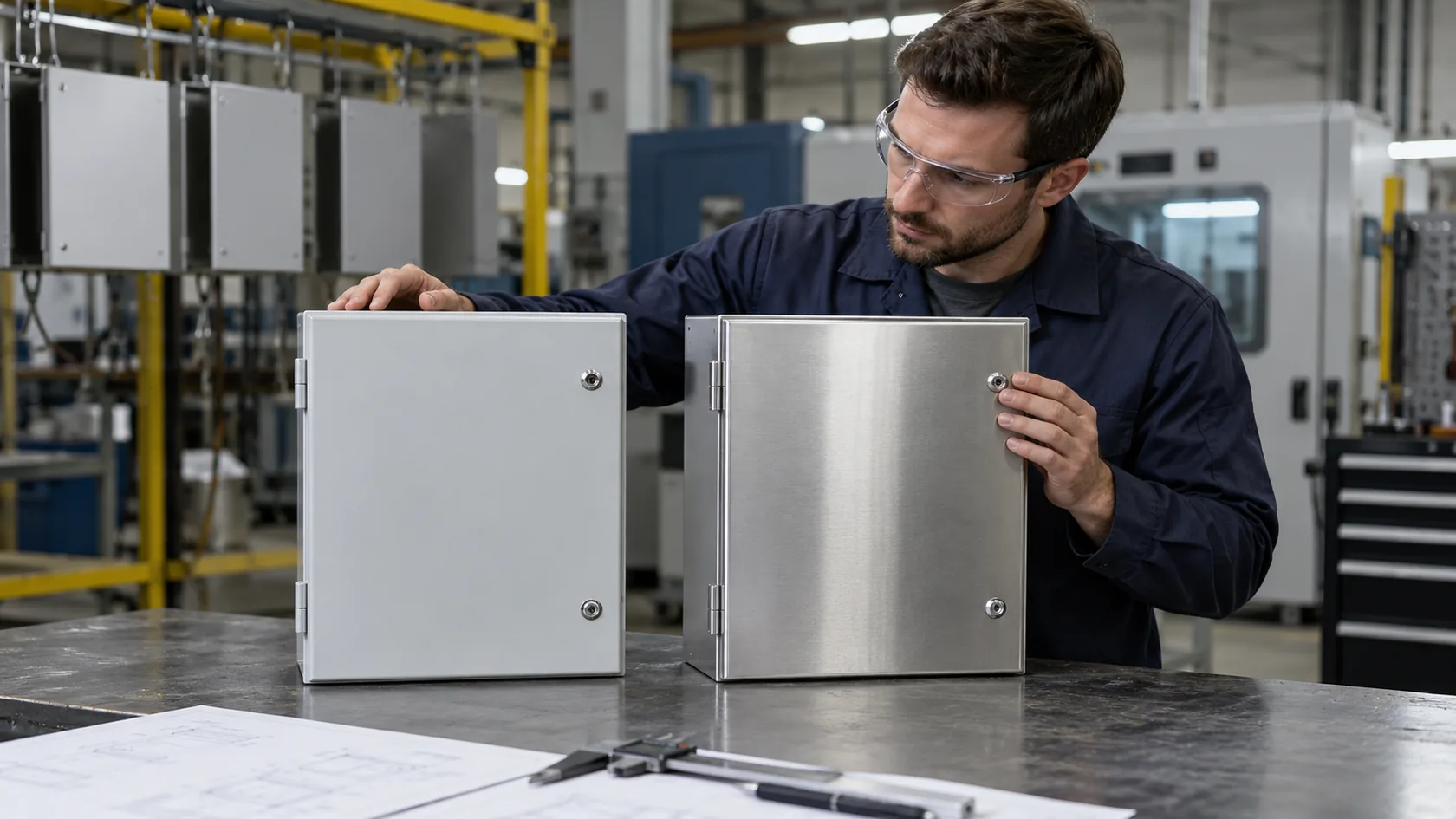
Two cabinets can leave a factory looking equally clean and still have very different maintenance costs five years later. The difference often begins at a cut edge, a damaged coating, or a damp seam that was overlooked when the material was chosen.
For enclosure buyers, carbon steel versus stainless steel is a decision about the whole construction: sheet grade, finish, fabrication, installation, and the cost of access after delivery. I start with the actual exposure and service plan, then compare quotations built around the same design. Here is how I work through that choice.
What Is the Difference Between the Two Steels?
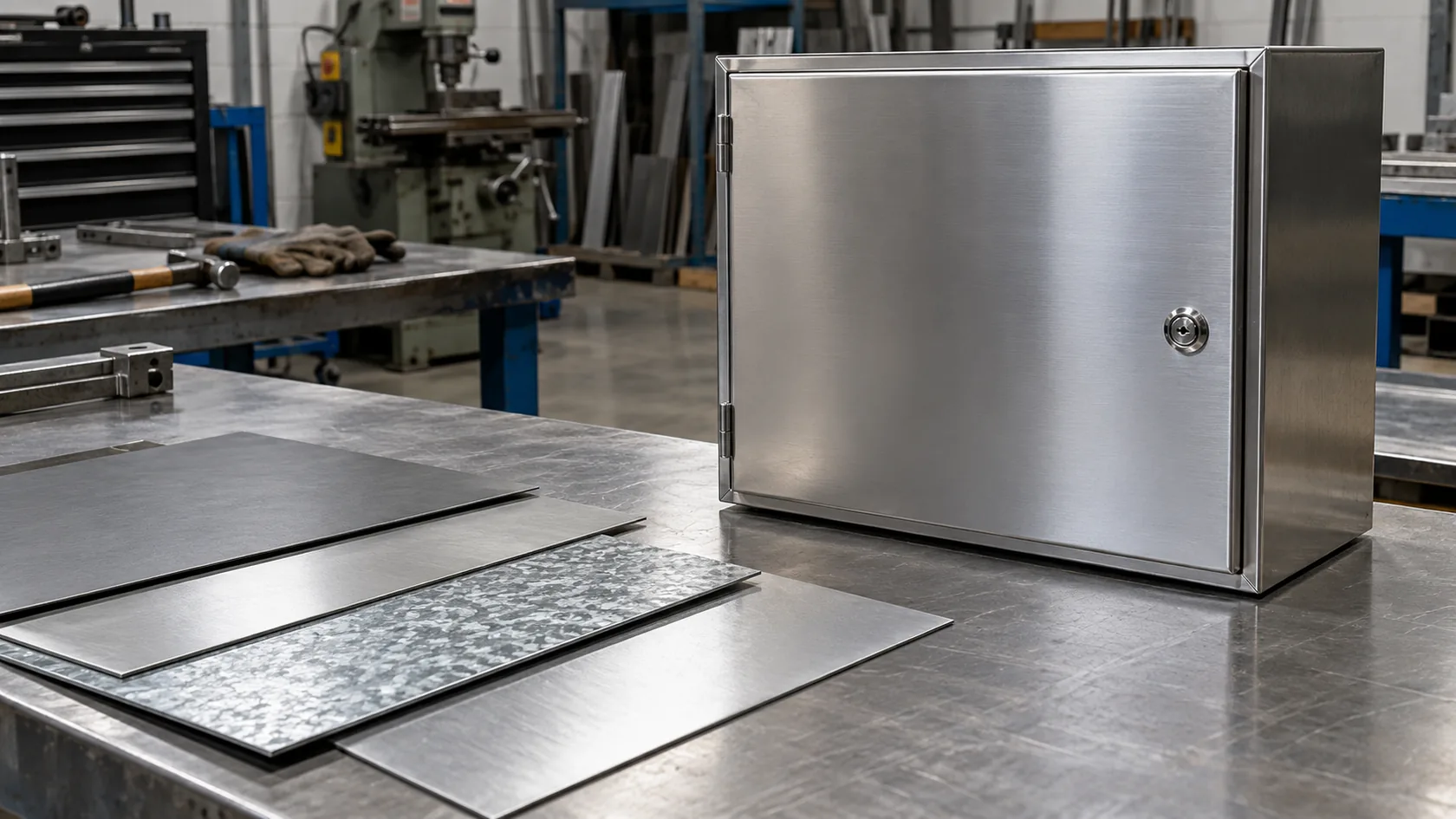
Carbon steel is an iron-based alloy in which carbon is an important alloying element. Enclosure sheet is often a low-carbon grade, but “carbon steel” alone does not identify its strength, formability, or coating. Stainless steel is a family of alloys whose chromium-rich passive surface film helps resist corrosion. The film can recover when the surface is clean and suitable conditions are present; it is not a guarantee against every chemical or wet environment. World Stainless explains the corrosion mechanisms and grade choices.
| DecisionCarbon steel enclosureStainless steel enclosure | ||
|---|---|---|
| Corrosion approach | Usually depends on a specified coating or zinc protection | Alloy and surface condition provide corrosion resistance; grade still matters |
| Starting cost | Often lower, depending on finish and quantity | Often higher material and fabrication cost |
| Appearance | Painted or powder-coated colors are common | Brushed, polished, or coated finishes are possible |
| Maintenance | Inspect and repair damaged protection as needed | Clean deposits and inspect vulnerable welds, crevices, and hardware |
| Mechanical design | Depends on exact grade, thickness, bends, and reinforcement | Also depends on exact grade, thickness, bends, and reinforcement |
I avoid calling either family “stronger” without a grade and loading condition. A large flat door may need ribs or a thicker sheet regardless of the alloy. The corrosion mechanism is the next useful distinction.
How Do Corrosion and Coatings Change the Choice?
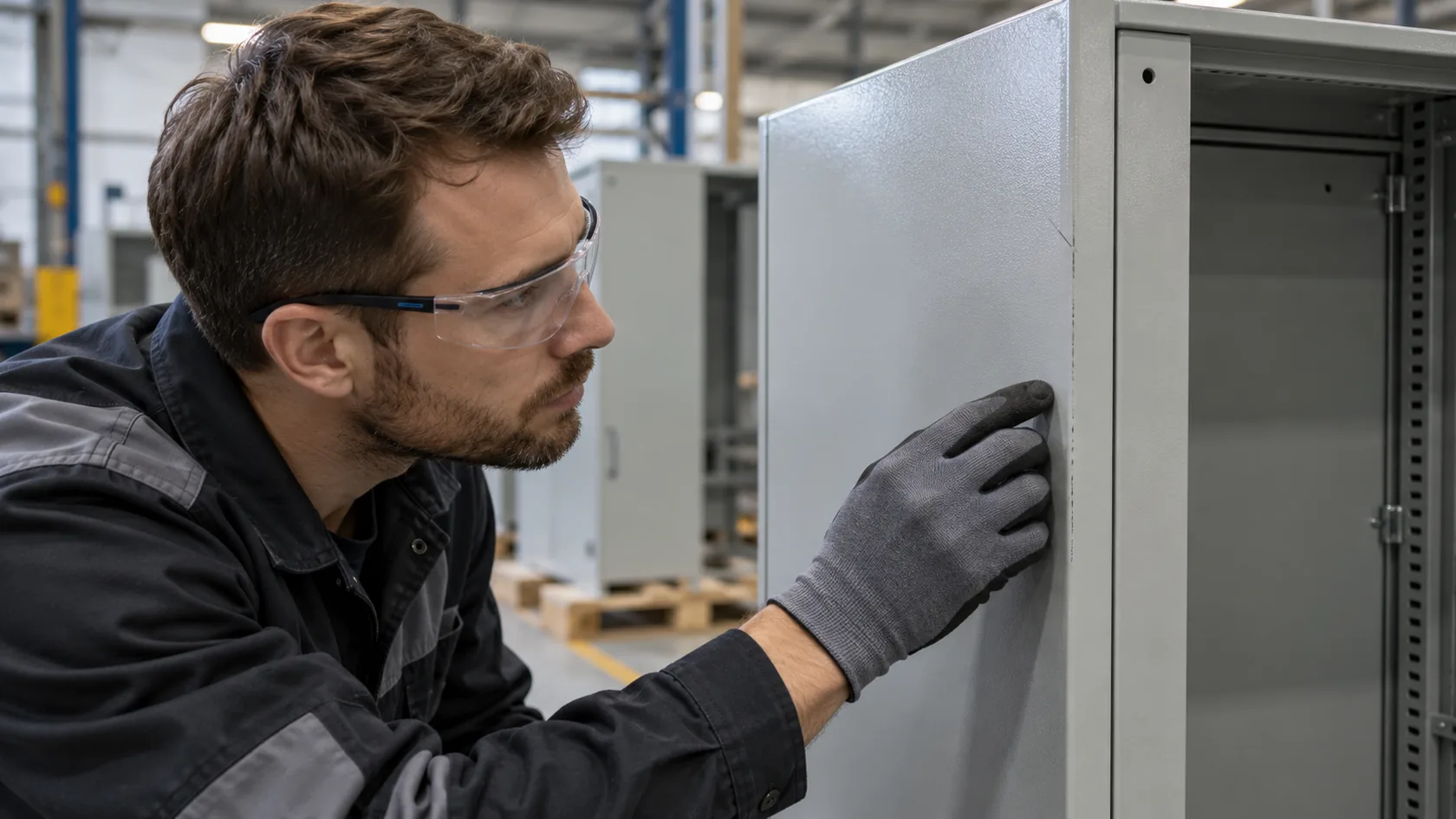
A coated carbon steel cabinet can be a practical choice in a controlled indoor plant or in an outdoor location when the complete protection system suits the exposure. Specify preparation, coating system, coverage, inspection, and a repair method—not just a color. Edges, welds, fastener holes, the underside, and later field cutouts deserve particular attention. Galvanized steel is another protected carbon steel route, but zinc coating type, cut edges, and any subsequent paint system must be specified separately.
A scratch can expose the substrate; trapped moisture can stay at a seam long after the outer face dries. In my experience, a cabinet that cannot be reached for inspection needs a more conservative protection plan than an identical cabinet beside a maintenance aisle. Packaging and installation damage belong in that plan too.
Stainless avoids dependence on an intact paint film for its basic corrosion resistance, but salt deposits, crevices and contamination can still cause local attack. World Stainless guidance for wastewater installations illustrates how chloride, temperature and crevice conditions affect grade selection; its water-specific figures should not be transferred directly to every outdoor cabinet. That makes the exact stainless grade important.
When Should You Consider 304 or 316 Stainless?
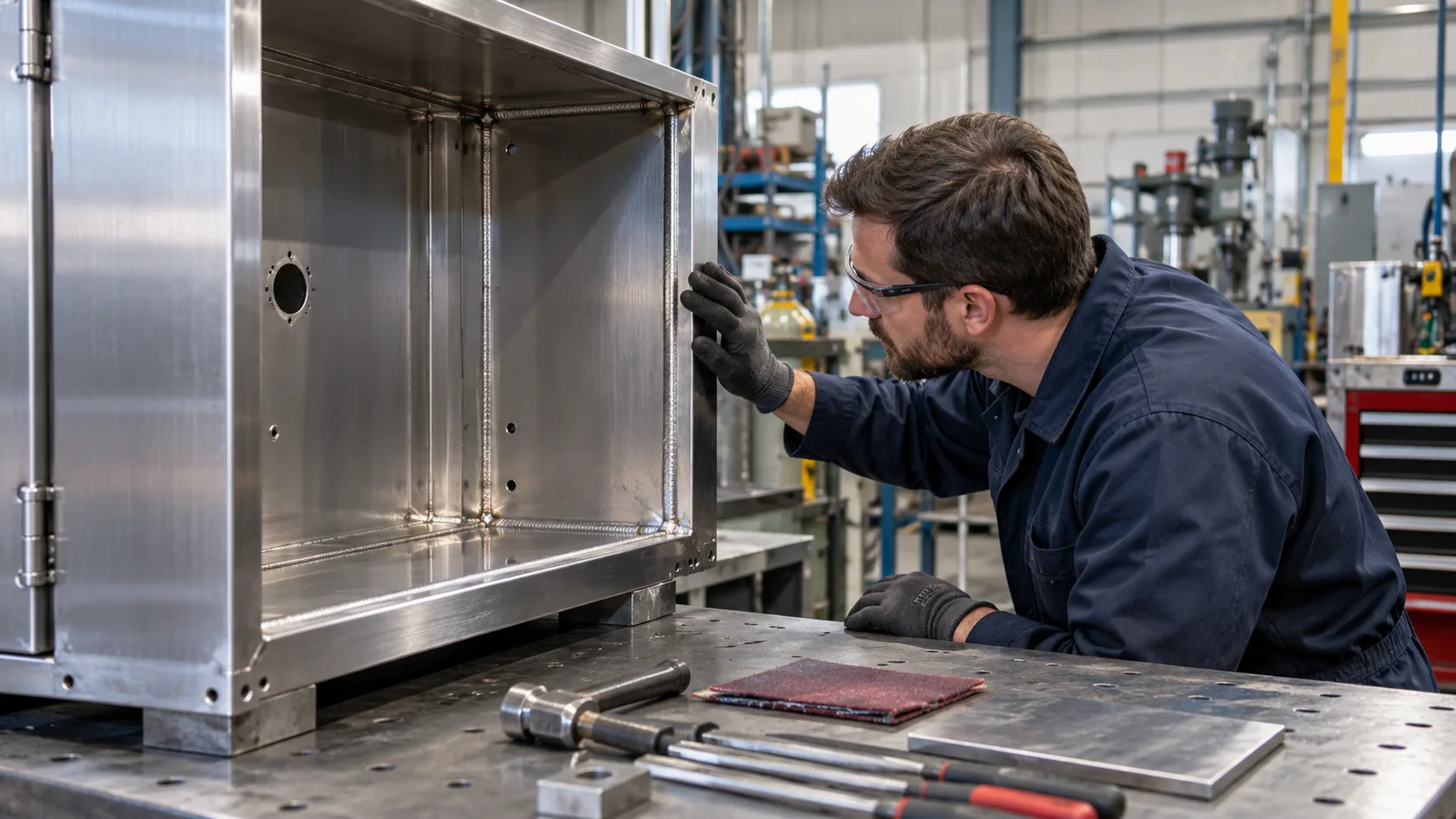
304 and 316 are common austenitic stainless grades. The molybdenum in 316 generally improves resistance to chloride-related pitting compared with 304, but 316 is not immune to corrosion. The correct selection depends on chloride concentration and deposits, temperature, wet-dry cycles, chemicals, crevices, cleaning and service life. The Water Industry Standards Board guidance shows why water chemistry and actual service conditions matter.
| Site condition | Starting point for discussion | Check before release |
|---|---|---|
| Dry indoor electrical room | Coated carbon steel may be sufficient | Condensation, handling damage, finish and maintenance access |
| Humid indoor area or occasional cleaning | Evaluate coated steel and 304 against the cleaning regime | Cleaners, crevices, coating repair and hardware |
| Coastal deposits, frequent washdown or chemical exposure | Evaluate 316 and alternatives for the specific exposure | Chemicals, temperature, deposits, drainage, cleaning and specialist advice |
These are screening examples, not approvals. For welded work, the L variants may be appropriate where reduced carbon helps limit sensitization; the fabricator must select material, weld procedure and post-weld treatment for the job. I also ask how the shop prevents iron contamination from shared tools and removes weld discoloration where required. Grade selection alone cannot repair poor fabrication.
What Should the Enclosure Design Include?
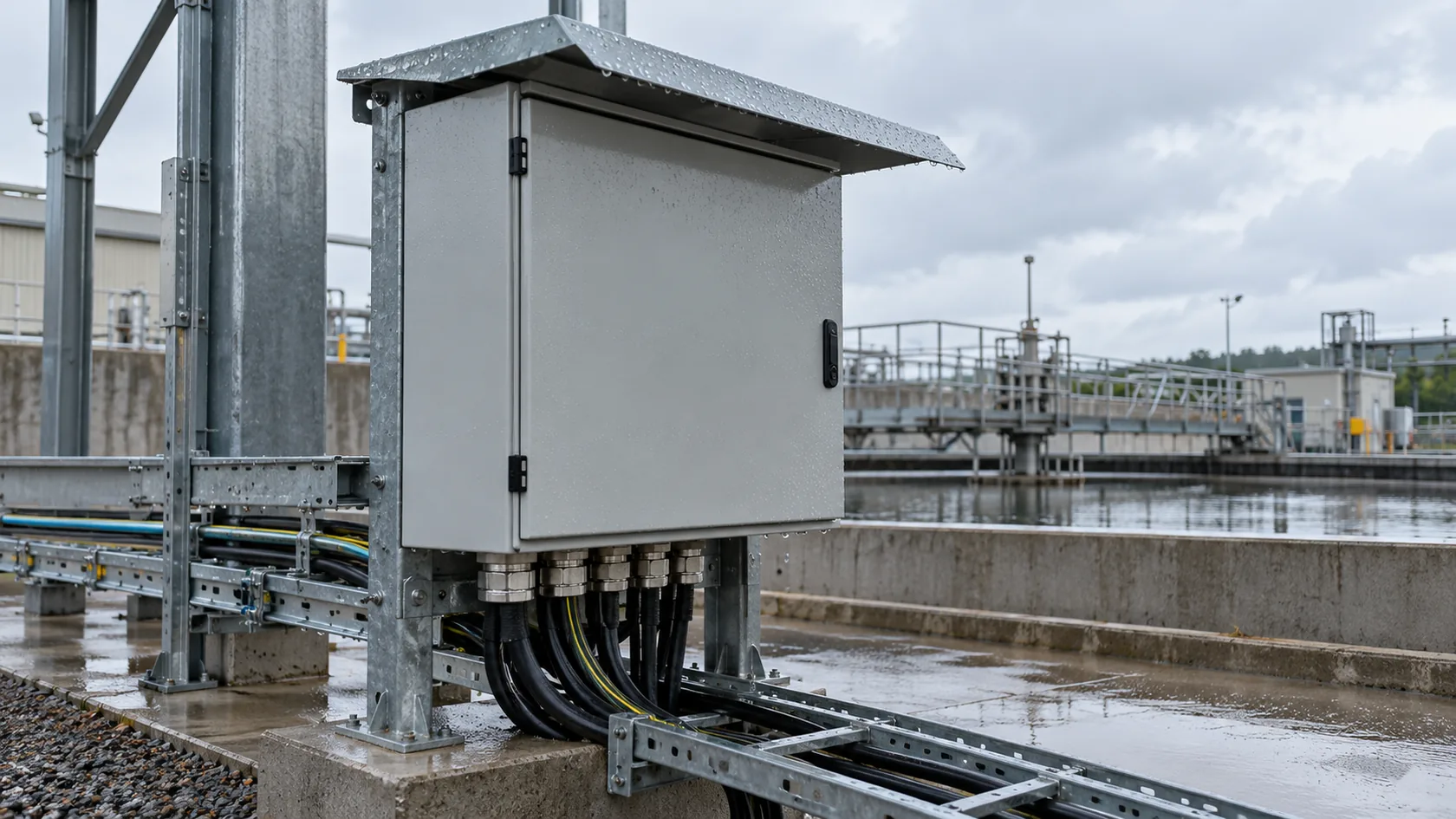
Sealing, heat and condensation
A steel grade does not establish an IP or NEMA rating. The assembled system must address cover alignment, gasket compression, fasteners, cable glands, vents and mounting orientation, and be evaluated against the specified method. A tightly sealed enclosure may also restrict cooling and retain moisture. Plan the thermal path and condensation management together with sealing, drainage where appropriate, and installation practices.
Hardware and service access
Match hinges, fasteners, mounting brackets and connectors to the environment. Dissimilar metals in electrical contact can create galvanic corrosion when an electrolyte is present; consider isolation and drainage while preserving required electrical bonding. Powder coating can interrupt a grounding or EMC contact path, so define conductive contact areas and verify the assembled connection.
I pay particular attention to field-drilled entries: the site team needs a way to protect exposed edges and install glands correctly. An excellent factory finish is not much use if the first site modification defeats it. Now the two quotations can be compared on equal terms.
How Should Buyers Compare the Real Cost?

Compare the same dimensions, sheet thickness, tolerances, door stiffness, hardware, gasket, openings, finish, quantity, test requirements, packing and delivery terms. Otherwise the cheaper quote may simply describe a different cabinet. Ask suppliers to identify what is included in coating preparation, stainless weld cleanup and inspection.
| Cost item | Question to ask |
|---|---|
| Initial manufacture | Are material grade, fabrication, finish and inspection included on both quotes? |
| Installation | Who makes and protects site cutouts and checks glands? |
| Maintenance | How often will the actual site need inspection, cleaning or touch-up? |
| Failure consequence | What do access, downtime and replacement cost at this location? |
| Verification | Which sample, configuration, acceptance criteria and test method are budgeted? |
I do not use a universal stainless price premium or service-life promise: sheet markets, geometry, finish, volumes and site conditions change the result. A remote cabinet with costly access can justify a different choice from a cabinet on a dry factory floor. The final purchase specification should capture that reasoning.
Conclusion
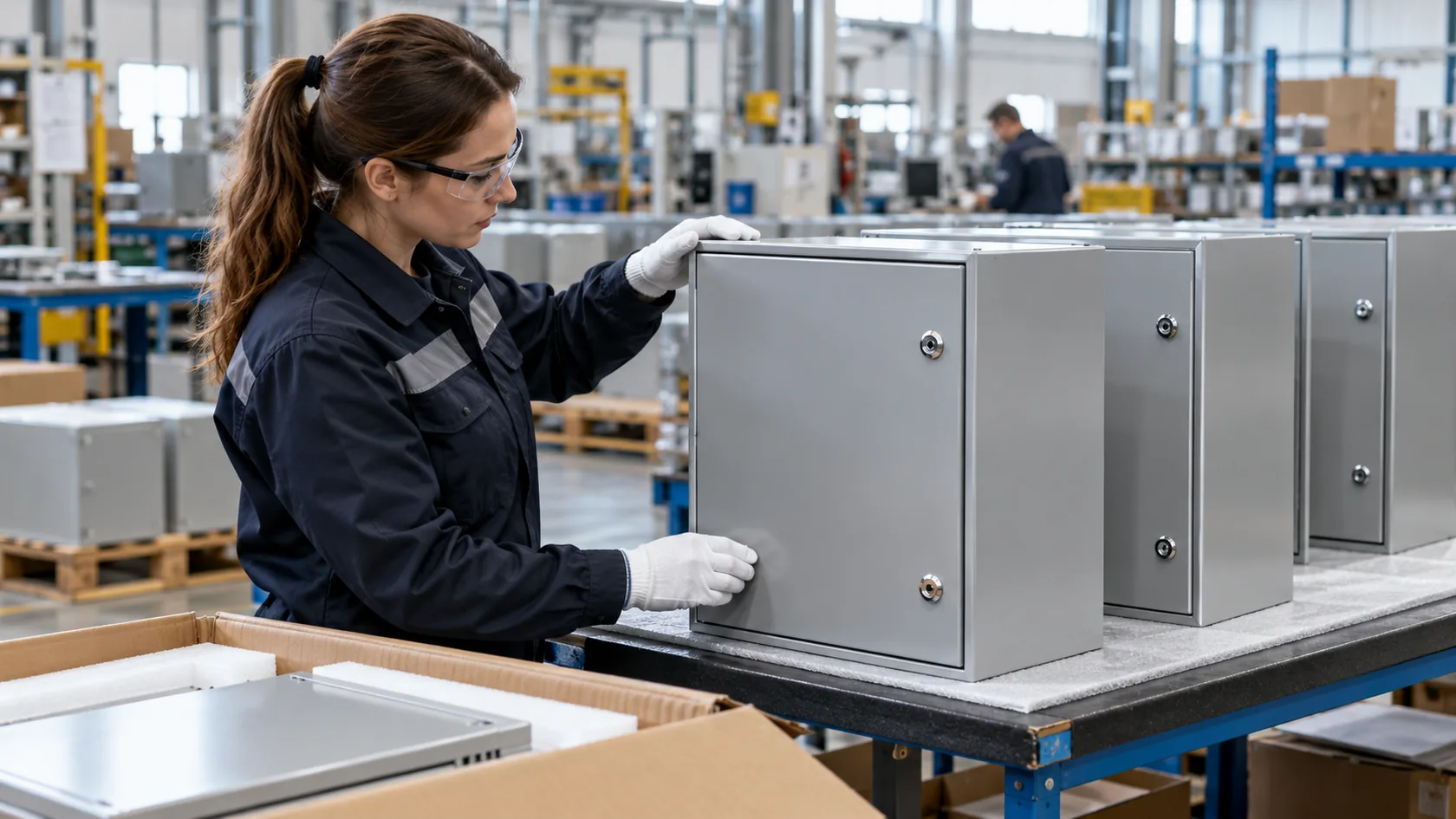
Carbon steel and stainless steel can both make reliable enclosures when their grades, fabrication and protection fit the installation. My experience is that the more expensive material is not automatically the better purchase: a clear exposure description, maintainable details and comparable quotations often make the decision easier than a generic material ranking.
Before placing an order, send the supplier the enclosure drawing, expected exposure, cleaning routine, hardware requirements and target service conditions. Review the edges, welds, cable entries and finish together, then agree on the sample inspection and any required assembly tests.