Skip to content

An ABS enclosure often enters a quotation as a simple line: black ABS, textured finish. Then the drawing accumulates a hot board, a gasketed lid, threaded inserts, a cleaning routine, and perhaps an outdoor installation. At that point, “ABS” is no longer a material choice by itself; it is a chain of decisions about grade, geometry, process, assembly, and service exposure.
I still see ABS chosen for sensible reasons. It can give an indoor electronic product a clean molded appearance and practical processing at a controlled cost. The failure starts when that reasonable starting point is turned into an all-purpose answer. Below are five material-selection mistakes that deserve attention before a tool is released.
Mistake 1: Specifying “ABS” Without an Exact Grade and Thickness
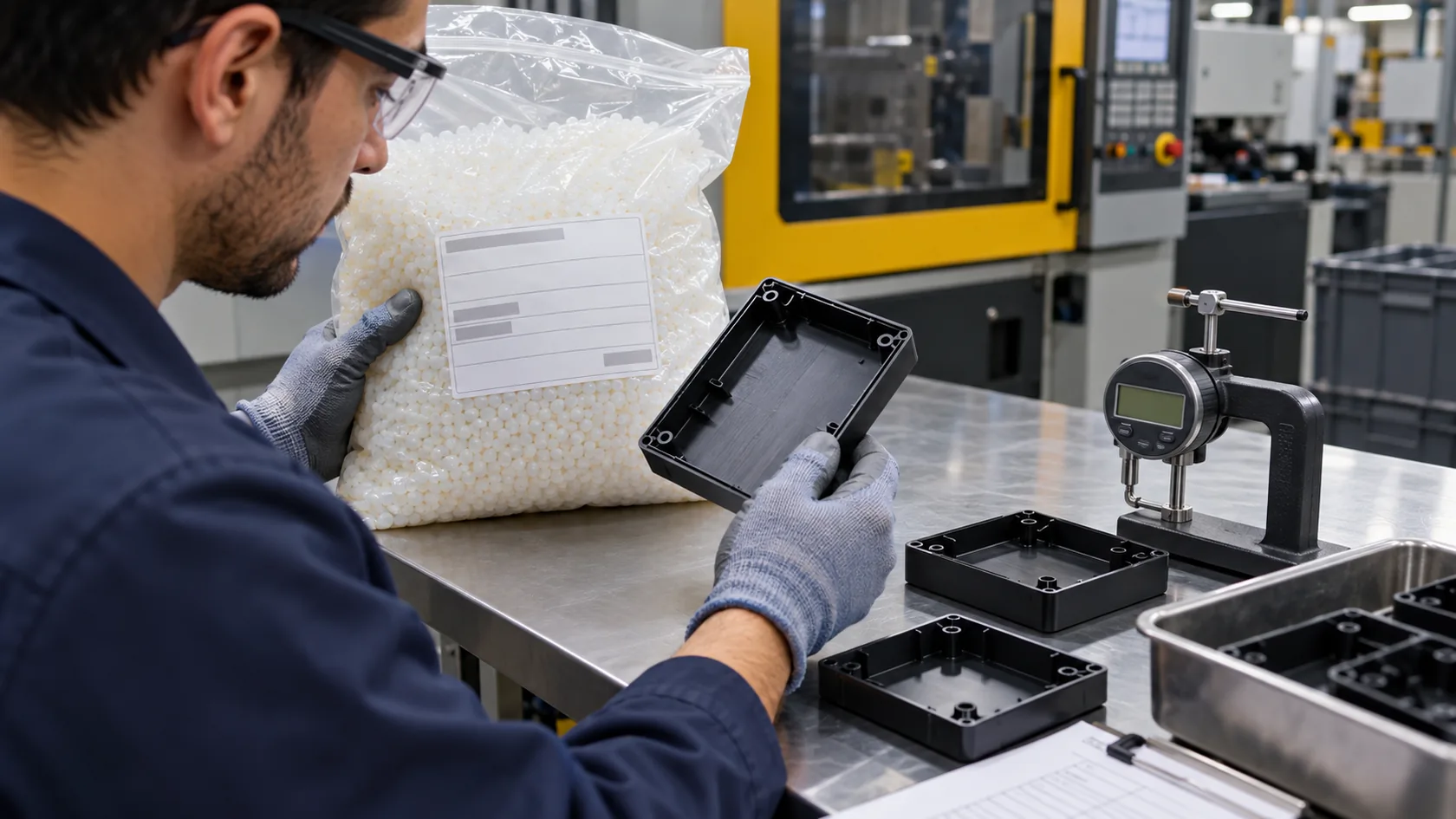
ABS is a polymer family, not a complete production specification. Different grades may be compounded for flame behavior, impact, color, flow, heat performance, or other priorities. A grade's documented behavior can also depend on the tested thickness and color. A generic note such as “ABS, flame retardant” leaves the factory and the buyer trying to infer conditions that should have been agreed in the drawing or material specification.
Match the requirement to a traceable material callout
If the device has an electrical, flame, or outdoor requirement, request the grade designation, supplier, color, wall-thickness range, and the relevant test basis. UL Solutions explains that material evaluation addresses specific properties and conditions; it is not a blanket approval for every completed product. The UL recognition database also shows why outdoor suitability and flammability need their stated conditions rather than a borrowed label.
| Weak callout | Better production question | Why it matters |
|---|---|---|
| “ABS plastic” | Which exact grade and approved alternative are permitted? | Avoids silent resin substitution |
| “V-0 enclosure” | At what thickness, color, and test basis is the grade recognized? | A material result is conditional |
| “Black housing” | Is the masterbatch approved with this grade and property set? | Color can be part of the material condition |
| “Outdoor ABS” | What weathering evaluation and product exposure are required? | Outdoor service needs its own validation |
In our factory review, I want the material purchase record to point back to the same designation that engineering approved. That is less exciting than a resin comparison chart, but it prevents a late dispute over what the first article was supposed to prove.
The next question is whether the product will see an environment that a general indoor selection never covered.
Mistake 2: Using Indoor ABS for an Outdoor Exposure Problem
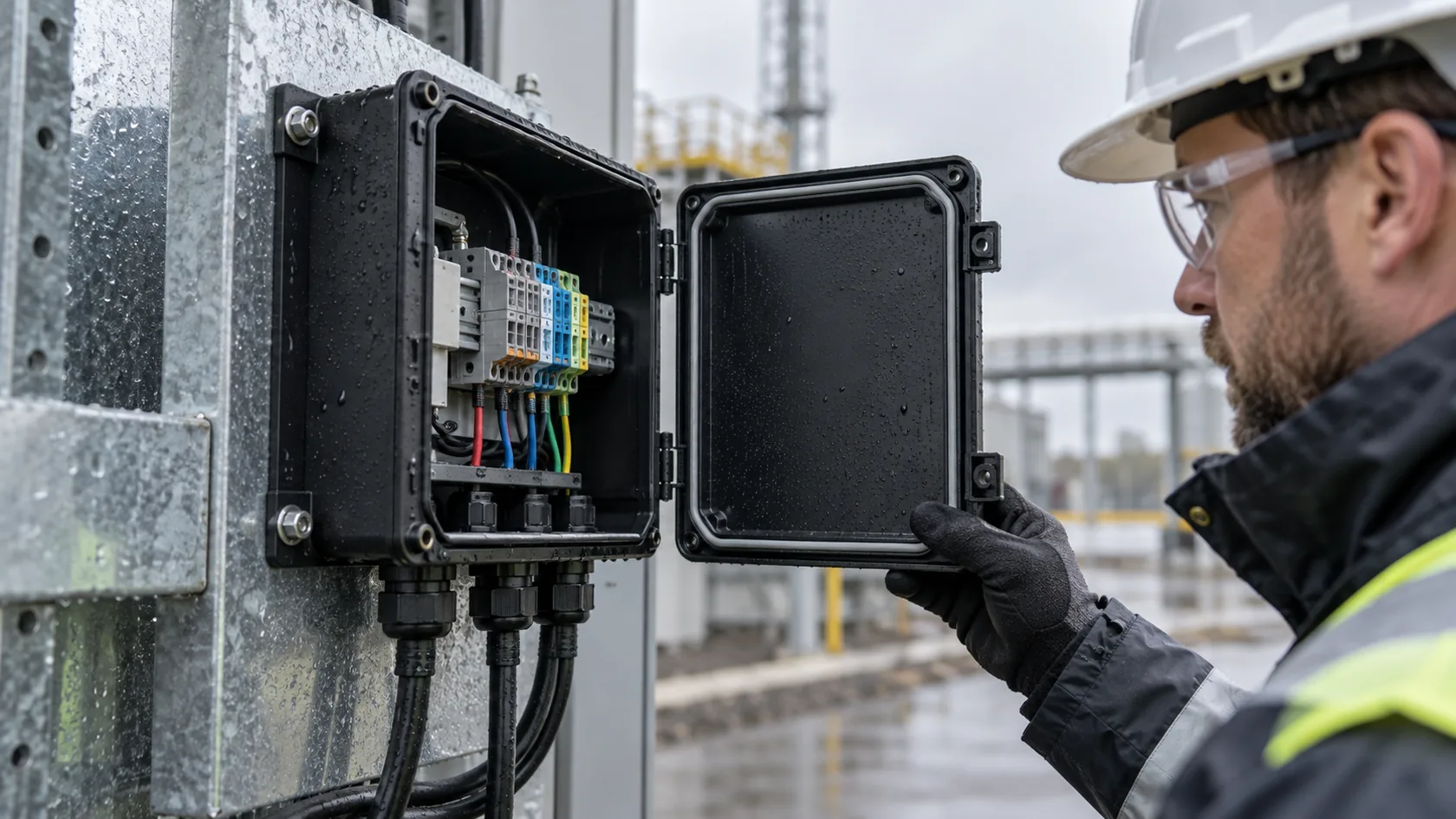
An enclosure mounted outside does not experience “weather” as one single condition. Sunlight, temperature cycling, water, humidity, contaminants, mounting direction, standing water, and maintenance all work together. A standard indoor ABS grade can be a poor assumption for that situation unless a weatherable formulation and a suitable validation plan are intentionally selected.
Do not confuse a shell with an installed enclosure
For an application that needs an ingress claim, the material is only one part of the system. Lid flatness, gasket groove, gasket compression, fastener pattern, cable-gland range, connector seals, vents, drainage, mounting angle, and assembly torque can determine the result. A resin name cannot make an unsealed cable entry watertight.
I treat outdoor ABS as a question set: Which climate? How much direct sun? Which water exposure? Which color? Which cleaning agents? How will the enclosure drain and breathe? If the application calls for outdoor recognition, the selected grade and thickness must line up with the applicable requirement; it should not be inferred from a photograph of a black box.
This environmental review naturally connects to another common shortcut: assuming that a tougher-looking wall has solved the heat problem inside it.
Mistake 3: Asking ABS to Fix a Poor Thermal Design

ABS can be useful in many electronic housings, but it cannot compensate for an undefined thermal path. A warm PCB inside a more sealed box may see higher internal temperatures. A dark enclosure in direct sun has a different heat load from the same unit on an indoor bench. Component spacing, power duty cycle, airflow, mounting surface, vents, internal shields, and user access all belong in the material discussion.
Test the real temperature picture
Do not turn a broad “heat-resistant” claim into a pass/fail decision. Define the expected heat sources and duty cycle, then use the selected grade's documentation and a representative prototype to judge the design. If ventilation is required, review its impact on ingress protection. If sealing is required, review the resulting internal temperature and condensation risks. If a metal heat path crosses the housing, review electrical isolation, fasteners, contact pressure, and expansion together.
My practical preference is to measure the prototype before debating a small resin price difference. The measurement should represent the intended load, lid, fasteners, cables, and mounting condition—not a conveniently open sample on a cool bench.
Once the thermal boundary is understood, the molded geometry becomes the next place where a material decision can be quietly undone.
Mistake 4: Treating Molded Geometry as Material-Neutral
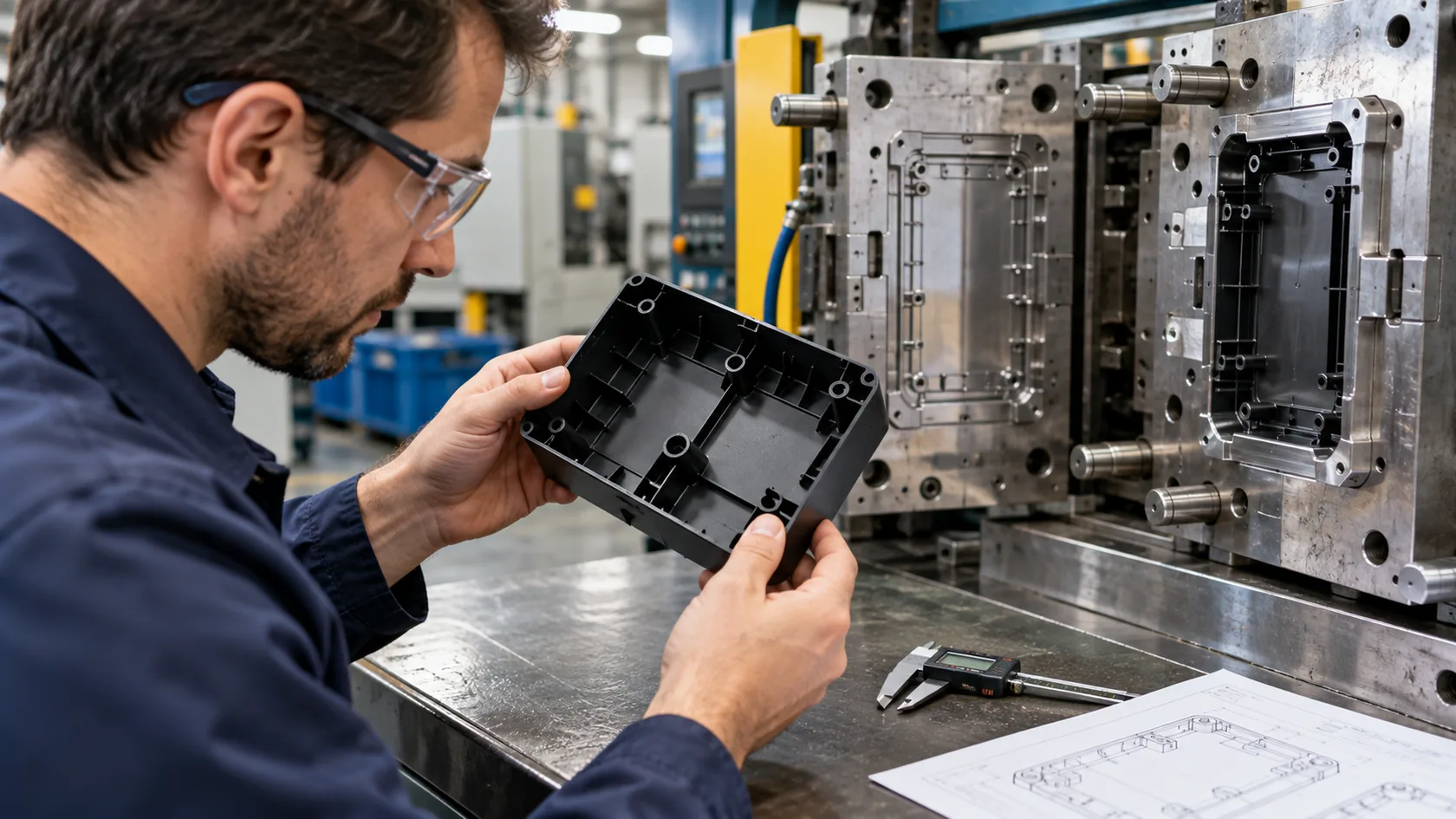
An ABS grade has flow, shrinkage, and processing behavior, but those properties meet the real world through wall sections, corners, ribs, bosses, texture, gates, cooling, and ejection. Changing a resin without reviewing those features can affect flatness, cosmetic quality, assembly fit, and mold settings even when the CAD model has not moved.
Let DFM review the features that fail first
Protolabs' molding guidance correctly emphasizes reasonably consistent wall thickness to reduce distortion. Its ABS guidance gives a general wall range, but that range is not a substitute for the selected grade, flow length, part size, and molder's analysis. Thick corners and overbuilt bosses can cool differently from the main wall; sharp transitions may concentrate stress; insufficient draft can damage surfaces during ejection.
For electronics housings, I review screw-boss bases, snap hooks, display cutouts, cable exits, and perimeter sealing faces on the same DFM call. I would rather add a controlled rib or revise a transition before steel is cut than explain later why a lid rocks, a boss sinks, or a textured face shows a shadow.
The geometry discussion must continue into assembly, because a part that looks fine straight from the mold can still fail after the first technician tightens a screw.
Mistake 5: Skipping Chemical and Assembly-Stress Checks
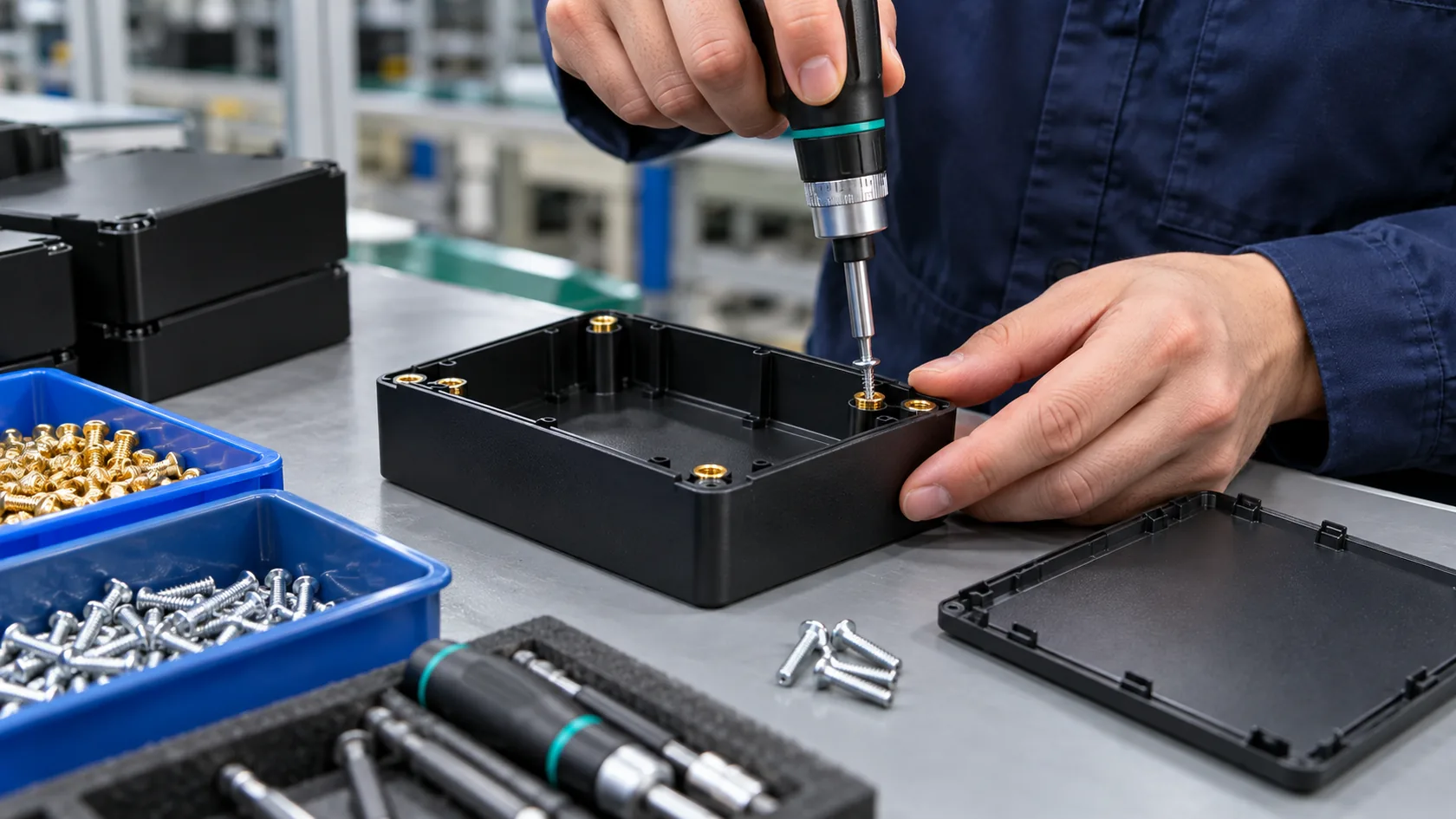
ABS housings often meet cleaners, oils, adhesives, labels, thread lockers, lubricants, and handling damage after they leave the molding line. They also see local stresses at threaded inserts, self-tapping screws, snap fits, and cable clamps. A cosmetic sample that survives one careful assembly is not proof that a serviceable product will survive its intended life.
Validate the things that touch the part
List the actual contact materials and assembly actions: cleaner name, oil or lubricant, adhesive or tape, insert process, fastener type, torque range, snap-fit opening cycles, and cable strain. Then check those conditions against the selected material supplier's guidance and, where risk remains, test representative samples. The same review should include sharp edges, weld lines, notches, and any feature that is loaded while warm.
In practice, I pay special attention to “minor” assembly changes. A different screw tip, an unapproved thread locker, or excessive insert heat can create a crack that only appears after packing or field service. Those are not merely production issues; they are material-system issues.
With the five common mistakes visible, a short validation plan can turn an ABS choice from an assumption into an engineering decision.
Validate the Whole Enclosure Before Production
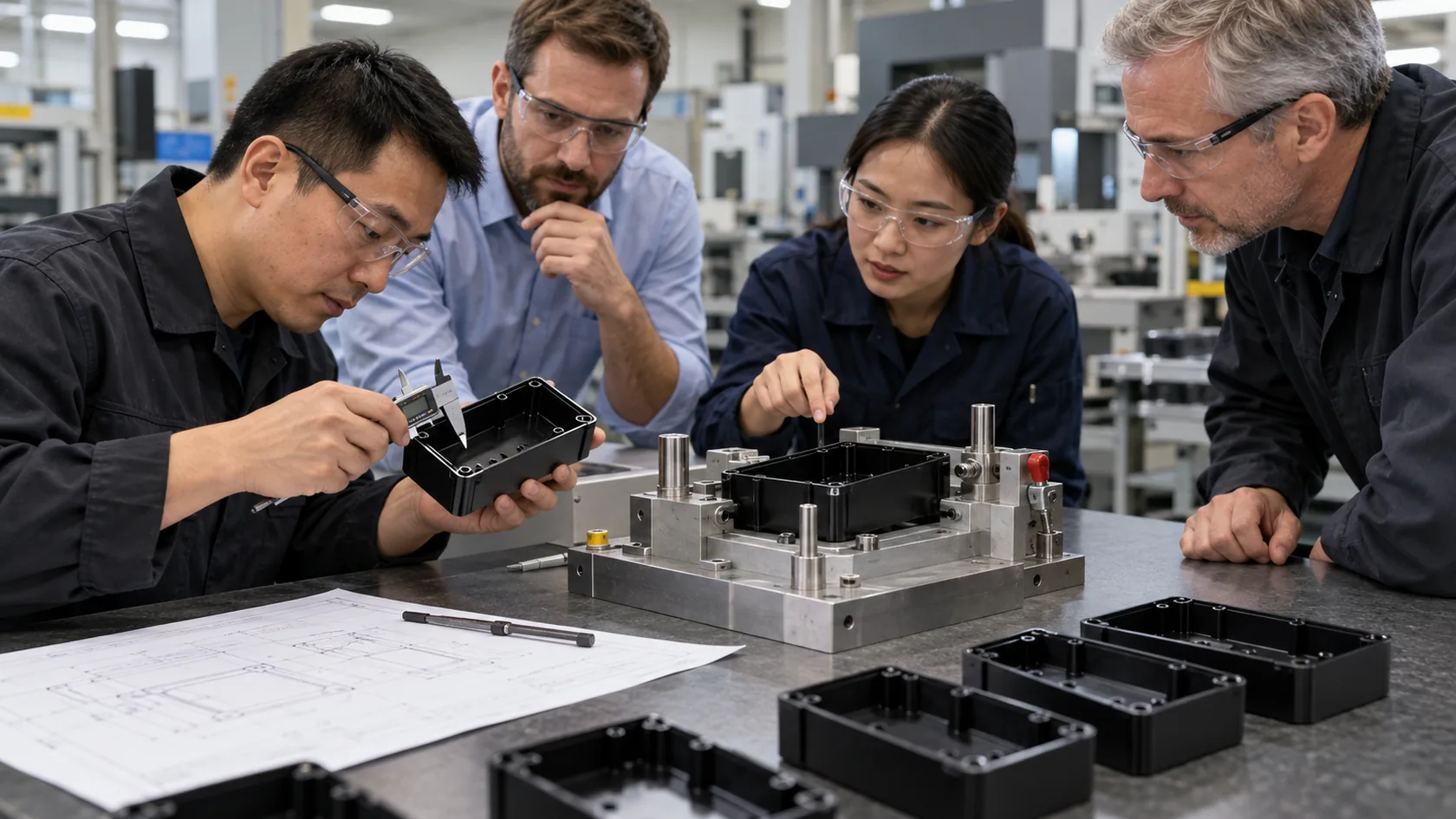
The most useful ABS selection plan follows the actual product path, from procurement through molding and assembly to service. It gives the factory a clear target and gives the buyer evidence that the first articles represent the intended configuration.
A practical pre-tool and first-article checklist
- Record the exact candidate grade, supplier, color, approved alternatives, and required thickness range.
- Define indoor or outdoor exposure, UV, water, humidity, cleaners, oils, drops, heat sources, duty cycle, and mounting orientation.
- Confirm applicable material and end-product requirements separately, including the relevant test configuration.
- Review DFM: nominal walls, transitions, ribs, bosses, draft, gates, ejection, texture, inserts, snap fits, and sealing surfaces.
- Build a representative sample with the intended PCB, lid, gasket, cable entries, fasteners, and mounting arrangement.
- Agree inspection criteria for color, texture, flatness, fit, screw assembly, labels, and packaging before volume production.
I find that this checklist is most valuable before anyone feels pressure to “just start the mold.” It makes a later PC, PC/ABS, or formulated ABS comparison fair because every candidate is being judged against the same product conditions.
That disciplined approach also makes the final purchasing decision simpler: buy the material system the product needs, rather than the shortest phrase on the quote.
Build a Better ABS Material Brief
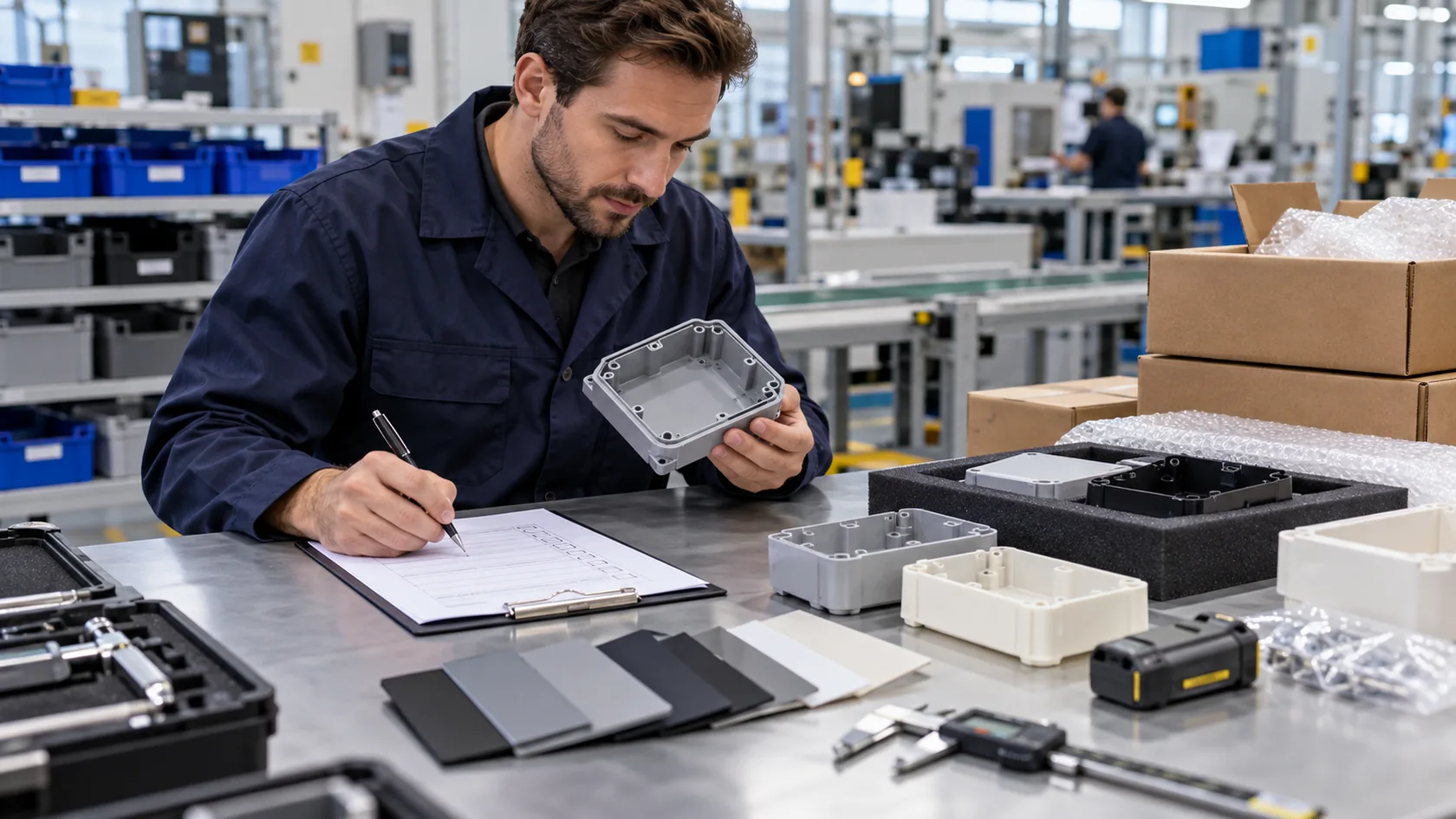
The buyer does not need to become a polymer specialist to make a reliable request. The goal is simply to give the designer, molder, and material supplier enough context to identify risks before they become tooling changes or field returns.
Information worth sending with the drawing
| Send to the factory | Ask the factory to return |
|---|---|
| Application, exposure, and mounting description | Candidate grade, constraints, and permitted substitute process |
| PCB heat, duty cycle, and cable/connector layout | DFM comments on walls, bosses, draft, gates, and sealing faces |
| Required tests or standards and their configuration | Traceable material documentation and sample validation plan |
| Color, texture, labeling, and cosmetic expectations | First-article inspection points and acceptance samples |
| Target volume and design-change risk | Tooling assumptions and cost impact of unresolved features |
For a product that really needs greater heat or impact margin, I would ask for a controlled comparison of exact ABS, PC/ABS, or PC grades on the same geometry. Covestro notes that PC/ABS blends are formulated to balance mechanical and thermal behavior with processing and surface appearance; that is useful context, not a reason to substitute a blend without re-checking the approved system.
The better brief leaves less room for a well-meaning supplier to guess—and more room for the factory to flag a real risk early.
Conclusion

ABS can be a sound enclosure choice when the grade, molded geometry, assembly method, and service environment agree. The costly mistakes are usually not that someone selected ABS; they are that the selection stopped at the word “ABS.” I have seen the strongest projects start with a material callout that is traceable, a DFM review that includes the sealing and assembly features, and a representative validation sample.
If you are preparing an electronic enclosure for tooling, send the drawing with its heat sources, cable entries, cleaners, mounting environment, and required approvals. We can review the material brief and the high-risk features before the decision gets locked into a mold.