Skip to content
Many enclosure buyers like rankings.
I understand why.
A corrosion resistance ranking looks clean. One material sits at the top. Another material sits in the middle. A cheaper one sits lower. It feels like the answer is already there. If stainless steel ranks higher than aluminum, just choose stainless steel. If plastic does not rust, maybe choose plastic. If a chart says one coating passed many hours of salt spray testing, maybe it must be safe.
Simple.
But real enclosure projects are not that polite.
In my factory work, I have seen buyers send one short message: “Which material has the best corrosion resistance?” Sometimes they attach a ranking chart from the internet. Sometimes they ask for 316 stainless steel before I even know where the enclosure will be used. And sometimes, after a few questions, the story changes completely.
The enclosure may be used near the sea.
Or inside a food processing room.
Or outdoors in Finland, where freezing, moisture, and road salt may matter more than a simple material table.
Or inside a machine, where oil mist, heat, vibration, and scratches attack the surface every day.
This is where corrosion rankings can mislead buyers. They are not useless. They are a starting point. But they can become dangerous when buyers treat them like the final decision.
I do not judge corrosion resistance only by the material name, because the wrong coating, poor design, or bad installation can make an expensive enclosure fail faster than a cheaper but better-matched one.
That small difference matters.
For a B2B buyer, an enclosure is not just a box. It protects electronics, terminals, control boards, sensors, power units, and customer products. If corrosion starts, the buyer may not only lose the enclosure. They may lose the device inside it. They may lose time. They may lose trust from their own customers.
So in this article, I want to talk about why corrosion resistance rankings can mislead enclosure buyers. I will explain how these rankings are created, why real environments are more complex, and how I usually think before choosing aluminum, stainless steel, plastic, galvanized steel, or surface treatments.
Not from a textbook angle.
From a real factory and project angle.
Because in custom enclosure manufacturing, the best choice is not always the highest-ranked material.
Sometimes the best choice is the material that fits the environment, budget, coating, structure, and service life together.
And that is where good purchasing decisions begin.
What Are Corrosion Resistance Rankings and How Are They Created?
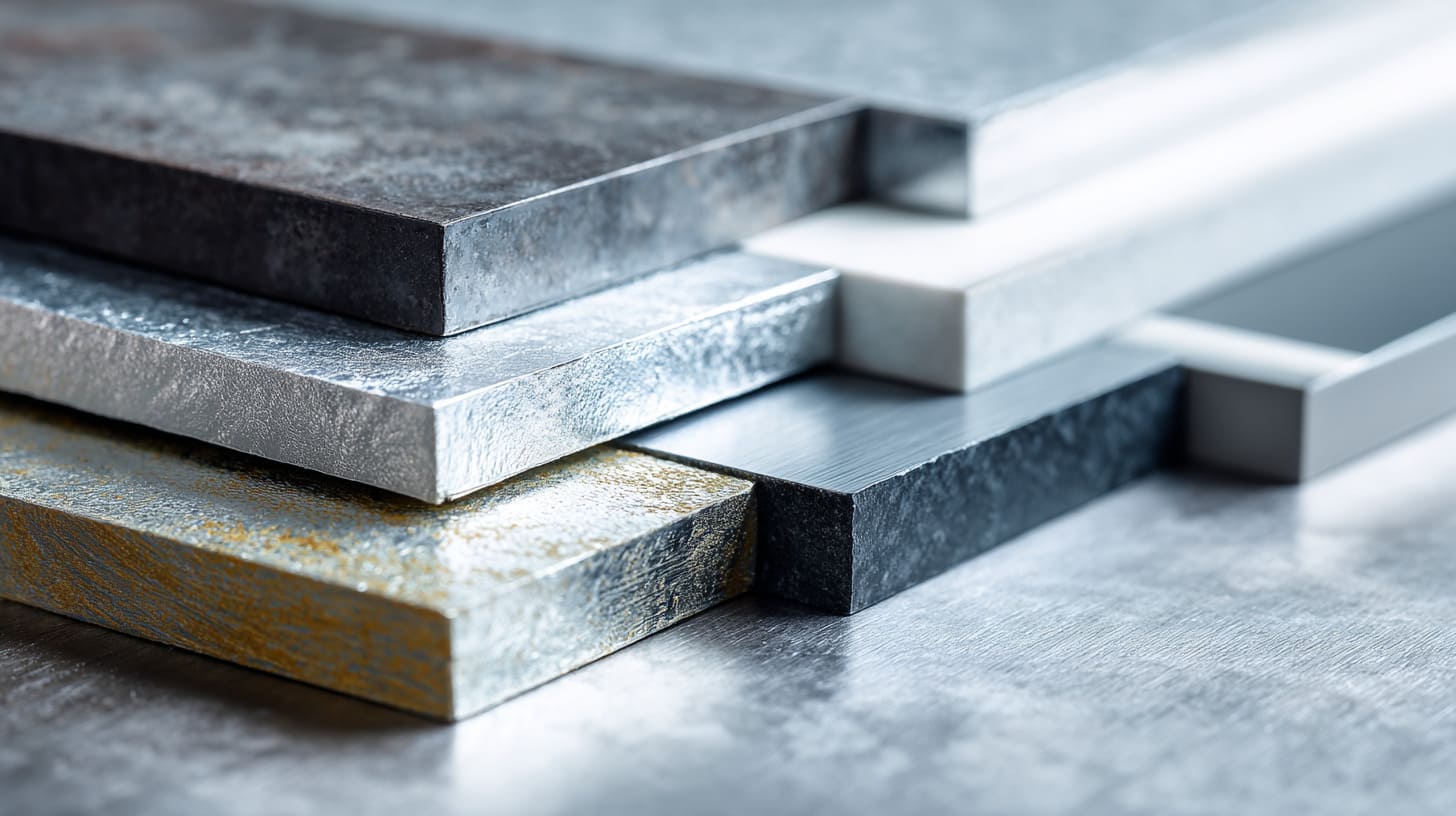
Corrosion resistance rankings are comparison tools. They try to show how different materials resist rust, oxidation, chemical attack, salt, moisture, or other forms of surface damage.
For a buyer, this looks useful. I get it. If someone has to choose between aluminum, stainless steel, galvanized steel, and plastic, a ranking chart can save time. It gives quick direction.
But the problem starts when the chart looks more certain than it really is.
A ranking is usually made under specific test conditions. It does not always match the buyer’s actual working environment. It may compare base materials only. It may ignore surface treatment. It may ignore scratches, drainage, assembly gaps, screw materials, or coating thickness.
The first thing I want to know is not “Which material ranks highest?” but “What exact environment will attack this enclosure after installation?”
That question changes almost everything.
Common corrosion resistance rating systems
Many rankings are based on tests, standards, or industry experience. Some are simple material charts. Others are based on formal tests.
Common sources include:
| Ranking source | What it usually shows | What buyers may misunderstand |
|---|---|---|
| Material comparison charts | General corrosion resistance of metals or plastics | They may not reflect actual outdoor use |
| Salt spray testing | How coatings or materials perform in a salty mist chamber | More hours do not always mean longer real life |
| ASTM standards | Test methods for corrosion, coating, or material behavior | Standards describe testing, not always product success |
| ISO standards | International testing methods and performance categories | Test results still need application judgment |
| Supplier data sheets | Material or coating claims from suppliers | Data may be based on ideal samples |
Salt spray testing is one common example. Buyers often like it because the number is easy to understand.
“Passed 500 hours.”
“Passed 1,000 hours.”
“Passed 2,000 hours.”
It sounds strong. But a salt spray chamber is not the same as a real outdoor site. In real use, the enclosure may face sun, rain, dry cycles, dust, chemicals, scratches, bolts, and temperature changes. A test chamber cannot fully copy that.
So a salt spray result can be helpful, but it should not become the only decision tool.
Materials commonly compared in rankings
Most enclosure buyers compare these materials:
| Material | Common buyer assumption | More practical view |
|---|---|---|
| Aluminum alloy | Good corrosion resistance and light weight | Very good when alloy and surface treatment are correct |
| Stainless steel | Best choice for corrosion resistance | Strong, but grade and environment matter a lot |
| Carbon steel | Weak against corrosion | Needs coating, painting, or plating |
| Galvanized steel | Better than normal steel | Zinc layer helps, but cut edges and scratches matter |
| Plastic enclosure | Does not rust | Good against rust, but UV, heat, and strength must be checked |
This is why a ranking can be tricky.
A bare aluminum plate is different from anodized aluminum. A powder-coated carbon steel enclosure is different from bare carbon steel. A 304 stainless steel enclosure is different from 316 stainless steel near seawater. A plastic enclosure may resist rust, but it may deform under heat or crack under impact.
So when I see a ranking, I treat it like a map.
Useful, yes.
But not the road itself.
Why rankings appear attractive to buyers
Rankings are attractive because they reduce stress.
A buyer may be comparing five suppliers and ten material options. He may be under pressure from his engineering team. He may need to send a quick answer to his boss. He may not have time to study coating chemistry or local weather.
So a ranking chart feels like a shortcut.
It helps with:
- Quick material comparison
- Early design discussion
- Budget planning
- Supplier filtering
- Internal communication with engineering teams
But a shortcut can also hide risk.
For example, a buyer may choose stainless steel because it ranks higher than aluminum. But if the project needs a lightweight enclosure with CNC machining, heat dissipation, and brand anodizing, aluminum may perform better overall.
Another buyer may choose plastic because it cannot rust. But if the enclosure will sit under strong sunlight for years, normal plastic may age faster than expected unless the resin and UV rating are suitable.
The chart gives confidence.
Real projects ask questions.
That is the difference.
A ranking may help a buyer open the conversation, but it should never close the conversation.
The interesting part is what happens after the chart leaves the computer screen and the enclosure enters rain, heat, dust, salt, hands, tools, trucks, and real users.
That is where many beautiful rankings start to lose their shine.
Why Corrosion Rankings Often Fail to Reflect Real-World Conditions
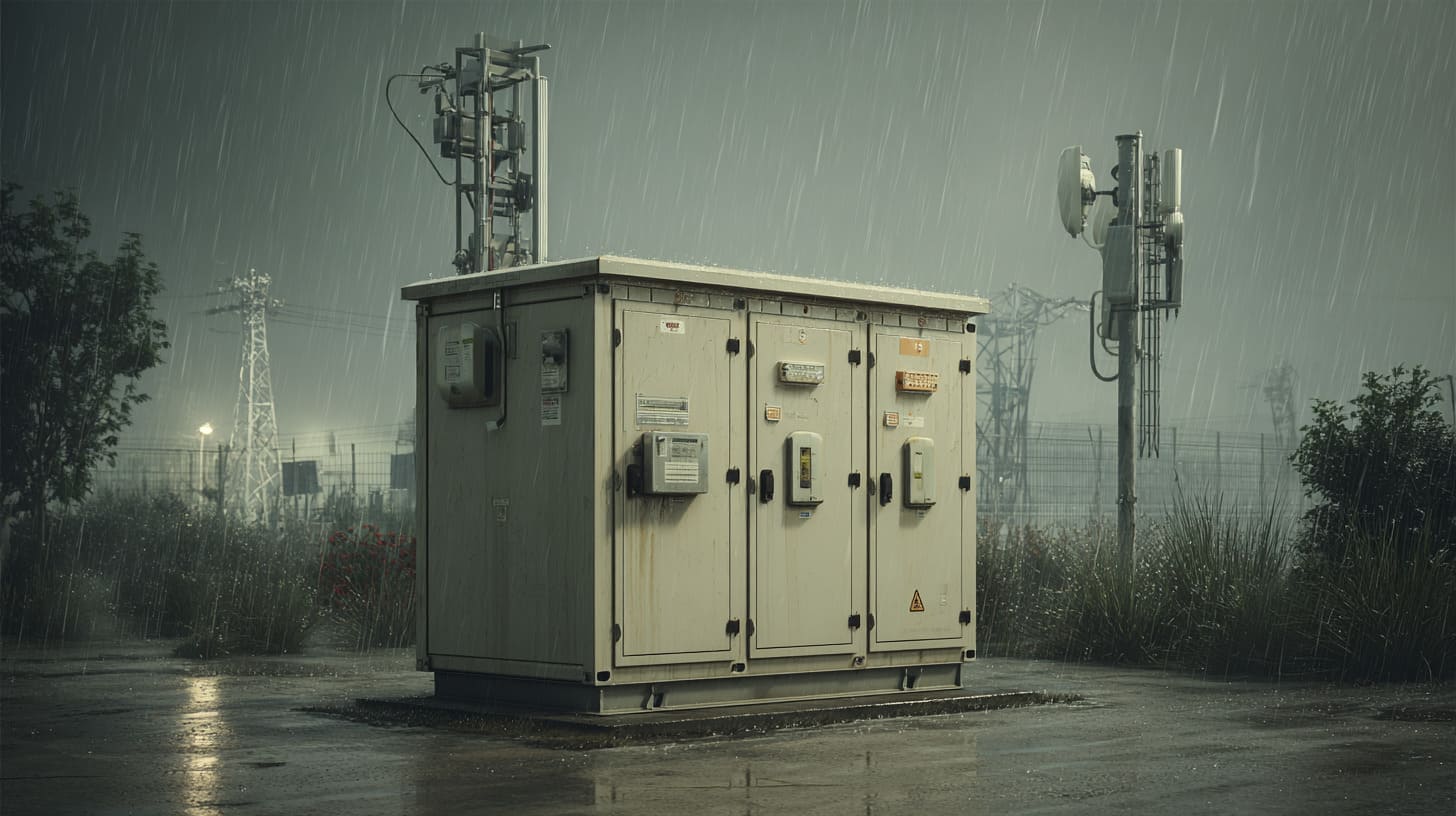
Real-world corrosion is messy.
It does not follow a neat ranking table. It attacks weak points. It finds scratches. It sits inside gaps. It hides under washers. It starts at cut edges. It grows where water cannot drain.
I have seen buyers worry about the material plate, but ignore the screw, gasket, hinge, vent, weld seam, or drainage hole. That is like buying a strong door and forgetting the lock.
The project risk often hides in the small places where the ranking chart says nothing.
Laboratory testing versus actual environments
Laboratory tests are useful because they control variables. The test team can control humidity, salt mist, temperature, exposure time, and sample position.
That makes the result easier to compare.
But actual use is not controlled.
An outdoor enclosure may face:
- Rain in the morning
- Strong sunlight at noon
- Dust in the afternoon
- Condensation at night
- Salt in the air
- Vibration from equipment
- Cleaning chemicals from workers
- Scratches during installation
These conditions do not attack the enclosure one by one. They attack together.
That is why lab testing and field use can produce different results.
| Test condition | Real-world condition |
|---|---|
| Stable salt mist | Wet and dry cycles |
| Clean sample surface | Dust, oil, fingerprints, scratches |
| Fixed temperature | Hot days and cold nights |
| Flat test panel | Bent parts, holes, seams, screws |
| Short test duration | Years of exposure |
| Controlled chemical type | Mixed pollution and cleaning fluids |
A ranking often shows material behavior in a clean setting.
But an enclosure is a formed product. It has corners, holes, fasteners, seams, labels, coatings, inserts, gaskets, and sometimes mixed materials.
Each detail can change corrosion behavior.
Different industries face different corrosion threats
A corrosion ranking may say one material is better than another. But better for what?
That question matters.
A marine environment is not the same as a factory floor. A food processing room is not the same as a telecom tower. A chemical warehouse is not the same as a home electronics project.
Different industries create different corrosion risks.
| Application | Main corrosion risks | Common material thinking |
|---|---|---|
| Marine equipment | Salt air, splash, chloride | 316 stainless steel, coated aluminum, suitable plastic |
| Outdoor telecom | Rain, UV, temperature changes, pollution | Powder-coated aluminum, stainless steel, UV-resistant plastic |
| Food processing | Moisture, cleaning chemicals, hygiene needs | Stainless steel, selected plastics |
| Industrial control | Oil mist, heat, dust, chemicals | Coated steel, aluminum, stainless steel |
| Indoor electronics | Low moisture, handling scratches | Aluminum, plastic, painted steel |
| Roadside equipment | Rain, dust, road salt, vibration | Coated metal, stainless steel, sealed design |
A buyer may ask, “Which one has the best corrosion resistance?”
But I may ask back:
- Will it be used indoor or outdoor?
- Is there salt in the air?
- Will workers clean it with chemicals?
- Will it touch water directly?
- Will it be scratched during use?
- How many years should it last?
- Is weight important?
- Is heat dissipation important?
These questions are not delays. They are protection.
A good enclosure choice is not made in the ranking table. It is made in the actual use case.
Exposure time can change performance dramatically
Many materials look fine in the first month.
The real test begins later.
Corrosion can be slow. It may start as small stains. Then it becomes surface pitting. Then coating starts to lift. Then rust spreads under the surface. Then screws become difficult to remove. Then the enclosure looks old, even if the inside still works.
For buyers who sell finished products under their own brand, this is painful.
The enclosure may still function, but the customer sees rust and thinks the whole product is low quality.
That is not only a technical issue.
It becomes a brand issue.
| Time frame | What buyers may see | What it may mean |
|---|---|---|
| First few weeks | Surface looks fine | No clear corrosion yet |
| 3–6 months | Small stains or edge marks | Coating or material may be under stress |
| 1–2 years | Blistering, pitting, rust marks | Environment and protection may not match |
| 3–5 years | Fastener corrosion, coating failure | Design and maintenance become important |
| Longer use | Structural or sealing problems | Material choice may affect full product life |
This is why I always care about expected service life.
A buyer making a short-term indoor device may not need the most expensive material. A buyer making outdoor industrial equipment may need a more serious protection plan.
The ranking does not know the product’s life target.
The buyer and manufacturer must define it.
And once we talk about service life, we naturally move to one of the biggest missing pieces in many rankings: surface treatment.
How Surface Treatments Can Completely Change Corrosion Performance
Surface treatment can turn a normal material into a strong material.
It can also turn a strong material into a weak product if it is done poorly.
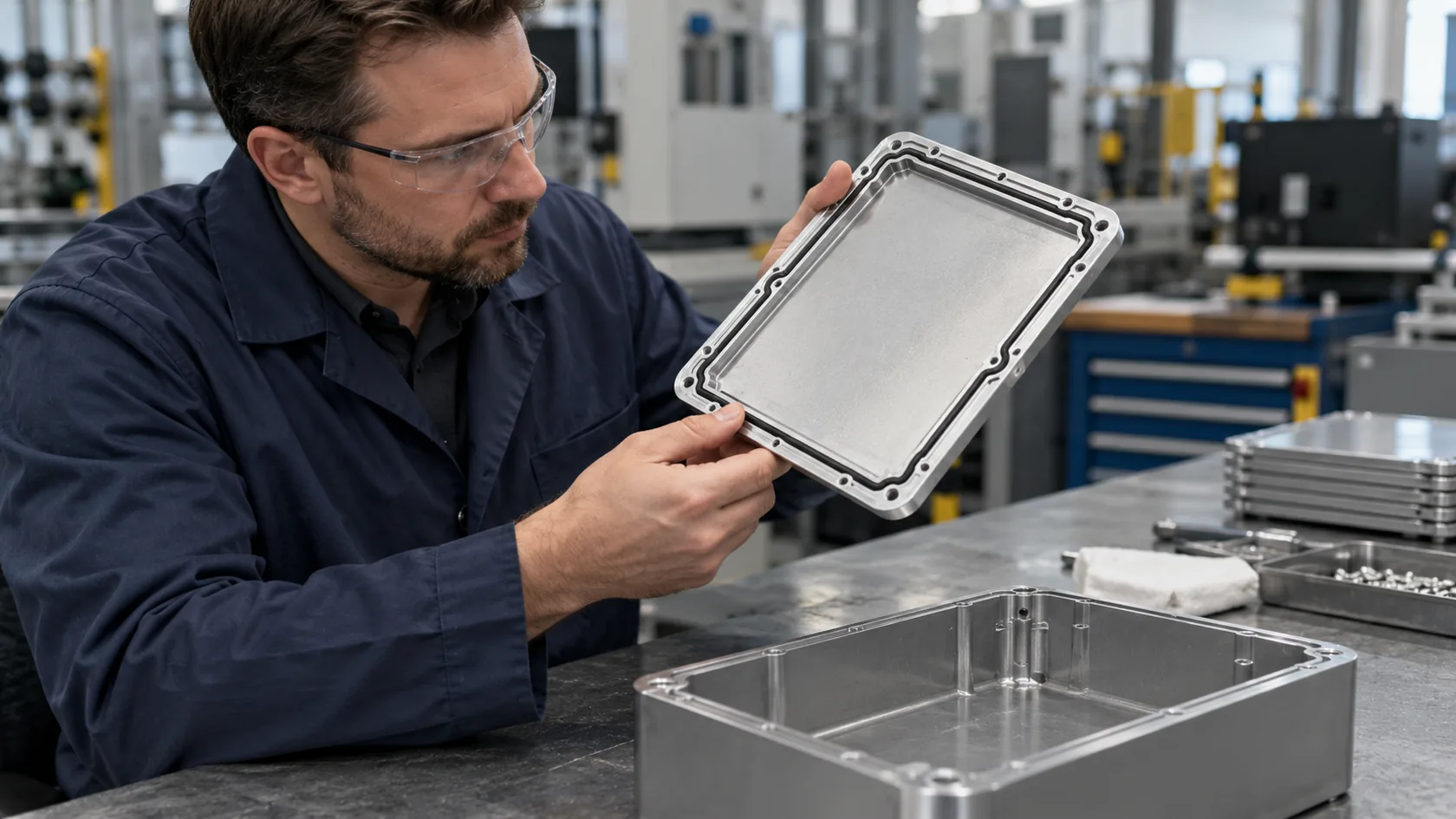
This is where many enclosure buyers make mistakes. They compare aluminum with steel or stainless steel with galvanized steel, but they do not ask enough about anodizing thickness, powder coating quality, pretreatment, edge coverage, or finishing process.
A material ranking may tell me the base material, but the surface treatment tells me how the enclosure will fight the real world.
I often care more about the coating process than the material name, because a bad finish can destroy a good material choice faster than buyers expect.
The role of anodizing for aluminum enclosures
Aluminum naturally forms a thin oxide layer. This layer helps protect the surface. But for many custom enclosures, natural oxidation is not enough.
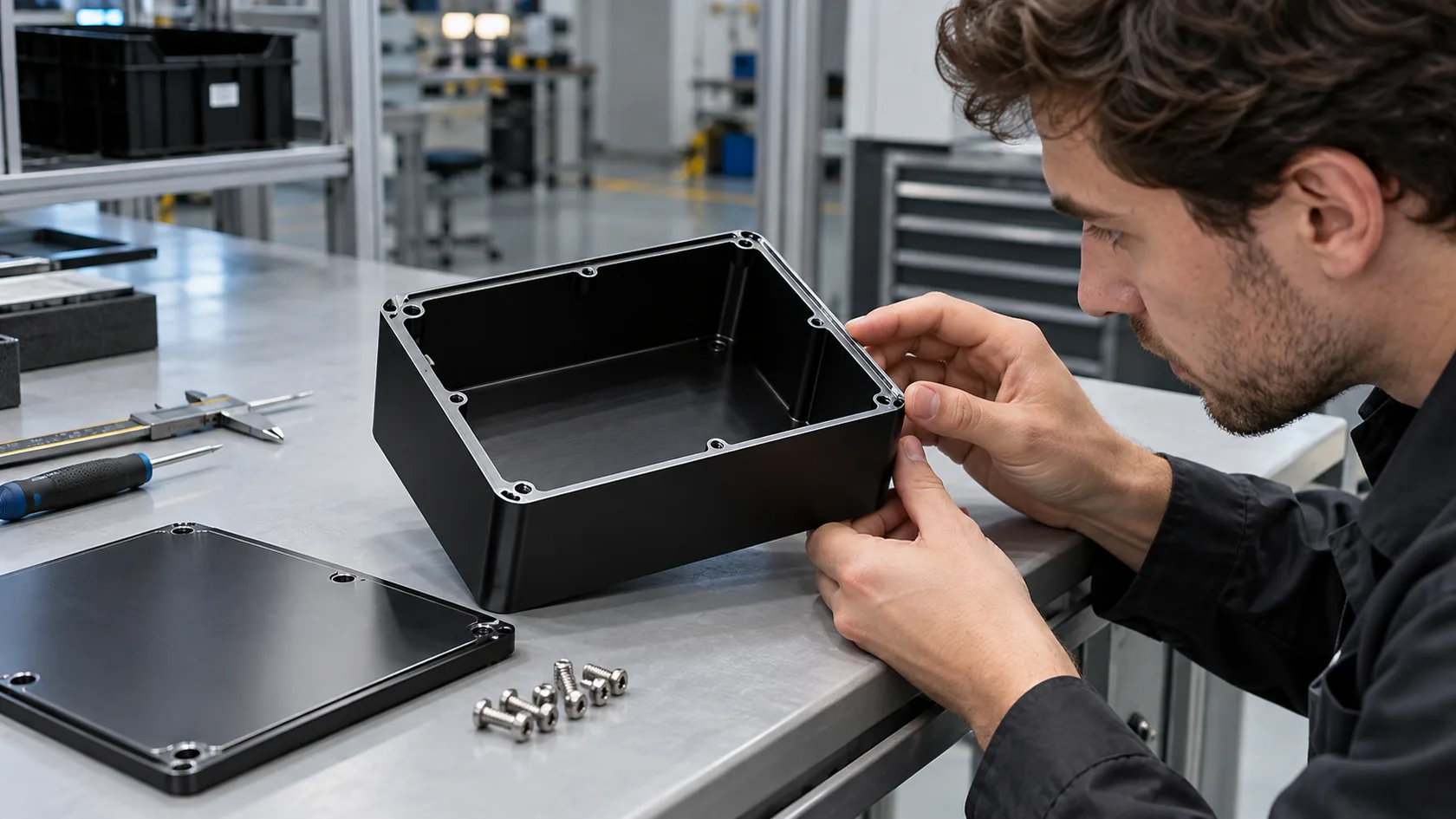
Anodizing can improve the surface. It creates a controlled oxide layer. It can improve corrosion resistance, surface hardness, and appearance. It can also support color options for branding.
This is why many buyers like anodized aluminum enclosures.
They look clean.
They feel professional.
They work well for electronics, instruments, control products, Raspberry Pi-style cases, and many OEM projects.
But anodizing is not one magic word.
Thickness matters. Sealing quality matters. The aluminum alloy matters. The final use environment matters.
| Anodizing factor | Why it matters |
|---|---|
| Coating thickness | Thicker layers usually improve protection |
| Sealing process | Poor sealing can reduce corrosion resistance |
| Aluminum alloy | Some alloys anodize better than others |
| Surface preparation | Scratches and machining marks affect finish |
| Color choice | Some colors may show scratches more clearly |
| Application environment | Outdoor, marine, or chemical use needs extra care |
For example, a black anodized aluminum enclosure may look beautiful for a desktop product. But if it is used outdoors with strong sun, rain, and rough handling, we need to think about color fading, scratches, and sealing.
This does not mean anodizing is bad.
It means the process must match the project.
Powder coating and painted finishes
Powder coating is common for metal enclosures. It can be used on aluminum and steel. It provides color, surface protection, and a clean appearance.
Many buyers like powder coating because it offers:
- Flexible color options
- Better surface coverage
- Brand matching
- Good outdoor performance when specified correctly
- Better protection for steel parts
But powder coating also has weak points.
Coating failure often starts at corners, cut edges, holes, welds, or areas with poor pretreatment. If the coating is scratched, moisture may enter. If pretreatment is poor, the coating may peel. If the coating is too thin, protection may be weak. If it is too thick, assembly may become difficult.
| Powder coating issue | Possible result |
|---|---|
| Poor surface cleaning | Coating adhesion failure |
| Thin coating on edges | Early corrosion at corners |
| Scratches during assembly | Local rust or oxidation |
| Wrong powder type | Poor UV or chemical resistance |
| Bad curing control | Weak coating strength |
| Tight holes after coating | Assembly problems |
For custom enclosures, powder coating is not only a color choice.
It is part of the protection system.
I have seen buyers focus on RAL color codes but ignore the usage environment. That is risky. A nice color does not protect anything if the coating system is wrong.
Electroplating and conversion coatings
Some enclosures or components use zinc plating, chromate conversion coatings, or other chemical treatments. These are often used for steel parts, aluminum parts, fasteners, brackets, and internal structures.
They may not always be visible like powder coating or anodizing, but they matter.
For example, zinc plating can help steel resist rust. Conversion coating can help aluminum improve corrosion protection or improve paint adhesion.
But again, the detail matters.
| Treatment | Common use | Main caution |
|---|---|---|
| Zinc plating | Steel parts, screws, brackets | Cut edges and scratches can expose steel |
| Chromate conversion | Aluminum pretreatment or light protection | Environmental rules and coating type matter |
| Phosphate treatment | Steel before painting | Needs proper coating after treatment |
| Passivation | Stainless steel surface improvement | Does not make stainless steel invincible |
Many buyers never ask about fasteners.
But screws rust too.
If a nice aluminum enclosure uses poor screws, the final product may still look cheap after months of use. Rust marks may run down from the screw head. The enclosure body may be fine, but the customer only sees the stain.
Small parts. Big impression.
Why base material rankings alone can be misleading
A base material ranking is like judging a person only by height.
It tells you something.
But not enough.
For enclosures, real corrosion performance depends on a full system:
| Factor | Why it changes corrosion performance |
|---|---|
| Base material | Sets the basic corrosion behavior |
| Surface treatment | Adds protection and appearance |
| Product design | Controls water traps, edges, and sealing |
| Fastener material | Prevents rust stains and galvanic issues |
| Installation method | Affects scratches, drainage, and exposure |
| Maintenance | Changes long-term appearance and function |
| Environment | Defines the real attack level |
A powder-coated steel enclosure can outperform bare steel by a huge margin. An anodized aluminum enclosure can be a very smart choice for many electronics projects. A stainless steel enclosure can still fail in chloride-rich areas if the grade is wrong.
That is why I do not like blind ranking decisions.
They feel safe at the beginning.
But they may create surprise later.
And one of the biggest surprises often appears around stainless steel, because many buyers treat it like a perfect material.
It is not.
Why Stainless Steel Rankings Can Be Misunderstood
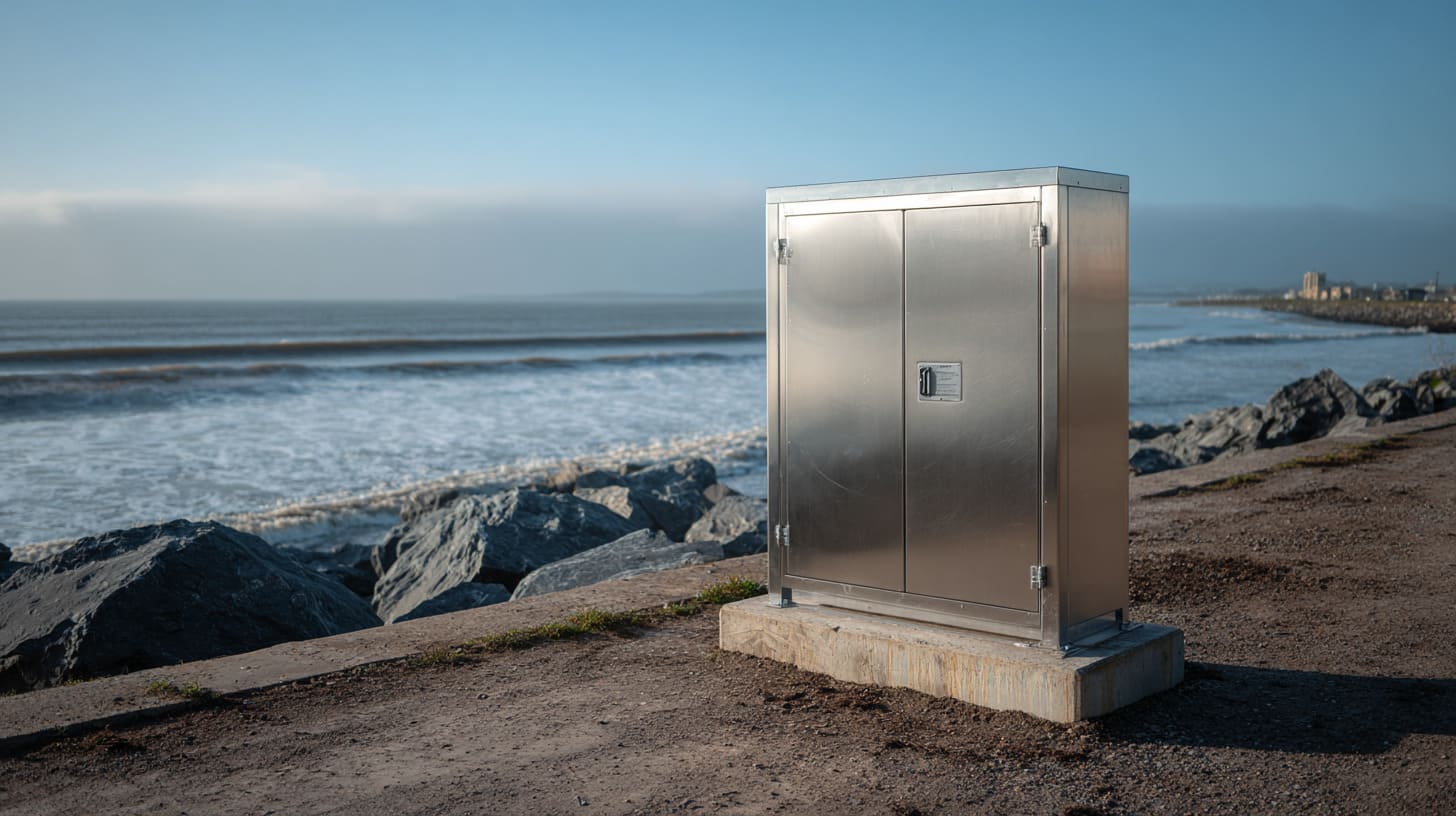
Stainless steel has a strong reputation.
Many buyers hear “stainless” and feel safe. The word itself sounds like a promise. No stain. No rust. No problem.
But real stainless steel does not work like a marketing name.
Stainless steel resists corrosion because of its protective passive layer. But this layer can be damaged. It can be attacked by chloride. It can suffer from pitting. It can stain. It can rust under the wrong conditions.
The mistake I see most often is that buyers choose stainless steel to avoid thinking further, but stainless steel still needs the right grade, finish, design, and environment match.
Not all stainless steel grades perform equally
304 and 316 stainless steel are both common. But they are not the same.
304 stainless steel is widely used. It works well in many indoor and general outdoor environments. It is often more cost-effective than 316.
316 stainless steel contains molybdenum, which helps improve resistance to chlorides. This makes it more suitable for marine or coastal environments.
But 316 costs more.
So the buyer must ask: “Do I really need it?”
| Stainless steel grade | Common use | Practical concern |
|---|---|---|
| 304 stainless steel | Indoor, general outdoor, food-related products | May suffer in chloride-rich environments |
| 316 stainless steel | Marine, coastal, chemical exposure | Higher cost |
| 430 stainless steel | Decorative or lower-cost uses | Lower corrosion resistance than 304/316 |
| Specialty stainless grades | Harsh industrial conditions | Higher cost and harder sourcing |
A buyer may think 316 is always better.
Technically, it often has better corrosion resistance in certain environments. But for many indoor electronics enclosures, 316 may be unnecessary. It can increase cost without improving real value.
For a cost-sensitive OEM project, that matters.
If the customer will never use the enclosure near salt or chemicals, I may not push 316. I may suggest better design, coating, or aluminum instead.
Chloride-rich environments create unexpected failures
Chloride is a serious enemy for stainless steel.
Coastal air, seawater, cleaning chemicals, and some industrial processes may contain chlorides. These can attack stainless steel and cause pitting corrosion.
This surprises many buyers.
They may say, “But I chose stainless steel.”
Yes.
But the environment still matters.
| Environment | Risk for stainless steel |
|---|---|
| Coastal area | Salt air can cause tea staining or pitting |
| Offshore use | Strong chloride exposure |
| Swimming pool area | Chlorine can attack stainless surfaces |
| Food cleaning area | Strong cleaning chemicals may damage surface |
| Chemical plant | Depends on chemical type and concentration |
This is why I always ask coastal buyers more questions.
How close is the equipment to the sea?
Will it face direct spray?
Will it be cleaned?
Will water sit on the surface?
Will the enclosure be polished, brushed, or painted?
Each answer changes the risk.
Common misconceptions among enclosure buyers
Stainless steel has two common myths.
The first myth is: “Stainless steel never rusts.”
It can rust.
It can stain.
It can pit.
It can fail.
The second myth is: “Higher price always means better protection.”
Not always.
A higher-priced material used in the wrong design can still fail. A cheaper material with the right coating and design can last longer in the right environment.
Here is a simple comparison:
| Buyer thought | More useful thinking |
|---|---|
| Stainless steel never rusts | Stainless steel resists corrosion under suitable conditions |
| 316 is always the best | 316 is better for specific harsh environments |
| Expensive means safer | Match is more important than price |
| Material grade is enough | Finish, welding, screws, and cleaning also matter |
| One ranking can decide | Real use case should decide |
For custom enclosure buyers, stainless steel is valuable. I am not against it. It is strong, clean, and reliable when used correctly.
But I do not like using it as a “fear purchase.”
A fear purchase happens when a buyer does not fully understand the environment, so he chooses the most expensive option to feel safe.
Sometimes that works.
Sometimes it wastes money.
Sometimes it still fails.
And this brings us to aluminum, a material that some rankings place below stainless steel, but many enclosure projects still choose it for very good reasons.
Why Aluminum Enclosures Sometimes Outperform Higher-Ranked Materials
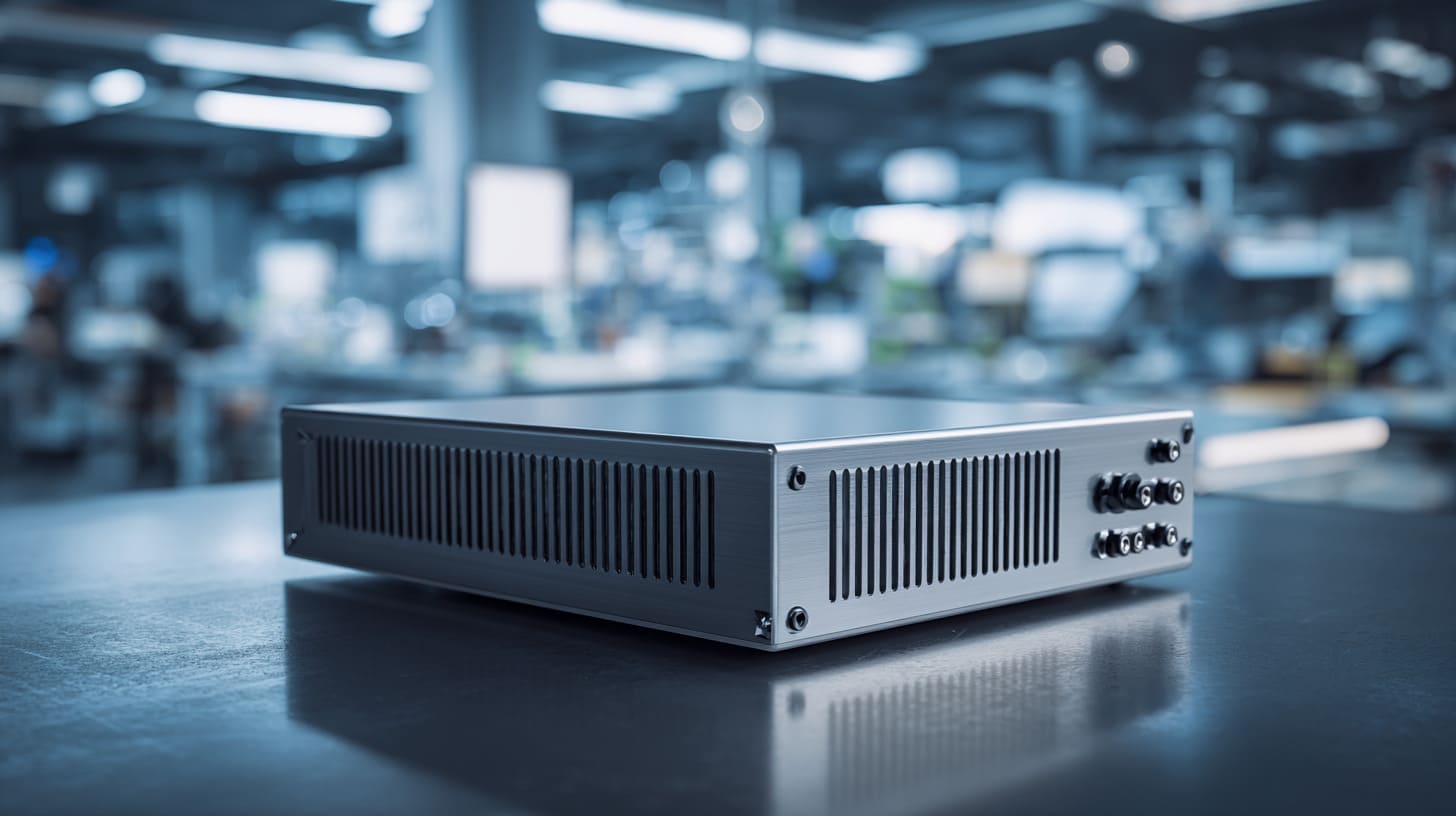
Aluminum is easy to underestimate.
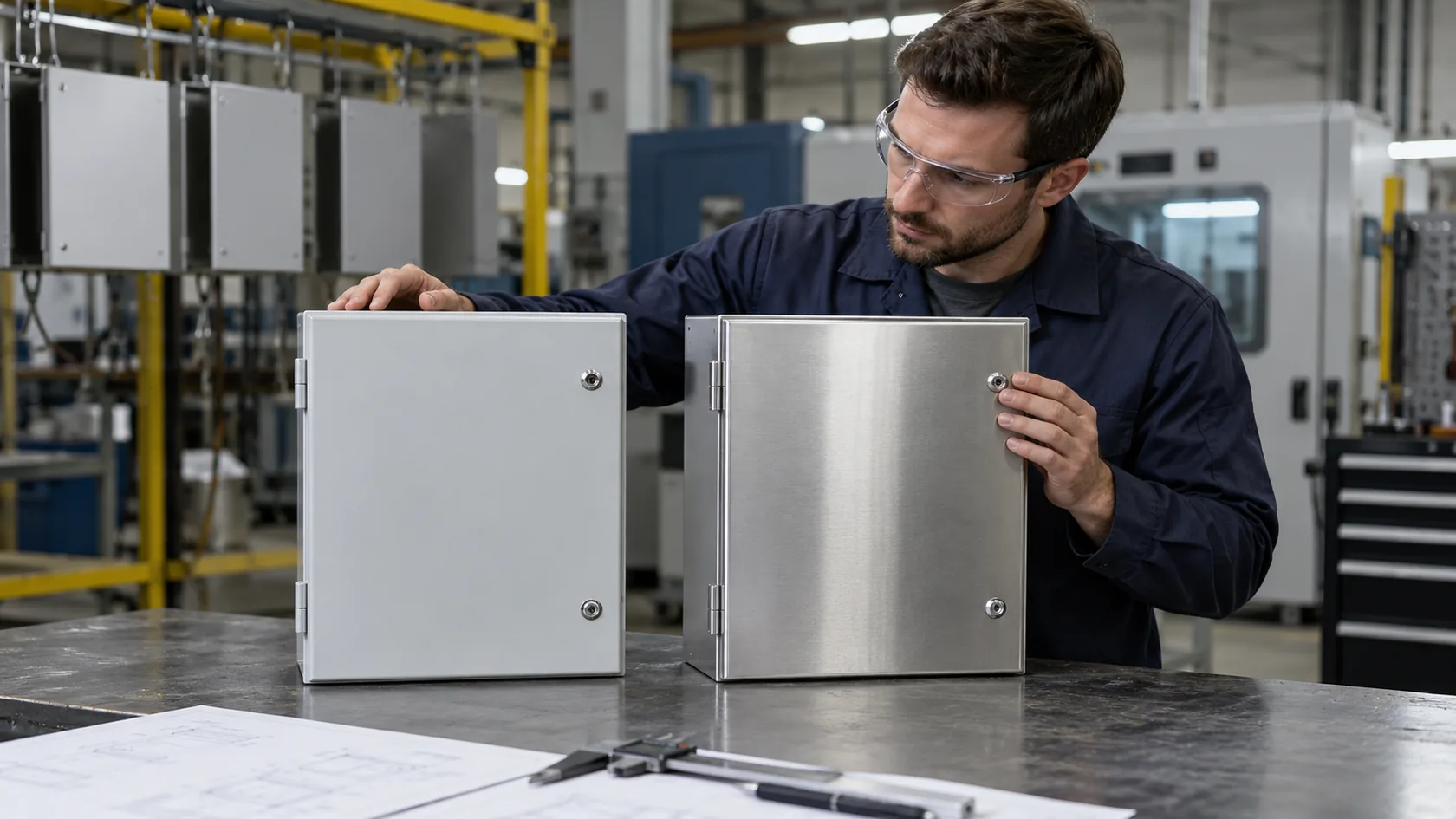
Some corrosion rankings place stainless steel above aluminum. So some buyers quickly think stainless steel is the stronger choice.
But in enclosure work, corrosion resistance is only one part of the decision. Weight, machining, heat dissipation, surface finish, cost, assembly, shipment, and branding also matter.
Aluminum often wins because it gives a better balance.
For many electronic devices, control systems, sensors, and custom OEM products, aluminum is not a weak choice. It is often the smart choice.
When I compare aluminum with stainless steel, I do not only ask which one resists corrosion better; I ask which one helps the whole product work better.
Natural oxide layer advantages
Aluminum forms a natural oxide layer on its surface. This layer helps protect the metal from further oxidation. That is one reason aluminum performs well in many environments.
When combined with anodizing, powder coating, or other treatments, the protection can become much stronger.
Aluminum also has good appearance options. It can be anodized, brushed, sandblasted, powder coated, CNC machined, laser marked, or engraved.
For buyers selling branded products, this matters.
An enclosure is not only protection. It is also part of the product image.
| Aluminum advantage | Why buyers care |
|---|---|
| Natural oxide layer | Helps resist normal corrosion |
| Lightweight | Reduces shipping cost and product weight |
| Easy machining | Good for custom holes, slots, and shapes |
| Good heat dissipation | Useful for electronics |
| Attractive finish options | Supports branding and product value |
| Good cost balance | Often cheaper than stainless steel for custom projects |
A stainless steel box may be strong.
But if the buyer needs many CNC holes, lower weight, good heat transfer, and nice anodized branding, aluminum may be better.
Better weight-to-corrosion balance
Weight is not a small issue.
For Amazon sellers, project buyers, equipment makers, and distributors, weight affects shipping, handling, installation, and customer experience.
A heavy enclosure may feel solid. But it can also increase freight cost and make installation harder.
Aluminum gives a strong weight advantage.
| Factor | Aluminum enclosure | Stainless steel enclosure |
|---|---|---|
| Weight | Lighter | Heavier |
| Machining | Easier | Harder and often more costly |
| Heat dissipation | Better | Usually lower |
| Surface finish options | Very flexible | Good but different |
| Cost in custom machining | Often more friendly | Often higher |
| Harsh chemical resistance | Depends on treatment | Can be stronger with right grade |
This is why I often suggest aluminum for electronic devices, control boxes, and Raspberry Pi-style enclosures.
It is not because aluminum wins every corrosion ranking.
It is because it may win the product decision.
Lower maintenance requirements
A good aluminum enclosure can be easy to maintain.
Anodized or powder-coated aluminum can keep a clean look in many applications. It does not need the same rust control as carbon steel. It can also reduce the weight burden in field service.
But maintenance still depends on environment.
For example:
- Coastal outdoor use may need stronger coating choices.
- Industrial chemical exposure may need careful review.
- Scratched surfaces may need inspection.
- Mixed metal contact may need design care.
Aluminum is not perfect.
But perfection is not the goal.
Fit is the goal.
Suitable applications where aluminum excels
Aluminum is widely used in enclosure projects because it solves many problems at once.
| Application | Why aluminum may work well |
|---|---|
| Electronics enclosure | Good heat dissipation and light weight |
| Control system housing | Easy custom holes and mounting |
| Communication device | Good appearance and machining flexibility |
| Raspberry Pi-style case | Good thermal performance and CNC design |
| Sensor enclosure | Lightweight and custom-friendly |
| OEM branded product | Good anodizing, engraving, and printing options |
For many of my OEM buyers, aluminum is attractive because they need custom size, custom holes, logo engraving, surface finish, and fast production support.
They do not only buy corrosion resistance.
They buy a product shell that must match their whole business plan.
That is why aluminum can outperform higher-ranked materials in real purchasing decisions.
But there is another material group that buyers sometimes forget when talking about corrosion: plastic.
Plastic does not rust. That sounds like an easy win.
But, as usual, the real answer is more layered.
Why Plastic Enclosures Are Frequently Overlooked in Corrosion Comparisons
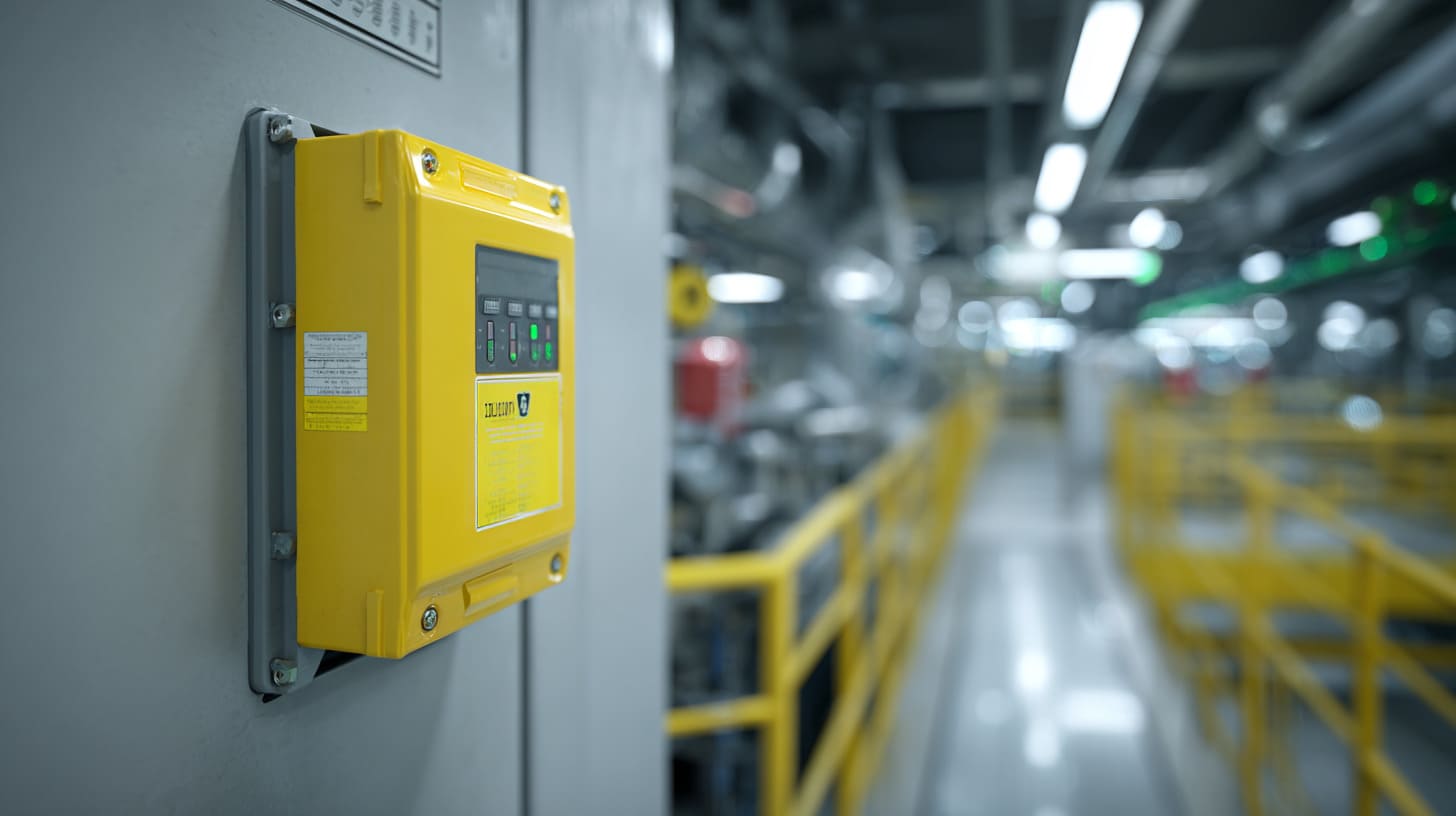
Plastic enclosures are often ignored in corrosion ranking discussions because buyers think “corrosion” is mostly a metal problem.
In one sense, that is true.
Plastic does not rust like steel. It does not form red corrosion. It does not need zinc plating to avoid rust. That makes it very useful in wet or chemical environments.
But plastic has its own weaknesses.
It can age under UV. It can deform under heat. It can crack under impact. It may not offer the same EMI shielding as metal. It may not feel as premium for some branded products.
The smart question is not whether plastic resists rust; the smart question is whether plastic survives the full working condition better than metal.
Immunity to rust and oxidation
Plastic’s biggest advantage is simple.
It does not rust.
For many buyers, this is attractive. If an enclosure is used in a wet location or near certain chemicals, plastic can be a strong option.
Plastic enclosures are often used for:
- Electrical junction boxes
- Outdoor control boxes
- Sensor housings
- Small electronic devices
- Battery housings
- Low-voltage equipment
- Chemical-resistant covers
Plastic can also reduce weight and cost in some projects.
| Plastic advantage | Why it helps |
|---|---|
| No rust | Good for wet or humid use |
| Lightweight | Easier handling and shipping |
| Electrical insulation | Useful for electrical safety |
| Molded shapes | Good for volume production |
| Chemical resistance | Strong with the right resin |
| Lower tooling cost per part at scale | Good for large production after mold investment |
But plastic selection must be specific.
ABS, PC, PP, PA, and fiberglass-reinforced plastics behave differently. A general “plastic is corrosion resistant” statement is too broad.
Chemical resistance advantages
In some chemical environments, plastic can beat metal.
For example, certain plastics resist chemicals that may attack aluminum or steel. This can make plastic a better choice for laboratories, wastewater equipment, agricultural control systems, or chemical dosing systems.
But chemical resistance depends on:
- Chemical type
- Concentration
- Temperature
- Exposure time
- Mechanical stress
- Plastic grade
- Additives and fillers
| Plastic type | Common strengths | Common concerns |
|---|---|---|
| ABS | Easy molding, good appearance | UV and chemical limits |
| Polycarbonate | Strong impact resistance | Some chemicals can attack it |
| Polypropylene | Good chemical resistance | Lower stiffness in some designs |
| Nylon | Strong and wear-resistant | Can absorb moisture |
| Fiberglass-reinforced plastic | Strong and corrosion-resistant | Heavier and more complex processing |
A buyer should not just say “plastic enclosure.”
That is like saying “metal enclosure.”
It is too general.
The exact material matters.
Environmental limitations
Plastic does not rust, but it can fail in other ways.
UV exposure can make some plastics brittle or faded. Heat can soften or deform the housing. Cold impact can cause cracking. Long-term load can cause creep. Some plastics may not pass fire rating requirements unless the correct grade is selected.
| Environmental factor | Plastic risk |
|---|---|
| UV sunlight | Aging, color fading, brittleness |
| High temperature | Softening or deformation |
| Low temperature | Impact cracking |
| Chemical exposure | Swelling, cracking, surface damage |
| Mechanical load | Creep or stress deformation |
| Fire safety needs | Requires suitable flame-retardant grade |
This is why plastic should not be chosen only because it does not rust.
That would be another ranking mistake.
Rust resistance is one strength.
But product performance needs more.
When plastic becomes the smarter choice
Plastic may be the smarter choice when the enclosure needs:
- Good electrical insulation
- Low weight
- Strong chemical resistance
- No rust risk
- Lower cost for large quantities
- Complex molded shape
- Non-metal housing requirement
But plastic may not be ideal when the project needs:
- High heat dissipation
- Strong metal feel
- High structural rigidity
- Excellent EMI shielding
- Heavy-duty impact resistance
- Premium machined appearance
So the buyer must compare the full product needs.
Not only corrosion.
A plastic enclosure can be excellent. A metal enclosure can be excellent. The wrong choice can also fail.
That is why I always bring the discussion back to practical factors.
Because material rankings are only one voice in the room.
They should not be the loudest voice.
What Factors Matter More Than Corrosion Rankings?

Corrosion resistance rankings are easy to read. But enclosure selection needs more than easy reading.
In real projects, I care about environment, service life, coating, design, installation, maintenance, budget, and industry requirements. These factors decide whether the enclosure will work in the buyer’s real world.
A ranking may tell me which material looks stronger on paper, but the application details tell me where the product may actually fail.
That is the gap buyers must close.
Installation environment assessment
The installation environment is the first thing I want to understand.
Indoor or outdoor?
Dry or wet?
Hot or cold?
Near the sea or far from it?
Clean room or dusty factory?
Will chemicals touch the enclosure?
Will the enclosure be washed?
Will users open it often?
These questions are simple. But they often reveal more than any ranking chart.
| Environment detail | Why it matters |
|---|---|
| Indoor or outdoor | Outdoor use adds UV, rain, and temperature changes |
| Coastal or inland | Salt air changes corrosion risk |
| Chemical exposure | Material and coating must match chemicals |
| Temperature range | Affects plastic, coating, gasket, and sealing |
| Humidity level | Condensation can attack hidden areas |
| Dust and pollution | Can hold moisture and chemicals on the surface |
| Cleaning method | Strong cleaners may damage surface protection |
A buyer may say, “It is outdoor.”
But outdoor in Germany is not the same as outdoor near a tropical coast. Outdoor under a roof is not the same as outdoor under direct rain. Outdoor for one year is not the same as outdoor for ten years.
Details matter.
Expected service life requirements
Service life changes the decision.
If the enclosure is used for a temporary testing project, the buyer may not need the highest protection. If it is used for industrial equipment sold to customers, the buyer may need a safer design.
| Expected life | Practical material thinking |
|---|---|
| 6–12 months | Basic protection may be enough for non-critical use |
| 1–3 years | Coating and material should match normal exposure |
| 3–5 years | Better surface treatment and design checks needed |
| 5–10 years | Strong material, coating, sealing, and maintenance plan needed |
| 10+ years | Full environmental review and testing recommended |
Buyers sometimes overpay because they do not define service life.
They say “best quality,” but they do not say “how many years” or “under which condition.”
Best quality without a target is hard to control.
Exposure to chemicals, salt, and moisture
Corrosion risk grows when salt, moisture, and chemicals appear together.
A dry indoor enclosure may have little corrosion risk. But add moisture and salt, and the story changes. Add cleaning chemicals, and the story changes again.
| Exposure type | Common effect |
|---|---|
| Salt air | Pitting, staining, coating stress |
| Rain | Surface wear, water entry, edge corrosion |
| Condensation | Hidden internal corrosion |
| Cleaning chemicals | Surface attack or coating damage |
| Industrial fumes | Chemical corrosion |
| Standing water | Fast corrosion at weak points |
This is why I do not like vague project descriptions.
A buyer may send a drawing, but no environment information. The drawing tells me shape. It does not tell me corrosion risk.
For a real quotation, both are needed.
Maintenance accessibility
Some enclosures are easy to inspect.
Others are mounted high, sealed inside machines, installed outdoors, or shipped to end users in different countries.
If maintenance is difficult, material and coating choices should be more conservative.
| Maintenance situation | Practical decision |
|---|---|
| Easy inspection | Normal protection may be acceptable |
| Hard-to-reach location | Better corrosion margin needed |
| End-user product | Appearance durability matters more |
| Critical equipment | Safer material and testing needed |
| Frequent opening | Hinges, screws, and seals need extra care |
A buyer selling through Amazon or distributors may not control maintenance. The end user may never clean the enclosure properly. So the product must survive normal neglect.
That is real life.
Cost versus lifecycle value
Cheap material can become expensive later.
But expensive material can also be wasteful.
The right choice should balance initial cost and lifecycle value.
| Choice | Initial cost | Long-term risk |
|---|---|---|
| Low-cost material with weak coating | Low | Higher failure or return risk |
| Strong material with poor design | High | Still may fail |
| Balanced material with suitable treatment | Medium | Often best value |
| Over-specified premium material | High | May waste budget |
| Tested solution for harsh use | Higher | Lower risk for critical projects |
For B2B buyers, cost is never only the unit price.
Cost includes:
- Tooling
- Surface treatment
- Packaging
- Shipping
- Installation
- Warranty
- Customer complaints
- Brand image
- Replacement cost
A buyer may save two dollars on an enclosure and lose two hundred dollars in after-sales trouble.
That is not a good saving.
Regulatory and industry requirements
Some industries require specific enclosure ratings, material requirements, fire ratings, food contact rules, or environmental standards.
For example:
- Electrical enclosures may need IP rating or NEMA-style protection.
- Plastic materials may need flame-retardant grades.
- Food environments may prefer stainless steel.
- Outdoor electrical products may need UV-resistant materials.
- Industrial projects may require coating standards.
A corrosion ranking does not replace these requirements.
The buyer must check the rules for the final market.
This is especially important for buyers in Europe, North America, Japan, or South Korea. Their customers may ask for documents, test reports, or clear specifications.
A factory can support the product, but the buyer must also define the market requirement.
Once these factors are clear, experienced buyers make better decisions.
They do not ask only for a material.
They ask for evidence.
How Experienced Enclosure Buyers Evaluate Corrosion Resistance

Experienced buyers do not ignore rankings.
They just do not worship them.
They use rankings as a starting point, then they ask practical questions. They look at coating specifications. They ask for past application examples. They think about environment. They may test samples before mass production.
The buyers I respect most are not the ones who always choose the most expensive material; they are the ones who know which risk is worth paying for and which risk is just fear.
That kind of judgment saves money and avoids trouble.
Looking beyond supplier comparison charts
Supplier charts can help. But they are often simplified.
A chart may say:
- Aluminum: good
- Stainless steel: excellent
- Carbon steel: poor
- Plastic: excellent for rust
But the buyer should ask:
- Is the aluminum anodized or powder coated?
- What grade of stainless steel?
- What coating thickness?
- What surface preparation?
- What screws and inserts are used?
- What gasket material?
- What environment was tested?
- What failure mode should we watch?
A good supplier should not only answer “yes” or “no.”
A good supplier should explain trade-offs.
For example, if a buyer asks for stainless steel but also wants low weight, fast CNC machining, and lower cost, I may suggest aluminum with proper surface treatment. If a buyer asks for plastic but needs heat dissipation, I may suggest aluminum or metal insert design.
The supplier should help the buyer think.
Not just take the order blindly.
Requesting environmental performance data
For serious projects, buyers should request data.
This may include:
- Material grade
- Coating thickness
- Salt spray test reference
- UV resistance information
- Flame rating for plastic
- IP rating design support
- Chemical resistance data
- Surface treatment specification
- Previous similar project experience
Not every project needs a full laboratory report. But the buyer should know what matters for his application.
| Project type | Useful data to request |
|---|---|
| Outdoor electronics | Coating type, UV resistance, sealing design |
| Coastal installation | Stainless grade, coating, fastener material |
| Chemical environment | Chemical compatibility data |
| Plastic enclosure | Resin grade, UV rating, flame rating |
| Industrial control box | Surface treatment, gasket, IP design |
| Branded OEM product | Finish samples, color tolerance, scratch risk |
Data does not remove all risk.
But it reduces guessing.
And in B2B buying, guessing can be expensive.
Reviewing coating specifications
A buyer should not only ask, “Can you powder coat it?”
The better question is, “What coating system do you suggest for this environment?”
That question opens a better discussion.
Important coating details include:
| Coating detail | Why it matters |
|---|---|
| Pretreatment | Helps coating adhesion |
| Coating thickness | Affects protection and assembly |
| Powder type | Indoor and outdoor powders differ |
| Edge coverage | Corners often fail first |
| Curing control | Affects coating strength |
| Color and gloss | Affects appearance and scratch visibility |
| Packing method | Prevents damage before installation |
Packaging also matters.
A strong coating can still be damaged by poor packaging. If parts rub during shipping, surface scratches may appear before the buyer receives the goods.
For export orders, I care about packing because the enclosure may travel far. Sea shipping, handling, warehouse movement, and final delivery can all create damage.
The corrosion plan should include the journey, not only the factory finish.
Evaluating real-world application history
Past project experience is useful.
If a supplier has made similar enclosures for outdoor control systems, communication devices, or custom electronics, that experience can help reduce risk.
But buyers should be specific.
Do not only ask, “Have you made outdoor enclosures?”
Ask:
- What material was used?
- What surface treatment was used?
- What environment was it for?
- Was it near the sea?
- What was the target service life?
- Were there any feedback issues?
- What design details were important?
This kind of conversation shows whether the supplier really understands the product.
A supplier who only says “no problem” to everything may become a problem later.
Conducting prototype testing before mass production
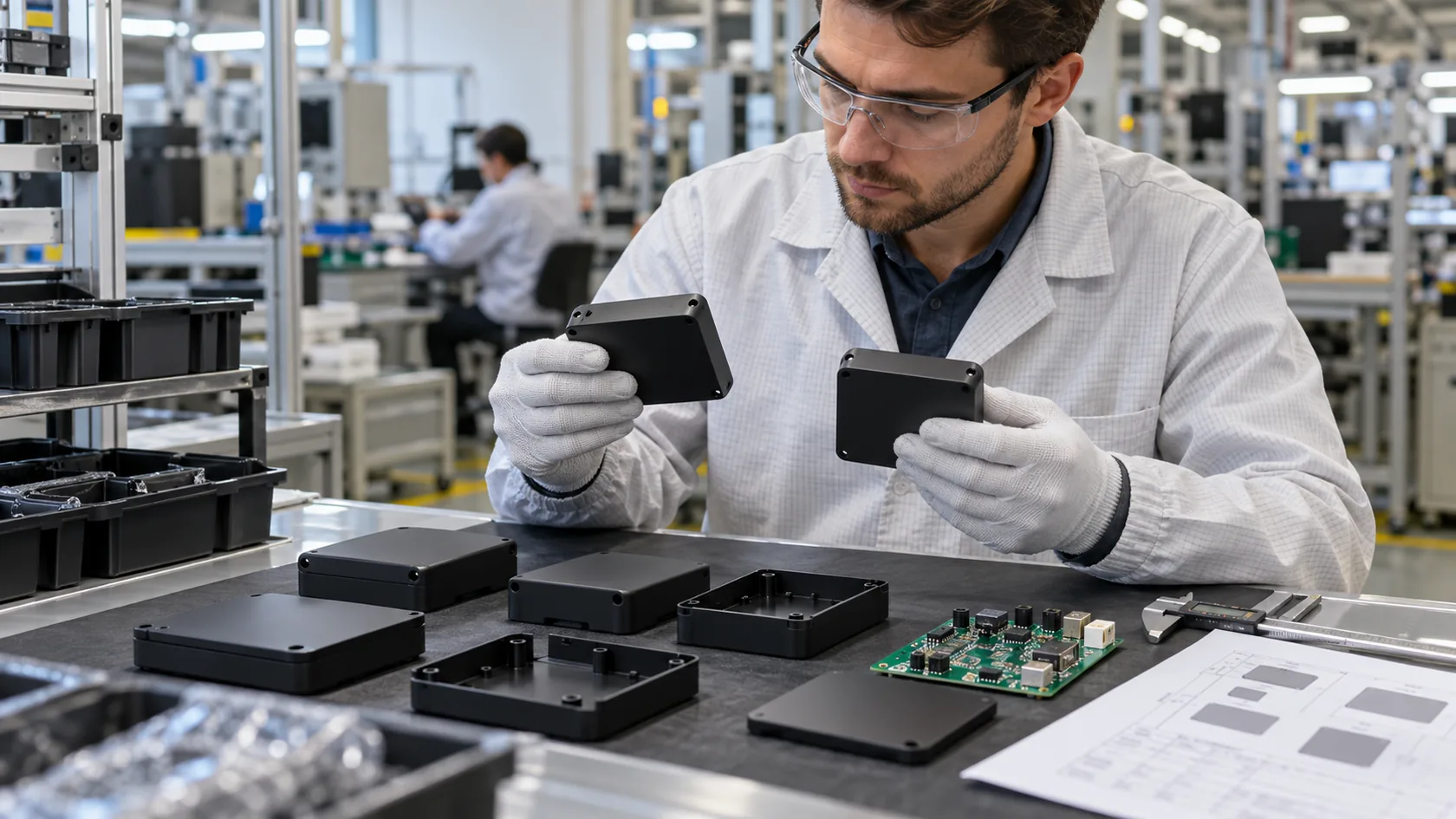
For custom enclosure projects, I strongly like samples.
A sample gives the buyer something real to touch, check, test, assemble, and modify.
A drawing can look perfect. A sample tells the truth.
Buyers can check:
- Surface finish
- Coating quality
- Hole accuracy
- Assembly fit
- Screw quality
- Gasket position
- Drainage design
- Heat behavior
- Scratch risk
- Logo or branding effect
| Sample test | What it helps reveal |
|---|---|
| Assembly test | Whether parts fit correctly |
| Outdoor exposure test | Early signs of surface risk |
| Chemical wipe test | Surface reaction to cleaners |
| Scratch handling test | Finish durability |
| Water spray test | Sealing weakness |
| Heat test | Deformation or thermal issues |
| Packaging drop/transport check | Shipping damage risk |
A prototype does not guarantee ten years of performance.
But it catches many early mistakes.
And early mistakes are cheaper than mass production mistakes.
Many buyers know this, but they still rush.
Why?
Because project timelines are tight.
But rushing material decisions often leads to the next problem: common buyer mistakes.
Common Mistakes Buyers Make When Comparing Enclosure Materials
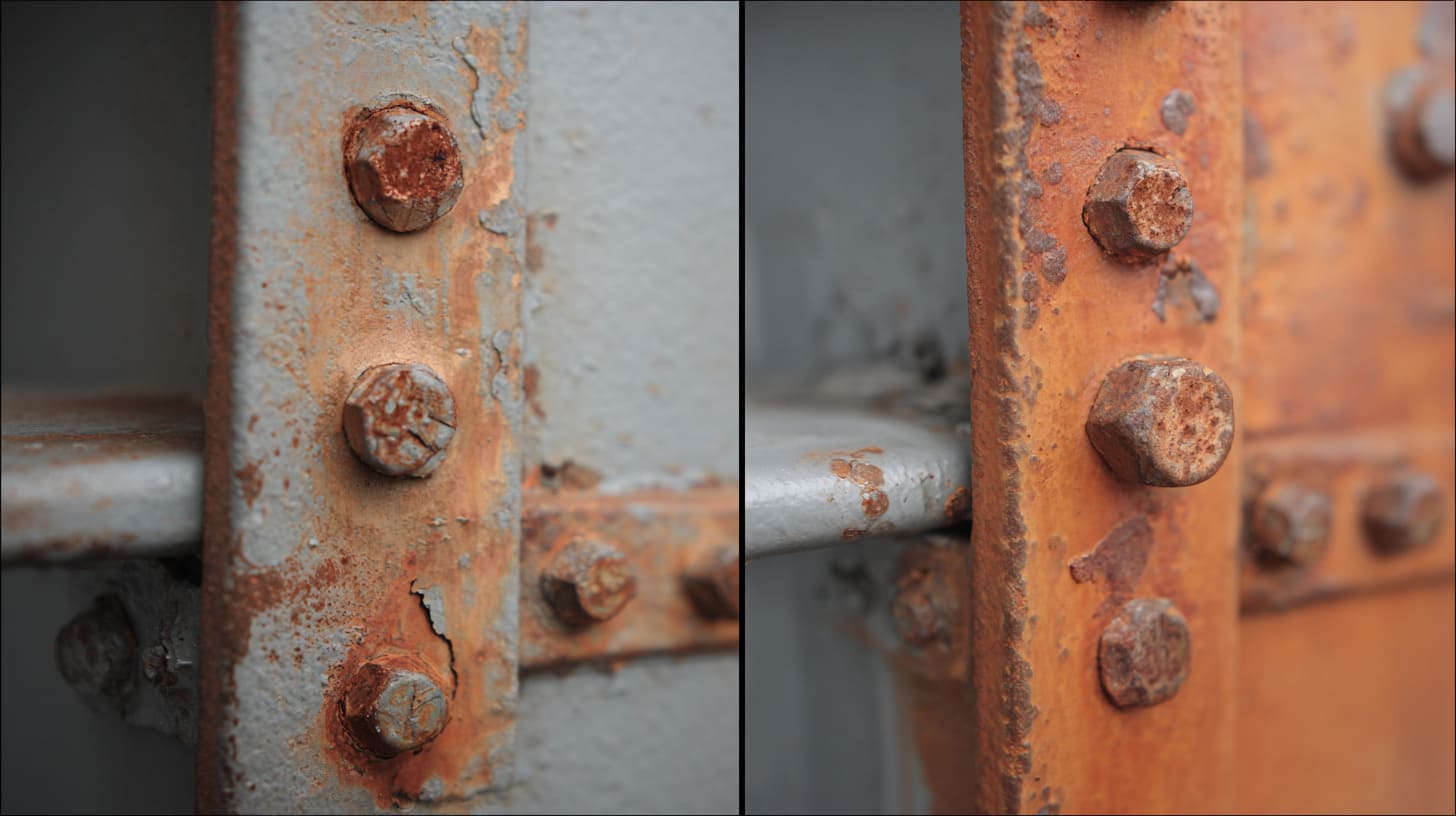
Most enclosure mistakes do not happen because the buyer is careless.
They happen because the buyer is busy.
He has drawings to confirm. He has customers to reply to. He has internal meetings. He has budget pressure. He has delivery deadlines. So he looks for a quick answer.
That is exactly when rankings become dangerous.
The most costly mistakes usually start from a simple sentence like “Just use the best corrosion-resistant material,” because nobody has defined what “best” means for this specific project.
Choosing materials solely based on ranking tables
This is the most common mistake.
A buyer sees a ranking and chooses the top material. But he may ignore cost, machining, weight, coating, heat, and environment.
For example:
- He chooses stainless steel for an indoor electronics case, but aluminum would offer better heat dissipation and lower cost.
- He chooses plastic for rust resistance, but the product needs metal shielding.
- He chooses galvanized steel for cost, but cut edges and scratches create corrosion risk.
- He chooses carbon steel with basic paint for outdoor use, then faces rust complaints later.
A ranking table cannot understand the product.
Only project analysis can.
Ignoring coating quality
Some buyers think all powder coating is the same.
It is not.
Some buyers think all anodizing is the same.
It is not.
Some buyers think surface color equals surface protection.
It does not.
Coating quality affects real performance. Poor pretreatment, weak adhesion, thin corners, bad packing, and scratches can all create problems.
| Buyer mistake | Possible result |
|---|---|
| Only asking for color | Protection may be weak |
| Ignoring coating thickness | Shorter life in outdoor use |
| No pretreatment discussion | Peeling or poor adhesion |
| No edge protection review | Corrosion starts at corners |
| Poor packing request | Coating damaged during shipping |
This is why I like clear coating specifications.
Even for a simple enclosure, the buyer and supplier should agree on finish expectations.
Over-specifying expensive materials
Some buyers over-specify because they want safety.
I understand it.
Nobody wants a corrosion complaint.
But over-specification can hurt the project. It can increase cost, reduce competitiveness, slow production, and make machining harder.
For example, 316 stainless steel may be excellent in a coastal application. But for an indoor electronic device, anodized aluminum may be better.
A strong product is not always made from the most expensive material.
It is made from the most suitable material.
| Over-specification example | Better thinking |
|---|---|
| 316 stainless steel for dry indoor device | Use aluminum or powder-coated steel |
| Thick metal for light electronics | Check strength needs and shipping cost |
| High-end coating for temporary use | Match coating to service life |
| Plastic with expensive additives for indoor use | Use standard grade if suitable |
| Complex finish for hidden parts | Save cost where appearance is not needed |
Smart cost control is not cheap thinking.
It is professional thinking.
Underestimating local environmental conditions
Local conditions can surprise buyers.
A product used near the sea may face salt air every day. A roadside device may face road salt in winter. A factory enclosure may face oil mist and cleaning chemicals. A tropical market may face heat, rain, and humidity.
If the buyer does not explain this, the supplier may quote a normal solution.
Then problems appear later.
For export projects, this is even more important.
A Chinese factory may make the enclosure, but the final use may be Canada, Finland, Germany, Hungary, Japan, or a coastal area in Europe. The environment must be shared clearly.
Good suppliers can suggest better options.
But they cannot read the buyer’s mind.
Focusing only on initial purchase cost
Unit price matters.
I know this very well. Buyers compare suppliers every day. A small price gap can decide an order.
But corrosion failure can create hidden costs:
- Customer complaints
- Replacement parts
- Extra shipping
- Brand damage
- Installation labor
- Project delay
- Warranty claims
- Lost repeat orders
| Low price decision | Hidden risk |
|---|---|
| Cheaper coating | Faster surface failure |
| Lower-grade screws | Rust marks on finished product |
| No sample testing | Design mistakes in bulk order |
| Weak packaging | Scratches during transport |
| Wrong material | Shorter product life |
I am not saying buyers should always choose the expensive option.
I am saying buyers should compare cost with risk.
That is more useful.
Once buyers understand these mistakes, the next step becomes clear: how should they choose the right enclosure material?
This is where a practical decision method helps more than any ranking chart.
How to Select the Right Enclosure Material for Your Application

Choosing enclosure material should feel like solving a project puzzle.
One piece is corrosion resistance. Another piece is cost. Another is weight. Another is surface finish. Another is heat. Another is installation. Another is customer expectation.
If one piece is missing, the picture is not complete.
I usually select material by narrowing the risk first, then balancing cost and performance, because a beautiful material choice means little if it misses the real weak point of the application.
Questions to ask before selecting a material
Before choosing material, I like to ask simple questions.
Not fancy questions.
Useful questions.
| Question | Why it matters |
|---|---|
| Where will the enclosure be used? | Defines indoor, outdoor, coastal, or industrial risk |
| What will it protect? | Defines safety and failure cost |
| How long should it last? | Defines protection level |
| Will it face salt, water, or chemicals? | Defines corrosion threat |
| Does it need heat dissipation? | May favor aluminum |
| Does it need electrical insulation? | May favor plastic |
| Does it need EMI shielding? | May favor metal |
| Is weight important? | May favor aluminum or plastic |
| Is appearance important? | Affects coating and finish |
| What is the target budget? | Helps avoid over-specification |
These questions make the quotation more accurate.
They also help avoid arguments later.
A vague request creates a vague solution.
A clear request creates a better product.
Matching material to environment
Here is a simple way to think about common enclosure materials.
| Environment | Possible suitable options | Notes |
|---|---|---|
| Dry indoor electronics | Aluminum, plastic, powder-coated steel | Cost and appearance often matter |
| Outdoor normal weather | Powder-coated aluminum, UV plastic, stainless steel | Coating and sealing are important |
| Coastal outdoor | 316 stainless steel, coated aluminum, selected plastic | Salt resistance must be checked |
| Industrial factory | Coated steel, aluminum, stainless steel | Chemicals and oil mist matter |
| Food processing | Stainless steel, selected plastic | Cleaning chemicals matter |
| High heat electronics | Aluminum | Heat dissipation may be important |
| Electrical insulation need | Plastic | Must check strength and fire rating |
| Premium OEM product | Anodized aluminum, stainless steel | Appearance and branding matter |
This table is not a final answer.
It is a thinking tool.
A buyer still needs to match the exact project.
Matching protection level to budget
Budget is real.
I do not like pretending every buyer can choose the most expensive solution. Many buyers need a practical balance. They need quality, but they also need to sell the final product at a competitive price.
A good supplier should help the buyer choose protection levels.
| Protection level | Example solution | Suitable use |
|---|---|---|
| Basic | Painted or coated metal, normal plastic | Indoor or low-risk use |
| Medium | Anodized aluminum, powder-coated aluminum or steel | General outdoor or OEM products |
| Strong | High-quality powder coating, better fasteners, sealing design | Outdoor industrial use |
| Harsh environment | 316 stainless steel, special coating, selected plastic | Marine, chemical, or long-life projects |
| Custom tested | Prototype and application testing | High-risk or large-volume projects |
The best solution is not always the highest level.
It is the level that matches risk.
For example, if a buyer sells a small indoor electronic controller, he may not need 316 stainless steel. If the same product is installed near the sea, the decision changes.
Context decides.
Working with manufacturers to optimize performance
A good manufacturer does more than produce the drawing.
A good manufacturer helps check whether the design is practical.
For corrosion resistance, design changes can help a lot:
- Avoid water-trapping corners
- Add drainage if needed
- Choose suitable screw material
- Avoid direct contact between incompatible metals
- Improve coating coverage on edges
- Protect cut holes
- Use proper gaskets
- Design for easier maintenance
- Improve packaging to avoid scratches
- Test samples before bulk production
| Design detail | Why it matters |
|---|---|
| Drainage path | Reduces standing water |
| Rounded corners | Improves coating coverage |
| Proper fasteners | Reduces rust staining |
| Good gasket design | Keeps moisture away from electronics |
| Coating-friendly structure | Improves surface protection |
| Protective packaging | Prevents transport damage |
| Sample testing | Finds problems before mass production |
For custom OEM enclosure buyers, this cooperation is very important.
The buyer may know the product function better.
The factory may know the material, process, and production risk better.
When both sides share information clearly, the result is better.
That is the real value of working with an experienced enclosure supplier.
Not just unit price.
Not just material name.
Real project support.
And that brings me to the final point.
Corrosion rankings are not wrong.
They are just incomplete.
Conclusion
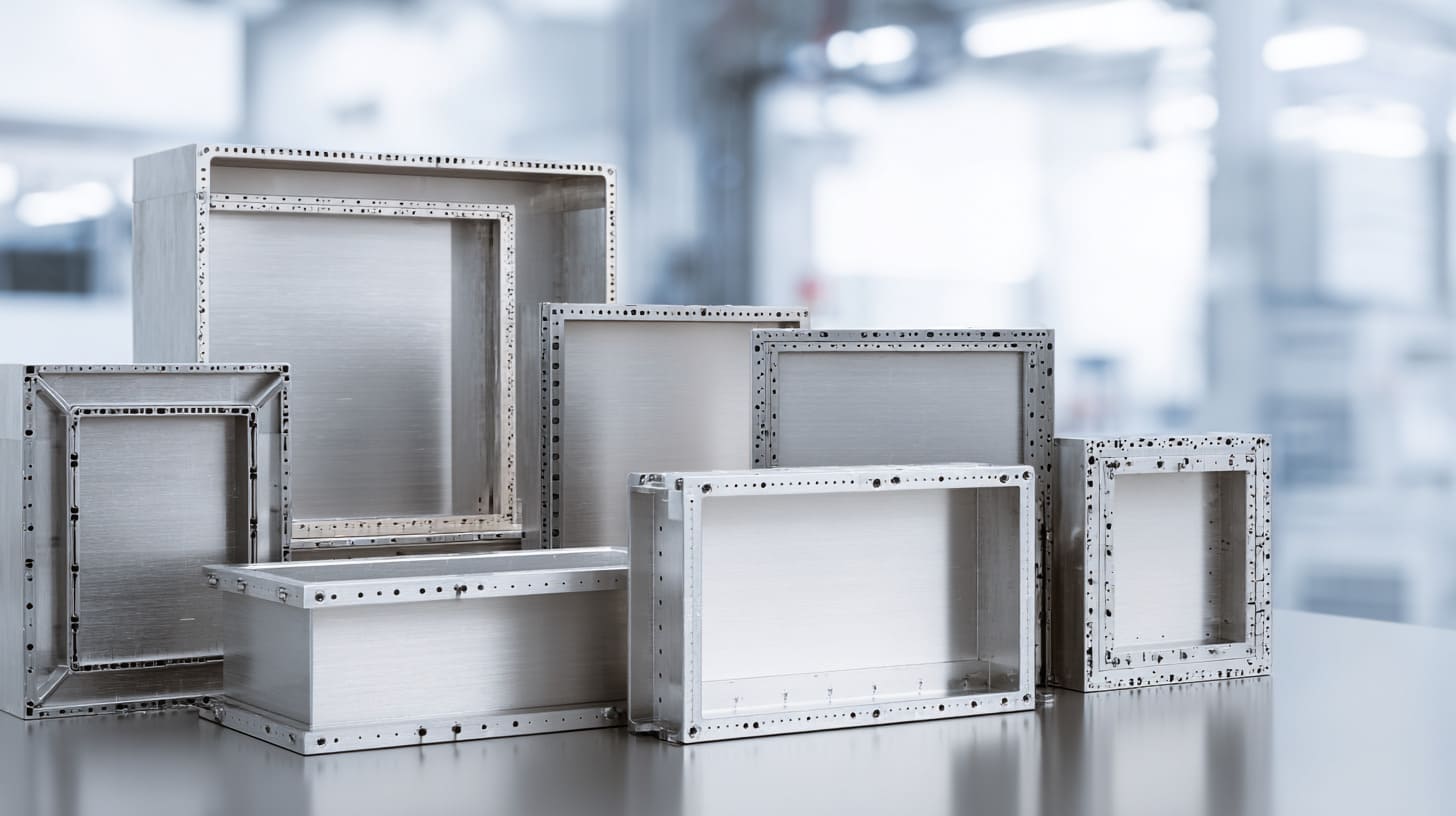
Corrosion resistance rankings can help enclosure buyers start a discussion. I use them too. They give a quick view of material behavior. They help compare aluminum, stainless steel, steel, galvanized steel, and plastic. They make a complex topic easier to enter.
But I do not let rankings make the final decision.
I have this view because enclosure projects often fail in places that ranking charts do not show. A chart does not show a scratched corner. It does not show a poor powder coating process. It does not show the wrong screw material. It does not show salt air near the sea. It does not show a buyer’s real service life target. It does not show whether the product needs heat dissipation, light weight, branding, custom holes, or easy installation.
So my judgment is simple: I use corrosion rankings as a reference, but I choose enclosure materials based on the full application.
A good enclosure decision should include:
- Real installation environment
- Material grade
- Surface treatment
- Coating thickness
- Fastener choice
- Product design
- Expected service life
- Maintenance condition
- Budget target
- Testing needs
- Final customer expectations
This is why I often ask buyers more questions before I suggest a material.
Not because I want to make the project slow.
I ask because a wrong enclosure choice can become expensive later. It can delay the project. It can damage the buyer’s brand. It can create after-sales trouble that nobody wants.
At MaidaTech, we make custom aluminum enclosures, plastic enclosures, sheet metal enclosures, Raspberry Pi-style enclosures, and other customized enclosure products for OEM and ODM buyers. In many projects, buyers already have drawings, logos, and product ideas. My job is not only to follow the drawing. My job is also to help check the material, finish, structure, and production risk before mass production.
That is why I believe a ranking table should never replace real project thinking.
If you are choosing an enclosure for outdoor use, coastal use, industrial equipment, electronic devices, or a new OEM product, do not only ask, “Which material ranks highest?”
Ask a better question:
“What material, surface treatment, and design will survive my actual application at the right cost?”
That question is less simple.
But it gives you a much better enclosure.