Skip to content
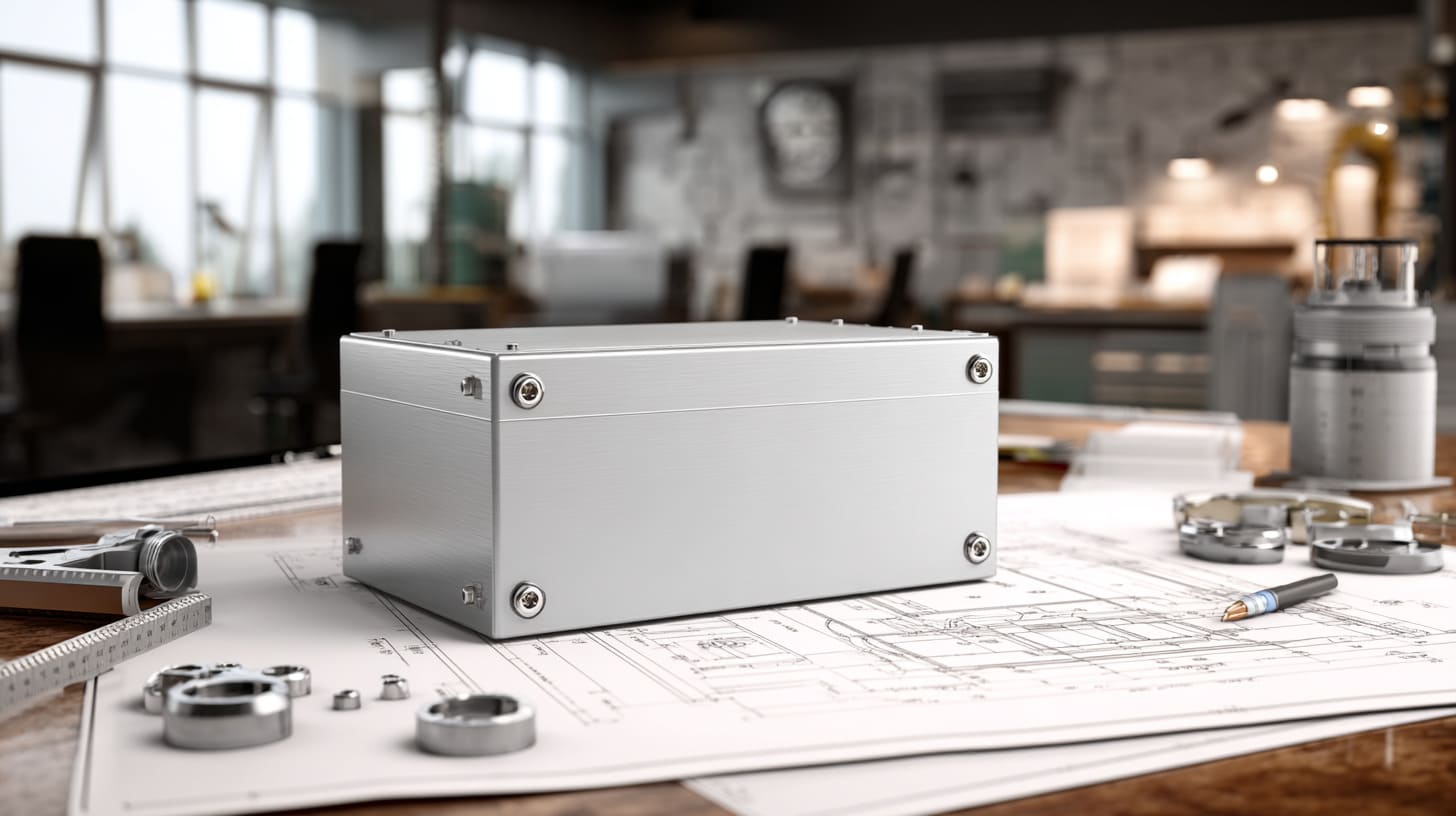
A small enclosure rating can change the whole cost of a project.
That sounds a little dramatic, I know.
But in custom enclosure work, I have seen this happen more than once. A buyer sends a drawing. The shape is clear. The size is clear. The material is clear. Then one line appears in the requirement:
NEMA 5 is acceptable.
At first, it feels like a smart decision. NEMA 5 is usually lower cost than NEMA 4. It can protect electrical equipment from falling dirt, settling dust, lint, fibers, and dripping or light splashing water in indoor use. For many dry indoor applications, it may be enough.
So why pay more?
That is the question many buyers ask.
I understand this very well. When a product engineer or purchasing manager works on a project, cost pressure is always sitting beside him like a quiet supervisor. The customer wants quality. The sales team wants a better price. The project timeline is tight. The enclosure is only one part of the whole product.
So NEMA 5 may look like the practical choice.
But here is the problem.
NEMA 5 can become expensive when the real environment is harsher than the buyer first describes. If there is washdown cleaning, heavy splashing, outdoor exposure, moisture, fine dust, or many custom holes, the lower-cost rating may not save money. It may only move the cost into the future.
And future cost is usually less polite.
It comes as repair cost.
It comes as field complaints.
It comes as replacement parts.
It comes as missed delivery dates.
It comes as that painful email from the customer: “The enclosure failed. What happened?”
When I review a NEMA 5 vs NEMA 4 project, I do not ask first, “Which one is cheaper?” I ask, “What will this box suffer after it leaves the factory?”
That question is not beautiful. But it is useful.
This article is not written to say NEMA 5 is bad. It is not. NEMA 5 has its place. I only want to help buyers, engineers, and custom OEM customers understand when NEMA 5 is enough, and when NEMA 4 quietly becomes the safer and cheaper choice in the long run.
A lower price can be a good decision.
But only when the environment agrees with it.
What Is the Real Difference Between NEMA 5 and NEMA 4?
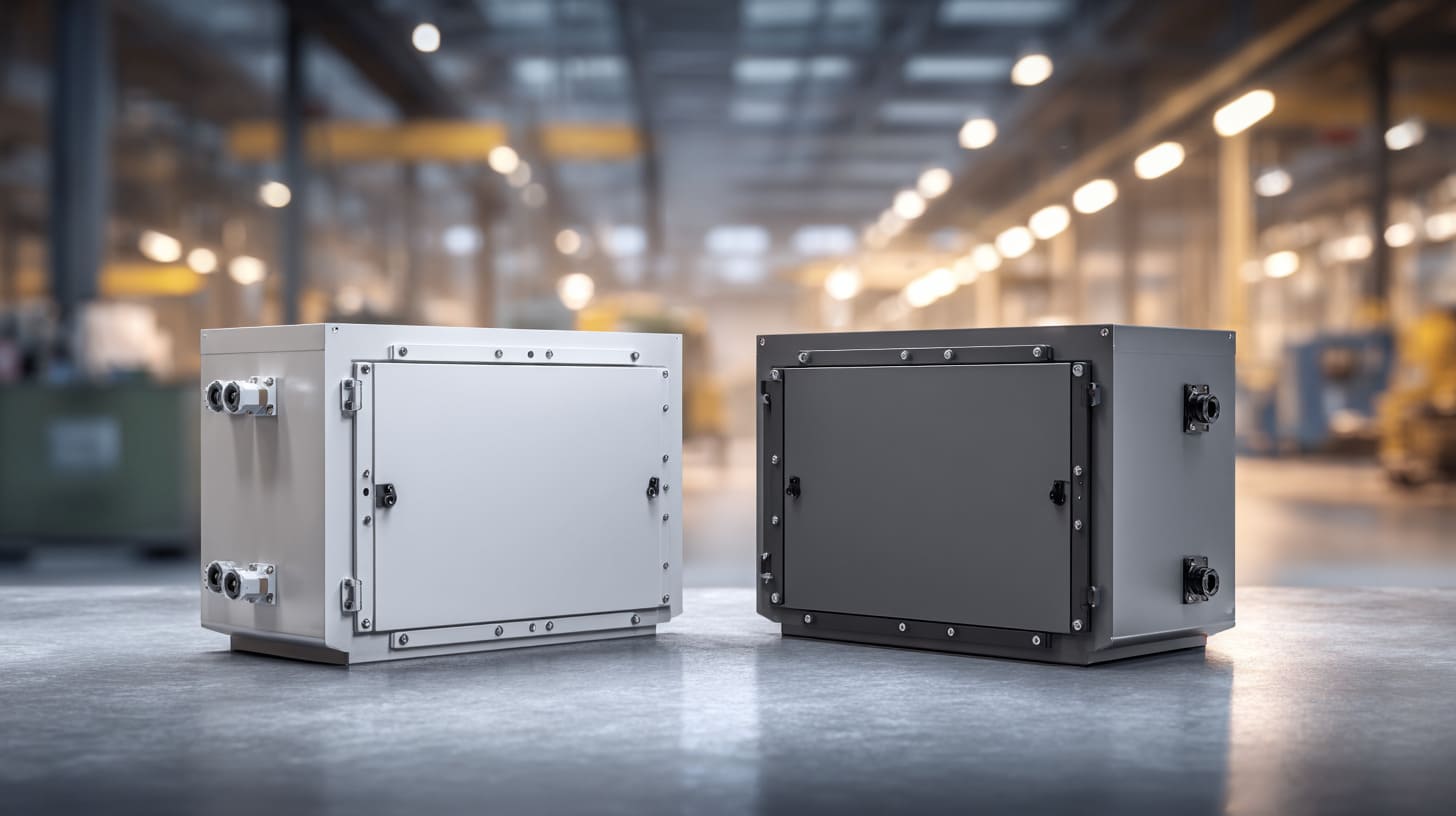
The difference between NEMA 5 and NEMA 4 is not only a number.
This is where many buyers get trapped.
NEMA ratings can look like a ladder. NEMA 1. NEMA 3. NEMA 4. NEMA 5. NEMA 12. NEMA 4X. The numbers feel simple, but the use conditions are not always simple.
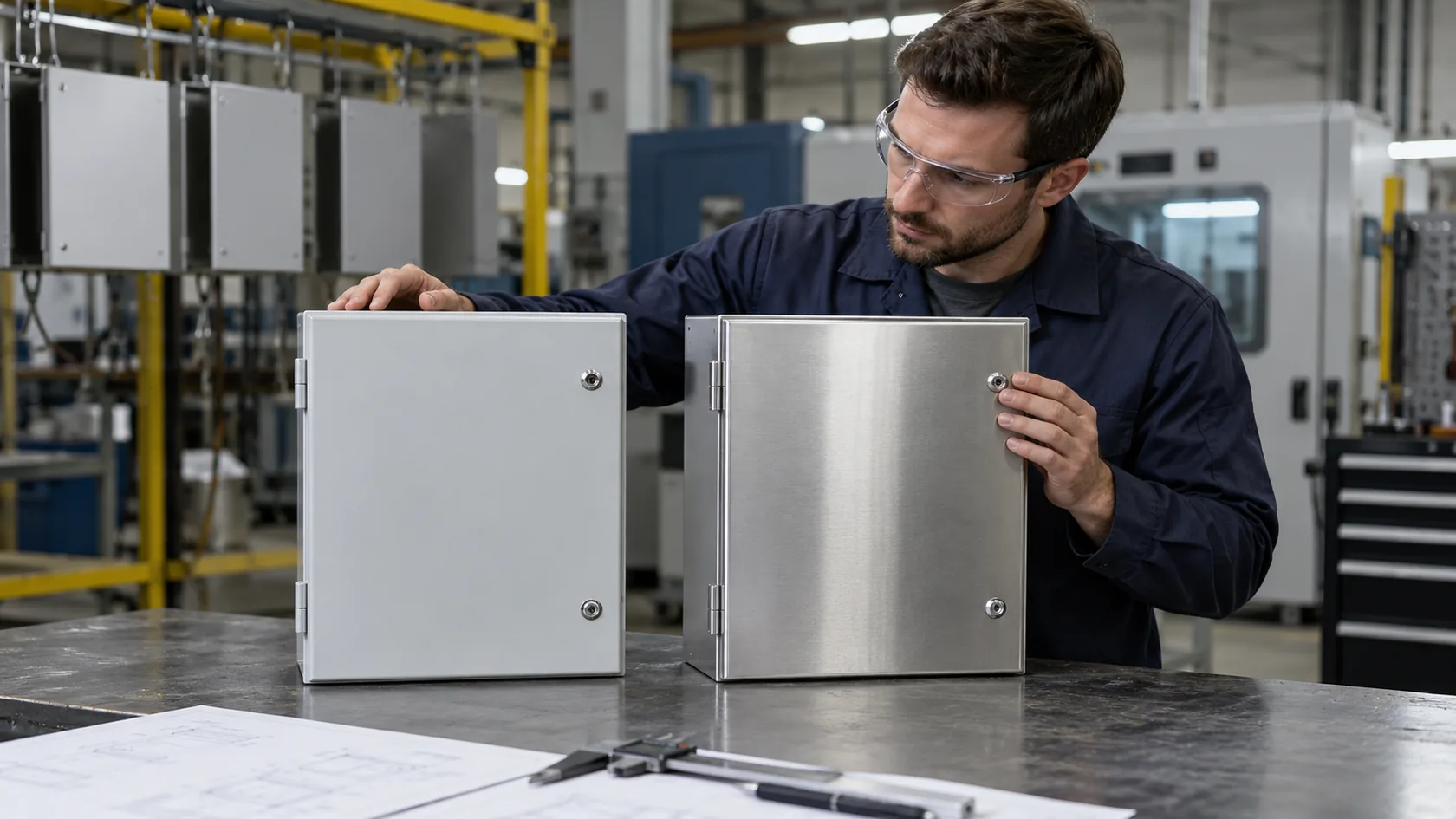
NEMA 5 and NEMA 4 protect against different real-world risks. One is mainly about controlled indoor protection. The other is made for stronger water exposure and harsher use.
The number does not tell the whole story. The environment does.
Protection scope comparison
NEMA 5 is mainly used for indoor applications. It can protect equipment from:
- Falling dirt
- Settling airborne dust
- Lint
- Fibers
- Dripping water
- Light splashing water
That sounds useful. And it is.
But NEMA 5 is not designed for hose-directed water. It is not the first choice when workers clean equipment with water spray. It is not the right choice for outdoor rain exposure. It is also not the best choice when the enclosure may face water from different directions.
NEMA 4 is different.
NEMA 4 is designed for indoor or outdoor use. It protects against:
- Falling dirt
- Windblown dust
- Rain
- Sleet
- Snow
- Splashing water
- Hose-directed water
So the practical difference is not only “NEMA 4 is stronger.”
The practical difference is this:
| Question | NEMA 5 | NEMA 4 |
|---|---|---|
| Is it mainly for indoor use? | Yes | Yes, and outdoor use too |
| Can it handle light dripping water? | Yes | Yes |
| Can it handle hose-directed water? | No | Yes |
| Can it handle rain exposure? | Not suitable | Yes |
| Is it better for washdown areas? | No | Yes |
| Is it usually lower cost? | Yes | Usually higher |
| Is it safer for uncertain environments? | Usually no | Usually yes |
A buyer may say, “The enclosure is indoors, so NEMA 5 should be okay.”
But indoor does not always mean dry.
That is the small detail I always slow down for.
A warehouse can be indoor and still dusty. A food workshop can be indoor and still wet. A machine room can be indoor and still face condensation. A production line can be indoor and still be cleaned with water.
Indoor is only a location.
It is not a complete environment description.
Sealing and structural design differences
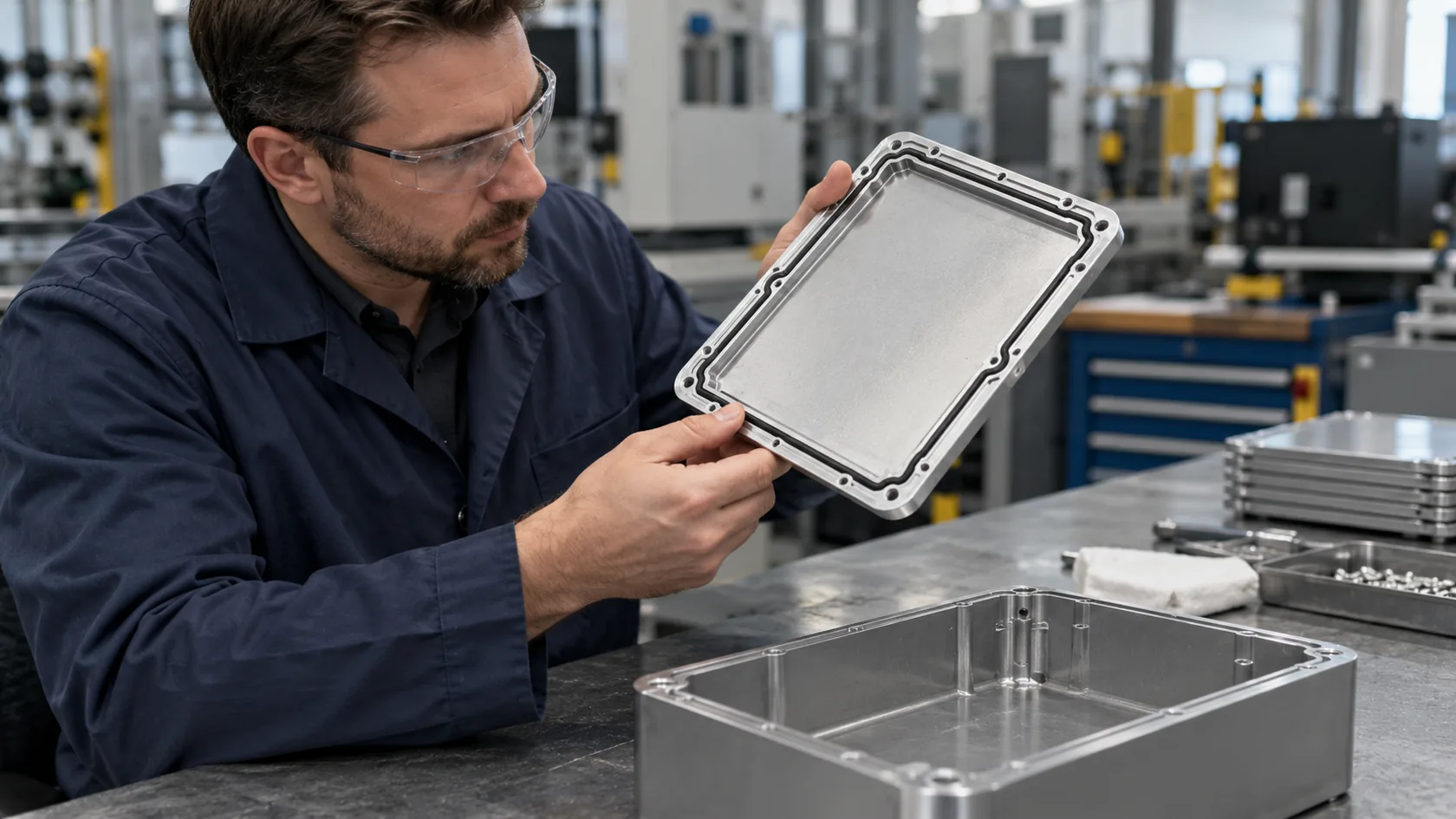
The enclosure rating depends heavily on sealing design.
A NEMA 5 enclosure may use a gasket and a closed structure, but the sealing requirement is usually not as demanding as NEMA 4. NEMA 4 needs stronger sealing continuity because water may hit the enclosure under pressure.
This changes many design details.
| Design area | NEMA 5 concern | NEMA 4 concern |
|---|---|---|
| Gasket | Blocks dust and light dripping | Blocks water under spray pressure |
| Door or lid | Needs basic sealing contact | Needs more stable compression |
| Screws or latches | Hold cover in place | Must help keep even pressure |
| Cable entries | Need reasonable sealing | Need stronger sealed glands |
| Display window | Must block dust and light water | Must resist stronger water attack |
| Ventilation | Risky if not protected | Much more difficult to keep rated |
A simple gasket line on a drawing does not mean the enclosure will perform well.
I have seen drawings where the gasket looks perfect on paper. Then the customer adds a USB port, a switch, two cable holes, and a small screen. The original box may have looked safe, but the new design has more weak points.
A gasket is like a chain.
It only needs one weak link to fail.
Certification and testing standards
NEMA 5 and NEMA 4 are tested for different levels of protection. This matters because a rating is not only a marketing sentence. It should match a real test condition.
NEMA 5 focuses more on indoor protection from dust, fibers, lint, dirt, and light water exposure.
NEMA 4 has a stronger water protection requirement. The enclosure must protect against hose-directed water. This is why NEMA 4 is often used in areas where equipment may be washed down or exposed to stronger water.
From a buyer’s view, the key is simple:
| If the main risk is... | Better direction |
|---|---|
| Light indoor dust | NEMA 5 may work |
| Dripping water only | NEMA 5 may work |
| Hose-down cleaning | NEMA 4 |
| Outdoor rain | NEMA 4 |
| Unclear water exposure | NEMA 4 is safer |
| Customer requires stronger compliance | NEMA 4 |
This is not about choosing the highest rating every time.
That would be lazy engineering.
The real work is to match the rating with the use condition. A stronger rating costs more. It can also make the enclosure heavier or more complex. But a weaker rating in the wrong place can create a much more painful cost later.
Quick comparison table: NEMA 5 vs NEMA 4
Here is the simple way I like to explain it to buyers.
| Factor | NEMA 5 | NEMA 4 |
|---|---|---|
| Main use | Indoor | Indoor and outdoor |
| Dust protection | Yes | Yes |
| Falling dirt protection | Yes | Yes |
| Dripping water | Yes | Yes |
| Light splashing water | Yes | Yes |
| Hose-directed water | No | Yes |
| Rain protection | Not the right choice | Yes |
| Washdown area | Not suitable | Suitable |
| Typical cost | Lower | Higher |
| Risk tolerance | Lower-risk environments | Higher-risk environments |
| Custom design difficulty | Moderate | Higher |
| Best for | Dry indoor equipment | Industrial or outdoor equipment |
The next question is easy to understand, but hard to answer honestly.
Why do so many buyers still choose NEMA 5 first?
Why Do Buyers Often Choose NEMA 5 First?

I do not blame buyers for choosing NEMA 5 first.
Actually, I think it is a very normal reaction.
Most projects start with a budget. The buyer compares enclosure options. NEMA 5 looks cheaper. The product will be used indoors. The supplier says it can be made. The project manager wants to move forward.
So the decision feels clean.
The trouble is that clean decisions often become dirty after real use begins.
I usually become careful when the buyer says, “It is just indoor use,” because that sentence often hides the most important details.
Cost-driven decision making
Price is easy to see.
Risk is harder to see.
That is why NEMA 5 often wins the first round.
A NEMA 5 enclosure may need less strict sealing design than NEMA 4. It may have a simpler gasket structure. It may be easier to produce. It may also reduce material or labor cost.
For a buyer, this looks attractive.
| Buyer concern | Why NEMA 5 looks attractive |
|---|---|
| Project budget | Lower unit cost |
| Sampling cost | Easier to approve |
| Production lead time | May be simpler to manufacture |
| Product pricing | Helps keep final price competitive |
| Large order quantity | Small savings become large total savings |
If the buyer orders 1,000 pieces, even a small cost difference matters.
I understand that.
In B2B manufacturing, nobody wants to overpay for protection that the product does not need. A good supplier should not push the most expensive option every time. That would damage trust.
But a good supplier should also ask uncomfortable questions.
Will workers clean the area with water?
Will the enclosure sit near a door or window?
Will the machine generate dust?
Will the customer add holes later?
Will the enclosure be opened often?
These questions can feel annoying at the start. But they are cheaper than field failure.
Misjudging the environment
The biggest mistake is not choosing NEMA 5.
The biggest mistake is describing the environment too simply.
A buyer may say:
- “It is indoor.”
- “There is no rain.”
- “Only a little dust.”
- “The water risk is small.”
- “The customer just needs basic protection.”
These sentences sound safe. But they may not be enough.
Here is how the real environment can be different from the first description:
| First description | Possible real condition |
|---|---|
| Indoor use | Indoor area with washdown cleaning |
| Low dust | Fine powder or metal particles nearby |
| No water | Condensation or splashing during use |
| Fixed equipment | Workers open the door often |
| Simple box | Later added holes, vents, switches |
| Clean factory | Cleaning chemicals and water spray used daily |
This is why I like to ask buyers for photos or videos of the working area when the project is sensitive.
A photo can tell the truth faster than a long email.
Sometimes I see water stains on the floor. Sometimes I see dust on nearby machines. Sometimes I see workers using water hoses in the background. Nobody mentioned those things in the first message.
Not because they were hiding information.
They just did not think those details mattered.
But the enclosure cares.
The enclosure always cares.
Overconfidence in partial protection
NEMA 5 gives protection.
But partial protection can create false confidence.
A buyer may think, “If it protects against dust and dripping water, then light industrial use should be fine.”
Maybe yes.
Maybe no.
The answer depends on the actual risk level.
For example, a NEMA 5 enclosure may be fine for an indoor control box placed in a dry room. But if the same enclosure is used near a machine that gets cleaned with water every Friday, the risk changes.
The box did not change.
The environment changed.
And that is enough.
| Risk factor | Why partial protection may fail |
|---|---|
| Water direction | Dripping is not the same as spray |
| Water pressure | Light splash is not hose-directed water |
| Dust type | Fine powder can enter small gaps |
| Maintenance behavior | Workers may open and close the box often |
| Added cutouts | Every opening reduces protection if not sealed |
| Time | Gaskets can age, loosen, or deform |
I once reviewed a project where the customer wanted a lower-cost enclosure for indoor use. The drawing looked simple. But after a few questions, we learned the equipment would be installed near a cleaning zone. The buyer did not call it a washdown area. He called it “normal cleaning.”
That phrase made me smile a little.
“Normal cleaning” means different things in different factories.
For one factory, it means wiping with a dry cloth.
For another factory, it means spraying water like washing a truck.
Same words.
Very different risk.
And that is why we need to talk about where NEMA 5 is actually the right choice.
In What Scenarios Is NEMA 5 Actually the Right Choice?
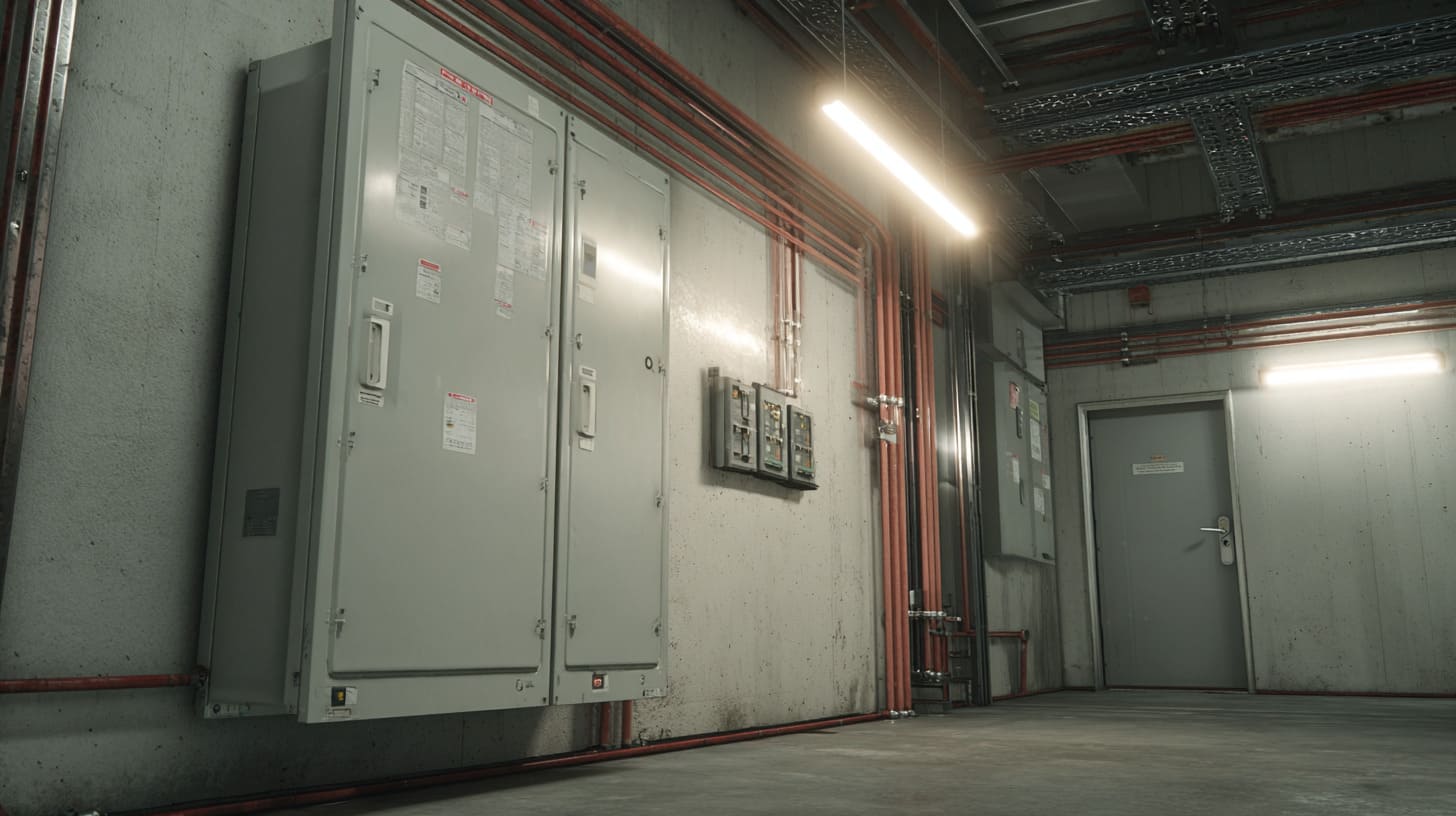
NEMA 5 is not a poor rating.
I want to say that clearly.
Sometimes NEMA 5 is the correct choice. It can be practical, cost-effective, and reliable when the environment is right. The mistake is not using NEMA 5. The mistake is using it without enough checking.
For me, NEMA 5 is like a light jacket. It works well in cool weather. It does not work in a storm.
The decision changes when I see stable indoor conditions, low water risk, limited dust, and a simple enclosure design.
Controlled indoor environments
NEMA 5 can be a good choice in controlled indoor environments.
These may include:
- Office equipment areas
- Dry control rooms
- Clean production areas
- Light commercial spaces
- Indoor electronic device protection
- Low-dust assembly lines
- Storage rooms with stable conditions
In these places, the enclosure does not face strong water. It does not face heavy dust. It does not face rain. It does not need to survive aggressive cleaning.
That makes NEMA 5 more reasonable.
| Environment | NEMA 5 suitability | Reason |
|---|---|---|
| Office equipment room | Good | Dry and clean |
| Indoor control cabinet area | Good if no washdown | Dust and water risk may be low |
| Clean assembly room | Good | Controlled conditions |
| Warehouse storage area | Depends | Dust level must be checked |
| Food processing room | Risky | Cleaning water may be present |
| Outdoor wall installation | Not suitable | Rain and weather risk |
The word “controlled” is important.
A controlled indoor environment means the buyer understands the real conditions. It means the enclosure will not suddenly meet water spray, oil mist, fine powder, or outdoor air.
Many projects fail because the buyer only says “indoor,” but the real condition is not controlled.
No water exposure conditions
NEMA 5 can handle dripping or light splashing water. But I do not like to treat that as a free pass.
Water is sneaky.
It runs along cables. It sits around screw holes. It finds small gaps. It follows gravity. It also appears as condensation when temperature changes.
So I always separate “possible water” into real categories.
| Water condition | NEMA 5 judgment |
|---|---|
| No water contact | Usually suitable |
| Occasional light drip | May be suitable |
| Light splash from nearby activity | Needs careful review |
| Hose cleaning | Not suitable |
| Rain exposure | Not suitable |
| Condensation risk | Needs design review |
| Water running along cables | Needs sealed cable entry |
A buyer may say, “There is no water.”
Then I ask, “Is there cleaning?”
This small question often changes the answer.
If workers only clean with dry cloth, NEMA 5 may be fine. If workers wipe the area with a wet cloth, we need to check details. If workers spray water, NEMA 4 becomes much more sensible.
Water risk is not only about the environment.
It is also about human behavior.
A worker in a hurry may not protect the box during cleaning. A technician may leave a cable gland loose. A customer may install the enclosure in a slightly different place than planned.
That is real life.
Minimal enclosure modification
NEMA 5 is easier to trust when the enclosure design stays simple.
The more openings we add, the more risk we create.
Common custom openings include:
- Cable holes
- USB ports
- Switch holes
- Display windows
- Ventilation slots
- Antenna holes
- Mounting holes
- Indicator light holes
Each opening needs its own sealing solution.
This is where many custom enclosure projects become more complicated than expected.
| Custom feature | Risk to protection | Possible solution |
|---|---|---|
| Cable hole | Water or dust entry | Use proper cable gland |
| Display window | Edge leakage | Use gasket or sealed bonding |
| Vent slot | Dust and water entry | Use filter or protected vent |
| USB port | Open weak point | Use sealed connector cover |
| Switch hole | Gap around switch | Use rated switch and gasket |
| Antenna hole | Seal break | Use sealing washer |
| Frequent door opening | Gasket wear | Improve gasket and latch design |
A plain enclosure may meet the target condition.
A heavily modified enclosure may not.
That is why I do not only look at the enclosure rating. I look at the final assembly after all custom parts are added.
A NEMA-rated box with careless holes is like a raincoat with cut sleeves.
The label still sounds nice.
The water does not care.
Cost-sensitive, low-risk applications
NEMA 5 can be the smart choice when the application is low risk.
For example:
- The electronics are not mission-critical.
- The product lifecycle is short.
- The installation area is dry and stable.
- The customer can easily replace the unit.
- The enclosure is used inside another protected system.
- The quantity is large, and cost control is important.
In these cases, NEMA 4 may be unnecessary.
A stronger rating can increase cost and production complexity. It may also add weight or change the design. If the product does not need that protection, then paying more may not make sense.
| Project type | NEMA 5 may be reasonable if... |
|---|---|
| Indoor sensor housing | No water, low dust |
| Small control enclosure | Stable indoor room |
| Prototype batch | Controlled test environment |
| Retail electronic housing | Dry indoor use |
| Low-voltage device box | Low failure impact |
| Internal equipment cover | Protected by another outer shell |
This is the fair side of the discussion.
NEMA 4 is not always better. It is only better when the risk requires it.
I have learned that buyers respect a supplier more when the supplier does not always push the expensive option. But they respect the supplier even more when the supplier warns them before a cheap option becomes painful.
And now we reach the painful part.
When does NEMA 5 become the expensive choice?
When Does NEMA 5 Become the Expensive Choice?
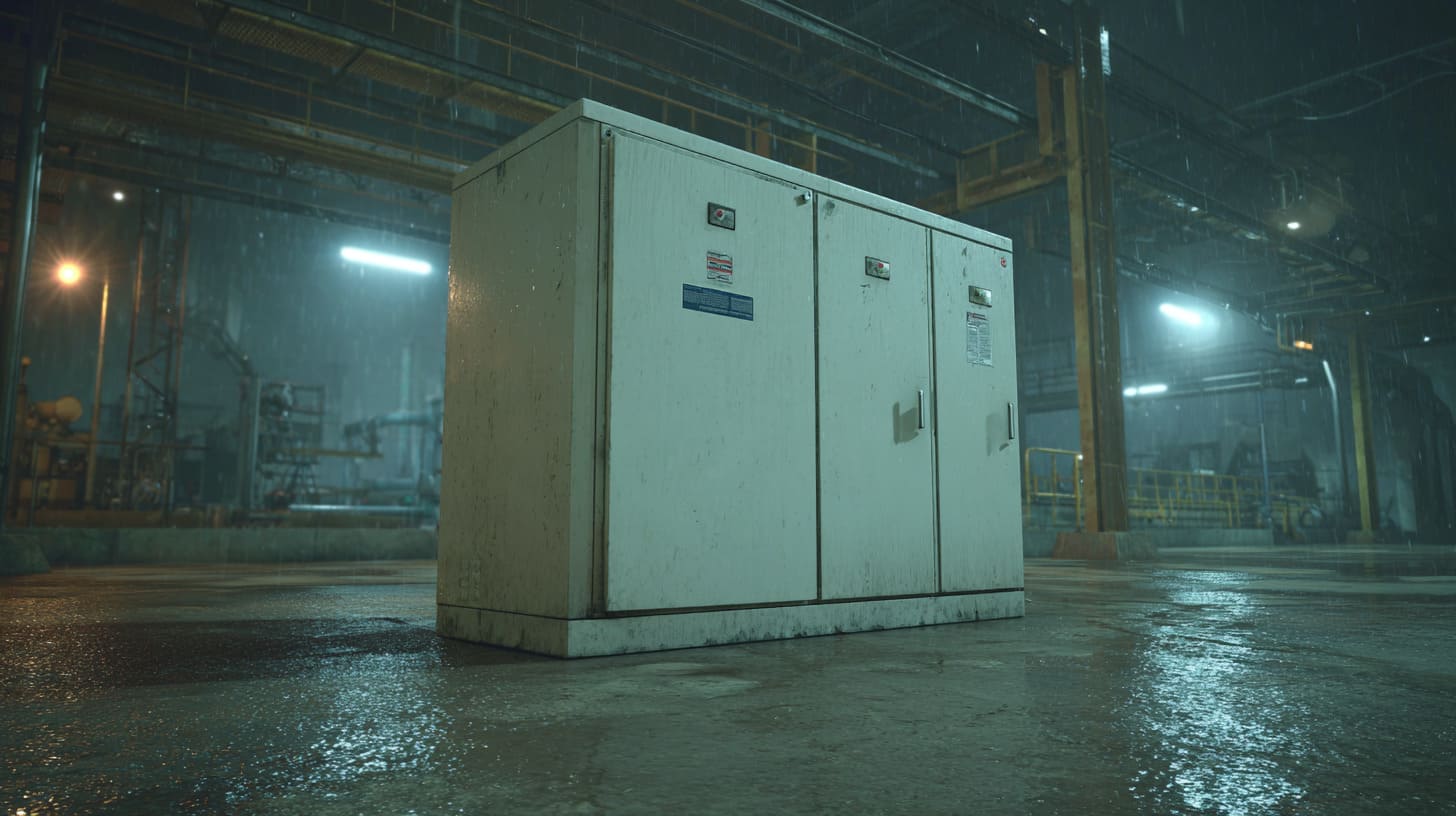
NEMA 5 becomes expensive when the project cost moves from the quotation sheet to the problem sheet.
At the beginning, the buyer saves money.
Later, the buyer may pay for repairs, replacements, shipping, complaints, redesign, and lost trust.
That is the trap.
The lower price is visible today. The real cost hides behind tomorrow.
A project starts to worry me when the buyer wants NEMA 5, but the application includes water, fine dust, custom cutouts, or difficult maintenance conditions.
Exposure to unexpected water
Unexpected water is one of the most common reasons NEMA 5 becomes risky.
The buyer may not plan for water exposure. But water may still appear.
Common sources include:
- Cleaning water
- Accidental spills
- Condensation
- Water dripping from pipes
- Wet hands touching controls
- Nearby machines using coolant
- Outdoor air entering indoor space
- Water running along cables
The dangerous part is that water does not need to be dramatic.
A small amount can still cause problems if it reaches the wrong area.
| Water source | Why it matters |
|---|---|
| Cleaning spray | May hit enclosure from many directions |
| Condensation | Can form inside or around metal parts |
| Dripping pipe | Repeated small contact creates long-term risk |
| Wet floor cleaning | Splash can reach low-mounted boxes |
| Cable route | Water may travel along cable into entry point |
| Human use | Operators may touch or open the box with wet hands |
If a customer tells me the enclosure will be used near water, I do not treat “only sometimes” as a safe answer.
Sometimes is enough.
A failure only needs one bad day.
Dust accumulation beyond expectations
Dust is another quiet enemy.
People often imagine dust as soft gray powder on a desk. Industrial dust can be very different. It can be fine, sticky, sharp, oily, or conductive.
That changes everything.
Dust can collect around gaskets. It can enter through small gaps. It can block ventilation. It can mix with moisture. It can also create heat problems.
| Dust type | Possible risk |
|---|---|
| General indoor dust | Usually lower risk |
| Textile fibers | Can collect around openings |
| Wood dust | Can enter gaps and build up |
| Metal dust | May create electrical risk |
| Plastic powder | Can cling to surfaces |
| Cement or mineral dust | Fine particles may penetrate weak sealing |
| Oily dust | Harder to clean and may damage gasket contact |
NEMA 5 can protect against settling airborne dust, lint, fibers, and falling dirt in indoor use. But if the environment has heavy fine dust or windblown dust, I would not treat NEMA 5 as the automatic answer.
The real question is not, “Is there dust?”
The better question is, “What kind of dust, how much dust, and how often?”
A light dust layer is one thing.
A machine covered in powder every week is another.
Custom cutouts weakening protection
Custom cutouts are part of our daily work.
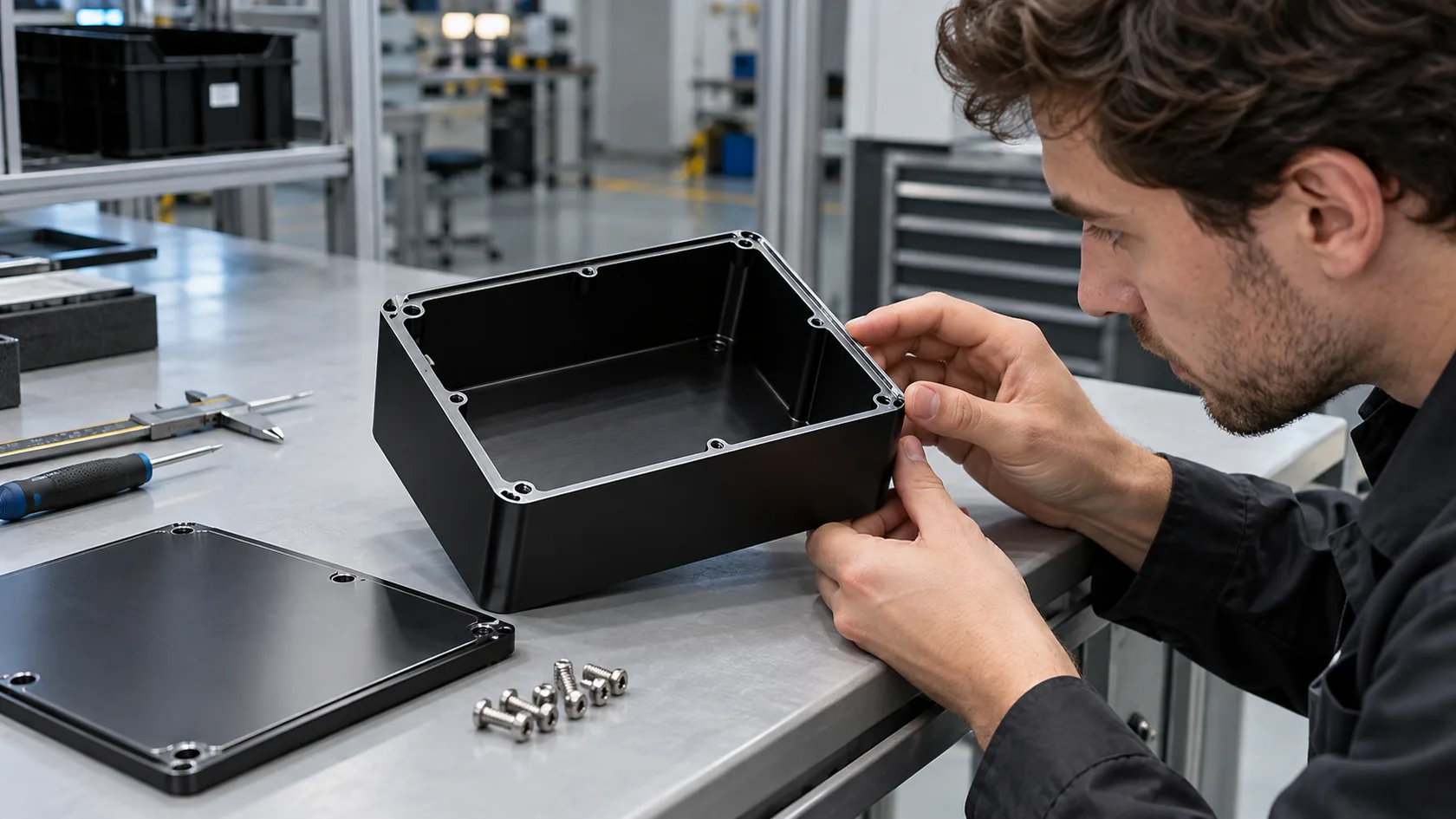
Many customers need a logo, a display window, connectors, cable glands, ventilation, buttons, or mounting holes. This is normal for OEM and ODM enclosure projects.
But every cutout changes the protection path.
The base enclosure may be good. The final enclosure may be weaker.
That is where many projects go wrong.
| Custom request | Hidden question I ask |
|---|---|
| Cable hole | Will the cable gland match the rating need? |
| Ventilation slot | How will we stop dust or water entry? |
| Display window | Is the bonding or gasket reliable? |
| Button hole | Is the button itself rated? |
| USB opening | Will the cover stay closed in real use? |
| Logo engraving | Does it affect coating or corrosion resistance? |
| Mounting hole | Does the screw path need sealing? |
The small hole is often the real boss.
I know that sounds a little funny, but it is true. A thick aluminum wall does not help if water enters around a cheap connector. A strong gasket does not help if a vent is open. A nice powder coating does not help if the installer drills extra holes on site.
This is why I always want to see the full custom drawing before judging the rating.
Not only the box.
The whole final product.
Lifecycle cost vs initial cost
Initial cost is only one part of the story.
Lifecycle cost is the full story.
A NEMA 5 enclosure may save money at the start. But if it fails in the field, the cost can grow quickly.
| Cost type | Example |
|---|---|
| Repair cost | Replacing damaged electronics |
| Replacement cost | Sending new enclosure or full unit |
| Shipping cost | International replacement shipment |
| Labor cost | Technician visit or rework |
| Downtime cost | Machine stops or project delay |
| Redesign cost | New drawing, new sample, new testing |
| Trust cost | Customer confidence drops |
The hardest cost to measure is trust.
If a buyer resells the final product under his own brand, an enclosure failure does not only hurt the supplier. It hurts the buyer’s brand too.
That is why many experienced buyers become more careful over time.
A beginner asks, “How much is the enclosure?”
An experienced buyer asks, “What happens if this enclosure fails after installation?”
That second question is where NEMA 4 often starts to look less expensive.
Why NEMA 4 Performs Better in Real-World Industrial Use
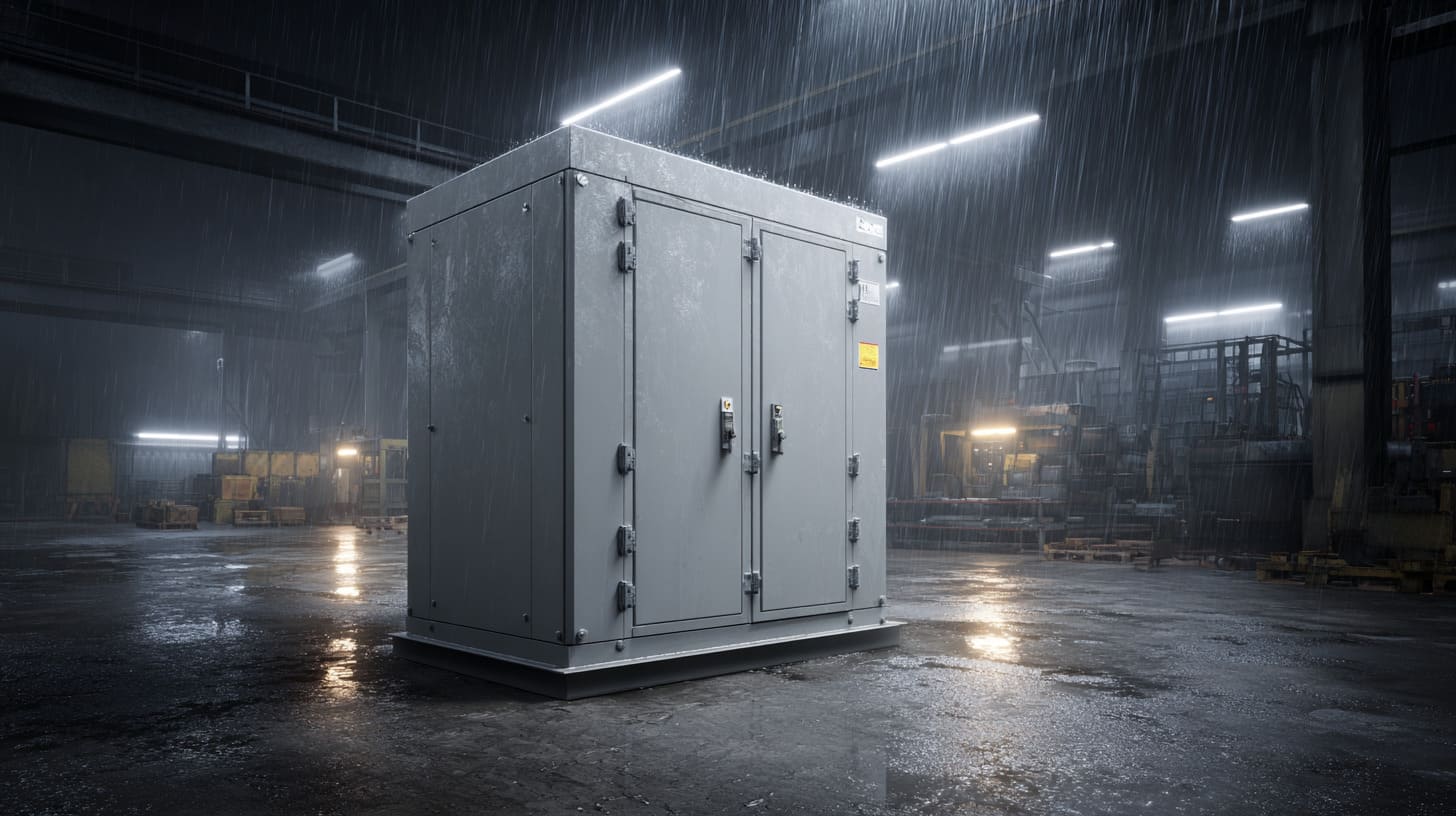
NEMA 4 is often chosen not because the buyer wants to spend more money.
It is chosen because real industrial use is messy.
Water appears. Dust moves. Workers clean quickly. Installers make changes. Customers place products in locations that are not exactly like the drawing.
NEMA 4 gives more safety margin in these situations.
I pay more attention to NEMA 4 when the enclosure must survive people, not only the environment, because people often create the hardest conditions.
Resistance to washdown and water pressure
The most obvious advantage of NEMA 4 is protection against hose-directed water.
This matters in many industrial settings.
Examples include:
- Food processing areas
- Packaging workshops
- Machine tool areas
- Outdoor equipment walls
- Semi-outdoor loading zones
- Wet production spaces
- Agricultural equipment areas
- Cleaning-heavy facilities
In these places, water may not fall gently from above. It may hit from the side. It may hit around the door. It may hit near cable entries. It may hit when workers are tired and in a hurry.
That is a very different test for an enclosure.
| Application condition | Why NEMA 4 helps |
|---|---|
| Hose cleaning | Designed for hose-directed water |
| Outdoor rain | Better weather protection |
| Splashing from machines | More protection from side water |
| Wet floors | Handles splash risk better |
| Cleaning schedule unknown | Gives more safety margin |
| Customer usage varies | Reduces risk from poor handling |
NEMA 4 is not magic.
Bad design can still fail.
But the rating direction matches harsher water exposure better than NEMA 5.
More stable sealing performance over time
A seal does not only need to work on the first day.
It needs to work after transportation, installation, opening, closing, cleaning, vibration, and temperature changes.
That is why gasket design matters so much.
A NEMA 4 enclosure usually needs stronger attention to:
- Gasket material
- Gasket compression
- Door stiffness
- Screw spacing
- Latch pressure
- Surface flatness
- Cable entry sealing
- Corner sealing
- Long-term gasket recovery
This sounds technical, but the idea is simple.
The seal needs to stay tight in real use.
| Sealing factor | Why it matters |
|---|---|
| Gasket compression | Too little pressure creates gaps |
| Door flatness | Warped doors reduce sealing |
| Screw spacing | Uneven pressure creates weak areas |
| Gasket aging | Old gasket may harden or shrink |
| Opening frequency | Repeated use can reduce sealing |
| Coating thickness | Can affect contact surfaces |
| Corner design | Corners are common leakage points |
I have seen buyers focus only on material thickness.
They ask, “Is 1.5 mm aluminum enough?”
That question matters. But it is not the only question.
A thick enclosure with poor sealing is still weak.
A well-designed enclosure with proper sealing is often more reliable than a heavy box with careless details.
Reduced failure risk in mixed environments
Mixed environments are the tricky ones.
These are places where the enclosure faces more than one risk at the same time.
For example:
- Dust plus moisture
- Heat plus condensation
- Cleaning water plus cable openings
- Outdoor air plus indoor machine use
- Fine powder plus vibration
- High humidity plus frequent door opening
One risk may be manageable.
Two risks can multiply the problem.
| Mixed condition | Failure risk |
|---|---|
| Dust + water | Mud-like buildup around seals |
| Heat + humidity | Condensation inside enclosure |
| Vibration + gasket | Compression may loosen over time |
| Cutouts + cleaning | Water enters through accessories |
| Outdoor edge + wind | Rain hits from different directions |
| Fine powder + fan | Dust may be pulled inside |
This is where I often recommend moving from NEMA 5 to NEMA 4.
Not because NEMA 5 is useless.
Because the environment is no longer simple.
A clean indoor room with light dust is one story. A semi-wet industrial line with daily cleaning is another story. The enclosure may look the same from far away, but the risk is completely different.
Better fit for global compliance expectations
Many buyers from North America, Europe, Japan, or South Korea care about compliance.
Sometimes the buyer does not only need a box that works. He needs a box that can pass customer review, distributor review, or project documentation review.
This is common for OEM and re-brand customers.
They may sell the final product under their own brand. Their local customer may ask:
- What is the enclosure rating?
- Can it handle washdown?
- Is it suitable for outdoor use?
- Is the cable entry sealed?
- Can we get drawings or test information?
- Does the enclosure match the installation environment?
NEMA 4 may make this conversation easier when the application includes water or outdoor risk.
| Buyer situation | Why NEMA 4 may help |
|---|---|
| Re-brand product | Stronger selling confidence |
| Industrial customer review | Better protection story |
| Outdoor or wet installation | Rating matches use better |
| Project documentation | Easier to justify |
| Distributor sales | Fewer customer objections |
| OEM equipment | Lower failure concern |
This does not mean NEMA 4 should be used everywhere.
It means NEMA 4 can reduce argument when the environment is uncertain or stricter.
Sometimes the extra cost buys more than protection.
It buys fewer questions later.
And fewer questions later can be worth a lot.
Hidden Cost Comparison: NEMA 5 vs NEMA 4
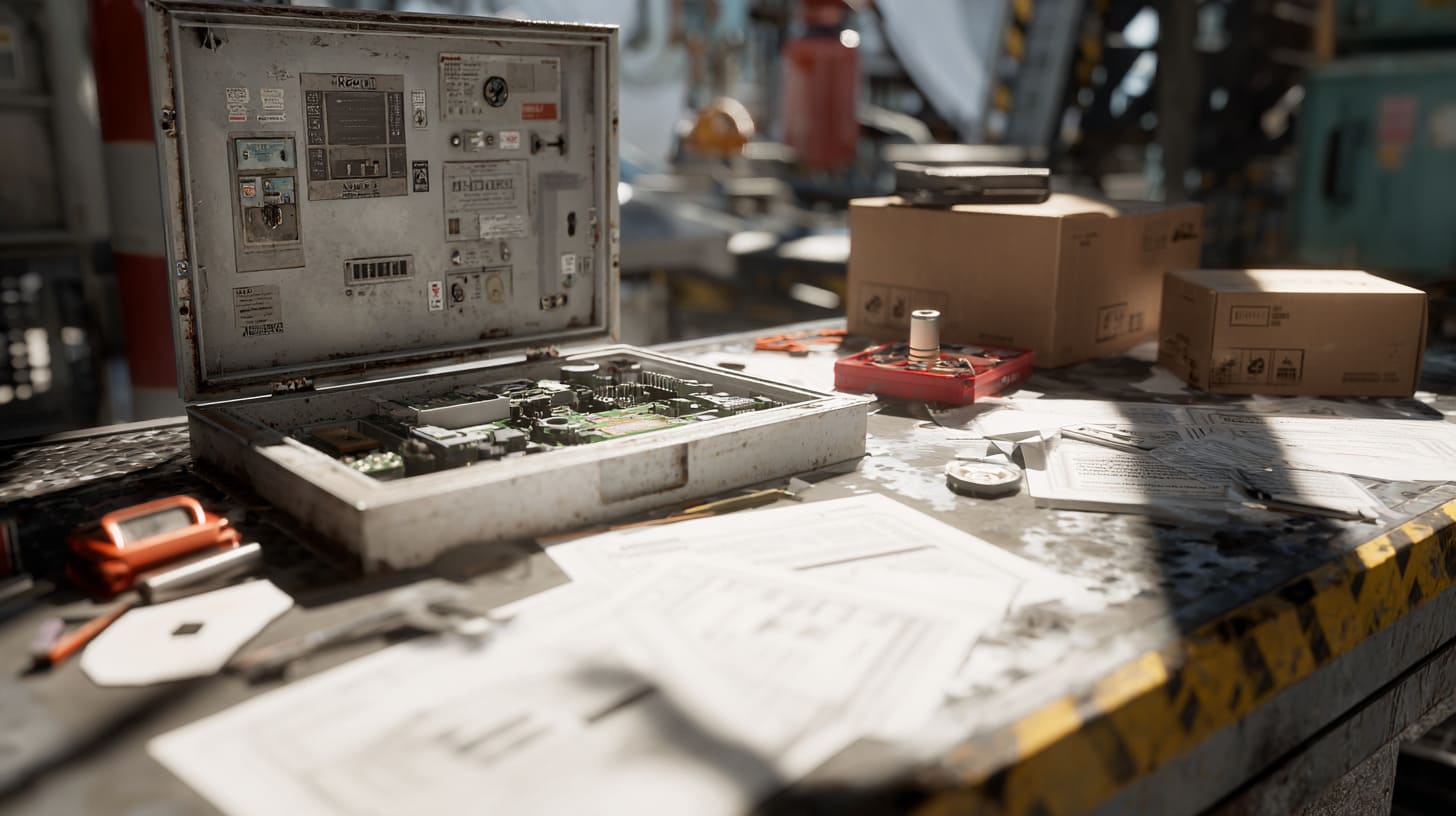
The cheapest enclosure is not always the lowest-cost enclosure.
That sentence sounds simple, but it takes experience to believe it.
When everything goes well, the lower unit price feels smart. When something fails, the old savings suddenly look very small.
This is why I like to compare NEMA 5 and NEMA 4 by total project cost, not only unit price.
Before I agree with a lower rating, I try to imagine the first failure email, because that email often reveals costs that the quotation did not show.
Initial cost vs total cost of ownership
Initial cost is the number on the quotation.
Total cost of ownership is everything after that.
Many buyers compare only the first number because it is easy. It is clear. It helps purchasing make a decision.
But industrial products do not live inside quotations. They live in factories, workshops, machines, trucks, warehouses, and customer sites.
| Cost area | NEMA 5 may save | NEMA 5 may risk |
|---|---|---|
| Unit price | Lower purchase cost | Higher failure cost if misused |
| Tooling or setup | May be simpler | Redesign may be needed later |
| Production | Easier sealing design | More rework if requirement changes |
| Shipping | May be lighter | Replacement shipping can be costly |
| Installation | Simple use | Field sealing may be weaker |
| Maintenance | Fine in dry areas | More risk in wet or dusty areas |
A buyer may save $5 or $10 per unit at the start.
That can be meaningful in large orders.
But one field failure can cost much more than that. If the enclosure protects expensive electronics, the risk becomes bigger. If the equipment is installed overseas, the replacement cost becomes even more painful.
Shipping a replacement enclosure from China to Europe or North America is not free.
Neither is the customer’s patience.
Downtime and operational risk
Downtime is one of the costs buyers do not always include in the first decision.
If an enclosure fails, the machine may stop. The product may need inspection. The customer may need to wait. The buyer may need to send a technician.
That cost is not always shown in a simple spreadsheet.
But it is real.
| Failure result | Possible business impact |
|---|---|
| Water enters enclosure | Electronics damaged |
| Dust enters enclosure | Heat or electrical problems |
| Connector area leaks | Signal or power failure |
| Gasket fails | Repeated service issue |
| Customer stops using product | Lost sales or complaints |
| Project delivery delayed | Penalty or lost trust |
For some products, downtime is small.
For others, downtime is brutal.
If the enclosure is used for a non-critical indoor device, NEMA 5 may be fine. If it protects control electronics for production equipment, a failure may stop work. That changes the decision.
This is why I always want to know what is inside the box.
A plastic cover for a simple indicator is one thing.
An enclosure protecting control electronics for a production line is another.
The outside box may look similar.
The inside value may be completely different.
Reputation and customer trust impact
A failed enclosure does not only create a technical problem.
It creates a trust problem.
This is especially important for buyers who re-brand products or sell OEM equipment. Their customer does not always know the factory behind the enclosure. The customer sees the buyer’s brand.
If the enclosure fails, the buyer takes the blame first.
That is uncomfortable, but it is true.
| Brand impact | What may happen |
|---|---|
| Customer complaint | Buyer spends time explaining |
| Product return | Profit disappears quickly |
| Bad review | Online sales suffer |
| Distributor concern | Future orders slow down |
| End-user doubt | Product feels less professional |
| Internal blame | Engineering and purchasing conflict |
I have seen buyers become very quiet after a failure.
Not because they are angry.
Because they are calculating.
They calculate repair cost. They calculate customer damage. They calculate whether the supplier should pay. They calculate whether the project can still be saved.
Nobody enjoys that moment.
A better rating choice at the start can sometimes avoid that whole conversation.
Replacement and redesign cost
Redesign is expensive because it eats time.
You may need to change:
- Gasket design
- Lid structure
- Cable entry parts
- Vent design
- Wall thickness
- Surface treatment
- Mounting method
- Test process
- Packaging
- Installation instructions
Then you may need a new sample.
Then another review.
Then another shipment.
Then another approval.
That is why “we can fix it later” is not always a good plan.
| Redesign item | Hidden cost |
|---|---|
| New drawing | Engineering time |
| New sample | Sampling cost and delay |
| New gasket | Material and testing |
| New cable gland | Purchase and approval |
| New test | Time and documentation |
| New packaging | Extra coordination |
| New production batch | Schedule pressure |
In custom manufacturing, changing a design after mass production is much harder than changing it before sampling.
Before sampling, the problem is still cheap.
After delivery, the problem has luggage.
It travels with emails, complaints, freight, and pressure.
So how should a buyer make the right choice before the problem grows legs?
How to Make the Right Choice for Your Project

The right choice starts with better questions.
Not better guessing.
Many enclosure problems happen because the buyer and supplier both move too quickly. The buyer wants a price. The supplier wants to quote. The drawing looks clear enough. Everyone wants progress.
But enclosure rating decisions need a little patience.
I become more confident in a recommendation when the buyer can describe the real use condition, not only the product size and quantity.
Evaluate real environment, not assumed environment
The environment should be described like a real place, not a general label.
Instead of saying “indoor,” I prefer to know:
- Is the area dry?
- Is there washdown cleaning?
- Is there splashing water?
- Is there condensation?
- Is there fine dust?
- What kind of dust?
- Is the enclosure near a door or window?
- Is the enclosure mounted high or low?
- Will workers open it often?
- Will it be used near machines, food, oil, powder, or coolant?
A simple table can help.
| Question | Why I ask |
|---|---|
| Will there be water spray? | Decides if NEMA 4 is needed |
| Is cleaning done with hose? | NEMA 5 is risky |
| What kind of dust exists? | Fine or conductive dust changes risk |
| Will the box be outdoors? | NEMA 4 is more suitable |
| Are there custom openings? | Openings may reduce protection |
| Will the door open often? | Gasket wear must be considered |
| What is inside the enclosure? | Higher-value electronics need more caution |
A good environment description can save many emails.
It can also save the buyer from choosing the wrong rating because of one missing detail.
Analyze enclosure modification impact
Custom enclosure work is not only about making holes.
It is about making holes without destroying the enclosure’s purpose.
That is the hard part.
A customer may request a beautiful design with ports, screens, logos, and ventilation. It may look professional. It may be easy to use. But it may also weaken sealing.
So every custom feature needs a protection plan.
| Modification | Question before approval |
|---|---|
| Cable gland | Does it match the water and dust risk? |
| Ventilation | Can protection be maintained? |
| Display window | Is the sealing method reliable? |
| Button or switch | Is the part suitable for the rating? |
| USB port | Is there a cover or sealed connector? |
| Logo engraving | Does it affect coating or corrosion needs? |
| Wall-mounted holes | Do screws need sealing washers? |
I like custom work. This is what we do.
But I do not like blind custom work.
A nice-looking enclosure that fails in use is not good custom manufacturing. It is just good-looking trouble.
Consider lifecycle, not just procurement price
A purchasing decision should include the product’s full journey.
This includes:
- Production
- Shipping
- Installation
- Daily use
- Cleaning
- Maintenance
- Customer complaints
- Replacement
- Brand impact
The enclosure is not finished when it leaves our factory.
It is finished when it survives the customer’s real use.
That is a very different standard.
| Decision factor | Short-term view | Better long-term view |
|---|---|---|
| Unit price | Choose lower cost | Check failure risk |
| Rating | Choose acceptable minimum | Match real environment |
| Gasket | Use standard option | Match water and dust condition |
| Cutouts | Add as requested | Seal every weak point |
| Delivery | Ship fast | Avoid fast wrong production |
| Supplier role | Make drawing only | Help review risk |
This is where communication matters a lot.
A good supplier should not only say “yes.”
A good supplier should sometimes say, “This design may have risk.”
That sentence may slow the project a little. But it can protect the buyer from a bigger delay later.
Work with suppliers for design validation
For custom OEM and ODM enclosure projects, the supplier should help check the design before production.
The buyer does not need to solve every detail alone.
A supplier can review:
- Material choice
- Wall thickness
- Gasket position
- Lid structure
- Screw spacing
- Cable entry method
- Surface finish
- Custom cutouts
- Logo method
- Packaging protection
- Test needs
This is especially important when the buyer is sourcing from China or Vietnam. Time zones are different. Communication can be slow. If details are not clear early, the project can suffer later.
| What to ask supplier | Why it helps |
|---|---|
| Can this design keep the target protection? | Finds weak points early |
| Which gasket do you suggest? | Improves sealing choice |
| Are these cutouts risky? | Avoids hidden failure |
| Can we use sealed cable glands? | Protects cable entries |
| Do we need a sample test? | Reduces mass production risk |
| Can you review the installation method? | Avoids field problems |
| Can packaging protect the gasket area? | Prevents damage during shipping |
I believe this is where a factory should create value.
Not only by producing parts.
But by helping the buyer avoid mistakes that are easy to miss on the drawing.
A low price is useful.
A correct design is more useful.
Now let me turn this into a simple decision framework.
Practical Decision Framework (Quick Checklist)
A checklist cannot replace engineering judgment.
But it can stop a rushed decision.
When a buyer asks me whether NEMA 5 is enough or whether NEMA 4 is needed, I like to reduce the decision into a few practical questions. This helps everyone talk about the same risk.
My final decision usually depends on the weakest real condition, not the best-looking part of the drawing.
Choose NEMA 5 if:
NEMA 5 may be a good choice if the project meets most of these conditions:
- The enclosure is fully indoor.
- The area is dry.
- Dust level is low or moderate.
- There is no hose cleaning.
- There is no outdoor exposure.
- There is no strong splashing water.
- Custom openings are limited.
- The electronics inside are not highly critical.
- The product can be serviced or replaced easily.
- The buyer needs good cost control.
Here is a simple table.
| Condition | NEMA 5 judgment |
|---|---|
| Dry indoor room | Good |
| Low dust | Good |
| No washdown | Good |
| Few cutouts | Good |
| Light dripping only | May be acceptable |
| Simple electronics | More acceptable |
| Large cost-sensitive order | Worth considering |
| Short lifecycle product | May be practical |
I would still review the drawing carefully.
Even in a dry indoor environment, careless cutouts can create problems. A cable hole without a proper gland can weaken the protection. A ventilation slot can invite dust. A display window can leak if bonding is poor.
NEMA 5 works best when the project stays honest.
Dry means dry.
Indoor means controlled.
Simple means simple.
Choose NEMA 4 if:
NEMA 4 is usually the better direction if any of these conditions appear:
- There is hose-directed water.
- Workers clean the area with water.
- The enclosure may be outdoors.
- There is rain, sleet, or snow exposure.
- There is strong splashing water.
- The environment has mixed dust and moisture.
- The enclosure has many custom cutouts.
- The electronics inside are expensive or critical.
- The product is sold under the buyer’s own brand.
- The end customer has strict reliability expectations.
| Condition | NEMA 4 judgment |
|---|---|
| Hose cleaning | Choose NEMA 4 |
| Outdoor use | Choose NEMA 4 |
| Wet production area | Choose NEMA 4 |
| Semi-outdoor installation | Choose NEMA 4 |
| Many cable entries | Strongly consider NEMA 4 |
| Critical electronics | Strongly consider NEMA 4 |
| Re-brand product | Better for trust |
| Unclear environment | Safer choice |
The most difficult case is the gray area.
For example, the product is indoor, but the room is humid. Or the enclosure is not directly washed, but nearby equipment is washed. Or the customer says there is no water, but the floor is always wet in photos.
In those cases, I prefer to ask one more question instead of giving a fast answer.
Fast answers feel good.
Correct answers feel better after six months.
A simple decision table
Here is the quick version I would use before quoting.
| Project situation | My usual direction |
|---|---|
| Dry indoor, low dust, no water | NEMA 5 |
| Indoor with light dripping only | NEMA 5 may work |
| Indoor with unknown cleaning method | Ask more before deciding |
| Indoor with hose cleaning nearby | NEMA 4 |
| Outdoor or semi-outdoor | NEMA 4 |
| Many custom cutouts | Review carefully, often NEMA 4 |
| High-value electronics inside | Consider NEMA 4 |
| Low-risk short-term use | NEMA 5 may be enough |
| Customer requires strong protection story | NEMA 4 |
This framework is not perfect.
Real projects always have small details.
But it helps buyers avoid one dangerous habit: choosing the rating only by price.
And that brings me to the final point.
Conclusion
I do not see NEMA 5 as a weak choice.
I see it as a conditional choice.
That is an important difference.
NEMA 5 can be practical when the enclosure is used indoors, in a dry and controlled area, with low dust, no washdown, and limited custom openings. In that kind of project, choosing NEMA 4 may add cost that the buyer does not need to pay.
But NEMA 5 becomes dangerous when the real environment is not as clean as the first description.
If there is hose cleaning, outdoor exposure, strong splashing water, fine dust, condensation, or too many cutouts, the lower-cost rating can become the more expensive choice. The buyer may save money on the first order, but pay more later through failures, replacement shipments, repair work, delayed projects, and damaged trust.
This is why I judge NEMA 5 vs NEMA 4 from the use condition first.
Not from the price first.
Price matters. I know that very well. Many of my customers are product engineers, company owners, OEM buyers, and re-brand sellers. They need competitive cost. They need fast delivery. They need quality that can support their own products in the market.
But a low price only helps when the product survives real use.
For me, the best enclosure choice is not always the highest rating. It is also not always the cheapest rating. It is the rating that matches the real environment, the real installation, the real cleaning method, and the real risk of failure.
That is why I often ask buyers more questions before quoting a custom enclosure.
Where will it be used?
Will there be water?
How will workers clean the area?
What dust is around it?
What holes do you need?
What is inside the box?
These questions may feel small. But they protect the project.
If you are working on a custom aluminum enclosure, sheet metal enclosure, plastic enclosure, or OEM electronic device enclosure, you can send us your drawing, application environment, quantity, and custom requirements. At MaidaTech, we can help review the design, rating direction, gasket structure, cutouts, logo method, and production details before sampling.
A cheaper enclosure is good.
A cheaper mistake is still a mistake.
So before choosing NEMA 5 or NEMA 4, I would rather slow down for one careful review than rush into one expensive correction later.