Skip to content
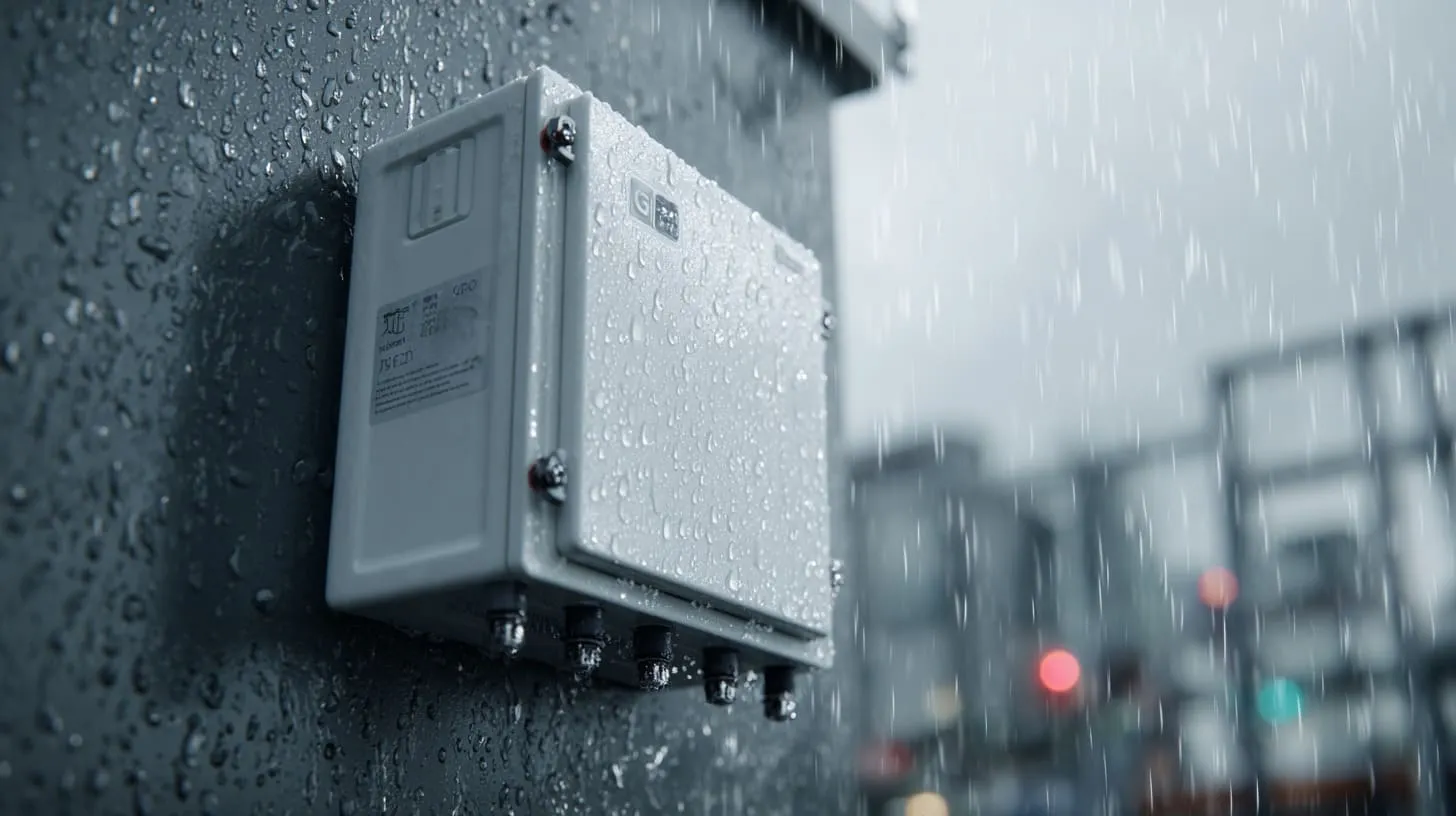
Outdoor electrical enclosures look simple from the outside. A box. A cover. A gasket. Maybe some screws. But one wrong plastic choice can turn a small saving into a large failure.
The best plastic for outdoor electrical enclosures is usually UV-stabilized polycarbonate for general outdoor use. Fiberglass reinforced plastic is better for harsh chemical, coastal, or very corrosive areas. ABS is only suitable for mild or protected outdoor conditions.
I have learned to treat outdoor enclosure projects with more respect than indoor boxes. Rain, sunlight, heat, cold, salt air, and careless installation all join the project later. They do not appear in the sample room, but they decide the real result.
What Plastic Material Lasts Longest in Outdoor Electrical Enclosures?
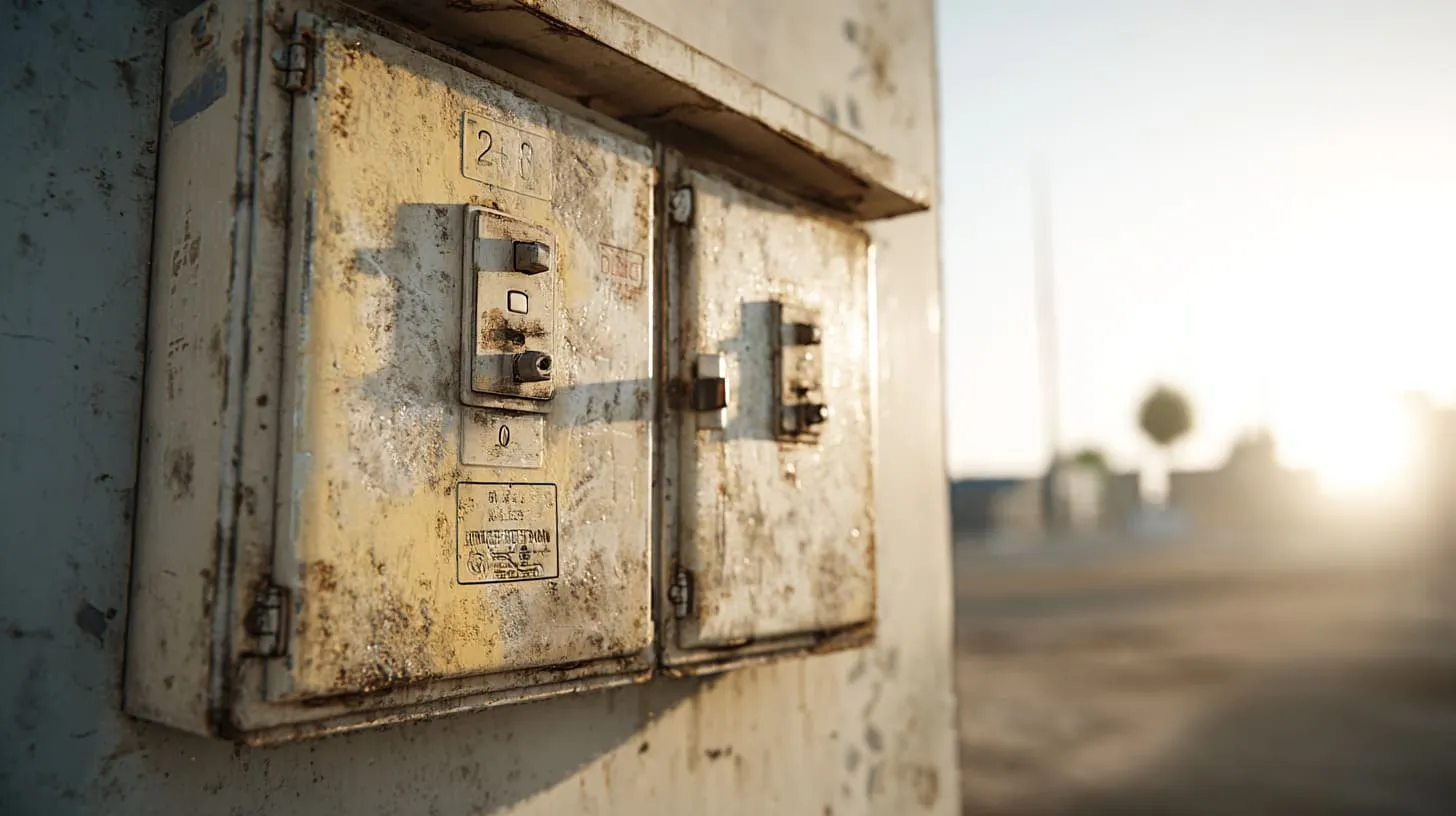
A plastic enclosure does not age in one big dramatic moment. It ages quietly. The surface fades. The gasket hardens. The screw bosses weaken. Then one rainy week exposes everything.
UV-stabilized polycarbonate and fiberglass reinforced plastic usually last longest in outdoor electrical enclosures. Polycarbonate is strong and impact-resistant. Fiberglass performs better in corrosive, chemical, salty, or very harsh outdoor environments.
The real question is not only “which plastic is strongest?”
When a customer asks me which plastic lasts longer, I do not answer with one material name too fast.
I first ask where the enclosure will live.
Will it stay under a roof?
Will it face direct sun?
Will it sit near the sea?
Will workers clean it with chemicals?
Will it hold power parts that create heat?
The same enclosure can live a peaceful life in one place and suffer badly in another place.
Common outdoor plastic choices
| Material | Outdoor life potential | Best use | Main risk |
|---|---|---|---|
| UV-stabilized polycarbonate | High | General outdoor electrical boxes, telecom boxes, control boxes | Can still discolor over time under strong sun |
| Fiberglass reinforced plastic | Very high in harsh sites | Coastal, chemical, industrial, wastewater, utility areas | Higher cost and more difficult processing |
| ABS | Low to medium | Mild outdoor or sheltered use | UV aging, cracking, fading |
| ASA | Medium to high | Outdoor covers and molded parts | Less common for standard electrical boxes |
| PVC | Medium | Cable boxes, conduit-related parts | Impact and temperature limits |
The small detail I never ignore is the installation environment, because a material that looks “overqualified” on paper may be the cheapest choice after five years of sun, rain, and service calls.
My simple judgment
For normal outdoor electrical enclosures, I usually start with UV-stabilized polycarbonate.
For coastal or chemical environments, I move my mind toward fiberglass reinforced plastic.
For ABS, I become careful. ABS may be friendly on price, but outdoor weather is not friendly to ABS.
Is Polycarbonate Better Than ABS for Outdoor Electrical Boxes?
Polycarbonate and ABS can both look good in the sample stage. They can both be molded cleanly. But outdoor use makes the difference bigger.
Polycarbonate is usually better than ABS for outdoor electrical boxes because it has stronger impact resistance, better weather performance, and better UV-stabilized options. ABS is cheaper, but it is more sensitive to sunlight and long-term outdoor aging.
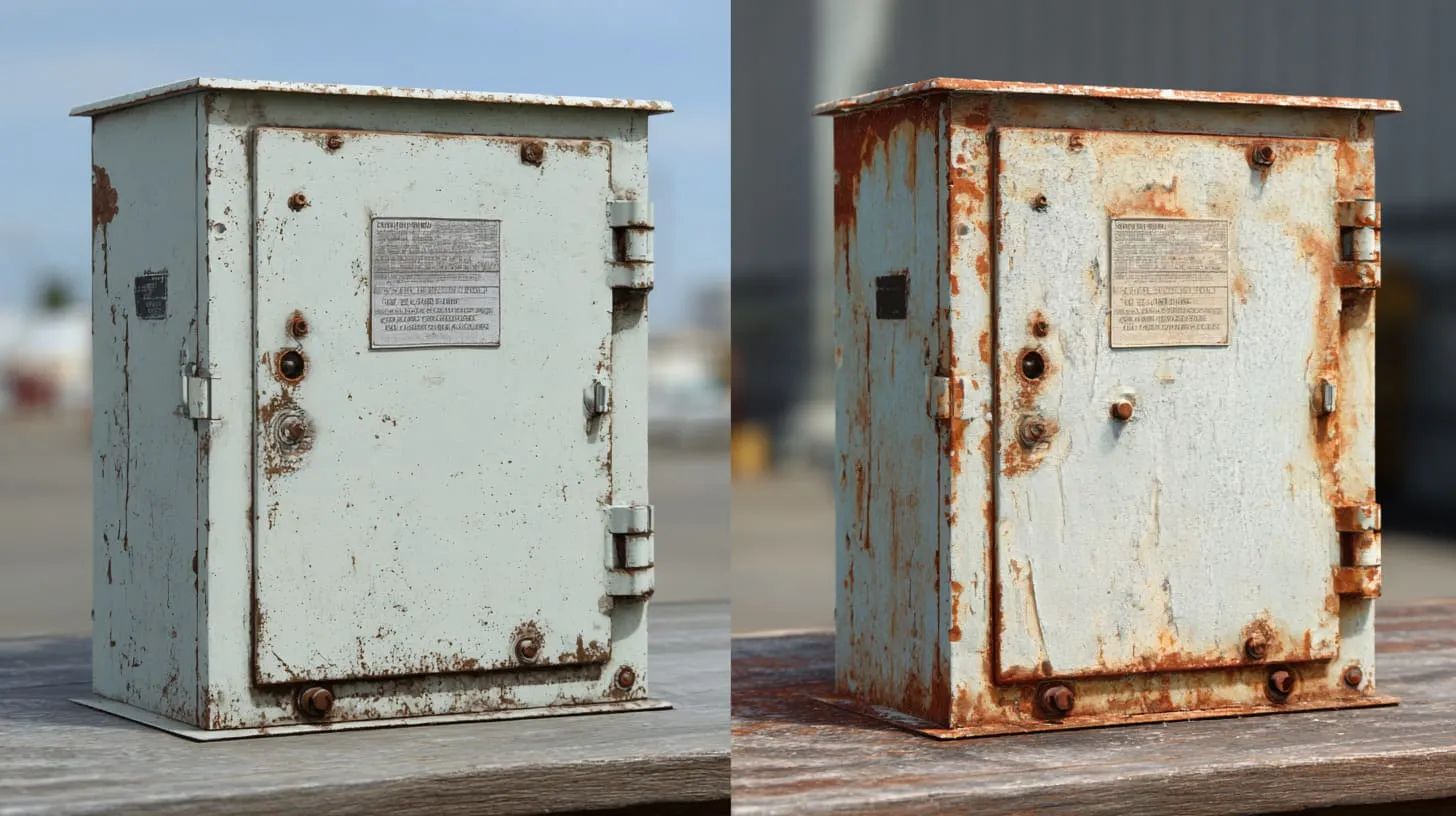
Polycarbonate is tougher when the box is in real use
A sample box on a table does not tell the full story.
A real outdoor electrical box may be hit during installation. A worker may overtighten the screws. A ladder may touch the cover. A cold morning may make the plastic less forgiving.
Polycarbonate is often chosen because it handles impact better than ABS.
ABS has a price advantage, but price is not the full cost
ABS is attractive because it is cheaper and easy to process. I understand why buyers ask for it.
If the enclosure is used indoors, ABS can be a smart material. If the enclosure is outdoors but protected from direct sun and heavy rain, ABS may still work in some cases.
But for open outdoor use, I do not like to gamble with ABS.
| Factor | Polycarbonate | ABS |
|---|---|---|
| Outdoor UV resistance | Better with UV-stabilized grade | Weaker unless specially modified |
| Impact strength | Strong | Medium |
| Cost | Higher | Lower |
| Long-term outdoor use | Better | Limited |
| Appearance after sunlight | More stable | Easier to fade or yellow |
| Best use | Outdoor electrical boxes | Indoor or sheltered boxes |
A buyer may save money by choosing ABS, but I always ask myself who pays for the replacement if the cover cracks after two summers.
My practical answer
If the project is a real outdoor electrical box, I prefer polycarbonate.
If the buyer insists on ABS, I need to see the application clearly. I need to know the sunlight level, expected service life, temperature range, and water exposure.
I do not say ABS is useless.
I only say ABS should not be treated like polycarbonate.
Why Is UV Resistance Important for Outdoor Electrical Enclosures?
Sunlight feels harmless when we stand in it for a few minutes. But plastic does not feel sunlight the same way. Plastic has to stand there every day.
UV resistance is important because sunlight can make plastic electrical enclosures fade, yellow, become brittle, crack, and lose strength. Outdoor enclosures need UV-stabilized materials to protect both appearance and long-term structure.
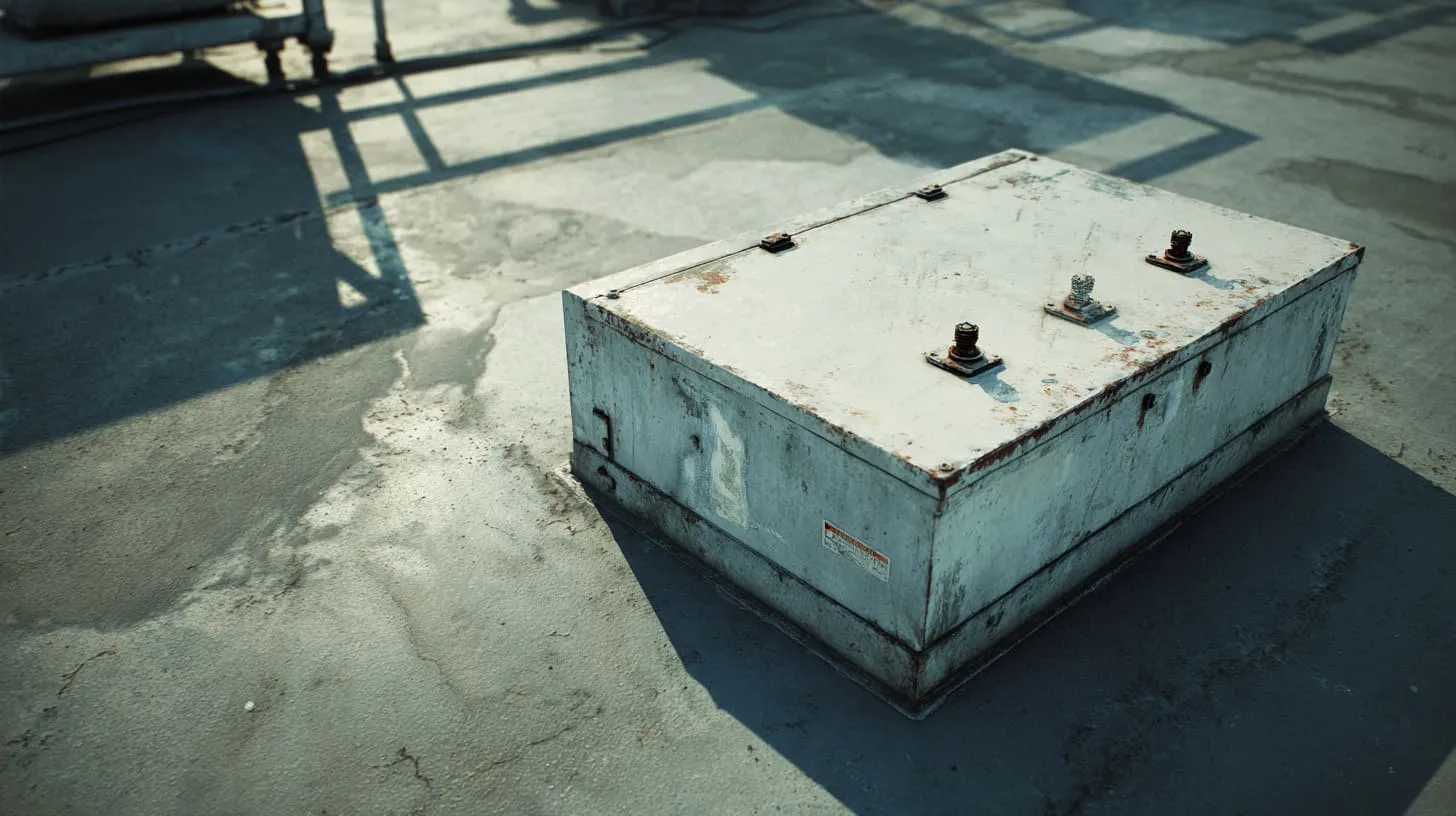
UV damage is slow, but it is not small
UV damage does not usually shout.
It whispers.
First, the color changes. Then the surface becomes dull. Then the cover feels less tough. Later, small cracks appear near screws, hinges, corners, or cable entries.
For an electrical enclosure, this is not only a beauty problem. It is a protection problem.
Where UV damage becomes serious
| Location | UV risk | My concern |
|---|---|---|
| Rooftop | Very high | Direct sun and heat build-up |
| Open field | Very high | No shade, rain, wind, dust |
| Street equipment | High | Sun plus impact risk |
| Factory wall outside | Medium to high | Depends on direction and shade |
| Under canopy | Medium | Still exposed to reflected light and heat |
| Indoor near window | Low to medium | Long-term fading may still happen |
The mistake I often see is that people check waterproof rating first, then forget that the sun can damage the box before water ever enters it.
UV resistance protects more than color
A yellowed enclosure may still work for some time. But the bigger issue is strength.
UV can reduce toughness. If the enclosure becomes brittle, the cover may crack when opened. A cable gland area may fail. A screw boss may break.
This is why I prefer to ask for UV-stabilized polycarbonate or outdoor-grade fiberglass reinforced plastic when the enclosure faces direct sunlight.
Can ABS Plastic Be Used for Outdoor Electrical Enclosures?
ABS is not a bad material. I use ABS in many product discussions. But outdoor electrical enclosure use is a different conversation.
ABS plastic can be used for outdoor electrical enclosures only in mild, shaded, or protected environments. For direct sun, heavy rain, long service life, or harsh weather, UV-stabilized polycarbonate or fiberglass is usually safer.
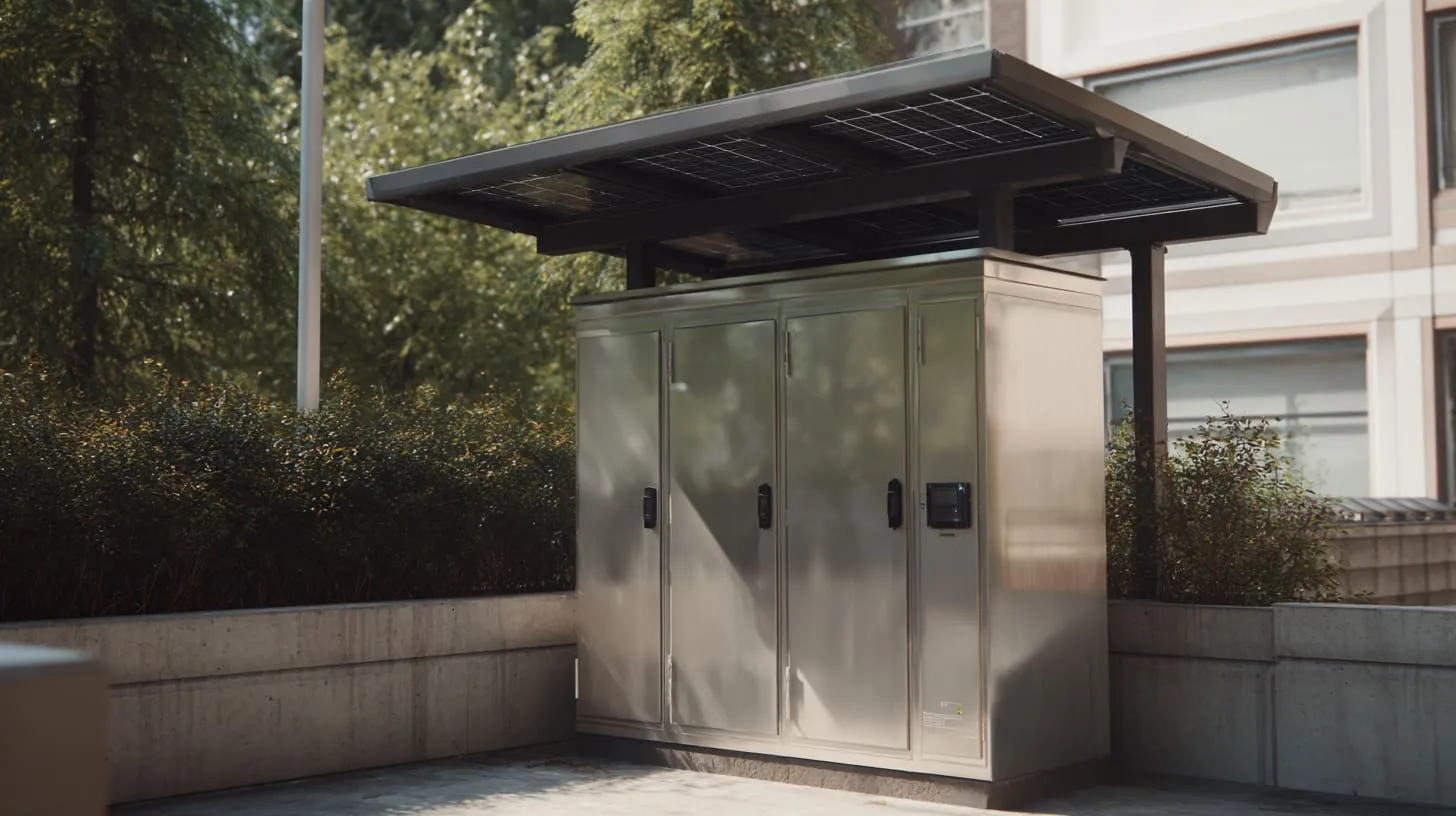
ABS works better when the environment is kind
ABS can work for indoor control boxes, small device housings, covers, and some protected equipment.
It has good processing behavior. It can look clean. It can help reduce cost.
But outdoor use adds pressure.
Sunlight attacks it. Heat cycles stress it. Cold weather can make it less forgiving. Rain may not damage the material directly at first, but water finds weak points when the enclosure ages.
When ABS may be acceptable
| Outdoor condition | Can ABS be considered? | My comment |
|---|---|---|
| Under roof | Yes, sometimes | Check sunlight and water splash |
| Short-term use | Yes | Service life must be clear |
| Mild climate | Maybe | Still need UV protection |
| Direct sun | Not preferred | Risk rises fast |
| Coastal area | No, usually not | Salt and sun are a hard mix |
| Industrial chemical area | No | Better use fiberglass or suitable PC |
I become nervous when someone chooses ABS only because the first sample looks nice, because the sample does not show the second year of sunlight.
My position on ABS
I do not reject ABS blindly.
I only limit it.
If the buyer wants a low-cost box for protected outdoor use, I can discuss ABS. But if the box protects electrical components outside for several years, I move away from ABS.
The enclosure is not only a plastic shell. It is a small insurance policy for the parts inside.
What Is the Difference Between Polycarbonate and Fiberglass Enclosures?
Polycarbonate and fiberglass can both be used outdoors. But they feel different in real projects. One is tough and clean. The other is strong in harsh places.
Polycarbonate enclosures are lightweight, impact-resistant, and good for general outdoor electrical use. Fiberglass enclosures are stronger against corrosion, chemicals, salt air, and harsh industrial sites, but they usually cost more and are less flexible for fine appearance needs.
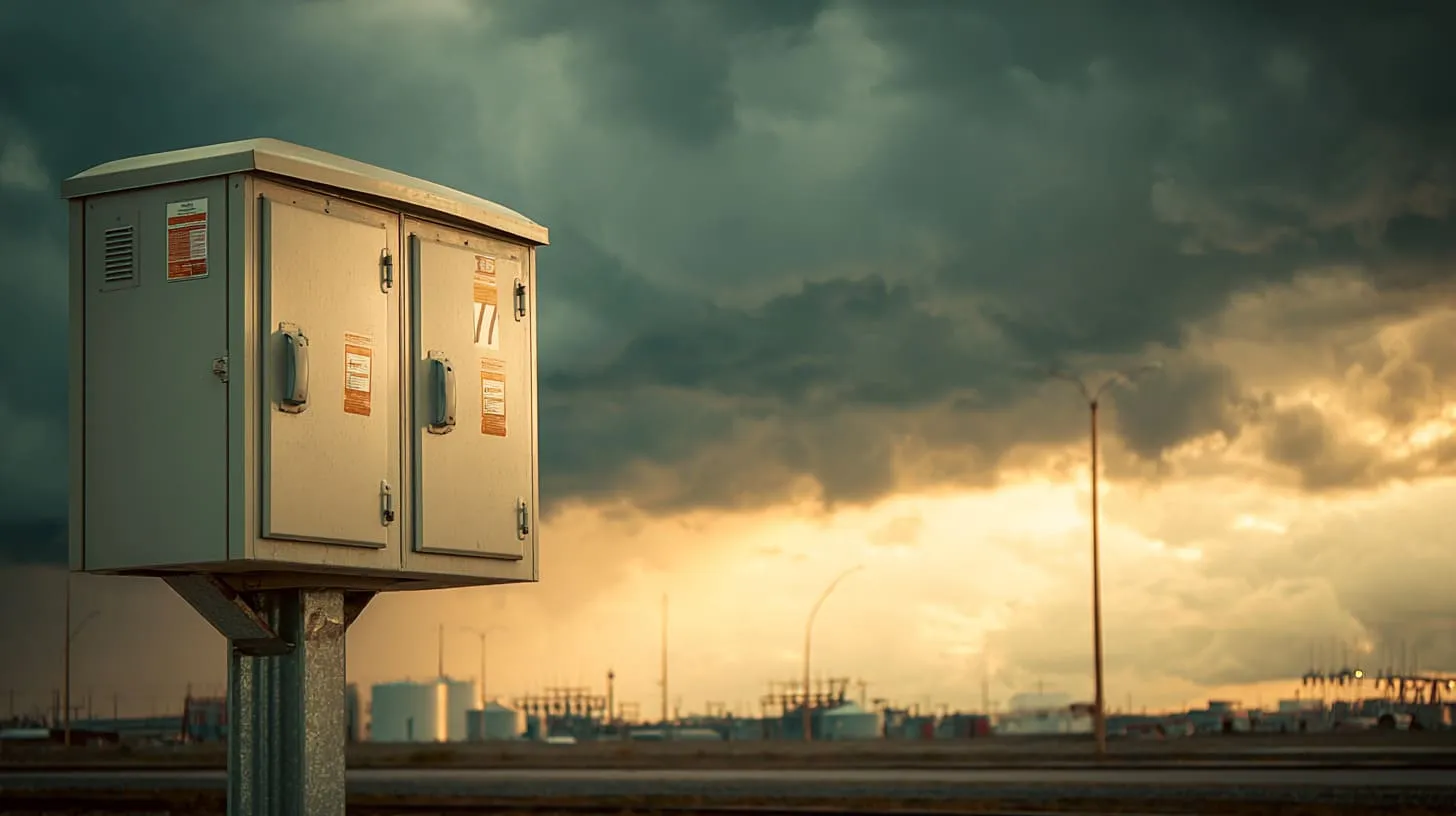
Polycarbonate is often the practical middle choice
Polycarbonate is easy to like.
It is strong. It is light. It can be molded well. It can be made with clear covers. It can support many electrical, telecom, IoT, and control box applications.
For many buyers, polycarbonate gives a good balance between cost, performance, and appearance.
Fiberglass is for more difficult environments
Fiberglass reinforced plastic is different.
It is often selected when corrosion is a big concern. It is common in coastal, chemical, wastewater, utility, and industrial sites.
It may not look as smooth and clean as a nice molded polycarbonate box, but it can survive where a normal plastic box may suffer.
| Factor | Polycarbonate | Fiberglass reinforced plastic |
|---|---|---|
| Impact resistance | Very good | Good |
| Corrosion resistance | Good | Very good |
| Chemical resistance | Medium to good | Very good |
| Salt air resistance | Good | Very good |
| Weight | Light | Medium |
| Appearance | Cleaner, smoother | More industrial |
| Cost | Medium | Medium to high |
| Best fit | General outdoor boxes | Harsh outdoor cabinets |
The way I decide between them is simple: if the problem is impact and normal weather, I think polycarbonate; if the problem is corrosion and harsh exposure, I think fiberglass.
A small design point
Polycarbonate is often better when the customer needs a neat enclosure with a custom logo, clear lid, or clean product appearance.
Fiberglass is often better when the enclosure just needs to survive a hard environment without drama.
That difference matters.
Not every box needs to look beautiful. Some boxes just need to keep working.
Which Plastic Enclosure Material Handles Extreme Weather Best?
Extreme weather is not one thing. It can mean heat, cold, UV, rain, snow, ice, wind, salt, sand, or sudden temperature change.
Fiberglass reinforced plastic usually handles the harshest outdoor weather best, especially in corrosive or coastal areas. UV-stabilized polycarbonate is also excellent for many outdoor electrical enclosures where impact resistance, sealing, and lighter weight matter.
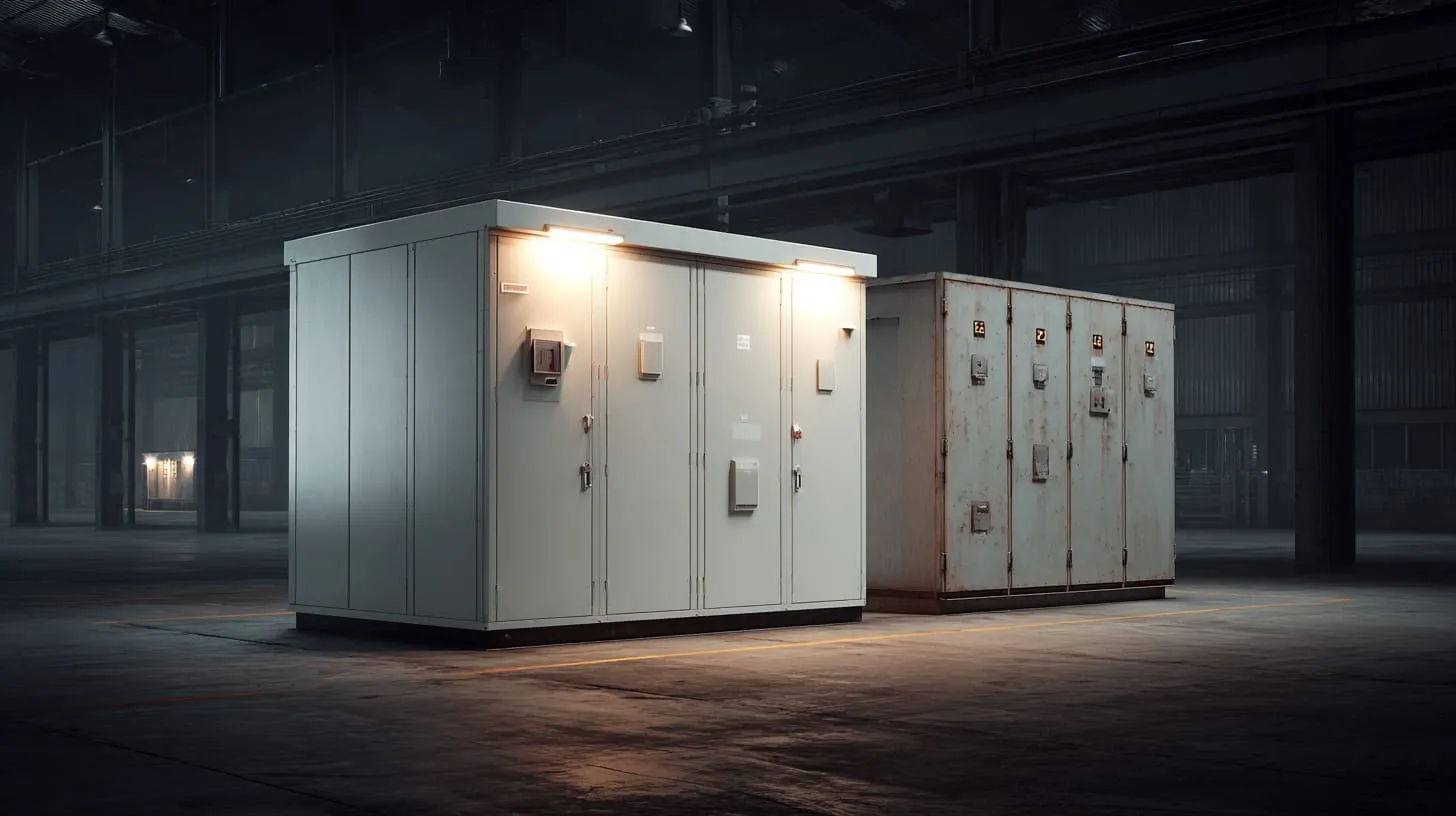
Extreme weather creates combined stress
A box does not face only rain.
It may face hot sun during the day, cold air at night, and water during storms. This creates expansion and contraction. The cover, gasket, screws, hinges, and cable glands all move a little.
That small movement matters.
Material choice by weather type
| Weather condition | Better material choice | Why |
|---|---|---|
| Strong sunlight | UV-stabilized polycarbonate or fiberglass | Better UV performance |
| Heavy rain | Rated polycarbonate or fiberglass enclosure | Sealing design matters most |
| Snow and ice | Polycarbonate or fiberglass | Check temperature range and gasket |
| Coastal wind and salt | Fiberglass | Better corrosion resistance |
| Hot rooftop | UV-stabilized polycarbonate or fiberglass | Heat and UV resistance matter |
| Chemical plant outdoor area | Fiberglass | Stronger chemical resistance |
One thing I check quietly is whether the customer says “outdoor” too casually, because a shaded garden wall and a seaside industrial pole are not the same outdoor world.
The enclosure is a system
Material is only one part.
A good outdoor enclosure also needs:
- Proper IP or NEMA rating
- Good gasket design
- UV-resistant cover and body
- Correct cable glands
- Drainage or condensation plan when needed
- Strong mounting points
- Proper screw torque during installation
A strong material cannot save a weak design forever.
Are Polycarbonate Electrical Enclosures Waterproof for Outdoor Use?
Many buyers ask this question because they see the word “polycarbonate” and think the material itself makes the box waterproof. That is not how it works.
Polycarbonate electrical enclosures can be waterproof for outdoor use only when the enclosure design, gasket, cover, cable entries, and IP or NEMA rating support waterproof protection. The material helps, but the sealing design decides the result.
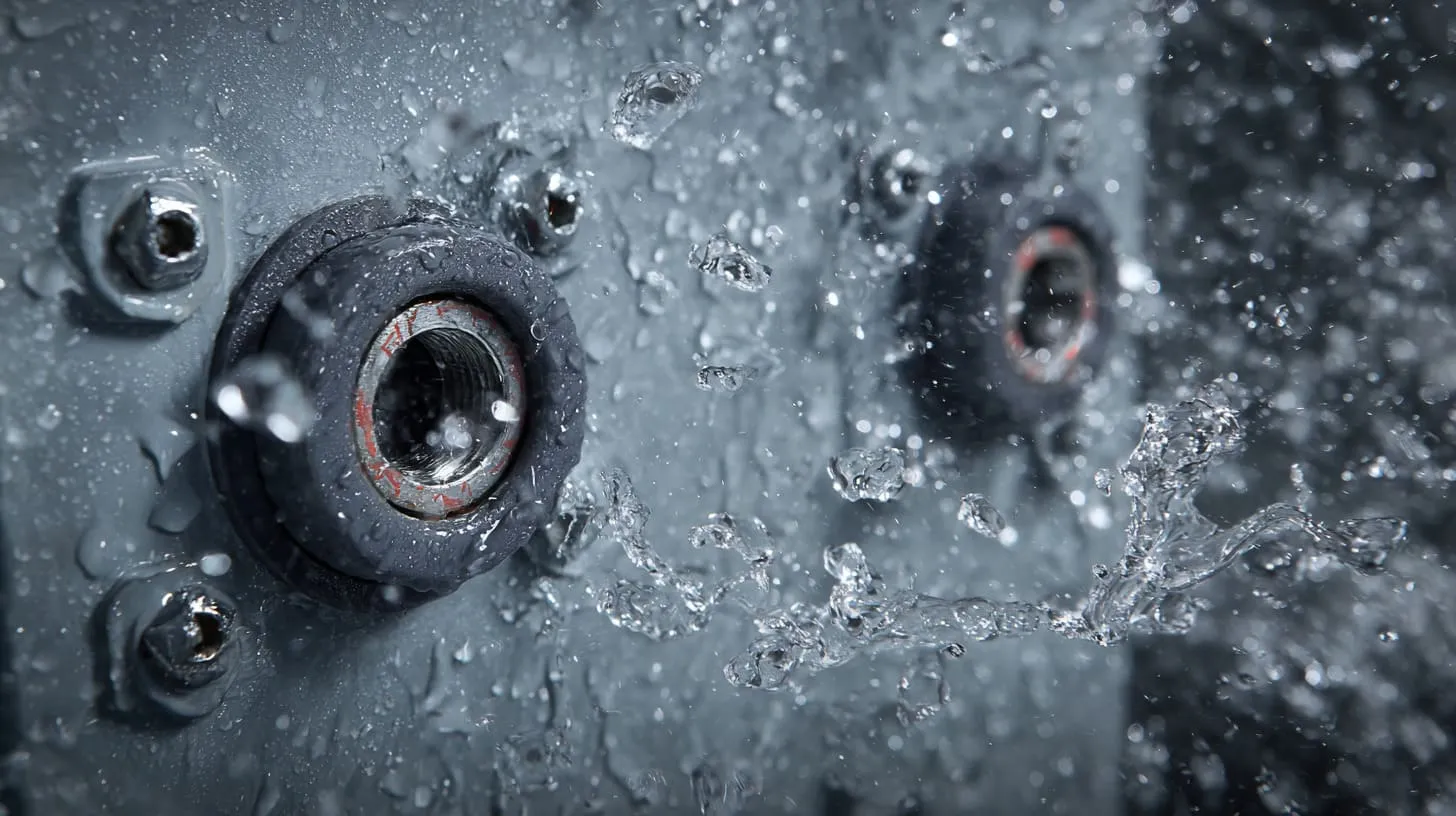
Waterproof is not only about plastic
Polycarbonate as a material does not absorb water easily in normal use. But water does not need to pass through the plastic body.
Water enters through weak points.
It enters through the cover edge.
It enters around cable glands.
It enters through poor drilling.
It enters through cracked screw bosses.
It enters when the gasket is damaged.
Where water usually enters
| Weak point | Common problem | How I check it |
|---|---|---|
| Cover gasket | Poor compression or aging | Check gasket material and groove |
| Cable gland | Wrong size or loose fitting | Match cable diameter and gland rating |
| Screw holes | Cracks or uneven tightening | Check boss design and torque |
| Hinges | Gap after repeated opening | Check hinge structure |
| Wall mounting holes | Water path from back side | Use correct mounting design |
| Transparent window | Poor bonding or seal | Check seal method and tolerance |
I never call a box waterproof only because the plastic is good, because water is patient and it always looks for the cheapest path inside.
What I tell customers
If you need outdoor waterproof performance, do not only ask for polycarbonate.
Ask for the rating.
For many outdoor electrical projects, buyers look for IP65, IP66, IP67, NEMA 4, or NEMA 4X, depending on the region and working conditions.
Then check the full assembly.
The best material still needs the right gasket and cable entry design.
What Plastic Is Best for Outdoor Electrical Enclosures Near the Sea?
Sea air looks peaceful in photos. But for materials, it can be brutal. Salt air sticks to surfaces and quietly attacks weak choices.
Fiberglass reinforced plastic is often the best plastic for outdoor electrical enclosures near the sea because it resists salt air and corrosion very well. UV-stabilized polycarbonate can also work, but the hardware and sealing parts must be selected carefully.
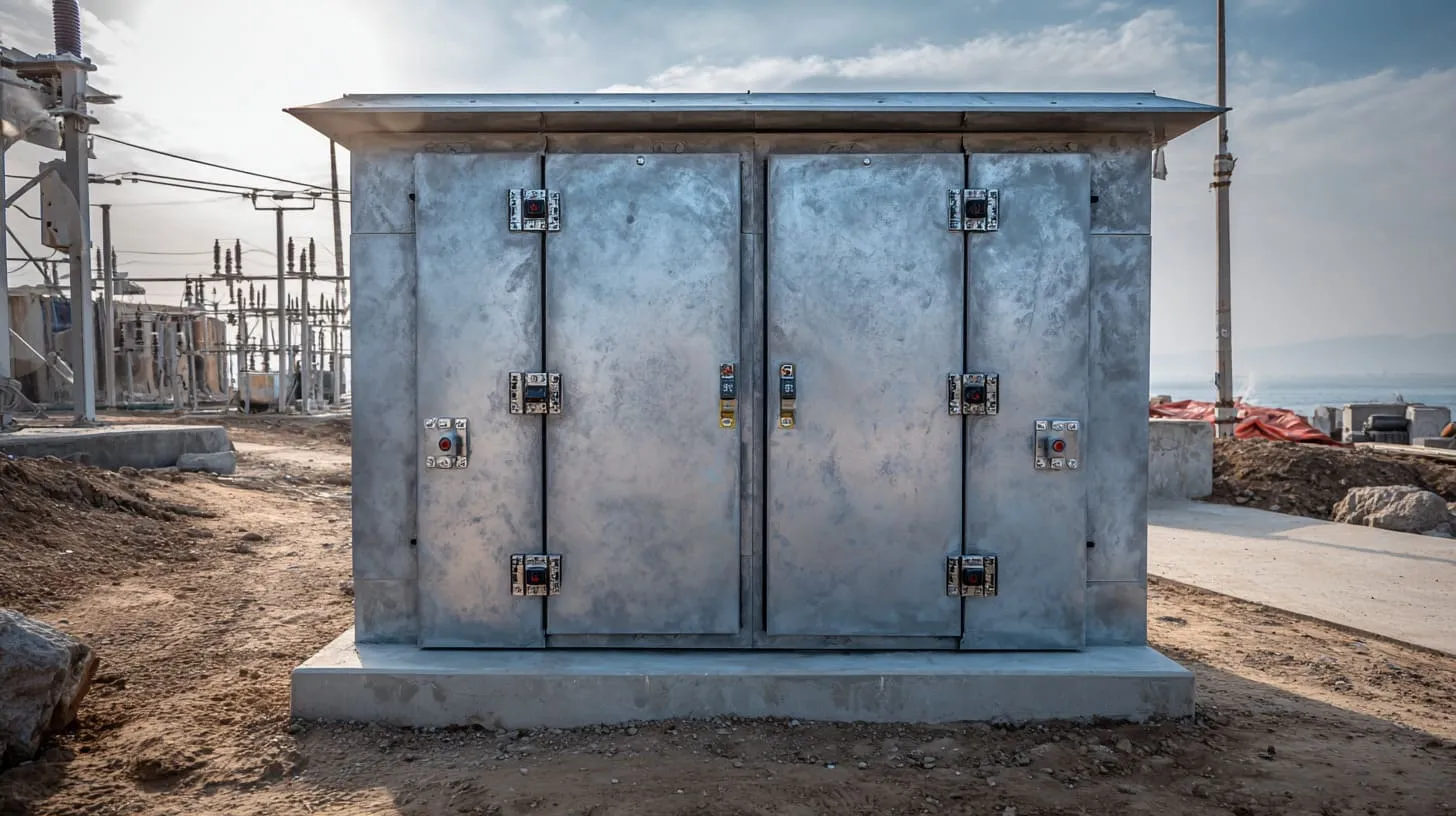
Coastal projects need extra caution
Near the sea, the enclosure faces more than rain.
It faces salt mist, strong sunlight, wind, humidity, and sometimes sand. Even metal screws and hinges can become weak points if they are not chosen correctly.
Plastic body material matters, but accessories matter too.
Coastal material comparison
| Material | Coastal suitability | My concern |
|---|---|---|
| Fiberglass reinforced plastic | Excellent | Good choice for harsh salt air |
| UV-stabilized polycarbonate | Good | Check hardware and long-term UV exposure |
| ABS | Poor to limited | Not my first choice for open coastal use |
| PVC | Medium | Depends on impact and temperature needs |
A coastal box can fail from a small metal part before the plastic body fails, so I always check screws, hinges, latches, mounting brackets, and cable glands together.
My usual recommendation
For a serious coastal electrical enclosure, I lean toward fiberglass.
If the size is small and the project needs a cleaner molded look, UV-stabilized polycarbonate can be discussed.
But I do not like to reduce the decision to only “plastic body price.”
Salt air does not care about our purchase budget.
How Do I Choose the Right Plastic for Outdoor Electrical Cabinets?
Choosing plastic for an outdoor cabinet is not about picking the “best” material from a list. It is about matching the material to the risk.
Choose the right plastic by checking sunlight exposure, rain level, temperature range, impact risk, chemical contact, salt air, required IP or NEMA rating, service life, and customization needs. Polycarbonate suits most normal outdoor cabinets. Fiberglass suits harsher sites.
Start from the working environment
I like to begin with simple questions.
Where will the cabinet be installed?
Who will open it?
How often will it be maintained?
What components are inside?
Will heat build up?
Will the customer see the enclosure every day?
These questions sound simple, but they prevent expensive mistakes.
A practical selection table
| Project condition | Better choice | Reason |
|---|---|---|
| Normal outdoor wall box | UV-stabilized polycarbonate | Good balance |
| Outdoor control cabinet in factory | Polycarbonate or fiberglass | Depends on chemicals and size |
| Coastal outdoor cabinet | Fiberglass | Better salt resistance |
| Outdoor telecom box | Polycarbonate | Lightweight and impact-resistant |
| Chemical plant area | Fiberglass | Better chemical resistance |
| Low-cost sheltered box | ABS may be considered | Only if risk is low |
| Premium visible product | Polycarbonate | Better appearance options |
My first filter is not material price; my first filter is the failure cost, because a cheap cabinet becomes expensive when a technician has to drive out and replace it.
Do not forget manufacturing needs
As a factory, I also think about production.
Some customers need custom holes, logo printing, mounting plates, special brackets, or custom packaging.
Material choice affects these details.
Polycarbonate is usually friendly for many custom enclosure projects. Fiberglass is strong, but it may need different processing and design planning.
The best choice is the one that works in both the environment and the production process.
What Are the Advantages of Polycarbonate Outdoor Electrical Enclosures?
Polycarbonate has become a popular choice because it solves many outdoor enclosure problems without making the project too heavy or too expensive.
Polycarbonate outdoor electrical enclosures offer strong impact resistance, light weight, good weather performance, UV-stabilized options, corrosion resistance, clean appearance, and flexible customization. They are suitable for many outdoor control, telecom, IoT, and electrical protection uses.
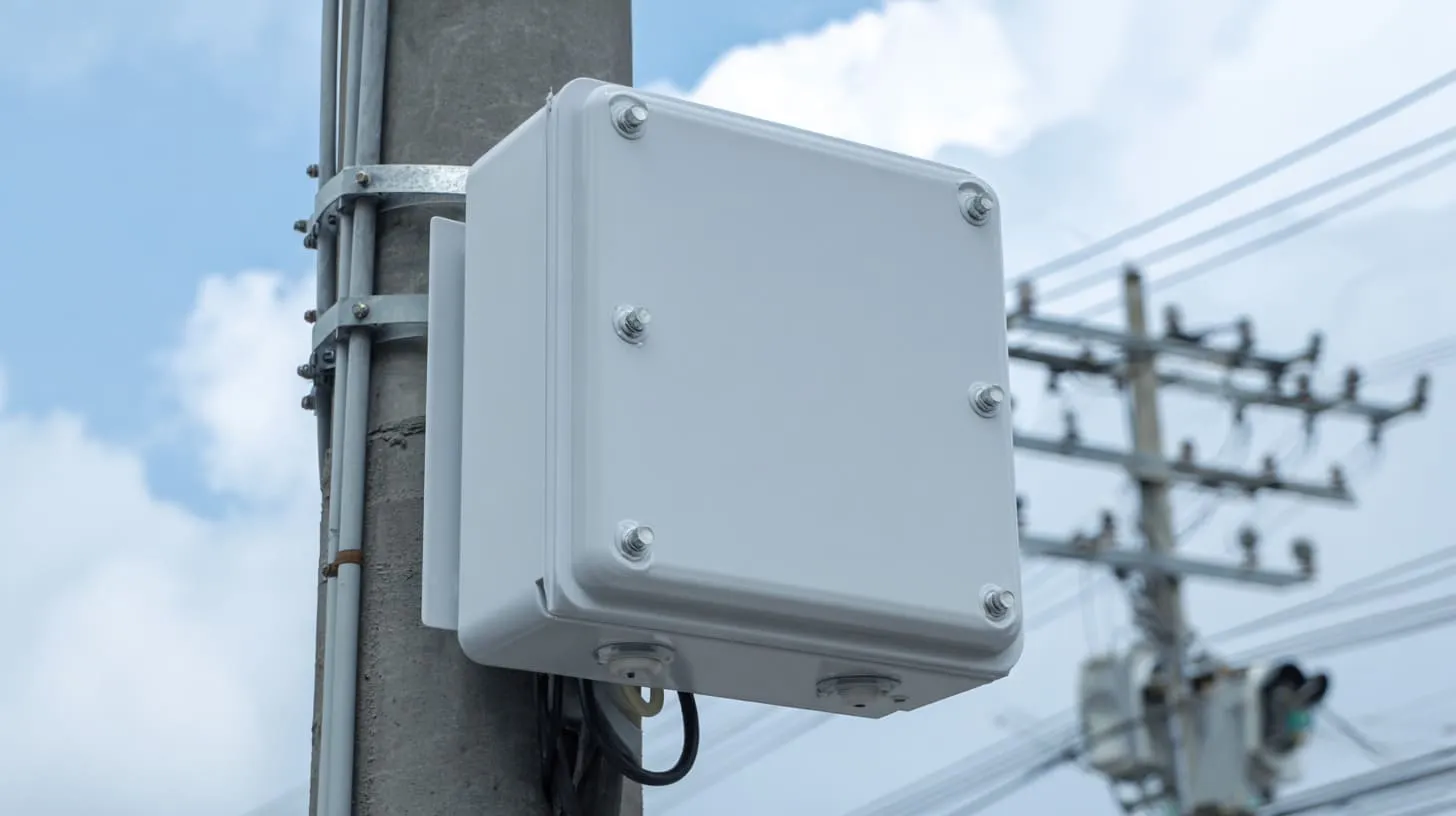
Why I often recommend polycarbonate first
Polycarbonate sits in a useful middle position.
It is stronger than many common plastics. It is lighter than metal. It does not rust. It can be molded with clean details. It can support transparent or opaque covers.
For many projects, this balance is exactly what the buyer needs.
Main advantages
| Advantage | Why it matters in real projects |
|---|---|
| Impact resistance | Helps during installation and outdoor use |
| Light weight | Easier shipping and mounting |
| UV-stabilized grades | Better sunlight performance |
| Corrosion resistance | Useful in wet outdoor environments |
| Electrical insulation | Helpful for electrical safety design |
| Clean appearance | Better for visible products |
| Custom processing | Supports holes, labels, logos, and fittings |
The part I like most is not only the strength; it is the balance, because many buyers need a box that is strong enough, good-looking enough, and still not too expensive.
Where polycarbonate is a good fit
Polycarbonate is often a good choice for:
- Outdoor junction boxes
- Small control boxes
- IoT device enclosures
- Telecom equipment boxes
- Solar monitoring boxes
- Security device housings
- Automation control housings
- Custom branded electrical enclosures
It is not perfect for every harsh environment. But for many outdoor projects, it is a very practical starting point.
Which Plastic Enclosure Material Resists Sunlight and Yellowing Best?
Yellowing is not only an appearance problem. It tells me the material is changing. And when a material changes outside, I start asking what else is changing inside the plastic.
UV-stabilized polycarbonate and fiberglass reinforced plastic resist sunlight and yellowing better than standard ABS. For visible outdoor enclosures, UV-stabilized material should be required from the beginning, especially for direct sun exposure.
Yellowing is a warning sign
Some buyers only worry about yellowing because the enclosure looks old.
That is fair.
But I also see yellowing as a signal. The surface has changed. The material may slowly lose toughness. The enclosure may become easier to crack.
This matters more when the box has screws, hinges, clips, or transparent covers.
Sunlight resistance comparison
| Material | Sunlight resistance | Yellowing risk |
|---|---|---|
| UV-stabilized polycarbonate | High | Low to medium over long time |
| Fiberglass reinforced plastic | High | Low, depending on formulation and surface |
| ASA | High | Low |
| Standard ABS | Low | High |
| Standard clear plastics | Depends | Often needs special UV grade |
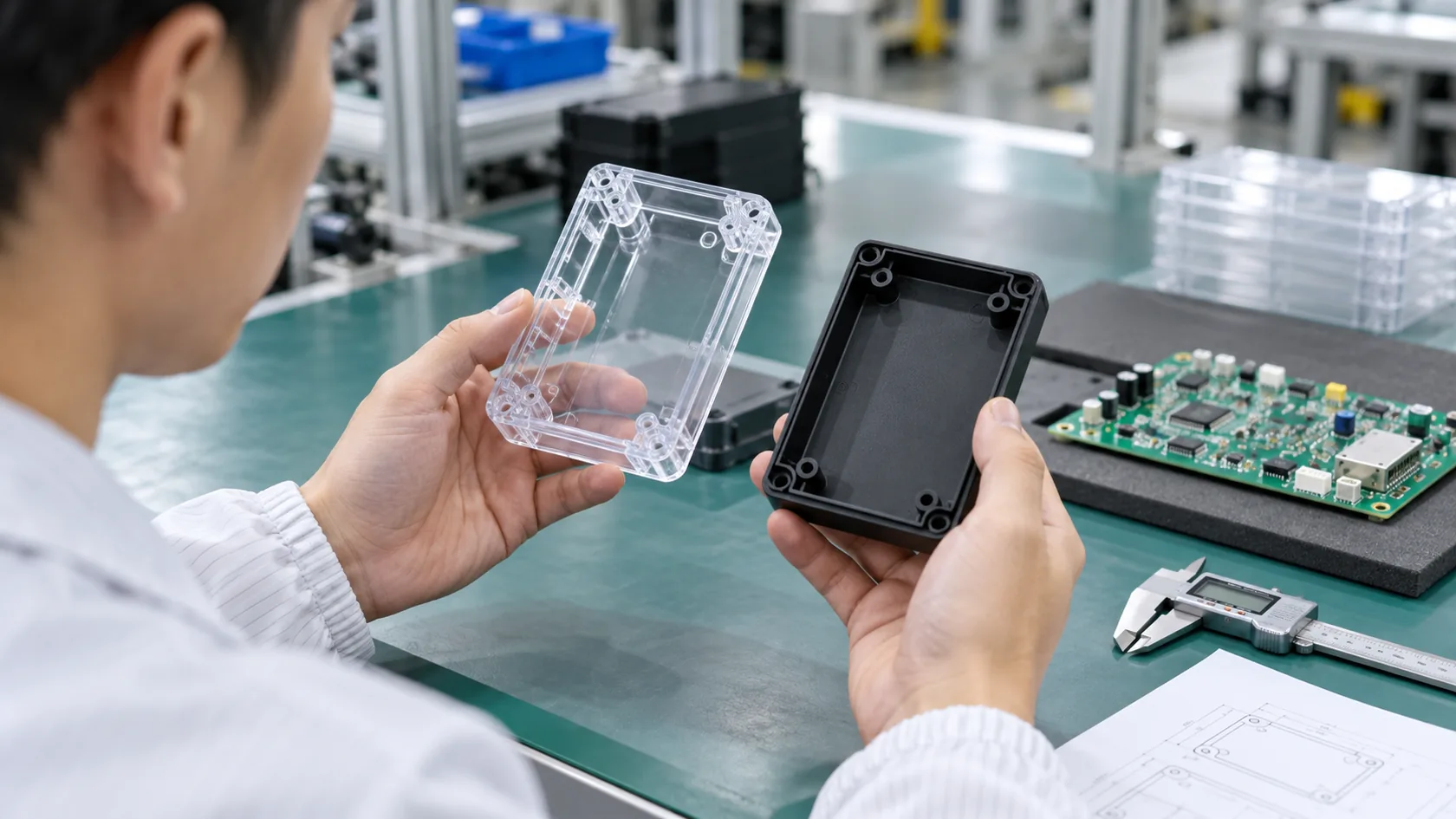
I pay close attention to transparent covers, because a clear cover that turns yellow or brittle can make the whole product look cheap even if the main box still works.
My advice for visible outdoor products
If the enclosure is installed where people can see it, do not treat color stability as a small detail.
For re-brand customers, this matters even more.
A faded box damages the brand feeling. A yellowed cover makes the product feel old. A cracked cover creates a service issue.
So I prefer UV-stabilized polycarbonate or fiberglass for long-term outdoor exposure.
Are Fiberglass Reinforced Plastic Enclosures Better Than Plastic Boxes?
This question sounds simple, but it hides a small trap. Fiberglass is also a type of plastic composite. So the real question is whether fiberglass is better than standard molded plastic boxes.
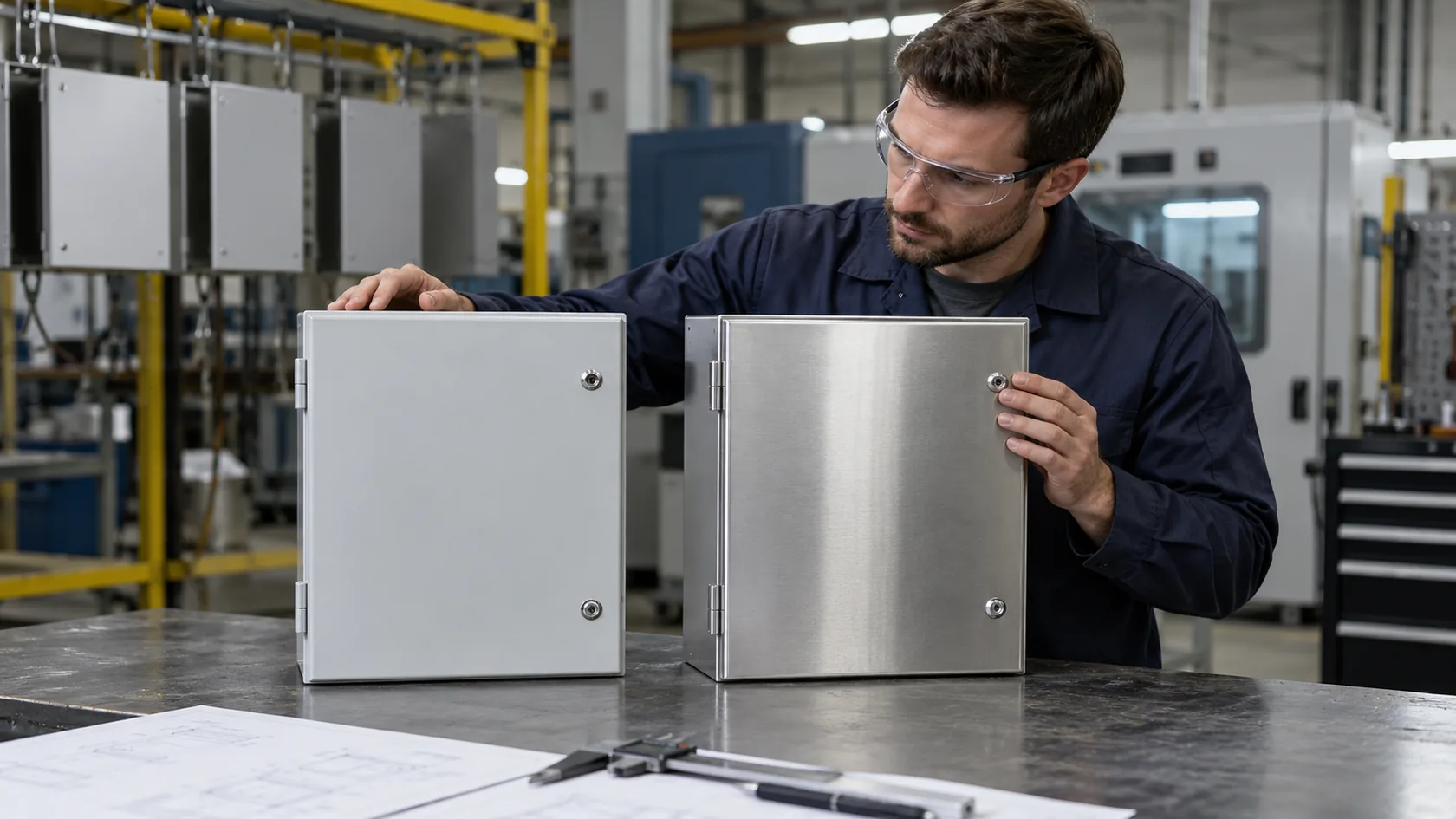
Fiberglass reinforced plastic enclosures are better than standard plastic boxes in harsh outdoor, chemical, coastal, and corrosive environments. But polycarbonate boxes may be better for lighter weight, cleaner appearance, smaller sizes, and easier customization.
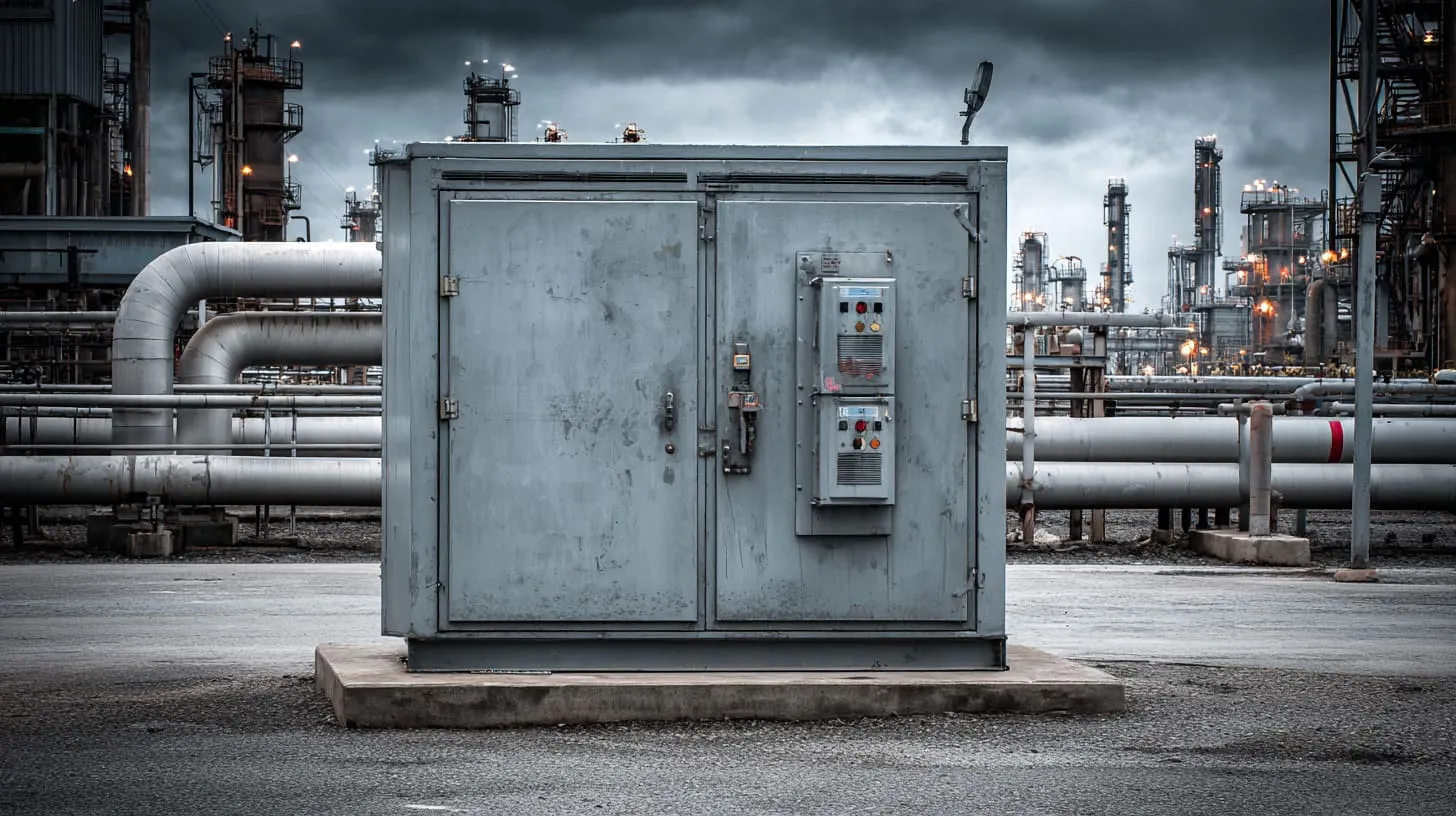
Fiberglass is stronger in difficult places
Fiberglass reinforced plastic is not chosen only because it sounds strong.
It is chosen because certain environments are rough.
Chemical plants. Coastal stations. Wastewater sites. Utility areas. Outdoor industrial control systems.
These places punish weak materials.
Fiberglass vs common plastic boxes
| Factor | Fiberglass reinforced plastic | Standard plastic boxes |
|---|---|---|
| Corrosion resistance | Excellent | Depends on material |
| Chemical resistance | Very good | Medium to good |
| Impact resistance | Good | Depends on plastic |
| Weight | Medium | Usually lighter |
| Appearance | Industrial | Cleaner on molded PC boxes |
| Cost | Higher | Lower to medium |
| Custom look | Less flexible | More flexible |
| Best use | Harsh sites | General applications |
The trade-off I think about is simple: fiberglass may be stronger for survival, but polycarbonate may be better when the product also needs a neat shape, clear lid, logo, and smooth customer-facing appearance.
Better depends on the job
If a customer asks for the “best,” I always bring the discussion back to the job.
For a seaside control cabinet, fiberglass may be better.
For a compact outdoor IoT enclosure with a clean brand label, UV-stabilized polycarbonate may be better.
For a sheltered low-cost device box, ABS may be enough.
Better is not a material name.
Better is a match.
What Is the Best Plastic for Outdoor Junction Boxes and Control Panels?
Outdoor junction boxes and control panels are not always the same. A small junction box may only protect cable connections. A control panel may hold switches, terminals, relays, displays, or heat-producing parts.
UV-stabilized polycarbonate is usually the best plastic for many outdoor junction boxes and small control panels. Fiberglass reinforced plastic is better for larger panels, coastal areas, chemical sites, or harsh industrial outdoor use.
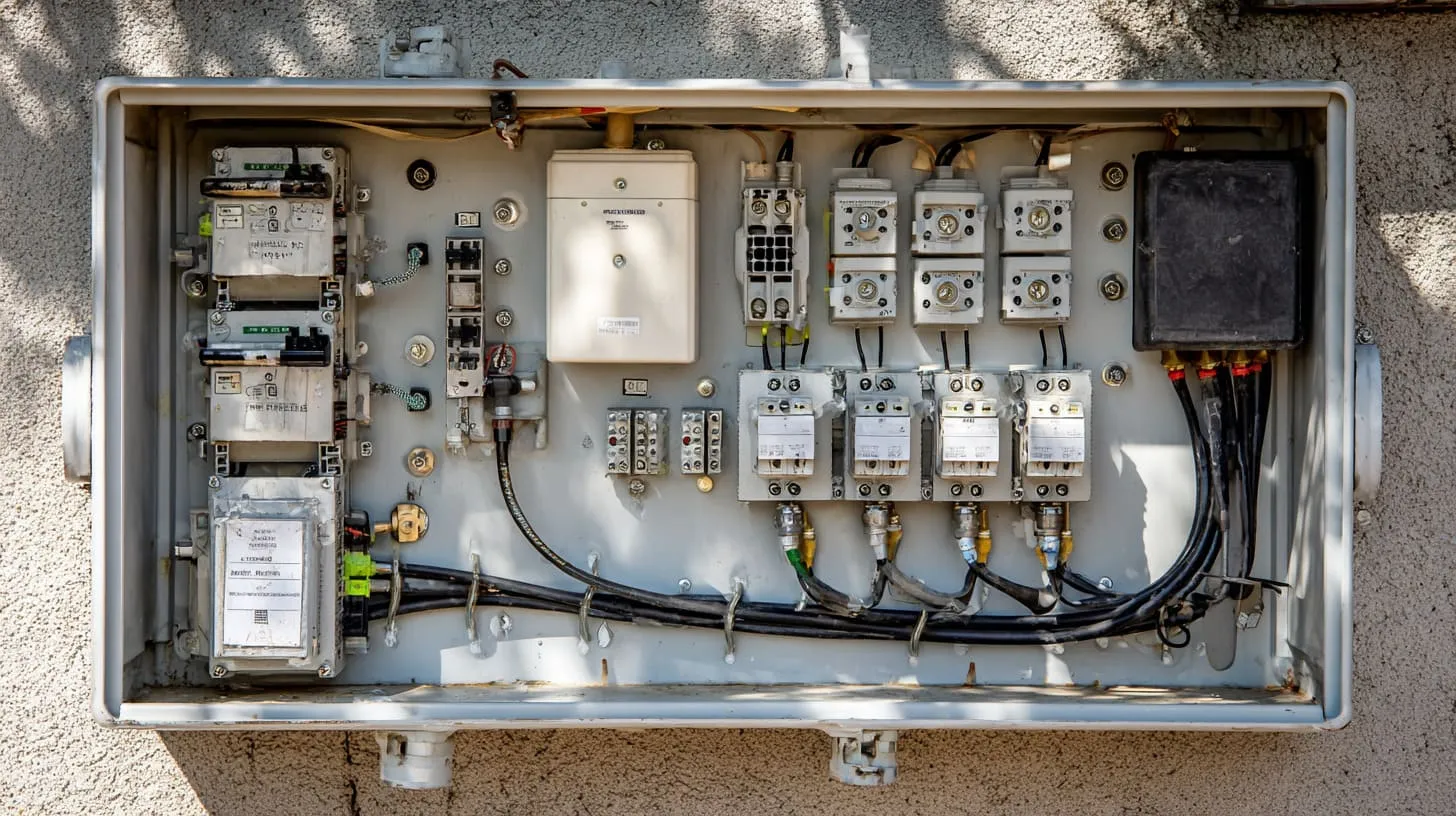
Junction boxes need sealing first
For junction boxes, I care about water, dust, cable entry, and installation mistakes.
The material must be strong, but the sealing design is just as important.
A good polycarbonate junction box with the right IP rating can work very well outdoors.
Control panels need more space and heat thinking
Control panels can be more complicated.
They may have DIN rails, terminal blocks, power supplies, relays, switches, or communication devices. These parts may create heat. They may also need maintenance access.
So I check size, layout, mounting plate, and heat path before making the final material suggestion.
| Application | Recommended material | Key concern |
|---|---|---|
| Small outdoor junction box | UV-stabilized polycarbonate | Gasket and cable glands |
| Outdoor sensor box | Polycarbonate | Impact and UV |
| Outdoor control panel | Polycarbonate or fiberglass | Heat and maintenance |
| Coastal control cabinet | Fiberglass | Salt and corrosion |
| Chemical area control box | Fiberglass | Chemical resistance |
| Low-cost sheltered junction box | ABS possible | Limited exposure only |
I do not judge a control panel only by the outside size, because the components inside may create heat, require space, or need frequent opening.
My working rule
For small to medium outdoor junction boxes, I usually start with polycarbonate.
For larger outdoor control panels in harsh environments, I think about fiberglass.
If the project needs a custom aluminum or sheet metal solution instead, I also compare those options. Plastic is not always the only answer.
How Does Temperature Affect Outdoor Plastic Electrical Enclosures?
Temperature is one of those problems that buyers often notice too late. The box looked fine at room temperature, but outdoor life is not room temperature.
Temperature affects outdoor plastic electrical enclosures by causing expansion, contraction, softening, brittleness, gasket aging, and internal heat build-up. Polycarbonate and fiberglass usually handle outdoor temperature changes better than standard ABS.
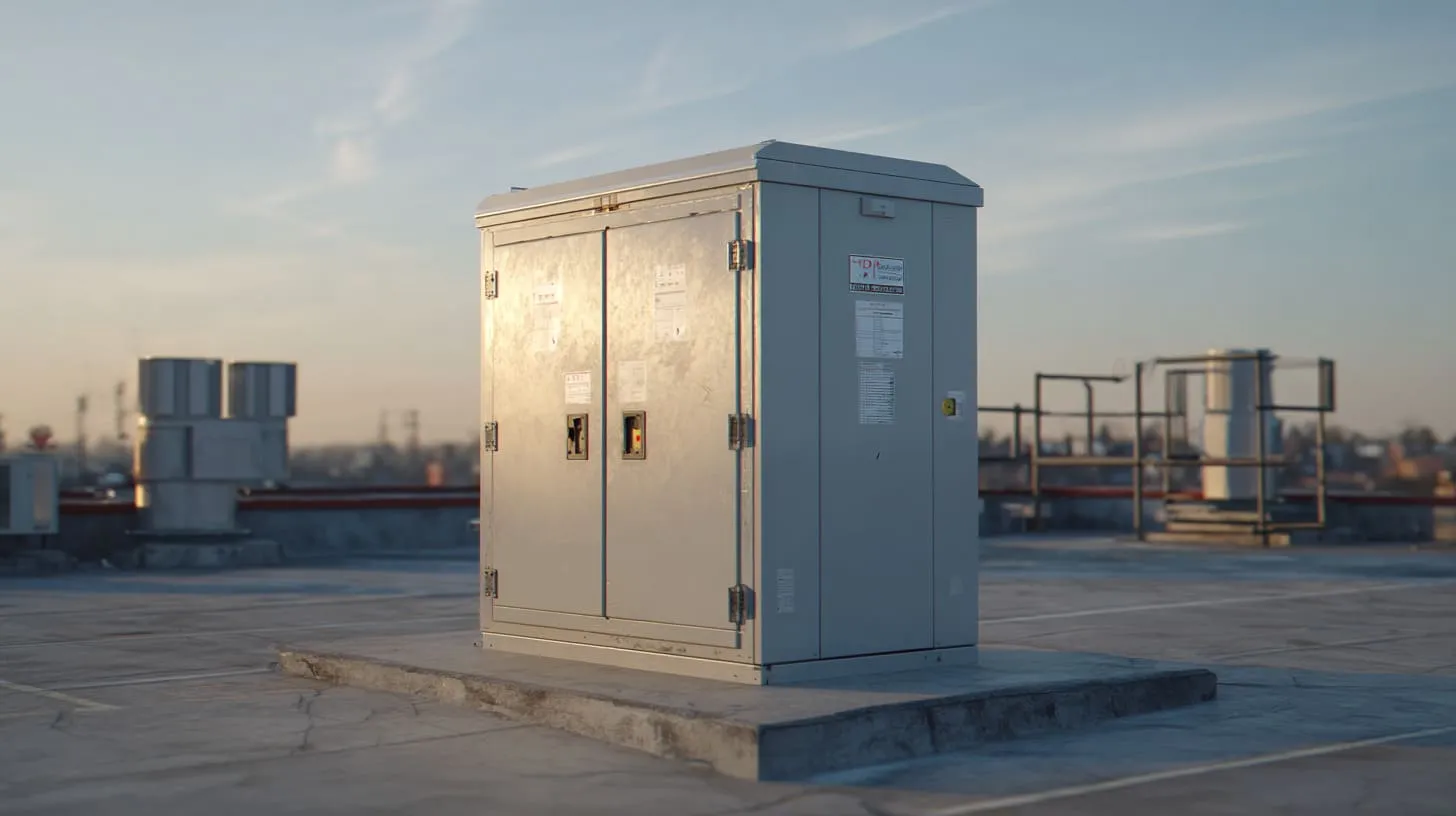
Heat and cold attack in different ways
Heat can soften materials, speed up aging, and increase pressure on gaskets.
Cold can make some plastics more brittle. It can also make covers, clips, and screw areas easier to crack during service.
Then there is the daily cycle.
Hot day. Cool night. Hot day again.
That repeated movement matters.
| Temperature issue | What may happen | What I check |
|---|---|---|
| High heat | Plastic softening or faster aging | Material temperature rating |
| Low temperature | Brittleness or cracking | Cold impact performance |
| Internal heat | Component failure risk | Venting, size, layout |
| Thermal cycling | Gasket movement | Seal design and screw structure |
| Direct sun heat | Surface temperature rises | Color, UV grade, installation location |
I always ask what is inside the enclosure, because an outdoor box with a hot power supply inside is a different problem from an empty junction box.
Do not forget internal heat
A sealed outdoor enclosure can trap heat.
If the box is under direct sun and the internal components also create heat, the temperature inside can become much higher than the air temperature.
This can affect:
- Power supplies
- Batteries
- Relays
- Communication modules
- Gaskets
- Adhesives
- Plastic mounting points
So material choice should be connected to thermal design.
Sometimes the answer is a bigger box. Sometimes it is a vent. Sometimes it is a different material. Sometimes it is a layout change.
What IP Rating Should Outdoor Plastic Electrical Enclosures Have?
The IP rating is where many buyers feel safe. But I always remind myself that a rating is only useful when it matches the real environment.
Outdoor plastic electrical enclosures commonly need at least IP65 for dust and water jet protection. IP66 is better for stronger water exposure. IP67 may be needed for temporary immersion risk. Some projects also require NEMA 4 or NEMA 4X.
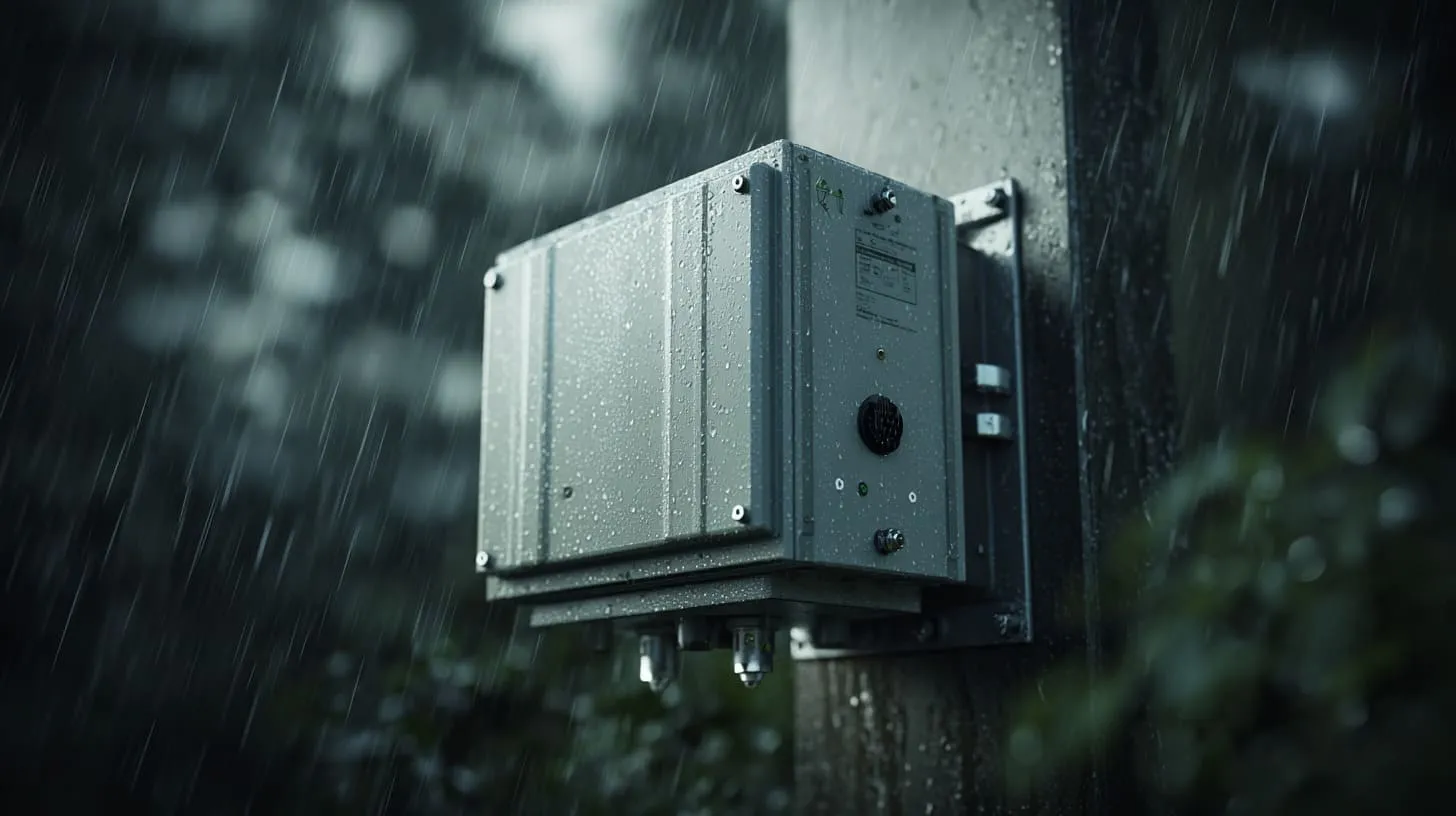
IP rating explains protection level
IP ratings help describe protection against solids and water.
For outdoor electrical enclosures, the common discussion often starts with IP65, IP66, or IP67.
But the correct rating depends on the site.
A box under a roof does not face the same water risk as a box on a pole in heavy rain.
Common outdoor IP choices
| Rating | General meaning | Common use |
|---|---|---|
| IP54 | Limited dust and splash protection | Sheltered areas |
| IP65 | Dust-tight and water jet protection | Common outdoor boxes |
| IP66 | Dust-tight and strong water jet protection | Heavy rain or washdown risk |
| IP67 | Dust-tight and temporary immersion protection | Flood or short immersion risk |
| IP68 | Longer immersion protection | Special applications |
The detail I watch is cable entry, because a box can have a good IP rating on paper and still fail after someone drills a poor hole in the wrong place.
IP rating is not the whole story
IP rating does not always cover everything a buyer cares about.
For North American industrial projects, NEMA ratings may also matter. NEMA 4X is often discussed when corrosion resistance is also important.
So I do not only ask, “What IP rating do you need?”
I ask:
- Is there direct rain?
- Is there water spray?
- Is there cleaning with water?
- Is there salt air?
- Is there dust?
- Is there ice?
- Is there chemical exposure?
- Will the box be opened often?
The rating should follow the environment, not the other way around.
Conclusion
I choose outdoor enclosure plastic by risk, not habit. For most projects, I start with UV-stabilized polycarbonate. For harsh sites, I move to fiberglass. If you need a custom outdoor electrical enclosure, share your environment, size, drawing, and quantity with us, and I can help you check the safest material direction.