Skip to content
A junction box problem almost never arrives as a “junction box problem.”
It shows up as a complaint.
A flicker.
A random shutdown.
A “burnt smell for two seconds and then it disappeared.”
Or my least favorite message from a buyer: “It passed our test. But customers are returning units.”
That is why this topic matters.
Junction box wiring mistakes rarely fail immediately because the system still has just enough margin on day one. The copper is clean. The insulation is fresh. The screws still feel tight. And the box is still dry inside.
But months later, the same box is hit by real life:
- heat cycles every day
- vibration from machines or traffic
- moisture that comes and goes
- dust that slowly turns into a film
- people opening covers in a hurry
And then the “looks fine on day one” wiring starts to collect interest. Slowly. Quietly. Expensively.
This article is for product engineers, OEM buyers, installers, and enclosure decision-makers—especially the ones who ship products into North America, Europe, Japan, and South Korea and cannot afford a field failure loop.
One honest line before we go deeper: when I judge a junction box, I don’t trust the first power-on result—I trust what it will look like after 500 thermal cycles and a few careless hands.
Now let’s start with a mistake that looks harmless, but sets the whole system up for failure: picking the wrong box type.
Using the Wrong Junction Box Type or Rating
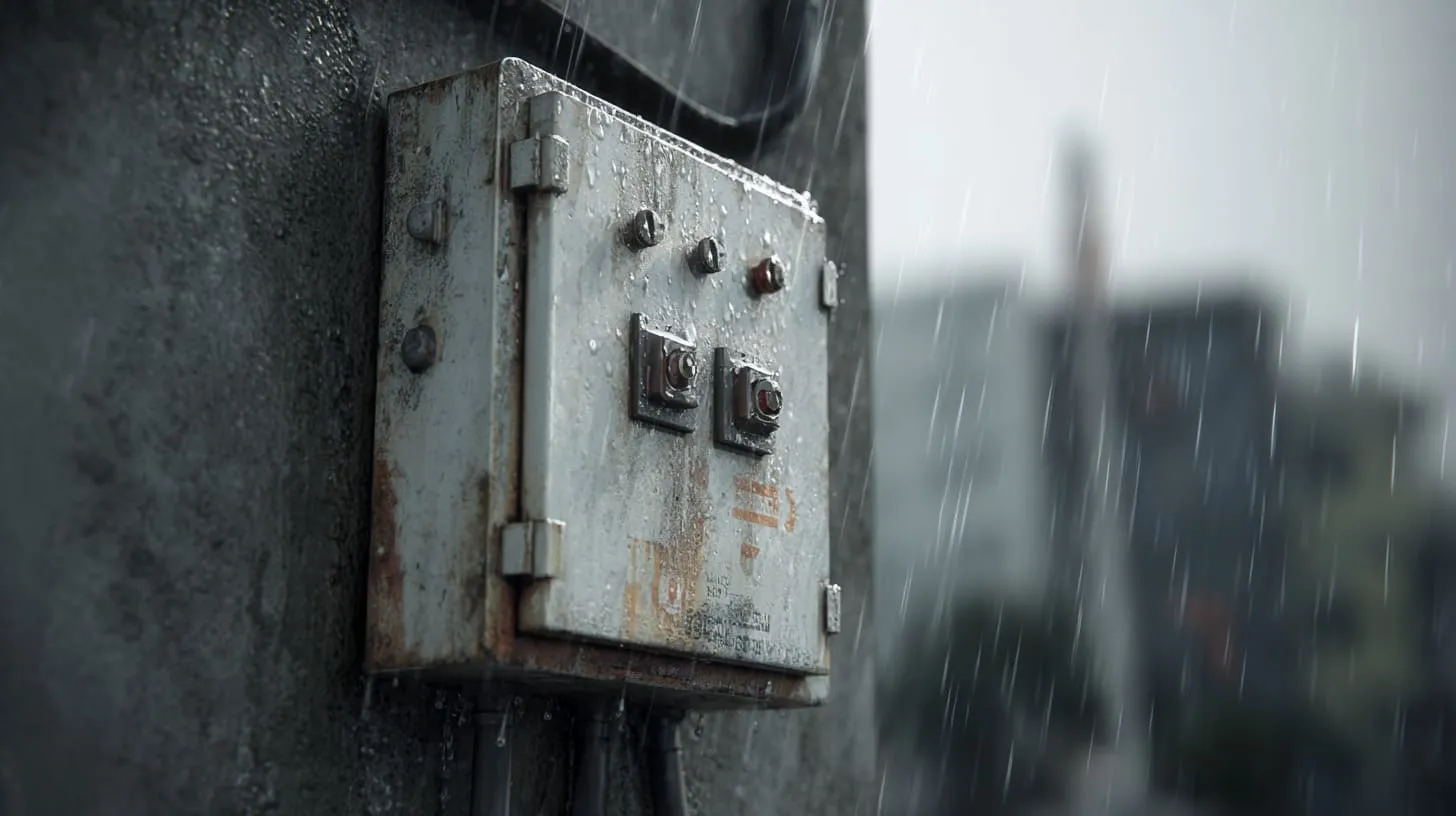
A wrong box choice is not a “small mistake.” It is a slow decision that keeps punishing you.
This is where people get trapped:
They choose a box based on size and price.
Then they treat the rating like a label, not like a real promise.
My own rule is simple, and it is not popular: I would rather spend 15% more on the right box than spend 2 months explaining failures that look like “bad wiring” but are actually “bad environment matching.”
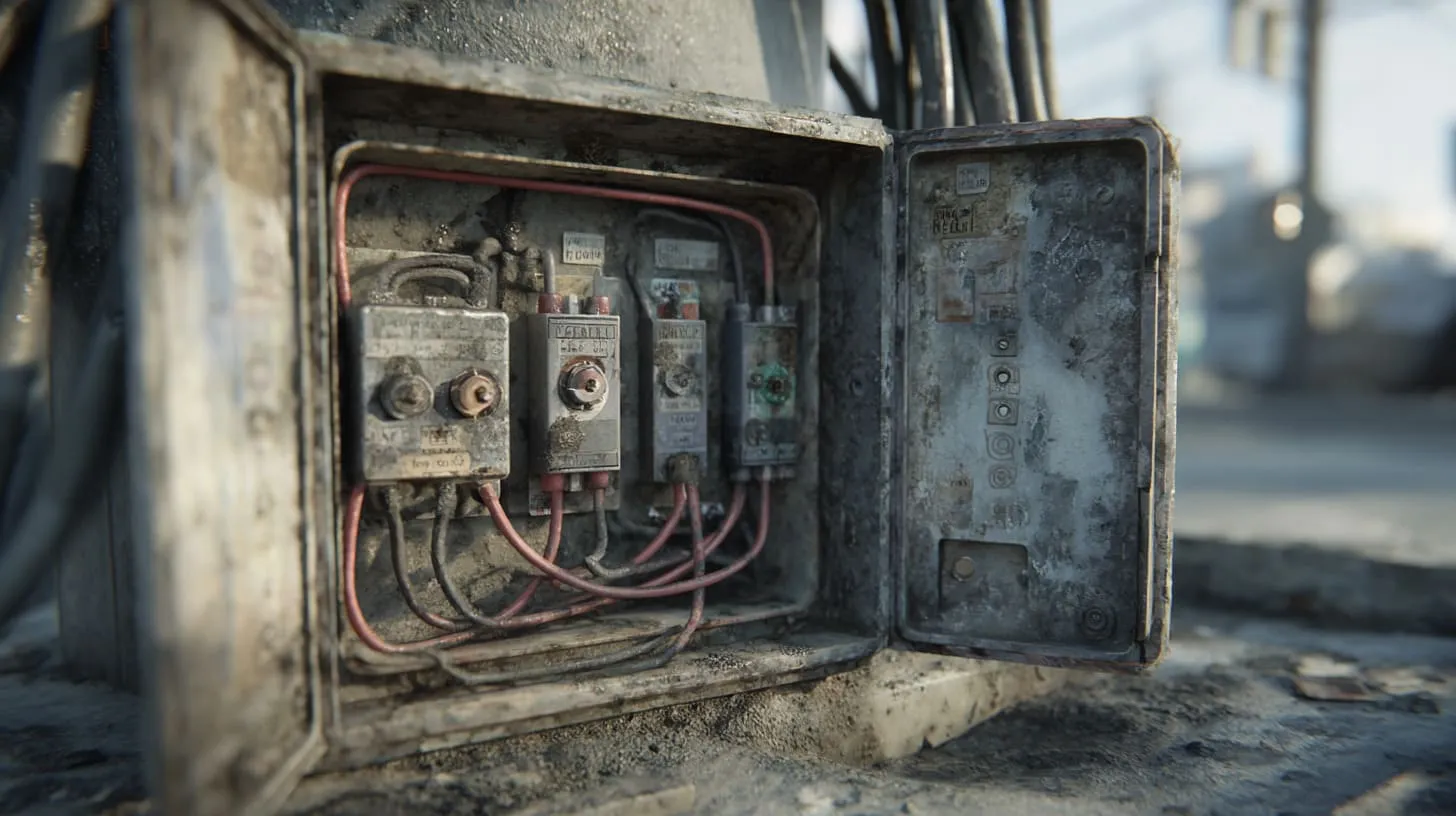
Indoor boxes installed in outdoor or harsh environments
Indoor boxes are polite boxes.
They assume stable temperatures, low dust, low water, and low abuse.
Outdoors is not polite.
Outdoors has:
- rain that hits sideways
- condensation at night
- UV and heat that bake plastics
- insects that find gaps
- dust that works like sandpaper over time
If an indoor-rated box ends up outside, it often fails in ways people misread:
- the wiring looks fine
- but the terminations corrode
- the insulation gets brittle
- the connectors loosen from movement
Ignoring IP / NEMA ratings during selection
A lot of buyers tell me: “We need IP54, that should be ok.”
Sometimes yes.
Sometimes no.
The painful part is that IP / NEMA ratings are not a full story. They are a test result under defined conditions. Your site is not a lab.
Here is a simple way I explain it to engineers and buyers:
| Rating mindset | What people assume | What happens in the field |
|---|---|---|
| “The label protects us” | Any box with the rating is fine | Small installation errors ruin the rating |
| “The system protects us” | Box + glands + gasket + mounting matter | The box survives real weather and handling |
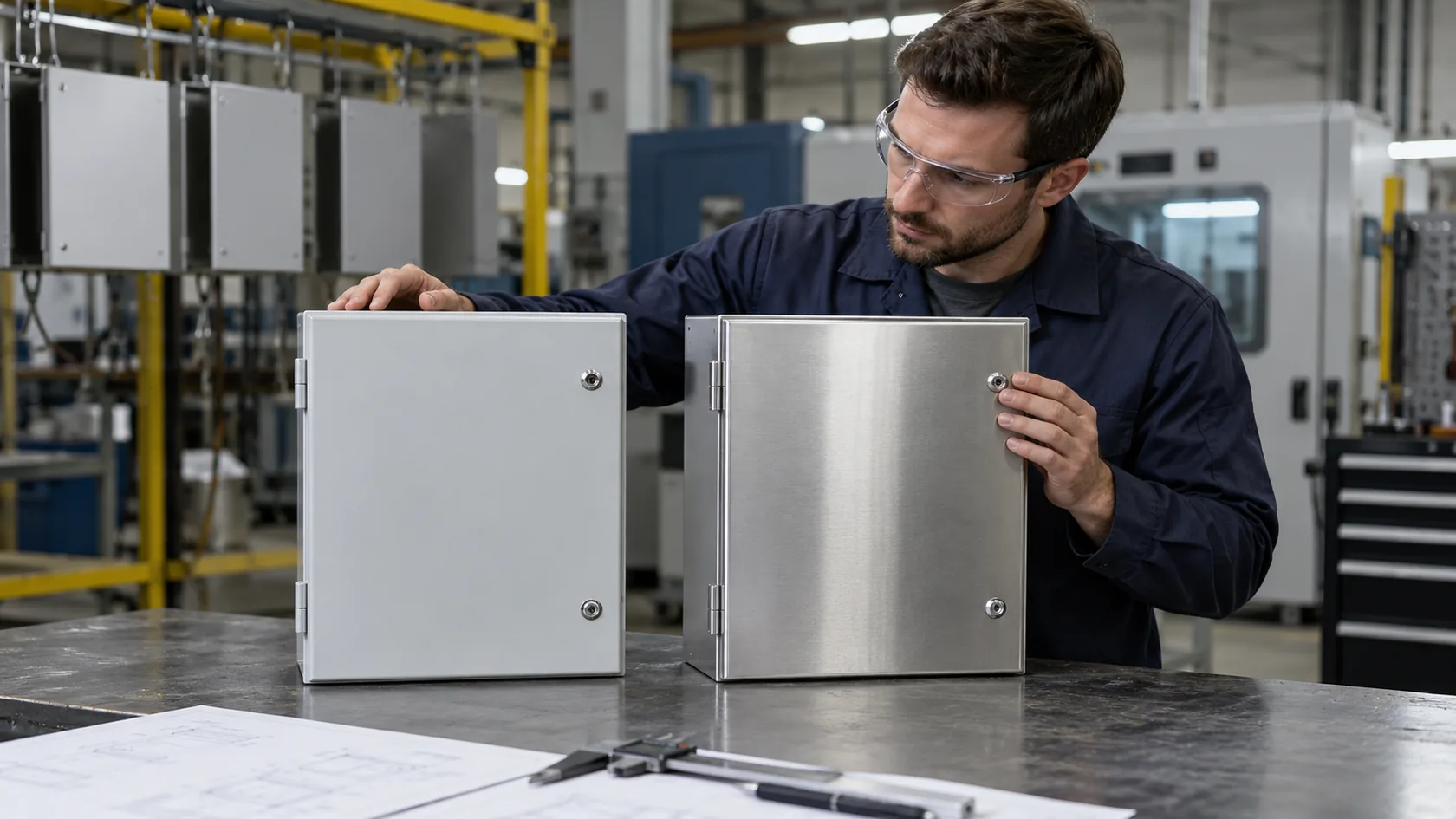
Material mismatch: plastic vs metal in real conditions
Plastic is not “cheap and bad.”
Metal is not “premium and perfect.”
They fail differently.
- Plastic can creep under load and heat.
- Metal can corrode if coating is damaged.
- Plastic can crack from UV and impact.
- Metal can transfer heat and create condensation patterns inside.
I’ve seen a plastic box survive for years indoors.
I’ve also seen the same type of plastic box warp near a hot motor area and start leaking through a gasket line.
A quick comparison I use when selecting:
| Environment risk | Plastic box risk | Metal box risk | What I do |
|---|---|---|---|
| UV + sun | brittleness, color fade, cracking | coating degradation | choose UV-stable plastic or coated metal |
| vibration | screw loosening, creep | loosening, fatigue | add strain relief + check fastening method |
| corrosion | usually low | can be high | choose stainless / coated aluminum, avoid scratches |
| heat | softening, warp | hot surface, condensation | manage airflow, spacing, and thermal path |
If your box choice is wrong, the wiring becomes a victim.
And the next mistake makes it worse: overcrowding.
To be honest, overcrowding is the one that makes me sigh when I open a box. Because it tells me someone rushed.
Overcrowding the Junction Box
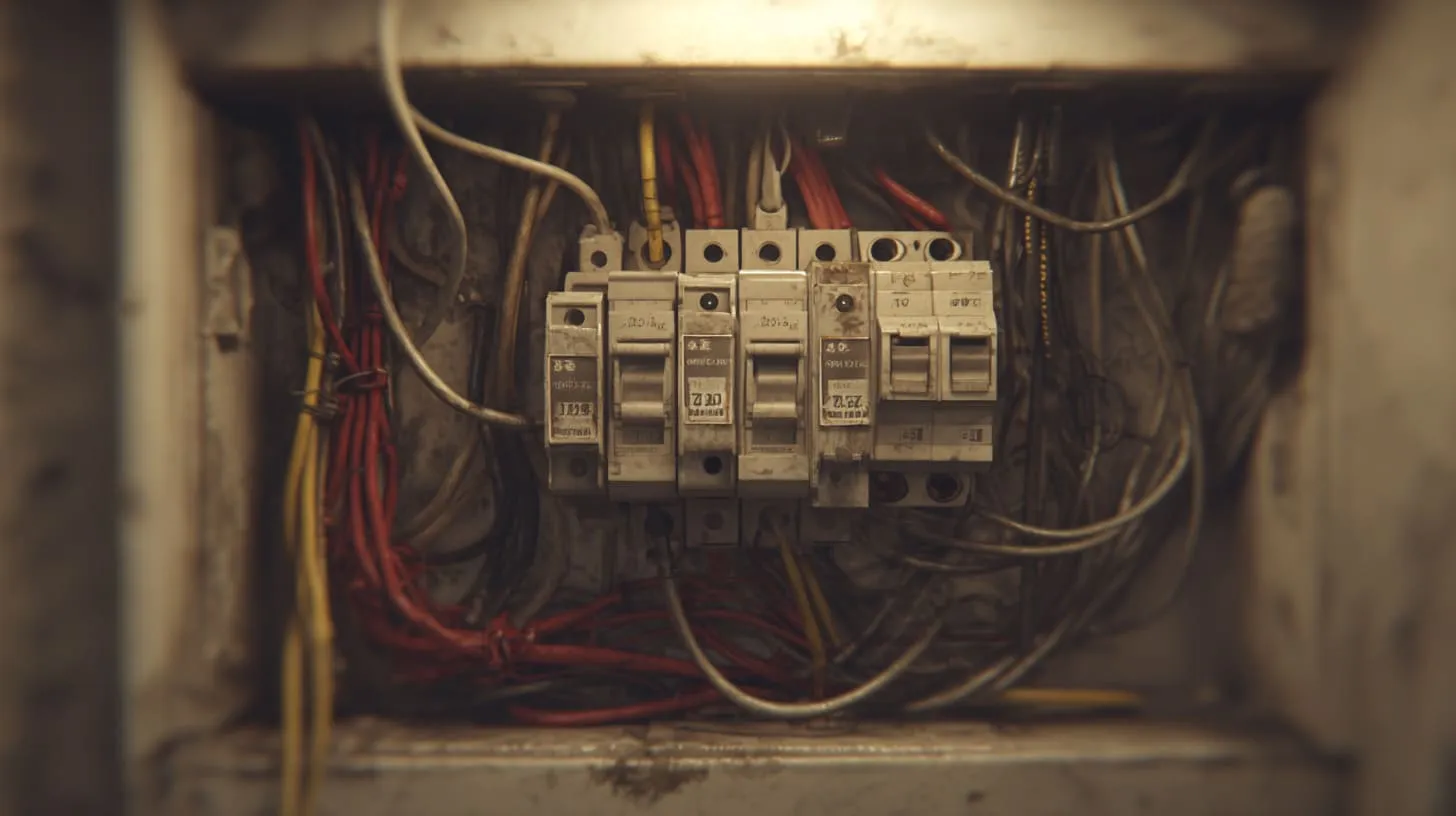
Overcrowding is not just “messy.”
It is heat, pressure, and stress stored inside a closed space.
And heat is patient.
It does not yell at you on day one.
A real working judgment I use is this: if I have to push wires in with force to close the cover, I already know the box will become a failure point later.
Exceeding box fill limits
Box fill rules exist for a reason.
When the box is too full:
- insulation rubs
- connectors press on each other
- air space disappears
- heat cannot escape
Even if nothing burns, the system ages faster.
Too many conductors, connectors, or splices
This is a common OEM mistake:
“We only add one more branch.”
Then another.
Then a rework.
Then a field repair.
Suddenly the box is a tiny storage room.
And the failure pattern usually looks like:
- intermittent shutdown
- random nuisance trips
- “it works when the cover is open”
That last one is a clue. Opening the cover reduces heat and changes pressure on connections.
Ignoring heat dissipation needs
People talk about conductor sizing.
They forget about heat stacking.
Heat sources inside junction boxes:
- resistance at splices
- resistance at terminals
- heat conducted from nearby equipment
- ambient temperature rise
If you want a simple mental model:
Overcrowding removes air.
No air means no breathing.
No breathing means faster aging.
Here is a quick “field reality” table:
| Symptom | What it looks like | What is often happening |
|---|---|---|
| warm cover | “normal warmth” | hidden resistance + no airflow |
| brittle insulation | “cheap cable issue” | heat + compression over time |
| melted connector | “bad connector brand” | mismatch + overheating + tight packing |
Overcrowding sets the stage.
But the spark that usually starts the failure chain is splicing quality.
So now let’s talk about the mistake that hides in plain sight: connectors and splices.
Poor Wire Splicing and Connector Selection
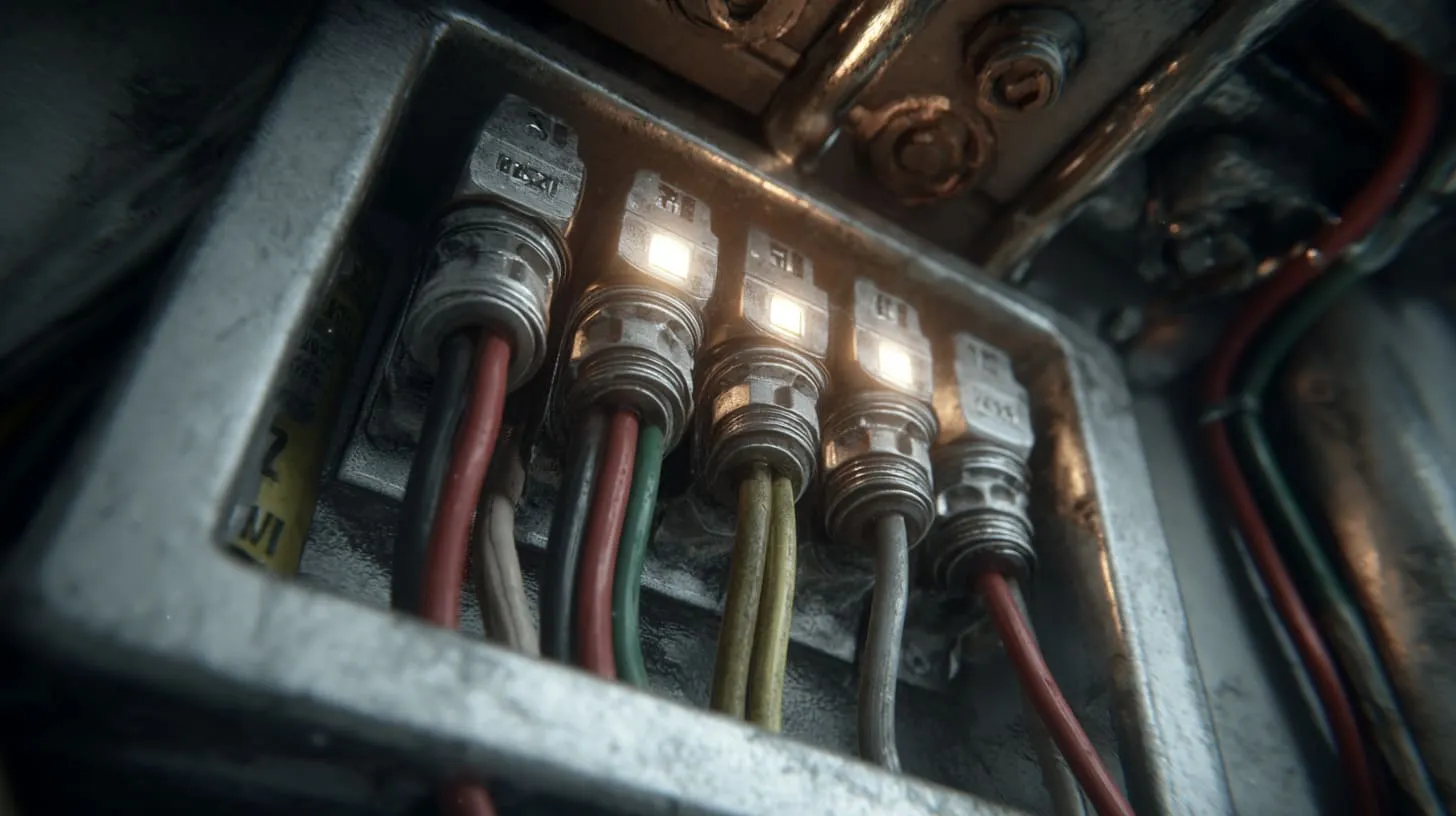
A bad splice is like a bad handshake.
It might work once.
But it doesn’t build trust.
Most field failures I see come from one thing:
a splice that was “acceptable” in the moment.
My personal test is simple: if I cannot tug each conductor without feeling movement, I don’t accept the splice, even if it looks neat.
Mixing wire sizes in one connector
This happens more than people admit.
Someone runs out of the right connector.
Someone thinks “close enough.”
But mixing wire sizes often leads to:
- uneven clamping pressure
- one conductor biting, one conductor slipping
- long-term resistance rise
Then vibration and thermal cycling do their work.
Using low-quality or unlisted wire connectors
This is where procurement can accidentally create a failure.
A cheap connector is not always bad.
But an unlisted, unknown connector is a gamble.
And the gamble is not about “will it work today?”
It is about “will it still hold when the copper expands and shrinks 1,000 times?”
Improper stripping length and weak mechanical joints
Stripping is boring.
That is why it gets done wrong.
Common stripping mistakes:
- too short: poor contact area
- too long: exposed copper, risk of shorts
- nicked conductor: weak point that breaks later
I’ve seen the same pattern in small-batch builds:
Everything passes inspection.
Then after shipping and vibration:
one nicked conductor breaks.
And the customer sees “random failure.”
To make this practical, here is a quick splice risk table:
| Splice mistake | Short-term result | Long-term result |
|---|---|---|
| wrong connector size | works at first | heat and loosening |
| poor strip length | still conducts | corrosion or shorts |
| no tug test | looks fine | intermittent field fault |
| mixed wire sizes | “tight enough” | one conductor creeps loose |
Once splices start to age, the next weakness becomes dangerous: grounding and bonding.
And grounding failures are the worst because they behave like ghosts.
Inadequate Grounding and Bonding
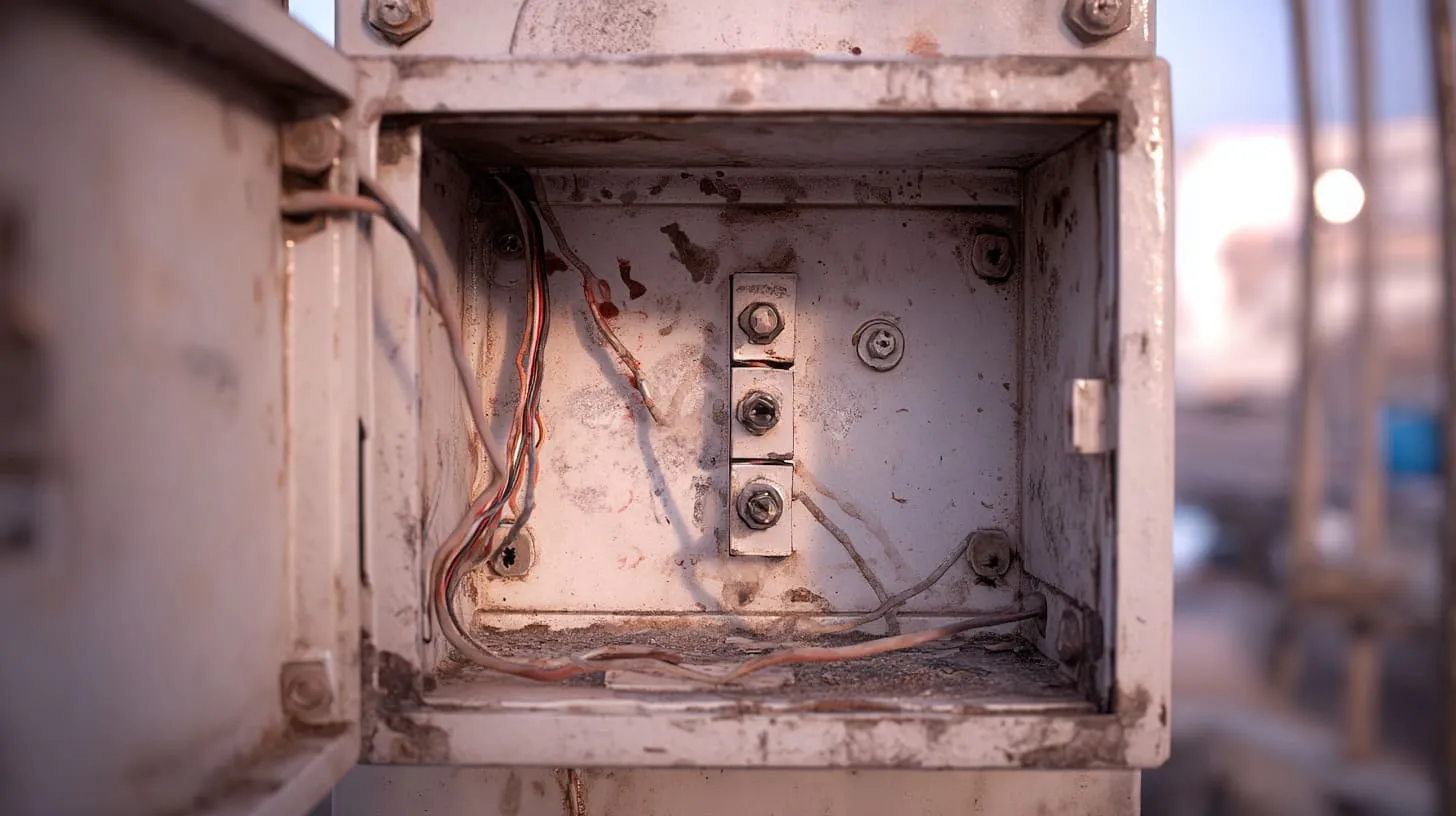
Grounding problems do not always show up as “grounding problems.”
Sometimes they show up as noise.
Sometimes as false trips.
Sometimes as a shock complaint.
Sometimes as an EMI failure that makes everyone angry.
A very real decision I make: if the product goes into a place with vibration or moisture, I treat grounding like a mechanical connection problem, not just an electrical one.
Missing ground connections
This is still a thing.
Especially in rushed installs and field modifications.
Missing ground means:
- unsafe metal parts
- unpredictable fault paths
- higher risk of damage during faults
Loose or floating grounds
A loose ground is worse than a missing ground in one way:
it gives people false confidence.
A ground wire that is “kind of connected” can:
- arc under fault conditions
- create noise and heat
- fail intermittently
Improper bonding of metal junction boxes
Metal boxes need bonding done right.
Paint, coatings, or corrosion can block a good bond.
And this is not just about safety.
Reliability is also on the line because a weak bond can turn into:
- unstable reference
- EMI issues
- strange intermittent faults
Here is a grounding reality check I share with buyers:
| Grounding issue | Safety risk | Reliability risk | Typical field symptom |
|---|---|---|---|
| missing ground | high | medium | shock risk, inspection fail |
| loose ground | high | high | intermittent faults |
| poor bonding | medium | high | noise, EMI, random resets |
Grounding is the “foundation.”
But even with perfect grounding, cables can still kill a box if entry is wrong.
So let’s move to the mistake that breaks insulation slowly: cable entry and strain relief.
Improper Cable Entry and Strain Relief
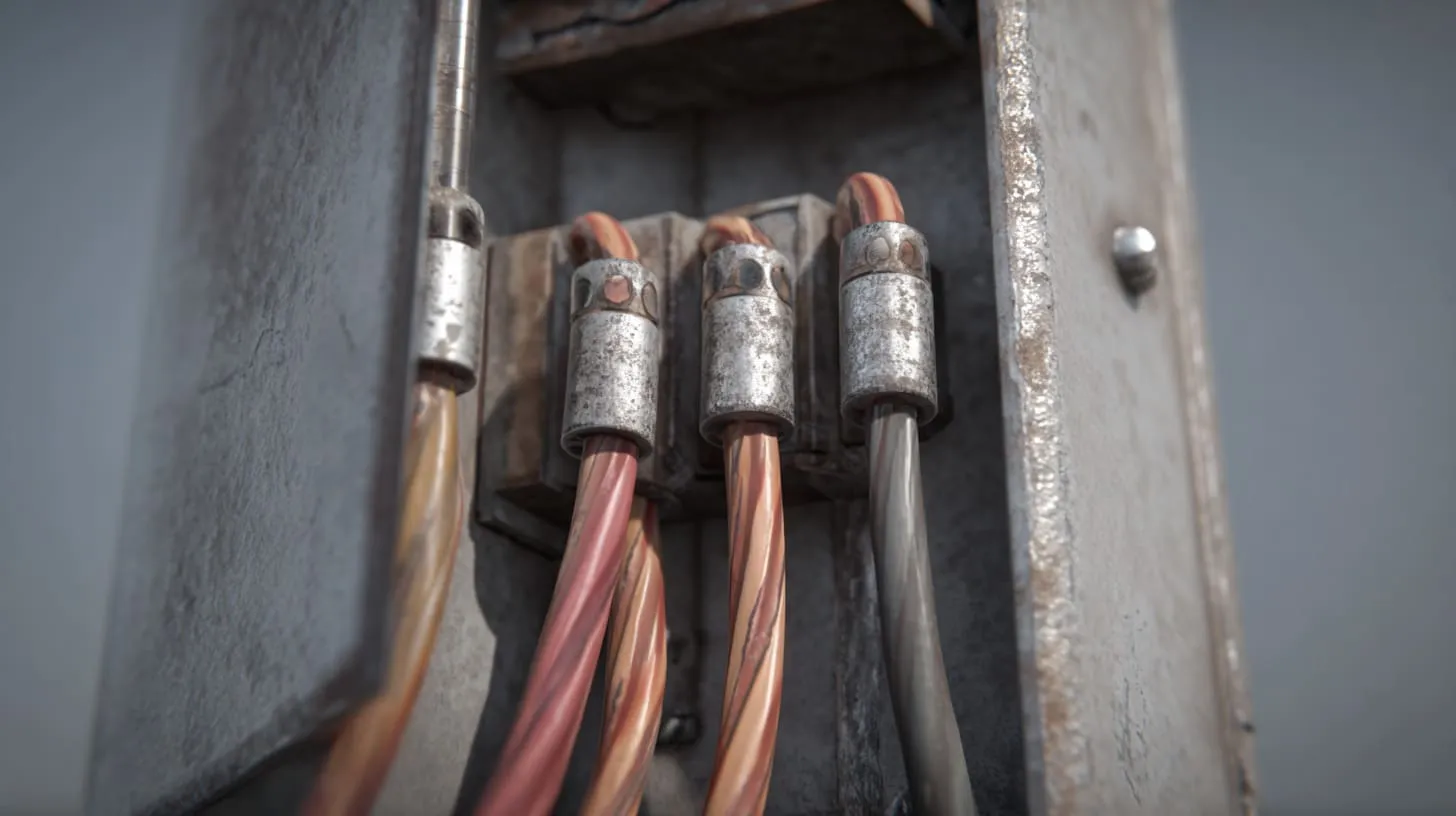
This mistake is silent.
No smoke.
No alarms.
Just slow damage.
The way I judge it is very practical: if a cable can move at the entry point when someone pulls it lightly, I assume the splice inside will suffer later.
No cable glands or bushings
Without glands or bushings:
- edges cut insulation
- holes become leak paths
- cables get tugged directly
I’ve seen boxes where the copper was fine, but the insulation was sliced at the knockout edge like a paper cut. It took months to show up.
Sharp edges damaging insulation over time
Sharp edges + vibration = slow abrasion.
It can start as a small nick.
Then dust and moisture enter.
Then corrosion begins.
Then you get faults that look “random.”
Pulling force transferred directly to splices
This happens when cables are not secured.
Every time someone opens the door.
Every time someone moves the machine.
Every time someone steps on the cable by accident.
That force goes somewhere.
If it goes into the splice, the splice loosens.
Here is a quick view:
| Entry mistake | What causes it | What it becomes later |
|---|---|---|
| bare knockout entry | rushing, missing parts | insulation cut + moisture ingress |
| no strain relief | “it’s inside a box” thinking | splice loosening |
| wrong gland size | mismatch cable OD | leak path + cable movement |
Now we combine the two slow killers: cable entry mistakes and moisture.
Which leads to the failure that surprises buyers the most: water inside a “sealed” box.
Moisture Ingress from Poor Sealing

Moisture is sneaky.
It does not need a big hole.
It only needs time.
A real thing I tell my team: when a buyer says “outdoor,” I assume the box will be opened in bad weather at least once, even if they promise it won’t.
Missing or damaged gaskets
Gaskets fail when:
- they are pinched
- they are aged
- they are cut during installation
- the cover is over-tightened and deforms the seal line
A gasket is not a magic ring.
It is a soft material with limits.
Unused knockouts left open
This one is common in field modifications.
A knockout is opened “just in case.”
Then it is never closed.
And then moisture, insects, and dust move in.
Slowly.
Incorrect cable gland installation
Even with the right gland, people install it wrong:
- wrong torque
- missing washer
- cable OD mismatch
- poor alignment
Then the rating becomes a sticker, not a reality.
How condensation forms inside “sealed” boxes
This surprises people:
A box can be sealed and still get wet inside.
Because temperature changes create pressure changes.
Warm air holds moisture.
Then it cools.
Then it drops water.
So you get:
- damp film
- corrosion spots
- green copper
- white residue
Corrosion patterns that appear months after installation
Corrosion is not always uniform.
It often starts at:
- splices
- terminals
- ground points
- cable entry edges
And the failure usually appears as:
- intermittent faults
- heat from resistance
- eventual open circuit
Moisture issues are hard enough.
But they get worse when the junction box is hard to reach.
So now we hit a mistake that is not electrical, but creates long-term pain: accessibility.
Ignoring Accessibility and Serviceability
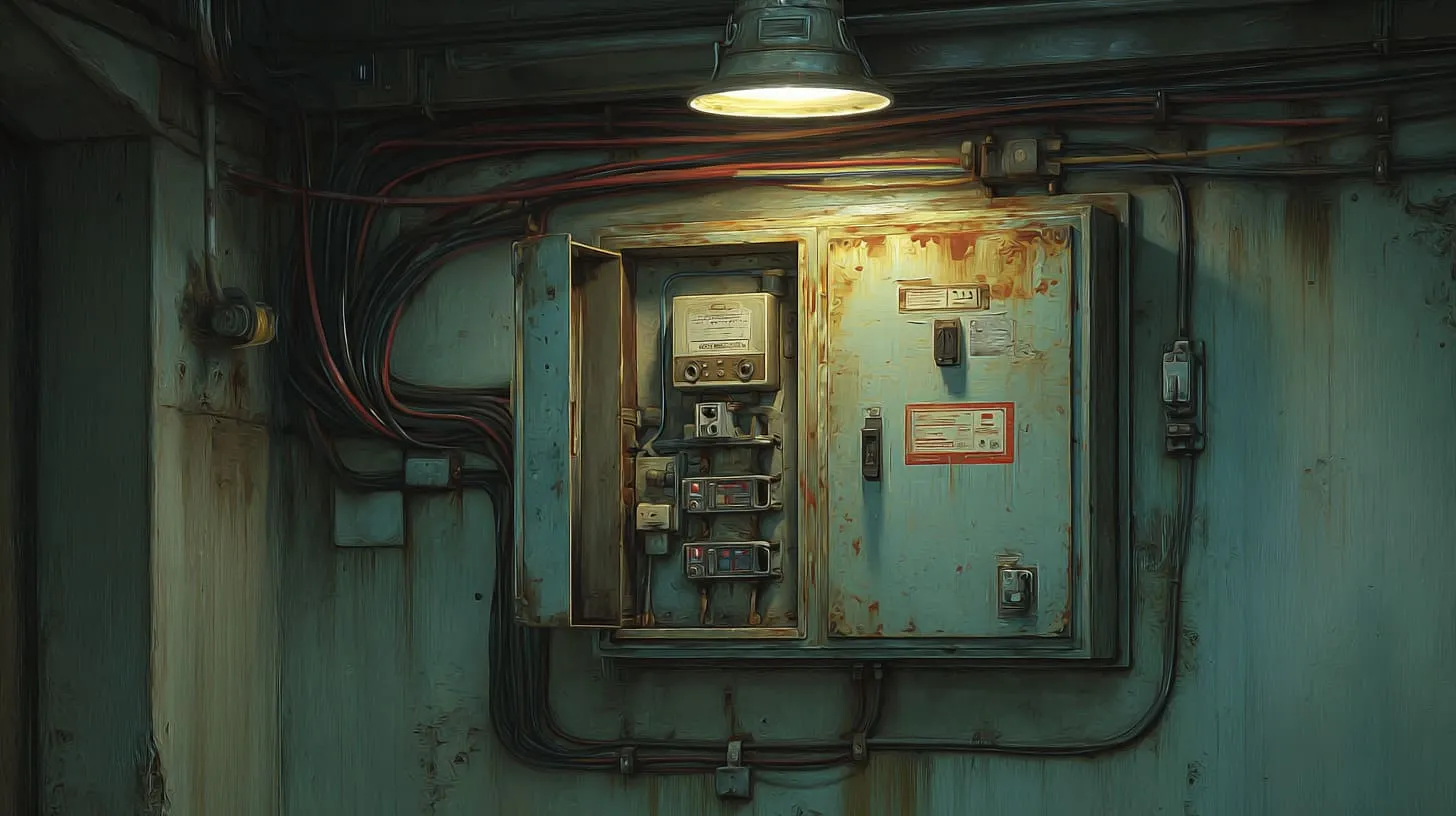
Some junction boxes are wired like people will never need to touch them again.
That is a fantasy.
My own decision is blunt: if maintenance cannot open the box in five minutes, the box will eventually get “fixed” with shortcuts in the field.
Burying junction boxes behind walls or equipment
Hidden boxes create two risks:
- code and inspection issues
- future repair chaos
When something fails, people start cutting walls or disassembling equipment.
That creates downtime and anger.
No labeling or documentation
No labels means:
- longer troubleshooting time
- higher chance of wrong reconnection
- repeated mistakes
Even a simple label like “Branch A / Branch B” can save hours.
Covers sealed permanently or blocked
I have seen covers painted shut.
I have seen covers blocked by other hardware.
I have seen covers screwed with the wrong fasteners.
That turns a small issue into a major one.
Here is a simple table I use with OEM buyers:
| Serviceability choice | Short-term benefit | Long-term cost |
|---|---|---|
| hidden box | looks clean | expensive access later |
| no labels | faster build | slow repair + mistakes |
| blocked cover | “space saving” | rework and downtime |
And here’s the painful truth: when access is hard, people start treating junction boxes like temporary “hack boxes.”
Which leads to the next section.
Using Junction Boxes as “Temporary” Solutions That Become Permanent
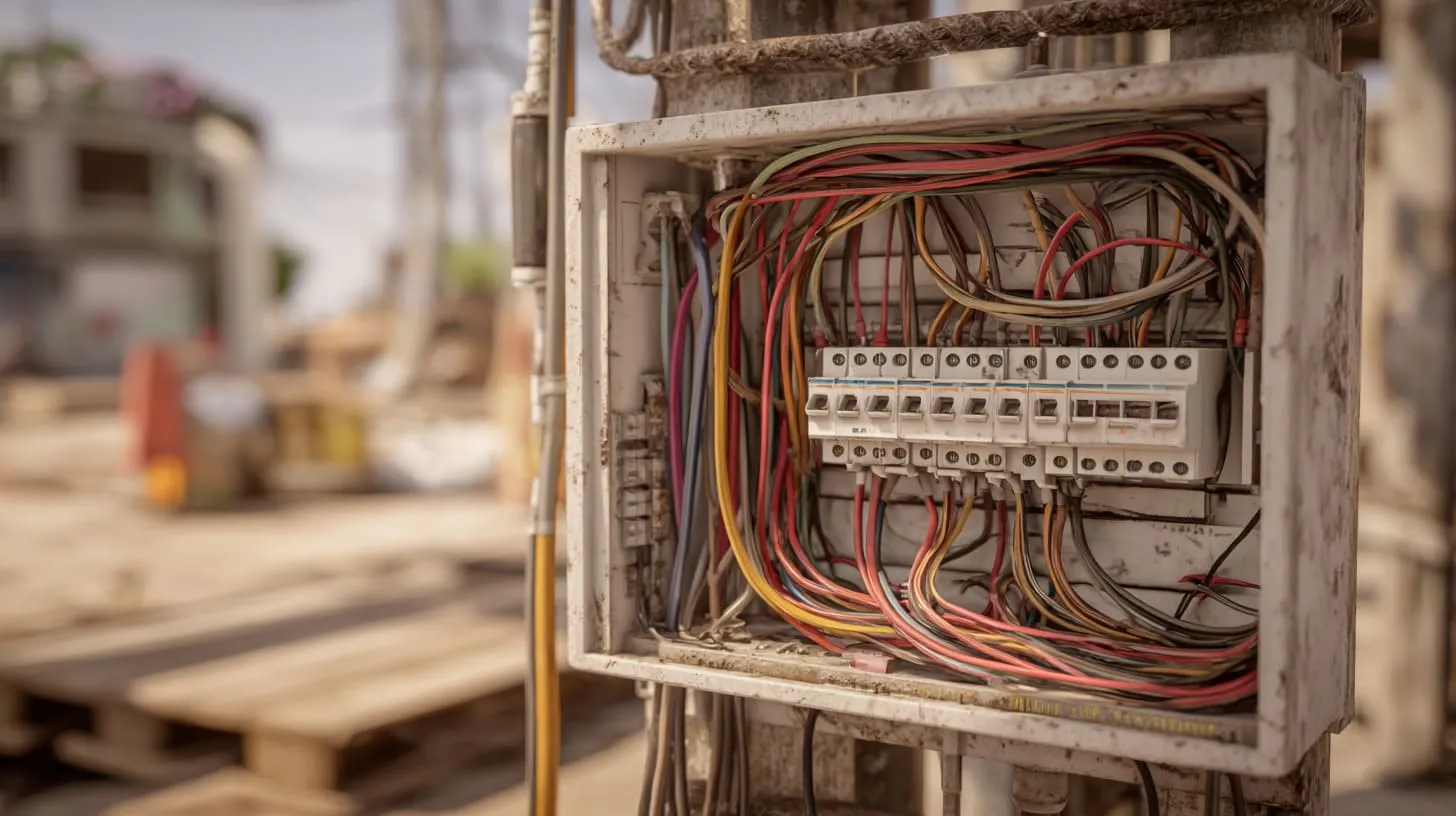
I have nothing against prototypes.
I love prototypes.
But I dislike prototype wiring that ships.
One judgment I’ve learned to trust: if a junction box is being used to “buy time,” it will quietly become the final design unless someone forces a redesign date.
Temporary splices left in service
Temporary splices often use:
- quick connectors
- mixed wire types
- whatever cable was available
They work.
Until they don’t.
And the worst part?
They fail after the product is already in the customer’s hands.
Prototypes and test setups never upgraded
A test setup is often built by the best engineer.
Then it is copied by the busiest technician.
Then it becomes production.
Small differences add up:
- different cable routing
- different connector brand
- different torque habits
Then the reliability drifts.
Field modifications without redesign
Field modifications are sometimes necessary.
But “field mod without redesign” is how you create mixed standards.
One box is wired one way.
The next is wired another way.
Then troubleshooting becomes guesswork.
Here is a practical risk view:
| “Temporary” habit | Why it happens | How it fails later |
|---|---|---|
| spare knockout “for later” | flexibility | leak path |
| mixed connectors | speed | heat + loosening |
| undocumented changes | rush | repeated errors |
By the time a temporary system becomes permanent, the last safety net is process: inspection and final checks.
And skipping those checks is how small workmanship errors survive and multiply.
Skipping Inspection, Torque, and Final Checks
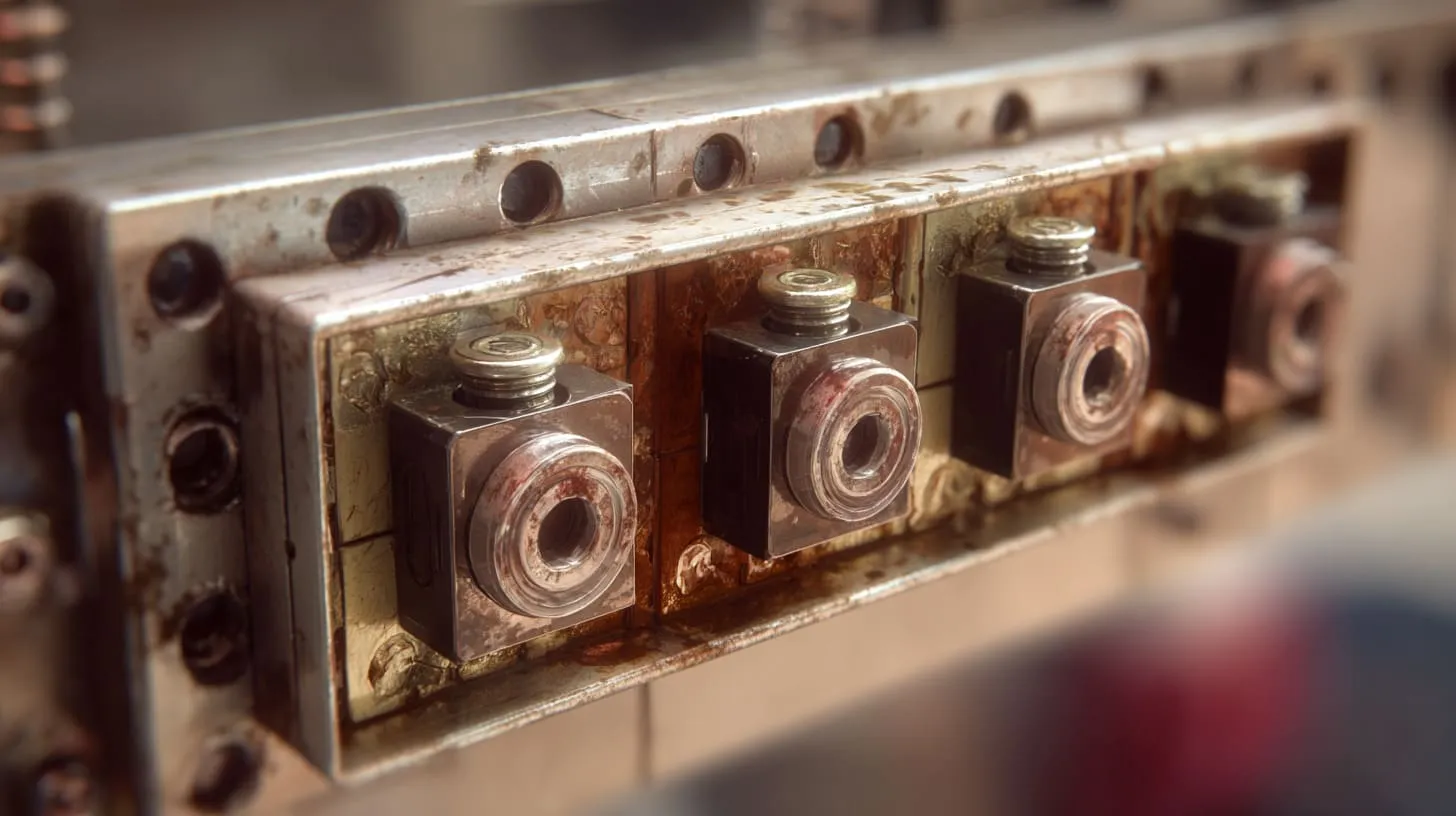
If you want one uncomfortable truth: most field failures are not design failures.
They are process failures.
I judge a wiring build like this: if nobody can tell me who checked torque and who signed off, I assume the box is a future support ticket.
No torque verification on terminals
Hand-tight is not a spec.
It is a feeling.
And feelings vary.
Loose terminals cause:
- micro-arcing
- heat
- oxidation
- more loosening
It becomes a loop.
No tug testing on splices
Tug testing is simple.
But it catches the “looks fine” splices.
I like to do a light tug test and watch faces.
If people look nervous, we found a process gap.
No visual inspection before closure
A quick visual check can catch:
- exposed copper
- pinched insulation
- crossed conductors
- missing ground
- damaged gasket
Without it, the box becomes a sealed mystery.
Here is a fast checklist table that does not feel like a textbook, because it comes from pain:
| Check | Time needed | What it prevents |
|---|---|---|
| torque confirm | 1–2 minutes | heat + loosening |
| tug test | 30 seconds | intermittent faults |
| seal check | 30 seconds | moisture ingress |
| photo record | 10 seconds | future troubleshooting |
And that’s the point: small checks prevent big field stories.
Now let’s close this out like professionals.
Not with fear.
With a practical mindset shift.
Conclusion
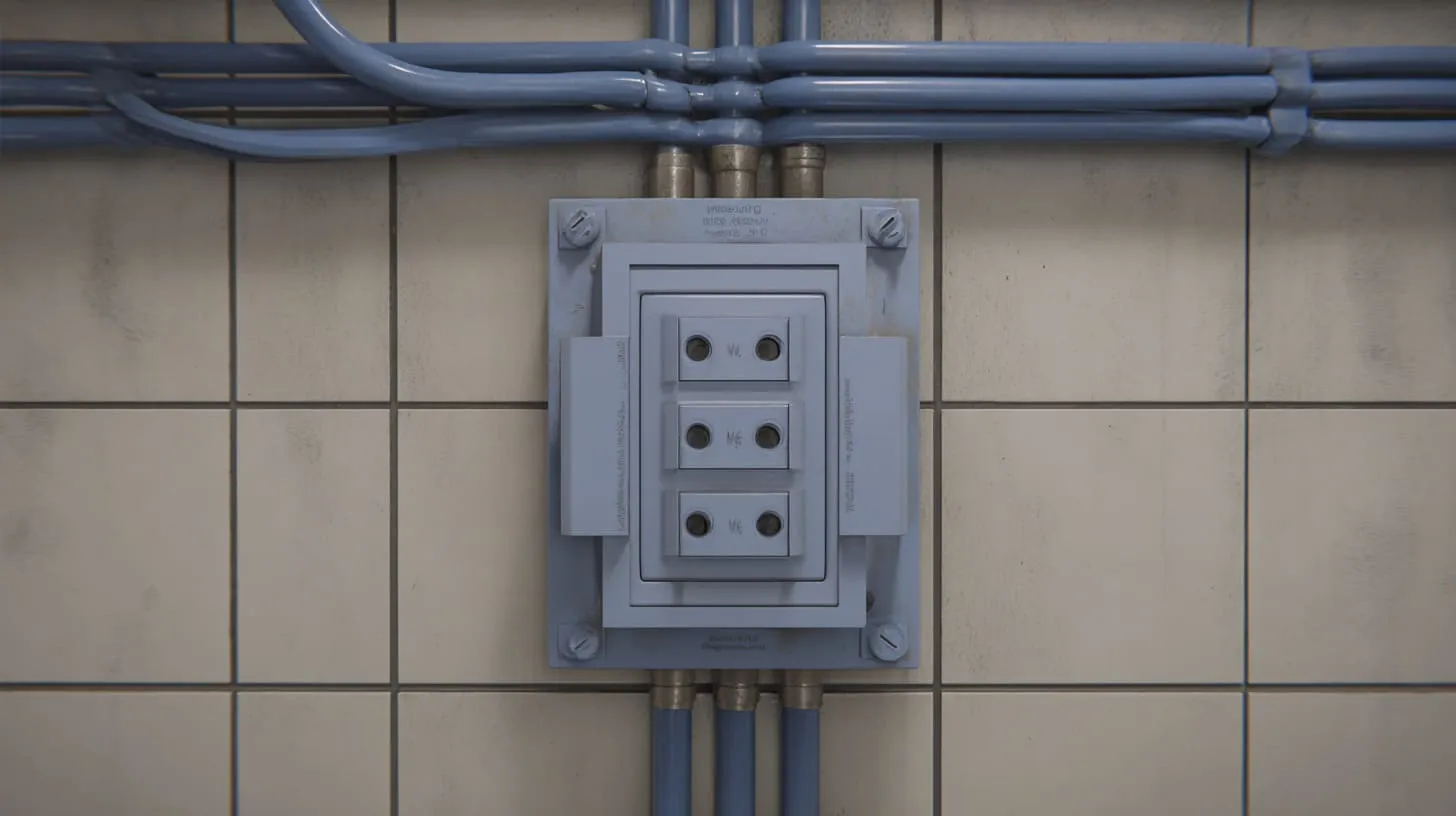
Junction box failures are slow, not dramatic.
That is why they hurt.
They don’t fail in the factory.
They fail in the customer’s environment.
They fail when the machine is shaking.
They fail when the sun cooks the enclosure.
They fail when someone opens the cover with wet hands because the job must continue.
And this is why I think the way I do.
I do not treat a junction box as a container.
I treat it as a small reliability system:
- the box type and rating must match the real environment
- the wiring must have space and calm routing
- splices must be mechanically strong, not just electrically connected
- grounding must be stable, not “present”
- cable entry must protect insulation and stop movement
- sealing must survive real weather and real behavior
- access must support future repair, not punish it
- inspections must exist, or mistakes will hide
If you are a product engineer or buyer like Davide, the goal is simple: fewer field returns, fewer angry emails, fewer midnight troubleshooting calls.
If you want, you can send me:
- your junction box photo
- the environment details (indoor/outdoor, dust, washdown, vibration)
- the cable types and count
- and your target rating (IP / NEMA)
I will tell you where the long-term risks live, and what I would change before it becomes a field failure story.