Skip to content
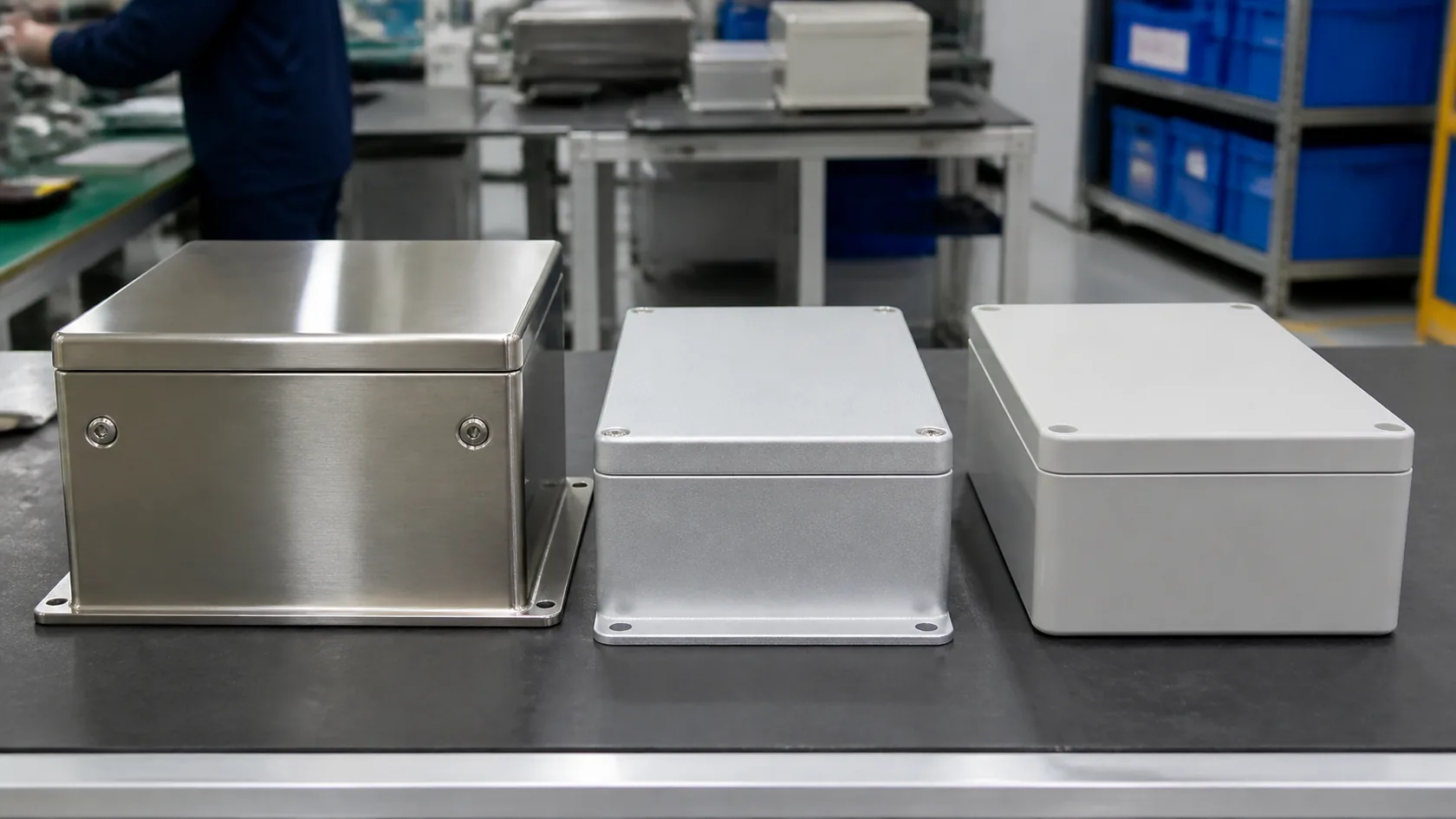
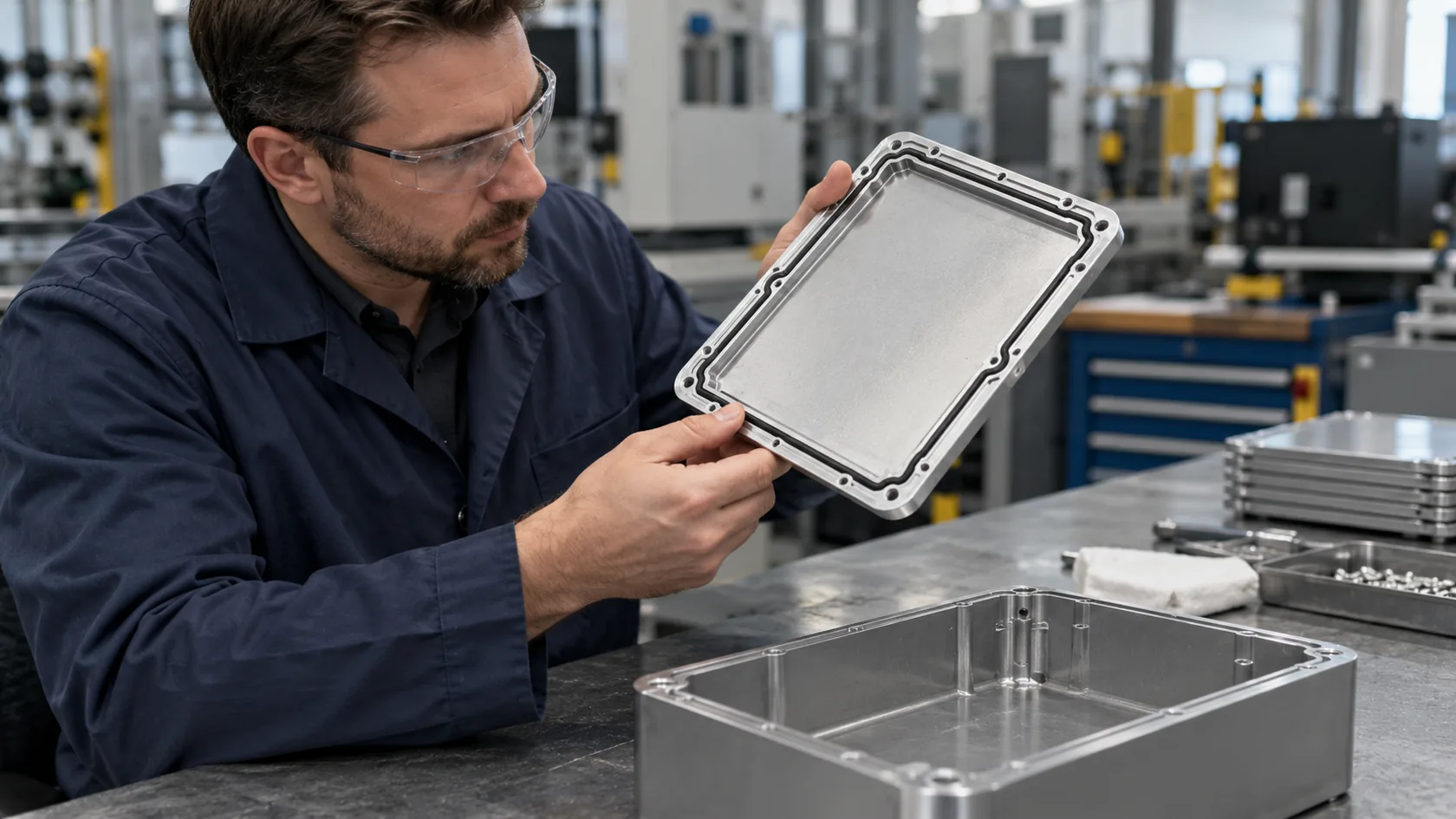
On a sample table, steel, aluminum, and plastic do not feel like three options from the same menu.
Steel has weight. You pick it up and it gives a quiet message: strong, rigid, serious. Aluminum feels lighter and cleaner. It has that machined-product feeling many electronics buyers like. Plastic feels simple at first, but a good plastic housing can solve problems that metal creates, especially for wireless devices and insulated products.
That table is where many enclosure decisions should begin. Not with a material name copied from a catalog, but with the product in mind.
Material samples tell different stories
An electrical enclosure material affects more than the outside shell. It affects impact strength, corrosion resistance, heat, grounding, wireless signal, appearance, machining, tooling, MOQ, shipping weight, and long-term service.
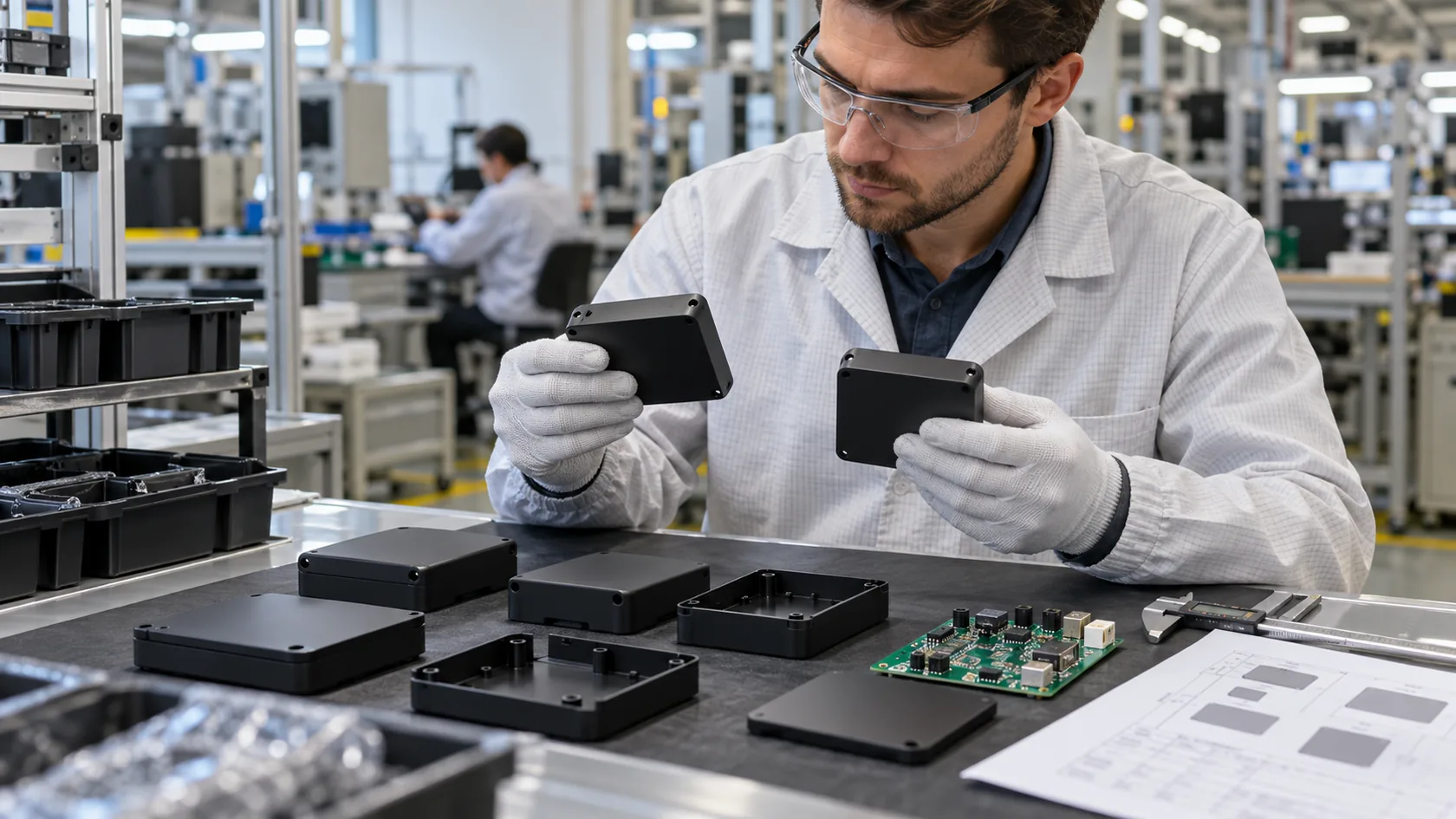
The same PCB can become three different products depending on whether it goes into a steel box, an aluminum housing, or a plastic enclosure.
Why the material name alone is not enough
I have seen buyers choose aluminum because it sounds premium, plastic because it looks cheaper, or steel because it feels stronger. Sometimes they are right. Sometimes the material creates a new problem.
In real production, I judge material by the weakest part of the full enclosure: the screw boss, the cable gland area, the gasket land, the coating edge, the display window, the heat path, or the way the user opens the box after installation.
This article compares steel, aluminum, and plastic electrical enclosures from a practical sourcing and manufacturing view.
What Enclosure Materials Really Change
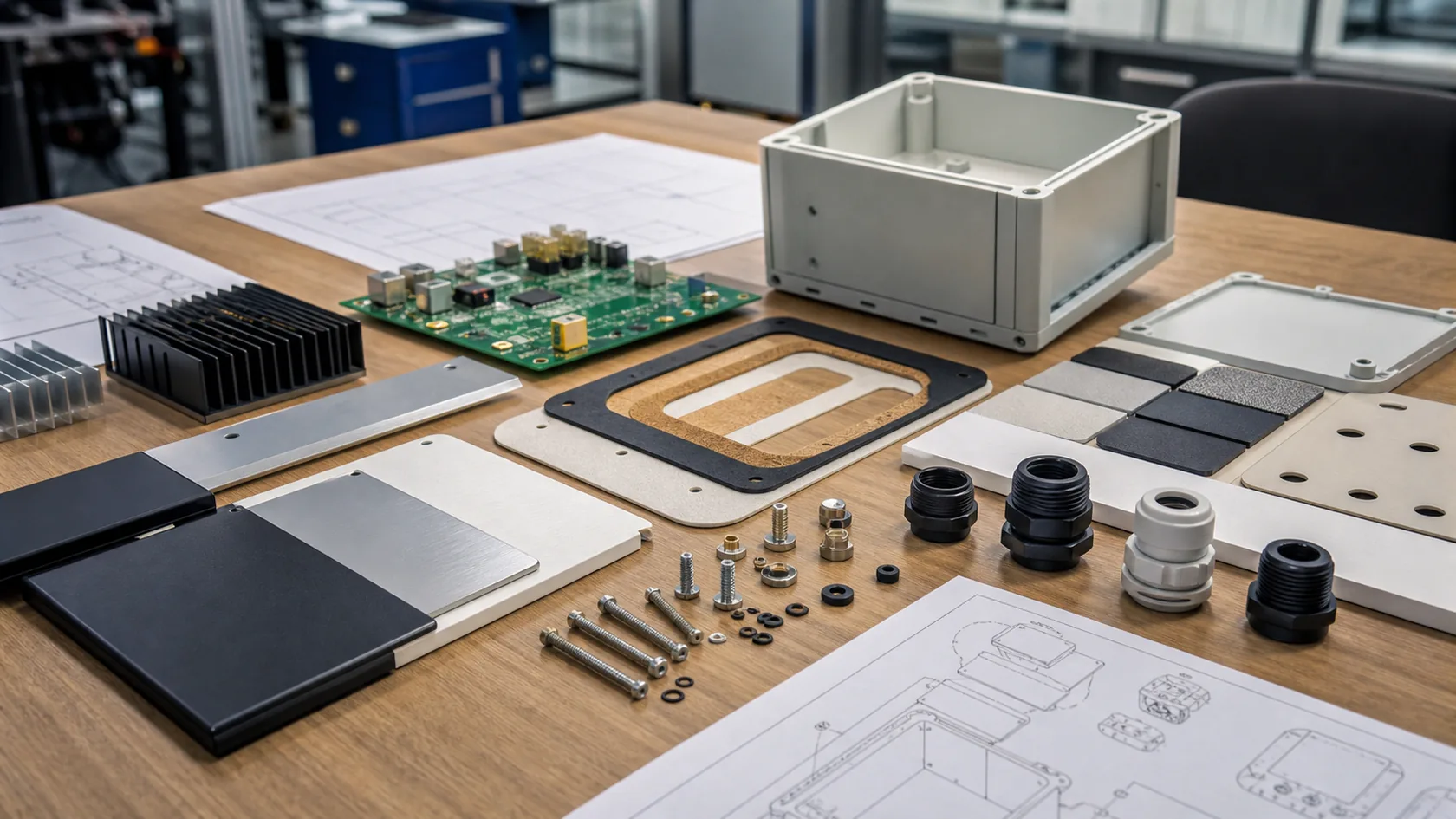
Material choice is one of the earliest enclosure decisions, but it reaches every later step. A material that looks correct in a 3D model may behave differently after machining, coating, assembly, shipment, and outdoor use.
Strength and impact resistance
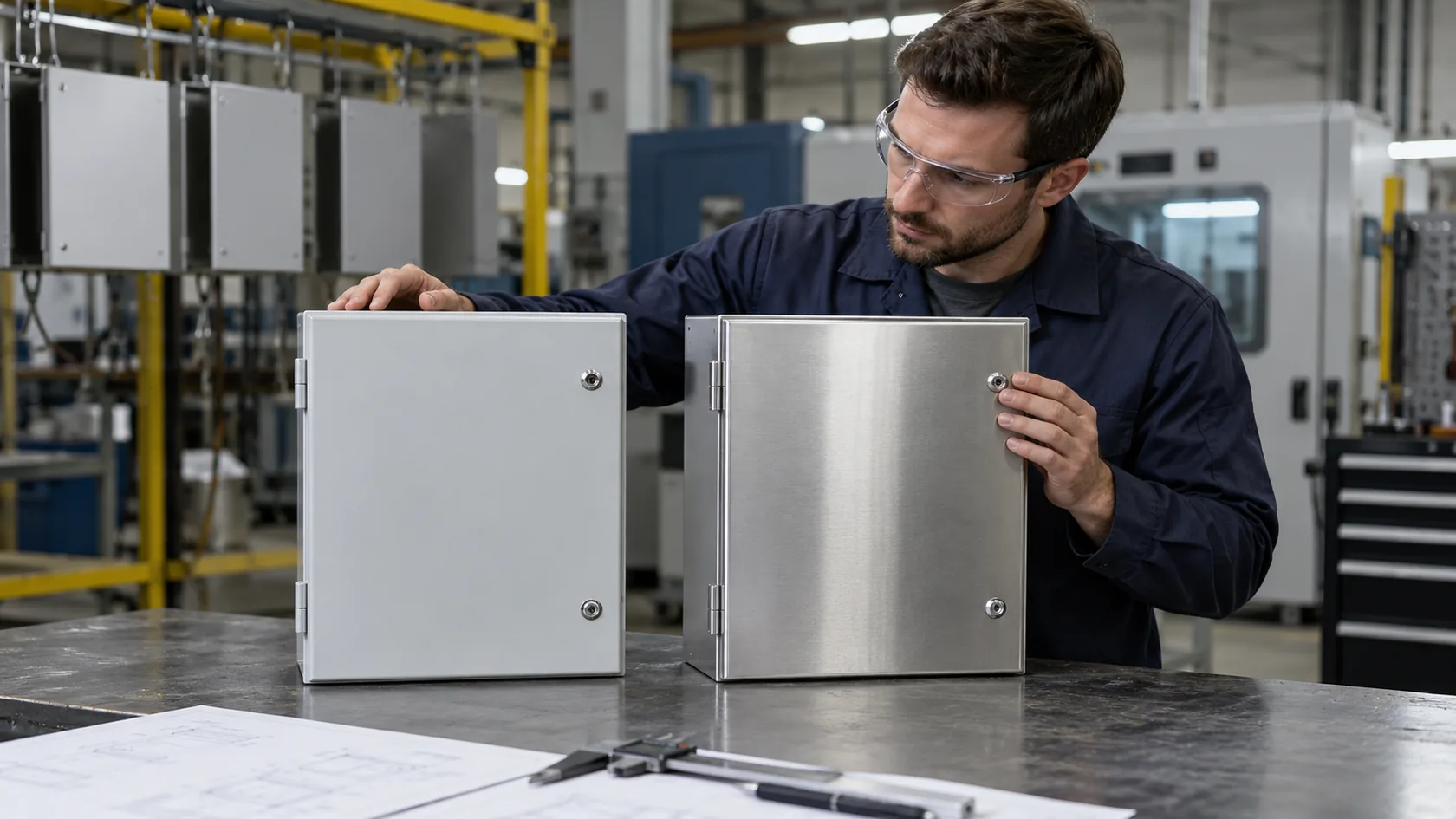
Steel usually gives the strongest, most rigid structure for a reasonable cost. It is useful for industrial control cabinets, junction boxes, machine panels, and larger sheet metal enclosures.
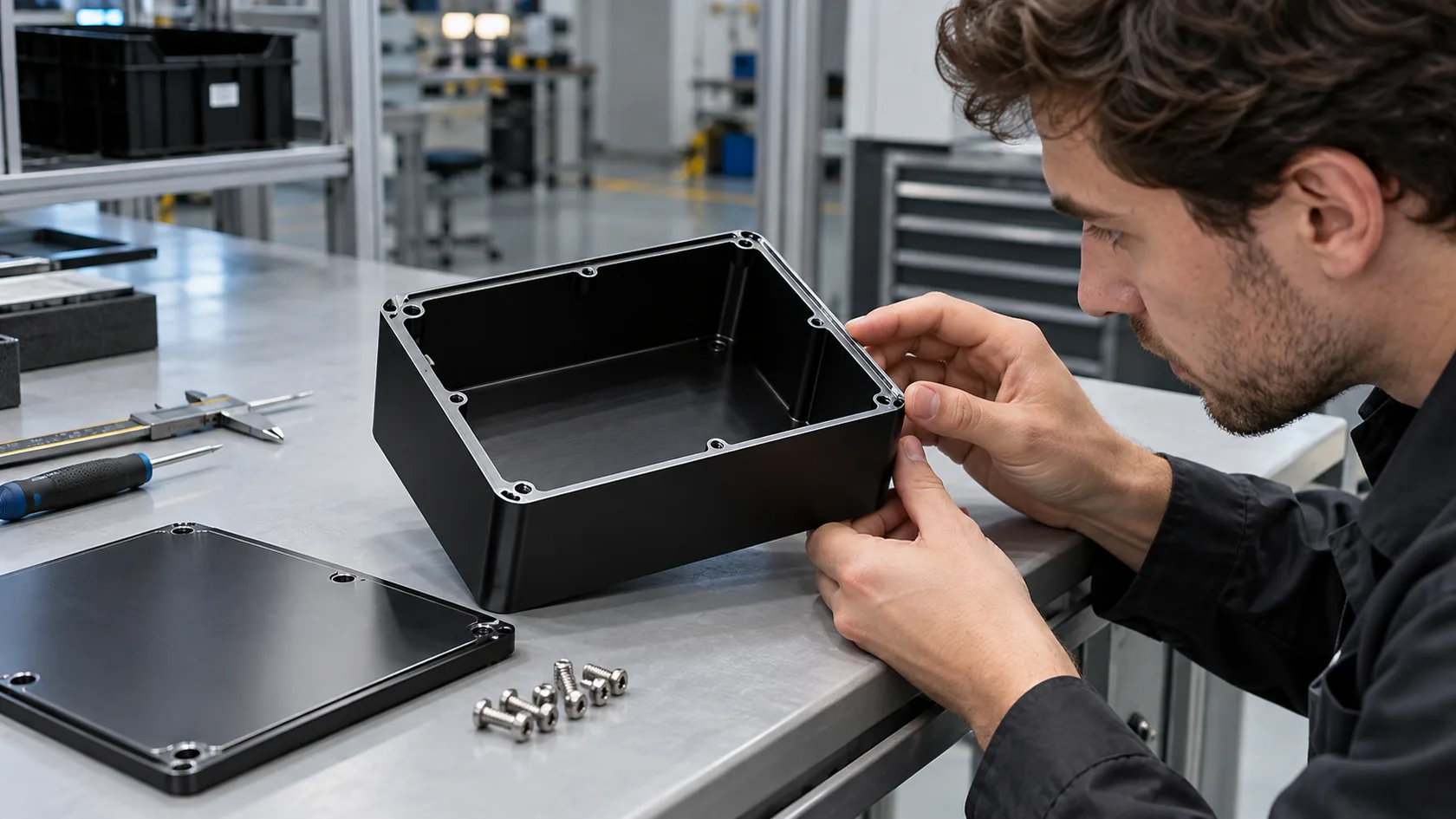
Aluminum is lighter than steel and still strong enough for many electronic products. It is easier to machine cleanly, which helps when the project needs precise ports, heat sink features, or a premium housing.
Plastic depends heavily on resin type, wall thickness, rib design, and screw boss design. A well-designed plastic enclosure can be tough. A poor design can crack around screws even when the material name looks acceptable.
Corrosion, UV, and chemical exposure
Carbon steel needs coating or plating to resist rust. Stainless steel handles corrosion better, especially in washdown or coastal conditions, but it costs more.
Aluminum naturally resists corrosion better than bare steel, and finishing can improve the surface. Still, wrong alloy choice, poor coating, or damaged machined edges can cause problems.
Plastic does not rust. That is a big advantage. But UV exposure, heat, chemicals, and impact can age plastic. Outdoor plastic enclosures need the right resin and additives.
Heat, grounding, wireless signal, and appearance
Metal helps with grounding and shielding. Aluminum can also help move heat away from electronics. Plastic is electrically insulating and better for wireless signal, but it does not dissipate heat like metal.
Appearance also changes. Aluminum can look clean and high-end after anodizing or powder coating. Steel can look professional with powder coating. Plastic can look polished when the mold and texture are good, but tooling quality matters.
Manufacturing method and cost
Steel often fits sheet metal fabrication. Aluminum can be CNC machined, extruded, die cast, or formed as sheet metal. Plastic can be CNC machined for prototypes, but injection molding is usually the right path for high-volume production.
I usually connect material choice with quantity early, because a perfect material for 50 prototypes may not be the best route for 20,000 pieces, and the best mass-production route may be too expensive for a pilot run.
Now let us look at each material more closely.
Steel Electrical Enclosures
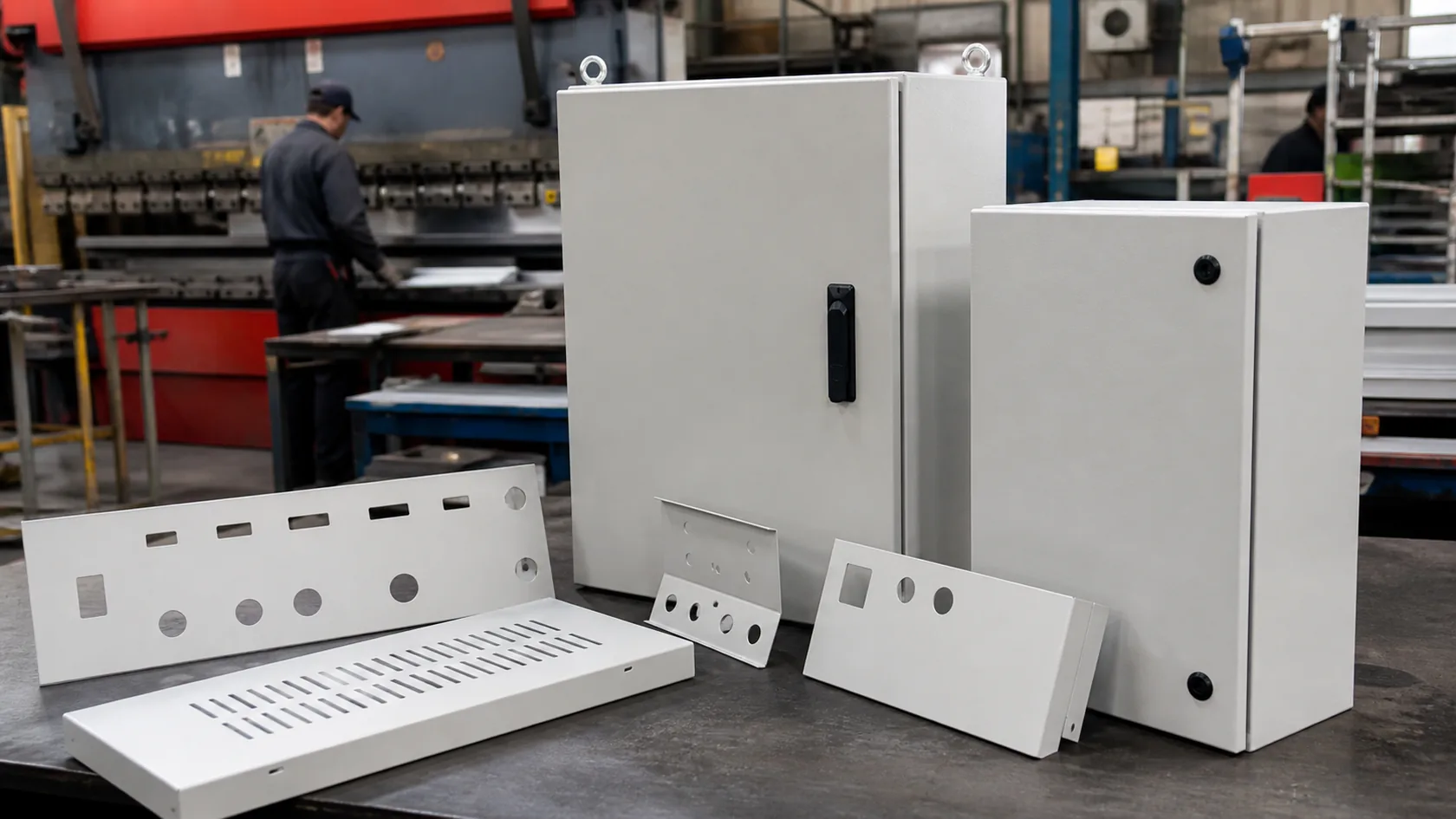
Steel is the practical workhorse of many electrical enclosure projects. It is strong, familiar, and cost-effective, especially for industrial boxes and larger cabinets.
Where steel works well
Steel works well for:
- Control cabinets
- Junction boxes
- Electrical panels
- Machine-mounted enclosures
- Indoor industrial equipment
- Larger sheet metal housings
Steel is also easy to form, weld, punch, and powder coat. For many industrial projects, it gives a good balance between strength and cost.
Carbon steel vs stainless steel
Carbon steel is common when cost matters and the environment is controlled. It usually needs powder coating, plating, or another protective finish.
Stainless steel is better for corrosion resistance. It is often used in food processing, chemical plants, washdown areas, marine sites, and outdoor installations. It costs more, but it can reduce long-term rust risk.
The World Steel Association gives a useful wider view of steel as an engineering material, but enclosure buyers still need to choose the right grade, finish, and environment fit.
Coating, rust, and edge protection
Steel enclosure quality depends heavily on surface treatment. Powder coating can protect the surface, but cut edges, holes, welded corners, and scratches still need attention.
For outdoor or humid use, the weak point is often not the middle of the painted panel. It is the edge around a cable hole, the screw area, or a welded corner where moisture can sit.
Main buyer risks
Common steel enclosure risks include:
- Rust at cut edges or scratches
- Coating thickness affecting tight assembly
- Heavy shipping weight
- Poor drainage in outdoor designs
- Weak corrosion plan for coastal areas
- Grounding details not clearly defined
When I review a steel enclosure, I look at the places where the coating is interrupted, because those small broken surfaces often decide whether the product still looks acceptable after one rainy season.
Steel is strong, but strength is not the only requirement. For many electronic products, aluminum becomes a more flexible choice.
Aluminum Electrical Enclosures
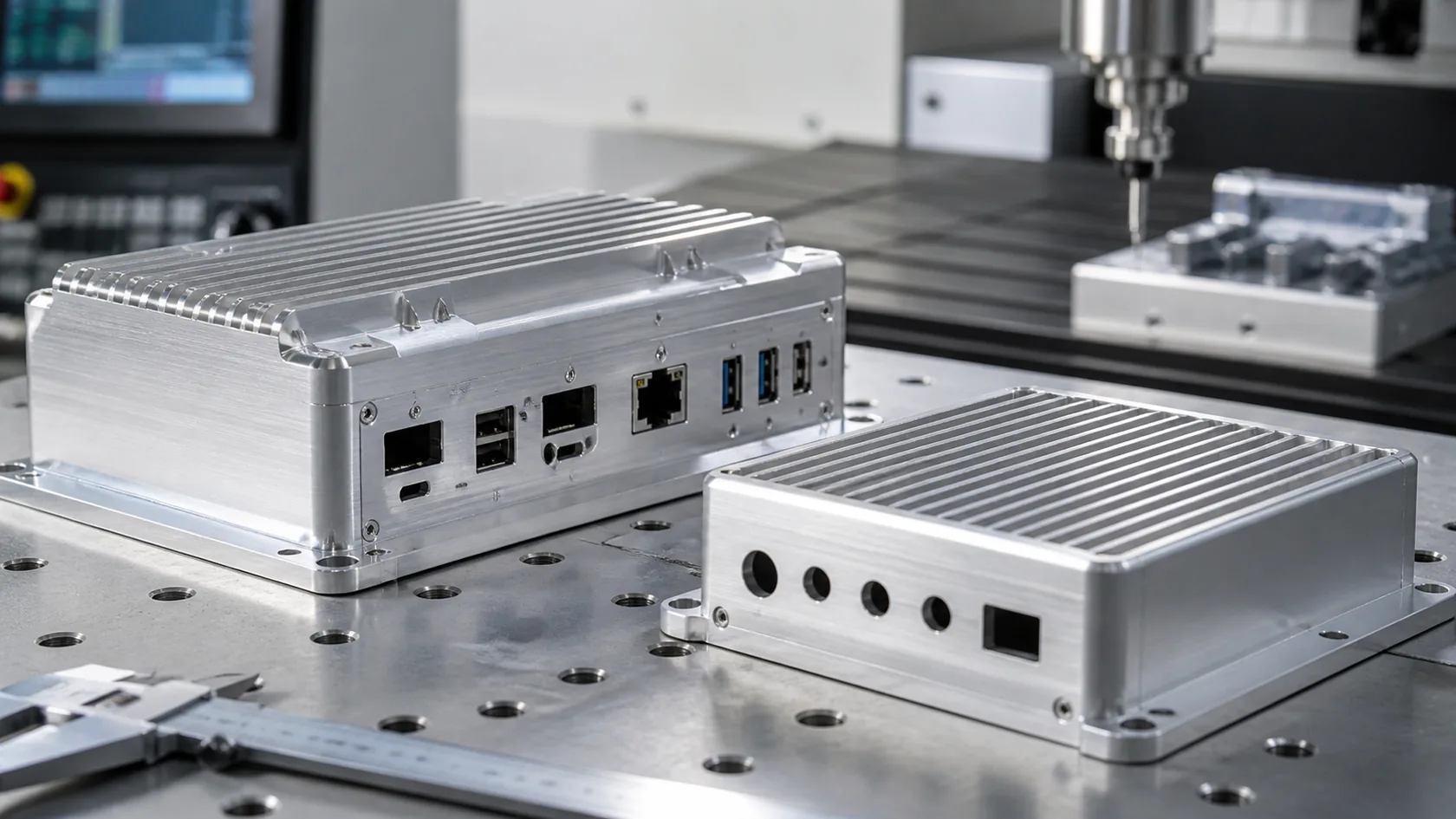
Aluminum is common in custom electronic enclosures because it gives a clean balance of weight, machining, corrosion resistance, heat behavior, and appearance.
It is not always the cheapest choice, but it often gives buyers more design freedom.
Where aluminum works well
Aluminum works well for:
- Custom electronic housings
- Sensor enclosures
- Communication devices
- Industrial controllers
- Raspberry Pi-style cases
- Outdoor monitoring boxes
- Heat-sensitive electronics
- Products that need a premium metal feel
Aluminum is especially useful when the design needs precise CNC openings for connectors, displays, buttons, ports, or mounting features.
CNC machining, extrusion, die casting, and sheet aluminum
Aluminum can be made in several ways.
CNC machining is good for prototypes, low-volume custom housings, and designs with many precise features. Extrusion is useful for long body profiles, electronic cases, and modular designs. Die casting is useful for higher volumes with a stable design. Sheet aluminum works for panels, covers, and formed parts.
The best process depends on size, quantity, tolerance, surface finish, and tooling budget.
Heat dissipation and surface finish
Aluminum conducts heat better than plastic and many steels, so it can help move heat from a PCB or power component. This does not automatically solve thermal design, but it gives engineers more options.
Aluminum also accepts surface finishes such as anodizing, powder coating, brushing, and bead blasting. The Aluminum Association explains several advantages of aluminum as a material, but the enclosure still needs the right alloy and finish plan.
Main buyer risks
Common aluminum enclosure risks include:
- Choosing anodizing when powder coating is more stable
- Ignoring tolerance changes after finishing
- Weak threads in thin walls
- Galvanic corrosion with wrong hardware
- Higher cost than plastic for large-volume simple shapes
- Poor sealing design around machined openings
In my work, I do not treat aluminum as automatically premium. I check whether the design uses aluminum's strengths, such as machining, heat, surface quality, or rigidity. If it does not, the buyer may be paying for a feeling, not a real benefit.
Aluminum is very useful, but plastic can be the smarter choice when signal, insulation, weight, or volume cost matters more.
Plastic Electrical Enclosures
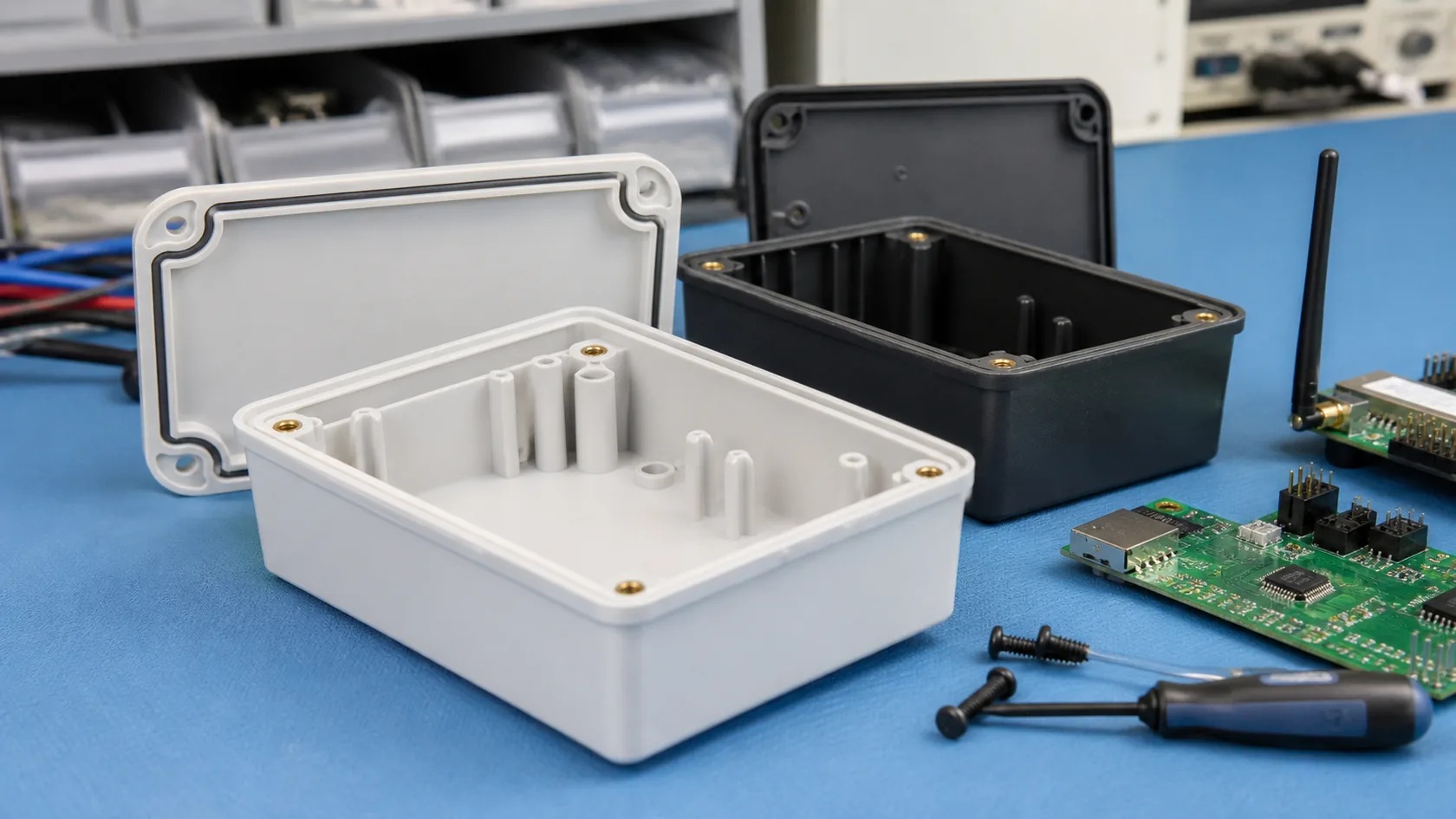
Plastic enclosures are sometimes treated as the cheap option. That is too simple.
A good plastic enclosure can solve problems that metal cannot solve easily. It can reduce weight, avoid corrosion, insulate electrical parts, allow wireless signals to pass, and support high-volume production with a clean molded shape.
Where plastic works well
Plastic works well for:
- Wireless electronic devices
- IoT sensors
- Handheld controllers
- Indoor junction boxes
- Consumer-facing electronic products
- Battery-powered devices
- Products that need electrical insulation
- High-volume molded housings
Plastic is also useful when the product needs soft edges, snap features, battery doors, molded bosses, or a lightweight feel.
ABS vs polycarbonate
ABS is common because it is easy to mold, cost-friendly, and suitable for many indoor electronics. It can look good with the right texture.
Polycarbonate is tougher and has better impact resistance. It is often used when strength matters more. The material selection should still check heat, UV, flame rating, color stability, and chemical exposure.
Plastic parts may also need to meet flammability requirements. The UL 94 plastic flammability standard is often discussed in electronics projects, especially when buyers specify flame ratings such as V-0.
Insulation, wireless signal, UV, and flame rating
Plastic does not conduct electricity like metal. This can improve safety in some designs. It also lets wireless signals pass more easily, which matters for Wi-Fi, Bluetooth, LTE, GPS, and other antenna-based products.
But plastic can age under sunlight if the resin is not UV-stabilized. It can soften or deform under heat. It can crack if screw bosses are too thin or if screws are over-tightened.
Main buyer risks
Common plastic enclosure risks include:
- Choosing a resin without checking UV exposure
- Thin screw bosses cracking during assembly
- Heat buildup around electronics
- Poor gasket compression after aging
- Tooling cost for injection molding
- Color variation between batches
- Weak impact resistance in cold environments
For plastic projects, I pay close attention to screw boss design and wall thickness, because many failures do not happen across the big flat surface. They happen around the small features that carry the assembly load.
Now we can compare steel, aluminum, and plastic side by side.
Steel vs Aluminum vs Plastic: Side-by-Side Comparison
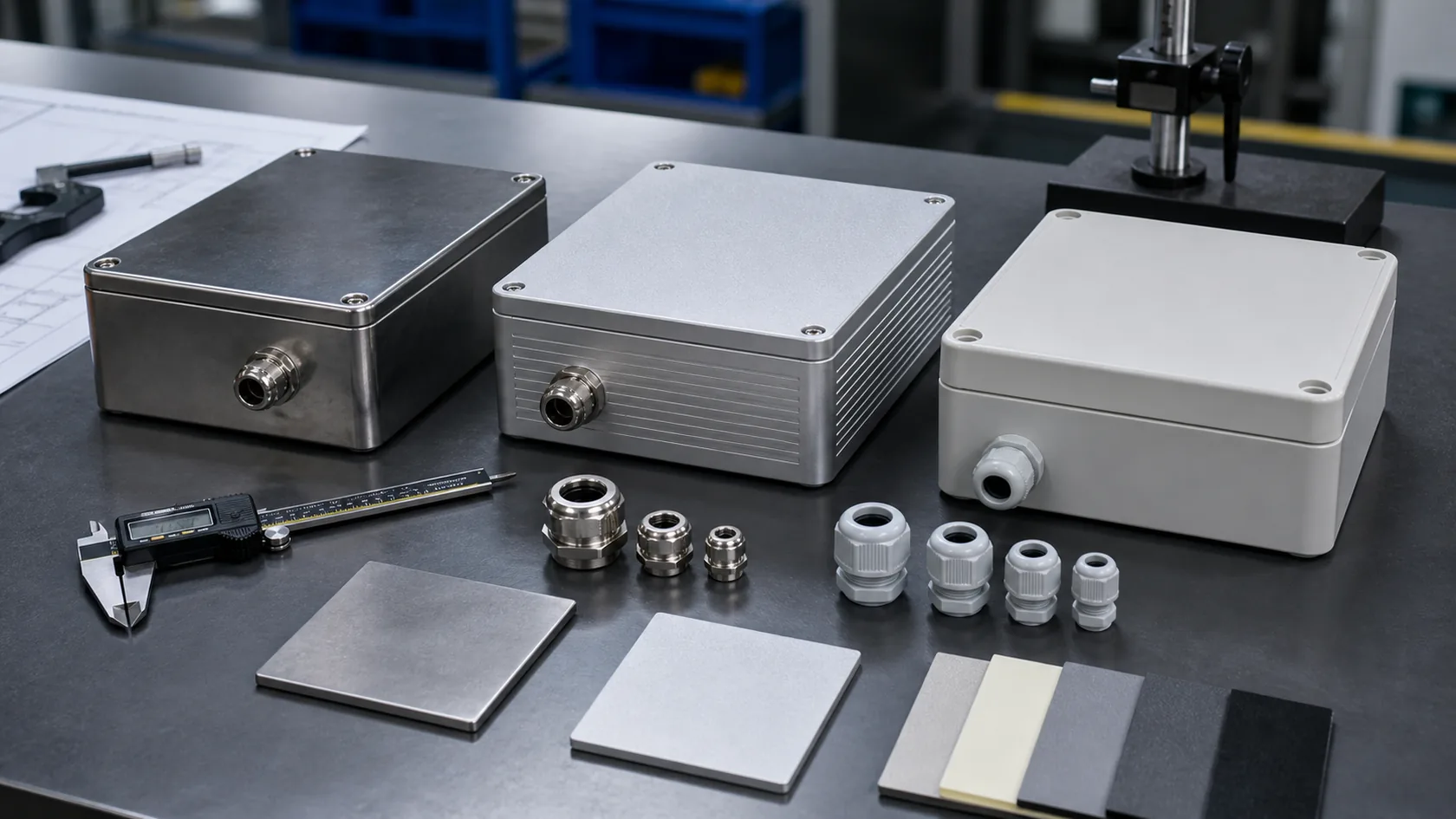
The right material depends on the project. A table can help, as long as we remember that the final answer still depends on environment, design, quantity, and assembly.
Quick comparison table
| Factor | Steel | Aluminum | Plastic |
|---|---|---|---|
| Strength | Very strong and rigid | Strong for many electronics | Depends on resin and design |
| Weight | Heavy | Light | Very light |
| Corrosion | Needs coating or stainless grade | Naturally better than steel | Does not rust |
| Heat dissipation | Moderate | Good | Poor compared with metal |
| Wireless signal | Can block signal | Can block signal | Good for antennas |
| Electrical insulation | Conductive | Conductive | Insulating |
| Custom machining | Good for sheet metal | Very good for CNC/extrusion | Good for CNC prototypes, molding for volume |
| Appearance | Industrial, coated | Clean, premium metal feel | Molded, light, product-like |
| Cost pattern | Good for many industrial boxes | Good for custom/premium electronics | Good at volume, tooling may be needed |
Cost and MOQ differences
Steel can be economical for sheet metal fabrication, especially for cabinets and panels.
Aluminum can be cost-effective for CNC custom electronic housings, especially when the design needs accurate ports and a clean surface.
Plastic can be cheap per piece at high volume, but injection mold tooling changes the early cost. For prototypes or small batches, CNC plastic may work, but it will not have the same economics as molded production.
Outdoor and waterproof use
For outdoor use, material is only part of the answer. The full enclosure also needs gasket design, cable glands, fasteners, surface finish, drainage, UV control, and the right protection rating.
Standards such as NEMA enclosure types and IEC 60529 IP ratings help define protection expectations. But a material with a good reputation still needs a good assembly.
Customization differences
For custom projects:
- Steel is strong for fabricated cabinets and panels.
- Aluminum is strong for CNC housings, machined ports, and heat-related designs.
- Plastic is strong for molded products, wireless devices, and insulated electronic housings.
I like comparison tables, but I do not let them make the final decision alone. The drawing usually reveals the truth: a thin wall, a large unsupported cover, a top cable entry, or a hot component can change the material choice quickly.
So the practical choice starts with the product, not the table.
How I Choose the Right Material for a Custom Enclosure
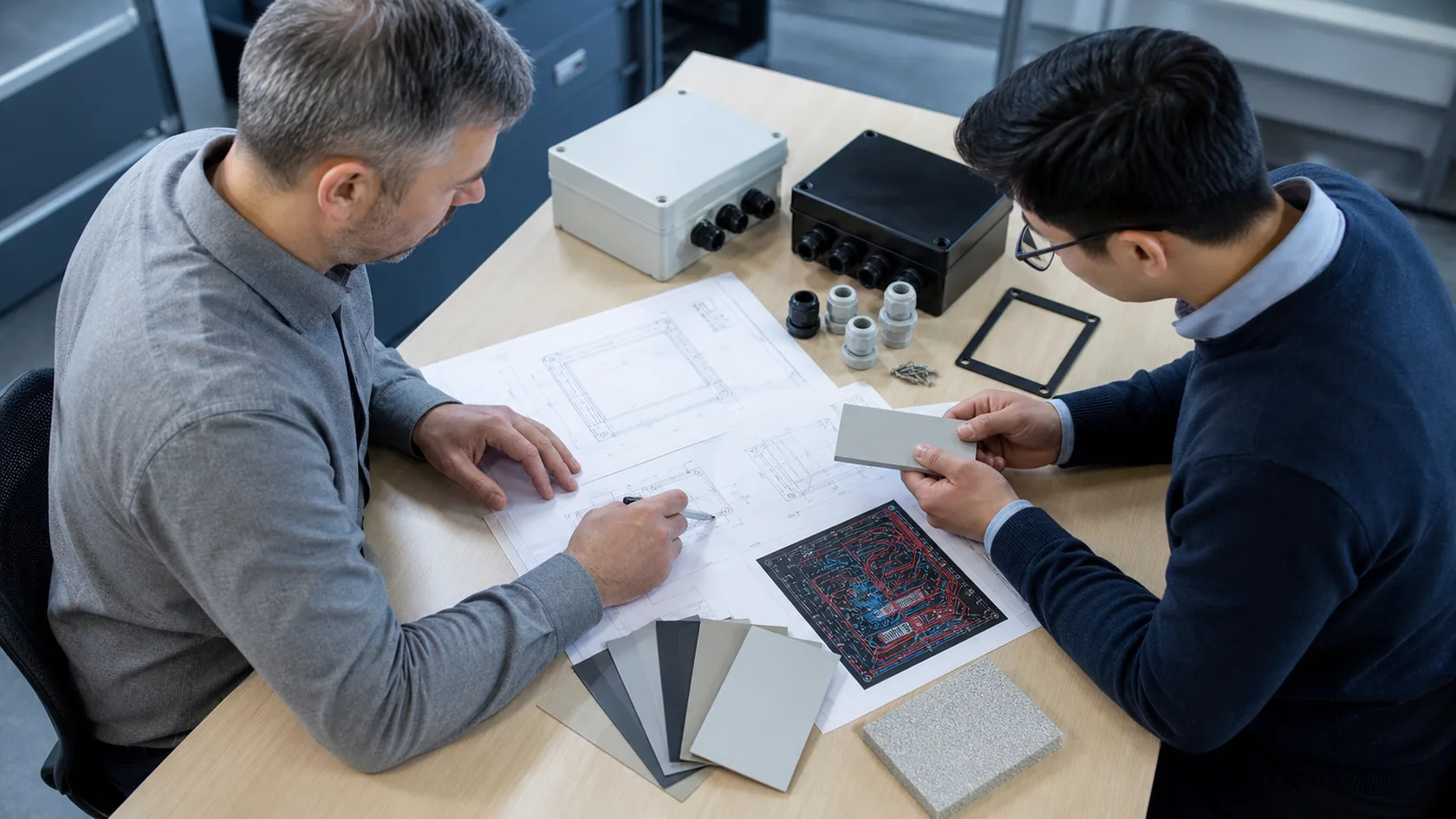
When I help a buyer choose between steel, aluminum, and plastic, I try to slow the decision down just enough to avoid an expensive shortcut.
The material should answer the project risk.
Start from the environment
Ask these questions first:
- Will the enclosure be indoor or outdoor?
- Will it face rain, hose spray, dust, salt air, oil, or chemicals?
- What is the temperature range?
- Will users open it often?
- Will it need impact resistance?
- Is corrosion the main risk?
- Is weight important for shipping or installation?
If the product is used outdoors near salt air, plastic, aluminum, stainless steel, or a special coating may be better than basic powder-coated steel. If the product sits indoors in a control room, steel may be perfectly practical.
Match the material to the internal parts
The parts inside the enclosure matter as much as the environment.
| Internal need | Material concern |
|---|---|
| Hot PCB or power module | Aluminum may help with heat transfer |
| Antenna or wireless module | Plastic may help signal performance |
| Heavy relays or transformers | Steel or thicker aluminum may be safer |
| High-voltage components | Plastic insulation or grounding plan matters |
| Display or buttons | Front panel stiffness and sealing matter |
| Battery replacement | Plastic or aluminum door design needs service testing |
Good material choice protects the internal parts and supports the assembly process.
Check finish, gasket, cable entry, and packaging
Material choice does not end at the raw material.
For steel, check coating, rust prevention, and edge treatment. For aluminum, check finish thickness, thread strength, and surface consistency. For plastic, check resin grade, UV, flame rating, boss strength, and mold texture.
Then check the parts that often cause real trouble:
- Cable entry position
- Gasket groove
- Screw torque
- Mounting holes
- Connector cutouts
- Display window
- Internal brackets
- Packaging protection
Many enclosure failures are not dramatic material failures. They are small design details that were treated as secondary.
Ask these questions before quoting
Before you ask for a final price, prepare:
- Product use environment
- Quantity now and expected annual quantity
- PCB or internal component layout
- Cable diameter and connector list
- Target IP or NEMA requirement
- Surface finish or color target
- Logo or branding method
- Any critical dimensions after finishing
- Packaging and shipping expectation
My preferred quoting conversation is not "Which material is cheaper?" It is "Which material gives this product the fewest avoidable problems at the right cost?"
That question usually leads to a better enclosure.
Conclusion
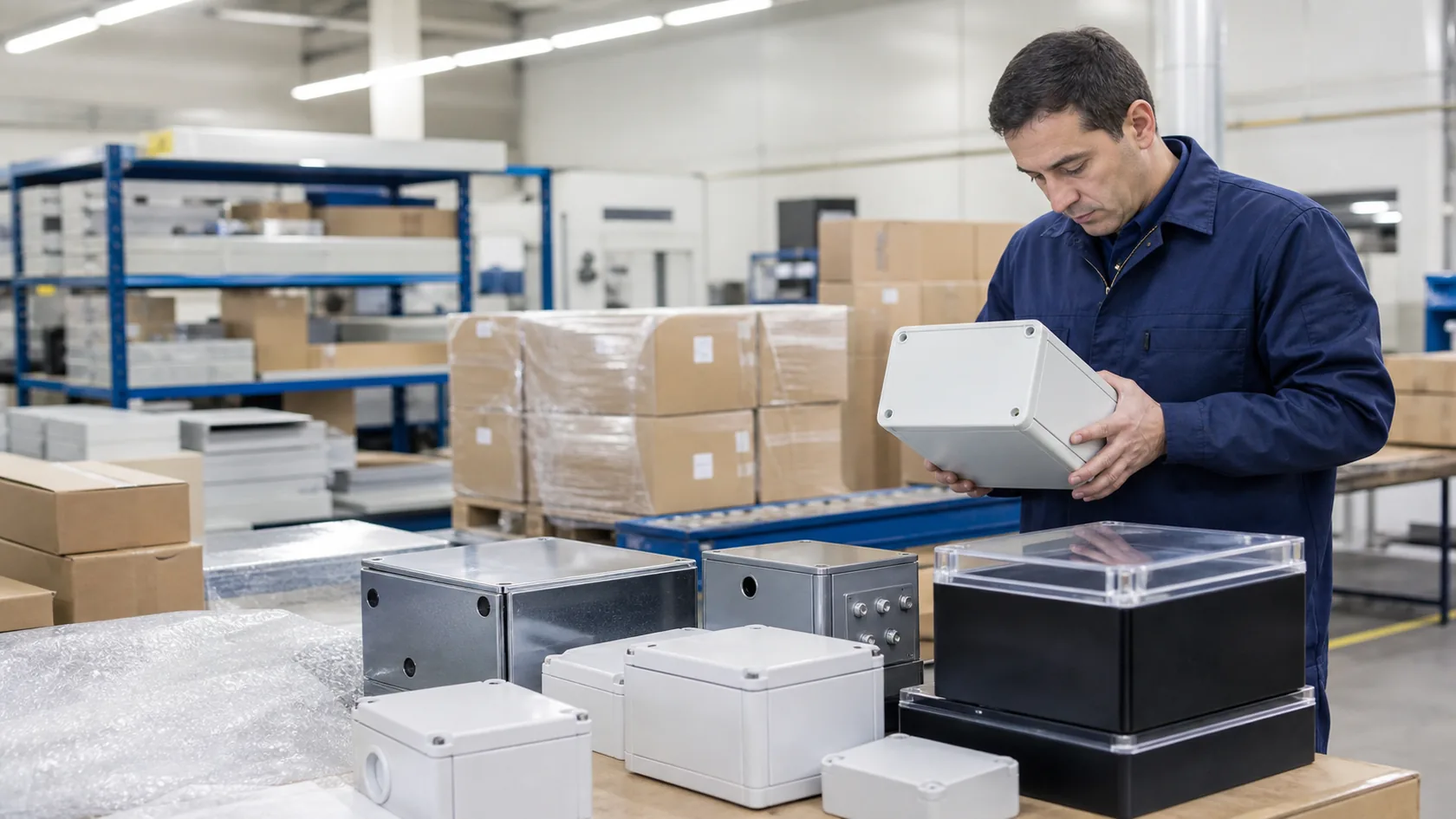
Steel, aluminum, and plastic can all be good electrical enclosure materials. None of them wins every project.
Steel is strong and practical for many industrial boxes, cabinets, and panels. Aluminum is lighter, cleaner, easier to machine, and useful for heat and custom electronic housings. Plastic is light, insulating, corrosion-free, and often better for wireless or high-volume molded products.
The real choice depends on the environment, internal components, protection rating, surface finish, quantity, and how the enclosure will be assembled and used.
This is why I do not like choosing material from one word on a drawing. I prefer to see the product story: where it works, what goes inside, how cables enter, who opens it, what can fail, and what cost target the buyer must meet.
If you are comparing steel, aluminum, and plastic for a custom enclosure, send the drawing together with the working environment and quantity plan. A short manufacturability review at this stage can save a surprising amount of cost, weight, rework, and after-sales trouble later.