Skip to content
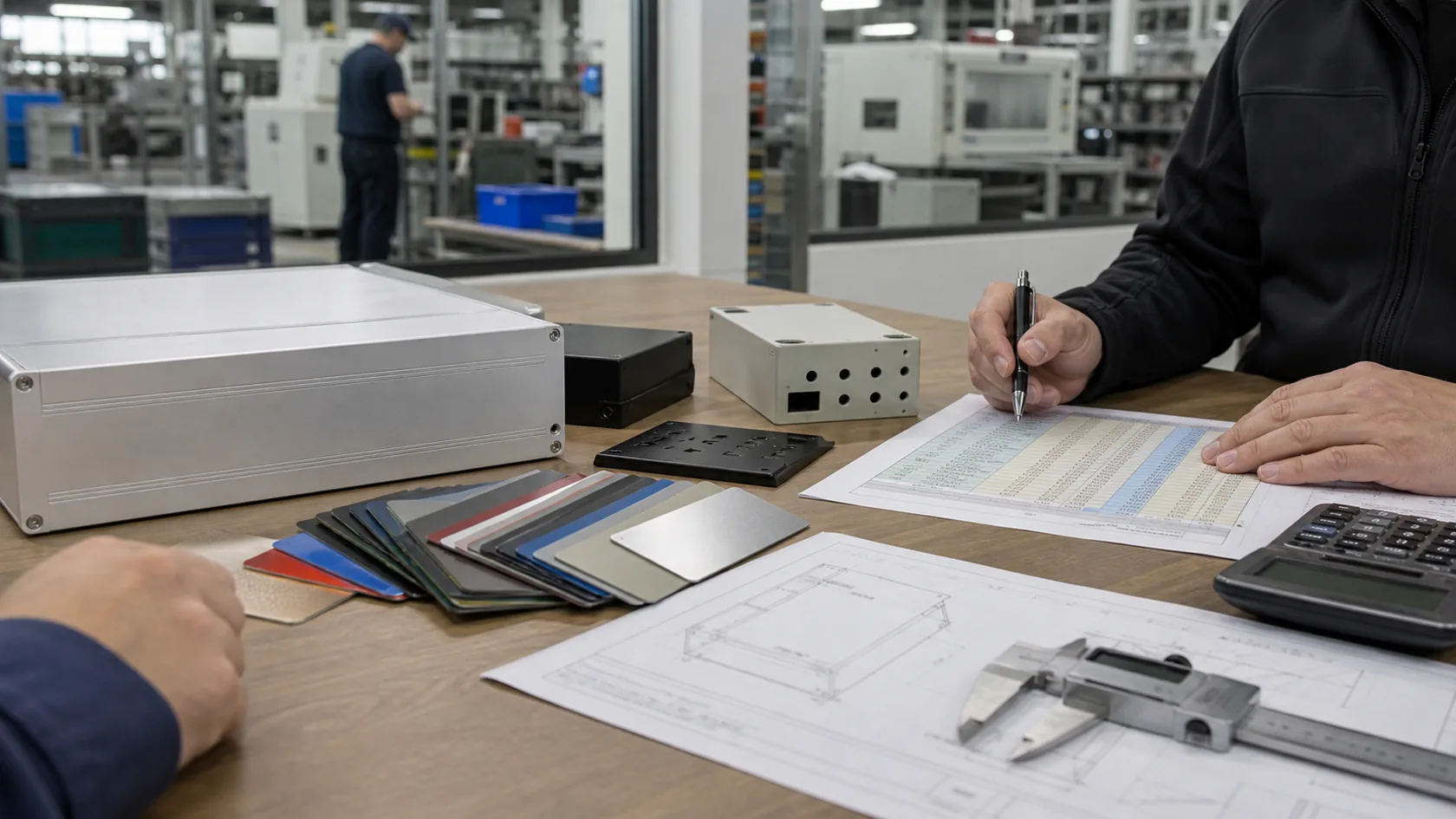
Many buyers ask for a surface finishing price as if it is one small line on a quotation.
“How much for anodizing?”
“How much for powder coating?”
“Can you make it black?”
I understand why buyers ask this way. Surface finish sounds like the last step. The enclosure is already machined, bent, punched, or molded. The finish seems like a color decision added at the end.
But in real factory work, surface finishing cost is not only the cost of making a part look nice. It includes preparation, labor, masking, racking, color control, coating thickness, inspection, packaging, and sometimes the cost of avoiding very expensive mistakes.
For custom enclosures, this matters even more. A simple outside cover may be easy to finish. A complex aluminum housing with threaded holes, grounding pads, logo engraving, visible faces, heat sink fins, and tight PCB slots is a different story.
At MaidaTech, I do not look at finishing cost only as “the price of coating.” I look at it as the cost of controlling the final surface so the part still fits, looks acceptable, passes inspection, and arrives without damage.
That is the part many buyers miss.
In this article, I will explain what surface finishing cost usually includes, why two quotes can look different, and what information buyers should provide to get a fair and accurate price.
Let’s start with the biggest misunderstanding.
Surface Finishing Cost Is Not Just the Coating
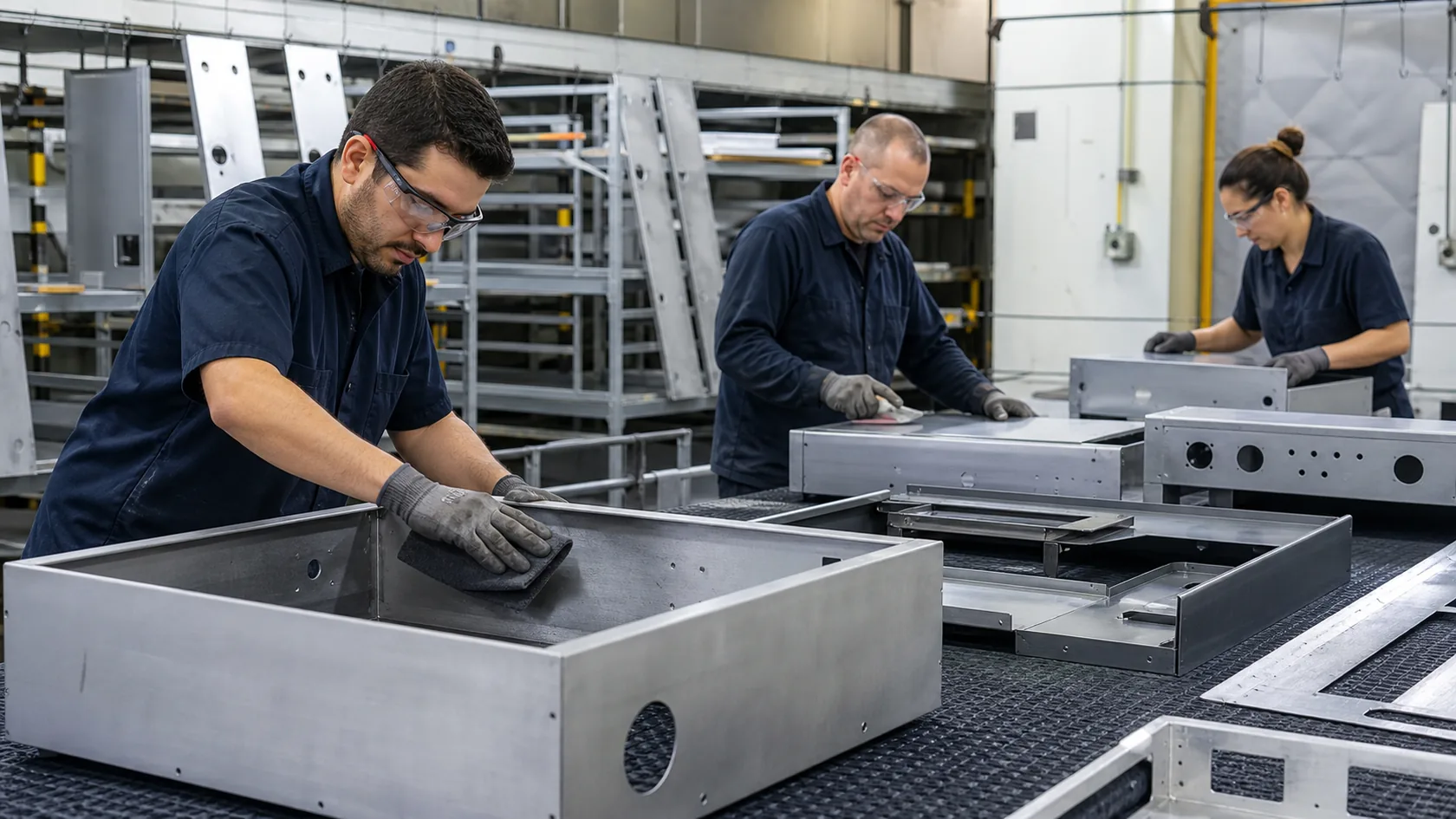
Surface finishing is a process chain. The visible coating or anodized layer is only one part of it.
Before the finish is applied, the part may need cleaning, sanding, blasting, polishing, degreasing, chemical pretreatment, masking, and racking. After finishing, it may need curing, sealing, thickness checks, color checks, touch inspection, packing, and protection.
The Quote Covers Controlled Work
A finish supplier is not only selling color. They are selling controlled work.
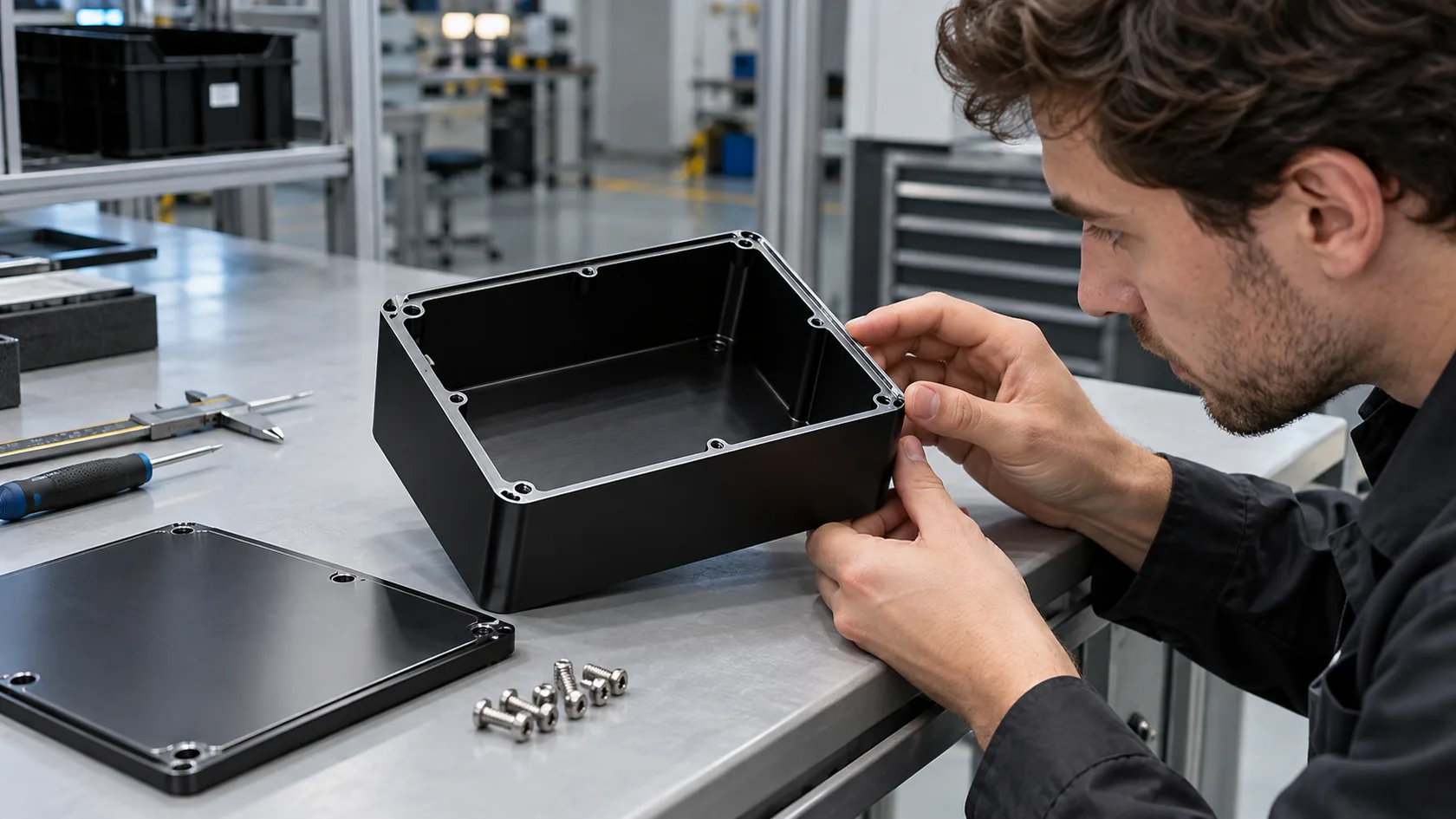
For example, black anodizing an aluminum enclosure may include:
- Cleaning oil from CNC machining
- Removing oxides or surface stains
- Bead blasting for a matte texture
- Racking the part without marking visible faces
- Running the anodizing process
- Dyeing and sealing
- Checking color and thickness
- Protecting the finished part from scratches
Powder coating may include:
- Degreasing and pretreatment
- Masking threads or grounding areas
- Hanging the part correctly
- Spraying powder evenly
- Curing at the correct temperature
- Checking film thickness and appearance
- Packing parts so corners do not rub
When I review a finishing quote, I ask what controlled steps are included, not only what color is included. A cheap price that ignores preparation or inspection can become expensive after the first batch comes back with scratches, poor adhesion, or blocked holes.
Surface Area Is Only One Part of the Price
Many finishing prices are influenced by surface area. That makes sense because larger surfaces use more chemicals, powder, electricity, tank space, and handling time.
But area alone does not explain the full cost.
| Part condition | Why cost changes |
|---|---|
| Simple flat cover | Easy to rack, spray, inspect, and pack |
| Deep enclosure box | More inside corners and harder coverage |
| Many threaded holes | Masking or post-finish cleaning may be needed |
| Visible front panel | Higher cosmetic control and handling care |
| Heat sink fins | More surface area and harder cleaning |
| Mixed materials | Different finish limits and process planning |
This is why two parts with similar size can have different finishing prices.
Now let’s break down the cost items buyers usually do not see.
What Is Usually Included in the Price
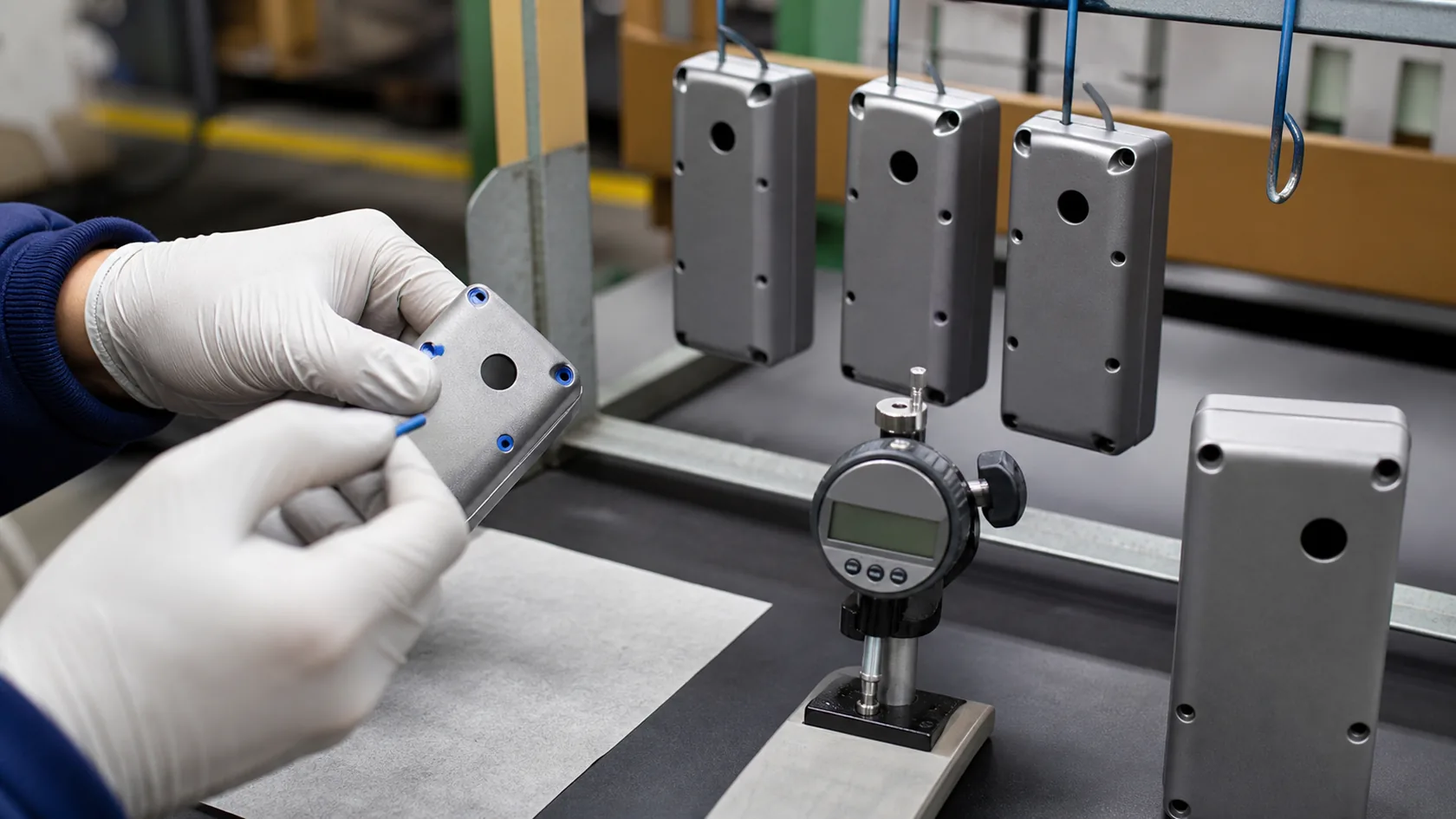
A surface finishing price usually combines fixed batch costs and variable part costs. The fixed costs happen even if you only make one piece. The variable costs grow with quantity, size, complexity, and quality requirements.
This is one reason prototype finishing can feel surprisingly expensive.
Setup and Batch Minimum
Most finishing suppliers have a minimum batch charge. They still need to prepare tanks, lines, racks, powder, operators, inspection time, and paperwork.
For small prototype orders, the minimum charge may be more important than the actual part size. This is why one sample enclosure may have a high finishing cost per piece, while 500 pieces have a much lower unit cost.
Recent anodizing cost guides often explain this same structure: anodizing quotes are commonly built from a lot charge, surface area rate, and add-ons such as color, sealing, masking, pretreatment, and inspection. The numbers vary by country and supplier, but the cost logic is similar.
Surface Preparation
Surface preparation is often the hidden cost.
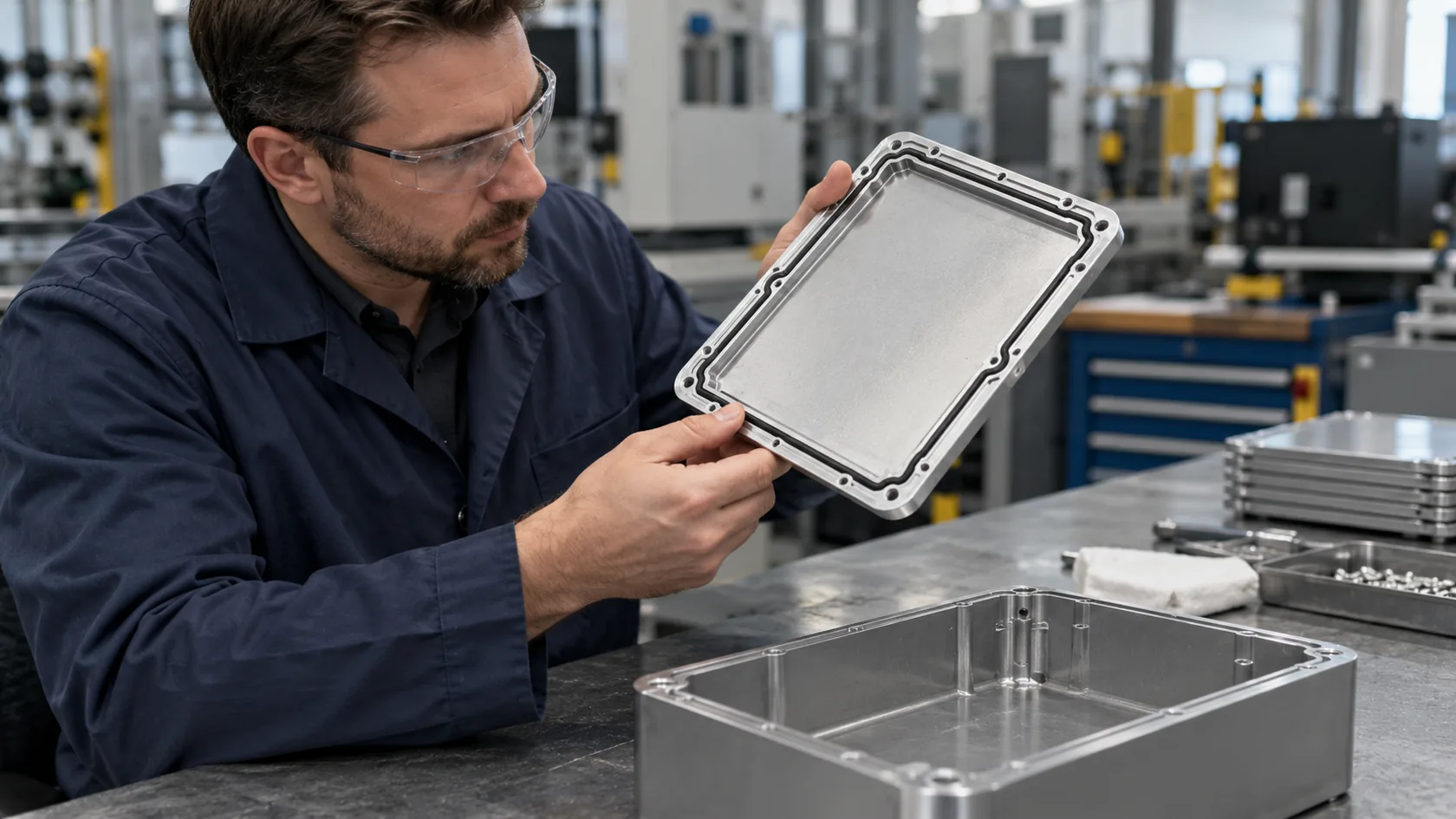
If the part has machining marks, weld marks, scratches, oil, oxidation, or uneven texture, the final finish may show those defects. A buyer may think they are paying for anodizing or coating, but part of the money is really paying for making the surface ready.
Preparation may include:
- Sanding
- Brushing
- Polishing
- Bead blasting
- Deburring
- Cleaning
- Etching
- Chemical pretreatment
- Rust or oxide removal
For cosmetic enclosure parts, preparation can cost more than the finish itself. A mirror-polished surface and a standard matte powder-coated surface are not the same job, even if both are “black.”
Masking and Racking
Masking protects areas that should not receive finish. Racking holds the part during treatment.
Both are labor.
Threads, sealing faces, grounding pads, tight bores, connector areas, and assembly rails may need masking. The more small areas that need protection, the more time the worker spends before and after finishing.
Racking also affects cost because a part must be held somewhere. That contact point may leave a small mark. If the buyer says every surface must be perfect, the supplier has fewer safe racking choices.
In my quoting work, masking is one of the first details I check because it can quietly change both cost and lead time. One drawing note can save a project. One missing masking note can ruin a batch.
After these basic items, finish specification starts to push the price up or down.
How Finish Type and Specification Change Cost
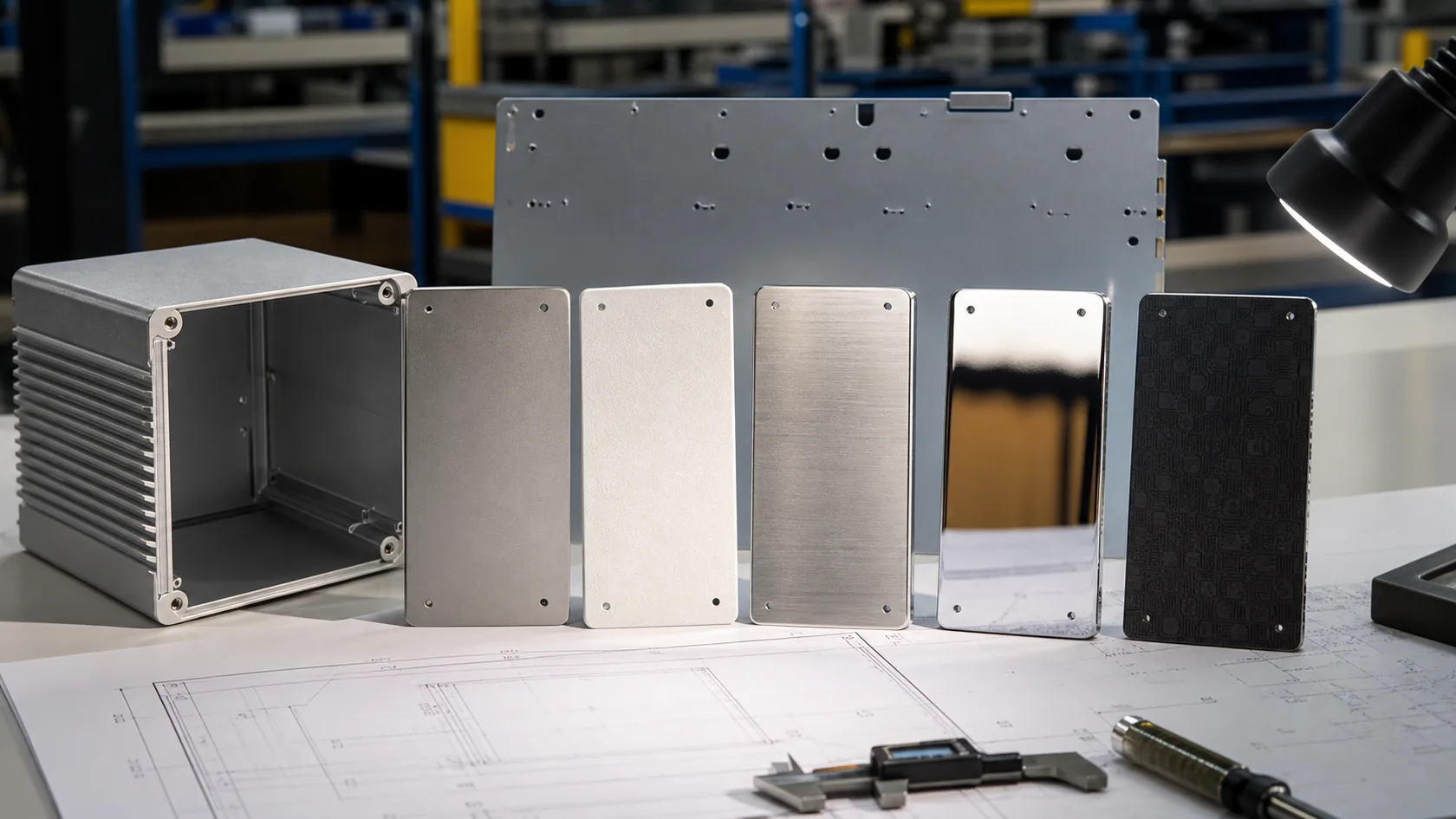
Different finishes have different cost structures. Powder coating, anodizing, plating, painting, passivation, brushing, polishing, printing, and engraving are not priced the same way.
The process type matters, but the specification matters just as much.
Coating Thickness and Performance Requirements
If the buyer only needs a standard decorative finish, the cost is usually easier to control. If the buyer needs a thick hardcoat, high corrosion resistance, tight thickness range, outdoor weathering, or formal test reports, the supplier must do more controlled work.
For anodizing, standards such as ISO 7599:2018 cover decorative and protective anodic oxidation coatings on aluminum. For coating thickness measurement, methods such as ASTM D7091 are used for nondestructive dry film thickness measurement on metal substrates.
These standards remind buyers of a practical point: once a finish becomes a measured requirement, it is no longer just a color request.
Color and Appearance Control
Standard colors usually cost less. Special colors cost more because they may need custom powder, dye control, sample approval, or separate batch handling.
Appearance control can also add cost through:
- Golden samples
- Color matching
- Gloss level control
- Texture matching
- Sorting visible faces
- Extra packaging
- Rework allowance
- Separate treatment of A-face and B-face surfaces
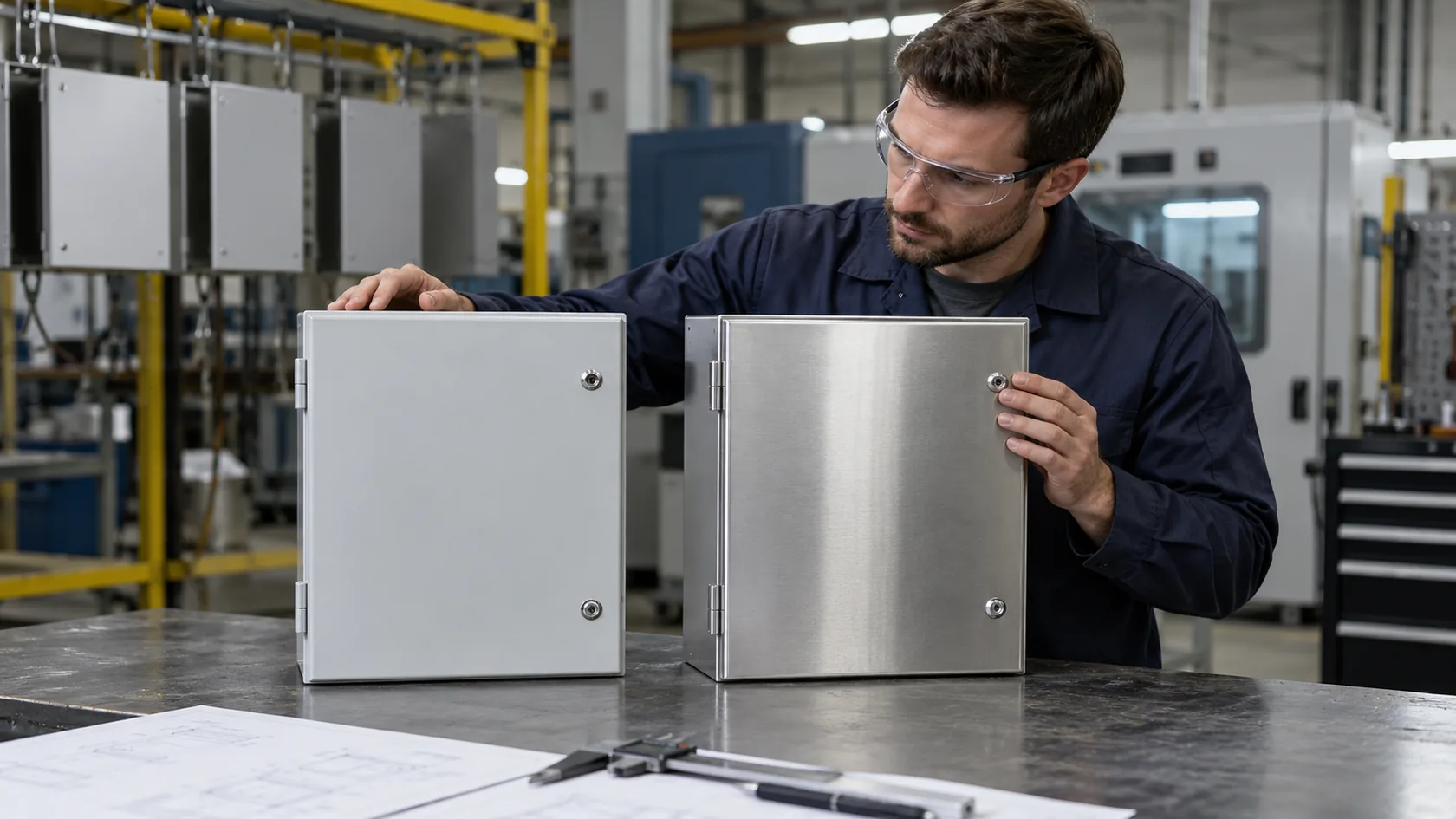
For custom enclosure buyers, color matching between aluminum, plastic, powder-coated steel, and printed logos can be tricky. If the product has multiple materials, the supplier needs to know the acceptable color range.
Process Choice Affects Hidden Costs
Here is a simple comparison:
| Finish choice | Possible cost driver |
|---|---|
| Powder coating | Pretreatment, masking, color change, film thickness, curing, packaging |
| Anodizing | Aluminum alloy, surface prep, color, sealing, thickness, racking marks |
| Plating | Chemistry control, base metal prep, thickness, corrosion testing |
| Polishing | Manual labor, scratch control, cosmetic standard |
| Brushing | Direction control, visible face handling |
| Laser engraving | Setup, fixture, position accuracy, contrast testing |
| Silk printing | Screen setup, ink, curing, color matching, quantity |
I usually tell customers that the finish name is only the start of the cost question. The real price comes from how strict the finish must be.
Now we should talk about quantity, because this is where many buyers get surprised.
Why Quantity Changes the Unit Price So Much
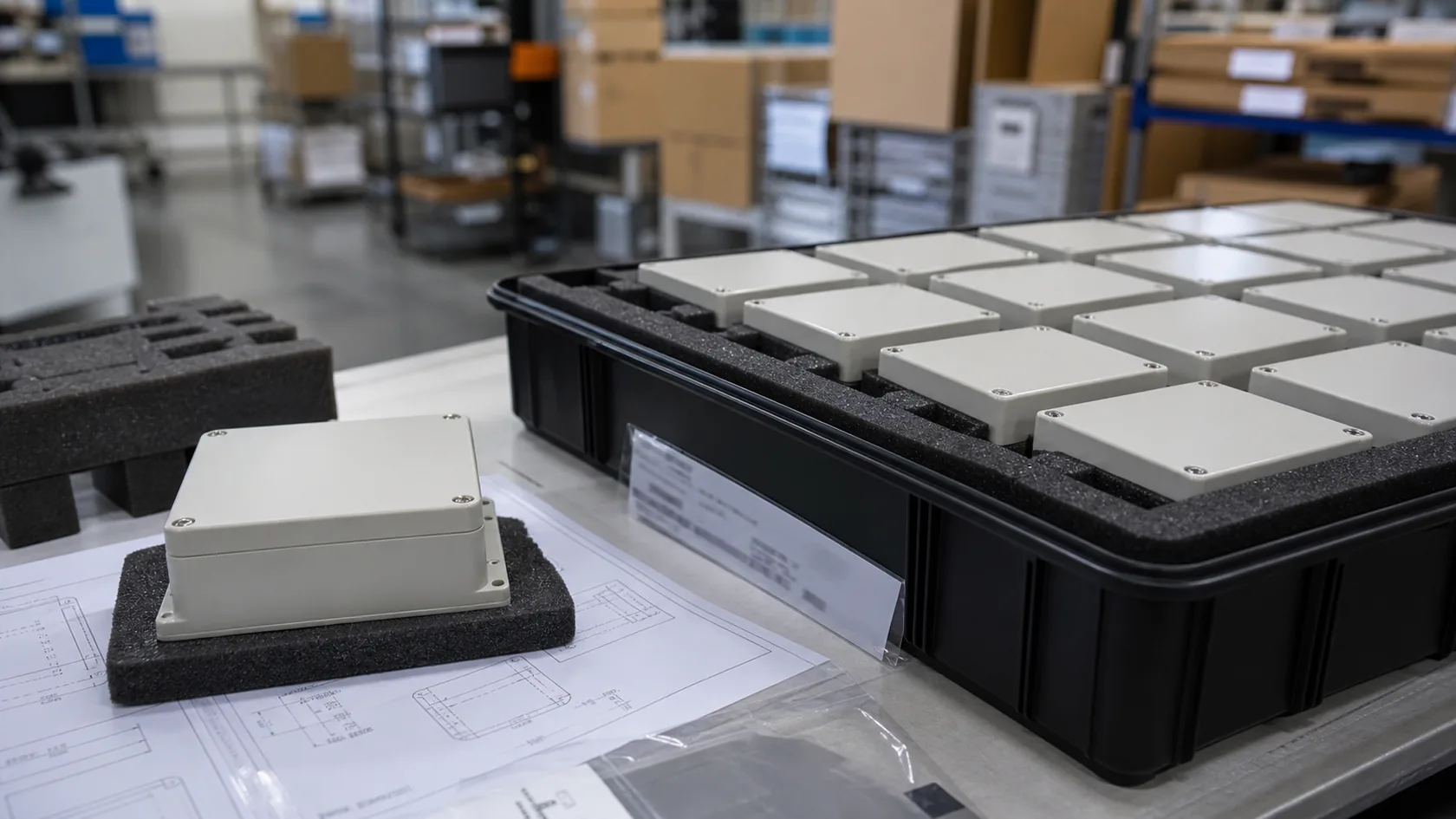
Surface finishing has strong batch economics. A supplier may spend similar setup time for 5 parts and 200 parts, but the cost is spread very differently.
This is why prototype finishing often looks expensive.
Small Orders Carry the Setup Cost
If you order one prototype enclosure, the finishing supplier still needs to prepare the process. The part still needs racking, cleaning, finishing, inspection, and packing. The setup work does not disappear just because the quantity is small.
For anodizing, many industry cost guides describe a minimum lot charge plus a surface area or per-part cost. Powder coating has similar logic because color setup, pretreatment, hanging, spraying, curing, and inspection all take time.
This means a buyer should not judge mass production cost from one prototype finishing price.
Bigger Orders Are Cheaper Only When They Are Stable
Higher quantity can reduce unit cost, but only when the specification is stable and the parts are easy to process.
Unit price can stay high if:
- Every part needs complex masking
- The color is difficult to match
- The part racks poorly
- Cosmetic standards are extremely strict
- Inspection records are heavy
- Packaging must protect delicate surfaces
- Rework risk is high
Quantity helps, but it does not cancel complexity.
When I quote enclosure projects, I prefer to know prototype quantity, pilot quantity, and expected annual quantity. This helps me avoid giving a sample price that scares the buyer or a production price that ignores real setup work.
The next cost driver is even more practical: the drawing itself.
Drawing Details That Affect Finishing Cost
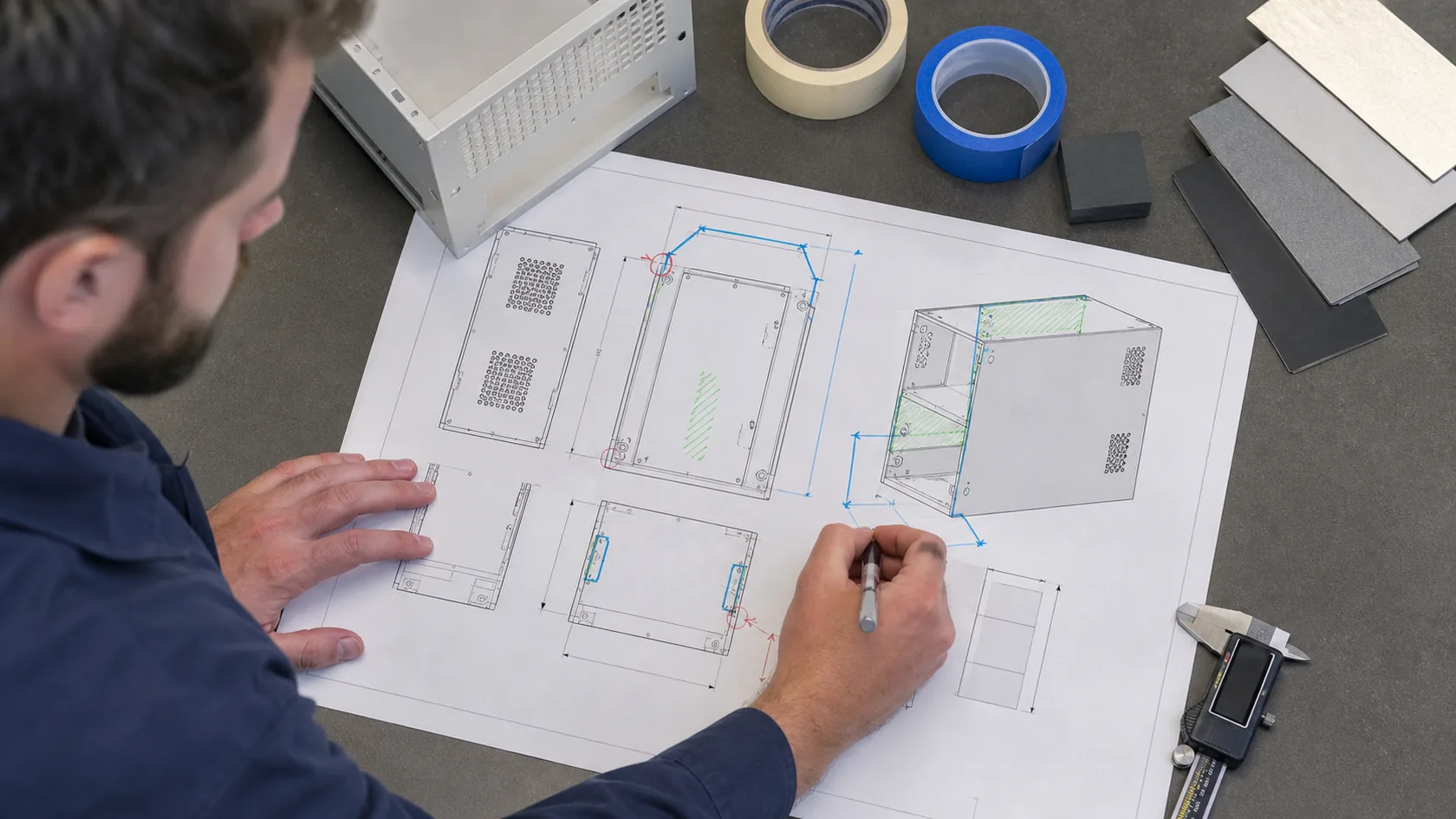
A clear drawing can reduce finishing cost. A vague drawing can raise it.
The reason is simple. If the supplier does not know what is critical, they must either ask more questions, add safety margin, or risk a bad result.
Mark Cosmetic and Functional Surfaces
Not every surface needs the same finish quality.
An outside front panel may need high cosmetic control. The inside bottom of an enclosure may only need normal protection. A grounding pad may need no coating at all. A PCB slot may need controlled clearance more than perfect color.
Useful drawing notes include:
- A-face cosmetic standard required on outside cover
- Inside surfaces: normal coating acceptable
- Mask all threaded holes before powder coating
- Keep grounding pads free of coating
- Dimensions apply after finishing
- No visible rack marks on front face
- Logo area must remain flat and clean
These notes tell the supplier where to spend effort and where not to waste money.
Tolerance and Finish Should Be Connected
Finishing can add thickness, change texture, or affect holes. If dimensions are tight, the drawing should say whether the tolerance applies before or after finishing.
This matters for:
- Sliding covers
- PCB rails
- Connector cutouts
- Threaded holes
- Press-fit features
- Sealing faces
- Heat sink contact surfaces
A drawing that ignores finish thickness may lead to hand rework. Hand rework is not a nice cost item. It is slow, ugly, and usually appears when everyone is already late.
My habit is to review the finish together with assembly risk. If a finish makes assembly harder, the quote should include the control work needed to prevent that problem.
Finally, let’s look at what buyers should send in an RFQ.
Conclusion
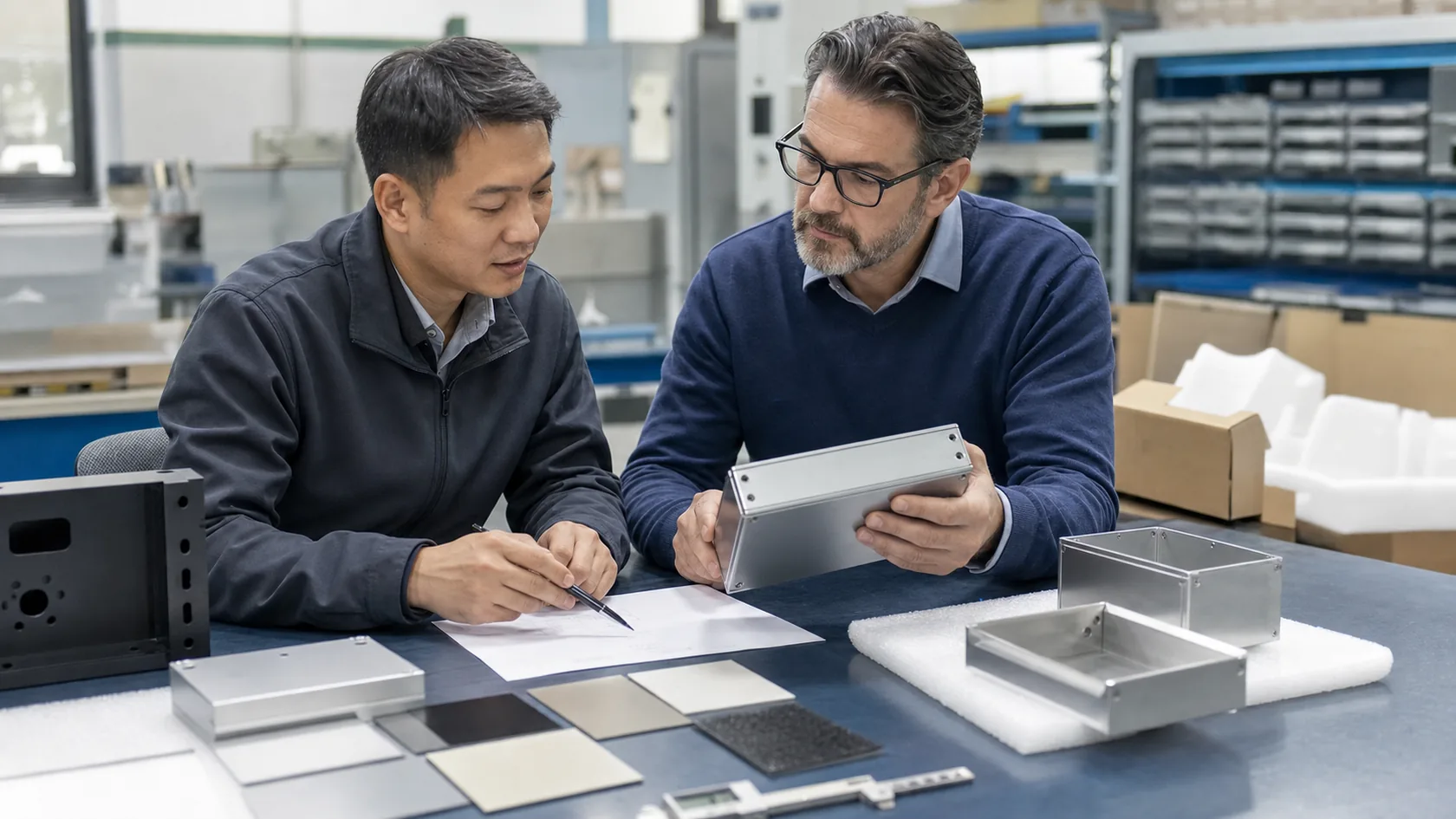
Surface finishing cost includes much more than the coating itself.
It can include setup, batch minimums, cleaning, pretreatment, sanding, blasting, polishing, masking, racking, color matching, coating thickness control, curing, sealing, inspection, packaging, and the risk control needed to keep the enclosure usable after finishing.
If you want a more accurate quote, send the supplier:
- Material and alloy
- 2D drawing and 3D file
- Finish type and color
- Cosmetic surface requirements
- Masking areas
- Critical finished dimensions
- Quantity now and expected repeat quantity
- Logo, printing, or engraving requirements
- Packaging expectations
- Required inspection reports or standards
This information helps the supplier quote the real work, not guess from a color name.
At MaidaTech, we support custom aluminum enclosures, sheet metal enclosures, plastic enclosures, powder coating, anodizing, logo printing, engraving, packaging, and OEM/ODM production. If you are comparing enclosure finishing costs, send us your drawing and tell us which surfaces are cosmetic, which dimensions are critical, and how the product will be used.
Good finishing cost is not the cheapest line on the quote.
It is the cost of getting the final enclosure right without surprises.