Skip to content
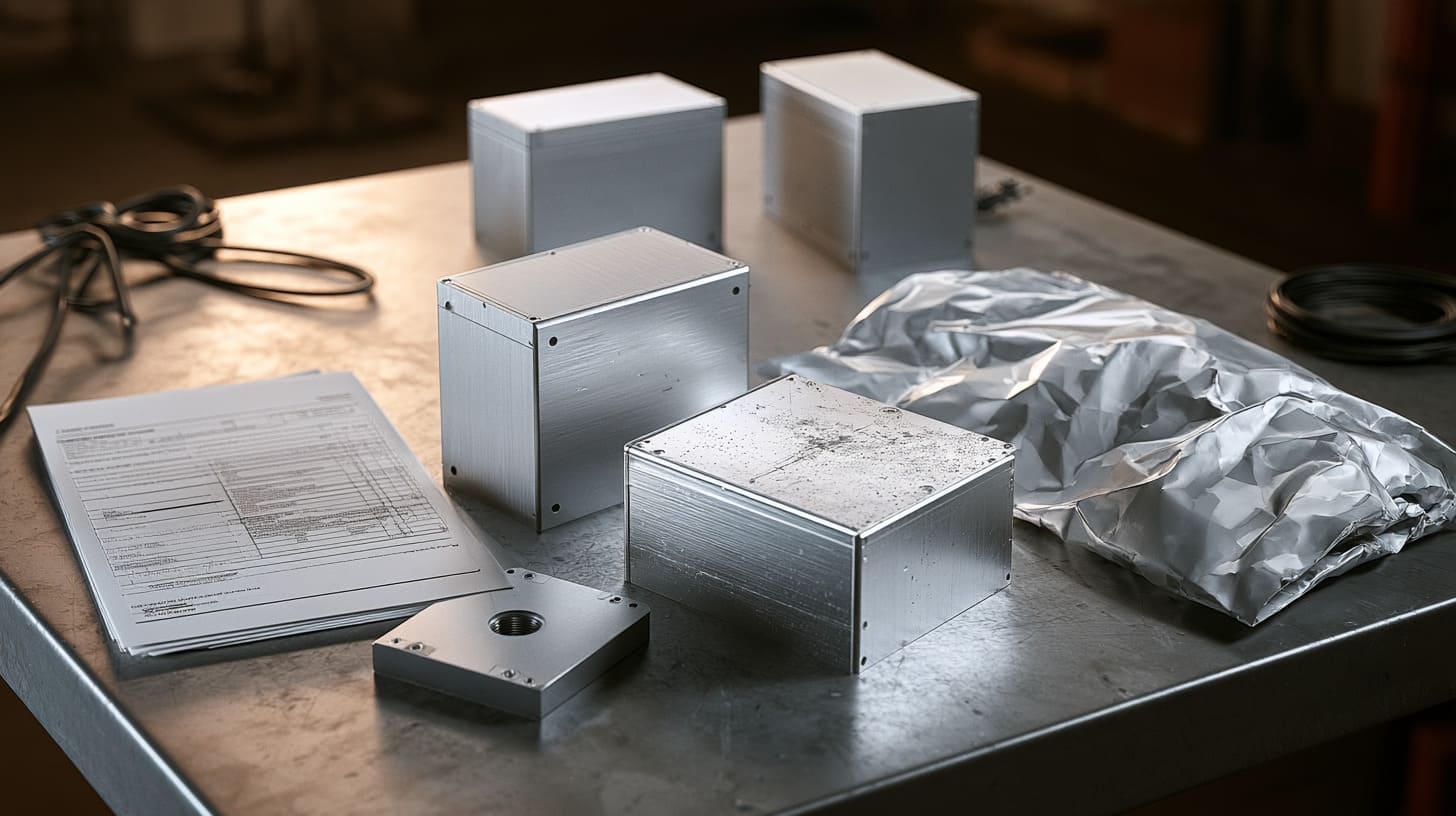
A customer once sent me three quotations for the same aluminum enclosure. The lowest price looked very attractive. It was almost 18% cheaper than the other two.
At first glance, the decision seemed easy.
Then I checked the details.
The cheapest quotation included only basic black anodizing. It did not include bead blasting, thread masking, cosmetic inspection, individual wrapping, or color matching. The supplier also did not confirm the anodizing thickness.
The most expensive quotation included all of these items.
The three suppliers were not really quoting the same job.
That situation happens often in custom enclosure projects. A purchasing manager may receive three prices that look easy to compare. Yet each supplier may understand the finishing requirement in a different way.
One supplier may quote basic anodizing.
Another may quote fine bead blasting plus anodizing.
A third may include masking, inspection, testing, and protective packaging.
The price difference is not always about profit margin. It is often about scope.
My first judgment is simple: I never compare surface finishing prices until I can explain, line by line, what each supplier has included and excluded.
Why the Lowest Surface Finishing Quote Is Not Always the Cheapest
A low price can be useful. I also understand why buyers focus on it. Every project has a budget.
Still, a low finishing price can create larger costs later.
Common hidden costs include:
- Reworking scratched or uneven parts
- Replacing parts with poor color consistency
- Cleaning coating from threaded holes
- Repairing tight assembly features
- Repacking poorly protected parts
- Paying urgent freight for replacements
- Delaying the final product launch
A saving of USD 0.30 per enclosure may look good on a spreadsheet. It becomes less attractive when 15% of the parts need sorting or rework.
The real cost is not just the price on the quotation.
The real cost is:
| Cost Area | What May Happen |
|---|---|
| Unit price | The visible price on the quotation |
| Rework | Parts need polishing, stripping, or refinishing |
| Rejection | Parts cannot meet the agreed appearance |
| Assembly delay | Coating blocks threads or affects fitting |
| Replacement freight | New parts must be shipped urgently |
| Customer complaint | Finished products look inconsistent |
| Project delay | Product launch or delivery date is missed |
The First Rule: Compare the Same Finishing Requirement
Before I compare prices, I check whether every supplier received the same information.
That information should include:
- The same 2D drawing
- The same 3D file
- The same material and alloy
- The same finishing process
- The same coating thickness
- The same color reference
- The same texture and gloss
- The same masking requirements
- The same cosmetic standard
- The same quantity
- The same packaging method
- The same Incoterm
Without this base, the quotations are only rough estimates.
The important question is not:
Which supplier has the lowest price?
The better question is:
What work, quality level, and risk are included in each price?
Once I ask that question, many price differences become easier to understand.
The next step is to check whether the suppliers are even quoting the same finish.
Confirm Whether Every Supplier Is Quoting the Same Finish

A finishing name can sound clear while still leaving many details open.
“Black anodizing” is a good example.
It may mean a basic decorative finish. It may also mean a controlled finish with bead blasting, a specific thickness, sealed pores, tight color limits, and cosmetic inspection.
Those are not the same product.
When I review quotations, I first ask myself whether each supplier is solving the same technical problem, not whether each supplier has typed the same finishing name.
Check the Finishing Process and Standard
The first point is the finishing process itself.
A quotation should clearly state whether the supplier is providing:
- Standard anodizing
- Hard anodizing
- Powder coating
- Wet painting
- Electroplating
- Electroless nickel plating
- Passivation
- Chemical conversion coating
- Brushing
- Polishing
- Sandblasting
- Bead blasting
These finishes have different purposes.
| Finishing Process | Common Purpose | Main Cost Drivers |
|---|---|---|
| Standard anodizing | Appearance and corrosion resistance | Color, thickness, pretreatment |
| Hard anodizing | Wear resistance and durability | Thickness, hardness, tight tolerances |
| Powder coating | Color and outdoor protection | Powder type, texture, masking, curing |
| Wet painting | Flexible color and finish | Primer, paint system, drying, inspection |
| Plating | Conductivity, corrosion protection, appearance | Metal type, thickness, surface preparation |
| Passivation | Corrosion protection for stainless steel | Cleaning, chemical process, testing |
| Conversion coating | Conductivity and corrosion protection | Chemical type, coating class, inspection |
The quotation should also confirm the standard.
For example:
- MIL-A-8625
- ASTM B580
- ISO 7599
- ASTM B117 for salt spray testing
- A customer-specific specification
- An approved sample or limit sample
A standard affects process control and testing. It may also affect cost.
A supplier who quotes “black anodizing” without any standard may be pricing a basic commercial finish. Another supplier may be quoting a controlled process with records and inspection.
Both prices may be reasonable. They are just based on different requirements.
Compare Coating Thickness and Performance
Coating thickness can change the price and the performance.
It can also affect dimensions.
A decorative anodized layer may be relatively thin. A hard anodized layer may be much thicker. Powder coating can add even more material to a surface.
I usually ask three questions:
- What thickness is required?
- Why is that thickness required?
- Which dimensions may be affected?
The purpose matters.
| Requirement | Possible Finishing Need |
|---|---|
| Indoor appearance | Basic decorative anodizing or powder coating |
| Outdoor use | Better pretreatment and weather-resistant coating |
| Wear resistance | Hard anodizing or another hard coating |
| Corrosion resistance | Controlled anodizing, coating, or plating |
| Electrical grounding | Bare or conversion-coated contact areas |
| Tight assembly | Controlled coating thickness and masking |
| Marine environment | Strong corrosion system and careful material choice |
A thicker coating is not always better.
A thick layer can improve protection, but it can also cause problems with:
- Threads
- Press-fit holes
- Sliding parts
- Connector openings
- Gasket surfaces
- Mating covers
- Grounding points
For this reason, I do not automatically choose the supplier offering the thickest coating. I choose the thickness that supports the actual use without creating assembly problems.
Confirm Color, Gloss, and Texture Requirements
Color descriptions such as “black,” “silver,” or “gray” are too broad for a controlled quotation.
One supplier may use a standard production black. Another may spend extra time matching a physical sample.
The quotation should define the reference.
Useful references include:
- RAL color
- Pantone color
- Physical color sample
- Approved golden sample
- Light and dark limit samples
- Gloss range
- Texture sample
- Brushing direction
- Surface roughness target
For anodizing, a color code alone may not fully control the result.
The final appearance can also change because of:
- Aluminum alloy
- Raw material batch
- Machining marks
- Extrusion lines
- Surface roughness
- Blasting media
- Blasting pressure
- Chemical bath condition
- Anodizing time
- Sealing process
For powder coating, I also check:
- Smooth or textured finish
- Matte, satin, or glossy finish
- Indoor or outdoor powder
- Powder brand
- Cure temperature
- Cure time
- Acceptable orange peel
A supplier may charge a color-matching fee for a custom shade. Another may include only a standard stock color.
That is why the finishing name alone never tells me enough.
Once the finish is confirmed, the next major cost difference usually appears before the coating even begins.
Compare the Surface Preparation Included in the Price
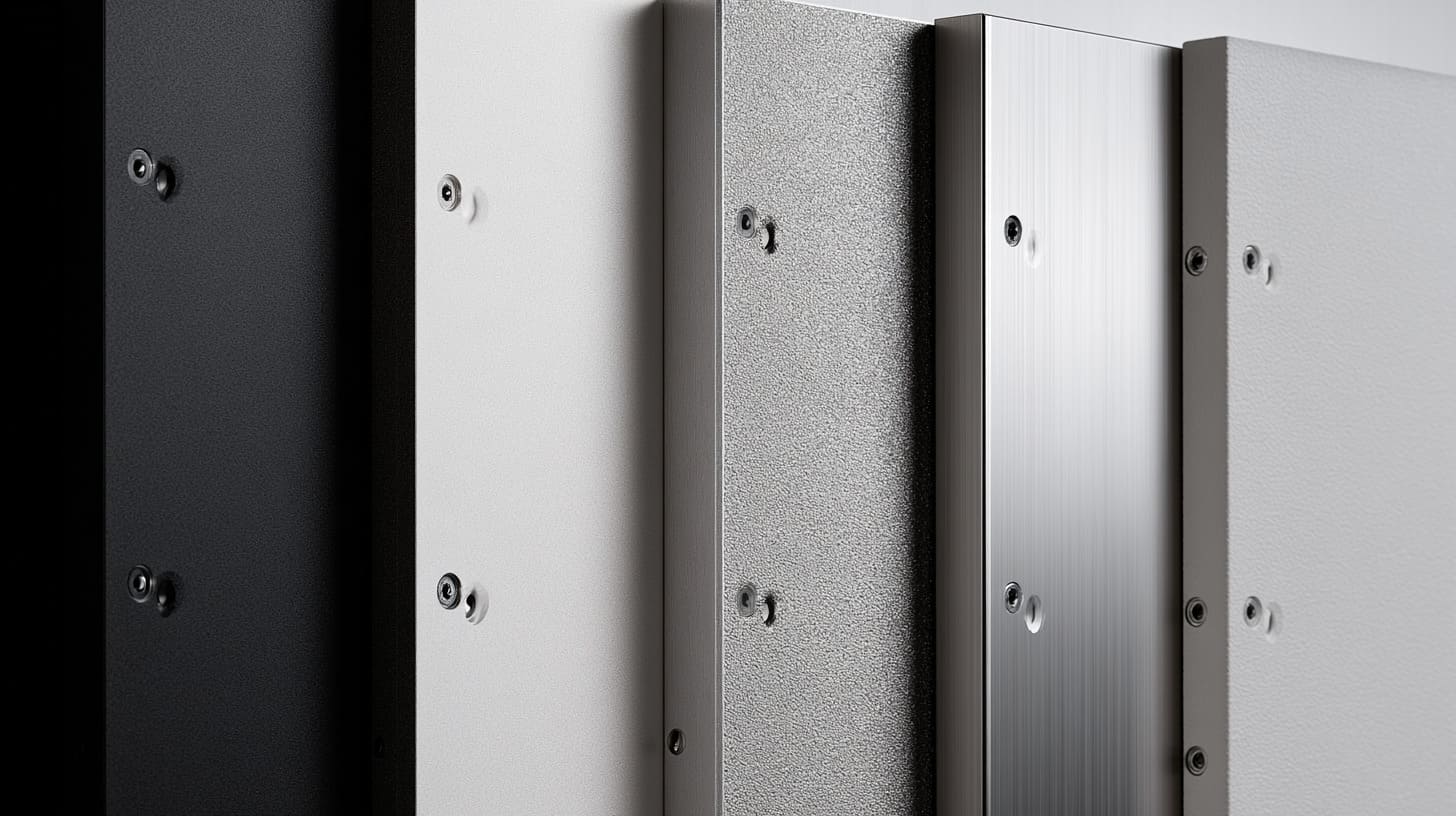
Many buyers look at the final color. I often look at the surface underneath it.
A coating cannot fully hide poor preparation. In some cases, it makes defects more visible.
This is where two suppliers can use the same anodizing line and still deliver very different-looking parts.
My working rule is this: when a part has large visible surfaces, I treat surface preparation as a separate manufacturing process, not as a small step hidden inside the finishing price.
Identify the Required Pre-Treatment
Surface preparation may include:
- Polishing
- Brushing
- Sanding
- Grinding
- Sandblasting
- Bead blasting
- Chemical cleaning
- Degreasing
- Pickling
- Deburring
- Weld smoothing
Each method creates a different appearance.
| Preparation Method | Typical Result | Common Risk |
|---|---|---|
| Mechanical polishing | Smooth and reflective surface | High labor cost and unevenness |
| Brushing | Directional grain | Grain direction may vary |
| Sanding | Controlled scratch pattern | Marks may remain after finishing |
| Sandblasting | Coarser matte texture | Surface may become too rough |
| Bead blasting | Fine and even matte texture | Color may vary with pressure |
| Grinding | Removes welds and heavy marks | Local flatness may change |
| Chemical cleaning | Removes oil and residue | Does not remove deep scratches |
The quotation should state the required finish before coating.
For example:
- 180-grit sanding
- Fine bead blasting
- Hairline brushing in one direction
- Weld grinding flush
- Ra below a stated value
- No visible machining marks on cosmetic surfaces
Without this detail, suppliers may make their own assumptions.
One may use a fine blasting media.
Another may use a faster and rougher blasting process.
The color may be the same, but the visual result will not be the same.
Determine Whether Defect Removal Is Included
Raw and machined parts often have visible marks.
These may include:
- CNC cutter lines
- Extrusion lines
- Handling scratches
- Tool marks
- Weld discoloration
- Grinding marks
- Dents
- Burrs
- Casting flow marks
- Ejector marks
A finishing supplier may not automatically remove these defects.
Some finishing factories only process the surface. They expect the incoming part to be ready.
Other suppliers include cosmetic correction in their price.
This difference can be large.
Consider a CNC-machined aluminum front panel. One quotation may include:
- Deburring
- Fine sanding
- Bead blasting
- Anodizing
- Cosmetic inspection
- Individual wrapping
Another quotation may include only:
- Cleaning
- Anodizing
- Bulk packing
The second price will naturally be lower.
It may still be suitable for an internal industrial part. It may not be suitable for a visible front panel on a premium device.
Check Whether Different Surfaces Need Different Treatments
Not every surface needs the same treatment.
A custom enclosure may have:
- A visible front face
- Hidden internal walls
- Gasket contact surfaces
- Grounding points
- Threaded holes
- Heat-transfer surfaces
- Laser-marked areas
- Adhesive bonding areas
Treating every surface in the same way can increase cost. It can also create technical problems.
For example, a heat-transfer area may need to remain flat and clean. A grounding point may need bare metal. A visible cover may need fine blasting. An internal wall may only need basic protection.
A practical surface map can make quotation comparison much clearer.
| Surface Area | Recommended Requirement |
|---|---|
| Main visible face | High cosmetic standard |
| Side faces | Medium cosmetic standard |
| Hidden internal area | Functional finish |
| Gasket surface | Controlled flatness and coating |
| Grounding point | Masked or conductive finish |
| Threaded hole | Plugged or compensated |
| Heat-transfer area | Flat, clean, and carefully controlled |
Selective treatment may require extra masking and labor. Yet it can reduce waste by avoiding premium preparation on hidden areas.
After preparation, the next hidden cost often comes from all the places where coating must not go.
Review Masking, Plugging, and Dimensional Protection
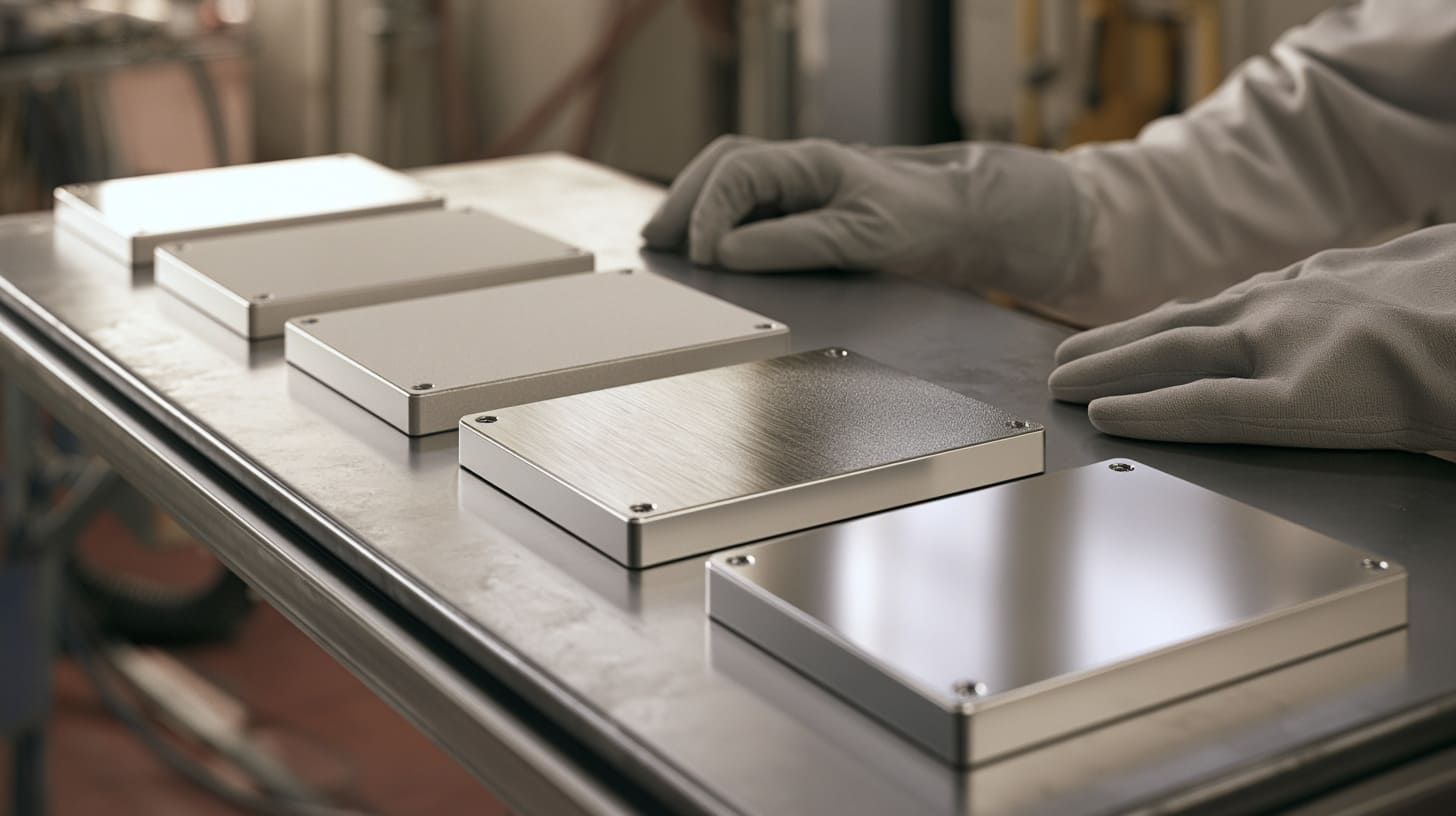
Masking looks simple in a drawing. On the production floor, it can be slow and very manual.
A worker may need to insert silicone plugs into dozens of holes, apply tape to grounding surfaces, protect gasket faces, remove all masking after finishing, and inspect each feature.
For a complex enclosure, that labor can cost more than the coating itself.
I become cautious when a quotation is very low but the drawing contains many threads, tight holes, and bare-metal areas, because those features rarely protect themselves.
Confirm Which Features Must Remain Uncoated
Common masking areas include:
- Threaded holes
- Press-fit holes
- Bearing seats
- Grounding points
- Electrical contact areas
- Sealing faces
- Gasket grooves
- Connector contact surfaces
- Adhesive areas
- Laser welding areas
- Heat-transfer surfaces
The supplier should know:
- Which features must remain fully uncoated
- Which features can accept a thin coating
- Which areas can show masking lines
- Which masking marks are acceptable
- Whether masking is required for samples and production
The quotation should also state whether it includes:
- Silicone plugs
- Masking tape
- Custom caps
- Custom fixtures
- Manual application
- Mask removal
- Cleaning after removal
- Inspection of masked areas
A part with two masked holes is very different from a part with forty masked holes.
Evaluate the Effect of Coating Thickness on Tolerances
Coating changes dimensions.
The effect depends on the process, the feature, and the way the coating grows.
This matters most for:
- Small holes
- Tight slots
- Mating covers
- Sliding parts
- Threads
- Press fits
- Connector openings
- Gasket grooves
The drawing should state whether a dimension applies:
- Before finishing
- After finishing
- To the base material
- To the final coated surface
Here is a simple example.
A cover must fit into a base with only a small clearance. Both parts receive powder coating. If the coating thickness was not included in the tolerance study, the parts may become too tight after finishing.
The supplier may then need to:
- Mask the mating surfaces
- Increase the original clearance
- Machine the area after coating
- Use a thinner coating
- Accept looser fitting
Each option has a cost.
A cheaper quotation may not include this review. The supplier may simply coat the parts according to the drawing and leave the fitting risk to the buyer.
Check the Cost of Custom Racking and Hanging
Finishing lines need a way to hold the part.
Anodized parts need electrical contact points.
Powder-coated parts need hanging points.
Those contact points may leave marks.
For simple parts, a supplier may use standard hooks or racks. Complex parts may require custom fixtures.
The quotation should clarify:
- Where rack marks may appear
- Whether the mark location is controlled
- Whether custom tooling is needed
- Whether the tooling fee is one-time
- How many parts fit on one rack
- Whether the fixture affects production capacity
A large enclosure that fits only two parts per rack will cost more to process than a small bracket that fits fifty parts per rack.
Racking also affects appearance. A poorly chosen contact point may be visible after assembly.
This is a small detail, but small details are often where customer complaints begin.
When masking and racking are understood, I stop looking at the total price and start breaking the quotation into parts.
Break Down the Quotation Instead of Comparing One Total Price
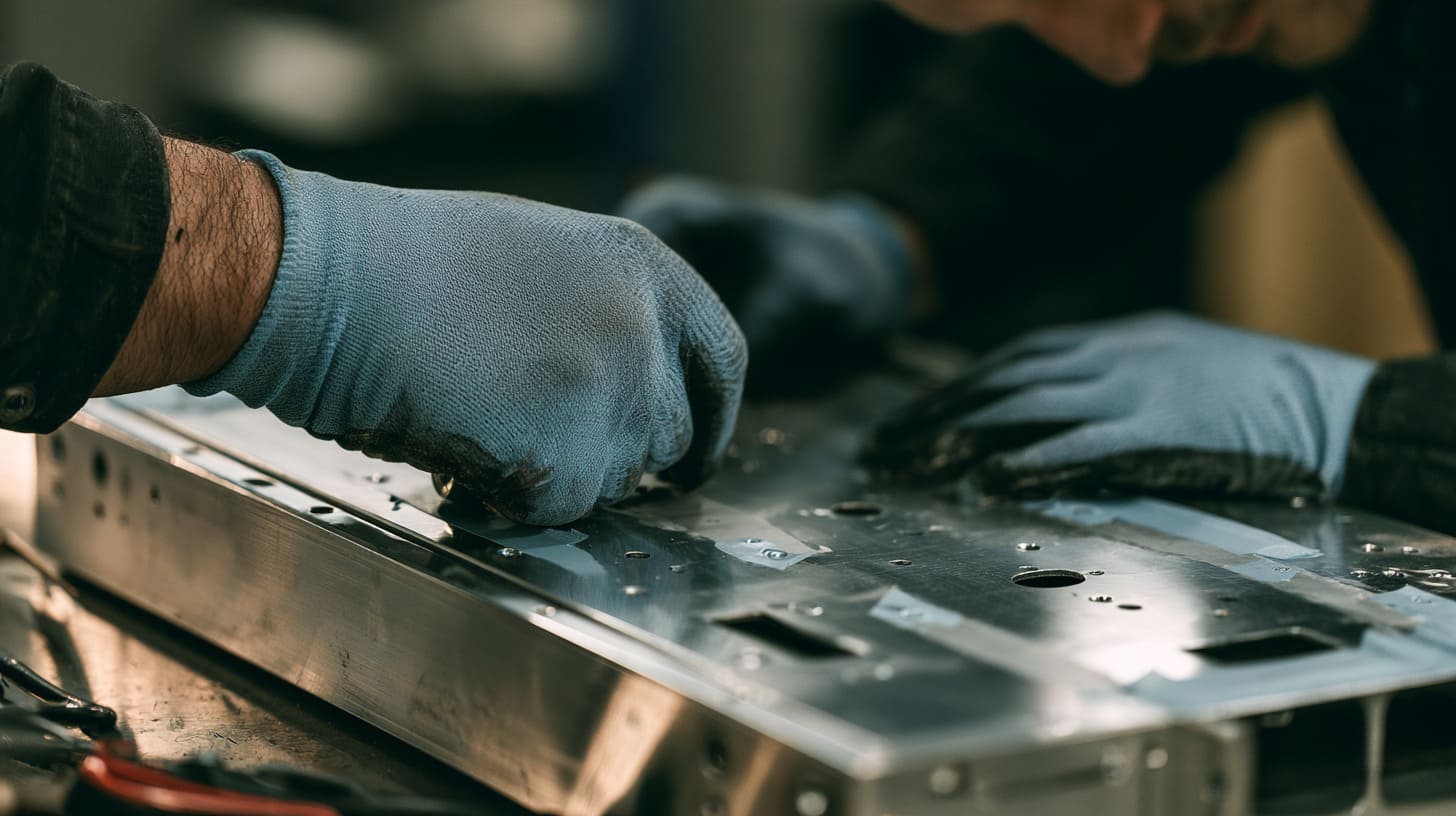
A single total price hides too much information.
I prefer a quotation that gives me enough detail to understand why the price changes. I do not need every factory cost. I do need the commercial structure.
The point is not to push the supplier into revealing private information. The point is to compare equal scopes.
My decision becomes much easier when I can separate fixed costs from repeat costs, because a cheap sample quotation can become expensive at production volume, and the reverse can also happen.
Separate Setup Costs from Unit Costs
Surface finishing may include fixed charges such as:
- Minimum batch charge
- Line setup charge
- Color-change fee
- Custom powder purchase
- Fixture cost
- Rack cost
- Sample approval fee
- Testing fee
- Special packaging setup
- Documentation fee
These costs behave differently from unit costs.
| Cost Type | Paid Once or Repeated? | Effect on Quantity |
|---|---|---|
| Fixture fee | Often one-time | Lower impact at high volume |
| Minimum batch fee | Usually repeated | High impact on small orders |
| Color-change fee | Often per batch | Depends on order frequency |
| Sample approval | Usually one-time | Mainly affects development stage |
| Testing fee | Per batch or project | Depends on test plan |
| Unit processing cost | Repeated per part | Directly affects volume price |
A supplier may quote a high setup fee but a low unit cost. This can be reasonable for large production.
Another supplier may have no setup fee but a higher unit price. This may suit small batches.
The right choice depends on the order plan.
Compare Pricing at the Same Quantities
I always compare the same quantities.
For example:
- 5 prototype pieces
- 50 pilot-production pieces
- 500 production pieces
- 2,000 production pieces
- 10,000 annual pieces
I also check whether the MOQ applies to:
- Each part number
- Each color
- Each finish
- Each batch
- Each purchase order
- The total project volume
A supplier may accept 500 total pieces, but require 250 pieces per color.
Another supplier may combine multiple similar parts in one finishing batch.
Those commercial rules can change the real cost.
Here is a better comparison format:
| Supplier | Sample Qty | Production Qty | Setup Fee | Unit Price | MOQ Rule |
|---|---|---|---|---|---|
| Supplier A | 5 pcs | 500 pcs | USD 120 | USD 1.80 | Per color |
| Supplier B | 5 pcs | 500 pcs | USD 0 | USD 2.15 | Per part number |
| Supplier C | 5 pcs | 500 pcs | USD 250 | USD 1.55 | Per batch |
At 100 pieces, Supplier B may be competitive.
At 5,000 pieces, Supplier C may become more attractive.
A single unit price cannot show this.
Check What Is Included in the Unit Price
I like to use a simple scope table.
| Quotation Item | Supplier A | Supplier B | Supplier C |
|---|---|---|---|
| Surface preparation | Included | Excluded | Included |
| Finishing process | Included | Included | Included |
| Masking and plugging | Included | Extra charge | Included |
| Thickness inspection | Included | Not stated | Included |
| Color matching | Standard color only | Included | Extra charge |
| Cosmetic inspection | Included | Basic only | Included |
| Rework allowance | Not stated | Excluded | Included |
| Protective packaging | Individual | Bulk | Individual |
| Internal transport | Included | Extra charge | Included |
This table often explains the price difference quickly.
It also creates better questions for the supplier.
Instead of saying:
Your price is too high.
I can ask:
Does your price include individual wrapping and thread masking? Supplier B excluded these items, so I want to confirm the same scope.
That conversation is more useful and more professional.
Price becomes much easier to judge once quality expectations are also written down.
Compare Inspection and Acceptance Standards

The words “good quality” are not an inspection standard.
One person may reject a small rack mark. Another may accept it on a hidden surface. A supplier may accept light color variation because it does not affect function. A brand owner may reject it because the parts sit next to each other on a retail shelf.
Neither side is automatically wrong.
The problem starts when nobody defines the limit.
I usually judge a quotation as incomplete when it promises a “high-quality finish” but does not explain how the finished parts will be inspected.
Define the Cosmetic Inspection Method
A cosmetic standard should describe:
- Viewing distance
- Viewing time
- Lighting condition
- Viewing angle
- Surface classification
- Defect size limit
- Defect quantity limit
- Color tolerance
- Gloss tolerance
- Approved sample
For example:
| Surface Class | Example Area | Inspection Level |
|---|---|---|
| Class A | Main front panel | Highest cosmetic control |
| Class B | Side and top surfaces | Minor defects may be accepted |
| Class C | Hidden internal area | Functional defects only |
| Class D | Fully covered area | Basic process protection |
A practical inspection method may say:
- Inspect at 600 to 800 mm
- Use normal white light
- View for five seconds
- Inspect from the normal user angle
- Compare with an approved sample
- Reject visible scratches on Class A surfaces
The exact method depends on the product.
A premium consumer device needs a different standard from an internal industrial bracket.
Check the Testing Included
Some projects need only visual inspection.
Other projects need test reports.
Common tests include:
- Coating thickness measurement
- Adhesion testing
- Cross-cut testing
- Salt spray testing
- Color measurement
- Gloss measurement
- Hardness testing
- Wear testing
- Sealing quality testing
- Chemical resistance testing
- UV resistance testing
The quotation should state:
- Which tests are included
- How often they are performed
- Whether the test destroys the sample
- Who performs the test
- Whether a report is supplied
- Whether third-party testing is required
| Test | Main Purpose | Possible Extra Cost |
|---|---|---|
| Thickness test | Confirm coating thickness | Usually low |
| Adhesion test | Check coating bond | Low to medium |
| Salt spray test | Evaluate corrosion resistance | Medium to high |
| Color measurement | Control color variation | Low to medium |
| Gloss measurement | Control appearance | Low |
| Wear test | Check durability | Medium |
| Third-party report | Independent verification | High |
A quotation with testing will usually cost more than one based only on visual inspection.
That extra cost may be necessary. It may also be unnecessary if the product does not need it.
The specification should match the real application.
Review the Supplier’s Defect Criteria
Common finishing defects include:
- Scratches
- Dents
- Color variation
- Stains
- Water marks
- Orange peel
- Pinholes
- Bubbles
- Exposed metal
- Poor coverage
- Rack marks
- Burning marks
- Uneven gloss
- Dust particles
- Coating buildup
A lower quotation may be based on a wider defect limit.
For example, Supplier A may allow one small scratch on a visible side panel. Supplier B may reject any visible scratch on that panel.
Supplier B will need more careful handling, more inspection, and possibly more rework.
That costs money.
Before choosing the lower price, I ask whether its acceptance standard still protects the final product.
A perfect first sample can still hide a weak production process, so the next question is consistency.
Evaluate Quality Consistency, Not Just the First Sample

Samples receive attention.
Production receives pressure.
That difference matters.
A supplier may carefully finish five sample pieces and create a beautiful result. The real test begins when the order becomes 2,000 pieces and the deadline is tight.
I place more weight on repeatability than on one impressive sample, because my customer needs the 2,000th enclosure to look close to the first one.
Ask How the Supplier Controls Batch-to-Batch Variation
Consistency depends on process control.
For anodizing, important factors include:
- Alloy and temper
- Raw material batch
- Surface preparation
- Bath chemistry
- Bath temperature
- Current density
- Anodizing time
- Dye concentration
- Sealing process
For powder coating, important factors include:
- Pretreatment quality
- Powder batch
- Spray thickness
- Gun settings
- Part grounding
- Oven temperature
- Cure time
- Hanging position
- Line speed
The supplier should explain how these factors are controlled.
Useful evidence may include:
- Process records
- First-piece inspection
- Batch inspection
- Thickness reports
- Color readings
- Approved samples
- Light and dark limit samples
- Corrective-action records
I also ask whether the supplier keeps an approved sample for future orders.
A physical standard is often more useful than a color name in an email.
Consider Material and Alloy Compatibility
Aluminum alloy affects anodizing.
6061, 6063, 5052, cast aluminum, and die-cast aluminum may not produce the same appearance.
Even two batches of the same alloy can show some color difference.
This becomes important when:
- Several enclosure parts are assembled together
- Parts come from different material batches
- One part is machined and another is extruded
- A replacement batch must match an older batch
- The product uses clear or light-colored anodizing
For example, an extruded 6063 enclosure body may look different from a CNC-machined 6061 end plate after clear anodizing.
The parts may both meet the technical requirement. Yet the customer may still dislike the visual mismatch.
Possible solutions include:
- Use the same alloy where possible
- Approve an acceptable color range
- Use darker colors
- Use powder coating instead of anodizing
- Produce visible parts in the same batch
- Keep reference samples
A good supplier should discuss this risk before production.
Review the Supplier’s Rework and Rejection Policy
Problems can happen even with a good process.
The important point is how the supplier handles them.
The quotation or purchase agreement should clarify:
- Who decides whether a defect is acceptable
- Who pays for sorting
- Who pays for stripping and refinishing
- Who pays for remanufacturing
- Who pays for replacement shipping
- How urgent replacements are handled
- What happens if refinishing changes dimensions
- Whether reworked parts need new inspection
Stripping and refinishing are not always harmless.
The process may:
- Change dimensions
- Reduce surface quality
- Round sharp edges
- Affect threads
- Create color differences
- Damage thin walls
Sometimes remanufacturing is safer than refinishing.
A supplier who offers the lowest initial price but refuses responsibility for finishing defects may create a high real risk.
Quality control is only one part of the decision. A technically good supplier can still cause trouble if the delivery plan is unrealistic.
Compare Lead Time and Production Capacity

A supplier may write “seven-day lead time” on a quotation.
That number sounds clear. It often is not.
Does the seven days start after the order?
After material arrival?
After color approval?
After fixture completion?
After the deposit?
After the machining supplier sends the parts?
These dates are not the same.
When timing is critical, I trust a longer but clearly explained lead time more than a very short promise with no starting point.
Separate Sample Lead Time from Production Lead Time
Sample finishing often includes extra steps:
- Confirm the specification
- Prepare the raw sample
- Test the pretreatment
- Match the color
- Adjust the texture
- Approve the appearance
- Record the final process
Production may then follow a different schedule.
The quotation should separate:
- Sample preparation time
- Color-matching time
- Fixture time
- Sample finishing time
- Sample inspection time
- Production finishing time
- Final inspection time
- Packing time
A practical schedule may look like this:
| Stage | Estimated Time |
|---|---|
| Specification review | 1–2 days |
| Fixture or rack preparation | 2–5 days |
| Color sample preparation | 3–7 days |
| Customer approval | Depends on customer |
| Production finishing | 5–10 days |
| Inspection and packing | 1–3 days |
The customer approval period should not be hidden inside the supplier’s lead time.
Check Whether Finishing Is In-House or Outsourced
In-house finishing can offer benefits:
- Faster communication
- Better schedule control
- Easier troubleshooting
- Less transport between factories
- Clearer responsibility
Still, outsourced finishing is not automatically bad.
Many manufacturers work with long-term finishing partners. This can be effective when the main factory manages:
- Technical communication
- Incoming inspection
- Process approval
- Quality control
- Transport protection
- Final inspection
- Corrective action
The important question is not simply:
Is the process in-house?
The better questions are:
- Who controls the specification?
- Who checks the finished parts?
- Who is responsible for defects?
- How are parts protected during transport?
- How quickly can problems be corrected?
A well-managed partner can be better than a poorly managed in-house line.
Evaluate Capacity During Peak Periods
Normal capacity and peak capacity are different.
A finishing supplier may handle the current order easily but struggle when:
- Several customers place large orders at once
- A holiday is approaching
- A key line is under maintenance
- A custom powder is delayed
- Environmental inspections stop production
- The rework rate suddenly increases
I ask about:
- Normal monthly capacity
- Peak monthly capacity
- Available backup lines
- Number of shifts
- Maximum part size
- Oven size
- Tank size
- Rack capacity
- Lead time during busy months
I also check whether the supplier can increase output without reducing inspection.
Fast production is useful only when the quality remains stable.
Even a well-finished part can arrive damaged, which is why packaging belongs in the quotation comparison.
Compare Packaging and Logistics Risks

A finished enclosure can leave the coating line in perfect condition and reach the customer with scratches.
This happens more often than many people expect.
Parts rub against each other. Corners touch. Loose hardware moves inside cartons. Thin protective film traps dirt. Boxes collapse under pressure.
The finishing process may be correct, but the delivered product is still unacceptable.
I see packaging as part of the finishing system, because a cosmetic surface has no value if the protection ends at the factory door.
Confirm the Packaging Standard
Packaging options may include:
- Bulk packing
- Layered packing
- Individual PE bags
- Foam sheets
- Tissue paper
- Protective film
- Bubble bags
- Custom trays
- Corner protection
- Separate hardware bags
- Double-wall cartons
- Wooden cases
The correct method depends on:
- Part size
- Part weight
- Surface sensitivity
- Transport method
- Shipping distance
- Customer assembly process
- Retail or industrial use
| Product Type | Suggested Protection |
|---|---|
| Hidden bracket | Layered bulk packing may be enough |
| Powder-coated enclosure | Bagging and separators |
| Fine anodized front panel | Individual film or soft bag |
| Polished decorative part | Individual wrapping and custom tray |
| Heavy metal housing | Strong separators and reinforced carton |
| Retail-ready product | Cosmetic protection plus branded packaging |
A cheaper quotation may use bulk packing.
That may work for rough industrial parts. It may fail for a high-grade visible enclosure.
Identify Responsibility for Transit Damage
The supplier and buyer should agree on responsibility.
Important questions include:
- Who inspects parts before packing?
- Are photos taken before shipment?
- Who handles damage between the machining and finishing factories?
- Who handles damage during export transport?
- Is the packaging tested?
- What evidence is needed for a claim?
- Who pays for replacement parts?
- Who pays for urgent freight?
Internal transport is often overlooked.
Parts may move from:
- CNC factory
- Polishing supplier
- Anodizing factory
- Printing supplier
- Assembly factory
- Export warehouse
Every transfer creates risk.
A slightly higher quotation from a supplier offering one-stop control may reduce handling damage.
Compare the Same Incoterm and Delivery Scope
Incoterms also affect quotation comparison.
Common terms include:
- EXW
- FOB
- CIF
- DDP
An EXW quotation may exclude:
- Local pickup
- Inland transport
- Export customs
- Port handling
- Freight
- Insurance
- Duty
- Tax
A DDP quotation may include most of these items.
The comparison should separate:
| Cost Area | Supplier A | Supplier B |
|---|---|---|
| Finishing | Included | Included |
| Local transport | Included | Excluded |
| Export packing | Included | Basic only |
| Freight | Excluded | Included |
| Duty and tax | Excluded | Included |
| Delivery to customer | Excluded | Included |
A low finishing price can lose its advantage after transport and packaging are added.
At this point, unusually low quotations become easier to read. Some are efficient. Others are warnings.
Identify Warning Signs in an Unusually Low Quotation

I do not reject a low quotation simply because it is low.
A supplier may have better equipment, stronger buying power, available line capacity, or a more efficient process.
A low price can be real.
Still, a large price gap deserves questions.
The warning sign for me is not the low number itself. It is a low number supported by vague wording, missing details, and no technical discussion.
The Supplier Has Made Unwritten Assumptions
Common assumptions include:
- Standard coating thickness
- Standard black color
- No color matching
- No masking
- Basic visual inspection
- Bulk packaging
- No test report
- No cosmetic defect limit
- No dimensional compensation
- No responsibility for material variation
These assumptions may not appear on the quotation.
The supplier may believe they are normal.
The buyer may believe the opposite.
That gap becomes a dispute later.
A complete quotation should state assumptions clearly.
For example:
Price is based on standard black anodizing, 10–15 μm, with fine bead blasting. Thread masking, salt spray testing, and individual packaging are not included.
This sentence is far more useful than:
Black anodizing: USD 1.20 per piece.
Important Costs Are Marked “To Be Confirmed”
Some items may need confirmation during development. That is normal.
The problem appears when too many important costs remain open.
These may include:
- Fixtures
- Custom racks
- Masking
- Special testing
- Packaging
- Color matching
- Rework
- Small-order surcharge
- Environmental fee
- Material transport
A quotation with many open items is not a firm production price.
It is a preliminary estimate.
Buyers should treat it that way.
I prefer a supplier who gives a slightly higher but complete quotation over one who gives a low number and adds several charges after sample approval.
The Supplier Does Not Ask Technical Questions
A serious supplier usually asks questions.
For surface finishing, useful questions include:
- Which aluminum alloy will be used?
- Which surfaces are cosmetic?
- What thickness is required?
- Is the part for indoor or outdoor use?
- Which areas need masking?
- Are dimensions before or after finishing?
- Is color matching required?
- What defects are acceptable?
- Is a test report needed?
- How will the parts be packed?
A supplier who asks no questions may already understand the job. That is possible.
More often, the supplier has simply made assumptions.
A very fast quotation based only on photos can be useful for budgeting. It should not be treated as a final production quote.
Once I have removed incomplete quotations, I use a scorecard to compare the remaining options more fairly.
Build a Practical Quotation Comparison Scorecard

A quotation comparison should not become an endless engineering report.
The tool must stay practical.
I normally use three main areas:
- Technical compliance
- Total cost
- Supplier reliability
Price still matters. I just do not let it hide the other two.
My final choice usually goes to the supplier with the strongest overall control, not the supplier that wins only one column.
Compare Technical Compliance First
I first check whether the supplier meets the basic requirement.
Questions include:
- Is the correct process quoted?
- Is the correct material understood?
- Is the coating thickness confirmed?
- Is the color reference confirmed?
- Is surface preparation included?
- Is masking included?
- Are critical dimensions protected?
- Is inspection defined?
- Is packaging defined?
- Are deviations listed?
A supplier who does not meet the technical baseline should not move forward just because the price is low.
A simple compliance table helps:
| Technical Requirement | Weight | Supplier A | Supplier B | Supplier C |
|---|---|---|---|---|
| Correct finishing process | 10 | 10 | 10 | 8 |
| Thickness control | 10 | 9 | 6 | 10 |
| Color control | 10 | 8 | 5 | 9 |
| Masking plan | 10 | 10 | 4 | 9 |
| Cosmetic standard | 10 | 9 | 5 | 8 |
| Dimensional protection | 10 | 9 | 6 | 9 |
A score does not replace engineering judgment. It makes missing points visible.
Compare Total Cost Second
The total cost should include more than the unit price.
I usually consider:
- Unit finishing cost
- Setup charges
- Fixture charges
- Color-matching costs
- Testing costs
- Packaging costs
- Local transport
- Freight
- Duty and tax
- Expected rework risk
- Expected rejection risk
- Replacement cost
- Delay cost
A basic risk-adjusted cost formula can be:
Realistic total cost = quoted cost + setup cost + logistics cost + expected quality cost + expected delay cost
The last two items are estimates. They will never be exact.
Still, they help the buyer think beyond the quotation.
For example:
| Cost Item | Supplier A | Supplier B |
|---|---|---|
| Quoted order value | USD 8,000 | USD 7,200 |
| Setup and testing | USD 300 | USD 150 |
| Packaging upgrade | Included | USD 400 |
| Estimated rework risk | USD 200 | USD 900 |
| Estimated delay risk | Low | Medium |
| Estimated total | USD 8,500 | USD 8,650 |
Supplier B looked cheaper at first.
After adding realistic costs, the difference disappeared.
Compare Supplier Reliability Third
Reliability is harder to measure, but it matters.
I look at:
- Response speed
- Clarity of answers
- Engineering support
- Willingness to point out risks
- Sample quality
- Batch consistency
- Capacity
- Lead-time control
- Corrective-action ability
- Documentation
- Packaging control
A good supplier does not agree with every request immediately.
Sometimes the best answer is:
This masking method will be unstable in mass production. We suggest changing the grounding area or adding a fixture.
That answer may slow the quotation. It may save the project.
Make a Risk-Adjusted Purchasing Decision
A practical scorecard may look like this:
| Category | Weight |
|---|---|
| Technical compliance | 40% |
| Total cost | 25% |
| Quality consistency | 15% |
| Lead time and capacity | 10% |
| Communication and support | 10% |
The exact weighting can change.
A premium product may give more weight to appearance.
A low-cost internal component may give more weight to price.
An urgent project may give more weight to delivery.
A high-volume program may give more weight to consistency and capacity.
This is why there is no single “best supplier” for every project.
There is only the supplier that best fits the current product, risk level, and business goal.
Before approval, I ask one final set of questions.
Questions to Ask Before Approving a Surface Finishing Quote

A good question asked before production is cheap.
The same question asked after 2,000 parts are finished can be very expensive.
I do not try to ask fifty questions. I focus on the points that can change quality, cost, assembly, or delivery.
The most useful questions are the ones that force both sides to replace assumptions with written answers.
Technical Questions
I ask:
- What exact finishing process is included?
- Which standard will be followed?
- What coating thickness is included?
- What color reference will be used?
- What gloss or texture is required?
- Which surfaces need special preparation?
- Which areas must remain uncoated?
- Are threads and tight holes masked?
- Do dimensions apply before or after finishing?
- What alloy will be used?
- What color variation is acceptable?
- Where may rack marks appear?
A technical confirmation table can help:
| Item | Required Specification | Supplier Confirmation |
|---|---|---|
| Process | Black anodizing | Confirmed |
| Pretreatment | Fine bead blasting | Confirmed |
| Thickness | 10–15 μm | Confirmed |
| Color | Approved black sample | Sample needed |
| Masking | M3 threads and grounding pad | Confirmed |
| Cosmetic area | Front and side surfaces | Confirmed |
| Rack marks | Hidden internal face only | Confirmed |
Commercial Questions
I also ask:
- What setup charges apply?
- Is there a minimum batch fee?
- Is the MOQ per color or per part number?
- Is the fixture fee one-time?
- Is color matching charged separately?
- Are tests included?
- Is protective packaging included?
- Is transport between factories included?
- Which costs repeat with every order?
- How long is the quotation valid?
The quotation should also explain what can change the price.
Common price-change factors include:
- Quantity
- Color
- Thickness
- Surface preparation
- Masking quantity
- Part size
- Part weight
- Cosmetic standard
- Packaging
- Testing
- Lead time
Quality and Delivery Questions
Before approval, I ask:
- How will the parts be inspected?
- Will a thickness report be supplied?
- Is an approved sample required?
- Will the supplier keep a reference sample?
- What is the sample lead time?
- What is the production lead time?
- When does the lead time start?
- Is finishing done in-house or by a partner?
- Who is responsible for finishing defects?
- What happens if the parts fail inspection?
- Who pays for replacement freight?
- What is the peak production capacity?
These questions may look detailed.
They are still easier than handling a quality dispute after shipment.
Conclusion

Compare the Complete Finishing Scope, Not One Price Line
I compare surface finishing quotations this way because I have seen how small missing details become large production problems.
A thread that was not masked can stop assembly.
A slightly different blasting texture can make two enclosure parts look unrelated.
A weak carton can damage an otherwise perfect finish.
A short lead time can become meaningless when color approval takes another week.
The lowest unit price may still be the best choice. I am happy to choose it when the scope is complete and the risk is controlled.
I simply do not let the number make the decision alone.
My judgment comes down to one question:
Which supplier can deliver the required finish repeatedly, at the agreed cost, without creating hidden work for my team or my customer?
That question gives me a better answer than a simple price comparison.
Use a Standard RFQ and Written Acceptance Criteria
I recommend sending every supplier the same controlled RFQ package.
It should include:
- 2D drawings
- 3D files
- Material and alloy
- Finishing process
- Coating thickness
- Color reference
- Texture and gloss
- Cosmetic surface map
- Masking drawing
- Dimensional notes
- Inspection standard
- Testing requirements
- Quantity levels
- Packaging requirements
- Delivery terms
I also ask every supplier to list:
- Assumptions
- Exclusions
- Deviations
- One-time charges
- Recurring charges
- Lead-time conditions
This method takes a little more work before ordering.
It usually saves much more work later.
At MaidaTech, I review surface finishing together with the enclosure structure, material, machining process, assembly requirements, and final application. I believe this is the only practical way to control both appearance and function.
If you are comparing quotations for anodized aluminum enclosures, powder-coated housings, sheet metal cases, or mixed aluminum and plastic products, you can send your drawing and finishing requirements to info@maidatech.com.
I will help you check whether the quotations are truly comparable and point out the details that may affect cost, quality, or delivery before production begins.