Skip to content
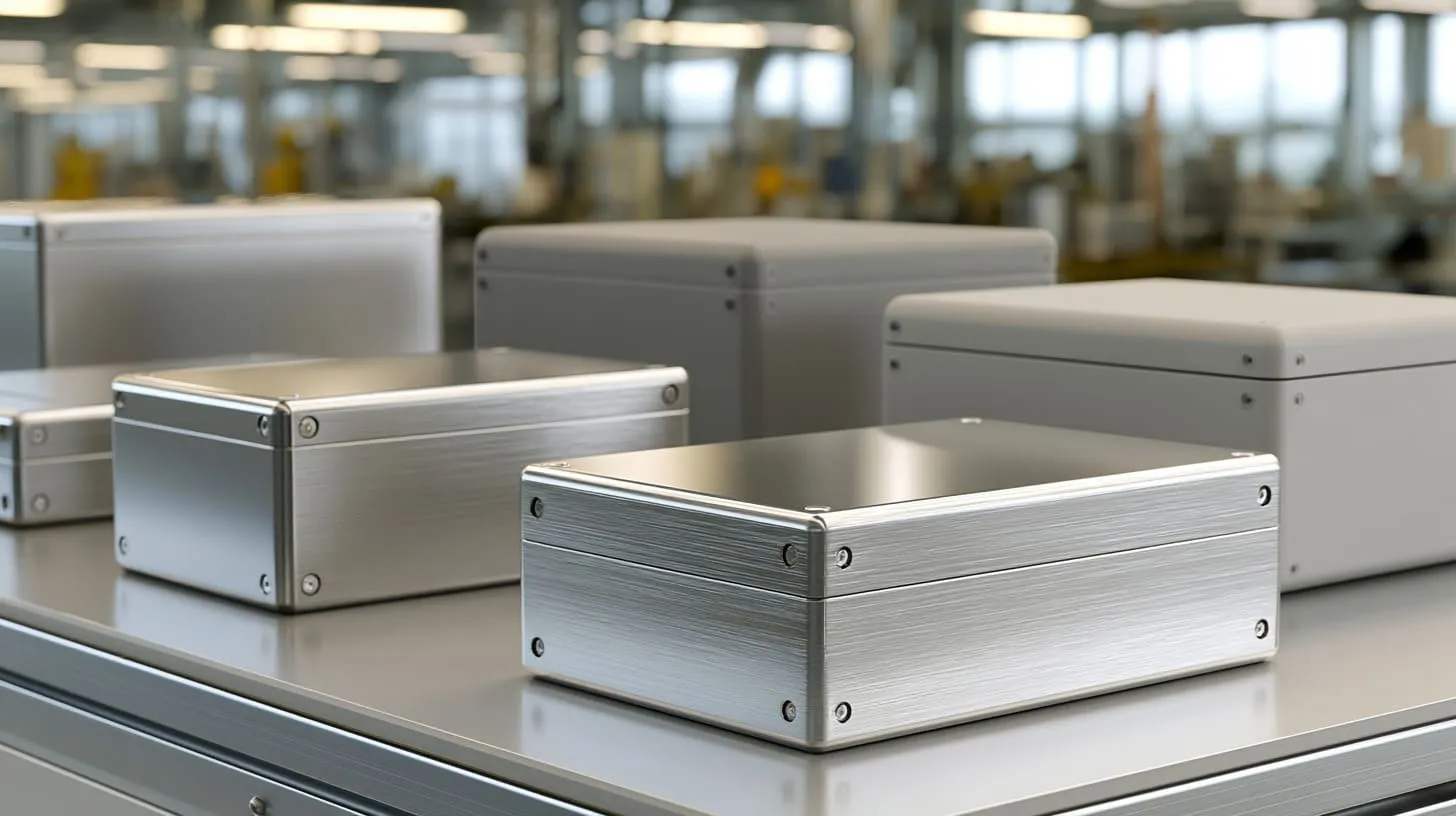
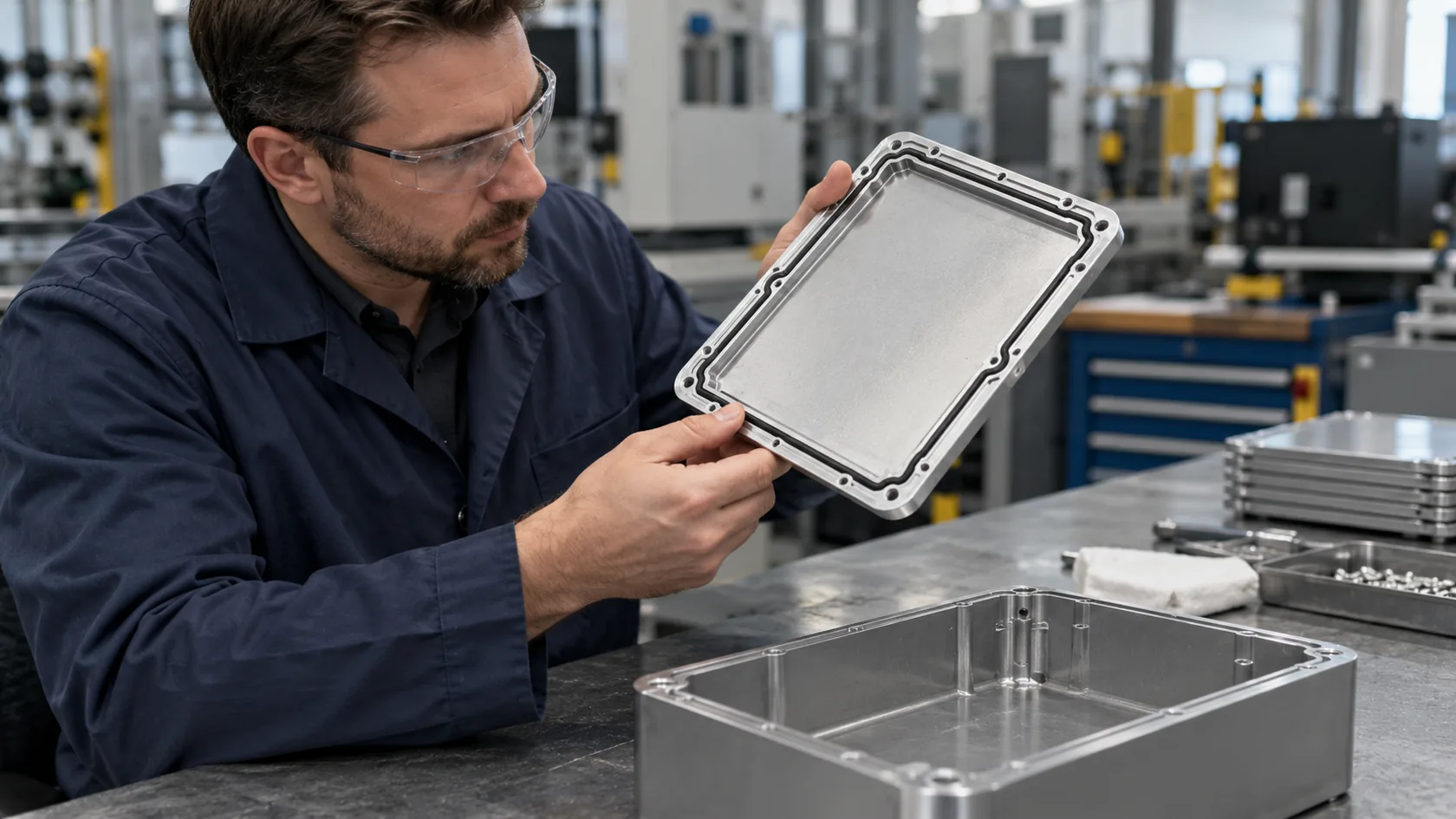
An aluminum enclosure can look almost finished before anyone discusses the surface treatment. The alloy has been selected. The wall thickness is confirmed. The CNC cutouts are in the correct positions. The lid fits well.
Then someone asks a question that sounds simple:
Should we use powder coating or anodizing?
That question can change much more than the color of the enclosure.
The surface treatment affects how the enclosure handles rain, humidity, scratches, fingerprints, chemicals, heat, assembly, grounding, and daily use. It can also affect whether connectors fit correctly and whether two production batches look like the same product.
I have seen customers spend days discussing a 0.2 mm tolerance but decide the surface finish in a few minutes. That order of priority does not always make sense.
Before I recommend either finish, I ask where the enclosure will live, how people will handle it, and which type of failure would create the biggest problem.
A small indoor sensor enclosure does not face the same risks as an outdoor communication box. A Raspberry Pi case does not have the same needs as a factory control housing. A premium desktop product may need a clean metallic appearance, while an electrical enclosure may need a thick and durable colored surface.
Powder coating and anodizing can both protect aluminum. They just do it in different ways.
Anodizing changes the aluminum surface itself. Powder coating places a separate protective layer over the aluminum. That basic difference affects nearly every practical comparison between them.
The following table gives a quick starting point.
| Comparison Point | Anodizing | Powder Coating |
|---|---|---|
| Protection method | Creates an aluminum oxide layer | Adds a cured polymer coating |
| Typical appearance | Metallic and technical | Solid color with many texture options |
| Color range | More limited | Very wide |
| Wear resistance | Very good, especially hard anodizing | Good, but impact may chip the coating |
| Dimensional effect | Usually small | More noticeable because the layer is thicker |
| Surface defect coverage | Limited | Better at hiding minor marks |
| Outdoor suitability | Good with the right specification | Very good with proper pretreatment and outdoor-grade powder |
| Heat management | Thin layer with good practical thermal performance | Thick coating may add some thermal resistance |
| Repairability | Difficult to repair invisibly | Local touch-up is possible, but may remain visible |
| Best fit | Precision, wear resistance, metallic appearance | Color, branding, weather protection, visual consistency |
Neither option is automatically better.
I do not choose anodizing simply because it sounds more technical. I also do not choose powder coating just because it offers more colors. I compare the finish with the real working conditions of the product.
The first finish to examine is anodizing, because its protection grows from the aluminum surface itself.
What Is Anodizing for Aluminum Enclosures?
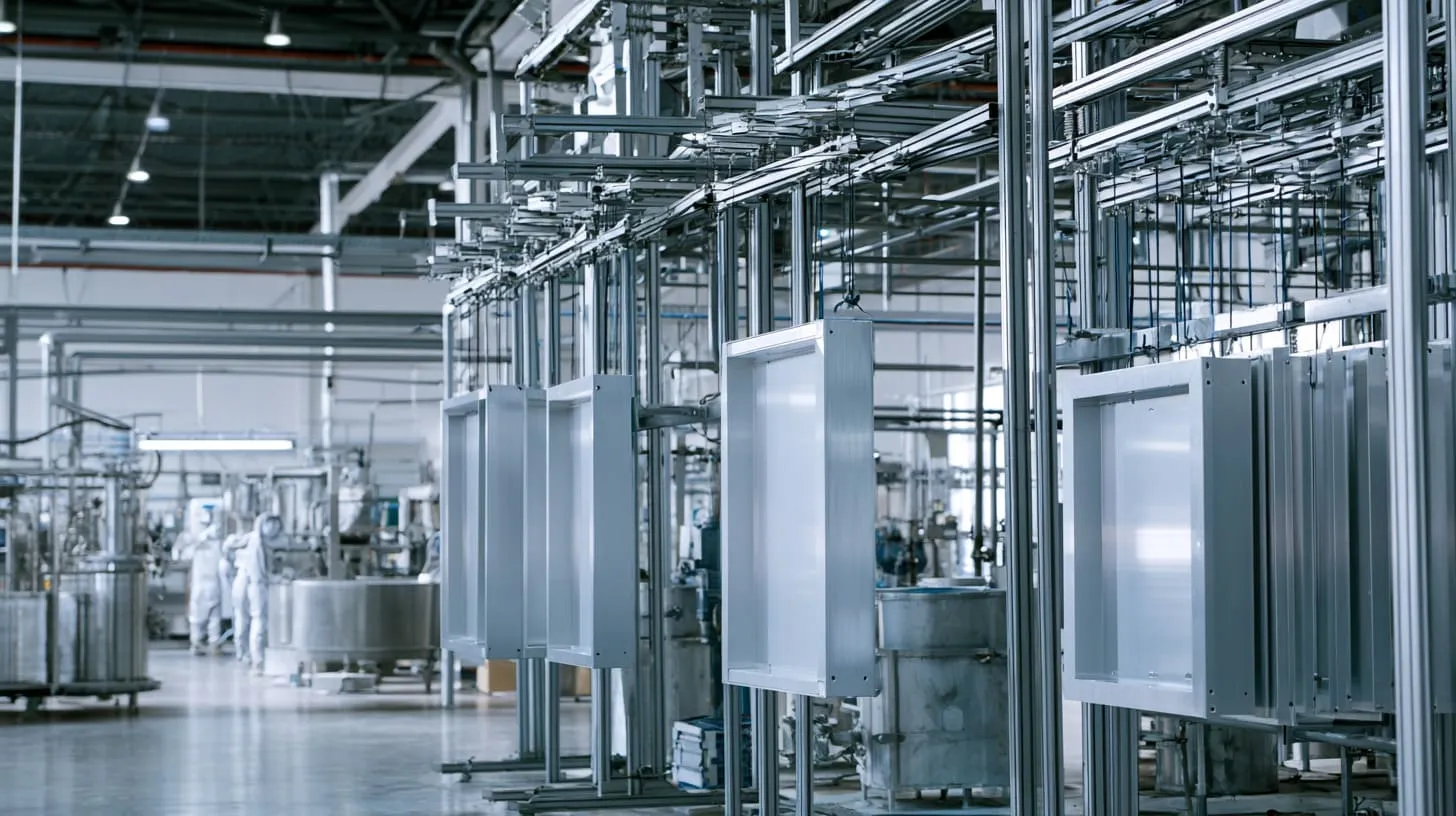
Anodizing is an electrochemical surface treatment for aluminum. It creates a controlled aluminum oxide layer on the surface of the part.
Natural aluminum already forms a very thin oxide layer when it contacts air. Anodizing makes this layer thicker, more uniform, and more useful.
The result is not paint. It is not a film that simply sits on top of the enclosure. Part of the anodized layer grows into the aluminum, and part of it grows outward.
When I review an anodized enclosure project, I look at the alloy, machining marks, welds, and visible faces before I discuss the final color.
That check matters because anodizing does not hide the history of the metal. It often makes surface differences easier to see.
How Does the Aluminum Anodizing Process Work?
The exact process depends on the required anodizing type, color, thickness, and performance. A common process follows these steps:
- The factory cleans and degreases the aluminum.
- The factory may etch or chemically brighten the surface.
- The factory places the aluminum part in an acid electrolyte bath.
- The part becomes the anode in an electrical circuit.
- The electrical reaction builds a porous aluminum oxide layer.
- The factory may add dye to the open pores.
- The factory seals the pores to improve corrosion resistance and color stability.
Each step affects the final result.
For example, a longer etching process may reduce visible extrusion lines, but it can also soften sharp cosmetic details. Chemical brightening can produce a more reflective appearance, but it adds cost and may not suit every enclosure design.
The cleaning process also matters. Oil, polishing compound, fingerprints, and machining residue can create stains or uneven color.
I often tell customers that anodizing begins before the anodizing tank. The quality of the raw aluminum surface already decides part of the final appearance.
What Is Type II Anodizing?
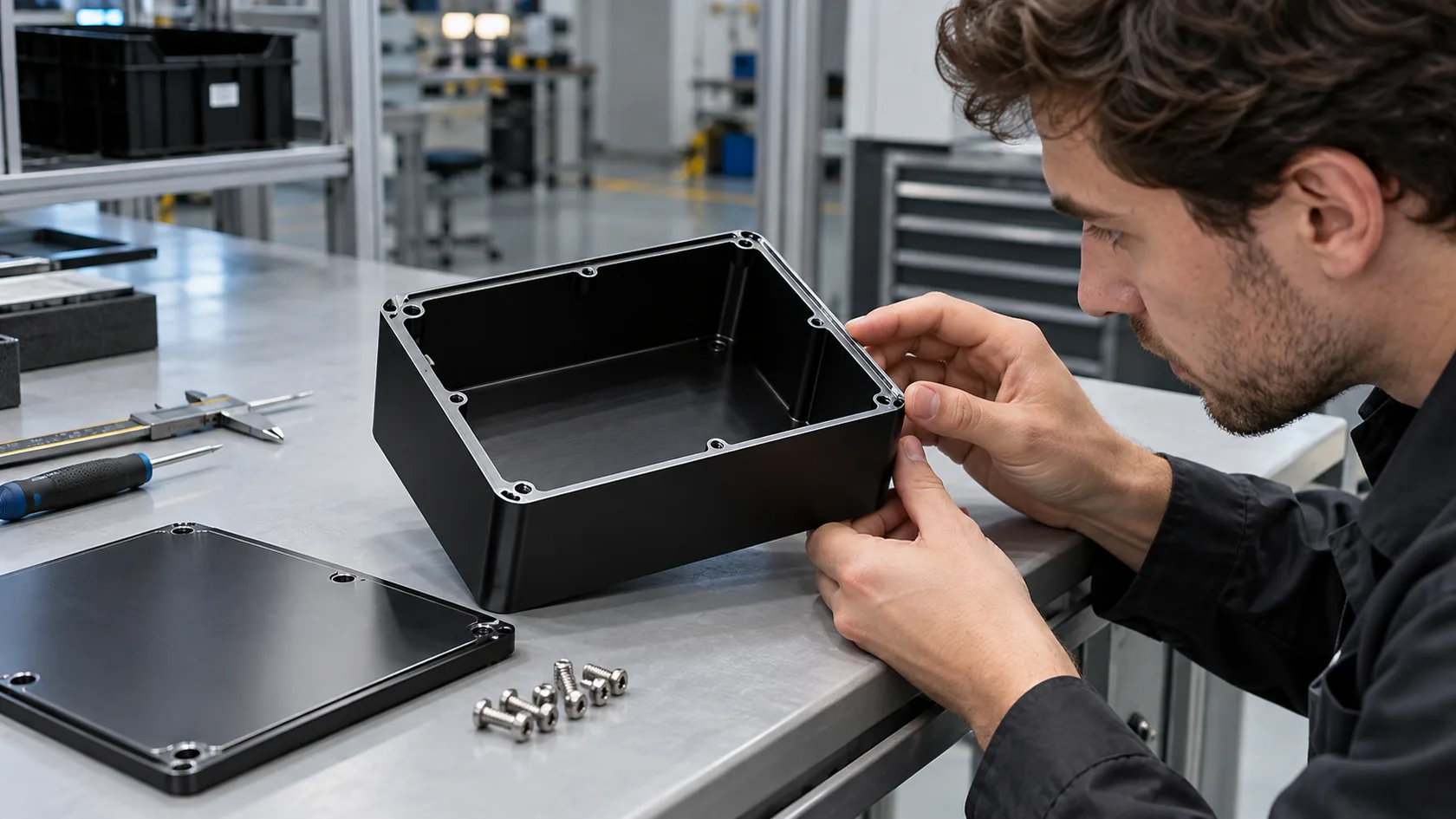
Type II anodizing usually refers to sulfuric acid anodizing. It is common for electronics housings, instrument panels, extruded aluminum enclosures, and consumer products.
It can provide:
- good corrosion resistance
- a decorative metallic finish
- moderate wear resistance
- several dye color options
- a relatively thin surface layer
The anodized thickness can vary by specification. A common commercial range may be around 5 to 25 microns, but the correct thickness should come from the project requirements rather than a general number.
Type II anodizing is often used when the enclosure needs to look clean and professional without adding a thick coating.
Black, natural silver, gold, blue, and red are common options. Still, color matching has limits. Anodized colors can change slightly between different aluminum alloys, extrusion batches, machining conditions, and anodizing batches.
A customer may provide a black reference sample and expect every future batch to match it exactly. I understand that expectation. Still, anodized black does not behave like printed ink or automotive paint.
For a product with several aluminum parts, I usually recommend producing and anodizing the parts together when color consistency is important.
What Is Type III Hard Anodizing?
Type III anodizing is often called hard anodizing or hard coat anodizing.
The process creates a thicker and harder oxide layer than standard Type II anodizing. It is used when the enclosure or component faces wear, friction, repeated handling, or mechanical contact.
Hard anodizing may be suitable for:
- sliding parts
- mounting surfaces
- industrial equipment
- tools and fixtures
- military-style equipment housings
- enclosures exposed to heavy mechanical use
The coating thickness can often fall between about 25 and 100 microns, depending on the specification and application.
A thicker layer does not mean that every project should use hard anodizing. The layer changes dimensions. It can affect threaded holes, tight fits, grounding points, and connector openings.
For a precision enclosure, the drawing should show which dimensions apply before anodizing and which dimensions apply after anodizing.
Hard anodizing also has a darker natural appearance. The final color may look gray, dark gray, bronze, or nearly black, depending on the alloy and coating thickness. Decorative color control is usually more difficult than with Type II anodizing.
What Are the Main Benefits of Anodized Aluminum Enclosures?
Anodizing offers several strong benefits, but each benefit depends on proper material and process control.
Anodizing Keeps the Metallic Character of Aluminum
Many customers choose aluminum because they want the product to look like aluminum.
Anodizing keeps the metallic texture visible. It can create a clean, technical, and premium appearance without making the enclosure look like painted steel or plastic.
This finish works well for:
- audio equipment
- laboratory devices
- industrial computers
- measurement instruments
- desktop electronics
- premium embedded systems
- control interfaces
A brushed aluminum panel with clear or black anodizing can look simple and expensive at the same time. Powder coating usually creates a more solid visual layer, so it does not show the metal in the same way.
Anodizing Provides Good Wear and Scratch Resistance
The aluminum oxide layer is harder than the base aluminum.
This hardness helps the surface resist rubbing, repeated handling, and light scratches. Hard anodizing provides even stronger wear resistance.
Still, anodizing does not make an enclosure impossible to scratch. A sharp steel tool can still damage it. A deep scratch may expose bright aluminum underneath, which can become visually obvious on a dark anodized part.
I judge scratch resistance by the real contact, not by the phrase “scratch-resistant” in a specification. A handheld device, a wall-mounted box, and a sliding machine component face very different types of wear.
Anodizing Offers Good Corrosion Resistance
A properly anodized and sealed surface can provide good corrosion resistance in many indoor and industrial environments.
The finish can protect the aluminum from humidity, fingerprints, and mild environmental exposure. It can also reduce surface oxidation and staining.
The sealing step is important. The anodized layer remains porous before sealing. Poor sealing can reduce corrosion performance and cause color or staining problems.
For aggressive coastal, marine, or chemical environments, standard decorative anodizing may not be enough by itself. The project may need a thicker anodized layer, special sealing, a coating system, or a different material strategy.
Anodizing Has a Small Effect on Dimensions
Standard anodizing is much thinner than most powder-coated finishes.
That difference helps when the enclosure includes:
- close-fitting lids
- sliding parts
- small connector cutouts
- precision grooves
- countersunk holes
- press-fit components
- tight PCB mounting locations
The effect is still not zero. Designers should not ignore anodizing thickness on precision parts. However, the tolerance impact is usually easier to manage than the effect of a thick powder coating.
Anodizing Can Support Thermal Design
Aluminum enclosures often help remove heat from electronic components.
The enclosure may receive heat through:
- thermal pads
- heat spreaders
- PCB mounting points
- direct contact with power components
- internal aluminum brackets
An anodized layer is thin. It usually has less effect on the overall heat path than a thick polymer coating.
A dark anodized surface can also have higher thermal emissivity than bare polished aluminum. This feature can help radiative heat transfer in some conditions.
However, I do not treat surface finish as a replacement for thermal design. A poor heat path stays poor even if the enclosure has black anodizing.
The heat source, contact area, thermal interface material, airflow, and enclosure orientation still matter more.
Anodizing Can Provide Electrical Insulation
The anodized oxide layer is electrically insulating.
This property can help prevent unintended electrical contact. It can also create a problem when the enclosure needs grounding, bonding, or EMC continuity.
Threads, grounding studs, mating flanges, and connector contact areas may need masking or post-machining.
A designer may assume that two anodized aluminum parts will create good electrical contact because both parts are metal. That assumption can fail because the anodized surfaces act as insulators.
What Are the Limitations of Anodizing?
Anodizing has real limits, and those limits often appear after the first sample.
Anodizing Has Limited Color Freedom
Anodizing can produce attractive colors, but it cannot match every Pantone, RAL, or brand color.
The final color depends on:
- aluminum alloy
- surface preparation
- anodized thickness
- dye concentration
- sealing
- part geometry
- production batch
Black anodizing is common, but even black can vary. One batch may appear colder and darker. Another batch may have a slight brown, blue, or gray tone.
For a company that needs an exact corporate color across aluminum, plastic, packaging, and printed materials, powder coating may provide easier visual control.
Anodizing Does Not Hide Surface Defects Well
Anodizing follows the metal surface.
It can show:
- extrusion lines
- machining marks
- scratches
- weld areas
- polishing differences
- alloy differences
- handling damage
A defect that looks small on raw aluminum may become more obvious after black anodizing.
This is one reason why cosmetic requirements should be defined before machining. The factory may need to add brushing, polishing, blasting, or controlled handling before anodizing.
Welded Parts Can Show Color Differences
Welding changes the local metal structure. The filler material may also react differently during anodizing.
As a result, weld lines can become visible after anodizing. The welded area may look lighter, darker, or slightly different in color.
For welded sheet aluminum enclosures, powder coating often creates a more uniform cosmetic result.
Anodizing may still work, but the designer should not expect the welded structure to look like a single clean extrusion without additional surface work.
Anodized Damage Is Difficult to Repair Invisibly
A scratched anodized surface cannot usually be repaired with a simple matching touch-up.
A marker or paint may hide the bright scratch from a distance, but the repaired area will rarely match the surrounding metallic finish.
The part may need stripping and re-anodizing. That process can affect dimensions and surface quality. In many cases, replacement is more practical.
Anodizing Can Create Batch Variation
Customers often expect CNC-machined aluminum parts to look identical after anodizing.
In reality, color can vary between:
- different aluminum lots
- extruded and machined parts
- cast and wrought aluminum
- thick and thin sections
- separate production batches
Good process control reduces the difference, but it may not remove it completely.
I usually ask which cosmetic surfaces will be visible to the final user. That answer helps us focus the tightest color and surface requirements where they matter most.
Anodizing is thin, hard, and closely connected to the aluminum. Powder coating takes the opposite approach by placing a thicker protective skin over the enclosure.
What Is Powder Coating for Aluminum Enclosures?
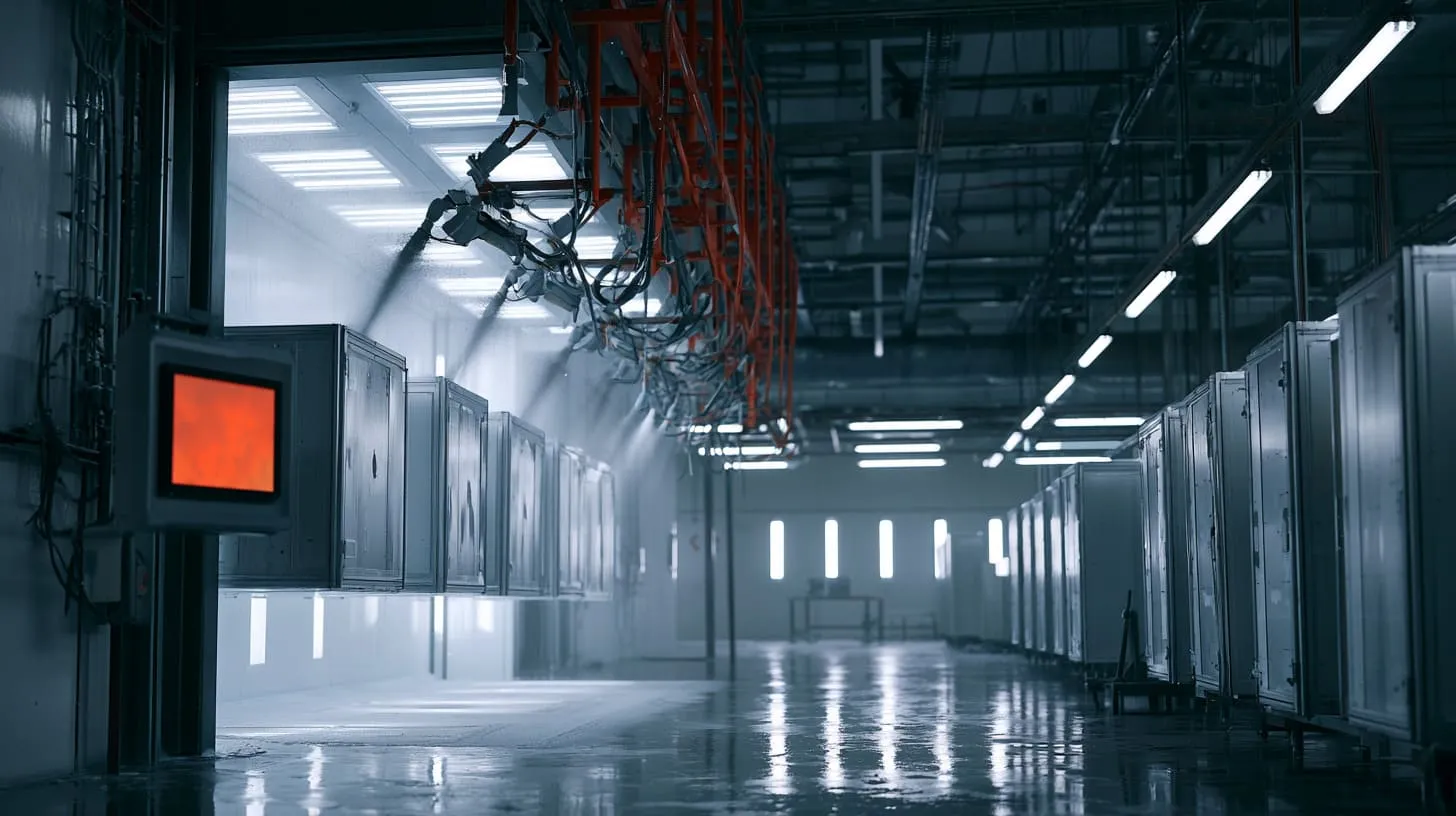
Powder coating applies dry, electrically charged powder to a prepared metal surface. The coated part then enters an oven, where the powder melts, flows, and cures into a solid protective film.
The finished coating sits on top of the aluminum.
This separate layer gives powder coating its main strengths. It can add color, texture, gloss, chemical resistance, and weather protection. It can also cover some small surface marks that anodizing would leave visible.
The point where I become cautious is not the powder itself but the preparation under it, because a beautiful coating can still fail when the aluminum was not cleaned or pretreated correctly.
A powder-coated enclosure may look perfect when it leaves the factory. Adhesion problems may only appear later, after moisture reaches an edge, cutout, scratch, or poorly treated area.
How Does Powder Coating Work on Aluminum Enclosures?
A typical powder-coating process includes the following stages:
- The factory removes oil, dust, and machining residue.
- The factory prepares the surface by chemical treatment or mechanical blasting.
- The factory applies a conversion coating or other pretreatment when required.
- The factory dries the parts.
- A spray gun gives the powder an electrostatic charge.
- The charged powder attaches to the grounded aluminum part.
- The coated part enters a curing oven.
- The powder melts and forms a continuous protective layer.
- The factory inspects the color, texture, adhesion, and thickness.
The process sounds straightforward. The difficult part is keeping every stage stable.
A change in cleaning, grounding, spray distance, powder recovery, oven temperature, or curing time can affect the final coating.
Complex enclosure shapes also create challenges. Deep corners, narrow channels, recessed holes, and closely spaced fins may receive too much or too little powder.
Why Does Surface Preparation Matter So Much?
Powder coating needs a clean and stable base.
Aluminum can hold cutting oil, fingerprints, oxide, polishing residue, release agents, and dust. These materials reduce coating adhesion.
A proper pretreatment can improve:
- adhesion
- corrosion resistance
- coating consistency
- edge protection
- long-term outdoor performance
Common preparation methods include:
- alkaline cleaning
- acid etching
- rinsing
- conversion coating
- abrasive blasting
- controlled drying
The best process depends on the alloy, enclosure shape, performance target, and coating specification.
Blasting can improve mechanical adhesion and create a more even matte surface. However, aggressive blasting may damage fine details or make a cosmetic surface too rough.
Chemical conversion treatment can improve corrosion performance. The process must still be controlled carefully, especially for outdoor or coastal applications.
I pay close attention to cut edges and threaded holes. These small areas often reveal whether the pretreatment and masking plan were properly considered.
What Types of Powder Coating Are Common?
The powder chemistry should match the working environment.
Epoxy Powder Coating
Epoxy powder coatings can provide:
- strong adhesion
- good chemical resistance
- good corrosion protection
- a hard surface
They are often suitable for indoor equipment, electrical parts, and industrial environments.
However, epoxy coatings usually have limited UV resistance. Long outdoor exposure can cause chalking, fading, or surface change.
I would not choose a standard epoxy powder simply because the enclosure only receives a few hours of sunlight each day. Repeated UV exposure still builds over time.
Polyester Powder Coating
Polyester powder is a common choice for outdoor enclosures.
It usually offers:
- good UV resistance
- good weather resistance
- broad color options
- good surface durability
- several gloss and texture choices
Outdoor electrical boxes, communication enclosures, solar equipment housings, and industrial control boxes often use polyester powder.
The term “polyester” alone is not a complete specification. Different powder grades have different outdoor lifetimes and performance levels.
For a demanding project, the customer should confirm the required standard, exposure condition, color retention, and corrosion test rather than only asking for “outdoor powder.”
Epoxy-Polyester Hybrid Powder
Hybrid powder combines some properties of epoxy and polyester systems.
It can provide:
- smooth appearance
- good mechanical properties
- stable indoor performance
- cost-effective production
Hybrid powders are common for indoor cabinets, office equipment, instrument housings, and general electrical products.
Their outdoor UV performance is usually weaker than a dedicated outdoor polyester powder.
What Are the Main Advantages of Powder-Coated Aluminum Enclosures?
Powder coating gives designers much more visual freedom than anodizing.
Powder Coating Offers a Wide Range of Colors
Powder coating can match many standard RAL colors and custom colors. It can also provide different levels of:
- gloss
- matte appearance
- texture
- metallic effect
- wrinkle finish
- fine structure
- coarse structure
This variety makes powder coating useful for branded products.
A company may want a dark blue enclosure to match its machines. Another company may need a light gray electrical housing. A consumer product may require a soft matte black finish that resists fingerprints.
Powder coating can usually handle these requests more easily than anodizing.
Still, exact color matching needs control. Powder supplier, coating thickness, surface texture, curing conditions, and lighting can all affect the visual result.
A smooth black surface and a textured black surface may use the same basic color code, but they can look different to the eye.
Powder Coating Can Hide Minor Surface Marks
A thicker, textured coating can hide small scratches, extrusion lines, and light machining marks.
This benefit is useful for:
- fabricated sheet aluminum enclosures
- welded boxes
- large control cabinets
- industrial housings
- parts with mixed manufacturing processes
Powder coating cannot hide poor workmanship. Deep grinding marks, dents, uneven welds, and sharp burrs may still remain visible.
A thick coating is not filler. The metal surface still needs proper finishing.
Powder Coating Provides Strong Environmental Protection
A well-designed powder-coating system can provide strong protection against rain, humidity, UV exposure, and industrial dirt.
The full system matters:
- aluminum alloy
- cleaning
- pretreatment
- powder type
- film thickness
- curing
- edge design
- drainage
- assembly method
A customer may ask whether powder coating is waterproof. I usually explain that the coating can support corrosion protection, but the enclosure design creates the IP rating.
Gaskets, seals, fasteners, cable glands, lid structure, and drainage decide whether water enters the enclosure.
The powder coating protects the metal surface. It does not replace the sealing system.
Powder Coating Supports Product Branding
The finish can become part of the customer’s visual identity.
Customers can combine powder coating with:
- silk-screen printing
- UV printing
- laser marking
- engraved logos
- labels
- nameplates
- custom packaging
The correct logo process depends on the powder surface.
A smooth powder finish usually supports fine printing better than a rough textured finish. Laser marking results depend on the powder chemistry and required contrast. An engraved logo cuts through the coating and exposes the metal, which may or may not suit the corrosion requirement.
I usually ask for the logo method before the powder texture is finalized. A customer may love a heavy texture, then discover that small printed text does not stay sharp on it.
Powder Coating Can Create Consistent Appearance Across Mixed Parts
An enclosure may include:
- an extruded aluminum body
- CNC-machined end plates
- sheet metal brackets
- cast aluminum covers
These parts can react differently during anodizing.
Powder coating can create a more uniform color across mixed materials and manufacturing methods, as long as the pretreatment suits each substrate.
This advantage is important for products where all visible parts must look like one complete assembly.
What Are the Limitations of Powder Coating?
Powder coating solves many cosmetic problems, but it also creates manufacturing risks.
Coating Thickness Can Affect Dimensions
Powder coating is much thicker than standard anodizing.
A common coating thickness may fall around 60 to 120 microns, although the actual range depends on the powder, specification, geometry, and process.
The coating appears on both sides of an opening. A 100-micron layer on each side can reduce an opening by about 0.2 mm.
That change may affect:
- USB openings
- HDMI openings
- RJ45 cutouts
- sliding rails
- lid grooves
- countersunk screws
- hinges
- press-fit inserts
- grounding points
- connector panels
Small dimensional changes can become large assembly problems.
For tight cutouts, the factory may need to enlarge the machining size, mask the area, or machine it after coating.
Powder Coating Can Chip
Powder coating has good surface durability, but a hard impact can chip the coating.
A dropped tool, sharp edge, or bent panel can break the coating and expose the aluminum underneath.
Aluminum does not rust like carbon steel, but exposed areas can still oxidize or suffer corrosion in aggressive environments.
Impact resistance depends on:
- powder formulation
- coating thickness
- curing quality
- surface preparation
- aluminum flexibility
- edge design
Very sharp edges often receive thinner coating coverage than flat surfaces. Rounded or slightly broken edges usually hold the coating better.
Poor Pretreatment Can Cause Peeling or Blistering
A coating can fail even when the powder itself is high quality.
Common causes include:
- oil contamination
- poor rinsing
- weak conversion treatment
- moisture under the coating
- under-curing
- over-curing
- poor grounding during spraying
- unsuitable powder storage
Peeling, bubbling, and corrosion under the coating may not appear during final inspection. The problem may develop after shipping or field use.
This delayed failure is why I do not judge powder-coating quality only by the first sample’s appearance.
Powder Coating Can Affect Heat Transfer
The polymer layer adds thermal resistance.
For many low-power electronic enclosures, the effect may be small. For high-power products, the coating can matter at thermal contact areas.
A thermal pad should not always sit on top of a thick powder-coated surface. The designer may need a masked or machined metal contact area.
The same issue applies to heat sinks and finned extrusions. A thick coating can fill fine spaces and reduce the sharpness of the fin geometry.
However, the full result depends on the heat path. A black powder-coated outer surface can have good thermal emissivity. The internal contact resistance may still become the larger problem.
Powder Coating Can Interfere With Grounding and EMC
Powder coating is electrically insulating.
When the enclosure needs electrical continuity, the factory may need to mask:
- grounding studs
- screw contact areas
- lid mating surfaces
- connector mounting points
- DIN rail contact areas
- shielding joints
A painted screw does not guarantee a reliable ground connection.
The coating may crack under a washer and create partial contact, but that contact can change with vibration, corrosion, and repeated assembly.
For EMC-sensitive equipment, I prefer a planned conductive path rather than hoping that fasteners will cut through the powder during assembly.
Now that both finishes are clear, the useful comparison begins with the failure modes that matter in real products.
Powder Coating vs Anodizing: What Are the Key Differences?
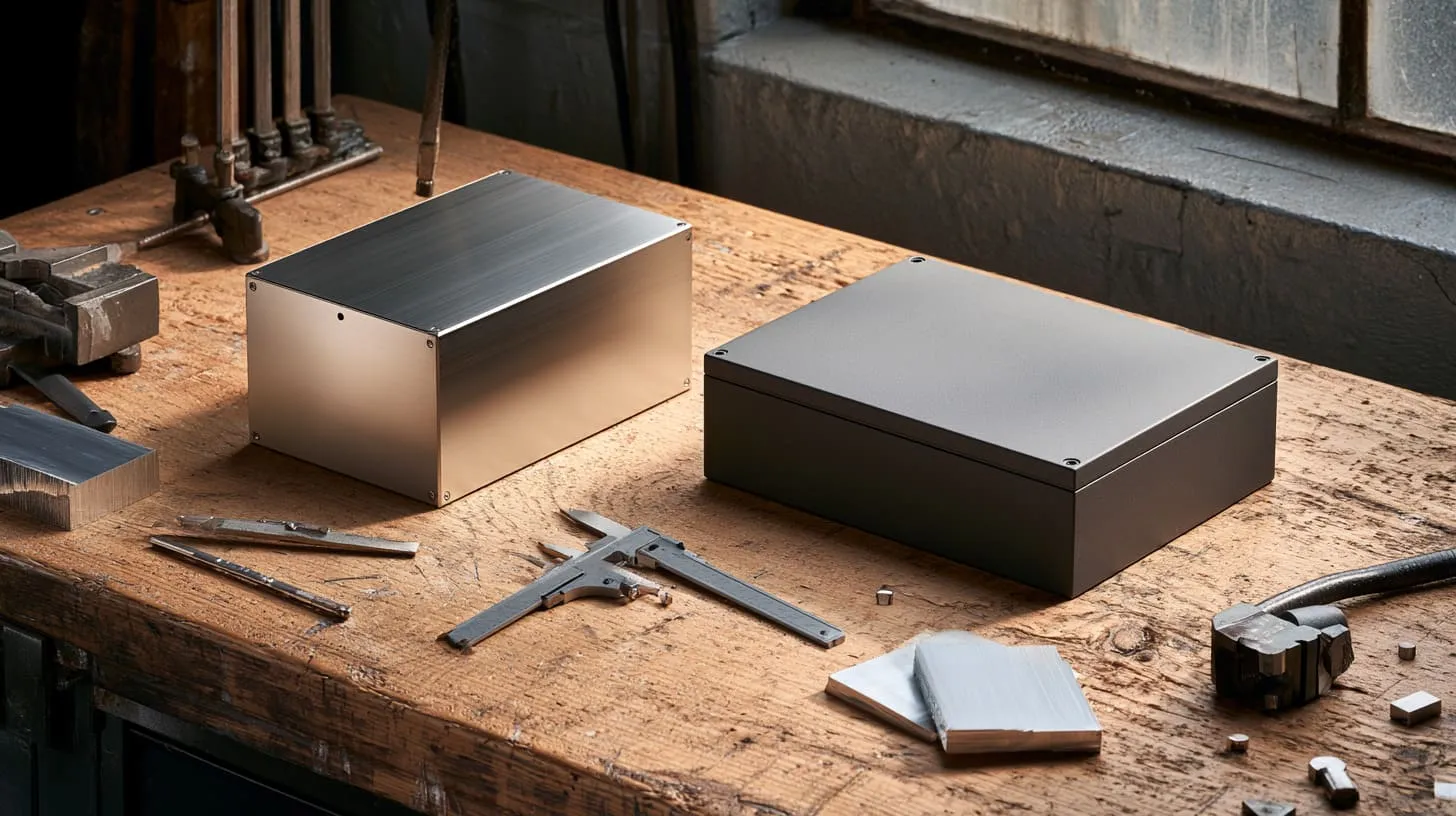
Powder coating and anodizing are often compared with one simple question: Which one is better?
I do not think that question is precise enough.
A better question is:
Which finish gives this enclosure the right balance of protection, tolerance, appearance, heat control, and cost?
I never rank the two finishes by a single property, because improving one area can create a new problem somewhere else.
A thicker finish may improve weather protection but create fitting problems. A harder finish may resist wear but show machining marks. A beautiful metallic surface may be difficult to match across several production batches.
Quick Comparison Table
| Requirement | Anodizing | Powder Coating | My General View |
|---|---|---|---|
| Metallic appearance | Excellent | Limited | I prefer anodizing |
| Exact brand colors | Limited | Excellent | I prefer powder coating |
| Fine dimensional control | Very good | Requires more allowance | I prefer anodizing |
| Heavy wear resistance | Excellent with hard anodizing | Good | I usually prefer hard anodizing |
| Outdoor color options | Moderate | Excellent with polyester powder | I often prefer powder coating |
| Surface defect coverage | Weak | Better | I prefer powder coating |
| Electrical grounding | Requires masking | Requires masking | Both need planning |
| Thermal contact areas | Easier to control | Often need masking | I usually prefer anodizing or bare contact zones |
| Repair after damage | Difficult | Possible but visible | Neither is perfect |
| Mixed fabricated parts | Color variation risk | More uniform | I often prefer powder coating |
Which Surface Treatment Has Better Corrosion Resistance?
Both treatments can provide good corrosion resistance. Their protection methods are different.
Anodizing creates an aluminum oxide layer that is connected to the base material. Powder coating creates a barrier that separates the aluminum from the environment.
The actual result depends on more than the finish name.
Indoor Environments
For indoor electronics, instruments, office equipment, and clean industrial spaces, both options can work well.
Anodizing may be enough when the enclosure faces:
- normal humidity
- light handling
- limited chemical exposure
- stable indoor temperature
- no direct rain
Powder coating may be selected when the customer also needs a brand color, texture, or better coverage of fabricated surfaces.
For a clean indoor application, I would not automatically pay for a heavy outdoor coating system. I would first ask whether appearance, tolerance, or wear is the real priority.
Outdoor Environments
Outdoor exposure adds:
- rain
- UV light
- temperature changes
- condensation
- dust
- airborne pollution
A properly pretreated aluminum enclosure with outdoor-grade polyester powder can perform very well outside.
Anodizing can also work outdoors, but the correct thickness, sealing, color, and exposure conditions matter. Some anodized colors may fade more than others under UV exposure.
Clear or natural anodizing often keeps its appearance better than some dyed decorative colors.
The enclosure design still matters. Water should not remain trapped around screws, seams, or horizontal ledges. A good coating cannot fully protect a poor drainage design.
Coastal Environments
Salt air creates a much more aggressive condition.
In coastal projects, I examine:
- distance from the sea
- direct salt spray exposure
- wind direction
- cleaning frequency
- expected service life
- cut edges
- fastener material
- contact between dissimilar metals
A standard decorative finish may not provide enough protection.
A high-quality pretreatment and powder system may offer stronger barrier protection. A specialized anodizing system may also work, depending on the specification.
The choice should be based on a defined corrosion requirement, not a general label such as “outdoor use.”
Stainless steel screws can also create galvanic concerns when moisture remains between different metals. Isolation washers, sealing, drainage, and material selection may matter as much as the surface finish.
Industrial and Chemical Environments
Factories can expose enclosures to oils, cleaners, solvents, acids, alkalis, and process chemicals.
The word “chemical-resistant” is too broad. A coating that resists machine oil may not resist a strong alkaline cleaner.
I ask for the chemical name, concentration, temperature, and contact time whenever chemical exposure is important.
Epoxy powder may offer good resistance to some chemicals, but it may not suit outdoor UV exposure. Anodizing may resist some conditions well and perform poorly in others, especially strong acids or alkaline environments.
The project may need test data from the powder supplier or a specific finish standard.
Which Finish Provides Better Scratch and Wear Resistance?
Anodizing, especially hard anodizing, usually offers stronger resistance to abrasion and repeated rubbing.
The oxide layer is hard and does not peel away like a separate film.
This makes anodizing useful for:
- sliding components
- portable instruments
- frequently handled housings
- mounting rails
- machine interfaces
- parts that contact cables or brackets
Powder coating can still provide good scratch resistance. The result depends on the powder type, cure, thickness, and surface texture.
A textured powder finish may hide small scratches better than a smooth glossy finish. That does not mean the texture is harder. It simply makes damage less visible.
Scratch Resistance Is Not the Same as Impact Resistance
A hard finish can resist scratching but still crack under impact.
Hard anodizing is wear-resistant, but the oxide layer can become brittle under severe deformation. Powder coating may absorb some light impact, but a sharp impact can chip it.
The aluminum underneath also matters. A thin sheet metal panel may bend during impact. The powder may crack along the bent area. A thick machined enclosure may not deform as easily.
I try to identify how the damage will happen. Repeated rubbing, accidental dropping, tool impact, and panel bending are different problems.
What Happens After the Surface Is Damaged?
A deep scratch in black anodizing exposes bright aluminum. The contrast makes the scratch easy to see.
A chip in black powder coating creates a similar contrast. However, a customer may use matching touch-up paint to reduce the visual impact.
The repair will rarely be invisible.
For critical outdoor protection, touch-up paint can protect a small damaged area, but the repair method should match the coating supplier’s guidance.
If the enclosure works in a high-visibility product, replacement may be the only acceptable cosmetic solution.
Which Option Offers Better Appearance and Customization?
Appearance is where the two treatments have the clearest difference.
Anodizing gives aluminum a metallic and technical character. Powder coating gives the designer more control over color and texture.
Anodizing Appearance
Anodizing can provide:
- natural silver
- black
- gold
- blue
- red
- bronze
- matte finish
- brushed finish
- bead-blasted finish
- chemically brightened finish
The preparation process strongly affects the appearance.
A brushed surface shows directional lines. A bead-blasted surface looks soft and matte. A polished surface looks brighter. Anodizing preserves these textures instead of hiding them.
This finish often suits products where the customer wants the enclosure to feel precise, modern, and engineered.
Powder-Coating Appearance
Powder coating can provide:
- broad RAL color options
- custom brand colors
- gloss finishes
- satin finishes
- matte finishes
- fine textures
- coarse textures
- wrinkle effects
- metallic effects
Powder coating can also create a similar appearance across different metal parts.
For product families with several enclosure sizes, a controlled powder specification can help maintain visual consistency.
Which Finish Is Better for Branding?
Powder coating is usually easier when the brand needs an exact solid color.
Anodizing is often better when the brand identity depends on the natural look of aluminum.
The logo method also changes the result.
| Logo Method | On Anodizing | On Powder Coating |
|---|---|---|
| Silk-screen printing | Good on smooth surfaces | Good on smooth or light-texture surfaces |
| UV printing | Good with proper adhesion control | Good with proper ink and surface testing |
| Laser marking | Can create clean contrast | Depends heavily on powder chemistry |
| Engraving | Reveals raw aluminum | Cuts through the protective powder layer |
| Printed label | Easy to apply | Easy to apply |
| Metal nameplate | Suitable | Suitable |
A customer once asked for a deeply textured powder finish and very small white printed text. The texture looked strong in the sample, but the fine letters lost their clean edges.
We changed to a finer texture. The enclosure looked slightly less rugged, but the branding became much clearer.
That small trade-off mattered more than the original color choice.
Which Surface Treatment Is Better for Heat Dissipation?
The answer depends on how heat moves through the enclosure.
An aluminum enclosure can lose heat through:
- conduction
- convection
- radiation
The surface finish mainly affects contact resistance and radiation. It does not change the basic thermal conductivity of the aluminum core.
Heat Conduction Through Contact Areas
A power component may transfer heat through a thermal pad into the enclosure wall.
A thin anodized layer usually adds little thickness, but it is still an insulating oxide. A powder-coated layer is thicker and usually creates more thermal resistance.
For important thermal contact zones, the design may need:
- masked bare aluminum
- a machined contact pad
- a controlled anodized surface
- a thinner finish
- a larger contact area
- a better thermal interface material
I do not leave this decision until after the first thermal test. Changing the finish or adding masking later can affect cost, tooling, and production flow.
Heat Loss From the Outer Surface
Bare polished aluminum has relatively low emissivity. Dark anodized or coated surfaces can radiate heat more effectively.
However, radiation may represent only part of the total heat loss. Air movement and enclosure geometry can have a larger effect.
A black finish does not automatically make an enclosure cool. The enclosure still needs a clear path from the heat source to the outer wall.
Application Examples
| Application | Main Thermal Concern | Finish Consideration |
|---|---|---|
| Raspberry Pi enclosure | CPU heat to enclosure body | Use controlled contact area and thermal pad |
| Industrial computer | Continuous processor and power heat | Consider anodizing or masked thermal interfaces |
| LED power supply | Heat from internal power components | Avoid thick coating at thermal contact zones |
| Outdoor communication box | Solar heating and internal heat | Consider color, emissivity, shade, and airflow |
| Motor controller | High heat and electrical grounding | Plan thermal and grounding surfaces together |
For a Raspberry Pi or SBC enclosure, I often care more about the thermal pad compression and contact area than the difference between black anodizing and black powder coating.
A poorly fitted thermal pad can create a larger temperature problem than the finish itself.
Which Finish Is More Cost-Effective?
The cheapest quotation does not always create the lowest project cost.
The final cost can include:
- raw surface preparation
- blasting or brushing
- masking
- color matching
- minimum batch charges
- inspection
- rework
- rejected cosmetic parts
- packaging protection
- maintenance
- replacement
Production Volume
Both anodizing and powder coating often have minimum batch costs.
For small orders, the setup cost may represent a large part of the unit price.
A custom powder color can cost more than a standard color because the factory may need to clean the spray system and handle unused powder.
A special anodized color can also create minimum batch requirements and color-matching work.
For small custom orders, I often recommend using an existing standard finish when the brand requirements allow it.
Part Geometry
Complex geometry increases cost.
Deep cavities, narrow channels, many threaded holes, and internal surfaces may need special handling or masking.
Powder coating can accumulate around corners and recesses. Anodizing needs good electrical contact and suitable liquid flow around the part.
A simple flat panel is easier to finish than a deep enclosure with several blind holes and tight grooves.
Cosmetic Rejection Risk
Anodized parts can be rejected because of:
- color variation
- visible machining marks
- extrusion lines
- handling scratches
- uneven surface preparation
Powder-coated parts can be rejected because of:
- dust
- orange peel
- pinholes
- thin coverage
- heavy coating
- color variation
- poor curing
- scratches after coating
The finish with the lower unit price may create a higher rejection rate if it does not suit the part design.
Lifecycle Cost
A durable finish can reduce replacement and maintenance costs.
For a low-cost indoor product with a two-year sales cycle, a premium outdoor coating system may not create real value.
For an enclosure mounted on a remote tower, replacement labor may cost much more than the enclosure itself. In that case, stronger corrosion protection can be worth the higher initial cost.
The right finish becomes clearer when I identify the failure the customer cannot afford.
Powder Coating vs Anodizing: Which One Should You Choose for Aluminum Enclosures?
I do not start the selection process by asking which finish the customer likes more.
I start by asking what the enclosure must do.
My decision usually turns on the first failure I cannot accept, whether that failure is corrosion, poor heat transfer, color mismatch, scratching, loose assembly, or weak grounding.
Once that failure is clear, the finish choice becomes much less subjective.
When Should You Choose Anodized Aluminum Enclosures?
I usually consider anodizing when the enclosure needs:
- a metallic aluminum appearance
- good abrasion resistance
- a thin surface finish
- close dimensional control
- a clean industrial design
- good performance in normal indoor use
- controlled thermal contact
- a premium technical appearance
Anodizing is often suitable for the following applications.
Electronics Housings
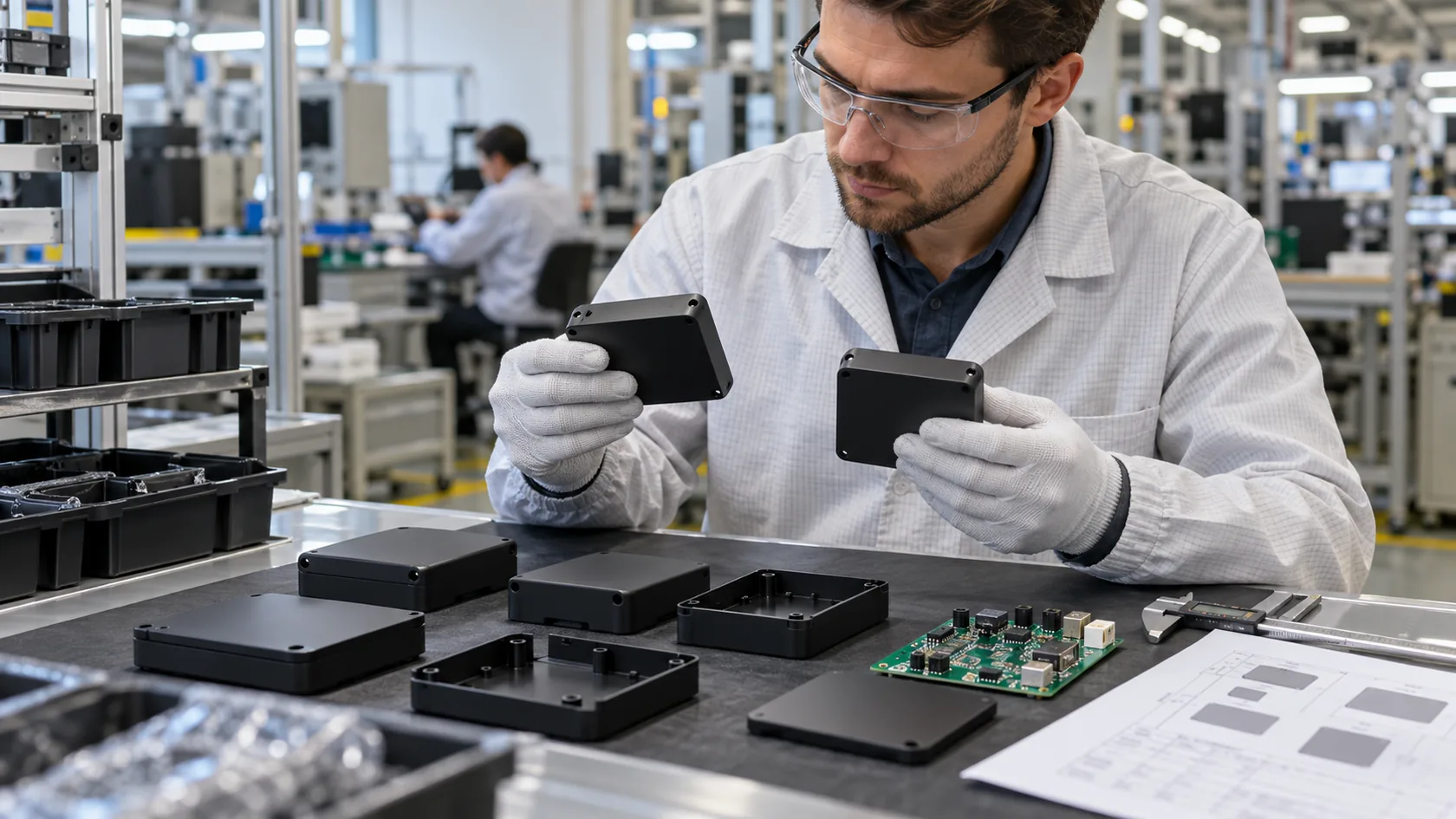
Desktop electronics and embedded systems often benefit from anodizing.
The finish keeps the enclosure looking like aluminum. It also works well with CNC-machined openings, removable end plates, and close-fitting extrusion profiles.
Black anodized extruded enclosures are common because they look professional and work with many product designs.
The designer should still plan for grounding and connector contact points.
Precision Equipment
Measurement equipment, laboratory devices, optical products, and industrial instruments may require stable dimensions and clean surfaces.
A thin anodized finish usually creates fewer fitting risks than thick powder coating.
Hard anodizing can also protect frequently handled or sliding surfaces.
Heat-Sensitive Applications
Anodizing is often a practical choice for enclosures that act as heat spreaders.
The finish remains thin and can work with controlled thermal contact areas.
The designer may still need bare or machined contact zones when the heat load is high.
Premium Industrial Products
Anodized aluminum can give a product a precise and refined look.
Brushed black, bead-blasted natural silver, and matte dark gray finishes are common for high-value industrial devices.
The raw surface must be good enough to support that appearance. Anodizing will not hide careless machining or welding.
When Should You Choose Powder-Coated Aluminum Enclosures?
I usually consider powder coating when the enclosure needs:
- a specific brand color
- a textured or matte appearance
- stronger coverage of fabricated surfaces
- outdoor weather resistance
- visual consistency across mixed components
- protection for welded sheet metal construction
- a thick barrier coating
- easy coordination with electrical cabinets or machinery
Outdoor Enclosures
Outdoor communication, solar, monitoring, and control enclosures often use outdoor-grade polyester powder.
The pretreatment and enclosure design remain critical.
I would also consider lighter colors for products exposed to direct sunlight. A black outdoor enclosure can absorb more solar heat and raise the internal temperature.
The visual preference for black may conflict with the thermal requirement.
Industrial Control Boxes
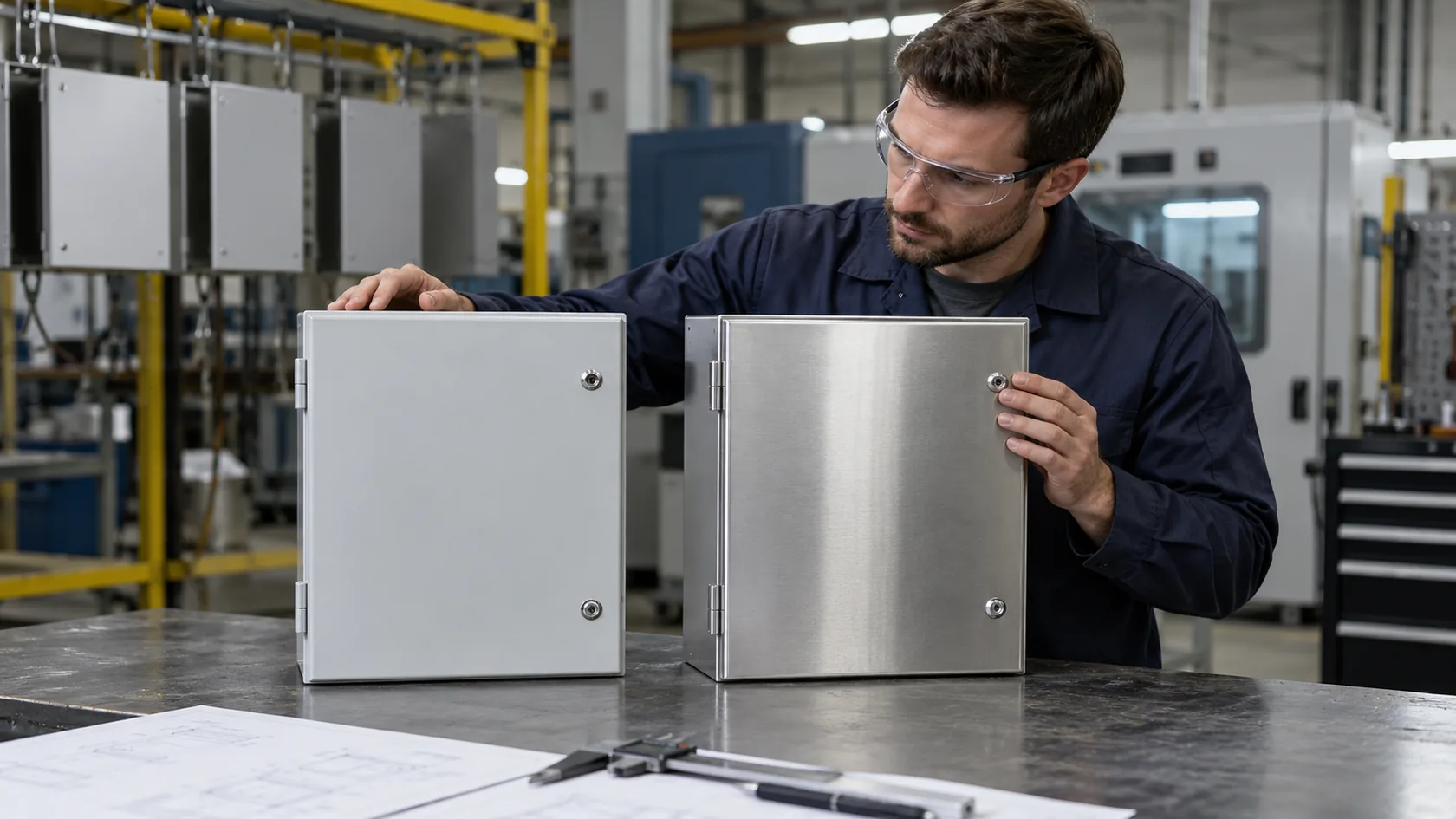
Powder coating works well for larger sheet metal or fabricated aluminum boxes.
The finish can cover welding and grinding differences more effectively than anodizing.
Textured gray, black, and white finishes are common because they hide fingerprints and minor handling marks.
Electrical Cabinets
Electrical cabinets often need a standard color that matches other equipment.
Powder coating provides broad color and texture control. It also works well with printed labels, warning marks, and external branding.
Grounding points and panel contact surfaces still need a clear masking plan.
Branded Consumer and Commercial Products
A customer may need the enclosure to match a logo, website, packaging, or complete product family.
Powder coating usually provides better color flexibility.
The designer can choose a smooth premium finish or a practical texture that hides fingerprints and small marks.
Can Aluminum Enclosures Combine Anodizing and Powder Coating?
Yes, anodizing and powder coating can be combined, but the project needs careful process planning.
The word “combine” can describe several different methods.
Method 1: Different Finishes on Different Parts
An enclosure may use:
- an anodized extruded body
- powder-coated end plates
- a stainless steel internal bracket
- a printed front panel
This method is common and practical.
Each part receives the finish that suits its function. The designer can use anodizing for the heat-dissipating body and powder coating for colored panels.
The main challenge is visual coordination.
A black anodized body and black powder-coated panel will not look exactly the same. The difference may be acceptable, or it may become part of the product design.
Method 2: Selective Finishing on One Part
A part may have coated areas and uncoated functional areas.
The factory can mask:
- grounding points
- thermal contact areas
- threaded holes
- sealing surfaces
- sliding tracks
- connector contact zones
This method is often more useful than applying two complete finishes over the same area.
Masking adds labor and cost. The drawing should identify every masked area clearly.
Method 3: Powder Coating Over an Anodized Layer
A controlled anodized layer can sometimes act as a pretreatment under powder coating.
This system can improve corrosion protection in certain applications. However, the anodized surface and sealing condition must support powder adhesion.
A fully sealed decorative anodized surface may not provide the best base for powder coating without additional preparation.
This process should come from a tested coating specification. It should not be improvised after the enclosure has already been anodized.
Is a Hybrid System Always Better?
No.
More layers can mean:
- higher cost
- more production steps
- more dimensional change
- more inspection points
- more chances for process variation
- more difficult repair
I only support a hybrid system when each layer solves a clear problem. I would not add anodizing under powder coating just to make the specification sound stronger.
A reliable decision needs more than a finish comparison, so I use a project checklist before approving either option.
How Should Engineers Select the Right Surface Treatment for Custom Aluminum Enclosures?
Surface treatment should be discussed during the design stage, not after the machining drawing is complete.
The finish affects tolerances, cutouts, grounding, thermal contact, logo methods, and packaging. A late decision can force the factory to change dimensions or repeat samples.
I start with the part of the enclosure that has the least tolerance for error, because one small connector opening or grounding point can control the finish plan for the entire product.
The following process helps me turn a general preference into a practical specification.
Consider the Installation Environment
The environment creates the first group of requirements.
Is the Enclosure Used Indoors or Outdoors?
An indoor enclosure may only need protection from:
- normal humidity
- fingerprints
- dust
- light cleaning
- occasional handling
An outdoor enclosure may need protection from:
- rain
- UV light
- condensation
- dust
- salt
- pollution
- temperature cycles
The word “outdoor” still needs more detail.
An enclosure installed under a roof faces less exposure than one installed on a coastal pole. Both are technically outdoors, but the finish requirements are not the same.
Is the Environment Humid?
High humidity can create condensation inside and outside the enclosure.
Condensation can remain around:
- screws
- gasket grooves
- cable entries
- mounting brackets
- horizontal seams
A good surface finish helps, but the design should also allow drainage and avoid water traps.
Is There UV Exposure?
UV exposure affects many powder and anodized dye systems.
Outdoor polyester powder usually performs better than indoor epoxy or hybrid powder under sunlight.
Natural anodizing often has good UV stability, while some dyed colors may change over time.
The required color life should match the product’s real service expectation.
Are Chemicals Present?
The engineer should list the actual chemicals.
Useful information includes:
| Required Information | Example |
|---|---|
| Chemical name | Isopropyl alcohol |
| Concentration | 70% |
| Contact method | Wiping |
| Contact time | Less than one minute |
| Frequency | Twice per day |
| Temperature | Room temperature |
This information is much more useful than writing “chemical-resistant finish” on the drawing.
Consider Product Performance Requirements
The enclosure may need to do more than protect electronics.
Thermal Management
The engineer should identify:
- heat sources
- total heat load
- peak temperature
- thermal pad locations
- heat sink contact areas
- internal airflow
- external airflow
- installation direction
If the enclosure acts as a heat sink, the finish at the contact surface becomes important.
The drawing may need masked or machined areas.
Mechanical Wear
The engineer should ask where users or machines will touch the enclosure.
Possible wear areas include:
- mounting slots
- sliding covers
- handles
- cable contact points
- screw heads
- removable panels
- desktop contact surfaces
Hard anodizing may suit repeated sliding. Powder coating may suit general handling and visual branding.
A rubber foot can solve a desktop abrasion problem more cheaply than changing the finish of the whole enclosure.
IP Protection
The finish does not create the IP rating by itself.
The engineer still needs to design:
- gasket compression
- groove dimensions
- fastener spacing
- cable glands
- sealing surfaces
- lid stiffness
- drainage
- pressure equalization
A thick powder coating on a gasket surface can affect compression. An uneven coating can also create a small leak path.
Anodizing usually follows the sealing surface more closely, but the surface still needs inspection.
Electrical and EMC Performance
The engineer should decide where electrical continuity is required.
Possible contact areas include:
- lid-to-body joints
- grounding studs
- connector shields
- mounting rails
- conductive gaskets
- internal partitions
Both anodizing and powder coating are electrically insulating.
The factory may need to mask or remove the finish at selected points. Conductive gaskets may also need clean metal contact.
For an EMC-sensitive enclosure, I ask for the grounding and shielding strategy before I approve the cosmetic finish.
Consider Manufacturing and Design Factors
The manufacturing process affects which finish will look and perform better.
What Aluminum Alloy Is Used?
Different aluminum alloys respond differently to anodizing.
Extruded 6063 and 6061 aluminum can produce good anodized results, although the final color and texture may differ.
Machined 6061 parts often anodize well. Die-cast aluminum can produce a less uniform appearance because of its silicon content and casting structure.
Sheet aluminum alloys such as 5052 may also be finished successfully, but welding and forming marks need consideration.
Powder coating is often more forgiving across different alloys because it covers the base surface.
Are There Welds?
Welded aluminum parts may show visible differences after anodizing.
Powder coating usually hides these differences more effectively, as long as the welds are ground and prepared correctly.
For a welded enclosure with a strict cosmetic requirement, I usually lean toward powder coating unless the customer accepts visible weld character.
Are the Tolerances Tight?
The engineer should identify dimensions affected by coating buildup.
These dimensions may include:
- connector cutouts
- lid grooves
- threaded holes
- hinge holes
- sliding tracks
- press-fit openings
- countersinks
- mounting rails
The drawing should state whether dimensions apply before or after finishing.
It should also state which surfaces need masking.
What Surface Quality Is Required?
A useful drawing can divide surfaces into cosmetic classes.
For example:
| Surface Class | Location | Typical Requirement |
|---|---|---|
| Class A | Front and top surfaces | No visible scratches, dents, or major color variation |
| Class B | Side surfaces | Minor marks allowed within agreed limits |
| Class C | Internal surfaces | Functional finish, cosmetic variation allowed |
This system helps the factory focus inspection where the user will actually see the product.
Without surface classes, one person may reject an internal mark that has no effect on the product, while another person may accept a visible front-panel defect.
What Logo Method Will Be Used?
The logo process should be tested with the chosen finish.
The engineer should confirm:
- logo size
- line thickness
- color
- location
- required durability
- printing method
- abrasion exposure
- chemical exposure
A small white logo on a coarse black texture may need thicker lines. A laser-marked logo may look excellent on one black powder and weak on another.
A physical sample is often more useful than a digital rendering.
Consider Long-Term Product Goals
A finish should support more than the first order.
Expected Service Life
The engineer should define how long the product needs to maintain:
- corrosion protection
- color
- gloss
- logo readability
- structural function
A temporary exhibition device and a ten-year outdoor controller should not use the same decision process.
Maintenance Requirements
Some enclosures can be cleaned and inspected every month. Others may remain untouched for years.
Remote equipment usually needs a stronger and more predictable finish system because maintenance is expensive.
A repairable powder-coated surface may help in industrial locations. A hard anodized surface may reduce wear in frequently handled equipment.
Customer Expectations
A technically acceptable finish may still disappoint the end user.
A laboratory customer may care about small color differences. A factory customer may care more about impact resistance and cleaning. A retail customer may reject fingerprints that an industrial buyer would ignore.
I try to understand who will see and touch the enclosure, not only who approves the drawing.
Future Production Volume
A finish that works for 20 samples may become inefficient at 5,000 pieces.
The engineer should consider:
- batch consistency
- powder availability
- color standards
- approved suppliers
- inspection limits
- packaging methods
- rework procedures
Custom colors can create supply and minimum-order risks. A standard finish may support faster repeat orders.
For long-term products, I prefer a finish specification that another approved coating supplier can reproduce if the original supplier becomes unavailable.
A Practical Selection Checklist
Before confirming the finish, I usually ask for the following information:
- What is the enclosure application?
- Is the product used indoors or outdoors?
- Is there direct rain, sunlight, salt, or chemical exposure?
- What service life does the customer expect?
- Does the enclosure help dissipate heat?
- Which surfaces need electrical grounding?
- Are there EMC requirements?
- Which dimensions have tight tolerances?
- Are there welded or cast parts?
- Does the product need an exact brand color?
- What logo method will be used?
- Which surfaces are cosmetic?
- Can small batch color variation be accepted?
- How will the enclosure be cleaned?
- What production volume is expected?
Most finish failures can be traced back to information that was never discussed.
Common Mistakes When Choosing Aluminum Enclosure Surface Treatment
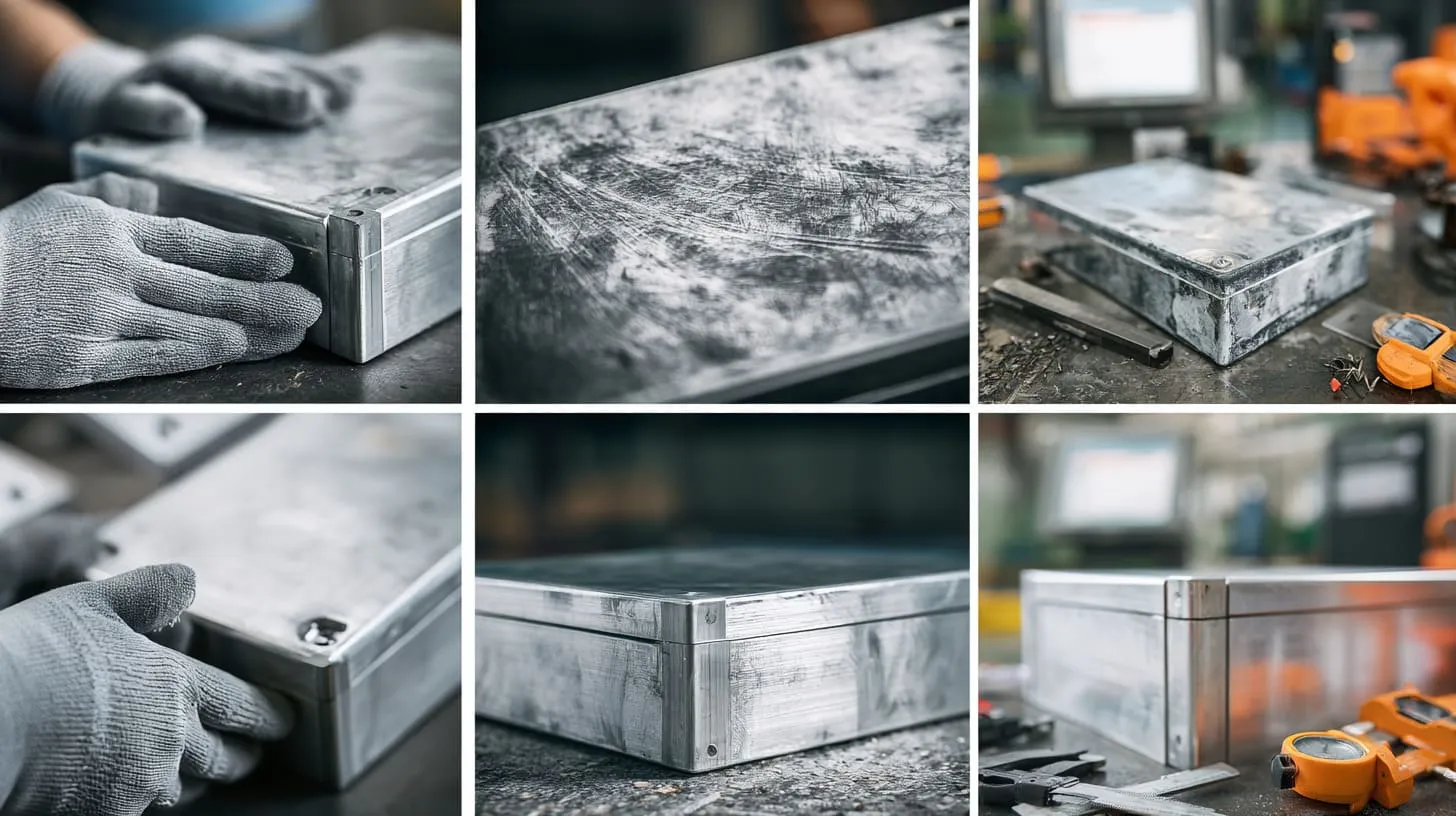
Most surface-treatment mistakes do not begin with a bad supplier or a bad coating.
They begin with an incomplete decision.
The most expensive mistakes usually begin with a simple sentence such as “Just make it black,” because that sentence hides questions about color, texture, thickness, heat, grounding, UV, and corrosion.
A black finish could mean black anodizing, matte black polyester powder, fine-texture black powder, hard anodizing, wet paint, or another system. These finishes do not perform in the same way.
Choosing Based Only on Appearance
A product engineer may choose anodizing because the sample looks premium.
A marketing team may choose powder coating because the color matches the brand.
Both reasons are valid, but neither reason is enough.
The finish also needs to support:
- working environment
- mechanical use
- heat transfer
- dimensional control
- electrical function
- maintenance
A beautiful enclosure that overheats is a failed enclosure. A durable enclosure that does not match the customer’s product line can also fail commercially.
The choice needs both engineering and market input.
Ignoring the Working Environment
An indoor sample may look perfect for months. The same finish may fail quickly near the sea or inside a chemical factory.
Customers sometimes write “outdoor use” without describing the installation.
I ask whether the enclosure is:
- under a roof
- exposed to direct rain
- near the coast
- mounted in full sunlight
- cleaned with chemicals
- installed near traffic pollution
- used in freezing conditions
- exposed to condensation
Each answer changes the risk.
A finish selected for normal outdoor use may not be enough for salt spray. A corrosion-resistant system may still fade if the powder has weak UV performance.
Selecting the Wrong Coating Thickness
More coating is not always better.
A thicker powder layer may improve coverage, but too much powder can create:
- orange peel
- poor edge definition
- blocked threads
- tight connector openings
- filled engraving
- uneven curing
- reduced heat transfer
A very thin coating may have:
- weak coverage
- lower corrosion protection
- visible substrate
- poor color consistency
The thickness needs a controlled range.
Anodizing thickness also affects dimensions, especially with hard anodizing.
For threads and tight fits, the designer should state whether the factory needs masking, oversizing, or post-machining.
Forgetting Electrical Contact Areas
A complete cosmetic coating can create an incomplete electrical path.
This mistake is common around:
- grounding screws
- connector shields
- lid joints
- mounting plates
- DIN rails
The assembly may pass a simple visual inspection but fail grounding or EMC testing.
The solution is usually not complicated. The drawing can define masked points, conductive washers, grounding studs, or finish removal areas.
The important part is making the decision before coating.
Ignoring Surface Preparation
Customers often specify a famous powder brand and assume the coating will perform well.
The powder brand is only one part of the system.
Poor cleaning and pretreatment can make a premium powder fail.
The RFQ or quality document may need to include:
- required pretreatment
- adhesion test
- film thickness
- curing control
- corrosion test
- color standard
- gloss range
- cosmetic limits
For critical projects, I also ask how the coating supplier controls bath chemistry and oven temperature.
A smooth sample does not prove long-term adhesion.
Expecting Powder Coating to Hide Every Defect
Powder can hide minor marks, especially when the finish has texture.
It cannot hide:
- dents
- deep scratches
- poor weld grinding
- heavy machining lines
- sharp burrs
- uneven panel surfaces
A thick coating over a bad surface often creates a thick coating with visible defects.
The factory should repair the metal before coating.
Expecting Exact Anodized Color Across Every Part
Anodizing is influenced by the aluminum itself.
A machined cover and an extruded body may not match perfectly, even when they enter the same anodizing batch.
Different suppliers may also use different alloys, surface preparation, dye control, and sealing.
When exact matching matters, I prefer to:
- confirm the alloy
- use the same aluminum batch where possible
- finish matching parts together
- approve a physical color range
- define visible surfaces
- keep a signed reference sample
A digital Pantone value cannot fully control a metallic anodized finish.
Forgetting About Packaging
A good finish can be damaged after production.
Freshly coated or anodized parts may scratch when they rub against each other during transport.
Packaging may need:
- individual bags
- protective film
- foam separators
- corner protection
- custom trays
- stronger cartons
Textured powder may hide light handling marks. Smooth gloss powder can show them easily. Black anodizing can also show scratches and fingerprints.
I include packaging in the finish discussion because the customer receives the enclosure after shipping, not at the coating line.
Not Discussing Requirements With the Manufacturer
A drawing may show dimensions and holes but leave out the working environment.
The manufacturer then quotes a standard finish. The sample looks acceptable. The real problems appear after installation.
I need more than a color name to recommend the right process.
Useful information includes:
- product application
- installation environment
- expected service life
- heat load
- grounding plan
- EMC needs
- cosmetic surfaces
- approved color sample
- logo method
- cleaning chemicals
- order volume
A manufacturer should also explain the trade-offs.
For example, a fine-texture powder may improve appearance but reduce the clarity of a small printed logo. Hard anodizing may improve wear resistance but affect tight dimensions. A light outdoor color may improve thermal performance but conflict with branding.
Good communication does not remove every technical limit. It makes those limits visible before production begins.
Conclusion
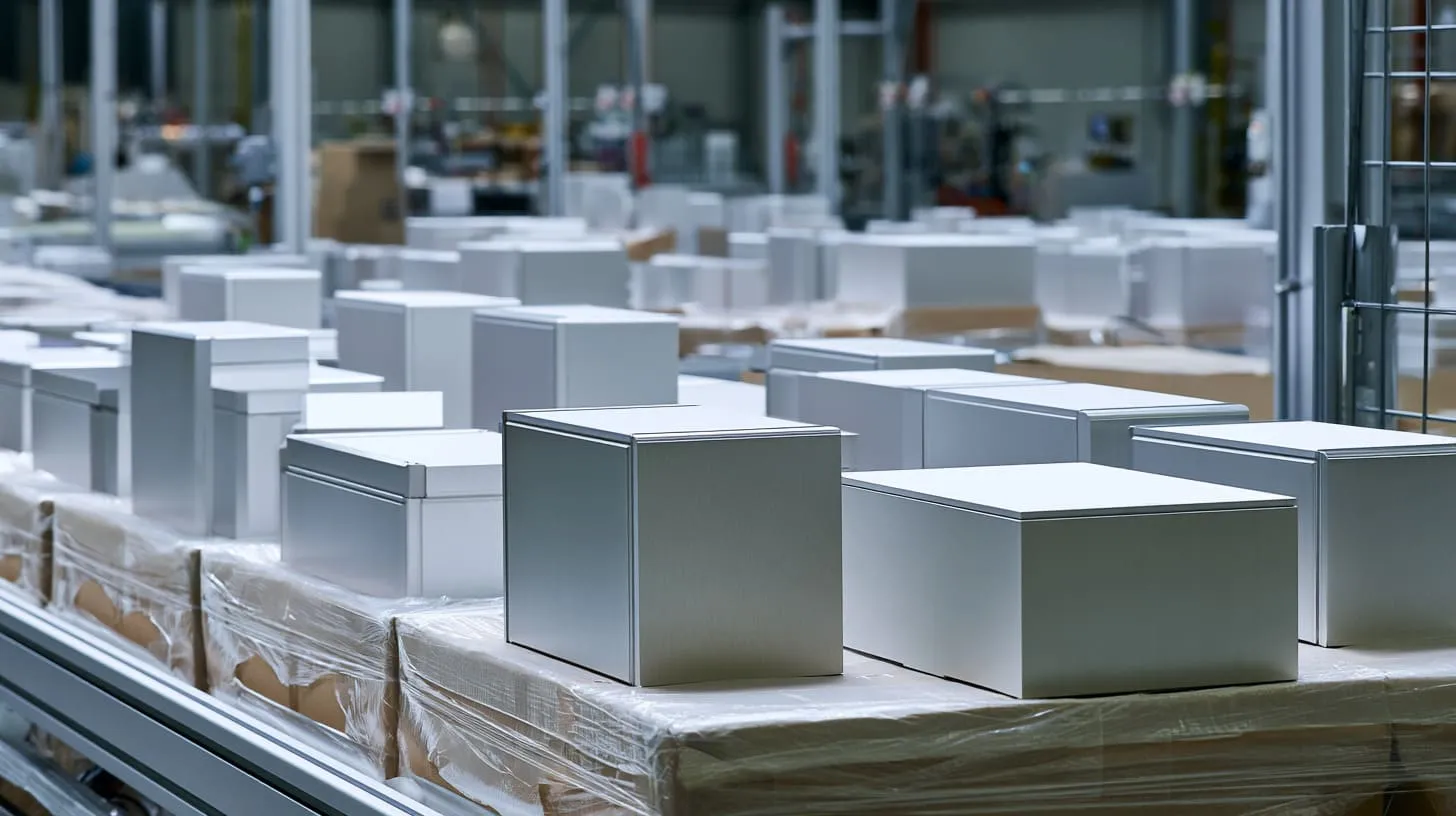
Powder coating and anodizing can both create a strong finish for aluminum enclosures, but they solve different problems.
Anodizing changes the aluminum surface. It keeps the metallic appearance, provides strong wear resistance, and adds relatively little thickness. I often choose it for precision housings, electronics enclosures, heat-sensitive products, and premium industrial devices.
Powder coating places a protective polymer layer over the aluminum. It offers more colors, textures, and branding options. It can also create a more uniform appearance across welded, fabricated, or mixed metal parts. I often choose it for outdoor boxes, electrical cabinets, industrial control enclosures, and products with strict brand colors.
My own rule is simple: I choose the finish by the most serious real-world risk, not by the sample that looks best under office lighting.
I ask what will happen if the enclosure gets scratched. I ask whether the user will install it near the sea. I ask where heat leaves the PCB. I ask which surfaces need grounding. I also ask whether a 0.2 mm coating buildup will stop a connector from fitting.
These questions explain why I do not call one finish universally better.
I have seen attractive anodized parts rejected because two aluminum batches produced different shades. I have also seen beautiful powder-coated parts return for rework because the coating filled tight connector openings.
The finish itself was not always the problem. The decision process was incomplete.
This is why I prefer to review the surface treatment together with the aluminum alloy, enclosure structure, machining tolerances, logo method, heat path, and installation environment.
When these details are considered early, the finish becomes part of the engineering solution instead of a cosmetic step added at the end.
If you are developing a custom aluminum enclosure and you are not sure whether powder coating or anodizing fits the project, you can send me your drawing, application details, expected quantity, and working environment.
My team at MaidaTech can review the finish together with the enclosure design, CNC cutouts, logo process, assembly, thermal contact areas, and packaging requirements.
You can contact me at info@maidatech.com or visit maidatechenclosure.com to discuss your custom aluminum enclosure project.