Skip to content
Surface coating sounds like a simple decision in aluminum enclosure projects. Many customers send me drawings with one clear line: “full powder coating required.” At that moment, I usually slow down the discussion. Because I know this single decision can shift the whole engineering direction.
I often see buyers treat surface finish like a default option. It feels safe. It also looks clean on paper. But the real working environment is often not even fully defined at this stage. That is where problems usually start.
Why surface coating decisions are often misunderstood in aluminum enclosures
The gap between “standard finishing” thinking and real engineering requirements shows up in almost every RFQ I receive. Many engineers assume coating is just protection. But in real projects, coating affects heat, grounding, and even assembly fit.
I remember one industrial control project where the customer insisted on full coating. Later, we found the device needed stable grounding through the enclosure body. The coating actually blocked the contact. We had to redesign the grounding path at a late stage.
In practice, what I usually check first is not the coating request, but how the enclosure interacts with heat, electricity, and assembly surfaces. If this step is ignored, the finishing choice becomes a hidden risk instead of a protection layer.
Key trade-off: protection vs conductivity vs thermal performance
| Factor | Full Coating Impact | Engineering Risk |
|---|---|---|
| Corrosion protection | Strong | Positive |
| Electrical conductivity | Reduced | Grounding issues |
| Heat dissipation | Reduced | Thermal buildup |
| Mechanical fit | Slight distortion risk | Tolerance issues |
I usually ask a simple question before accepting full coating: what function will suffer first if we cover everything? That answer often changes the design direction completely.
Now let’s move into a more practical situation where coating decisions often fail silently—thermal performance.

When Thermal Dissipation Becomes a Priority
Heat is one of the most underestimated problems in enclosure design. Many engineers focus on protection first and forget that electronics inside the box still need to breathe.
How full coating can trap heat inside enclosures
Powder coating works like a thin insulating layer. It looks harmless, but it slows down heat transfer from inside to outside. In low-power devices, this may not matter. But in industrial systems, it becomes critical very fast.
I once worked with a customer designing a communication gateway. The first prototype used full coating. During testing, the internal temperature stayed 8–12°C higher than expected. The system started throttling under load.
This is where things often go wrong in real projects. Engineers assume surface protection and thermal behavior are independent, but they are tightly connected.
Powder coating as a thermal barrier
Powder coating has lower thermal conductivity compared to raw aluminum. This creates a barrier effect. The heat stays inside longer.
High-power electronics and heat-sensitive modules
Devices like:
- IoT gateways
- PLC controllers
- PoE switches
- RF communication modules
are especially sensitive. Even a small temperature increase can reduce stability or lifetime.
When bare aluminum or anodizing performs better
Bare aluminum or anodized surfaces often perform better in heat transfer because they maintain better surface conductivity. But they require better environmental control.
| Surface Type | Heat Transfer | Protection Level | Use Case |
|---|---|---|---|
| Bare aluminum | High | Low | Indoor controlled |
| Anodized | Medium-High | Medium | Industrial indoor |
| Powder coated | Low | High | Outdoor harsh |
I usually judge this by looking at power density first, not by defaulting to coating rules. If heat density is high, I immediately question full coating even if the customer insists.
Design alternatives for heat control
Local masking on heat sink areas
Instead of coating everything, we often mask heat-dissipation zones. This keeps thermal paths open while still protecting other surfaces.
Use of extruded fin structures instead of full coating
Extruded aluminum fins increase surface area. In many cases, they solve heat problems better than changing coating strategy.
I usually check whether we can solve heat structurally before touching surface finish. If we can, coating becomes secondary.
Now let’s shift to another hidden issue—electrical grounding and EMI behavior.
When EMI / Electrical Grounding Is Critical
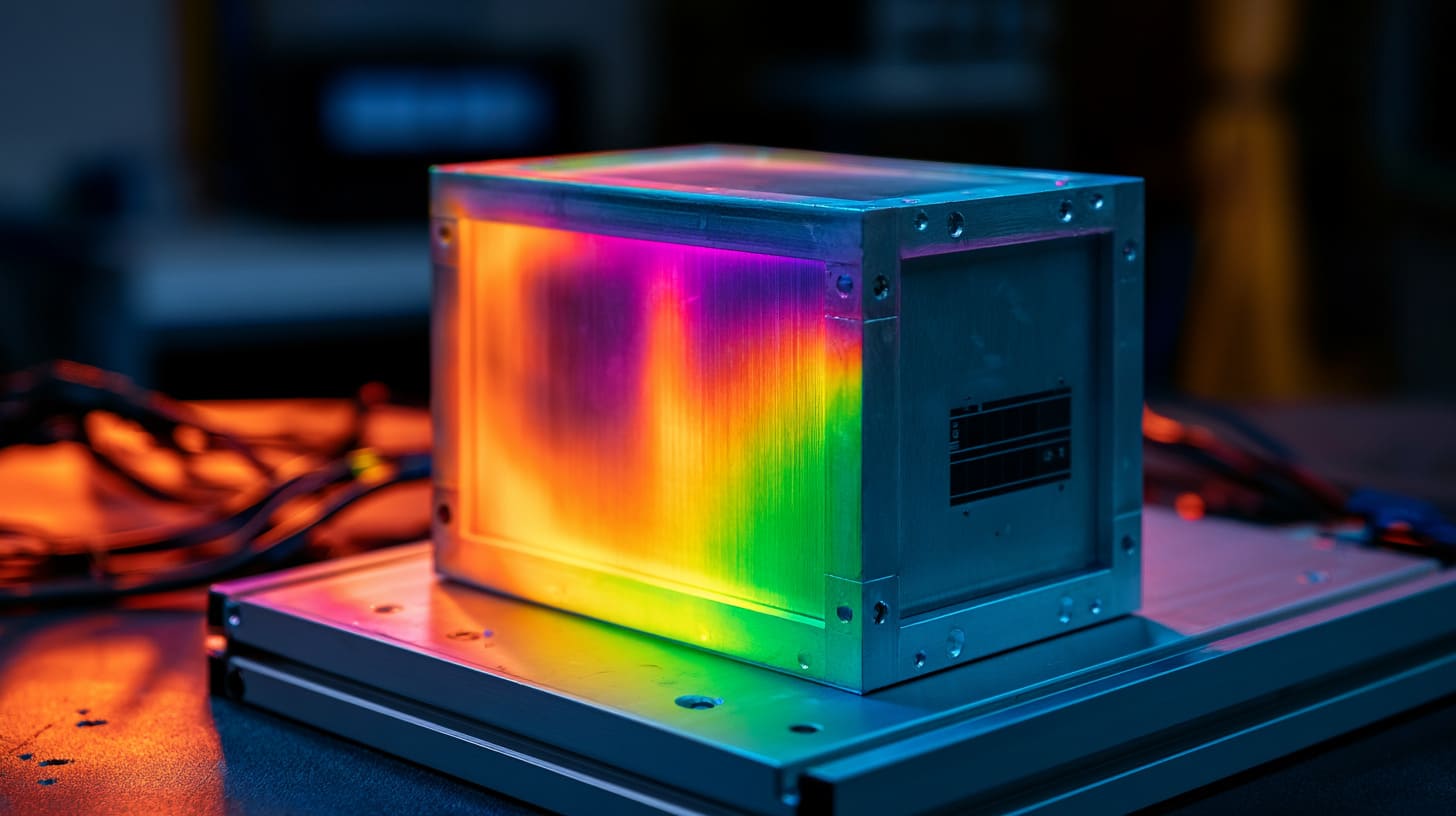
EMI problems rarely come from the circuit alone. The enclosure often plays a hidden role, especially when full coating is applied without thinking about conductivity.
Why full coating can break electrical continuity
Full coating creates an insulating layer. That layer blocks metal-to-metal contact. In systems that rely on enclosure grounding, this becomes a real problem.
I once saw a PLC enclosure pass mechanical inspection but fail EMI testing. The reason was simple: every grounding point was coated. There was no real electrical path left.
In practice, I always test grounding continuity before approving final finishing. If resistance is too high, coating strategy must change immediately.
Loss of conductive grounding paths
When coating covers all contact points, grounding becomes unstable. This leads to:
- Floating potential issues
- Noise interference
- Unstable signal behavior
EMI shielding performance degradation
EMI shielding depends on continuous conductive surfaces. A full coating layer breaks that continuity at micro-level.
Risks in RF, IoT gateways, PLC, and industrial systems
These systems are very sensitive:
- RF modules lose signal stability
- IoT gateways show intermittent errors
- PLC systems face communication noise
Engineering solutions
Masking grounding points
We often mask screw holes, mounting areas, and contact surfaces to keep metal contact.
Conductive anodizing or chromate alternatives
These finishes maintain conductivity while still offering corrosion resistance.
Using gaskets and bonding straps
In some designs, we use conductive gaskets to maintain shielding across joints.
I usually prefer solving EMI at the mechanical interface level instead of over-engineering electronics. It is more stable in real production environments.
Next, we move into a detail that often gets ignored in drawings—threads and precision surfaces.
When Threads, Interfaces, and Precision Surfaces Must Be Protected
Mechanical fit is one of the first things that gets affected by coating thickness, but many engineers only notice it during assembly.
Coating build-up and mechanical fit issues
Powder coating adds thickness. It is not large, but it is enough to change precision fits.
I remember a project where threaded holes became unusable after coating. The assembly team had to re-tap every unit. That created delays and extra cost.
In practice, I always check tolerance stack-up after finishing is specified, not before.
Thread tolerance problems after powder coating
Threads can become tight or completely blocked if coating enters the hole.
Misalignment in mating surfaces and connectors
Flat surfaces may no longer align properly after uneven coating thickness.
Connector shielding degradation
If connectors lose metal contact, shielding performance drops.
Common factory mistakes
Over-coating threaded holes
This is one of the most common issues in low-control production environments.
Ignoring tolerance stack-up after finishing
Many drawings define geometry but ignore post-coating dimensions.
| Issue | Result | Impact |
|---|---|---|
| Over-coated threads | Assembly failure | High |
| Coated mating surfaces | Misalignment | Medium |
| Uneven thickness | Leakage risk | High |
I usually require masking plans before production starts. If masking is unclear, I treat the whole design as high risk.
Now let’s look at a very common misunderstanding—corrosion protection.

When Corrosion Protection Does NOT Require Full Coating
Many customers choose full coating just because they fear corrosion. But in reality, not every environment needs full coverage.
Misunderstanding corrosion environments
Indoor industrial environments are often much milder than expected. But I often see outdoor-level coatings applied to indoor products.
This is where cost and performance start to disconnect.
Indoor industrial vs outdoor coastal conditions
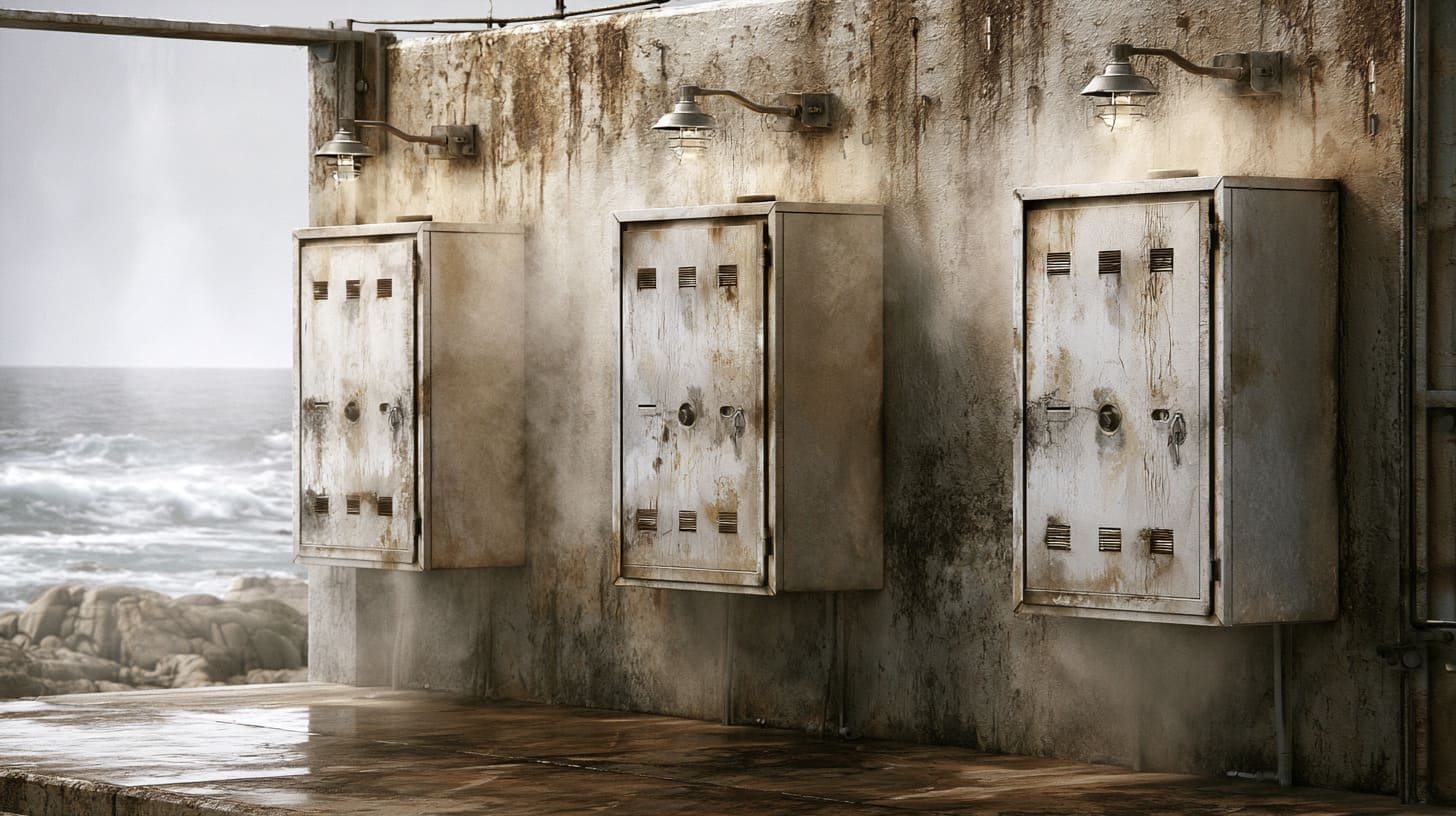
| Environment | Corrosion Risk | Recommended Finish |
|---|---|---|
| Indoor factory | Low | Anodizing / light coating |
| Urban outdoor | Medium | Powder coating |
| Coastal / marine | High | Full coating + SS hardware |
Over-specification of coating levels
I often see customers request NEMA-level protection for indoor devices. This increases cost without real benefit.
In practice, I always ask what actually touches the enclosure daily. That answer is more useful than any rating number.
Better surface strategies
Selective coating zones
We apply coating only where exposure is real.
Anodizing vs powder coating vs passivation
Each method has its own balance between cost and protection.
Using stainless inserts instead of full coating upgrades
Sometimes material choice is better than surface over-design.
I usually prefer upgrading hardware before increasing coating complexity. It is more predictable in mass production.
Now we move into another overlooked conflict—branding and aesthetics.
When Optical, Branding, or Aesthetic Requirements Conflict with Function
Surface finish is not only about protection. It also affects branding and visual consistency.
Full coating limitations in custom branding
When full coating is applied, some design flexibility is lost.
I once saw a logo engraving project fail visually because coating thickness blurred the fine edges. The brand identity became unclear.
In practice, I always check whether branding depends on surface precision or just color.
Color inconsistency on complex geometries
Corners and edges often absorb coating differently.
Logo engraving vs powder coating conflict
Engraving depth can be reduced after coating.
Surface roughness affecting printing quality
UV printing works differently on coated vs raw surfaces.
Practical alternatives
Localized finishing areas
We leave branding zones uncoated or specially treated.
Mixed surface design (raw + coated zones)
This creates both functional and visual balance.
| Design Type | Visual Quality | Functional Stability |
|---|---|---|
| Full coating | Uniform | Medium |
| Mixed finish | High flexibility | High |
| Raw + anodized | Industrial look | High |
I usually judge branding importance by customer market type. Amazon products behave differently from industrial OEM products.
Now let’s move to cost, which often quietly drives all decisions.
When Cost and Manufacturing Efficiency Matter
Cost pressure is always present in OEM projects, even when it is not directly stated.
Full coating is not just material cost. It adds process complexity.
I often see customers surprised by lead time increases after adding full coating requirements.
Extra masking labor and rework cycles
Masking takes time and precision. Mistakes lead to rework.
Longer lead time and QC complexity
More steps mean more chances of delay.
Increased rejection rate for precision parts
Small coating defects can cause full rejection.
Cost-optimized finishing strategies
Partial coating standardization
We define standard coating zones for repeatable production.
Batch process optimization for OEM orders
Grouping similar parts reduces cost per unit.
I usually compare cost increase against real functional gain. If gain is small, I avoid full coating by default.
Now we reach the final engineering decision process.

How Engineers Decide: Full Coat vs Partial Coat
Decisions are rarely black and white. Most real projects sit in the middle.
Decision checklist for OEM enclosure projects
Before selecting full coating, I usually check:
- Environment exposure level (indoor / outdoor / coastal)
- Electrical grounding requirements
- Thermal load analysis
- Mechanical interface sensitivity
Environment exposure level (indoor/outdoor/coastal)
This defines baseline protection needs.
Electrical grounding requirements
If grounding is critical, coating strategy must change.
Thermal load analysis
Heat density often overrides aesthetic decisions.
Mechanical interface sensitivity
Precision parts require controlled coating zones.
Recommended engineering workflow
Define function first, finish second
I always start from function. Not from surface appearance.
Prototype testing before final coating decision
Testing reveals issues that drawings cannot show.
In practice, I rarely approve full coating before seeing at least one thermal and assembly test sample. This reduces surprises later.

Conclusion
Full coating often looks like a safe default choice. But in real engineering work, I see it behave differently. It can block heat flow, break grounding paths, and even damage mechanical fit.
This is why I don’t treat surface finishing as a standard checkbox. I treat it as a functional decision that must follow the real use case of the enclosure.
Surface protection is important. But protection without understanding system behavior often creates new problems instead of solving them. That is the main reason I sometimes push back when a customer requests full coating too early.
What I usually focus on is simple. I try to understand what the enclosure actually needs to survive in the real world, not what looks safe on paper. Once that is clear, the finishing strategy becomes much easier.
If you are working on an OEM enclosure project and want to balance protection, cost, and performance, I am open to discuss real use cases. You can reach me at info@maidatech.com or visit maidatechenclosure.com.