Skip to content
Why “More Durable” Is Not Always the Better Finish
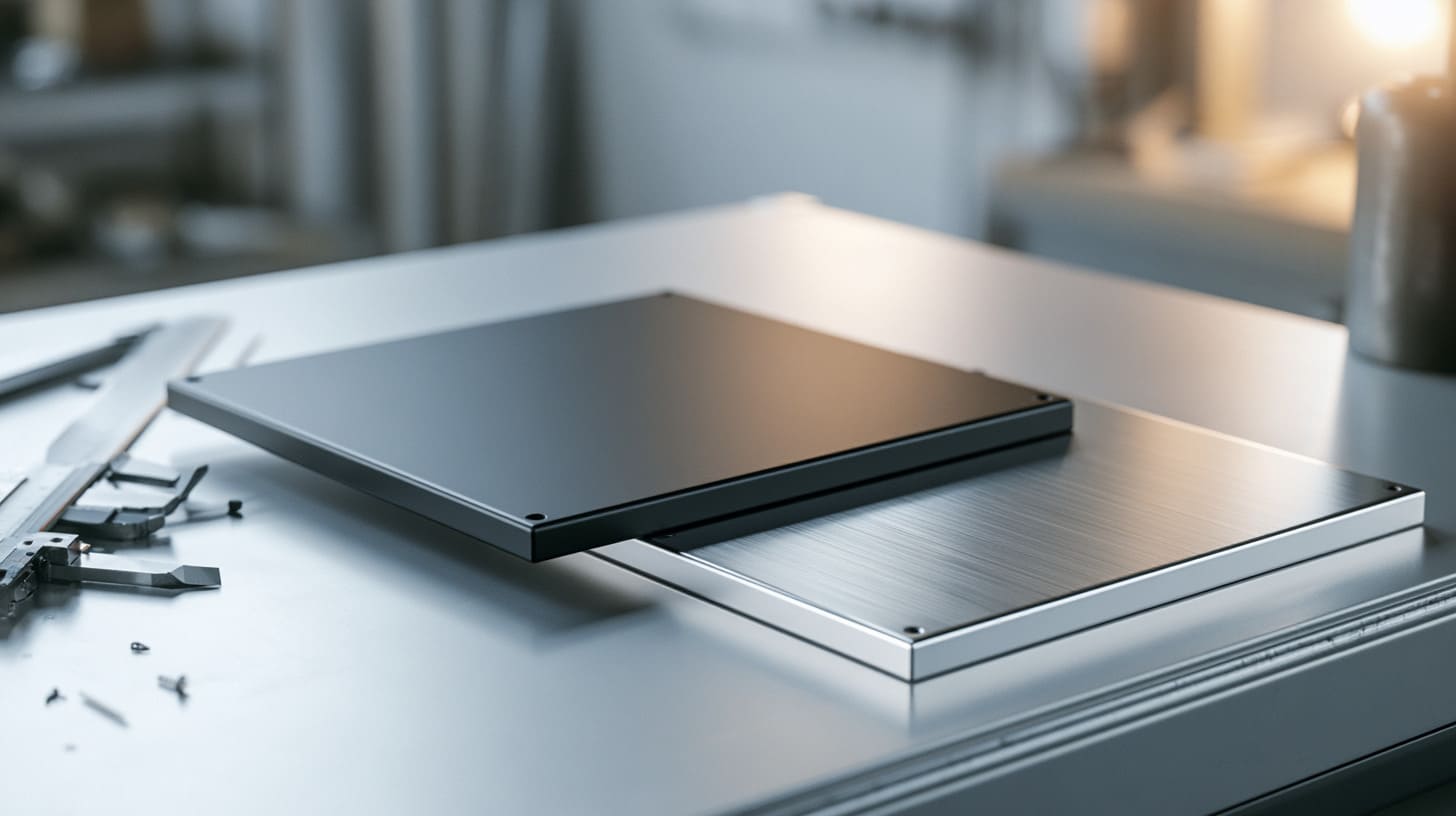
A customer once sent me a drawing for a small aluminum control box. The drawing looked simple. Four walls. One cover. A few screw holes. A logo on the front.
Then he added one sentence:
“Please use the most durable surface finish.”
That sentence sounds safe. It also sounds smart. But in real enclosure production, it can open the door to a lot of problems.
Does “more durable” mean better scratch resistance? Better UV resistance? Better corrosion protection? Better color stability? Better for assembly? Better for outdoor use? Better for a tight CNC aluminum case? Better for a big sheet metal cabinet?
These are not the same question.
Many buyers ask me the same thing in different ways:
“Should I use powder coating or anodizing for my aluminum enclosure?”
My answer is rarely just one word.
Powder coating and anodizing are both good surface finishes. I use both for different projects. Powder coating gives strong color flexibility and good surface coverage. Anodizing gives a clean metallic look and good wear resistance. But both can create new problems if the buyer only looks at durability and forgets the real product design.
For custom aluminum enclosures, the best finish is not always the one that sounds stronger on paper. I usually judge the finish by asking a more practical question: which option will create fewer problems after assembly, shipping, installation, and daily use?
That is where the real decision starts.
This article is for product engineers, OEM buyers, enclosure designers, and sourcing teams who need to choose between powder coating and anodizing. I will not treat this like a textbook comparison. I will talk from the factory side, because that is where many small finish problems become real cost, real delay, and sometimes real arguments.
Before we compare durability, we need to understand what each finish really does to the enclosure.
What Is Powder Coating on Aluminum Enclosures?
Powder coating is one of the most common finishes I see on aluminum and sheet metal enclosures. Many buyers like it because it looks clean, smooth, and easy to match with their brand color.
In simple words, powder coating is a dry coating process. Fine powder is sprayed onto the metal surface. Then the part goes into an oven. The powder melts, flows, and cures into a solid coating layer.
It is not like anodizing. It does not grow from the aluminum itself. It sits on the surface like a protective skin.
That “skin” can be very useful. It can also become a problem if the design is too tight.
How Powder Coating Works
The basic process is usually like this:
| Step | What Happens | Why It Matters |
|---|---|---|
| Surface cleaning | Oil, dust, and dirt are removed | Bad cleaning can cause poor adhesion |
| Pretreatment | The aluminum surface is prepared for coating | Better pretreatment means better corrosion resistance |
| Powder spraying | Powder is sprayed onto the part | Coverage must be even, especially near edges |
| Curing | The part is heated in an oven | Heat melts and hardens the powder |
| Inspection | Color, surface, thickness, and defects are checked | Small defects can affect appearance and assembly |
The cured powder coating forms a separate layer over the aluminum. This layer can be much thicker than anodizing. That is one reason it can protect well. It is also one reason it can cause fit problems.
For example, if a cover slides into a groove, the groove may work well before coating. After coating, the same groove may become too tight. If the drawing does not leave enough clearance, the assembly worker may need to push hard, scrape the coating, or rework the part.
Nobody wants that.
Why Buyers Choose Powder Coating
Buyers often choose powder coating for very reasonable reasons.
It gives many color choices. Black, white, gray, blue, orange, textured black, matte finish, glossy finish, and many custom brand colors are possible. For some products, color matters as much as protection.
For a large sheet metal enclosure, powder coating can also make the product look more uniform. It can cover small welding marks, sanding marks, and minor surface defects better than anodizing.
Here is where powder coating often works well:
| Application | Why Powder Coating Works Well |
|---|---|
| Sheet metal enclosures | Large flat surfaces look more uniform |
| Electrical control boxes | Good color and surface protection |
| Outdoor cabinets | Works well with outdoor-grade powder and pretreatment |
| Branded OEM products | Easy to match brand colors |
| Textured finish products | Texture can hide small surface marks |
| Large batches | Color can be stable if the process is well controlled |
Powder coating is also useful when the product needs a painted look instead of a raw metal look. Some customers do not want the metallic surface of aluminum. They want a finished product that matches other parts in their system.
The First Judgment Point
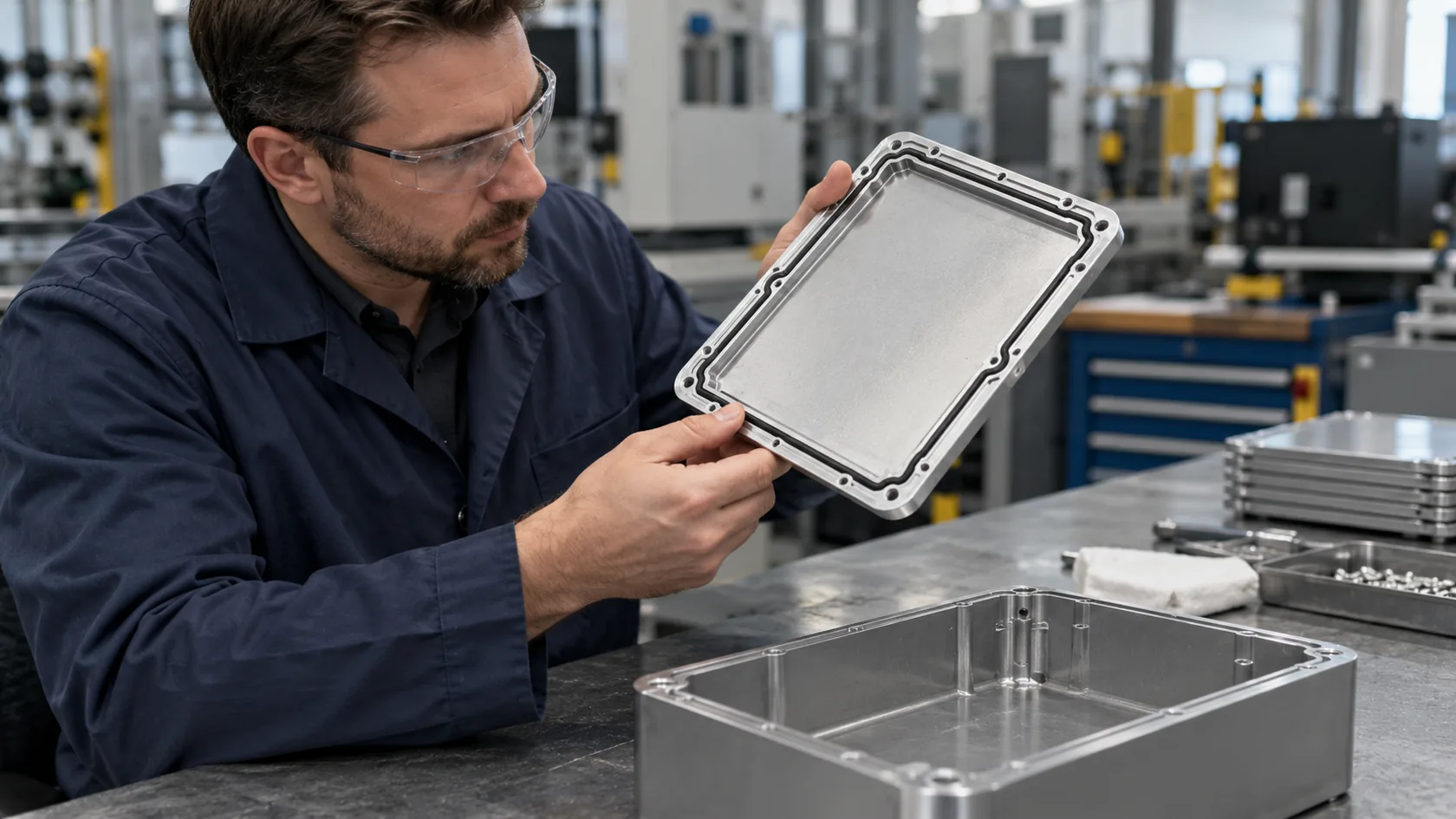
A few years ago, a customer asked for powder coating on a compact aluminum case with many screw holes and a very tight cover fit. On the drawing, the design looked fine. After coating, the cover became hard to close because the coating added thickness on both sides.
That was not a coating quality problem. It was a design planning problem.
When I check a powder coating project, I pay close attention to the places where coating thickness can quietly steal space, because a beautiful finish is not useful if the customer needs force to assemble the enclosure.
For this reason, I do not treat powder coating as only a color decision. I also check:
- Are there sliding surfaces?
- Are there threads?
- Are there grounding points?
- Are there tight cover gaps?
- Are there rubber seals?
- Are there sharp outside corners?
- Are there deep inside corners?
- Are there holes that need masking?
Powder coating is a strong finish, but it is not invisible. It adds material. It changes dimensions. It may need masking. If the buyer ignores these details, the “durable” finish can become the reason the part does not fit.
Now let us look at anodizing, because it solves some of these problems, but it brings its own headaches too.
What Is Anodizing on Aluminum Enclosures?
Anodizing feels very different from powder coating. When I see a good anodized aluminum enclosure, it has a clean metal feeling. It does not look painted. It still looks like aluminum, just more refined.
Anodizing is an electrochemical process. It grows an oxide layer on the aluminum surface. This layer becomes part of the aluminum surface. It is not a thick paint layer sitting on top.
That is why many product engineers like anodizing for CNC aluminum cases, heatsink enclosures, and small electronic housings.
It keeps the part sharp. It keeps the metal texture. It is often better for tight tolerance parts.
But it does not hide much. If the raw surface is poor, anodizing may make the problem more visible.
How Anodizing Works
The basic idea is simple, even if the process itself needs good control.
The aluminum part is cleaned and placed in an electrolyte bath. Electric current is used to grow a controlled oxide layer on the surface. This layer can then be dyed and sealed.
| Step | What Happens | Why It Matters |
|---|---|---|
| Cleaning | Oil and dirt are removed | Dirty surfaces cause finish defects |
| Etching or surface prep | The surface is prepared | Surface texture affects final look |
| Anodizing | Oxide layer grows from aluminum | This creates the protective layer |
| Dyeing | Color is added if needed | Color depends on alloy and process |
| Sealing | Pores are sealed | Sealing affects durability and corrosion resistance |
| Inspection | Color, surface, and defects are checked | Cosmetic control is very important |
The anodized layer is usually thinner and more controlled than powder coating. This is why anodizing often works better on precision aluminum parts.
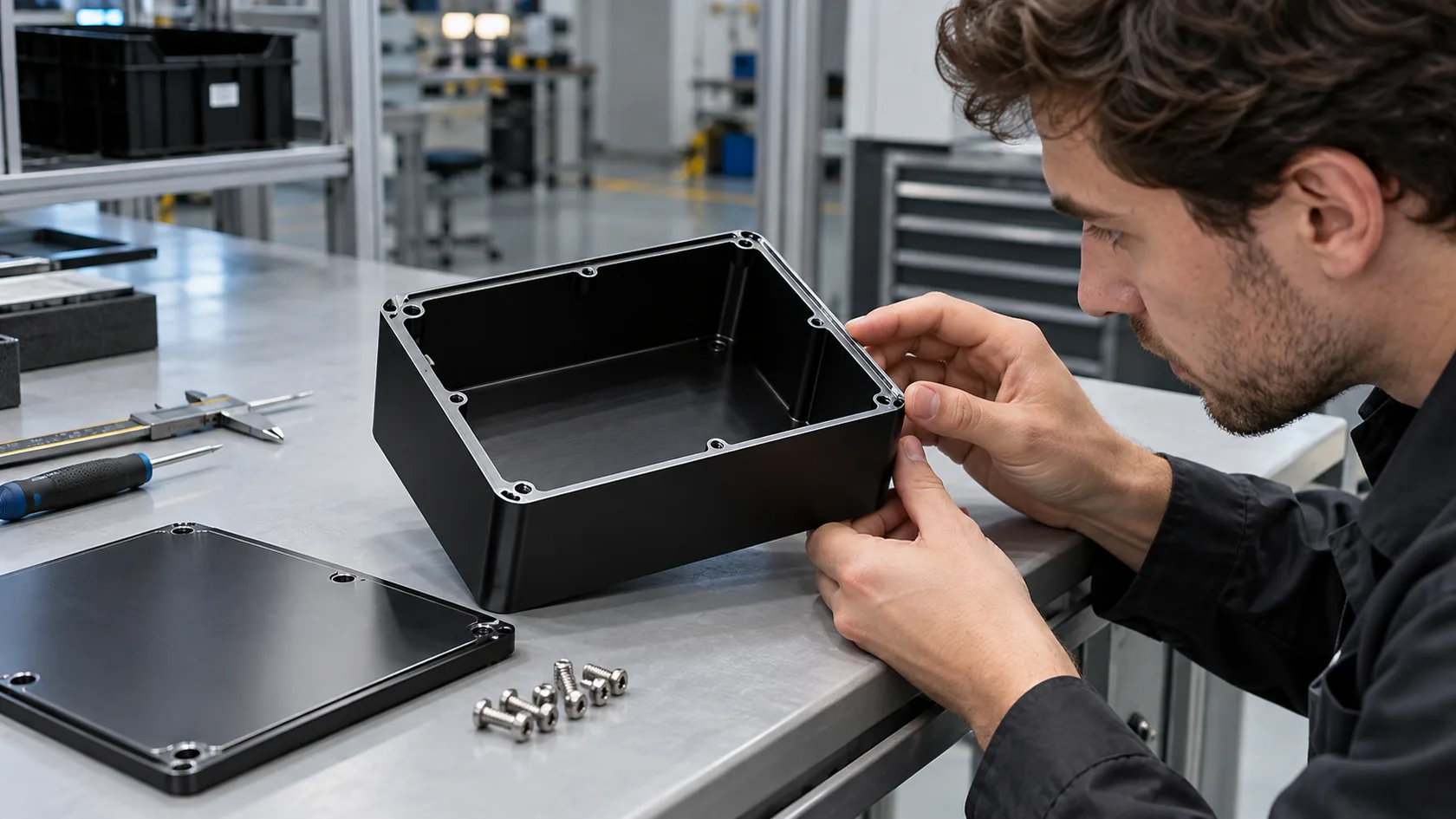
For example, if we make a CNC aluminum Raspberry Pi style case, the ports, screw bosses, heatsink contact area, and cover fit may all need good dimensional control. A thick coating can create trouble. Anodizing is often easier to manage.
Why Buyers Choose Anodizing
Many buyers choose anodizing because they want a premium metal look. Black anodized aluminum is very common in electronics. Natural silver anodizing is also popular because it looks simple and clean.
Anodizing can also give good wear resistance. Since the oxide layer is bonded with the aluminum surface, it does not peel like a paint layer.
Here is where anodizing often works well:
| Application | Why Anodizing Works Well |
|---|---|
| CNC aluminum enclosures | Keeps sharp details and tight tolerance |
| Extruded aluminum cases | Keeps the clean aluminum profile look |
| Heatsink enclosures | Good for metallic surface and heat-related designs |
| Raspberry Pi cases | Good appearance and close fit |
| Premium electronics housings | Gives a clean, professional metal feel |
| High-touch products | Good resistance to handling wear |
Anodizing also works well when the product should still look like aluminum. Powder coating can make aluminum look like painted metal or plastic. Anodizing keeps the metal identity.
The First Judgment Point
The part that many buyers miss is this: anodizing does not forgive a bad surface.
If a CNC tool mark is visible before anodizing, it may still be visible after anodizing. If an extrusion line is on the profile, anodizing may not hide it. If different aluminum batches are mixed, the color may not be exactly the same.
For anodizing, I always care about the raw aluminum surface before I care about the final color, because anodizing is honest. It shows the truth of the material.
That honesty is good for precision products. It is not so good when the buyer expects anodizing to cover all surface defects.
This is why we need to compare durability in a practical way, not just in a general way.
Powder Coating vs Anodizing: Which One Is More Durable?
This is the question most buyers ask first.
The simple answer is: anodizing is often more durable for wear, UV stability, and precision aluminum parts. Powder coating can be very durable too, but it depends more on powder type, pretreatment, coating thickness, edge coverage, and application.
But that answer is still too broad.
A finish can be durable in one way and weak in another way. A finish can resist scratches but fail in color matching. It can resist sunlight but create assembly problems. It can look great on a large cabinet but fail on a tight CNC case.
So I prefer to compare durability by real use conditions.
Wear and Scratch Resistance
Anodizing usually performs very well against surface wear. Since the oxide layer is part of the aluminum surface, it does not peel off like a separate coating layer.
Powder coating can also resist scratches well, especially when the coating is thick and well cured. But if it chips, the exposed area can become a weak point. Chipping is more common near corners, screw holes, mounting ears, and areas that get hit during installation.
| Use Situation | Powder Coating | Anodizing | My Practical View |
|---|---|---|---|
| Frequent hand contact | Good | Very good | Anodizing often stays cleaner-looking |
| Tools rubbing surface | May scratch or chip | Better wear resistance | Anodizing often has lower risk |
| Impact on corners | Can chip | Less peeling risk | Design still matters |
| Sliding parts | Coating may wear | Usually better | Check tolerance first |
| Decorative surface | Good if protected | Good if raw surface is good | Depends on cosmetic standard |
A small scratch on powder coating may show a different color underneath. A small scratch on anodizing may be less obvious, but it depends on color and depth.
For black anodizing, deep scratches can still show bright aluminum. So no finish is magic.
UV and Outdoor Aging
Outdoor use changes everything.
Sunlight, rain, dust, temperature change, salt air, and cleaning chemicals all attack the finish slowly. The product may look fine for the first few months. The problem may appear after one or two seasons.
Anodizing usually has strong UV stability, especially compared with poor-quality paint systems. It tends to keep its appearance well when properly sealed.
Powder coating can also perform well outdoors, but the powder must be suitable for outdoor use. Polyester powder is commonly used for outdoor applications. If the wrong powder is used, the surface may fade, chalk, or lose gloss.
| Outdoor Factor | Powder Coating Risk | Anodizing Risk |
|---|---|---|
| UV sunlight | Fading or chalking if powder is poor | Usually better stability |
| Rain | Needs good pretreatment and edge coverage | Needs proper sealing |
| Salt air | Coating damage can spread if exposed | Alloy and sealing matter |
| Cleaning chemicals | Some chemicals can attack coating | Strong alkaline cleaners can damage anodizing |
| Temperature change | Coating quality and adhesion matter | Usually stable if processed well |
If a customer tells me the enclosure is for outdoor use, I do not stop at “powder coating or anodizing.” I ask where it will be installed, how it will be cleaned, and whether it will face salt air, because “outdoor” in a dry inland area is not the same as “outdoor” near the sea.
That small question can save a lot of trouble.
Corrosion Protection
Both finishes can protect aluminum. But they protect in different ways.
Powder coating protects by covering the surface. If the coating is complete and the pretreatment is good, it can protect well. If the coating is chipped or poorly bonded, corrosion can start from the damaged area.
Anodizing protects by creating a controlled oxide layer. It can improve corrosion resistance, but sealing quality and aluminum alloy quality are important.
| Protection Point | Powder Coating | Anodizing |
|---|---|---|
| Main protection method | External coating layer | Oxide layer grown from aluminum |
| Key risk | Chipping, poor pretreatment, poor edge coverage | Poor sealing, unsuitable alloy, harsh chemicals |
| Best use | Large painted surfaces, cabinets, branded color parts | Precision aluminum, metallic finish, high-touch parts |
| Inspection focus | Adhesion, thickness, coverage, color | Surface defects, color, sealing, alloy match |
The Practical Judgment
I do not ask “which finish is stronger” first. I ask, “stronger against what?”
If the part faces frequent handling, sunlight, and tight assembly, anodizing may reduce long-term risk. If the part needs a custom brand color, large surface coverage, and a uniform painted appearance, powder coating may be more practical.
Here is the uncomfortable truth: the more durable finish can still be the wrong finish if it fights the design.
That is especially clear when we look at the new problems powder coating can create.
When Powder Coating Creates New Problems
Powder coating is not bad. I use it often. It is a useful finish.
But when a buyer says, “Let us use powder coating because it is strong,” I slow down a little. Not because I disagree. Because I know where the problems usually hide.
Powder coating adds thickness. It needs heat. It may chip at sharp edges. It may need masking. These are not small details in custom enclosure production.
Problem 1: Coating Thickness Can Affect Assembly
Powder coating creates a real layer on the surface. This layer may look thin to the eye, but it can matter a lot in a tight enclosure.
Think about a cover that fits into a groove. The powder coating may build up on the cover edge and inside the groove. Now both sides are thicker. A fit that was smooth before coating may become tight after coating.
Common affected areas include:
- Sliding covers
- Screw holes
- Threaded inserts
- Grounding points
- Grooves
- Lid contact surfaces
- Hinges
- Mounting slots
- Internal brackets
- Gasket contact areas
| Area | Possible Problem | Usual Solution |
|---|---|---|
| Threaded holes | Screws become hard to install | Mask holes or tap again after coating |
| Sliding grooves | Cover becomes too tight | Increase clearance or mask groove |
| Grounding point | Electrical contact becomes poor | Mask grounding area |
| Gasket area | Seal compression changes | Control coating thickness |
| Assembly holes | Parts misalign slightly | Check tolerance after coating |
This is where I sometimes see a strange situation. The coating passes the surface inspection, but the part fails assembly. The finish is good. The product is not.
When I review a powder coated enclosure drawing, I look for the places where two coated surfaces meet each other, because thickness doubles there and problems often start from that quiet detail.
Problem 2: Edges and Corners Can Become Weak Points
Powder coating likes good geometry. It does not love sharp edges.
Sharp edges may not hold coating as evenly as flat surfaces. During shipping or installation, corners can get hit first. Once the coating chips, the clean surface is damaged.
This matters for enclosures because they often have:
- Mounting ears
- Bent sheet metal corners
- Screw holes near edges
- Cutouts
- Slots
- Door edges
- Cover lips
A small chip on the back side may not matter much. A chip on the front visible edge can make the whole product look cheap.
| Design Detail | Risk With Powder Coating | Better Design Habit |
|---|---|---|
| Sharp outside corners | Coating can chip more easily | Add small radius |
| Laser cut holes | Thin edge coverage | Deburr before coating |
| Mounting ears | Impact during installation | Round corners and protect packaging |
| Tight screw areas | Screw head damages coating | Use washers or mask contact area |
| Door edges | Repeated friction | Check clearance and coating thickness |
A buyer may think the finish failed. But sometimes the real issue is that the part design did not give the finish a fair chance.
Problem 3: Repair Is Not Always Simple
Some people say powder coating is easier to repair than anodizing. In one way, that is true. You can touch up a scratch with paint. You can repair small areas more easily than anodized color.
But will it look the same?
That is the bigger question.
A repair area may have a different gloss, texture, or color. Under office light, it may look okay. Under sunlight, it may stand out. For a hidden industrial control box, maybe nobody cares. For a branded product sold online, customers may care a lot.
| Damage Type | Repair Difficulty | Real Concern |
|---|---|---|
| Small hidden scratch | Easy | Usually acceptable |
| Front panel scratch | Medium | Color and gloss mismatch |
| Corner chip | Medium | May spread if exposed |
| Textured finish damage | Hard | Texture is difficult to match |
| Outdoor faded coating | Hard | Touch-up may look obvious |
I do not like telling customers “easy to repair” too quickly, because repair is not only about protection. It is also about whether the repaired product still looks acceptable to the end user.
Problem 4: Heat Curing May Not Fit Every Part
Powder coating needs curing in an oven. This is normal for metal parts. But some custom enclosure projects are not just empty metal shells.
Sometimes the part may include:
- Press-fit inserts
- Bonded parts
- Adhesive-backed parts
- Rubber seals
- Plastic components
- Special fasteners
- Pre-installed hardware
- Heat-sensitive materials
If these parts cannot handle the curing temperature, they need to be installed after coating. That may sound simple, but it changes the production flow.
It may add labor. It may add inspection steps. It may increase the chance of scratching the coated surface during later assembly.
| Situation | Possible Issue | Better Plan |
|---|---|---|
| Rubber gasket installed before coating | Heat damage | Install gasket after coating |
| Adhesive part attached before coating | Adhesive failure | Attach after coating |
| Threaded insert already installed | Powder enters thread | Mask or install later |
| Plastic part included | Heat deformation | Keep plastic out of oven |
| Logo printing planned | Printing order matters | Confirm finish before logo process |
Judgment for OEM Buyers
Powder coating is not just a surface choice. It can change the whole production plan.
For OEM buyers, I suggest treating powder coating as part of the mechanical design, not as a final decoration step. If the drawing does not show masking areas, tolerance needs, and assembly surfaces, the supplier may coat everything. Then the buyer may only discover the problem when the parts arrive.
I have seen this happen. It is not fun. It creates emails, photos, blame, and delay.
And powder coating is not the only finish with hidden problems. Anodizing can surprise buyers too, just in a different way.
When Anodizing Creates New Problems
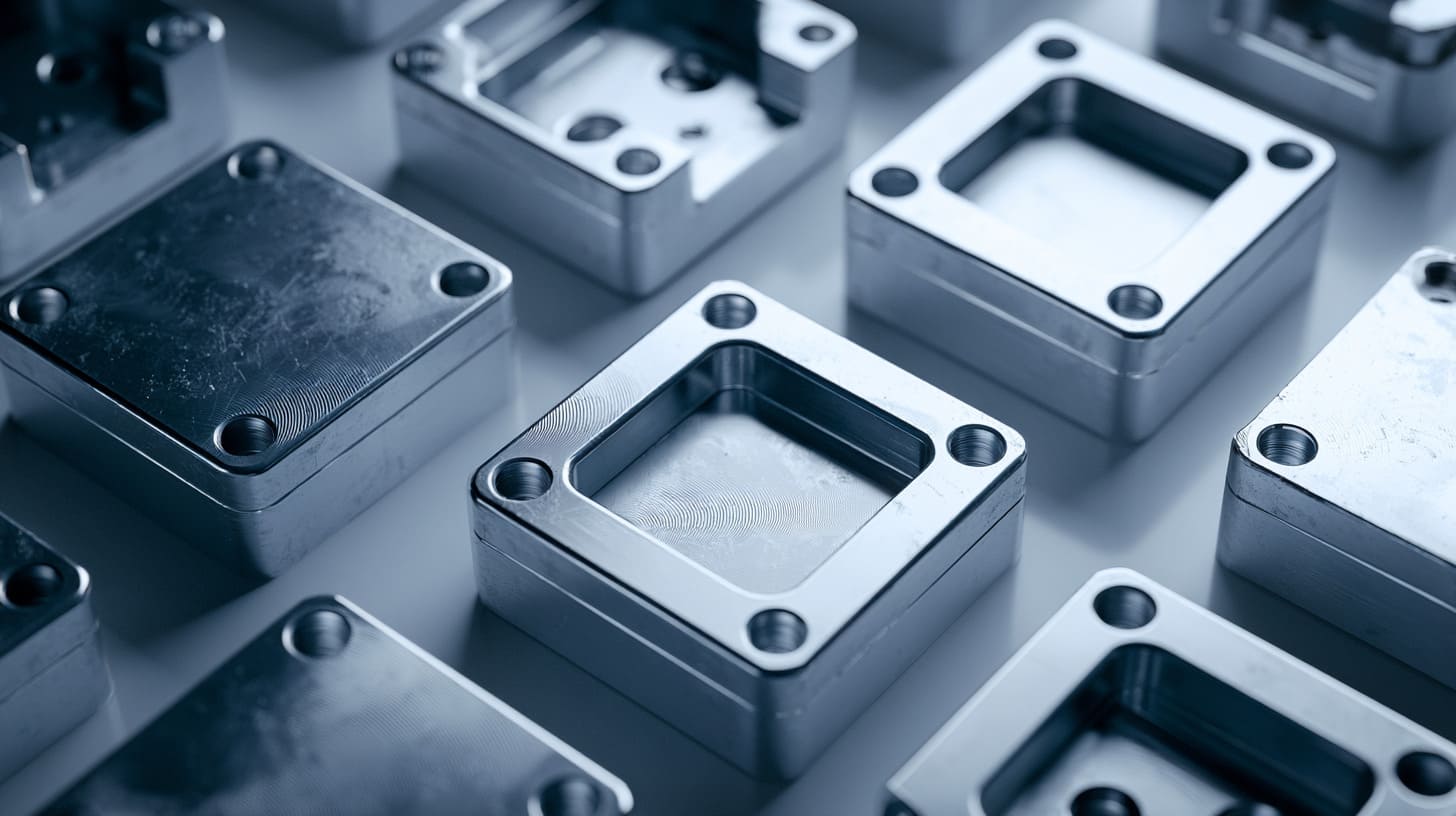
Anodizing has a clean reputation. Many engineers trust it. I also like it for many aluminum enclosure projects.
But anodizing is not a magic filter. It will not turn a poor surface into a perfect one. It will not make every aluminum alloy look the same. It will not give unlimited color choice. It will not remove the need for proper sealing and inspection.
In some ways, anodizing is more honest than powder coating. That is both its strength and its weakness.
Problem 1: Surface Defects Become More Visible
Powder coating can hide small marks. Anodizing usually cannot.
If there are CNC tool marks, sanding lines, extrusion marks, scratches, or uneven brushing before anodizing, they may still show after anodizing. Sometimes they even look more obvious because the finish makes the surface cleaner and more reflective.
This matters a lot for visible electronic enclosures.
| Surface Condition Before Anodizing | Likely Result After Anodizing |
|---|---|
| Clean CNC surface | Good, sharp, premium look |
| Deep tool marks | Marks remain visible |
| Uneven sanding | Uneven finish |
| Mixed surface directions | Different reflection |
| Extrusion lines | Lines may still show |
| Scratches before finish | Scratches may remain |
For a hidden industrial part, this may be acceptable. For a front panel, a premium device case, or a product photo for Amazon, it may not be acceptable.
The first thing I check before anodizing is not the color sample. I check whether the raw aluminum surface is good enough to deserve anodizing.
That may sound strict, but it is practical. Bad preparation creates bad anodizing.
Problem 2: Color Consistency Can Be Difficult
Many buyers think anodizing color is like paint color. It is not.
Powder coating can be matched by powder color. Anodizing color depends on more things:
- Aluminum alloy
- Aluminum batch
- Surface preparation
- Anodizing time
- Layer thickness
- Dye control
- Sealing process
- Part shape
- Surface texture
Black anodizing is common and usually easier to manage. Natural silver is also common. But bright colors, champagne tones, blue, red, and custom colors can vary more.
| Color Requirement | Risk Level | My Suggestion |
|---|---|---|
| Natural silver | Low to medium | Still approve sample |
| Black | Medium | Good control needed |
| Dark gray | Medium to high | Define acceptable range |
| Bright colors | High | Sample approval is important |
| Repeat orders over time | Medium to high | Keep material and process stable |
Color variation becomes more serious when the product has multiple parts assembled together. A top cover and bottom body may look slightly different if they are made from different aluminum batches or processed separately.
For repeat OEM orders, I do not promise “forever same color” too casually. I prefer to set a sample standard first, because a small color difference can become a big argument when the product is sold as a branded item.
Problem 3: Alloy Selection Matters
Not all aluminum anodizes the same way.
CNC aluminum and extruded aluminum usually anodize better than many die-cast aluminum parts. Some casting alloys have higher silicon content. They may become darker, duller, or less uniform after anodizing.
This is one reason die-cast aluminum housings are often powder coated instead of anodized.
| Aluminum Type | Anodizing Result | Common Comment |
|---|---|---|
| 6061 CNC aluminum | Usually good | Common for machined enclosures |
| 6063 extruded aluminum | Usually good | Common for profiles and heatsink cases |
| 5052 sheet aluminum | Can be good | Often used for sheet parts |
| Die-cast aluminum | Often less uniform | Powder coating may be safer |
| Mixed alloys in one product | Color mismatch risk | Avoid if appearance matters |
If the customer wants anodizing only because it sounds premium, I still check the material first. The finish should match the alloy, not fight it.
Problem 4: Outdoor and Chemical Exposure Still Need Review
Anodizing is durable, but it is not indestructible.
Poor sealing can reduce corrosion resistance. Harsh cleaning chemicals can damage the surface. Strong alkaline cleaners are especially risky. Some industrial environments may also expose the enclosure to oils, chemicals, or salt spray.
| Exposure | Anodizing Concern | What I Check |
|---|---|---|
| Outdoor sunlight | Usually good | Color and sealing |
| Salt air | Higher corrosion risk | Alloy and sealing quality |
| Strong alkaline cleaner | Surface damage risk | Cleaning method |
| Industrial chemicals | Depends on chemical | Use environment |
| Frequent handling | Usually good | Wear and color depth |
For outdoor enclosures, I do not only ask “rain or no rain.” I ask how the enclosure will be installed and cleaned, because maintenance habits can damage a finish faster than the weather itself.
Judgment for OEM Buyers
Anodizing is often better for precision aluminum parts, but it demands more control before finishing. Material selection, machining quality, brushing direction, surface preparation, and color approval all matter.
If a customer wants a premium anodized finish, I need them to accept one thing: the finish will show the truth of the part. That means the drawing, material, and machining process must be ready for that level of honesty.
Once we understand the hidden problems, we can choose the finish by enclosure type, not by general opinion.
Which Finish Is Better for Custom Aluminum Enclosures?
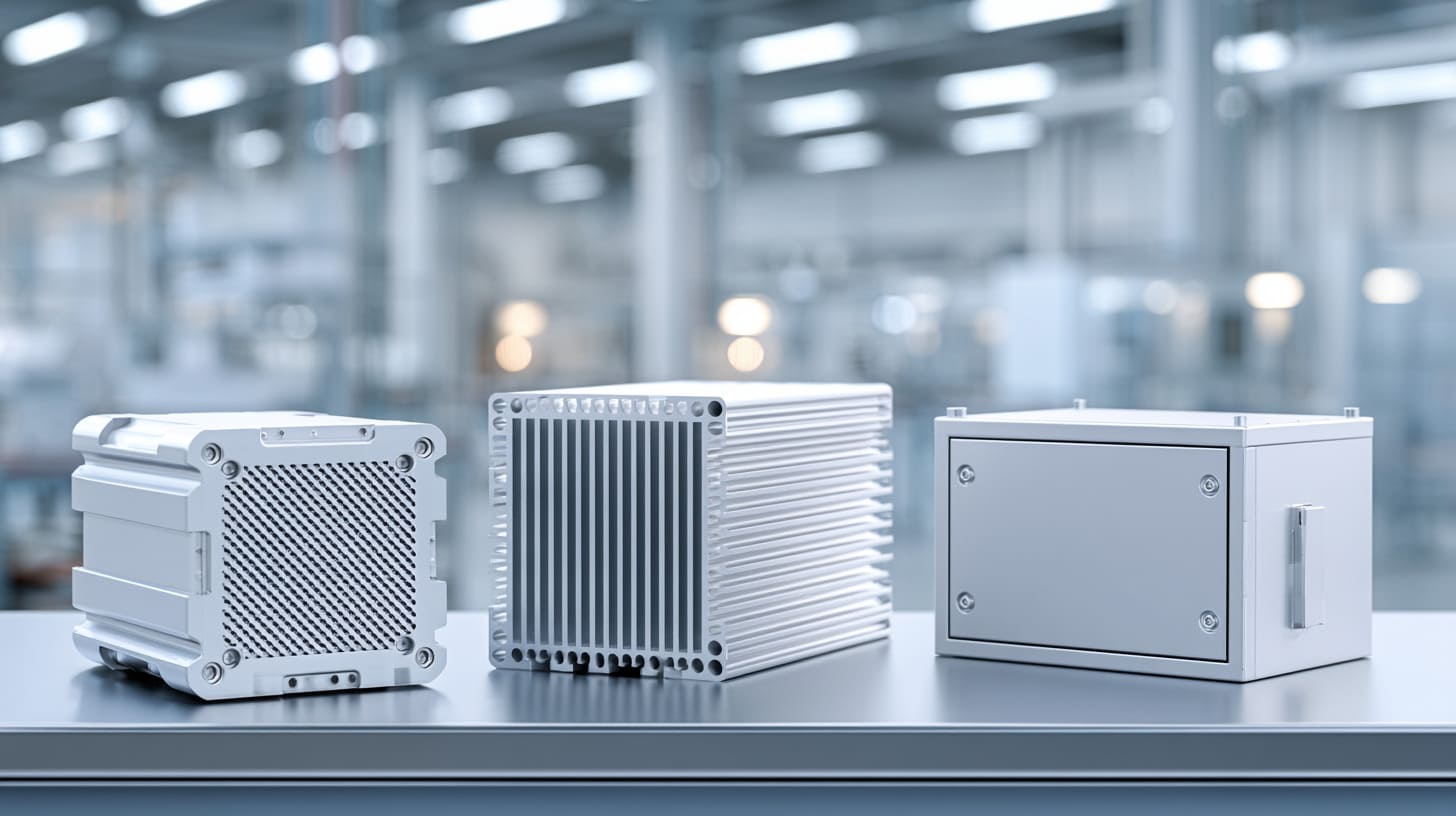
There is no single best finish for every custom aluminum enclosure.
A small CNC aluminum case is not the same as a large sheet metal control cabinet. A heatsink enclosure is not the same as a decorative front panel. A Raspberry Pi case is not the same as an outdoor junction box.
So I prefer to choose the finish by product structure.
CNC Aluminum Enclosures
For CNC aluminum enclosures, anodizing is often my first choice.
CNC cases usually have tight details. They may have USB ports, screw bosses, board mounting holes, heat contact areas, and precise covers. A thick coating can make these areas harder to control.
Anodizing keeps the metal look and does not add as much thickness as powder coating.
| CNC Enclosure Feature | Better Finish Logic |
|---|---|
| Tight screw holes | Anodizing is easier to control |
| Sharp machined edges | Anodizing keeps detail |
| Premium appearance | Anodizing looks more like real aluminum |
| Logo engraving | Anodizing works well with laser marking |
| High-touch use | Anodizing usually performs well |
For Raspberry Pi style cases, I often prefer anodizing, especially black or natural anodizing. It gives a clean look and keeps the part precise.
But if the customer wants a special brand color, powder coating may still be discussed. Then we need to check port clearance, screw fit, and masking.
Sheet Metal Enclosures
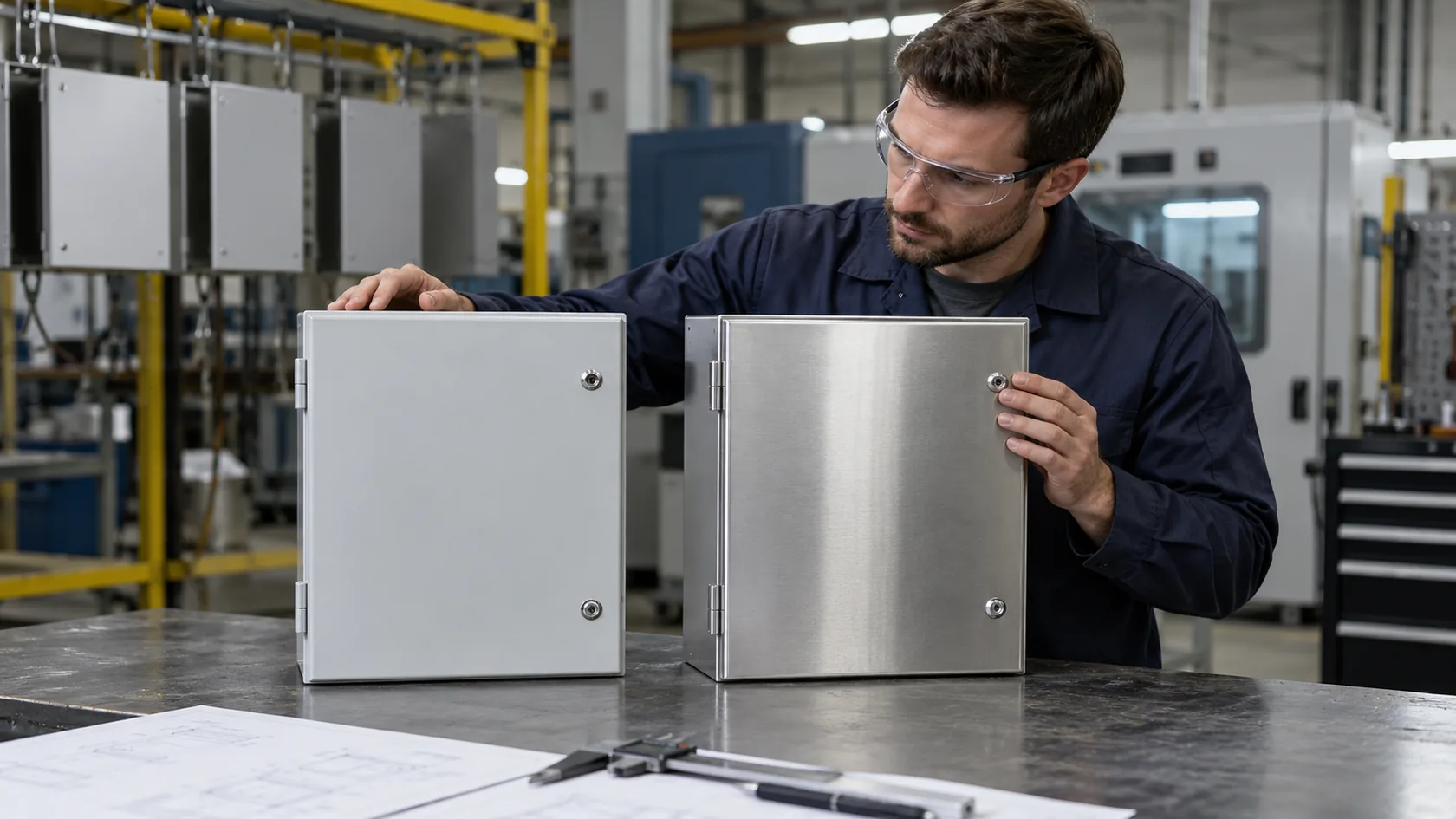
For sheet metal enclosures, powder coating is often more practical.
Sheet metal boxes, electrical control boxes, and larger industrial cabinets usually need good surface coverage and color consistency. Powder coating works well for that.
It can also help cover minor surface marks from bending, welding, and fabrication.
| Sheet Metal Need | Why Powder Coating Often Works |
|---|---|
| Large surface area | Gives uniform painted look |
| Brand color | Wide color options |
| Welded structure | Can cover minor marks |
| Outdoor cabinet | Works with proper pretreatment |
| Industrial use | Strong surface protection possible |
For large sheet metal enclosures, anodizing is less common. It may not be practical for size, structure, material mix, or cosmetic control.
Extruded Aluminum Enclosures
Extruded aluminum enclosures sit in the middle.
Many extruded aluminum cases look good with anodizing. The profile keeps its clean metal lines. Heatsink fins also look sharp. Anodizing is common for electronics housings and fanless enclosures.
But powder coating can also work when the customer wants a specific brand color or a more uniform painted appearance.
| Extruded Enclosure Situation | Better Starting Point |
|---|---|
| Heatsink fins | Anodizing |
| Metallic product look | Anodizing |
| Custom brand color | Powder coating |
| Large surface cosmetic uniformity | Powder coating |
| Tight sliding cover | Anodizing or controlled coating |
Here is one small detail I often check: if the extruded case has sliding panels, coating thickness can affect the sliding fit. This is not a big issue if planned early. It is a big issue if discovered after finishing.
Outdoor Protective Enclosures
Outdoor protective enclosures need a more careful decision.
The finish must match the real environment. A product installed under a roof in Finland is not the same as a product installed near a salty coast. A wall-mounted control box is not the same as a pole-mounted device under direct sun.
| Outdoor Condition | Finish Concern |
|---|---|
| Direct sunlight | UV stability |
| Rain | Corrosion protection |
| Coastal air | Salt resistance |
| Industrial area | Chemical exposure |
| Frequent cleaning | Cleaner compatibility |
| Public installation | Scratch and impact risk |
Powder coating can work well outdoors if the powder and pretreatment are correct. Anodizing can also work well if the material and sealing are correct.
The finish is only one part of the outdoor design. The enclosure still needs proper sealing, gasket design, screws, cable glands, drainage thinking, and installation planning.
Judgment for Project Selection
For custom enclosures, I rarely choose a finish before I understand the structure.
A neat rule I use is this: small precision aluminum part, start with anodizing; large painted enclosure, start with powder coating; harsh outdoor project, stop and review the environment first.
That rule is not perfect. But it prevents many bad early decisions.
To make the choice easier, let us put the key factors into one table.
Key Comparison Table for Product Engineers
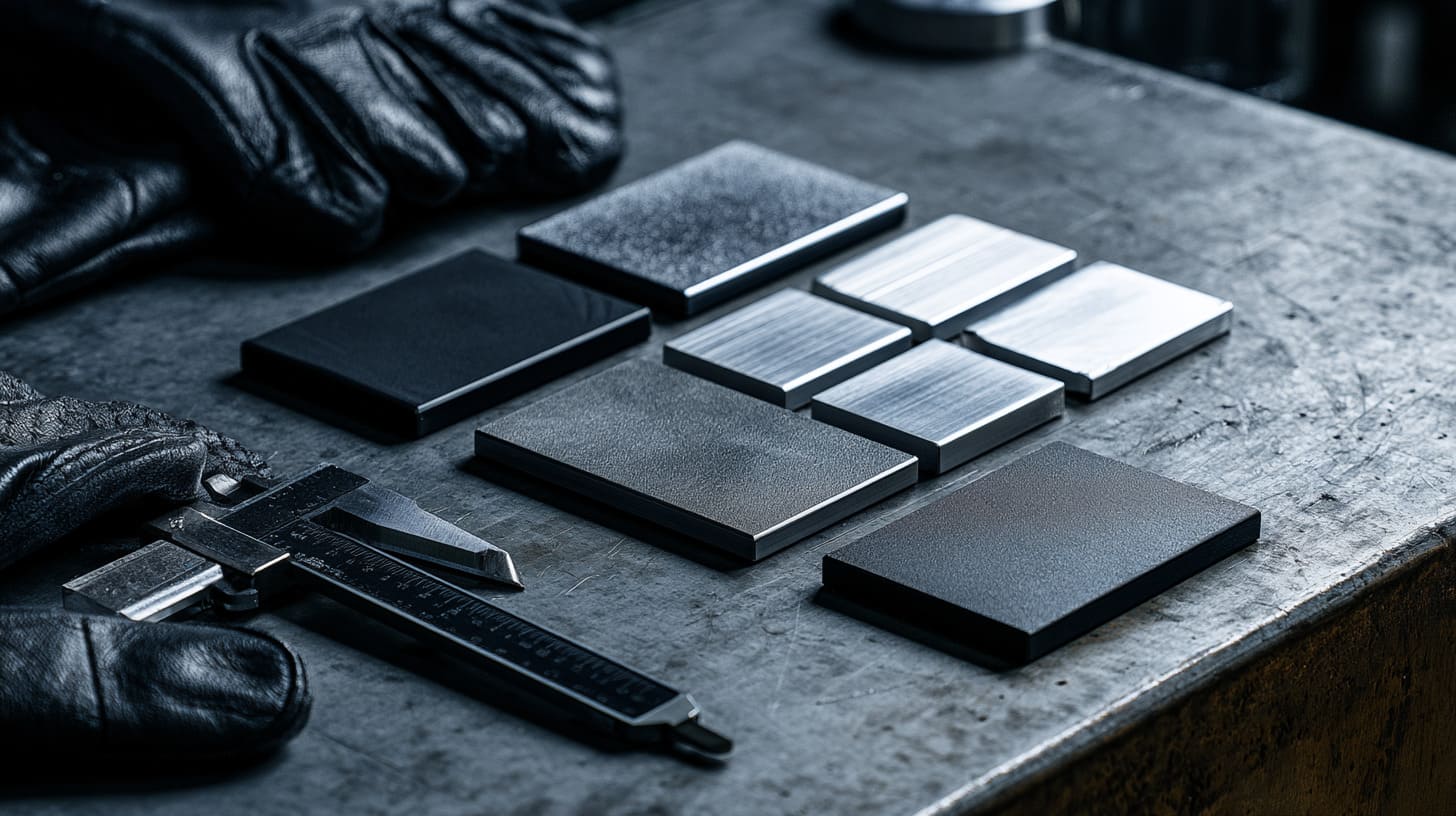
Product engineers usually do not need a long debate. They need a clear comparison that helps them make a decision and avoid risk.
So I like using a table. A table does not solve every problem, but it makes the trade-offs easier to see.
Suggested Comparison Factors
| Factor | Powder Coating | Anodizing | Better Choice Depends On |
|---|---|---|---|
| Color options | Excellent | Limited | Branding needs |
| Metallic look | Low to medium | Excellent | Product positioning |
| Thickness control | Lower | Better | Assembly tolerance |
| Scratch resistance | Good | Often better | Handling frequency |
| Chipping risk | Possible | Low | Edge design |
| UV stability | Depends on powder grade | Usually strong | Outdoor exposure |
| Surface defect hiding | Better | Worse | Cosmetic standard |
| Repair | Easier but visible | Harder | Field service need |
| Large enclosure suitability | Strong | Limited by part and process | Size and structure |
| Precision CNC parts | Possible but risky | Strong | Fit and tolerance |
| Custom texture | Strong | Limited | Visual design |
| Logo engraving | Possible | Very suitable | Branding method |
| Chemical exposure | Depends on coating type | Depends on sealing and chemical | Use environment |
A buyer may look at this table and say, “Anodizing wins more rows.” But that is not always the right reading.
If your main goal is brand color on a big cabinet, powder coating may be the better finish even if anodizing wins on wear resistance. If your main goal is a precise aluminum product with a premium metal feel, anodizing may be better even if powder coating offers more color options.
Judgment Behind the Table
The right decision is not made by counting which finish wins more points. I care more about which factor can destroy the project if we ignore it.
For example:
- If the enclosure has a tight sliding cover, thickness control may matter more than color.
- If the product is sold as a branded retail item, color and cosmetic appearance may matter more than repair.
- If the part is installed outdoors near the sea, corrosion protection may matter more than a smooth indoor appearance.
- If the part needs a perfect logo, the marking method must be checked before the finish is chosen.
- If the quantity is small, custom color setup cost may change the best choice.
Here is a simple decision view:
| Main Project Priority | Safer Starting Option | Reason |
|---|---|---|
| Tight CNC fit | Anodizing | Less coating thickness issue |
| Brand color | Powder coating | More color choices |
| Metallic premium look | Anodizing | Keeps aluminum appearance |
| Large sheet metal cabinet | Powder coating | Better coverage and process fit |
| Outdoor sunlight | Anodizing or outdoor powder | Depends on full environment |
| Hidden industrial part | Powder coating | Practical and cost-friendly |
| High-touch consumer product | Anodizing | Good wear and clean feel |
| Need to hide small defects | Powder coating | Better surface coverage |
A finish choice is a small decision on the drawing. But it becomes a big decision in production, especially when cost, lead time, and MOQ enter the room.
Cost, Lead Time, and MOQ: The Buying Reality
Many technical articles compare powder coating and anodizing only by performance. That is useful, but it is not enough for real sourcing.
Buyers also need to think about cost, lead time, MOQ, color setup, sample approval, batch stability, and rework risk.
A finish that looks cheaper at the quote stage may become more expensive later if it causes assembly problems, color disputes, or delays.
Powder Coating Cost Factors
Powder coating cost is not only about surface area. It also depends on color, powder type, masking, pretreatment, texture, and batch size.
| Cost Factor | Why It Affects Price |
|---|---|
| Color type | Standard colors are easier; custom colors may cost more |
| Powder grade | Outdoor-grade powder may cost more |
| Texture or gloss | Special finishes may need specific powder |
| Pretreatment | Better corrosion protection may need better process |
| Masking | More masking means more labor |
| Batch size | Small batches can have higher unit cost |
| Color change | Frequent color changes reduce efficiency |
| Part shape | Deep corners and complex parts need more care |
For a standard black or white powder coating, the cost can be very reasonable. For a custom textured brand color in a small quantity, the cost picture changes.
Anodizing Cost Factors
Anodizing cost depends on the aluminum material, surface preparation, finish type, color, and cosmetic standard.
If the customer wants a beautiful black anodized CNC enclosure, the machining and surface preparation matter a lot. If brushing, polishing, or fine surface control is needed, the cost goes up.
| Cost Factor | Why It Affects Price |
|---|---|
| Aluminum alloy | Some alloys anodize better than others |
| Surface finish before anodizing | Better surface prep adds cost |
| Type of anodizing | Hard anodizing usually costs more |
| Color | Custom colors can be harder to control |
| Sealing | Better sealing improves durability |
| Cosmetic inspection | Higher standard means more rejection risk |
| Part size | Large parts may be harder to process |
| Repeat color need | Batch control may need more management |
Anodizing can be cost-effective for many CNC aluminum parts. But it becomes more sensitive when the buyer expects a very high cosmetic level.
Lead Time Risks
Lead time is not only about production speed. It is also about confirmation speed.
Many delays start before mass production. The buyer wants a finish sample. The supplier prepares it. The customer checks it. Then the customer asks for a small color change. The supplier tries again.
This is normal. But it should be planned.
| Situation | Possible Delay |
|---|---|
| Custom powder color | Powder sourcing and sample approval |
| Textured powder | Matching texture and gloss |
| Custom anodized color | Color trial and batch adjustment |
| High cosmetic standard | More inspection and rework |
| Unclear masking areas | Back-and-forth before production |
| Small quantity | Harder to arrange efficient batch |
| Repeat order after long time | Color matching needs checking again |
For buyers like Davide or Jackson, delay is often more painful than a small price difference. If their enclosure is part of a larger product launch, late finishing can delay the whole project.
Judgment for Procurement Teams
The cheapest finish quote is not always the lowest project cost.
I usually tell buyers to compare the finish cost together with rework risk, approval time, assembly risk, and future repeat orders. A low unit price can become expensive if the parts need re-coating, re-tapping, sorting, or air shipping because the schedule is late.
A few extra cents saved on finishing can disappear quickly when a project misses its delivery window.
This is also why many mistakes repeat again and again.
Common Mistakes When Choosing Between Powder Coating and Anodizing
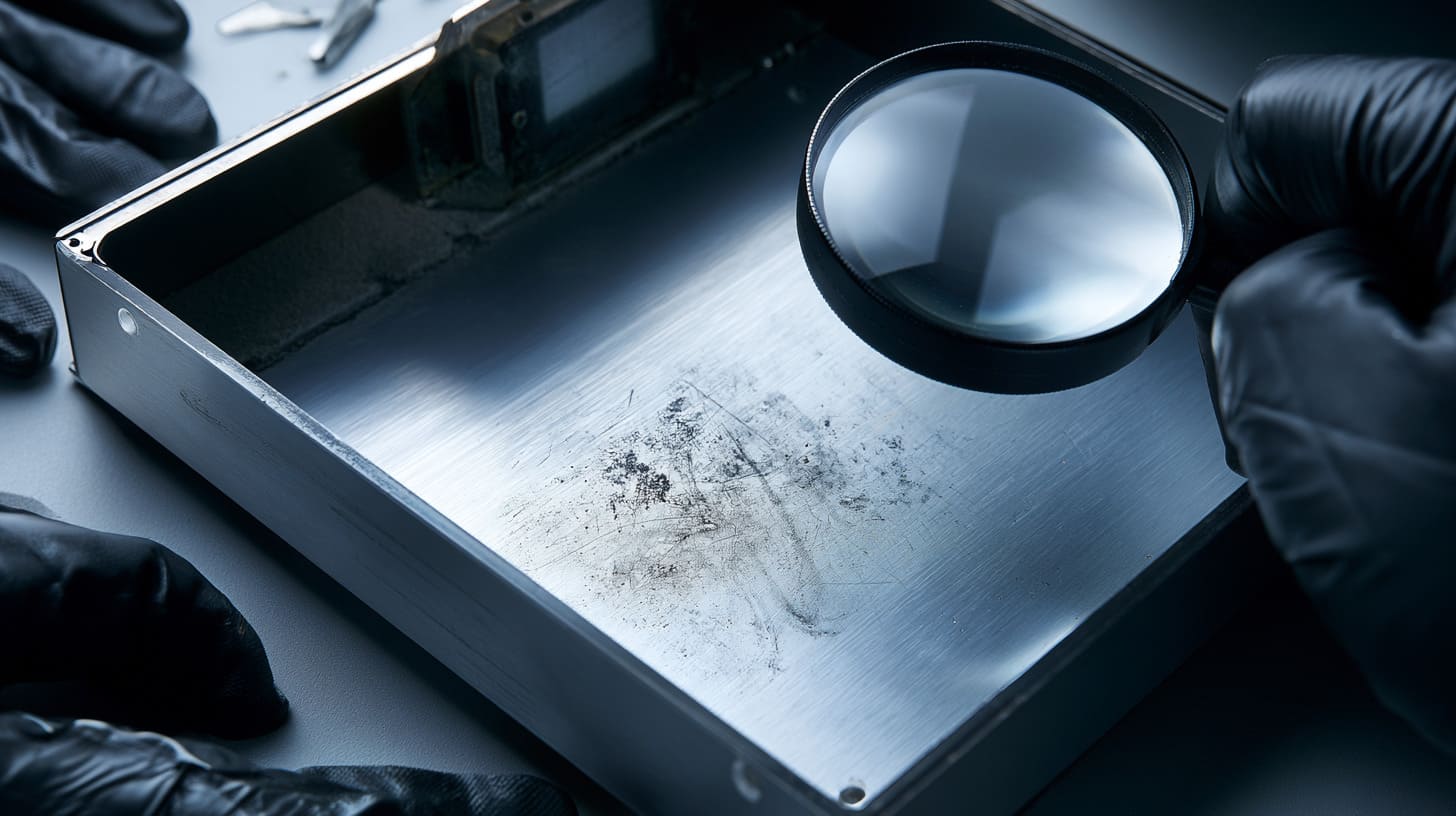
Most finish mistakes do not happen because the buyer is careless. They happen because the buyer asks the wrong question too early.
“Which finish is more durable?” is not a bad question. It is just not enough.
The better question is: “What problems can this finish create for my design, my users, and my production schedule?”
Mistake 1: Choosing Only by Durability
Durability is important. I am not saying it is not.
But a durable finish can still fail the project if it creates fit problems, color problems, or appearance problems.
For example, powder coating may be strong on a large flat surface. But if it makes a cover too tight, the buyer will not praise its durability. They will complain that the product is hard to assemble.
Anodizing may have great wear resistance. But if it shows every tool mark on a front panel, the buyer may reject it for cosmetic reasons.
| Buyer Thinking | Hidden Risk |
|---|---|
| “Use the most durable finish.” | The finish may not fit the design |
| “Powder coating is thicker, so it is better.” | Thickness may affect assembly |
| “Anodizing is premium, so it is better.” | Surface defects may show |
| “Outdoor means powder coating.” | Powder grade and pretreatment still matter |
| “Black anodizing is simple.” | Color variation can still happen |
Mistake 2: Ignoring Tolerance Build-Up
Tolerance build-up is one of the most common problems with powder coating.
If two coated parts fit together, the coating thickness affects both sides. A small number becomes bigger when surfaces meet.
Critical areas should be marked clearly on the drawing.
These may include:
- Threads
- Screw holes
- Sliding rails
- Cover grooves
- Grounding points
- Gasket surfaces
- Press-fit areas
- Hinge areas
- Connector openings
| Drawing Detail | Good Practice |
|---|---|
| Threaded hole | Mark as masked or tap after coating |
| Grounding point | Mark no coating area |
| Sliding surface | Define coating allowance |
| Gasket area | Confirm compression after coating |
| Port cutout | Check finished opening size |
I do not like guessing on these areas. If the buyer does not mark them, I prefer to ask before production. A small question before coating is cheaper than a big argument after coating.
Mistake 3: Expecting Perfect Color Matching Forever
Color is emotional. A buyer may accept a small tolerance difference in a hidden hole, but they may reject a small color difference on a front cover.
Powder coating color is easier to control than many anodized colors, but it still depends on powder batch, gloss, texture, and curing. Anodizing color depends even more on alloy, surface, and process.
For repeat orders, the risk is higher.
| Finish | Color Matching Risk |
|---|---|
| Standard powder black | Usually lower |
| Custom powder color | Medium |
| Textured powder | Medium |
| Natural anodizing | Low to medium |
| Black anodizing | Medium |
| Custom anodizing color | High |
| Mixed material parts | High |
A sample is not just a formality. It is the language between buyer and factory.
If the buyer says “same as last order,” I still prefer to check whether the material, surface process, and finish supplier are the same. Memory is not a quality standard. A sample is.
Mistake 4: Using the Same Finish for Every Product
Some companies want to simplify purchasing. They choose one finish for all products.
That can work if the product family is similar. But it can fail when the structures are different.
A small machined aluminum housing, a wall-mounted sheet metal box, and an outdoor heatsink enclosure do not face the same problems.
| Product Type | Finish That Often Makes Sense |
|---|---|
| Small CNC electronics case | Anodizing |
| Large control cabinet | Powder coating |
| Outdoor die-cast box | Powder coating often safer |
| Extruded heatsink enclosure | Anodizing often strong |
| Branded retail enclosure | Depends on color and appearance |
| Hidden industrial bracket | Powder coating or simple finish |
One finish standard may look efficient in the purchasing system, but it can create design limits for engineers.
Mistake 5: Not Discussing Use Environment
The use environment changes the finish decision.
Indoor office use is different from outdoor telecom use. A clean lab is different from a factory floor. A dry warehouse is different from a coastal installation.
| Use Environment | Finish Questions |
|---|---|
| Indoor electronics | Will users touch it often? |
| Outdoor wall mount | Is there direct sunlight and rain? |
| Coastal area | Is salt air a concern? |
| Factory floor | Are oil or chemicals present? |
| Washdown area | What cleaning chemicals are used? |
| Retail product | How strict is the cosmetic requirement? |
The mistake I watch for is when the buyer describes the product, but not the environment. The enclosure does not live on the drawing. It lives where the end user installs it.
That is why a good RFQ should include more than size and color.
How to Specify the Right Finish in an RFQ
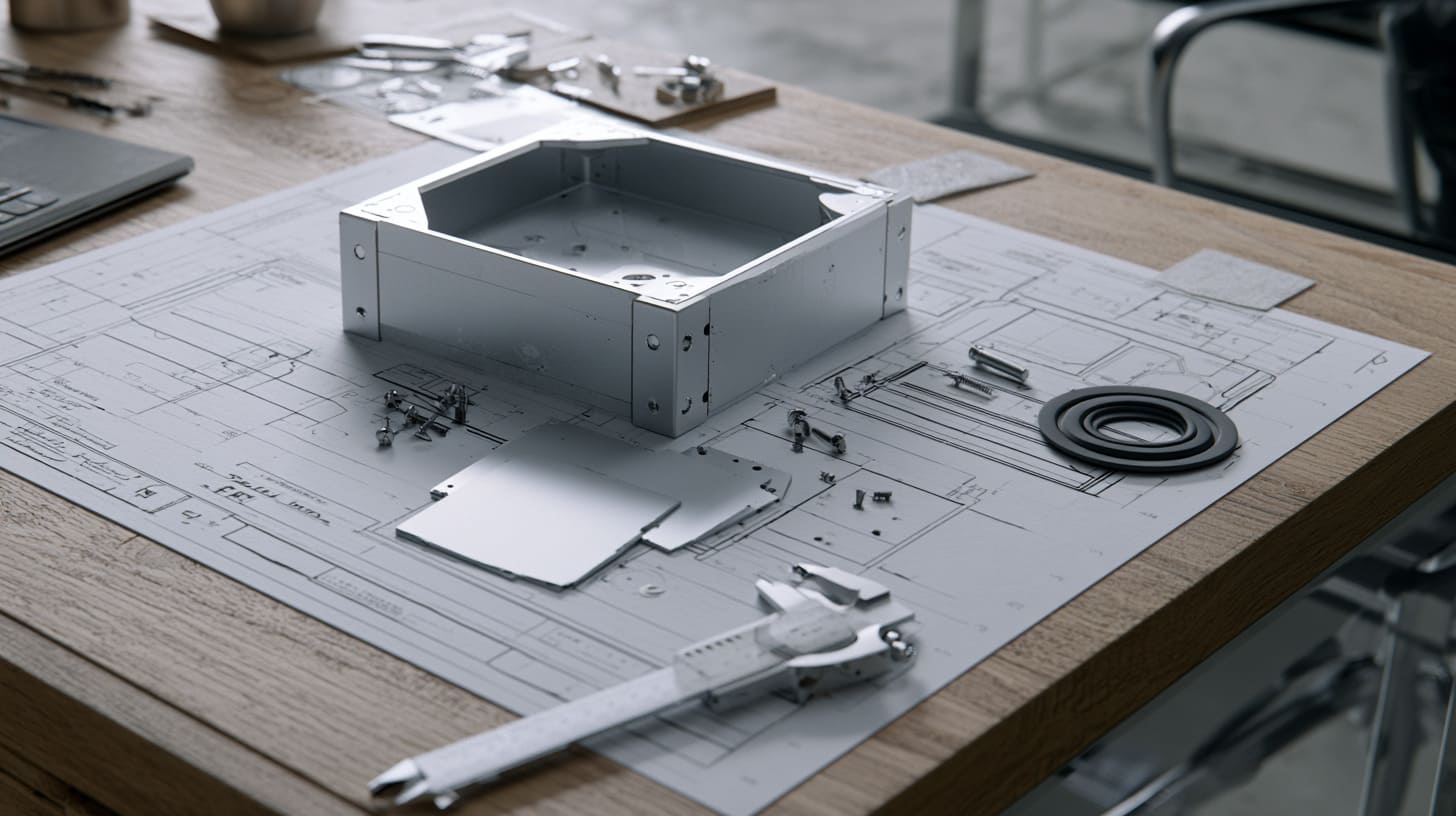
A clear RFQ saves time for both sides.
Many buyers send only a 3D drawing and say, “Quote powder coating black.” That can work for a simple project. But for custom OEM enclosures, more detail is better.
The finish affects cost, quality, lead time, and assembly. So it should be specified clearly.
Information Buyers Should Provide
Here is the information I like to see when quoting powder coating or anodizing.
| RFQ Information | Why It Helps |
|---|---|
| Material and aluminum grade | Finish result depends on material |
| Product size | Affects process and cost |
| Product structure | Helps check masking and assembly |
| Indoor or outdoor use | Changes finish grade |
| Color requirement | Standard or custom color |
| Surface texture | Matte, gloss, brushed, smooth, textured |
| Critical dimensions | Helps avoid fit problems |
| Threads and screw holes | May need masking |
| Grounding points | Coating may block contact |
| Logo method | Engraving, printing, UV print, silk print |
| Quantity | Affects setup and unit cost |
| Repeat order plan | Helps manage color consistency |
| Cosmetic standard | Defines acceptable finish quality |
| Packaging method | Protects finish during shipping |
If the buyer can provide photos of similar products, that also helps. A drawing gives dimensions. A photo gives appearance expectations.
Questions the Factory Should Ask
A good supplier should not only accept the finish request and quote quickly. Fast replies are good, but blind replies are risky.
For powder coating or anodizing, I usually want to know:
- Is the finish mainly for protection, appearance, or both?
- Will the product be used indoors or outdoors?
- Will the enclosure face UV, rain, salt air, oil, or chemicals?
- Are there tight-fitting covers or sliding parts?
- Are there threaded holes that need masking?
- Are there grounding areas?
- Does the logo need printing, engraving, or laser marking?
- Does the buyer accept normal color variation?
- Is the surface cosmetic-grade or industrial-grade?
- Will the product be handled often by end users?
These questions are not meant to slow the buyer down. They are meant to prevent wrong assumptions.
A Simple RFQ Example
A weak RFQ may look like this:
| Weak RFQ |
|---|
| “Please quote aluminum enclosure, black finish, logo required.” |
A better RFQ may look like this:
| Better RFQ |
|---|
| “Please quote 6061 CNC aluminum enclosure, black anodizing, outdoor but under roof, logo laser marking on top cover, 500 pcs first order, repeat order expected. Please check screw holes and board mounting posts. Front surface should be cosmetic-grade. Minor internal marks acceptable.” |
The second RFQ gives the factory something useful. It helps us quote faster and with fewer assumptions.
Judgment for Communication
When I receive a finish request, I do not only ask, “Can we make it?” I ask, “Where can this finish cause trouble later?”
That is the difference between a supplier who only processes parts and a supplier who helps reduce project risk.
For custom enclosure projects, communication is part of quality control. A clear RFQ can prevent wrong finishing, wrong masking, wrong logo process, and wrong expectations.
Now I want to share the simple framework I use at MaidaTech when customers ask me to choose.
MaidaTech Factory Suggestion: A Practical Finish Selection Framework
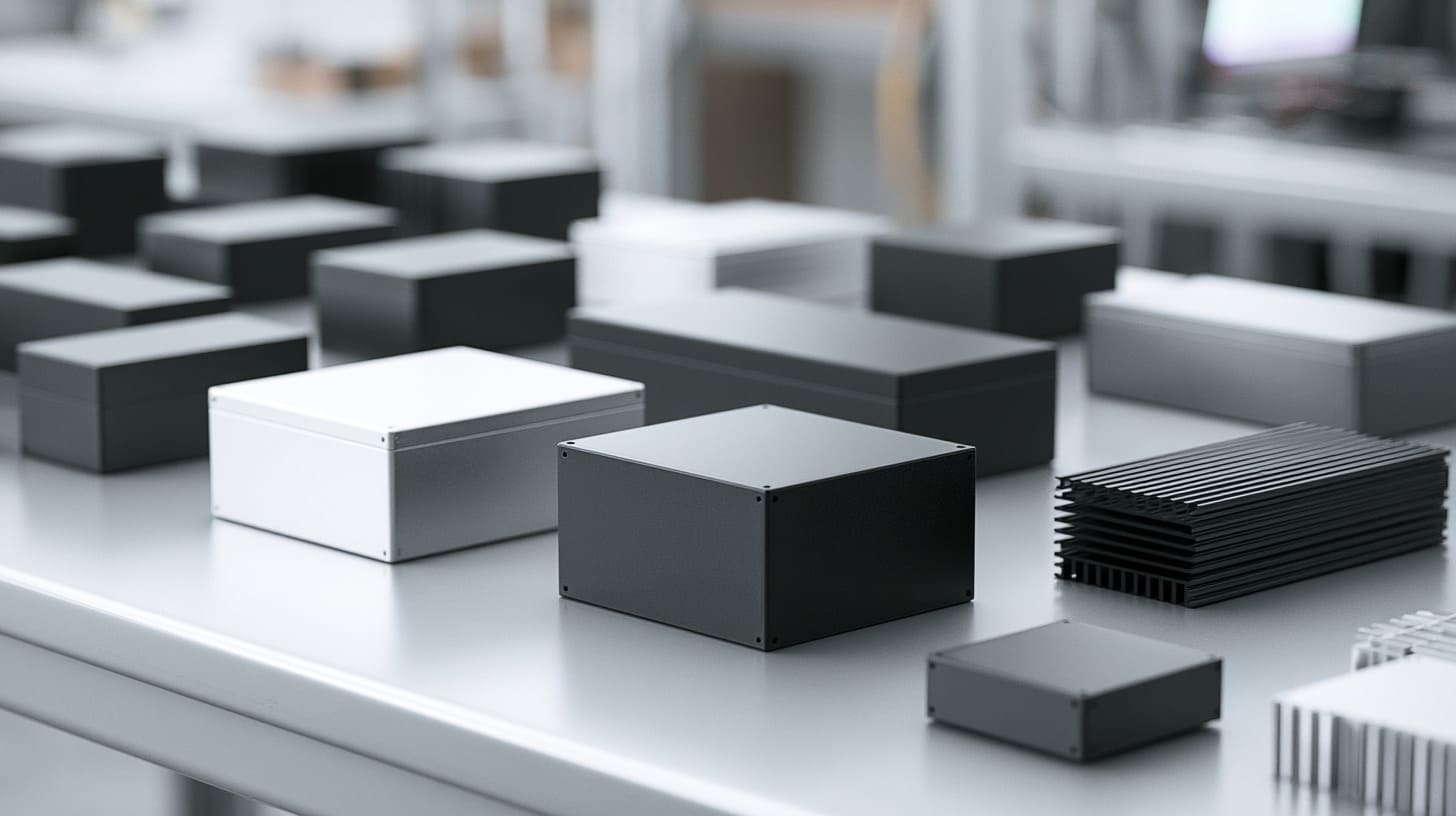
At MaidaTech, we make custom aluminum enclosures, sheet metal enclosures, plastic enclosures, Raspberry Pi style cases, and other OEM housings. So we do not push only one finish.
Some projects are better with powder coating. Some are better with anodizing. Some need a mixed solution.
The important thing is to choose the finish after checking the drawing and use case, not before.
Choose Powder Coating When
Powder coating is usually a good starting point when the customer needs color, surface coverage, and a painted appearance.
I often suggest powder coating when:
- The enclosure needs a custom brand color.
- The part is a large sheet metal box.
- The product is a cabinet-style enclosure.
- The design has enough clearance for coating thickness.
- The buyer wants matte, gloss, or textured finish.
- Small fabrication marks need to be hidden.
- The product needs visual consistency across large panels.
- The buyer wants a more economical finish for larger structures.
| Project Example | Why I May Choose Powder Coating |
|---|---|
| Electrical control box | Strong color and surface protection |
| Sheet metal cabinet | Good coverage for large panels |
| Outdoor painted enclosure | Works with outdoor powder and pretreatment |
| Brand color OEM product | Easier color matching |
| Textured black enclosure | Hides small handling marks |
But I still check the design. Powder coating is not a free pass. If there are tight gaps, threads, or grounding points, we need masking or design changes.
Choose Anodizing When
Anodizing is usually a good starting point when the part is precision aluminum and the customer wants a metallic finish.
I often suggest anodizing when:
- The enclosure is CNC machined.
- The part is extruded aluminum.
- Tight tolerance is important.
- The customer wants a metal look.
- The product is handled often.
- The logo will be laser marked or engraved.
- The enclosure has heatsink fins.
- The product should feel premium but not painted.
| Project Example | Why I May Choose Anodizing |
|---|---|
| CNC aluminum electronics case | Keeps precise dimensions |
| Raspberry Pi aluminum case | Clean look and good fit |
| Extruded heatsink enclosure | Keeps fin details |
| Premium device housing | Looks like real aluminum |
| High-touch product | Good wear resistance |
But anodizing needs good surface preparation. If the customer wants a perfect cosmetic finish, we may need better machining control, brushing, polishing, or stricter inspection.
Consider a Hybrid Strategy When
Some custom enclosure projects do not need one finish for every part.
For example, an enclosure may have:
- An anodized CNC aluminum body
- A powder coated sheet metal cover
- A laser marked logo
- A silk printed warning mark
- Masked grounding points
- Stainless steel screws
- Rubber gasket installed after coating
This kind of mixed approach can be more practical than forcing one finish everywhere.
| Hybrid Situation | Practical Reason |
|---|---|
| CNC body + sheet metal cover | Each part gets the finish that fits best |
| Anodized heatsink + powder coated panel | Heat and branding needs are both covered |
| Powder coated box + masked grounding area | Protection without losing electrical contact |
| Anodized case + printed logo | Clean appearance and brand marking |
| Outdoor enclosure + special gasket area | Finish and sealing both protected |
A hybrid strategy may sound more complex, but sometimes it reduces total risk.
Logo and Branding Considerations
Many OEM buyers need a logo on the enclosure. The finish affects the best logo method.
| Finish | Common Logo Method | Notes |
|---|---|---|
| Powder coating | Silk printing, UV printing, pad printing | Good for color logos |
| Powder coating | Laser marking | Depends on coating and contrast |
| Anodizing | Laser engraving | Very common and clean |
| Anodizing | Silk printing | Possible, but surface and ink need checking |
| Brushed anodizing | Laser logo | Premium look |
| Textured powder | Printing | Need test for ink adhesion |
If a buyer sends me a logo file, I check the finish before I suggest the logo method. A good logo on the wrong finish can still look poor.
Judgment for OEM Projects
For custom enclosures, I do not believe in choosing finishes from a fixed rule sheet.
I look at the drawing, the installation environment, the quantity, the customer’s brand needs, and the assembly method. Then I choose the finish that gives the product the best chance to pass production, inspection, shipping, and real use.
That is why my answer to “powder coating or anodizing?” is often, “Let me check the drawing first.”
It may sound slower. But it is faster than fixing a wrong finish later.
Conclusion: The More Durable Finish Can Still Be the Wrong Finish
Powder coating and anodizing are both useful finishes for aluminum enclosures.
Anodizing is often stronger for precision aluminum parts, metallic appearance, wear resistance, UV stability, and clean laser marking. It works very well for CNC aluminum cases, extruded enclosures, heatsink housings, and products that need a premium metal feel.
Powder coating is often better for color flexibility, large sheet metal surfaces, custom brand colors, textured finishes, and parts where small surface marks need to be hidden. It works well for control boxes, electrical cabinets, outdoor painted enclosures, and many OEM products with strong visual branding needs.
But I do not choose only by the word “durable.”
I think this way because I have seen too many projects where the finish was technically good, but the final product still had problems. A powder coated cover became too tight. An anodized surface showed tool marks. A custom color did not match the last batch. A threaded hole needed rework. A beautiful coating chipped at a sharp mounting ear. None of these problems look big at the beginning. They become big when the buyer is waiting for shipment.
That is why I believe the better finish is the one that fits the whole project.
It should protect the enclosure. It should support assembly. It should match the brand. It should survive the use environment. It should not create hidden cost, slow down delivery, or surprise the buyer after mass production.
If you already have a custom aluminum enclosure drawing, the safest next step is not to guess the finish from a comparison chart. Send the drawing, quantity, use environment, color requirement, and logo method to the factory. Then review powder coating, anodizing, or a hybrid solution based on the real design.
At MaidaTech, this is how I prefer to work. I do not just want to make the enclosure look good on day one. I want it to fit well, ship well, install well, and make fewer problems for your project later.