Skip to content
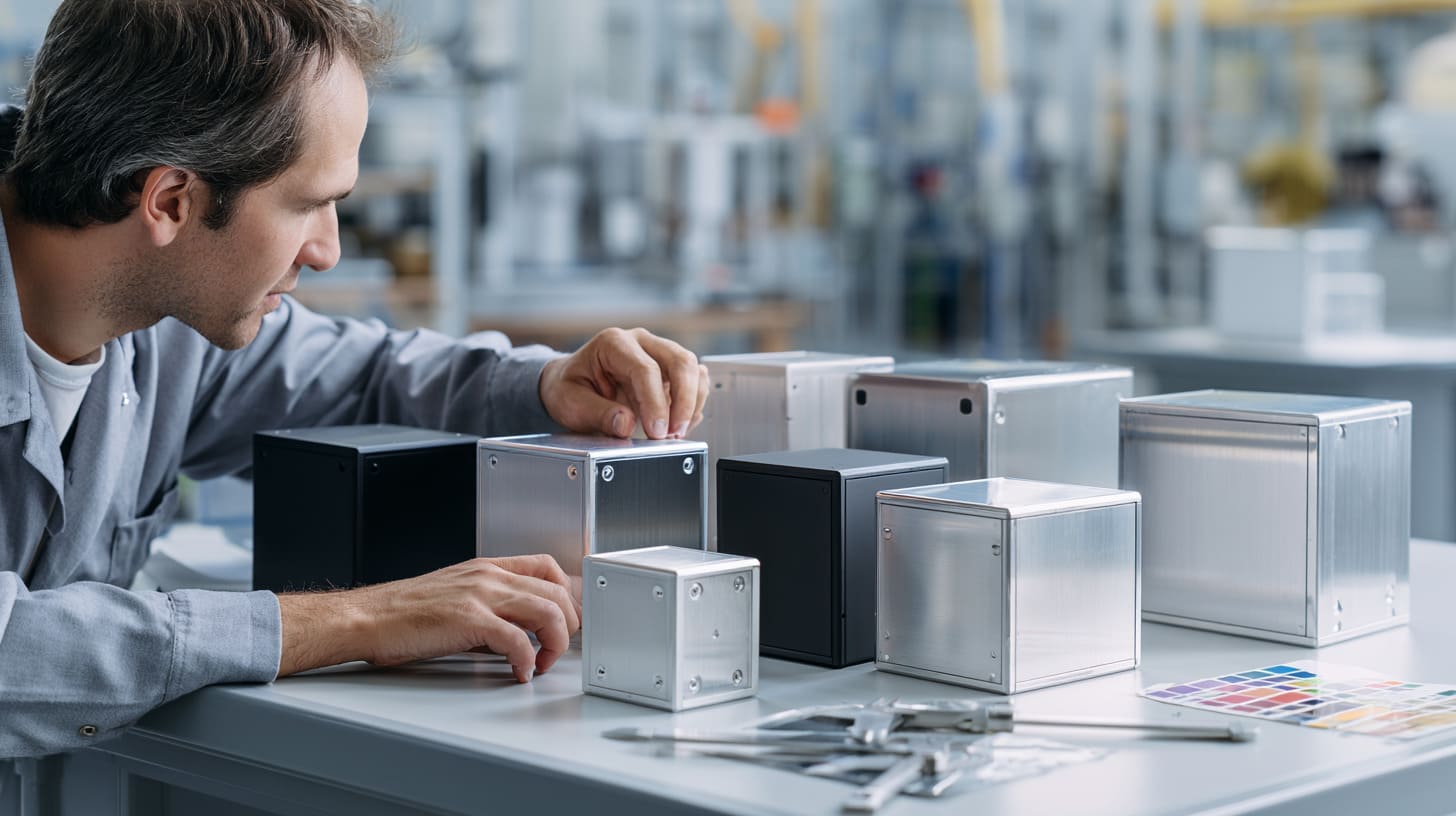
A customer once sent me a rendering of a compact electronic controller. The enclosure looked clean, modern, and expensive. The customer wanted a bright white aluminum body with an exact Pantone color match.
He also wanted a conductive internal surface for grounding.
Then he added one more request: several connector openings might need to move after prototype testing.
His first finishing choice was anodizing.
At first glance, that choice sounded reasonable. Aluminum and anodizing often appear together. Many industrial computers, audio products, medical devices, and consumer electronics use anodized aluminum. The finish can look professional, resist corrosion, and survive years of normal use.
But in this case, anodizing was not the right answer.
The exact white color would be difficult to achieve. The oxide layer could interfere with grounding. Later machining would expose bare aluminum around the modified openings. A finish that looked ideal in a rendering could create several manufacturing problems in the real product.
That is the main point of this article: anodizing is a useful finish, but it is not a universal finish.
When I review a new enclosure project, I do not ask, “Is anodizing good?” I ask, “Is anodizing good for this specific design, environment, quantity, and production plan?”
What anodizing is and why it is widely used
Anodizing is an electrochemical process. It changes the natural surface of aluminum into a controlled aluminum oxide layer.
The process does not simply place paint on top of the metal. It grows an oxide structure from the aluminum surface. This layer can then be dyed and sealed.
A basic anodizing process often includes these steps:
- Cleaning and degreasing the aluminum
- Etching or polishing the surface
- Placing the part in an acid electrolyte bath
- Passing an electric current through the bath
- Growing a controlled oxide layer
- Adding color when required
- Sealing the pores in the oxide layer
Anodizing is popular because it can improve both appearance and surface performance.
| Benefit | What it means for an enclosure |
|---|---|
| Corrosion resistance | The aluminum surface is better protected from moisture and normal environmental exposure |
| Wear resistance | The surface becomes harder than untreated aluminum |
| Appearance | The finish can look clean, metallic, and professional |
| Color options | Black, silver, gold, red, blue, and other colors are possible |
| Low peeling risk | The finish is part of the surface, so it does not peel like a thick paint film |
| Electrical insulation | The oxide layer can isolate electricity in areas where insulation is helpful |
These benefits explain why many engineers choose anodizing almost automatically.
Still, the same properties that make anodizing useful can also create problems. The insulating oxide layer can hurt grounding. The transparent finish can reveal machining marks. Color can vary between batches. Deep recesses may not finish evenly.
My first decision is usually based on the enclosure’s function, not its appearance, because a beautiful finish has little value if it creates grounding, assembly, or rework problems later.
Anodizing should solve a problem. It should not become another problem that the engineering team needs to manage.
What Anodizing Does Well
Before discussing when anodizing should be avoided, I want to be fair about what it does well.
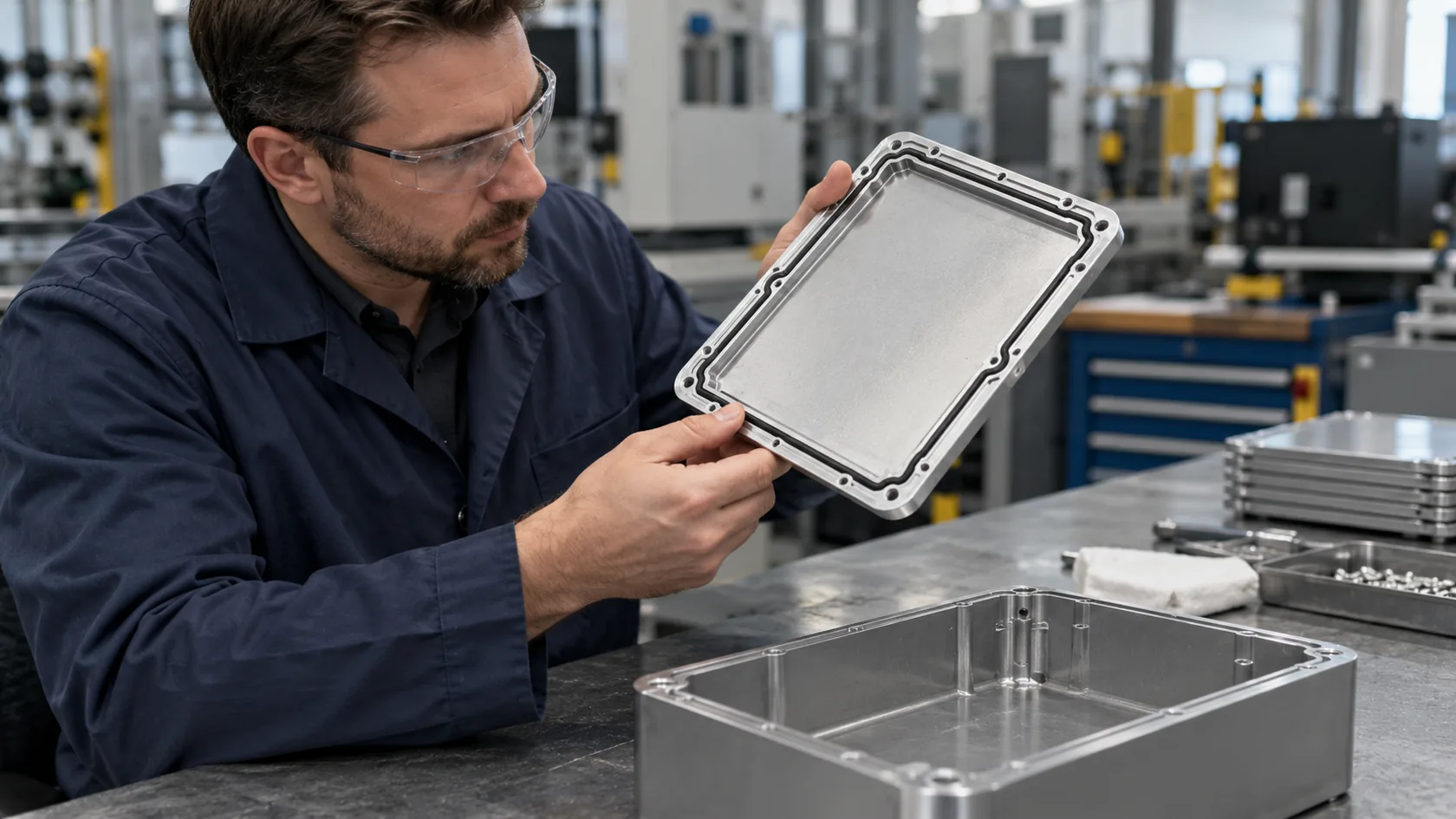
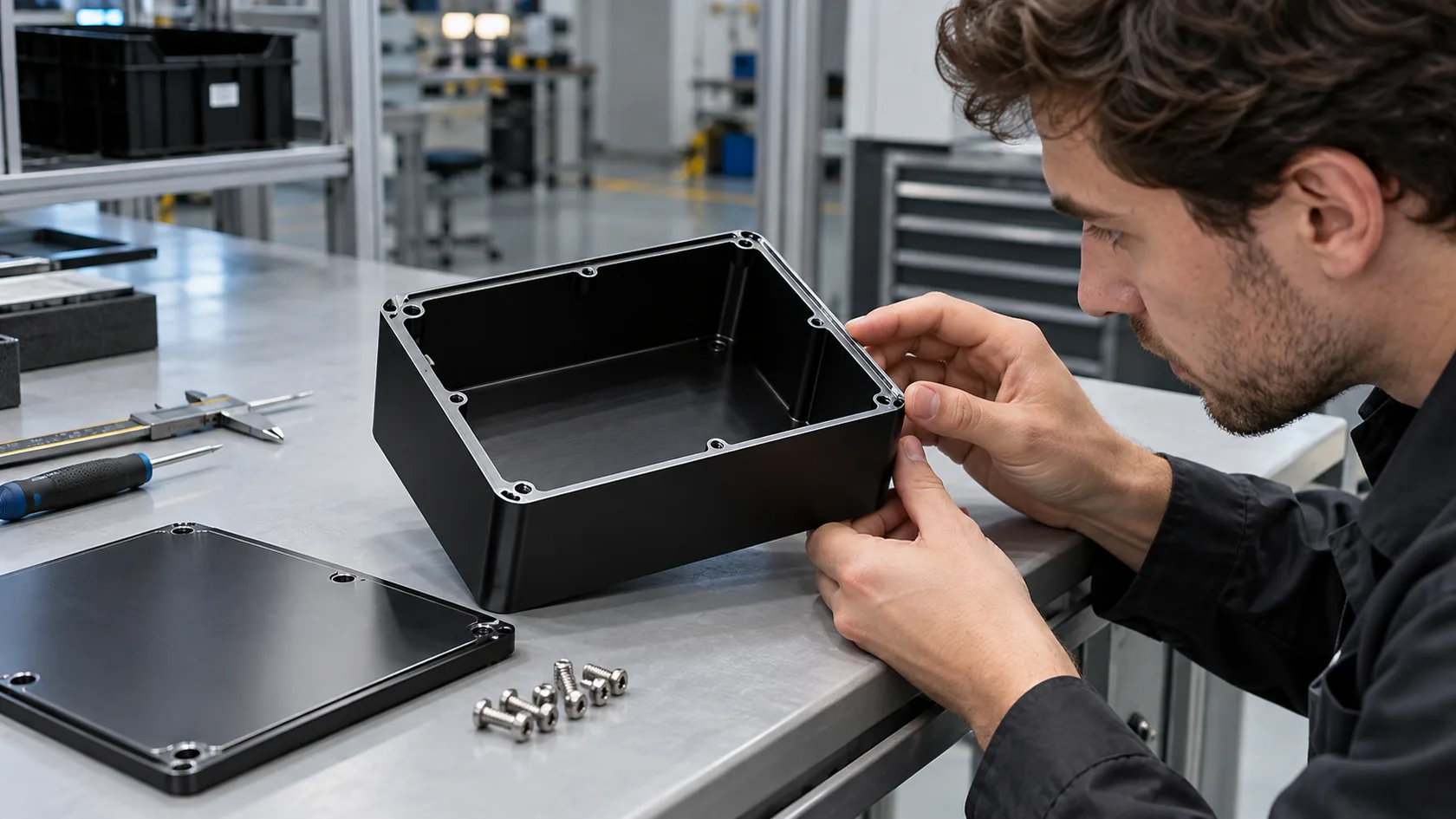
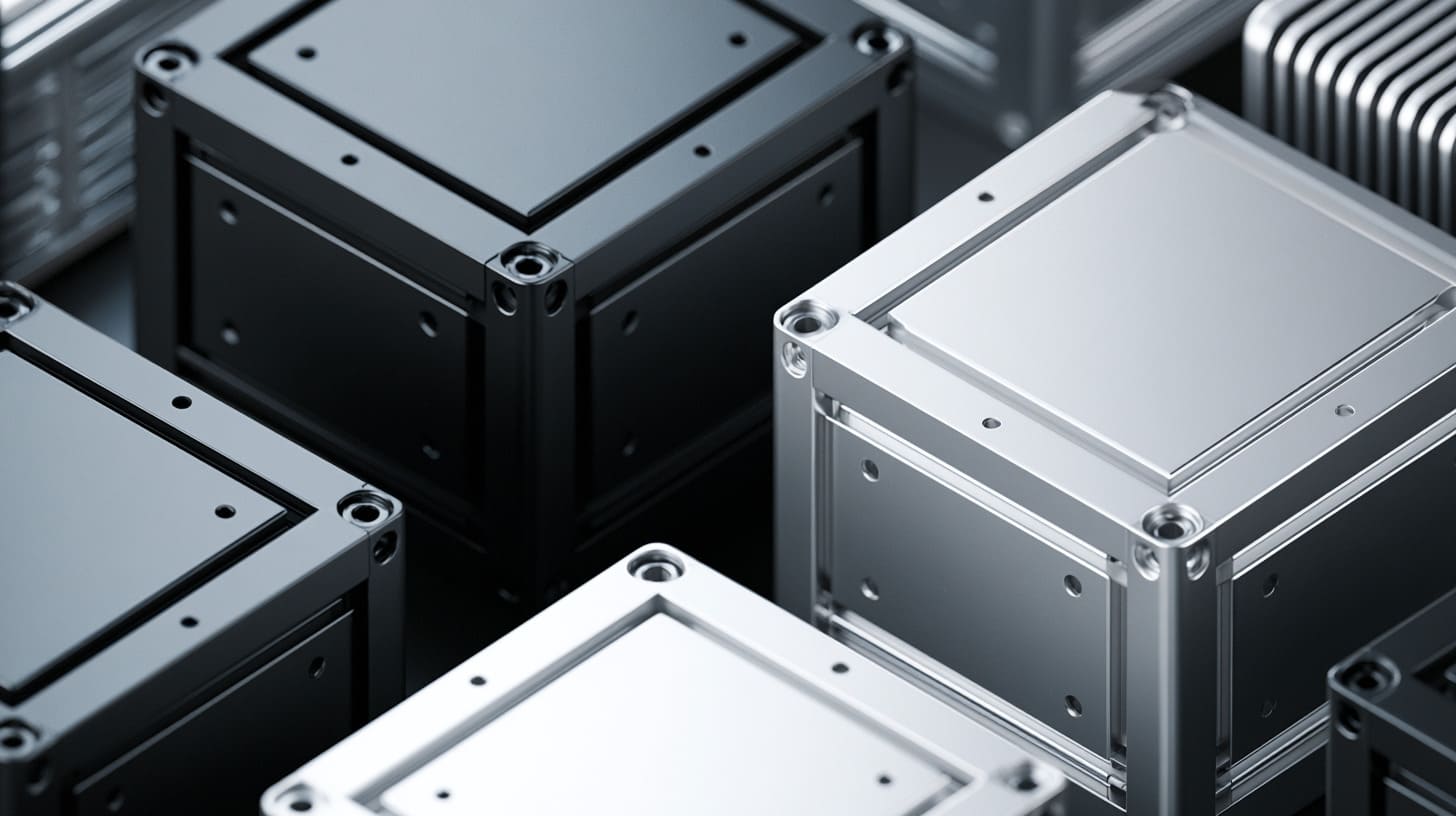
I have worked on many aluminum enclosure projects where anodizing was clearly the best option. A black anodized extruded enclosure can look excellent with CNC-machined front and rear panels. A natural anodized control box can stay clean and stable in an indoor industrial environment. A hard-anodized component can resist repeated sliding contact better than untreated aluminum.
The mistake is not choosing anodizing.
The mistake is choosing it without checking the rest of the product requirements.
Key benefits of anodized aluminum
Good corrosion resistance
Untreated aluminum already forms a thin natural oxide layer. Anodizing makes this layer thicker and more controlled.
For many indoor and moderate outdoor environments, this gives the enclosure useful corrosion protection.
An anodized enclosure can work well for:
- Industrial control systems
- Indoor monitoring equipment
- Test instruments
- Communication devices
- Audio electronics
- Medical equipment housings
- Consumer electronic products
The exact performance still depends on the alloy, anodizing thickness, sealing quality, and operating environment.
Anodizing does not make aluminum invincible. Salt spray, strong chemicals, damaged edges, and poor sealing can still cause problems.
Better surface hardness
The anodized layer is harder than untreated aluminum. It can reduce minor scratching and wear during normal use.
This matters for products that are frequently handled, installed, removed, or cleaned.
For example, a portable test instrument may be placed on workbenches every day. A raw aluminum surface can quickly collect scratches and fingerprints. A properly anodized surface usually keeps a more stable appearance.
However, surface hardness and impact toughness are not the same thing. A hard surface can still crack or chip when the metal underneath is heavily deformed.
A clean metallic appearance
Anodizing keeps the visual character of aluminum.
That is one reason many designers prefer it over paint. Powder coating creates a covering layer. Anodizing still allows the metal texture, machining pattern, or brushed grain to remain visible.
The final appearance depends heavily on the surface before anodizing.
| Surface before anodizing | Typical visual result |
|---|---|
| Fine sandblasting | Soft matte texture |
| Brushing | Visible straight grain |
| Mechanical polishing | Bright decorative finish |
| CNC machining | Machining patterns may remain visible |
| Chemical etching | More uniform matte appearance |
| Poor sanding or handling | Scratches and defects may stay visible |
Anodizing does not hide weak surface preparation. In many cases, it makes the inconsistency easier to see.
Electrical insulation
The anodized oxide layer is electrically insulating.
This can be useful when the designer wants to reduce accidental contact between conductive parts. It can also help prevent some forms of galvanic interaction at selected surfaces.
But this benefit has another side. If the enclosure must act as a grounding path or EMI shield, the insulating layer may need to be removed or masked at contact points.
The same property can be either an advantage or a disadvantage. The application decides which one it is.
Long service life
A well-produced anodized finish can remain stable for years.
It does not normally peel because it is not a separate flexible film sitting on top of the aluminum. It also handles normal temperature changes well.
Its service life depends on several factors:
- Anodizing type
- Coating thickness
- Sealing quality
- UV exposure
- Chemicals
- Cleaning methods
- Mechanical wear
- Alloy quality
- Edge design
I sometimes see buyers compare finishes only by color sample. That comparison is incomplete. A finish should also be judged by how it will age.
Typical applications
Anodizing often performs well in products where the design is stable and metallic appearance matters.
| Application | Why anodizing may work well |
|---|---|
| Industrial computers | Durable appearance and good corrosion resistance |
| Extruded electronics housings | Suitable for long profiles and machined panels |
| Consumer audio products | Premium metallic look |
| Medical instruments | Clean appearance and easy surface maintenance |
| Test equipment | Better wear resistance than bare aluminum |
| Outdoor monitoring devices | Useful corrosion resistance when sealing and alloy selection are correct |
| LED lighting housings | Good appearance and possible thermal benefits from dark surfaces |
| Automation controllers | Stable finish for indoor factory environments |
I become cautious when a customer says, “We always anodize aluminum,” because repeated company habits can hide the fact that a new project has very different electrical, cosmetic, or production needs.
A good finish from the last product may be the wrong finish for the next one.
That difference often becomes obvious only after we examine the cases where anodizing starts to work against the design.
When You Should NOT Choose Anodizing
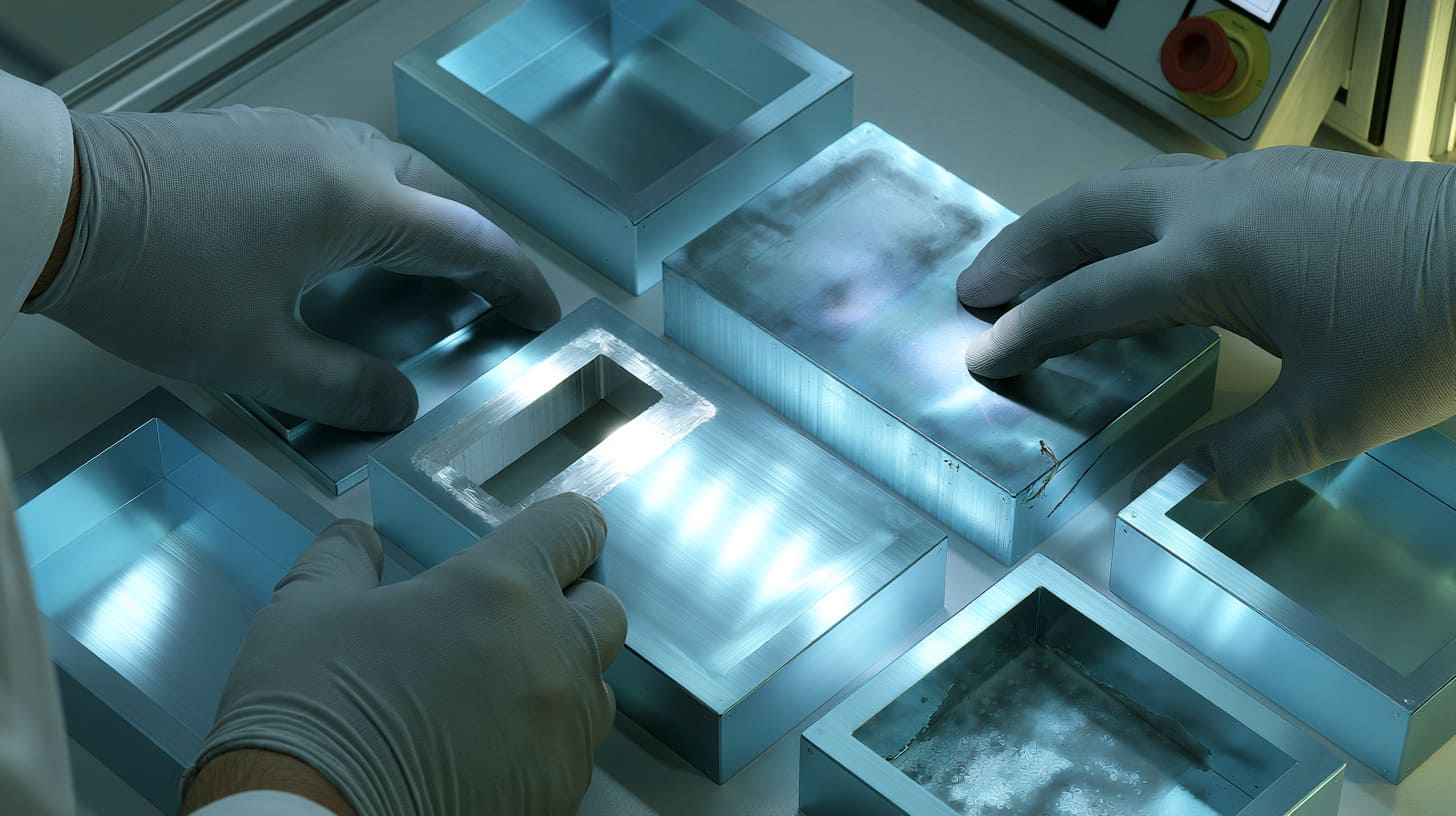
This is where the decision becomes more interesting.
There are projects where anodizing is technically possible, but still not sensible. A factory may be able to produce it. That does not mean the finish will give the customer the best result.
I usually advise against anodizing when its limitations affect a core project requirement.
If you need a wide range of custom colors
Anodizing can produce attractive colors, but it is not the easiest process for exact color control.
The final color can change because of:
- Aluminum alloy
- Material batch
- Surface preparation
- Oxide thickness
- Dye concentration
- Dye temperature
- Dye time
- Sealing process
- Part geometry
- Viewing angle
- Lighting conditions
A customer may approve one sample and then receive a later production batch that looks slightly darker, warmer, or cooler.
The difference may be acceptable for an industrial box. It may not be acceptable for a premium consumer product with several visible aluminum parts placed next to each other.
Pantone matching can be difficult
Pantone systems are usually more useful for printed ink, paint, and coated surfaces than for transparent anodized layers.
An anodized color interacts with the metal below it. This makes exact visual matching more difficult.
Some colors are especially challenging:
- Pure white
- Very light grey
- Bright orange
- Pastel colors
- Highly saturated brand colors
- Fluorescent colors
White anodizing is a common source of confusion. Clear or natural anodizing can look silver, light grey, or slightly warm. It does not normally create a solid painted white appearance.
If a customer needs a precise brand color, powder coating or wet painting is often easier to control.
| Requirement | Anodizing | Powder coating | Wet painting |
|---|---|---|---|
| Metallic appearance | Excellent | Limited | Possible with special paint |
| Exact Pantone match | Difficult | Good | Very good |
| Light pastel colors | Limited | Good | Very good |
| Batch-to-batch stability | Moderate | Good | Good |
| Thin finish | Excellent | Thicker | Medium |
| Surface defect hiding | Poor | Good | Moderate |
I also check whether several parts must match each other. One slightly darker side panel may look fine alone. It can look wrong when fitted beside a lighter front panel.
If your enclosure requires excellent electrical conductivity
The anodized layer is an electrical insulator.
That can interrupt the electrical connection between:
- Cover and chassis
- Front panel and enclosure body
- Ground terminal and housing
- Mounting bracket and enclosure
- Internal shielding plate and case
- Screws and contact surfaces
This matters for grounding and EMI performance.
An aluminum enclosure can help block electromagnetic interference, but only when the conductive sections maintain reliable contact. An anodized surface at the joint can increase electrical resistance.
Common solutions require extra planning
Manufacturers can preserve conductivity by:
- Masking grounding areas before anodizing
- Removing anodizing after finishing
- Using conductive washers
- Adding grounding studs
- Using serrated washers that break through the surface
- Applying chromate conversion coating at contact zones
- Keeping internal surfaces conductive
- Designing dedicated metal-to-metal contact points
Each solution adds design decisions and process control.
Masking may also create visible boundaries. Secondary machining may expose raw aluminum. Mechanical penetration may become less reliable after repeated assembly.
| Grounding method | Benefit | Possible problem |
|---|---|---|
| Masked contact area | Clean conductive surface | Adds process cost and masking tolerance |
| Post-machined contact area | Reliable exposed aluminum | Creates visible raw metal and extra machining |
| Serrated washer | Simple assembly method | Contact may vary with torque and reuse |
| Grounding stud | Controlled ground point | Requires extra hardware and assembly |
| Conductive conversion coating | Supports conductivity | Appearance differs from decorative anodizing |
For EMI-sensitive projects, I look at every joint as an electrical connection, not just a mechanical connection, because one anodized seam can weaken an otherwise well-designed enclosure.
This issue is often overlooked during early industrial design. It then appears during EMC testing, when changes become more expensive.
If your product will be welded after surface treatment
Anodized aluminum should not normally be welded without removing the oxide layer around the welding area.
The anodized layer can interfere with the weld. It can create contamination, unstable welding conditions, and poor results.
The usual sequence should be:
- Cut and form the aluminum
- Weld the required sections
- Grind and finish the welds
- Clean the assembly
- Apply the final surface treatment
Anodizing before welding only makes sense in unusual cases where the finish is intentionally removed at every weld point and the final appearance is not important.
Even then, heat from welding can discolor or damage nearby anodized areas.
This issue appears more often in sheet metal enclosures than in one-piece extruded housings.
A welded sheet metal box may include:
- Corners
- Internal brackets
- Mounting studs
- Reinforcement plates
- Hinges
- Support frames
If those features are not finished before anodizing, the product may need rework.
If they are added after anodizing, the appearance and corrosion protection may suffer.
Anodizing depends on electrical current, chemical access, solution flow, and proper rinsing.
Deep cavities, narrow channels, blind holes, and enclosed spaces can make the process less uniform.
Possible problems include:
- Uneven oxide thickness
- Trapped chemicals
- Poor rinsing
- Color variation
- Weak sealing
- Visible streaks
- Contact marks from racking
- Incomplete dye penetration
Anodizing is not exactly the same as electroplating, but geometry still matters.
Long, deep cavities may not receive the same result as open flat surfaces. If the cosmetic requirement applies only to the outside, this may be acceptable. If every internal surface must look identical, the project becomes harder.
Rack contact points must also be considered
The part needs electrical contact during anodizing. The factory normally holds it with racks or fixtures.
The contact area may leave a small mark with little or no anodizing.
Good fixture design can hide this mark on:
- Internal threads
- Hidden edges
- Mounting holes
- Covered surfaces
- Areas under screws
A design with no hidden contact point creates a cosmetic problem.
This detail is small, but it can matter on a premium product. A customer may inspect the enclosure under bright light and notice a tiny unfinished point near an edge.
If your project has an extremely tight budget
Anodizing adds cost.
The cost does not come only from placing parts in a tank. It can also include:
- Surface polishing
- Brushing
- Sandblasting
- Chemical cleaning
- Masking
- Special racking
- Color matching
- Sample approval
- Small-batch minimum charges
- Rework risk
- Packaging protection
For large, stable production orders, the cost per part may be reasonable. For a prototype or very small order, the minimum process charge can become a large part of the total price.
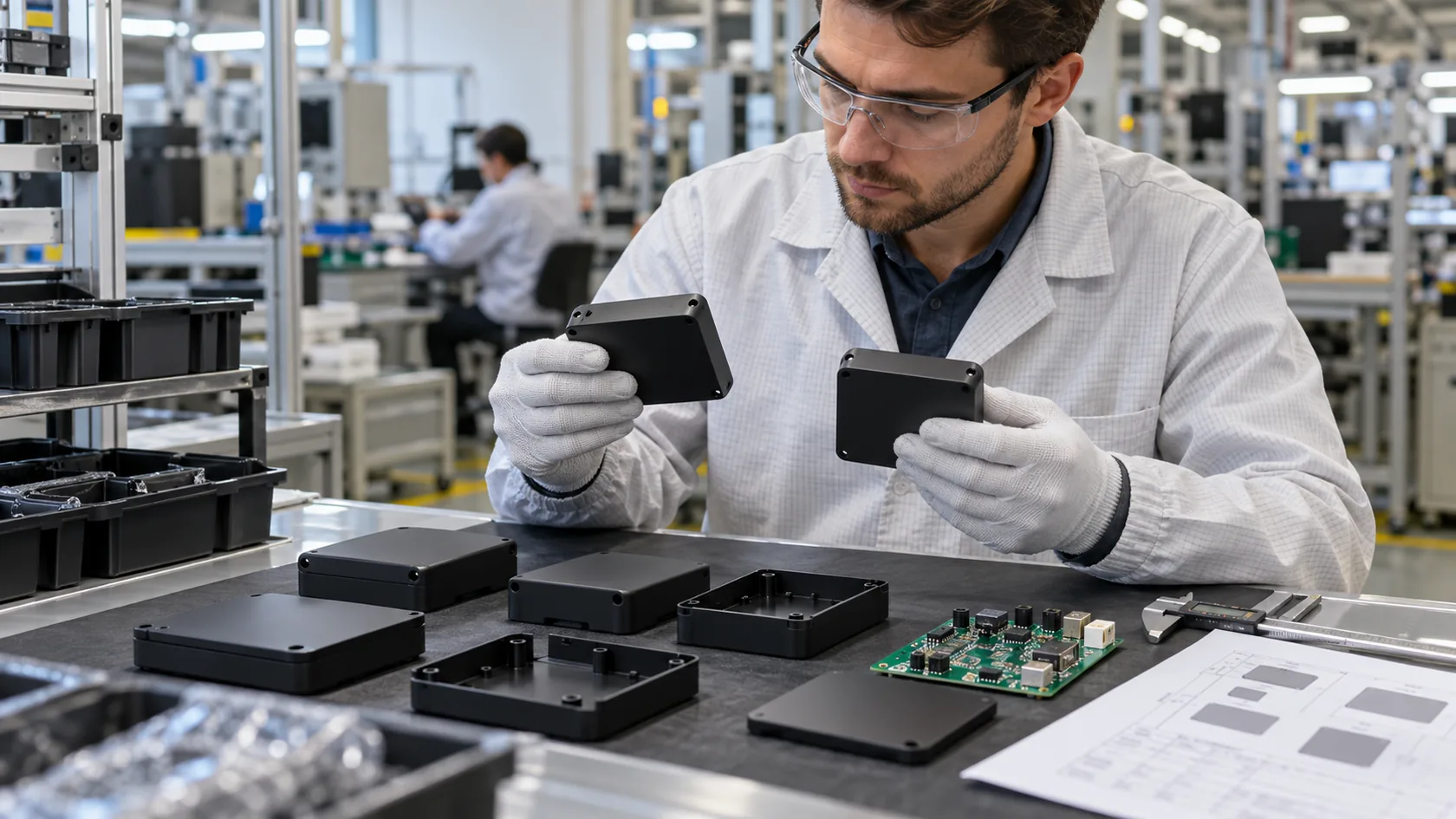
Consider a ten-piece custom enclosure order. The CNC cost may already be high. If the order also needs sandblasting, color anodizing, logo engraving, and individual packaging, the finishing setup cost can become difficult to justify.
| Project condition | Possible better choice |
|---|---|
| Indoor prototype | Raw aluminum or simple brushing |
| Low-cost internal bracket | Bare aluminum |
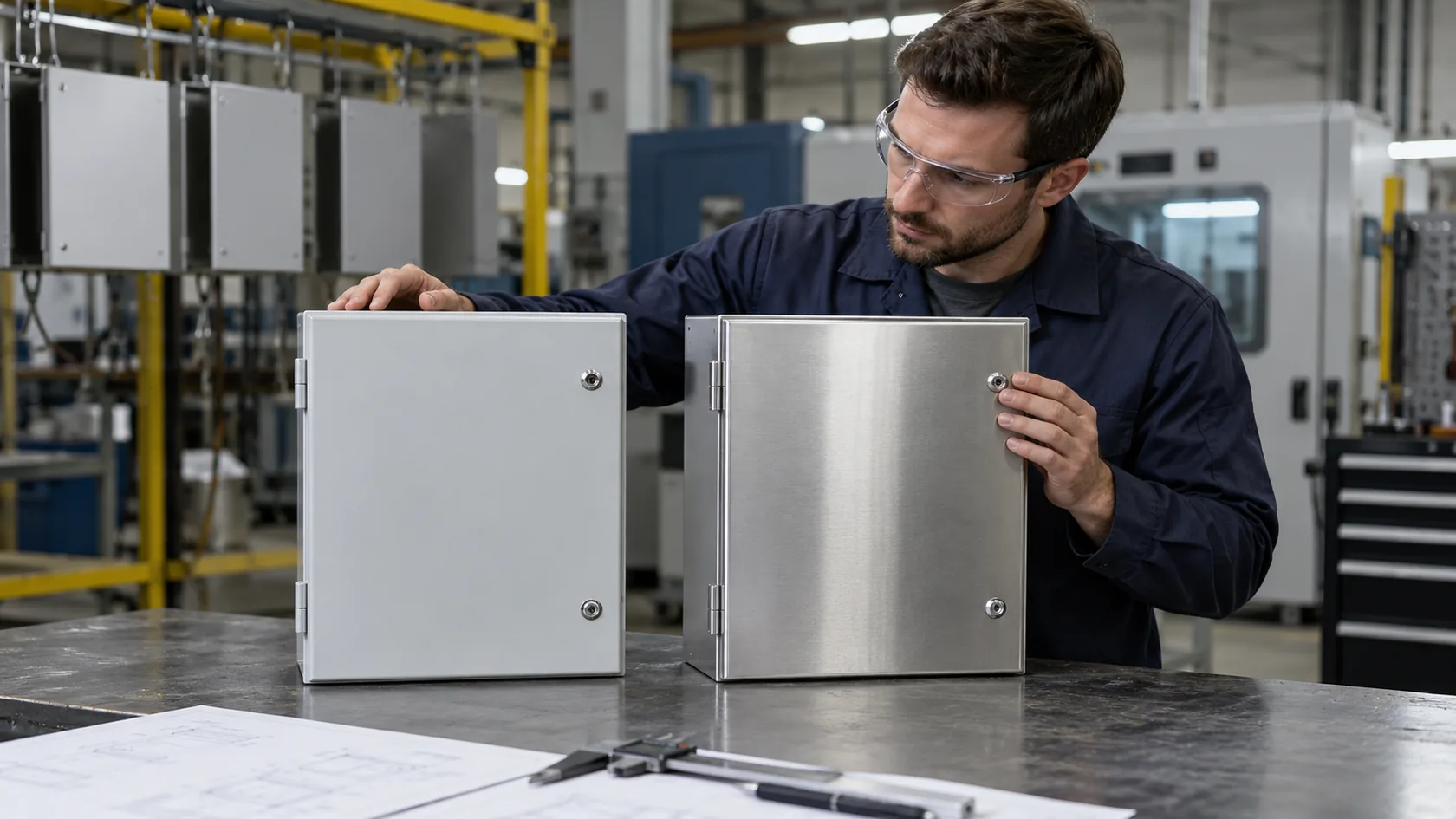
| Small sheet metal order | Powder coating with a standard color |
| Engineering validation sample | No cosmetic finish |
| Temporary test enclosure | Basic paint or unfinished metal |
| Hidden internal component | Conversion coating if conductivity or corrosion protection is needed |
The cheapest finish is not always the lowest-cost decision. A raw enclosure that scratches badly during shipping may need replacement. A poorly selected coating that fails testing may require a full remake.
Still, decorative anodizing is often unnecessary during early prototypes.
If frequent machining or modifications are expected
Custom enclosure projects often change.
A USB port moves by 2 mm. A ventilation pattern becomes larger. A new antenna connector appears. The PCB mounting hole position changes. A rear panel needs an extra switch.
When a finished anodized part returns to the CNC machine, the new cut exposes bright bare aluminum.
The exposed area may be acceptable around a connector opening, especially when the connector flange covers it. It may look poor on a visible external surface.
Re-anodizing is not always a simple repair.
The old finish may need to be stripped. Stripping can change dimensions and surface texture. The part may then need full surface preparation and anodizing again. The new color may still not match the original batch.
Prototypes need room to change
During early development, I often suggest this order:
- Machine the first prototype
- Test PCB fit and connector locations
- Check heat, grounding, and assembly
- Revise the CAD files
- Produce the final prototype
- Apply the intended finish
- Approve the cosmetic standard
- Start production
This approach may feel slower at the beginning. It often prevents expensive finishing work on a design that is not yet stable.
When the design is still moving, I would rather show the customer an unfinished but accurate prototype than a beautiful anodized sample that becomes useless after one connector changes position.
Cosmetic samples are valuable. They are just more valuable after the mechanical design is close to final.
If high-impact resistance is the priority
Anodizing creates a hard surface, but it is not a soft impact-absorbing layer.
When an enclosure receives a strong impact, the aluminum underneath can dent. The oxide layer may crack around the deformed area.
The damage can appear as:
- Light-colored marks
- Cracked edges
- Chipped corners
- Visible dents
- Exposed raw aluminum
Powder coating may also chip, but its thicker film can hide some small substrate imperfections and minor impact marks better.
The right choice depends on how the product is used.
Anodizing may still be suitable for:
- Desk equipment
- Fixed control systems
- Medical instruments
- Wall-mounted electronics
- Protected industrial devices
Powder coating may be more practical for:
- Tool cases
- Portable field equipment
- Heavy machinery controls
- Frequently transported systems
- Products handled with gloves or tools
A thick finish is not automatically tougher in every way. Powder coating can chip at sharp edges. Anodizing can scratch under hard abrasive contact. Both finishes need sensible edge design and packaging.
If your enclosure requires a mirror-like decorative finish
Anodizing does not create a flawless mirror surface by itself.
It follows the condition of the aluminum below it. Every scratch, polishing line, machining mark, weld area, and material variation may affect the final look.
A mirror-like anodized finish needs careful mechanical polishing before anodizing. This can be expensive and labor-intensive.
It may also be difficult to keep the same appearance across:
- CNC-machined parts
- Extruded profiles
- Cast aluminum parts
- Welded sheet metal
- Different material batches
Different aluminum alloys respond differently to anodizing. Some cast alloys contain silicon or other elements that can create a darker, greyer, or less uniform finish.
| Aluminum form | Cosmetic anodizing risk |
|---|---|
| High-quality 6063 extrusion | Usually suitable for decorative anodizing |
| 6061 CNC part | Often suitable, but machining marks must be controlled |
| 5052 sheet metal | Can anodize well, but forming and welds need attention |
| Die-cast aluminum | Color may be grey, uneven, or less attractive |
| Mixed alloys in one assembly | Visible color differences may occur |
| Welded areas | Weld lines may appear different after anodizing |
For a true mirror appearance, other decorative processes may offer better visual control. These can include polished bare aluminum, vacuum metallization, chrome-like coating, or a specialized painted finish.
The final choice should also consider fingerprints. A mirror surface can look impressive in a product rendering and frustrating after five minutes of handling.
That is why I rarely judge a finish from the rendering alone. I want to know what the product will touch, where it will be installed, and how the user will treat it.
Common Alternatives to Anodizing
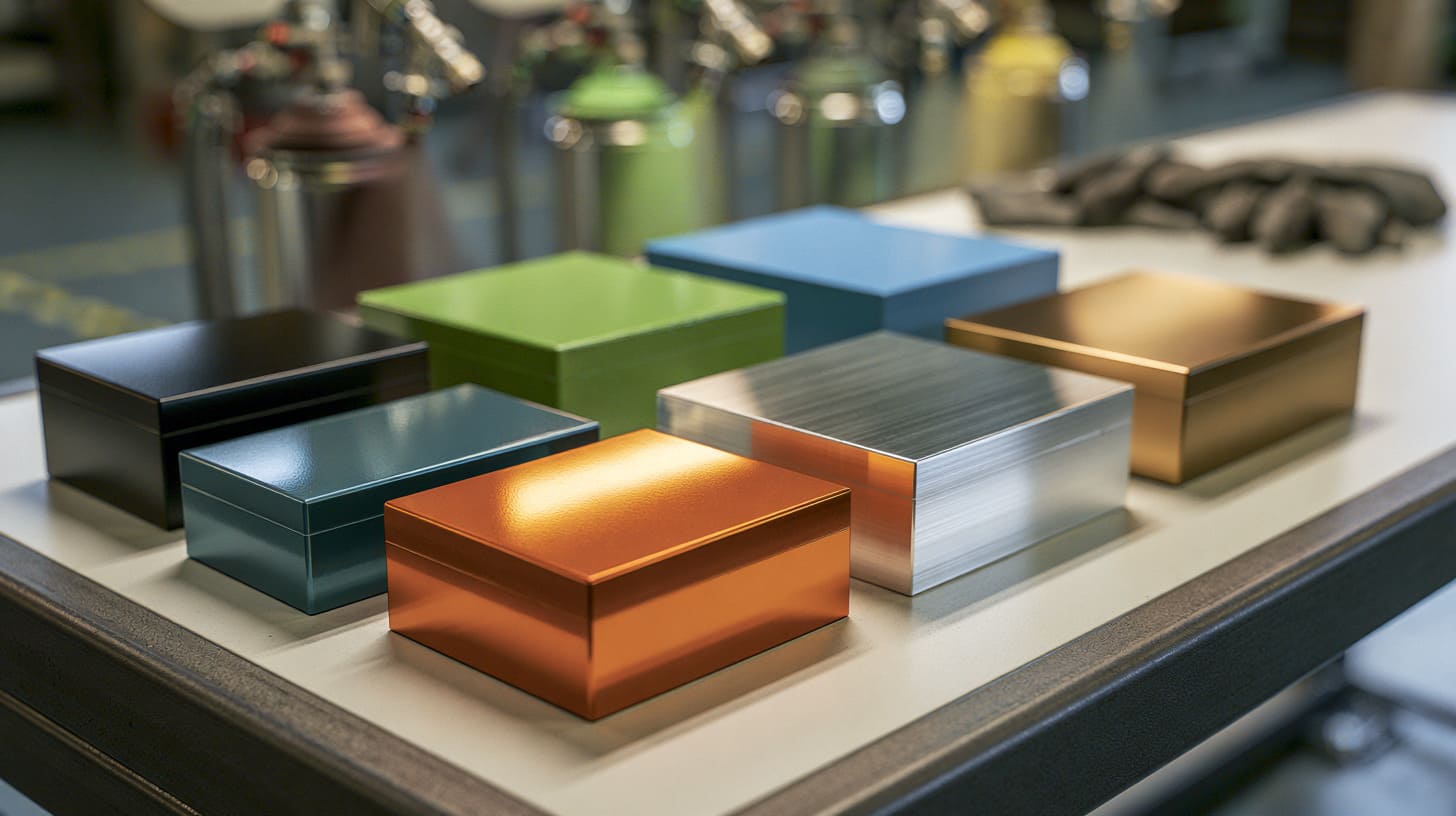
Saying no to anodizing does not mean leaving the aluminum unprotected.
It means choosing a finish that better supports the project.
I often compare several finishes at the same time. The right alternative depends on color, corrosion, conductivity, cost, geometry, production quantity, and the way the customer wants the product to feel.
Powder coating
Powder coating applies a dry powder to the metal with electrostatic charge. The coated part then enters an oven, where the powder melts and forms a solid film.
It is one of the most common alternatives for aluminum and sheet metal enclosures.
Main advantages
- Wide range of colors
- Better Pantone or RAL matching
- Different gloss levels
- Textured and smooth options
- Good outdoor durability with the correct powder
- Better hiding of minor surface defects
- Suitable for aluminum and steel
- Useful for mixed-material assemblies
Powder coating works especially well when branding is important.
A customer may want a dark navy enclosure, a warm grey control box, or a textured black finish that matches other equipment. Powder coating usually gives more flexibility than anodizing.
Main limitations
- Thicker coating
- Possible buildup in threads and tight gaps
- Edge coverage can vary
- Masking may be required
- Conductive areas still need protection
- Chips can expose the metal below
- Fine engraving may lose sharpness if coating is too thick
Designers should consider coating thickness when setting tolerances.
A lid that fits perfectly before coating may become too tight after both mating surfaces receive a thick powder layer.
Painting
Wet painting offers strong color flexibility.
It can be useful for prototypes, low-volume products, repair work, and designs that need a special visual effect.
Possible paint systems include:
- Acrylic paint
- Polyurethane paint
- Epoxy paint
- Automotive-style coatings
- Metallic paint
- Soft-touch coating
- UV-resistant outdoor paint
Painting can achieve colors that are difficult through anodizing. It can also create gloss, satin, matte, metallic, and special tactile effects.
However, paint quality depends heavily on surface preparation and curing.
Poor cleaning can cause bubbles, peeling, weak adhesion, or dust marks. Thin painted edges can also wear through.
For small batches, painting may be flexible. For high-volume production, the process needs stable control to maintain color and appearance.
Chromate conversion coating
Chromate conversion coating creates a thin chemical layer on aluminum.
It is often selected when corrosion protection and electrical conductivity are more important than decorative appearance.
It can be used:
- Under paint or powder coating
- Inside EMI-sensitive enclosures
- On grounding surfaces
- On internal aluminum components
- On parts where low electrical resistance is required
The finish may appear clear, yellow, gold, or slightly iridescent, depending on the process.
It is not usually chosen as a premium decorative exterior finish. Its strength is functional performance.
| Property | Anodizing | Conversion coating |
|---|---|---|
| Decorative appearance | Good | Limited |
| Electrical conductivity | Poor without special contact areas | Better |
| Corrosion resistance | Good | Moderate to good |
| Coating thickness | Higher | Very thin |
| Paint adhesion base | Possible | Very common |
| Dimensional impact | Low | Very low |
For EMI-sensitive products, a common approach is to use a decorative exterior coating while maintaining conductive conversion-coated areas inside.
Electrophoretic coating
Electrophoretic coating, often called E-coating, uses an electrical process to deposit a coating from a liquid bath.
It can cover complex shapes more evenly than some spray processes.
E-coating is useful when the project needs:
- Uniform corrosion protection
- Coverage inside complex areas
- A thin and controlled film
- Good adhesion
- A primer layer under another coating
It is widely used in automotive and industrial applications.
However, it may not offer the same decorative flexibility as powder coating. Production setup and minimum quantity can also make it less practical for small custom enclosure orders.
Bare or brushed aluminum
Sometimes the simplest finish is enough.
Bare aluminum can be suitable for:
- Indoor prototypes
- Internal brackets
- Low-cost test equipment
- Hidden components
- Short-term engineering samples
- Products used in dry, controlled environments
Brushing can improve appearance without adding a coating. It creates a directional grain and reduces the visibility of random small scratches.
Still, bare or brushed aluminum has limits.
It can oxidize, collect fingerprints, stain, and develop cosmetic changes over time. It also offers less protection against moisture and chemicals.
A clear protective coating can be added if the project needs the bare-metal look with better stain resistance.
My practical choice is often the finish that fails in the least harmful way, because a small color shift may be acceptable while a lost ground path, peeling surface, or delayed project may not be.
The best alternative is not always the finish with the longest list of benefits. It is the one whose limitations the product can safely accept.
How to Choose the Right Surface Finish
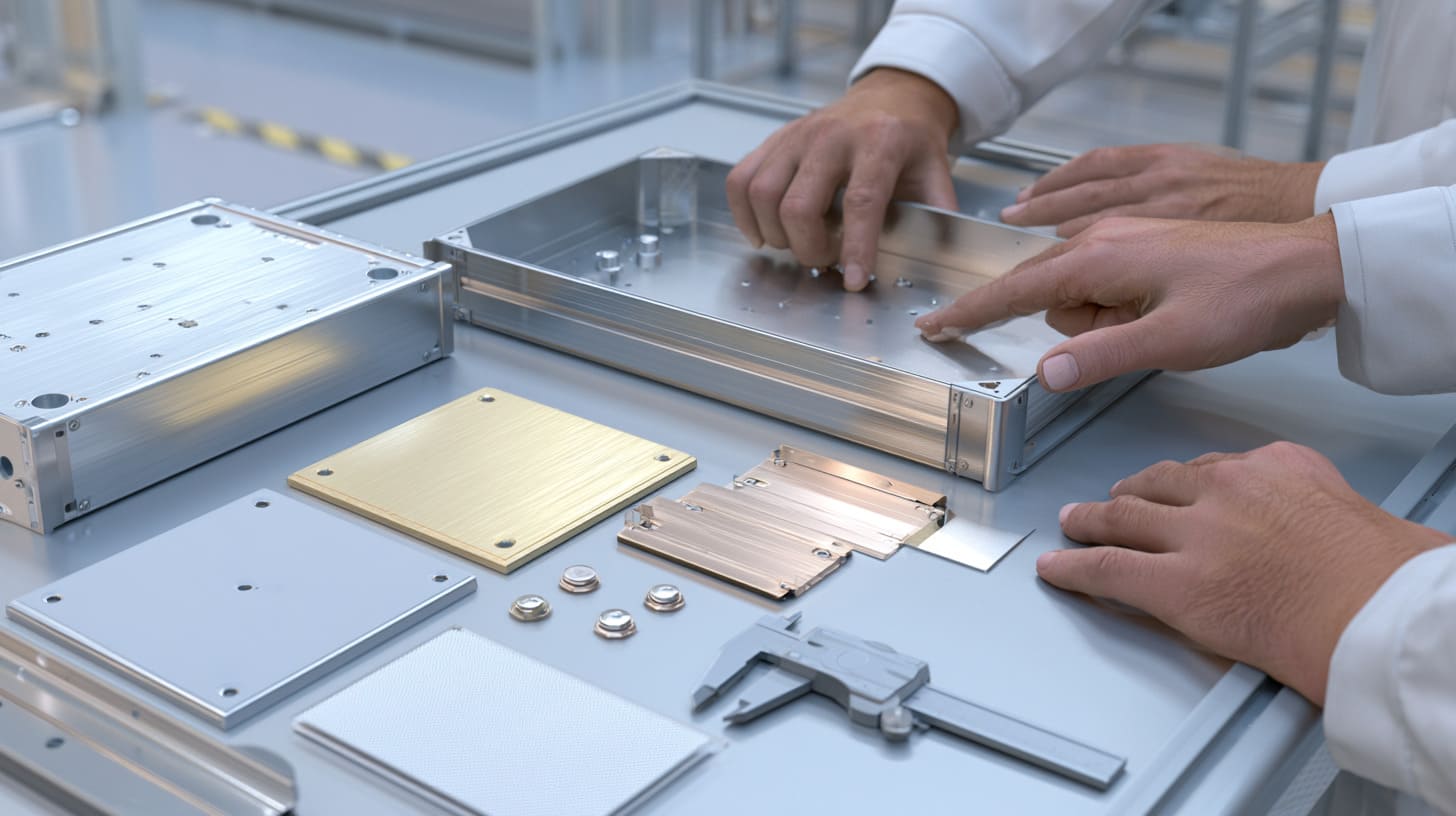
Surface finishing decisions become easier when the questions are asked in the right order.
Many buyers start with color. I usually start with environment and function. Color still matters, but it should not hide the engineering requirements.
Consider the operating environment
The same aluminum enclosure can behave very differently in an office, factory, roadside cabinet, or coastal installation.
I ask several basic questions:
- Will the enclosure be used indoors or outdoors?
- Will it face rain or condensation?
- Is the environment salty?
- Will the product contact cleaning chemicals?
- Will it be exposed to sunlight?
- Will users touch it every day?
- Will it operate near oil, dust, or industrial fumes?
- What service life does the customer expect?
Indoor use
For a dry indoor environment, natural anodizing, black anodizing, powder coating, painting, brushing, or even bare aluminum may work.
The choice can focus more on appearance, wear, grounding, and cost.
Outdoor use
Outdoor products need closer review.
UV exposure can fade some anodized dyes. Salt, rain, and temperature changes can attack weak areas. Cut edges, fastener holes, and damaged corners may become corrosion starting points.
For outdoor use, I consider:
- Anodizing thickness
- Sealing quality
- UV stability
- Alloy selection
- Drainage
- Gasket design
- Galvanic contact with other metals
- Powder type
- Edge coverage
- Salt exposure
A polyester outdoor powder coating may be better for a branded outdoor cabinet. A high-quality anodized finish may still work well for an extruded housing. The design decides.
Corrosive environments
Chemical plants, coastal regions, food processing areas, and marine applications need special attention.
Anodizing alone may not be enough for every chemical.
The customer should identify:
- Chemical type
- Concentration
- Contact duration
- Cleaning method
- Temperature
- Frequency of exposure
Without this information, any corrosion claim is only an assumption.
Consider functional requirements
A finish changes more than appearance.
It can affect:
- Grounding
- EMI shielding
- Heat transfer
- Thread fit
- Assembly
- Adhesive bonding
- Label adhesion
- Laser marking
- Cleaning
- Repair
- Recycling
Grounding and EMI
If the enclosure forms part of the grounding system, contact points must remain conductive.
The design may need masked areas, conversion coating, grounding hardware, or post-machining.
For EMI shielding, I review the complete current path around seams and joints. A conductive enclosure with a poorly connected cover can still leak electromagnetic noise.
Wear resistance
A portable product may need resistance against scratches, tools, and repeated handling.
A stationary wall-mounted box may need less wear resistance but more UV and corrosion protection.
The real use pattern matters more than a general hardness number.
Chemical resistance
Medical and laboratory equipment may be cleaned with alcohol or disinfectants. Industrial products may contact oils or solvents. Consumer devices may face hand cream, sweat, and cleaning sprays.
The finish should be tested against the actual substances when the risk is high.
Consider appearance requirements
Appearance is subjective, but it can still be specified clearly.
I ask customers to define:
- Color target
- Acceptable color tolerance
- Gloss level
- Texture
- Surface grain
- Visible sides
- Cosmetic inspection distance
- Lighting conditions
- Logo method
- Allowed rack or fixture marks
- Sample approval process
A customer may say, “We need black anodizing.” That is not yet a complete specification.
Do they want:
- Deep matte black?
- Satin black?
- Glossy black?
- Visible brushing lines?
- Fine sandblasted texture?
- A warm black or cool black?
- Exact matching across multiple parts?
Two black anodized parts can both be called black and still look different beside each other.
Cosmetic samples reduce arguments
I prefer to approve real samples instead of relying only on digital images.
Screens change color. Camera settings change color. Workshop lighting changes color. Even the viewing angle changes the appearance of anodized metal.
A physical limit sample can define what is acceptable.
The sample should record:
- Alloy
- Surface preparation
- Anodizing type
- Color
- Gloss
- Texture
- Acceptable variation
- Inspection method
Consider manufacturing and budget
A finish must fit the production plan.
A process that works for 5,000 pieces may not make sense for five prototypes.
| Project factor | Question I ask |
|---|---|
| Quantity | Is there a minimum finishing charge? |
| Part size | Can the finishing supplier handle the dimensions? |
| Geometry | Can chemicals, powder, or paint reach all areas? |
| Tolerance | Will coating thickness affect fit? |
| Masking | How many areas need to remain uncoated? |
| Lead time | Does the finish require an extra production cycle? |
| Rework | Can the part be repaired after modification? |
| Packaging | Will parts rub against each other during shipping? |
| Batch control | Can later orders match the approved sample? |
| Cost | Does the finish support the product’s selling price? |
A surface finish should be included in design reviews early.
Waiting until the parts are already machined can create problems. Thread tolerances may be wrong. Rack points may be visible. grounding zones may be missing. Welds may look different. The selected color may not be feasible.
Before approving a finish, I mentally follow one enclosure from machining to packing, because many failures happen between processes rather than inside the coating process itself.
For example, the anodizing may be perfect, but the parts may scratch each other during bulk packaging. The final customer only sees the scratch.
Frequently Asked Questions
These are the questions I hear most often when customers compare anodizing with other finishes.
Is anodizing always the most durable finish?
No.
Anodizing offers good hardness, corrosion resistance, and long-term stability. However, durability depends on the type of damage.
Anodizing may perform well against:
- Normal handling
- Light abrasion
- UV exposure with suitable colors
- Corrosion in moderate environments
- Surface wear
Powder coating may perform better when the product needs:
- Thick surface coverage
- Strong custom colors
- Better hiding of surface defects
- Resistance to some impacts
- Easier visual matching
A specialized paint may perform better against certain chemicals.
There is no single finish that wins every durability test.
Can anodized aluminum be painted later?
Yes, but the surface needs proper preparation.
A sealed anodized surface may not give ideal paint adhesion without cleaning, sanding, etching, or applying a suitable primer.
Unsealed anodizing can provide a useful base for some coatings, but the process must be controlled.
Painting over anodizing is not simply a matter of spraying paint onto the finished enclosure. The supplier should define the preparation and adhesion requirements.
Does anodizing improve heat dissipation?
It can affect thermal radiation, especially when the finish is dark and the enclosure releases heat by radiation.
However, many enclosure cooling systems depend more on conduction and convection.
The major thermal factors often include:
- Contact between the heat source and enclosure
- Thermal pad quality
- Wall thickness
- Heat-spreading area
- Fin design
- Airflow
- Mounting direction
- Internal power
- Ambient temperature
Anodizing should not be treated as a replacement for a real thermal design.
A black anodized heat sink may perform well, but the coating cannot fix poor contact between the processor and the enclosure.
Can anodized parts be repaired after scratching?
Minor scratches are difficult to repair invisibly.
A touch-up pen or chemical treatment may reduce the contrast, but the repaired area often does not perfectly match the original color and texture.
For major cosmetic damage, the part may need stripping, refinishing, and re-anodizing.
This process can affect dimensions and may still produce a slightly different color.
For high-value products, prevention is usually better than repair. Protective film, individual bags, separators, and careful assembly fixtures can save more money than later refinishing.
Which industries should avoid anodizing?
I would not say that a whole industry should avoid it.
The decision depends on the product.
However, extra caution is useful for projects involving:
- Strong EMI or grounding requirements
- Exact corporate colors
- Frequent field modification
- Heavy impact
- Strong chemical exposure
- Mixed aluminum alloys
- Decorative die-cast parts
- Welded assemblies with visible seams
- Very low-cost prototypes
- Highly complex internal cavities
An industrial automation company may use anodizing successfully for one controller and reject it for another.
Which finish is best for EMI-sensitive enclosures?
There is no automatic answer.
A common solution is to keep critical internal contact areas conductive while using a decorative finish on the outside.
Possible approaches include:
- Conversion coating inside and powder coating outside
- Masked grounding points with exterior anodizing
- Conductive gaskets at seams
- Bare contact rails
- Grounding studs
- Conductive washers
- Selective removal of coating
- Conductive plating for special applications
The best system depends on frequency range, enclosure geometry, seam design, connector layout, gasket compression, and grounding method.
When an enclosure fails an EMI test, I do not blame the finish first; I check how the finish interacts with seams, screws, gaskets, and contact pressure, because the weakness is usually in the full connection system.
A coating is one part of the shielding design. It is not the whole shielding design.
Conclusion
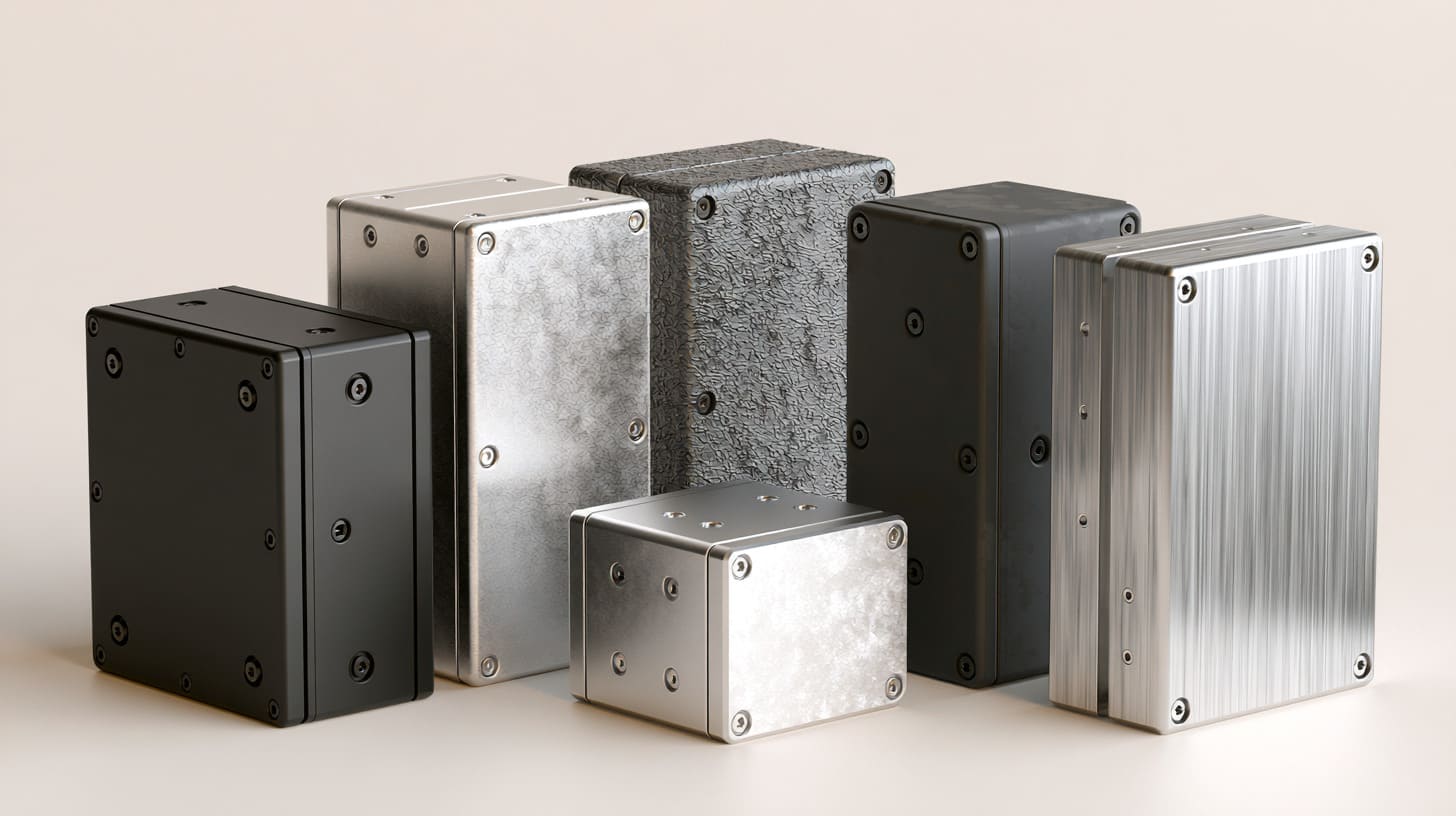
Choosing the right finish is more important than choosing the most popular one
I do not advise customers to avoid anodizing. I advise them to stop treating it as the default answer for every aluminum enclosure.
I have seen anodizing work beautifully on extruded electronics housings, industrial controllers, test equipment, and premium consumer products. I have also seen it create avoidable problems with color matching, grounding, welding, re-machining, and cosmetic consistency.
That is why I make the decision from the project requirements outward.
I look at the operating environment. I check whether the enclosure must conduct electricity. I consider whether the design is stable. I review the alloy, geometry, quantity, color, wear risk, and future maintenance. Then I compare anodizing with powder coating, painting, conversion coating, E-coating, or a simple unfinished surface.
I think this way because surface finishing sits at the meeting point of design and manufacturing. A designer sees color and texture. An engineer sees grounding and tolerances. A buyer sees cost and lead time. A production team sees masking, racking, and rework. The right finish must satisfy all of them well enough.
My final judgment is simple: I choose anodizing only when its natural strengths support the product and its weaknesses can be controlled without adding hidden risk.
If you are developing a custom aluminum enclosure, it is better to review the finish before the drawings are frozen. Share the enclosure design, operating environment, color target, grounding needs, order quantity, and expected surface quality with our engineering team.
You can contact me at info@maidatech.com or visit maidatechenclosure.com to discuss your custom enclosure project with MaidaTech.