Skip to content
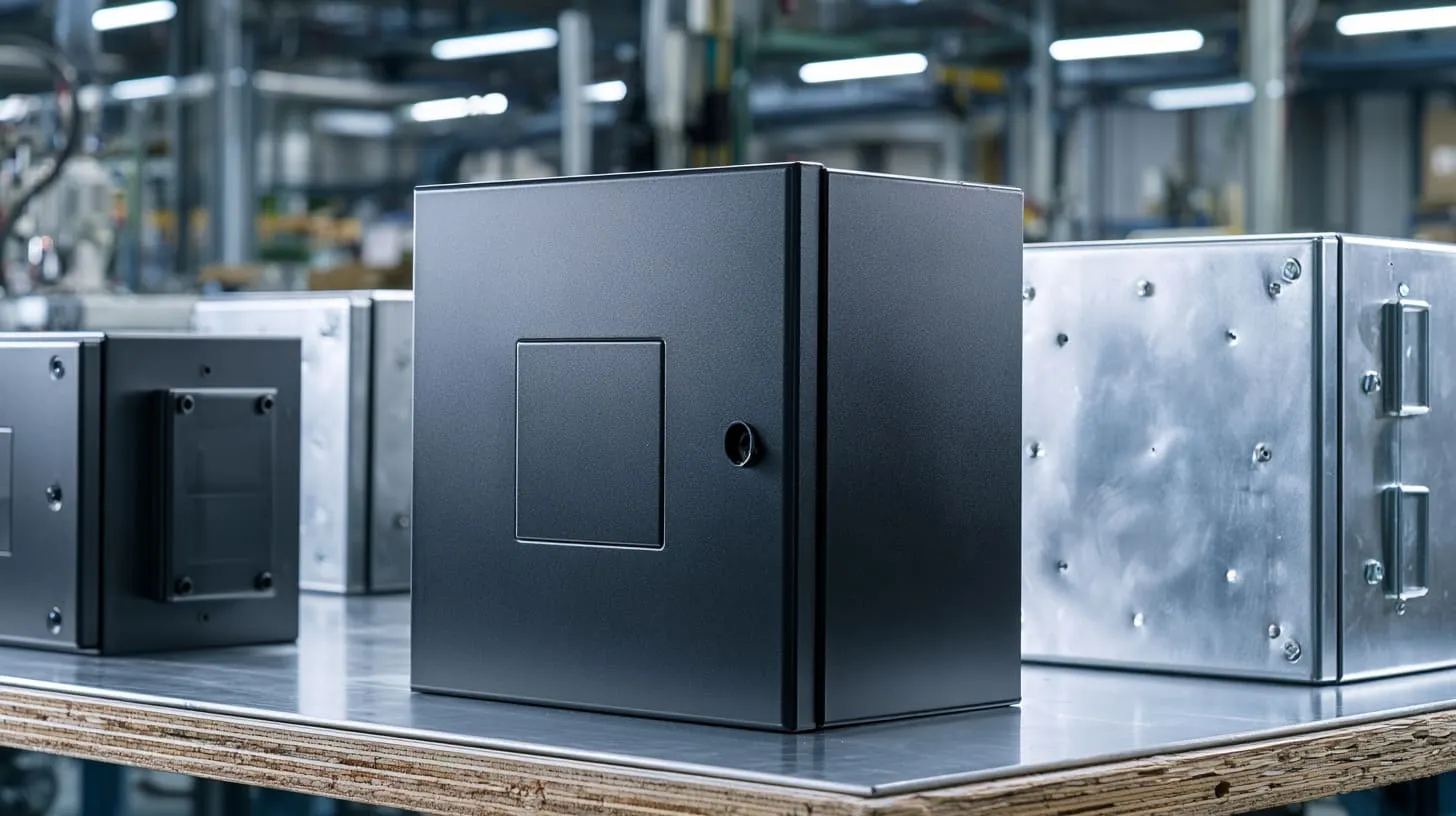
A steel enclosure can leave the factory looking strong, clean, and ready for years of service. A few months later, rust may begin to appear around a welded corner, a mounting hole, or the edge of a door.
The steel may not be the real problem.
The surface protection may have been chosen for the quotation instead of the actual working environment.
When customers discuss custom steel enclosures with me, they usually focus first on dimensions, material thickness, cutouts, welding, and price. Surface treatment often comes later. Some customers treat it as a color choice. Others simply ask for “anti-rust treatment” without explaining where the enclosure will be installed.
I understand why this happens. Powder coating and galvanizing are both widely used for steel products. Both can protect steel. Both can improve product life. However, they do not protect steel in the same way.
Powder coating creates a protective layer over the steel. Galvanizing adds a zinc layer that can continue protecting the steel even when small areas are scratched.
That difference sounds simple. In a real enclosure project, it affects much more than corrosion resistance.
It can affect:
- Product appearance
- Welding and bending
- Hole dimensions
- Threaded areas
- Maintenance frequency
- Branding requirements
- Outdoor service life
- Total project cost
Before I approve any finish, I ask where the enclosure will work, how often it can be maintained, and what happens if the coating gets damaged. A finish that looks perfect in a meeting room may not survive beside a coastal road.
There is no surface treatment that is automatically better for every steel enclosure. Powder coating may be the smarter choice for an indoor control box with a branded finish. Galvanizing may be safer for an outdoor utility cabinet exposed to rain and humidity. Some demanding products may need both.
The main differences can be viewed like this:
| Comparison Point | Powder Coating | Galvanizing |
|---|---|---|
| Protection method | Forms a barrier over the steel | Forms a zinc barrier and provides sacrificial protection |
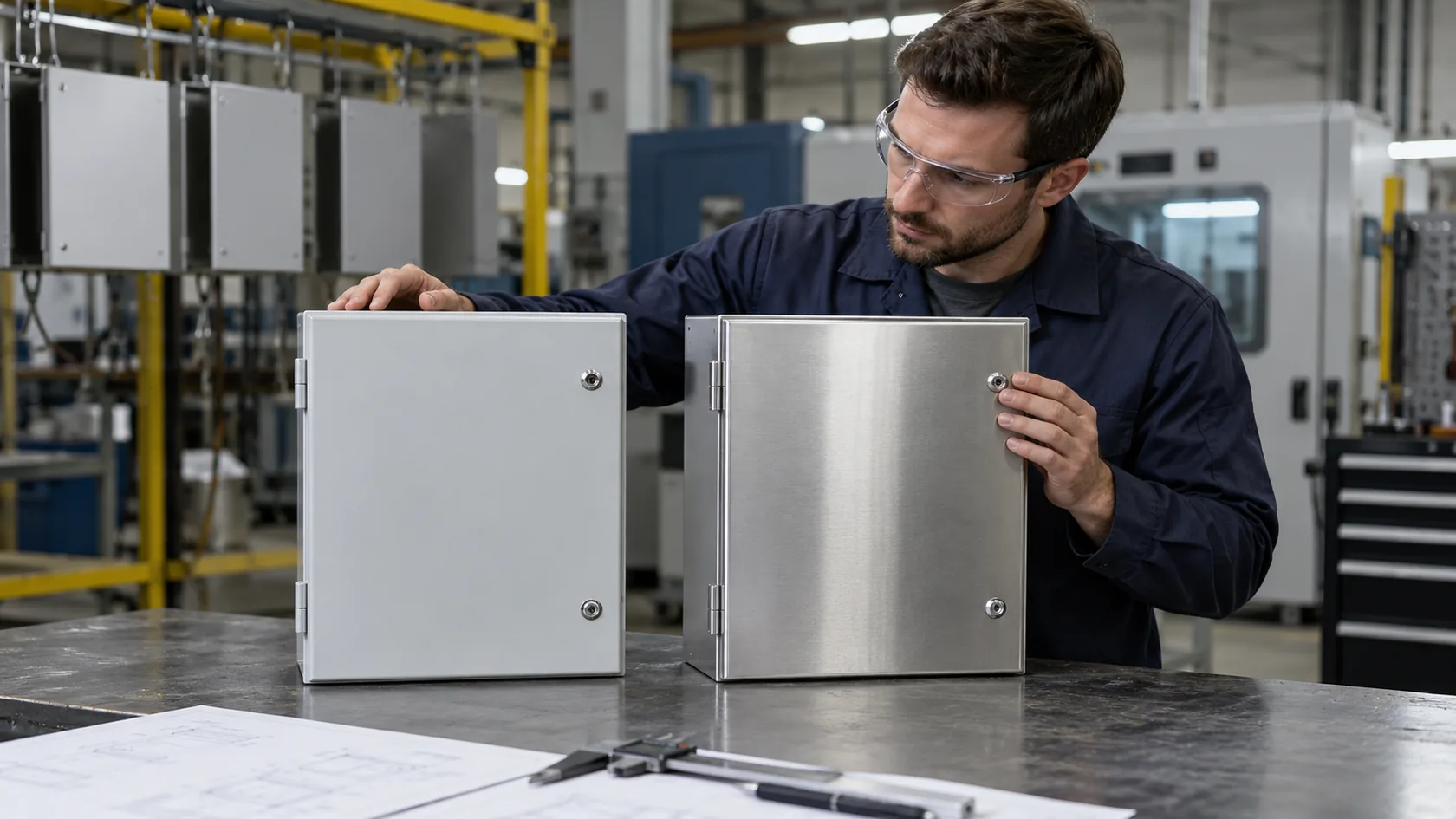
| Appearance | Smooth, colorful, and easy to customize | More industrial and less visually uniform |
| Scratch behavior | Exposed steel may rust after damage | Zinc can continue protecting nearby exposed steel |
| Best application | Indoor and moderate outdoor use | Harsh outdoor and corrosive environments |
| Branding flexibility | Very good | Limited without an added topcoat |
| Maintenance needs | Depends on coating condition | Often lower in harsh environments |
| Main risk | Poor preparation or coating damage | Rough finish, distortion, and dimensional changes |
The difficult part is not understanding the definitions. The difficult part is deciding which risk matters more for a specific enclosure.
That decision starts with understanding what each treatment actually does to the steel.
What Is Powder Coating for Steel Enclosures?
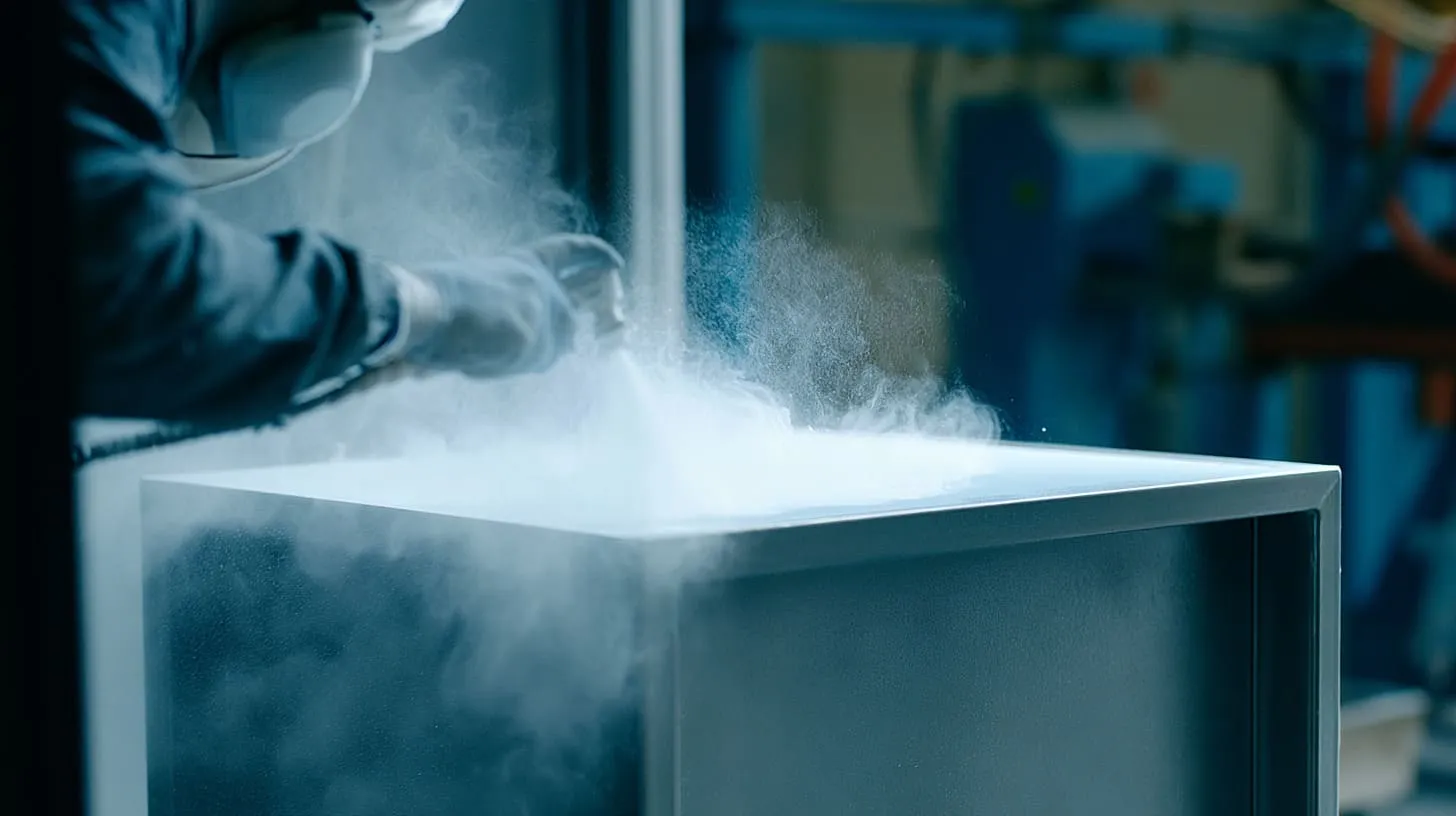
Powder coating is one of the most common finishes that I use for custom steel enclosures. It creates a dry, solid coating over the metal surface.
Unlike liquid paint, powder coating does not start as a wet paint layer. A spray gun gives the powder an electrical charge. The grounded steel part attracts the powder. The coated part then enters an oven, where the powder melts, flows, and cures into a continuous film.
The result can be smooth, textured, glossy, matte, or fine-grained.
The finish can look simple, but the quality depends on everything that happens before the color appears.
How Powder Coating Works on Steel Enclosures
The powder coating process usually includes several stages:
- Degreasing and cleaning
- Removing rust, oil, dust, and fabrication residue
- Applying a chemical pretreatment when required
- Drying the enclosure
- Electrostatically spraying the powder
- Heating and curing the coating
- Cooling and inspecting the finished part
Each stage affects the next one.
If oil remains around a welded seam, the powder may not bond well. If rust is covered instead of removed, corrosion may continue below the coating. If the curing temperature or time is wrong, the finish may look acceptable but perform poorly.
The detail I watch most closely is not the powder color. I look at how the factory prepares the welds, edges, corners, and recessed areas, because that is where coating problems usually begin.
Surface Preparation
Steel parts may carry cutting oil, fingerprints, welding residue, rust, and fine metal dust. The coating cannot form a reliable bond over this contamination.
A basic preparation process may include:
- Alkaline cleaning
- Water rinsing
- Rust removal
- Phosphate treatment
- Drying
- Surface inspection
For more demanding projects, blasting or stronger pretreatment may be needed.
I do not treat “powder coated” as a complete specification. Two factories can use the same powder brand and still produce very different results because their preparation processes are different.
Powder Application
The spray gun charges the powder particles. The steel enclosure is grounded, so the particles move toward the metal surface.
Flat panels are usually easier to coat. Deep corners, narrow channels, folded returns, and complex welded areas can be harder. Electrical effects can make it difficult for powder to reach some recessed shapes evenly.
The operator must control:
- Spray distance
- Gun angle
- Powder flow
- Grounding
- Film thickness
- Coverage around edges and corners
A thick coating is not always a better coating. Excess powder can create orange peel, edge buildup, poor fit, or problems around hinges and fasteners.
Heat Curing
The coated enclosure enters a curing oven. The required temperature and time depend on the powder system and the actual metal temperature.
This last point matters.
The oven air may reach the set temperature before the steel part does. A thick welded enclosure heats more slowly than a thin panel. If the part does not receive enough curing time after reaching the correct temperature, the coating may remain under-cured.
An under-cured coating can have weaker adhesion and lower resistance to chemicals or impact. An over-cured coating may change color or lose some expected properties.
Advantages of Powder Coating
Powder coating is popular because it balances appearance, protection, customization, and production efficiency.
It Offers Many Colors and Surface Textures
Customers can choose from a wide range of colors and finishes, including:
- Matte black
- Fine-textured black
- Signal white
- Industrial gray
- Custom brand colors
- Glossy finishes
- Wrinkle textures
- Metallic effects
For a product that sits in a control room, retail space, laboratory, or commercial building, appearance may be part of the product value.
A clean enclosure tells the user that the whole machine has been designed with care.
It Supports Branding
Powder coating gives me a stable base for:
- Silk-screen printing
- UV printing
- Labels
- Laser marking on suitable systems
- Nameplates
- Warning symbols
- Product identification
A smooth and controlled surface makes logo placement easier. It also helps different batches maintain a more consistent visual style.
It Provides Good Barrier Protection
A properly prepared and coated steel enclosure can resist:
- Normal indoor humidity
- Light chemical contact
- Dust
- Minor scratches
- Weather exposure
- Cleaning during routine use
The coating separates the steel from oxygen and moisture. As long as the barrier remains complete, the steel underneath stays protected.
It Fits Many Custom Enclosure Projects
Powder coating works well with:
- CNC-cut sheet metal parts
- Bent panels
- Welded boxes
- Doors and removable covers
- Brackets
- Mounting plates
- Control panels
The coating can usually be applied after the main fabrication work is complete. This allows the cut edges, bends, and welds to receive protection at the same time.
| Application | Powder-Coating Suitability | My Main Concern |
|---|---|---|
| Indoor electrical box | Very good | Surface preparation and color consistency |
| Factory control panel | Very good | Chemical exposure and impact |
| Commercial equipment housing | Very good | Appearance and branding |
| Sheltered outdoor cabinet | Good | Rain entry, edges, and UV resistance |
| Coastal outdoor enclosure | Limited by itself | Salt exposure and coating damage |
| Underground steel box | Usually poor | Constant moisture and difficult maintenance |
Limitations of Powder Coating
Powder coating has one basic weakness: it protects steel mainly by keeping the environment away from the metal.
If the barrier breaks, the steel may become exposed.
Scratches Can Become Corrosion Starting Points
A small scratch may not create an immediate failure indoors. Outdoors, the situation can change.
Water can enter the damaged area. Rust can begin at the exposed steel. The corrosion may then spread under the coating, especially when adhesion or pretreatment is weak.
The visible rust spot may be small while the affected area underneath is larger.
Edges Can Have Lower Coating Coverage
Sharp edges are difficult to protect. During curing, the molten powder can pull away from very sharp corners. This can leave a thinner film than on a flat surface.
I often ask for edges to be deburred or slightly rounded when corrosion resistance matters. That small fabrication step can improve coating coverage more than simply asking for a thicker coating everywhere.
Poor Preparation Can Stay Hidden
A coating can hide rust, weld discoloration, and contamination for a while. The product may pass a visual inspection. The weakness appears later.
This is why I do not judge coating quality from gloss and color alone. I also look at adhesion, coverage, pretreatment, edge condition, and the actual environment.
Extreme Environments May Need More Protection
Powder coating alone may not be the safest choice for:
- Constant salt spray
- Marine air
- Heavy industrial pollution
- Frequent standing water
- Buried installation
- Areas with repeated mechanical damage
The finish may still be used, but the complete coating system needs more thought.
A good-looking coating can give false confidence. Galvanizing approaches the same problem from a different direction.
What Is Galvanizing for Steel Enclosures?
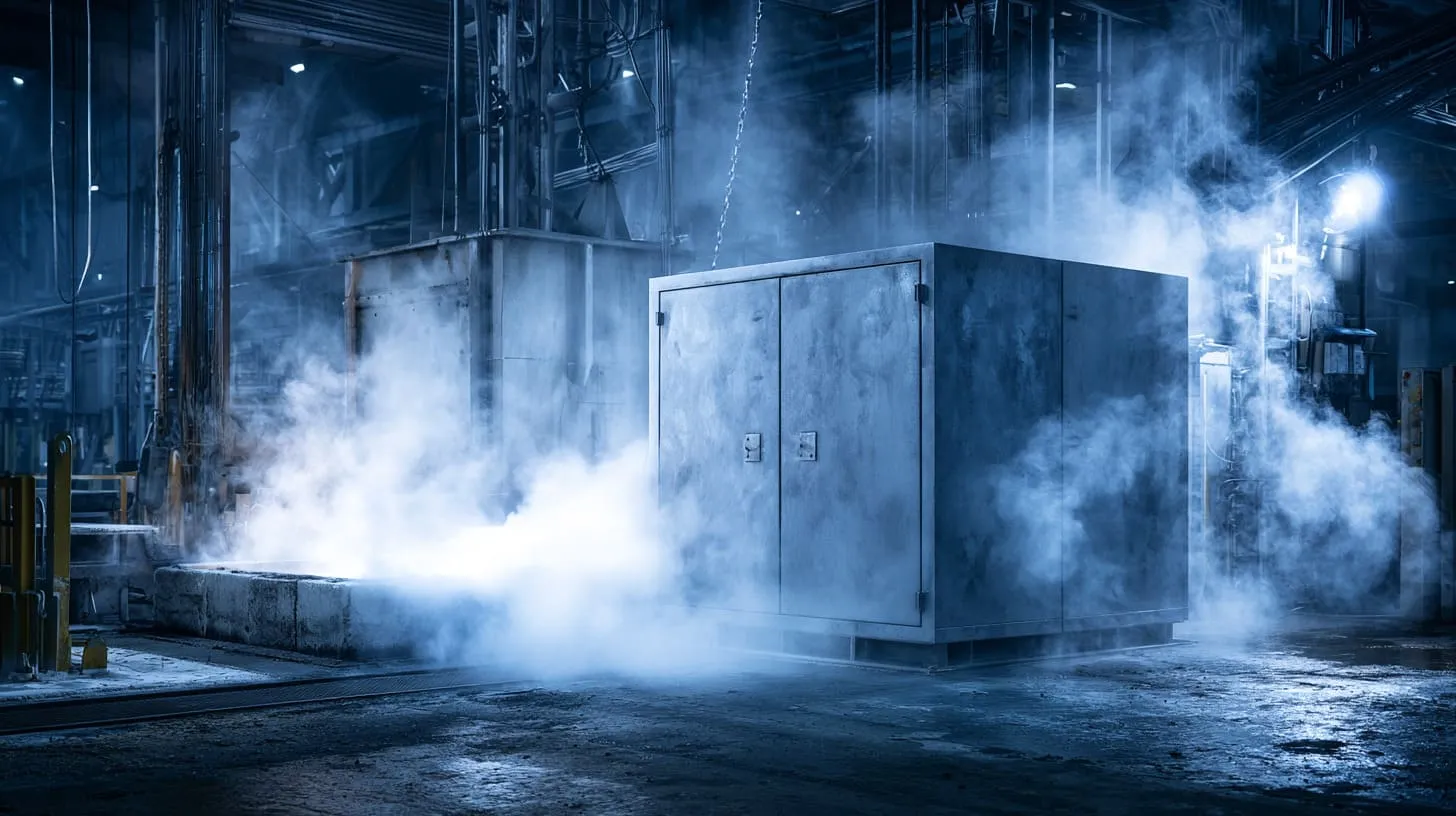
Galvanizing protects steel by adding zinc to its surface. For fabricated steel products, hot-dip galvanizing is one of the best-known methods.
During hot-dip galvanizing, the cleaned steel product is immersed in molten zinc. The zinc reacts with the steel and forms bonded zinc-iron layers, with an outer zinc layer over them.
This is different from placing ordinary paint over the steel. The zinc becomes part of a metallurgically bonded coating system.
When a customer writes only “galvanized enclosure” on a drawing, I do not start pricing immediately. I first confirm whether the customer means pre-galvanized sheet, electro-galvanized steel, or hot-dip galvanizing after fabrication, because these options are not equal.
How Galvanizing Protects Steel
Hot-dip galvanizing normally includes:
- Degreasing
- Rinsing
- Acid cleaning or pickling
- Rinsing again
- Flux treatment
- Drying
- Immersion in molten zinc
- Cooling and inspection
The steel must be clean enough for the zinc to react with the surface.
During immersion, the zinc covers accessible surfaces. It can also enter holes, seams, tubes, and internal areas when the part is properly designed for drainage and ventilation.
Zinc Provides Barrier Protection
Like powder coating, zinc separates the steel from moisture and oxygen.
However, zinc offers another form of protection.
Zinc Provides Sacrificial Protection
Zinc is more active than steel. When a small area is scratched and the steel becomes exposed, nearby zinc can corrode first and help protect that steel.
This is called sacrificial or cathodic protection.
The word “sacrificial” describes what the zinc does. It slowly gives itself up to protect the base steel.
This behavior is one of the main reasons galvanizing performs well in harsh outdoor environments.
| Damage Condition | Powder-Coated Steel | Galvanized Steel |
|---|---|---|
| Surface remains complete | The coating blocks moisture | The zinc coating blocks moisture |
| Small scratch reaches steel | The exposed steel may begin to rust | Nearby zinc can continue protecting the area |
| Large damaged area | Corrosion can spread under the coating | Protection becomes weaker as exposed area increases |
| Repeated abrasion | The barrier becomes thinner or breaks | Zinc is gradually consumed |
| Long-term wet exposure | Performance depends heavily on coating integrity | Zinc can provide additional protection until consumed |
Advantages of Galvanizing
Galvanizing is usually selected for function before appearance.
It Performs Well Outdoors
A galvanized enclosure can handle rain, humidity, and temperature changes better than untreated steel.
The zinc coating forms corrosion products over time. These products can slow further corrosion when the environment is suitable.
This makes galvanizing useful for products that cannot be repainted or inspected often.
It Protects Minor Damage
Outdoor cabinets can be scratched during transport, installation, wiring, or maintenance. A technician may drop a tool. A mounting bracket may scrape a surface. A door edge may hit another steel part.
With a barrier-only coating, this damage can expose bare steel. Zinc gives the enclosure another layer of defense.
It Can Cover Difficult Areas
Hot-dip galvanizing after fabrication can protect:
- External surfaces
- Internal surfaces
- Cut edges
- Welded areas
- Corners
- Accessible seams
The part still needs proper design. Closed cavities, trapped air, and poor drainage can create safety and quality problems during dipping.
It Can Reduce Long-Term Maintenance
A utility cabinet installed far from the customer’s main facility may be expensive to inspect. The coating price may be a small part of the total cost.
The real expense may include:
- Travel
- Labor
- Equipment shutdown
- Site access
- Repainting
- Product replacement
- Customer complaints
For these projects, I often give more weight to maintenance access than to the original coating price.
Limitations of Galvanizing
Galvanizing is strong, but it is not perfect.
The Surface May Look Less Controlled
The galvanized finish may show:
- Different shades
- Zinc runs
- Rough areas
- Small lumps
- Ash marks
- Drainage marks
- Visible surface variation
These features do not always mean that the corrosion protection is poor. However, they may not suit a premium commercial product.
Customers who expect a smooth painted appearance may not accept a raw galvanized finish.
Thin Enclosure Panels May Distort
Hot-dip galvanizing exposes the fabricated enclosure to high heat. Thin sheet metal and uneven welded structures may move or distort.
Large flat doors are especially sensitive. A small amount of warping can affect:
- Door alignment
- Gasket compression
- Lock operation
- Hinge position
- IP sealing
- Panel flatness
I become cautious when a customer asks for post-fabrication hot-dip galvanizing on a thin, tightly fitted enclosure. The corrosion protection may improve, but the dimensional risk can become the new problem.
Zinc Can Build Up Around Holes and Threads
Zinc may reduce hole size or cover threaded features. The manufacturer may need to protect, clean, chase, or rework these areas.
This can affect:
- Tapped holes
- Grounding studs
- Hinge pins
- Lock openings
- Fastener clearance
- Cable-gland holes
- Door gaps
A drawing that ignores coating thickness is not complete enough for a tight-tolerance assembly.
Additional Preparation May Be Needed Before Painting
Customers sometimes want a galvanized base with a colored topcoat. This can work very well, but fresh galvanized surfaces need correct preparation.
The surface may need cleaning, sweep blasting, or a suitable chemical pretreatment. Poor preparation can cause the powder coating to peel from the zinc surface.
Galvanizing is not a simple upgrade that can be added to every design without consequences. The useful comparison begins when I place both treatments under the same real working conditions.
Powder Coating vs Galvanizing: Key Differences Compared
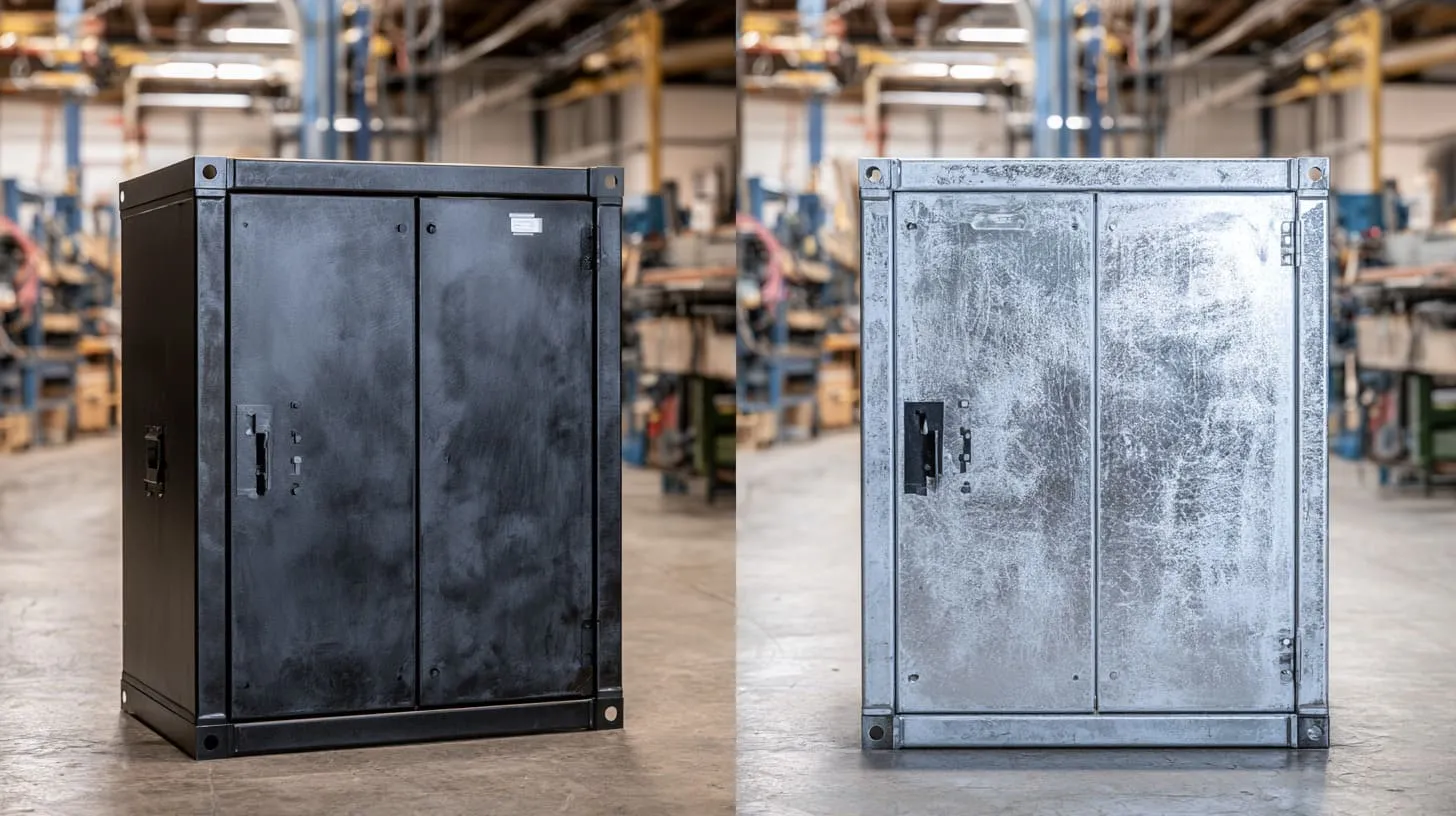
Powder coating and galvanizing both protect steel, but they solve different parts of the problem.
Powder coating gives me more control over appearance and branding. Galvanizing gives me more protection when the surface receives minor damage.
The comparison becomes useful only when I connect the finish to rain, salt, handling, maintenance, and fabrication. Without that context, a simple “which one is better?” answer can easily mislead the buyer.
Corrosion Resistance Comparison
Powder coating works mainly as a barrier. It performs well when the coating remains continuous and firmly bonded.
Galvanizing provides barrier protection and sacrificial protection.
That does not mean galvanized steel can never rust. Zinc is consumed over time. The speed depends on:
- Moisture
- Salt
- Pollution
- pH
- Contact with other metals
- Repeated abrasion
- Water-trapping design
The same is true for powder coating. The environment and design can matter as much as the coating itself.
A sheltered enclosure with drainage may outperform a badly designed enclosure with a more expensive finish.
| Environment | Powder Coating Only | Hot-Dip Galvanizing | My Usual View |
|---|---|---|---|
| Dry indoor room | Excellent | More than usually needed | Powder coating is normally enough |
| Clean factory interior | Very good | Very good | I check chemicals and impact risk |
| Sheltered outdoor area | Good | Very good | Either may work with correct design |
| Frequent rain | Moderate to good | Very good | I pay close attention to seams and edges |
| Coastal air | Risk increases | Stronger choice | I usually prefer zinc-based protection |
| Heavy industrial pollution | System-dependent | Often stronger | I check the actual chemicals involved |
| Constant water contact | Risky | Also requires careful review | I avoid treating either option as automatic |
Durability and Service Life Comparison
A coating’s service life is not only a material property. The product design and installation strongly affect it.
Rain
Rain becomes more harmful when water cannot leave the enclosure.
Horizontal ledges, open seams, poor door design, and blocked drain paths can keep surfaces wet for long periods.
A powder-coated enclosure may perform well in rain if the coating remains intact and the design allows water to drain. A galvanized enclosure adds more protection, but trapped water can still shorten zinc life.
Salt Spray and Coastal Air
Salt increases electrical conductivity and speeds corrosion.
A small coating defect that causes little trouble inland can grow faster near the coast. Salt can also collect around:
- Door seals
- Hinges
- Fasteners
- Mounting feet
- Welded corners
- Vent openings
For coastal projects, I rarely accept the words “outdoor use” as enough information. I ask how far the installation is from the sea and whether the enclosure receives direct salt spray.
UV Exposure
Sunlight mainly affects the organic topcoat rather than the steel itself.
Some powder systems hold color and gloss better outdoors than others. A powder designed mainly for indoor use may chalk or fade under long-term sunlight.
Galvanized zinc does not depend on color stability, but its surface appearance can still change as it weathers.
Industrial Chemicals
Powder coating may resist some chemicals well, but performance depends on the powder type, concentration, temperature, and contact time.
Galvanizing can also be attacked by certain acidic or alkaline conditions.
I ask for the name of the chemical instead of accepting “chemical environment” as a complete description. Cleaning solution, battery acid, fertilizer dust, and solvent vapor create very different risks.
Appearance and Design Flexibility
Powder coating is the clear leader when the customer needs:
- A specific color
- A smooth surface
- A fine texture
- Brand consistency
- Printed graphics
- A consumer-facing appearance
- Matching parts in one product family
Raw galvanizing has a more functional look. Its finish may vary between batches and areas of the same part.
That variation is often acceptable for infrastructure, utility, agricultural, and heavy industrial products. It may be unacceptable for a product sold in a showroom.
| Design Requirement | Powder Coating | Galvanizing |
|---|---|---|
| Custom color | Excellent | Poor without a topcoat |
| Smooth visual finish | Excellent | Variable |
| Logo printing | Easy | Usually needs more preparation |
| Concealing minor fabrication marks | Good | Limited |
| Industrial appearance | Good | Very good |
| Batch-to-batch visual consistency | Easier to control | Harder to control |
| Small detailed enclosure | Usually suitable | May create buildup or distortion |
Cost Comparison
Powder coating often has a lower initial cost for standard indoor enclosures. This is especially true when the factory already runs common colors.
Hot-dip galvanizing may have higher minimum charges, transport costs, and extra handling. The part may also need design changes, thread cleaning, or distortion correction.
However, the first quotation does not show the full cost.
I compare four cost groups:
| Cost Group | Questions I Ask |
|---|---|
| Initial treatment cost | What does the factory charge for the finish? |
| Manufacturing impact | Will the treatment affect holes, threads, flatness, or assembly? |
| Maintenance cost | Will the customer need inspection, touch-up, or repainting? |
| Failure cost | What happens if corrosion causes downtime or replacement? |
A cheaper powder-coated enclosure can become expensive if it needs to be replaced at a remote installation. A galvanized enclosure can also become expensive if distortion creates sealing problems and rework.
The best value comes from avoiding the most likely failure, not from selecting the lowest coating price.
Repair and Maintenance Comparison
Powder coating damage can often be repaired with suitable touch-up paint or a repair coating. The repaired area may not match the original color and texture perfectly.
The repair must also remove rust and loose coating. Painting directly over corrosion only hides the problem.
Galvanized surfaces can be repaired with suitable zinc-rich systems when the coating is damaged during cutting, welding, or installation.
Neither repair should be treated casually.
Powder-Coating Maintenance
I normally check:
- Chips around door edges
- Scratches near fasteners
- Rust around welds
- Coating bubbles
- Peeling around cutouts
- Damage near hinges
- Areas that stay wet
Galvanized-Surface Maintenance
I normally check:
- Areas where zinc has been removed
- White corrosion deposits
- Weld repairs
- Abraded mounting points
- Contact with copper or incompatible metals
- Areas exposed to strong chemicals
A finish that needs no maintenance at all is an attractive idea. Real products rarely work that way. The practical question is how much maintenance the site can actually support.
Powder Coating vs Galvanizing: Which One Is Better for Steel Enclosures?
I do not choose between powder coating and galvanizing by asking which finish is stronger. I ask which failure would hurt the project more: visible wear, corrosion after scratching, poor appearance, dimensional change, or higher maintenance.
The answer changes from project to project.
When to Choose Powder Coating
Powder coating is often my first choice for indoor steel enclosures.
Typical examples include:
- Indoor electrical boxes
- Control panels
- Automation equipment
- Laboratory equipment
- Retail equipment
- Server-room cabinets
- Commercial machine housings
- Sheltered wall-mounted enclosures
Powder coating also makes sense when the customer values:
- A smooth finish
- A specific brand color
- Printed logos
- Consistent appearance
- Easy batch matching
- Moderate cost
- Clean indoor use
For these products, galvanizing may add cost and manufacturing difficulty without creating meaningful value.
Example: Indoor Production Control Box
Suppose a customer needs a wall-mounted steel control box for a clean factory.
The enclosure stays indoors. It does not receive salt spray or direct rain. Workers may wipe the surface during maintenance. The customer wants a light-gray finish with black printed labels.
I would usually select properly pretreated powder-coated steel.
I would focus on:
- Clean weld finishing
- Good edge coverage
- Correct curing
- Chemical resistance to the cleaning product
- Consistent color
- Protected grounding points
Hot-dip galvanizing would probably solve a corrosion risk that is already low while creating extra work around holes, threads, and surface appearance.
When to Choose Galvanizing
I lean toward galvanizing when the enclosure faces:
- Outdoor rain
- High humidity
- Coastal air
- Agricultural conditions
- Roadside pollution
- Frequent condensation
- Limited maintenance access
- A long expected service period
Typical products include:
- Outdoor telecom cabinets
- Utility boxes
- Roadside control cabinets
- Agricultural control housings
- Solar-system equipment cabinets
- Wastewater equipment enclosures
- Outdoor power-distribution housings
Example: Coastal Telecom Cabinet
A telecom cabinet near the coast may look similar to an inland cabinet on the drawing. The real environment is completely different.
Salt settles on hinges, door edges, and mounting points. Wind pushes moisture into small gaps. Technicians may scratch the enclosure during service.
In that case, I would not rely on appearance alone. I would consider galvanized steel, a zinc-rich base system, or a duplex treatment, depending on the required finish and construction.
When to Use a Combination of Galvanizing and Powder Coating
A galvanized base with a powder-coated top layer is often called a duplex system.
The zinc protects the steel. The powder coating protects the zinc and gives the product a controlled appearance.
This combination can provide:
- Better corrosion resistance
- Better color control
- Better branding options
- Longer service intervals
- More protection after minor coating damage
The two layers can support each other, but only when the process is controlled.
The galvanized surface must be prepared correctly before powder coating. Oil, zinc salts, surface contamination, and unsuitable passivation can weaken adhesion.
The part may also release trapped gas during curing. This can create bubbles or pinholes in the powder coating.
| Duplex-System Benefit | Possible Risk |
|---|---|
| Zinc continues protecting damaged areas | Poor surface preparation can cause peeling |
| Powder slows zinc consumption | Outgassing can cause pinholes |
| Color and texture become customizable | Coating buildup may affect assembly |
| Service life may increase | Total process cost is higher |
| Appearance suits commercial products | Repair work requires more care |
I recommend a duplex system when the environment is severe and appearance still matters. I do not recommend it just because “two coatings must be better.” The enclosure design, preparation process, and budget must support it.
The choice becomes much easier when the project team collects the right information before requesting a quotation.
How to Choose the Right Surface Treatment for Your Steel Enclosure Project?
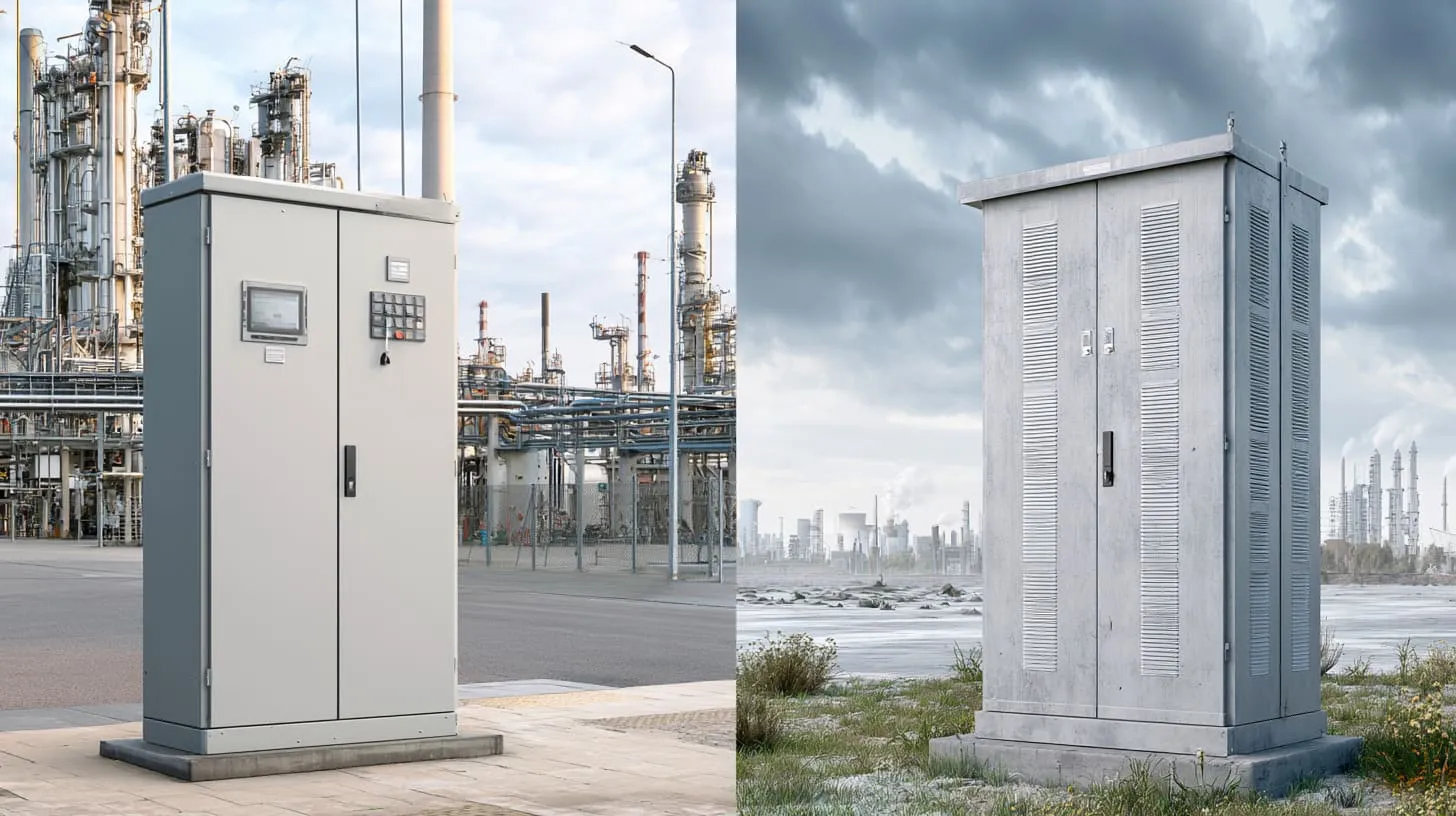
A coating specification should not begin with a color code. It should begin with the installation conditions.
My decision usually starts with the least attractive part of the project: moisture paths, maintenance limits, cut edges, and failure cost. Those details tell me more than a polished product rendering.
Evaluate the Installation Environment
I first separate indoor use from outdoor use. I then go deeper.
“Indoor” does not always mean dry. A food-processing plant, car-wash facility, greenhouse, or wastewater building may be more corrosive than a sheltered outdoor location.
“Outdoor” also covers many different conditions.
An enclosure under a roof in a dry inland city does not face the same risk as a cabinet beside a coastal highway.
I normally ask:
- Will rain hit the enclosure directly?
- Will water collect on the top or base?
- Is the site near the sea?
- Will the enclosure face condensation?
- Are corrosive chemicals present?
- Will workers wash the equipment?
- Is the enclosure installed indoors or outdoors?
- Is the area heated, cooled, or ventilated?
- Will dust hold moisture against the surface?
- Can the coating be scratched during normal use?
| Environmental Question | Why It Matters |
|---|---|
| Is the installation near the coast? | Salt can speed corrosion around small defects |
| Will the enclosure receive direct rain? | Water exposure tests the coating and enclosure design |
| Can condensation form inside or outside? | Hidden moisture can attack seams and internal surfaces |
| Are chemicals present? | Some chemicals attack powder, zinc, or both |
| Will the product be washed? | Repeated wetting can expose weak edges and joints |
| Can water drain freely? | Standing water shortens coating life |
| Will the enclosure be scratched often? | Galvanizing may provide better backup protection |
Consider Product Lifespan Requirements
Not every enclosure needs the same service life.
A temporary site box may only be used for a short project. A telecom cabinet may be expected to remain in service for many years.
The required protection should match the expected life and the cost of replacement.
I look at:
- Planned service period
- Inspection frequency
- Ease of repair
- Availability of spare parts
- Cost of site access
- Downtime risk
- Customer warranty requirements
An enclosure installed beside a production line may be easy to touch up. An enclosure installed on a remote tower may cost far more to access than to manufacture.
For remote products, I often accept a higher initial treatment cost because one maintenance visit can erase all the savings from a cheaper finish.
Consider Design and Manufacturing Requirements
The coating system cannot be separated from the enclosure design.
Material Thickness
Thin sheet metal may distort during hot-dip galvanizing. Thicker structures may handle the heat better, but they can still move if welding creates uneven stress.
Welded Construction
Welds must be cleaned and finished correctly. Weld spatter, slag, residue, and narrow gaps can affect both powder coating and galvanizing.
Overlapping seams can also trap chemicals or moisture.
Cut Edges and Holes
Powder coating after fabrication can cover cut edges. Pre-galvanized sheet loses some protection at cuts and welds unless these areas receive extra treatment.
Hot-dip galvanizing after fabrication can cover the edges, but zinc buildup may change hole size.
Tapped Holes and Grounding Points
Coating can interfere with electrical contact and thread fit.
I identify grounding areas before finishing. The factory may need to mask them, clean them afterward, or use a suitable grounding stud design.
Door and Gasket Fit
A coating adds thickness. Hot-dip zinc may add more uneven buildup than powder coating.
The designer should consider:
- Door gaps
- Hinge movement
- Lock engagement
- Gasket compression
- Removable panel fit
- Fastener clearances
Branding and Appearance
If the enclosure carries the customer’s logo, warning information, or product identity, the surface must support the selected marking method.
Powder coating usually gives more flexibility for visual requirements.
| Design Feature | Powder-Coating Concern | Galvanizing Concern |
|---|---|---|
| Sharp edges | Thin coating coverage | Zinc buildup may vary |
| Deep recesses | Difficult powder penetration | Drainage and venting are required |
| Large flat door | Usually manageable | Heat distortion risk |
| Tapped holes | Masking may be needed | Threads may need cleaning |
| Welded seams | Preparation affects adhesion | Trapped chemicals must be avoided |
| Grounding point | Coating must be removed or masked | Zinc may affect contact design |
| Tight assembly | Film thickness must be allowed for | Uneven buildup may affect fit |
| Printed logo | Usually easy | Additional topcoat may be needed |
Consider Total Project Cost Instead of Initial Price
Buyers often compare quotations by looking at the treatment price per enclosure. I understand this approach, but it can hide the larger cost.
I prefer to compare:
Total project cost = manufacturing cost + inspection cost + maintenance cost + failure risk + replacement cost
The lowest initial price may still be correct for a clean indoor application. I do not automatically recommend a more expensive system.
However, I also do not remove corrosion protection to save a small amount when a field failure would be expensive.
A Practical Cost Example
Suppose powder coating saves $8 per enclosure compared with a stronger corrosion-protection system.
For 500 units, the initial saving is $4,000.
That looks meaningful.
Now suppose ten cabinets need field repair. Each repair requires travel, labor, site approval, and equipment access. The cost can quickly pass the original saving.
The opposite mistake also happens. A buyer may specify hot-dip galvanizing and powder coating for a small indoor box. The extra treatment may add cost, delay, and fit problems without improving real performance.
I try to spend money where it removes a real risk.
A good specification is not the most expensive specification. It is the one that matches the environment without creating new manufacturing problems.
Common Mistakes When Selecting Steel Enclosure Surface Treatments
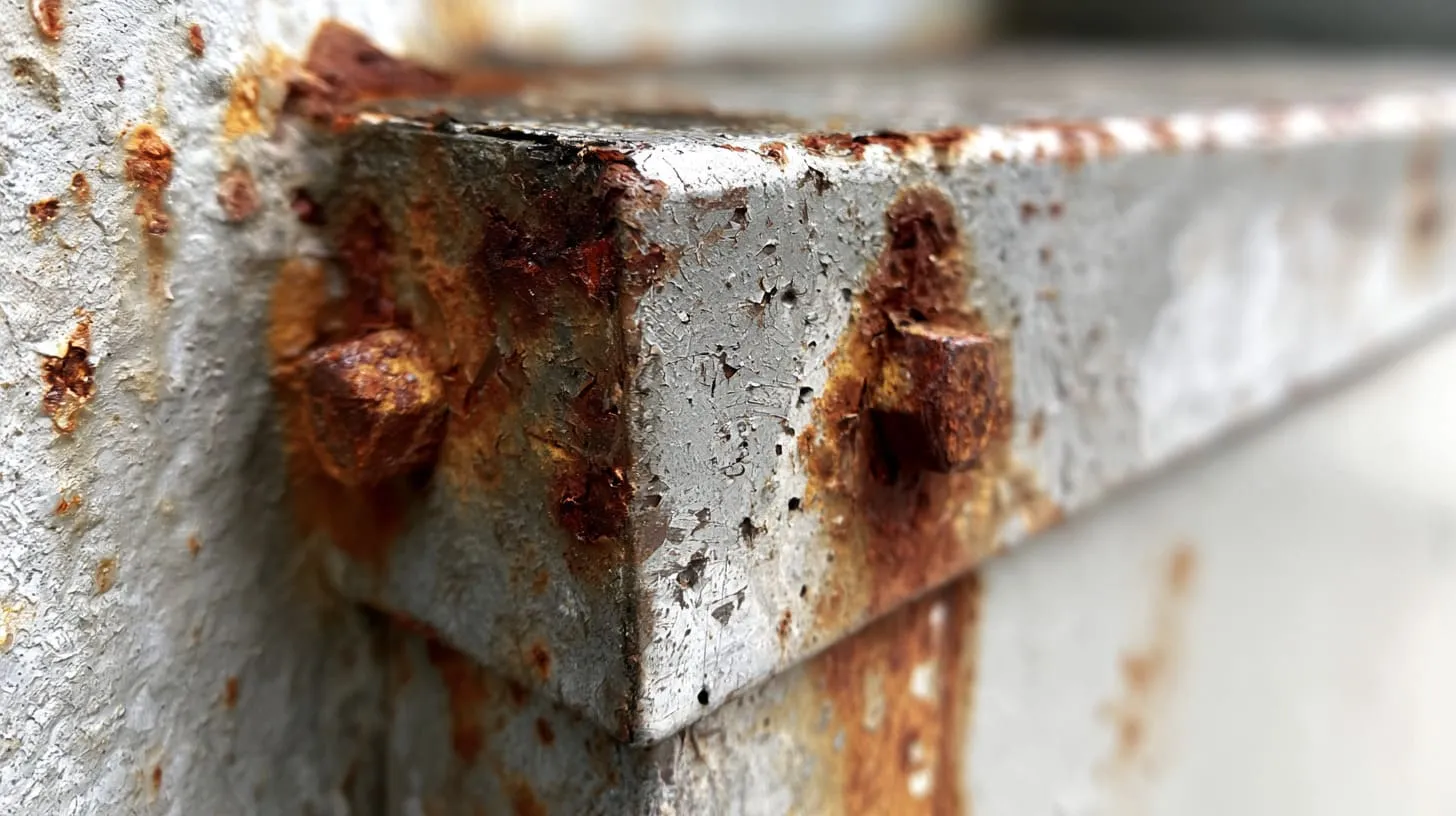
Surface-treatment mistakes usually begin before the coating line. They begin when the buyer, designer, and factory make different assumptions about the same product.
Most coating failures I see are not caused by choosing a completely useless material. They come from one overlooked detail, such as an untreated cut edge, a trapped seam, an indoor powder used outdoors, or a maintenance condition nobody discussed.
Choosing Based Only on Appearance
A smooth powder-coated sample can look more professional than a raw galvanized sample.
That does not mean it will last longer outdoors.
Appearance is important for many products. However, the buyer should separate visual quality from corrosion performance.
A beautiful surface can still fail if:
- Pretreatment is weak
- Edges have thin coverage
- The powder is not suitable for outdoor use
- Water stays around the base
- Scratches expose bare steel
- Welds contain contamination
I ask customers whether the appearance is a sales requirement, an operational requirement, or simply a preference. That answer helps me decide how much weight to give it.
Ignoring Welding Areas and Cut Edges
Welds and cut edges are common starting points for corrosion.
These areas may have:
- Heat discoloration
- Oxide
- Spatter
- Sharp geometry
- Residue
- Small gaps
- Uneven coating coverage
A factory may produce a perfect flat panel while leaving a weak welded corner.
When I inspect a coated enclosure, I spend less time looking at the center of the door. I look under the flange, around the hinge, beside the weld, and inside the bottom corners.
Those places tell me more about the real process.
Selecting the Same Treatment for All Applications
A company may want one coating standard for every enclosure. This can simplify purchasing, but it can also create waste or risk.
The same product family may include:
- Indoor versions
- Sheltered outdoor versions
- Coastal versions
- Chemical-area versions
- Premium branded versions
Using basic powder coating for every model may under-protect the severe applications.
Using a heavy duplex system for every model may overcomplicate the indoor products.
| Application Version | Possible Treatment Direction |
|---|---|
| Indoor standard model | Pretreated steel with powder coating |
| Sheltered outdoor model | Outdoor-grade powder system with stronger preparation |
| Harsh outdoor model | Galvanized or zinc-based protection |
| Coastal branded model | Duplex system or another engineered coating system |
| High-appearance indoor model | Fine-textured or smooth powder coating |
| Chemical-area model | Treatment selected after confirming chemical exposure |
A controlled product family can still use different finishes. The drawing and model number simply need to make the difference clear.
Over-Specifying Protection and Increasing Cost Unnecessarily
More protection sounds safer. It is not always safer for the full assembly.
Hot-dip galvanizing can create distortion. Thick coating can affect doors. Extra layers can reduce hole clearance. More processes can extend lead time.
The customer may pay more and receive a product that is harder to assemble.
I challenge a high coating requirement when the enclosure stays in a dry office, has a short service period, or can be maintained easily. I would rather use that budget for better sealing, stronger hinges, cleaner welding, or more reliable hardware.
Treating “Galvanized Steel” as One Material
Pre-galvanized sheet and post-fabrication hot-dip galvanizing should not be treated as the same specification.
With pre-galvanized sheet, the flat material already has a zinc coating before cutting and welding. Fabrication can damage or remove protection at:
- Cut edges
- Welds
- Ground areas
- Reworked sections
With post-fabrication hot-dip galvanizing, the completed steel structure receives zinc after cutting and welding. This can protect more areas, but it introduces heat, drainage, and dimensional concerns.
I always clarify the process instead of relying on the word “galvanized.”
Forgetting the Enclosure Design
A coating cannot rescue every weak enclosure design.
Water can still enter through a poor door overlap. Condensation can still form inside. Dissimilar metals can still create corrosion. Water can still remain in an unsealed base channel.
Good corrosion resistance comes from a system:
- Suitable steel
- Suitable surface treatment
- Correct drainage
- Controlled welding
- Compatible hardware
- Proper sealing
- Correct installation
- Realistic maintenance
The finish is important, but it does not work alone.
Conclusion

I choose powder coating when the enclosure needs a clean appearance, controlled color, branding, and reliable protection in a suitable indoor or moderate environment.
I choose galvanizing when the enclosure faces higher corrosion risk, minor surface damage is likely, or long-term maintenance will be difficult.
I consider a duplex system when the project needs both strong corrosion protection and a controlled finished appearance.
My final decision is never based on which treatment sounds more advanced. I decide by asking where corrosion will start, how the product will be handled, and how expensive a failure will become after installation.
That is why I do not believe powder coating is always cheaper, and I do not believe galvanizing is always better.
Powder coating can be the most practical and cost-effective solution for an indoor control enclosure. Galvanizing can be the safer long-term choice for an outdoor utility cabinet. A duplex system can make sense beside the coast, but it may be unnecessary for a box installed inside a clean equipment room.
I reach this view because steel-enclosure projects rarely fail in the center of a flat panel. They fail at small details.
They fail around welds, edges, fasteners, hinges, drainage points, scratches, and areas that stay wet.
Those details guide my decision.
Before I recommend a surface treatment, I want to know:
- Where the enclosure will be installed
- Whether it will receive rain or salt exposure
- How long it needs to remain in service
- Whether appearance and branding matter
- How often the customer can maintain it
- Whether the design can handle the selected process
- What the real cost of corrosion failure would be
At MaidaTech, we review the enclosure design together with the working environment before confirming the surface finish. We can also discuss fabrication details, coating options, branding, cutouts, assembly, and possible design risks for custom steel-enclosure projects.
You can send your drawings, installation conditions, required quantity, and finish requirements to info@maidatech.com. I will review the project and help you compare the practical options before production begins.