Skip to content
Many buyers ask me a very simple question:
“Which finish is stronger, powder coating or anodizing?”
It sounds like the right question. It is short. It is practical. It feels like it should have one clean answer.
But in custom enclosure work, that question can lead the project in the wrong direction.
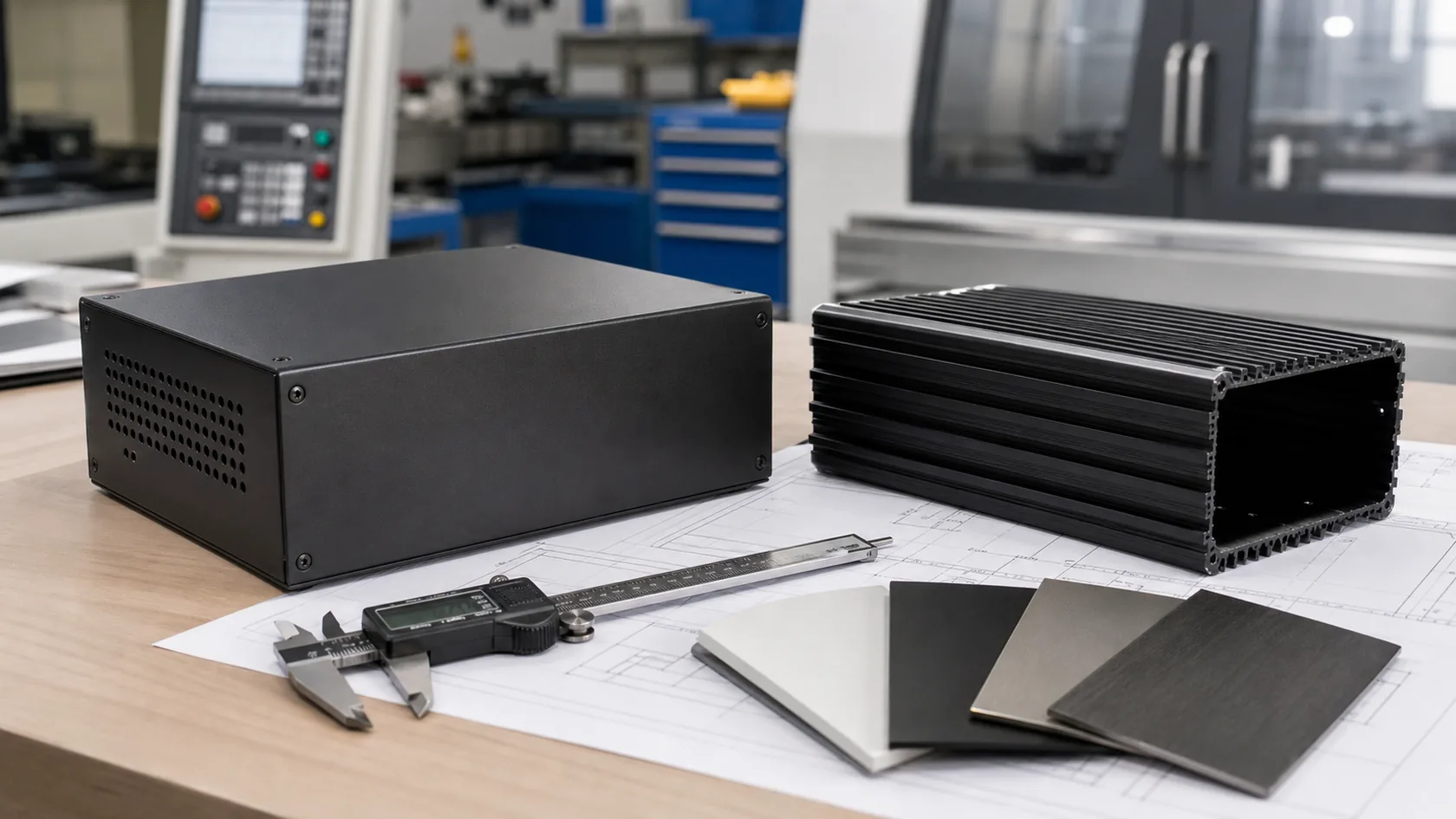
Powder coating can be stronger for color coverage, impact resistance, and outdoor protection when the coating system is selected correctly. Anodizing can be stronger for aluminum surface hardness, wear resistance, and a clean metal look. Both can be excellent. Both can also be wrong.
The problem starts when “stronger” becomes the only target.
An enclosure is not a flat test panel. It has screw holes, PCB slots, grounding points, connector cutouts, bends, bosses, threads, labels, logos, heat concerns, and packaging requirements. A finish that looks strong on paper can create trouble in assembly, maintenance, electrical contact, or cost.
At MaidaTech, I do not choose powder coating or anodizing by reputation first. I choose by use. Where will the enclosure be installed? Will the customer touch it every day? Does it need electrical grounding? Are there tight sliding parts? Will the color need to match plastic parts? Can the product tolerate coating buildup around holes?
Those answers matter more than the finish name.
In this article, I will compare powder coating and anodizing from a practical factory view. Not to crown one winner, but to show when the “stronger” finish becomes the wrong choice.
Let’s start with the trap hidden inside that word.
The Trap in Calling One Finish Stronger
“Stronger” can mean many different things.
It can mean harder. It can mean thicker. It can mean better against UV. It can mean more scratch resistant. It can mean easier to clean. It can mean better for salt air. It can mean better after a customer drops a tool on it.
If buyer and supplier use the same word but mean different things, the finish decision becomes risky.
Strength Depends on the Failure Mode
A finish is only strong against a specific problem.
| Real problem | Finish strength that matters |
|---|---|
| Color fading outdoors | UV and weathering resistance |
| PCB rail wear | Surface hardness and friction |
| Tight screw holes | Coating thickness control |
| Grounding requirement | Electrical contact planning |
| Brand appearance | Color consistency and texture |
| Harsh handling | Impact and chip resistance |
| Coastal installation | Corrosion system and pretreatment |
This is why a one-word comparison is weak. A finish can be strong in one column and weak in another.
Test Panels Do Not Tell the Full Story
Powder coating and anodizing are often compared using flat panels, lab data, or supplier samples. Those are useful, but they do not show all enclosure risks.
A real enclosure has edges, holes, seams, welds, bends, and hidden contact surfaces. Coating behaves differently there. A beautiful sample plate cannot prove that a screw will still fit, a cover will still slide, or a grounding pad will still conduct.
When I review a custom enclosure project, I first ask what failure would hurt the customer most. A finish that prevents that failure is the stronger choice for that project. A finish that creates another failure is not stronger. It is just more confident-looking trouble.
Once we define the real risk, powder coating becomes easier to judge.
Where Powder Coating Is the Right Choice
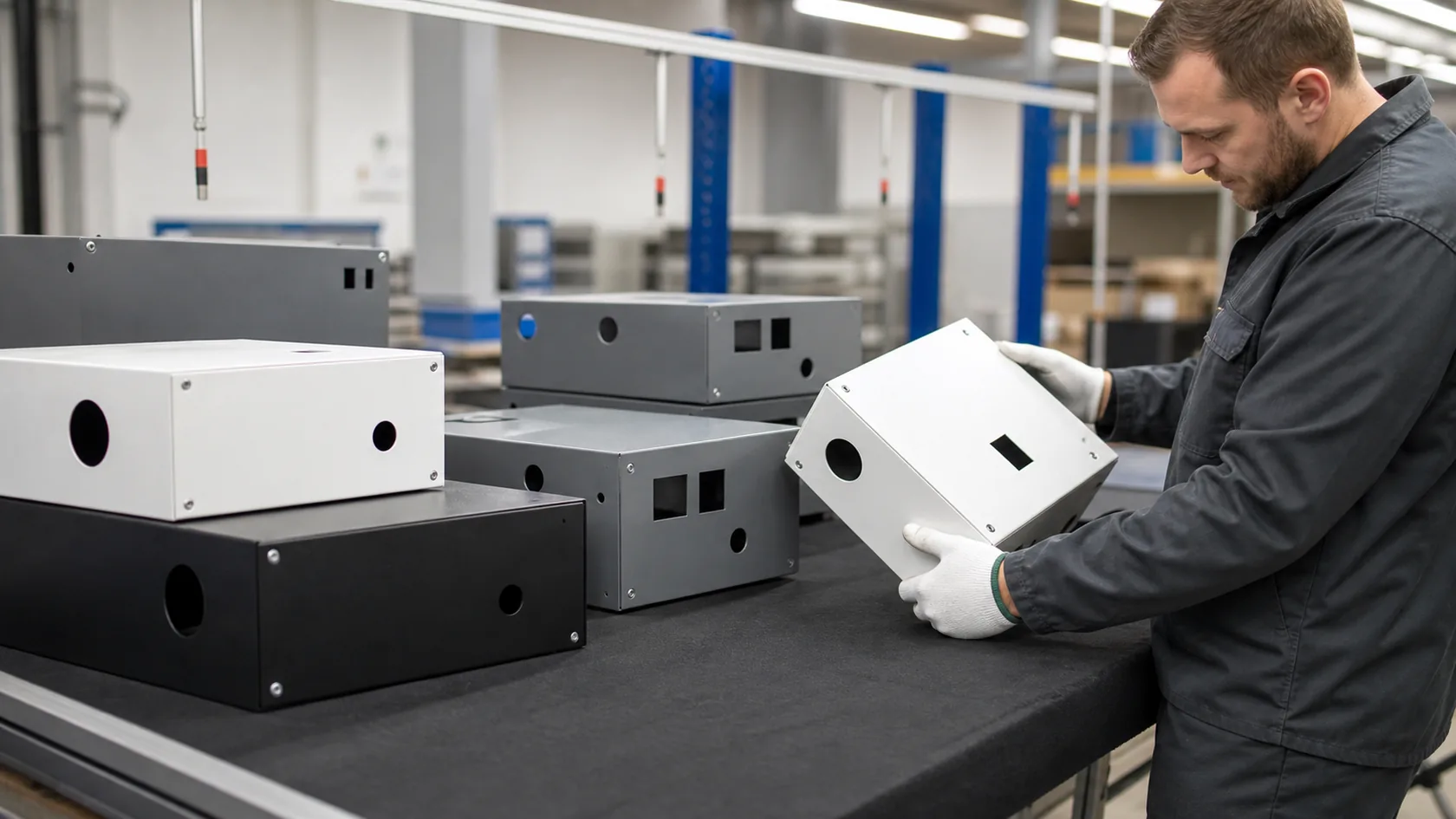
Powder coating is often a very good choice for sheet metal enclosures, steel cabinets, outdoor boxes, control housings, and products that need strong color coverage.
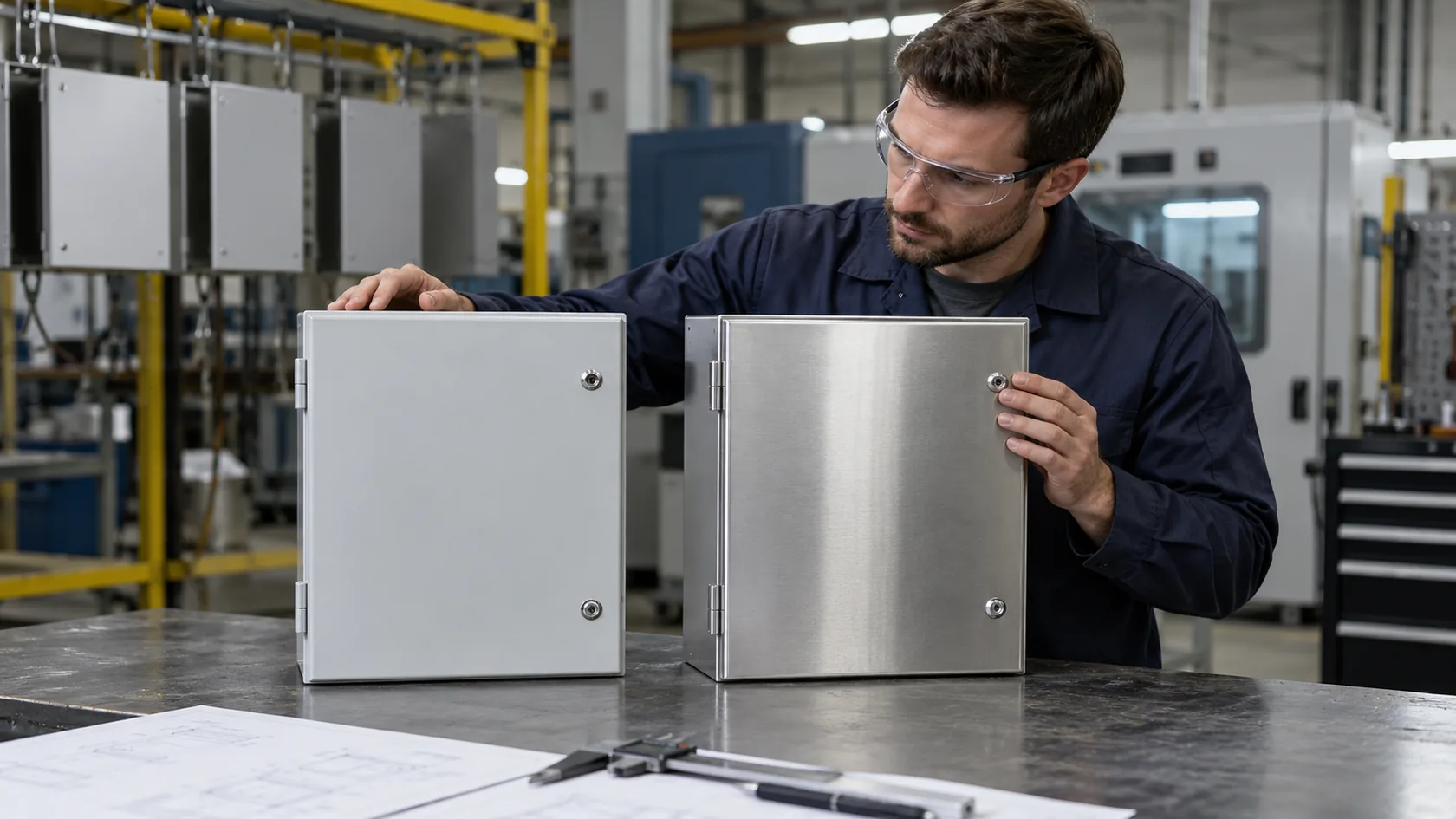
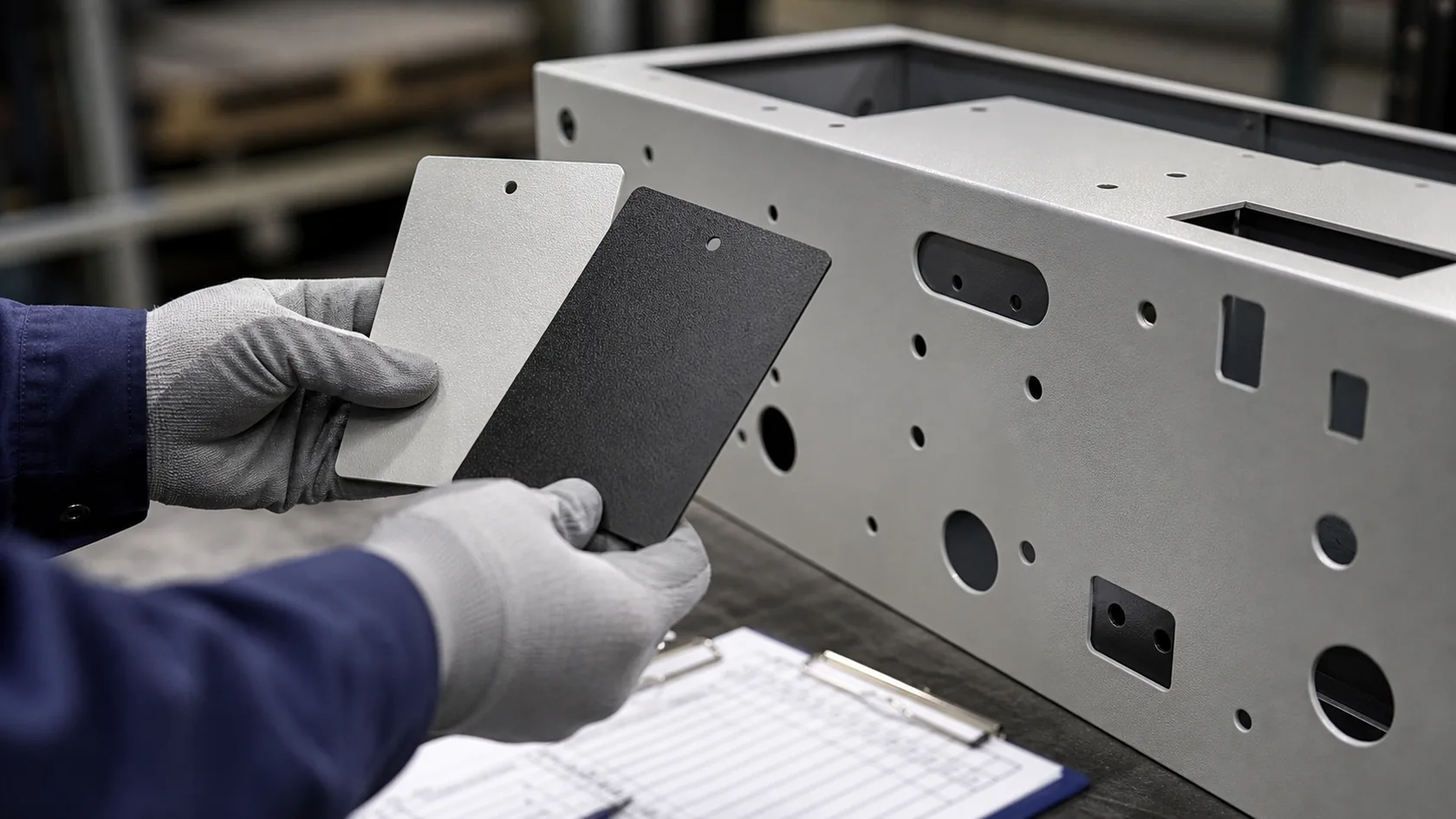
It gives a wide range of colors and textures. It can cover weld marks better than anodizing. It works well when the buyer wants brand color matching, matte texture, or a thicker protective layer.
Powder Coating Works Well for Color and Coverage
If a customer needs red, white, blue, orange, or a custom brand color, powder coating usually gives more design freedom than anodizing. It also works on steel, while anodizing is mainly for aluminum.
For industrial products, powder coating can make a sheet metal enclosure look clean and unified even when the part includes bends, welded corners, punched holes, and formed covers.
Standards and quality systems for coated aluminum, such as QUALICOAT specifications, also show why pretreatment, coating materials, coating process, and finished product checks all matter. Good powder coating is not only spraying powder. It is a controlled system.
It Can Be a Better Choice for Outdoor Protection
For outdoor cabinets or equipment cases, powder coating can be selected with systems designed for weather resistance. The finish can protect large exposed surfaces and support consistent appearance over time.
It is especially useful when:
- The enclosure is steel or mixed metal.
- The customer needs a precise color.
- The surface has welds or forming marks.
- The outside faces need strong coverage.
- The product will be handled often.
- A textured finish helps hide fingerprints and small marks.
For a sheet metal enclosure with a brand color and normal assembly clearance, I often prefer powder coating because it gives the buyer a cleaner commercial look without forcing the project into expensive cosmetic metal preparation.
But powder coating has a personality. It likes room. If the design gives it no room, it starts making trouble.
When Powder Coating Creates New Problems
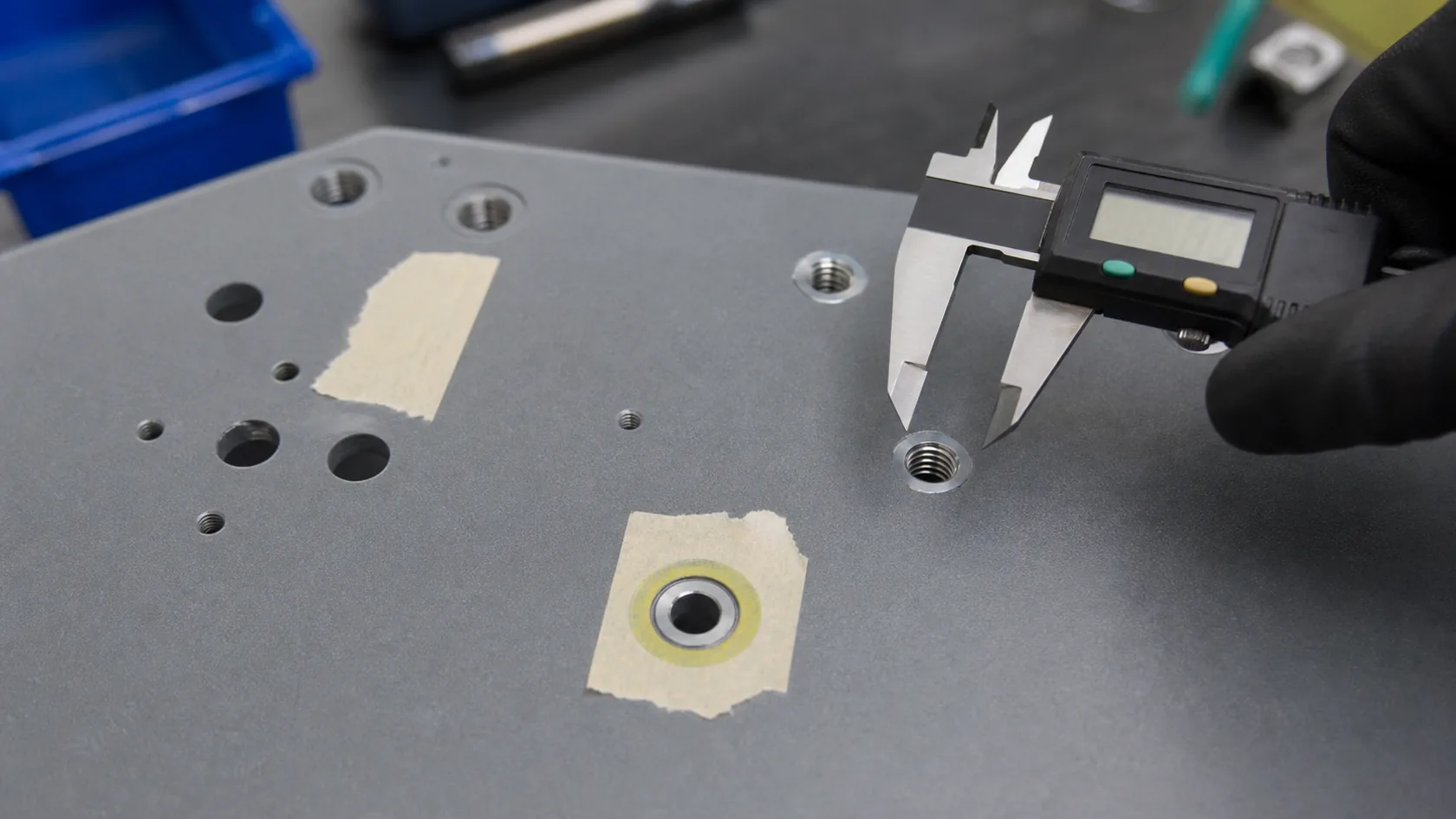
Powder coating is thicker than many buyers expect. That thickness is often part of its strength, but it can also become the reason the enclosure does not assemble smoothly.
This is where the “stronger” finish becomes the wrong choice.
Coating Buildup Can Break Fit
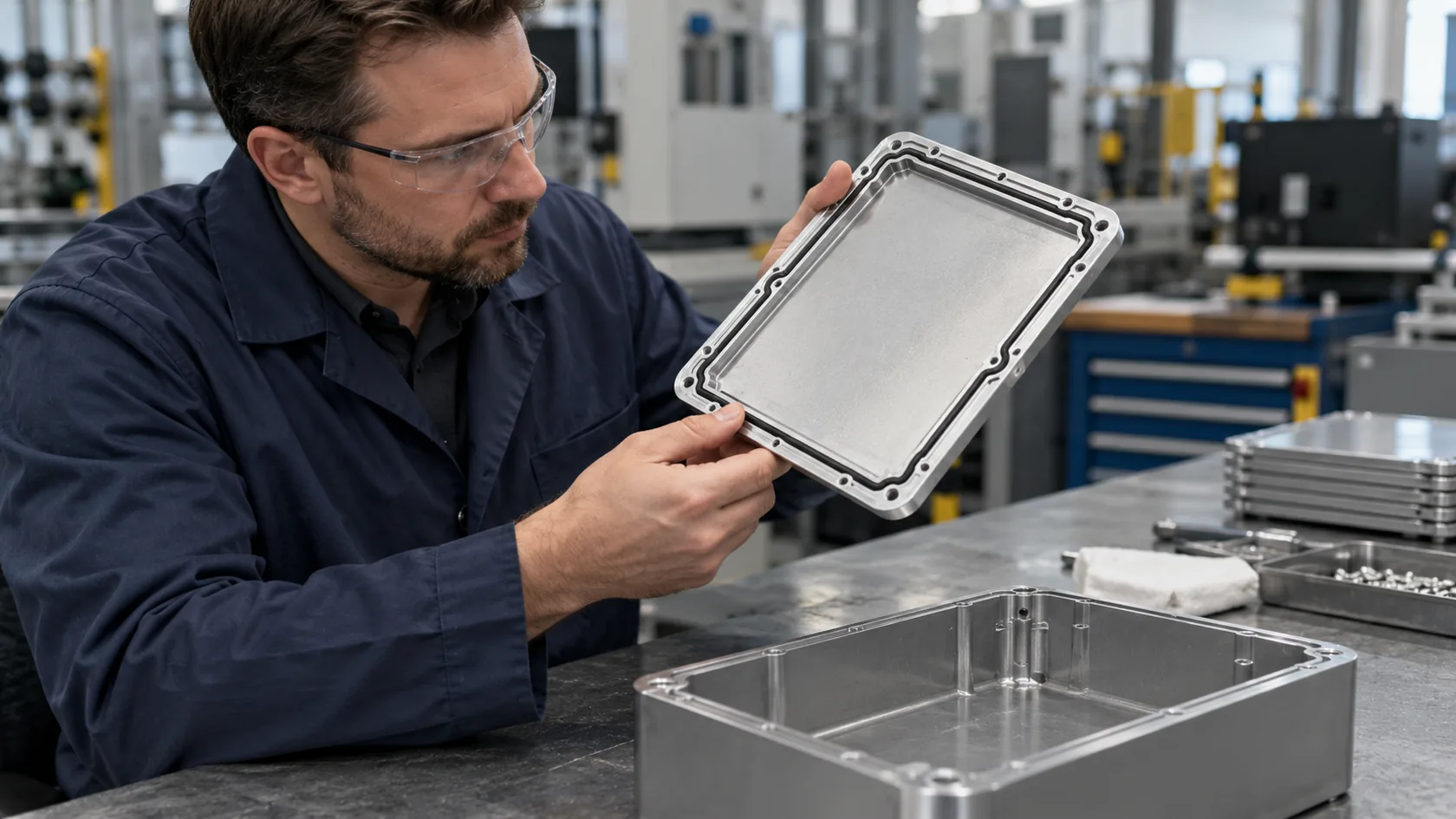
Powder coating adds film thickness to surfaces. Around holes, slots, bends, and mating edges, that buildup can change the real finished size.
Common problem areas include:
- Threaded holes
- PEM fastener locations
- Hinges
- Sliding covers
- PCB slots
- Connector openings
- Grounding pads
- Snap-fit features
- Tight cover overlaps
If these areas are not masked or adjusted, the buyer may receive a very nice-looking enclosure that needs hand rework before assembly.
Dry film thickness can be measured, and standards such as ASTM D7091 describe nondestructive measurement practice for coating thickness on metal substrates. In real buying work, the main lesson is simple: if thickness matters, it should be specified and checked.
Electrical Contact Needs Planning
Powder coating is not friendly to electrical grounding unless the contact area is planned. A coated surface may look clean, but it can block conductivity.
If the enclosure needs grounding, shielding, or metal-to-metal contact, the drawing should show:
- Masked grounding pads
- Clean screw contact areas
- Star washer positions if needed
- Post-finish cleaning or tapping requirements
- Areas where coating is not allowed
One small hidden grounding pad can matter more than the entire outside color. I have seen projects where the coating was beautiful, but the customer’s electrical test became the real finish inspection.
Repair Can Be Awkward
Powder coating can chip under heavy impact. Repairs are possible, but the repaired area may not match perfectly. For a visible enclosure surface, this can create an appearance issue after shipping, installation, or field service.
So powder coating is not wrong. It is wrong when the design ignores its thickness, masking needs, electrical contact, and repair behavior.
Now let’s look at anodizing, which has a very different kind of strength.
Where Anodizing Is the Right Choice
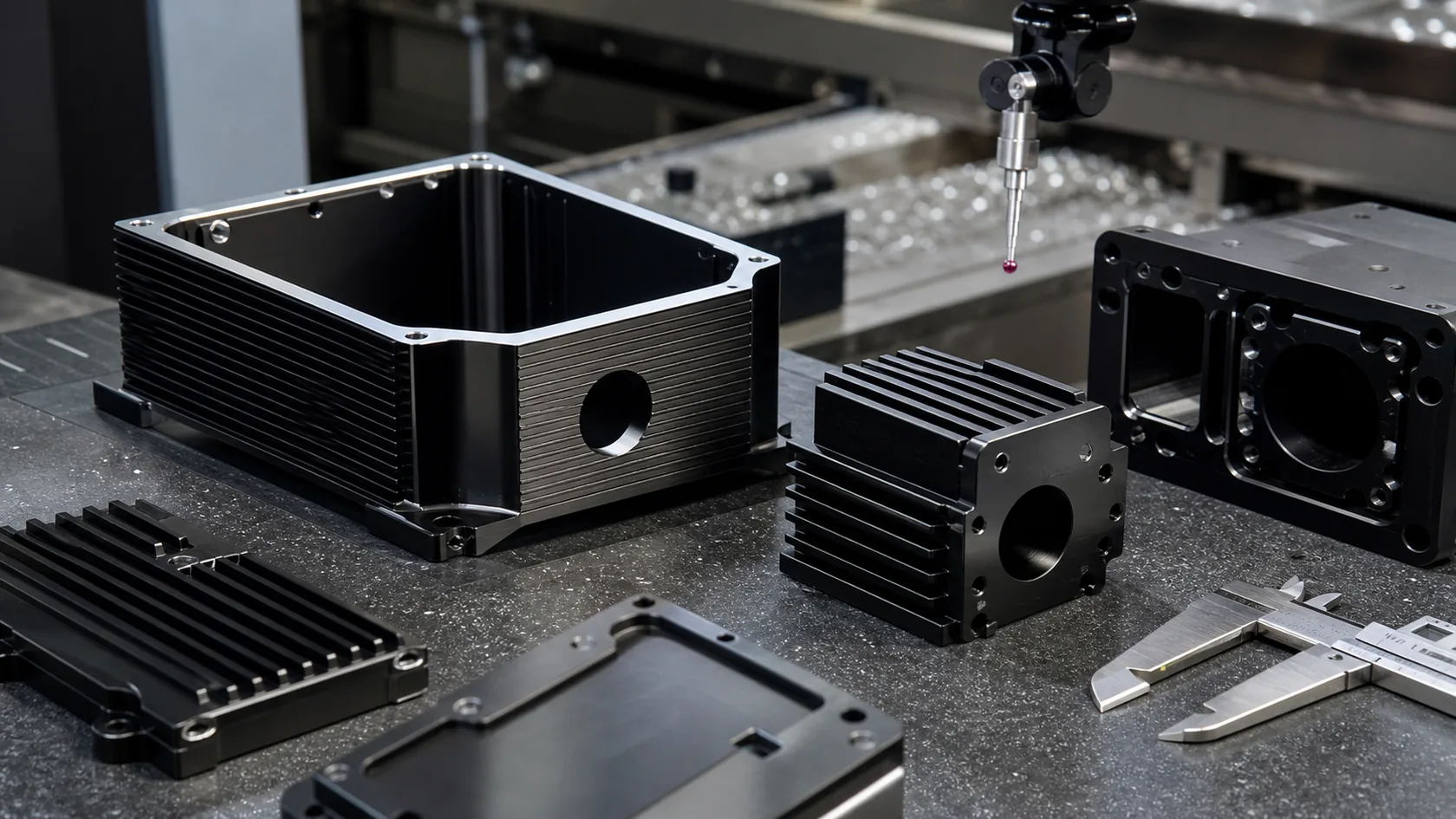
Anodizing is usually a strong choice for aluminum enclosures that need a metal look, good surface hardness, and better wear behavior than bare aluminum.
It is common for extruded aluminum enclosures, CNC machined housings, heat sink cases, instrument boxes, and products where the customer wants the part to still look like aluminum.
Anodizing Keeps the Metal Character
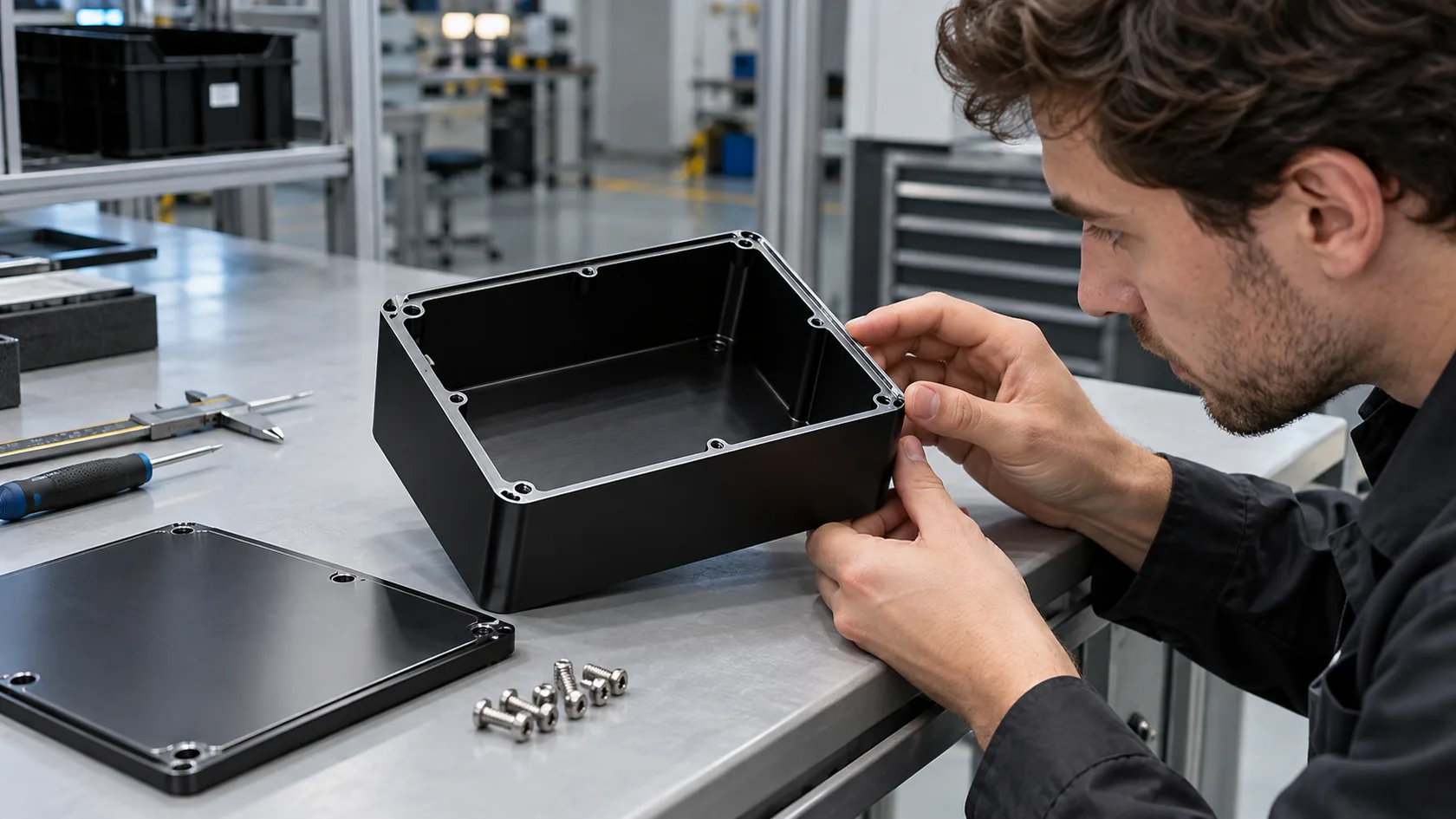
Anodizing does not cover aluminum the same way paint or powder coating does. It forms an oxide layer on the aluminum surface. This is why anodized parts can keep a metallic feel and show brushed, blasted, or machined texture.
For buyers who want a premium technical appearance, this is a real advantage.
The official ISO 7599:2018 page describes decorative and protective anodic oxidation coatings on aluminum and points out the importance of aluminum grade and pretreatment for final appearance or texture. That point matches what we see in factory work: anodizing quality starts long before the part enters the anodizing bath.
It Can Be Better for Wear and Heat-Sink Style Parts
Anodizing is often suitable for aluminum cases with sliding profiles, heat sink fins, visible CNC machining, and assembled covers that should not have a thick paint-like layer.
It is useful when:
- The enclosure is aluminum.
- The buyer wants a clean metallic finish.
- The part has machined texture or brushed lines.
- Sliding parts need lower buildup than powder coating.
- Heat sink fins should remain sharp and clean.
- The design needs black, clear, silver, champagne, or similar anodized colors.
For machined aluminum enclosures, I often choose anodizing when the customer wants the material itself to be part of the product identity. It feels honest. The surface says “aluminum,” not “coated metal pretending to be something else.”
But anodizing is not magic metal armor. It has its own ways to disappoint buyers.
When Anodizing Becomes the Wrong Choice
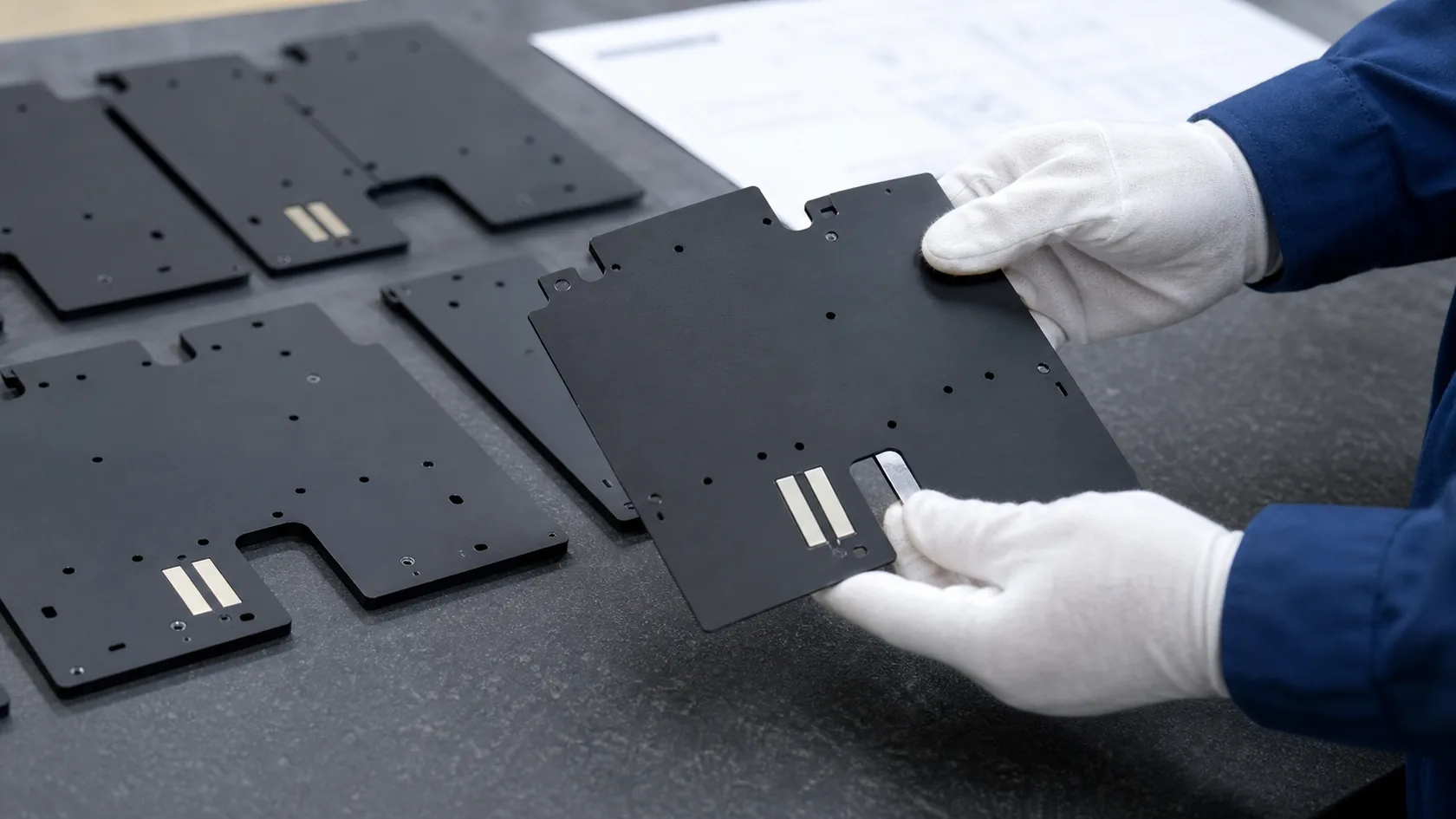
Anodizing can be the wrong choice when the buyer expects perfect color matching, heavy hiding power, easy repair, or strong protection on every alloy and surface condition.
The same metal character that makes anodizing attractive also makes it less forgiving.
It Does Not Hide Material and Machining Problems
Anodizing shows the aluminum underneath. Different alloys, extrusion batches, machining marks, weld areas, and surface preparation differences can show after finishing.
If a customer wants a perfectly uniform cosmetic surface on a complex assembly, anodizing may expose more variation than expected.
This is especially important for:
- Welded aluminum assemblies
- Mixed aluminum grades
- Large panels from different batches
- Parts with heavy machining marks
- Brushed surfaces with inconsistent direction
- Black anodizing where shade differences are easy to notice
Architectural anodizing specifications such as AAMA 611 focus on aluminum oxide coating performance and appearance, and they remind us that anodized finish quality is a specified system, not a casual color choice.
Color Options Are More Limited
Anodizing can create attractive colors, but it does not offer the same color freedom as powder coating. Bright brand colors can be difficult. Exact matching with plastic parts or painted components can also be difficult.
If the buyer’s first priority is a very specific brand color, powder coating is often the easier path.
Electrical and Contact Surfaces Still Need Attention
Anodizing changes the surface electrically. If the enclosure needs grounding, shielding, or reliable contact, the supplier and buyer still need to plan contact points.
Anodizing can also affect threaded holes and tight features, especially with thicker or harder coatings. For precision areas, the drawing should clarify whether dimensions apply before or after anodizing.
When I see a drawing with tight aluminum mating parts and a request for hard anodizing, I slow down. The finish may be correct, but only if we adjust the tolerance plan. Otherwise the customer may pay for a stronger surface and receive a tighter problem.
Now the useful question is not “which finish wins?” It is “which finish fits this enclosure’s job?”
Conclusion: Choose by Use, Not by Reputation
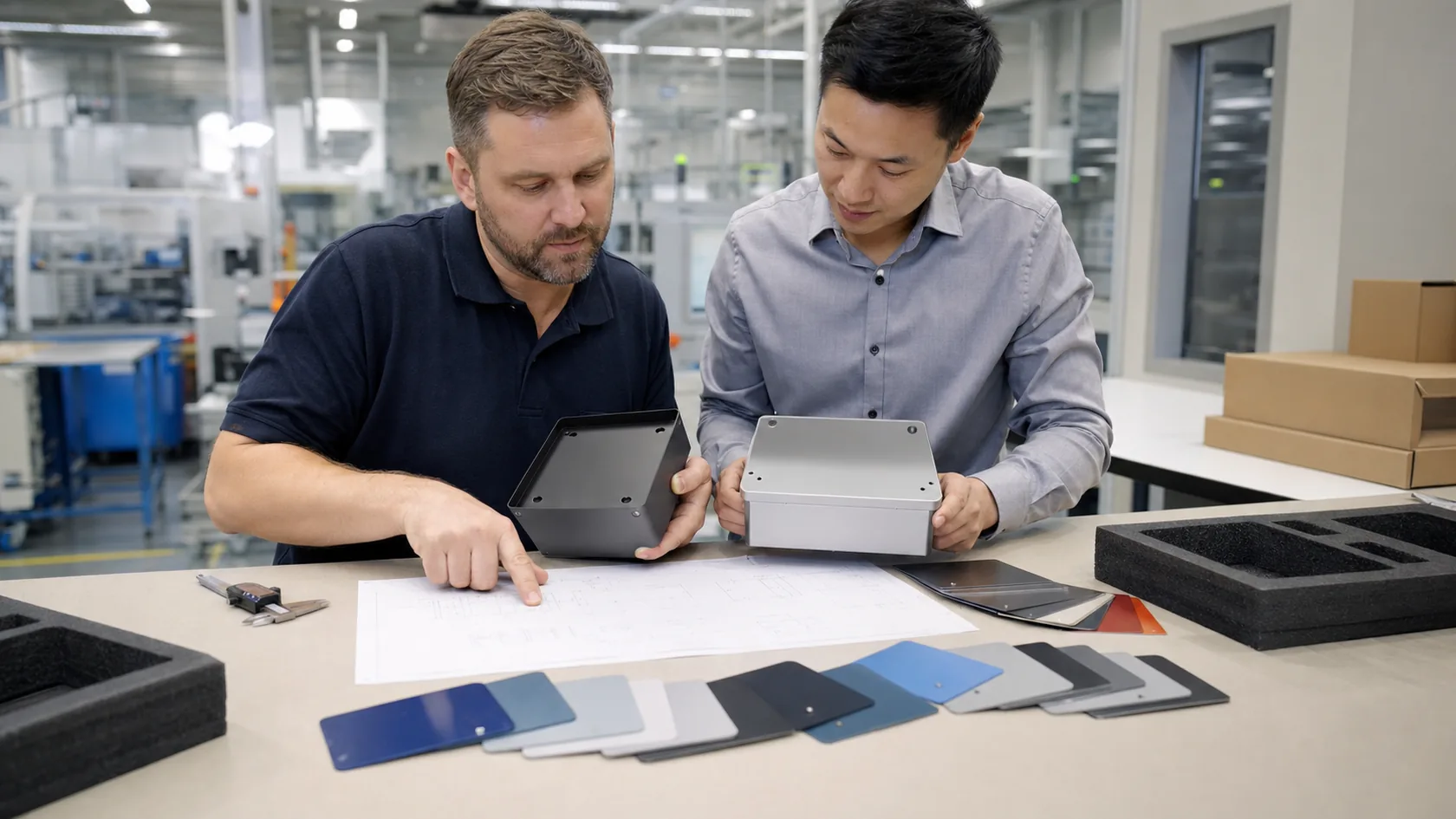
Powder coating and anodizing are both strong finishes. But neither one is always the stronger choice.
Powder coating is often better for color freedom, coverage, steel enclosures, outdoor systems, and hiding fabrication marks. It becomes risky when coating thickness blocks fit, grounding, threads, or sliding assembly.
Anodizing is often better for aluminum character, machined parts, wear surfaces, heat-sink style enclosures, and a clean technical look. It becomes risky when the buyer expects perfect color matching, heavy hiding power, easy repair, or no effect on tight dimensions.
In my factory work, I choose the finish after I understand the enclosure’s job:
- What material is used?
- Which surfaces are cosmetic?
- Which dimensions are critical after finishing?
- Does the enclosure need grounding or shielding?
- Will the product be used outdoors, indoors, or near salt air?
- Does the buyer need a brand color or a metal look?
- Can the finish be repaired or replaced if damaged?
This order keeps the project practical. It also makes the sample review much easier because both buyer and supplier know what they are judging.
At MaidaTech, we support custom aluminum enclosures, sheet metal enclosures, powder coating, anodizing, logo printing, engraving, packaging, and OEM/ODM production. If you are deciding between powder coating and anodizing for a custom enclosure, send us your drawing and tell us how the product will be used. We can help check the finish choice before it becomes an expensive mistake.
The best finish is not the one with the strongest name.
It is the one that still works after the enclosure is assembled, shipped, installed, and used.