Skip to content
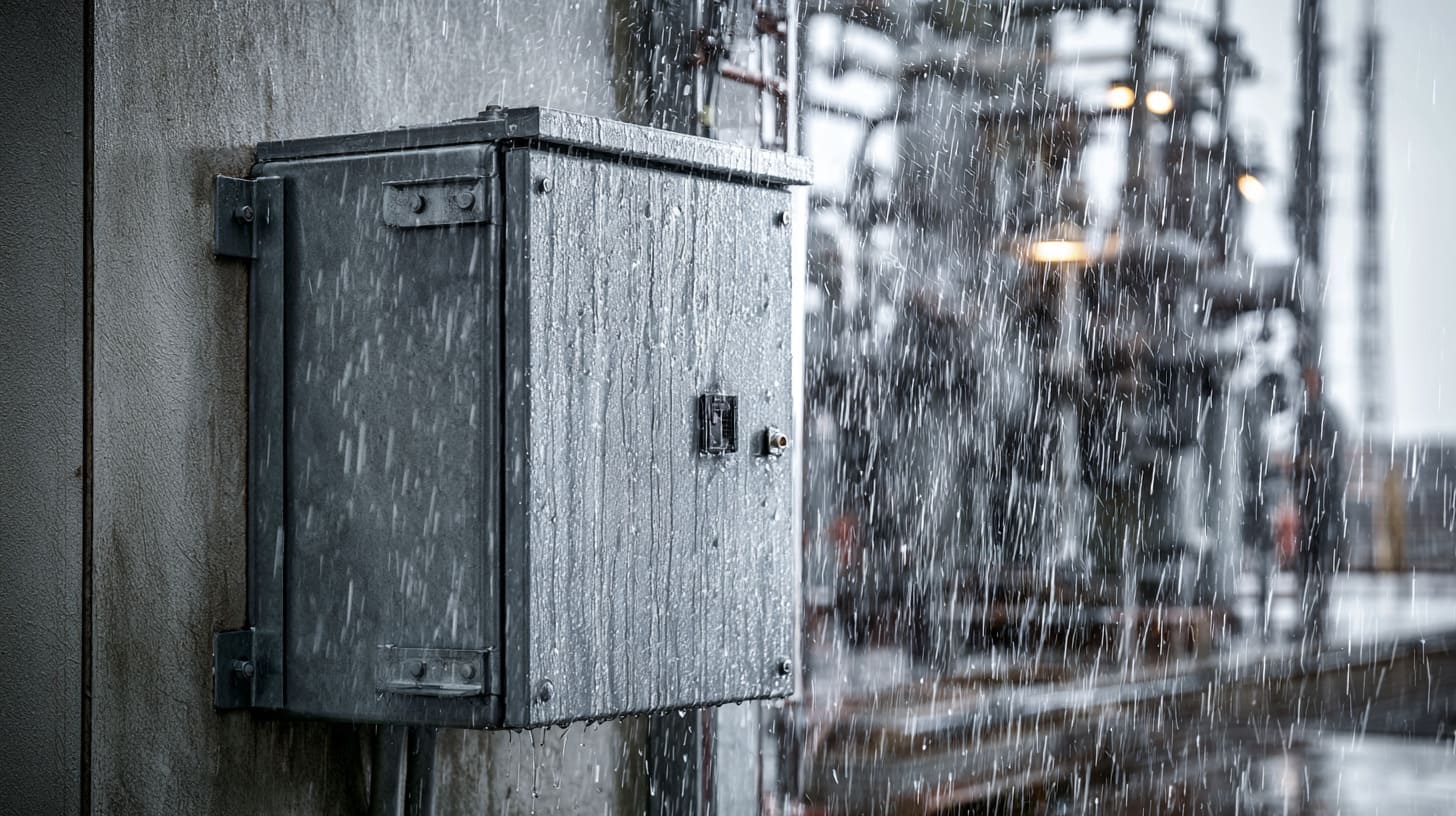
When customers contact me about custom steel enclosures, they usually start with questions about dimensions, material thickness, mounting holes, or price. Surface treatment often comes later, almost like a final color choice.
I understand why this happens. A coating is visible, so people naturally connect it with appearance. They ask whether the enclosure can be black, gray, white, textured, matte, or glossy.
But surface treatment is not only decoration.
A steel enclosure can have accurate bending, clean welding, and a strong structure. It can still start rusting much earlier than expected if its surface protection does not match the installation environment.
The detail I judge first is not the color that the customer wants. I first ask what the enclosure will face after it leaves our factory.
Will it stay inside a clean control room?
Will it sit outdoors under rain and sunlight?
Will it be installed near the sea?
Will workers clean it with chemicals?
Will it experience daily temperature changes and condensation?
These questions change the answer completely.
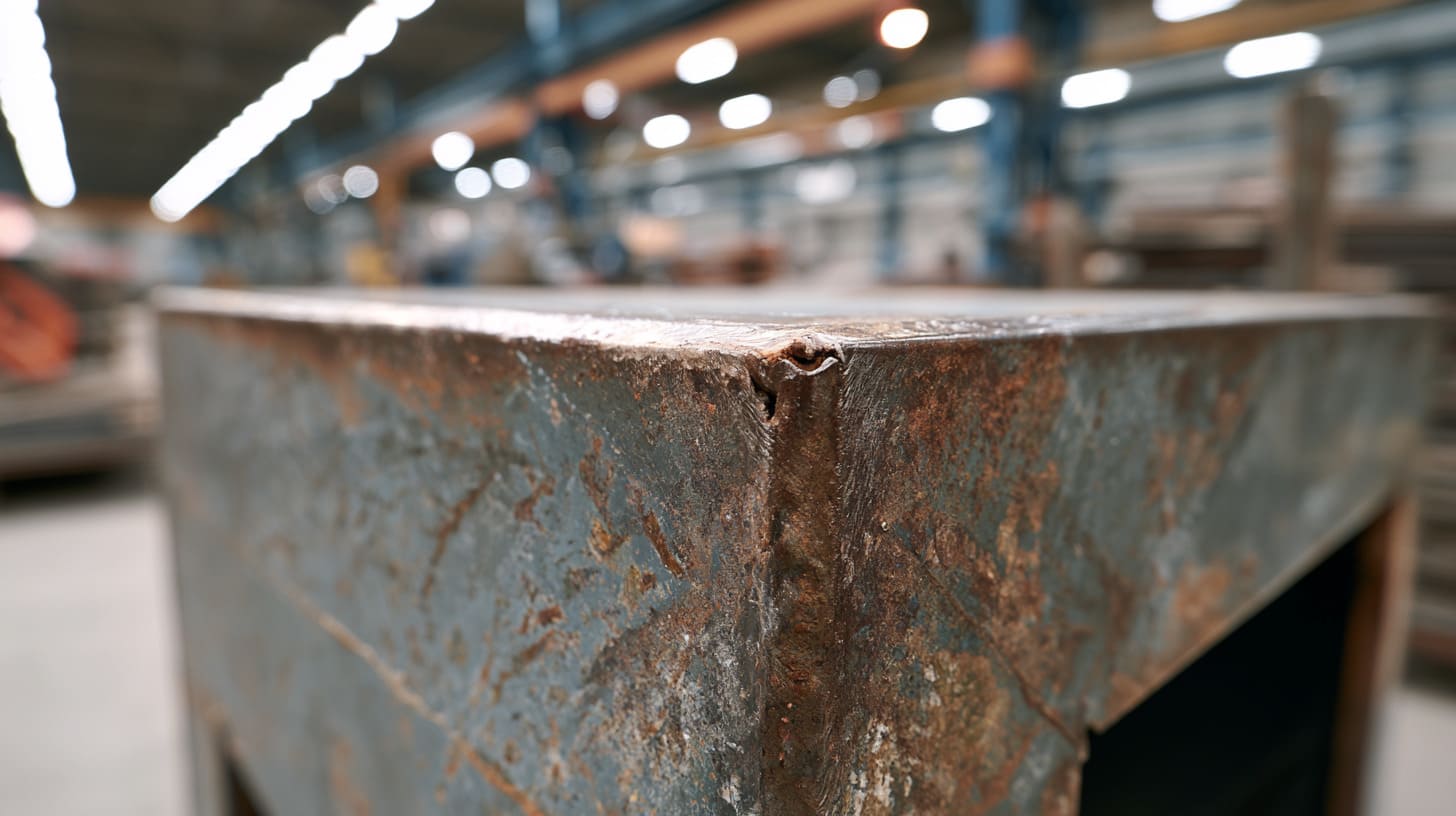
I have seen customers choose a basic powder coating because it looked good in the sample. The sample passed their visual inspection, and the price was attractive. The problem appeared later. The final enclosure was installed outdoors, where rainwater collected near a welded corner. Rust slowly appeared under the coating.
The steel was not necessarily poor.
The surface treatment system was simply not suitable for the real conditions.
For steel enclosures, I usually evaluate five points before I recommend a finish:
| Factor | What I Need to Understand |
|---|---|
| Installation environment | Indoor, outdoor, coastal, industrial, or chemical area |
| Corrosion risk | Moisture, salt, chemicals, pollutants, or condensation |
| Required service life | Temporary use or long-term equipment |
| Mechanical use | Impact, scratching, vibration, and frequent handling |
| Electrical needs | Grounding points, bonding, conductivity, and EMI requirements |
There is no single surface treatment that is best for every steel enclosure.
Powder coating may be the right answer for one project. Galvanizing may be better for another. Some projects need both. Other projects should move away from carbon steel and use stainless steel.
My goal is not to recommend the strongest or most expensive protection every time. My goal is to match the protection system with the actual risk.
That sounds simple. In real projects, it is where many expensive mistakes begin.
Why Is Surface Treatment Important for Steel Enclosures in Harsh Environments?
A steel enclosure usually protects something more valuable than itself. It may contain a controller, power supply, communication module, battery system, sensor, or industrial computer.
If the enclosure fails, the customer does not only replace a metal box. The customer may face equipment downtime, water damage, maintenance work, site visits, and complaints from the final user.
A small rust spot near a hinge worries me more than a minor color difference because the rust may signal that water has already found a weak point in the protection system.
How Does Steel Corrosion Affect Enclosure Performance?
Steel contains iron. When the steel surface is exposed to moisture and oxygen, corrosion can begin.
The process becomes faster when the environment also contains salt, chemicals, or industrial pollutants.
A small amount of surface rust may look harmless at first. But corrosion does not always stay on the surface. It can spread under a coating and weaken areas that are important to the enclosure.
Common corrosion risks include:
- Rainwater
- High humidity
- Condensation
- Coastal salt air
- Salt spray
- Cleaning chemicals
- Industrial fumes
- Road salt
- Fertilizer dust
- Acidic or alkaline substances
The location of the corrosion matters as much as the amount.
| Corrosion Location | Possible Result |
|---|---|
| Door edge | Poor sealing and visible rust |
| Hinge area | Reduced movement or mechanical failure |
| Weld seam | Coating lifting and local corrosion |
| Mounting hole | Rust around fasteners and water entry |
| Gasket contact area | Reduced IP protection |
| Grounding point | Poor electrical contact |
| Bottom panel | Standing-water damage and perforation |
For example, rust on a flat decorative panel may first create an appearance problem. Rust around a gasket channel is more serious. It can change the sealing surface and reduce water resistance.
Corrosion can also expand under the coating. The coating may still look acceptable from a distance, but bubbles or raised areas can form underneath it. Once the coating breaks, more steel becomes exposed.
Why Is the Base Steel Material Not Enough for Outdoor Applications?
Carbon steel is strong, easy to fabricate, and usually cost-effective. These qualities make it a common choice for electrical cabinets, control boxes, machine guards, and industrial housings.
However, bare carbon steel does not have strong natural corrosion resistance.
The steel needs a protective system between its surface and the environment. That system may include:
- Cleaning and pretreatment
- A zinc layer or conversion layer
- A primer
- A powder-coated or liquid-painted topcoat
Each layer has a job.
The pretreatment helps the coating stick to the metal. A zinc layer can protect the steel when the surface is scratched. A primer improves adhesion and corrosion resistance. The final coating provides color, weather resistance, and another barrier.
I often explain this to customers with a simple comparison. Steel is like a strong building without a roof. The structure may be solid, but strength alone does not stop rain from entering.
What Problems Can Happen When the Wrong Surface Treatment Is Selected?
The first visible problem is often rust around edges, cutouts, welds, or fasteners. These areas are more difficult to protect than a large flat panel.
Other failures can include:
- Coating peeling
- Surface bubbling
- Cracking near bends
- Rust spreading under the coating
- Color fading outdoors
- Chalking after UV exposure
- Scratches exposing bare steel
- Corrosion around screws
- Reduced adhesion after chemical cleaning
One customer may accept a small appearance defect. Another customer may reject the whole batch because the enclosure is part of a premium product.
The final cost can become much larger than the original coating cost.
| Failure | Direct Cost | Hidden Cost |
|---|---|---|
| Rust after installation | Replacement enclosure | Site labor and customer dissatisfaction |
| Coating peeling | Rework or repainting | Project delay |
| Poor edge coverage | Repair materials | Reduced service life |
| Wrong color durability | New production | Brand image damage |
| Corroded sealing area | New enclosure and gasket | Damage to internal electronics |
This is why I treat surface treatment as part of enclosure engineering. I do not treat it as the last line on a quotation.
Once the risk is clear, the next question becomes more useful: what does the enclosure actually need to survive?
What Factors Should You Consider Before Choosing Surface Treatment?
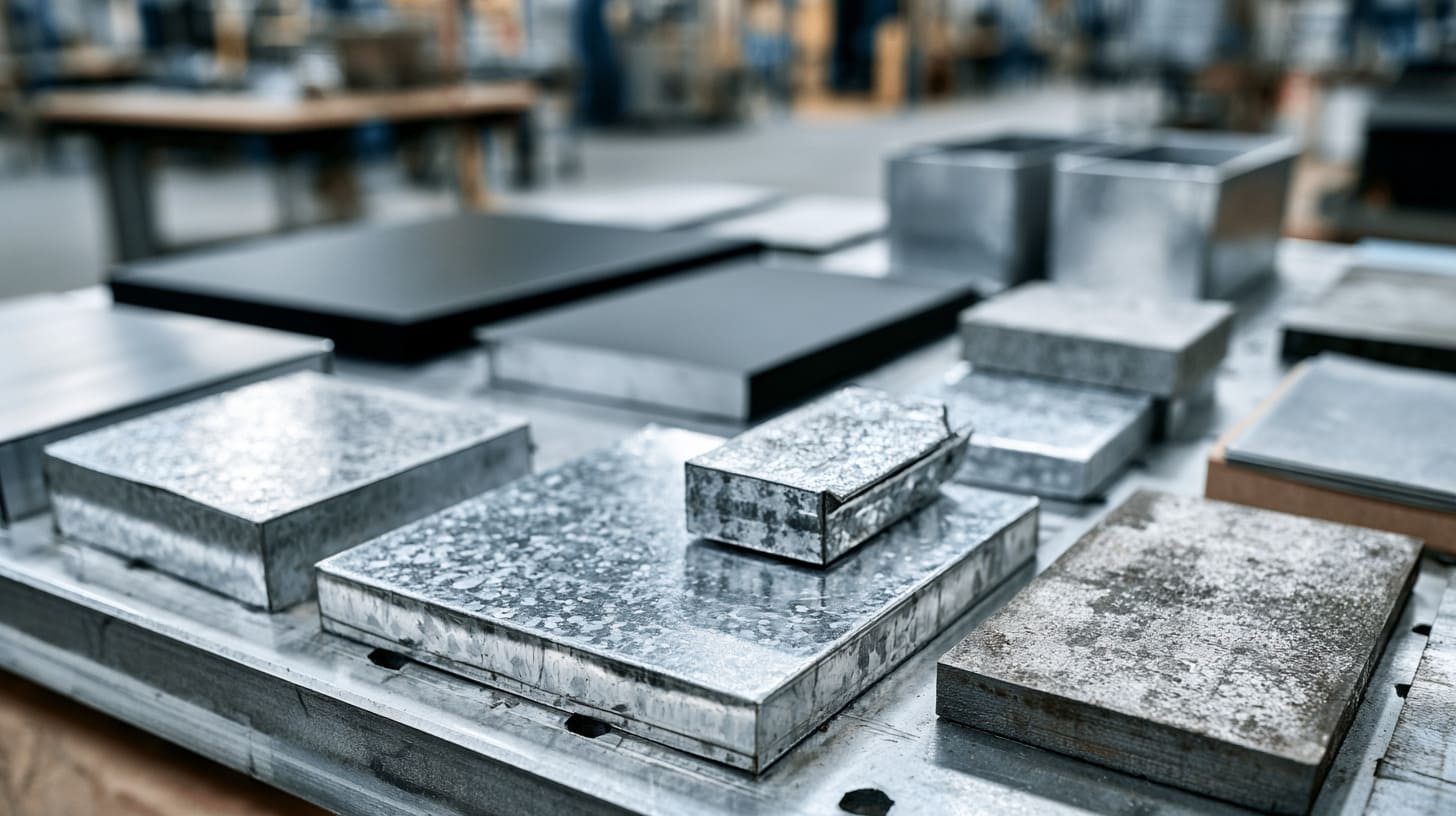
Customers sometimes describe an enclosure as “outdoor” and expect that one word to provide enough information.
It does not.
An enclosure installed under a roof in Finland faces a different risk from one mounted beside the sea in Florida. Both are outdoors, but their corrosion exposure is not the same.
Before I discuss coating thickness or color, I try to understand the worst normal condition rather than the best condition shown in the project drawing.
What Is the Actual Installation Environment?
I usually start with location and exposure.
The following questions help me build a more accurate picture:
- Will the enclosure be installed indoors or outdoors?
- Will it be under a roof?
- Will rain hit it directly?
- Can water collect on the top or bottom?
- Is the installation close to the sea?
- Is the area humid?
- Will the enclosure face direct sunlight?
- Are chemicals present?
- Will the product be washed?
- Will the enclosure experience large temperature changes?
- Can condensation form inside or outside?
- Will dust, oil, or salt settle on the surface?
“Indoor” also needs more detail.
A clean office is indoor. A food-processing room is also indoor. A welding workshop is indoor too. However, those three locations do not create the same risk.
| Environment | Typical Exposure | General Protection Need |
|---|---|---|
| Clean indoor room | Dry air and little contamination | Basic protection may be enough |
| Industrial workshop | Dust, oil, impact, and humidity | Durable coating and good pretreatment |
| Outdoor sheltered area | Humidity and indirect rain | Weather-resistant coating |
| Outdoor exposed area | Rain, UV, and temperature changes | Strong pretreatment and exterior-grade finish |
| Coastal location | Salt, humidity, and wind | Zinc protection or a stronger coating system |
| Chemical area | Fumes, spills, and cleaning agents | Chemically resistant material or coating |
I also ask how the enclosure will be installed. A vertical wall-mounted enclosure can drain water more easily than a horizontal box with a flat top.
Design and environment work together. A good coating cannot fully correct a shape that traps water every day.
How Does Corrosion Exposure Level Affect Surface Treatment Selection?
I usually divide projects into low, medium, and high corrosion risk during the early discussion. This is not a laboratory classification. It is a practical way to avoid treating every outdoor project as identical.
Low-Corrosion Environments
Low-risk applications may include:
- Indoor electrical cabinets
- Office equipment
- Clean assembly rooms
- Dry storage areas
- Indoor control panels
For these projects, a standard pretreatment and powder coating may provide enough protection.
The customer can focus more on appearance, color, texture, and scratch resistance.
Medium-Corrosion Environments
Medium-risk applications may include:
- Outdoor cabinets under partial shelter
- General factory areas
- Warehouses with changing humidity
- Agricultural equipment away from direct chemical contact
- Roadside equipment in moderate climates
These projects need more attention to edges, welds, drainage, coating quality, and outdoor durability.
A basic decorative powder may not be enough. I may suggest a stronger pretreatment, an outdoor-grade powder, or a zinc-coated base material.
High-Corrosion Environments
High-risk applications may include:
- Coastal areas
- Marine facilities
- Chemical plants
- Wastewater treatment sites
- Offshore equipment
- Areas with frequent salt exposure
- Locations with aggressive cleaning agents
For these projects, I do not rely on a coating name alone. I look at the complete system.
The system may include:
- Galvanized steel
- Zinc-rich primer
- Duplex coating
- Chemical-resistant paint
- Stainless steel
- Improved drainage and sealing
- Protected fasteners
- Controlled welding and post-weld treatment
How Long Does the Enclosure Need to Last?
A temporary construction control box and a telecom cabinet designed for many years of outdoor use should not receive the same surface treatment.
Customers often compare quotations without comparing the expected service life behind each quotation.
That can create a false saving.
| Project Type | Expected Use | Practical Surface-Treatment Approach |
|---|---|---|
| Prototype | Testing and short-term handling | Basic finish may be acceptable |
| Indoor commercial product | Controlled environment | Appearance and scratch resistance matter |
| Outdoor equipment | Long-term weather exposure | Exterior-grade system is needed |
| Infrastructure cabinet | Difficult to replace | Strong corrosion protection is important |
| Coastal industrial equipment | Severe exposure | Zinc protection, duplex coating, or stainless steel |
The customer should also consider maintenance.
Can a worker inspect and repaint the enclosure easily?
Is the enclosure installed on a remote tower?
Does replacement require shutting down a production line?
A finish that costs slightly more at the beginning may save much more when access is difficult.
The environment tells me how corrosion may begin. The expected lifespan tells me how long the protection system must keep fighting it.
What Are the Common Surface Treatment Options for Steel Enclosures?
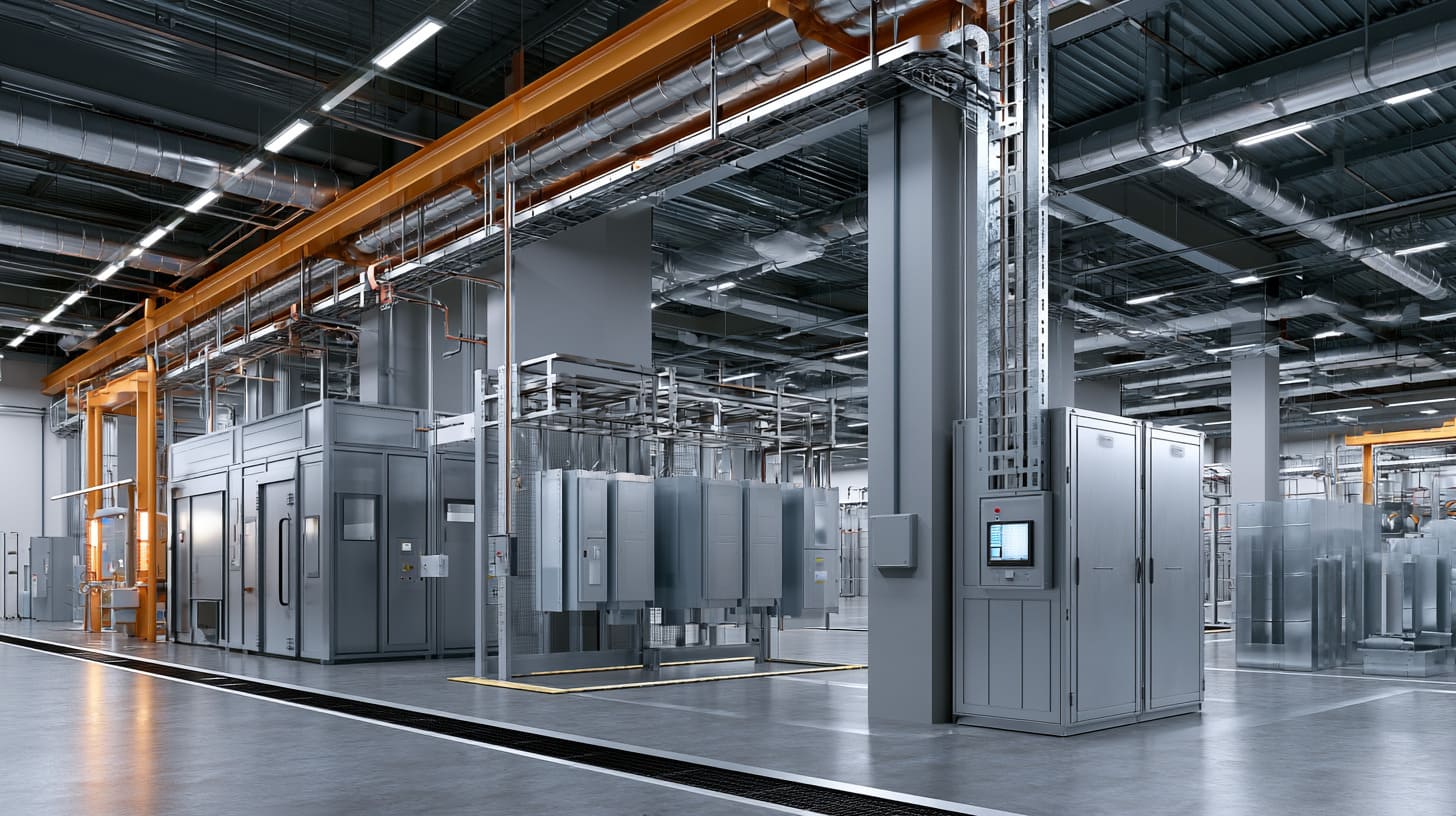
Steel enclosures can use many surface-treatment systems. The most familiar options are powder coating, galvanizing, zinc plating, and special liquid coatings.
Some customers ask me which option I prefer.
I do not start with a favorite finish because a preferred factory process can still be the wrong choice for the customer’s product.
Powder Coating for Steel Enclosures
Powder coating is one of the most common finishes for custom steel enclosures.
During the process, charged powder particles are applied to the metal surface. The coated part then enters an oven, where the powder melts and cures into a solid layer.
Powder coating offers several practical advantages:
- It provides a clean and consistent appearance.
- It offers many colors and textures.
- It provides good resistance to scratching and handling.
- It works well for custom branding.
- It is suitable for small and large enclosure batches.
- It is often cost-effective for industrial products.
Common applications include:
- Electrical control boxes
- Machine enclosures
- Indoor cabinets
- Outdoor equipment housings
- Server cabinets
- Battery enclosures
- Commercial product housings
However, powder coating is mainly a barrier.
If the coating is damaged and bare carbon steel becomes exposed, corrosion can begin at that point. The corrosion may then travel underneath the coating.
The final performance depends heavily on what happens before the powder is applied.
A well-prepared steel surface with a suitable pretreatment usually performs much better than poorly cleaned steel with a thick powder layer.
Important variables include:
| Variable | Why It Matters |
|---|---|
| Degreasing | Oil can reduce coating adhesion |
| Rust removal | Existing rust remains a weak point |
| Phosphating or conversion treatment | It improves adhesion and corrosion resistance |
| Powder type | Indoor and outdoor powders perform differently |
| Film thickness | Thin areas may provide weak protection |
| Curing temperature and time | Incorrect curing can reduce performance |
| Edge coverage | Sharp edges often receive less coating |
| Storage and handling | Scratches can expose the steel |
For outdoor projects, I normally check whether the powder is suitable for UV exposure. Indoor-grade powder may lose color or start chalking when it stays under strong sunlight.
Galvanizing for Steel Enclosures
Galvanizing adds a zinc layer to the steel.
The zinc provides barrier protection, but it also provides sacrificial protection. This means the zinc can corrode before the steel does.
That difference is important.
If a powder-coated carbon-steel enclosure receives a deep scratch, the exposed steel may rust. If galvanized steel receives a small scratch, the nearby zinc may still help protect the exposed area.
Galvanized steel is often used for:
- Outdoor cabinets
- Utility equipment
- Infrastructure products
- Roadside boxes
- Agricultural equipment
- High-humidity locations
- Industrial support structures
Hot-dip galvanizing can provide strong protection, but it also creates design and appearance considerations.
The finished surface may not be as smooth as a decorative powder-coated surface. Thin sheet-metal parts may also need careful process control because high temperatures can affect shape.
For some enclosure designs, the factory uses pre-galvanized sheet instead. The sheet already has a zinc coating before cutting and bending.
This option can be useful, but cut edges and welded areas need attention because fabrication can interrupt the zinc layer.
Electroplating and Zinc Coating Options
Electroplated zinc is thinner and usually smoother than a hot-dip galvanized layer.
It is commonly used for:
- Screws
- Brackets
- Small metal parts
- Internal mounting plates
- Hinges
- Latches
- Fasteners
It can also be used on some enclosure parts when the required protection level is moderate.
The thinner layer gives a cleaner appearance and better dimensional control. However, it generally provides less long-term corrosion protection than a heavier galvanized coating in aggressive environments.
| Zinc Treatment | General Strength | Common Use |
|---|---|---|
| Zinc electroplating | Smooth and dimensionally controlled | Fasteners and small parts |
| Pre-galvanized sheet | Efficient for sheet-metal fabrication | Cabinets and internal panels |
| Hot-dip galvanizing | Strong outdoor corrosion protection | Infrastructure and harsh environments |
| Zinc-rich primer | Useful under a topcoat | Repair areas and coating systems |
I also pay attention to mixed finishes.
A powder-coated enclosure may still fail early if the screws, hinges, or mounting brackets use weak surface protection. The enclosure system is only as durable as its exposed components.
Stainless Steel Conversion or Special Coating Options
Sometimes the correct decision is not to improve the coating on carbon steel.
Sometimes the correct decision is to change the base material.
Stainless steel may be more suitable for:
- Food-processing equipment
- Pharmaceutical equipment
- Coastal environments
- Chemical-processing areas
- Hygienic applications
- Equipment exposed to frequent washing
Stainless steel is not completely immune to corrosion. The grade, surface condition, fabrication process, and chemicals still matter.
For example, 304 stainless steel may work well in many industrial and indoor applications. A more resistant grade may be needed when chloride or marine exposure is high.
Special liquid coatings may also be useful when the customer needs:
- High chemical resistance
- Easier repair after installation
- Multiple protective layers
- A specific primer and topcoat system
- Protection for very large structures
- A finish that cannot use normal oven curing
Each option solves a different problem. The difficult part is not learning their names. The difficult part is knowing which weakness matters most in the final application.
Powder Coating vs Galvanizing: Which One Is Better for Harsh Environments?
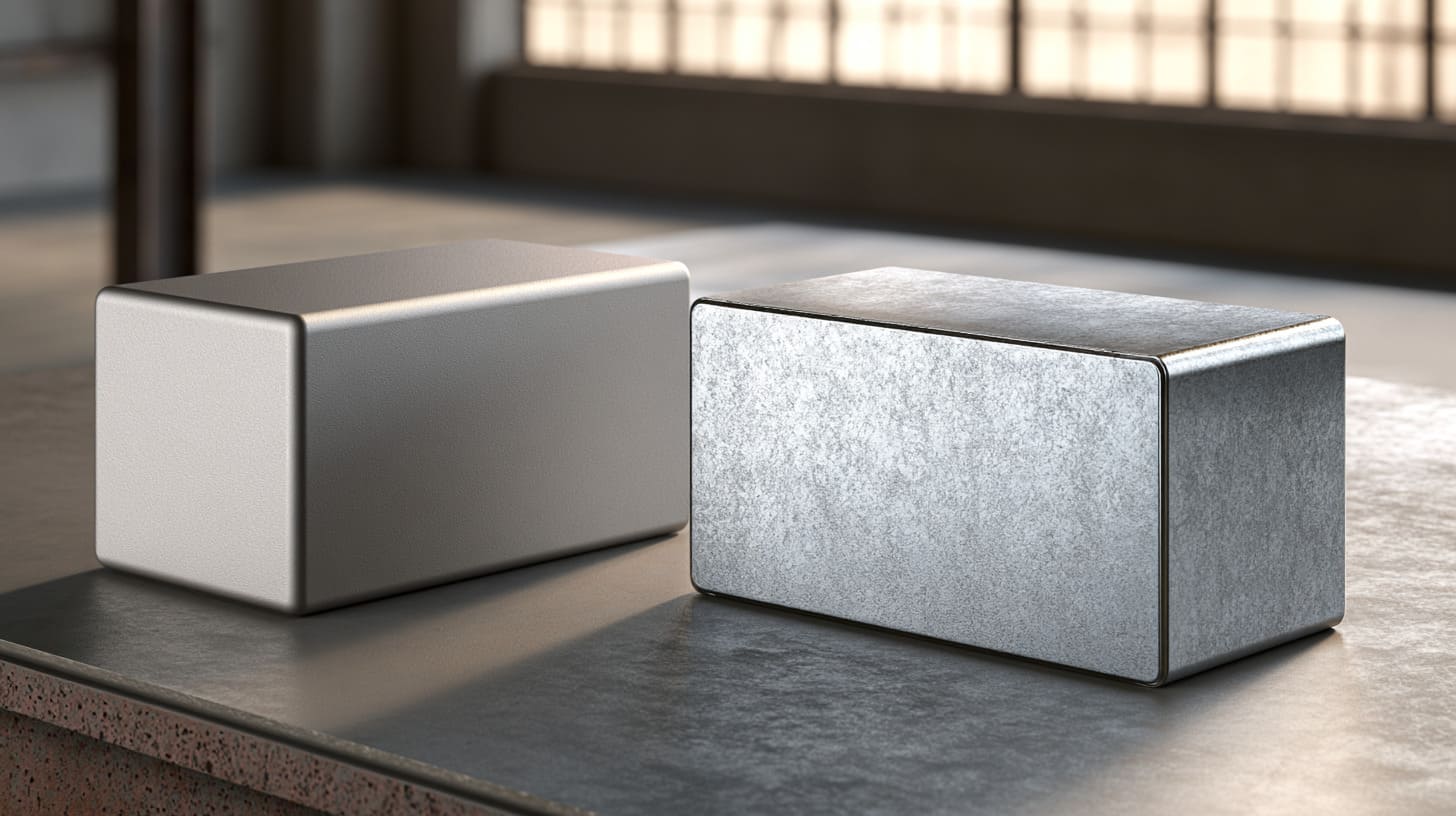
Customers often ask me, “Should I use powder coating or galvanizing?”
The question sounds like a simple comparison, but the answer depends on what the customer means by “better.”
When a customer asks me to choose between them, I first decide whether appearance failure or corrosion failure would create the bigger problem.
Which Treatment Provides Better Corrosion Resistance?
Powder coating and galvanizing protect steel in different ways.
Powder coating forms a barrier. It tries to keep moisture and contaminants away from the steel.
Galvanizing uses zinc. The zinc forms a barrier, and it can also provide sacrificial protection.
| Feature | Powder Coating | Galvanizing |
|---|---|---|
| Main protection method | Barrier layer | Barrier and sacrificial zinc protection |
| Appearance | Smooth with many color options | Metallic and less decorative |
| Scratch behavior | Deep scratches can expose steel | Zinc may protect small exposed areas |
| UV options | Exterior-grade powders are available | Zinc surface may weather naturally |
| Harsh outdoor use | Depends on pretreatment and coating system | Often stronger for severe corrosion |
| Branding | Easy to match colors and textures | Limited without an additional coating |
In a severe outdoor or coastal environment, galvanizing often provides stronger basic corrosion protection than powder coating alone.
However, this does not mean galvanizing wins every project.
A galvanized surface may not provide the appearance that a commercial product needs. It may also require an extra finish if the customer wants a specific brand color.
Which Treatment Provides Better Appearance and Customization?
Powder coating usually gives more design freedom.
Customers can choose:
- RAL colors
- Custom colors
- Matte finishes
- Glossy finishes
- Fine textures
- Coarse textures
- Smooth surfaces
- Anti-fingerprint effects
- Outdoor-grade formulations
Powder coating also works well with silk-screen printing, labels, logos, and other branding methods.
For a control box hidden behind a machine, appearance may not matter much.
For a consumer-facing charger, medical product, kiosk, or retail device, appearance may be part of the product value.
I therefore ask where the enclosure will be seen. A technically strong finish may still be a poor business choice if the final customer thinks it looks unfinished.
Which Option Provides Better Cost Performance?
The cheapest quotation does not always provide the lowest project cost.
I compare three types of cost:
- Initial manufacturing cost
- Maintenance and repair cost
- Failure and replacement cost
| Cost Factor | Powder Coating | Galvanizing |
|---|---|---|
| Initial cost | Often competitive | Can be higher depending on process and volume |
| Color customization | Easy | Usually needs an added topcoat |
| Repair after damage | Local repainting is possible | Zinc repair methods may be needed |
| Long-term harsh exposure | Depends strongly on coating system | Often provides longer basic protection |
| Appearance control | Strong | More limited |
A basic powder coating may be economical for an indoor enclosure. Using hot-dip galvanizing in that case may add cost without adding useful value.
A coastal roadside cabinet is different. If the basic coating fails and the customer must replace the enclosure at the installation site, the original saving becomes meaningless.
When Does a Duplex System Make Sense?
A duplex system combines zinc protection with a paint or powder-coated top layer.
The zinc protects the steel, while the topcoat adds color and creates another environmental barrier.
This combination can be useful for:
- Coastal installations
- Long-life infrastructure
- Outdoor cabinets with branding requirements
- Equipment that is expensive to replace
- Projects where both appearance and corrosion resistance matter
However, the coating process must be compatible with the galvanized surface. Surface preparation is still important. Poor adhesion can cause the topcoat to peel even when the zinc underneath remains protective.
Powder coating and galvanizing are not natural enemies. In some projects, they work better together than either one works alone.
How Should Surface Treatment Be Selected for Different Applications?
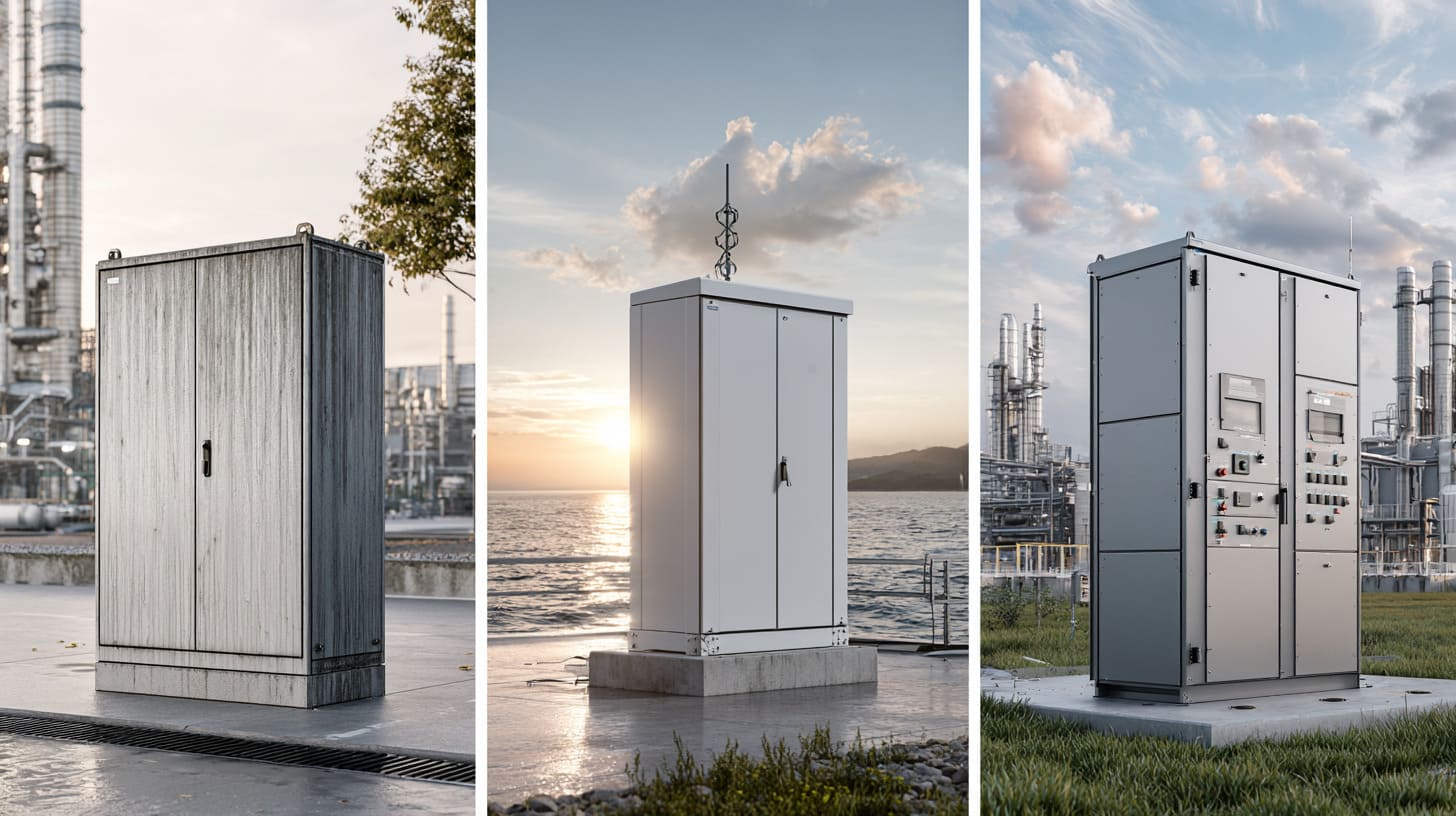
A surface-treatment table can be helpful, but I never use it as an automatic answer.
The same coating can survive for years in one location and fail quickly in another because water flow, salt, cleaning methods, and installation direction change the real exposure.
Surface Treatment for Outdoor Electrical Enclosures
Outdoor electrical enclosures face several risks at the same time:
- Rain
- UV sunlight
- Temperature changes
- Condensation
- Dust
- Scratching during installation
- Corrosion around fasteners
For normal outdoor applications, a suitable system may include:
- Correct surface cleaning
- Phosphate or another suitable pretreatment
- Outdoor-grade powder coating
- Proper film thickness
- Protected edges and welds
- Corrosion-resistant fasteners
- A design that drains water
The coating should not be expected to create the IP rating by itself.
IP protection also depends on:
- Gasket design
- Door compression
- Hinge alignment
- Cutout design
- Cable glands
- Welding quality
- Drainage
- Assembly control
A perfectly coated enclosure can still leak if the door is distorted or the gasket does not compress evenly.
I also check grounding requirements. Powder coating is electrically insulating. The design may need masked contact areas, grounding studs, serrated washers, or another method to create reliable metal-to-metal contact.
Surface Treatment for Coastal and Marine Environments
Coastal air carries salt. Salt attracts moisture and speeds up corrosion.
The enclosure may not even need direct contact with seawater. Wind can carry salt particles onto the surface, where they remain and create a corrosive layer.
For coastal applications, possible solutions include:
- Galvanized steel
- Zinc-rich primer
- Duplex coating
- High-performance paint systems
- 304 or 316 stainless steel
- Marine-suitable fasteners
- Regular cleaning and maintenance plans
| Coastal Condition | Possible Direction |
|---|---|
| Sheltered but humid | Strong pretreatment and outdoor-grade coating |
| Near the sea | Zinc protection plus a topcoat |
| Direct salt spray | Duplex system or suitable stainless steel |
| Offshore or constant marine exposure | High-grade stainless steel or a specialized coating system |
| Premium visible product | Corrosion-resistant base plus branded topcoat |
I pay special attention to joints and fasteners in coastal products.
If a stainless steel screw is installed into carbon steel without considering the material combination, local galvanic corrosion can become a concern when moisture is present.
The customer therefore needs to think about the complete assembly, not only the large sheet-metal panels.
Surface Treatment for Industrial and Chemical Environments
Industrial sites create less predictable exposure.
The enclosure may face:
- Oil mist
- Solvents
- Acidic fumes
- Alkaline cleaning agents
- Metal dust
- Fertilizer
- Wastewater gases
- High-pressure washing
- Repeated sanitation
A standard powder coating may resist one chemical and fail against another.
I ask customers to provide the actual chemical name when possible. The phrase “chemical environment” is too broad for a reliable recommendation.
Useful information includes:
- Chemical type
- Concentration
- Contact duration
- Working temperature
- Cleaning frequency
- Whether exposure is liquid, vapor, or dust
- Whether the surface will be scratched
A coating that survives occasional contact may not survive continuous immersion.
For food or pharmaceutical equipment, cleanability may also matter. A heavily textured finish can hide scratches, but it may be harder to clean than a smooth stainless steel surface.
Surface Treatment for Agricultural and Roadside Equipment
Agricultural and roadside enclosures face a mixture of risks.
Agricultural products may contact:
- Fertilizer
- Animal waste
- Mud
- Cleaning water
- High humidity
- Pesticides
Roadside products may face:
- Rain
- Dust
- Road salt
- Vehicle pollution
- Stone impact
- Vandalism
For these products, I consider both corrosion resistance and mechanical damage.
A hard coating that resists normal weather may still chip when stones hit it. Once the chip exposes carbon steel, corrosion can spread.
The application determines the treatment. The next step is making sure the factory process does not quietly weaken that treatment before the enclosure is shipped.
How Does the Manufacturing Process Affect Surface Treatment Performance?
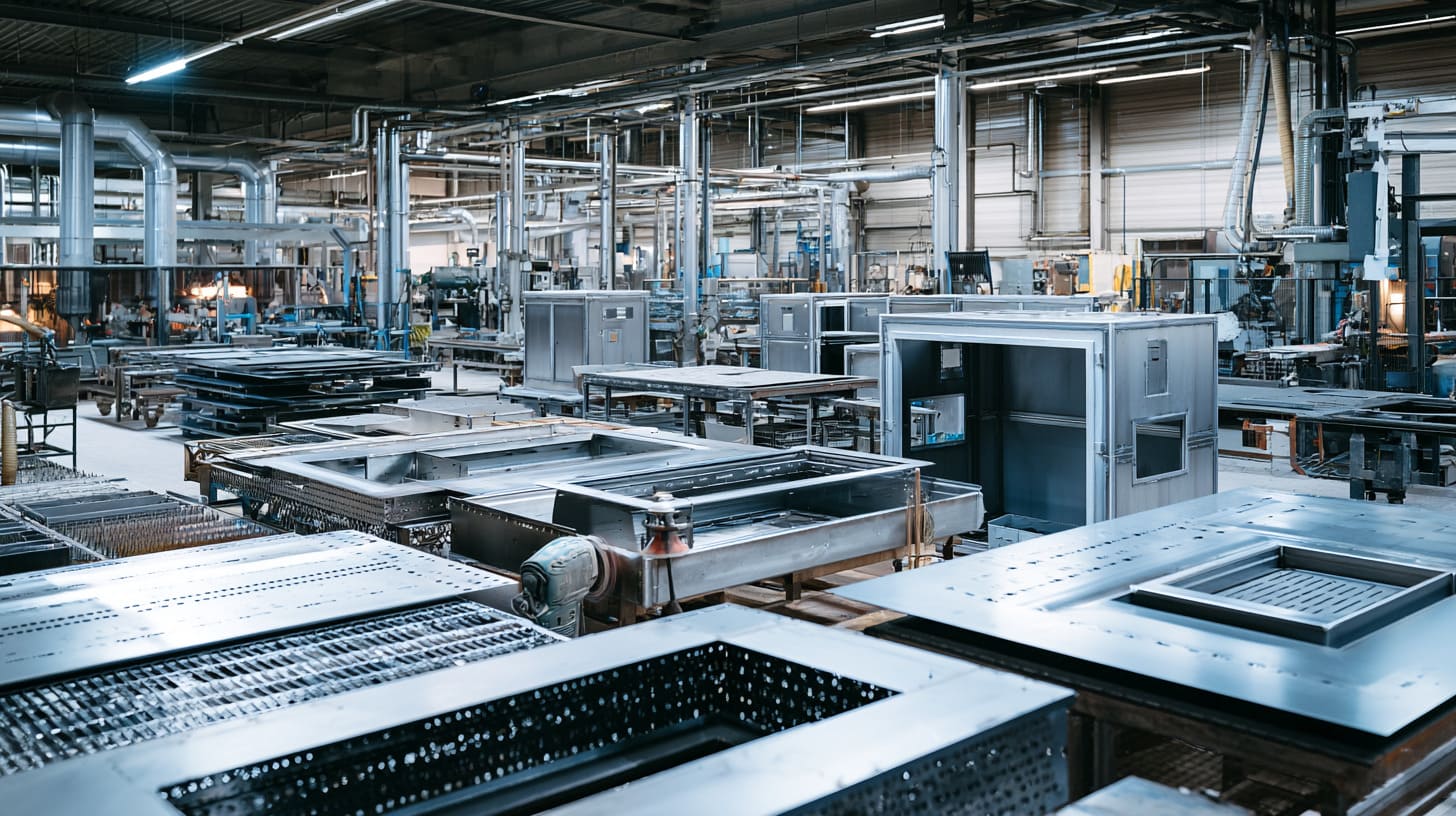
Customers can specify a good powder and still receive a weak coating system.
The material may be oily. Weld spatter may remain on the surface. Edges may be too sharp. The curing process may be wrong.
I have learned that I should inspect the preparation and fabrication details before I trust a beautiful finished sample.
Why Is Pretreatment Important Before Coating?
Pretreatment prepares the metal surface for the final coating.
A normal process may include:
- Degreasing
- Rinsing
- Rust or oxide removal
- Surface conversion treatment
- Drying
- Coating
- Curing
The exact process depends on the material and required performance.
If oil remains on the steel, the coating may not bond correctly.
If rust remains under the coating, the finished surface may look good for a while, but corrosion can continue underneath it.
Common preparation methods include:
| Method | Main Purpose | Typical Use |
|---|---|---|
| Degreasing | Removes oil and processing residue | Most sheet-metal parts |
| Phosphating | Improves adhesion and corrosion resistance | Powder-coated steel enclosures |
| Sandblasting | Removes rust and creates a rough bonding surface | Heavy steel and repair work |
| Mechanical grinding | Cleans welds and sharp defects | Weld seams and local areas |
| Chemical conversion | Creates a controlled surface layer | Industrial coating lines |
More preparation is not always better.
Aggressive blasting can distort thin sheet metal. Poor blasting media can also contaminate the surface.
The process needs to fit the part.
How Do Welding and Machining Affect Corrosion Protection?
Welding changes the local surface.
Heat can burn away existing zinc coatings. Welding can also leave:
- Oxide
- Spatter
- Sharp transitions
- Small pits
- Distortion
- Hard-to-clean corners
These areas often become the first corrosion points.
If the enclosure uses pre-galvanized sheet, welding damages the zinc layer around the weld. The factory needs to restore protection with a suitable repair method or coating system.
Cutouts also matter.
Laser-cut edges and punched holes may have sharp corners. Powder coating tends to pull away from very sharp edges during curing. This can leave the edge with a thinner coating layer than the flat panel.
I often prefer a small edge radius or deburring step when the project has high corrosion requirements. The part may look almost identical, but the coating coverage can improve.
Why Should Surface Treatment Be Considered During Enclosure Design?
A designer may finish the complete enclosure structure and choose the coating later.
That order can create avoidable problems.
The design should consider:
- Drainage
- Vent holes
- Blind corners
- Overlapping sheets
- Welded seams
- Gasket channels
- Hanging points for coating
- Areas that need masking
- Grounding contact points
- Assembly after coating
For example, a narrow closed corner may trap pretreatment liquid. It may also be difficult for powder to enter evenly.
A horizontal flange may collect water.
A fully welded cavity may need a vent or drain hole during galvanizing.
A screw installed after coating may cut through the finish and expose steel.
These are small details on a drawing. They become large details after years of outdoor use.
How Does Assembly Damage the Finished Surface?
Even a good coating can be damaged during assembly.
Typical causes include:
- Metal tools touching the enclosure
- Screws scraping painted holes
- Parts sliding across one another
- Poor packaging
- Unprotected transport racks
- Heavy components hitting the inner wall
- Adhesive residue
- Workers placing finished panels on rough floors
I therefore treat post-coating handling as part of the surface-treatment process.
The coating line does not finish the job. Packaging and assembly finish it.
Once manufacturing is included in the discussion, many common buying mistakes become easier to see.
What Are the Common Mistakes When Choosing Surface Treatment?
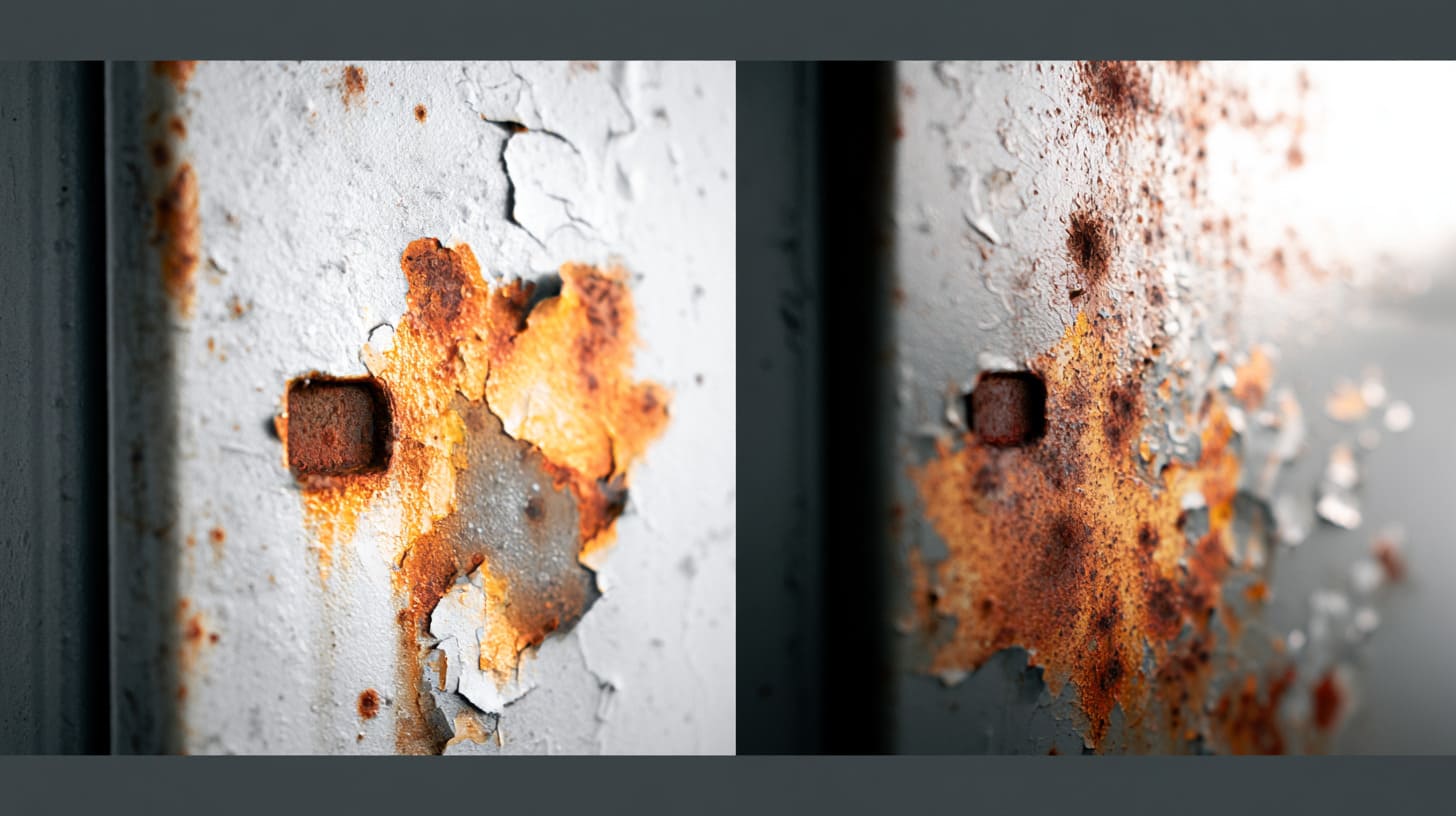
Most surface-treatment mistakes are not dramatic. They begin with a small assumption.
The customer assumes that all powder coatings are similar. The supplier assumes that “outdoor” means moderate weather. The engineer assumes that stainless fasteners solve every corrosion problem.
A cheap coating becomes expensive when the enclosure can only be replaced by sending a technician to a remote installation site.
Choosing Based Only on Price
Price matters. I work with customers who have real project budgets, and I do not believe that every enclosure needs the most advanced coating system.
However, the customer should compare the same technical level.
A quotation may be cheaper because it includes:
- Simpler pretreatment
- Indoor-grade powder
- Less edge preparation
- Lower coating thickness
- Standard carbon-steel screws
- No salt-spray validation
- No repair process for welds
The lower price may be reasonable for an indoor product. It may be dangerous for a coastal product.
I prefer to discuss where cost can be reduced safely.
For example, the customer may use a basic finish on internal mounting plates while keeping stronger protection on exposed external panels.
Choosing Based Only on Appearance
A smooth black surface can look excellent in a sample photo.
The appearance does not show:
- Pretreatment quality
- Adhesion strength
- UV resistance
- Chemical resistance
- Edge coverage
- Corrosion under the coating
- Curing quality
I have also seen the opposite mistake. A customer rejects a galvanized finish because it looks less uniform, even though the enclosure is hidden outdoors and corrosion resistance matters more than visual perfection.
The finish should support the product’s purpose.
Appearance is important, but it is not the same as performance.
Ignoring the Real Working Environment
Customers sometimes describe the planned installation, but the final user changes it.
An enclosure designed for sheltered outdoor use may end up in direct rain. A box designed for a dry workshop may be cleaned every day with high-pressure water.
I therefore ask whether the customer controls the final installation.
If the product is sold through distributors, the exposure may be difficult to predict. The design may need a reasonable safety margin.
However, a safety margin should not become an excuse to over-specify every project.
Selecting High Protection Levels Without Necessity
More protection usually means more cost, more process control, and sometimes more design limits.
Hot-dip galvanizing may affect appearance and dimensional control. Stainless steel increases material and fabrication cost. A multi-layer coating system increases production time.
For a dry indoor cabinet, these choices may not create enough value.
| Project Situation | Common Over-Specification |
|---|---|
| Clean indoor use | Marine-grade coating |
| Short-term prototype | Expensive long-life treatment |
| Hidden internal panel | Premium decorative finish |
| Low-volume test unit | Full certification before design is stable |
| Easy-to-replace enclosure | Excessive material upgrade |
The goal is not maximum protection.
The goal is enough protection for the real risk, expected life, maintenance plan, and budget.
Treating Salt-Spray Hours as the Whole Answer
Salt-spray testing can help compare coating systems and check production quality.
However, a test result does not perfectly predict service life in every real environment.
Outdoor products face cycles of:
- Wet and dry conditions
- UV exposure
- Temperature changes
- Scratching
- Pollutants
- Mechanical stress
A strong salt-spray result is useful, but I do not use one number as the only buying decision.
I also check the test method, sample preparation, scribing method, failure criteria, and whether the tested sample matches the real production process.
Forgetting Grounding and Electrical Contact
Powder coating can insulate metal surfaces.
This can create problems when the enclosure needs:
- Protective earth connection
- Door bonding
- EMI shielding
- Conductive contact between panels
- Reliable chassis grounding
The design may need masked areas or bare metal contact points.
Those areas then need corrosion protection that does not block conductivity.
This is a trade-off. The engineer needs both electrical contact and environmental protection.
Avoiding these mistakes does not require guessing. A simple decision process can make the project much clearer.
How Can You Choose the Right Surface Treatment for Your Steel Enclosure Project?
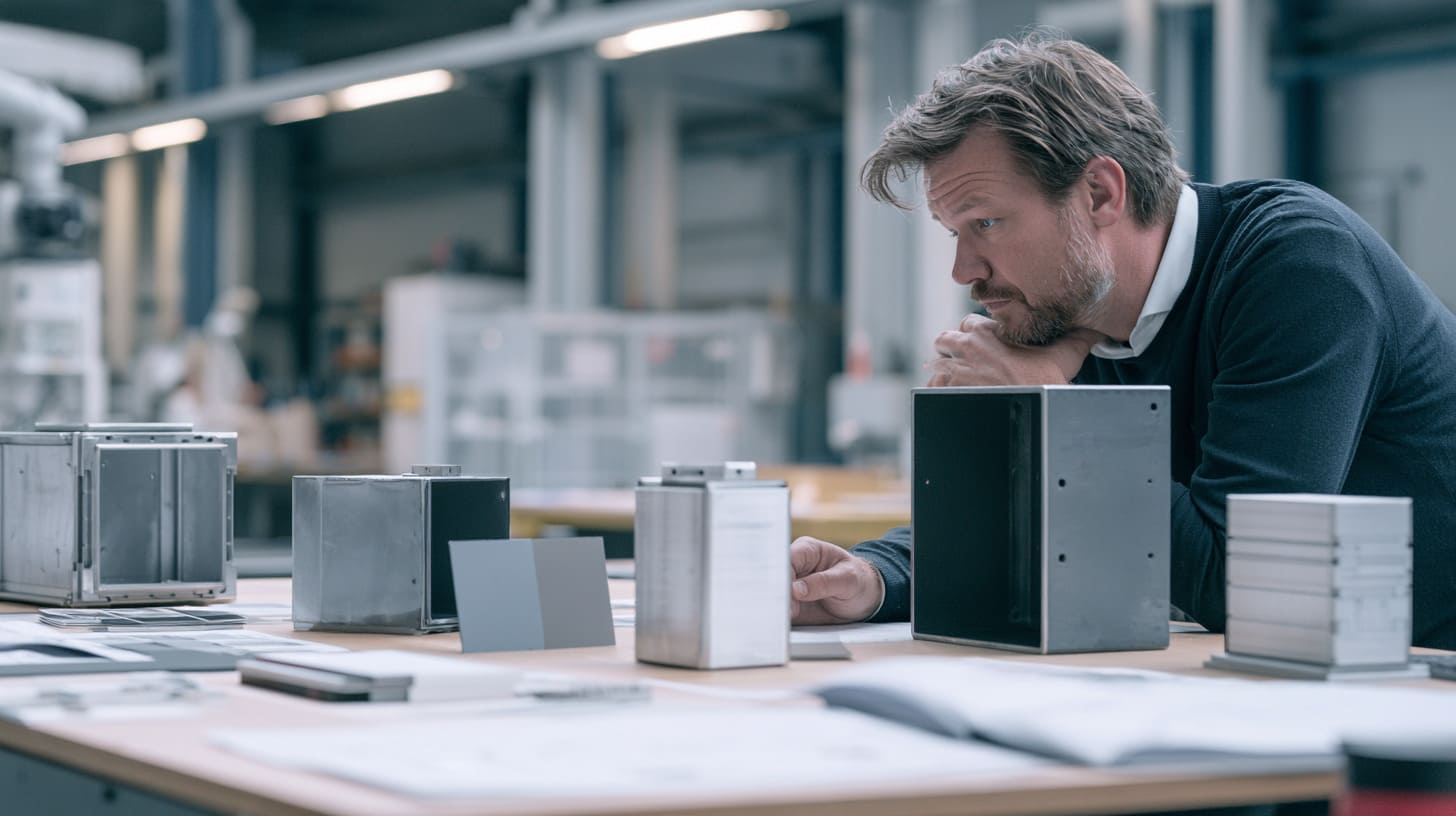
I prefer to choose surface treatment step by step.
I make the final decision only after I compare the biggest failure risk with the cost of preventing that failure.
Step 1: Define the Installation Environment
I first collect practical application information.
The customer should provide:
- Installation country or region
- Indoor or outdoor location
- Distance from the sea
- Rain exposure
- UV exposure
- Humidity level
- Temperature range
- Chemical exposure
- Cleaning method
- Mounting direction
- Expected service life
A short description can also help.
For example:
The enclosure will be mounted outdoors on a wall, 2 kilometers from the coast. It will face direct rain and strong sunlight. The target service life is ten years, and maintenance access is limited.
That description is much more useful than the words “outdoor enclosure.”
Step 2: Evaluate Protection Requirements
I then separate the requirements into categories.
| Requirement | Question I Ask |
|---|---|
| Corrosion | What can attack the steel? |
| Appearance | Will the enclosure be visible to the final customer? |
| Mechanical durability | Will the surface face scratching or impact? |
| Electrical | Are grounding or EMI contact areas required? |
| Maintenance | Can the product be inspected or repaired? |
| Cost | What failure risk is the customer willing to accept? |
| Service life | How long should the enclosure remain reliable? |
This step often shows that the project needs more than one surface solution.
The external body may need powder coating over zinc protection. The internal mounting plate may only need zinc plating. Grounding points may need masking. Screws may need stainless steel or another suitable finish.
Step 3: Compare Practical Treatment Options
I then compare realistic options instead of every possible coating technology.
A simplified decision table may look like this:
| Application | Possible Starting Option |
|---|---|
| Clean indoor cabinet | Pretreated steel with powder coating |
| General industrial enclosure | Strong pretreatment and durable powder coating |
| Outdoor sheltered enclosure | Exterior-grade powder over suitable pretreatment |
| Outdoor exposed enclosure | Zinc-coated steel plus exterior-grade coating |
| Coastal cabinet | Duplex coating or suitable stainless steel |
| Chemical area | Chemical-resistant coating or stainless steel |
| Food equipment | Smooth stainless steel or hygienic coating system |
This table provides a starting point. It does not replace project review.
Step 4: Discuss the Complete System With the Manufacturer
A useful enclosure discussion should cover more than the final color.
I expect the manufacturer to review:
- Base material
- Sheet thickness
- Cutting method
- Deburring
- Welding process
- Weld cleaning
- Pretreatment
- Primer
- Powder or paint type
- Coating thickness
- Curing control
- Masking areas
- Fasteners
- Packaging
- Inspection method
Customers should also ask whether the manufacturer has handled similar applications.
A supplier does not need to know every answer immediately. However, the supplier should ask the right questions and identify uncertain points before mass production.
Step 5: Build and Inspect a Sample
A sample can reveal issues that drawings cannot show clearly.
I normally check:
- Color and texture
- Coating coverage
- Sharp edges
- Welded corners
- Threaded holes
- Door movement
- Hinge areas
- Gasket contact surfaces
- Grounding points
- Fastener damage
- Packaging protection
The sample should use the same or a closely matched process planned for mass production.
A hand-painted sample cannot prove the performance of a future powder-coated batch.
Step 6: Validate Through Testing
Testing should match the real risk.
Possible tests include:
- Coating thickness measurement
- Cross-cut adhesion testing
- Impact testing
- Bend testing
- Salt-spray testing
- Humidity testing
- UV-weathering testing
- Chemical-resistance testing
- Water-ingress testing
- Grounding continuity testing
| Risk | Useful Validation |
|---|---|
| Coating peeling | Adhesion test |
| Thin coating | Film-thickness measurement |
| Coastal corrosion | Salt-spray or cyclic corrosion testing |
| Outdoor fading | UV-weathering test |
| Chemical cleaning | Chemical-resistance test |
| Water entry | IP-related ingress testing |
| Poor grounding | Electrical continuity test |
The test sample, test method, and acceptance standard should be clear.
A report saying “passed salt spray” is incomplete if nobody knows the test duration, failure criteria, or sample condition.
Step 7: Control Mass Production
A good sample does not guarantee that every production batch will be identical.
Mass-production control may include:
- Incoming material checks
- Pretreatment bath control
- Powder batch control
- Curing-temperature records
- Coating-thickness checks
- Visual inspection
- Adhesion sampling
- Packaging inspection
- Traceable production records
For repeat orders, the approved color, texture, gloss level, and process should be documented.
This reduces arguments based on memory or photographs, which can change under different lighting.
A strong process does not remove every risk. It makes the risk visible, measurable, and easier to control.
Conclusion
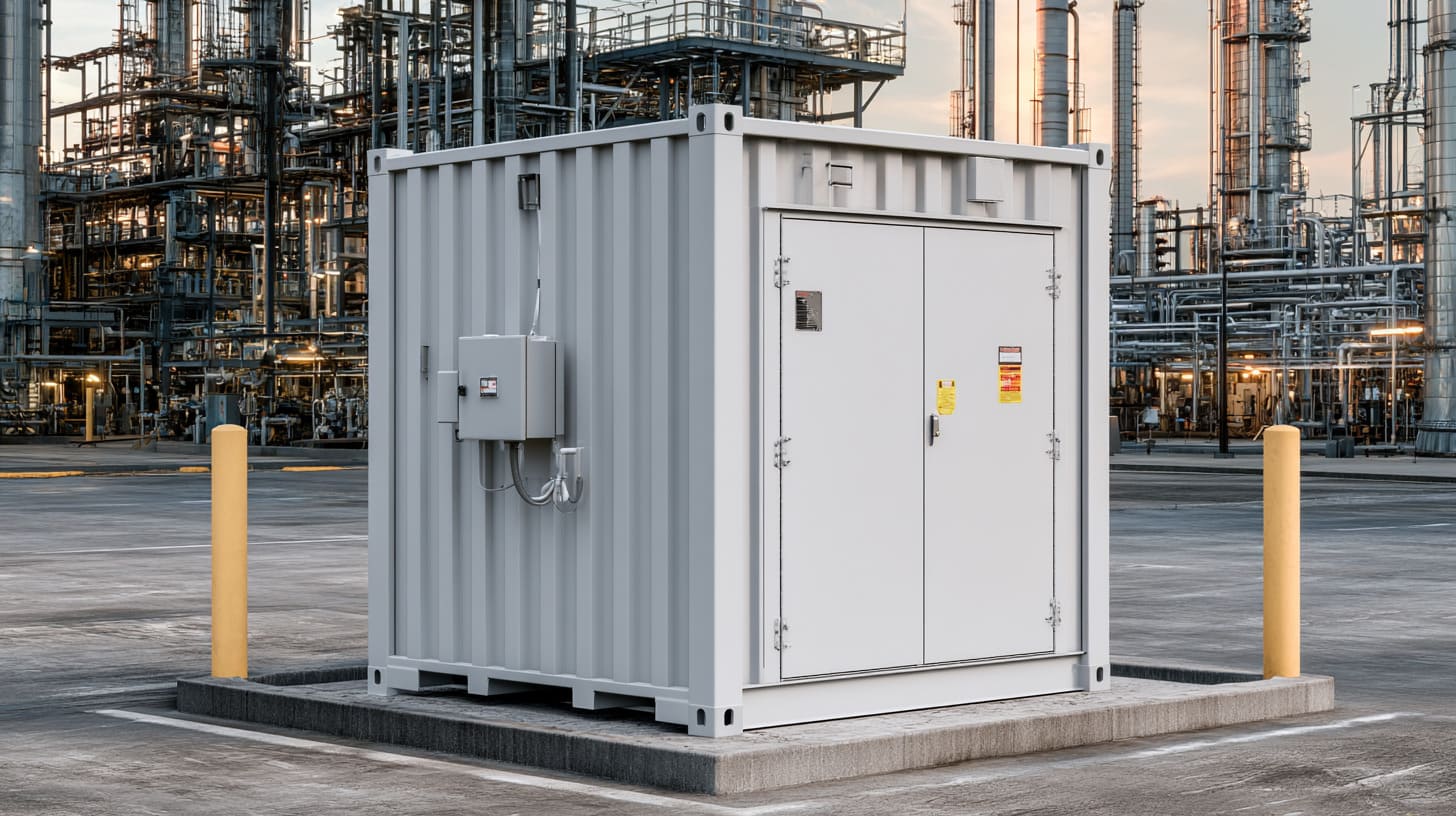
I do not choose a surface treatment because it is the most popular option or because it looks impressive in a product photo.
I choose it by asking what could realistically damage the enclosure, how serious the failure would be, and how much protection the project truly needs.
That is why I do not call powder coating better than galvanizing in every situation.
Powder coating gives customers excellent appearance, color control, branding options, and practical mechanical protection. It works very well when the pretreatment and powder type match the environment.
Galvanizing gives steel another form of protection. The zinc can continue protecting small exposed areas, which makes it valuable in wet, outdoor, and corrosive locations.
A duplex system can combine both advantages. Stainless steel or special coatings may be better when salt, chemicals, hygiene, or long service life creates a higher risk.
My experience has taught me that the weak point is often not the large flat panel. The weak point is usually a weld, edge, screw hole, hinge, gasket channel, or damaged corner. These small areas deserve more attention than a perfect color sample.
I also believe that over-specification is not good engineering.
The customer should not pay for marine-level protection when the enclosure will stay in a clean indoor room. At the same time, the customer should not choose a basic decorative coating for equipment that will remain beside the sea for years.
The right solution balances:
- Installation environment
- Corrosion risk
- Required service life
- Appearance
- Electrical requirements
- Maintenance access
- Manufacturing cost
For me, that balance is the real meaning of choosing surface treatment.
If you are developing a custom steel enclosure and you are unsure whether to use powder coating, galvanized steel, a duplex system, or stainless steel, you can share your drawings and installation conditions with us.
At MaidaTech, we can review the enclosure structure, material, welding areas, coating requirements, branding details, and expected working environment before production.
You can contact me at info@maidatech.com or visit maidatechenclosure.com to discuss your custom enclosure project.