Skip to content
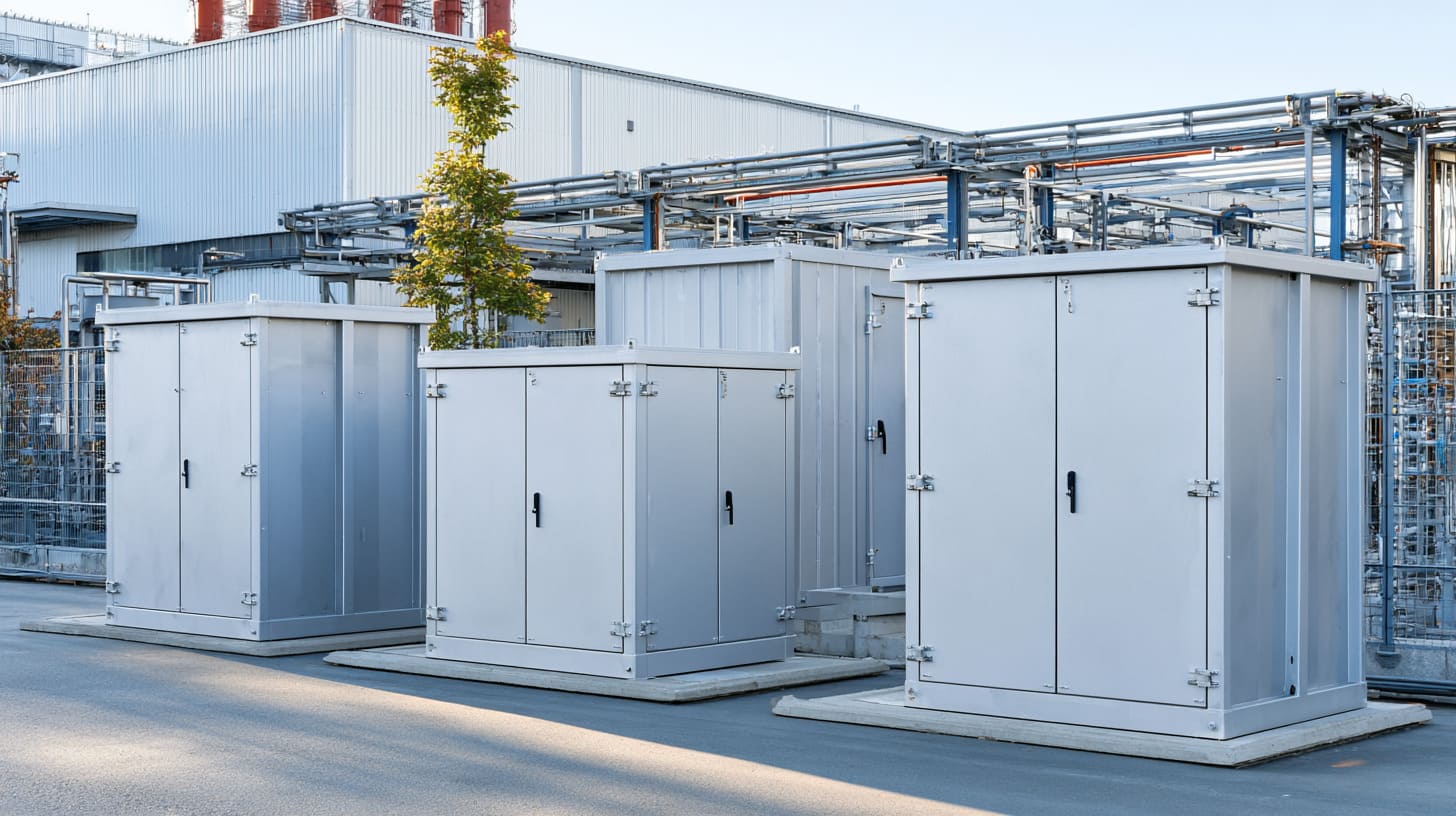
A buyer may send me a drawing and say, “Vincent, we need this enclosure in black powder coating.”
At first, this sounds clear.
But for outdoor metal products, this sentence is only the beginning. It is not enough to know the color. I also need to know where the product will be used, how much sunlight it will face, whether rain can stay on the surface, and whether the product will be installed near the sea, inside a factory area, or under a roof.
Powder coating looks simple from the outside. The surface is smooth. The color looks clean. The product feels finished.
But outdoor use is not polite.
Sunlight will test the color. Rain will test the edges. Humidity will test the pretreatment. Salt air will test every small weak point. If the wrong coating type is used, the product may still look good when it leaves the factory, but it may start fading, chalking, peeling, or rusting after a period of use.
The detail I never ignore is whether the coating needs to survive real weather, not just look good in a product photo.
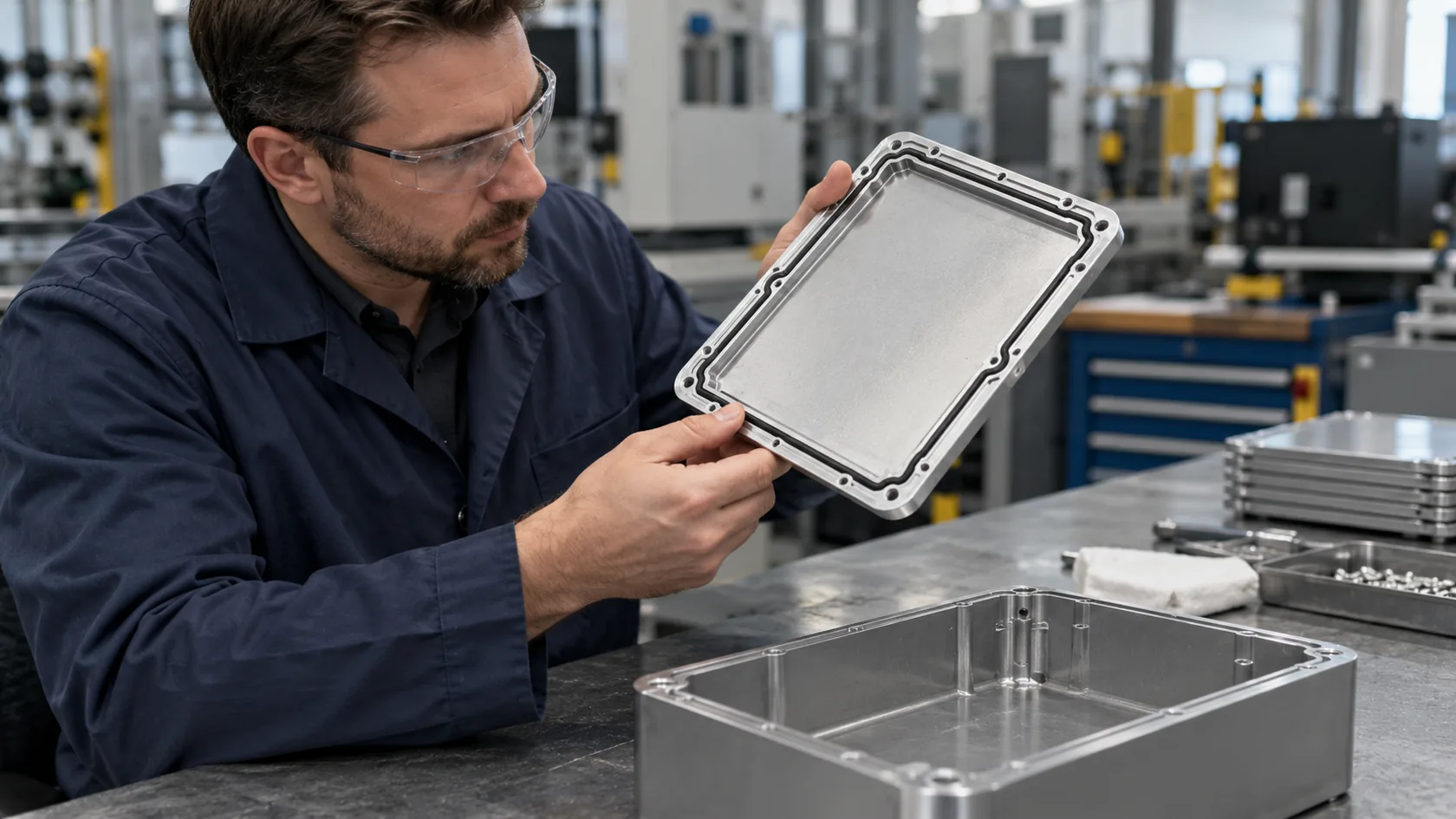
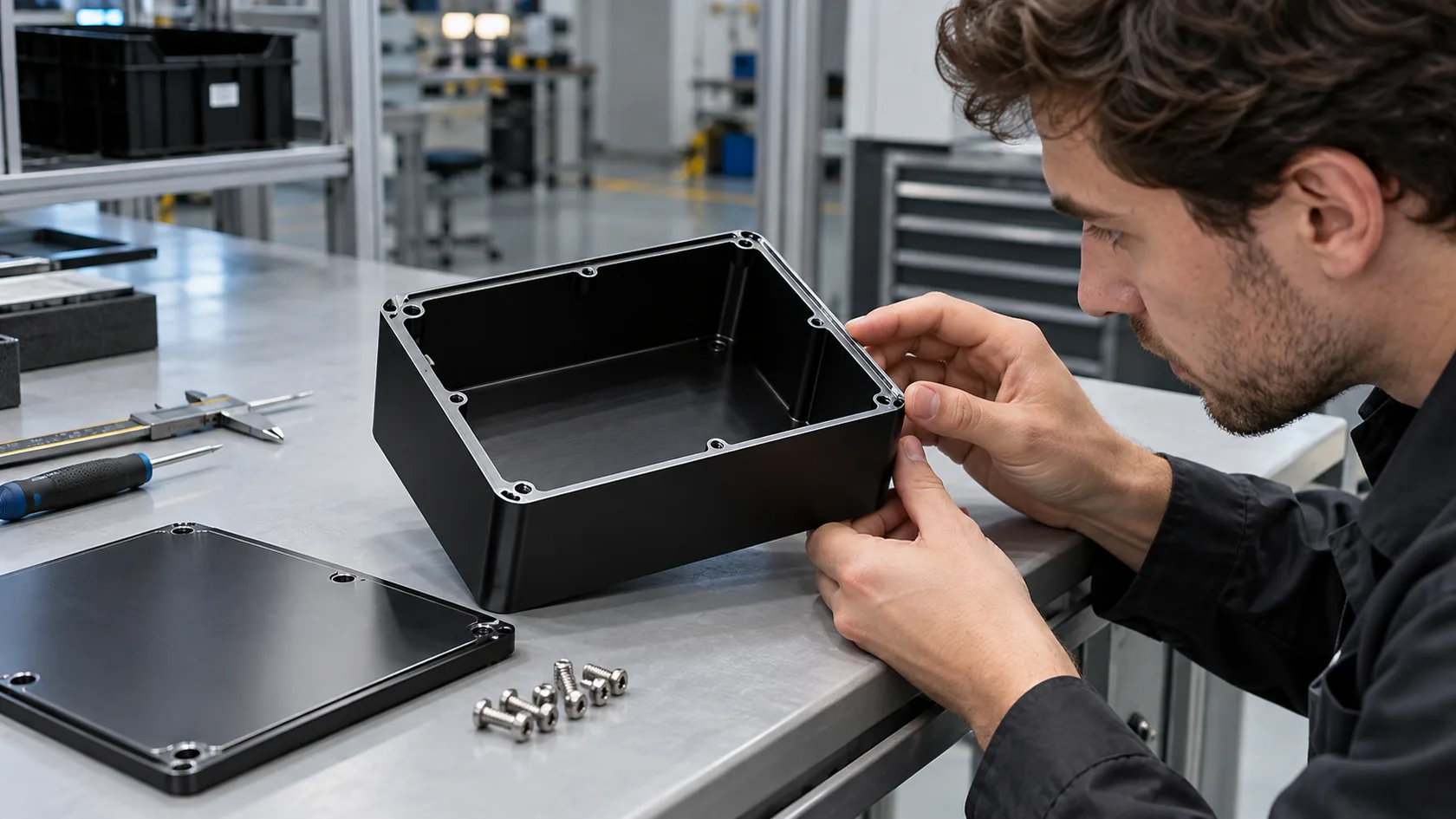
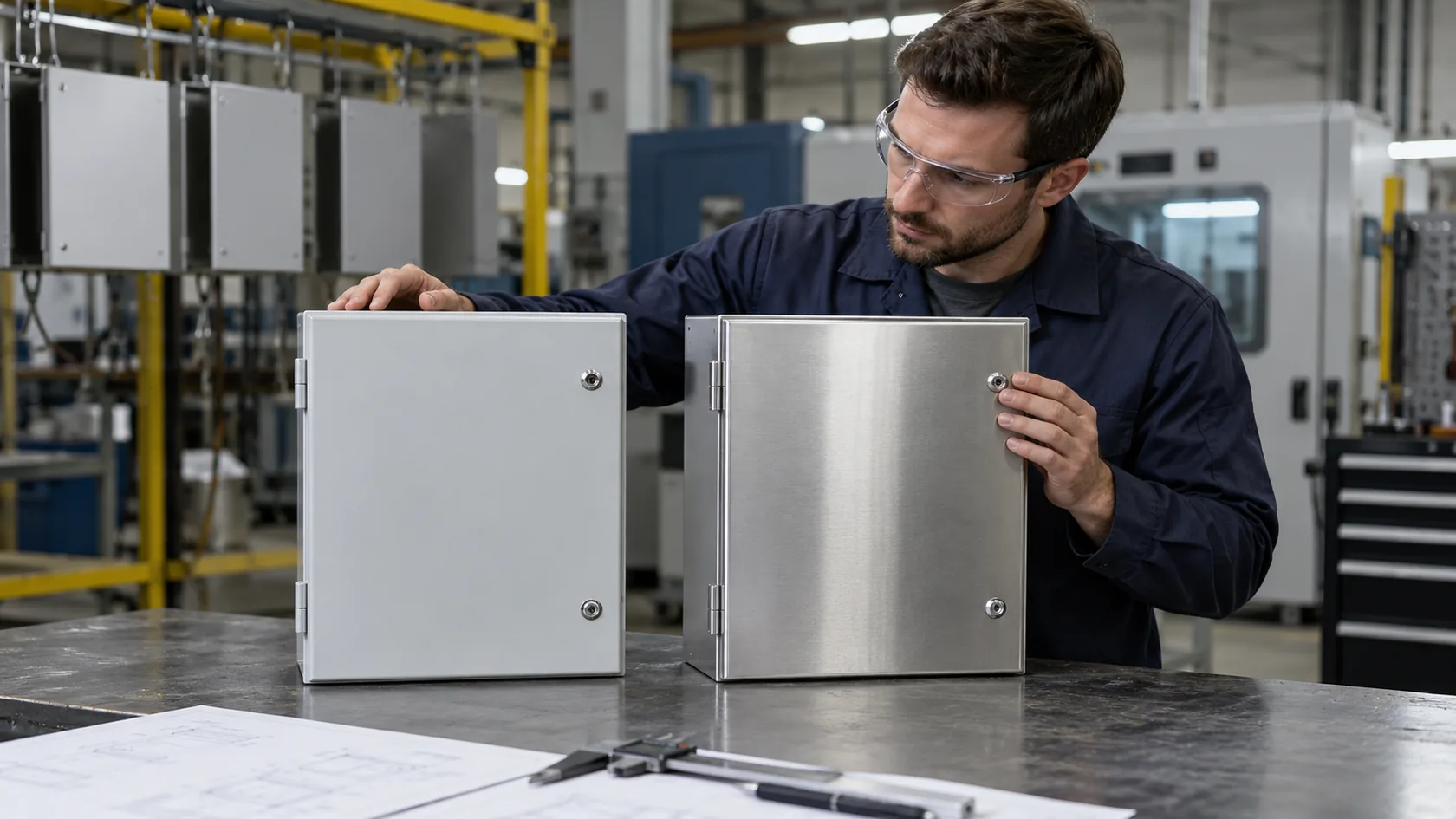
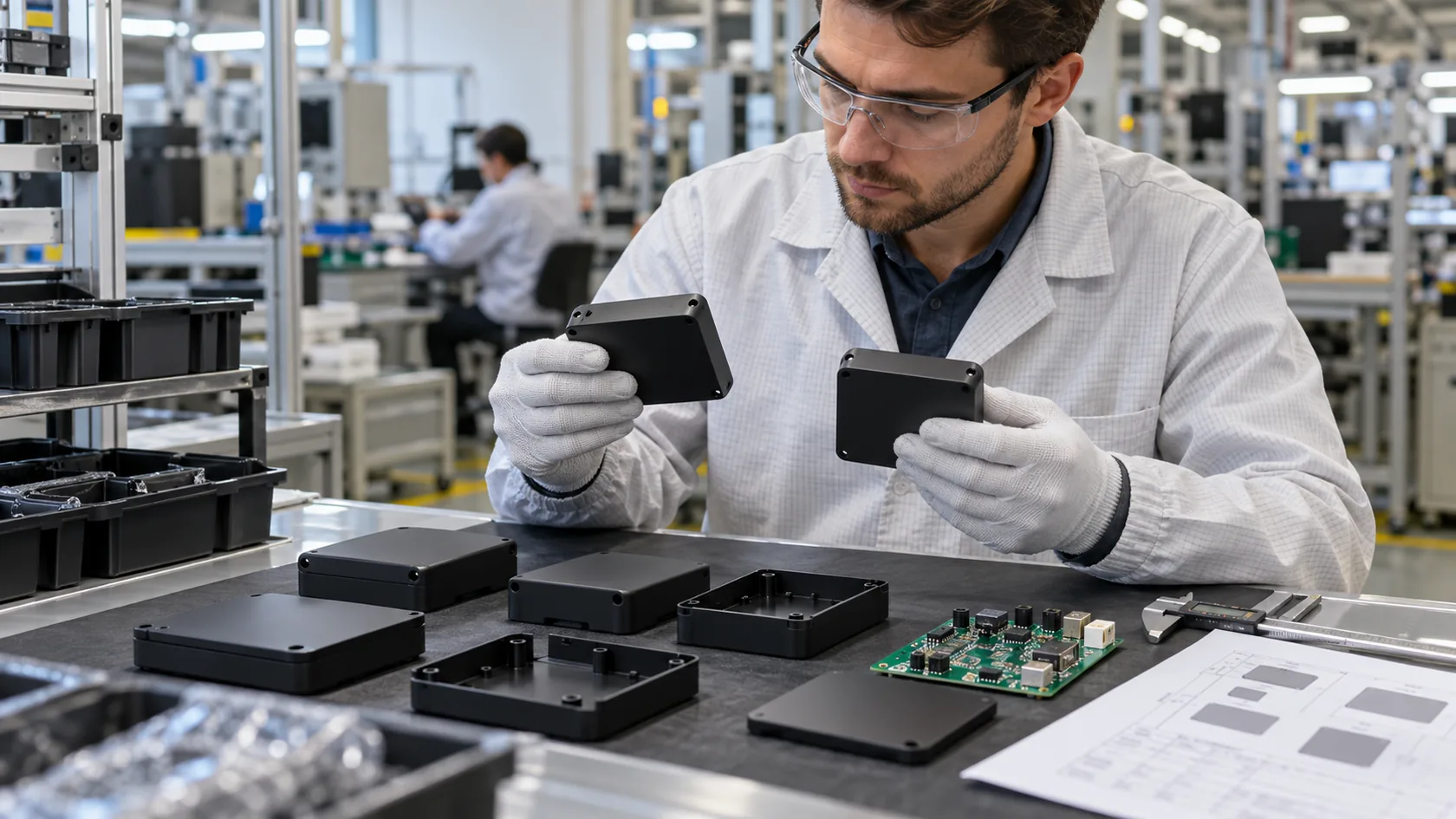
For custom aluminum enclosures, sheet metal cabinets, brackets, frames, control boxes, and outdoor electrical housings, powder coating is not only a decorative finish. It is part of the product protection system.
This is why I do not like to ask only one question:
“Which powder coating is best?”
I prefer to ask a better question:
“Which powder coating matches the metal material, outdoor environment, and expected service life?”
That question is more useful. It helps avoid wrong decisions early, before the product enters mass production.
What Is Powder Coating for Outdoor Metal Products?
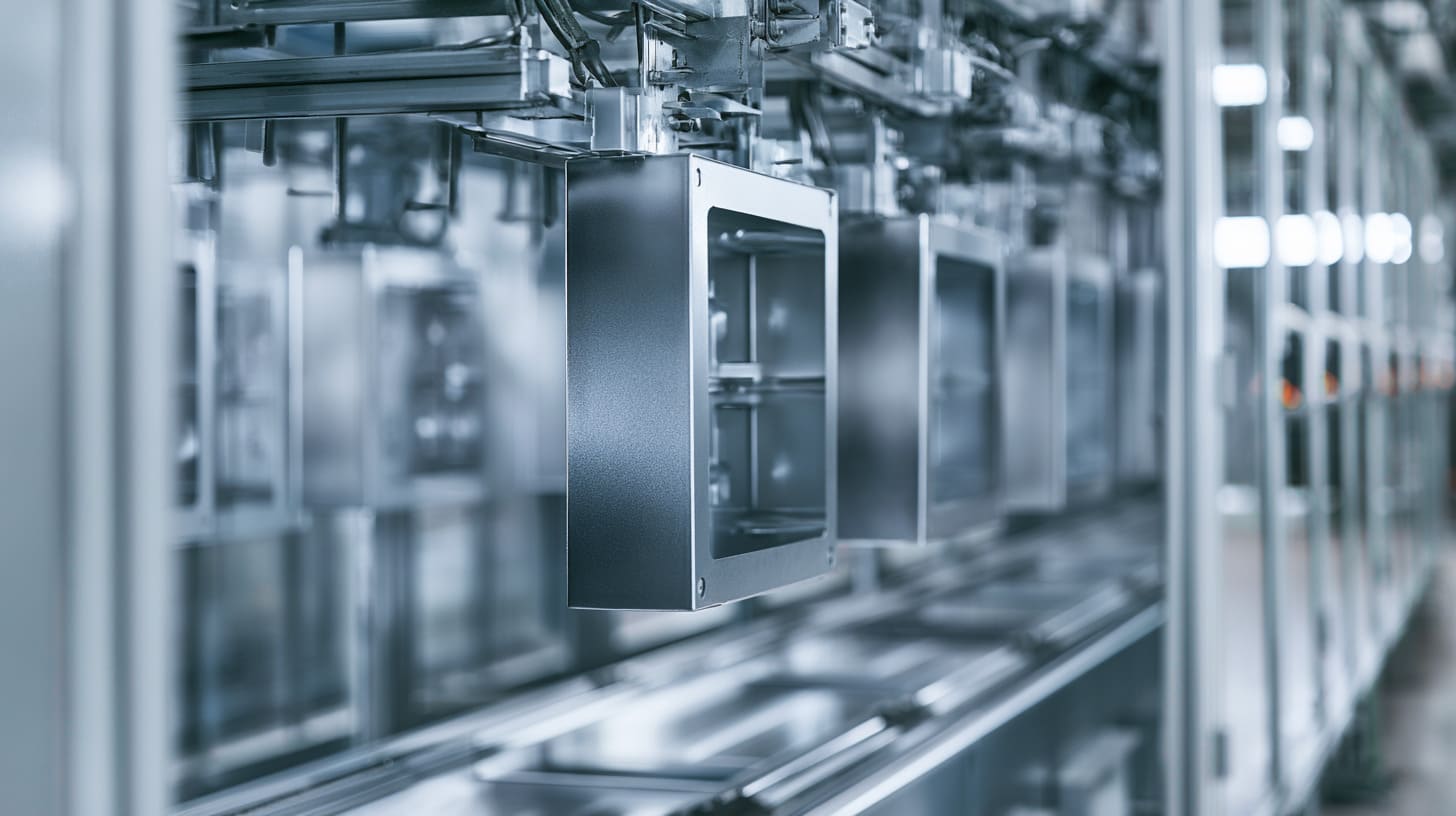
Powder coating is a dry finishing process. The powder is sprayed onto the metal surface, then heated and cured into a solid coating layer.
For many buyers, it looks like paint.
But I do not treat it like normal paint. I treat it more like a protective skin. A good skin must stick well, cover the surface evenly, and handle the environment where the product will work.
Powder Coating Is Both Decorative and Protective
Powder coating gives metal products a clean and professional appearance. It can create many colors, gloss levels, and textures. For OEM products, it also helps match the customer’s brand style.
But appearance is only one side.
The more important side is protection.
Powder coating can help protect metal products from:
- scratches during normal handling
- moisture in the air
- light corrosion
- surface wear
- dirt and pollution
- outdoor weather exposure
For custom enclosures, this matters a lot. A customer may use the enclosure for electronic devices, control systems, power modules, sensor equipment, or communication devices. The outer shell must not fail too early, because it protects the inside product.
| Function | Why It Matters for Outdoor Metal Products |
|---|---|
| Color and appearance | Helps the final product look professional and match the customer’s brand |
| Scratch resistance | Reduces damage during assembly, shipping, and installation |
| Corrosion protection | Helps reduce rust and surface failure |
| UV resistance | Helps reduce fading and chalking under sunlight |
| Surface texture | Can hide small marks and improve product feel |
| Branding support | Works with logo printing, engraving, or marking |
Why Outdoor Applications Are More Demanding
Outdoor use is harder than indoor use because the product is always fighting against the environment.
A metal enclosure used inside a clean workshop may only need a good-looking finish. But an outdoor cabinet installed on a wall, pole, machine frame, or building surface needs much more.
Sunlight can slowly break down poor coating. Rain can enter small weak areas. Moisture can stay around screw holes, cut edges, welded corners, hinges, and mounting points. If the product is near the sea, salt air can make corrosion much faster.
This is where things often go wrong: the buyer checks the color sample carefully, but nobody checks whether the coating grade fits the installation environment.
Outdoor powder coating performance depends on several things working together:
| Factor | What Can Go Wrong If Ignored |
|---|---|
| Powder type | Wrong type may fade, chalk, or fail outdoors |
| Metal material | Aluminum, steel, galvanized steel, and stainless steel need different treatment |
| Pretreatment | Poor cleaning can cause peeling and rust under coating |
| Coating thickness | Too thin may reduce protection; too thick may affect assembly |
| Curing control | Wrong curing can weaken adhesion and surface quality |
| Product design | Sharp edges, holes, and welds are more difficult to protect |
| Installation environment | Sun, rain, humidity, salt air, and chemicals change the coating choice |
A coating decision should not be made only by looking at a color card. That is like choosing work shoes only by color. They may look nice, but they may fail on the first muddy job site.
So before I suggest a powder coating type, I always want to understand the real working environment.
The surface may be the last thing the eye sees, but it is often the first thing the weather attacks.
What Are the Main Types of Powder Coating?
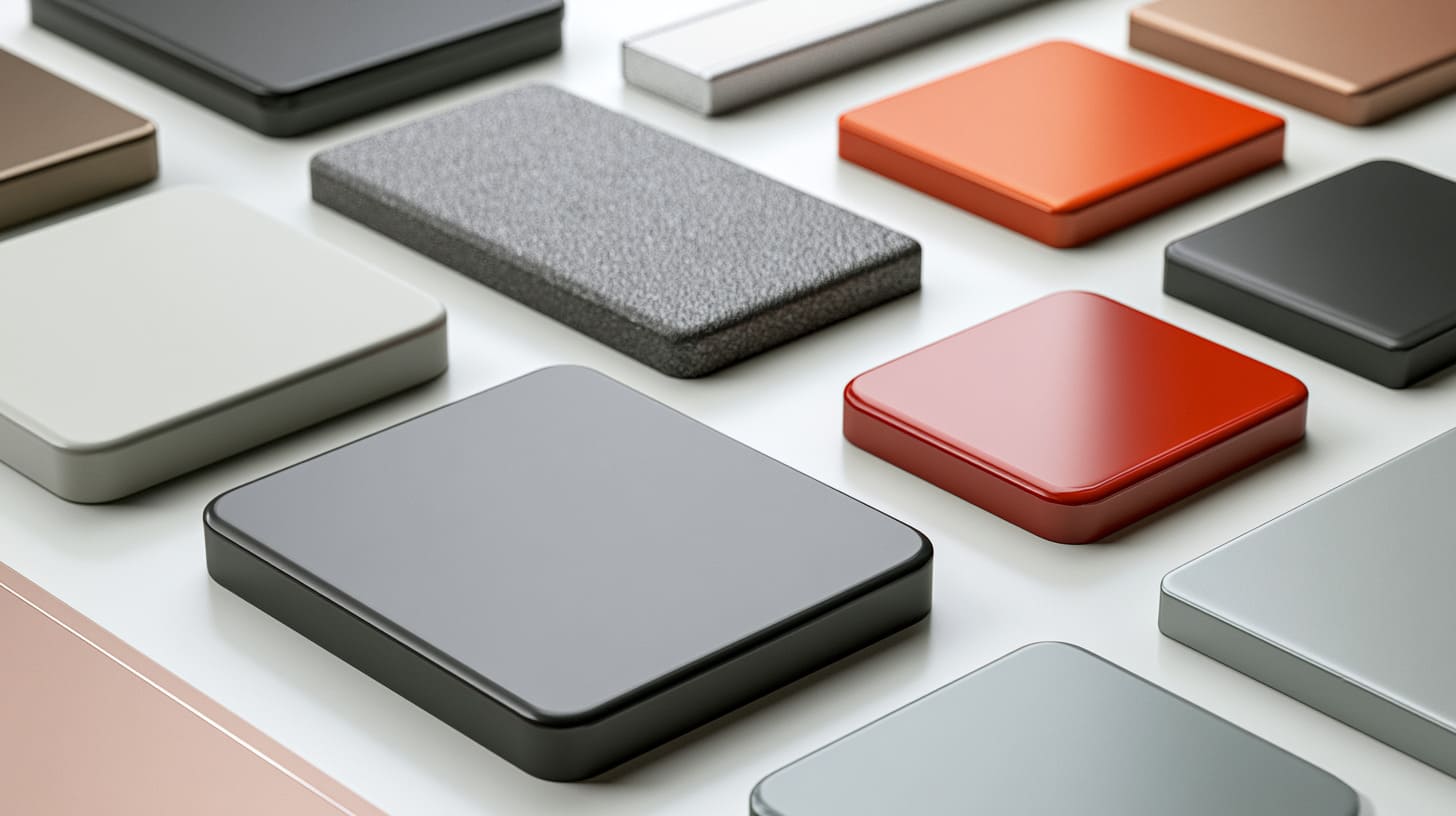
There are several common powder coating types. They may look similar after spraying, but they perform very differently after months or years of use.
I have seen this confuse buyers many times. Two samples may both be black. Two samples may both look smooth. Two samples may even pass a quick visual check. But after outdoor exposure, one may stay clean, while the other starts chalking.
My first filter is sunlight: if the coating cannot handle UV exposure, I will not treat it as a serious outdoor option, no matter how good it looks on day one.
Epoxy Powder Coating
Epoxy powder coating has strong adhesion and good chemical resistance. It is often used for indoor machinery parts, electrical components, pipes, tools, and hidden metal parts.
Its weak point is outdoor sunlight.
Epoxy powder coating is not a good choice for long-term outdoor exposure because it can chalk and fade under UV light. Chalking means the surface becomes powdery or dull. The product may still have a coating layer, but the appearance becomes poor.
For outdoor metal products, this is a serious problem.
| Epoxy Powder Coating | My View |
|---|---|
| Adhesion | Good |
| Chemical resistance | Good |
| UV resistance | Poor |
| Outdoor use | Not suitable for long-term direct sunlight |
| Best use | Indoor parts, machinery, electrical components, hidden surfaces |
I would not choose epoxy powder coating for an outdoor aluminum enclosure or outdoor sheet metal cabinet unless the part is protected from sunlight or used in a very special condition.
Polyester Powder Coating
Polyester powder coating is one of the most common choices for outdoor metal products.
It has better UV resistance than epoxy. It also has good color stability and weather resistance. For many general outdoor products, polyester powder coating is a practical choice because it balances cost and performance.
I often see polyester powder coating used on:
- aluminum enclosures
- outdoor brackets
- sheet metal panels
- control box covers
- equipment housings
- metal frames
- outdoor furniture parts
- general industrial metal products
It is not always the highest-grade option, but it is often enough for normal outdoor use.
| Polyester Powder Coating | My View |
|---|---|
| UV resistance | Good |
| Weather resistance | Good |
| Cost | Reasonable |
| Appearance options | Many colors and textures |
| Outdoor use | Suitable for many standard outdoor products |
| Limitation | May not be enough for very harsh sun or coastal areas |
For many MaidaTech enclosure projects, polyester is the starting point when the buyer needs outdoor color coating but does not have very harsh environmental requirements.
Super Durable Polyester Powder Coating
Super durable polyester is like an upgraded version of standard polyester.
It is designed for better weather resistance, better UV resistance, and longer color retention. If a product will sit under strong sunlight for a long time, this option is safer.
The price is usually higher than standard polyester, but the risk is lower.
I usually consider super durable polyester for:
- outdoor cabinets
- outdoor electrical boxes
- solar equipment housings
- communication equipment covers
- railings
- signage frames
- outdoor control panels
- equipment installed in open areas
| Standard Polyester | Super Durable Polyester |
|---|---|
| Good for normal outdoor use | Better for long outdoor exposure |
| Lower cost | Higher cost |
| Good color stability | Better color and gloss retention |
| Suitable for general parts | Better for stronger sunlight and longer service life |
The trade-off is simple. If the product only needs a normal outdoor finish, standard polyester may be enough. If the product must keep its appearance for more years, super durable polyester is the safer choice.
Polyurethane Powder Coating
Polyurethane powder coating can provide a smooth finish, good appearance, and good abrasion resistance. It can also be used for some outdoor products.
I do not see it used as often as polyester in many enclosure projects, but it can be useful when the surface quality is important.
For example, if the product is a branded equipment housing and the customer wants a very clean finish, polyurethane may be considered. It can also be useful where chemical resistance and surface feel matter.
| Polyurethane Powder Coating | My View |
|---|---|
| Appearance | Good |
| Abrasion resistance | Good |
| Outdoor use | Possible, depending on grade |
| Cost | Usually higher than basic polyester |
| Best use | Products needing better surface feel or appearance |
The key point is that not every polyurethane powder is the same. I still need to check the exact grade and supplier specification before recommending it for outdoor use.
Epoxy-Polyester Hybrid Powder Coating
Epoxy-polyester hybrid powder coating combines epoxy and polyester properties.
It is common for indoor products because it gives a good balance of price, appearance, and basic durability. Many indoor cabinets, office products, shelves, fixtures, and metal parts use hybrid powder coating.
But I do not see it as the first choice for long-term outdoor use.
It has better appearance than pure epoxy in some cases, but its outdoor UV performance is still not as strong as proper outdoor polyester or fluoropolymer coating.
| Hybrid Powder Coating | My View |
|---|---|
| Cost | Good |
| Indoor performance | Good |
| Appearance | Good |
| Outdoor UV resistance | Limited |
| Best use | Indoor metal products and general decorative parts |
| Long-term outdoor use | Not recommended as first choice |
A buyer may choose hybrid because the price looks attractive. But for outdoor products, that saving can become expensive later if the surface fades or breaks down too early.
Fluoropolymer Powder Coating
Fluoropolymer powder coating is a high-end option. It is known for strong UV resistance, good weather resistance, and excellent color retention.
It is often used for architectural metal products, premium outdoor parts, coastal projects, and high-value metal products where long-term appearance is important.
It costs more. That is clear.
But for the right project, the higher cost may be reasonable.
| Fluoropolymer Powder Coating | My View |
|---|---|
| UV resistance | Excellent |
| Color retention | Excellent |
| Weather resistance | Excellent |
| Cost | High |
| Best use | Harsh outdoor, coastal, architectural, premium products |
| Main decision point | Use it when long-term appearance is worth the cost |
I do not recommend fluoropolymer for every outdoor product. That would be lazy thinking. But if the product is installed near the sea, on a building, or in a place where color failure would damage the customer’s brand image, I will take it seriously.
A powder coating name may look like a small detail on a quotation sheet. But in the real world, that small detail can decide whether the product looks professional after two years.
Which Powder Coating Type Is Best for Outdoor Use?
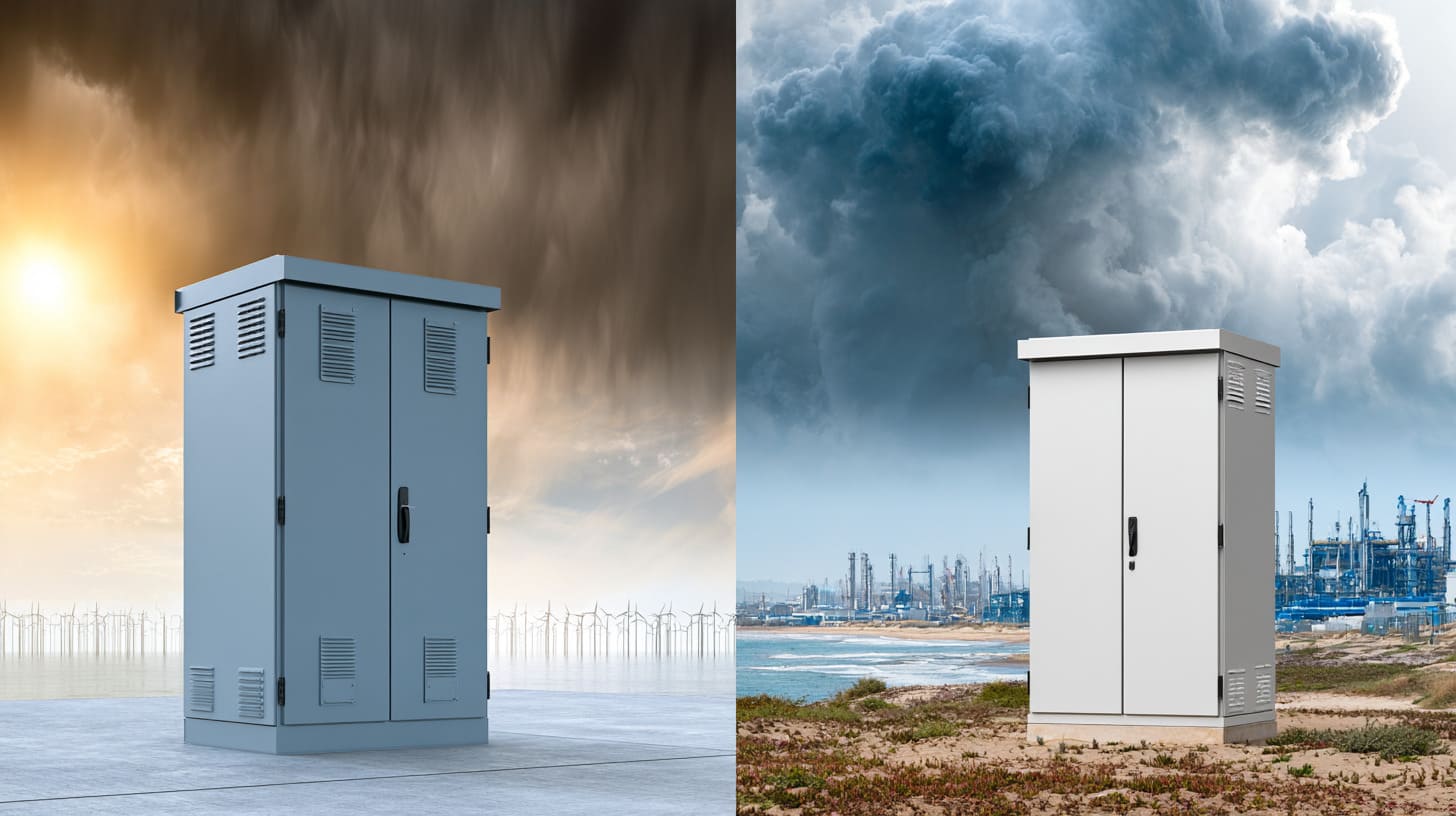
There is no single best powder coating type for every outdoor product.
This answer may sound less exciting, but it is more honest.
A small aluminum enclosure under a roof does not need the same coating as a steel cabinet near the sea. A low-cost mounting bracket does not need the same surface finish as a premium branded control box. A product used for two years does not need the same coating as a product expected to stay outside for ten years.
I do not pick the most expensive coating first; I pick the coating that matches the risk level, because over-specification can waste money and under-specification can create failure.
For Normal Outdoor Use
For normal outdoor use, polyester powder coating is usually enough.
This includes products used in normal city environments, semi-outdoor areas, shaded outdoor locations, or places without heavy salt air or chemical exposure.
Typical examples include:
- general outdoor aluminum enclosures
- mounting brackets
- outdoor equipment covers
- small electrical boxes
- machine panels
- metal frames under partial cover
Polyester gives a good balance between price and performance. It has decent UV resistance and can handle normal outdoor weather.
| Application Condition | Suggested Option |
|---|---|
| Normal sunlight | Polyester |
| Occasional rain | Polyester |
| Under roof or partial cover | Polyester |
| Normal city air | Polyester |
| Short to medium service life | Polyester |
For many projects, this is the most practical choice. It does not push cost too high, and it gives enough performance for normal outdoor exposure.
For Strong Sunlight or Longer Service Life
If the product will face strong sunlight every day, I usually look at super durable polyester.
Sunlight is a quiet problem. It does not damage the surface in one day. It works slowly. Month after month, the surface can lose gloss, fade, or become chalky.
A customer may not notice the change at first. Then one day, the enclosure looks old beside a newer product.
Super durable polyester helps reduce this risk.
It is better for:
- outdoor cabinets
- equipment housings in open areas
- solar or energy equipment parts
- telecom-related metal housings
- signage frames
- outdoor branded products
- products sold to end users where appearance matters
| Product Need | Better Choice |
|---|---|
| Longer outdoor service life | Super durable polyester |
| Strong sunlight | Super durable polyester |
| Better color retention | Super durable polyester |
| Better gloss retention | Super durable polyester |
| Better brand appearance | Super durable polyester |
If a buyer sells the final product under their own brand, I pay more attention to this point. A faded enclosure is not only a surface issue. It can make the whole product feel cheap.
For Coastal, Architectural, or Premium Outdoor Products
For coastal, architectural, or premium outdoor products, fluoropolymer powder coating may be the better option.
Coastal environments are more aggressive because salt air can attack weak points quickly. Architectural products also have higher visual requirements because they are often visible for many years.
Fluoropolymer coating is not cheap, but it gives better long-term color and weather performance.
I consider it when:
- the product is installed near the sea
- the product is fixed on a building
- the project has long warranty expectations
- the surface appearance is part of the product value
- replacement or maintenance is difficult
- color stability is very important
| Situation | Why Fluoropolymer May Be Worth It |
|---|---|
| Coastal location | Better resistance to harsh outdoor exposure |
| Building installation | Longer color and gloss retention |
| Premium product | Better appearance over time |
| Difficult maintenance | Reduces future surface failure risk |
| Brand-sensitive project | Protects visual quality |
My Practical Judgment
Here is how I usually think about it when a customer asks me to suggest a coating.
| Product Situation | My Usual Direction |
|---|---|
| Indoor product | Epoxy, hybrid, or polyester may be enough |
| Semi-outdoor product | Polyester is usually practical |
| Full outdoor product | Polyester or super durable polyester |
| Strong sunlight | Super durable polyester |
| Coastal environment | Fluoropolymer or stronger coating system |
| Outdoor steel cabinet | Coating type plus strong pretreatment |
| Branded OEM enclosure | Better coating if appearance affects brand image |
If the product is only used outdoors sometimes, standard polyester may be enough.
If the product sits under sun and rain every day, super durable polyester is safer.
If the product is close to the sea, installed on buildings, or needs long color retention, fluoropolymer should be considered.
This is not about choosing the fanciest finish. It is about choosing the finish that will not embarrass the product later.
The best coating decision usually feels boring at the beginning. But boring decisions often save the most trouble.
How Do Different Outdoor Metal Products Use Powder Coating?
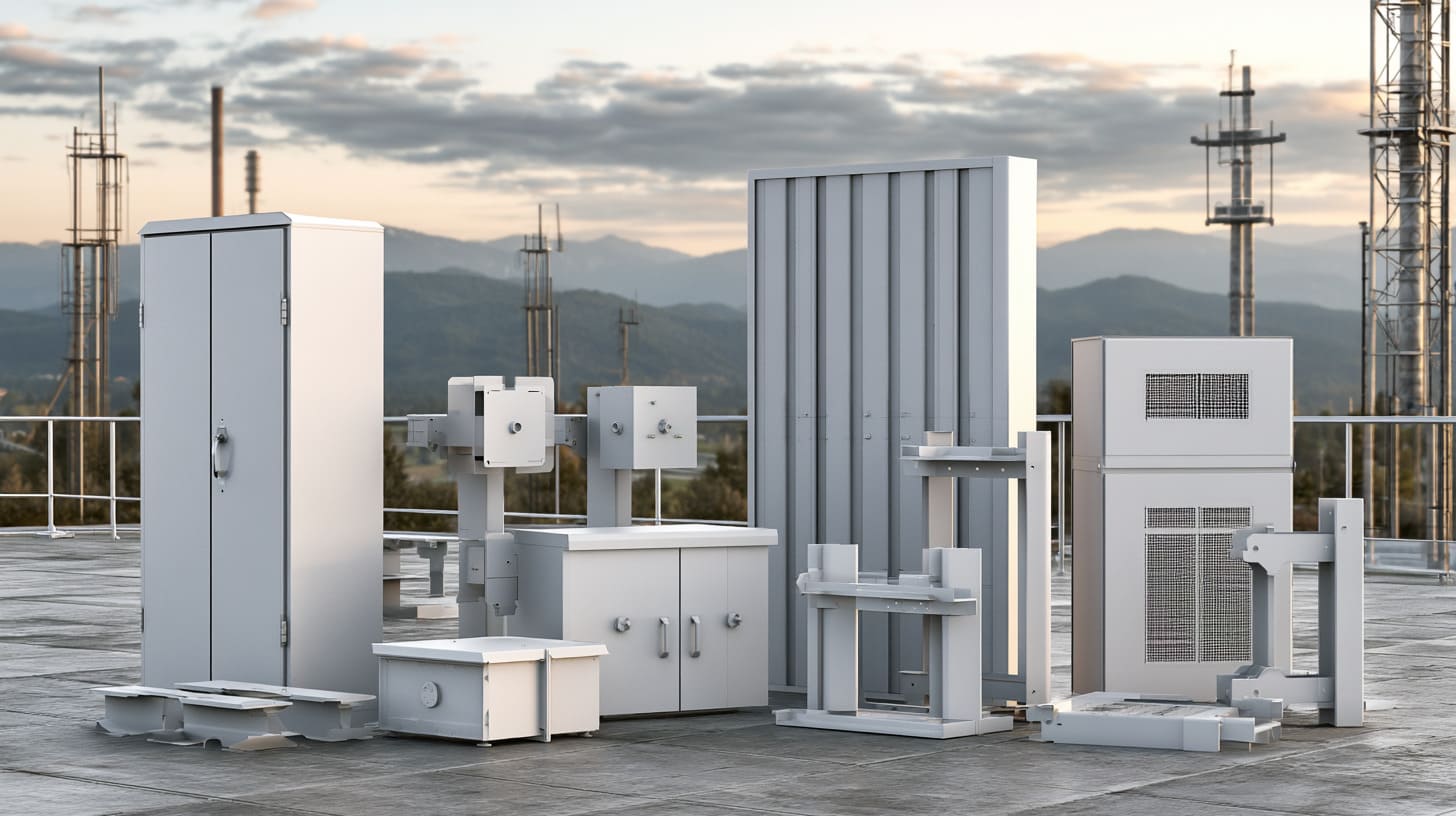
Different outdoor metal products need different coating thinking.
A bracket, an enclosure, a cabinet, and a signage frame may all use powder coating, but they do not fail in the same way. Some fail because of scratches. Some fail because of UV. Some fail because of poor edge coverage. Some fail because steel starts rusting under the coating.
The product shape tells me where the coating may fail first, so I always look at edges, holes, welding areas, hinges, and mounting points before I look at the final color.
Aluminum Enclosures
Aluminum enclosures often use powder coating for appearance, branding, and extra protection.
Aluminum already has better natural corrosion resistance than ordinary steel, but that does not mean powder coating can be careless. Aluminum surfaces can have oxide layers, oil, fingerprints, or processing marks. If pretreatment is weak, adhesion may become a problem.
For custom aluminum enclosures, powder coating is often used together with:
- logo printing
- laser marking
- silk screen printing
- engraving
- custom color matching
- matte or textured surface
- brand packaging
| Aluminum Enclosure Requirement | Coating Consideration |
|---|---|
| Brand color | Use stable color and confirm color sample |
| Outdoor use | Polyester or super durable polyester |
| Strong sunlight | Super durable polyester |
| Premium outdoor project | Consider fluoropolymer |
| Logo printing after coating | Check surface texture and printing method |
| Tight assembly | Control coating thickness around grooves and screw areas |
For extruded aluminum enclosures, I also care about sliding grooves, screw channels, end plates, and mating surfaces. If coating is too thick in the wrong area, assembly may become difficult.
A good surface finish should not create a new mechanical problem.
Sheet Metal Cabinets
Steel sheet metal cabinets need more corrosion protection than aluminum.
This is where some buyers make a dangerous mistake. They think powder coating alone can protect steel in all outdoor conditions. But if the environment is humid, rainy, salty, or industrial, powder coating may not be enough without good pretreatment or an extra protection layer.
Outdoor steel cabinets may need:
- degreasing
- rust removal
- phosphate treatment
- zinc-rich primer
- galvanizing
- powder coating
- better edge design
- sealing around openings
| Steel Cabinet Condition | Possible Surface Strategy |
|---|---|
| Indoor dry use | Standard powder coating may be enough |
| Outdoor normal use | Pretreatment plus polyester coating |
| Outdoor humid use | Stronger pretreatment or primer |
| Coastal use | Galvanizing, primer, or upgraded coating system |
| Welded cabinet | Extra attention around welds and corners |
| Long service life | Coating system should be planned early |
For steel enclosures, I pay close attention to cut edges, welded areas, and holes. These areas are often more vulnerable than the flat panels.
A flat coated panel may look perfect. But rust often starts from a small edge that nobody cared about.
Outdoor Electrical Boxes
Outdoor electrical boxes need practical protection.
They may have doors, hinges, locks, cable glands, screw holes, vents, mounting plates, and wall brackets. Each of these details can affect coating performance.
The coating must protect not only the large surface but also the weak areas.
| Electrical Box Detail | Why It Matters |
|---|---|
| Hinges | Movement can wear coating |
| Screw holes | Coating may be thin around edges |
| Cable openings | Cut edges need protection |
| Door seams | Moisture may stay around gaps |
| Welded corners | Rust may start if pretreatment is weak |
| Mounting points | Scratches may happen during installation |
Color and texture should not be the only decision point. For outdoor electrical boxes, the installation environment should guide the coating choice.
If the box is installed under a roof, the risk is lower. If it is installed on an outside wall and rainwater can hit it directly, the risk is higher. If it is installed in a coastal area, the risk is much higher.
Outdoor Frames, Brackets, and Mounting Parts
Outdoor frames and brackets often face damage during installation.
Workers may use tools. Parts may rub against each other. Mounting holes may get scratched. If the coating adhesion is poor, these scratches can become corrosion starting points.
For low-cost parts, polyester powder coating is common. But for long-term exposure, upgraded coating or better pretreatment should be considered.
| Product Type | Common Risk | Coating Focus |
|---|---|---|
| Mounting bracket | Scratches during installation | Adhesion and thickness |
| Outdoor frame | UV and rain exposure | Polyester or super durable polyester |
| Pole-mounted part | Sunlight and wind | Weather resistance |
| Machine support part | Wear and impact | Abrasion resistance |
| Low-cost hardware | Cost pressure | Practical coating choice |
For brackets, I also check whether the part has sharp edges. Sharp edges are difficult for coating to cover evenly. If the edge is too sharp, the coating may be thinner there.
A small radius or better edge treatment can improve coating performance.
Outdoor Signage and Display Structures
Outdoor signage and display structures care a lot about color.
A cabinet hidden behind equipment can tolerate some appearance change. But signage cannot. If the color fades, the brand looks old. If the gloss drops, the product loses its clean visual effect.
For signage frames and outdoor display structures, I usually consider:
- color stability
- gloss retention
- UV resistance
- surface smoothness
- texture choice
- logo or graphics compatibility
- long-term appearance
| Signage Requirement | Better Coating Direction |
|---|---|
| Standard outdoor sign frame | Polyester |
| Strong sunlight | Super durable polyester |
| Premium brand display | Super durable polyester or fluoropolymer |
| Coastal display | Fluoropolymer or stronger coating system |
| High color demand | Confirm coating grade and sample |
| Logo or graphics | Check surface texture and printing method |
For these products, the coating is part of the brand message. The metal may still be strong after years, but if the surface looks old, the product feels old.
Outdoor powder coating is not only about fighting rust. Sometimes, it is about protecting the customer’s face in the market.
Why Pretreatment Matters More Than Many Buyers Think
Powder coating does not work well on a dirty or poorly prepared surface.
This sounds simple, but it is one of the most common reasons for surface failure. Many buyers ask about powder type, powder color, and coating thickness. Fewer buyers ask how the metal surface is cleaned before coating.
I would rather use a normal outdoor powder on a well-prepared surface than use an expensive powder on a poorly prepared surface, because adhesion failure does not care how nice the powder name sounds.
Powder Type Cannot Fix Poor Surface Preparation
A good powder coating still needs a clean base.
If the metal surface has oil, dust, rust, oxide, welding residue, or moisture, the coating may not bond well. The surface may look okay at first. But later, peeling, bubbles, rust, or poor adhesion can appear.
This is very important for outdoor products because water always looks for weak points.
| Poor Surface Condition | Possible Result |
|---|---|
| Oil or grease | Poor adhesion |
| Rust | Rust continues under coating |
| Oxide layer | Weak bonding |
| Dust | Surface defects |
| Welding residue | Peeling or rough areas |
| Moisture | Bubbles or coating failure |
| Sharp edges | Thin coating coverage |
Outdoor corrosion often starts from poor pretreatment, not only from poor powder quality.
This is why I do not like to discuss coating as a single step. I see it as a system.
Common Pretreatment Methods
Different metals need different pretreatment methods.
Aluminum, carbon steel, galvanized steel, and stainless steel do not behave the same. A process that works for one material may not be enough for another.
Common pretreatment methods include:
| Pretreatment Method | Main Purpose | Common Use |
|---|---|---|
| Degreasing | Remove oil and dirt | Aluminum, steel, galvanized steel |
| Sandblasting | Remove rust, scale, and create roughness | Steel parts, welded structures |
| Mechanical cleaning | Clean surface defects | Custom sheet metal parts |
| Phosphate treatment | Improve adhesion and corrosion resistance | Steel parts |
| Conversion coating | Improve coating bonding | Aluminum parts |
| Primer | Add protection before top coating | Harsh outdoor steel parts |
| Galvanizing | Add zinc protection | Outdoor steel products |
Practical Factory Judgment
For indoor decorative products, simple pretreatment may sometimes be acceptable.
For outdoor steel parts, pretreatment should be discussed seriously.
For coastal or harsh environments, pretreatment may be more important than choosing a more expensive color.
Here is a simple way I explain it to customers:
| Project Condition | Pretreatment Attention |
|---|---|
| Indoor dry environment | Basic cleaning may be enough |
| Outdoor aluminum enclosure | Proper cleaning and conversion treatment are important |
| Outdoor steel cabinet | Strong pretreatment is very important |
| Welded steel structure | Rust removal and weld cleaning must be checked |
| Coastal environment | Consider stronger pretreatment and coating system |
| Long warranty requirement | Pretreatment must be part of the specification |
A coating failure can be expensive because it usually appears after the product has already shipped, installed, or entered use. At that point, the cost is not just repainting. It may include customer complaints, replacement parts, shipping cost, and lost trust.
That is why I always prefer to spend more time checking the pretreatment plan before production.
A beautiful coating on a weak base is like a nice shirt over wet clothes. It may look fine for a moment, but the problem is already inside.
What Problems Happen When the Wrong Powder Coating Is Used?
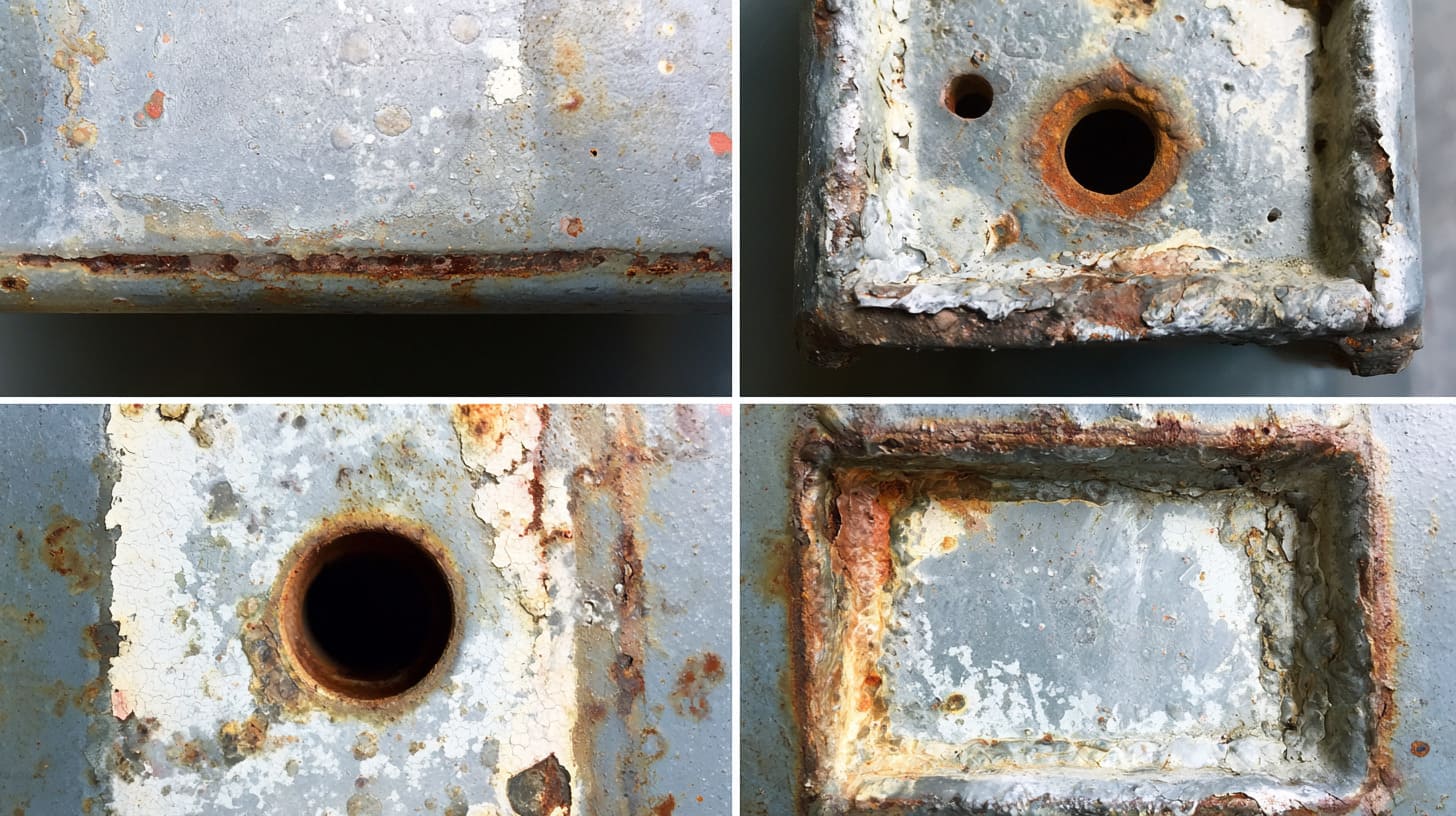
The wrong powder coating does not always fail immediately.
That is the tricky part.
The sample may look good. The first batch may pass visual inspection. The customer may approve the color. Everyone may feel relaxed.
Then the product goes outdoors.
After some months, problems begin to show.
The warning sign I take seriously is not only visible rust; it is any early change around edges, holes, welds, and high-sunlight areas, because those small changes often show where the coating system is weakest.
Fading and Chalking
Fading means the color becomes lighter or less stable.
Chalking means the surface becomes dull, powdery, or dusty. It often happens when the coating does not have enough UV resistance.
Epoxy powder coating is a common example. It has good indoor performance, but it is not a good choice for long-term sunlight exposure.
| Problem | Common Cause | Result |
|---|---|---|
| Fading | Poor UV resistance | Color looks old |
| Chalking | UV breakdown | Surface becomes dull or powdery |
| Gloss loss | Weather exposure | Product loses clean appearance |
| Uneven color change | Uneven sunlight exposure | Product looks inconsistent |
For a hidden industrial part, this may be acceptable in some cases. But for branded OEM products, outdoor enclosures, signage frames, or consumer-facing equipment, it can hurt the product image.
A customer may not know the powder type. But they will see the product looking old.
Peeling or Poor Adhesion
Peeling is often related to poor cleaning, weak pretreatment, or incorrect curing.
It can also happen when the metal surface is difficult to coat or when the coating is damaged during assembly.
Common areas include:
- edges
- corners
- screw holes
- welded seams
- hinge areas
- cutouts
- sharp bends
- mounting points
| Peeling Location | Possible Reason |
|---|---|
| Screw holes | Thin coating or assembly damage |
| Welded areas | Poor cleaning or residue |
| Sharp edges | Weak coating coverage |
| Corners | Uneven spraying |
| Flat panels | Oil, dust, or curing problem |
| Hinges | Movement and wear |
When peeling appears, water can enter under the coating. Once that happens, the failure can spread.
This is why I care so much about pretreatment and part design. The coating must have a fair chance to hold.
Rust Under the Coating
Rust under the coating is more common on steel products.
It can start from scratches, cut edges, holes, or coating defects. Once rust begins under the coating, it may push the coating up. The surface may bubble, crack, or peel.
| Rust Starting Point | Why It Happens |
|---|---|
| Cut edge | Coating may be thin |
| Screw hole | Installation scratches |
| Weld seam | Poor cleaning or trapped residue |
| Bottom edge | Water stays longer |
| Door seam | Moisture collects |
| Damaged area | Steel exposed to air and water |
For outdoor steel enclosures, powder coating should be matched with a corrosion protection strategy. Sometimes this means better pretreatment. Sometimes it means primer. Sometimes it means galvanizing before powder coating.
The correct answer depends on the environment and expected service life.
Uneven Finish or Orange Peel
Orange peel means the surface looks slightly rough or uneven, like the skin of an orange.
This may be caused by powder quality, spraying settings, coating thickness, curing temperature, or part geometry.
For some industrial parts, a small orange peel effect may not matter much. But for branded products, it can matter a lot.
| Surface Issue | Possible Cause |
|---|---|
| Orange peel | Spraying or curing issue |
| Rough surface | Powder quality or contamination |
| Thin areas | Poor coverage |
| Thick buildup | Too much powder |
| Pinholes | Surface contamination or gas release |
| Color difference | Batch or curing difference |
For custom OEM enclosures, the surface finish affects how the customer judges the whole product. Even if the enclosure size is correct, a poor finish can make the buyer feel the factory is careless.
And once the buyer feels that, the conversation becomes harder.
Surface problems are small details until they reach the customer’s hands. Then they become big details.
How Should Buyers Choose Powder Coating for Outdoor Products?
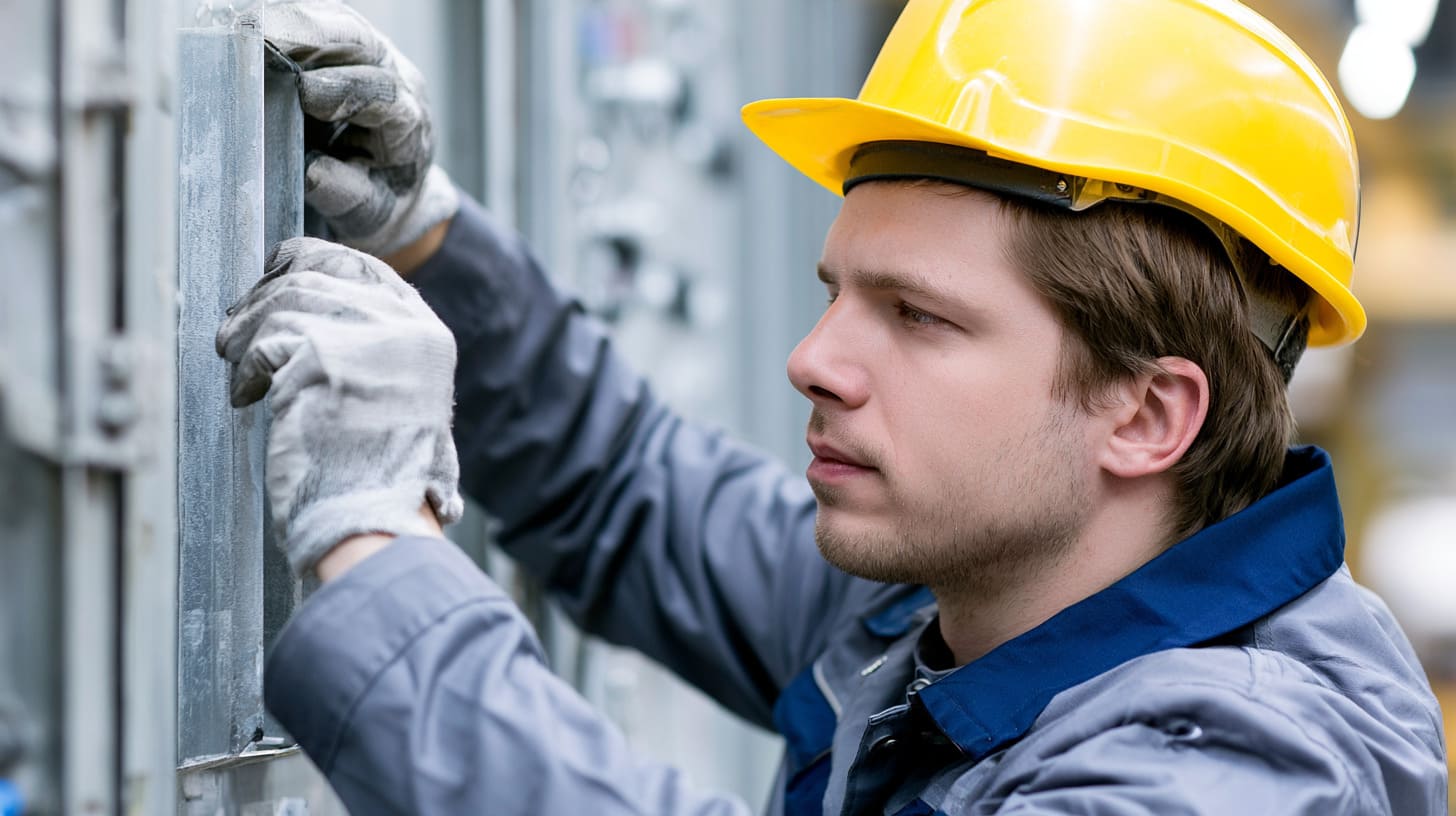
A buyer does not need to become a coating engineer.
But a buyer should know how to ask the right questions.
The right coating choice starts from real product use, not from the color card. If the product will be installed outdoors, the environment should guide the decision.
The question I ask before quoting is simple but useful: where will this product live after it leaves the factory?
Check the Real Installation Environment First
The installation environment changes everything.
A product under a roof is different from a product under direct sun. A product in Belgium is different from a product near the sea. A product installed in a factory area may face oil, dust, or chemicals. A product used in a clean city area may face much less risk.
Before choosing powder coating, buyers should check:
- Is the product indoor, semi-outdoor, or full outdoor?
- Will sunlight hit the surface directly?
- Will rain touch the product often?
- Will water stay around edges or holes?
- Is the location close to the sea?
- Is the air humid?
- Is the product near chemicals or industrial pollution?
- How many years should the product keep its appearance?
| Environment | Coating Risk |
|---|---|
| Indoor dry | Low |
| Under roof | Low to medium |
| Outdoor city area | Medium |
| Direct sunlight | Medium to high |
| High humidity | High for steel |
| Coastal area | High |
| Industrial area | High |
| Long-term visible installation | High appearance requirement |
This step looks basic, but it prevents many wrong choices.
Match Coating Type With Service Life
Not every product needs the same life span.
Some outdoor parts are used for short-term projects. Some equipment housings need to last for many years. Some branded products must keep their color because customers see them every day.
| Expected Service Life | Suggested Thinking |
|---|---|
| Short-term outdoor use | Standard polyester may be enough |
| Medium outdoor use | Polyester or super durable polyester |
| Long-term outdoor use | Super durable polyester |
| Harsh long-term outdoor use | Fluoropolymer or stronger coating system |
| High-value product | Do not only compare coating price |
A cheaper coating may save money at the beginning. But if the product fails early, the real cost becomes higher.
The hard part is that this cost appears later, not during quotation.
Consider the Base Metal
The base metal matters.
Aluminum, carbon steel, galvanized steel, and stainless steel all need different thinking.
| Metal Material | Coating Consideration |
|---|---|
| Aluminum | Needs proper cleaning and pretreatment for adhesion |
| Carbon steel | Needs stronger corrosion protection |
| Galvanized steel | Needs suitable pretreatment for coating adhesion |
| Stainless steel | May need coating for appearance, branding, or added protection |
| Zinc-coated steel | Surface compatibility must be checked |
Aluminum has better natural corrosion resistance, but it still needs proper surface preparation.
Steel needs more serious corrosion protection, especially outdoors.
Stainless steel may not always need coating for corrosion, but customers may still choose powder coating for color, branding, or surface consistency.
Do Not Judge by Price Only
Price matters. I understand this very well.
Many customers are under cost pressure. They need competitive pricing. They may compare quotations from several factories in China, Vietnam, or other sourcing markets.
But coating is not the best place to make blind cost cuts.
| Low-Cost Decision | Possible Hidden Risk |
|---|---|
| Choose indoor powder for outdoor use | Fading and chalking |
| Skip proper pretreatment | Peeling and rust |
| Use too thin coating | Weak protection |
| Ignore sharp edges | Early corrosion at edges |
| Choose only by color | Poor outdoor performance |
| Avoid sample testing | Risk appears after mass production |
The best choice is not always the most expensive one. It is the one that matches the real working condition.
That is the balance I care about.
I do not want to overbuild the product and make the customer lose price advantage. I also do not want to underbuild it and create future complaints.
Good coating selection is not a beauty contest. It is risk control.
What Should You Confirm With Your Supplier Before Ordering?

A buyer does not need to ask one hundred technical questions.
But a few simple questions can reveal whether the supplier understands outdoor coating or only follows a color request.
Before production, I prefer to slow down for a few minutes and confirm the coating details, because a missing surface requirement is much cheaper to fix before spraying than after shipping.
Powder Type and Brand
Do not only ask for the color code.
A color code tells the color. It does not tell the powder type or outdoor performance.
Buyers should ask whether the coating is:
- epoxy
- polyester
- super durable polyester
- epoxy-polyester hybrid
- polyurethane
- fluoropolymer
For outdoor products, the powder type matters.
| Question to Ask | Why It Matters |
|---|---|
| What powder type will be used? | Confirms if it is suitable for outdoor use |
| Is it outdoor grade? | Checks UV and weather resistance |
| What brand or grade is the powder? | Helps control consistency |
| Can you provide a sample? | Allows color and finish approval |
| Is the same powder used in mass production? | Avoids sample and batch mismatch |
A black sample and a black batch are not always the same if the powder grade changes.
Pretreatment Process
Pretreatment is one of the most important details.
Buyers should confirm how the supplier prepares the metal surface before powder coating.
Useful questions include:
- How do you clean the metal surface?
- Is degreasing included?
- Is phosphate or conversion treatment used?
- Is the process suitable for aluminum?
- Is the process suitable for steel?
- How do you handle welded areas?
- How do you protect cut edges?
| Metal Type | Pretreatment Question |
|---|---|
| Aluminum | How do you improve coating adhesion? |
| Carbon steel | How do you reduce rust risk? |
| Galvanized steel | How do you ensure coating compatibility? |
| Welded parts | How do you clean weld areas? |
| Outdoor cabinets | Is primer or extra protection needed? |
This is not just technical talk. It is a real quality question.
Coating Thickness
Coating thickness affects both protection and assembly.
If the coating is too thin, protection may be weak. If it is too thick, it may affect screw holes, sliding areas, hinges, grooves, and tight-fitting parts.
For custom enclosures, this is important because many parts need to assemble smoothly.
| Area | Coating Thickness Risk |
|---|---|
| Screw holes | Screws may not fit well |
| Sliding grooves | Covers may become tight |
| Hinges | Movement may be affected |
| Cable cutouts | Edges need enough protection |
| Flat panels | Too thin may reduce durability |
| Logos | Surface texture may affect printing |
I usually pay attention to functional areas, not only the large visible surface.
A beautiful coating that blocks assembly is still a failed coating.
Outdoor Testing or Reference Projects
For important outdoor projects, buyers should ask whether the supplier has made similar products before.
This does not always mean the supplier must provide a long laboratory report. Sometimes, practical project experience already gives useful information.
Buyers can ask:
- Have you made similar outdoor enclosures before?
- What coating type did you use?
- Was the product used in normal outdoor, coastal, or industrial conditions?
- Can you provide coating specifications?
- Can we test samples before mass production?
| Project Importance | Suggested Action |
|---|---|
| Low-risk indoor part | Basic sample approval may be enough |
| Normal outdoor part | Confirm powder type and pretreatment |
| Branded outdoor enclosure | Approve sample and coating specification |
| Harsh outdoor project | Consider testing and stronger coating system |
| Large order | Confirm batch consistency before mass production |
Testing may look like a delay. But for outdoor products, small delays before production can prevent large delays after failure.
Color, Texture, and Logo Compatibility
Many OEM enclosure projects need more than coating.
They may also need:
- logo printing
- brand engraving
- silk screen printing
- UV printing
- laser marking
- stickers
- custom packaging
The coating surface can affect these processes.
| Finish Choice | Possible Effect |
|---|---|
| Matte finish | Looks premium but may show oil marks depending on texture |
| Gloss finish | Easier to clean but shows scratches more easily |
| Fine texture | Hides small marks and improves grip |
| Rough texture | May affect logo printing detail |
| Smooth finish | Better for some logo processes |
| Dark color | Heat absorption may be higher outdoors |
If the customer needs a high-quality logo on the back panel or top cover, I need to confirm the surface texture early.
A rough powder texture may look strong, but it may not be the best surface for fine logo printing.
This is why coating, branding, and product design should be discussed together.
My Recommendation for Custom Outdoor Metal Enclosure Projects
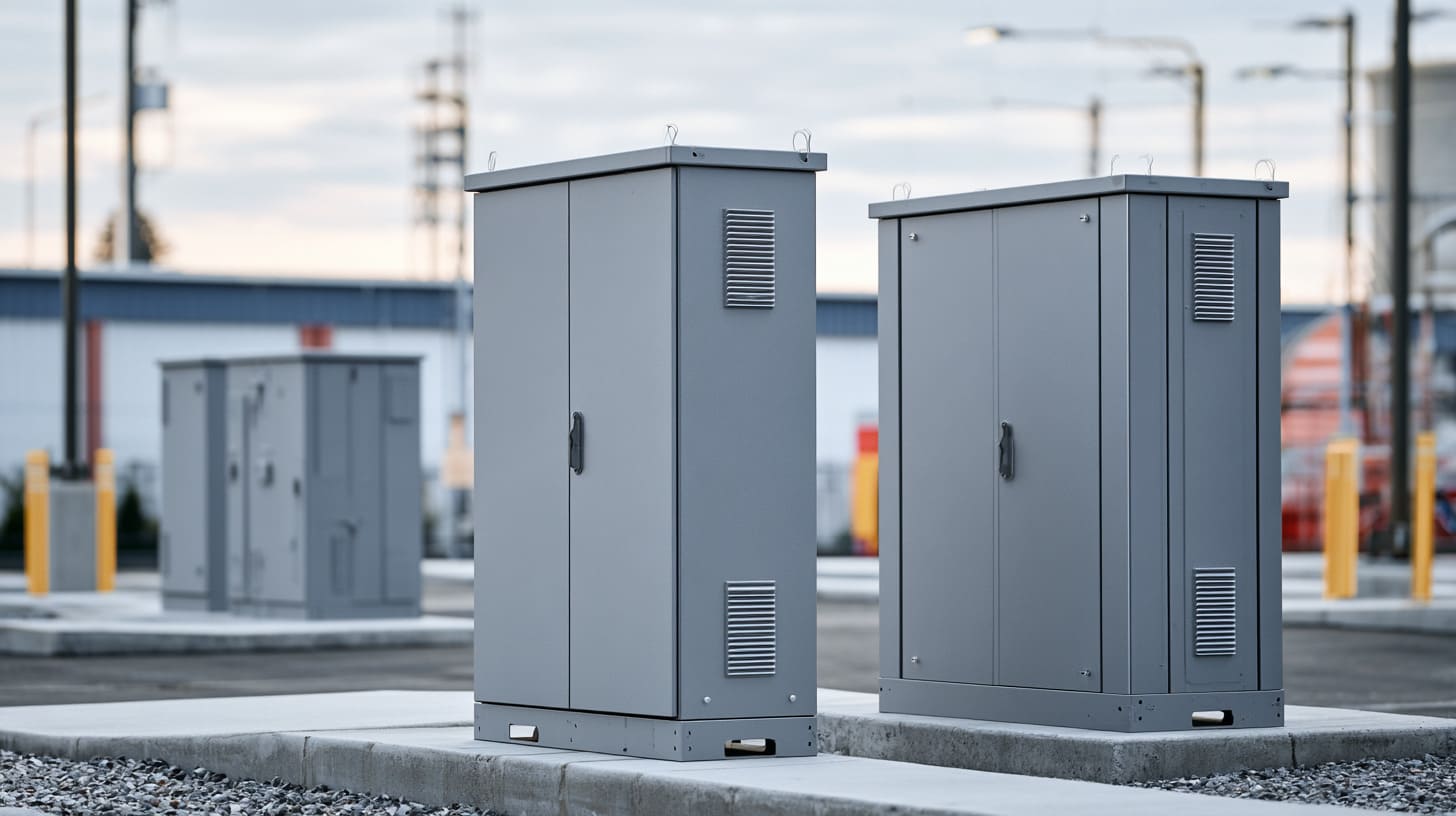
For custom outdoor metal enclosure projects, I like to keep the decision practical.
The customer usually cares about quality, cost, delivery time, and final appearance. I care about those too. But I also care about what may happen after the enclosure is installed.
My recommendation usually changes when the product changes from “a metal box” to “a branded product that protects electronics in a real outdoor environment.”
For General Outdoor Aluminum Enclosures
For general outdoor aluminum enclosures, polyester powder coating is usually a practical starting point.
It gives good appearance, good color options, and reasonable outdoor performance.
If the product faces stronger sunlight or needs better long-term appearance, I would suggest super durable polyester.
| Aluminum Enclosure Condition | My Recommendation |
|---|---|
| Indoor use | Standard powder coating may be enough |
| Semi-outdoor use | Polyester |
| Normal outdoor use | Polyester |
| Strong sunlight | Super durable polyester |
| Premium long-term outdoor use | Super durable polyester or fluoropolymer |
| Coastal use | Consider fluoropolymer and stronger pretreatment |
For aluminum enclosures, I also check assembly areas. Powder coating should not make end caps, screws, or sliding parts difficult to fit.
A good enclosure must look good and assemble well.
For Outdoor Steel Enclosures
For outdoor steel enclosures, I do not rely on powder coating alone.
Steel needs stronger corrosion thinking. Depending on the environment, the product may need better pretreatment, primer, galvanizing, zinc-rich protection, or a multi-layer coating system.
| Steel Enclosure Condition | My Recommendation |
|---|---|
| Indoor dry use | Powder coating may be enough |
| Normal outdoor use | Pretreatment plus polyester |
| Humid outdoor use | Strong pretreatment or primer |
| Coastal outdoor use | Galvanizing or stronger coating system |
| Welded cabinet | Extra cleaning around welds |
| Long service life | Confirm full surface protection plan |
For steel, the weak areas are often not the large panels. They are the edges, holes, welds, and lower areas where water may stay.
This is why I prefer to review the structure before confirming the surface process.
For Branded OEM Products
For branded OEM products, coating is part of the customer’s image.
A buyer may sell the final product on Amazon, through distributors, or as part of a larger system. If the enclosure coating looks cheap, fades too early, or has surface defects, the buyer’s brand suffers.
For these projects, I usually pay attention to:
- stable color
- surface texture
- logo compatibility
- packaging protection
- scratch resistance during shipping
- long-term outdoor appearance
- consistency between samples and mass production
| OEM Requirement | Coating Focus |
|---|---|
| Brand color | Color consistency |
| Logo printing | Suitable texture |
| Premium appearance | Smooth or controlled surface finish |
| Outdoor use | UV-resistant powder |
| Repeat orders | Stable powder source |
| Online sales | Clean appearance and packaging protection |
A customer may forgive a small technical discussion before production. But they will not forgive a visible surface problem after the product reaches their customer.
For Harsh Environments
For harsh environments, I like to discuss the risks before choosing the finish.
Harsh environments may include:
- coastal areas
- high humidity
- strong sunlight
- industrial pollution
- chemical exposure
- outdoor equipment sites
- long-term building installations
- locations with poor maintenance access
| Harsh Factor | What I Check |
|---|---|
| Salt air | Stronger coating and pretreatment |
| Strong UV | Super durable polyester or fluoropolymer |
| High humidity | Steel corrosion protection |
| Industrial pollution | Chemical resistance |
| Long service life | Coating system, not only color |
| Difficult maintenance | Higher durability may be worth the cost |
Sometimes the safest solution is not just one powder coating type. It may require upgraded powder, better pretreatment, primer, galvanizing, or a multi-layer coating system.
For outdoor enclosures, this is not overthinking. It is protecting the project before problems become expensive.
A small coating decision can decide whether the final product feels reliable or becomes another complaint email in the buyer’s inbox.
Conclusion
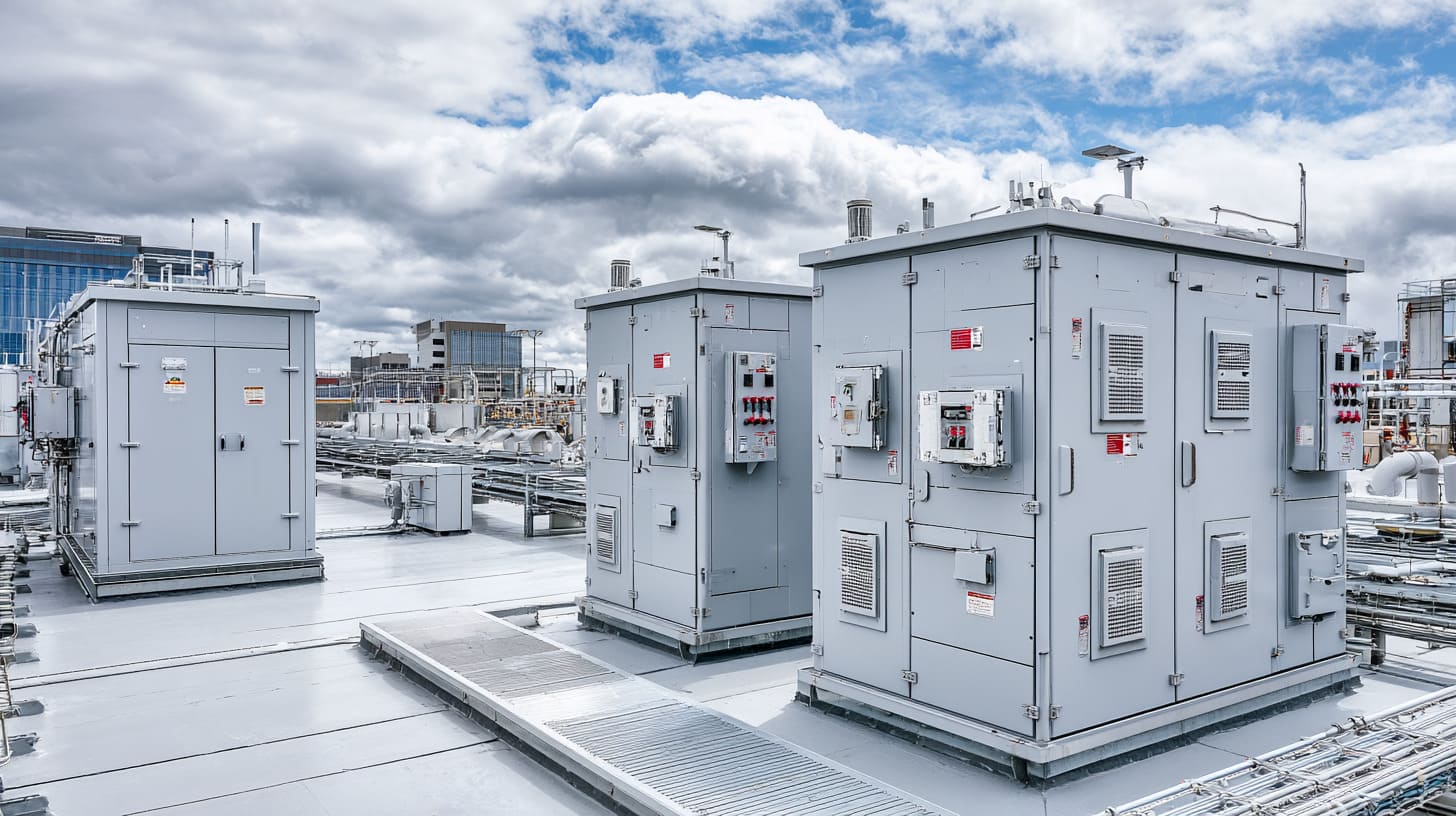
Powder coating is not just a color finish for outdoor metal products.
I think this way because I have seen how surface problems usually happen. They do not always come from one big mistake. They often come from small missed details: the wrong powder type, weak pretreatment, sharp edges, poor coating thickness control, or a supplier who only follows a color request without asking where the product will be used.
For outdoor metal products, epoxy and hybrid powders are usually better for indoor use. Polyester is a practical choice for many normal outdoor products. Super durable polyester is safer for longer outdoor exposure and stronger sunlight. Fluoropolymer is more suitable for harsh, coastal, architectural, or premium projects where color retention and long-term appearance matter.
My main view is simple.
I do not choose powder coating only by color.
I look at the metal material. I look at the real installation environment. I look at the expected service life. I look at the weak areas of the product, such as edges, holes, welds, hinges, and mounting points. Then I decide which coating system makes sense.
This is why I always suggest buyers discuss powder coating early in the project, not after the drawings and price are almost finished.
For custom aluminum enclosures, sheet metal enclosures, outdoor electrical boxes, and OEM metal housings, the right powder coating choice can reduce quality risks, prevent early surface failure, and help the final product stay professional for a longer time.
If you are developing an outdoor enclosure project and you are not sure which powder coating type is suitable, you can send us your drawing, material requirement, installation environment, and target color. At MaidaTech, we can help review the enclosure structure, surface treatment choice, logo process, and custom production details before mass production.
A good coating decision does not need to be complicated.
But it does need to be made before the weather starts testing the product.