Skip to content
When a buyer asks me, "What type of electrical enclosure should I use?", I usually do not answer with one material or one rating first.
I ask what the enclosure needs to protect.
Is it a simple wiring connection? A PCB? A small controller? A power supply? A display? Does it sit indoors, outdoors, on a machine, on a pole, or inside a cabinet? Will the customer drill holes later? Will workers open it every month? Will rain, dust, heat, oil, or cleaning water touch it?
These questions matter because an electrical enclosure is not just a box. It is part of the product design. It protects electrical and electronic parts, but it also affects assembly, maintenance, cost, appearance, shipping, and long-term reliability.
Why enclosure type is more than a box shape
Many people classify electrical enclosures by shape: small box, big cabinet, wall box, junction box, and so on. That is a useful start, but it is not enough for a custom project.
A small plastic enclosure for an IoT sensor and a large sheet metal control cabinet both protect electrical parts. But they have very different risks. One may need wireless signal, logo printing, and PCB standoffs. The other may need DIN rails, grounding, ventilation, cable duct, and a strong door.
The buyer problem behind the question
For sourcing, the real problem is not knowing every enclosure name. The real problem is choosing a type that fits the working environment, internal components, customization needs, and budget.
In my factory work, I judge an enclosure type by the full assembly, not only the catalog name, because one wrong cable hole or weak gasket can turn a good enclosure into a problem after installation.
So let us look at the main ways to classify electrical enclosures.
The Main Ways to Classify Electrical Enclosures
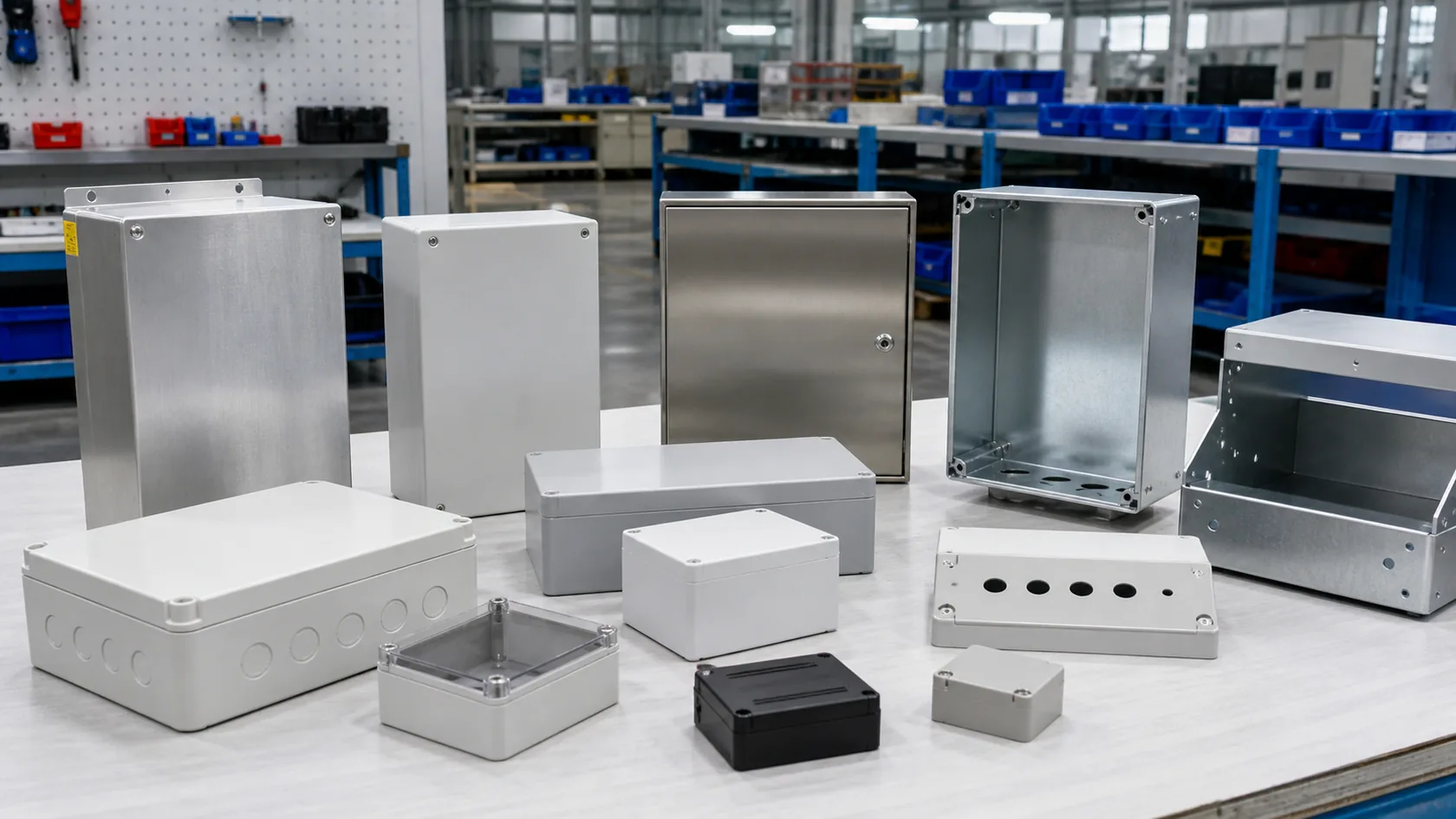
Electrical enclosures can be grouped in several ways. None of these categories stands alone. A real project usually combines them.
For example, a product may be a wall-mounted aluminum electronics enclosure with IP66 protection and custom cable glands. That description already includes function, material, installation style, protection level, and customization.
By function
Function means what the enclosure does in the system.
Some enclosures hold wire connections. Some hold control components. Some protect PCBs. Some give operators access to buttons and switches. Some distribute power.
This is usually the first question because the internal components decide the space, mounting, safety, and service needs.
By material
Common materials include steel, stainless steel, aluminum, plastic, polycarbonate, ABS, and fiberglass.
Material affects strength, corrosion resistance, weight, machining, heat dissipation, wireless signal, appearance, and cost.
By installation style
Installation style describes how the enclosure is mounted or used.
Common styles include wall-mount boxes, floor-standing cabinets, pole-mounted enclosures, handheld cases, desktop enclosures, and rack-mounted housings.
By protection rating and environment
Protection needs may include dust resistance, water resistance, corrosion resistance, impact strength, UV resistance, washdown protection, or flame rating.
Standards such as NEMA enclosure types and IEC 60529 IP ratings help define these requirements. But the rating must match the real use condition.
I often see buyers mix these categories together too early, so I like to separate them first and then combine them into one clear specification.
Now we can go deeper into each group.
Types of Electrical Enclosures by Function
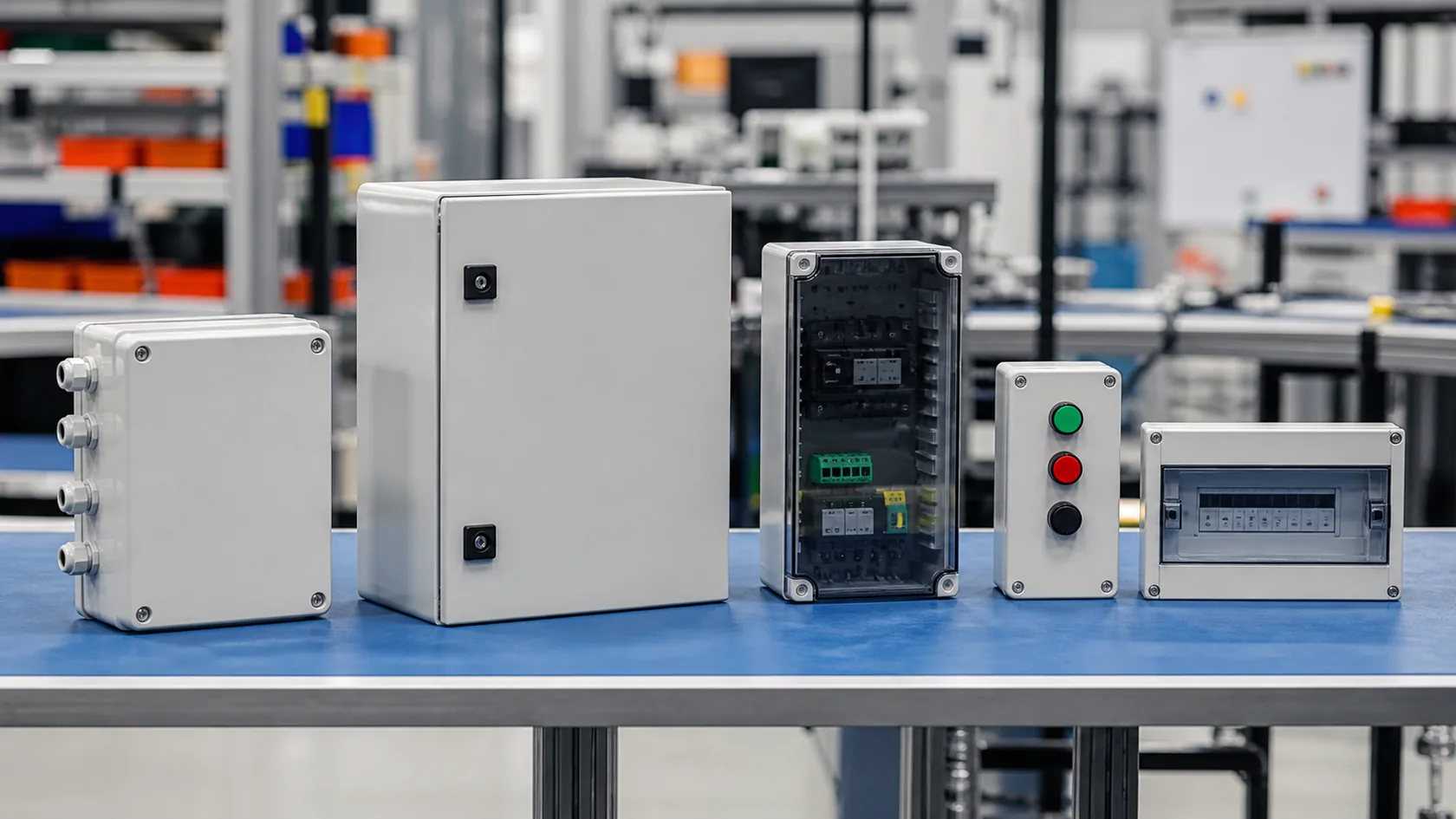
The function of the enclosure is usually the best starting point. It tells the supplier what must fit inside and how people will use the product.
Junction boxes and terminal boxes
Junction boxes protect wire splices, terminals, and cable connections. They are common in buildings, machines, outdoor lighting, control systems, solar equipment, and industrial wiring.
The key details are simple but important:
- Cable entry positions
- Terminal space
- Grounding
- Cover access
- Gasket design
- Wall thickness
- Indoor or outdoor exposure
For custom junction boxes, I pay close attention to cable direction, because water often follows a cable path before it finds the enclosure seam.
Control enclosures and control cabinets
Control enclosures hold PLCs, relays, drives, power supplies, switches, breakers, HMIs, and wiring accessories.
Small control boxes may mount on a machine. Larger control cabinets may stand on the floor. These enclosures often need DIN rails, mounting plates, internal brackets, ventilation, filters, fans, locks, and grounding points.
The main risk is crowding. If the buyer only gives the outside size, the internal layout may become painful during assembly.
Instrument and electronics enclosures
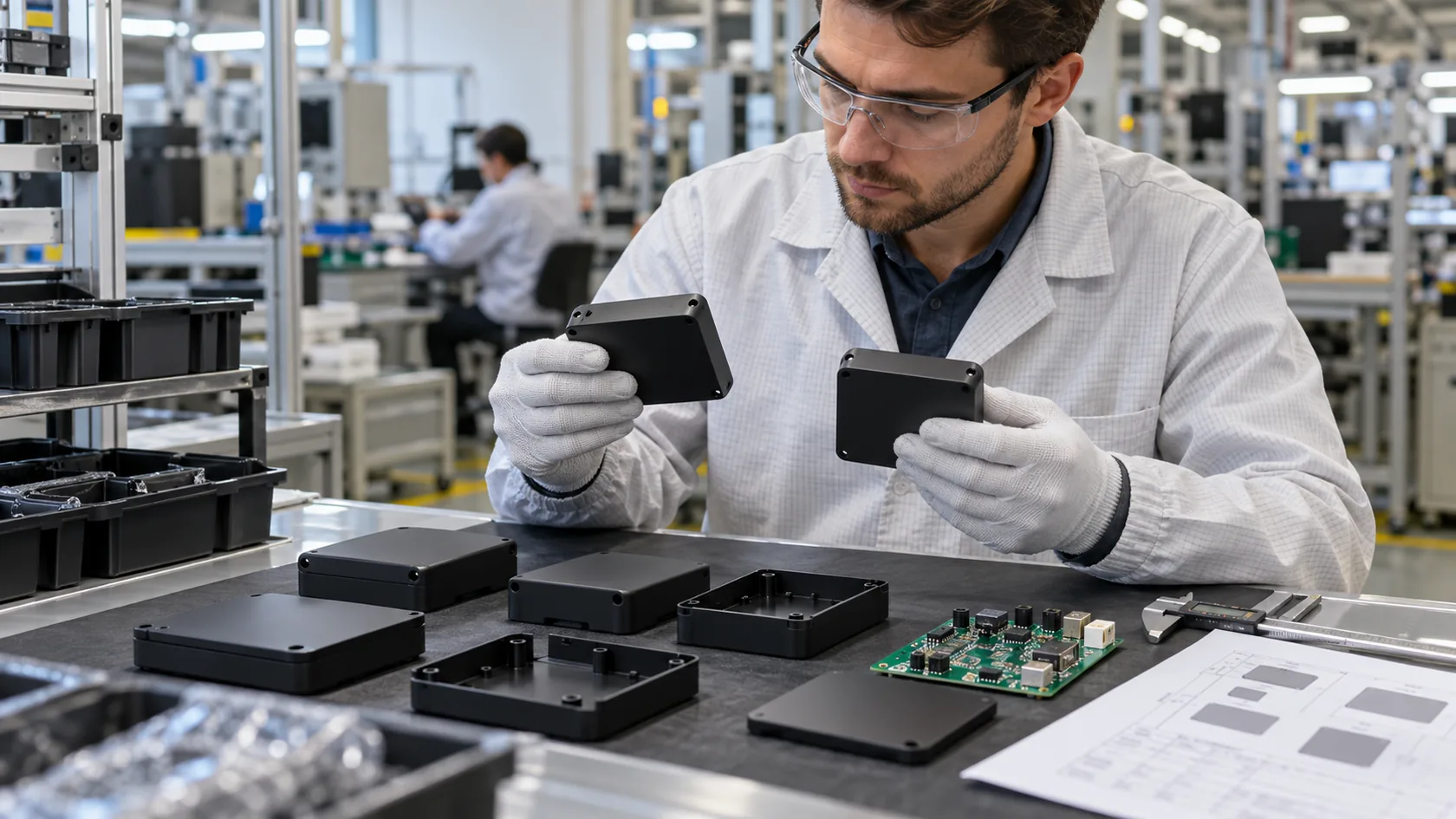
Instrument and electronics enclosures protect PCBs, sensors, displays, communication modules, batteries, and small embedded systems.
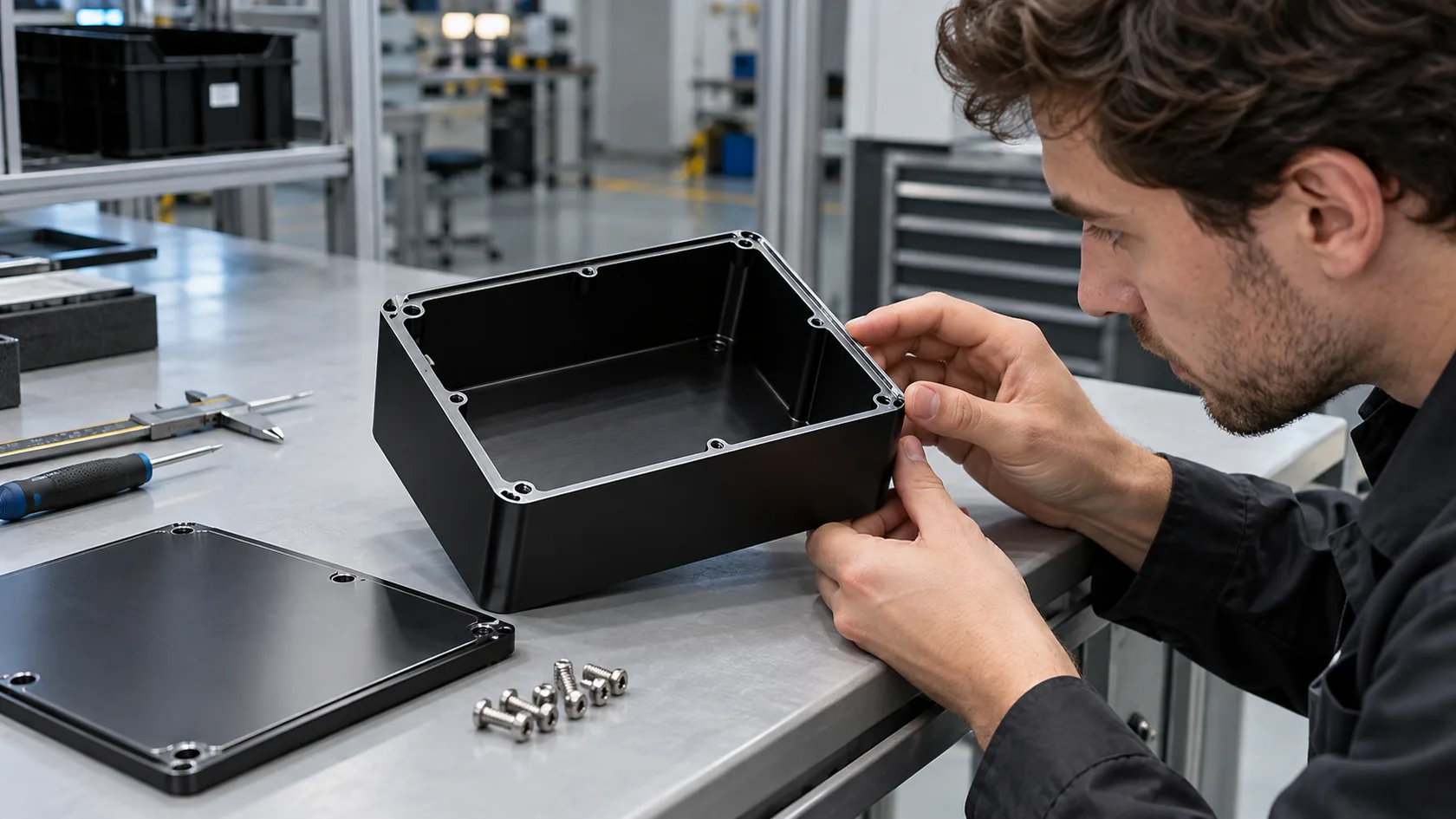
This category is very important for MaidaTech because many customers need custom aluminum enclosures, plastic electronics housings, or Raspberry Pi-style cases.
These projects often need:
- PCB standoffs
- CNC machined ports
- Display windows
- Heat dissipation
- USB, Ethernet, or antenna openings
- Logo printing or engraving
- Custom packaging
Pushbutton enclosures hold buttons, switches, indicator lights, emergency stops, and operator controls.
They must be easy to use, easy to wire, and strong enough for repeated operation. The cover, button holes, and sealing washers are important because users touch these parts again and again.
Power distribution enclosures
Power distribution enclosures hold breakers, fuses, busbars, meters, and power switching parts.
These projects need more attention to safety standards, heat, spacing, grounding, and local electrical rules. For North American projects, buyers may also need to consider the NFPA 70 National Electrical Code and local approval requirements.
Function gives us the job of the enclosure. Material decides how well it can do that job in the real world.
Types of Electrical Enclosures by Material
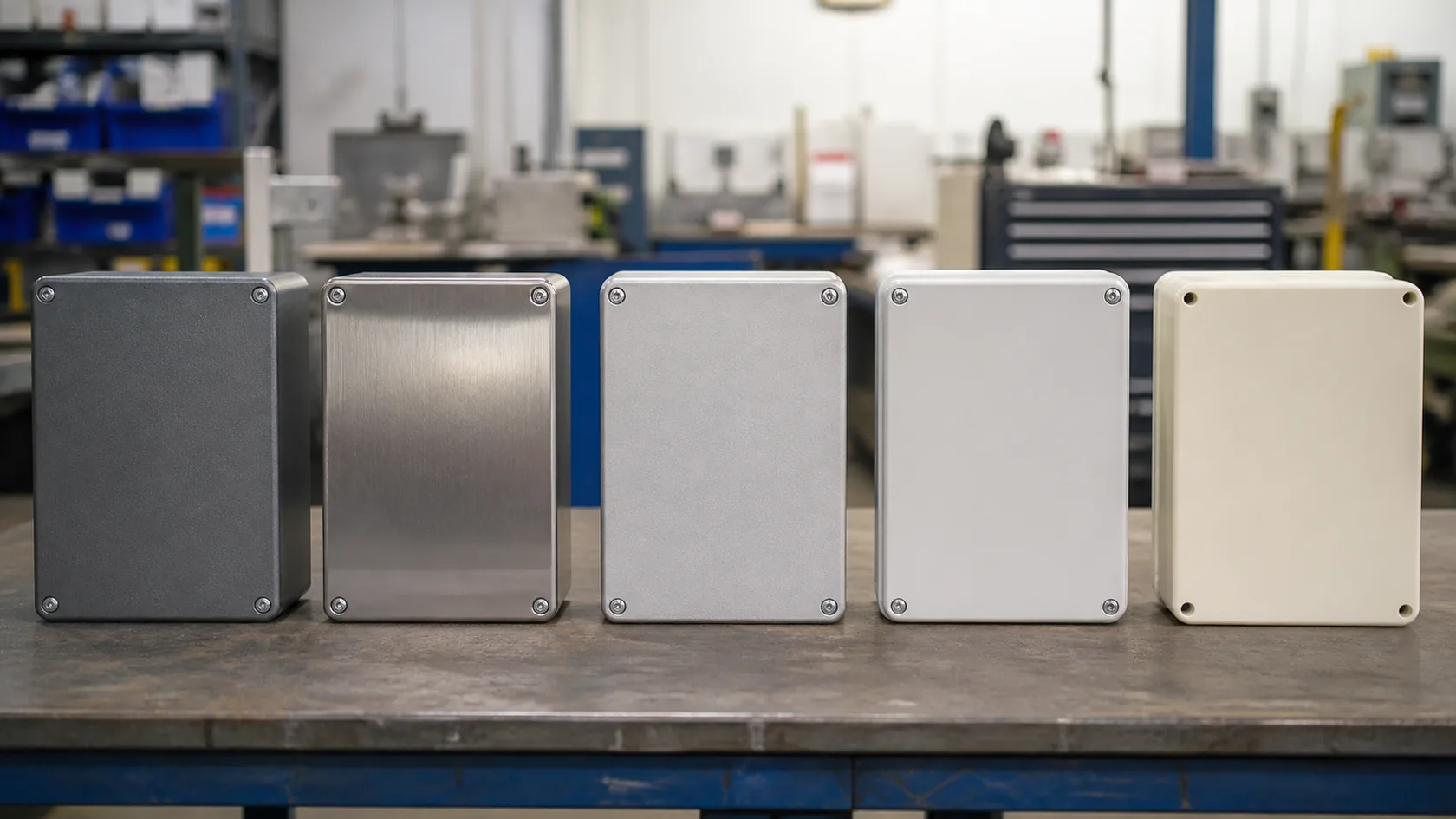
Material choice changes the strength, cost, appearance, customization method, and service life of the enclosure.
There is no best material for every project. There is only the best match for a clear condition.
Steel enclosures
Steel enclosures are strong and cost-effective. They are common for indoor industrial boxes, control cabinets, electrical panels, and equipment housings.
Steel is a good choice when the project needs strength, size flexibility, and controlled cost. It also works well for sheet metal fabrication.
The main weakness is corrosion. Powder coating, plating, edge treatment, and installation environment must be considered. A scratched or poorly treated edge can become a rust point later.
Stainless steel enclosures
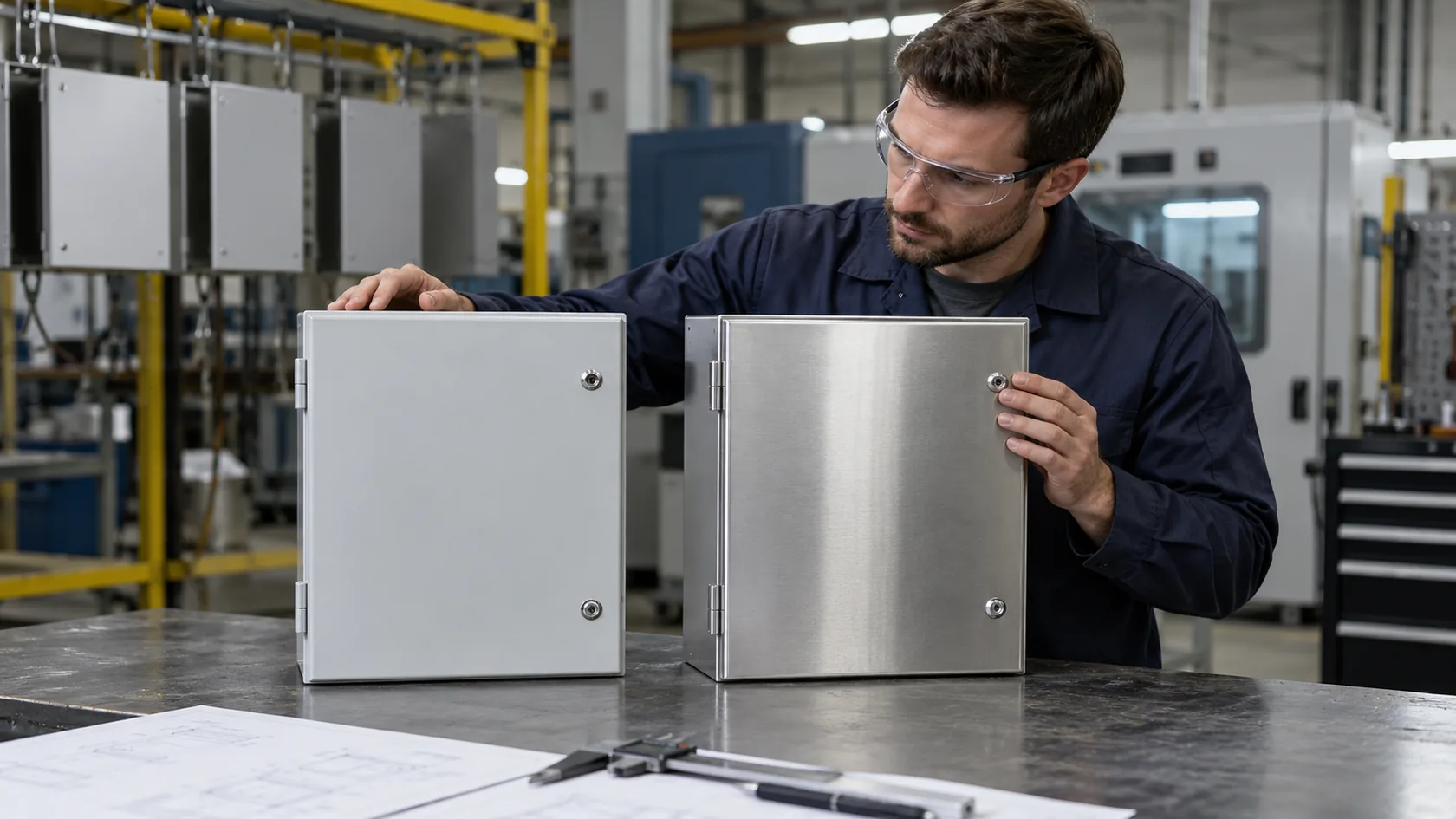
Stainless steel enclosures are used in food processing, chemical plants, marine areas, outdoor sites, and washdown environments.
304 stainless steel is common. 316 stainless steel is often preferred for stronger corrosion resistance, especially near salt or chemicals.
The trade-off is cost. Stainless steel is more expensive, and fabrication can take more care. But in a harsh environment, the higher cost can be cheaper than repeated failures.
Aluminum enclosures
Aluminum enclosures are lightweight, corrosion-resistant, and easy to machine. They also look clean and professional after anodizing, powder coating, or other surface finishing.
Aluminum is a strong option for electronic devices, sensors, controllers, communication modules, and custom product housings. It is also useful when the enclosure needs heat dissipation.
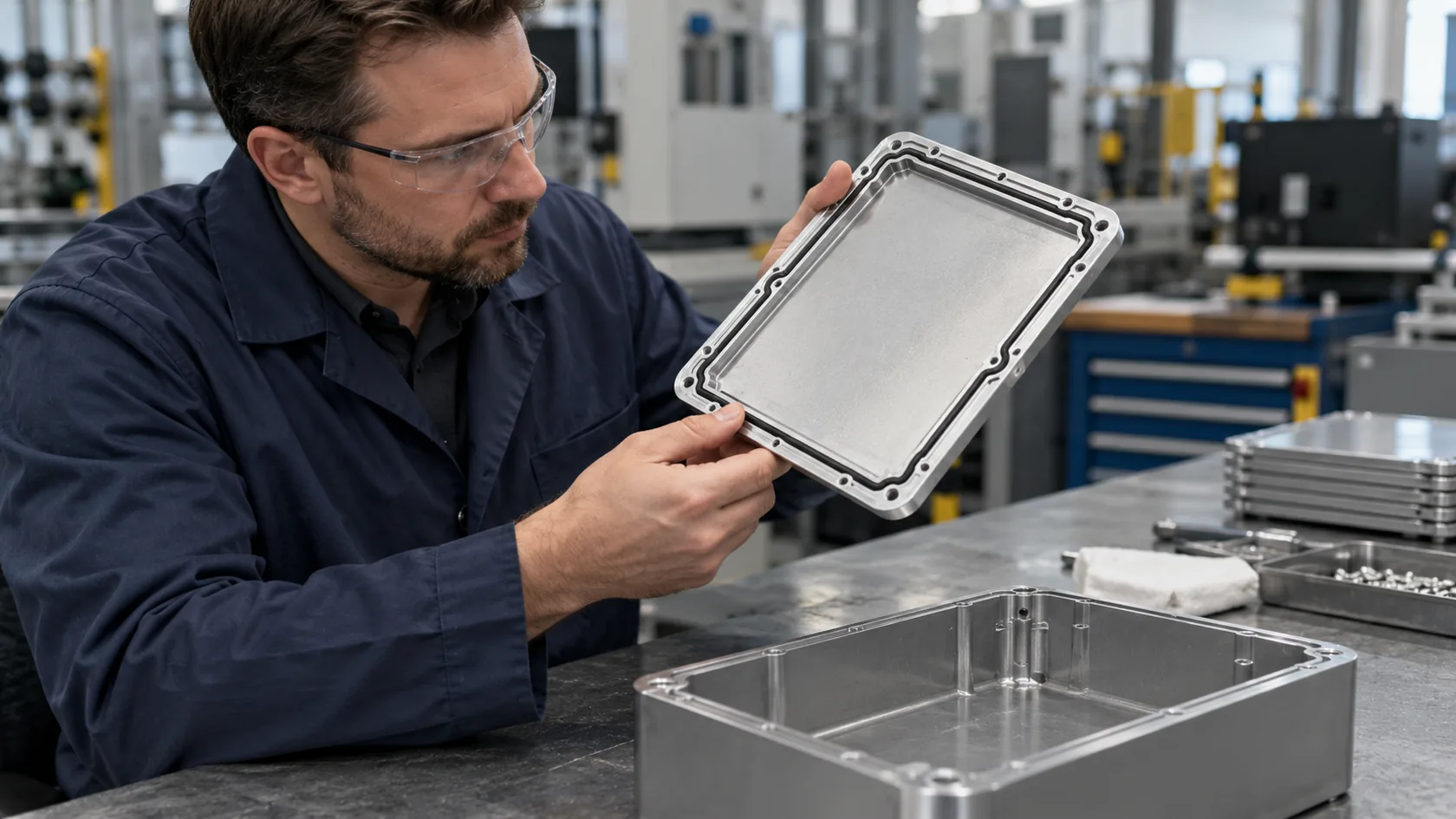
For custom aluminum projects, I usually check wall thickness, machining area, surface finish, screw strength, and gasket groove design before quoting, because these details decide whether the part is only beautiful or also practical.
Plastic, ABS, and polycarbonate enclosures
Plastic enclosures are common for small electronics, wireless products, handheld devices, and lower-cost housings.
ABS is easy to mold and cost-friendly. Polycarbonate has better impact strength and is often used where toughness matters. Material suppliers such as Covestro publish technical information about polycarbonate properties, which helps engineers understand why it is used in protective housings.
Plastic can also be better for wireless signal because metal can block antennas. But buyers must check UV resistance, flame rating, screw boss design, and heat behavior.
Fiberglass enclosures
Fiberglass enclosures are strong, non-conductive, and resistant to many corrosive environments. They are often used outdoors, in utilities, and in industrial sites with moisture or chemicals.
They are useful, but they may not be the best fit for small cosmetic electronic products that need fine machining, tight branding details, or a premium metal feel.
I do not choose material by habit. I choose it by looking at the failure point the project is most likely to meet: corrosion, impact, heat, signal, cost, or appearance.
After material, the next practical question is how the enclosure will be mounted or handled.
Types of Electrical Enclosures by Installation Style

Installation style affects cable routing, service access, water risk, heat flow, and packaging.
A good enclosure on the drawing can still be awkward in the field if the mounting style is ignored.
Wall-mount enclosures
Wall-mount enclosures are very common for controls, wiring, sensors, power supplies, and outdoor electronics.
They may use mounting ears, internal mounting holes, brackets, or back plates. The buyer should decide whether the mounting screws pass through the sealed area. If they do, sealing becomes more important.
Wall-mounted outdoor boxes also need careful cable entry planning. Bottom or side entries are usually easier to protect than top entries.
Floor-standing cabinets
Floor-standing cabinets are used for larger control systems, automation lines, power distribution, and industrial equipment.
They need stronger structure, door stiffness, internal plates, cable ducts, ventilation, and safe lifting or shipping design. Packaging matters here because a bent cabinet door can cause sealing and appearance problems before the product even reaches the site.
Pole-mounted and outdoor enclosures
Pole-mounted enclosures are used for telecom, monitoring, solar systems, traffic equipment, outdoor sensors, and remote control units.
They face rain, sun, wind, dust, vibration, and sometimes theft or tampering. UV resistance, anti-corrosion hardware, cable glands, locks, and bracket strength are important.
Handheld, desktop, and small device enclosures
Handheld and desktop enclosures are used for meters, test tools, controllers, lab devices, and consumer-facing electronics.
These enclosures need a different kind of thinking. The user touches them often. The surface feel, corner radius, screw placement, battery access, and logo position all affect the product experience.
Rack-mounted enclosures
Rack-mounted enclosures are used in communication, networking, test equipment, audio systems, and industrial computing.
They must fit standard rack dimensions and often need front panels, ventilation slots, handles, grounding, and internal supports.
When I review a custom enclosure drawing, I always imagine how the installer will hold, mount, open, wire, and close it, because a difficult installation often becomes a quality complaint later.
Mounting tells us how the enclosure lives. Protection ratings tell us what it must survive.
Types of Electrical Enclosures by Protection Need

Protection is where many buyers focus first. That is understandable. Nobody wants dust, water, oil, or corrosion to damage electrical parts.
But protection should match the environment, not just the highest number in a catalog.
Indoor electrical enclosures
Indoor enclosures may only need protection against touch, dust, falling dirt, or light moisture. They are common in machines, offices, labs, control rooms, and production lines.
Cost can often be lower than outdoor enclosures because UV, rain, and corrosion requirements may be less severe.
Outdoor weatherproof enclosures
Outdoor enclosures need rain protection, UV resistance, corrosion control, gasket reliability, and good cable sealing.
They may use aluminum, stainless steel, fiberglass, UV-resistant plastic, or coated steel, depending on the project. Surface finish and hardware selection matter a lot.
Washdown and corrosion-resistant enclosures
Washdown enclosures are used where cleaning water, pressure spray, food processing, or chemical exposure may be present.
Stainless steel is common, but material alone is not enough. Door design, gasket material, slope, latch pressure, and cable gland selection all affect real protection.
Dust-tight and waterproof enclosures
Dust-tight and waterproof enclosures are often specified with IP ratings such as IP65, IP66, or IP67.
The IP code is useful, but it does not replace design judgment. A box with a good rating can still fail if the buyer adds a low-quality connector or drills a top-facing hole without a proper seal.
NEMA and IP ratings
NEMA and IP ratings are related but not identical. NEMA ratings are widely used in North America and include environmental use cases. IP ratings are common internationally and focus on solids and water ingress.
For electrical products, third-party safety and enclosure evaluation may also involve organizations such as UL Solutions.
My practical habit is to ask what the enclosure will actually face: rain, hose spray, standing water, dust, oil, salt air, chemical cleaning, or user opening. The rating should answer that real condition.
Once the protection need is clear, choosing the right enclosure becomes much easier.
How to Choose the Right Electrical Enclosure
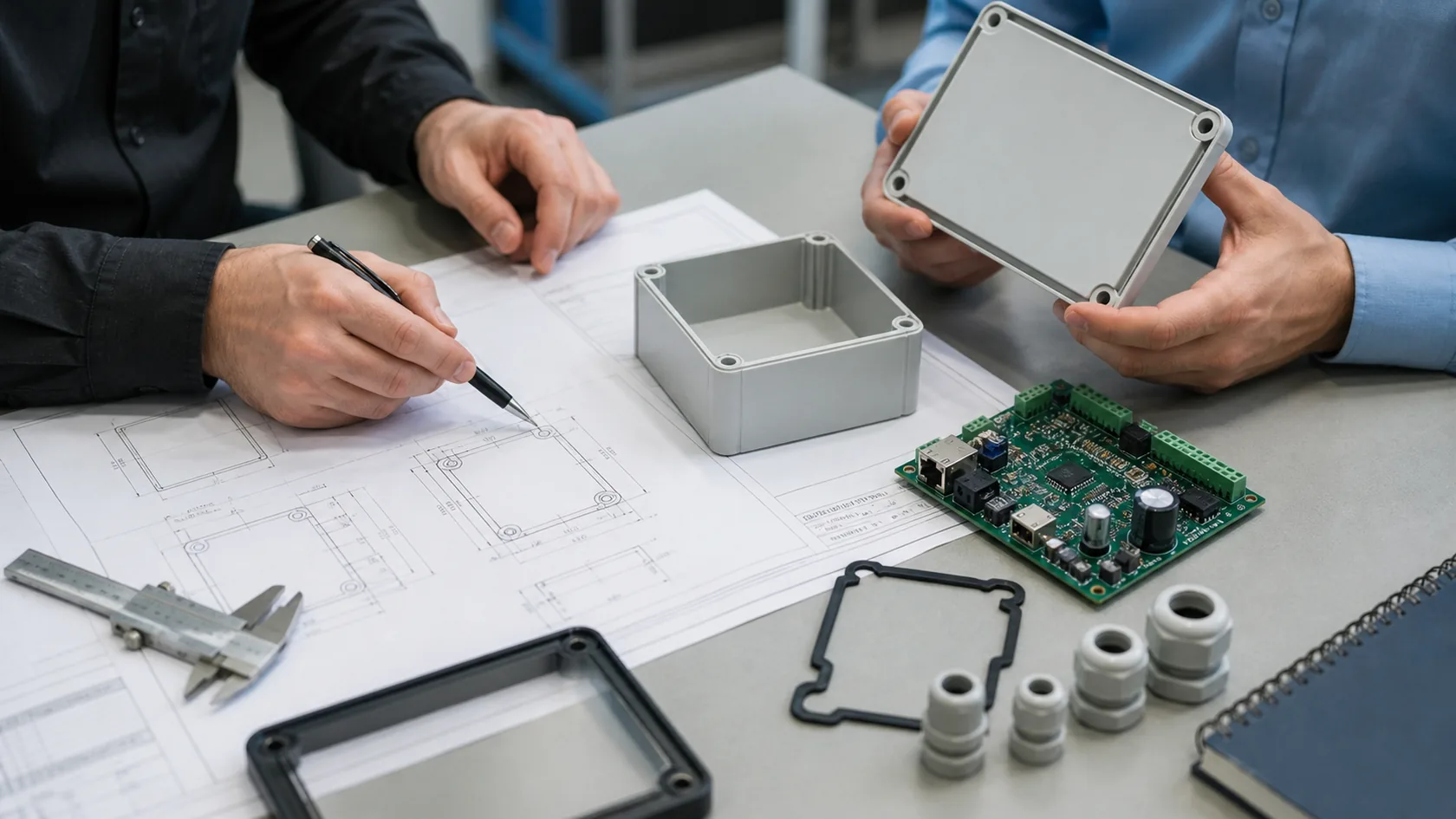
Choosing an electrical enclosure is not only a catalog choice. It is a small engineering decision with cost, production, and after-sales consequences.
I like to start with plain questions.
Start with the real working environment
Ask where the enclosure will work:
- Indoor or outdoor?
- Dry, wet, dusty, oily, coastal, chemical, or high UV?
- Hot, cold, or cycling between both?
- Rain only, or direct hose cleaning?
- Will people open the enclosure in the field?
These answers narrow the enclosure type quickly.
Match the enclosure to the internal components
The internal parts decide the space and structure.
| Internal part | Enclosure concern |
|---|---|
| PCB | Standoffs, ports, heat, ESD, assembly space |
| Power supply | Heat, wiring clearance, grounding |
| Terminals | Cable entry, service access, labeling |
| Display | Window sealing, user view angle, impact |
| Antenna | Plastic area, signal path, metal interference |
| Battery | Access, safety, ventilation, replacement |
For custom electronic enclosures, I always prefer to see the PCB, connector positions, and cable direction before finalizing the box design.
Check custom features before production
Custom features can change the enclosure type or material.
Check these items early:
- CNC holes and cutouts
- Cable glands and connector types
- Logo printing, engraving, or labels
- Surface finish
- Internal mounting bosses or brackets
- Gasket and seal design
- Packaging method
- MOQ and lead time
If the enclosure needs many precise openings, CNC aluminum may be better than a standard plastic box. If the project needs lower cost at volume, a molded plastic design may be better after the design is stable.
Balance cost, lead time, and failure risk
The cheapest enclosure is not always the lowest-cost choice. A wrong enclosure can create water leakage, cracked screw posts, poor heat dissipation, delayed assembly, or a product that feels cheap in the customer's hand.
At the same time, over-specifying also costs money. Stainless steel, high IP ratings, special coatings, and complex tooling all add cost. Sometimes they are needed. Sometimes they are just fear written into the purchase order.
I try to find the practical middle point: strong enough, clean enough, easy enough to assemble, and suitable for the real environment.
That is where a supplier can help before the design is locked.
Conclusion
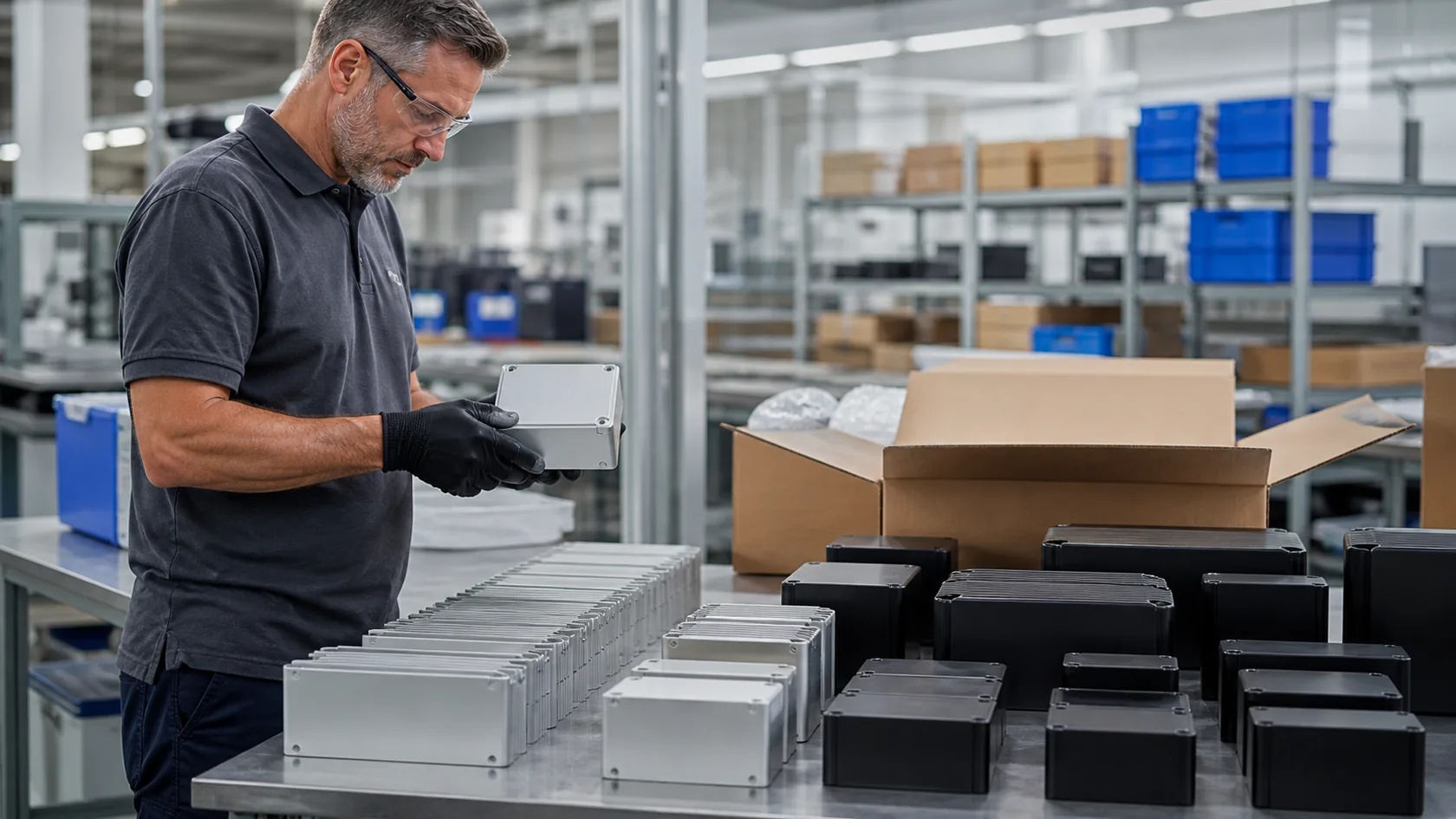
There are many types of electrical enclosures. You can classify them by function, material, installation style, and protection need.
By function, you may choose a junction box, terminal box, control enclosure, instrument case, operator box, or power distribution cabinet. By material, you may choose steel, stainless steel, aluminum, plastic, polycarbonate, ABS, or fiberglass. By installation style, you may choose wall-mount, floor-standing, pole-mounted, handheld, desktop, or rack-mounted designs. By protection need, you may choose indoor, outdoor, waterproof, dust-tight, washdown, or corrosion-resistant enclosures.
But in real sourcing, the best enclosure type is not chosen from one list. It is chosen from the whole project.
That is why I ask about the working environment, internal components, cable entry, heat, rating, material, surface finish, and assembly method before recommending a custom enclosure.
At MaidaTech, we make custom aluminum enclosures, plastic enclosures, sheet metal enclosures, and OEM/ODM electronic housings. If you already have a drawing, PCB layout, sample product, or only a project idea, we can help you compare enclosure types and choose a practical manufacturing direction.
A good enclosure should protect the electronics, fit the assembly process, look right for the market, and avoid problems after shipment. That is the kind of box worth making.