Skip to content
A custom enclosure looks simple when it is sitting on a desk.
It has a top cover.
It has a bottom body.
It may have holes, screws, vents, labels, or a nice logo on the surface.
But behind that simple box, there is always one hard question:
Which manufacturing process should we use?
This question decides more than the shape. It decides the tooling cost, sample speed, final price, surface quality, tolerance, and even whether the whole OEM project can move forward smoothly.
I have seen this many times in real enclosure projects. A buyer sends a 3D drawing and asks for a quote. The design looks clean. The idea is good. But when I check the wall thickness, internal ribs, surface finish, screw bosses, and quantity, I may already know the first process they imagined is not the best one.
Sometimes CNC machining is the fastest path.
Sometimes sheet metal is more practical.
Sometimes die casting makes sense only after the quantity becomes large enough.
Sometimes plastic injection molding looks cheap, but the mold cost surprises the buyer.
Sometimes aluminum extrusion is the quiet winner because the profile is simple and repeatable.
This is where I always slow down before quoting, because a wrong process can make a good design become expensive, slow, and difficult to control.
For OEM buyers, product engineers, and re-brand sellers, understanding enclosure manufacturing processes is not about becoming a factory technician. It is about making better project decisions before money is spent.
A small choice at the beginning can save weeks later.
What Are the Main Types of Enclosure Manufacturing Processes?
When I explain enclosure manufacturing to a new OEM buyer, I do not start with machines. I start with the project goal.
Do they need 5 samples?
Do they need 500 pieces?
Do they need 50,000 pieces?
Do they need a strong outdoor box?
Do they need a beautiful consumer product case?
Do they need fast testing first?
The manufacturing process should follow the project. It should not be chosen only because one process sounds more “advanced.”
The detail I often check first is whether the buyer needs flexibility or repeatability, because these two needs usually pull the project in different directions.
Below are the main enclosure manufacturing processes I often see in OEM projects.
CNC Machining
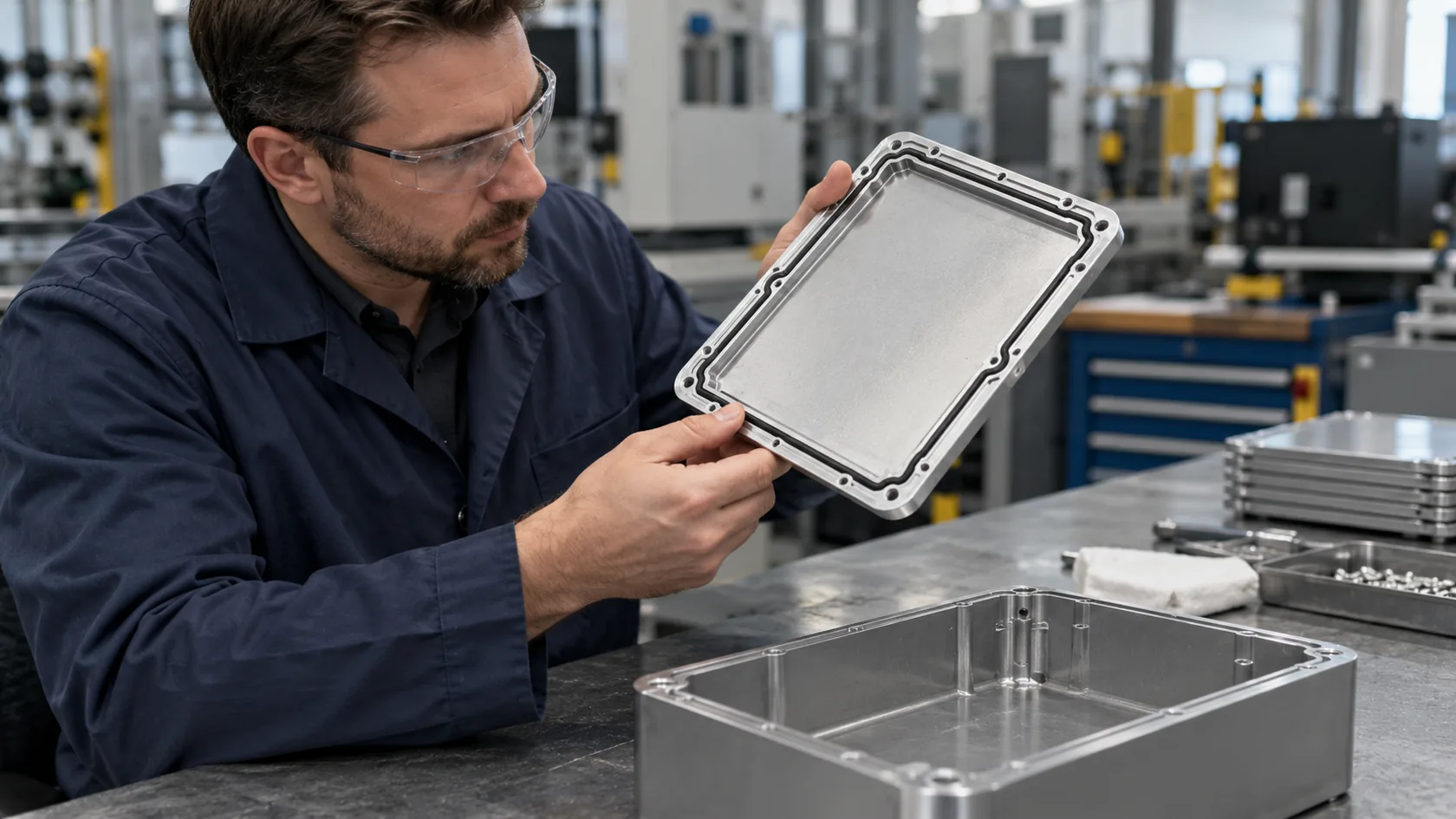
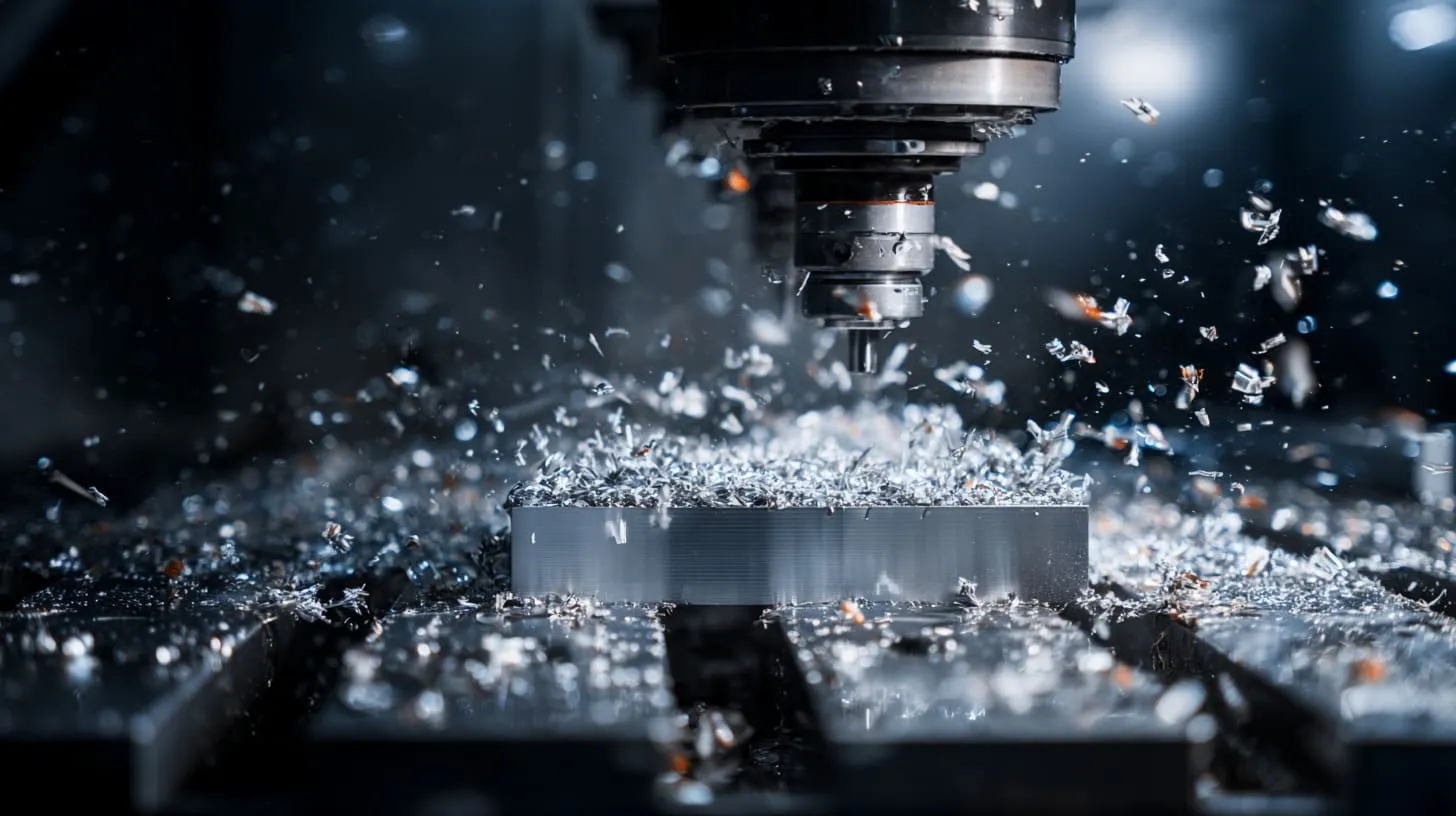
CNC machining is one of the most flexible methods for custom enclosures.
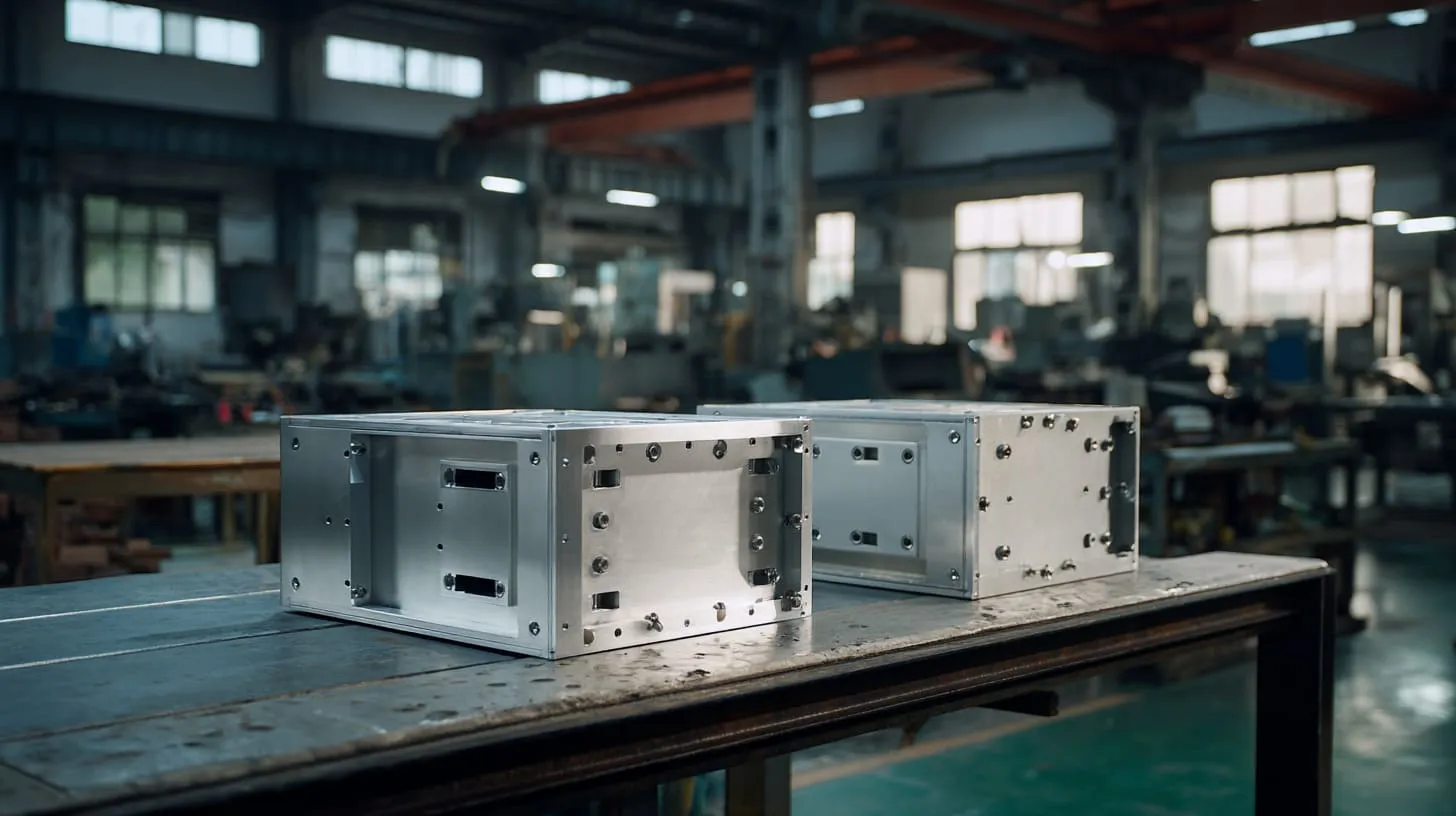
A CNC machine cuts material from a solid block, plate, or extrusion profile. For aluminum enclosures, it can machine holes, slots, steps, threads, pockets, logo areas, and other custom features.
For OEM prototype projects, CNC is very useful because it does not need expensive tooling. If a product engineer like David wants to test a new enclosure design before mass production, CNC machining is often the cleanest first step.
Where CNC Works Well
| Project Need | Why CNC Helps |
|---|---|
| Prototype samples | No mold is needed |
| Low-volume production | Flexible for small batches |
| Custom holes and cutouts | Easy to adjust by program |
| Aluminum enclosure projects | Good strength and clean surface |
| Engineering validation | Fast design changes are possible |
CNC also gives a solid feeling. When a buyer holds a CNC aluminum enclosure, the part often feels strong and precise. That feeling matters when the enclosure is used for industrial electronics, control devices, Raspberry Pi style boards, measuring equipment, or premium hardware.
But CNC is not magic.
It removes material. That means machining time and material waste can become expensive. If the quantity becomes large, the unit cost may stay too high.
Sheet Metal Fabrication
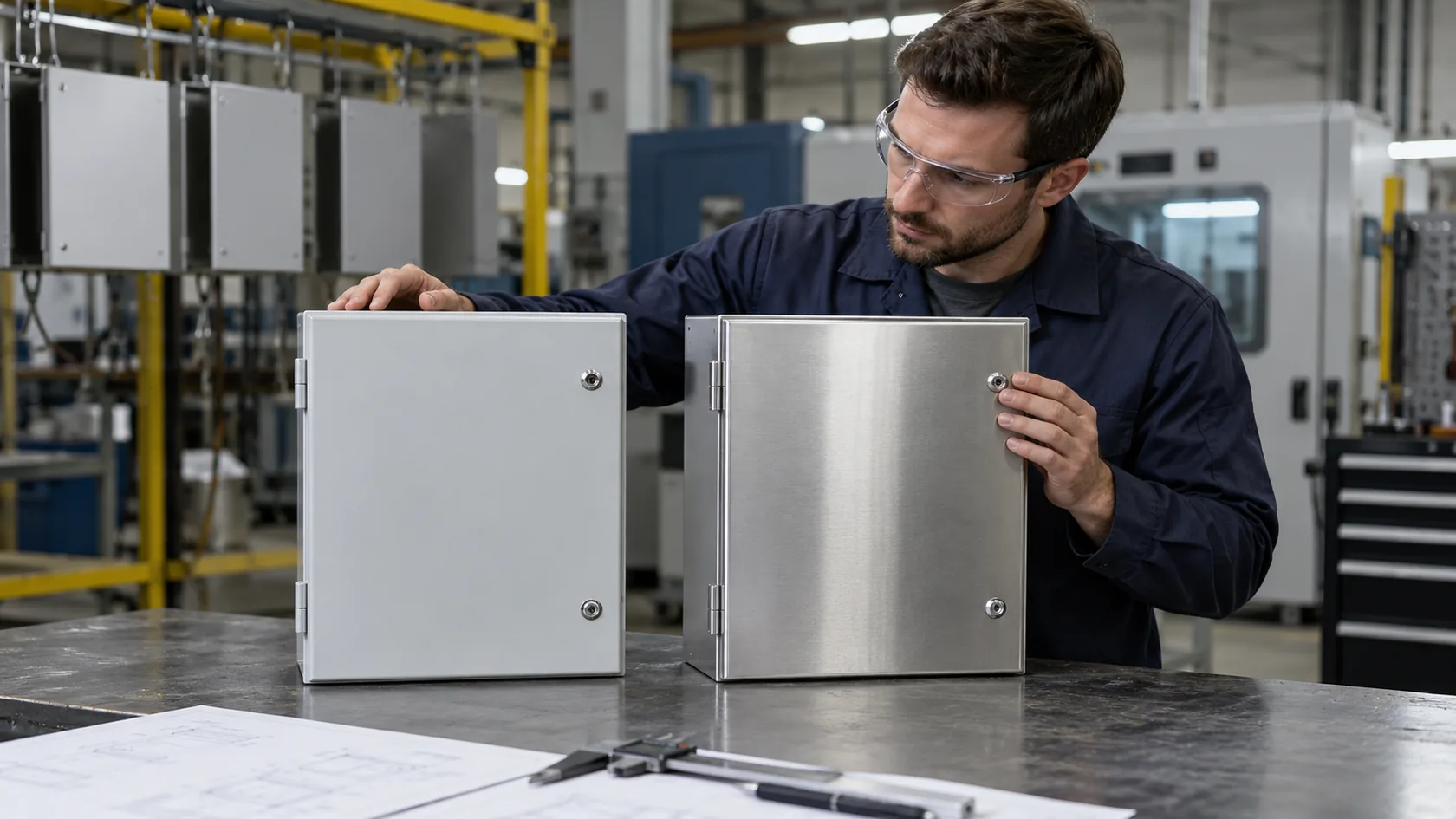
Sheet metal fabrication is very common for larger enclosures, control boxes, rack parts, electrical cabinets, and industrial housings.
The process usually includes:
- Laser cutting
- Punching
- Bending
- Welding
- Grinding
- Powder coating
- Assembly
Sheet metal starts flat. Then the factory cuts the shape and bends it into a box or cover.
This method is practical when the enclosure has a cabinet-like structure or when the buyer needs a strong metal box at a reasonable cost.
Common Sheet Metal Materials
| Material | Common Use | Main Advantage |
|---|---|---|
| Steel | Industrial cabinets, control boxes | Strong and cost-effective |
| Stainless steel | Outdoor, food, chemical areas | Better corrosion resistance |
| Aluminum sheet | Lightweight enclosures | Lower weight and good appearance |
| Galvanized steel | Electrical boxes | Better rust protection than plain steel |
Sheet metal is not always as “premium” as CNC aluminum, but it is often more sensible for medium and large enclosures.
For example, if a customer asks for a 500 mm wide control box, CNC machining it from solid aluminum would be painful for cost. Sheet metal can make the same basic structure in a more efficient way.
Die Casting
Die casting is used when the enclosure needs high-volume production and a stable shape.
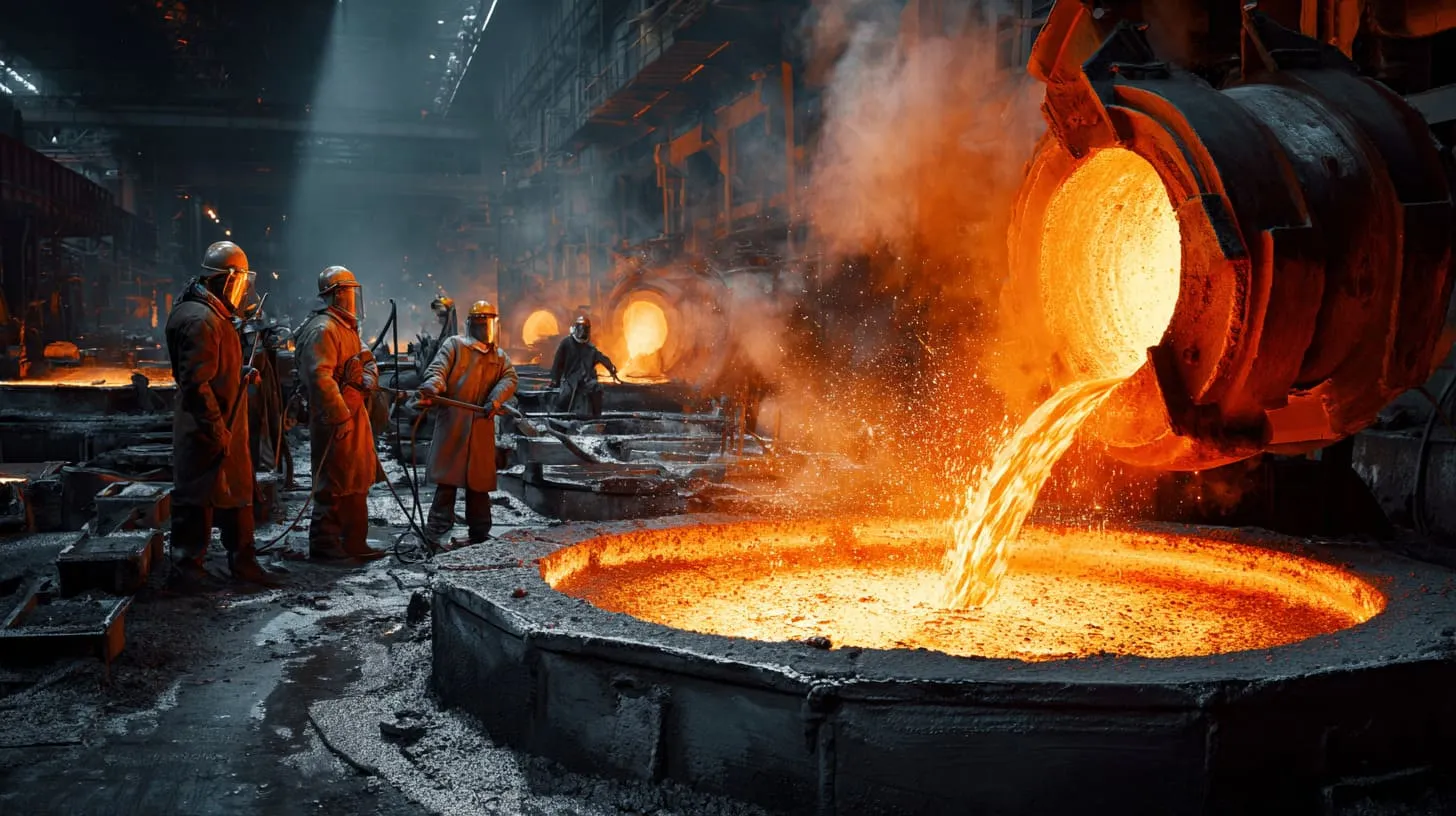
In aluminum die casting, molten aluminum is injected into a steel mold under high pressure. After cooling, the part comes out with a fixed shape. Then it may need trimming, machining, surface finishing, and inspection.
The biggest advantage is production speed after the mold is ready.
The biggest problem is also clear: the mold is expensive.
Die Casting Works Best When
| Condition | Why It Matters |
|---|---|
| Quantity is high | Mold cost can be spread across many parts |
| Design is stable | Mold changes are expensive |
| Shape is complex | Casting can form features CNC may machine slowly |
| Surface appearance matters | Die casting can create clean external shapes |
| Long-term supply is needed | Repeatability is strong after process control |
Die casting can reduce cost per piece, but only when the project volume is high enough.
I have seen buyers ask for die casting when they only need 200 pieces. Usually, I have to explain that the tooling cost may not make sense unless they plan future batches.
Plastic Injection Molding
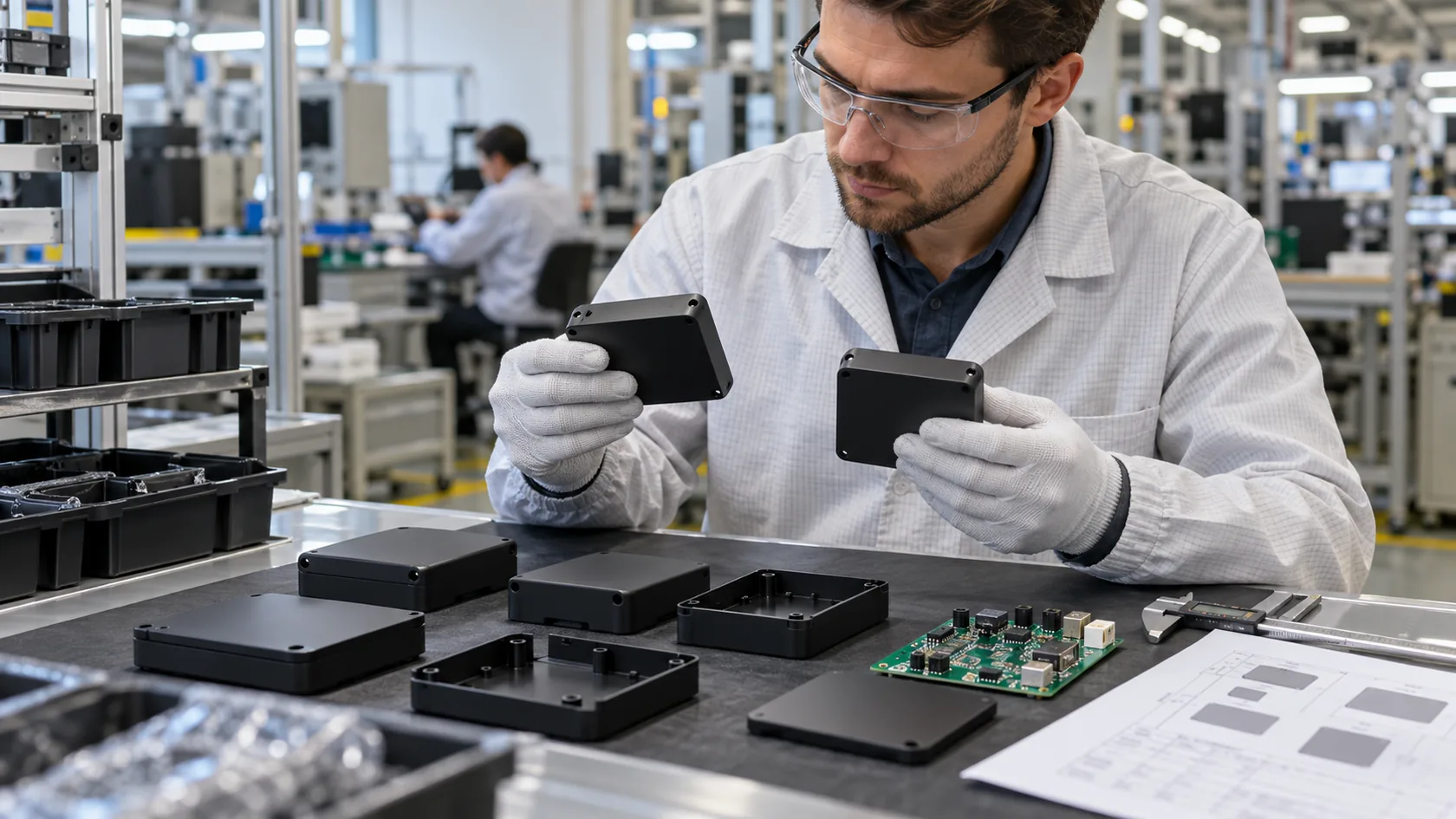
Plastic injection molding is one of the most common methods for plastic enclosures.
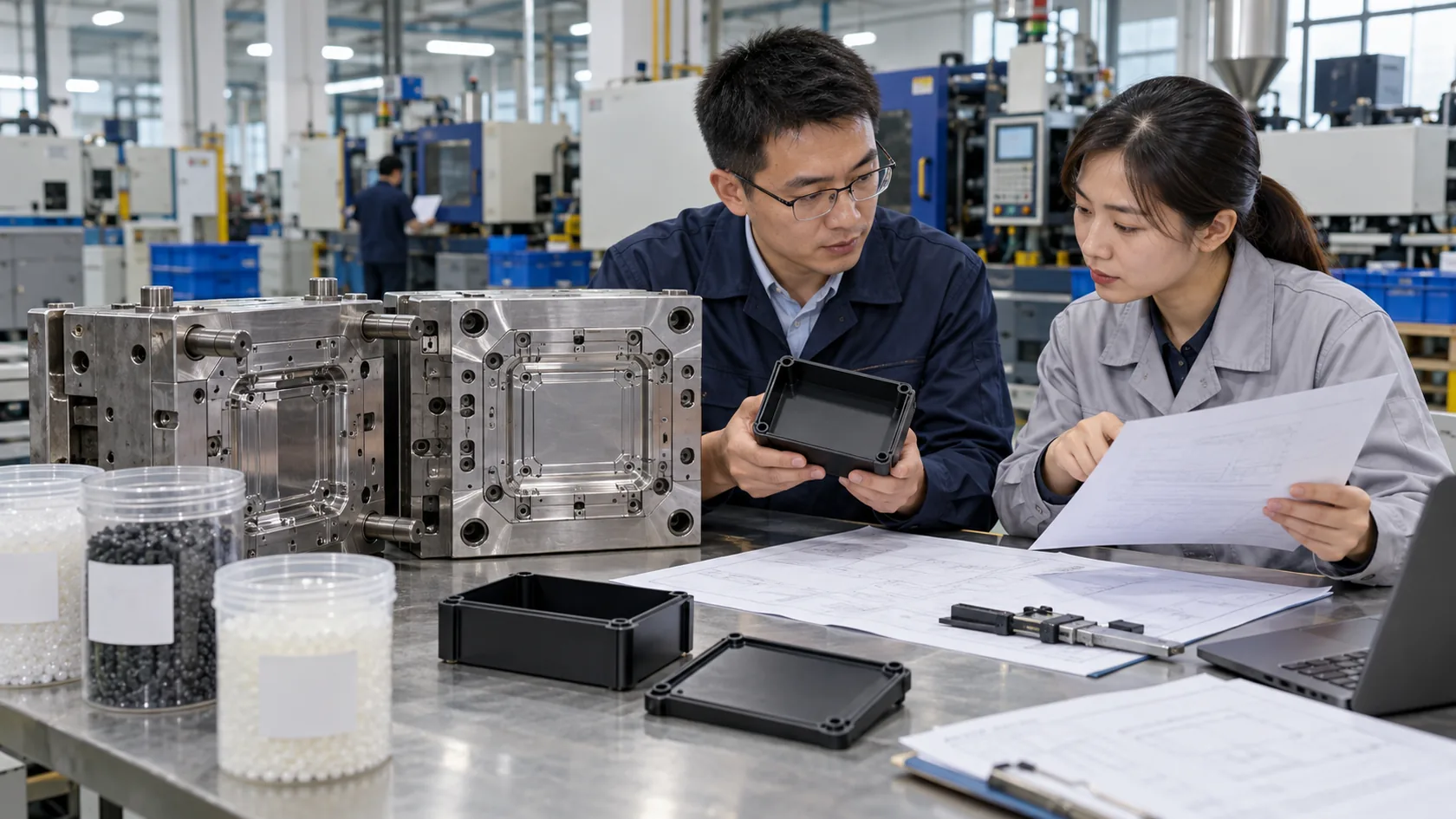
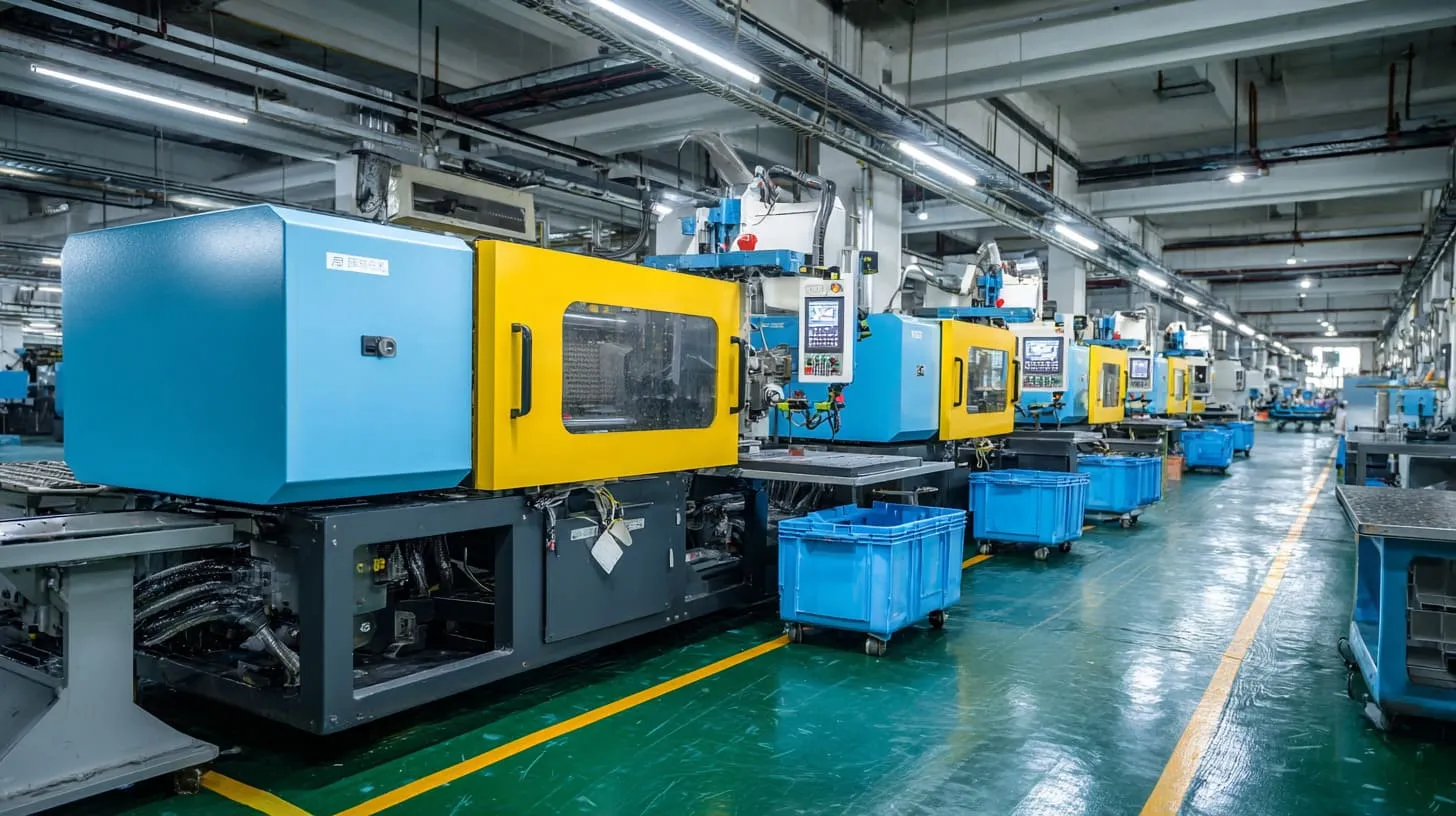
The factory heats plastic material and injects it into a mold. After cooling, the enclosure part comes out. This method can make plastic cases with clips, ribs, bosses, holes, textures, and brand details.
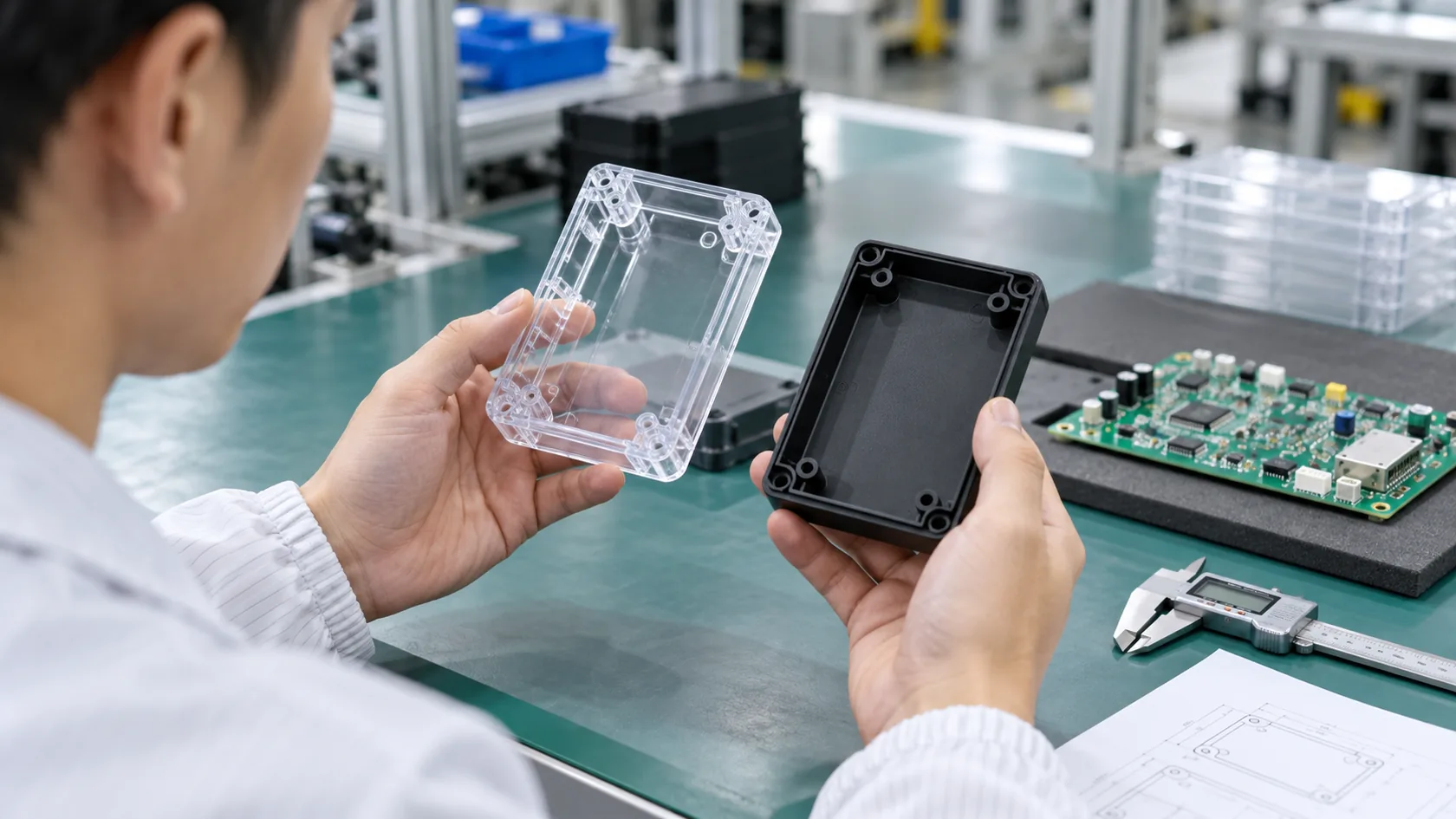
ABS and polycarbonate are common plastic materials for enclosures.
ABS vs Polycarbonate in Enclosure Projects
| Material | Better For | Main Concern |
|---|---|---|
| ABS | Indoor products, cost-sensitive cases | Lower heat and impact resistance than PC |
| Polycarbonate | Outdoor, impact-resistant, stronger cases | Higher material cost |
| Flame-retardant ABS/PC | Electrical products | Material grade must be confirmed |
| PC+ABS | Balanced strength and processability | Need correct grade selection |
Plastic injection molding is powerful for mass production. It can reduce unit cost a lot after the mold is paid for.
But the mold stage needs careful design.
Wall thickness, draft angle, ribs, snap-fit structures, shrinkage, and mold flow all matter. A beautiful 3D model may not be ready for molding. A factory engineer still needs to check whether it can be produced smoothly.
Extrusion Manufacturing
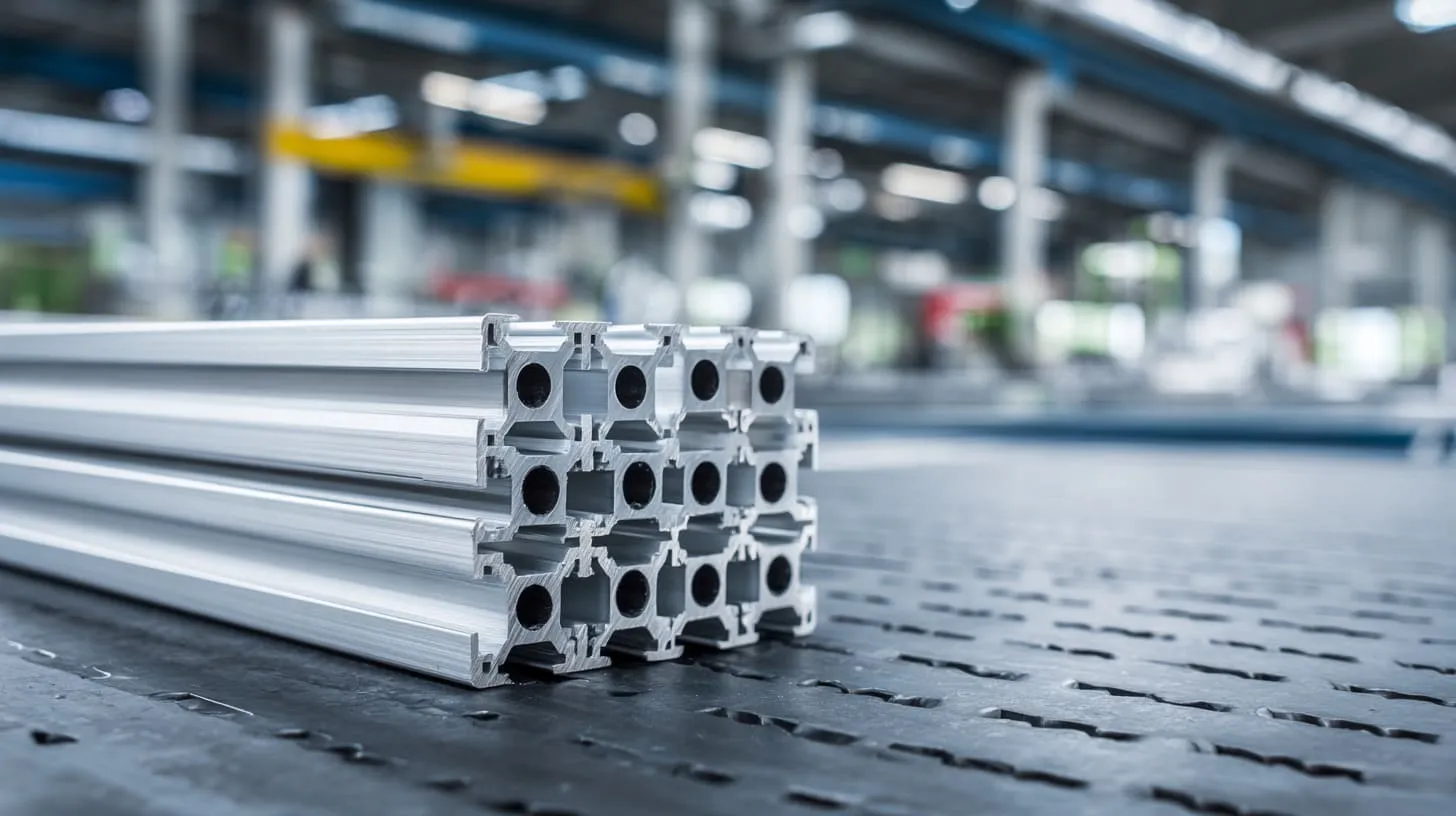
Aluminum extrusion is often used for long enclosure profiles.
The factory pushes heated aluminum through a die. The aluminum comes out with the same cross-section shape. Then it is cut to length and machined as needed.
This process is very common for electronic instrument enclosures, small industrial control boxes, LED housings, and some Raspberry Pi style cases.
Why Extrusion Can Be Smart
| Benefit | Explanation |
|---|---|
| Good for repeat profiles | One profile can support many lengths |
| Lower machining work | Main shape is already formed |
| Clean aluminum appearance | Anodizing works well |
| Flexible length | Same profile can be cut shorter or longer |
| Good heat transfer | Aluminum body helps heat move out |
Extrusion is not suitable for every shape. It works best when the enclosure has a consistent cross-section.
If the design is like a long channel, tube, or rail-type box, extrusion can be very efficient.
The next question is not “Which process is best?” The better question is “Which process is best for this project at this stage?”
How Do OEM Buyers Choose the Right Enclosure Manufacturing Process?
Many buyers want a quick answer.
“Which process is cheapest?”
I understand why they ask that. Cost matters. But in enclosure manufacturing, the cheapest process on paper may become expensive after changes, delays, rework, and failed samples.
The way I judge a process is not by unit price alone, because I also look at quantity, material, tolerance, design risk, and how likely the buyer will change the design after the first sample.
Production Quantity Considerations
Quantity is usually the first big filter.
A project that needs 10 pieces should not be judged like a project that needs 100,000 pieces. The tooling logic is totally different.
Process Choice by Quantity
| Quantity Range | Common Process Choice | Why |
|---|---|---|
| 1-20 pieces | CNC machining, 3D printing for checking, simple sheet metal | Fast and flexible |
| 20-500 pieces | CNC, sheet metal, extrusion with machining | Lower tooling pressure |
| 500-5,000 pieces | Sheet metal, extrusion, small molds if design is stable | Balance between cost and scale |
| 5,000+ pieces | Die casting, injection molding, stamping | Tooling cost can be spread out |
| Long-term repeated orders | Die casting, molding, extrusion | Stable repeat production |
For a prototype, paying for a large mold too early can trap the buyer. If the design changes later, the mold may need modification. That can be expensive and slow.
For mass production, avoiding tooling forever can also be a mistake. CNC may be flexible, but the unit cost may stay too high.
Material Requirements
Material is not just a purchasing detail. It affects the process.
Aluminum can be CNC machined, extruded, die cast, or made from sheet. Steel is often used in sheet metal. Plastic is usually injection molded for volume production.
Material and Process Matching
| Material Need | Suitable Process | Typical Reason |
|---|---|---|
| Strong aluminum body | CNC, extrusion, die casting | Good strength and appearance |
| Large metal cabinet | Sheet metal | Efficient for big box structures |
| Lightweight plastic case | Injection molding | Low unit cost at volume |
| Outdoor corrosion resistance | Stainless steel, coated aluminum, PC plastic | Material and finish must work together |
| Heat dissipation | Aluminum CNC, extrusion, die casting | Metal transfers heat better |
| Electrical insulation | Plastic injection molding | Plastic does not conduct electricity |
A buyer may ask for aluminum because it “feels premium.” That can be true. But if the product needs insulation, plastic may be safer. If the device creates heat, aluminum may help. If the enclosure sits outdoors, surface finish and sealing become as important as base material.
Design Complexity
Some designs look simple on screen but are hard to manufacture.
Thin walls, deep pockets, sharp internal corners, undercuts, hidden clips, and special textures can all affect process choice.
Design Features That Influence Process Choice
| Design Feature | Process Impact |
|---|---|
| Deep internal cavity | CNC may take more time |
| Snap-fit clips | Plastic molding may work better |
| Large flat panels | Sheet metal may be efficient |
| Rounded consumer shape | Die casting or injection molding may fit |
| Long uniform body | Extrusion may be smart |
| Many custom holes | CNC or secondary machining may be needed |
This is where design for manufacturability becomes important.
I do not like when a factory only says “yes” to every drawing. A good supplier should ask questions before production. Small design changes can make the enclosure easier to produce and more stable in real use.
Lead Time Expectations
Lead time is not only production time. It includes design review, sample making, testing, revisions, tooling, surface finishing, packaging, and shipping.
Typical Lead Time Logic
| Process | Speed Before Production | Speed After Setup |
|---|---|---|
| CNC machining | Fast | Medium |
| Sheet metal | Medium-fast | Medium-fast |
| Die casting | Slow because of mold | Fast after mold |
| Injection molding | Slow because of mold | Fast after mold |
| Extrusion | Medium because of profile die | Fast after profile ready |
A buyer like John may be building a new product and may need samples quickly. In that case, CNC or sheet metal may help him test the project faster.
A buyer like Jackson may already have a stable product and needs repeat orders. In that case, tooling can be more acceptable because future cost can go down.
The process choice is not only technical. It is also about project timing. And timing can be cruel when a customer has already promised a launch date.
Why Is CNC Machining Popular for OEM Prototype Enclosures?
CNC machining is popular because it gives buyers something very valuable at the beginning of a project: freedom.
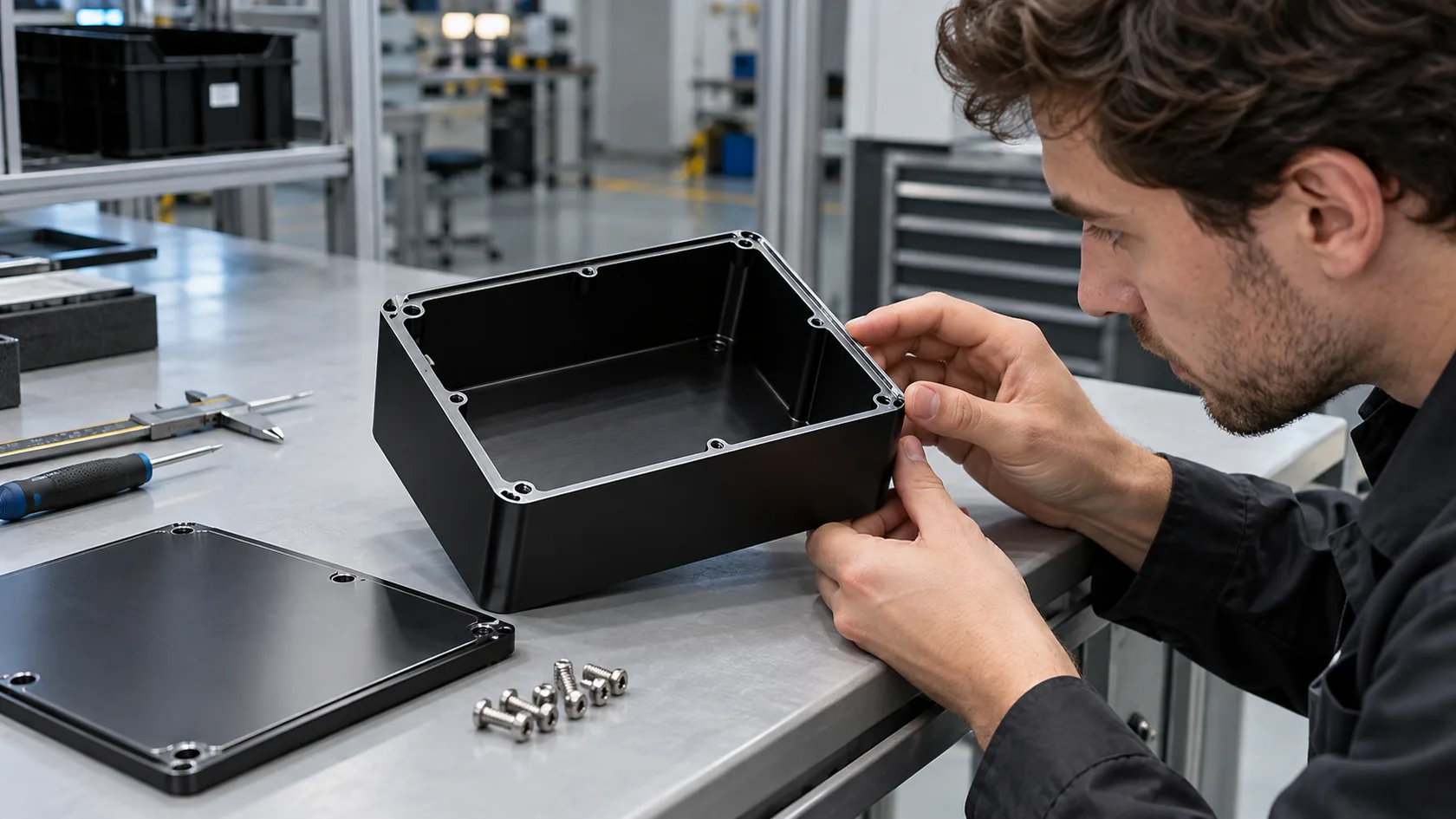
A product engineer can test an idea without paying for a mold first. A small brand owner can check the enclosure shape before committing to mass production. A project buyer can hold a real metal sample and see whether the ports, screw holes, and PCB position are correct.
When I quote CNC prototypes, I pay close attention to design uncertainty, because CNC is often worth the higher unit cost when the buyer still needs room to change the enclosure.
Fast Prototype Development
CNC does not need a full production mold. That is a big advantage.
If the buyer sends a 3D file and 2D drawing, the factory can review the structure, program the machine, prepare material, and make samples.
This is very useful for:
- New electronic device cases
- Raspberry Pi style custom enclosures
- Aluminum control boxes
- Sensor housings
- Communication device shells
- Industrial testing equipment covers
Why CNC Helps Early-Stage OEM Projects
| Need | CNC Benefit |
|---|---|
| Design testing | Samples can be made before tooling |
| Fit checking | PCB, ports, and screws can be tested |
| Fast revision | Drawing changes are easier |
| Low quantity | No expensive mold investment |
| Premium sample feel | Aluminum prototype looks professional |
A CNC prototype also helps communication. It turns a drawing into a real object. When the buyer and factory hold the same sample, both sides can discuss problems more clearly.
A hole may be too close to the edge.
A screw may be hard to reach.
A cover may be difficult to assemble.
A logo position may look awkward.
These problems are much easier to see on a real sample.
High Precision and Flexibility
CNC machining can achieve good precision. It can also create many custom details.
For OEM enclosures, this matters because the enclosure often needs to match other parts.
A PCB may already be fixed.
A connector may already have a position.
A screen window may need accurate alignment.
A heat sink may need close contact with a chip.
A logo may need to sit in a clean area.
CNC gives good control for these details.
Common CNC Custom Features
| Feature | Why Buyers Need It |
|---|---|
| USB, HDMI, or cable holes | Match electronic ports |
| Threaded holes | Support screws and assembly |
| Internal slots | Hold PCB or panels |
| Heat sink surfaces | Improve heat contact |
| Logo engraving | Support branding |
| Counterbore holes | Make screw heads flush |
CNC also allows small changes between batches. This is useful when the buyer has several versions of the same enclosure.
For example, one enclosure may need a USB-C hole. Another may need Ethernet. Another may need no hole on that side. CNC can support these differences without changing a mold.
Limitations of CNC Manufacturing
CNC is flexible, but it is not always cheap.
The machine needs time to cut the material. More complex parts need more machining time. Deep cavities, many holes, tight tolerances, and fine surface details all increase cost.
CNC Limitations Buyers Should Know
| Limitation | Real Project Impact |
|---|---|
| Higher unit cost | Not ideal for very large quantities |
| Material waste | Solid block machining can waste aluminum |
| Machining marks | Surface finishing may be needed |
| Longer time for complex parts | Deep pockets and many features slow production |
| Sharp internal corner limits | Cutting tools have radius limits |
One small thing many buyers overlook is internal corner radius. A CNC tool is round. It cannot cut a perfect sharp internal corner. If a buyer designs a square internal pocket with sharp corners, the factory may need to add a radius or use extra work.
This sounds small.
But small details are where real manufacturing problems hide.
CNC is like a good test driver. It helps you learn fast. But when the road becomes long and the order becomes large, you may need a different vehicle.
When Is Sheet Metal Fabrication Better Than CNC Machining?
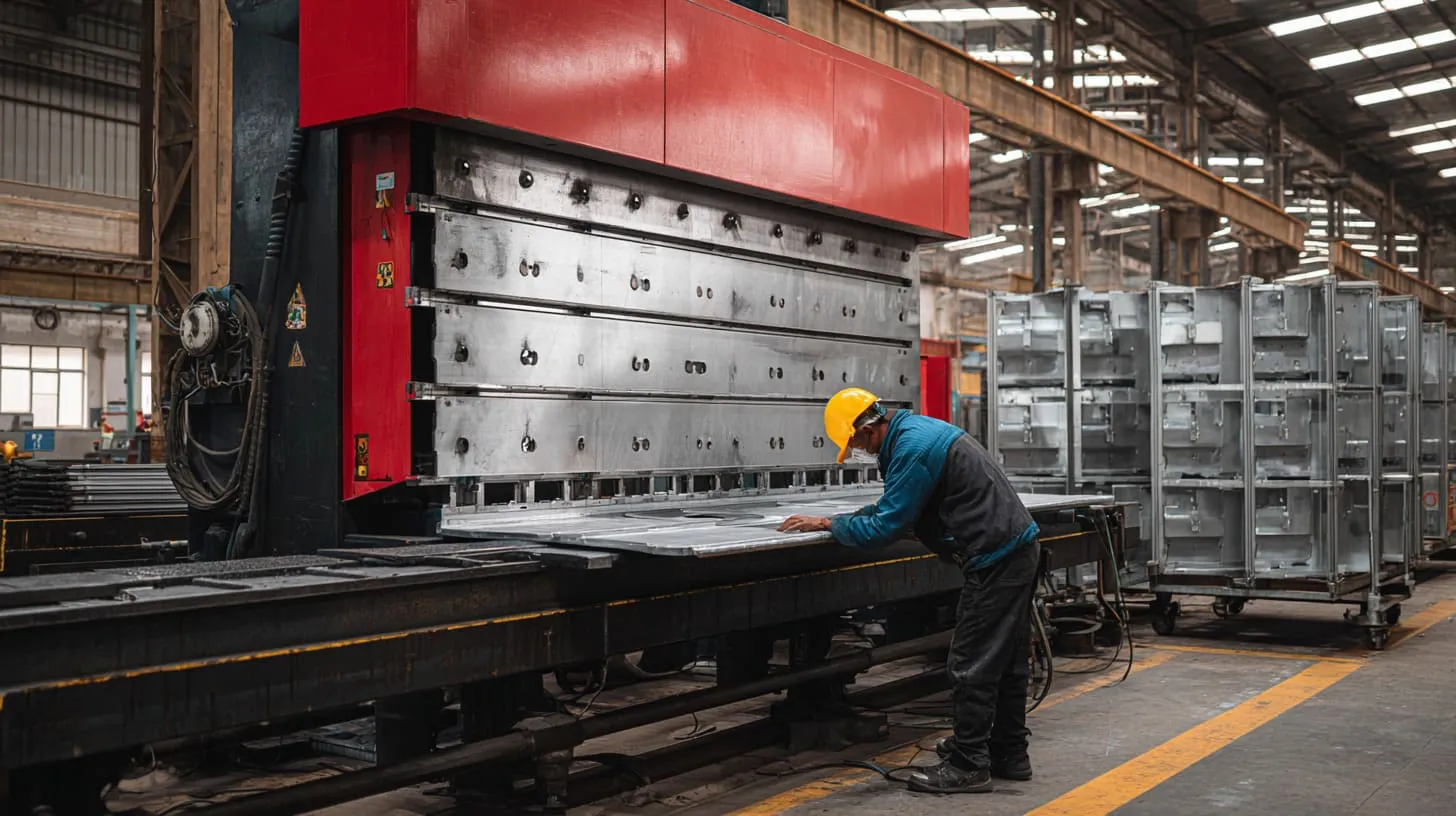
Sheet metal fabrication is often better when the enclosure is larger, box-like, or cost-sensitive.
I like sheet metal when the design does not need to be carved from a solid aluminum block. It feels practical. It uses material efficiently. It can be strong. It can be scaled better than CNC for many industrial enclosure projects.
When I see a large enclosure drawing, I usually check whether the structure can be bent from sheet first, because machining a big box from solid metal often wastes money before it solves any real problem.
Cost Advantages for Medium-Size Enclosures
Sheet metal starts as flat material. The factory cuts and bends it. This means less material is removed compared with CNC machining.
For many medium-size enclosures, this is a real cost advantage.
CNC vs Sheet Metal for Larger Enclosures
| Factor | CNC Machining | Sheet Metal Fabrication |
|---|---|---|
| Material use | More waste for big cavities | Better material efficiency |
| Large box cost | Usually high | Usually more reasonable |
| Tooling need | Low | Low to medium |
| Design flexibility | High | Medium-high |
| Best for | Solid precision parts | Cabinets, boxes, panels |
A sheet metal enclosure can also be easier to modify at the early stage. Hole positions, bending lines, and panel layout can often be adjusted without a full mold.
For buyers who need custom industrial enclosures with logos, colors, vents, and mounting holes, sheet metal can be a very balanced choice.
Structural Advantages
Sheet metal can be strong when designed well.
The bending process adds stiffness. Flanges, ribs, brackets, and welded corners can improve strength. This makes sheet metal useful for industrial projects.
Common Sheet Metal Enclosure Applications
| Application | Why Sheet Metal Works |
|---|---|
| Electrical control boxes | Strong and practical |
| Rack-mounted equipment | Easy to form panels and covers |
| Power supply cases | Good for ventilation and grounding |
| Outdoor cabinets | Can use coating and sealing |
| Machine control panels | Easy to customize holes and layouts |
Sheet metal also supports larger sizes better than CNC in many cases. A big cabinet does not need to be a heavy solid block. It needs to be strong enough, easy to assemble, and reasonable to ship.
That is a different way of thinking.
Common Sheet Metal Processes
Sheet metal manufacturing includes several steps. Each step can affect quality.
Key Sheet Metal Steps
| Process | Purpose | Risk If Poorly Controlled |
|---|---|---|
| Laser cutting | Cut flat shape and holes | Burrs, wrong hole size |
| CNC bending | Form the box shape | Angle errors, size mismatch |
| Welding | Join parts | Deformation, rough surface |
| Grinding | Smooth welded areas | Uneven finish |
| Powder coating | Protect and color surface | Orange peel, scratches, poor adhesion |
| Assembly | Install screws, seals, parts | Misalignment, loose fit |
Bending is especially important.
If the bend allowance is not calculated well, the final size may be wrong. A small error on one bend may not look serious. But after several bends, the whole enclosure can become difficult to assemble.
I sometimes describe sheet metal like folding paper, but with consequences. Once the bend is wrong, everything after it feels slightly uncomfortable.
How Does Die Casting Reduce OEM Enclosure Costs?
Die casting can reduce enclosure costs when the quantity is high and the design is stable.
The word “stable” is important.
If the buyer is still changing port locations, wall thickness, screw posts, and appearance, die casting may be too early. The mold is expensive. Mold changes are not as easy as editing a CNC program.
Before I recommend die casting, I want to know whether the buyer has real repeat demand, because a low unit price means little if the mold cost cannot be recovered.
High-Speed Mass Production
After the mold is completed, die casting can produce parts quickly.
The mold forms the basic enclosure shape. Then the factory may do secondary machining for precision holes, threads, flat surfaces, or sealing areas.
Why Die Casting Can Lower Unit Cost
| Factor | Cost Benefit |
|---|---|
| Fast cycle time | More parts can be made per day |
| Stable shape | Less manual forming work |
| Lower machining need | Some features are formed directly |
| Repeatability | Better consistency across batches |
| Scale advantage | Tooling cost spreads over many pieces |
This is why die casting is common in larger OEM projects. It is not the cheapest at the start, but it can become cost-effective over time.
For example, if a buyer needs 20,000 aluminum enclosures every year, die casting may make strong sense. If they need 200 pieces only, it may not.
Better Surface Finish and Appearance
Die casting can create smooth external shapes. It can also support curves, rounded corners, and integrated design features.
This is useful for consumer electronics, communication devices, lighting housings, and branded aluminum cases.
Appearance Advantages
| Feature | Why It Helps |
|---|---|
| Rounded corners | Product looks more finished |
| Integrated ribs | Better strength without many added parts |
| Logo area | Branding can be planned into the body |
| Thin but strong walls | Good balance of weight and strength |
| Consistent shape | Better repeat appearance |
But die casting surfaces still need finishing. Powder coating, painting, polishing, or machining may be needed depending on the final look.
A buyer may think the part comes out of the mold perfect. In reality, casting marks, parting lines, gates, and small defects may need extra treatment.
Die Casting Challenges
Die casting has real challenges.
The mold cost is high. The design must be checked carefully before tooling. Some features are hard to cast. Porosity may happen. Tolerance is not the same as CNC machining.
Common Die Casting Risks
| Risk | Why It Matters |
|---|---|
| Expensive mold | Wrong design means expensive changes |
| Porosity | May affect strength or sealing |
| Tolerance limits | Precision areas may need machining |
| Draft angle need | Vertical walls may need adjustment |
| Surface defects | Finishing process must be planned |
| Tooling time | Project start is slower |
Porosity is one hidden issue buyers do not always think about. A die cast part may look fine outside, but small internal air pockets can affect machining, sealing, or strength.
This does not mean die casting is bad. It means the design and process need control.
Die casting is a strong tool, but it behaves badly when buyers use it too early.
Why Do Many OEM Projects Use Plastic Injection Molding?
Plastic injection molding is common because many OEM products need lightweight, insulated, and cost-effective enclosures.
Plastic also gives designers more freedom for internal structures. Snap fits, clips, ribs, screw bosses, labels, textures, and curved shapes can be built into the mold.
I become careful when a buyer says “plastic is cheap,” because plastic only becomes cheap after the mold, material grade, structure, and quantity make sense together.
Advantages of Plastic Enclosures
Plastic enclosures are used in many electronic products because they are light and easy to shape.
They can also provide electrical insulation. This matters for some electrical and electronic devices.
Main Advantages of Plastic Enclosures
| Advantage | Real Project Value |
|---|---|
| Lightweight | Lower shipping and product weight |
| Electrical insulation | Safer for many electronics |
| Lower unit cost at volume | Good for mass production |
| Design freedom | Clips, ribs, bosses can be molded |
| Color options | Material or painting options are available |
| Texture options | Surface can look more finished |
Plastic is also useful when the product needs a soft consumer appearance. A small handheld device may not need a heavy aluminum case. It may need a smooth plastic shell that feels comfortable in the hand.
But plastic must match the environment.
Indoor plastic is not the same as outdoor plastic. A low-cost ABS case may work well indoors, but it may not be safe for long outdoor exposure without UV protection.
Common Plastic Materials
ABS and polycarbonate are two common enclosure plastics. They are not the same.
Common Plastic Choices
| Material | Strength | Cost | Common Use |
|---|---|---|---|
| ABS | Medium | Lower | Indoor electronics, cost-sensitive enclosures |
| Polycarbonate | High | Higher | Impact-resistant and outdoor enclosures |
| PC+ABS | Medium-high | Medium-high | Balanced enclosure applications |
| Flame-retardant ABS | Medium | Medium | Electrical products needing flame rating |
| Flame-retardant PC | High | Higher | Higher-performance electrical cases |
Material grade matters a lot.
Two ABS materials may not perform the same. Two polycarbonate grades may also be different. Flame rating, UV resistance, heat resistance, color, surface texture, and impact strength must be confirmed before production.
This is why I do not like vague material descriptions like “good plastic.” Good for what? Heat? Sunlight? Dropping? Fire rating? Outdoor rain? Chemical exposure?
A clear material requirement saves trouble later.
Injection Mold Design Factors
Plastic injection molding needs careful design.
A 3D model can look beautiful, but the mold needs practical details.
Important Mold Design Points
| Design Factor | Why It Matters |
|---|---|
| Wall thickness | Uneven walls can cause sink marks or warping |
| Draft angle | Parts need to release from the mold |
| Ribs | Add strength without thick walls |
| Screw bosses | Support assembly screws |
| Snap fits | Reduce screws but need testing |
| Shrinkage | Final size changes after cooling |
| Gate position | Affects surface and material flow |
| Ejector marks | May appear on certain surfaces |
Wall thickness is one of the easiest places to make a mistake.
If the wall is too thick, the part may shrink, sink, or warp. If it is too thin, the part may be weak or hard to fill. The best wall thickness depends on material and product size.
Snap-fit structures also need care. A snap that works in one plastic may break in another. A clip may feel good in the sample but fail after repeated assembly.
Plastic molding can make beautiful parts. But it needs respect. It is not just “make a mold and inject plastic.”
What Surface Finishing Processes Are Used for OEM Enclosures?
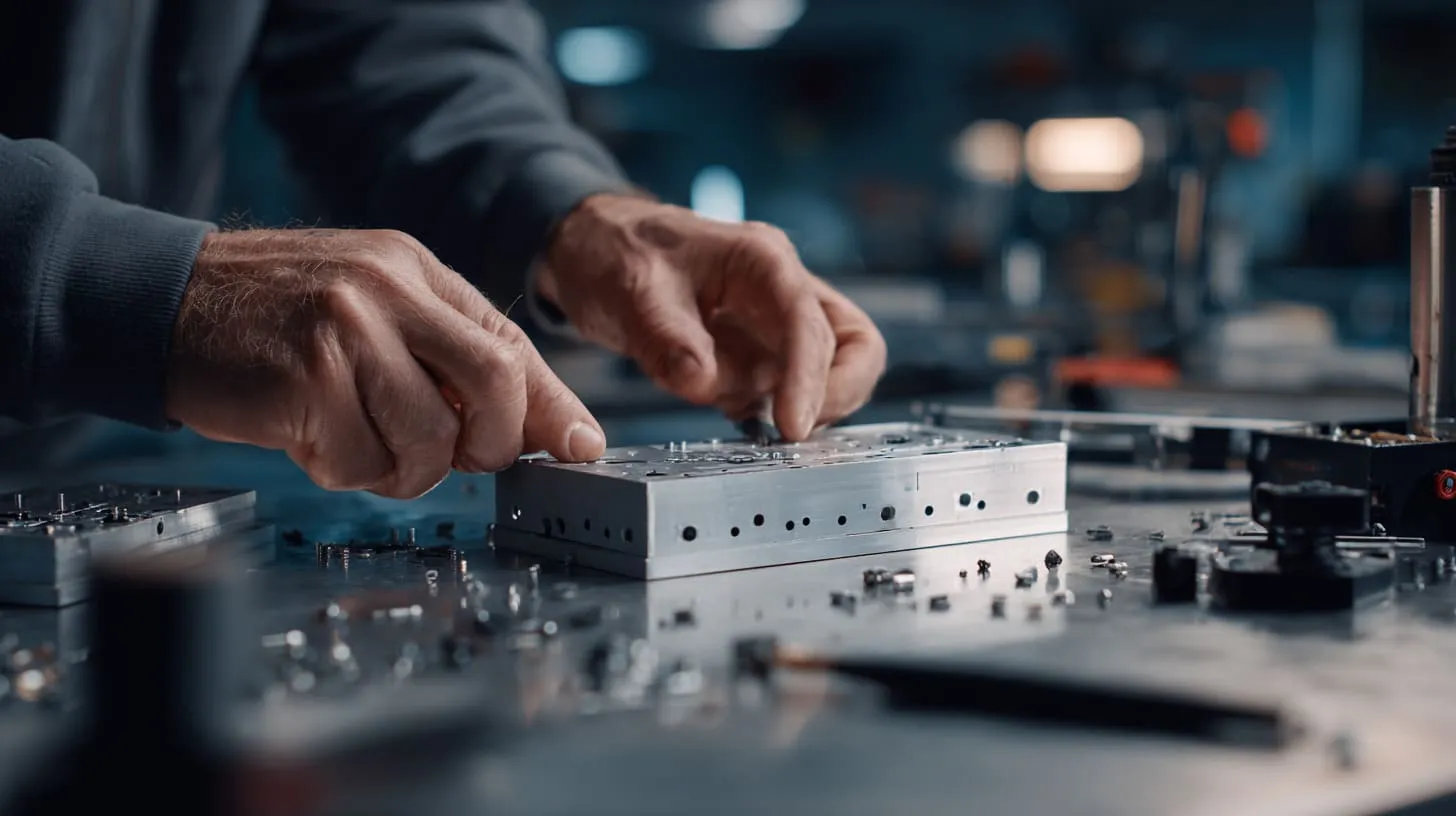
Surface finishing is where the enclosure starts to speak.
Before finishing, it is only a functional part. After finishing, it becomes part of the product identity.
For OEM buyers and re-brand sellers, surface finish affects customer trust. A scratch, uneven color, weak logo, or rough coating can make a good enclosure feel cheap.
When I review surface finish requirements, I think about how the end user will touch, see, clean, and judge the product, because the surface is often the first quality signal they notice.
Anodizing for Aluminum Enclosures
Anodizing is common for aluminum enclosures.
It creates a protective oxide layer on the aluminum surface. It can improve corrosion resistance and appearance. It can also support different colors.
Anodizing Benefits
| Benefit | Why It Helps |
|---|---|
| Better corrosion resistance | Protects aluminum surface |
| Clean metal appearance | Keeps aluminum texture visible |
| Color options | Black, silver, red, blue, and more |
| Better wear resistance | Surface becomes harder |
| Good for engraving | Laser marking can look clean |
Anodizing is often used for CNC aluminum enclosures and extrusion enclosures. It gives a premium look without hiding the metal feeling.
But anodizing also has limits.
Different aluminum alloys may anodize differently. Large batches may have slight color differences. Sharp edges may show different color depth. Surface scratches before anodizing may still show after anodizing.
So if the buyer needs a perfect cosmetic surface, the factory must control machining, polishing, cleaning, and packaging together.
Powder Coating
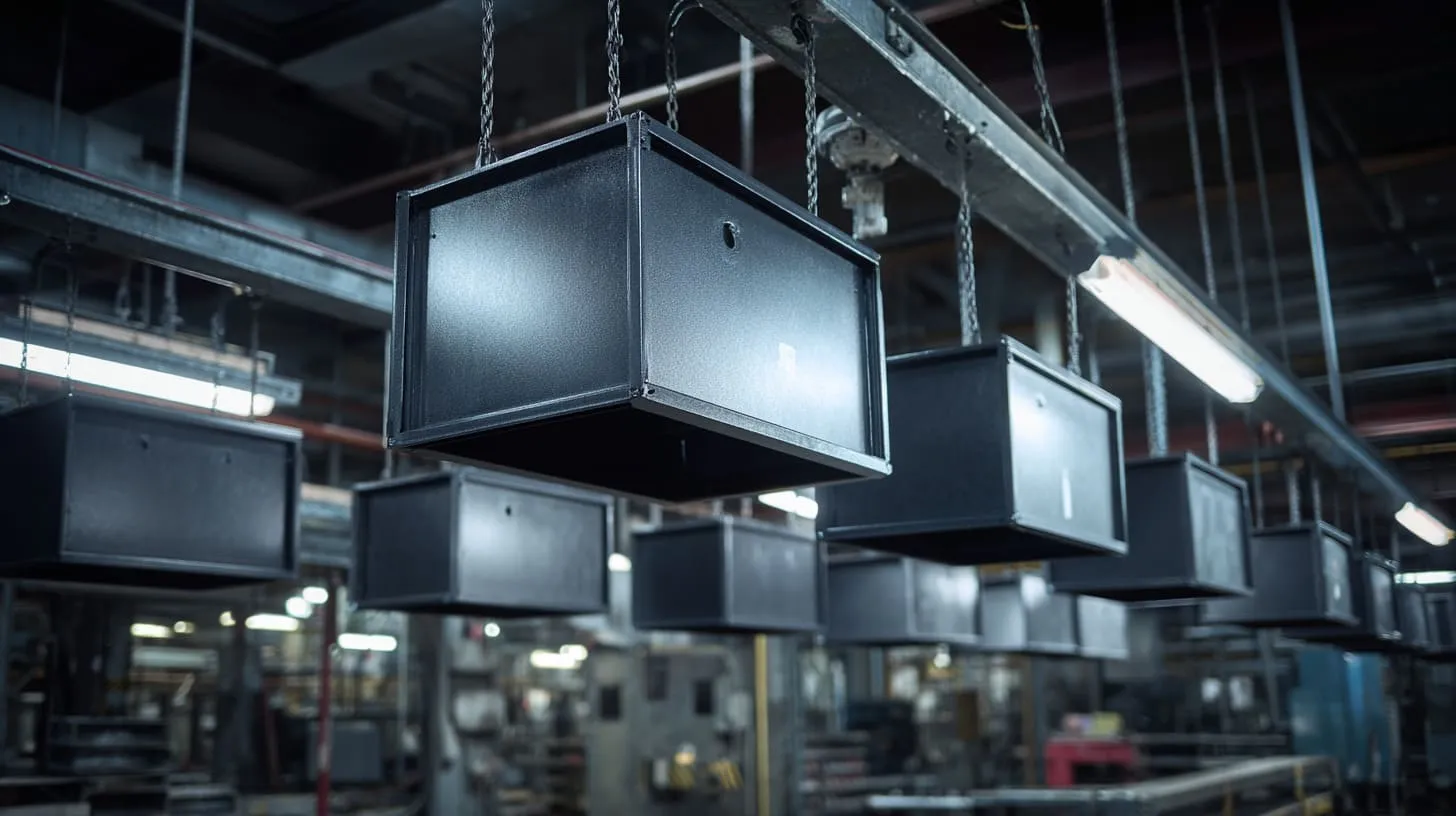
Powder coating is very common for sheet metal enclosures and some aluminum parts.
The factory applies dry powder to the surface and then heats it to form a coating. It can provide good protection and a wide range of colors and textures.
Powder Coating Use Cases
| Use Case | Why Powder Coating Helps |
|---|---|
| Outdoor enclosures | Better weather protection when specified correctly |
| Industrial cabinets | Strong coating for daily use |
| Steel boxes | Helps prevent rust |
| Custom brand colors | Color matching is possible |
| Textured surfaces | Can hide small surface marks |
Powder coating can be practical and durable. But quality depends on surface preparation.
If the surface is oily, rusty, or poorly cleaned, the coating may peel or fail. If the coating is too thick, holes and threads may be affected. If it is too thin, protection may not be enough.
A nice coating is not only about color. It is about preparation.
Silk Printing and Laser Engraving
OEM buyers often need logos, labels, symbols, and instructions on the enclosure.
Common marking methods include:
- Silk printing
- Pad printing
- Laser engraving
- Etching
- Sticker labels
- Metal nameplates
Logo and Marking Comparison
| Method | Best For | Main Concern |
|---|---|---|
| Silk printing | Logos, simple icons, color marking | May wear if surface use is heavy |
| Laser engraving | Permanent marks on metal | Limited color effect |
| Sticker label | Flexible and low cost | Can peel over time |
| Metal nameplate | Industrial branding | Higher cost and assembly step |
| Pad printing | Curved surfaces | Setup and alignment control needed |
Laser engraving is strong for aluminum enclosures. It feels permanent and clean. Silk printing is better when the logo needs color.
For some industrial products, function labels matter as much as logos. A wrong symbol or unclear marking can create user mistakes. That is not a small issue.
The finish may look like decoration. But in real use, it also affects durability, safety, and brand trust.
How Do Manufacturing Processes Affect Enclosure Design?
Manufacturing process and enclosure design are tied together.
A design that works for CNC may not work for injection molding. A design that is easy for sheet metal may not make sense for die casting. A design that looks strong in 3D may be hard to assemble in real life.
I get nervous when a design is finished before the manufacturing process is discussed, because the drawing may already contain hidden costs that nobody wants to pay for later.
Design for Manufacturability (DFM)
Design for manufacturability means the design should be easy and stable to make.
It does not mean making the product ugly. It means making the product real.
Common DFM Questions I Ask
| Question | Why It Matters |
|---|---|
| Can this wall thickness be produced safely? | Prevents warping, cracking, or weak parts |
| Can the tool reach this area? | Important for CNC machining |
| Can the part release from the mold? | Important for injection molding and die casting |
| Can the bend be made accurately? | Important for sheet metal |
| Can the surface finish cover defects? | Important for appearance control |
| Can workers assemble it easily? | Important for mass production |
A good DFM review can save time before production starts.
For example, a buyer may design a screw hole too close to the edge. It may look fine on screen. But during machining or assembly, the edge may crack or deform.
Another buyer may design a plastic screw boss too tall and thin. It may break during assembly.
These are not big theory problems. They are normal factory problems.
Tolerance and Assembly Considerations
Every process has tolerance limits.
CNC can be precise, but cost increases when tolerances become too tight. Sheet metal has bending variation. Die casting has casting tolerance. Plastic molding has shrinkage.
Tolerance by Process
| Process | Tolerance Character |
|---|---|
| CNC machining | High precision possible |
| Sheet metal | Bend and welding variation must be considered |
| Die casting | Good repeatability but needs secondary machining for precision areas |
| Injection molding | Shrinkage and warping must be planned |
| Extrusion | Profile tolerance plus cutting and machining tolerance |
Assembly is where tolerance problems become visible.
A cover does not close well.
A screw does not align.
A PCB does not sit flat.
A gasket gap is uneven.
A port is slightly off.
This is why I always care about stack-up tolerance. One small tolerance may be acceptable. But several small tolerances together can become a big assembly issue.
Thermal and EMC Design Impact
Enclosures do more than hold parts. They also affect heat and electromagnetic performance.
For electronics, heat can shorten product life. Poor EMC design can cause signal problems or certification issues.
Process Impact on Thermal and EMC Design
| Need | Process or Material Consideration |
|---|---|
| Heat dissipation | Aluminum CNC, extrusion, or die casting can help |
| EMI shielding | Metal enclosures or conductive treatment may be needed |
| Waterproofing | Gasket, sealing groove, and screw design matter |
| Ventilation | Helps cooling but may reduce dust or water protection |
| Grounding | Metal contact points must be planned |
| Internal mounting | PCB height and heat source position matter |
A plastic enclosure may need internal metal shielding if EMC is important. An aluminum enclosure may need careful surface contact if grounding matters. A waterproof enclosure may trap heat if there is no thermal path.
This is always a trade-off.
More sealing may reduce airflow.
More ventilation may reduce water protection.
More metal may increase cost and weight.
More plastic may reduce heat transfer.
The best design is not the strongest in one area. It is the most balanced for the real use environment.
What Are the Most Common Problems in OEM Enclosure Manufacturing?
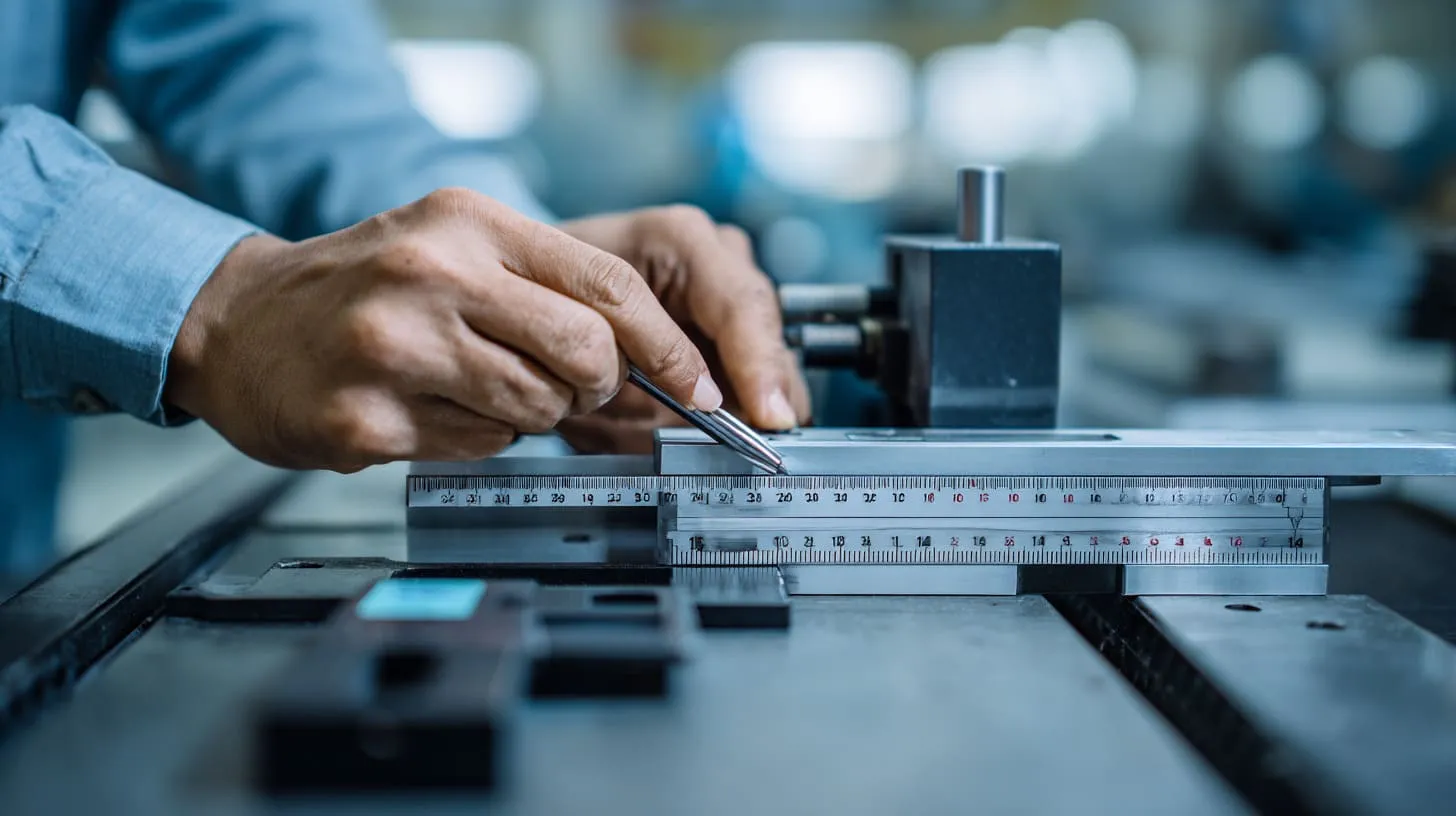
Most enclosure problems do not appear suddenly. They grow quietly from unclear details.
A missing tolerance.
A vague surface finish.
A logo file with poor resolution.
A material name without grade.
A buyer who says “same as sample” but does not define the sample clearly.
The mistake I watch for is unclear agreement before production, because once the parts are made, every unclear detail becomes a possible argument.
Communication Problems
Communication is one of the biggest pain points in OEM enclosure projects.
Many buyers are experienced. Many factories are also experienced. But problems still happen because both sides assume different things.
Common Communication Gaps
| Gap | What Can Go Wrong |
|---|---|
| No 2D drawing | Tolerances and hole sizes may be unclear |
| Only 3D file provided | Surface finish and material may be missing |
| Logo file not confirmed | Printing or engraving result may be poor |
| No sample approval standard | Cosmetic disputes may happen |
| Time zone delay | Small questions slow down the project |
| Vague words like “good quality” | Factory and buyer may define quality differently |
I have seen projects slow down for a very simple reason: nobody confirmed whether the hole size was for the connector body or the connector clearance.
That sounds boring.
But boring details can stop production.
Manufacturing Quality Risks
Quality problems can come from process limits, poor control, or unclear standards.
Common Quality Problems
| Problem | Possible Cause |
|---|---|
| Surface scratches | Poor handling or packaging |
| Wrong hole position | Drawing or machining error |
| Uneven coating | Poor powder coating control |
| Color difference | Batch variation or material difference |
| Cover does not fit | Tolerance stack-up |
| Weak screw boss | Poor plastic design |
| Warping | Material stress or poor process control |
| Logo misalignment | Poor fixture or unclear artwork |
Cosmetic quality is especially tricky.
For an industrial enclosure, a tiny mark may be acceptable. For a consumer-facing enclosure, the same tiny mark may be rejected. So the acceptance standard should match the product use.
A buyer should not only say “no scratches.” In real production, the better way is to define inspection distance, surface grade, and acceptable defect size if needed.
Supply Chain and Delivery Challenges
Delivery problems can hurt trust quickly.
A buyer may have a launch date. The factory may have production pressure. Shipping may be slower than expected. A small delay can become serious if the enclosure is needed for final assembly.
Common Delivery Risks
| Risk | Impact |
|---|---|
| Raw material delay | Production cannot start |
| Surface finishing backlog | Finished parts wait at coating supplier |
| Mold correction delay | Mass production shifts later |
| Packaging issue | Shipping damage increases |
| Holiday season | Factory and logistics slow down |
| Customs or freight delay | Buyer misses project timeline |
For international OEM projects, shipping should be planned early. A beautiful enclosure is not helpful if it arrives after the customer deadline.
This is why I prefer to discuss packaging before mass production, not after production is finished. Heavy metal parts, sharp edges, coated surfaces, and printed logos all need proper protection.
How Can OEM Buyers Reduce Risks in Enclosure Manufacturing Projects?
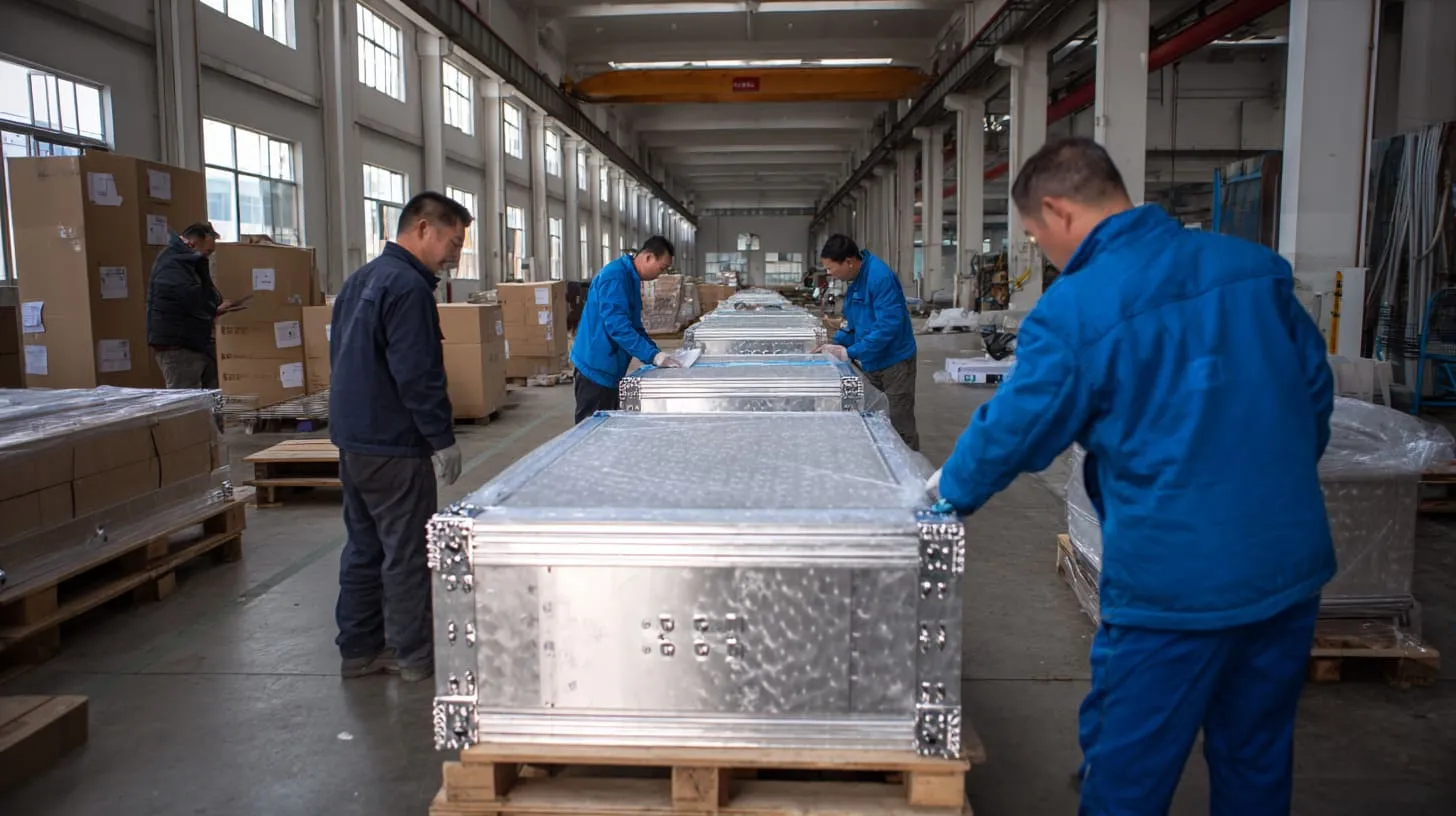
Risk cannot be removed completely. But it can be reduced.
A good OEM enclosure project needs clear drawings, honest process discussion, sample testing, and practical communication. Buyers and factories should solve problems before production, not after boxes are already packed.
The point I always come back to is simple: I would rather spend one extra day confirming details than spend three weeks fixing a preventable mistake.
Choosing the Right Manufacturing Partner
The right manufacturer is not only the one with the lowest quote.
A good enclosure factory should understand materials, processes, tolerances, finishing, packaging, and OEM communication. It should also give practical suggestions when the design has risk.
What I Suggest Buyers Check
| Check Point | Why It Matters |
|---|---|
| Process capability | Factory should match your enclosure type |
| Engineering support | DFM review can prevent mistakes |
| Quality control | Inspection should be part of the process |
| Custom experience | OEM projects need detail control |
| Communication speed | Slow replies delay decisions |
| Surface finishing control | Appearance quality depends on this |
| Packaging experience | Prevents shipping damage |
A factory that only says “yes, we can do it” may sound easy at first. But a factory that asks smart questions may save the project later.
For example:
- What material grade do you need?
- Is the enclosure used indoors or outdoors?
- What tolerance is critical?
- Do you need flame-retardant material?
- Will the logo be printed or engraved?
- How will the product be assembled?
- What is your target quantity after testing?
These questions are not trouble. They are protection.
Prototype Validation Before Mass Production
A prototype is not just a sample to admire.
It is a test tool.
The buyer should check function, assembly, surface, packaging, and real use.
Prototype Check List
| Check Item | What to Confirm |
|---|---|
| PCB fit | Board sits correctly |
| Port alignment | Connectors match holes |
| Screw assembly | Screws tighten smoothly |
| Cover fit | No uneven gap |
| Surface finish | Color and texture are acceptable |
| Logo position | Branding looks correct |
| Heat performance | Device does not overheat |
| Drop or handling risk | Enclosure survives normal use |
| Packaging | Parts arrive without damage |
If the prototype fails, that is not always bad. It is better for a sample to expose the problem early than for mass production to expose it late.
I have seen buyers feel disappointed when the first sample needs changes. I understand that feeling. But in OEM work, a sample that teaches us something is useful.
The dangerous sample is the one that looks okay but hides a problem nobody checks.
Creating Clear OEM Documentation
Good documentation makes communication easier.
For enclosure projects, I always prefer to see both 3D and 2D files. The 3D file shows shape. The 2D drawing shows critical dimensions, tolerances, material, finish, and notes.
Useful OEM Documents
| Document | Purpose |
|---|---|
| 3D file | Shows full structure |
| 2D drawing | Defines dimensions and tolerances |
| BOM | Lists materials and parts |
| Surface finish specification | Defines coating, anodizing, texture, color |
| Logo file | Supports printing or engraving |
| Assembly instruction | Shows how parts fit together |
| Packaging requirement | Protects product during shipping |
| Inspection standard | Reduces quality disputes |
Clear documents reduce guessing.
And guessing is expensive.
For example, if a buyer wants black anodizing, the drawing should say black anodizing. If they need a matte black powder coating, that should be stated. If a hole is critical, tolerance should be marked. If a logo must face a certain direction, the artwork and position should be clear.
OEM work becomes smoother when both sides can point to the same document and say, “This is the standard.”
Conclusion
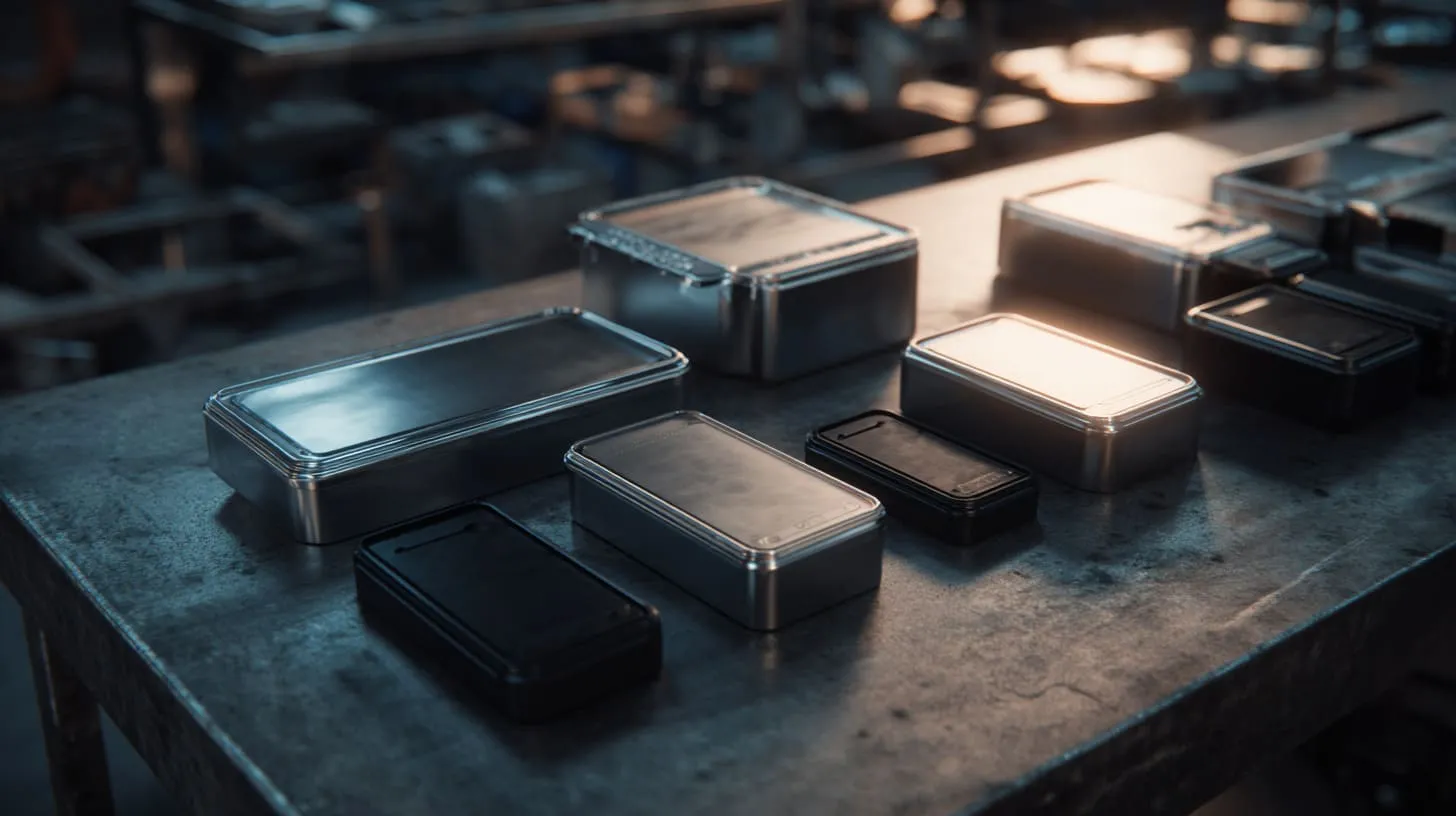
Enclosure manufacturing is not only about making a box.
It is about choosing the right process for the right project stage.
CNC machining is useful for prototypes, low-volume orders, and precise aluminum parts. Sheet metal fabrication works well for larger boxes, cabinets, panels, and industrial enclosures. Die casting can reduce unit cost when the quantity is high and the design is stable. Plastic injection molding is strong for mass production plastic enclosures, but mold design and material selection must be taken seriously. Aluminum extrusion is practical when the enclosure profile is simple, repeatable, and suitable for cutting to different lengths.
Each process has its own logic.
Some processes save time.
Some save unit cost.
Some give better appearance.
Some give more design freedom.
Some need higher tooling investment.
Some allow easier changes.
For OEM buyers, the best choice is rarely based on one factor. I usually suggest looking at quantity, material, design complexity, surface finish, tolerance, lead time, and future order plan together.
A good enclosure project should not start with only one question like “How much is it?”
It should start with better questions:
- What is the real use environment?
- How many pieces do we need now and later?
- Is the design already stable?
- Which dimensions are critical?
- Which surface is customer-facing?
- What risks should we solve before mass production?
- What process gives the best balance of cost, quality, and delivery?
If you are working on a custom aluminum enclosure, plastic enclosure, sheet metal enclosure, Raspberry Pi style case, or OEM branded housing, the process decision can shape the whole project.
At MaidaTech, I usually like to review the drawing, quantity, material need, surface finish, and application first. Then I can suggest a more practical manufacturing route instead of forcing one process onto every project.
If you already have a design file or even only a rough idea, you can send it to us for review. A small discussion before production may save a lot of cost, time, and stress later.