Skip to content

In every factory I’ve ever visited, one question keeps echoing between design rooms and production lines: “Which casting method should we use?” It’s not just about melting metal—it’s about how an idea takes physical form. From a small prototype enclosure to a mass-produced automotive part, the casting process quietly defines cost, strength, and precision long before the first piece cools.
Casting is the foundation of modern manufacturing. It shapes the invisible balance between creativity and practicality. But when it comes to choosing between die casting and investment casting, the decision can feel like standing at a crossroads. Both methods can deliver incredible results—if you understand their strengths, trade-offs, and the story each one tells in your production process.
Let’s break it down in plain terms, engineer to engineer.
What Is Die Casting?

I still remember watching molten aluminum flow into a precision mold for the first time. It looked almost alive—glowing, swirling, then cooling into a perfect shape. That’s die casting in its purest form: a high-pressure process that injects molten metal into a steel mold to create parts with high precision and minimal waste.
How Die Casting Works
The process begins when metal is heated until it melts completely. Then, using a hydraulic press, it’s injected into a hardened steel mold under extreme pressure—anywhere between 1,500 and 25,000 psi.
There are two main methods:
- Cold chamber: used for aluminum and copper alloys.
- Hot chamber: used for zinc and magnesium alloys.
Each method balances speed, temperature tolerance, and tooling life.
Materials Used in Die Casting
Common die casting materials include:
- Aluminum — lightweight, corrosion-resistant, great for enclosures.
- Zinc — strong, durable, and perfect for fine details.
- Magnesium — incredibly light, used for portable devices.
These alloys make die casting ideal for high-volume production, where consistency and speed matter most.
Advantages of Die Casting
- Exceptional dimensional accuracy and repeatability.
- Smooth, near-polished surface finishes straight from the mold.
- Fast production cycles, ideal for large batch manufacturing.
Limitations of Die Casting
But not every project fits this method.
- High tooling costs can be a barrier for small runs.
- Limited for complex internal geometries, like hollow or undercut shapes.
- Best suited for metals with lower melting points.
I often tell clients—if you’re producing thousands of identical parts, die casting is your friend. But if your design has delicate, intricate cavities, you may need something else.
And that “something else” leads us right into the next process.
What Is Investment Casting?

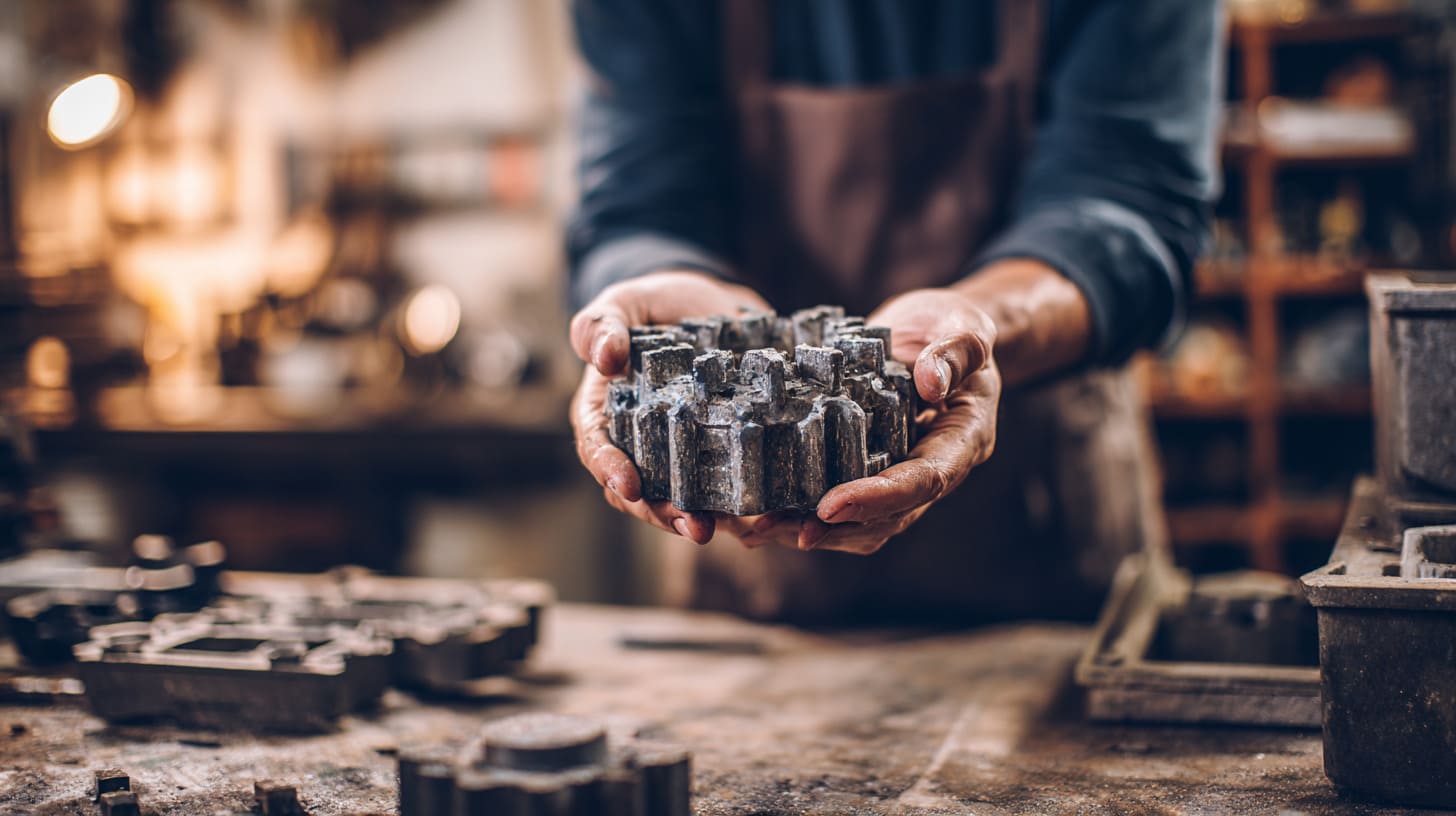
If die casting is about speed and volume, investment casting is about elegance and precision. The first time I saw an investment casting mold, it looked more like art than industry—a wax sculpture coated in ceramic layers, waiting to become metal.
How Investment Casting Works
Here’s the magic in steps:
- Create a wax pattern of the desired part.
- Dip it in ceramic slurry to build a hardened shell.
- Melt the wax out, leaving a hollow mold.
- Pour molten metal inside and let it cool.
- Break the shell and reveal the cast.
It’s a slower process—but one that achieves incredible detail and accuracy.
Materials Used in Investment Casting
This method welcomes metals that die casting can’t handle:
- Stainless steel, brass, bronze, titanium, and other exotic alloys.
It’s also great for low-volume or prototype production, where tooling cost needs to stay manageable.
Advantages of Investment Casting
- Exceptional surface finish and tight tolerances.
- Supports complex shapes, fine textures, and internal features.
- Works well for both functional and decorative parts.
Limitations of Investment Casting
- Longer lead times, due to multi-step processing.
- Higher per-unit cost for large quantities.
- Ceramic shells are single-use, so molds must be rebuilt each run.
Still, when your design demands perfection over production speed, investment casting stands unmatched.
Let’s see how they compare side by side.
Comparison Table: Die Casting vs. Investment Casting
| Category | Die Casting | Investment Casting |
|---|---|---|
| Process | High-pressure molten metal injection | Wax pattern + ceramic shell + molten metal pour |
| Best For | High-volume production | Complex, detailed, small-batch parts |
| Materials | Aluminum, Zinc, Magnesium | Stainless steel, Brass, Bronze, Titanium |
| Tooling Cost | High | Moderate |
| Surface Finish | Smooth (Ra 1.6–3.2 μm) | Excellent (Ra 1.2–2.5 μm) |
| Tolerance | ±0.1 mm | ±0.05 mm |
| Lead Time | Short | Long |
| Design Flexibility | Moderate | Very high |
| Production Speed | Fast | Slow |
| Cost per Unit | Lower at scale | Higher per unit |
Understanding this table is often where buyers have their lightbulb moment. But seeing where these methods actually get used makes the difference even clearer.
Which Industries Use Die Casting vs. Investment Casting?
Die Casting Applications
- Automotive — engine blocks, gearbox housings, brackets.
- Consumer electronics — laptop bodies, enclosures, connectors.
- Lighting — LED lamp housings and fixtures.
Die casting shines when speed meets precision. I’ve worked on projects where tens of thousands of identical parts rolled out flawlessly every week.
Investment Casting Applications
- Aerospace — turbine blades, engine nozzles.
- Medical — surgical instruments and prosthetics.
- Industrial machinery — impellers, valve components.
These sectors can’t compromise on complexity or finish. The investment casting process gives them that freedom.
So how do you choose between them when you’re standing at the design table?
How to Choose the Right Process for Your Project?

Project Volume and Cost Considerations
If you’re producing large volumes, die casting spreads tooling costs across thousands of parts—making it cost-effective.
For small batches, investment casting avoids high upfront costs.
Tolerance and Surface Finish Requirements
Investment casting delivers tighter tolerances and smoother finishes.
Die casting, while slightly rougher, often needs minimal machining afterward.
| Project Type | Recommended Process |
|---|---|
| Mass-market enclosure | Die Casting |
| Custom prototype | Investment Casting |
| High-precision component | Investment Casting |
| Cost-sensitive design | Die Casting |
Design Complexity and Internal Geometry
If your part has thin walls or complex cavities, investment casting can capture those details better. Die casting’s molds, on the other hand, struggle with intricate internal voids.
Custom Branding and Logo Integration
For OEM and branding, die casting works beautifully.
You can engrave or emboss logos directly onto molds for consistent reproduction.
I always remind buyers: it’s not just about material or process—it’s about how your final product will feel in the user’s hand.
Real-World Use Case: OEM Aluminum Enclosures

Case Study: Custom Enclosure for Electronics
A Canadian client named Davide once needed 10,000 aluminum enclosures for a smart home hub.
He wanted fast production, clean surface finishes, and his company logo on each piece.
We chose die casting—because it offered the speed, cost efficiency, and consistency he needed.
Within six weeks, the batch was ready—each unit identical, shining with his brand.
Case Study: Complex Sensor Housing
Another client, John from Hungary, came with a complex sensor design.
His product required tight tolerances and internal channels for wiring.
We went with investment casting, allowing precise internal structures that machining couldn’t easily achieve.
It took longer, but the results? Worth every extra day.
Every project teaches me one thing: casting isn’t just a process—it’s a decision that defines your product’s story.
Communication Tips for Engineers Working with Factories

No matter which casting method you choose, communication can make or break the project.
What to Ask Your Supplier
Before production starts, confirm:
- MOQ and tooling costs
- Sample lead times and testing stages
- Material and surface finish specifications
Key Documents to Prepare
- 3D CAD models
- 2D technical drawings with tolerances
- Material specifications and surface treatments
These documents keep everyone on the same page—especially when dealing across time zones.
Avoiding Common Pitfalls
Here’s what I’ve seen too often:
- Misunderstanding tolerance symbols.
- Late replies causing tooling delays.
- Overlooked surface finish expectations.
Clear communication isn’t just about emails—it’s about alignment. And trust me, every minute spent clarifying saves days of rework later.
Conclusion

So, what’s the real difference between die casting and investment casting?
Die casting wins in speed, cost, and volume.
Investment casting wins in precision, flexibility, and complexity.
If you’re producing enclosures for electronics or large batches, die casting is likely your path. But if you’re crafting smaller runs with high structural detail, go for investment casting.
At MaidaTech, I’ve helped clients on both sides of this choice—and every time, it comes down to one simple truth:
The right casting method isn’t just about the part. It’s about the story you want that part to tell.