Skip to content
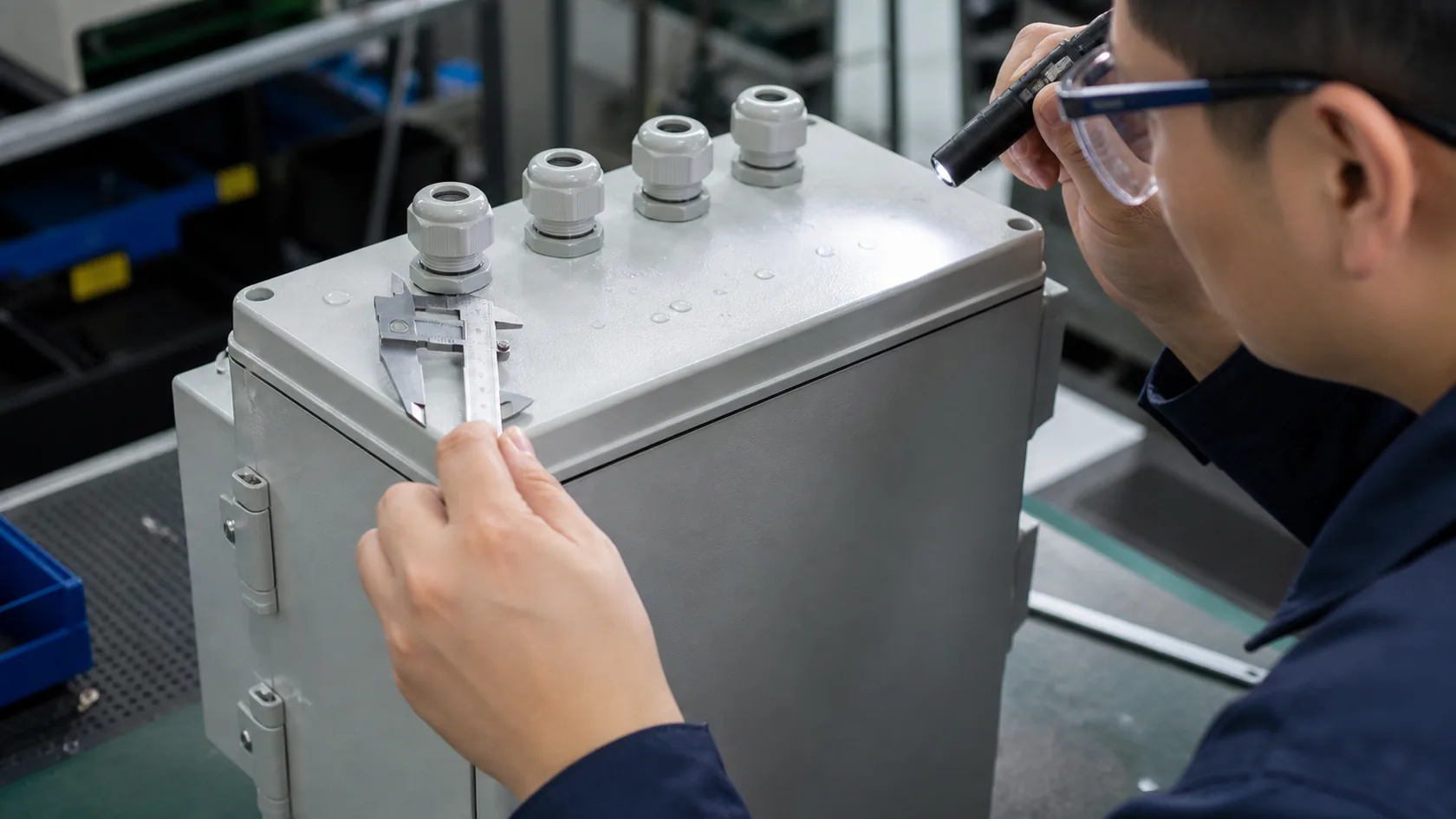
A custom electronic enclosure can look like a simple box from the outside.
Four walls.
A cover.
Some holes.
A few screws.
Maybe a logo on the surface.
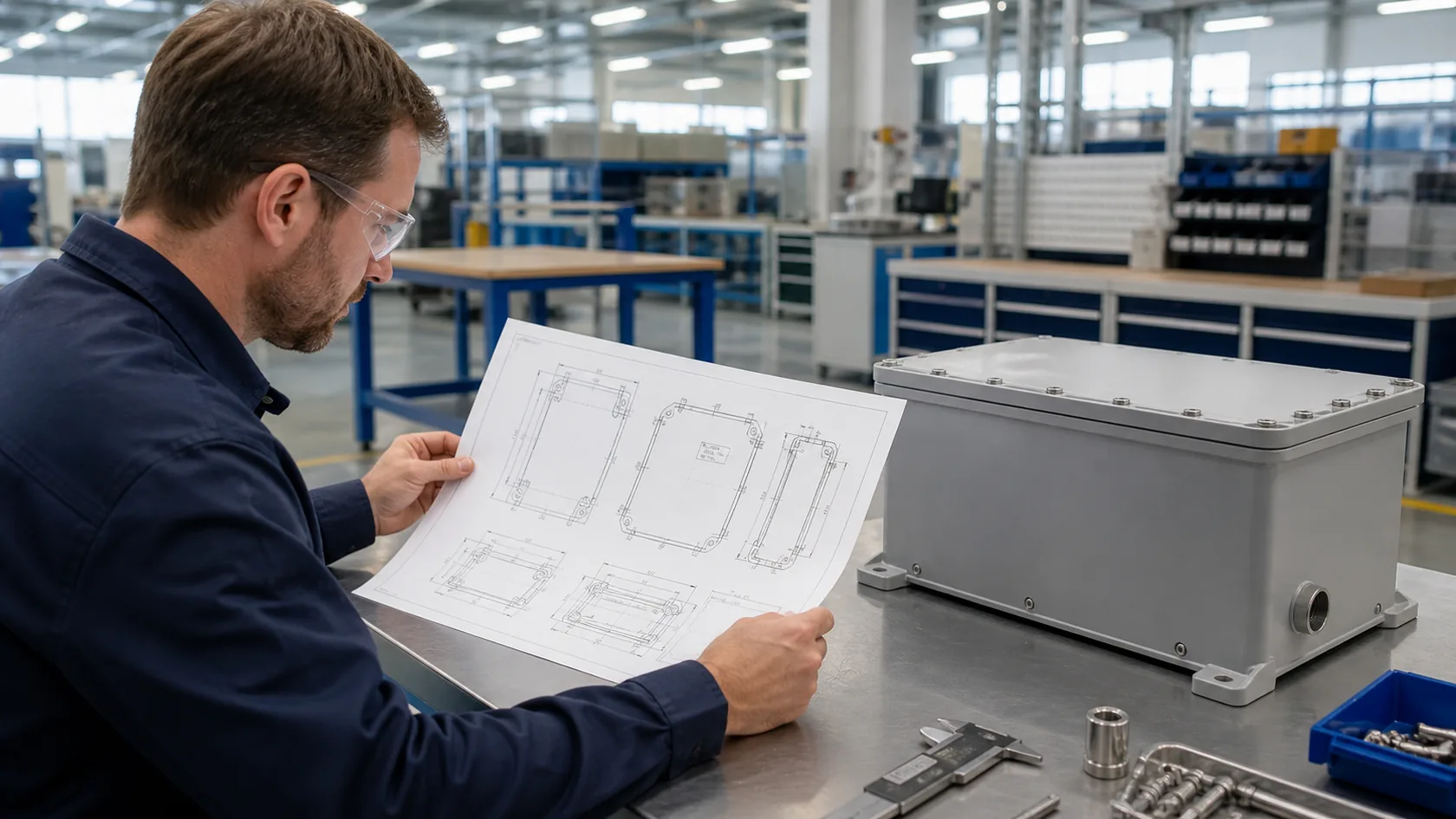
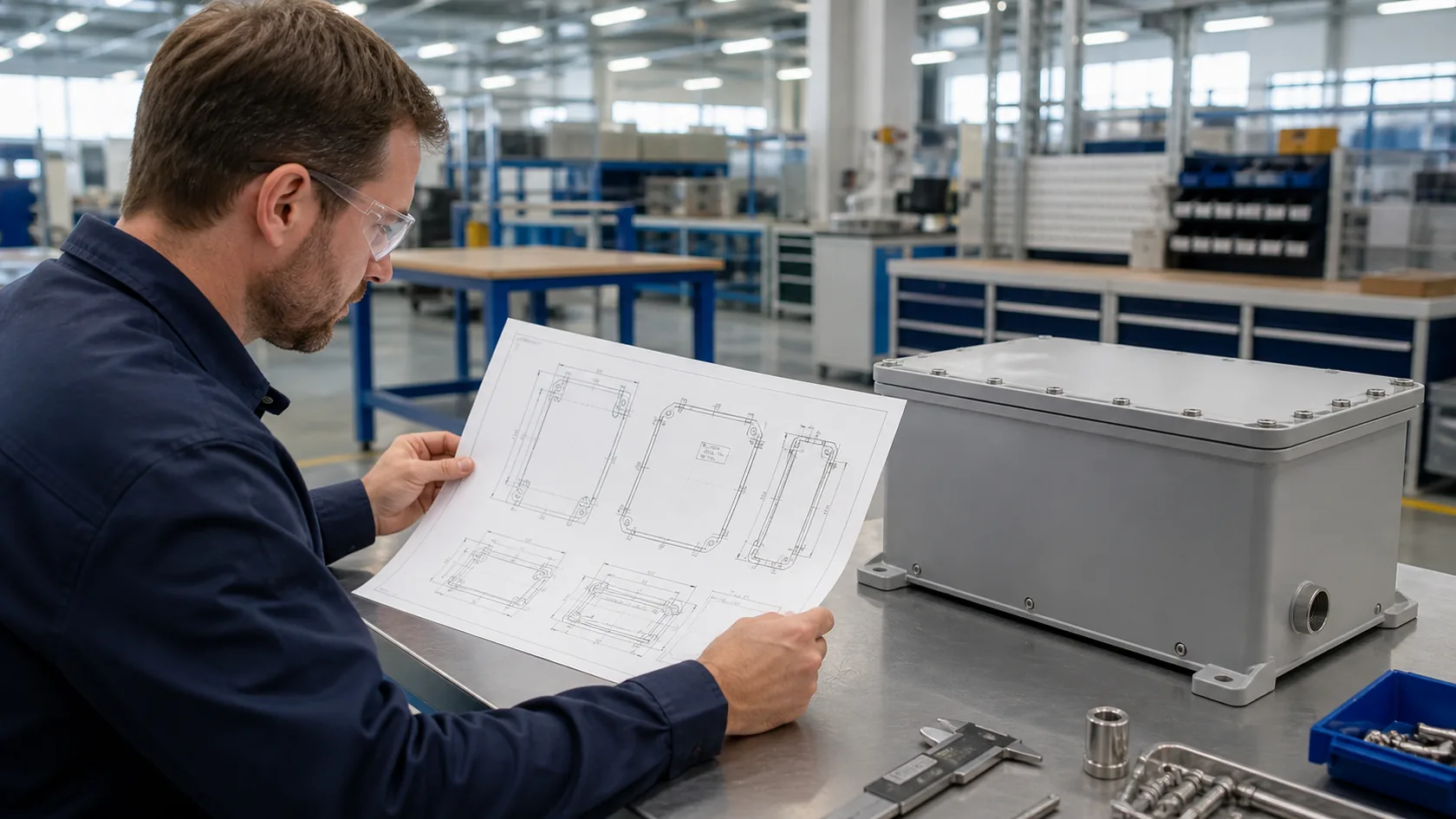
But when I sit with a drawing from a customer, I never see only a box. I see heat trapped inside. I see a PCB that needs protection. I see cables entering from one side. I see a worker opening the cover for maintenance. I see a product traveling in a carton across the sea. I see one small material decision quietly affecting the whole project.
That is why material selection is one of the most important decisions in custom enclosure design.
Choosing materials for custom electronic enclosures depends on the working environment, heat dissipation, EMC/EMI shielding needs, mechanical strength, surface finish, production method, budget, and customization requirements. There is no single best material. There is only the right material for the real application.
I have seen customers choose plastic because it looked cheaper. Then they found the heat was too high.
I have seen customers choose stainless steel because it sounded stronger. Then the enclosure became too heavy and too expensive for the project.
I have also seen customers choose aluminum because they liked the surface finish. Then we had to remind them that anodizing may affect electrical contact if grounding points are not handled well.
This is where enclosure design becomes interesting.
It is not only about material names. It is about trade-offs.
A material can be strong but heavy.
A material can be light but weak under heat.
A material can be beautiful but expensive to finish.
A material can be cheap in the beginning but costly after rework.
When I judge a material choice, I do not ask, “Which material is best?” first. I ask, “What problem must this enclosure survive after the customer receives it?”
That one question changes everything.
What Are the Main Material Options for Electronic Enclosures?
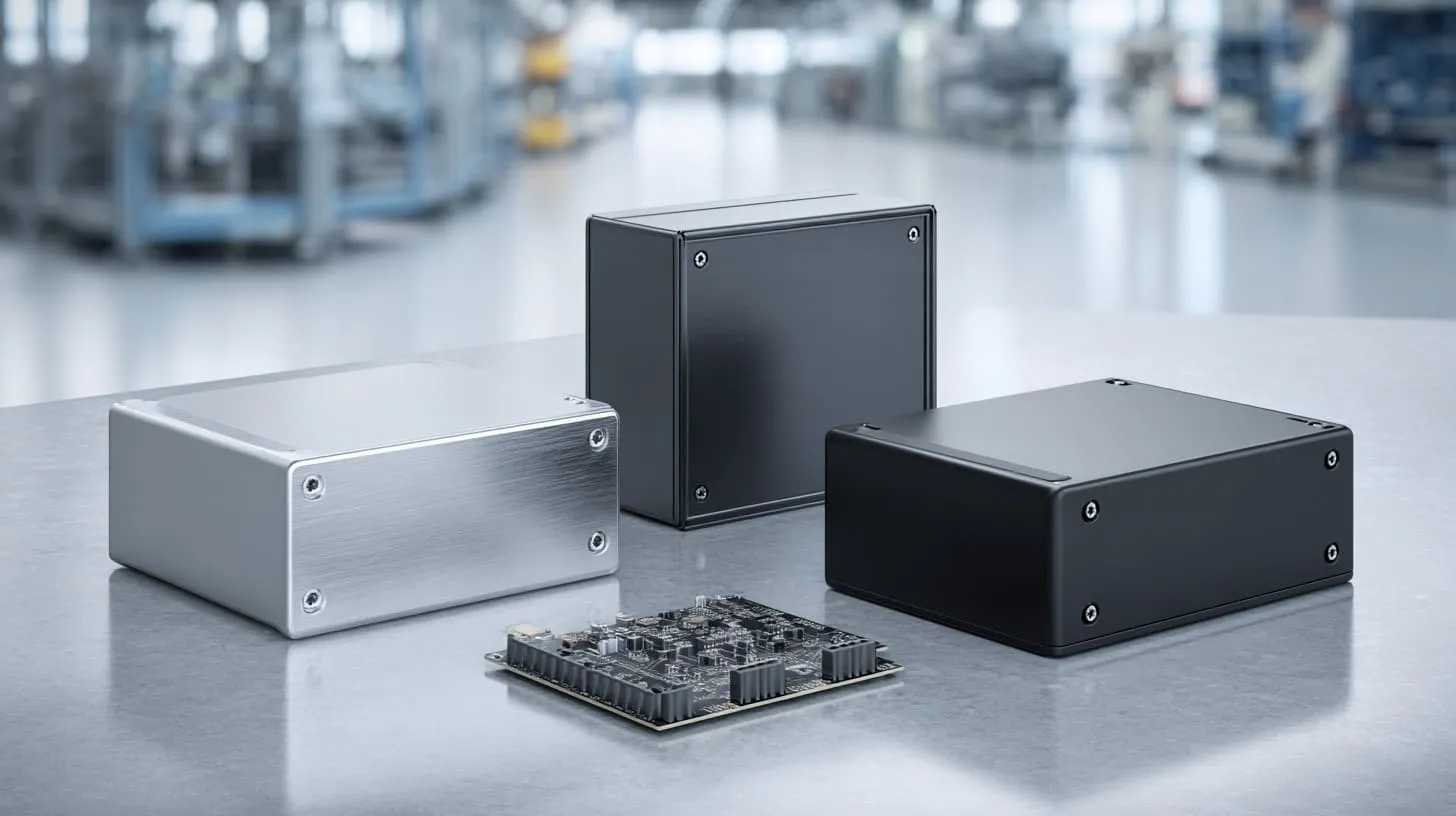
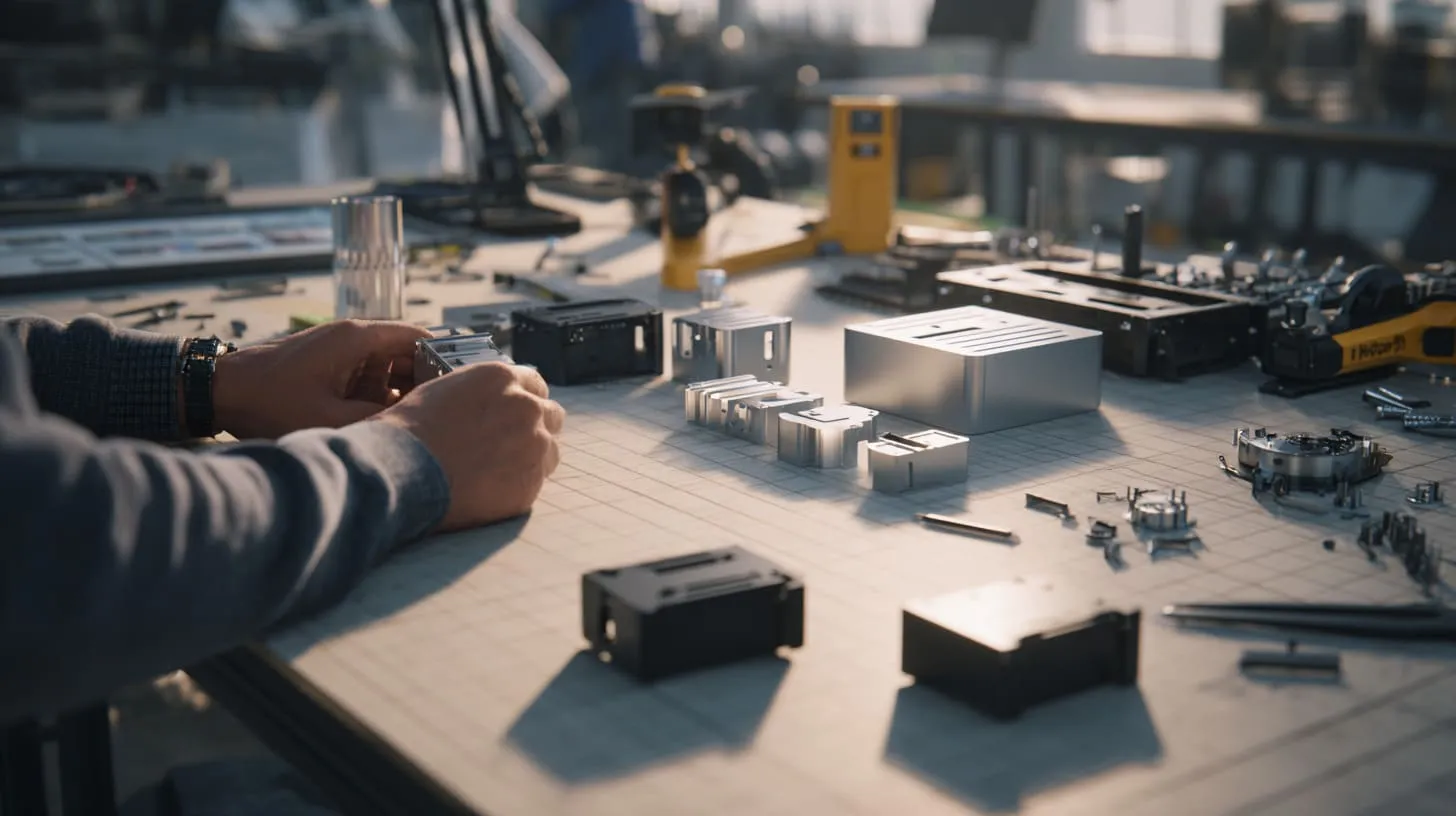
Most custom electronic enclosures use three broad material groups: aluminum, steel, and plastic.
That sounds simple. But inside these three words, there are many choices. Aluminum can be extruded, die-cast, bent, or CNC machined. Steel can be carbon steel or stainless steel. Plastic can be ABS, polycarbonate, PETG, or other engineering plastics.
Each material has its own personality.
Aluminum feels light and clean.
Steel feels strong and stable.
Plastic feels flexible and cost-friendly.
But I never choose based on feeling alone.
For a real custom enclosure project, I look at where the product will be used, how much heat it creates, how strong the housing must be, how many pieces the customer needs, and how much customization is required.
Common enclosure materials overview
Here is a practical look at the main options I often discuss with customers.
| Material | Common Types | Main Strength | Main Weakness | Typical Use |
|---|---|---|---|---|
| Aluminum | Extruded, die-cast, CNC, sheet aluminum | Lightweight, good heat dissipation, clean finish | Higher cost than basic plastic or steel sheet | Industrial electronics, Raspberry Pi cases, control boxes, sensor housings |
| Carbon steel | Sheet metal steel | Strong, cost-effective, easy to fabricate | Can rust without good finish | Indoor industrial control boxes, equipment housings |
| Stainless steel | 304, 316 | Corrosion resistance, strong, premium look | Higher cost, harder to process | Food equipment, marine areas, chemical environments |
| ABS plastic | Molded or machined | Low cost, easy to shape | Lower heat resistance and weaker UV performance | Consumer electronics, indoor devices |
| Polycarbonate | Molded or machined | Strong impact resistance, better outdoor use | More expensive than ABS | Outdoor electronics, protective housings |
| PETG | Sheet or formed parts | Clear, tough, easy to process | Not ideal for high heat | Covers, panels, light-duty protective parts |
Aluminum: the balanced choice for many custom projects
Aluminum is one of the materials I recommend most often for custom electronic enclosures.
It is not because aluminum is always perfect. It is not.
But aluminum gives a good balance between strength, weight, surface finish, heat control, and customization. This is why many Raspberry Pi cases, industrial controllers, communication boxes, and small electronic housings use aluminum.
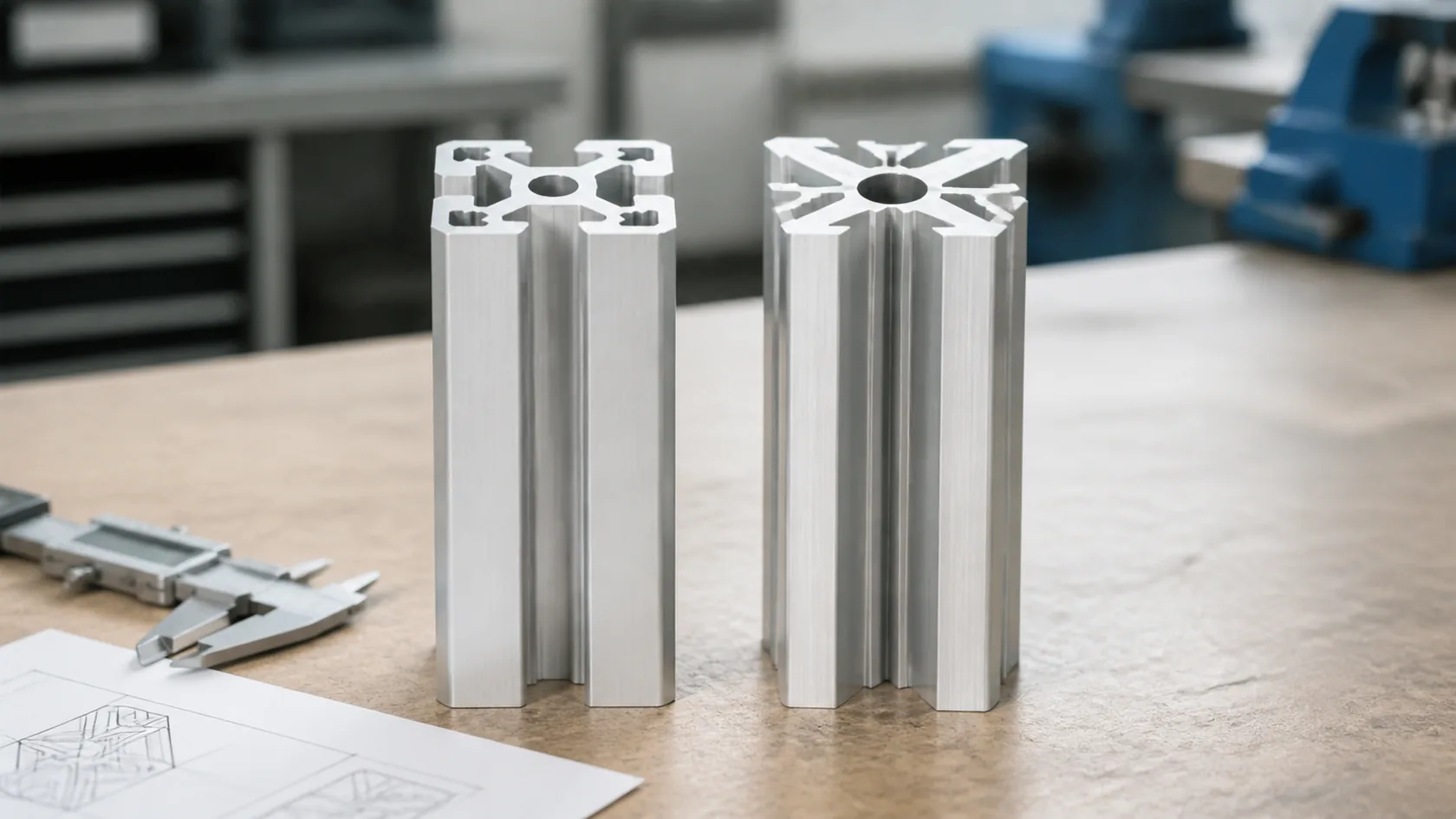
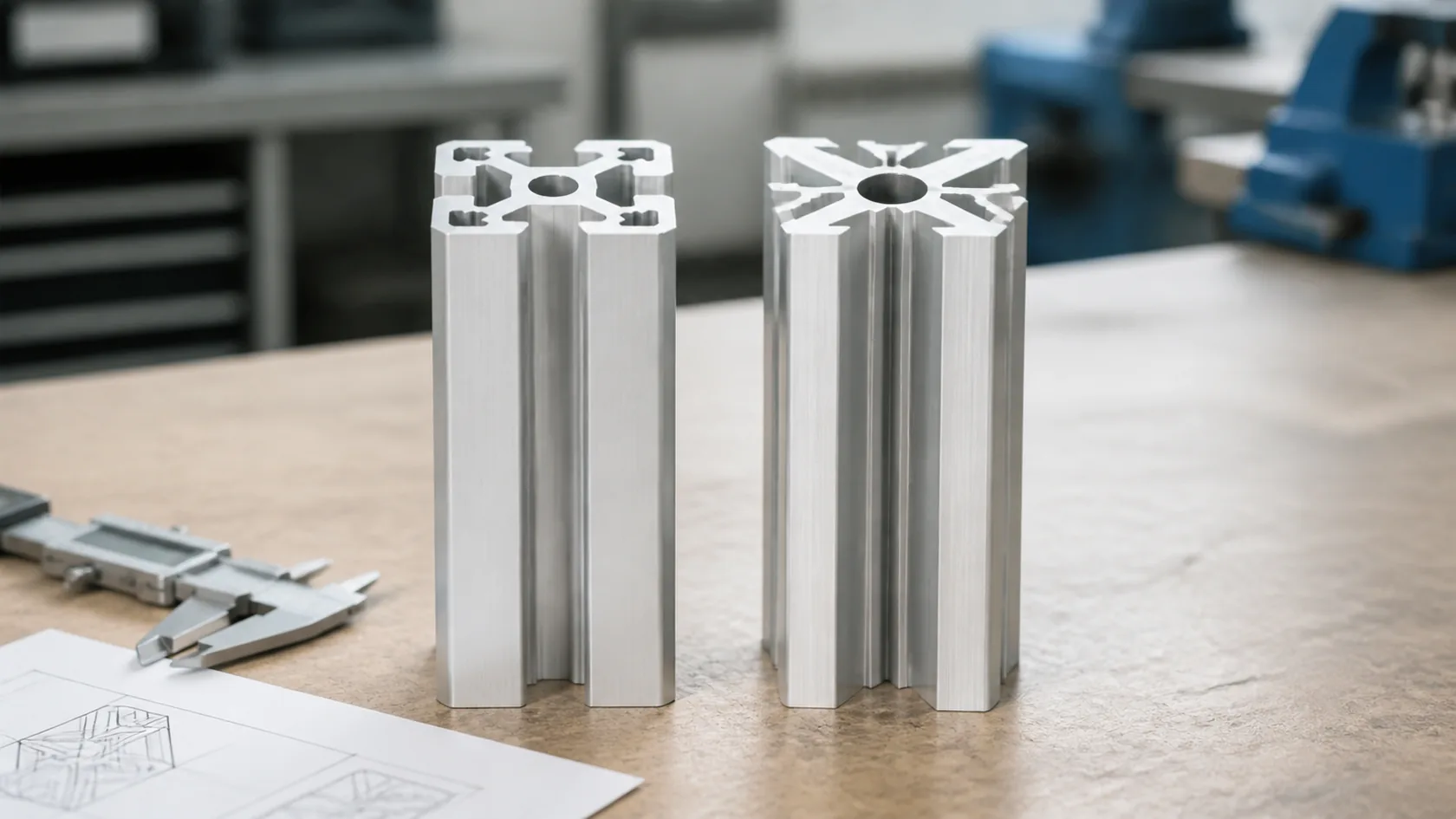
For example, an extruded aluminum enclosure works well when the product needs a clean profile and fast customization. We can cut the extrusion to length. We can machine holes. We can print or engrave the logo. We can add end plates. This is very useful for small and medium batch projects.
CNC aluminum is more flexible for complex shapes. But the cost is higher.
Die-cast aluminum is good for larger volume and more complex housing shapes. But tooling cost must be considered first.
| Aluminum Process | Best For | Cost Logic | My Practical View |
|---|---|---|---|
| Extrusion | Long profile enclosures, electronic modules | Lower tooling than die casting | Good for many OEM projects |
| CNC machining | Prototypes, small batches, complex detail | Higher unit cost | Good when the design is not stable yet |
| Die casting | Larger batches, complex shapes | Higher tooling, lower unit cost later | Good after the design is confirmed |
| Sheet aluminum | Simple boxes, panels, brackets | Flexible and practical | Good for custom industrial orders |
When I see a customer choosing aluminum, I usually check whether they need heat control, custom cutouts, a nice finish, or stronger branding. If they only need a simple low-cost indoor box, aluminum may be more than they need.
That is the kind of small judgment that saves money.
Steel: strong but not always convenient
Steel is very useful when strength and cost matter.
A sheet metal steel enclosure can be bent, welded, powder-coated, and used in many industrial projects. It gives a strong structure. It also feels solid in the hand.
But steel is heavier than aluminum. It also needs good surface treatment because carbon steel can rust. If the enclosure will be shipped in large quantities, the extra weight can increase shipping cost. If the enclosure will be used outdoors, finish quality becomes more important.
Stainless steel is another story.
It is strong and corrosion-resistant. It is often used in wet, chemical, food, or marine environments. But it is also more expensive. It is harder to cut and process. It may not be necessary for many normal electronic products.
This is where many buyers overbuy protection.
They hear “stainless steel,” and they feel safe. I understand that feeling. But if the product is used in a clean indoor control room, stainless steel may not give enough extra value to justify the cost.
Plastic: flexible, light, and easy to misunderstand
Plastic enclosures are common in electronics. They are light, easy to shape, and cost-friendly in high-volume production.
ABS is popular because it is affordable and easy to mold. Polycarbonate is tougher and better for impact resistance. PETG is useful for covers or clear parts.
But plastic is not magic.
Plastic may have weaker heat dissipation. It may need extra EMC shielding. It may deform under heat. It may age under UV exposure if the wrong grade is used.
For some consumer electronics, plastic is the smart choice. For a high-power industrial device, plastic may become a problem unless the design is carefully controlled.
When each material is typically used
A simple way to think about it is this:
| Application | Possible Material | Why It Makes Sense |
|---|---|---|
| Raspberry Pi case | Aluminum, ABS, PC | Aluminum helps heat. Plastic lowers cost. |
| Industrial controller | Aluminum, steel | Strength and heat control matter. |
| Outdoor sensor box | Aluminum, PC, stainless steel | Weather, UV, and sealing matter. |
| Indoor junction box | ABS, steel, aluminum | Cost and protection level decide the choice. |
| Marine or chemical area | Stainless steel, coated aluminum | Corrosion resistance is critical. |
| Consumer device housing | ABS, PC | Light weight and shape flexibility matter. |
The first material discussion is always a little like choosing shoes for a trip. You do not ask, “Which shoe is best?” You ask, “Where am I walking?”
That same thinking becomes even more important when we talk about the working environment.
How Does the Application Environment Affect Material Choice?
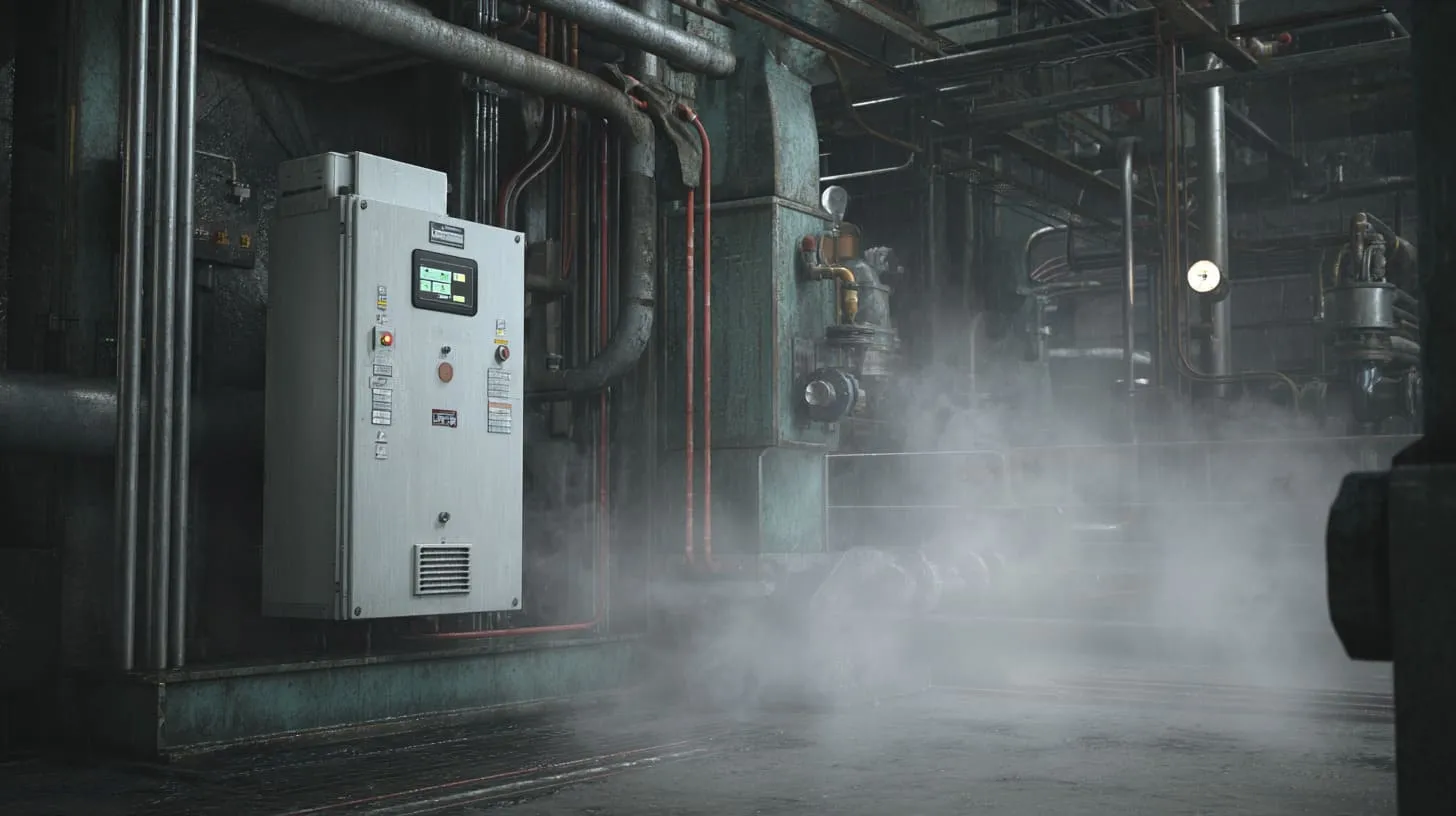
The working environment is often the place where wrong material choices are exposed.
A drawing can look perfect on the screen. A sample can look beautiful on the table. But the real environment does not care about the drawing. It cares about heat, water, dust, oil, salt, sunlight, vibration, and careless hands.
I learned this from many custom enclosure projects.
A customer once told me the enclosure would be used “indoors.” That sounded easy at first. Then we asked more questions. The enclosure was actually placed near a machine. There was oil mist. There was dust. There was occasional cleaning water. The room was indoor, yes. But the condition was not friendly.
That changed the material conversation right away.
Indoor vs outdoor environments
Indoor use does not always mean easy use.
Some indoor environments are clean and stable. Others are dirty, hot, wet, or full of oil. Outdoor use also has different levels. A box under a roof is different from a box facing direct sun and rain every day.
| Environment Factor | Why It Matters | Material Concern |
|---|---|---|
| Temperature | Heat can soften plastic or affect seals | PC or aluminum may be better than ABS |
| Humidity | Moisture can cause corrosion or electrical risk | Coating, sealing, stainless steel, or plastic may help |
| UV exposure | Sunlight can age some plastics | UV-stable PC or coated metal may be needed |
| Dust | Dust can enter vents or gaps | Sealing and gasket design matter |
| Oil or coolant | Surface and gasket materials may degrade | Metal and proper seals may be needed |
| Salt spray | Corrosion risk increases | Stainless steel or special coating may be needed |
The mistake I often see is that buyers describe the location, not the condition.
They say:
- “It is indoor.”
- “It is outdoor.”
- “It is in a factory.”
- “It is near a machine.”
These are useful. But they are not enough.
I need to know what the enclosure will face.
Harsh environments
A harsh environment does not need to look dramatic. It can be quiet.
A little oil every day.
A little dust every week.
A little heat every hour.
A little moisture every night.
After six months, the enclosure tells the truth.
Plastic may become brittle.
Steel may rust at the edge.
A poor coating may peel.
A gasket may lose compression.
Screws may become hard to remove.
When I review an enclosure for a harsh environment, I pay close attention to the boring details: the screw material, the gasket, the coating thickness, the cable entry, and the edge treatment. These small areas often fail before the main body fails.
Protection standards: IP ratings vs NEMA ratings
Many customers mention IP ratings or NEMA ratings when they ask for custom enclosures.
That is good. But ratings should not be used like decoration on a quotation sheet. They must match the real environment.
| Rating Type | Common Focus | Simple Meaning |
|---|---|---|
| IP rating | Dust and water protection | Common in international markets |
| NEMA rating | Dust, water, oil, corrosion, indoor/outdoor conditions | Common in North America |
| IK rating | Impact resistance | Useful when physical impact is a concern |
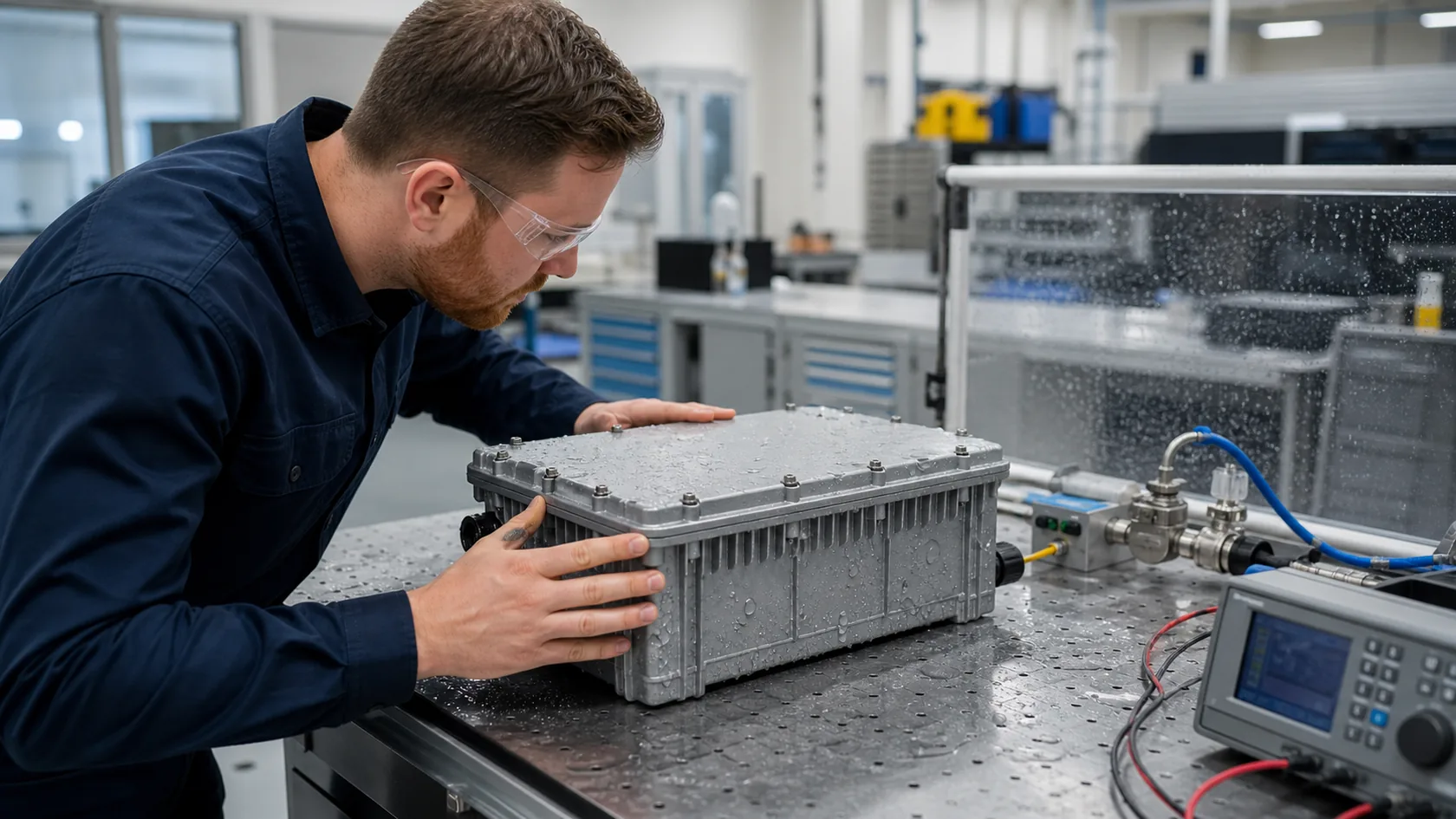
For example, IP65 usually means dust-tight and protected against water jets. But that does not automatically mean the enclosure is suitable for oil spray, chemicals, salt spray, or high impact.
NEMA 4X may include corrosion resistance, while NEMA 4 does not focus on corrosion in the same way. NEMA 12 and NEMA 13 are often used indoors, but they are not the same. Oil and coolant exposure can change the choice.
I usually tell customers that a rating is not the whole answer. It is a starting point for design.
Matching materials to protection requirements
Material and protection level must work together.
A plastic enclosure may meet a water protection target if the gasket and structure are good. A metal enclosure may fail if the cover design is poor. A stainless steel enclosure may resist corrosion but still leak if the seal is weak.
| Requirement | Material Direction | Design Detail to Check |
|---|---|---|
| Outdoor rain | Aluminum, PC, stainless steel | Gasket, cover overlap, coating |
| Factory dust | Steel, aluminum, ABS/PC | Sealing, vent filter, cable glands |
| Oil splash | Steel, aluminum, stainless steel | Seal material, surface finish |
| Salt air | Stainless steel, special coated aluminum | Corrosion testing, screw material |
| High impact | PC, steel, aluminum | Wall thickness, ribs, mounting points |
The environment is like the quiet customer who does not speak in the meeting. It says nothing at first. Then it sends complaints later.
So before I talk about beauty or price, I want to know what the enclosure will face every day.
And after the environment is clear, the next question usually comes fast: how hot will the electronics become?
How Important Is Heat Dissipation in Material Selection?
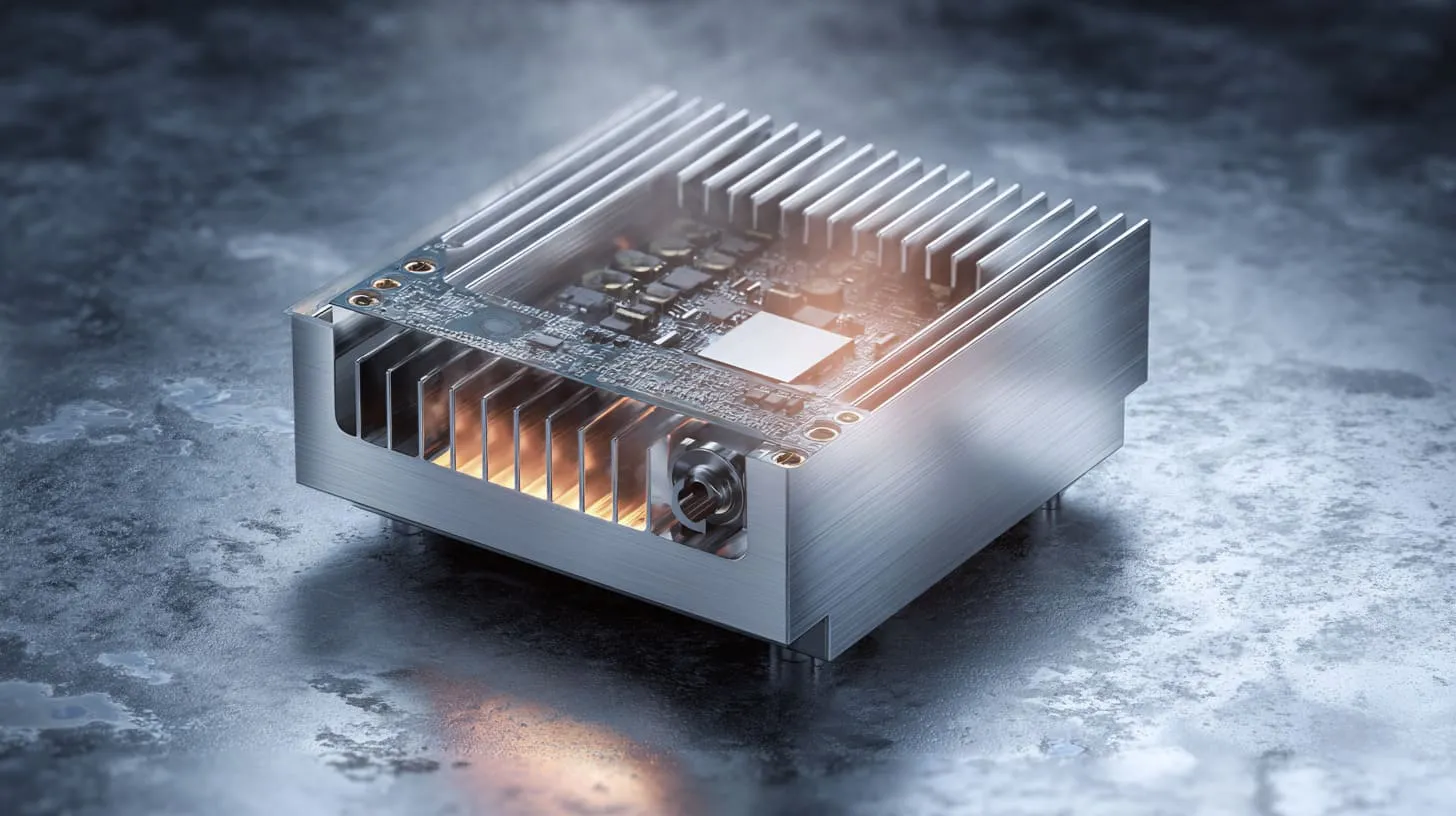
Heat is one of the most honest problems in enclosure design.
You can hide a poor surface finish in a product photo.
You can explain a small color difference.
You can adjust a logo position.
But heat does not listen to excuses.
If the enclosure traps heat, the PCB suffers. Components age faster. Performance becomes unstable. The customer may not complain on day one, but the problem can grow slowly inside the product.
I see this often in Raspberry Pi cases, power modules, LED controllers, communication devices, and compact industrial electronics.
A small board can create more heat than the buyer expects. A beautiful sealed box can become a warm little oven.
Thermal conductivity differences
Different materials move heat in very different ways.
Aluminum conducts heat well. Steel conducts heat less effectively than aluminum but better than plastic in many cases. Plastic is usually poor for heat transfer.
| Material | Heat Dissipation Ability | Practical Meaning |
|---|---|---|
| Aluminum | High | Good for heat-sensitive electronics |
| Steel | Medium | Strong but not as efficient as aluminum |
| Stainless steel | Low to medium | Durable but not ideal as a heat sink |
| ABS plastic | Low | May trap heat |
| Polycarbonate | Low | Strong but still not good for heat dissipation |
| PETG | Low | Not suitable for high-heat housing |
This is why aluminum is popular for Raspberry Pi cases and compact electronics.
The enclosure itself can help move heat away from the board. If the design includes contact points, thermal pads, fins, or enough wall thickness, aluminum can become part of the cooling system.
Plastic usually cannot do that unless the product has very low power or uses separate heat management.
Passive vs active cooling considerations
Cooling can be passive or active.
Passive cooling means the enclosure helps release heat without a fan. Active cooling means there may be a fan, vents, airflow path, or other cooling device.
| Cooling Method | Typical Design | Benefit | Risk |
|---|---|---|---|
| Passive cooling | Aluminum body, heat sink fins, thermal pads | Quiet, reliable, simple | Needs good contact and enough surface area |
| Ventilation | Holes, slots, airflow path | Low cost and easy | Reduces dust/water protection |
| Fan cooling | Fan and vent design | Stronger cooling | Adds noise, dust, failure point |
| External heat sink | Added heat sink part | Good for hot components | Adds cost and assembly work |
The tricky part is that cooling and protection often fight each other.
If we add vents, heat escapes more easily. But dust and water can enter more easily.
If we seal the enclosure tightly, protection improves. But heat may build up inside.
This is where things often go wrong: I do not only ask how hot the component gets; I ask whether the customer also wants the enclosure sealed, because these two requirements can pull the design in opposite directions.
When aluminum becomes necessary
Aluminum becomes very attractive when the product is compact and heat is not easy to remove.
For example:
- Raspberry Pi or similar single-board computer cases
- LED controller housings
- Power supply enclosures
- Motor control boxes
- Communication modules
- Outdoor electronics under sun exposure
- Industrial devices running for long hours
A plastic case may look fine for the first sample. But after long running time, heat can change the story.
I once saw a small device where the customer wanted a plastic housing because the first goal was low cost. The board was small. The enclosure looked simple. But the device worked all day in a warm indoor space. After we checked the power and heat position, aluminum became the safer choice. The customer did not like the higher unit cost at first. Later, he agreed because field failure would cost more.
That is the boring truth of heat.
The expensive choice may be cheaper than the failed choice.
Heat design checklist
Before confirming material, I like to ask these questions:
| Question | Why I Ask |
|---|---|
| What is the heat source inside? | The material must support the real component load. |
| How many hours does the device run each day? | Long running time increases heat risk. |
| Is the enclosure sealed? | Sealing may trap heat. |
| Is the product used outdoors? | Sunlight can raise internal temperature. |
| Can the hot component touch the enclosure? | Contact can help transfer heat. |
| Can we use thermal pads or fins? | Small design changes may solve big heat problems. |
Heat is not always visible in the drawing. But it is always present in the final product.
Once heat is under control, another invisible problem often appears: electrical noise.
How Does EMC/EMI Shielding Influence Material Choice?
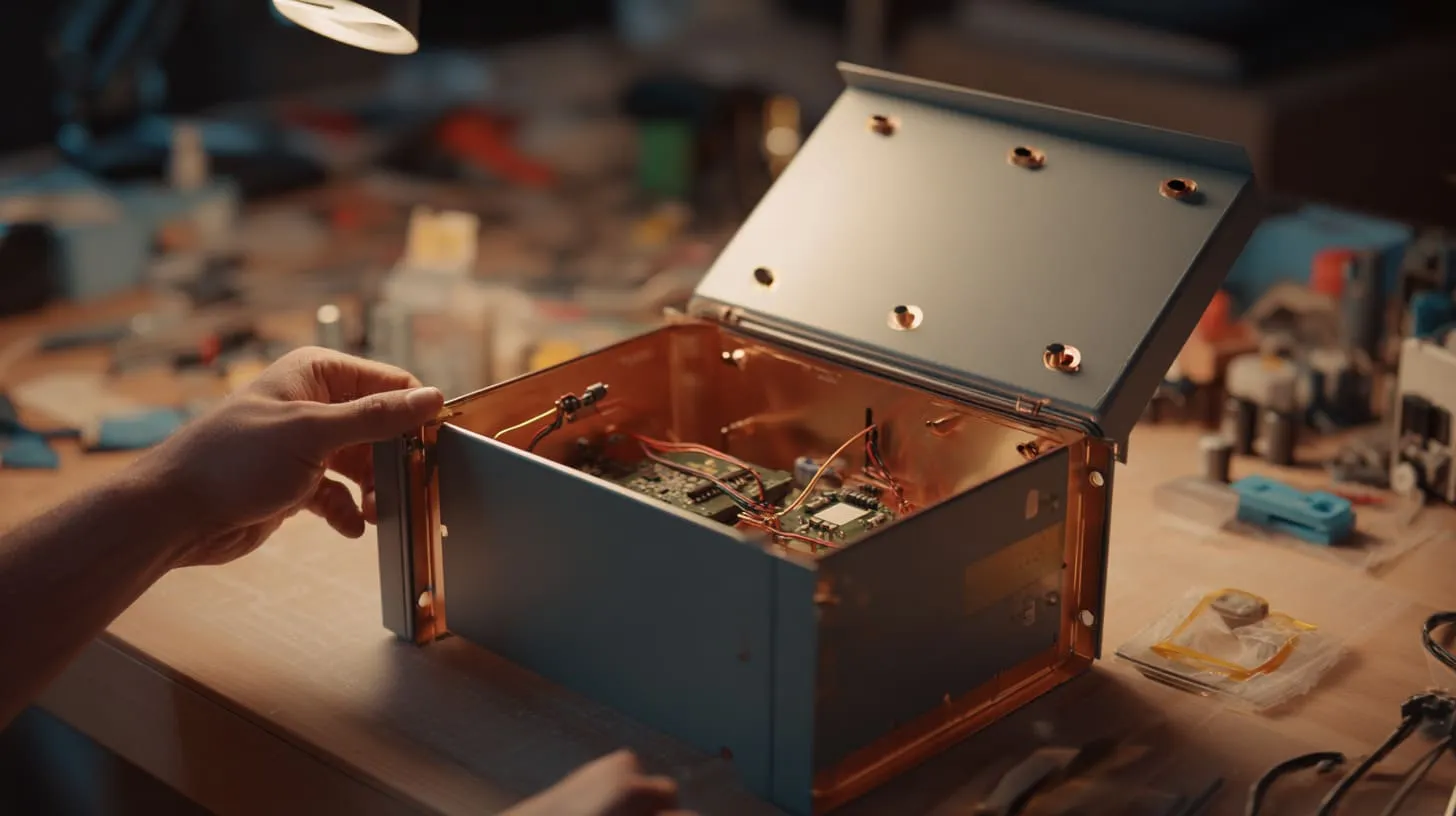
EMC and EMI are not the most exciting words in enclosure design.
Many buyers do not mention them in the first email. They talk about size, material, color, holes, logo, and price. That is normal. Those details are easier to see.
But interference problems can be painful after the product is built.
A device may restart.
A signal may become unstable.
A test may fail.
A product may work in the office but fail near other equipment.
That is when the enclosure material becomes more than a shell. It becomes part of the electrical design.
Why shielding matters
EMI means electromagnetic interference. EMC means the product can work properly in its electromagnetic environment and not disturb other devices too much.
In simple words, electronic products can both receive and create noise.
If the device is used near motors, wireless modules, power equipment, communication devices, or industrial machines, shielding may become important.
| Situation | Possible Risk |
|---|---|
| Wireless device inside enclosure | Poor signal if metal blocks antenna |
| High-speed PCB | Noise may escape or enter |
| Industrial equipment nearby | External interference may affect device |
| Certification testing | EMC failure can delay product launch |
| Plastic housing | May need extra shielding treatment |
The interesting part is that shielding is not always about choosing metal blindly.
Metal helps shielding. But if the product needs wireless communication, the metal enclosure may block the signal. Then we may need an antenna window, plastic section, external antenna, or special layout.
I have to think like both a factory and a user here. If I only make a beautiful metal box and the signal becomes weak, the enclosure still fails the product.
Metal vs plastic enclosures
Metal enclosures usually provide better natural shielding than plastic enclosures.
Aluminum and steel can help block electromagnetic noise. But the shielding effect depends on real design details.
A metal box with large gaps, poor grounding, painted contact areas, or loose cover joints may not perform as well as expected.
Plastic enclosures do not naturally shield well. But they may be better for wireless devices because signals can pass through more easily.
| Material | Shielding Ability | Signal Friendly | Practical Note |
|---|---|---|---|
| Aluminum | Good | Poor for internal antenna | Good if grounding and seams are designed well |
| Steel | Good | Poor for internal antenna | Strong shielding but heavier |
| Stainless steel | Good | Poor for internal antenna | Used when corrosion is also a concern |
| ABS plastic | Poor | Good | May need coating if EMC matters |
| Polycarbonate | Poor | Good | Stronger plastic option |
| Plastic with conductive coating | Medium to good | Depends on coating area | Extra process and cost |
Limitations of plastic housings
Plastic housings are easy to like.
They are light.
They can be molded into nice shapes.
They can support wireless signals.
They can reduce cost in larger production.
But when EMC matters, plastic needs help.
Common solutions include:
- Conductive coating inside the enclosure
- Copper or aluminum foil shielding
- Metal inserts or shielding plates
- Grounding design
- Conductive gaskets
- PCB-level shielding cans
Each method adds cost and process control.
If the project is small batch, conductive coating may make the price less attractive. If the project is high volume, the tooling and process may still make sense.
Conductive coatings and shielding tapes
Conductive coating is often used inside plastic enclosures. It can help improve shielding while keeping the outside plastic appearance.
Shielding tape is useful for some small areas or prototypes. But I do not like relying on tape for every project because tape quality, worker handling, and long-term adhesion can create risks.
| Shielding Method | Good For | Concern |
|---|---|---|
| Conductive coating | Plastic housings with EMC needs | Extra cost and quality control |
| Metal shielding plate | Local protection | Adds assembly steps |
| Conductive gasket | Seams and cover joints | Compression must be stable |
| Shielding tape | Prototype or small area | Manual work and long-term reliability |
| Metal enclosure | General shielding | Signal and grounding design must be checked |
When I review EMC needs, I look for the weak points first: seams, cable openings, coating breaks, antenna position, and grounding points. The enclosure body may look strong, but the small openings often decide the real result.
This is one reason why material choice cannot be separated from product function.
A strong enclosure is not enough. A cool enclosure is not enough. A beautiful enclosure is not enough.
The enclosure also needs to survive physical use.
What Role Does Mechanical Strength and Durability Play?
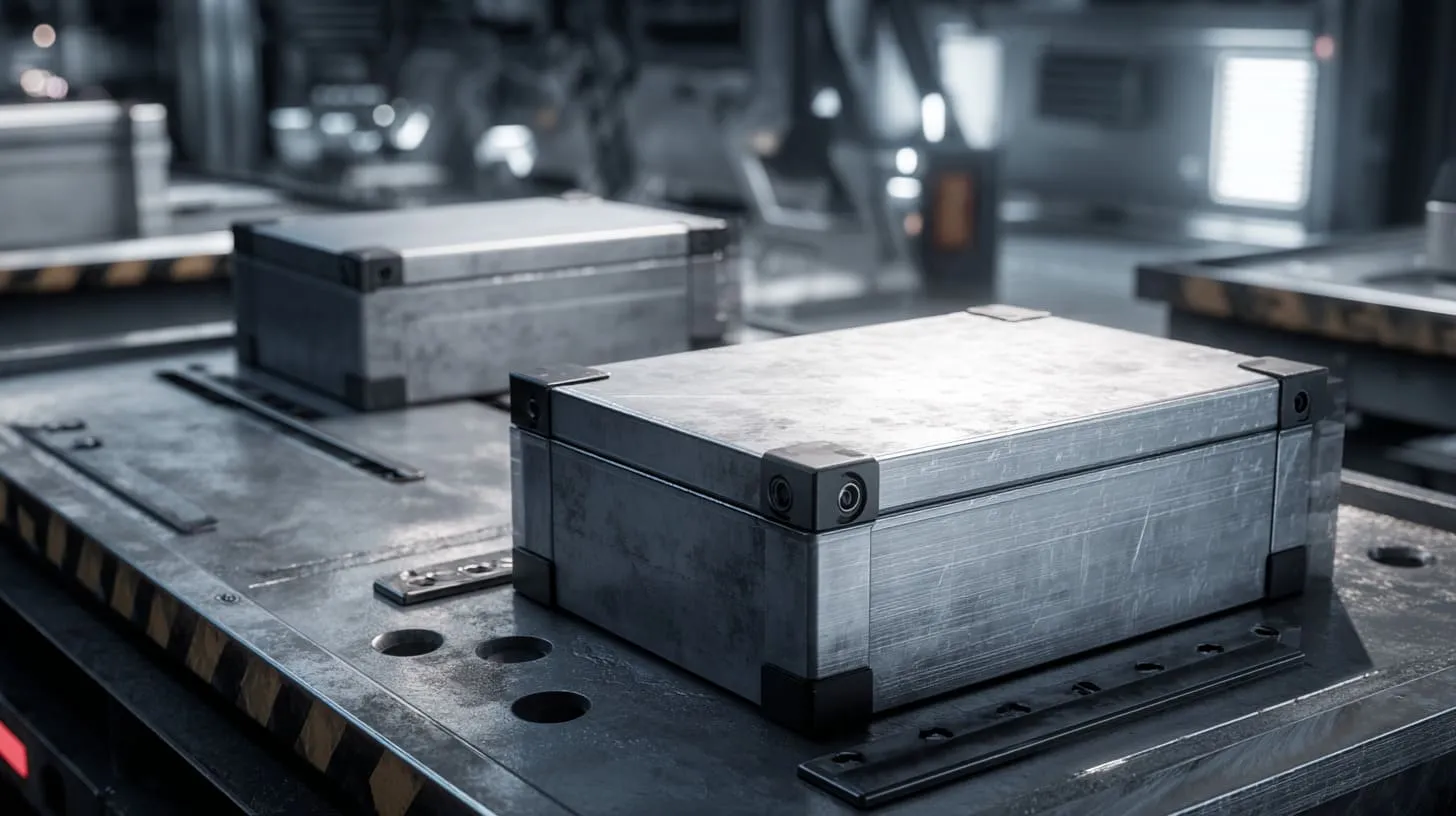
Mechanical strength is easy to misunderstand.
Some customers hold a sample and press it by hand. If it feels solid, they feel safe. I understand that. I also do it sometimes. The hand gives quick feedback.
But real durability is more than hand feeling.
The enclosure may be dropped during assembly.
A worker may overtighten screws.
A cable may pull on the gland.
A product may vibrate inside a machine.
A cover may be opened again and again.
This is where small design decisions become big.
Impact resistance and load requirements
Different materials fail in different ways.
Plastic may crack, deform, or whiten under stress. Aluminum may dent. Steel may bend but still hold shape. Stainless steel may resist corrosion and strength loss better in harsh environments.
| Material | Impact Behavior | Load Strength | Common Concern |
|---|---|---|---|
| ABS | Fair | Low to medium | Can crack under impact or age in harsh conditions |
| Polycarbonate | Very good | Medium | Better impact resistance but higher cost |
| Aluminum | Good | Medium to high | Can dent, wall thickness matters |
| Carbon steel | Very good | High | Rust risk without finish |
| Stainless steel | Very good | High | Higher cost and processing difficulty |
For many electronic products, strength does not mean making the enclosure as thick as possible.
Too thick means higher cost, more weight, harder machining, and sometimes poor assembly. Too thin means flexing, vibration, weak threads, and poor customer impression.
The right thickness is a balance.
Plastic vs metal strength comparison
Plastic and metal should not be compared only by strength. They solve different problems.
Plastic is useful when the product needs low weight, low cost, wireless signal, and shape flexibility. Metal is useful when the product needs heat control, shielding, higher strength, and a premium or industrial feel.
| Need | Plastic Advantage | Metal Advantage |
|---|---|---|
| Light weight | Good | Aluminum is also good, steel is heavier |
| Impact resistance | PC performs well | Steel and aluminum perform well |
| Heat control | Weak | Aluminum is strong |
| EMC shielding | Weak without coating | Good with proper grounding |
| Complex shape | Good with molding | Good with die casting or CNC, but cost varies |
| Small batch customization | CNC plastic possible, but not always ideal | Aluminum and sheet metal often flexible |
I often ask customers how the enclosure will be handled, not only how it will be installed. A product can be designed for a clean table but damaged by real workers, real packaging, and real maintenance habits.
That point is easy to miss.
Long-term durability
Durability is not only about the first month.
It includes corrosion, aging, screw wear, coating damage, and long-term assembly stability.
For outdoor or industrial use, I pay close attention to:
- Surface coating
- Screw material
- Thread strength
- Wall thickness
- Mounting points
- Gasket aging
- UV resistance
- Chemical exposure
- Vibration
- Cable entry support
A weak mounting ear can destroy a good enclosure. A poor screw boss can fail after several openings. A sharp internal corner can create stress cracks. A thin cover can bend and break the seal.
These details are not dramatic. But they decide whether the customer trusts the product after one year.
Application-based decisions
The right material changes with the application.
| Application | Durability Priority | Material Direction |
|---|---|---|
| Handheld device | Drop resistance, grip, light weight | PC, ABS+PC, aluminum |
| Industrial control box | Strength, mounting, dust protection | Steel, aluminum |
| Outdoor electronics | UV, rain, temperature | PC, coated aluminum, stainless steel |
| Machine-side enclosure | Oil, vibration, impact | Steel, aluminum, stainless steel |
| Raspberry Pi project case | Heat, machining, branding | Aluminum, ABS, PC |
| Retail electronic display | Appearance, weight, cost | Aluminum, ABS, PC |
Durability is not about making the enclosure look tough. It is about making sure the weak points do not embarrass the product later.
And once the material seems strong enough, we still need to ask a very practical question: how will we make it?
How Does Manufacturing Method Affect Material Selection?
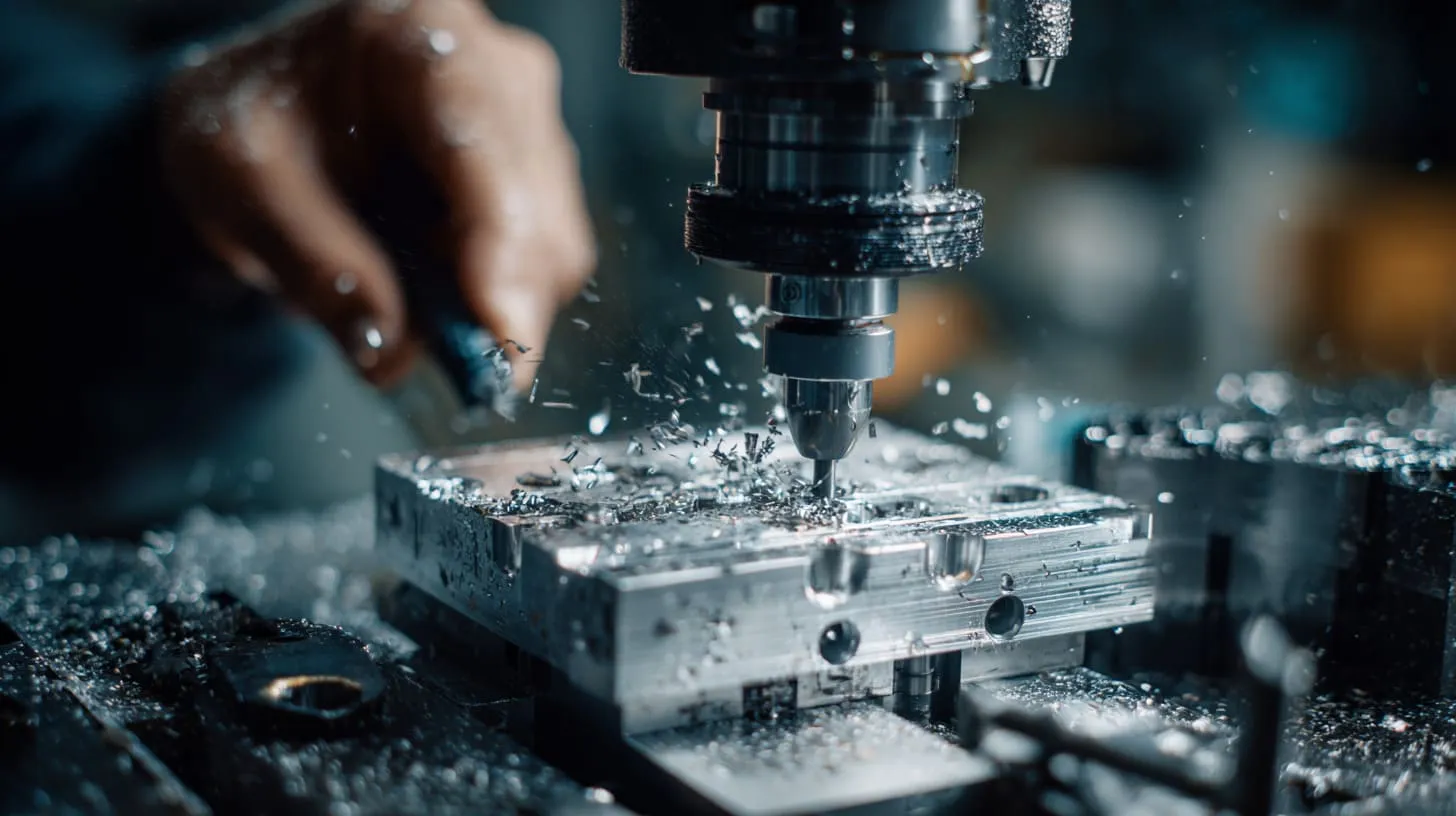
A material choice that looks perfect on paper may become difficult in production.
This is one of the most common gaps between design and manufacturing.
A product engineer may choose a material based on function. A buyer may choose based on price. A factory must think about cutting, bending, machining, molding, finishing, assembly, packaging, and repeatability.
That is why manufacturing method affects material choice so much.
CNC machining
CNC machining is useful for prototypes, small batches, and complex details.
It can work with aluminum, plastic, and some other materials. It gives flexibility. It allows design changes without expensive tooling.
But CNC cost can be high when the shape is complex or the quantity is large. Each part needs machining time. More holes, pockets, threads, and tight tolerances mean more cost.
| CNC Advantage | CNC Concern |
|---|---|
| Good for prototypes | Higher unit cost |
| Flexible design changes | Slow for large volume |
| Good precision | Complex parts cost more |
| No large mold cost | Material waste may be higher |
I like CNC when the customer is still testing the design. It gives room to learn. But I do not like pretending CNC is always the best solution after the design becomes stable and volume grows.
Extrusion
Aluminum extrusion is very practical for many electronic enclosures.
The factory makes a long aluminum profile. Then the profile can be cut into different lengths. End plates can be machined. Holes can be added. Surface finish can be done.
This method works well for products with a consistent cross-section.
Examples include:
- Electronic module housings
- Power supply cases
- Raspberry Pi style enclosures
- Industrial controller boxes
- Communication device housings
| Extrusion Advantage | Extrusion Concern |
|---|---|
| Good surface and strength | Shape must follow extrusion logic |
| Efficient for different lengths | Initial die may be needed |
| Good for heat dissipation | Complex 3D shapes are limited |
| Easy branding and machining | End plate design matters |
Extrusion is often a smart middle path. It is more custom than a ready-made box but not as expensive as full die casting for many projects.
Die casting
Die casting works well for complex metal housings and larger production volumes.
It allows more shape freedom than extrusion. It can include bosses, ribs, mounting features, and detailed structures. But tooling cost is higher. Design must be more stable before opening a mold.
If the customer only needs 100 pieces, die casting is usually not the first choice. If the customer needs thousands or tens of thousands of pieces, it may become more attractive.
| Die Casting Advantage | Die Casting Concern |
|---|---|
| Good for complex shapes | High tooling cost |
| Lower unit cost at volume | Design changes are expensive |
| Strong and repeatable | Tooling lead time needed |
| Good for branded product housings | Surface and tolerance need planning |
The uncomfortable truth is that some customers want die-cast appearance with prototype quantity and prototype budget. I understand why. Everyone wants the final look early. But manufacturing has its own math.
Sheet metal fabrication
Sheet metal fabrication is common for industrial enclosures.
The process may include laser cutting, bending, welding, grinding, powder coating, and assembly. It is flexible and useful for custom sizes.
Materials can include steel, stainless steel, or aluminum sheet.
| Sheet Metal Advantage | Sheet Metal Concern |
|---|---|
| Good for custom boxes | Bend radius and structure must be considered |
| Suitable for small and medium batches | Welding and finish affect appearance |
| Strong and practical | Complex curves are limited |
| Good for industrial use | Tolerance stack-up needs control |
Sheet metal is a very honest process. It works well when the design respects bending, joints, cover structure, and finishing.
Injection molding
Injection molding is common for plastic enclosures in high-volume projects.
It can produce complex shapes with lower unit cost after tooling. But mold cost is high. Design changes can be expensive.
Plastic material choice also matters. ABS, PC, ABS+PC, and other plastics behave differently during molding.
| Injection Molding Advantage | Injection Molding Concern |
|---|---|
| Low unit cost at volume | High mold cost |
| Complex shapes possible | Design must be stable |
| Good appearance control | Material shrinkage needs design care |
| Fast production after mold | Not ideal for very small quantities |
For ODM projects, I always want to know the target quantity and product life before suggesting injection molding. A mold can be a smart investment. It can also become an expensive mistake if the design changes too soon.
Production method comparison
| Method | Best Quantity | Best Material | Best Use |
|---|---|---|---|
| CNC machining | Prototype to small batch | Aluminum, plastic | Testing, complex custom parts |
| Extrusion | Small to large batch | Aluminum | Profile-based electronic enclosures |
| Die casting | Medium to large batch | Aluminum, zinc alloy | Complex metal housings |
| Sheet metal | Small to medium batch | Steel, stainless steel, aluminum | Industrial boxes and panels |
| Injection molding | Large batch | ABS, PC, ABS+PC | Plastic product housings |
The factory process is not a detail after material selection. It is part of the material decision from the beginning.
And once we know how to make the enclosure, the next hard question arrives: how much should it cost?
How Do Cost and Budget Influence Material Decisions?
Cost is not only the price of material.
This is one thing I wish more buyers could see early.
A cheap material can create expensive finishing.
A low unit price can hide high tooling cost.
A light enclosure can reduce shipping cost.
A strong material can reduce after-sales problems.
A poor material choice can force a redesign.
When a customer asks, “Which material is cheapest?” I understand the question. Budget matters. Every project has limits. But I usually try to bring the conversation back to total cost, not only material price.
Material cost comparison
In a simple view, plastic is often cheaper than aluminum. Carbon steel may be cost-effective for industrial boxes. Stainless steel is usually more expensive. But this view is too simple if we stop there.
| Material | Material Cost | Processing Cost | Shipping Weight | Long-Term Risk |
|---|---|---|---|---|
| ABS plastic | Low | Low to medium | Low | Heat, UV, shielding limits |
| Polycarbonate | Medium | Medium | Low | Higher cost than ABS |
| Aluminum | Medium to high | Medium | Low to medium | Good balance |
| Carbon steel | Low to medium | Medium | High | Rust if finish is poor |
| Stainless steel | High | High | High | Strong but costly |
A steel enclosure may have a lower material price than aluminum, but it may be heavier. That affects shipping. It may also need powder coating or other surface protection. Aluminum may cost more per kilogram, but it is lighter and easier to use for heat control.
This is why unit price alone can mislead buyers.
Hidden costs
Hidden costs are quiet at first.
They usually appear after the sample stage, during mass production, shipping, assembly, or field use.
| Hidden Cost | Example |
|---|---|
| Tooling cost | Injection mold, die casting mold, extrusion die |
| Surface finish cost | Anodizing, powder coating, painting, polishing |
| Machining cost | Holes, threads, countersinks, tight tolerances |
| Assembly cost | Inserts, gaskets, screws, labels |
| Packaging cost | Heavy or scratch-sensitive products need better packing |
| Shipping cost | Steel may increase freight cost |
| Rework cost | Poor material choice may need redesign |
| After-sales cost | Heat failure, cracking, corrosion, customer complaints |
I once worked on a project where the customer wanted to reduce the wall thickness to lower cost. On paper, the saving looked nice. But the cover started to flex too much. The sealing became less stable. The product still worked, but it felt cheap in the hand.
That is a dangerous kind of saving.
The customer may not complain with words. But he may not reorder.
Balancing cost vs performance
Good cost control does not mean choosing the cheapest material. It means choosing the material that gives enough performance without waste.
Here is how I often think:
| Project Need | Cost-Smart Material Thinking |
|---|---|
| Low-power indoor device | ABS or simple aluminum may work |
| Heat-sensitive electronics | Aluminum may reduce failure risk |
| Outdoor product | PC, coated aluminum, or stainless steel may be needed |
| Industrial control box | Steel or aluminum can be practical |
| High-volume plastic product | Injection molding may reduce unit cost |
| Small custom batch | CNC, extrusion, or sheet metal may be better |
The real danger is not spending money. The real danger is spending money in the wrong place.
Sometimes a customer pays for a premium surface finish but ignores gasket quality. Sometimes he pays for stainless steel but does not need corrosion resistance. Sometimes he saves money on material but later spends more on rework.
Before I reduce cost, I try to protect the function first. A cheaper enclosure that fails the main job is not cheaper. It is only delayed trouble.
Cost is serious. But appearance also matters, especially when the enclosure becomes part of the product brand.
What Surface Finishes and Aesthetics Should Be Considered?
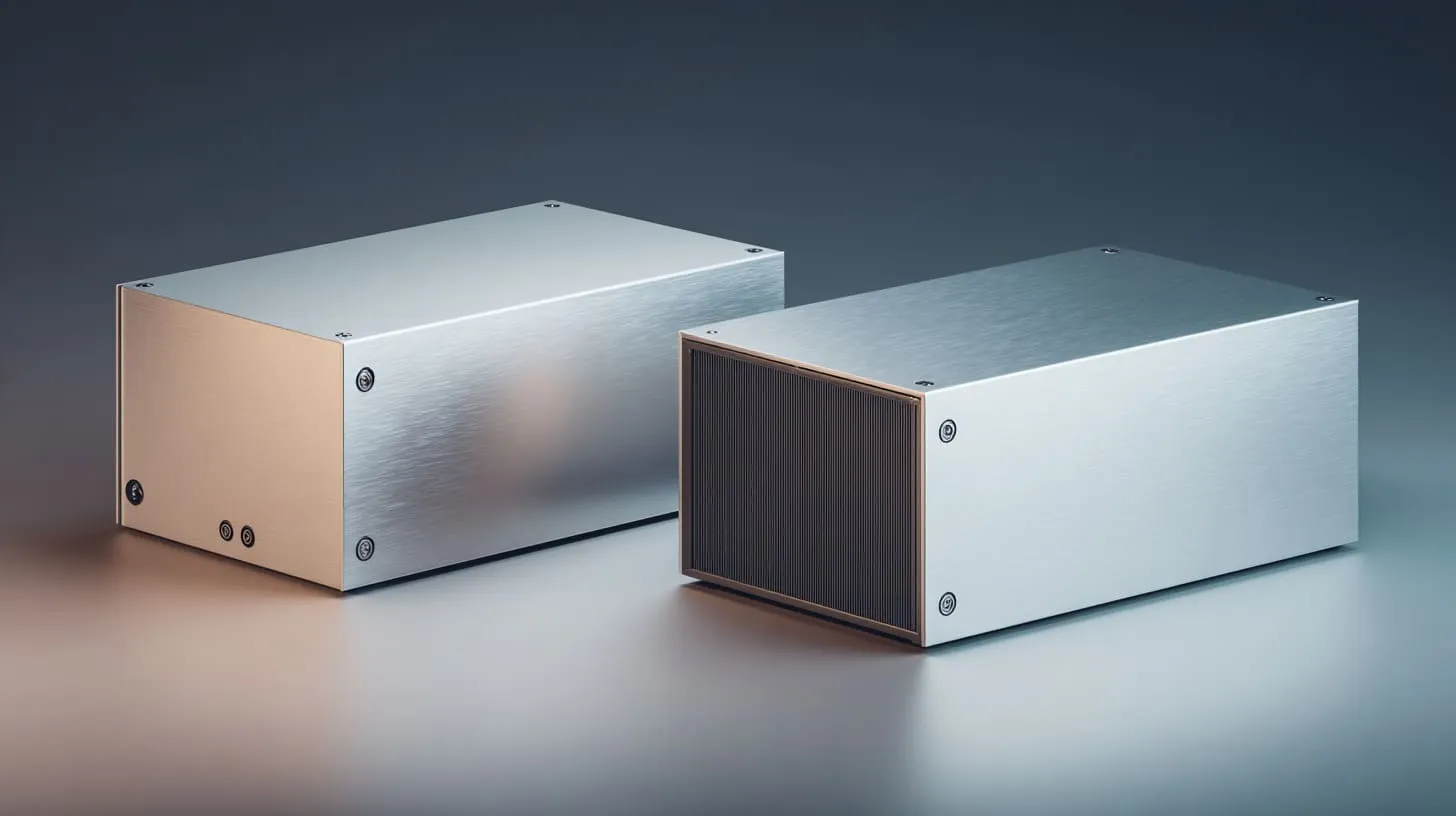
Surface finish is where engineering meets emotion.
A customer may not understand every technical detail inside the enclosure. But he can see the surface. He can touch it. He can feel whether the product looks professional or cheap.
For B2B buyers, this matters a lot.
If the enclosure carries their logo, it becomes part of their brand. If the surface scratches easily, the whole product feels weaker. If the color is inconsistent, the customer may question the factory’s quality control.
So I never treat surface finish as decoration only.
Common finishing options
Different materials support different finishes.
| Finish | Common Material | Main Benefit | Common Concern |
|---|---|---|---|
| Anodizing | Aluminum | Clean, durable, premium look | Color difference can happen between batches |
| Powder coating | Steel, aluminum | Strong surface, many colors | Thickness may affect fit or grounding |
| Painting | Metal, plastic | Flexible colors | Durability depends on process |
| Polishing | Stainless steel, aluminum | Bright appearance | Fingerprints and scratches may show |
| Brushing | Aluminum, stainless steel | Industrial and clean look | Direction consistency matters |
| Silk screen printing | Metal, plastic | Logo and markings | Adhesion must be tested |
| Laser engraving | Aluminum, stainless steel | Durable logo | Contrast depends on material and finish |
Anodizing
Anodizing is popular for aluminum enclosures.
It gives a clean and professional finish. Black anodized aluminum is very common in electronics. Silver anodizing gives a simple technical look. Colored anodizing can support branding.
But anodizing has practical limits.
Color can vary between batches. Surface defects before anodizing may become more visible after finishing. Also, anodized surfaces are not always conductive in the same way as bare aluminum. If grounding is important, we may need to leave bare contact areas or design grounding points carefully.
When I check anodized aluminum projects, I look at both beauty and electrical function. A nice black surface is good, but I do not want that surface to quietly break a grounding plan.
Powder coating
Powder coating is common for steel and aluminum sheet metal enclosures.
It gives good protection and many color options. It can help with corrosion resistance and appearance. It is also practical for industrial control boxes.
But powder coating adds thickness. If holes, grooves, sliding parts, or cover fits are tight, coating thickness must be considered. If the enclosure needs electrical contact, coating may need to be removed at grounding points.
| Powder Coating Detail | Why It Matters |
|---|---|
| Coating thickness | Can affect assembly fit |
| Color consistency | Important for branded products |
| Edge coverage | Poor coverage may cause corrosion |
| Grounding area | Coating may block conductivity |
| Surface preparation | Poor prep can cause peeling |
Branding and customization
For many MaidaTech customers, the enclosure is not only a protective shell. It is part of the product they sell.
That means logo and branding matter.
Common options include:
- Laser engraving
- Silk screen printing
- UV printing
- Pad printing
- Labeling
- Custom packaging
- Color matching
- Surface texture matching
| Logo Method | Best For | Concern |
|---|---|---|
| Laser engraving | Aluminum, stainless steel | Very durable, but color contrast varies |
| Silk screen printing | Flat surfaces | Ink adhesion must be controlled |
| UV printing | Colorful logos | Surface compatibility matters |
| Pad printing | Curved or small areas | Setup and consistency need control |
| Label | Low-cost branding | May look less premium |
I have seen buyers spend many hours adjusting the logo size by 1 mm. Some people may laugh at that. I do not.
For a re-brand customer, the logo is not a small detail. It is what his customer remembers.
Functional finishes
A finish can also serve a function.
It can resist corrosion.
It can reduce scratches.
It can improve insulation.
It can support cleanliness.
It can affect electrical contact.
| Finish Function | Example |
|---|---|
| Anti-corrosion | Powder coating, anodizing, stainless steel polishing |
| Anti-scratch | Hard anodizing, textured powder coating |
| Electrical insulation | Plastic coating, powder coating |
| Conductive contact | Bare metal areas, masking before coating |
| Outdoor durability | UV-resistant coating |
| Clean surface | Brushed or polished stainless steel |
The surface tells the customer a story before the product even turns on.
But surface finish only works well if the structure also supports customization. That brings us to another important question.
How to Match Material Choice with Customization Needs?
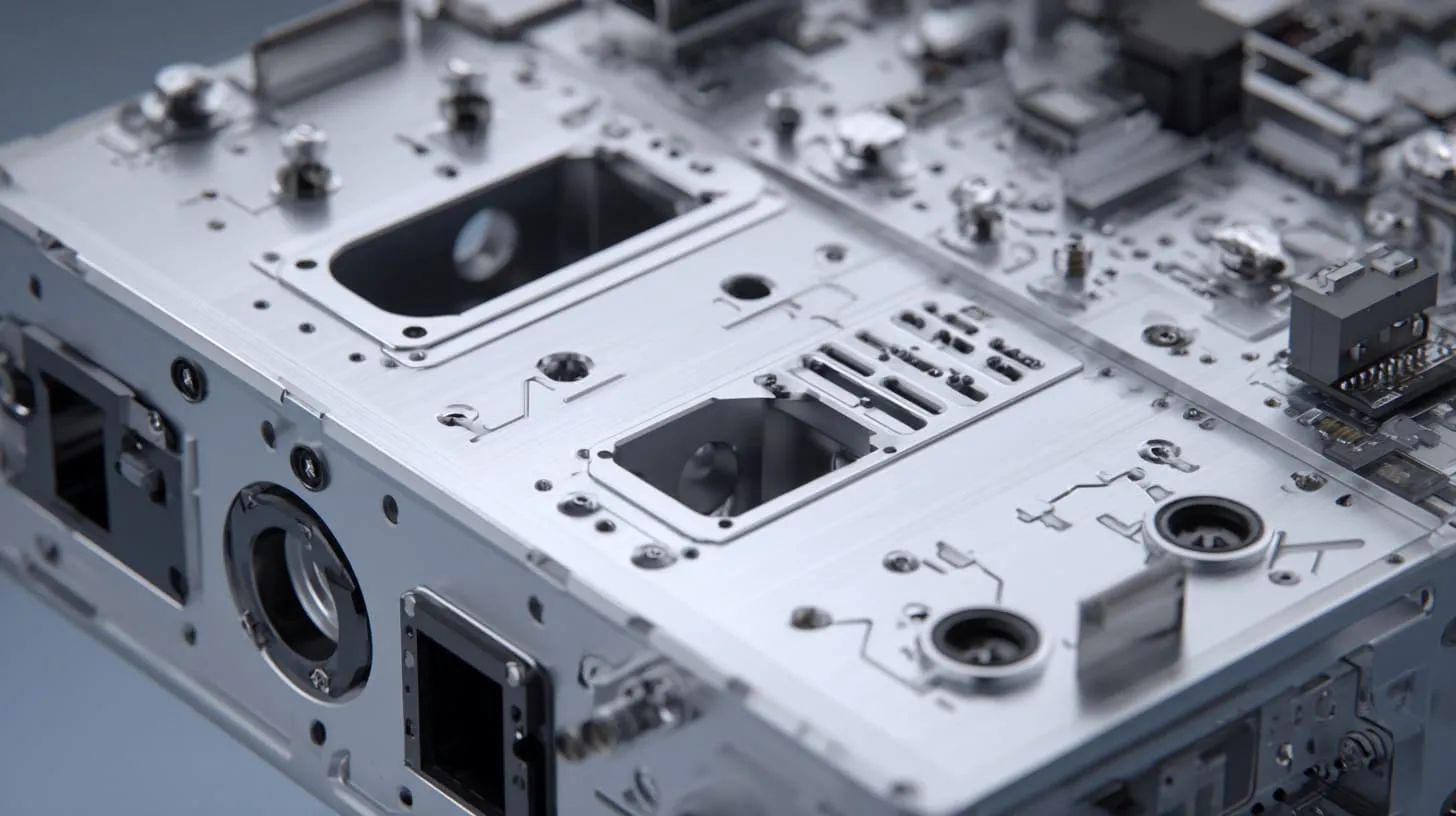
Custom enclosure projects rarely stay simple.
At first, a customer may ask for a box with a few holes. Then the real needs appear.
A USB port must move 2 mm.
A logo must sit on the top cover.
A cable gland needs more space.
The PCB standoff height changes.
The customer wants a new color.
The product needs better heat control.
The packaging needs to match the brand.
This is normal. Custom projects breathe and move.
Material choice must leave enough room for these changes.
Design flexibility
Some materials and processes are easier to customize than others.
CNC aluminum is flexible for small batches. Sheet metal is also flexible for size changes, cutouts, and mounting features. Extrusion is flexible in length but limited by profile shape. Injection molding is flexible in final shape, but not flexible after the mold is made.
| Material / Process | Custom Flexibility | Best Stage |
|---|---|---|
| CNC aluminum | Very high | Prototype and small batch |
| Sheet metal | High | Custom industrial projects |
| Aluminum extrusion | Medium | Stable profile design |
| Die casting | Medium before tooling, low after tooling | Stable volume projects |
| Injection molding | High before tooling, low after tooling | High-volume stable design |
| CNC plastic | Medium to high | Prototype or small batch |
For ODM customers like John, ideas often change during development. That is not a problem. Creative projects need testing. But the production method must match that reality.
I become careful when a customer wants to open a mold too early. If the PCB, port layout, or internal structure may still change, mold cost can become a trap.
Complex shapes vs simple structures
A simple enclosure can often be made with sheet metal, extrusion, or CNC.
A complex enclosure may need die casting or injection molding.
But complex is not always better.
A simple structure can be easier to assemble, easier to seal, easier to repair, and cheaper to produce. A complex structure can look beautiful but create more tooling, tolerance, and assembly risks.
| Design Style | Benefit | Risk |
|---|---|---|
| Simple box | Lower cost, easy production | May look less unique |
| Extruded profile | Clean and professional | Shape is limited by profile |
| CNC custom body | Flexible and precise | Higher unit cost |
| Die-cast housing | Complex and strong | Tooling cost and design lock-in |
| Molded plastic shell | Good appearance and volume cost | Mold changes are expensive |
What I often check is whether a design feature is needed for function or only added because it looks nice in 3D. Nice details are welcome, but every detail must pay rent in the project.
That is how I think about manufacturable design.
Custom cutouts and modifications
Electronic enclosures often need many cutouts.
These may include:
- USB ports
- HDMI ports
- Ethernet ports
- Power connectors
- Switch holes
- LED windows
- Ventilation slots
- Antenna holes
- Mounting holes
- Cable glands
- Display windows
Each hole has a cost. Each hole also has a tolerance risk.
If the cutout is too small, the connector cannot fit. If it is too large, the product looks loose or unprofessional. If the hole edge is not finished well, the product feels cheap.
| Custom Feature | Material Concern |
|---|---|
| Small ports | CNC accuracy or mold accuracy matters |
| Large display window | Flatness and edge finish matter |
| Threads | Metal works better, plastic may need inserts |
| Repeated opening | Metal threads or inserts may help |
| Vent slots | Dust and water protection may decrease |
| Antenna opening | Material must support signal design |
OEM/ODM considerations
OEM and ODM projects need more than a material suggestion.
They need support from design to sample to production.
For OEM projects, the customer may already have drawings. We must check whether the chosen material matches the drawing, function, and production quantity.
For ODM projects, the customer may only have an idea, a PCB, or a reference product. We may need to suggest structure, material, process, finish, and packaging.
| Project Type | Customer Usually Provides | Factory Support Needed |
|---|---|---|
| OEM | Drawing, logo, material request | Manufacturing check, cost control, quality control |
| ODM | Idea, PCB, sample, reference product | Design advice, material suggestion, prototyping |
| Re-brand | Logo, color, package request | Surface finish, printing, packaging support |
| Industrial custom | Size, environment, mounting needs | Material, protection, structure, production control |
A good material choice should support the customer’s business model, not only the product itself.
A local re-seller may care about logo and packaging.
A product engineer may care about tolerance and assembly.
A project buyer may care about delivery time.
An end-use customer may care about durability.
The enclosure must connect all these needs.
And this is also why mistakes happen so easily.
What Are the Most Common Mistakes When Choosing Enclosure Materials?
Most material mistakes do not look foolish in the beginning.
They usually sound reasonable.
“We want to save cost.”
“We want it stronger.”
“We want it lighter.”
“We want it waterproof.”
“We want it like this sample.”
“We want it ready fast.”
These are all normal requests. The problem comes when one request becomes the only thing people see.
Mistake 1: over-focusing on price
Price matters. I know this very well.
Many buyers compare suppliers from China, Vietnam, Europe, and local markets. They need competitive prices. They need margin. They need to win projects.
But if price becomes the only decision, material choice can become dangerous.
A cheaper plastic may not handle heat.
A thinner metal sheet may feel weak.
A lower coating quality may fail outdoors.
A cheaper screw may rust.
A cheaper gasket may leak.
| Low-Cost Choice | Possible Later Problem |
|---|---|
| Thin wall thickness | Flexing, weak threads, poor feel |
| Basic plastic | Heat deformation, UV aging |
| Poor coating | Rust, peeling, color issues |
| Low-grade screws | Corrosion, stripped heads |
| No shielding | EMC test failure |
| No gasket review | Water or dust entry |
The price on the quotation is only one number. The cost of failure is usually harder to see, but it hurts more.
Mistake 2: ignoring real environment
Many buyers describe the project in simple words.
Indoor.
Outdoor.
Factory.
Machine.
Consumer product.
Industrial product.
But material choice needs more detail.
For example, “outdoor” may mean under a roof in mild weather. Or it may mean direct sun, heavy rain, dust, salt air, and temperature change.
“Factory” may mean a clean assembly line. Or it may mean oil, coolant, metal dust, vibration, and daily cleaning.
The material cannot read the customer’s mind. It only reacts to the environment.
The question I ask myself before confirming material is simple: if this enclosure fails after six months, what hidden condition will probably be blamed first?
That question pushes me to ask better questions early.
Mistake 3: choosing metal without thinking about signal
Metal looks strong. Metal feels professional. Metal helps with shielding and heat.
But if the device needs Wi-Fi, Bluetooth, GPS, LTE, or other wireless signals, metal may create trouble.
A fully metal enclosure can block or weaken the signal. The solution may be an external antenna, a plastic window, a special cutout, or a different layout.
| Wireless Need | Material Risk | Possible Solution |
|---|---|---|
| Wi-Fi inside enclosure | Metal blocks signal | External antenna or plastic window |
| Bluetooth device | Signal range may drop | Antenna position review |
| GPS module | Needs clear signal path | Non-metal area or external antenna |
| LTE/4G/5G module | Signal loss risk | Antenna design must be planned |
This is a good example of why “stronger” does not always mean “better.”
Mistake 4: choosing plastic without thinking about heat and EMC
Plastic is easy to like. It is light and cost-friendly. It also supports wireless signals.
But if the device creates heat or needs EMC protection, plastic must be reviewed carefully.
The customer may need:
- More internal space
- Ventilation
- Heat sink
- Flame-retardant grade
- Conductive coating
- Metal insert
- Better wall thickness
- Different plastic grade
A plastic enclosure can be a smart choice. But it should not be chosen only because it is cheaper.
Mistake 5: opening tooling too early
This mistake is painful.
A customer opens a mold before the PCB design is fully stable. Then a connector moves. A screw boss changes. A wall needs more clearance. A cable port shifts. Now the mold needs modification.
That costs money and time.
For early-stage projects, I often prefer CNC samples, sheet metal samples, or simpler prototype methods before full tooling.
| Project Stage | Safer Choice |
|---|---|
| Idea stage | 3D model review, simple prototype |
| PCB not finalized | CNC or temporary housing |
| Function testing | CNC, sheet metal, or 3D printed sample |
| Design confirmed | Tooling can be considered |
| Stable volume demand | Mold or die casting becomes more reasonable |
Mistake 6: poor communication with suppliers
This one is very real.
A customer may send a drawing but not explain the working environment.
A supplier may quote quickly but not ask enough questions.
Both sides may think the details are clear.
Then the sample exposes the gap.
Good communication saves projects.
Before quoting or production, I like to confirm:
| Detail | Why It Matters |
|---|---|
| Use environment | Decides material and finish |
| Internal PCB size | Decides clearance and mounting |
| Heat source | Decides cooling design |
| Quantity | Decides process and cost |
| Surface requirement | Decides finish and logo method |
| Protection level | Decides gasket and structure |
| Certification needs | Decides material and design details |
| Target cost | Helps balance performance and budget |
| Delivery schedule | Affects process choice |
A material mistake is rarely only a material mistake. It is often a communication mistake wearing a material name tag.
The better we talk early, the fewer surprises we face later.
Conclusion
Choosing materials for custom electronic enclosures is not a clean textbook decision.
It is a real project decision.
The right material must match the environment, heat, EMC needs, strength, surface finish, customization plan, production method, budget, and future use. Aluminum, steel, stainless steel, ABS, PC, and PETG can all be good choices. They can also all be wrong choices if the project conditions are misunderstood.
There is no best enclosure material for every product. There is only the most suitable material for one specific product, one specific environment, and one specific business goal.
If I had to simplify the whole process, I would think like this:
| Key Question | Why It Matters |
|---|---|
| Where will the enclosure be used? | Environment decides protection needs. |
| How much heat will the electronics create? | Heat may push the choice toward aluminum. |
| Does the product need wireless signal? | Metal may block the signal. |
| Does the product need EMC shielding? | Plastic may need extra treatment. |
| How strong must the housing be? | Material and wall thickness must match use. |
| What quantity is needed? | Process choice depends on volume. |
| What surface look is required? | Finish affects cost, branding, and function. |
| Will the design change later? | Tooling too early can create waste. |
My final check is always practical: I want the enclosure to protect the electronics, support the product brand, stay stable in real use, and still make sense in cost and production.
That sounds simple. But simple does not mean easy.
If you are developing a custom electronic enclosure, you do not need to guess the material alone. You can start with your PCB size, working environment, quantity, surface requirement, and target budget. Then we can review the trade-offs together and choose a material that fits the real project, not just the drawing.
At MaidaTech, we work with custom aluminum enclosures, plastic enclosures, sheet metal enclosures, Raspberry Pi cases, and OEM/ODM enclosure projects for B2B customers. If you already have a drawing, a sample, or even only an idea, you can send it to us for review.
A good enclosure starts with the right material.
But the right material starts with the right questions.