Skip to content


Dust is not a single exposure. Fine mineral powder, flour, fibers, metal fines, packaging lint, and outdoor windblown grit behave differently around seams, hinges, cooling paths, and cable entries. Yet I still receive RFQs that say only “dust-tight enclosure” and leave the working environment blank.
That wording can lead to the wrong enclosure, the wrong accessory, or an untestable promise. This FAQ explains how to read the common NEMA enclosure choices, what they do not mean, and what I ask buyers to define before we design a custom housing.
FAQ 1: What Does “Dust-Tight” Mean in a NEMA Request?

In everyday purchasing language, “dust-tight” usually means the buyer wants dust kept out of the finished enclosure. In NEMA language, however, the correct Type depends on the dust exposure and the other liquids or outdoor conditions involved. A NEMA Type is not a generic adjective that can be copied from one product to another.
For indoor industrial dust, buyers commonly start the discussion with Type 12 or Type 12K. Type 12 is intended for indoor use and addresses circulating dust, falling dirt, and dripping noncorrosive liquids. Type 12K has similar intended protection but allows knockouts. The NEMA 250 scope is useful context because it separates indoor and outdoor types and sets boundaries on what the standard covers.
I avoid approving “dust-tight” from a product photo or a bare box. The rating needs to fit the complete, installed enclosure and its actual environment.
FAQ 2: Which NEMA Types Matter for Dust?
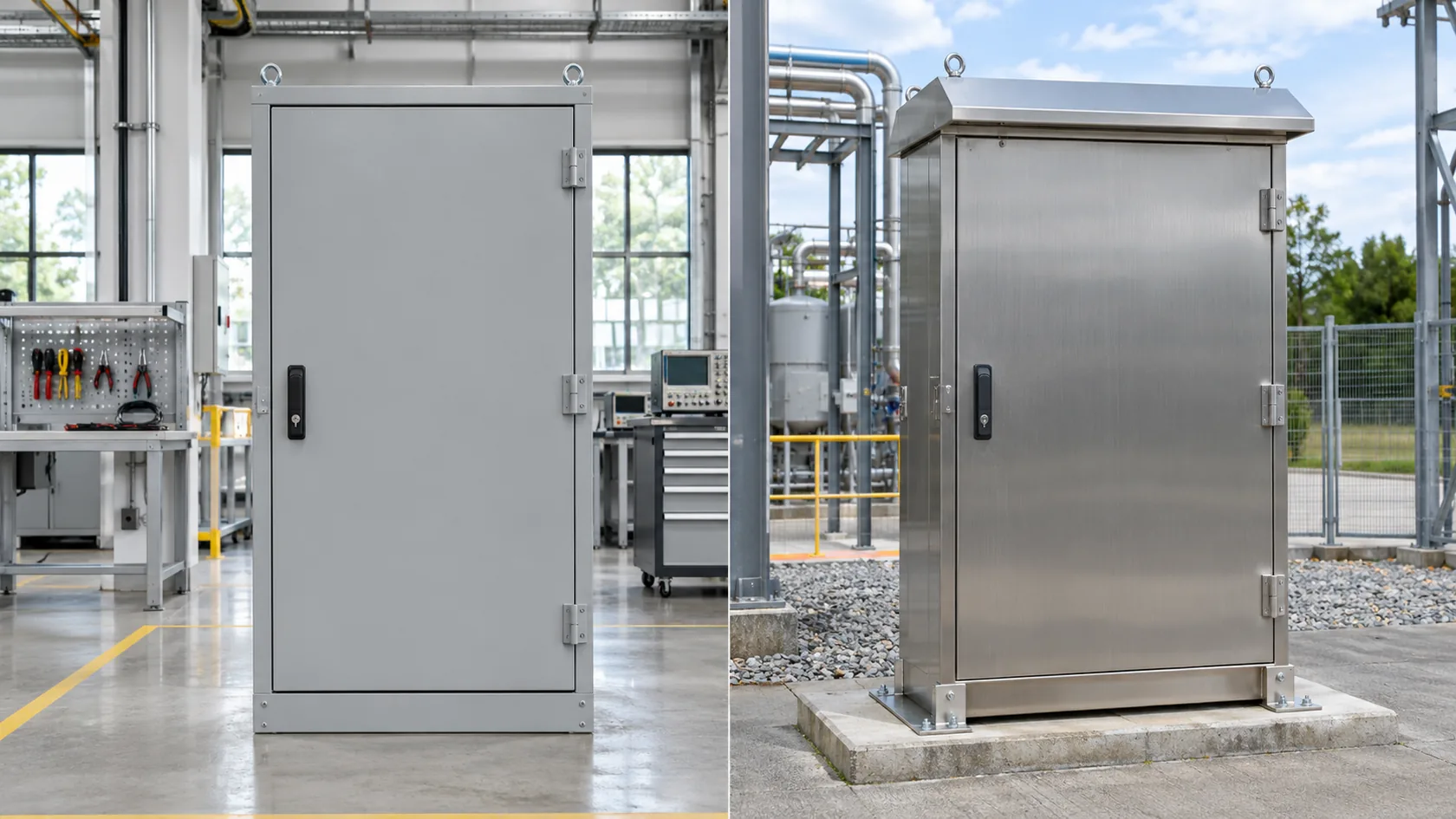
Several types can be relevant, but they solve different exposure combinations:
| Starting point | Typical environment | Dust-related intent | Important limit |
|---|---|---|---|
| Type 5 | Indoor | Settling airborne dust, lint, fibers, and flyings | Not the same as Type 12 circulating-dust use |
| Type 12 | Indoor | Circulating dust, falling dirt, and noncorrosive drips | Not for outdoor rain or hose-down |
| Type 12K | Indoor | Similar Type 12 protection with knockouts | Unused or modified knockouts still need controlled treatment |
| Type 13 | Indoor | Dust plus spraying, splashing, and seepage of oil or noncorrosive coolant | Not an outdoor weather rating |
| Type 3, 4, or 4X | Outdoor or mixed exposure | Windblown dust with rain and other stated water conditions | Selection also depends on water, corrosion, and installation |
The Schneider Electric enclosure-type guide gives a practical overview of these intended-use distinctions. For a shop floor cabinet, I would not jump to an outdoor type simply because dust is present; the water path, cleaner chemistry, corrosion risk, and location are just as important.
FAQ 3: Is NEMA Type 12 the Same as IP6X?

No. An IP code and a NEMA Type use different systems, scopes, and test frameworks. IP6X is the IEC notation for a dust-tight solids-ingress test, while Type 12 is an indoor NEMA enclosure type with a stated combination of dust, dirt, and dripping-liquid protection. One label should not be substituted for the other without reviewing the specific product and requirement.
The International Electrotechnical Commission describes IEC 60529 as the IP Code standard for degrees of protection provided by enclosures. If a customer specification calls for IP6X, I keep that requirement visible rather than translating it informally into Type 12. If it calls for both, the enclosure and its final penetrations need a validation plan that addresses both.
This distinction matters in sourcing. A cross-reference table may be useful for an early conversation, but it is not a certification path for a custom, modified assembly.
FAQ 4: Does the Rating Apply After We Add Cable Glands and Cutouts?

Not automatically. The enclosure wall, cover gasket, latches, operator devices, viewing window, connector, cable gland, and unused opening all form the boundary. A well-made cabinet can lose its practical dust performance through one oversized gland, a cable outside the gland’s range, an uneven door, or a field cutout with no sealing plan.
What I request before production
- Cable outside diameter and cable count
- Entry side and mounting orientation
- Connector, operator, display, vent, or antenna models
- Wall thickness and available tightening access
- Door layout, hinge side, and internal component weight
- Any field-installed changes that may occur after delivery
The enclosure type is intended for a ready-for-use configuration, not for a shell with unspecified holes. In my experience, defining the penetration schedule before the sample is built saves more trouble than adding a stronger gasket after the machining is finished.
FAQ 5: Can a Dust-Tight Enclosure Still Overheat or Condense?
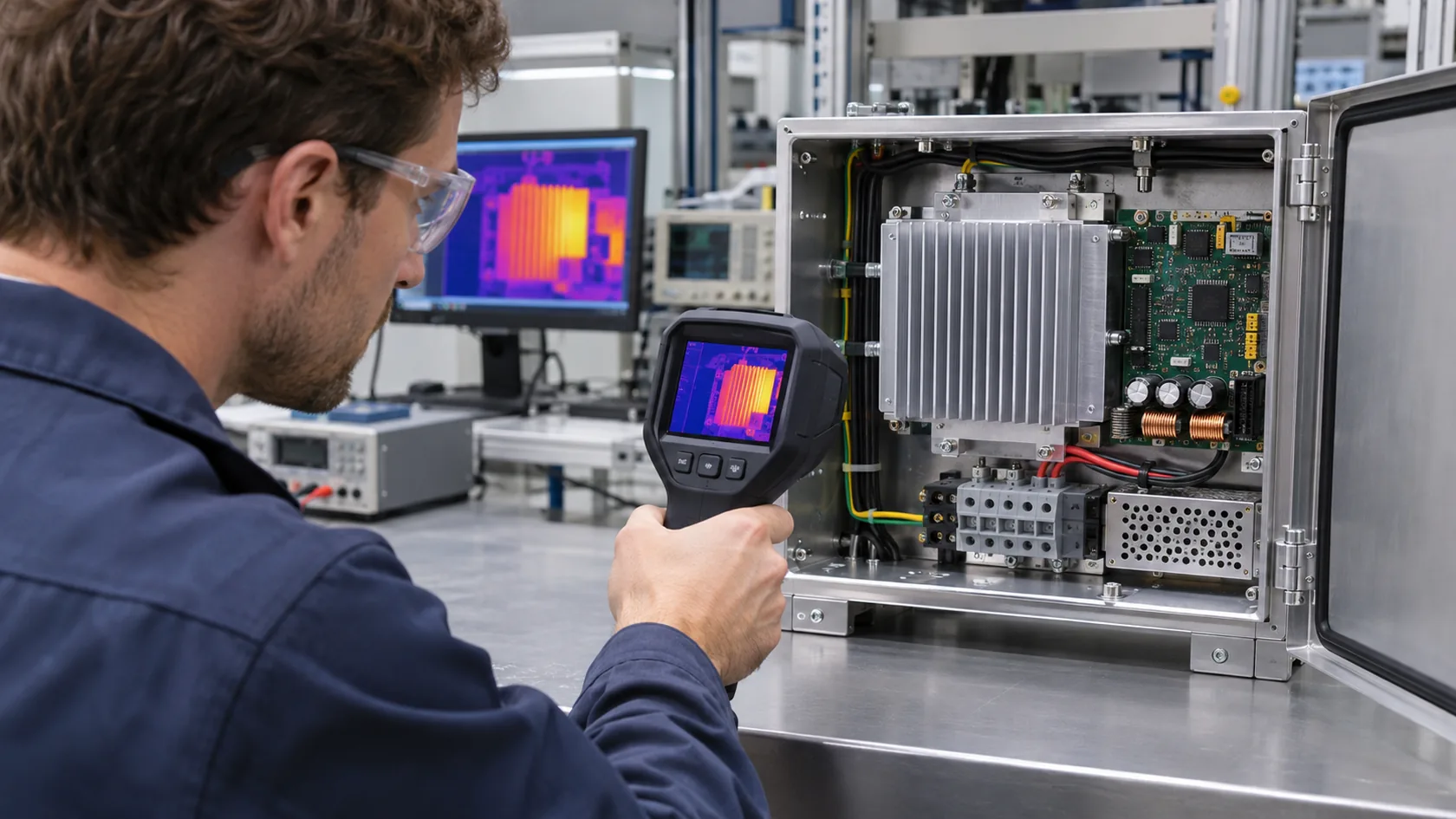
Yes. Reducing ingress paths also reduces incidental airflow. A tightly sealed enclosure with drives, power supplies, solar exposure, or a large ambient swing can face internal temperature rise or condensation even when there is no external dust leak.
That is why I review the heat load, maximum ambient temperature, duty cycle, orientation, and maintenance access with the dust requirement. A vent, drain, heat sink, or cooling accessory must be selected as part of the protection strategy, not added casually at the end. It can solve heat or moisture while creating a different ingress path.
The standard’s scope also cautions that conditions such as condensation occurring inside an enclosure are outside its stated protection coverage. A rating is valuable, but it does not replace thermal and moisture design.
FAQ 6: Are NEMA Dust-Tight Enclosures Suitable for Combustible Dust?

Do not assume so. Keeping ordinary process dust away from enclosed equipment is a different question from selecting equipment for a classified combustible-dust location. The dust material, concentration, process conditions, area classification, and applicable electrical-code requirements determine the latter.
For facilities handling combustible dust, the OSHA combustible-dust resources are a useful starting point for understanding the hazard. Type 9 is associated with dust-ignition-proof equipment in classified locations; it is not interchangeable with a Type 12 or Type 4 request. This is an area for the site’s qualified electrical and safety professionals, not a shortcut based on a standard enclosure label.
I ask this question early because a late discovery can change the equipment architecture, documentation, lead time, and responsibility boundaries.
FAQ 7: What Materials Work Best in Dusty Areas?
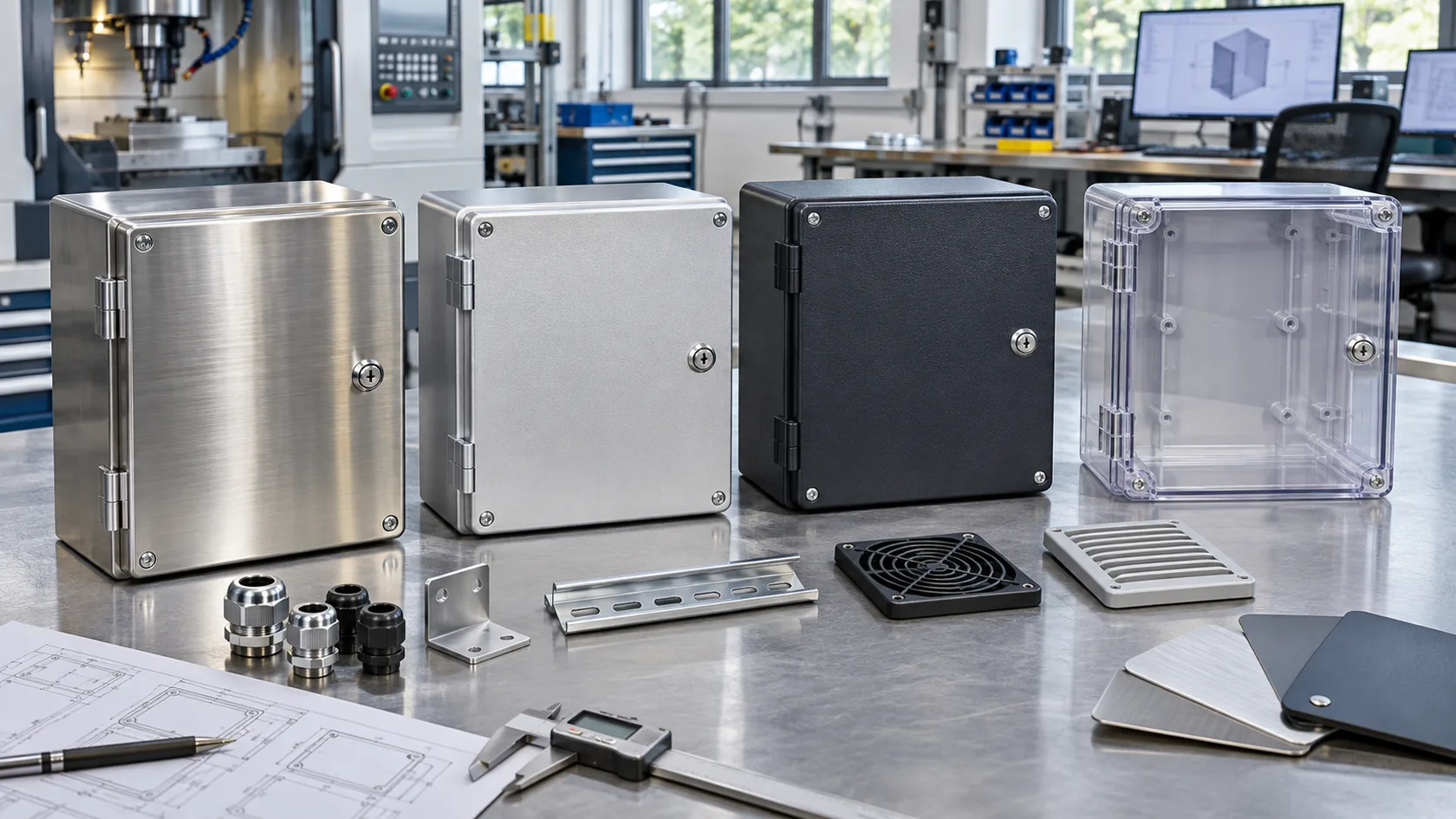
No material is universally best. Material selection should follow the dust, water, chemical, UV, impact, weight, grounding, and fabrication requirements.
| Material direction | Practical reasons to consider it | Buyer checks |
|---|---|---|
| Coated steel | Economical rigidity for many indoor cabinets | Coating coverage, cut edges, scratches, hardware, corrosion exposure |
| Stainless steel | Repeated cleaning or more demanding corrosion environments | Grade, finish, weld and crevice details, cleaning chemistry |
| Aluminum | Lower weight and flexible custom CNC or sheet designs | Alloy, finish, galvanic contact, conductive bonding strategy |
| Non-metallic | Electrical insulation and corrosion-resistant applications | UV, impact, temperature, mounting load, thread and insert design |
Dust itself may be dry, but the maintenance routine can add washdown, solvent wiping, oil mist, or corrosion. I prefer to choose the material system after that entire exposure is described, not after the enclosure has already been priced.
FAQ 8: What Should a Supplier Test or Document?

Ask for clarity on the claimed type, the exact enclosure configuration, the applicable standard or listing, and what changes are allowed. For a custom project, useful documentation can include a controlled drawing, cable-entry schedule, gasket specification, torque or assembly controls, material and finish callouts, and the intended validation method.
The critical point is configuration control. A sample with blank walls does not prove a later version with cutouts, connectors, a different gasket, or another latch. If a third-party listing or an exact test is required, confirm the responsible party, accepted configuration, and evidence before the purchase order—not after tooling and production are committed.
This is where a modest supplier question can prevent a large downstream argument: “What exactly is included in the stated protection claim?”
FAQ 9: What Should I Put in the RFQ?

An effective RFQ includes more than “NEMA dust tight.” I recommend including:
- Indoor or outdoor location and any seasonal exposure
- Dust source, approximate particle behavior, cleaning method, and dust buildup location
- Water, oil, coolant, chemical, and corrosion exposure
- Required NEMA Type, IP code, listing, or project standard—written separately
- Mounting direction, drainage expectation, and door-opening clearance
- Full cable, connector, operator, display, and vent schedule
- Internal heat load, ambient range, and permitted cooling approach
- Material, finish, marking, grounding, and service-access requirements
- Sample, inspection, and validation expectations
A short, specific RFQ gives the factory a chance to find conflicts early. It is far more useful than a broad “industrial dustproof” request because it tells us where dust is likely to enter and what the finished system must survive.
Conclusion

NEMA dust-tight enclosure questions are really exposure-definition questions. Type 12, 12K, 13, and outdoor types can all be relevant, but they are not interchangeable, and an IP code should not be casually converted into a NEMA Type. The door seal, penetrations, thermal design, and installed orientation matter as much as the cabinet shell.
After years of enclosure work, my practical rule is simple: define the dust, the liquids, the installation, and every opening before the factory starts machining. Send us the environment notes, drawing, cable schedule, and any required rating or listing. We can review the seal path, material direction, and manufacturability before a small detail becomes an expensive redesign.