Skip to content

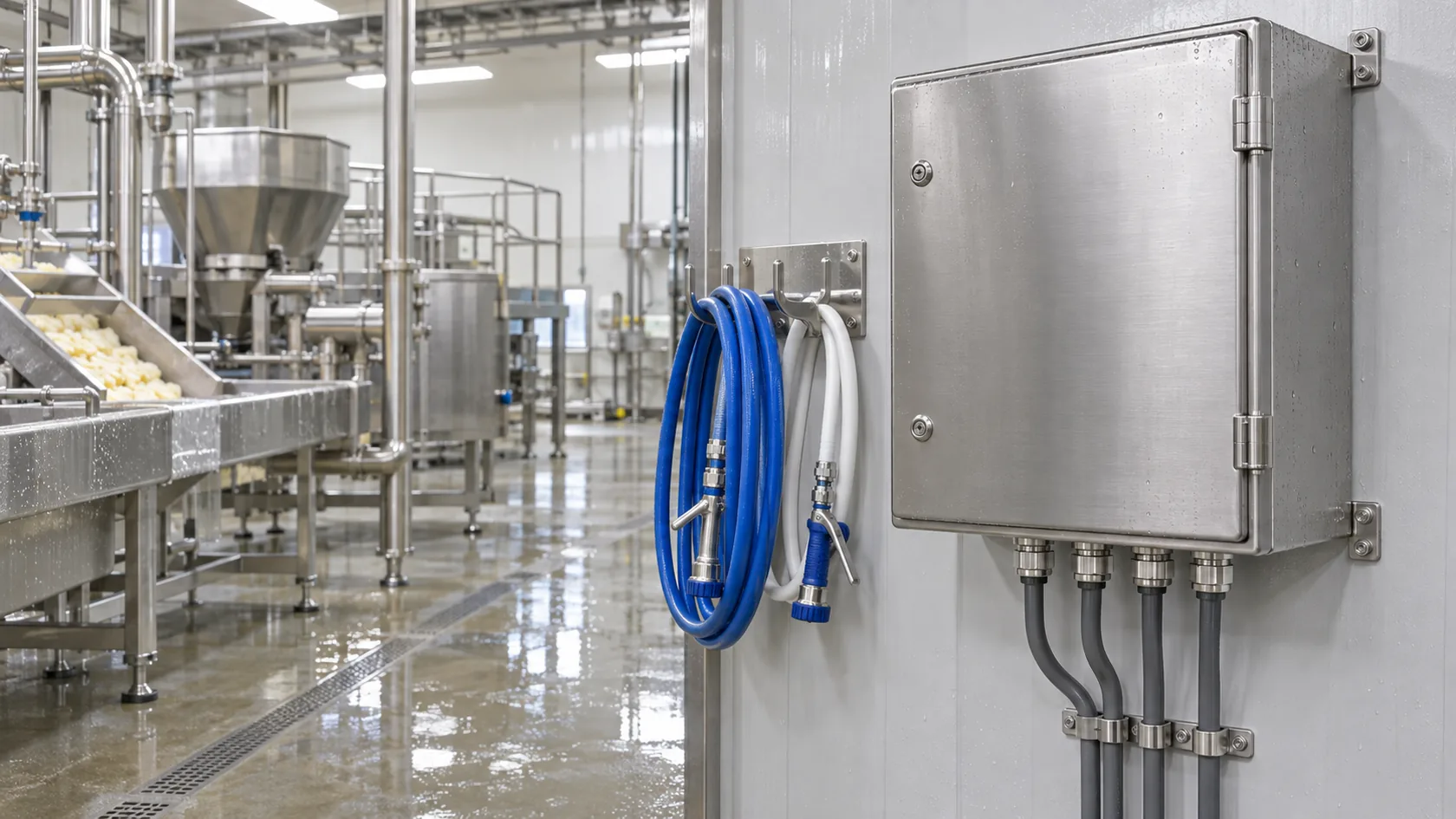
On a washdown line, an enclosure can look excellent when it leaves the factory and still become the first maintenance ticket after a few cleaning cycles. The label says NEMA Type 4X; the door looks tight; the steel is bright. Then moisture appears beside a terminal block, a latch stains, or a cable gland starts weeping after an operator directs the hose at it.
NEMA Type 4X is a useful requirement for hose-directed water and corrosion exposure, but it is not a lifetime guarantee for an unspecified installed system. In custom enclosure work, I treat the rating as the beginning of the review: the real washdown liquid, spray pattern, mounted parts, drainage, heat, and service behavior decide whether the boundary survives.
That is why a successful washdown enclosure is designed around the plant's cleaning reality, not only the marking on its door.
NEMA 4X Sets a Baseline, Not the Whole Duty
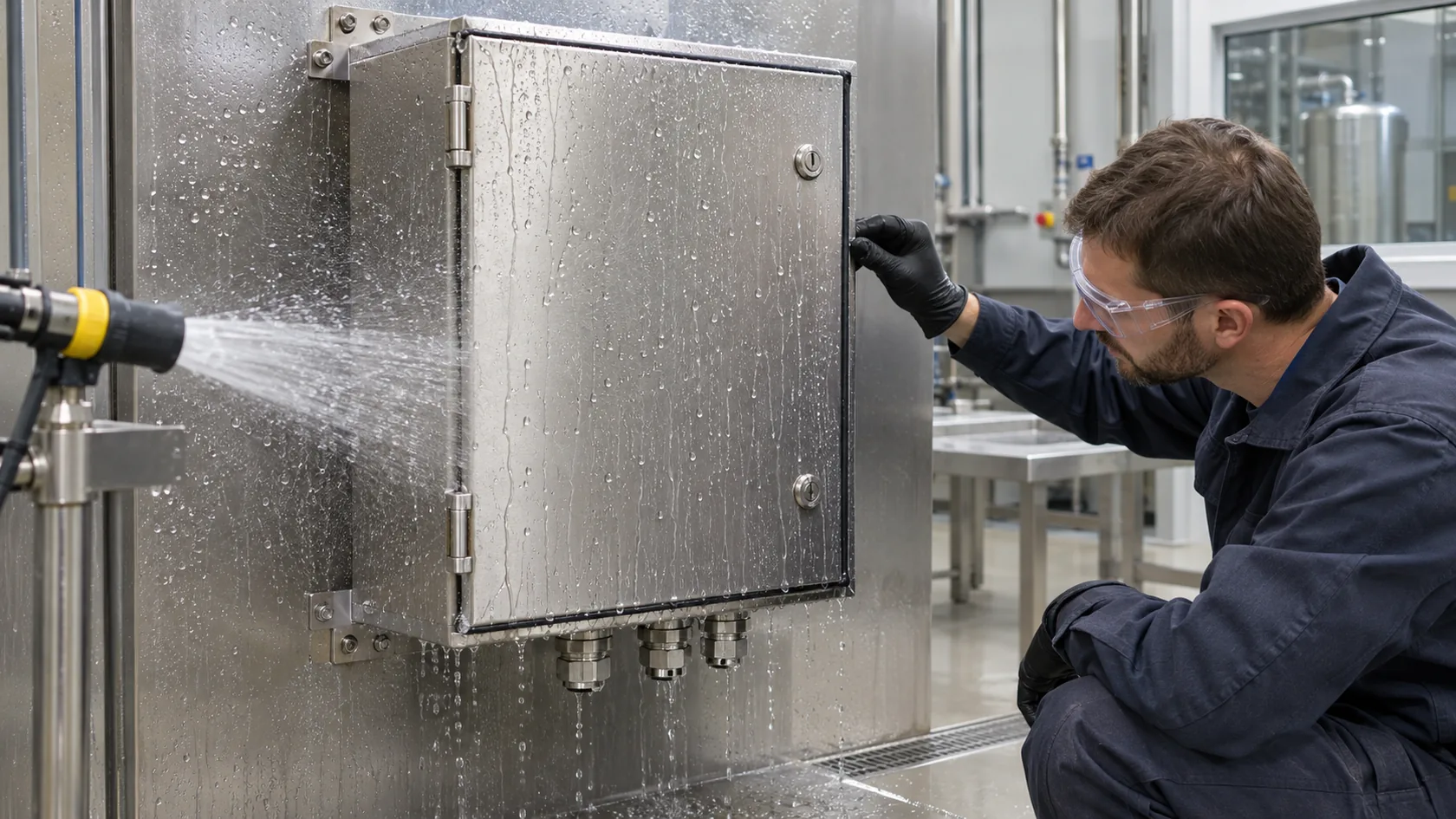
NEMA Type 4X is intended for indoor or outdoor use where the enclosure must address windblown dust, rain, splashing water, hose-directed water, external ice formation, and corrosion. The UL enclosure-Type table provides a clear application summary, while NEMA 250 sets out the scope and test topics behind the Type.
A rating does not transfer through a modification
The bare housing is not the finished electrical product. A new connector cutout, hinge, display, cable gland, conduit fitting, vent, unused hole plug, or door-mounted component can become part of the environmental boundary. The installed assembly has to be suitable in its finished configuration; a strong cabinet cannot compensate for a weak interface.
I do not accept “NEMA 4X box” as a complete washdown specification. I ask which components will be fitted, how they are oriented, and whether the intended test condition represents the production enclosure. That approach catches costly gaps before the first drilled sample.
The next question is more practical: where does the wash actually strike, collect, and return?
The Washdown Process Can Exceed the Assumption
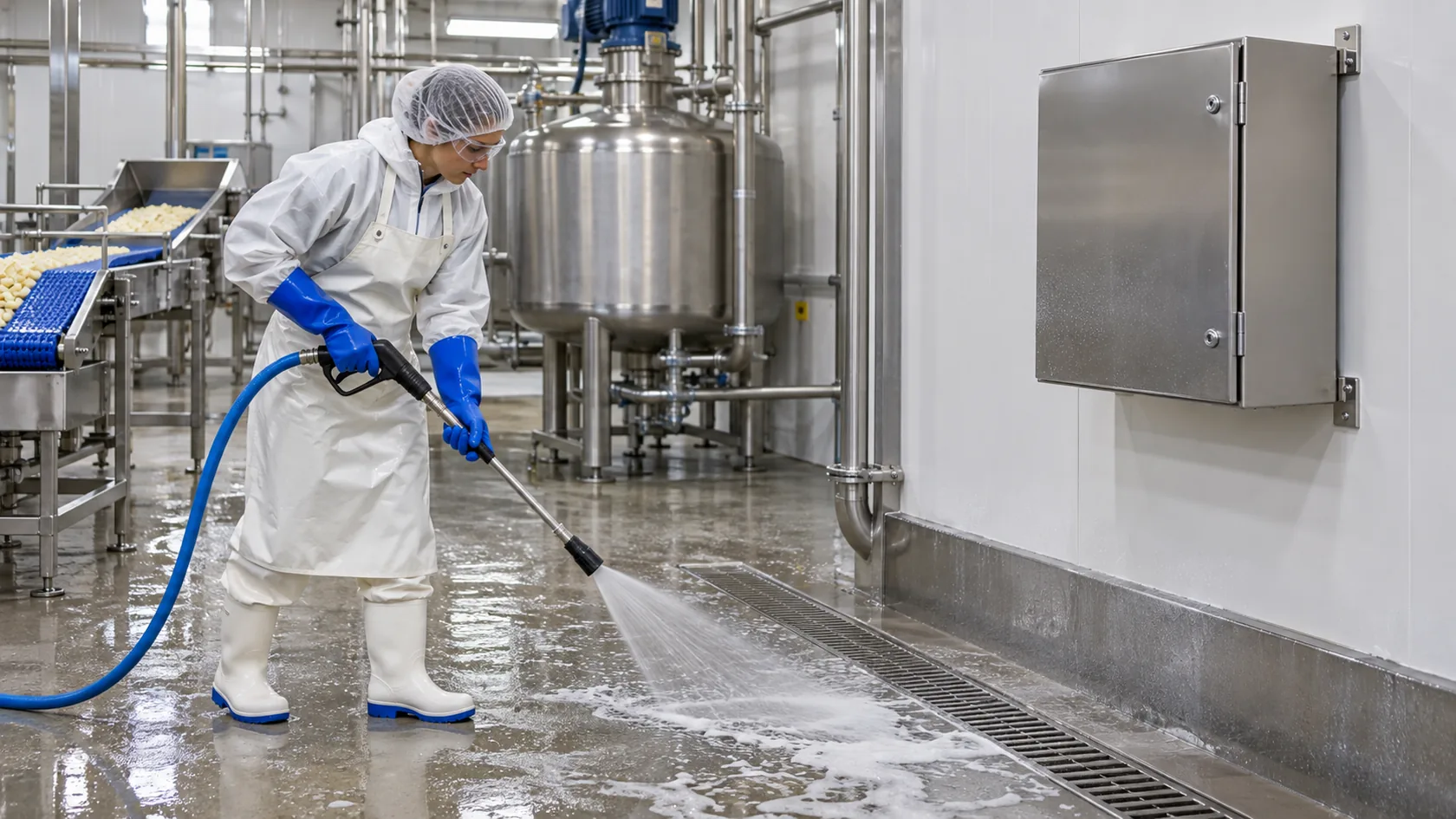
“Washdown” can mean a gentle rinse, a foaming cycle, or repeated hose cleaning with hot water and chemicals. A cleaning procedure changes with the process zone, product soil, sanitation method, and shift routine. 3-A's cleaning and sanitizing guidance makes the larger point well: cleaning has defined steps and variables, not merely water on equipment.
Turn the cleaning routine into design inputs
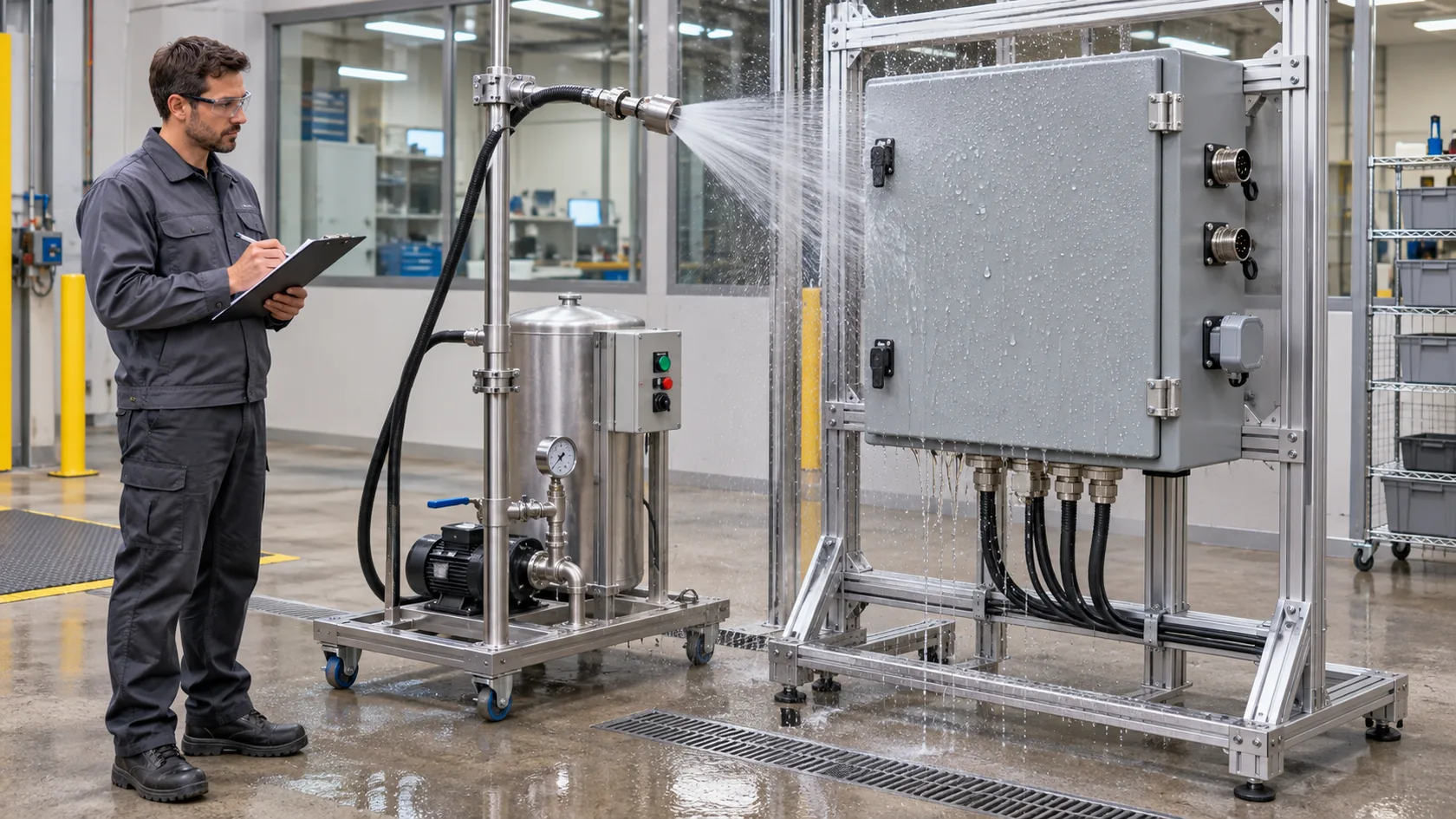
Before release, document the actual fluid, concentration, temperature, spray direction, nozzle distance, pressure where known, frequency, dwell time, and whether operators can deliberately target seams. Also record the enclosure's mounting height and orientation. A cabinet that only receives runoff needs a different review from one directly in the operator's spray path.
| Washdown detail | Why it matters to the enclosure |
|---|---|
| Cleaner and sanitizer chemistry | Can affect metals, coatings, elastomers, labels, and transparent parts differently. |
| Spray path and operator access | Determines which joint, latch, gland, or connector receives the highest local exposure. |
| Frequency and temperature | Can accelerate aging and expose marginal compression or finish damage. |
| Foam, rinse, and drain behavior | Can hold liquid in ledges, crevices, and cable loops longer than a quick spray. |
In my experience, a short video of an actual cleaning cycle is more useful than a generic washdown note on a drawing. It turns a vague environmental request into geometry and material decisions that a supplier can verify.
Once the water path is known, the cover joint and every penetration deserve the closest attention.
Gaskets and Penetrations Usually Set the Limit
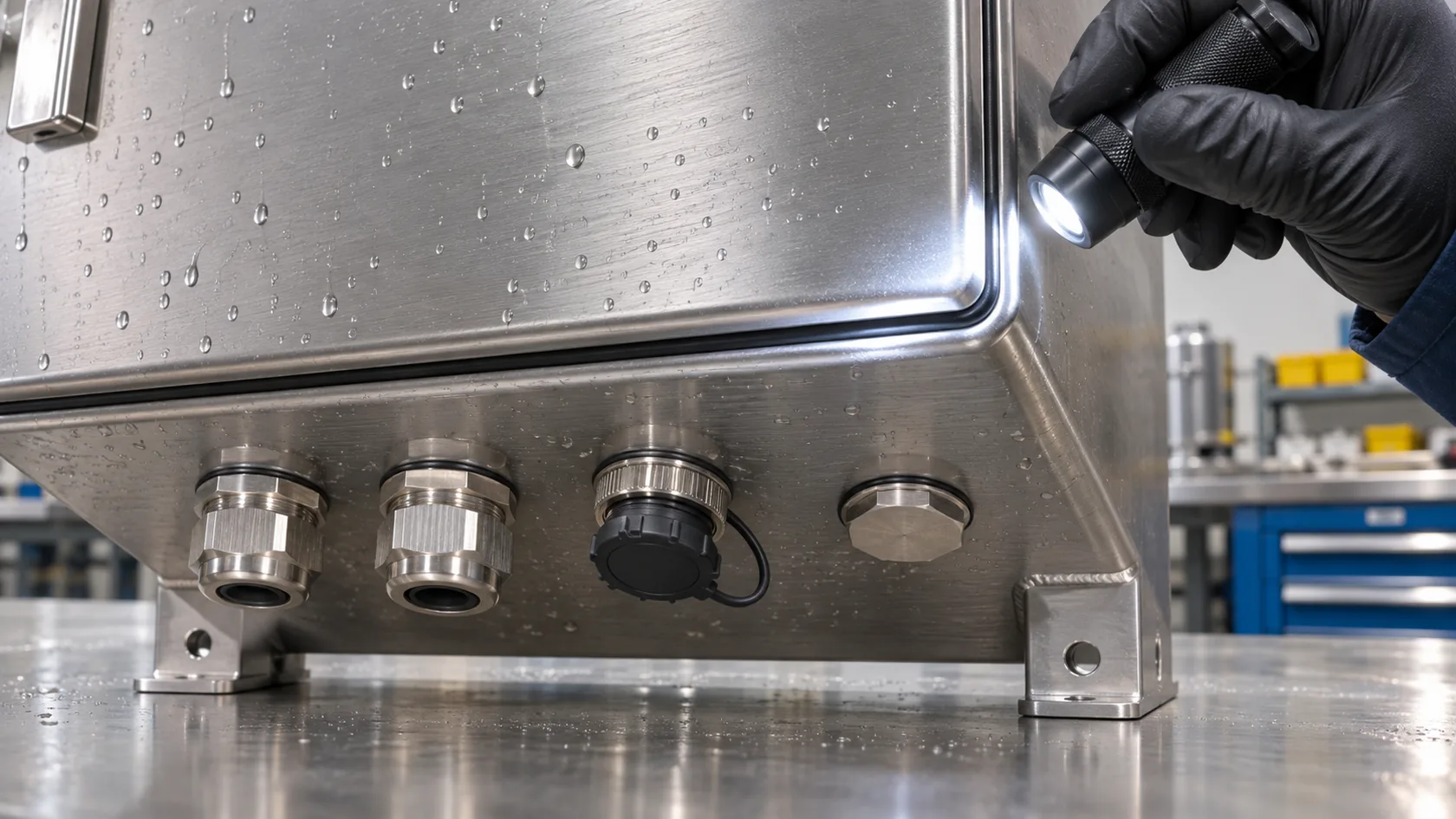
Water rarely needs a dramatic opening. It can follow a poorly compressed gasket corner, a cable whose diameter falls outside the gland's intended range, a thread with inadequate engagement, or a connector that is suitable only when its mating half is installed. An unused knockout or a field-drilled hole can create the same problem.
A gasket needs a controlled interface
Gasket material, cross-section, compression, groove or adhesive layout, corner treatment, sealing-land finish, latch pattern, and door stiffness work together. More gasket is not automatically safer. A door that bends, a high spot on the mating surface, or uneven compression can leave a local leak path even when the gasket looks substantial.
Cable entries are system components
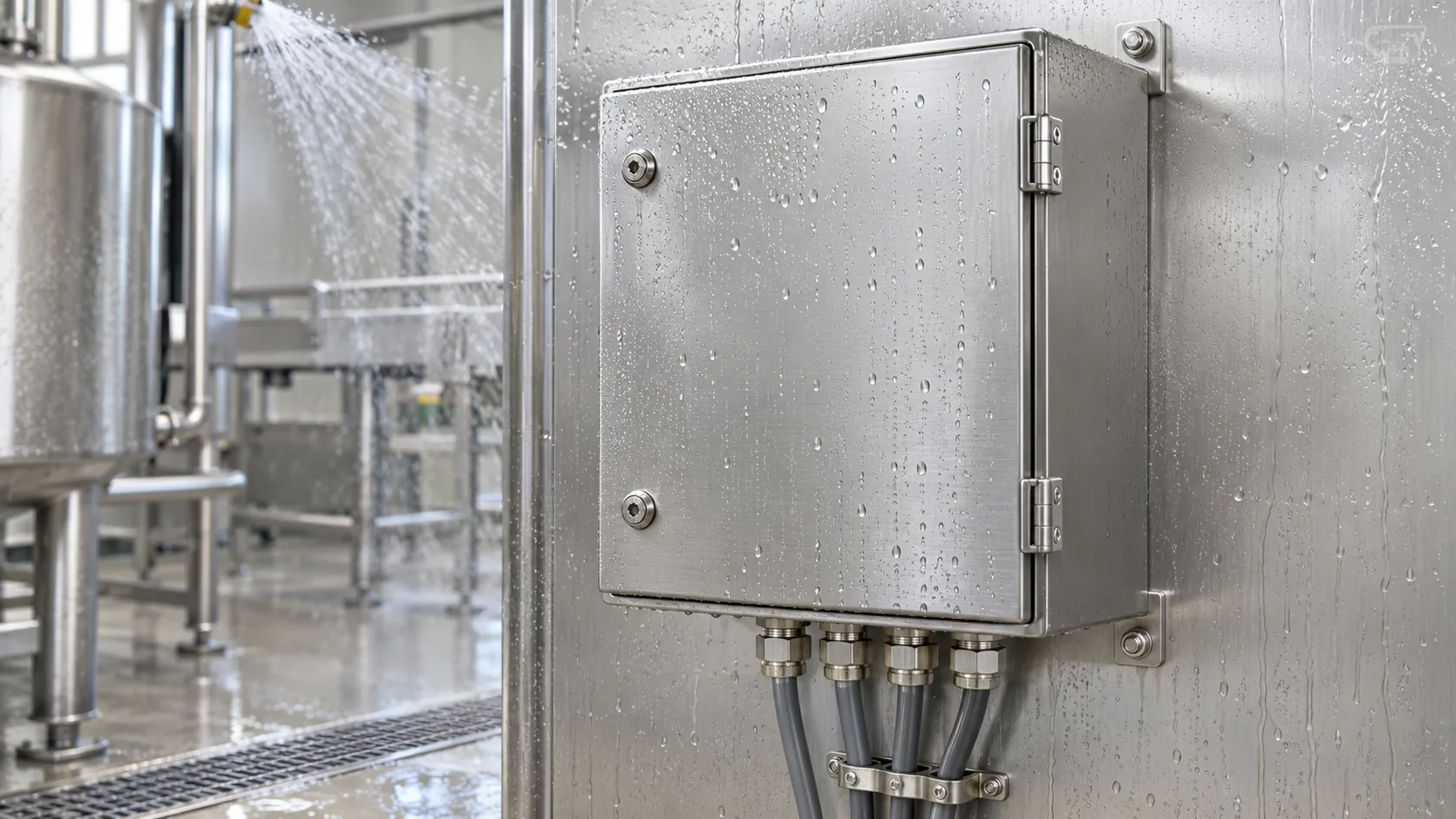
Specify the actual cable outside-diameter range, entry direction, wall thickness, thread, required torque, strain relief, and access for installation. Prefer routing that sheds water instead of creating a path into the enclosure. 3-A educational material on process integration notes a practical washdown principle: bottom penetrations are ideal where feasible, and penetrations need sealing in washdown areas.
I have seen buyers focus on the door seal while a loosely matched gland was doing most of the leaking. I would rather review a full penetration schedule than promise performance based on the shell alone.
That interface review must continue beyond water: cleaners and trapped liquid determine which material system will last.
Corrosion Resistance Depends on Chemistry and Geometry
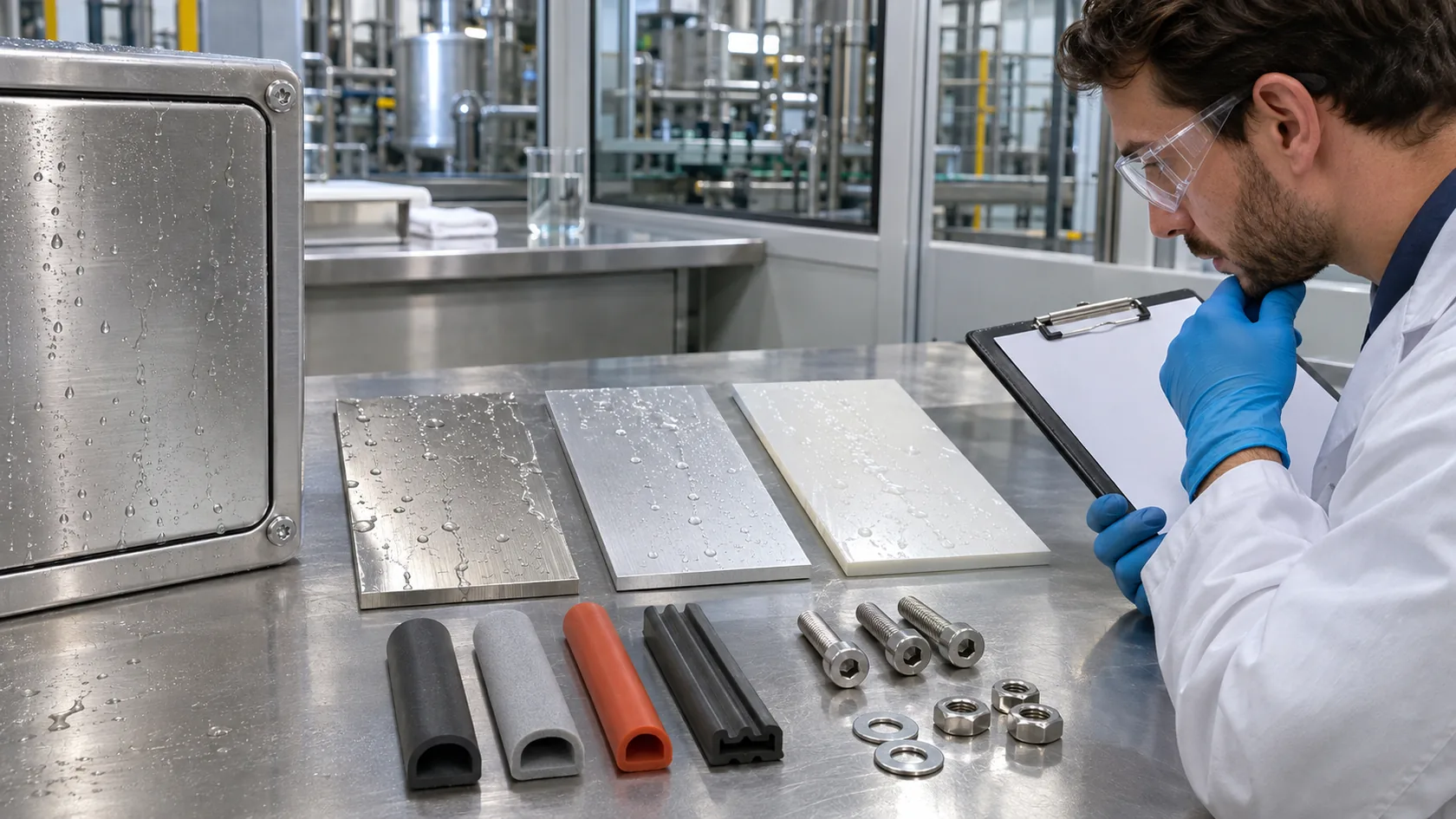
The X in Type 4X addresses corrosion protection, but it does not say that every stainless alloy, coating, fastener, elastomer, or assembly detail is compatible with every washdown liquid. Chlorides, acidic or alkaline cleaners, sanitizer chemistry, temperature, trapped residues, and contact between unlike metals can each change the result.
Select the whole exposed material system
Stainless steel is often a practical washdown choice, but grade, weld finish, hardware, crevices, and cleaner chemistry still matter. Aluminum may be appropriate in some applications when its alloy, finish, edges, and galvanic interfaces suit the exposure. Coated steel requires a credible coating and edge-protection strategy. Non-metallic parts also need a check for chemical, UV, temperature, impact, and mounting conditions.
| Area to review | Typical failure path to prevent |
|---|---|
| Welds, seams, and fasteners | Crevices retain liquid; damaged finish or incompatible hardware becomes a corrosion start point. |
| Cutouts and edges | Bare or poorly protected areas can degrade before the broad panel surface does. |
| Dissimilar-metal joints | Moisture can support galvanic attack if the interface is not designed and isolated appropriately. |
| Labels, windows, and seals | A suitable shell does not protect a chemically incompatible accessory. |
The 3-A cleanability discussion emphasizes material compatibility with the product and cleaning chemicals and reducing cracks and crevices. Although an electrical enclosure has its own requirements, that hygienic-design logic is directly useful around non-product-contact equipment in a washdown zone.
For me, the material decision begins with the cleaning chemical data, not with a default answer such as “make it stainless.”
Shape, Mounting, and Drainage Can Defeat a Good Seal
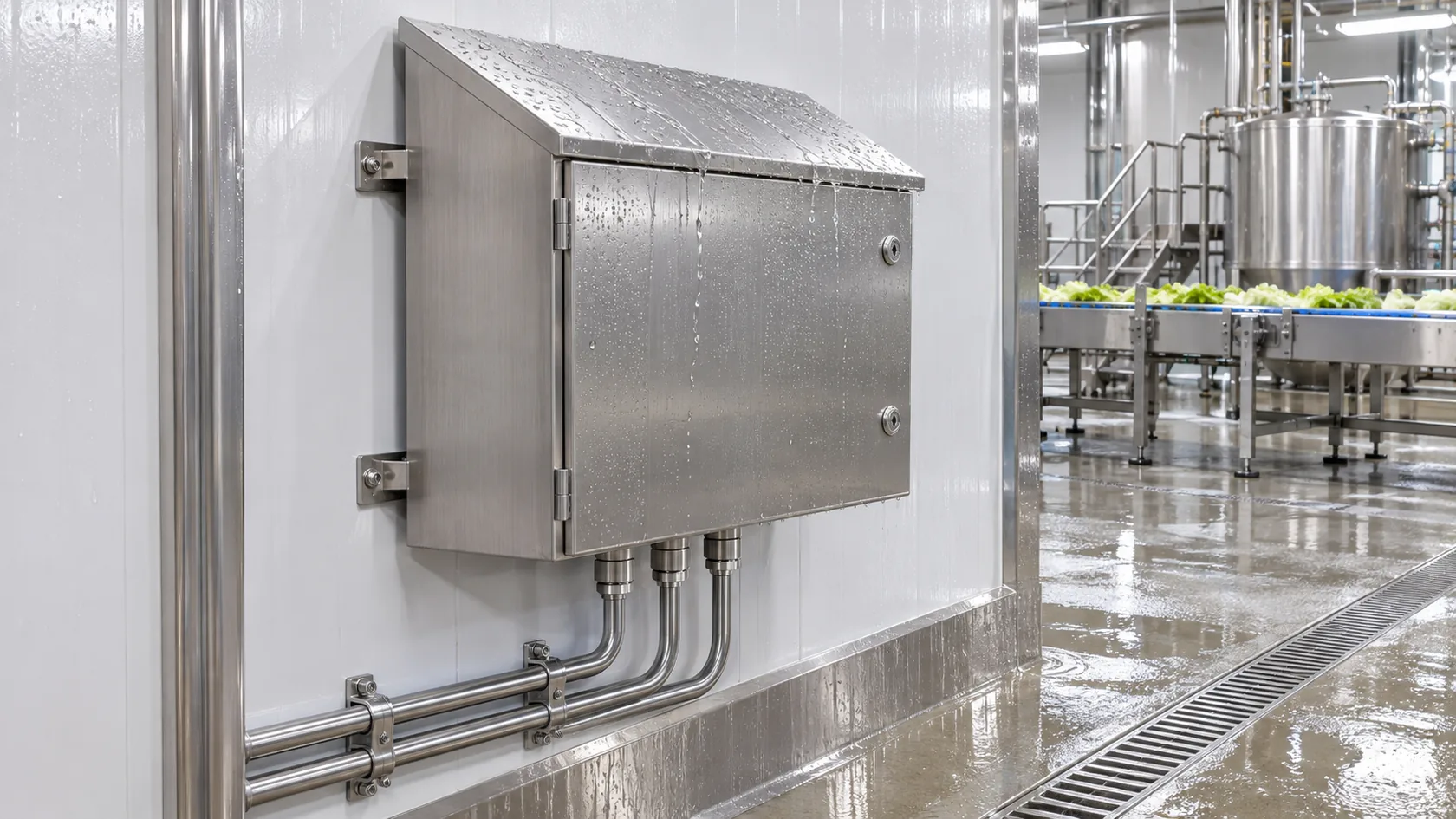
An enclosure can pass a defined water test and still have poor service life if its installation creates puddles, hidden ledges, upward-facing glands, cable loops, or inaccessible surfaces. Water that remains after cleaning keeps working on seals, finishes, and hardware after the hose is put away.
Design for runoff and access
Use mounting and feature layouts that allow wash solution to drain rather than collect. Review the top surface, door seam, bottom edge, hinge side, cable route, mounting brackets, and gap to the wall. Provide enough clearance for cleaning and inspection; a cabinet sealed tightly against a wall can hide residue or prevent a service technician from seeing a failure developing.
3-A hygienic-design teaching material similarly calls for free-draining surfaces and says horizontal surfaces should be pitched or sloped to avoid puddles. The exact geometry for an electrical enclosure must still fit its application and certification path, but that principle is hard to improve on in a wet area.
I prefer a simple slope and sensible cable direction over an elaborate seal that must endure standing chemical solution. Geometry is often the least expensive protection because it prevents exposure instead of asking a component to tolerate it indefinitely.
Drainage is not the only internal risk. Tighter sealing also changes heat and moisture behavior inside the enclosure.
Sealing, Heat, and Condensation Need One Plan

Closing unintended air paths helps control external ingress, but it can reduce incidental cooling. Internal power dissipation, ambient temperature, washdown-related cooling, solar exposure where relevant, and daily temperature swings can create thermal stress or condensation risk. A high enclosure Type does not automatically control internal moisture created by those conditions.
Do not add a vent late in the drawing
Start with the heat load, component limits, mounting surface, heat path, and expected temperature profile. A conductive route to the housing, external thermal features, or an appropriately evaluated accessory may be more suitable than a late vent. If a breather, drain, or pressure-equalization device is used, it becomes another installed interface that needs to fit the environmental requirement.
UL notes that water ingress can impair electrical operation and shorten service life, and that baseline standards may need realistic service-condition consideration for particular projects. This is why I connect environmental sealing to thermal design before production: a fix for one failure mode can create another if the enclosure is treated as an empty box.
The final safeguard is to make the validation sample look like the product that will actually go into service.
Test the Production-Intent Assembly and Maintain It

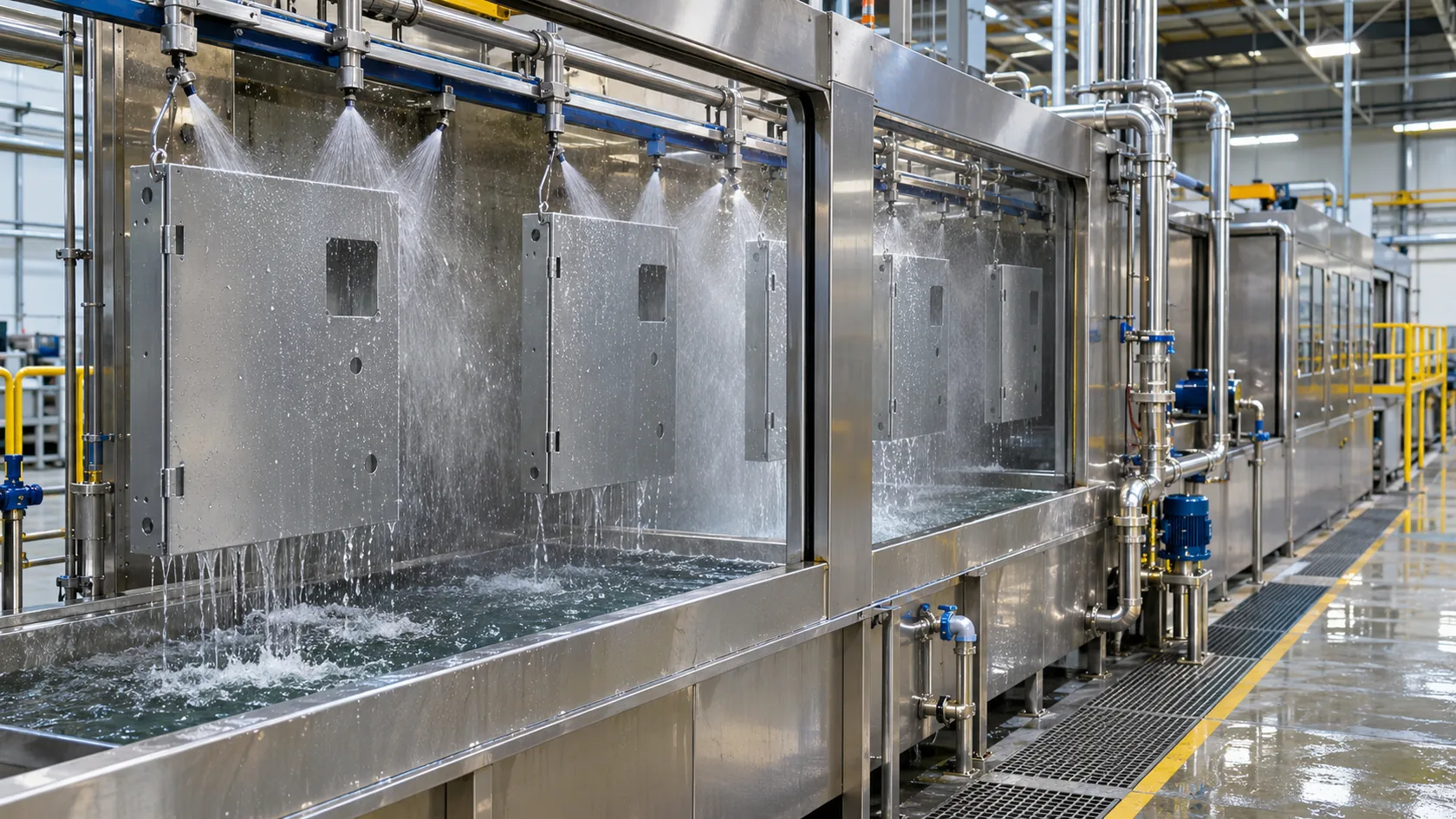
Testing an empty housing can be useful during development, but it does not prove a field configuration with real cable glands, connectors, windows, latches, internal loading, mounting hardware, and service actions. Use the governing standard, required certification route, and qualified test facility where they apply. Then define the production condition that the test represents.
Put the validation scope in the quote
- State the exact NEMA Type, required market, approval route, and applicable standard.
- Describe the real washdown cycle and corrosive exposures, including the location and spray path.
- List all penetrations, fitted components, cable sizes, plugs, and mounting arrangement.
- Define shell material, finish, gasket, hardware, grounding or EMC interfaces, and corrosion-sensitive joints.
- Agree on the production-intent sample, test configuration, acceptance criteria, records, and changes that require revalidation.
- Establish inspection and replacement guidance for gaskets, latches, glands, finish damage, and field modifications.
NEMA 250 includes hosedown, corrosion, and gasket-related topics, but an enclosure project should not imply coverage beyond the specified construction and test basis. The UL water-tightness guidance also highlights why gasket materials and cover interfaces must maintain water exclusion under realistic service conditions.
My factory rule is straightforward: test the sample with the parts that production will use, then control the details that made it pass. That makes a rating meaningful after shipment rather than only persuasive in a catalog.
Conclusion

NEMA Type 4X is an important baseline for washdown and corrosion exposure, but it cannot rescue a poorly defined cleaning process, a mismatched gland, trapped liquid, incompatible materials, weak door compression, or an unreviewed modification. The enclosure must perform as a finished, installed, maintained system.
After years of enclosure manufacturing, I have learned to focus on the places water and chemicals actually find: gasket corners, entries, cut edges, hardware, ledges, and parts added after the housing is made. If you are planning a washdown enclosure, send MaidaTech the drawing, cleaning chemistry and routine, mounting direction, cable-and-connector schedule, heat load, and required approval route. We can review the real seal path and production details before the Type 4X label becomes an expensive false sense of security.