Skip to content
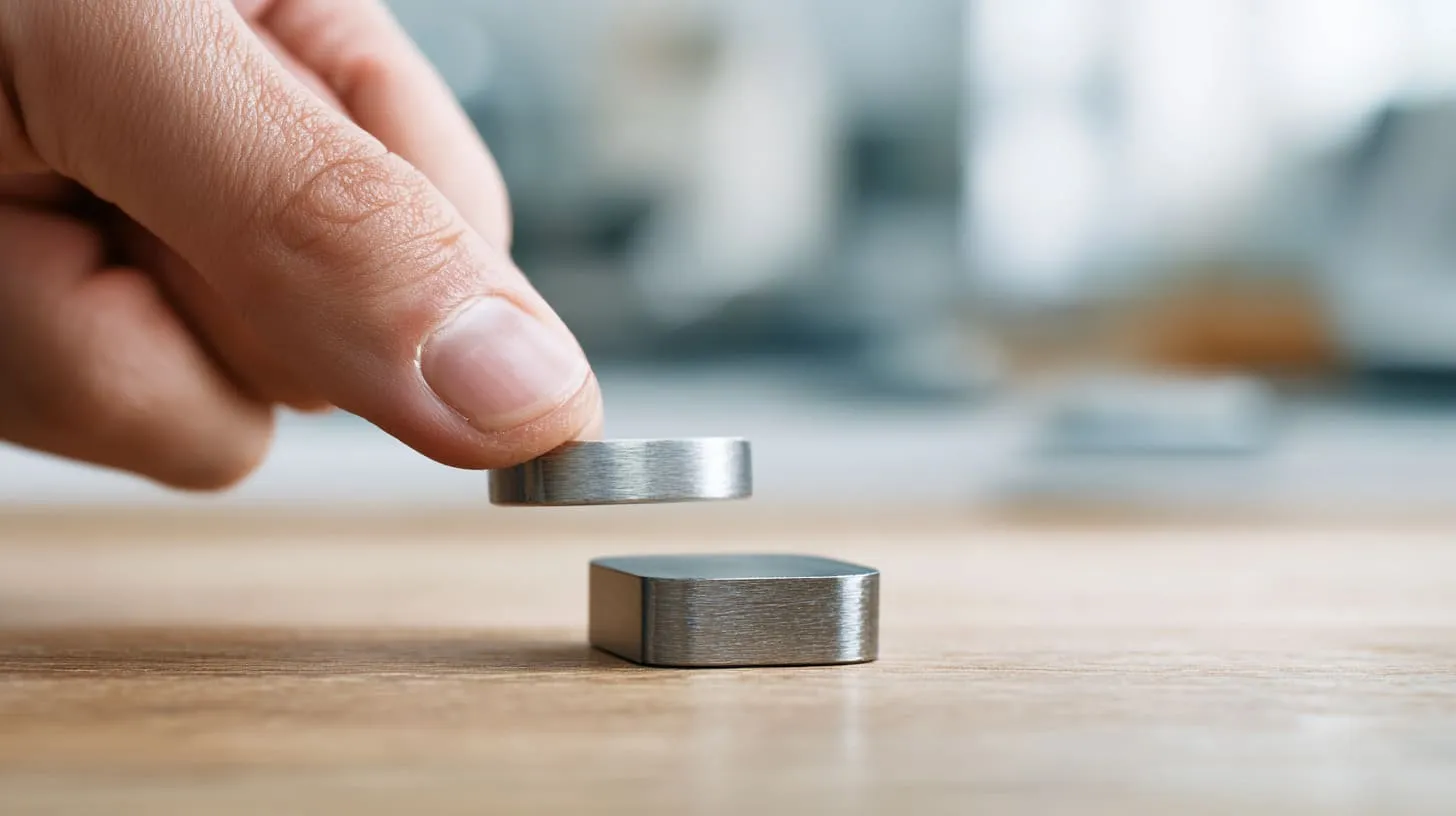
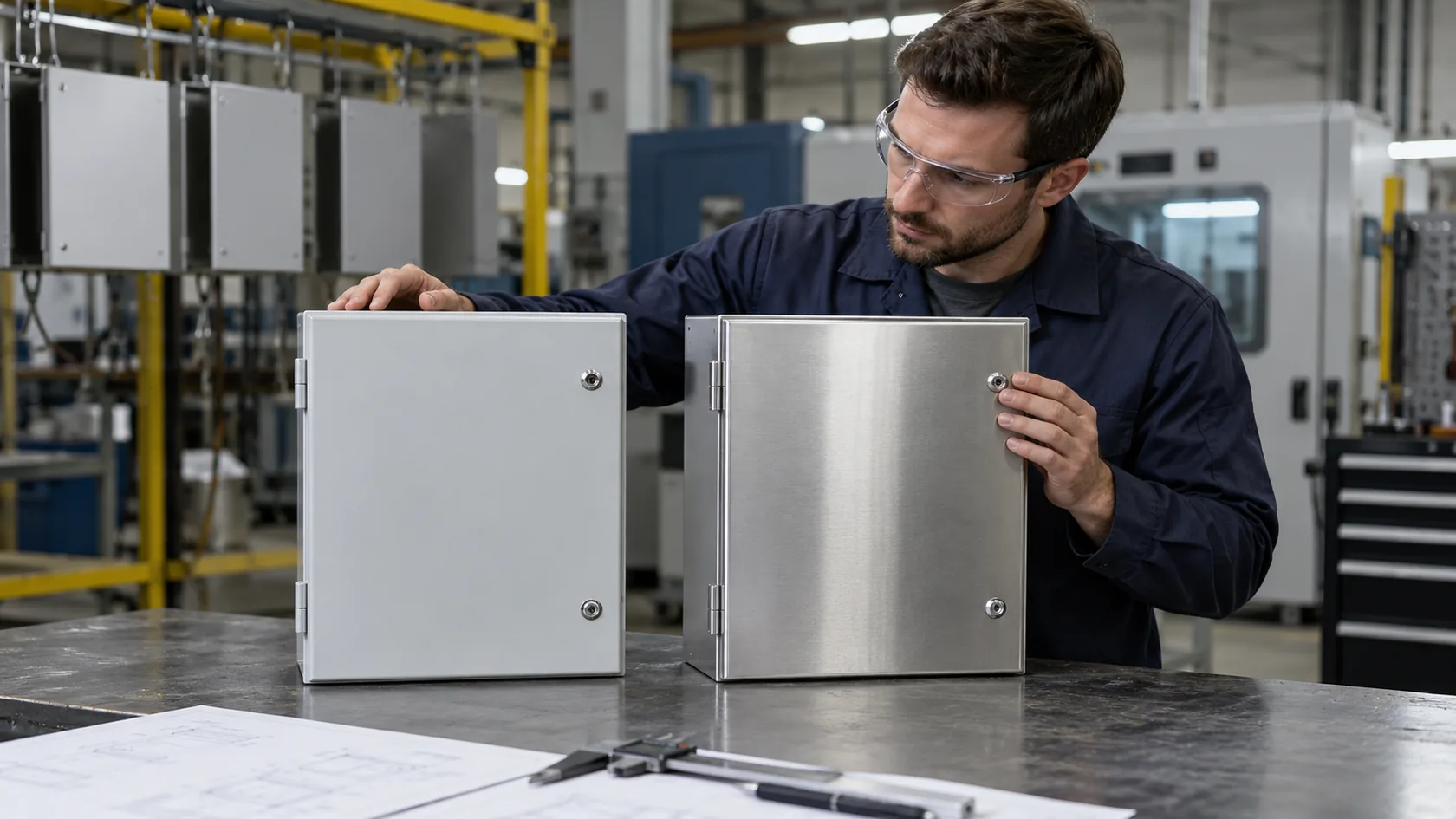
My phone lit up with a short video from Davide in Finland. No long explanation. Just his hand, an enclosure, and a small magnet “sticking” near one corner.
Then his message followed:
“Vincent, is this steel? I asked for aluminum.”
I knew that feeling on his side. That one magnet test can turn a calm project into a trust problem in five seconds. People stop looking at drawings. They stop talking about lead time. They only look at that magnet like it is a lie detector.
Here is the hard truth: magnet tests are real, but engineers often ask them the wrong question.
Most confusion comes from a simple mental shortcut:
“Metal = magnetic protection.”
It sounds logical. It is also wrong in many cases.
This topic matters because magnetic shielding is not the same as EMI shielding. If you mix them up, you can:
- choose the wrong enclosure material
- spend money on thickness that does not help
- pass lab tests but fail on a factory floor
- lose weeks in redesign and re-sourcing
One thing I do when the magnet conversation gets tense is this: I stop arguing about the material name and I ask, “What field are we actually fighting, and where is it coming from?” because that question usually saves more time than any spec sheet.
Why Magnetic Shielding Decisions Often Go Wrong
The common pattern I see looks like this:
- A device has noise or sensor drift.
- Someone says “we need shielding.”
- The team picks aluminum because it is light and common.
- The problem stays.
- Now everyone thinks the supplier used the wrong metal.
And then the project gets stuck in blame, not physics.
Who This Matters To
I see this topic come up with:
- OEM product engineers designing electronic housings
- buyers sourcing custom aluminum or steel enclosures
- ODM founders redesigning enclosures for a new board (often Raspberry Pi-like layouts)
If you are any of these people, you do not need a textbook explanation. You need a clean way to decide, fast, and without guessing.
Before we compare aluminum and steel, we need to get one definition straight, or everything after this becomes noise.
What Is Magnetic Shielding (And What It Is Not)?
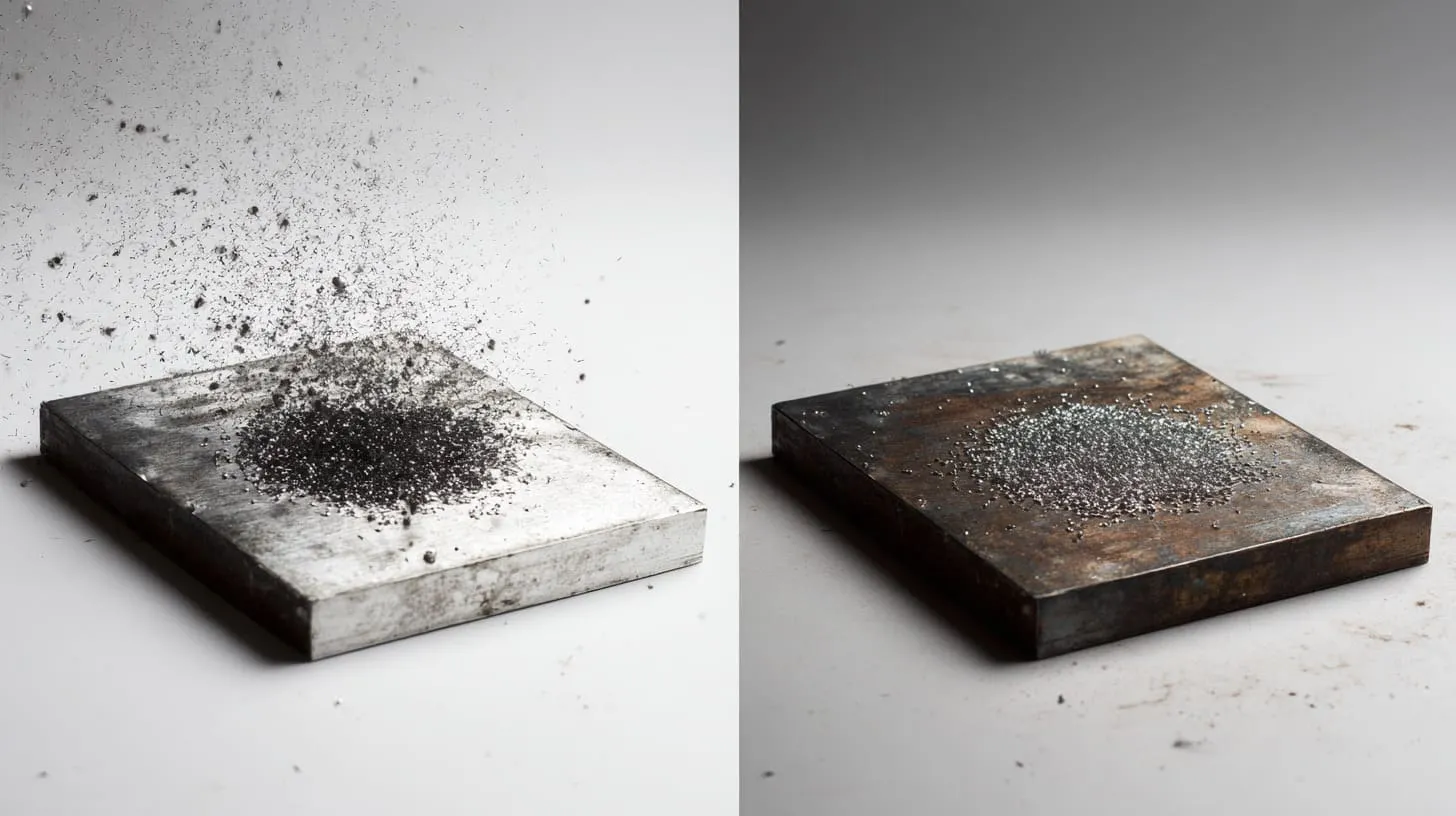
Magnetic shielding is not “blocking” in the way most people imagine. It is not a wall that stops a field like a door stops wind.
A lot of the time, magnetic shielding is more like guiding. You are giving magnetic flux an easier path, so it goes around your sensitive parts instead of through them.
Here is the line that clears most confusion:
- EMI shielding is often about electric fields and high-frequency interference.
- Magnetic shielding is often about magnetic fields at DC or low frequency.
When engineers use the word “shielding” without the frequency, they create problems for themselves.
The fastest way I judge this in a real project is simple: I ask whether the interference source is a motor/transformer (low frequency) or a radio/switching edges (high frequency), because that one clue changes the material decision immediately.
Magnetic Shielding vs EMI Shielding
Why Aluminum “Feels” Like It Should Work
Aluminum is a great conductor. For many EMI problems, conductivity helps a lot. So people assume it also helps for magnetic fields.
But magnetic fields at low frequency behave differently. They do not “bounce” off a conductor the same way. They pass through unless you redirect them using a material with high magnetic permeability.
Here is a simple comparison table I use when talking to buyers:
| Problem Type | Typical Source | Frequency Range | What Works Best | Why |
|---|---|---|---|---|
| Static magnetic field | permanent magnets, DC currents | 0 Hz | high-permeability materials | you need a flux “path” |
| Low-frequency magnetic noise | power transformers, motors | 50/60 Hz to a few kHz | steel / special alloys + distance | permeability + geometry |
| High-frequency EMI | radios, fast digital edges, switching supplies | MHz to GHz | aluminum/copper + good seams | conductivity + enclosure continuity |
That table alone fixes more meetings than I want to admit.
Types of Magnetic Fields Engineers Must Consider
Static magnetic fields (DC)
This is the “magnet near a sensor” world. Think Hall sensors, compasses, some IMU drift cases, magnetic reed switches, or a strong magnet used in a fixture.
Low-frequency fields (50/60 Hz power)
This is the “big iron” world. Transformers. Motors. Power cables. Even a poorly routed ground loop can make this worse.
High-frequency electromagnetic interference (RF)
This is the world where aluminum shines. Wi-Fi, LTE, high-speed clocks, switching noise radiating out of gaps.
The Physics Behind Shielding (No Painful Math)
There are two properties engineers mix up:
- Electrical conductivity (helps with many EMI problems)
- Magnetic permeability (helps with magnetic shielding)
Reflection vs absorption
At high frequency, a conductive enclosure can reflect and absorb energy, especially when seams are tight.
At low frequency, the game changes. You mostly need to redirect magnetic flux, not reflect it.
Why permeability matters more than conductivity
Magnetic shielding is mostly about permeability. That is why some steels help and aluminum usually does not.
And this is where things get interesting: even “steel” is not one thing. Stainless steel can behave very differently depending on grade and structure.
Now that we separated the words, we can talk about aluminum without blaming it for something it was never meant to do.
Why Aluminum Is Often Misunderstood in Shielding Applications
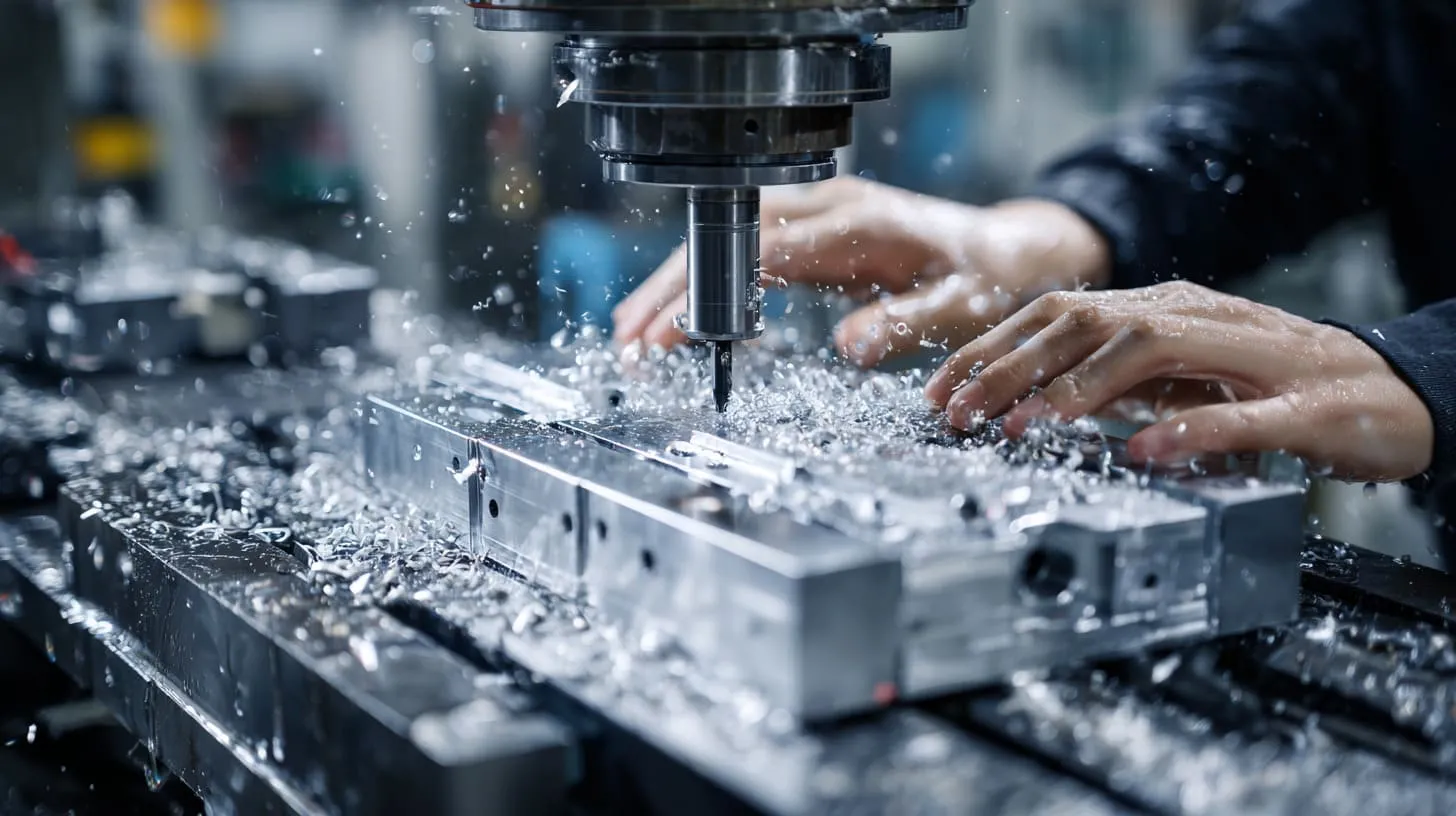
I like aluminum. I build a lot of enclosures from it. I also watch it get accused of “failing” in jobs it never promised to do.
If I sound strict here, it is because I have seen this mistake burn budgets. A team buys thicker aluminum, adds extra screws, then gets angry when the magnetic issue stays.
The way I decide whether aluminum is even on the table is this: I look at what the sensitive component is (sensor, antenna, power stage), then I map the interference source and distance first, because aluminum can be perfect or useless depending on that map.
Strengths of Aluminum in Enclosures
Aluminum wins in a lot of enclosure jobs:
- Light weight (shipping and mounting matter)
- Corrosion resistance (less coating worry)
- Excellent conductivity for EMI shielding (especially at RF)
- Easy machining and anodizing (clean finish, good repeatability)
For products sold online, that finish matters. Jackson in Germany cares about photos. A clean anodized aluminum enclosure makes a product look “real,” not like a prototype.
Where aluminum often performs well
- RF boxes
- controller housings with fast digital signals
- consumer electronics where weight and finish matter
- products that need decent thermal spread (not a full heat sink, but still helpful)
Why Aluminum Does NOT Block Static Magnetic Fields
This is the core misunderstanding.
Aluminum has very low magnetic permeability (close to 1). That means it does not provide an easy path for magnetic flux. It cannot “pull” the field lines around your sensor.
So a magnet near aluminum will still affect what is inside. The field goes through like it is not impressed.
Here is a plain-language view:
| Material | Conductivity (useful for EMI) | Permeability (useful for magnetic fields) | Typical Result |
|---|---|---|---|
| Aluminum | high | ~1 (low) | great for RF EMI, poor for DC/low-frequency magnetic shielding |
| Carbon steel | moderate | high | good magnetic shielding, decent EMI |
| Copper | very high | ~1 (low) | great EMI, poor DC magnetic shielding |
| Austenitic stainless (304/316) | moderate | low to mild | often weak magnetic shielding |
When Aluminum Is Still the Right Choice
Even if a project includes the word “shielding,” aluminum can still be correct when the real problem is EMI, not magnetic.
RF enclosures
If your issue is radiated emissions or susceptibility at high frequency, aluminum is often the fastest path.
Signal interference control
When the fix is about grounding, shielding continuity, and seam control, aluminum works well.
Consumer electronics housings
Weight and finish are not “nice to have.” They control returns and reviews.
If your real issue is magnetic fields near a sensor, aluminum alone is usually the wrong tool. If your real issue is RF noise leaking out, aluminum may be the best tool you own.
Now let’s talk about the material that people love to say “just use” without understanding the details: steel.
Why Steel Is Used for Magnetic Shielding
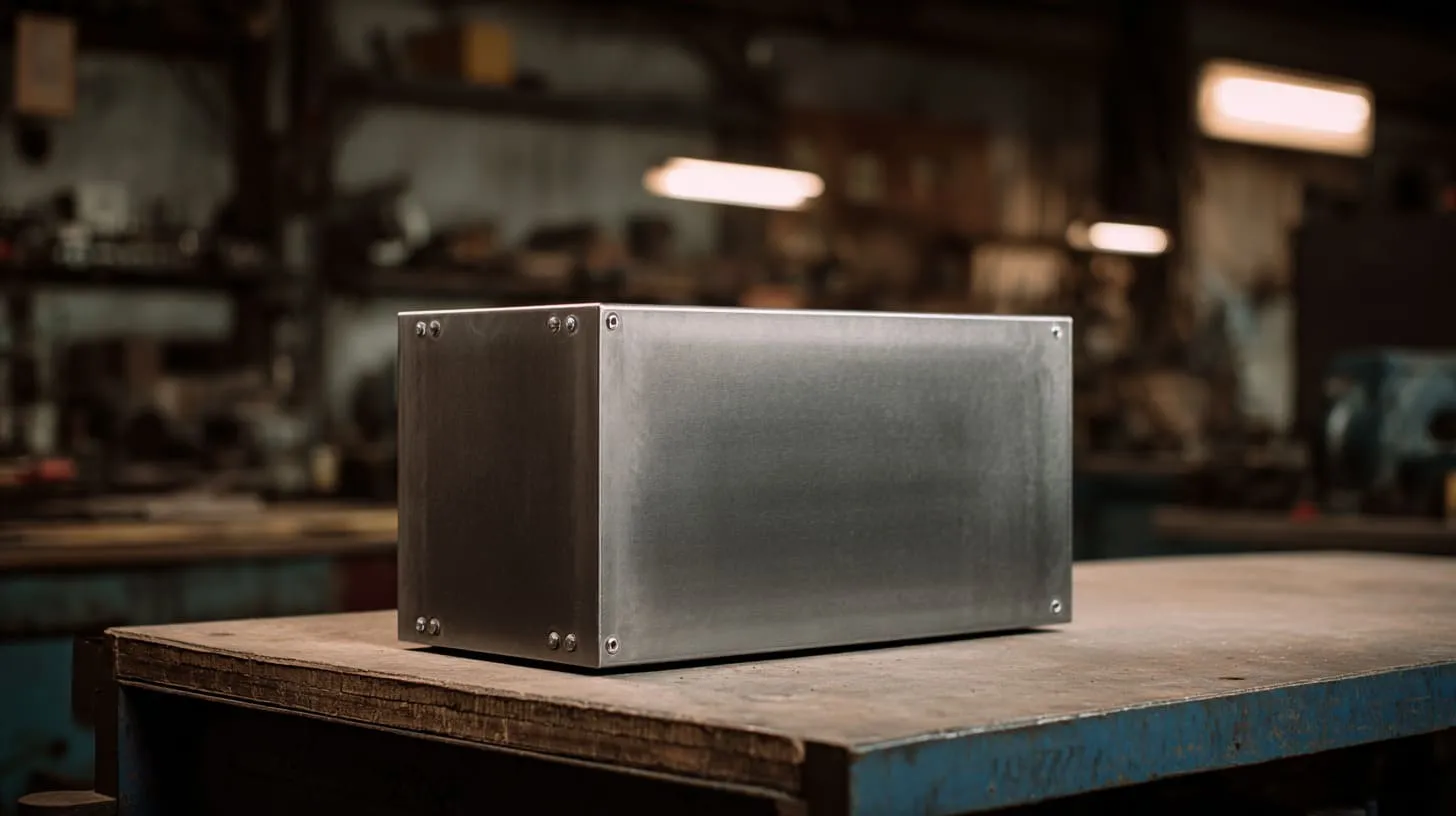
Steel is often used for magnetic shielding because it can provide that “easy path” for magnetic flux.
But steel is not a magic cloak. It has limits. It can saturate. It can leak at seams. And some “steel” is barely magnetic at all.
When I approve a steel shielding plan, I always ask one uncomfortable question: “If the field is strong, are we going to hit saturation and waste the extra thickness?” because that is the point where projects burn money quietly.
The Role of Magnetic Permeability
Permeability is the reason steel works. High permeability means the material “welcomes” magnetic flux. Flux prefers to travel through it rather than air.
So instead of going through your PCB area, the flux travels through the steel wall. Your sensitive zone sees less field.
This is also why geometry matters. A flat plate helps in some directions, but not others. A closed box can help more, but only if seams are controlled.
Mild Steel vs Stainless Steel (This Is Where Engineers Get Tricked)
“Steel” on a drawing is not enough.
Carbon steel / mild steel
Usually magnetic. Often a decent shielding choice for many low-frequency magnetic problems.
Stainless steel
This is the trap.
- Austenitic stainless (304, 316) is often non-magnetic or only weakly magnetic.
- Ferritic or martensitic stainless is magnetic.
- Some stainless can become slightly magnetic after forming or welding, which confuses magnet tests.
Here is a simple table I wish more teams used:
| Steel Type | Common Grades | Magnet Behavior | Shielding Value (magnetic fields) | Notes |
|---|---|---|---|---|
| Carbon steel | low-carbon sheet | magnetic | good | needs coating for corrosion |
| Austenitic stainless | 304, 316 | weak to non-magnetic | often poor to moderate | may change after forming |
| Ferritic stainless | 430 | magnetic | moderate | corrosion resistance better than carbon steel |
| Martensitic stainless | 410, 420 | magnetic | moderate | harder, used for specific needs |
If someone tells you “we used stainless for magnetic shielding,” you should ask which stainless. Otherwise you are buying a label, not performance.
Saturation Limits Engineers Often Ignore
Steel can saturate. That means at a certain field strength, it cannot carry more flux effectively. After that, extra thickness helps less than people expect.
Thickness vs effectiveness
For some problems, going from 1 mm to 2 mm helps a lot. Going from 2 mm to 4 mm might barely move the needle if saturation or geometry is the real limit.
“More steel” is not always the answer
Sometimes the best fix is:
- increase distance from the source
- rotate the sensitive board
- add a small local shield near the sensor
- use a higher-permeability insert instead of making the whole box heavy
Steel is powerful, but only when you treat it like a tool with limits, not a blanket solution.
Now that we understand the “why,” it’s time to compare aluminum and steel in a way you can use in real enclosure work.
Aluminum vs Steel: Practical Shielding Comparison Table
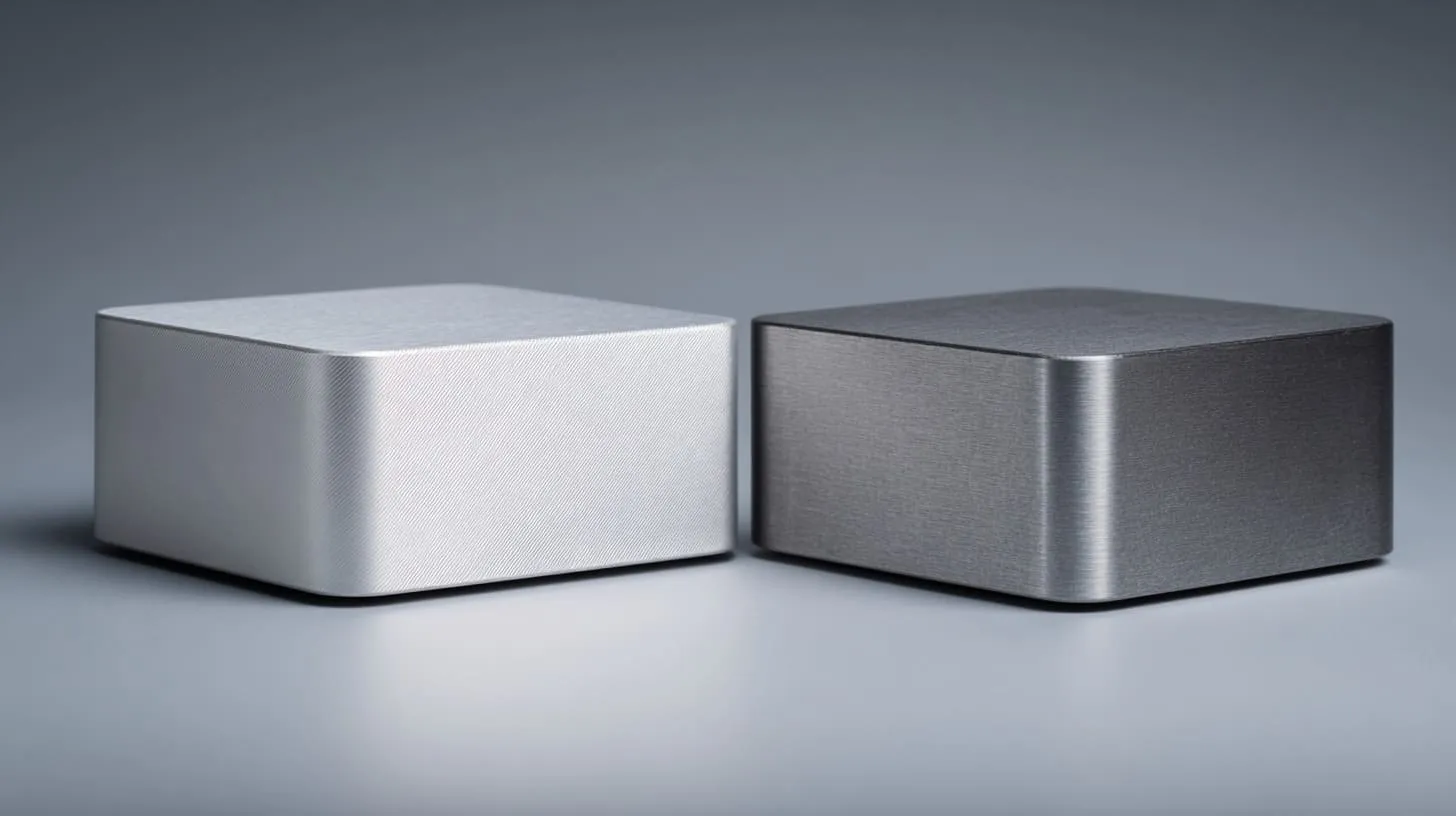
Engineers love tables because tables force honesty. You cannot hide behind vague words like “better.”
So here is a practical comparison I use when discussing enclosure material with OEM buyers.
When I see teams choose aluminum just to save weight, I push back and ask, “Are you saving 300 grams now only to spend three weeks later chasing sensor drift?” because that trade is usually not worth it.
Performance Comparison in Real Enclosure Use
| Factor | Aluminum | Carbon Steel |
|---|---|---|
| Static Magnetic Shielding | Poor | Good |
| Low-Frequency Shielding | Poor | Moderate to Good |
| High-Frequency EMI | Excellent | Good |
| Weight | Light | Heavy |
| Corrosion Resistance | Excellent | Requires coating |
| Machining & Fabrication | Easy | Moderate |
| Cost Stability | Stable | Varies with steel market |
What Engineers Usually Prioritize (And Why That Can Backfire)
Weight reduction
Weight matters. Shipping matters. Handheld products matter.
But if the problem is magnetic, weight is not the priority. Field type is.
Surface finish
Anodizing looks clean. Powder coating also looks clean, but it changes tolerances and can affect grounding contact points.
Cost savings without field analysis
Saving a few dollars on the enclosure can create a bigger cost in:
- extra testing cycles
- sensor calibration time
- EMC lab re-tests
- lost launch window
Here is a quick “decision lens” table you can use in a design review:
| If your main risk is… | Then your first choice is usually… | Because… |
|---|---|---|
| RF leakage or EMI emissions | aluminum | conductivity + weight |
| DC or 50/60 Hz magnetic interference | steel / high-permeability insert | flux redirection |
| corrosion in harsh environment | aluminum or coated steel | depends on exposure |
| appearance + premium feel | aluminum | finish and texture control |
| cost in large volume | depends | steel can be cheaper per sheet, shipping can flip it |
Next, I want to talk about the mistakes I keep seeing in real builds. This is where “material choice” stops being theory and starts being an assembly problem.
What Most Engineers Overlook in Real Projects

This section is where I get a little blunt, because these mistakes are not rare. They happen in smart teams.
The funny part is: most failures are not because the engineer did not know physics. They fail because they did not test the actual environment, or they assumed the enclosure is “one solid thing” when it is really seams, screws, vents, and contact points.
The way I spot a future shielding failure is by looking at the openings first—vents, seams, cable exits—because those spots usually defeat the best material choice if you ignore them.
Mistaking EMI for Magnetic Shielding
This is the big one.
A team says:
“We have noise. We need shielding.”
But the real question is:
- Is it electric field / RF interference?
- Or is it magnetic field interference?
If you assume magnetic and choose steel, you may add weight and cost for no gain.
If you assume EMI and choose aluminum, you may solve nothing if the real issue is a transformer nearby.
Not Testing the Real Environment
I have seen products pass a bench test and fail in a customer site.
Because the customer site has:
- big motors
- long power cables
- a transformer cabinet near the install point
- grounding that is not “ideal”
Lab conditions are polite. Industrial sites are not.
Here is a simple test plan I like:
| Test | What it tells you | What you need |
|---|---|---|
| Move the device closer/farther from source | distance sensitivity | tape measure + patience |
| Rotate device 90 degrees | field direction sensitivity | quick fixture |
| Power on/off nearby motor/transformer | source confirmation | controlled switching |
| Log sensor drift over time | slow low-frequency effects | simple data log |
Assembly-Level Weak Points
Even if you pick the correct material, you can lose the benefit in assembly.
Gaps and seams
A shielding enclosure is not a CAD model. It is a box with joints.
Ventilation holes
Vents are necessary. Vents are also leaks, depending on frequency and geometry.
Mixed-material assemblies
This is common:
- aluminum body
- steel screws
- stainless inserts
- plated brackets
Sometimes that mix creates local magnetic behavior that surprises people with magnet tests. Sometimes it creates corrosion issues. Sometimes it creates grounding discontinuity.
Here is a quick “weak point checklist” I use:
| Weak Point | Common Cause | Typical Fix |
|---|---|---|
| seam leakage | loose screws, uneven flange | add gasket or improve flatness |
| paint/powder breaks grounding | coating on contact edges | mask grounding points |
| vent acts like antenna (RF) | large opening size | honeycomb vents or smaller patterns |
| sensor sits near wall | poor placement | move sensor inward or add local shield |
Over-Reliance on Material Without Design Optimization
Shielding is a system problem:
- material choice
- geometry
- distance
- seams
- cable routing
- grounding
Material alone rarely carries the whole solution.
If you want a shortcut: do not start with “aluminum vs steel.” Start with field type + source location + distance. Then choose material.
Now let’s turn that into a practical guide: when should you choose aluminum, when should you choose steel, and when should you stop arguing and go hybrid?
When to Choose Aluminum vs Steel in Enclosure Projects
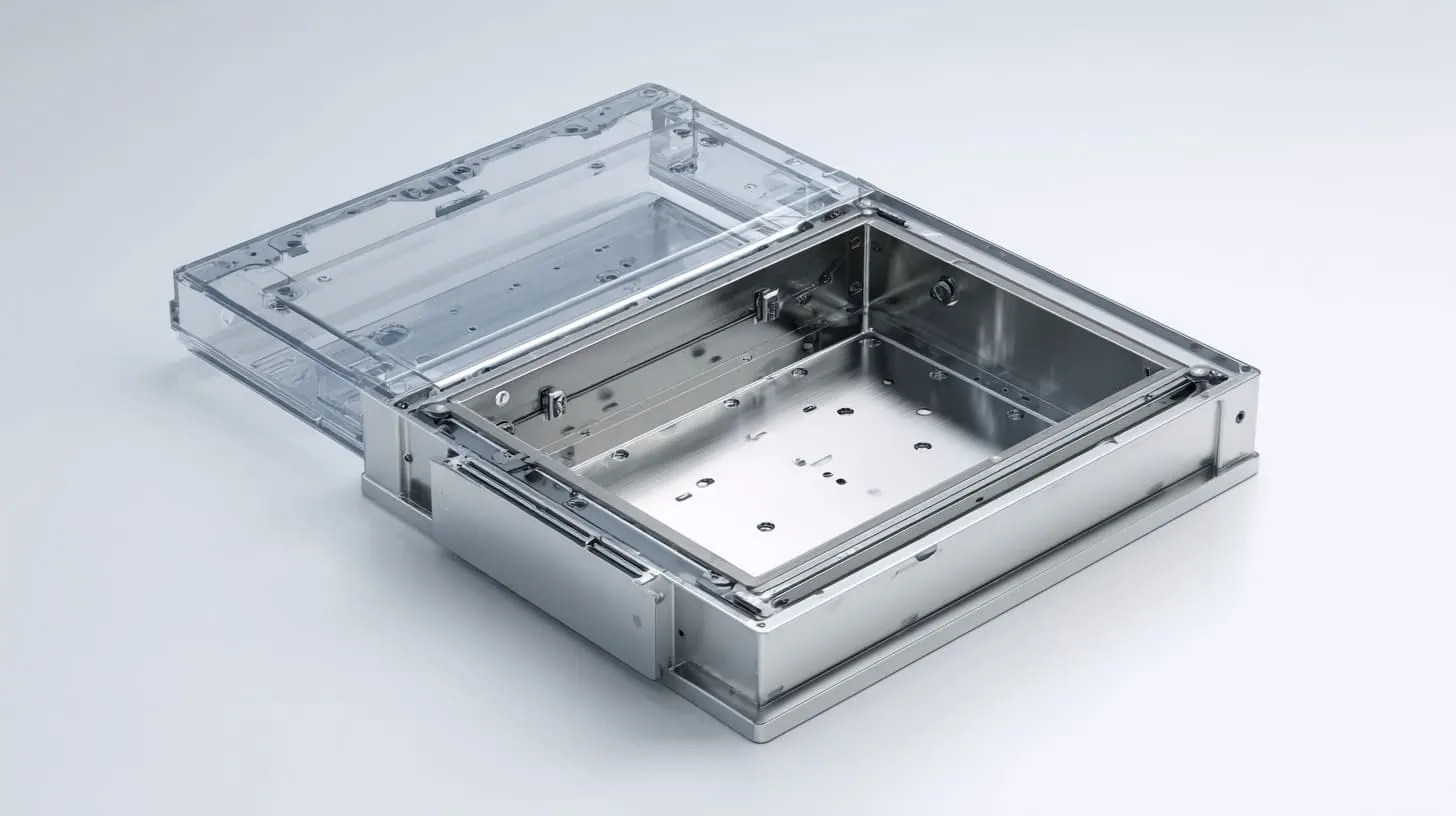
This is the section my buyers usually want first, but if you skip the earlier parts, you will choose based on comfort, not facts.
So here is my practical selection guide.
One rule I follow before I lock material is this: I imagine the product in the customer’s environment, not in my clean factory office, because that mental shift changes what “risk” really means.
Choose Aluminum When:
High-frequency EMI control is primary
If your issue lives in MHz to GHz, aluminum is often a strong choice.
Weight matters
Portable devices, wall-mounted products, anything shipped in volume—weight is money.
Corrosion resistance is critical
If you worry about humidity, salty air, or outdoor exposure, aluminum is easier to manage.
Thermal dissipation is important
Aluminum can spread heat across the enclosure body better than many coated steels.
Here is a practical “aluminum fits” list:
- RF enclosure
- IoT gateway housing
- consumer electronics box
- product where appearance is part of the brand
Choose Steel When:
Static or low-frequency magnetic fields exist
If you have motors, transformers, or strong DC fields nearby, steel is usually the first candidate.
Transformers or motors are nearby
This is the classic factory install problem.
Industrial environments with heavy magnetic noise
Some sites are just noisy. Steel gives you more options.
Here is where steel commonly makes sense:
- industrial controllers near power equipment
- sensor systems near motors
- products installed inside electrical cabinets
Hybrid Solutions Engineers Rarely Consider
This is the quiet “best of both worlds” zone.
Steel inner layer + aluminum outer housing
You keep the premium aluminum look, but you add magnetic performance inside.
Localized shielding plates
Instead of making the whole box heavy, you shield the sensitive part only.
Mu-metal inserts for sensitive components
This can be powerful, but it is not always easy. It can be expensive. It can be sensitive to forming.
A small warning I give to teams: hybrid designs can solve the physics but create manufacturing complexity, so you need to decide if the added parts are worth the assembly risk.
Now, even if you pick the right design, the project can still fail on cost, lead time, or production details. So let’s talk about the “boring” part that actually decides if the plan ships.
Cost, Manufacturing, and Supply Chain Considerations

I have seen engineers choose the right material and still lose time because the factory steps were not aligned with the design.
Steel and aluminum behave differently in cutting, bending, welding, surface treatment, and shipping. If you ignore that, you create delays that feel “random,” but they are predictable.
The way I judge feasibility is by asking, “Which step is most likely to create a surprise—bending, finishing, or shipping?” because that is usually where cost jumps without warning.
Fabrication Differences
Bending characteristics
- Steel often bends with stable springback, but thickness and grade matter.
- Aluminum bends well too, but some alloys crack if the bend radius is too tight.
Welding vs CNC machining
- Steel can be welded easily for certain structures.
- Aluminum welding is possible but needs more control.
- CNC machining is common for aluminum enclosures; sheet metal is common for steel boxes.
Here is a quick manufacturing view:
| Process | Aluminum | Steel |
|---|---|---|
| CNC machining | very common | possible but slower |
| Sheet metal bending | common (watch alloy) | very common |
| Welding | possible (more control) | common |
| Tapping threads | good | good (watch coatings) |
| Maintaining tight cosmetics | easier with anodize | depends on coating quality |
Lead Time and Export Factors
Coating process time
- Anodizing has its own queue and quality control steps.
- Powder coating can be fast, but it adds thickness and needs masking for grounding.
Material sourcing stability in Asia
Most common grades are stable, but specialty high-permeability materials can add lead time.
Weight impact on shipping cost
Steel can turn a light shipment into a heavy one quickly. For export projects, that matters.
A simple shipping reality table:
| Item | Aluminum Enclosure | Steel Enclosure |
|---|---|---|
| Weight | lower | higher |
| Air shipping impact | lower cost | higher cost |
| Sea shipping impact | manageable | higher but sometimes acceptable |
| Packaging damage risk | lower inertia | higher inertia |
OEM & Customization Implications
Logo engraving differences
Both can be engraved. Aluminum often looks cleaner after anodizing. Steel can look great too, but the finish choice matters.
Re-design flexibility
Aluminum CNC prototypes can be fast for early iterations. Steel sheet metal can be fast too if tooling is simple.
MOQ impact in custom projects
Custom work always has MOQ realities. For some designs, a hybrid approach adds parts and steps, which can increase MOQ pressure.
I do not say this to scare anyone. I say it because engineering decisions must survive manufacturing and logistics, not just simulation.
Now let me tie everything together, the way I explain it when a buyer asks me to “just tell me what to choose.”
Conclusion
If you only remember one thing from this article, remember this:
Aluminum is usually for EMI shielding. Steel is usually for magnetic shielding.
But the real decision starts one step earlier: confirm the field type and frequency.
Here is what I do, and why I do it this way:
- I ask where the interference comes from because guessing “shielding” without a source is like buying a lock without knowing the door.
- I separate RF EMI from low-frequency magnetic fields because they behave differently, and they reward different materials.
- I pay attention to seams, vents, and cable exits because those small “boring” details often decide the real result more than the material label.
- I stay open to hybrid solutions because they can solve the physics, but I also respect assembly risk and cost creep.
One honest sentence I live by: I would rather spend one day confirming the field and the source than spend three weeks arguing about whether the supplier “switched metals,” because most of the time the metal was fine and the assumptions were not.
If you are working on an enclosure and you are stuck between aluminum and steel, send me two things:
- your application environment (what is near the device)
- a quick note about what fails (sensor drift, EMI test, noise, etc.)
I can usually tell you which direction makes sense before you cut a second prototype.
If you want, you can reach me at info@maidatech.com or check our enclosure work at maidatechenclosure.com.