Skip to content
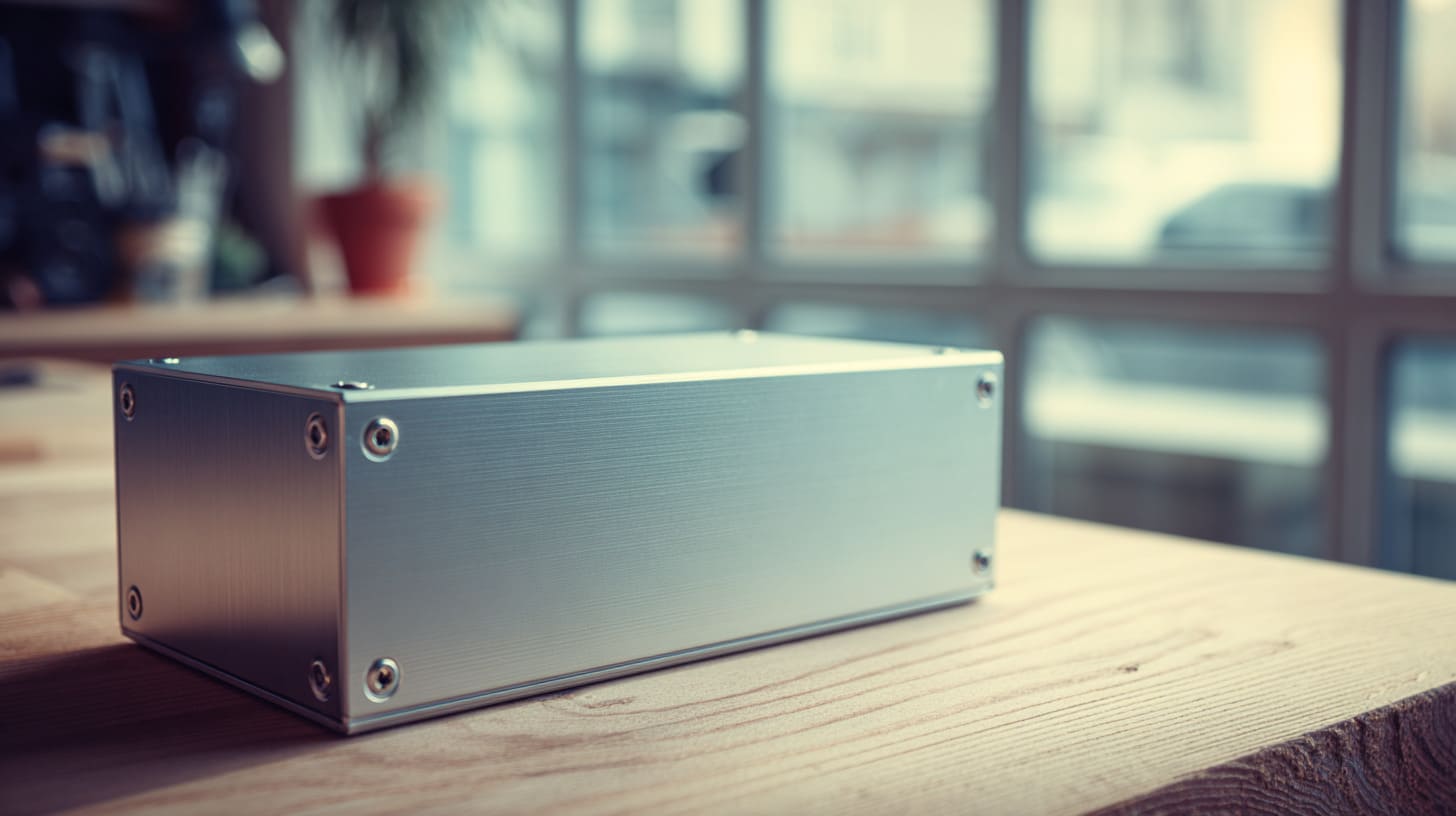
My phone buzzed during a short break between production checks. It was a message from Davide in Finland. He had one photo attached: an aluminum enclosure on his desk, a small magnet stuck near the corner, and a note that said, “Vincent, can you explain this?”
I did what I always do in that moment. I zoomed in. I looked at the screw area. I looked at the edge. I looked for anything that could “fake” a magnetic result. Because in enclosure work, this question is almost never just curiosity. It is usually a hidden worry: Did I choose the wrong material? Did my supplier mix metals? Will this mess up my design?
So I replied with the direct answer first:
Aluminum is not magnetic in normal conditions.
But the “why” matters. And the “why” is where people get confused—especially when you are building enclosures, doing EMI work, or mixing aluminum with screws, inserts, coatings, and real factory handling.
In this article, I will explain what “magnetic” actually means, why aluminum is usually not magnetic, why it can look magnetic sometimes, and how I test it in real life. I will also connect this back to enclosure design choices—because that is where this question stops being a fun science topic and starts being a project risk.
What Does “Magnetic” Actually Mean?
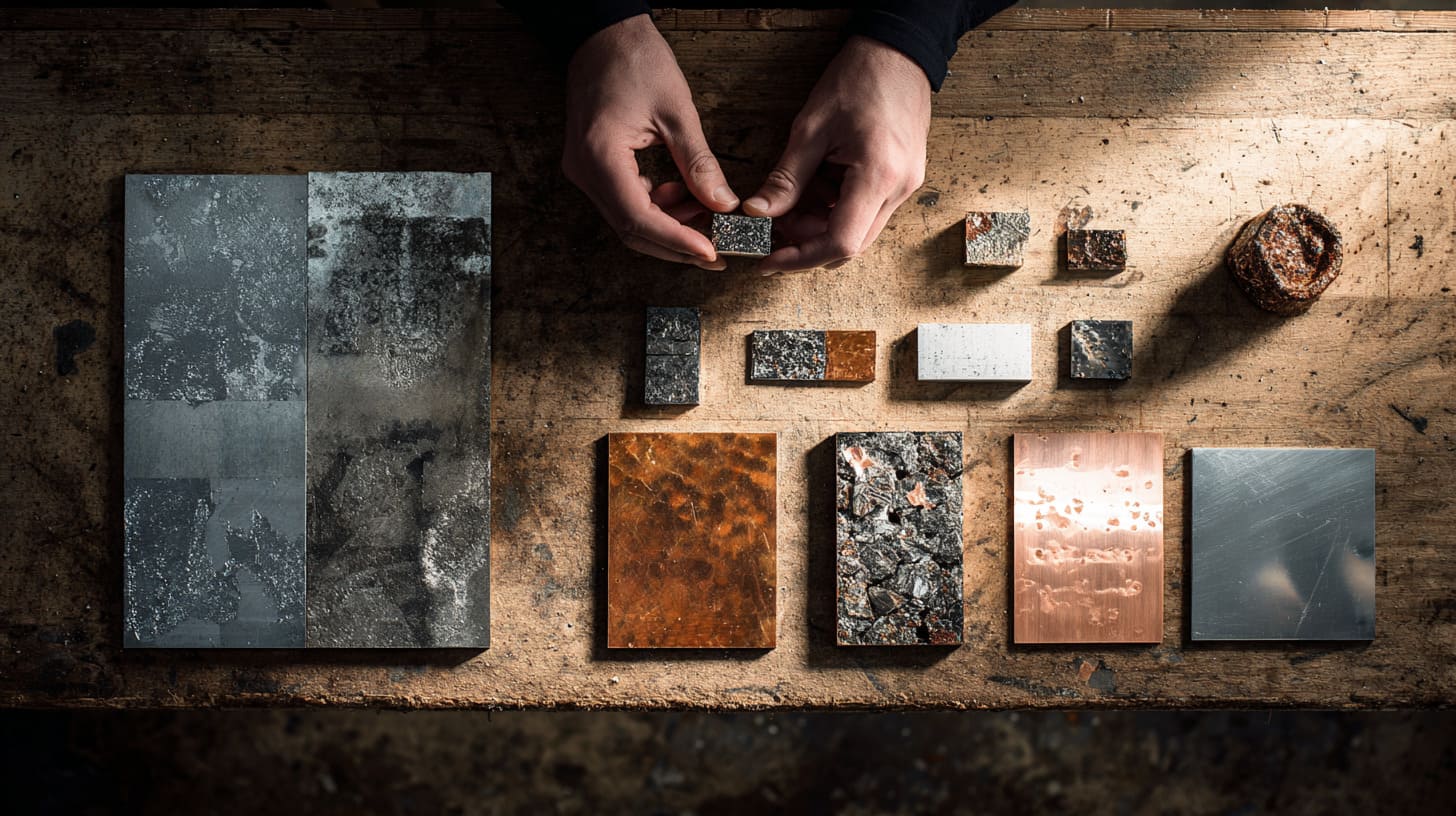
People say “magnetic” like it is one thing. But it is not. It is more like “spicy.” There are levels. There are types. And there are surprises.
If we do not define the word, we end up arguing about a magnet that sticks “a little bit” like that proves something.
Types of Magnetism
Here is the clean way I explain it to buyers and engineers:
- Ferromagnetic: strong attraction. This is what most people mean by “magnetic.”
Examples: iron, many steels, nickel. - Paramagnetic: weak attraction. So weak you usually do not notice.
Example: aluminum. - Diamagnetic: weak repulsion. Again, usually hard to notice.
Examples: copper, many plastics, graphite.
A quick table helps make this real:
| Material | Typical magnetic behavior | What a fridge magnet does |
|---|---|---|
| Carbon steel | Ferromagnetic (strong) | Snaps on hard |
| Ferritic stainless | Ferromagnetic (often strong) | Sticks |
| 304/316 stainless | Usually weak/near non-magnetic | Maybe a tiny pull |
| Aluminum | Paramagnetic (very weak) | Almost nothing |
| Copper | Diamagnetic (very weak repulsion) | Nothing |
| Plastic | Not magnetic | Nothing |
The critical thinking part: people often test “magnetism” with the wrong tool. A weak magnet gives a weak result. A strong magnet gives a dramatic result. Neither is a full material report.
How Magnetic Fields Interact with Metals
If I strip it down to the core idea:
- Metals have electrons.
- Electrons have a kind of “tiny magnet” behavior.
- In some materials, those tiny effects line up in groups (domains).
- When the domains line up easily and stay aligned, the metal looks “magnetic.”
Steel can form stable domains. Aluminum cannot.
That is the difference you feel in your hand.
Also, most metal objects you touch are not “pure.” They are made, cut, polished, and assembled. That is where confusion enters.
Why People Confuse Conductivity with Magnetism
This is one of my favorite misunderstandings because it sounds logical.
People think:
“Aluminum conducts electricity. Magnets and electricity are related. So aluminum should be magnetic.”
The missing link is simple:
- Conductivity is about how easily electrons move through a material.
- Magnetism (the strong kind) is about how electron effects align and stay aligned in domains.
Aluminum is a great conductor. But it is not a ferromagnet.
So it can carry current very well and still ignore your fridge magnet.
A short transition before we go deeper: the next step is the practical question everyone asks me—“Okay Vincent, so if aluminum is ‘not magnetic,’ why does it sometimes feel like it is?”
Is Aluminum Magnetic in Normal Conditions?
The Short Answer
In daily life, with normal magnets, aluminum is not magnetic.
You cannot pick it up with a magnet. You cannot rely on magnets to hold an aluminum enclosure. It will not act like steel.
That is the answer most readers want.
But if we stop here, we miss the traps.
Aluminum Is Paramagnetic
Aluminum is paramagneticc](https://en.wikipedia.org/wiki/Magnet), which means it has a very weak attraction to magnetic fields.
In real terms:
- A common magnet test shows “no attraction.”
- In very strong fields (like serious lab equipment), you can measure a tiny response.
This matters because some people hear “paramagnetic” and think it means “slightly magnetic like weak steel.” That is not how it behaves in normal projects.
Let me make it concrete:
| Test setup | What happens with aluminum | What happens with steel |
|---|---|---|
| Fridge magnet on sheet | No noticeable pull | Strong pull |
| Neodymium magnet on block | Still basically no pull | Strong pull |
| High-field lab magnet | Tiny measurable attraction | Strong attraction |
If your daily magnet test “sort of” sticks, you should suspect something else is going on. We will get to that.
Scientific Explanation (Without the Pain)
I do not like dumping physics on people, but one concept helps:
- Ferromagnetic materials have internal structures that let magnetic domains form and lock in.
- Aluminum does not have that structure.
- So it cannot “hold” magnetism the same way.
Also, aluminum does not keep magnetism after you remove the magnet. Steel can.
A small critical angle: if someone is selling “magnetic aluminum,” ask what they mean. Are they talking about a coating? A mixed-metal part? A marketing label? Or do they simply mean “conductive”?
One more transition, because the next question always shows up: “So can aluminum ever become magnetic?” The answer is “sort of,” but not in the way people imagine.
Can Aluminum Become Magnetic Under Certain Conditions?
This section is where I try to keep people honest. Because the internet loves the word “possible,” and then people turn “possible” into “normal.”
Strong External Magnetic Fields
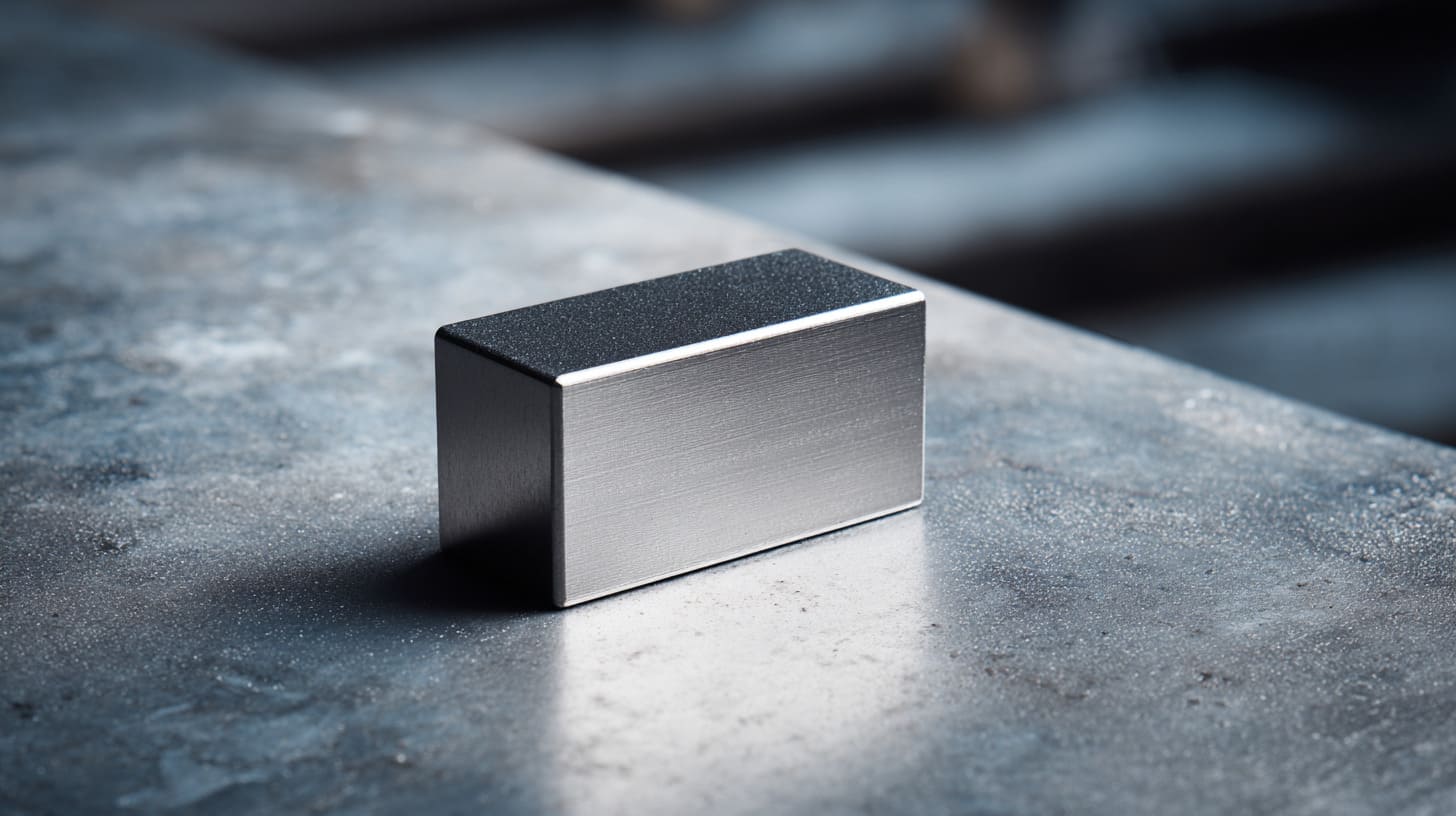
In very strong magnetic fields, aluminum can show a measurable response. That is real.
But here is the critical thinking part:
If your project requires lab-level fields to show the effect, it does not matter for normal enclosure work.
Most enclosure buyers are dealing with:
- motors
- speakers
- sensors
- power supplies
- normal industrial equipment
Not a high-field magnet lab.
So yes, aluminum can respond weakly. But no, it does not become “magnetic like steel.”
Very Low Temperatures
At extreme low temperatures, many materials show unusual behavior. Aluminum can change its response a bit.
But again, this is not a normal industrial enclosure condition.
If someone is building cryogenic equipment, they already have a materials team. They will not rely on a blog to choose.
So I treat this as an “interesting fact,” not a buying decision driver.
Aluminum Alloys and Magnetic Contamination
Now we enter the real world. This is where most “magnetic aluminum” stories come from.
There are three common causes:
- Iron impurities in the alloy (small amounts can exist, depending on grade and source)
- Steel dust contamination from machining and grinding
- Mixed-metal assembly (steel screws, inserts, brackets, springs)
A practical risk table helps:
| Cause | What you see | How to confirm | How to prevent |
|---|---|---|---|
| Iron in alloy | weak attraction in spots | check material cert, spectrometer | specify alloy, verify supplier |
| Steel dust | magnet “sticks” to surface | wipe + re-test | separate tooling, cleaning steps |
| Mixed parts | magnet sticks near holes/corners | disassemble | choose non-magnetic fasteners |
Here is the key insight I share with engineers like Davide:
When a magnet sticks to “aluminum,” it is often sticking to something that is not aluminum.
Next, I want to show the most common traps I see on the factory floor and in customer photos—because that is where the confusion becomes expensive.
Why Do Some Aluminum Parts Seem Magnetic?
This section is basically my “field guide” for weird magnet tests.
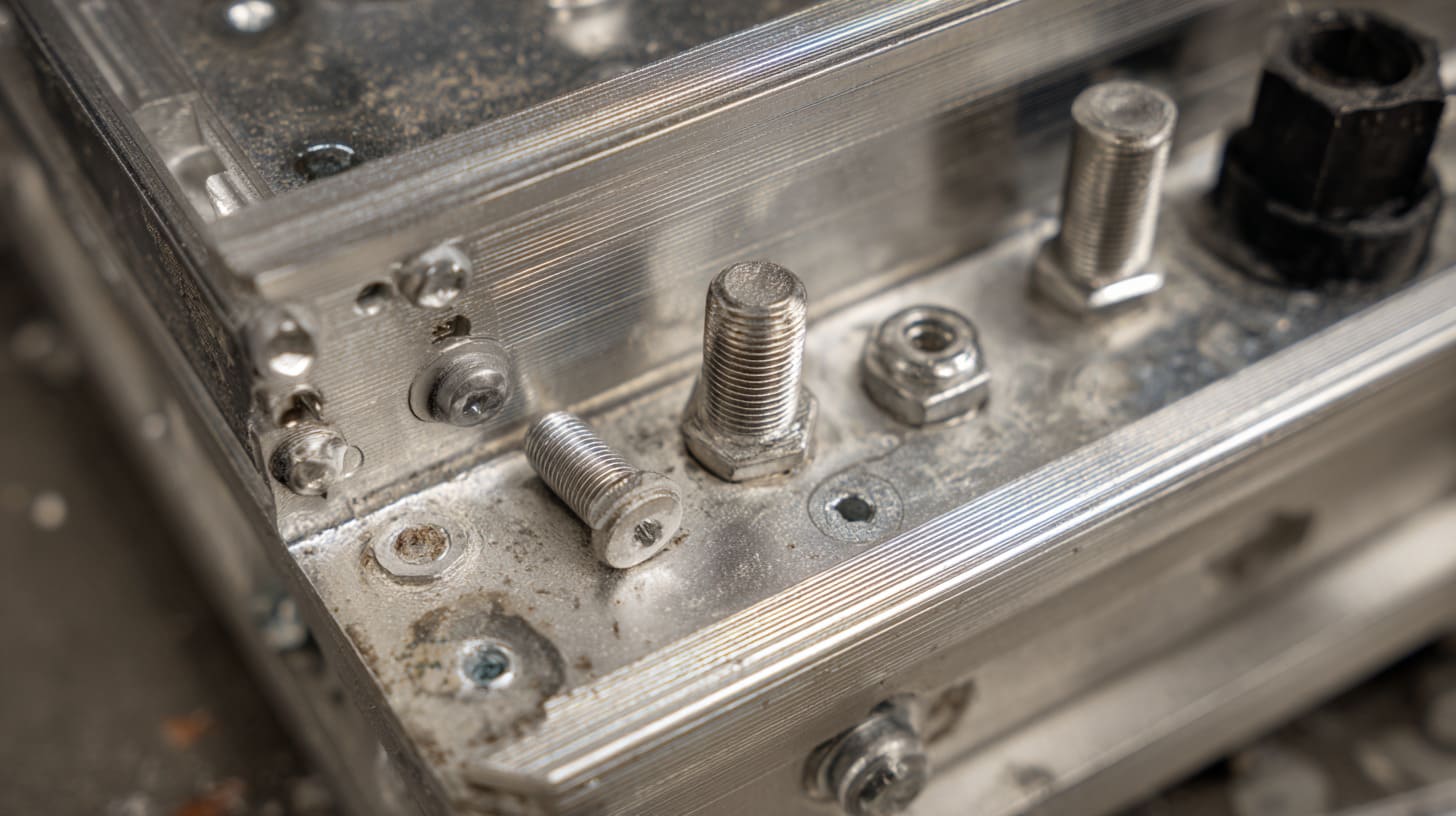
Steel Fasteners or Inserts
The sneakiest problem is hidden steel.
Common culprits:
- steel screws
- steel washers
- threaded inserts
- internal brackets
- springs
- latches
- hinge pins
Sometimes the part is 90% aluminum, and one tiny steel insert makes the magnet look “right.”
I have seen this exact moment during a video call:
- Buyer presses magnet on the corner.
- Magnet sticks.
- Buyer says: “See? This is not aluminum.”
Then I ask them to move the magnet one inch away.
It falls.
That is not aluminum becoming magnetic. That is a steel detail inside the design.
Quick checklist:
| Location where magnet sticks | Likely reason |
|---|---|
| Near screw holes | steel screws / washers |
| Near hinge | hinge pin / spring steel |
| Near latch | latch hardware |
| Near threaded insert | steel insert |
| Only on corners | hidden bracket / burr with dust |
Surface Contamination
This is a big one in machining shops.
Steel dust can land on aluminum surfaces. It can embed slightly. It can even get trapped in anodizing pores if cleaning is poor.
Then the magnet sticks to that dust, not the base metal.
How I test it fast:
- Wipe with a clean cloth.
- Use a bit of alcohol if needed.
- Re-test with the magnet.
- If it changes, it was contamination.
Critical thinking: if a supplier grinds steel near aluminum without good separation, contamination is normal. It is not always “bad,” but it should be controlled—especially if the enclosure is cosmetic or for clean environments.
Plated or Coated Surfaces
Some coatings can confuse testing.
Examples:
- magnetic coating layer (rare, but possible in special finishes)
- mixed-material laminate
- attached shielding gaskets that contain metal components
Also, some “aluminum” products are actually:
- aluminum sheet bonded to steel backing
- aluminum skins over a steel structure
So if you buy an enclosure from an unknown source and only test with a magnet, you can be fooled.
A small transition before the comparison section: once you see these traps, the next question becomes simpler—“How does aluminum really compare to steel in a way I can use for design decisions?”
Is Aluminum Magnetic Compared to Steel?

This is where the word “magnetic” becomes practical. Because in enclosure work, we choose between aluminum and steel all the time.
Aluminum vs Carbon Steel
Carbon steel is strongly ferromagnetic. Aluminum is not.
But magnetism is only one part of the decision. Engineers also care about:
- weight
- corrosion resistance
- machining
- cost
- finish
- EMI behavior
Here is a comparison table I use in conversations:
| Factor | Aluminum | Carbon steel |
|---|---|---|
| Magnetism | Very weak (paramagnetic) | Strong (ferromagnetic) |
| Weight | Light | Heavy |
| Corrosion | Good (naturally forms oxide layer) | Needs coating to resist rust |
| Machining | Often easier and faster | Can be tougher, depends on grade |
| Strength | Good, depends on alloy | Often stronger for same thickness |
| Cost | Can be higher per kg | Often lower per kg |
Critical thinking: “Steel is stronger” is a lazy sentence. Strength depends on design, thickness, and loads. Sometimes aluminum wins by smart geometry.
Aluminum vs Stainless Steel
Stainless steel is tricky because “stainless” is not one thing.
- 304/316 (austenitic): often non-magnetic or weakly magnetic
- 430 and other ferritic types: more magnetic
And stainless can become slightly magnetic after cold work (bending, forming). That surprises people.
So if someone says “stainless is non-magnetic,” I always ask: Which grade? And how was it made?
Here is a simple guide:
| Stainless type | Typical magnet behavior | Common use |
|---|---|---|
| 304/316 (austenitic) | low to weak | food, medical, premium enclosures |
| Ferritic (like 430) | magnetic | appliances, some panels |
| Cold-worked 304 | can become slightly magnetic | formed parts |
Practical Comparison Table (What Buyers Actually Need)
| Property | Aluminum | Steel | Why it matters in enclosures |
|---|---|---|---|
| Magnetic mounting works? | No | Yes | fixtures, quick install |
| EMI shielding (electric fields) | Good | Good | electronics noise |
| Magnetic shielding | Poor | Better | protecting sensitive sensors |
| Heat spreading | Good | OK | hotspots, thermal design |
| Looks after anodizing/paint | Very good | Good | branding and cosmetics |
A short transition: now that we know aluminum is not magnetic in the “steel sense,” the real question becomes: so why should enclosure designers care at all? Let’s connect it to actual enclosure decisions.
Why Does This Matter for Enclosure Design?
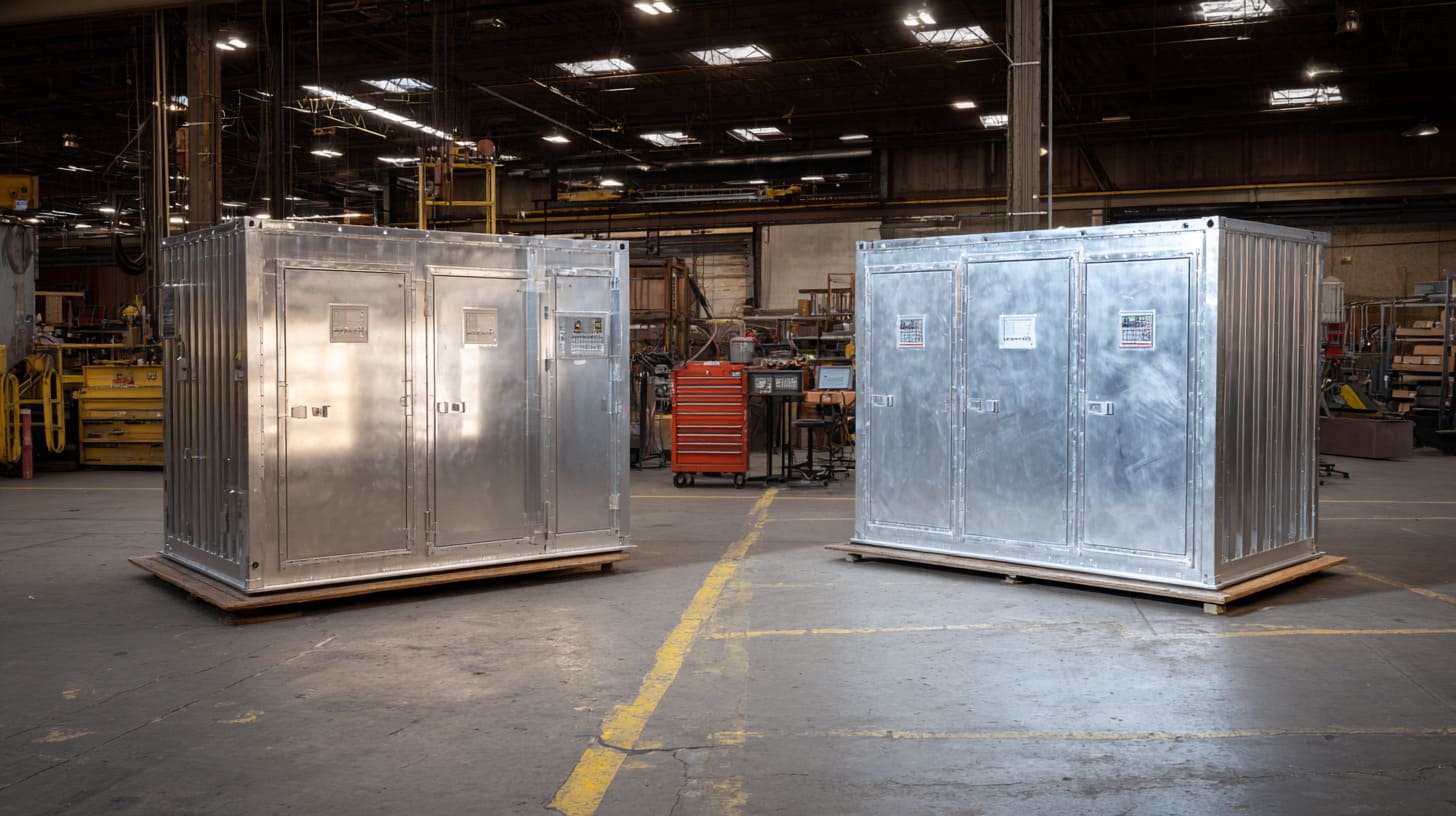
I build enclosures for buyers who sell products under their own brand. If they choose the wrong material assumption, it shows up later as a complaint, a redesign, or a shipment delay.
And magnetism is one of those assumptions that looks small—until it is not.
EMI Shielding and Magnetic Fields
A lot of people mix these two ideas:
- EMI shielding
- magnetic shielding
They are not the same.
Aluminum is good for EMI shielding in many cases, especially for electric fields and high-frequency noise. It is conductive, so it can help block and reflect certain electromagnetic interference.
But aluminum is not great for magnetic shielding, especially low-frequency magnetic fields. Steel and special high-permeability materials do that better.
Here is a simple table I show to buyers:
| Shielding goal | Aluminum | Steel | Notes |
|---|---|---|---|
| High-frequency EMI | Often very good | Good | seams and gaskets matter |
| Low-frequency magnetic fields | weak | better | may need special materials |
| Grounding and conductivity | strong | strong | depends on coating/finish |
Critical thinking: if a project has a sensitive sensor and a nearby motor, you may need more than “aluminum is conductive.” You need real testing, seam design, and sometimes a different material plan.
Mounting with Magnets
This is the “simple failure” I see most.
A buyer designs a quick magnetic mount system. Then they choose aluminum for weight and looks. Then they realize magnets do nothing.
What to do instead:
- use mechanical fasteners (screws, clips)
- add a steel mounting plate inside the aluminum enclosure
- use adhesive mounting systems if allowed
- redesign the mount to grab geometry, not magnetism
Practical fix table:
| Need | Bad assumption | Better solution |
|---|---|---|
| quick attach | “magnets will stick to aluminum” | steel plate insert |
| clean exterior | “no visible screws” | hidden internal bracket |
| removable accessory | “magnetic = easy” | latch or slide rail |
Industrial Equipment and Sensors
Some sensors rely on magnetic fields. Some environments are full of magnetic noise.
If you place a magnetic sensor near an aluminum housing, aluminum usually does not distort the field much. That can be good.
But if your housing has steel screws, brackets, or contamination, now the sensor behavior can shift.
So the critical thinking is: the base enclosure material is not the only story. The assembly parts matter.
Recycling and Material Sorting
This one is practical and a bit funny.
People think recyclers use magnets for all metals. They do not.
Steel is easy to pull with magnets. Aluminum is not. Aluminum sorting often uses other methods, including eddy current separation.
This matters if your buyer asks about end-of-life recycling. Aluminum is still recyclable, but it is sorted differently.
A short transition: now let’s get hands-on. If you are holding a part right now, how do you test it in a way that avoids false results?
How to Test If Aluminum Is Magnetic?
I like tests that save time. But I also like tests that do not lie.
Here are the ones I use, from simplest to more serious.
Simple Magnet Test
Step-by-step:
- Use a decent neodymium magnet (not a weak fridge magnet).
- Test the flat surface, not just corners.
- Test multiple spots.
- If it “sticks,” move one inch away and test again.
- Wipe the area and re-test.
What to expect:
- True aluminum: almost no pull, no “snap,” no holding power.
- Steel contamination or parts: magnet sticks strongly in localized areas.
A quick guide:
| Result | Likely meaning |
|---|---|
| No pull anywhere | likely aluminum |
| Strong pull at screw holes only | steel screws/inserts |
| Strong pull everywhere | not aluminum or backed by steel |
| Pull disappears after wiping | steel dust contamination |
Advanced Industrial Testing
If the project is high value, I do not rely on magnet tests alone.
Tools that help:
- Gauss meter: measures magnetic field strength
- XRF analyzer: checks composition (common in serious QA)
- Material certs (MTC): supplier documents, useful but not perfect
Critical thinking: documents can be copied. Tools can be wrong if used wrong. The safest approach is to combine evidence.
Identifying Alloy Purity (And When to Suspect Problems)
If you suspect contamination, ask these questions:
- Was steel machining done near this part?
- Were parts tumbled with mixed materials?
- Was anodizing done after proper cleaning?
- Are there steel fixtures used during finishing?
Supplier-side controls I use in my factory workflow:
- separate tooling zones for steel vs aluminum
- cleaning steps before finishing
- controlled storage to reduce dust transfer
A transition into applications: once you can test correctly, you can stop worrying about “is it magnetic” and start asking the better question—“where does aluminum help me, and where does it limit me?”
Aluminum in Real-World Applications
I work with buyers who want lightweight, clean-looking products that still survive shipping and real use. Aluminum shows up a lot for a reason.
But it is not a magic material. It has tradeoffs. And magnetism is only one small part of the bigger picture.
Aluminum in Electronic Enclosures
For electronic enclosures, aluminum often gives a strong mix:
- light weight
- good heat spread
- good corrosion resistance
- good finish options (anodize, paint)
- often solid EMI behavior with proper design
Here is a practical enclosure-focused table:
| Requirement | Aluminum performance | Notes |
|---|---|---|
| Cosmetic finish | high | anodizing looks premium |
| Heat management | good | use thermal pads, design contact |
| EMI control | good | seams and grounding must be planned |
| Magnetic mounting | poor | add steel insert if needed |
| Outdoor corrosion | good | but watch galvanic pairs |
Critical thinking: if you need real magnetic shielding, aluminum alone is not the right plan. But if you need EMI shielding at high frequency and a clean finish, aluminum can be a strong choice.
Aerospace and Automotive Use
These industries love weight reduction.
But they also love repeatable performance. That means:
- consistent alloy choice
- controlled finishes
- predictable assembly parts
Aluminum is useful because it does not bring ferromagnetic effects that can mess with certain sensors. But again, the bolts and inserts still matter.
Medical and Scientific Equipment (MRI Environments)
MRI is where “non-ferromagnetic” becomes a safety issue.
Aluminum is often safer than steel around strong magnetic fields because it does not get pulled like a projectile.
Still, critical thinking: a single steel fastener in the wrong place can create a problem.
So in those environments, material control is strict.
A short transition: by now, you can probably spot why the internet gets messy. The next section is me clearing up the top myths I hear from buyers, interns, and sometimes even experienced engineers who are in a rush.
Common Myths About Aluminum and Magnetism
I do not judge these myths too hard. People are busy. They want a simple rule. The trouble is: simple rules break when real assemblies show up.
“All Metals Are Magnetic”
No.
Many metals are not ferromagnetic. Some have weak responses. Some repel slightly. The “metal = magnetic” idea is mostly learned from everyday steel objects.
If you want a quick reality check, put a magnet near:
- aluminum
- copper
- brass
- many stainless steels
You will get surprises.
“If It Conducts Electricity, It Must Be Magnetic”
This one sounds smart. It is still wrong.
Conductivity means electrons move easily. Magnetism (strong magnetism) means domains form and align.
Aluminum conducts well. Copper conducts even better. Neither is ferromagnetic.
“Magnetic = Stronger Material”
This is one of those dangerous shortcuts.
Strength depends on:
- alloy
- thickness
- geometry
- heat treatment
- load type (impact, bending, fatigue)
Magnetism is not a strength rating.
Here is a simple reminder table:
| What you want | What to measure | Magnetism helps? |
|---|---|---|
| strength | tensile/yield, design geometry | no |
| stiffness | modulus and design | no |
| durability | corrosion, fatigue, impact | no |
| magnetic function | permeability | yes |
A transition into decision-making: myths are easy to delete, but buyers still need a clear way to think. So let me share how I approach this question with engineers like Davide and project owners like John.
How Should Engineers and Buyers Think About This?
When people ask me “Is aluminum magnetic?” I now hear a hidden question behind it.
Usually it is one of these:
- “Will my mounting idea work?”
- “Will my sensor read correctly?”
- “Will this material mess with EMI?”
- “Is my supplier lying about the metal?”
So I try to answer the hidden question, not just the word.
When Magnetism Actually Matters
Magnetism matters when your product relies on magnetic behavior.
Common cases:
- magnetic latching
- magnetic mounting
- reed switches and magnetic sensors
- magnetic shielding needs
- equipment used near strong magnetic fields
In these cases, aluminum is not “bad.” It just does not do the job by itself.
A simple selection table:
| Use case | Aluminum alone works? | Typical fix |
|---|---|---|
| magnetic mount | no | add steel plate/insert |
| magnetic latch | no | use steel target piece |
| magnetic shielding | weak | use steel or special alloys |
| EMI shielding | often yes | design seams and grounding |
Critical thinking: sometimes the right design is mixed materials. A small steel insert can give magnetic function without giving up aluminum’s weight and finish.
When It Does Not Matter
Most of the time, magnetism does not matter for enclosure work.
If you are choosing aluminum, you are usually choosing it for:
- weight
- corrosion resistance
- thermal behavior
- machining
- cosmetics
So if someone rejects aluminum because “it is not magnetic,” I ask them: What problem are you trying to solve?
Often the problem is something else, like mounting, sensor placement, or shielding confusion.
Material Selection Advice for OEM Projects
If you are sourcing custom enclosures, here is the simple checklist I use with clients:
- Ask about the alloy. Do not accept “aluminum” as a full spec.
- Confirm assembly parts. Screws, inserts, hinges, latches.
- Control contamination. Especially if appearance or sensors matter.
- Match material to function. EMI shielding is not magnetic shielding.
- Test smart. Use more than one spot, and wipe before judging.
If you are building a product under your own brand, this stuff is not “extra.” It is part of your risk control.
A final transition into the wrap-up: now that we have the truth and the traps on the table, I want to summarize it in a clean way you can use in your next design review or supplier call.
Conclusion
Here is the honest answer I give every time:
Aluminum is not magnetic in practical conditions. It is paramagnetic, but that effect is so weak that normal magnets will not grab it like steel.
When aluminum parts seem magnetic, the cause is usually not “mystery aluminum.” It is something real and fixable: steel screws, threaded inserts, hidden brackets, steel dust on the surface, or a mixed-material construction.
The useful takeaway is not just “yes or no.” It is this:
- Aluminum can be great for enclosures because it is light, corrosion resistant, easy to finish, and often helpful for EMI work.
- Aluminum is not a magnetic solution for mounting or magnetic shielding.
- Assembly details matter as much as the base metal.
If you are working on an OEM enclosure and you want a quick sanity check, send me your drawing and tell me what the magnet is supposed to do—mounting, sensing, shielding, or something else. I can usually spot the risk fast and suggest a simple fix before it becomes a redesign.
You can reach me at info@maidatech.com, or visit maidatechenclosure.com if you want to share specs and get practical feedback.