Skip to content
A buyer once asked me a very simple question: "Can you make this enclosure IP67 instead of IP65?"
It sounded like a normal upgrade request. The product was an outdoor electronics box with a PCB, a small display, two cable glands, and a printed logo. The buyer wanted to avoid water damage, and IP67 looked safer on the datasheet.
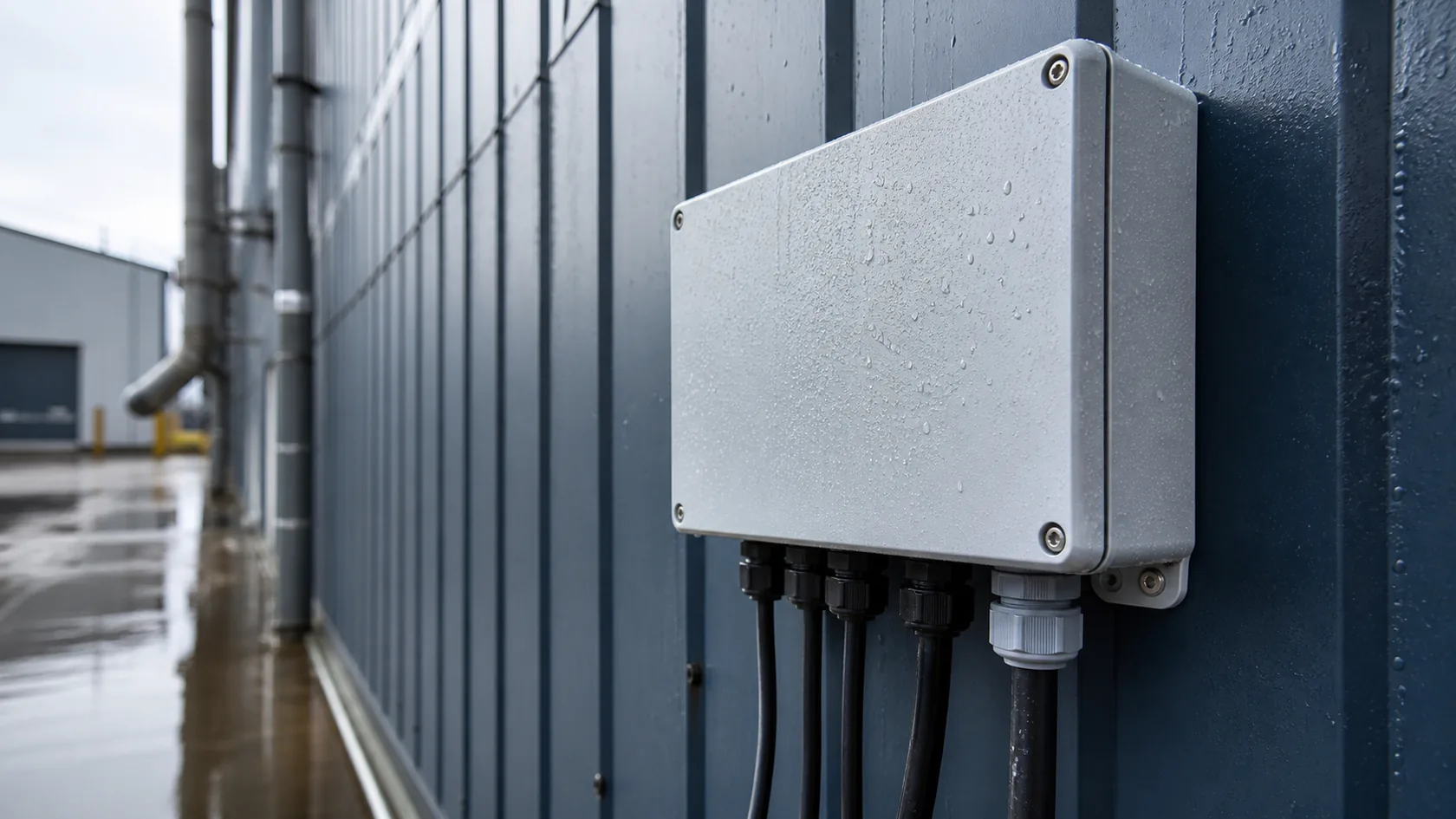
But after a few minutes, the real working condition became clear. The enclosure was not going underwater. It was mounted on a wall, exposed to rain, sun, dust, and sometimes cleaning water from a hose. The bigger risk was not temporary immersion. The bigger risk was spray direction, cable entry, gasket compression, and condensation.
That is why I do not treat IP65, IP66, and IP67 as a simple ladder. The higher number can help in the right situation, but it can also give a false sense of safety.
The common buyer question
For custom electronics enclosures, buyers often ask for "waterproof" protection. Then the discussion quickly becomes IP65 vs IP66 vs IP67. These ratings come from the IEC 60529 standard, which defines ingress protection against solid objects and water.
That is useful. It gives engineers and suppliers a common language. But it is not the full design.
In my factory work, I judge the IP rating together with the real installation, because a box that passes a lab test can still fail after a cable hole is drilled in the wrong place or a gasket is squeezed unevenly.
Why the highest number can be the wrong question
The right question is not only "Which IP rating is higher?"
The better question is: "What kind of water, dust, heat, cable movement, cleaning, and aging will this enclosure face after installation?"
Once we answer that, the rating becomes useful again. It becomes part of the enclosure design instead of a sticker on the product page.
Let's start with the basic difference.
What IP65, IP66, and IP67 Actually Test
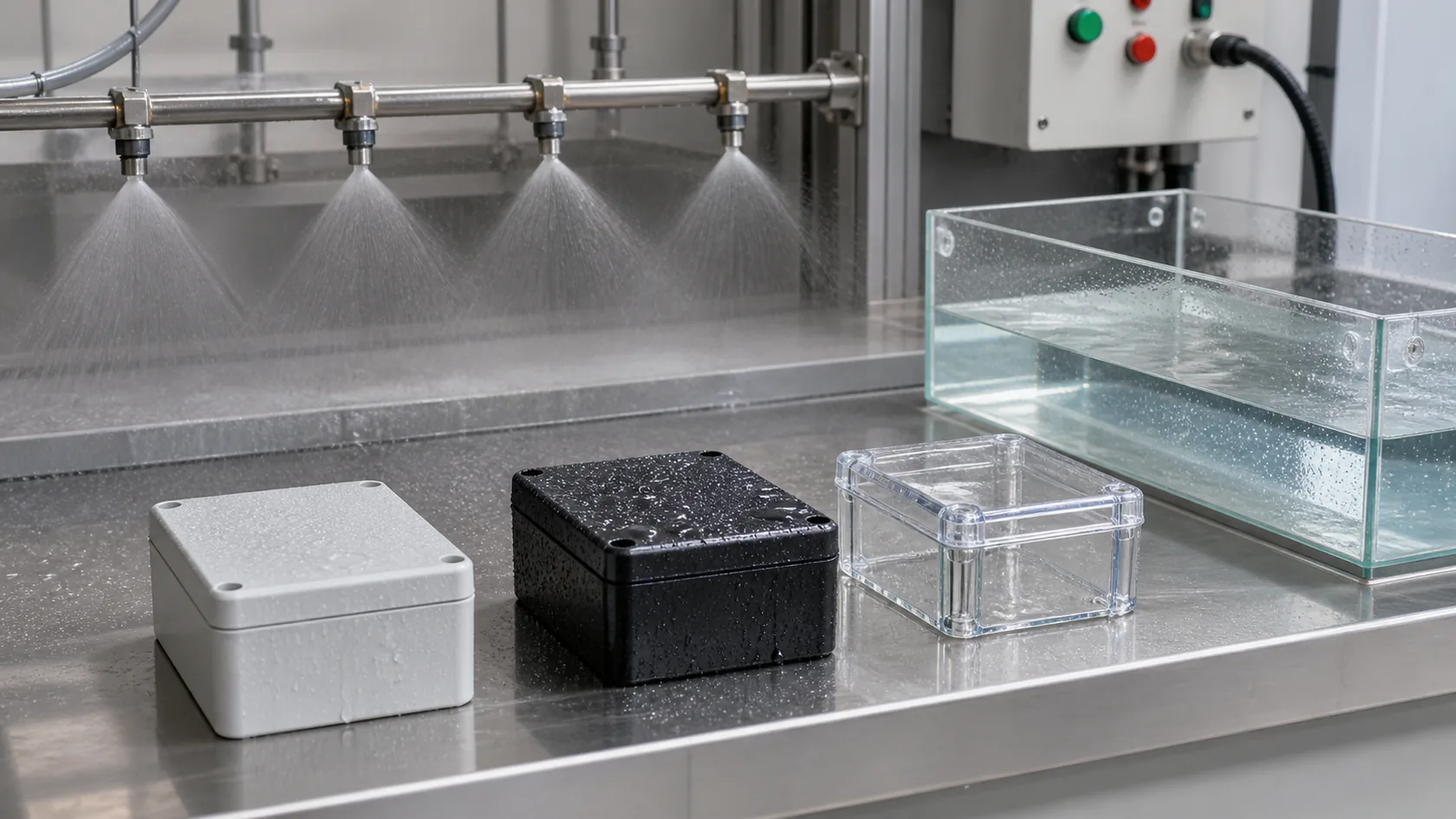
IP ratings use two digits. The first digit describes protection against solids. The second digit describes protection against water. In IP65, IP66, and IP67, the first digit is always 6, so all three are dust-tight.
The real difference is the water test.
The two digits do different jobs
The "6" in the first position means the enclosure is dust-tight. That matters for outdoor electronics, industrial controls, sensors, and small embedded systems. Fine dust can cause corrosion, poor contact, or heat buildup.
The second digit is where many people get confused.
- IP65 protects against water jets.
- IP66 protects against powerful water jets.
- IP67 protects against temporary immersion.
These are not just stronger versions of the same test. They describe different types of water exposure.
Quick comparison table
| Rating | Dust protection | Water protection | Better fit |
|---|---|---|---|
| IP65 | Dust-tight | Water jets | Outdoor rain, light hose spray, general equipment |
| IP66 | Dust-tight | Powerful water jets | Heavy rain, exposed sites, washdown, strong spray |
| IP67 | Dust-tight | Temporary immersion | Low-mounted devices, flood risk, short submersion |
This table is simple, but it already shows the trap. IP67 looks higher than IP66, but IP67 is about immersion. IP66 is about powerful jets.
Why test conditions matter
A jet test pushes water at seams, hinges, screws, cable glands, displays, and buttons. It can find weak points that a calm immersion test may not stress in the same way.
An immersion test creates pressure around the enclosure body. It can reveal slow leakage through seals, threads, or cable entries when the whole box sits below water.
I usually ask customers to describe the worst normal day for the product, not the best laboratory condition, because that story tells me whether we should care more about spray impact, standing water, or long-term outdoor aging.
This difference becomes especially important when buyers compare IP66 and IP67.
Why IP67 Does Not Automatically Replace IP66
Many buyers assume IP67 includes IP66. The number is bigger, so it feels logical. But for enclosure design, that assumption can be dangerous.
IP66 and IP67 are different promises.
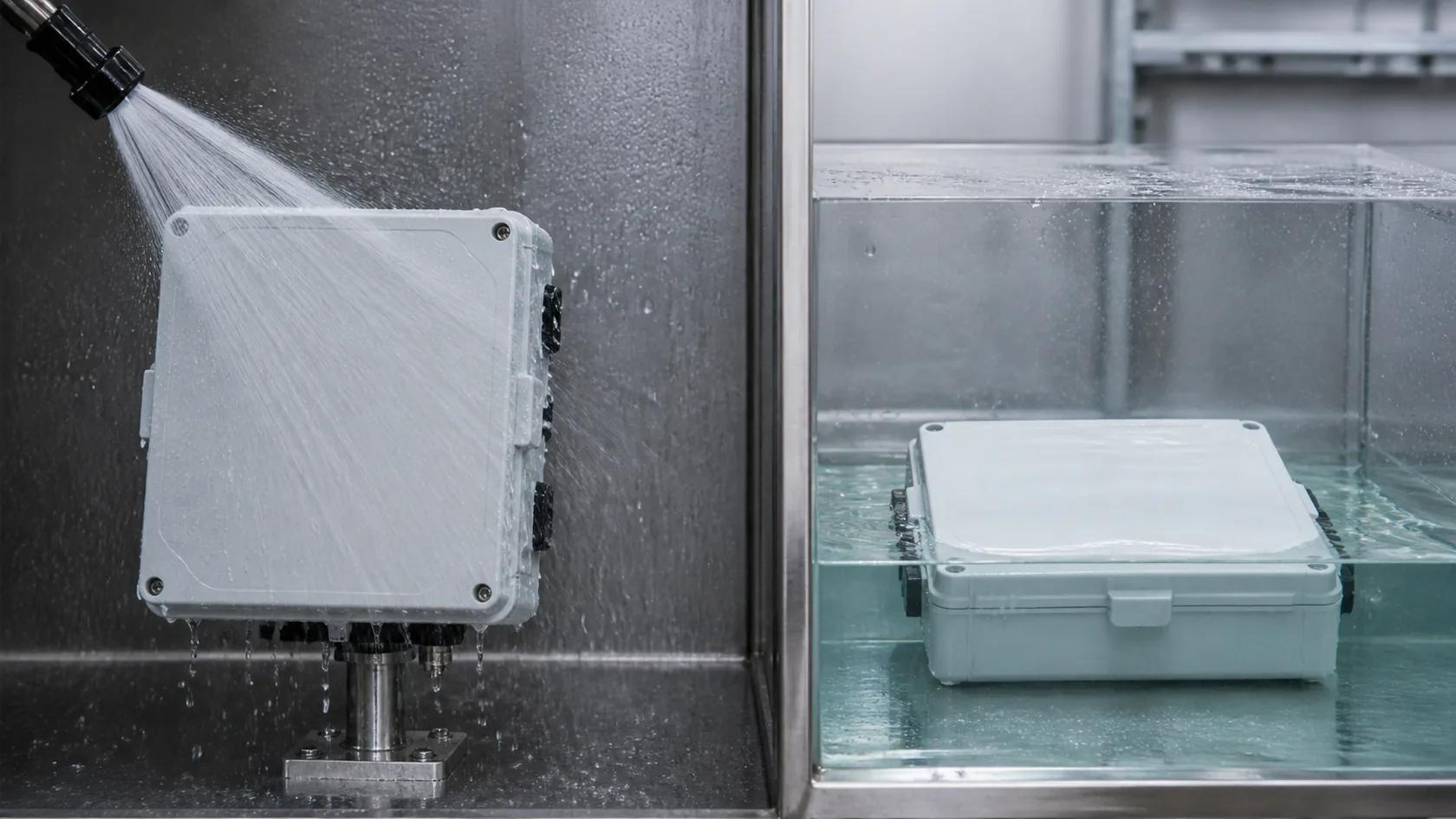
Powerful water jets are not the same as immersion
Imagine two situations.
In the first situation, an enclosure sits on a machine and workers clean the area with a hose. Water hits the door seam directly. The spray angle changes. The cable glands take impact. The gasket sees short bursts of force.
In the second situation, an enclosure falls into shallow water for a short time. The water is more static. The pressure is different. There is no direct jet trying to lift a gasket edge or push through a gland washer.
Both are serious, but they are not the same.
This is why a product can be designed for IP67 temporary immersion and still need separate confirmation for IP66 jet resistance. In North American projects, buyers may also need to compare with NEMA enclosure types, because NEMA ratings include environmental ideas that IP codes do not always cover in the same way.
When dual ratings make sense
If the enclosure may face both strong washdown and temporary flooding, I prefer to discuss a dual rating such as IP66/IP67. It tells the buyer that both conditions were considered.
That may increase cost. It may need a better gasket, thicker wall design, stronger latches, tighter cable gland selection, or different testing. But it is clearer than buying a single high number and hoping it covers everything.
How this mistake shows up in sourcing
The mistake usually appears during quotation.
A buyer sends a drawing and writes "IP67 required." The supplier quotes a sealed box. Later the buyer adds a display window, two side cable entries, a reset button, and a low-cost gland. The label still says IP67 in the email, but the real assembly is now different from the tested design.
My practical rule is simple: I do not judge the rating only on the empty enclosure shell. I judge the complete assembly, including every hole, accessory, cable, gasket, screw, and user opening.
That complete assembly is where many failures begin.
What a Higher IP Rating Still Does Not Cover
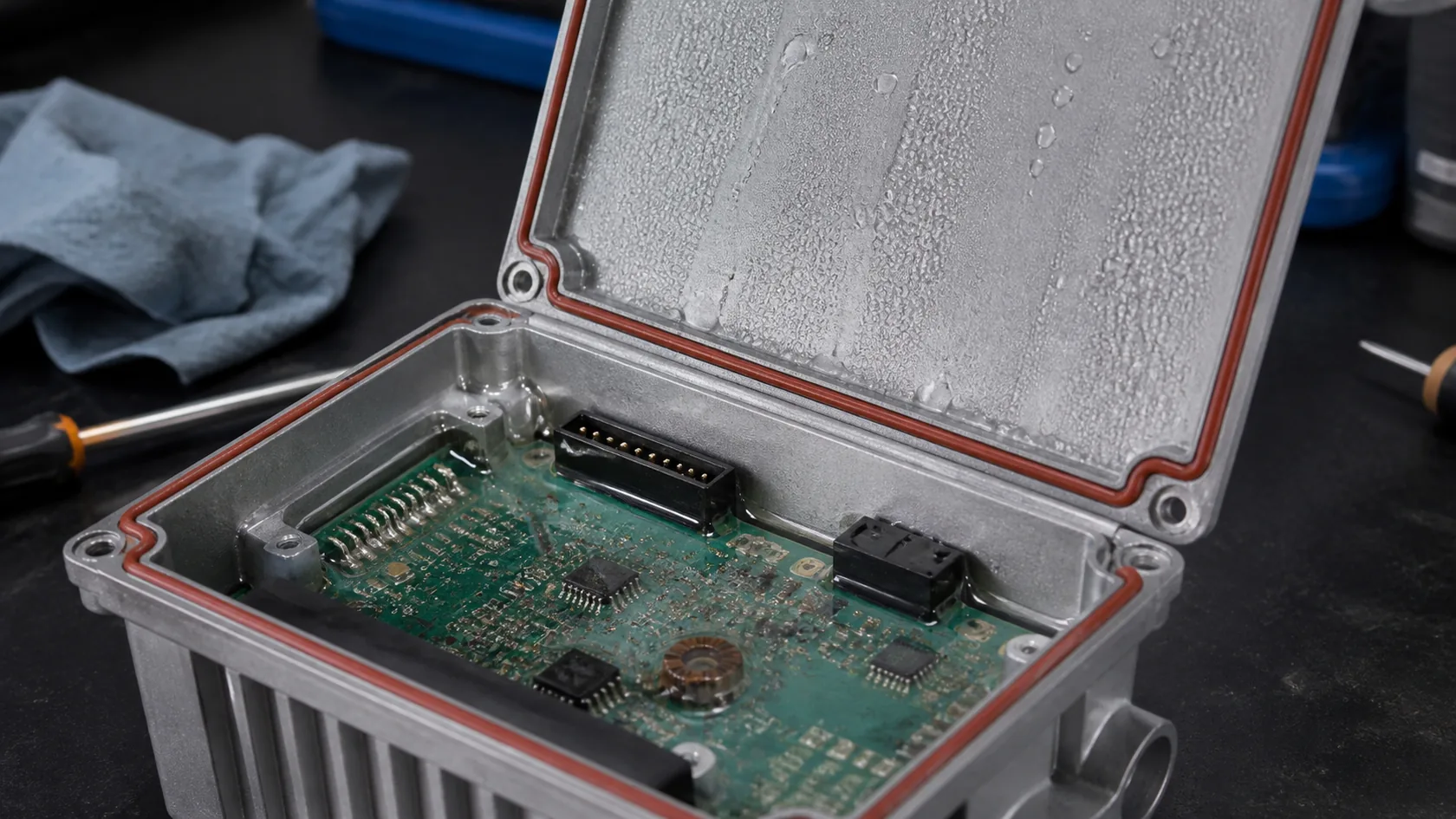
An IP rating is an ingress test. It is not a full outdoor reliability certificate. It does not automatically prove that electronics will survive for years in heat, cold, salt air, chemical spray, vibration, or poor maintenance.
This is the part buyers sometimes learn too late.
Condensation inside the sealed box
A tight enclosure keeps external water out. But it can also trap humid air inside. When the temperature drops, water vapor can condense on the PCB, connector pins, screws, or inner wall.
This can happen even when no rain enters the enclosure.
For electronics, condensation is a quiet problem. There is no dramatic leak. The box looks fine. Then the display fogs, terminals corrode, or the PCB fails after several thermal cycles.
Breather vents, desiccants, conformal coating, drainage design, and material choice may be needed depending on the product. The IP number alone cannot solve this.
Heat, UV, chemicals, corrosion, and impact
The UL enclosure certification world also reminds us that enclosures may need different tests for different hazards. Water ingress is only one part of protection.
For example:
- A plastic enclosure can pass an IP test but age faster under UV if the material is wrong.
- A painted steel enclosure can resist rain but corrode quickly near the sea.
- A gasket can seal well on day one but harden after heat and cold cycles.
- A thin cover can deform when screws are over-tightened.
- A clear window can leak if adhesive selection is poor.
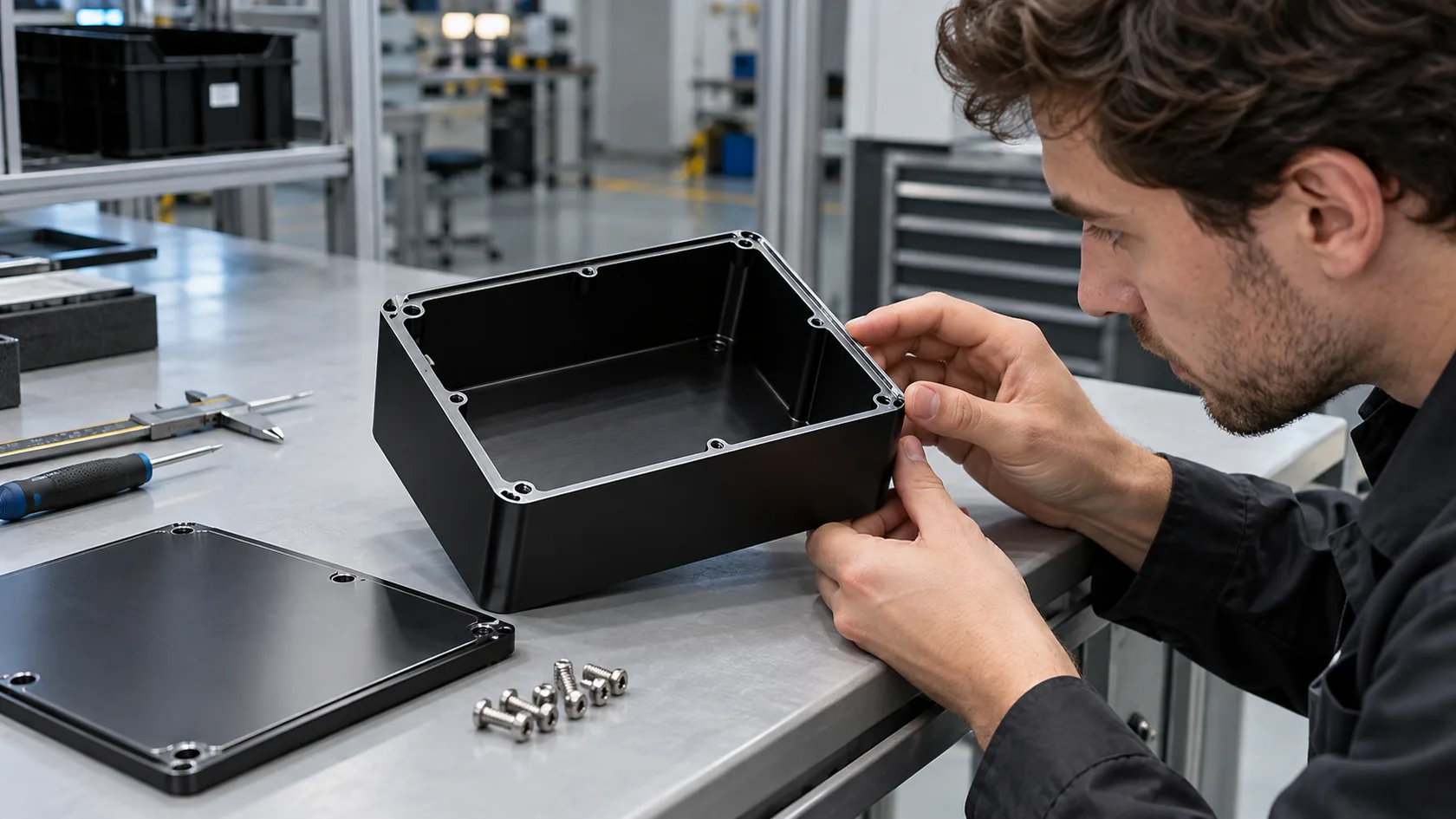
When buyers ask for custom aluminum enclosures, I often explain that anodizing, powder coating, gasket groove design, and stainless hardware can matter as much as the rating in real outdoor use.
Maintenance behavior after installation
Users open boxes. They replace batteries. They pull cables. They forget screws. They pinch gaskets. They clean around the enclosure with stronger water pressure than the original design expected.
In my own checks, I always think about the person who will open the box six months later, because that person can defeat a perfect design with one twisted gasket or one missing screw.
So a higher rating does not remove the need for simple service design. It makes service discipline more important.
The next weak point is usually not the enclosure wall. It is the opening made after the wall was designed.
Installation Details That Break a Good Rating
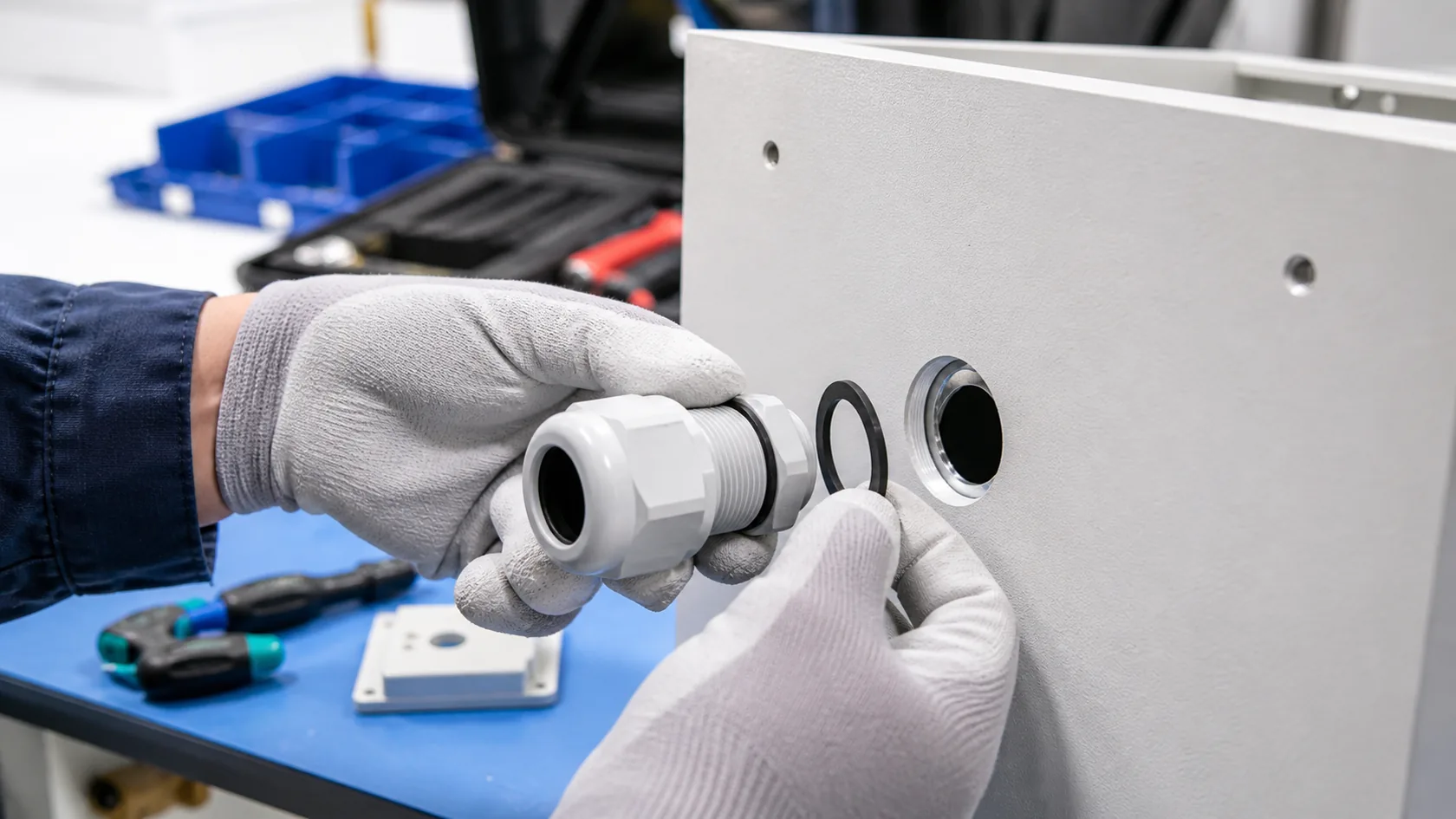
Most water ingress problems I see are not because the base enclosure was impossible to seal. They come from details added during customization.
Cable holes. Switches. Displays. Connectors. Mounting screws. Logo plates. Hinges. Locks.
Each one is a possible path for water.
Cable glands and washers
Cable glands must match the cable diameter, thread type, wall thickness, and IP target. A gland marked with a rating does not automatically protect the enclosure entry. The washer, thread engagement, hole quality, torque, and cable shape all matter.
This is why I like practical gland guidance such as CMP's note on maintaining ingress protection. The boring washer detail is often the difference between "looks sealed" and "stays sealed."
For custom projects, I want the cable outside diameter before production. If the customer says the cable is "about 6 mm," I hear risk. A gland that is too large or too small cannot compress correctly.
Drilled holes and accessories
A standard IP-rated box can lose its protection after machining. Drilling a hole changes the tested product.
That does not mean custom holes are bad. We make custom holes every day. It means the design must consider:
- Hole position and distance from edges
- Flat sealing surface around the hole
- Accessory IP rating
- Washer material
- Panel thickness
- Assembly torque
- Cable direction and drip loop
Small custom electronic enclosures often fail because a connector is placed where water naturally sits. A top-facing hole is convenient on the drawing, but it can be painful outside.
Door closing, torque, and gasket compression
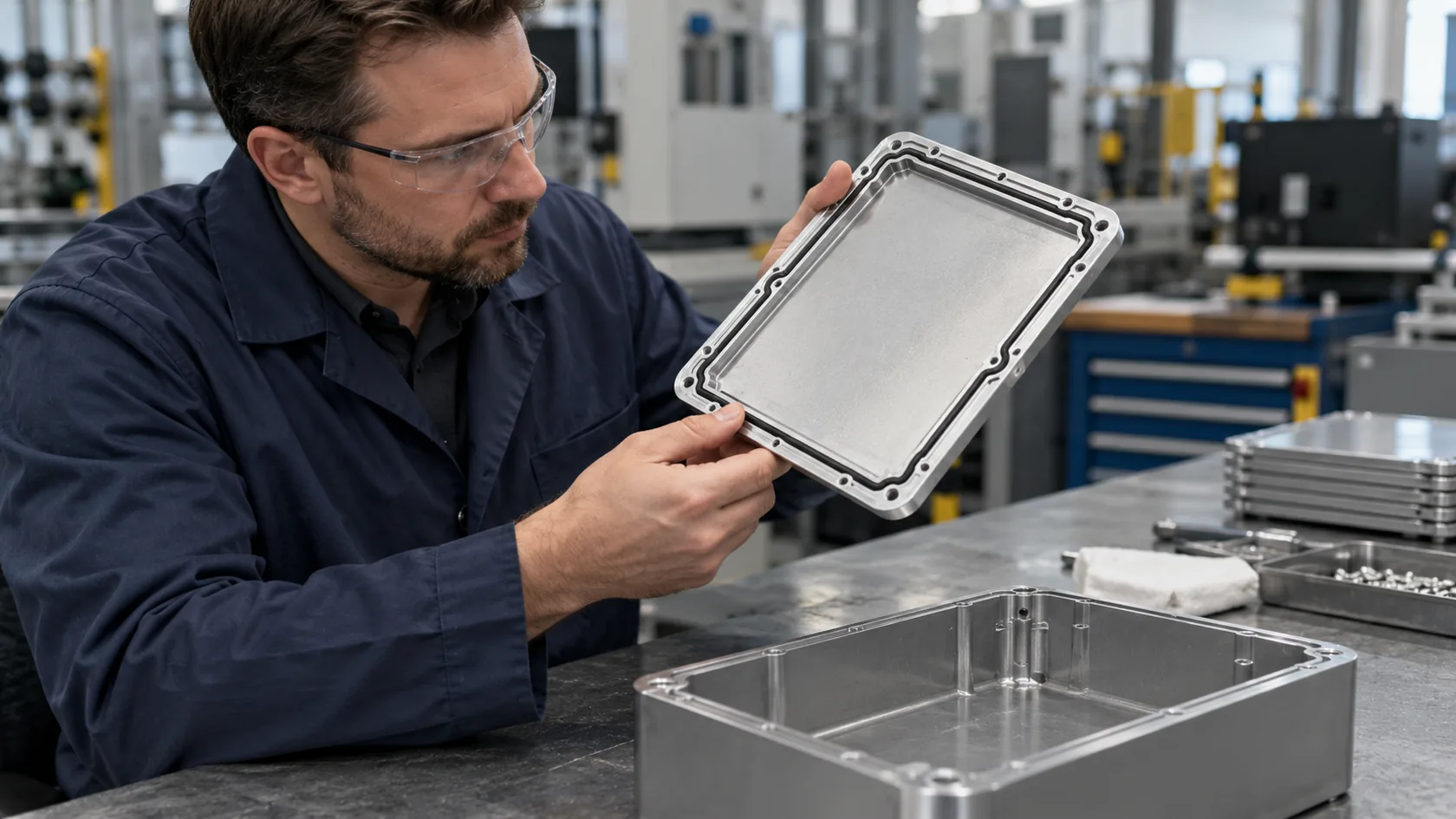
Gaskets need compression, but more compression is not always better. Too little compression leaks. Too much compression can deform the gasket, bend a plastic cover, or create uneven pressure.
I normally check gasket contact like a production issue, not a catalog issue, because the same gasket can perform differently after mold tolerance, machining tolerance, screw torque, and user handling come together.
For buyers, this means the drawing should not only say IP67. It should show how the box will be assembled and opened.
Material choice adds another layer to this problem.
Materials and Aging Change the Real Protection
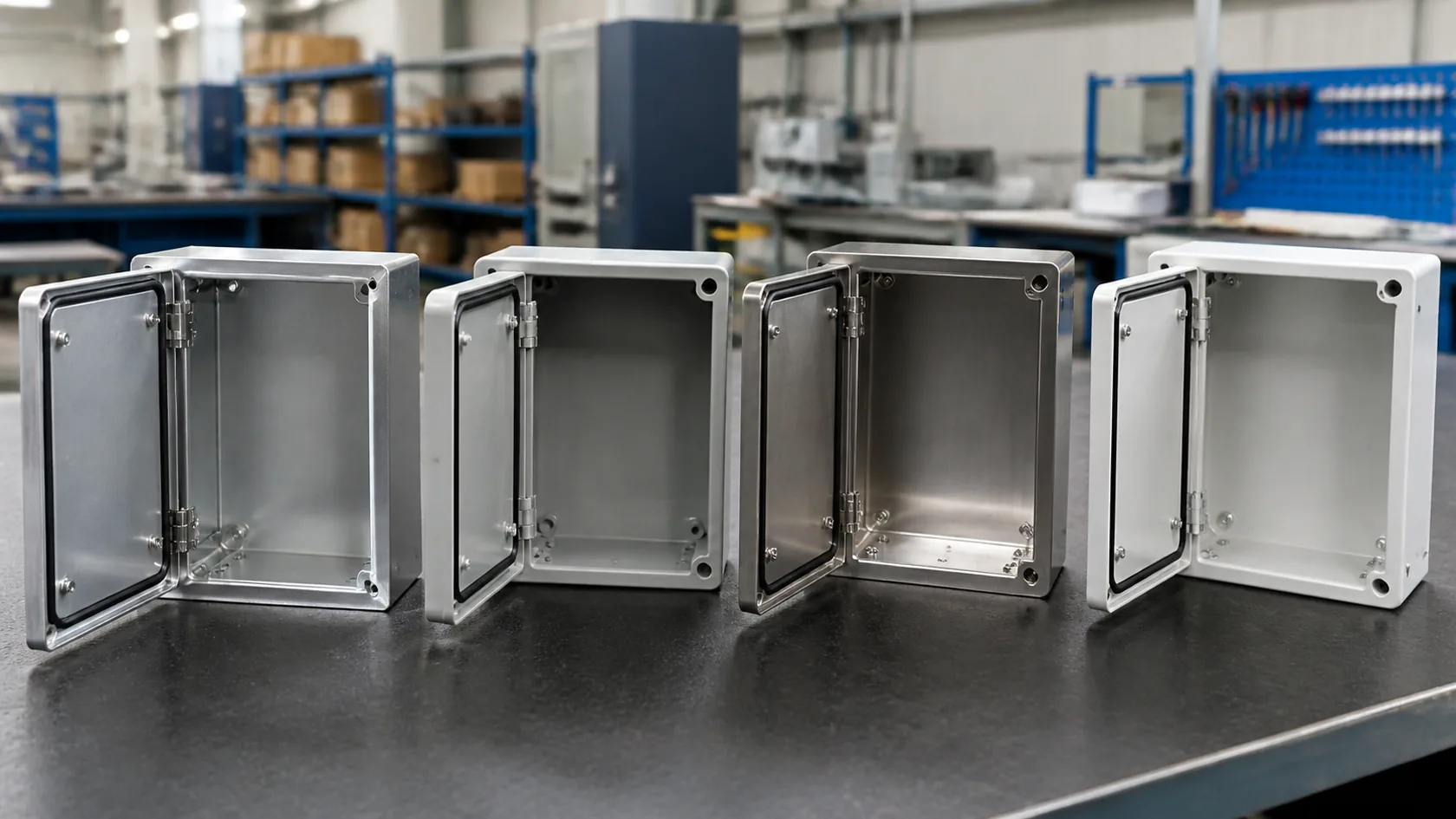
Two enclosures can share the same IP rating and behave very differently after one year outside.
The rating describes a test. The material decides much of the aging story.
Aluminum, plastic, stainless steel, and coated steel
Aluminum is strong, clean, and good for custom CNC machining. It also helps with heat dissipation. But surface treatment matters. A poor coating or damaged edge can create corrosion risk, especially around drilled holes and fasteners.
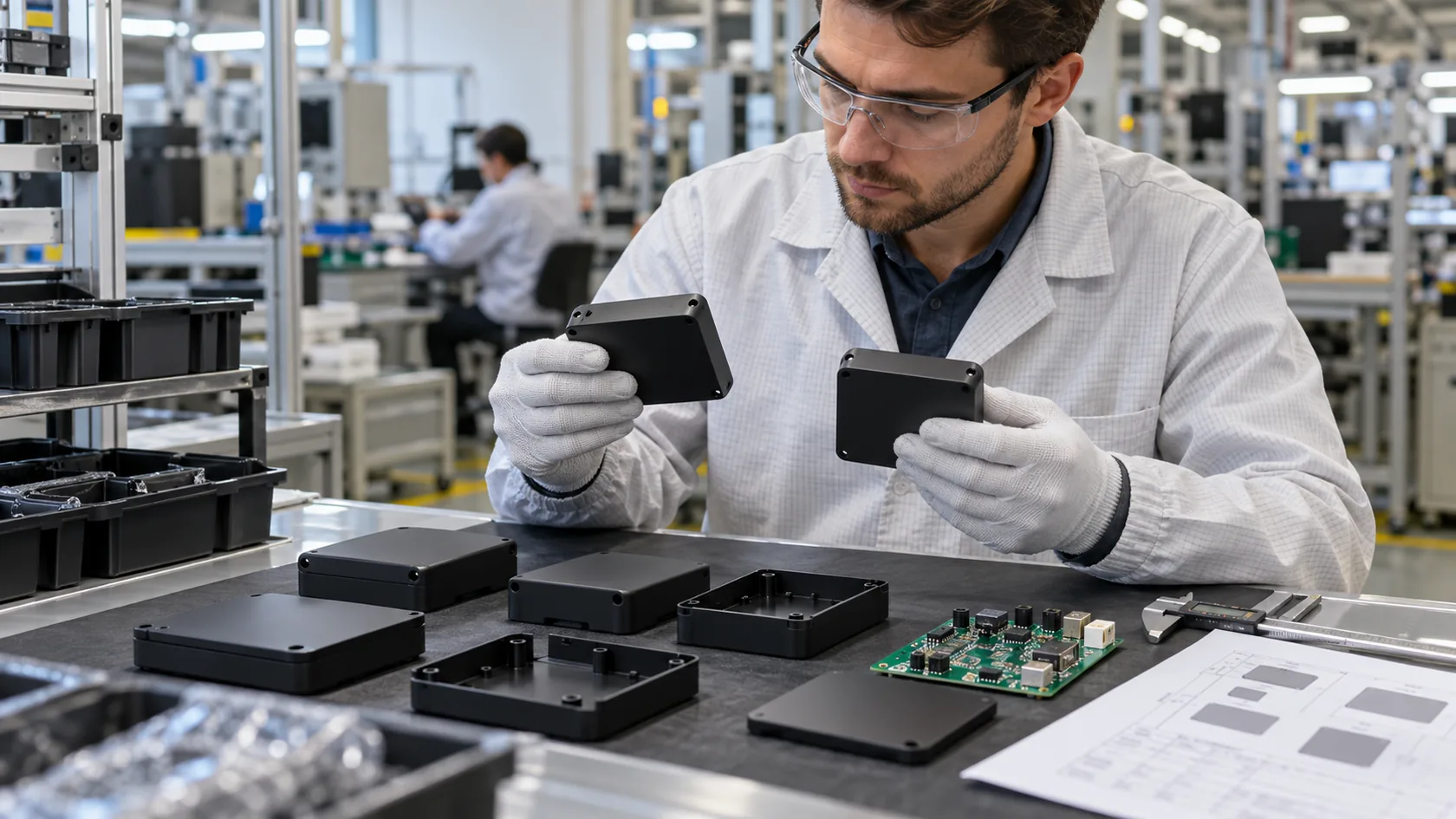
Plastic is useful for wireless devices because it does not block signals like metal. It can also reduce weight and cost. But buyers must check UV resistance, impact strength, screw boss design, and heat behavior.
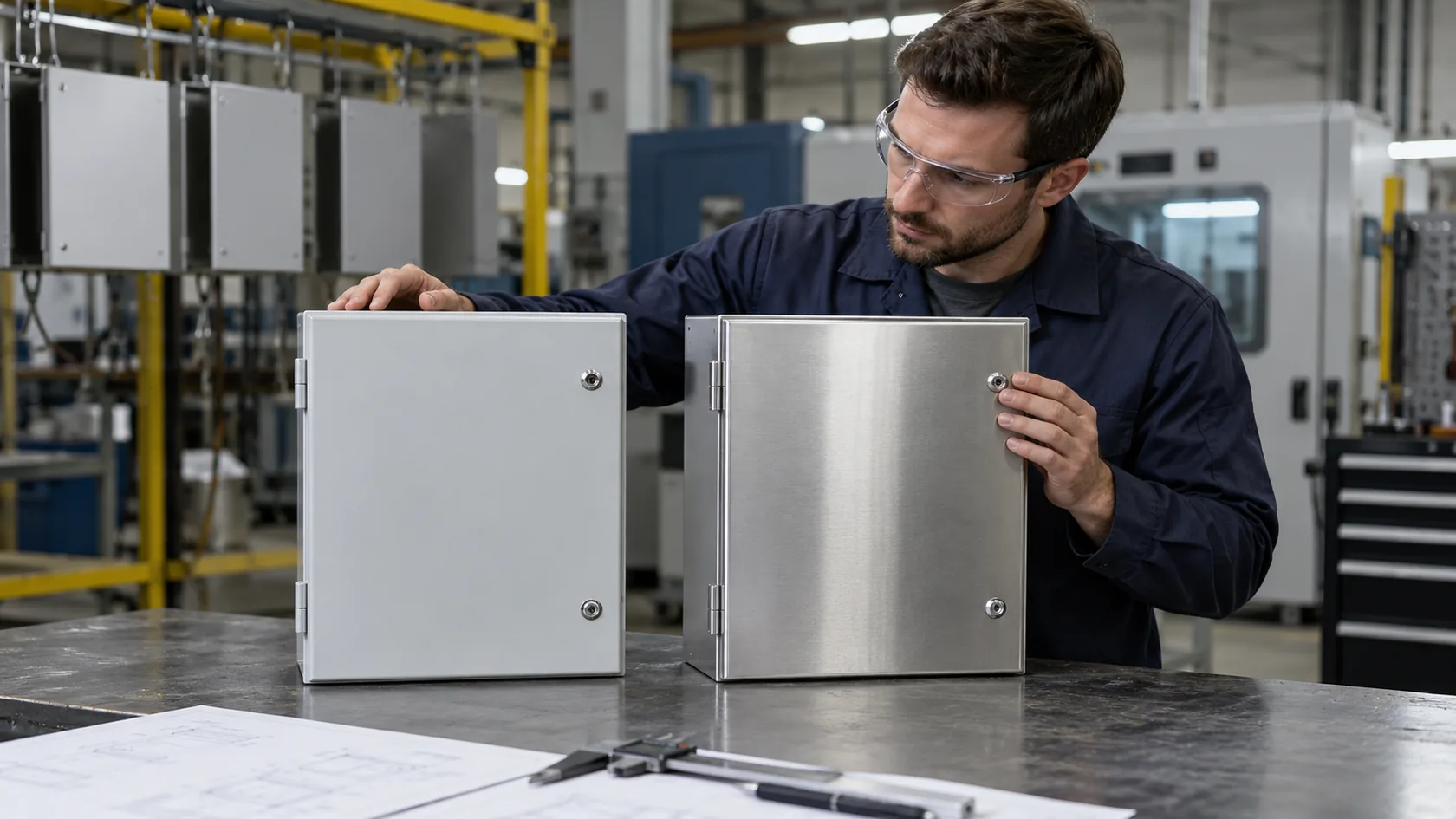
Stainless steel is good for harsh industrial or coastal environments, especially when corrosion resistance is important. But it costs more, and fabrication can be less flexible for small detailed electronics housings.
Coated steel can be economical for larger cabinets, but cut edges, scratches, and salty environments need attention.
Gaskets under compression and temperature cycling
The gasket is a small part with a big job.
A gasket must keep enough elastic recovery after compression. It must survive heat, cold, humidity, and sometimes oil or cleaning chemicals. If it hardens, shrinks, swells, or takes a compression set, the original IP result becomes less meaningful.
For outdoor electronics, I prefer to discuss temperature range early. A box for Finland, Canada, Arizona, and coastal Japan should not use the same assumptions.
Surface finish and corrosion risk
Surface finish is not only about appearance. It protects the material and controls long-term fit.
Powder coating thickness can affect tight assembly areas. Anodizing can change dimensions slightly. Stainless hardware can reduce rust stains. Plated screws can become a weak point if the environment is harsh.
From my factory side, I would rather adjust material and finish before mass production than explain later why a beautiful IP-rated enclosure started rusting around the cable entry.
So how should a buyer specify the enclosure?
How I Specify a Safer Custom Enclosure

The safest specification starts with the environment, not the rating.
The IP number should come after we understand the product. Where will it be mounted? Who opens it? How are cables routed? Is there washdown? Is there flood risk? Does heat need to leave the box? Is wireless signal important? Will the buyer add accessories later?
Start from exposure, not from the rating number
I like to ask buyers a few plain questions:
- Will the enclosure face rain only, or direct hose cleaning?
- Can it sit in standing water, even for a short time?
- Will cables enter from the top, side, or bottom?
- Will users open the enclosure in the field?
- What is the lowest and highest working temperature?
- Is the site coastal, chemical, dusty, or high UV?
- Does the PCB need heat dissipation or ventilation?
These answers usually point to a better choice than the rating number alone.
Ask the factory questions before tooling or production
Before tooling or batch production, I suggest asking the supplier:
- Is the rating for the empty enclosure or the complete custom assembly?
- Are the cable glands, switches, vents, and windows also rated for the same condition?
- What gasket material is used?
- What torque or assembly method is required?
- How are machined edges treated?
- Can the design support IP66/IP67 if both are needed?
- What test or inspection can be done before shipment?
The ANSI/NEMA 250 standard is also useful when a project needs North American enclosure type language. But even then, the factory and buyer still need to define the real assembly.
Simple selection table
| Real condition | Practical direction |
|---|---|
| Normal outdoor rain and dust | IP65 may be enough if cable entries are well designed |
| Heavy rain, strong spray, washdown | Consider IP66 and stronger gasket/accessory checks |
| Temporary flooding or short submersion | Consider IP67, with proper glands and pressure sealing |
| Both washdown and flood risk | Ask for IP66/IP67 confirmation |
| Coastal or chemical site | Add corrosion-resistant material and hardware requirements |
| High heat or thermal cycling | Review ventilation, condensation, gasket aging, and PCB protection |
I do not always push the highest rating, because over-specifying can add cost, slow production, reduce heat dissipation, and still miss the real failure point.
That is the practical balance buyers need.
Conclusion
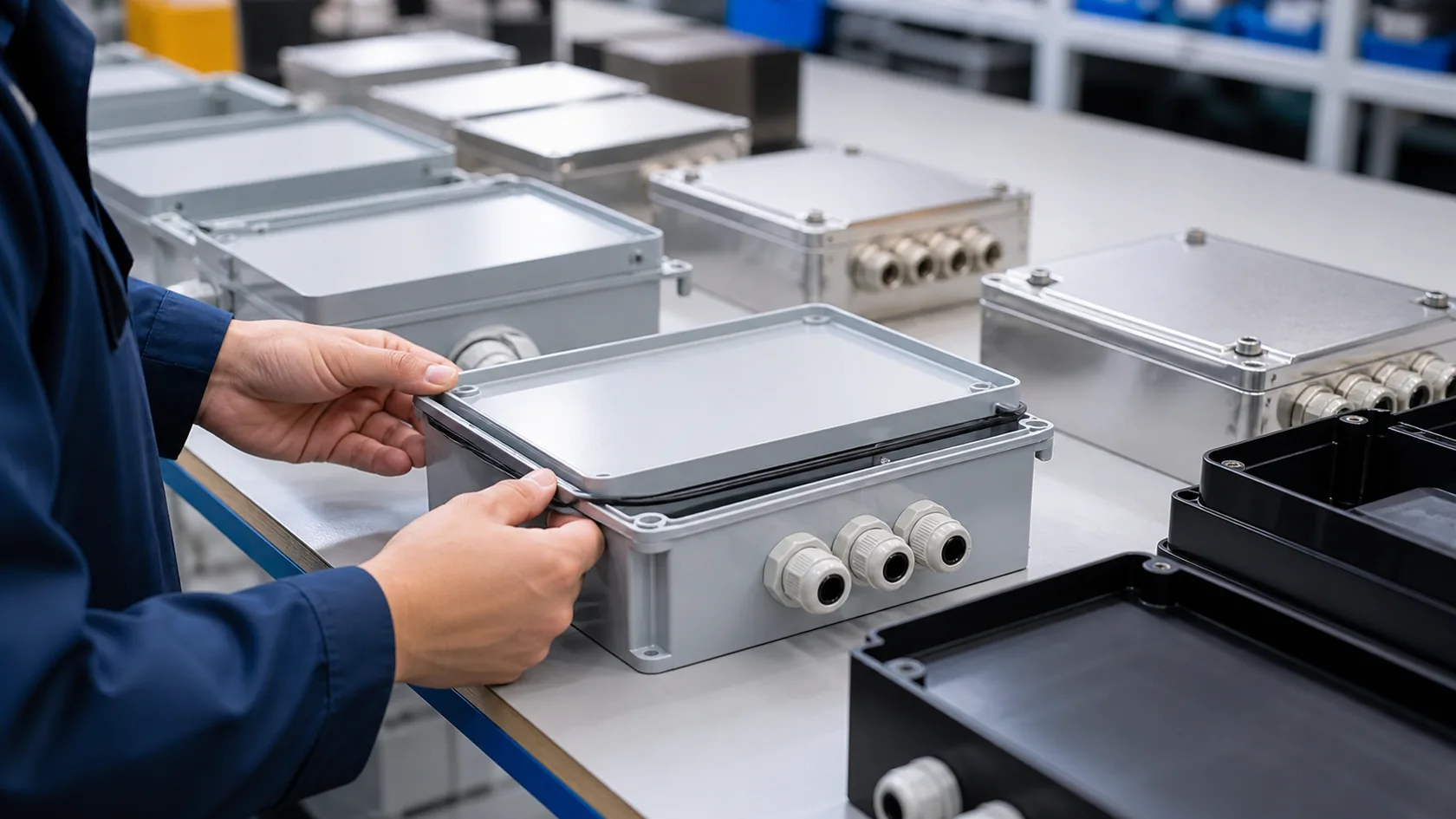
IP65, IP66, and IP67 are useful ratings. I trust them when they are used correctly. They help buyers avoid vague words like "waterproof" and give suppliers a clear test language.
But the rating is not the whole enclosure.
IP65 may be enough for rain. IP66 may be better for strong spray or washdown. IP67 may be right for temporary immersion. A higher number still may not protect electronics from condensation, poor cable gland installation, UV aging, corrosion, gasket damage, or a user who closes the cover badly after service.
That is why I always bring the discussion back to the real product.
At MaidaTech, we make custom aluminum enclosures, plastic enclosures, sheet metal enclosures, and OEM/ODM electronic housings. When a buyer sends us a design, I want to understand how the enclosure will live after it leaves our factory. That is how we choose the rating, material, gasket, finish, cable entry, and production checks together.
If you are designing an outdoor electronics enclosure, do not only ask for IP67 because it sounds safer. Tell your supplier what the box will face. A practical specification will protect your electronics better than a higher number used in the wrong way.