Skip to content
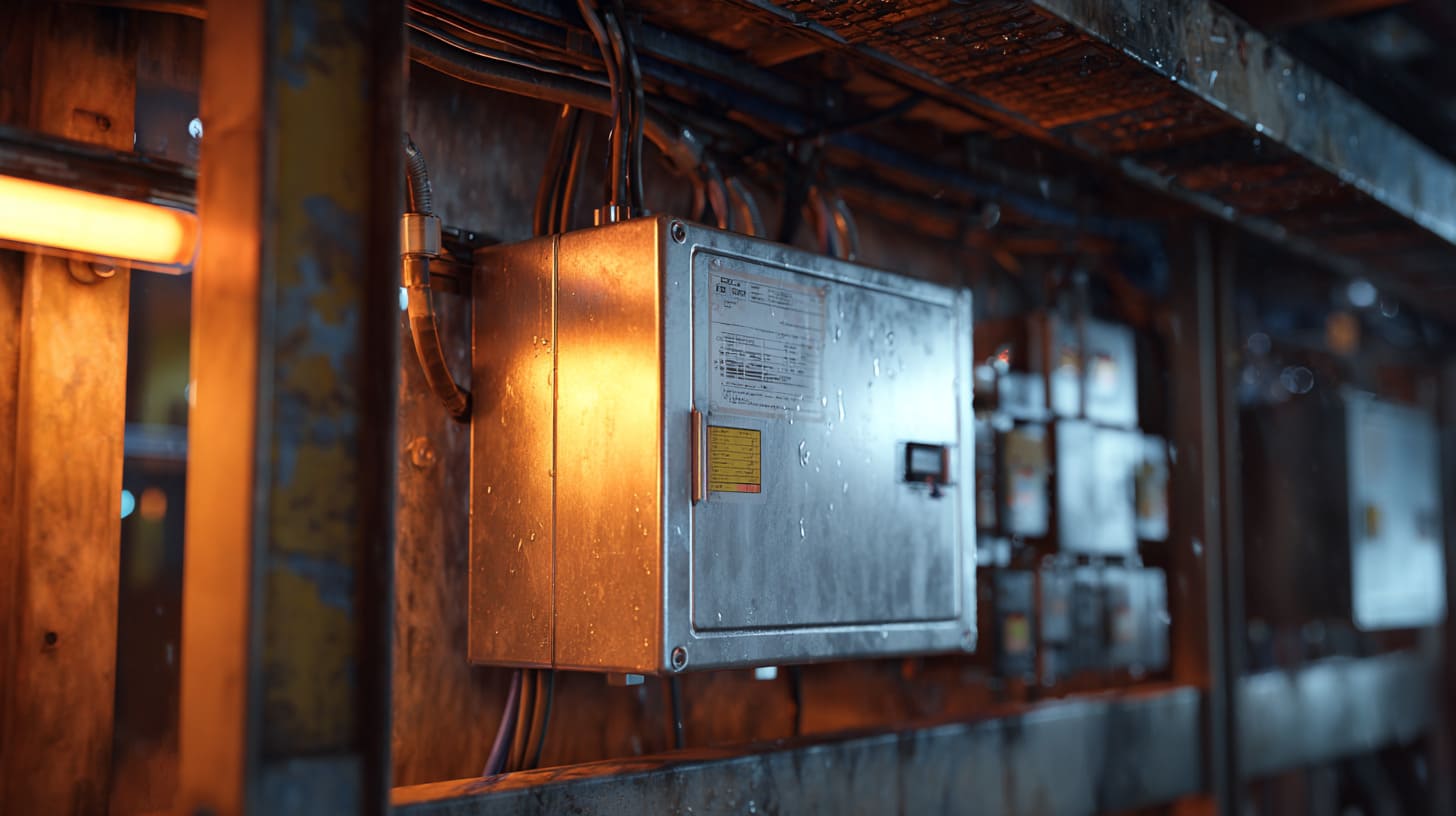
An enclosure marked for “indoor use” can sound very safe at first.
It sounds like a calm place.
No rain.
No snow.
No direct sunlight.
No wind pushing dust into every small gap.
So many buyers relax when they see this word. I understand that feeling. I have also seen drawings where the customer simply writes, “Indoor use only,” as if that one line has already solved the whole protection problem.
But in real factory work, “indoor” can mean many different things.
It can mean a clean office room with air conditioning.
It can also mean a CNC workshop full of oil mist.
It can mean a warehouse with dust, forklifts, and vibration.
It can mean a food processing room where workers clean machines with water and chemicals every day.
These places are all “indoors.” But they do not treat an electrical enclosure in the same way.
The real risk behind indoor electrical enclosure selection is this: buyers often judge the enclosure by the word “indoor,” while the enclosure will actually live inside heat, dust, oil, moisture, vibration, and human handling.
This is where projects can go wrong.
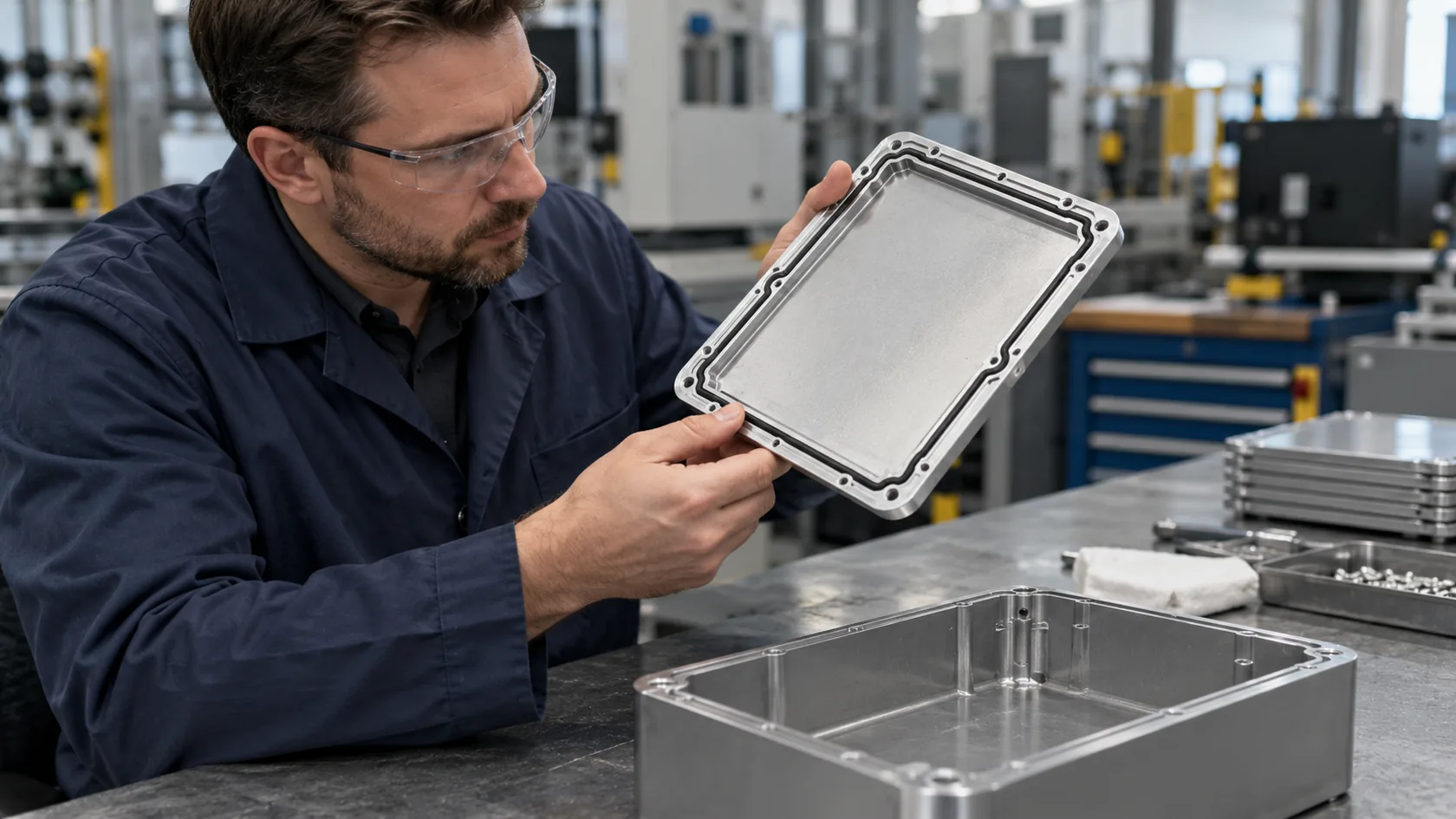
I have seen some buyers focus only on the nice surface of a sample. The enclosure looks clean on the table. The powder coating looks even. The plastic box feels strong in the hand. The gasket looks soft. The drawing looks finished.
Then the enclosure goes into the real working area.
After a few months, dust starts to enter through a cable hole. Oil mist sticks to the surface. A seal becomes loose after maintenance. Heat builds up inside the box. A small fan pulls dirty air into the cabinet. The customer calls back and says, “But we told you it was indoor use.”
That sentence is painful because it is half true.
Yes, it was indoor.
But it was not a gentle indoor environment.
For me, this is where I slow down before making a recommendation. I do not only ask whether the enclosure is indoor or outdoor. I ask what kind of indoor world it will face, because one word can hide ten different risks.
Why “Indoor” Does Not Always Mean Safe
A clean indoor office and an industrial indoor site are not the same thing.
A plastic enclosure inside an office may only need to protect a small PCB from touch, dust, and light impact. But an enclosure near a machine tool may face heat, oil vapor, metal powder, and constant cleaning. A box inside a warehouse may not see water, but it may see vibration, dust, and accidental hits.
This is the part many people miss.
“Indoor” describes the location.
It does not fully describe the stress.
Here is how I usually explain it to customers:
| Indoor Location | Looks Safe? | Real Risk |
|---|---|---|
| Office room | Yes | Low dust, low moisture, low impact |
| Control room | Usually yes | Heat from equipment, cable density |
| CNC workshop | Not always | Oil mist, coolant, metal dust |
| Food factory | Not always | Washdown, steam, cleaning chemicals |
| Warehouse | Sometimes | Dust, impact, temperature swings |
| Coastal indoor plant | Often underestimated | Salt air, corrosion, humidity |
The word is the same.
The risk is not.
The Common Mistake Buyers Make During Enclosure Selection
The most common mistake is simple: buyers choose the enclosure based on the rating label, not the real installation condition.
I see this mistake more often than I want to admit.
A buyer may say:
- “It is indoor, so NEMA 1 is enough.”
- “It will not be exposed to rain, so we do not need strong sealing.”
- “The sample looks good, so the production units should be fine.”
- “The price difference is small, but we want the cheapest option.”
These thoughts are normal. Nobody wants to overpay. Nobody wants to make the project more complicated.
But an electrical enclosure is not just a box. It is a small protection system. The material, gasket, cable entry, surface treatment, heat path, mounting method, and maintenance habit all work together.
If one detail is weak, the whole protection plan becomes weak.
A buyer may save a few dollars on the enclosure. Later, one damaged controller can cost much more than the box itself. Worse, the machine may stop. The production team may wait. The end customer may lose trust.
That is why I do not like the phrase “indoor use” when it is used too quickly.
It is not wrong.
It is just incomplete.
And an incomplete condition can lead to a wrong enclosure.
Now let us look at what “indoor use” actually means in standards, because this is where the misunderstanding often starts.
What Does “Indoor Use” Really Mean in Electrical Enclosure Standards?
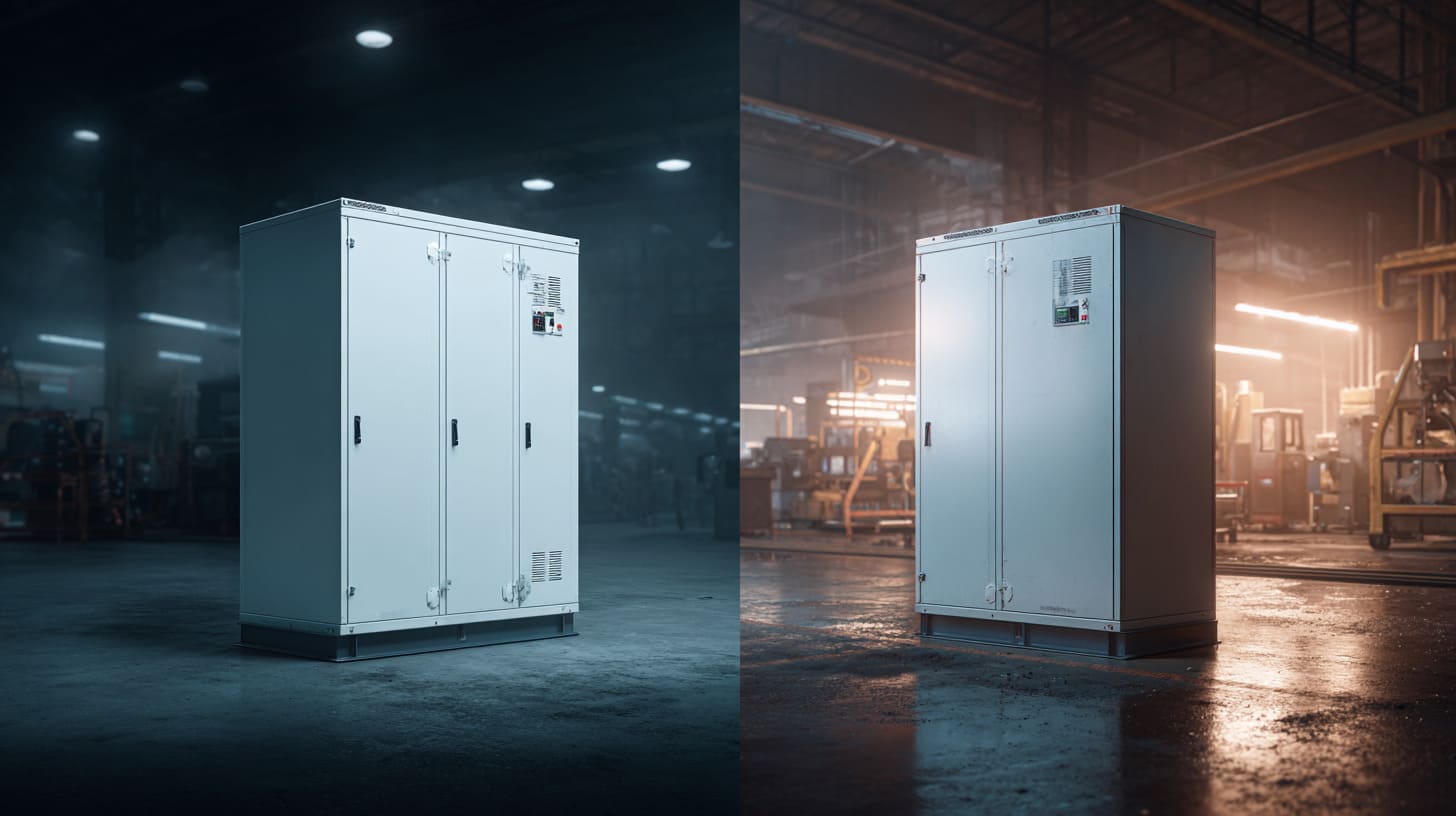
Standards are useful. I respect standards. They help engineers, buyers, and manufacturers speak the same language.
But standards also have limits.
A rating can tell us what a product is designed to resist under defined test conditions. It does not always tell us whether the enclosure is the best choice for every real site. A test is controlled. A factory is not.
For me, the first thing I check is whether the buyer is using “indoor” as a real environment description or just as a shortcut to reduce cost.
That small difference matters.
If the buyer says, “Indoor use,” I want to know more. Is it a clean room? Is it a machine shop? Is it near water? Is there oil? Is there dust? Will the door be opened often? Will workers wash nearby equipment?
These questions may feel small, but they can change the whole enclosure selection.
How NEMA Defines Indoor Enclosures
NEMA enclosure ratings are common in North America. Many buyers ask about them when they choose electrical enclosures for machines, control systems, automation equipment, and power devices.
A basic indoor enclosure rating like NEMA 1 is usually used for general indoor protection. It helps protect people from accidental contact with internal parts. It also gives basic protection to the equipment inside.
But NEMA 1 is not a strong protection level for harsh indoor industrial use.
It does not mean strong dust protection.
It does not mean oil protection.
It does not mean washdown protection.
It does not mean corrosion resistance.
It does not mean the enclosure can survive every factory condition.
That is where the misunderstanding starts.
| Rating Idea | What Many Buyers Think | What I Usually Remind Them |
|---|---|---|
| Indoor use | Safe and low risk | Only safe if the indoor site is clean and stable |
| NEMA 1 | Good enough for indoor | Only basic protection, not for dusty or oily areas |
| Sealed box | Fully protected | Cable holes, doors, vents, and maintenance can break sealing |
| No rain | No moisture risk | Condensation and washdown can still happen indoors |
The problem is not the standard.
The problem is how people read it too fast.
Difference Between Indoor Commercial and Industrial Environments
A commercial indoor environment is usually easier to handle. The air is cleaner. The temperature is more stable. People are not spraying water nearby. There may be less vibration and less dust.
A factory is different.
A factory has machines. Machines create heat. Some machines create oil mist. Some create fine dust. Some create vibration. Some rooms are cleaned with water. Some areas have chemicals. Some workers open enclosure doors often because they need to check wiring, sensors, or controllers.
Here is a simple comparison:
| Factor | Commercial Indoor | Industrial Indoor |
|---|---|---|
| Air quality | Usually clean | May contain dust, oil, smoke, or fibers |
| Temperature | More stable | May rise near machines or motors |
| Moisture | Usually low | Can include steam, washdown, or condensation |
| Impact risk | Low | Forklifts, tools, workers, and vibration |
| Maintenance | Less frequent | More frequent opening and handling |
| Enclosure demand | Basic protection | Often needs stronger sealing and structure |
A buyer may say “indoor” because the enclosure is inside a building. But the enclosure does not care about the building. It cares about what touches it, heats it, shakes it, stains it, and enters it.
That is the real test.
Why IP Ratings Alone Can Be Misleading
IP ratings are also useful. They help describe protection against solid particles and water ingress.
But IP ratings do not tell the whole story.
An IP rating may tell us how well the enclosure blocks dust or water under certain conditions. But it may not fully explain how the enclosure handles oil, coolant, corrosion, sunlight through windows, chemicals, impact, heat, or long-term gasket aging.
For example, a buyer may choose an IP65 plastic enclosure for an indoor machine room. The rating looks safe. But if the room has oil mist and high heat, the gasket and plastic material may still age faster than expected. If workers open the cover many times, the seal may not return perfectly each time.
The label may still be correct.
The application may still fail.
This is why I like to treat ratings as a starting point, not the whole answer.
| Rating Focus | Useful For | Does Not Fully Answer |
|---|---|---|
| IP dust number | Dust resistance | Type of dust, conductive dust risk, fan intake issues |
| IP water number | Water ingress | Chemicals, oil, steam, cleaning habits |
| NEMA indoor rating | General location protection | Real industrial stress level |
| Material spec | Basic material behavior | Long-term field aging under mixed conditions |
A good enclosure choice needs both standards and real site thinking.
One gives us the language.
The other gives us the truth.
The tricky part is that many failures do not look dramatic at first. They begin quietly, like dust sitting on a shelf. Then one day, the machine stops.
Why Do Indoor Electrical Enclosures Fail So Often?

Indoor enclosure failure often starts with a small assumption.
The buyer assumes the room is dry.
The engineer assumes the fan is enough.
The supplier assumes the cable gland will be installed correctly.
The maintenance team assumes the door seal can be reused many times.
Each assumption looks harmless alone. Together, they can become a real problem.
The detail I watch closely is not the strongest part of the enclosure, but the weakest point where real factory life can sneak in.
A thick aluminum body may be strong. But a poor cable entry can still let dust in. A good gasket may seal well on day one. But bad maintenance can damage it. A plastic housing may look fine in the sample room. But heat can slowly change it.
Heat Build-Up Inside Industrial Facilities
Heat is one of the most underestimated indoor risks.
People think heat is only an outdoor problem. But many indoor electrical enclosures sit near motors, power supplies, drives, welding machines, heaters, or production equipment. The surrounding room may already be warm. Then the components inside the enclosure create more heat.
A sealed box can become like a small oven.
This matters because heat does not need to break the enclosure in one day. It works slowly. It weakens seals. It changes plastics. It dries some gasket materials. It shortens the life of electronic components.
| Heat Source | Possible Result |
|---|---|
| Internal power supply | Higher internal temperature |
| Motor drive or controller | Hot spots near components |
| Poor airflow | Heat stays trapped |
| Thick cable bundle | Blocks air movement |
| Nearby machine | Raises ambient temperature |
When I check an indoor enclosure project, I always want to know the internal components. A box without electronics is just a box. A box with a power supply, controller, relay, and terminal blocks is a heat system.
That changes the decision.
A fully sealed enclosure may protect against dust. But it may also trap heat. A ventilated enclosure may reduce heat. But it may let dust and oil mist enter. This is not a simple “sealed is better” decision.
It is a balance.
Oil Mist, Coolant, and Chemical Exposure
CNC workshops are a good example of indoor risk.
The enclosure may never see rain. But the air may carry oil mist and coolant vapor. These materials can stick to the enclosure surface, collect around seams, soften some materials, and attract dust.
In machining environments, the problem is often not one big splash. It is slow exposure.
A little oil today.
A little dust tomorrow.
A worker wipes it with a rough cloth next week.
The surface becomes dirty.
The gasket ages.
The cable area becomes sticky.
Then dust finds a path.
Some plastics may not like oils or chemicals. Some gasket materials may swell or harden. Some coatings may stain or break down faster if the cleaning method is harsh.
| Indoor Exposure | Possible Weak Point |
|---|---|
| Oil mist | Gasket, cable gland, surface coating |
| Coolant vapor | Plastic housing, seals, screws |
| Cleaning chemicals | Surface finish, labels, transparent windows |
| Sticky dust | Fan openings, seams, latch areas |
I once discussed a project where the buyer first asked for a simple plastic enclosure because the machine was “indoor only.” After we asked about the workshop, the situation changed. It was near machining equipment. There was oil mist. Workers cleaned the area often. The cheap plastic option no longer looked so cheap.
A better material and sealing plan made more sense.
Not because we wanted to sell a more expensive box.
Because the site was telling us the truth.
Dust and Fine Particle Infiltration
Dust is not always harmless.
Some dust is just dirty. Some dust is abrasive. Some dust is conductive. Some dust holds moisture. Some dust blocks ventilation. Some dust builds up until it becomes a fire or short-circuit risk.
In woodworking, cement, metal processing, textile production, and packaging plants, fine particles can move everywhere. They enter through small gaps, fan openings, cable holes, and poorly sealed covers.
The dangerous part is that dust often looks normal in a factory. People get used to it. They stop seeing it.
But the electronics inside the enclosure do not get used to it.
| Dust Type | Risk |
|---|---|
| Wood dust | Builds up, blocks vents, may increase fire risk |
| Metal dust | Can be conductive and damage electronics |
| Cement dust | Abrasive, fine, hard to clean |
| Textile fibers | Blocks fans and filters |
| General warehouse dust | Builds over time and affects cooling |
A buyer may ask, “Do we really need a higher protection rating for an indoor enclosure?”
My answer depends on the dust.
If the dust is light and the internal parts are not sensitive, maybe a basic enclosure works. If the dust is conductive or heavy, I become more careful. One small gap can become a long-term failure path.
Moisture and Condensation Problems
Moisture inside a building can be more confusing than rain outside.
Rain is obvious.
Condensation is sneaky.
A sealed enclosure can still get moisture inside if humid air enters during installation or maintenance. When the temperature changes, water can condense inside the enclosure. This can happen in factories with temperature swings, cold walls, steam, washdown areas, or coastal air.
The enclosure may look dry outside while moisture sits inside.
That is why I ask about temperature changes and cleaning methods. If the room is humid and the enclosure temperature moves up and down, condensation becomes a real risk.
| Moisture Situation | Hidden Problem |
|---|---|
| Humid factory air | Moisture enters during opening |
| Cold nights and warm days | Condensation inside enclosure |
| Steam nearby | Water vapor reaches seals |
| Washdown cleaning | Water may enter weak points |
| Coastal building | Salt moisture speeds corrosion |
For metal enclosures, moisture can create corrosion. For electronic parts, it can create short circuits. For gaskets, it can affect long-term sealing.
This is why “it is indoors” does not calm me down enough. I need to know whether the air is dry, clean, and stable.
Many readers may now think, “Okay, but which indoor environments are the risky ones?” That is the right next question. Some places look normal to people, but they are rough places for enclosures.
Which Indoor Environments Are Actually High Risk?
Not every indoor site is dangerous. I do not want to make every simple project sound scary.
A small device in a clean control room does not need the same enclosure as a box beside a CNC machine. A wall-mounted enclosure in an office hallway does not need the same design as one inside a food processing plant.
The risk depends on the real environment.
The way I judge this is simple: I ask what the enclosure will breathe, touch, carry, and survive after the first month of installation.
That question feels more useful than asking only whether the project is indoor or outdoor.
Manufacturing Workshops
Manufacturing workshops can be harsh indoor environments.
They may include welding smoke, metal dust, oil mist, coolant, heat, vibration, and rough handling. The enclosure may be mounted near a machine frame. Workers may open it often. Tools may hit it. Cables may move. The machine may vibrate during operation.
A nice enclosure can age fast in this kind of place.
| Workshop Type | Main Risk | Enclosure Concern |
|---|---|---|
| Welding area | Heat, smoke, metal particles | Surface coating, sealing, grounding |
| CNC machining room | Oil mist, coolant, metal dust | Gasket, cable gland, material choice |
| Injection molding factory | Heat, hydraulic oil, vibration | Thermal design, chemical resistance |
| Metal stamping plant | Shock, vibration, dust | Structure strength, mounting method |
| Assembly line | Frequent maintenance | Door design, screw strength, access |
In these places, I usually care about sealing, material thickness, mounting strength, cable entry, and easy maintenance.
A buyer may think the enclosure only needs to sit on the machine. But in the real workshop, nothing “just sits.” Everything is touched by heat, workers, tools, dust, and time.
Food and Beverage Facilities
Food and beverage factories have a different kind of risk.
They may look cleaner than machining workshops. But they often have water, steam, washdown cleaning, and chemicals. The problem is not always dirt. The problem is cleaning.
A control enclosure may face water spray. It may be near hot steam. It may be wiped with strong cleaning agents. It may need smooth surfaces so dirt does not collect in corners.
In this kind of place, a basic indoor enclosure can become a weak point.
| Food Facility Condition | Risk |
|---|---|
| Daily washdown | Water enters through weak seals |
| Steam | Condensation and heat stress |
| Cleaning chemicals | Surface and gasket damage |
| Smoothness requirement | Dirt can collect around seams |
| Frequent inspection | Door and latch wear |
For these projects, I pay close attention to the sealing method and material surface. I also think about how people clean the enclosure. A design that looks good on a table may be annoying to clean in a real plant.
That is a very practical detail.
If cleaning is rough and frequent, the enclosure must be designed for that behavior. We cannot assume workers will treat the box like a showroom sample.
Warehouses and Logistics Centers
Warehouses can trick people.
They are indoors. They may look simple. But they can have dust, vibration, temperature swings, forklifts, and accidental impact.
A wall-mounted electrical enclosure may sit near a busy path. A forklift may not hit it directly, but vibration and nearby movement can still affect mounting. Dust may collect on top. Temperature can change a lot between day and night, especially in large buildings without strong climate control.
| Warehouse Factor | Possible Issue |
|---|---|
| Forklift traffic | Impact risk, vibration |
| Dust | Vent blockage, dirty seals |
| High ceilings | Temperature difference |
| Loading doors | Humidity and outdoor air entry |
| Fast maintenance | Poor resealing after opening |
I have learned not to call warehouses “easy” too quickly.
Some are easy. Some are not.
If the enclosure protects simple wiring, the risk may be low. If it protects control electronics for logistics equipment, barcode systems, sensors, or automation lines, the enclosure choice becomes more important.
Coastal Industrial Buildings
Coastal indoor sites are another hidden risk.
The enclosure may stay inside a building. But salty air can still enter. Humidity can still stay high. Metal parts can corrode faster than expected. Screws, hinges, latches, and untreated surfaces can suffer first.
This is especially important for metal enclosures.
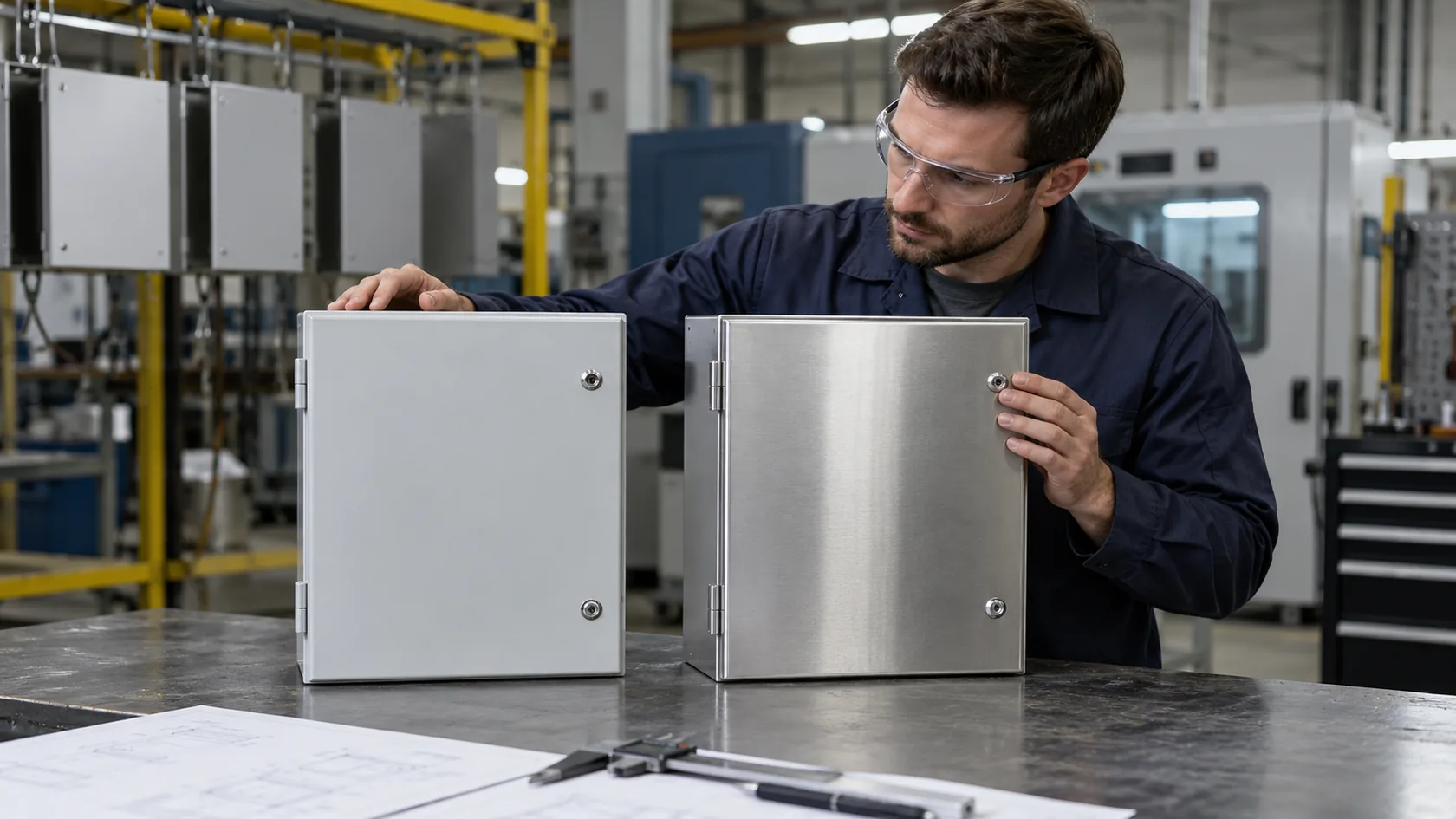
Powder coating helps. Aluminum helps in many cases. Stainless steel may be needed in some harsh cases. But the choice depends on the real exposure.
| Coastal Indoor Risk | What Can Happen |
|---|---|
| Salt air | Corrosion on screws, hinges, exposed edges |
| High humidity | Condensation inside enclosure |
| Poor ventilation | Moisture stays longer |
| Mixed metal contact | Galvanic corrosion risk |
| Scratched coating | Corrosion starts from damaged points |
A buyer may say, “It is not outside, so corrosion is not a big issue.”
I do not accept that too quickly. If the factory is near the sea, or if the indoor air is humid and salty, corrosion can still happen indoors.
This is why the enclosure rating and material must match the real site, not just the building location.
Once we understand high-risk indoor areas, the next decision often becomes practical: should we still use a simple NEMA 1 enclosure, or should we choose something stronger like NEMA 12?
Why Is NEMA 12 Often Safer Than NEMA 1 for “Indoor Use”?
NEMA 1 can be fine for clean, dry, low-risk indoor areas.
I do not want to say it is useless. That would be unfair.
But for industrial indoor use, NEMA 1 is often too basic. The problem is that many buyers hear “indoor” and immediately think of NEMA 1. They see NEMA 12 as overkill. Sometimes it is. But many times, it is not.
I become more careful when a buyer says the enclosure is near machines, because the cost difference between basic protection and better protection is often much smaller than the cost of one field failure.
That is not theory. That is purchasing reality.
What NEMA 12 Protects Against
NEMA 12 enclosures are commonly used for indoor industrial applications where protection against dust, dirt, dripping oil, and non-corrosive liquids is needed.
This makes NEMA 12 a more practical choice for many factories.
It is especially useful in places like:
- Machine tool areas
- Automation control systems
- Industrial equipment rooms
- Production lines
- Workshops with dust or oil exposure
| Protection Need | NEMA 1 | NEMA 12 |
|---|---|---|
| Accidental contact protection | Yes | Yes |
| General indoor use | Yes | Yes |
| Dust protection | Weak | Better |
| Dripping oil protection | No | Better |
| Non-corrosive liquid exposure | No | Better |
| Industrial workshop use | Limited | Often safer |
The key word is not “stronger.”
The key word is “more suitable.”
A higher rating is not always better. But a more suitable rating reduces surprise.
Real Situations Where NEMA 1 Fails
NEMA 1 often fails when buyers use it in an environment that is “indoor” but not clean.
Dust can enter through openings. Oil can settle on internal parts. Workers may add cable holes without sealing them well. A fan may pull dirty air inside. Maintenance workers may open the cover often and not close it correctly.
These failures do not always happen because the enclosure is badly made. Sometimes the enclosure was simply placed in the wrong environment.
Here are common failure cases:
| Real Situation | Why NEMA 1 May Fail |
|---|---|
| Dusty workshop | Openings allow dust to enter |
| CNC area | Oil mist contaminates parts |
| Control cabinet near machine | Heat and vibration stress weak points |
| Warehouse automation | Dust and impact build over time |
| Frequent maintenance | Cover and cable areas become weak |
I have seen buyers try to solve these problems later with tape, extra foam, silicone, or field modification. Sometimes it works for a short time. But it is not a clean solution.
A better enclosure choice at the start is usually cheaper than fixing many boxes in the field.
Cost Difference vs Long-Term Risk
Many buyers focus on the first price.
I understand this. I also work in manufacturing. Cost matters. If we ignore cost, we are not solving real business problems.
But the enclosure price is only one part of the real cost.
| Cost Item | Cheap Basic Choice | Better Matched Choice |
|---|---|---|
| Initial enclosure price | Lower | Higher |
| Installation risk | Higher if environment is harsh | Lower |
| Maintenance need | More likely | Less likely |
| Electronics protection | Weaker | Stronger |
| Customer complaint risk | Higher | Lower |
| Long-term cost | Can become high | Usually more controlled |
The dangerous part is that the cheapest option feels like a win at the beginning. The loss comes later, and it often comes to a different person.
The buyer saves money.
The engineer deals with failure.
The maintenance team opens the machine.
The end customer loses time.
That is why I like to compare price with failure cost, not price with price only.
After choosing the right rating, the next big question is material. Because even indoors, aluminum, ABS, polycarbonate, and gasket materials behave very differently under stress.
How Do Material Choices Affect Indoor Enclosure Reliability?
Material choice is not just a “metal or plastic” question.
It is a question about heat, impact, corrosion, weight, cost, appearance, tooling, surface finish, and long-term use.
I have seen buyers choose plastic because the product needs a clean molded look. I have also seen buyers choose aluminum because the enclosure needs better heat transfer and a more solid structure. Both can be right. Both can be wrong.
The material decision usually becomes clearer when I stop asking, “Which material is better?” and start asking, “Which failure do we most need to avoid?”
That question changes the conversation.
Aluminum vs Plastic Enclosures
Aluminum and plastic each have strengths.
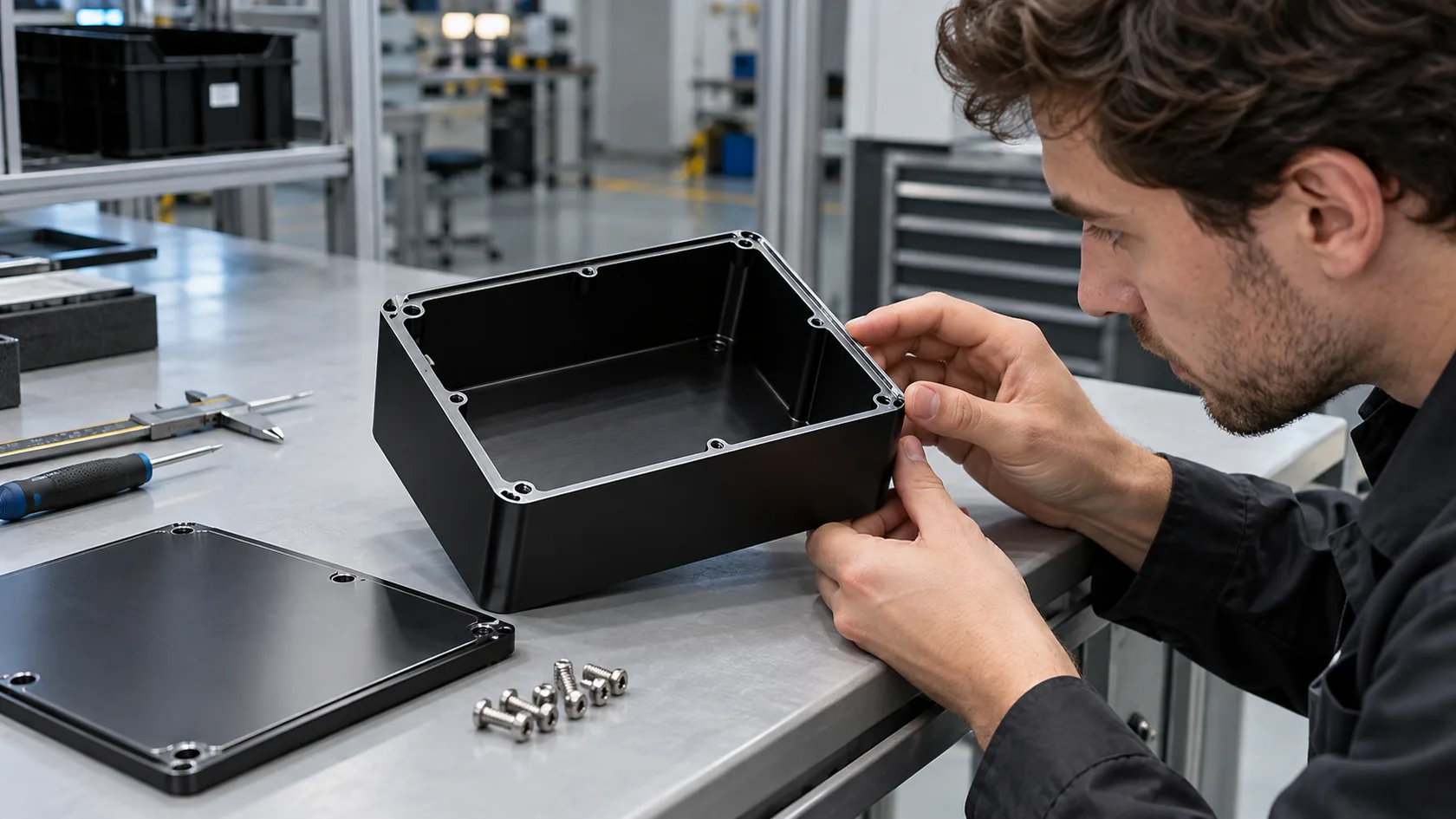
Aluminum is often better for heat dissipation, structure, shielding, and a premium product feel. It can be CNC machined, die cast, extruded, bent, or customized in many ways. It can also support surface treatments like anodizing, powder coating, and printing.
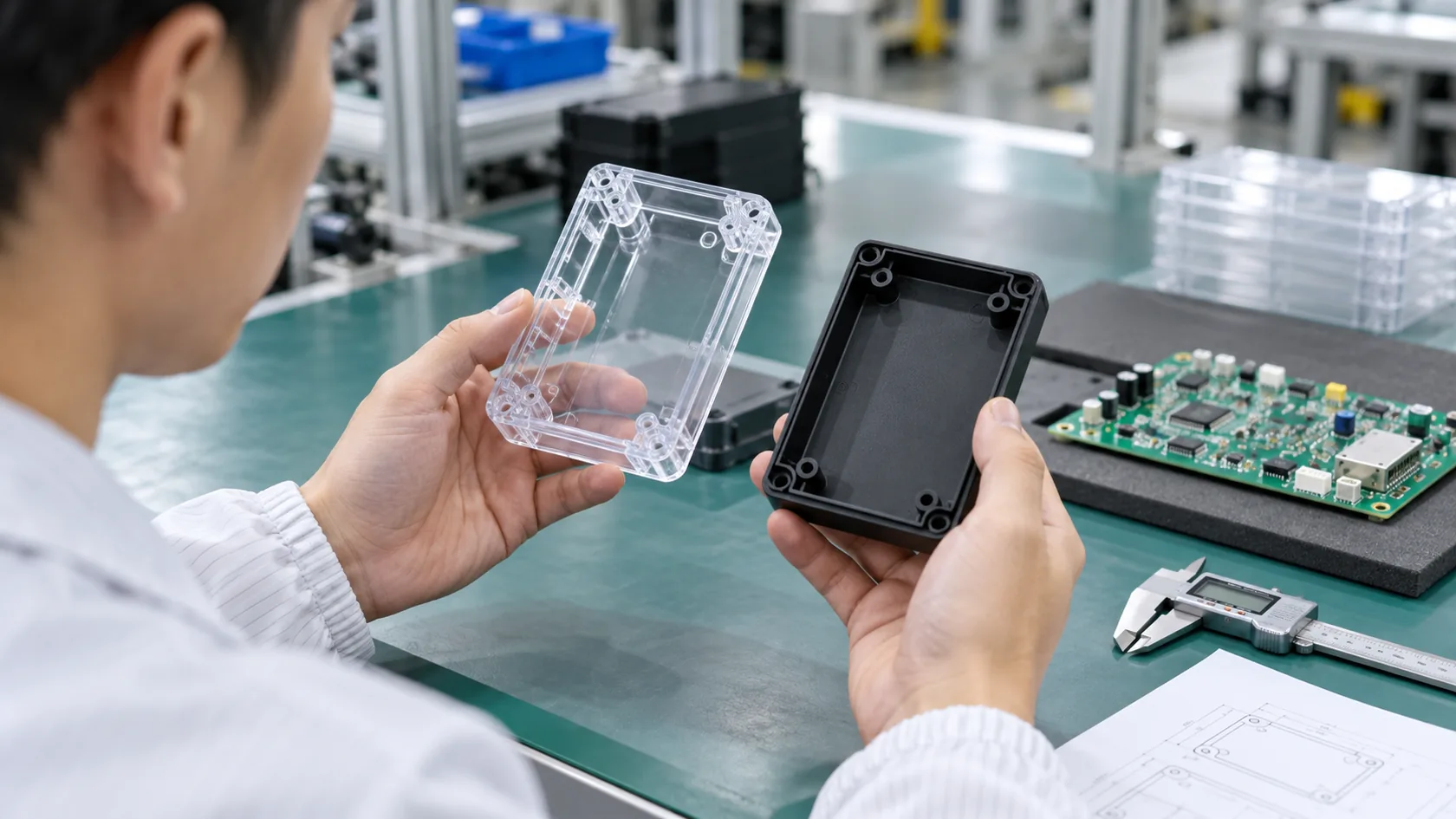
Plastic is often better for lightweight designs, insulation, molded shapes, wireless signal transmission, and cost control in some production methods. ABS and polycarbonate are common choices.
| Factor | Aluminum Enclosure | Plastic Enclosure |
|---|---|---|
| Heat dissipation | Usually better | Usually weaker |
| Impact resistance | Strong, depends on thickness | PC is strong, ABS is moderate |
| Corrosion risk | Needs proper material and finish | No rust, but chemical aging possible |
| Electrical insulation | Conductive | Insulating |
| Custom machining | Good | Good, but depends on material |
| Tooling for mass production | Die casting or extrusion possible | Injection molding possible |
| Appearance | Premium, industrial | Clean, light, flexible design |
If the enclosure holds heat-generating electronics, aluminum may be safer. If the product needs electrical insulation or wireless signal performance, plastic may make more sense.
There is no single winner.
The site and product decide.
Why ABS May Fail in Some Indoor Industrial Environments
ABS is popular because it is affordable, easy to process, and good for many indoor products.
But ABS is not the best choice for every industrial indoor enclosure.
It can have problems when the environment includes high heat, chemical exposure, strong impact, or long-term stress. It may deform near heat sources. It may crack or age faster if exposed to certain oils, solvents, or cleaning agents.
| ABS Strength | ABS Concern |
|---|---|
| Good cost control | Not ideal for high heat |
| Easy molding | May be weaker under chemical exposure |
| Clean surface | Lower impact resistance than PC |
| Good for many indoor devices | Not always safe near machines |
I do not reject ABS automatically. That would be too simple.
But if the buyer says the enclosure will be near a machine, a heater, a motor, or a cleaning area, I ask more questions before accepting ABS. Sometimes ABS is fine. Sometimes polycarbonate or aluminum is a better long-term choice.
When Polycarbonate Becomes a Better Choice
Polycarbonate is often stronger than ABS in impact resistance. It can be a better choice for industrial automation, sensor housings, control boxes, or equipment that may face rough handling.
It also has better toughness in many use cases.
But polycarbonate is not magic. It can still be affected by chemicals. It can still need UV protection if exposed to sunlight through windows or outdoor areas. It can still need good design to avoid stress cracking.
| Use Case | Why PC May Help |
|---|---|
| Industrial automation | Better impact resistance |
| Control box near workers | More durable under handling |
| Transparent cover | Good clarity and strength |
| Harsh indoor use | Better toughness than ABS |
| Outdoor or window exposure | Needs UV-stabilized grade |
The problem is not choosing PC. The problem is assuming PC solves everything.
Material is one part of the system. Design still matters. Gaskets still matter. Cable entries still matter.
Importance of Gaskets and Surface Treatments
A strong enclosure body with a weak gasket is like a strong door with a bad lock.
The enclosure may look solid, but the weak point decides the result.
Gaskets can be made from different materials. Some are better for heat. Some are better for compression. Some handle oils better. Some are cheaper but may age faster.
Surface treatment is also important for metal enclosures. Powder coating, anodizing, plating, and passivation can change corrosion resistance, appearance, scratch behavior, and cleaning performance.
| Detail | Why It Matters |
|---|---|
| Silicone gasket | Better heat resistance in many uses |
| Foam gasket | Cost-friendly, but may compress over time |
| Powder coating | Protects metal and improves appearance |
| Anodizing | Common for aluminum, clean surface finish |
| Stainless hardware | Helps in humid or corrosive areas |
| Sealed screws | Reduces ingress paths |
A buyer may spend time choosing the enclosure body but forget the gasket and screws. I think that is risky.
The small parts are often where field problems begin.
Material can carry the enclosure only so far. If the design details are weak, even a good material can still fail.
What Hidden Design Weaknesses Cause Indoor Enclosure Failure?
A poor enclosure design does not always look poor in a photo.
That is the uncomfortable part.
The sample may look clean. The dimensions may match the drawing. The surface may look good. But hidden design weaknesses may appear only after installation, wiring, heat, vibration, and maintenance.
I often look at the boring areas first: cable holes, vents, screws, corners, gasket compression, and technician access.
Those areas rarely look exciting in a brochure. But they decide many real failures.
Poor Cable Entry Design
Cable entry is one of the most common weak points.
Many enclosures have good protection on the body and cover. Then someone drills a hole, adds a cable, and forgets proper sealing. The rating becomes weaker immediately.
Cable glands must match cable size. The hole position must avoid water paths, dust collection, sharp bends, and maintenance trouble. If the cable is pulled or moved, the entry area must still stay stable.
| Cable Entry Problem | Possible Result |
|---|---|
| Wrong gland size | Poor sealing |
| Rough hole edge | Cable damage |
| Hole placed too low | Dust or liquid collection |
| Too many cables in one opening | Weak seal |
| No strain relief | Cable movement damages seal |
In custom enclosure projects, I prefer to confirm cable entry before production. It is much easier to design the hole correctly in the factory than to fix it with a drill on-site.
Field drilling can work.
But it also adds risk.
Weak Ventilation Strategy
Heat and sealing fight each other.
A fully sealed enclosure can block dust and moisture better. But it may trap heat. A ventilated enclosure can release heat. But it may allow dust, oil mist, and moisture to enter.
This is why ventilation needs careful thinking.
Fans are useful, but they can also pull dirty air inside. Filters help, but they need maintenance. Louvers help airflow, but they can become ingress points. Heat sinks help, but they add cost and design work.
| Cooling Method | Benefit | Risk |
|---|---|---|
| Fully sealed design | Better protection | Heat build-up |
| Fan ventilation | Better airflow | Dust and oil intake |
| Filtered vent | Cleaner airflow | Needs maintenance |
| Aluminum body | Better heat transfer | Higher material cost |
| External heat sink | Good thermal path | More design complexity |
I do not like adding a fan just because the inside is warm. A fan is not a free solution. It creates a new maintenance point.
If the site is dusty or oily, the fan may become a dust pump.
Thin Material and Weak Structural Design
Thickness matters, but it is not only about “strong or weak.”
Thin panels can flex. Flexing can affect gasket sealing. Doors can become uneven. Mounting areas can deform. Screws may loosen under vibration. In larger enclosures, this becomes more important.
A small plastic box may work well with a thin wall. A large cabinet near a vibrating machine may need stronger structure.
| Structural Detail | Risk If Weak |
|---|---|
| Thin cover | Poor gasket compression |
| Weak hinge area | Door misalignment |
| Thin mounting plate | Vibration and bending |
| Weak screw boss | Cracking or stripping |
| Large flat panel | Flexing and noise |
The best thickness is not always the thickest option. Thick material adds cost and weight. Thin material reduces cost but may create failure risk.
The right choice depends on size, mounting, load, vibration, and expected service life.
Ignoring Future Maintenance
Maintenance is a real part of enclosure life.
Workers open covers. They add cables. They replace components. They wipe surfaces. They lose screws. They tighten too much. They forget a seal. They close the door in a hurry.
This is not disrespect to workers. It is reality.
If an enclosure is hard to open, hard to close, or easy to damage during service, it will suffer in the field.
| Maintenance Issue | Long-Term Effect |
|---|---|
| Too many screws | Workers may skip proper tightening |
| Weak gasket | Seal damage after repeated opening |
| Poor internal space | Wiring becomes messy |
| No service clearance | Technicians struggle |
| Hard-to-replace parts | More downtime |
A good enclosure should not only protect electronics on the first day. It should also survive real people using it.
That is a detail many drawings do not show.
So before an OEM buyer places an order, the most useful work is not only choosing a rating. The useful work is asking better questions about the real site.
How Should OEM Buyers Evaluate Real Indoor Conditions Before Ordering?
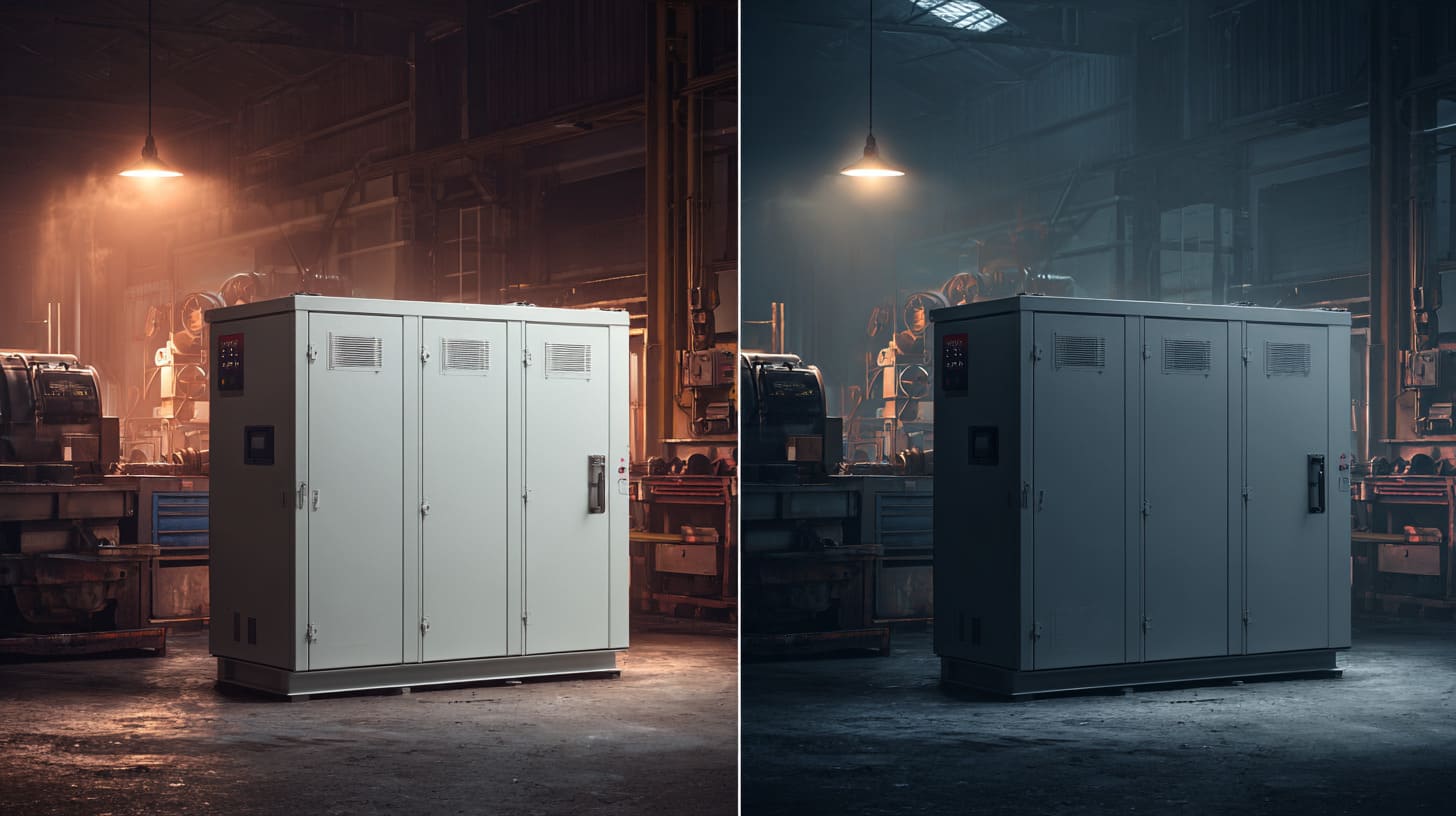
Good enclosure selection begins before the price quote.
It begins with a clear picture of where the enclosure will work.
I like drawings. I like 3D files. I like clear dimensions. But for environmental risk, a drawing is not enough. A drawing tells me the shape. It does not tell me the air, dust, heat, cleaning method, or worker behavior around the box.
When I receive a new inquiry, the most useful clue is often not the CAD file but one honest photo from the installation area.
That photo can save many emails.
Questions Engineers Should Ask Before Selecting an Enclosure
Before choosing an indoor enclosure, OEM buyers and engineers should ask practical questions.
Not fancy questions.
Real questions.
| Question | Why It Matters |
|---|---|
| Is there oil mist nearby? | Affects gasket, surface, and cable sealing |
| Is there conductive dust? | Raises electrical failure risk |
| Is there washdown cleaning? | May require stronger sealing |
| What is the ambient temperature? | Affects material and internal heat |
| Will workers open it often? | Affects gasket and screw design |
| Is the site near the coast? | Raises corrosion risk |
| Will the enclosure hold heat-generating parts? | Affects ventilation and material choice |
| Are there chemicals nearby? | Affects plastic and coating selection |
These questions may look basic. But they are powerful.
Many mistakes happen because nobody asks them early.
Why Photos and Videos Help Suppliers Recommend Better Solutions
Photos and videos are not only for checking appearance. They help the supplier understand the real environment.
A buyer may write, “Clean indoor workshop.” But a photo may show oil stains on the floor, dust on equipment, open cable trays, and machines packed close together. That changes the advice.
A short video can show vibration, worker movement, machine position, and cleaning habits.
| Shared Information | What It Helps Us See |
|---|---|
| Installation photo | Dust, space, mounting surface |
| Machine photo | Heat source, oil source, vibration |
| Cable layout | Entry direction and gland planning |
| Cleaning video | Water, steam, chemical exposure |
| Product assembly photo | Internal space and service access |
I always prefer to see the real place if possible.
Not because I want to make the project complicated. I want to avoid a wrong simple answer.
A wrong simple answer is expensive.
Importance of Prototype Testing
Prototype testing is not only about checking size.
It should also check installation, heat, cable entry, sealing, and maintenance.
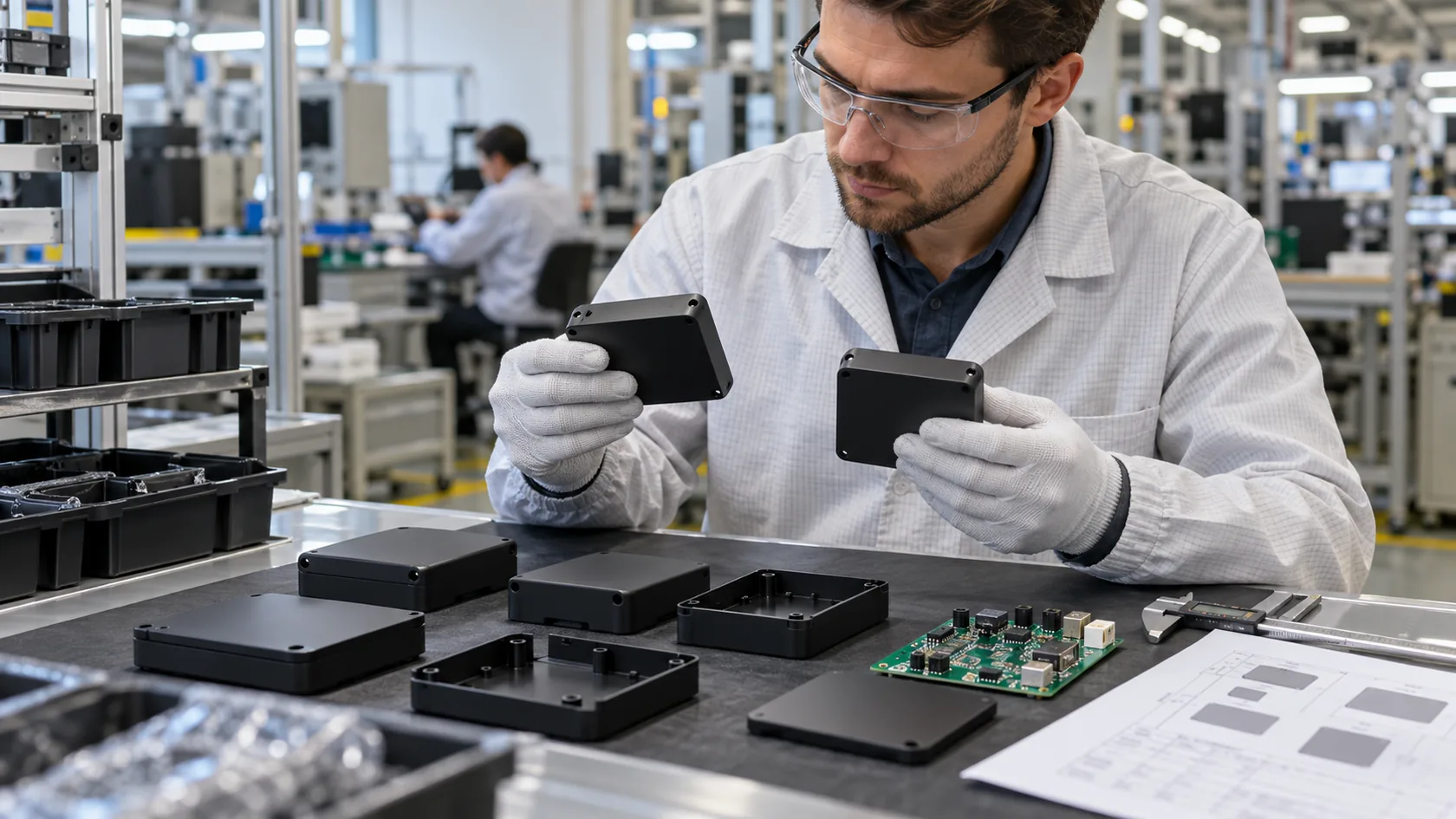
For custom enclosures, I think a prototype can answer questions that emails cannot. Can the cable fit? Can the cover close easily? Is the gasket compression even? Is the temperature acceptable? Can workers install it without forcing parts?
| Prototype Check | What It Reveals |
|---|---|
| Fit check | Whether the board and parts fit well |
| Cable check | Whether routing is practical |
| Heat check | Whether internal temperature is safe |
| Seal check | Whether gasket contact is even |
| Maintenance check | Whether workers can service it easily |
| Mounting check | Whether the enclosure is stable |
A prototype does not need to be perfect. But it should expose problems early.
That is its job.
Why Experienced Suppliers Ask So Many Questions
Some buyers become impatient when suppliers ask many questions.
I understand that. Time zones are different. Email replies are slow. The buyer wants price fast. The project is moving. The end customer is waiting.
But good questions reduce future pain.
If I ask about dust, it is because dust can enter.
If I ask about heat, it is because heat can shorten life.
If I ask about cable holes, it is because holes often break protection.
If I ask about cleaning, it is because water and chemicals can turn “indoor” into “harsh.”
A serious supplier should not only quote the drawing. A serious supplier should help check whether the enclosure will survive the real use.
That is where communication becomes part of product quality.
And if the wrong decision is made, the real cost is usually much bigger than the enclosure price.
What Are the Real Costs of Choosing the Wrong “Indoor” Enclosure?
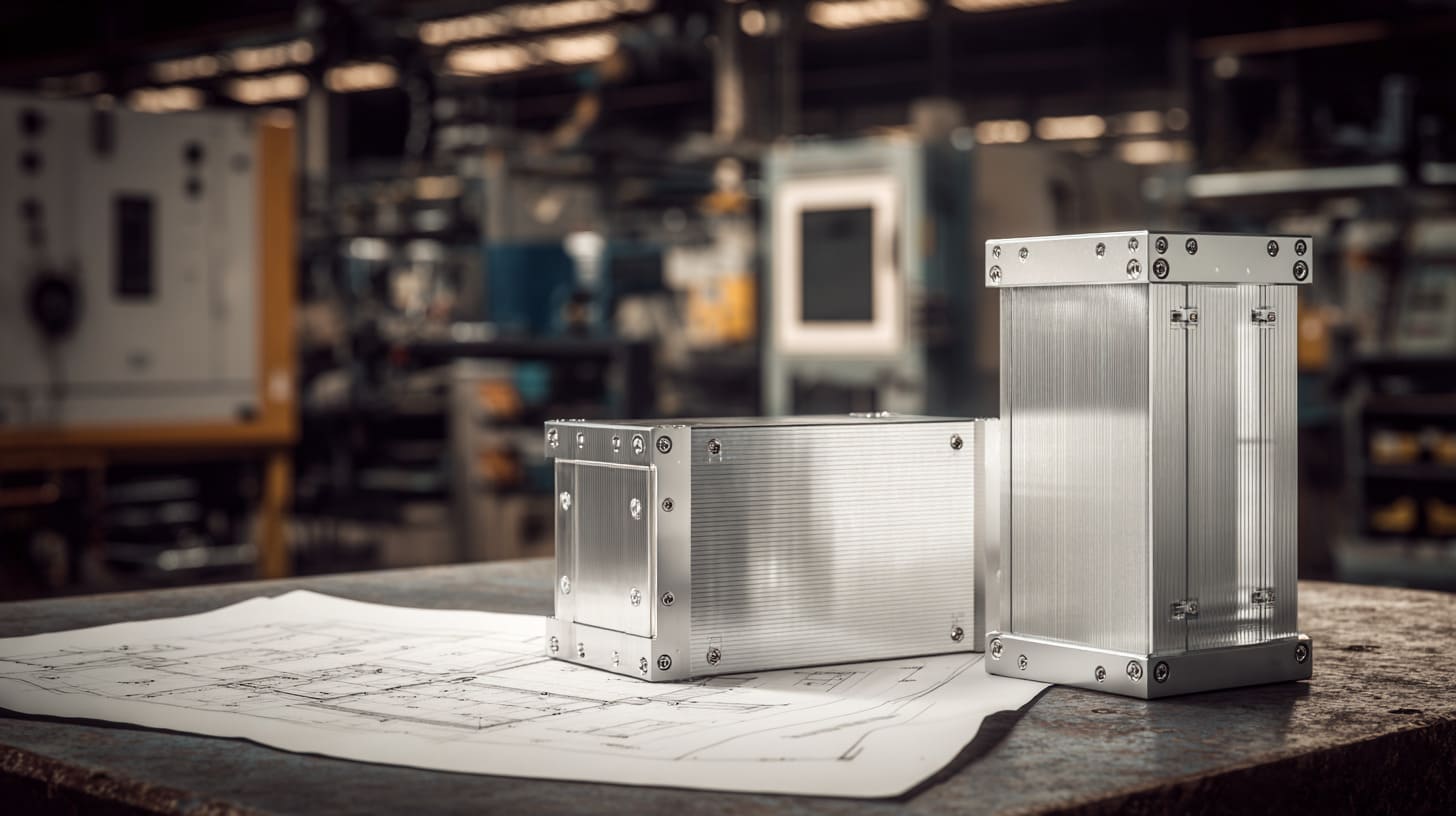
The enclosure price is easy to see.
The failure cost is harder to see.
This is why many buying decisions become risky. A buyer compares two quotations and chooses the lower one. That may be right. But if the lower-cost enclosure is not suitable for the site, the saving can disappear very fast.
I always remind myself that a cheap enclosure becomes expensive when it protects expensive electronics badly.
That is the trade-off people often ignore.
Production Downtime Costs
Production downtime can be painful.
If an enclosure failure stops a machine, the cost is not only the enclosure. The real cost may include stopped production, technician time, delayed delivery, and customer pressure.
| Downtime Item | Real Impact |
|---|---|
| Machine shutdown | Lost production time |
| Technician inspection | Labor cost |
| Emergency repair | Higher service cost |
| Delayed shipment | Customer complaint |
| Repeated failure | Trust loss inside the team |
For a factory, one stopped machine can create a chain reaction.
One machine stops.
One order slows down.
One delivery date becomes tight.
One customer becomes unhappy.
The box was small. The problem is not.
Damage to Internal Electronics
The enclosure protects the parts inside.
If the enclosure fails, the internal electronics may fail too. PLCs, sensors, controllers, power supplies, relays, and communication modules can cost much more than the enclosure.
Dust can cause heat and short circuits. Moisture can create corrosion. Oil can contaminate terminals. Heat can shorten the life of components.
| Internal Part | Failure Risk |
|---|---|
| PLC | Moisture, dust, heat |
| Power supply | Heat build-up |
| Sensor module | Dust and vibration |
| Relay | Contamination and corrosion |
| Terminal block | Loose connection, moisture |
| Communication board | Short circuit or signal issue |
This is why I do not treat the enclosure as a low-value accessory.
A good enclosure protects the real value inside.
Rework and Replacement Costs
Rework is one of the most frustrating costs.
If the enclosure choice is wrong, the buyer may need to modify holes, change gaskets, add vents, replace boxes, update drawings, or send workers back to the site.
These changes are slow and messy.
| Rework Type | Why It Hurts |
|---|---|
| Field drilling | Adds sealing risk |
| Gasket replacement | Labor and part cost |
| Emergency upgrade | Rush production and shipping |
| Reinstallation | Technician time |
| Drawing revision | Project delay |
| Customer complaint handling | Stress and trust damage |
A custom enclosure project should become clearer after production, not more confusing.
If the first decision is weak, every later fix becomes more expensive.
Reputation and Customer Trust Risks
This cost is hard to measure, but it matters.
For OEM buyers, rebranders, and product engineers, the enclosure is part of the final product experience. If the enclosure fails, the end customer does not always blame the enclosure supplier. They may blame the brand that sold the complete machine or device.
That is dangerous.
A buyer like David may need the enclosure to match his product quality. A buyer like John may need the enclosure to support a new project. A buyer like Jackson may resell or rebrand the product in his local market. If the enclosure fails, their reputation takes the hit first.
| Customer Type | Reputation Risk |
|---|---|
| OEM buyer | End customer questions product quality |
| Rebrand seller | Local market trust becomes weaker |
| Product engineer | Internal team questions design decision |
| Distributor | After-sales pressure increases |
| Project buyer | Delivery and acceptance become harder |
This is why I always think beyond the box.
The enclosure is not only a part. It is a promise. It tells the customer, “Your electronics are safe here.”
If that promise breaks, price savings feel very small.
So how can buyers reduce this risk without overcomplicating every project? The answer starts with practical habits.
How Can Buyers Reduce Indoor Enclosure Selection Risks?
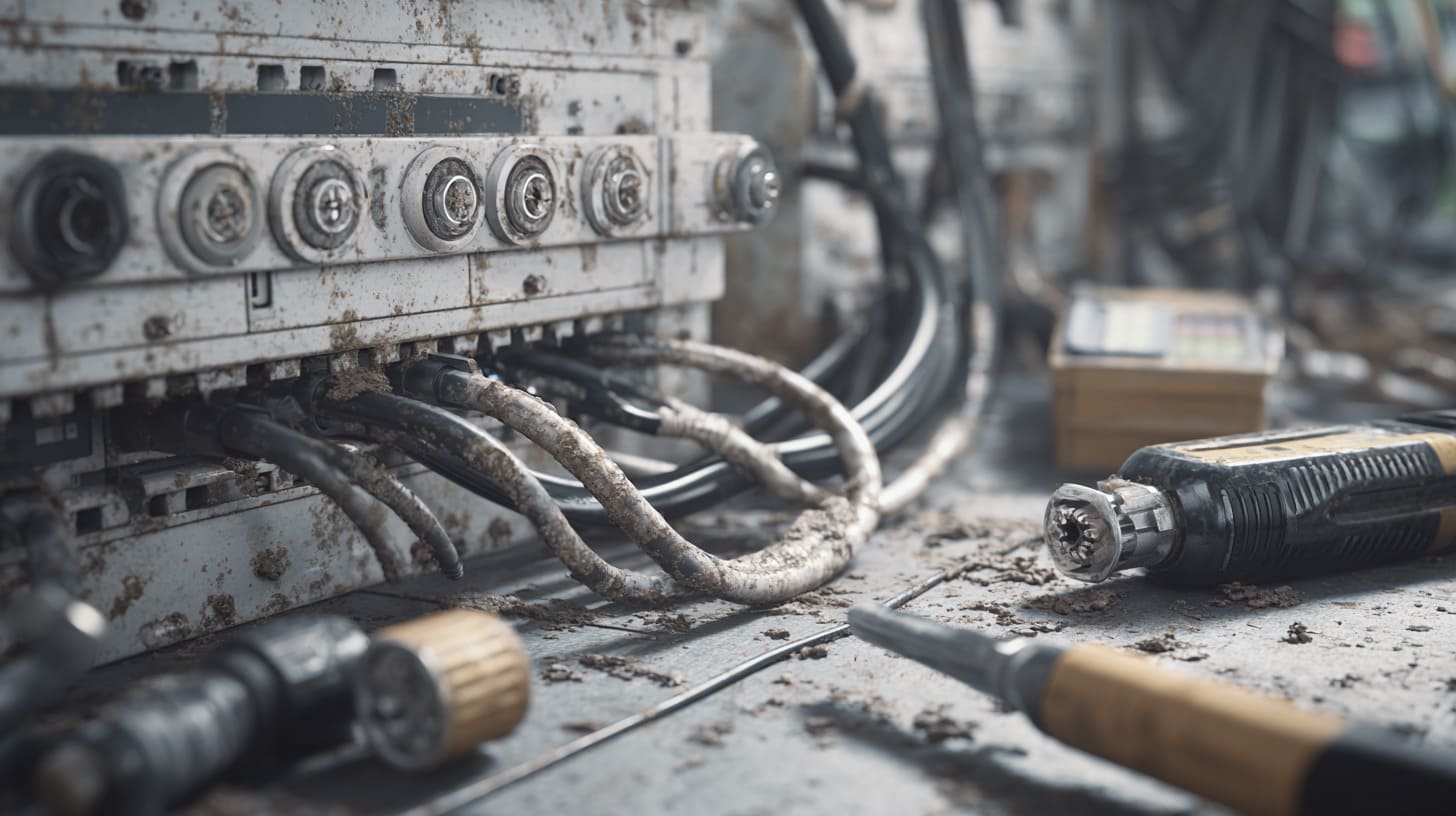
Reducing risk does not mean always choosing the most expensive enclosure.
That is not smart. It also does not fit real business.
Reducing risk means matching the enclosure to the real use. Sometimes a simple enclosure is enough. Sometimes a stronger seal is needed. Sometimes aluminum is better. Sometimes plastic is better. Sometimes the biggest improvement is not material, but cable entry design.
The decision I trust most is the one that explains both sides: what we save, and what risk we accept.
If we cannot explain the risk clearly, we are probably guessing.
Focus on Real Environment Instead of Labels Alone
The first step is to describe the environment honestly.
Do not stop at “indoor.” Add more detail.
| Weak Description | Better Description |
|---|---|
| Indoor use | Indoor CNC workshop with oil mist |
| Factory use | Dry assembly line, low dust, no washdown |
| Warehouse | Dusty warehouse near loading door |
| Food plant | Indoor washdown area with steam |
| Control room | Air-conditioned room, low dust, stable temperature |
This small change helps everyone.
The buyer gets a better recommendation.
The supplier avoids guessing.
The engineer avoids hidden risk.
The final product becomes more reliable.
I also suggest buyers share photos, videos, and component lists early. A small amount of information can prevent a large mistake.
Work Closely With Experienced Manufacturers
A good manufacturer should not only ask for size and quantity.
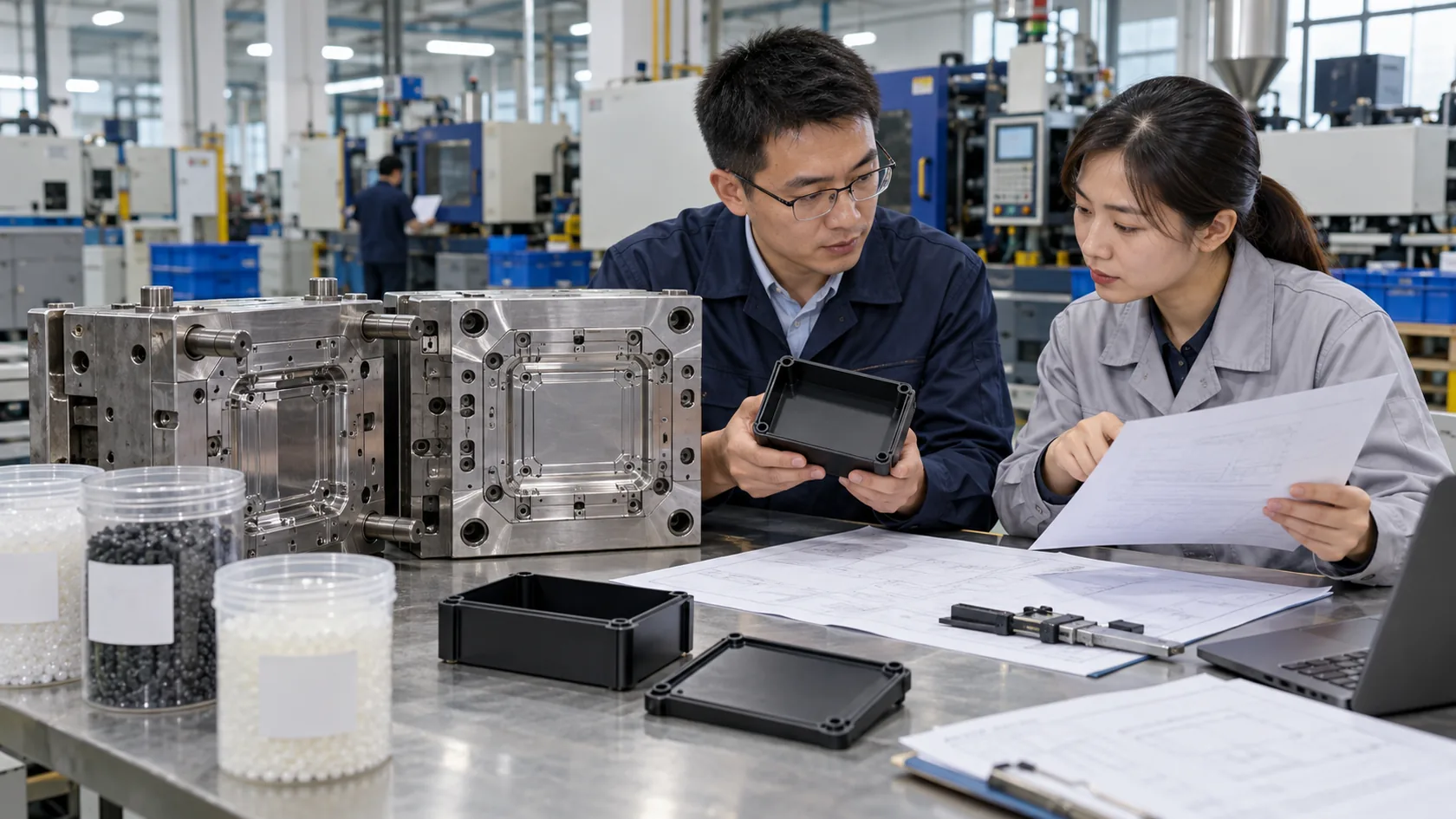
A good manufacturer should ask about environment, installation, cables, internal parts, surface finish, branding, packing, and schedule. This is especially important for custom aluminum enclosures, plastic enclosures, sheet metal boxes, and OEM products with logos.
For B2B buyers, communication quality matters a lot.
| Supplier Question | Why It Helps |
|---|---|
| What components go inside? | Checks space and heat |
| Where will it be installed? | Checks environment |
| Do you need logo or printing? | Plans surface treatment |
| How will cables enter? | Avoids sealing mistakes |
| What quantity do you need? | Matches process and cost |
| Do you need custom packing? | Helps rebrand or distribution |
I know buyers hate slow communication. I also know many projects are delayed because details are not confirmed early.
So I prefer clear questions at the beginning, even if they feel a little annoying. They are cheaper than corrections later.
Consider Future Expansion and Maintenance
Many enclosures are designed only for today.
That can become a problem.
Maybe the buyer will add one more board later. Maybe the customer will change cable size. Maybe the technician needs more space for wiring. Maybe heat becomes higher after an upgrade.
If the enclosure is already too tight, every future change becomes painful.
| Future Need | Design Choice |
|---|---|
| More components later | Reserve internal space |
| Higher heat load | Plan thermal path early |
| More cables | Leave cable entry area |
| Easy maintenance | Use better access design |
| Brand upgrade | Plan printing or logo area |
| Different markets | Consider rating and material options |
I do not suggest making every enclosure oversized. That wastes cost and space.
But a little planning room can save many problems later.
Build Reliability Into the Project Early
Reliability is not added at the end.
It is built into the first questions, the first material choice, the first gasket decision, the first cable hole position, and the first prototype test.
A reliable enclosure project usually includes:
- Clear environment description
- Correct rating selection
- Suitable material choice
- Proper gasket design
- Good cable entry plan
- Thermal review
- Prototype testing
- Maintenance thinking
- Clear communication with the supplier
Here is a simple project review table I like:
| Review Point | Ask Before Production |
|---|---|
| Environment | What risks exist around the enclosure? |
| Material | Can the material handle heat, impact, and chemicals? |
| Rating | Does the rating match the real site? |
| Sealing | Are cable holes and covers protected? |
| Heat | Can internal heat escape safely? |
| Maintenance | Can workers open and close it without damage? |
| Surface | Can the finish survive cleaning and handling? |
| Cost | Are we saving money or only moving risk to later? |
This kind of thinking is not complicated. It is just honest.
And honest details make better products.
Now we can bring the idea back to the beginning. “Indoor use” is not a wrong phrase. It is only a dangerous phrase when we stop thinking after reading it.
Conclusion
“Indoor use” sounds simple, but I do not treat it as a complete answer.
I treat it as the first line of a longer conversation.
A clean office and a CNC workshop can both be indoors. But one may be gentle, and the other may be full of heat, oil mist, dust, vibration, and cleaning stress. The enclosure does not judge the environment by the roof above it. It judges the environment by what touches it every day.
This is why I believe the real risk behind “indoor use” is not the indoor label itself.
The real risk is the false comfort behind the label.
A buyer may think no rain means no problem.
A supplier may quote too fast.
An engineer may focus on the drawing and forget the air around the machine.
A maintenance worker may open the box many times and slowly damage the seal.
Then the failure appears later, and everyone asks why a simple indoor project became difficult.
My view comes from many small project details, not from one big theory. I have seen how cable holes create trouble. I have seen how heat changes the decision. I have seen how dust makes a clean sample meaningless. I have seen how a few dollars saved in the enclosure can become a much larger cost when electronics fail.
That is why I ask more questions before recommending an enclosure.
Not because I want to make the project heavy.
Not because every project needs the highest rating.
Not because expensive is always better.
I ask because the right enclosure is the one that matches the real working condition.
For OEM buyers, product engineers, rebranders, and project owners, my suggestion is simple:
Before you choose an electrical enclosure, do not only ask, “Is it indoor or outdoor?”
Ask better questions:
- What kind of indoor environment is it?
- Is there dust, oil, coolant, heat, moisture, or vibration?
- Will workers wash nearby equipment?
- Will the enclosure be opened often?
- Are the cable entries sealed well?
- Can the material survive the real site?
- Does the small saving today create a bigger risk later?
If you are working on a custom enclosure project, you can share your drawing, internal component layout, installation photos, and environmental details with us. At MaidaTech, we can help review the enclosure structure, material, surface treatment, cable entry, logo design, and OEM/ODM production plan before you move into bulk manufacturing.
A good enclosure does not only look good when it leaves the factory.
It should still protect your product after months and years of real work.