Skip to content
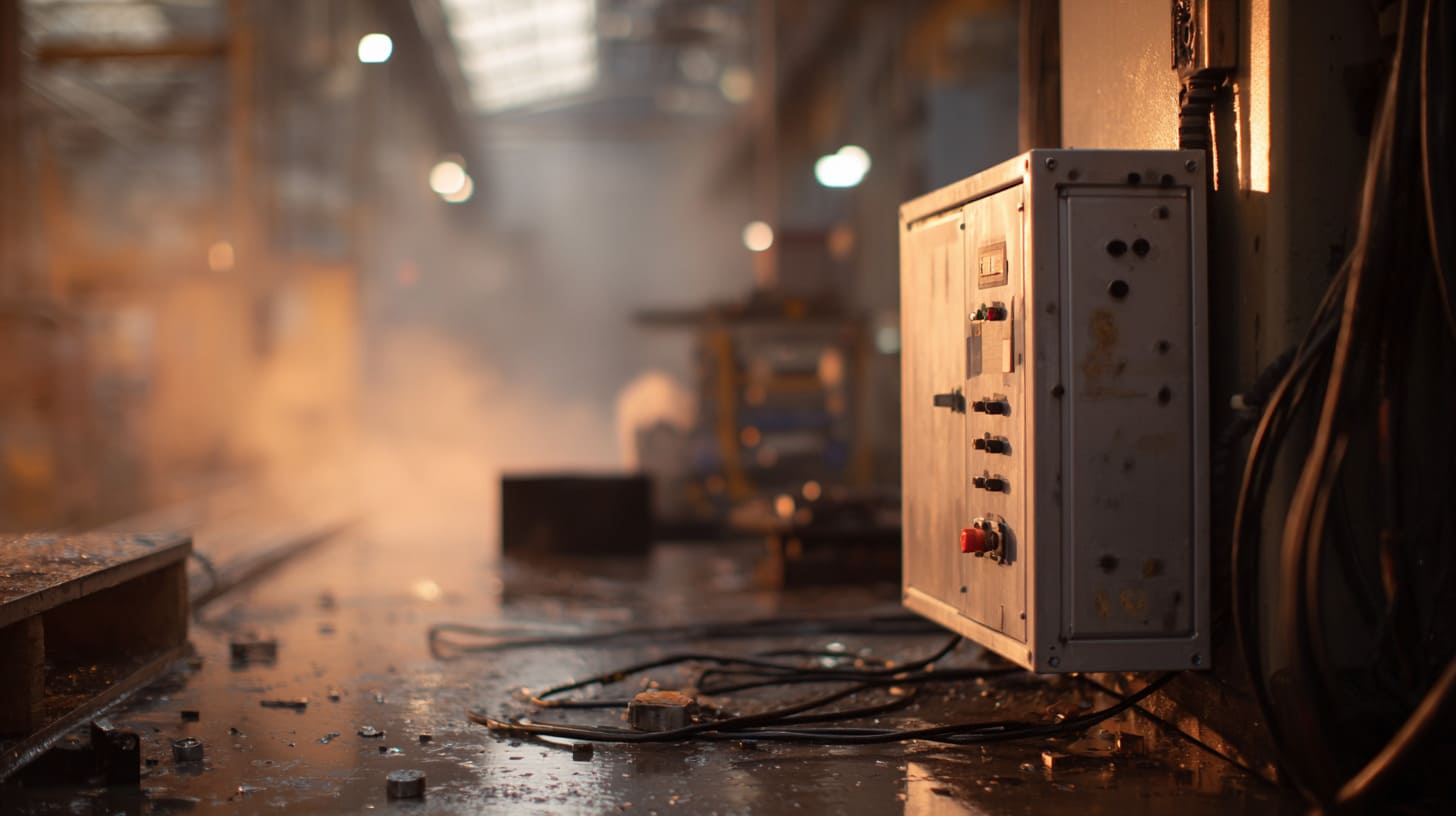
A buyer once sent me a drawing for a control box used beside a small machining unit.
The size was clear.
The mounting holes were clear.
The cable entries were marked.
The surface finish was also selected.
Then I saw one short note beside the enclosure rating:
“NEMA 13, because there is oil.”
At first, that sounds reasonable.
Oil is present.
NEMA 13 can protect against oil spray and non-corrosive coolant.
So the buyer chooses NEMA 13.
Simple, right?
Not always.
This is where I often slow down. In real custom enclosure work, one word like “oil” does not tell the whole story. A little oil mist near a CNC machine is one thing. A machine washed every night with water pressure is another thing. A factory corner with oil, metal chips, dust, vibration, and poor cable sealing is another world again.
I have seen buyers choose NEMA 13 too quickly because they focus only on oil. I have also seen buyers avoid NEMA 13 because they think it is too special or too expensive. Both decisions can be wrong.
NEMA 13 is not only about oil protection. It is about a specific indoor industrial environment where dust, fibers, light water splash, oil spray, and non-corrosive coolant may exist together.
That small difference matters.
For a product engineer like David in Finland, the enclosure is not only a metal box. It protects his product. It protects his brand. It protects the project deadline. For a creative ODM buyer like John in Hungary, the enclosure may be part of a new device that still needs testing, adjusting, and improving.
So the question is not only:
“Does my project need oil protection?”
The better question is:
“Is NEMA 13 enough for the whole environment?”
That is what I want to discuss in this article.
What Does NEMA 13 Really Protect Against?
NEMA 13 is often described in a short and dry way. It is an indoor enclosure rating. It protects electrical equipment from dust, lint, fibers, dripping or light splashing water, and spraying, splashing, or seepage of oil and non-corrosive coolants.
That sentence is correct.
But it is also too easy to read too fast.
When I review a custom enclosure request, I do not only look at the rating name. I look at what kind of dirt, liquid, and daily use the enclosure will face, because a rating can look correct on paper and still fail in a real workshop.
Core Protection Scope
NEMA 13 is mainly used for indoor industrial areas. It is not designed for clean office use. It is not designed for outdoor rain. It is not designed for heavy washdown.
It sits somewhere in the middle.
| Exposure Type | NEMA 13 Protection Meaning | Practical Example |
|---|---|---|
| Dust | Helps protect against dust entering the enclosure | Machining area, assembly shop, workshop |
| Lint and fibers | Helps protect against light airborne fibers | Packaging line, textile-related area |
| Light water splash | Protects against dripping or light splashing water | Nearby process splash, small accidental splash |
| Oil spray | Helps resist spraying or splashing oil | Machine tool area |
| Non-corrosive coolant | Helps protect against non-corrosive coolant exposure | CNC coolant mist or splash |
The important point is this:
NEMA 13 is not a “one hazard” rating.
It is more like a small umbrella for several indoor problems.
Dust alone may be handled by another rating. Oil alone may not explain the full need. Light water splash may sound harmless, but it can become a problem if the door gasket is weak or the cable holes are poorly sealed.
That is why I always like to ask simple questions:
- Is the oil only mist, or does it splash directly?
- Is the coolant non-corrosive?
- Is there water cleaning?
- Is the box close to moving parts?
- Are there metal chips, dust, or fibers in the same area?
These questions are not fancy. But they save mistakes.
What NEMA 13 Does Not Protect Against
The dangerous part is not what NEMA 13 can do.
The dangerous part is what buyers think it can do.
NEMA 13 is not made for every wet or dirty place. If the enclosure will face water jets, outdoor weather, corrosive chemicals, or strong cleaning processes, NEMA 13 may not be enough.
| Risk | Is NEMA 13 Enough? | Why It Matters |
|---|---|---|
| Outdoor rain | No | NEMA 13 is for indoor use |
| Direct hose-down cleaning | No | Light splash is not the same as water jets |
| Corrosive chemicals | No | Corrosion protection is not the main purpose |
| Strong cleaning agents | Usually no | Seals and finishes may degrade |
| Heavy coolant flow | Maybe not | Depends on pressure, direction, and contact time |
| UV exposure | No | Indoor rating does not solve outdoor aging |
This is where a buyer can get trapped.
He may say, “There is oil, so NEMA 13 is fine.”
But maybe the workers wash the machine every Friday. Maybe the enclosure sits close to a door where rain blows in. Maybe the liquid is not simple oil but a chemical mixture. Maybe the box will be installed in a food processing area where grease and water both appear.
Then the “oil protection” logic becomes too narrow.
NEMA 13 Is a Multi-Risk Indoor Rating
I like to think of NEMA 13 as a rating for a mixed indoor industrial environment.
It is not the lightest choice.
It is not the strongest choice.
It is not the cheapest choice.
It is not the universal choice.
It has a job.
That job is to protect electrical equipment in an indoor area where dust, fibers, light splash, oil, and non-corrosive coolant may exist.
If the environment matches that job, NEMA 13 can be a smart and balanced choice.
If the environment does not match that job, NEMA 13 can become a small mistake hiding inside a professional drawing.
And small mistakes in enclosure design do not always fail loudly. Sometimes they fail slowly. A little oil gets near the gasket. A little moisture reaches the cable entry. A little dust sticks to the surface. The product still works.
Until one day it does not.
That is why the next problem is even more important: many buyers focus on “oil” as if oil is the whole story.
Why “Oil Protection” Alone Is a Dangerous Assumption
I once discussed an enclosure project where the buyer kept repeating one sentence:
“There is oil nearby, so we need NEMA 13.”
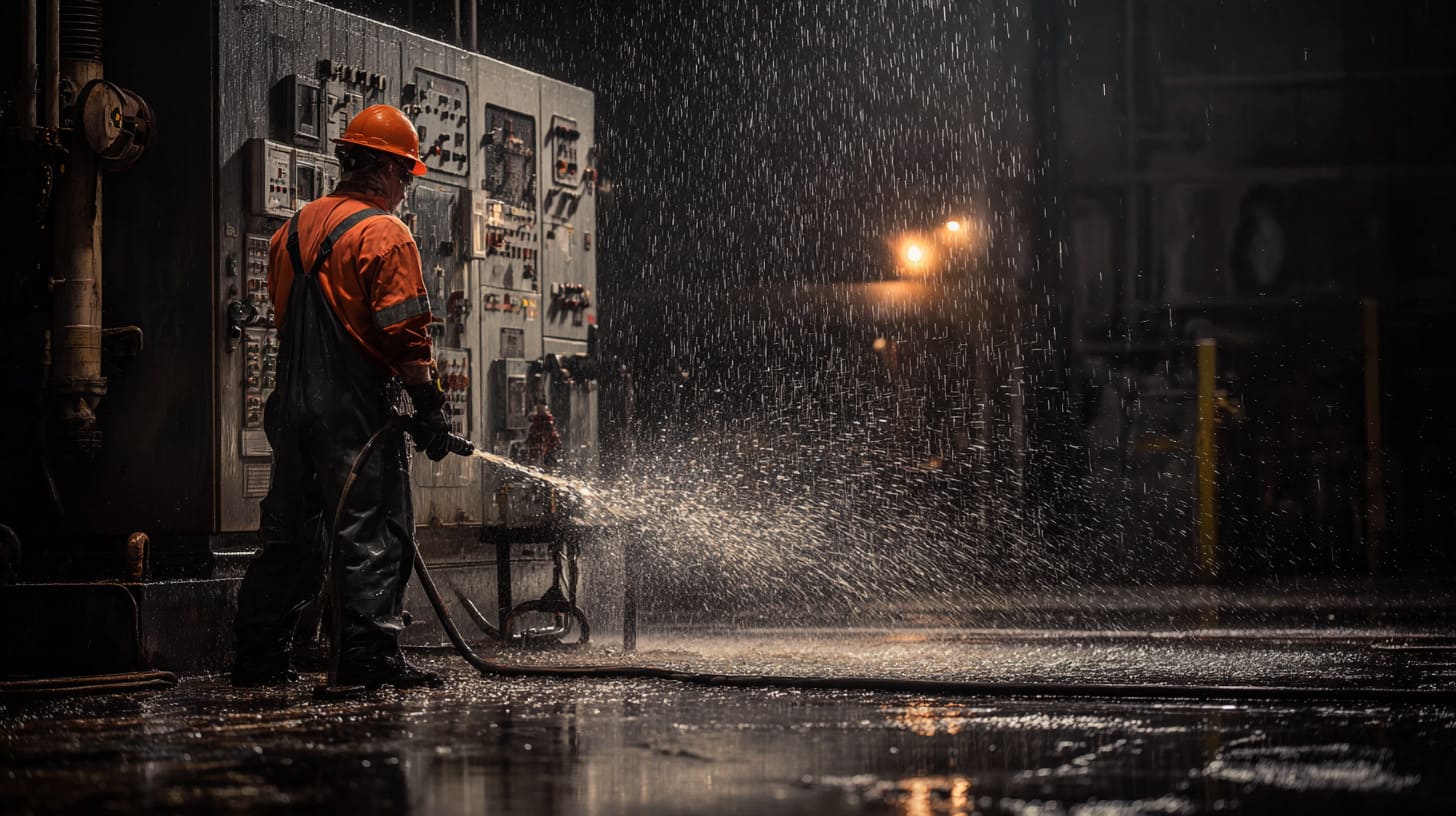
I understood him. He was not careless. He was trying to make a safe choice. But after a few more questions, we found something else. The area also had water cleaning. The workers cleaned around the machine with pressure. The enclosure was not only facing oil. It was facing water behavior that NEMA 13 was not meant to handle.
The drawing said NEMA 13.
The real environment said something more serious.
That is the gap.
One hazard is easy to describe. A full environment is harder to describe. But the full environment is what the enclosure must survive.
The Common Misunderstanding
Many buyers use a simple mental shortcut:
| Buyer Sees | Buyer Thinks | Possible Problem |
|---|---|---|
| Oil nearby | Choose NEMA 13 | May ignore washdown |
| Indoor use | Lower rating is enough | Indoor can still be harsh |
| Light splash | No big issue | Splash direction and frequency matter |
| Coolant | NEMA 13 covers it | Coolant may contain additives |
| Dust | Any sealed box is fine | Dust can collect near seams and cable entries |
This kind of thinking is very human.
A buyer has a deadline.
A drawing must be finished.
The customer wants a quote.
The engineer wants protection.
The purchasing team wants cost control.
So people choose the rating that seems to match the most obvious problem.
But the most obvious problem is not always the most dangerous one.
A little oil may not kill the enclosure.
A badly sealed cable gland may.
A light splash may not be serious.
Daily cleaning may.
A dust layer may look harmless.
Dust mixed with oil can become sticky, ugly, and hard to clean.
This is where many projects quietly move in the wrong direction.
Real-World Scenario Breakdown
Let us compare three indoor environments.
They may all be called “factory use.”
But they are not the same.
| Environment | Main Risks | Is NEMA 13 Usually Suitable? | Better Thinking |
|---|---|---|---|
| CNC machine area | Oil mist, coolant, metal chips, vibration | Often yes | Check coolant type and splash direction |
| Food factory washdown zone | Water jets, grease, cleaning chemicals | Usually no | Consider NEMA 4 or NEMA 4X |
| Packaging line | Fibers, dust, light dirt | Maybe too much | NEMA 12 may be enough if no oil |
| Indoor pump control area | Moisture, dripping water, maybe chemicals | Depends | Check water pressure and chemical exposure |
| Textile workshop | Fibers, lint, airborne dust | Maybe | Oil may not be the key issue |
A CNC machine area may be a good fit for NEMA 13 because oil mist and non-corrosive coolant are real concerns.
But a food factory is different. A food plant may have grease, yes. But it may also use water hoses, cleaning chemicals, and strict cleaning routines. NEMA 13 may sound close because of the grease, but the water problem may be more important.
A packaging line is different again. It may have fibers and dust but no oil. In that case, NEMA 13 may be more than needed. The buyer may spend extra money without solving a real problem.
The Hidden Risk: Combined Exposure
The most difficult enclosure problems often come from combined exposure.
Oil plus dust is not the same as oil alone.
Water plus cleaning chemical is not the same as water alone.
Dust plus vibration is not the same as dust alone.
Heat plus oil mist can also affect sealing materials over time.
| Combination | Why It Is Risky |
|---|---|
| Oil + dust | Creates sticky buildup around seams and hardware |
| Oil + poor gasket | Allows slow seepage into the enclosure |
| Water + oil | Makes cleaning harder and may attack weak sealing points |
| Coolant + coating damage | Can expose metal and start corrosion problems |
| Vibration + cable entry | Can loosen fittings and reduce sealing performance |
| Heat + gasket aging | Can reduce compression and sealing force |
This is why I do not like a project description that only says “oil protection required.”
That sentence is too thin.
A good project description should say:
- What liquid is present?
- How often does it contact the enclosure?
- From which direction?
- Is there pressure?
- Is there cleaning?
- Is there dust or chips?
- Is the enclosure opened often?
- What is the expected service life?
These details are not decoration. They are the difference between a smart enclosure and a future complaint.
The project starts to become clearer when we stop asking only “Is there oil?” and start asking “What kind of indoor mess is this enclosure actually living in?”
When NEMA 13 Is the Right Choice
NEMA 13 is not a bad rating. I want to be clear about that.
It can be a very good choice.
But it needs the right place.
I like NEMA 13 when the environment is indoor, industrial, and controlled, but still messy enough to need protection from oil, coolant, dust, lint, and light splash. That sounds like a small area, but in real factories, this area appears more often than many people think.
A rating becomes useful when it matches the real job. I usually feel comfortable with NEMA 13 when the liquid exposure is light or moderate, the area is not washed down, and the main problem is mixed contamination rather than strong water pressure.
Typical Suitable Environments
NEMA 13 often makes sense in these conditions:
| Application Area | Why NEMA 13 May Fit |
|---|---|
| CNC machine control area | Oil mist and coolant splash may exist |
| Indoor machining equipment | Dust, chips, and lubricant exposure are common |
| Equipment near lubricated moving parts | Oil may spray or seep in small amounts |
| Industrial automation panels | Light splash and airborne particles may be present |
| Factory test stations | Indoor use with limited liquid exposure |
| Production machines with enclosed zones | Oil and dust may collect around the enclosure |
This is not only about the rating name.
It is also about the installation position.
For example, an enclosure mounted high on the machine frame may face oil mist but not direct coolant splash. That may be suitable.
The same enclosure mounted low near a coolant drain area may face more liquid contact. That may need stronger thinking.
A small change in position can change the risk.
Why It Works Well Here
NEMA 13 works well when the main problem is contamination entering the enclosure through seams, covers, doors, and cable entries.
Good sealing helps keep oil spray and dust outside. A proper gasket helps protect the inner electronics. A controlled indoor environment reduces the risk of outdoor weather and corrosion.
| Design Need | Why It Matters for NEMA 13 |
|---|---|
| Door gasket | Helps stop dust, oil, and splash from entering |
| Proper compression | Keeps the seal working after installation |
| Covered seams | Reduces direct exposure points |
| Sealed cable entries | Prevents the weakest opening from becoming the failure point |
| Suitable coating | Helps resist normal industrial contact |
| Careful mounting | Keeps liquid from collecting on weak points |
In a clean office, this may sound like too much.
In a machine shop, it is normal.
Oil mist does not ask for permission. It floats. It settles. It finds edges. It turns dust into paste. It makes a product look older than it really is.
This is why a NEMA 13 enclosure can be valuable in the right setting. It is not only protecting the electronics. It is helping the whole product stay more stable, cleaner, and more professional over time.
A Good Fit Does Not Mean No Detail Checking
A buyer may say:
“Our machine is indoors. There is some oil mist. No washdown.”
That sounds promising.
But I still want to check the details.
| Question | Why I Ask |
|---|---|
| Is the oil mist constant or occasional? | Constant exposure can age materials faster |
| Is coolant used? | Coolant additives may affect seals or coating |
| Is the enclosure opened often? | Frequent opening can reduce sealing consistency |
| Are cable glands included? | Cable entry is often the weak point |
| Is the enclosure close to moving parts? | Vibration can affect screws and sealing |
| Is the location easy to clean? | Oil and dust buildup affects maintenance |
This is not overthinking.
This is real work.
The enclosure may pass the rating idea but still fail because a small design detail is ignored. A rating is a starting point. It is not a magic sticker.
I often tell buyers: NEMA 13 is a good choice when the environment is oily but controlled. If the environment becomes wet, corrosive, or harshly cleaned, the conversation must change.
And that brings us to the uncomfortable part: sometimes NEMA 13 looks correct, but it is not enough.
When NEMA 13 Is NOT Enough
The fastest way to misuse NEMA 13 is to treat it like a stronger version of every indoor enclosure.
It is not.
It protects against some indoor industrial exposure. It does not turn the enclosure into a washdown box. It does not make the material corrosion-proof. It does not protect against outdoor rain, sunlight, or harsh chemicals.
I become careful when I hear words like “wash,” “hose,” “outdoor,” “chemical,” “salt,” or “daily cleaning,” because these words usually mean the enclosure needs more than NEMA 13 can honestly provide.
High-Risk Environments
Some environments should make a buyer pause before choosing NEMA 13.
| Environment | Why NEMA 13 May Fail | Better Direction |
|---|---|---|
| Food processing washdown | Water jets and cleaning agents | NEMA 4 or 4X |
| Beverage production | Frequent water cleaning | NEMA 4 or 4X |
| Pharmaceutical cleaning area | Strict cleaning and chemical contact | NEMA 4X or special design |
| Outdoor installation | Rain, UV, temperature changes | Outdoor-rated enclosure |
| Chemical process area | Corrosive exposure | NEMA 4X or material review |
| Marine or coastal area | Salt and corrosion | Stainless or coated 4X design |
One thing I have learned is that buyers often use soft words to describe harsh conditions.
They may say “some cleaning.”
But “some cleaning” can mean a dry cloth once a week.
It can also mean a worker sprays water around the machine every night.
Those two are not the same.
The enclosure does not care about the word. It cares about the water pressure.
What Goes Wrong
When NEMA 13 is used in the wrong environment, failure may not happen on day one.
That is why the mistake is hard to see during the quotation stage.
The sample may look good.
The gasket may look good.
The surface finish may look strong.
The buyer may approve the photos.
But after installation, the environment starts testing the enclosure every day.
| Wrong Exposure | Possible Failure |
|---|---|
| Water jet cleaning | Water enters through seams or cable points |
| Corrosive chemical | Coating breaks down or metal corrodes |
| Outdoor sunlight | Gasket and coating age faster |
| Salt air | Rust or surface corrosion appears |
| Strong coolant exposure | Seal or finish may degrade |
| Frequent opening | Seal loses stable compression |
A small leak is enough.
Inside the enclosure, moisture can create electrical issues. Dust can stick to damp areas. Oil can coat components. Corrosion can start quietly. And once the customer sees failure, the discussion becomes difficult.
The buyer may say:
“But we requested NEMA 13.”
The supplier may say:
“But the environment was not suitable.”
Nobody enjoys that conversation.
That is why I prefer to have the hard conversation before production.
Better Alternatives
If the environment is harsher, another rating may be more suitable.
| If the Real Problem Is... | Better Rating to Consider | Why |
|---|---|---|
| Hose-directed water | NEMA 4 | Better water protection |
| Water + corrosion | NEMA 4X | Adds corrosion resistance |
| Outdoor rain | Outdoor-rated NEMA enclosure | Designed for weather exposure |
| Chemical cleaning | NEMA 4X or special material | Material and sealing must match chemicals |
| Dust only | NEMA 12 | May be enough and lower cost |
| Oil + dust, no washdown | NEMA 13 | Good fit for controlled indoor use |
NEMA 4 is not always better than NEMA 13 in every way. It is better for a different problem.
NEMA 4X is not always necessary either. It can add cost, especially if stainless steel or special coatings are involved.
So I do not like saying, “Always choose the higher rating.”
That sounds safe, but it can waste money.
A better rule is:
Choose the rating that matches the real exposure.
If the exposure includes water pressure or corrosion, NEMA 13 should not be the final answer. It may be part of the conversation, but it should not close the conversation.
The next step is comparing NEMA 13 with other ratings in a simple way, because many buyers get stuck exactly there.
NEMA 13 vs Other Ratings: Critical Differences
When buyers compare enclosure ratings, the list can start to feel like a wall of numbers.
NEMA 12.
NEMA 13.
NEMA 4.
NEMA 4X.
They look close. But they do not solve the same problem.
I like to compare ratings by asking what problem the rating is trying to solve first, because a higher number does not always mean a better choice for your exact project.
NEMA 12 vs NEMA 13
NEMA 12 and NEMA 13 are both indoor ratings. They are often compared because both can be used in industrial environments.
The key difference is oil and coolant exposure.
| Rating | Main Use | Common Fit |
|---|---|---|
| NEMA 12 | Indoor protection from dust, dirt, dripping non-corrosive liquids | Dry industrial control panels |
| NEMA 13 | Similar indoor protection, plus oil and non-corrosive coolant spray/splash | Machine tool areas and oily indoor zones |
If the environment has dust, lint, and light dripping but no oil or coolant, NEMA 12 may be enough.
If oil spray or non-corrosive coolant is part of the environment, NEMA 13 becomes more relevant.
This is where cost control matters.
A buyer may request NEMA 13 because it feels safer. But if the product will sit in a dry indoor equipment room, NEMA 13 may not add real value. It may only add cost or design restrictions.
NEMA 13 vs NEMA 4
NEMA 4 is usually considered when water is more serious.
It is often used for environments that require protection against water spray or hose-directed water.
| Comparison Point | NEMA 13 | NEMA 4 |
|---|---|---|
| Main environment | Indoor industrial | Indoor or outdoor depending on design |
| Oil/coolant focus | Yes | Not the main focus |
| Water jet protection | No | Yes |
| Washdown suitability | Usually no | Often yes |
| Typical use | Machine oil/coolant areas | Wet industrial areas |
This comparison is where many mistakes happen.
A buyer sees oil and chooses NEMA 13.
But the factory uses hose cleaning.
Then NEMA 4 may be more suitable.
Another buyer sees water and chooses NEMA 4.
But the real problem is oil mist near machine tools.
Then the design still needs careful review for oil exposure and material compatibility.
Ratings are not trophies. They are tools.
A wrench is not better than a screwdriver. It depends on the screw.
NEMA 13 vs NEMA 4X
NEMA 4X adds corrosion resistance to the water protection conversation.
This matters when the environment includes chemicals, salt, outdoor exposure, or aggressive cleaning.
| Comparison Point | NEMA 13 | NEMA 4X |
|---|---|---|
| Indoor oily area | Good fit | May be more than needed |
| Water washdown | Not enough | Better fit |
| Corrosion protection | Not main purpose | Main advantage |
| Common material | Powder-coated steel, aluminum, other options | Stainless steel or corrosion-resistant material/coating |
| Cost level | Usually more balanced | Usually higher |
NEMA 4X can be a strong choice, but it is not free.
The material may cost more. The fabrication may cost more. The lead time may change. The surface finish may need more care. If the buyer only needs protection from indoor oil mist, NEMA 4X may be too much.
This is the trade-off.
A lower rating can fail.
A higher rating can waste money.
A correct rating protects both the product and the budget.
The Narrow Middle Zone
NEMA 13 sits in a narrow middle zone.
It is stronger than a basic indoor box when oil and coolant are present. But it is not a heavy-duty washdown or corrosion solution.
| Project Condition | Likely Direction |
|---|---|
| Dry indoor dust | NEMA 12 may be enough |
| Indoor oil mist + dust | NEMA 13 may be right |
| Indoor hose washdown | NEMA 4 may be better |
| Washdown + corrosion | NEMA 4X may be better |
| Outdoor harsh weather | Outdoor-rated solution needed |
This middle zone is useful, but it needs clear judgment.
If a buyer gives me only the rating, I can quote the enclosure. But if he gives me the real working environment, I can help him avoid a wrong enclosure.
That is the difference between making a box and supporting a project.
And even when NEMA 13 is the correct rating, the design details still decide whether it works well in real life.
Design Implications for NEMA 13 Enclosures
A rating does not build the enclosure by itself.
This sounds obvious, but it is easy to forget.
Two enclosures can both be called NEMA 13. One may be carefully designed with proper gasket compression, sealed cable entries, and suitable surface treatment. The other may have weak details that invite dust and oil inside.
The name is the same.
The result is not.
The small parts decide the real protection, so I pay close attention to gasket material, door fit, cable openings, and surface finish before I feel comfortable with a NEMA 13 design.
Sealing Design
The gasket is often the quiet hero of a NEMA 13 enclosure.
Nobody takes a beautiful product photo of a gasket. Nobody gets excited about gasket compression. But when oil mist and dust are present, the gasket becomes one of the most important parts.
| Sealing Detail | Why It Matters |
|---|---|
| Gasket material | Oil exposure can damage weak materials |
| Gasket compression | Too loose can leak; too tight can deform |
| Door flatness | Poor fit creates uneven sealing |
| Hinge quality | Door alignment affects long-term sealing |
| Latch pressure | Stable pressure helps keep the seal consistent |
A gasket is not only a rubber line around the door.
It is a promise.
It promises that the enclosure will not invite the workshop environment inside.
But that promise depends on material, shape, pressure, and daily use.
If a buyer needs frequent access to the electronics, the door may be opened many times. Each opening can affect the seal. If operators close the door too quickly or unevenly, sealing performance can change.
So I do not only ask what rating is needed. I also ask how the box will be used.
Material Considerations
Material choice also matters.
A NEMA 13 enclosure may be made from different materials depending on the project needs, cost target, appearance, weight, and environment.
| Material Option | Advantages | Things to Check |
|---|---|---|
| Powder-coated steel | Strong, common, cost-effective | Coating quality and edge protection |
| Aluminum | Lightweight, good appearance, easy to customize | Surface finish and corrosion condition |
| Stainless steel | Strong corrosion resistance | Higher cost, may be more than needed |
| Plastic enclosure | Lightweight and corrosion resistant | Strength, heat, and oil compatibility |
For many custom OEM projects, aluminum is attractive. It looks clean. It feels premium. It can be machined well. It can support logo engraving or custom surface finishes.
But aluminum is not automatically correct for every NEMA 13 project.
If the environment is rough, the design may need stronger wall thickness. If the surface is exposed to coolant or cleaning agents, the finish must be reviewed. If the enclosure is used as part of a branded product, the appearance must also survive real use.
A beautiful black enclosure with scratches, oil stains, or poor sealing will not help the brand.
It may hurt it.
Surface Treatment Compatibility
Surface treatment is not only about color.
It affects durability, appearance, cleaning, and sometimes electrical performance.
| Finish | Common Reason to Use | Risk to Review |
|---|---|---|
| Powder coating | Good appearance and protection | Edge coverage and coating damage |
| Anodizing | Clean aluminum finish | Chemical compatibility and color consistency |
| Brushing | Premium look | Dirt and oil may show more |
| Painting | Flexible color choice | Adhesion and durability |
| Bare metal areas | Grounding or contact needs | Corrosion or contamination risk |
Some buyers focus only on the outside appearance. I understand why. A nice finish helps sales. It helps product photos. It helps the final equipment feel more professional.
But in oily environments, surface finish must also be practical.
Can it be wiped clean?
Does oil leave marks?
Will coolant stain it?
Will the coating chip near screws or mounting points?
These small questions become big after installation.
Cable Entry and Structural Details
Cable holes are often the weakest point in an enclosure.
The box can have a good door seal, good material, and good finish. But if the cable entry is not sealed well, oil and dust may still enter.
| Structural Area | Common Problem | Better Thinking |
|---|---|---|
| Cable glands | Wrong size or weak sealing | Match cable diameter and environment |
| Knockouts | Poor sealing after installation | Use proper fittings |
| Mounting holes | Possible leak path | Review placement and sealing |
| Door seam | Uneven pressure | Check flatness and latch design |
| Corners | Dirt and oil buildup | Avoid unnecessary traps |
| Ventilation | May reduce protection | Use only when needed and design carefully |
Ventilation is another tricky point.
Some electronics need heat control. But openings can reduce protection. So the design must balance cooling and sealing.
This is where custom work becomes useful.
A standard box may be close.
A custom enclosure can be closer.
For MaidaTech projects, we often review the board position, cable direction, mounting method, logo area, surface finish, and packaging needs together. The goal is not only to make the box. The goal is to make the box fit the product and the environment.
And many buyer mistakes happen because these details are not discussed early enough.
Common Mistakes Buyers Make
Most enclosure mistakes do not come from bad intentions.
They come from missing details.
A buyer may be careful. An engineer may be smart. A supplier may be experienced. But if the environment is described too simply, the enclosure choice can still go wrong.
The most common warning sign I see is a project description that uses broad words like “indoor,” “factory,” or “oil,” because those words sound clear but hide too many real working conditions.
Over-Specifying
Over-specifying means choosing a stronger or more expensive rating than the project really needs.
It feels safe. But it can create waste.
| Situation | Buyer Choice | Possible Issue |
|---|---|---|
| Dust only, no oil | NEMA 13 | May add unnecessary cost |
| Clean indoor control room | NEMA 13 | Rating may be too much |
| Light enclosure use | Heavy design | Product may become bigger or more costly |
| Simple OEM product | Overly strict spec | May hurt price competitiveness |
For re-brand buyers who sell on Amazon, local stores, or project channels, cost matters. A small extra cost per unit can become a large difference across a batch.
I do not like cutting cost in dangerous ways.
But I also do not like adding cost that does not solve a real problem.
Good engineering is not “choose the highest rating.” Good engineering is “choose the right rating for the real use.”
Under-Specifying
Under-specifying is the opposite problem.
This is more dangerous.
The buyer chooses NEMA 13 because of oil, but the environment also has washdown, outdoor exposure, or chemical cleaning.
| Real Environment | Wrong Choice | Risk |
|---|---|---|
| Hose cleaning | NEMA 13 | Water may enter |
| Outdoor area | NEMA 13 | Weather may damage enclosure |
| Chemical splash | NEMA 13 | Corrosion or seal damage |
| High-pressure coolant | NEMA 13 | Leakage risk |
| Frequent cleaning | NEMA 13 | Long-term seal failure |
Under-specifying often looks cheaper at the beginning.
But the cost may return later as repair, replacement, customer complaint, or brand damage.
That is the painful cost.
The quote looked good.
The sample looked good.
The first shipment looked good.
Then the real environment started collecting the bill.
Ignoring Cleaning Methods
Cleaning method is one of the most overlooked details.
Many buyers describe the working environment during production, but they forget what happens after production stops.
The machine may be cleaned.
The floor may be washed.
The enclosure may be wiped.
The workers may spray water nearby.
That cleaning behavior can decide the rating.
| Cleaning Method | Impact on Rating Choice |
|---|---|
| Dry cloth wipe | Usually low risk |
| Damp cloth wipe | Check sealing and finish |
| Light splash nearby | NEMA 13 may be suitable |
| Direct water hose | Consider NEMA 4 |
| Chemical cleaning | Consider material and corrosion resistance |
| High-pressure wash | NEMA 13 is usually not enough |
I always like to ask:
“Will someone clean around this enclosure?”
It sounds like a small question.
But it can change the whole design.
Not Evaluating Fluid Type
Oil is not always the same oil.
Coolant is not always simple coolant.
Some fluids are mild. Some contain additives. Some may affect gasket material, coating, plastic parts, labels, or printed logos.
| Fluid Type | Why It Matters |
|---|---|
| Lubricating oil | May require oil-resistant gasket |
| Cutting coolant | Additives may affect material compatibility |
| Grease | Can collect dust and become hard to clean |
| Cleaning agent | May attack coating or seals |
| Chemical splash | May require special material review |
For OEM and ODM projects, this matters even more.
If the enclosure carries the customer’s logo, the surface cannot look damaged after a few months. If the box is part of a premium product, the finish must survive daily use. If the product is sold under the buyer’s brand, every failure becomes their problem first.
The supplier’s name may not be visible.
The buyer’s brand is.
Communication Gaps
Communication gaps are a very real problem in custom manufacturing.
A buyer in Finland or Belgium may send a clear drawing. A supplier in China may quote quickly. But the environment details may not be fully discussed because everyone wants to move fast.
The result?
A quote based on incomplete information.
| Vague Phrase | Better Question |
|---|---|
| Indoor use | Is there water, oil, dust, or cleaning? |
| Factory environment | What kind of factory process? |
| Oil protection | Oil mist, splash, seepage, or heavy contact? |
| Waterproof | Water drip, splash, hose, or outdoor rain? |
| Corrosion resistant | What chemical or location causes corrosion? |
I believe good communication is part of product quality.
Not decoration.
Not extra service.
Part of the product.
Because if the question is wrong, the drawing can be right and the enclosure can still fail.
This is why I like to use a practical decision checklist before choosing NEMA 13 or any other rating.
How to Choose the Right Rating (Practical Checklist)
A checklist may look boring.
But boring tools often save exciting problems.
When I help a buyer review an enclosure rating, I like to turn the conversation into simple questions. Not because the buyer does not understand engineering. Many buyers understand it very well. I do it because project pressure makes people skip small details.
I trust simple questions more than clever assumptions, because a five-minute checklist can prevent a wrong enclosure from reaching production.
Ask These Questions First
Before choosing NEMA 13, I would ask these questions:
| Question | Why It Matters |
|---|---|
| Is there oil or coolant spray? | This is where NEMA 13 may become useful |
| Is the coolant non-corrosive? | Corrosive fluids may need another solution |
| Is there water cleaning or washdown? | NEMA 13 is not for hose-directed water |
| Is the enclosure indoor or outdoor? | NEMA 13 is mainly for indoor use |
| Are dust, lint, or fibers present? | NEMA 13 can help with mixed indoor contamination |
| Is there chemical exposure? | Material and coating must be checked |
| How often is the enclosure opened? | Frequent opening affects seal reliability |
| Where are cable entries located? | Cable points are common weak areas |
| Is appearance important for branding? | Surface finish must survive real use |
These questions are simple.
But each one carries weight.
If the buyer answers “yes” to oil and “no” to washdown, NEMA 13 may be suitable. If the buyer answers “yes” to water hose cleaning, the decision changes. If the buyer says the enclosure is outdoor, the decision changes again.
Decision Logic
Here is a simple way to think about it.
| Real Condition | Possible Rating Direction | Reason |
|---|---|---|
| Dust only, dry indoor | NEMA 12 | NEMA 13 may be more than needed |
| Dust + oil mist, no washdown | NEMA 13 | Good fit for mixed indoor contamination |
| Oil + light splash, controlled area | NEMA 13 | Often suitable |
| Water hose cleaning | NEMA 4 | Better water protection |
| Water + corrosion | NEMA 4X | Better corrosion resistance |
| Outdoor rain | Outdoor-rated enclosure | NEMA 13 is not enough |
| Chemical splash | Special review needed | Rating alone may not solve it |
This table is not a replacement for engineering review.
It is a filter.
It helps avoid obvious mistakes.
A Small Project Example
Let us say a buyer sends me a drawing for a custom aluminum control enclosure.
The project details are:
- Indoor machining area
- Oil mist nearby
- No hose cleaning
- Some coolant splash
- No corrosive chemicals
- Cable entry from bottom side
- Logo engraving required
- Medium batch production
In this case, NEMA 13 may be a reasonable direction.
But I would still check:
- Is the coolant non-corrosive?
- Is the bottom cable entry properly sealed?
- Will oil collect near the door seam?
- Does the gasket material match oil exposure?
- Will the engraved logo area be easy to clean?
- Does the mounting position protect the box from direct splash?
Now compare another case.
- Indoor food processing room
- Grease nearby
- Daily hose cleaning
- Cleaning chemicals used
- Stainless appearance preferred
- High hygiene requirement
Here, NEMA 13 would make me uncomfortable. I would push the discussion toward NEMA 4X or a more suitable washdown and corrosion-resistant design.
Same word: indoor.
Different world.
Rating Choice Is Also a Business Decision
For custom OEM buyers, rating choice affects more than protection.
It affects price, lead time, material, finish, packaging, and after-sales risk.
| Decision Area | Impact |
|---|---|
| Rating | Changes sealing and structure |
| Material | Changes cost and durability |
| Finish | Changes appearance and cleaning behavior |
| Quantity | Affects tooling or production planning |
| Custom logo | Must survive the working environment |
| Lead time | More complex design may need more checking |
| Shipping | Larger or heavier enclosure affects freight cost |
That is why I do not treat NEMA 13 as only a technical label.
It is also a project decision.
For a buyer like David, a wrong enclosure may delay his customer delivery. For a buyer like John, a wrong enclosure may slow his new project. For a re-brand customer like Jackson, a wrong enclosure may create bad reviews or local customer complaints.
Nobody wants that.
The checklist is simple. But it protects the project before money is spent.
And this is exactly where a supplier should do more than only quote the drawing.
How MaidaTech Supports NEMA 13 Custom Projects

At MaidaTech, we make custom enclosures for B2B buyers, OEM projects, ODM projects, re-brand products, and industrial applications.
But I do not like saying only, “Send us your drawing and we make it.”
That is too simple.
A drawing is important. But the working environment behind the drawing is also important. If we only follow the drawing without asking the right questions, we may produce a nice enclosure that does not truly fit the job.
My responsibility is not only to manufacture what is requested, but also to notice when a small detail may become a real problem after installation.
Engineering Support
For NEMA 13-related projects, I usually want to understand the real application first.
| What We Review | Why It Helps |
|---|---|
| Working environment | Confirms if NEMA 13 is enough |
| Oil or coolant type | Checks material and gasket concerns |
| Cleaning method | Avoids washdown rating mistakes |
| Cable entry direction | Reduces leakage risk |
| Mounting position | Helps avoid direct splash problems |
| Surface finish need | Balances appearance and durability |
| Logo or branding area | Keeps the product professional after use |
Sometimes the buyer already knows exactly what he wants. That is good.
But sometimes the buyer gives us a rating because his customer wrote it in a requirement. In that case, we still like to ask a few more questions.
Not to slow things down.
To avoid future trouble.
Custom Capabilities
Many NEMA 13 projects are not standard box projects.
They may need special size, mounting holes, cutouts, hinges, latches, cable ports, logo engraving, printing, packaging, or redesign support.
| Custom Need | MaidaTech Support |
|---|---|
| Custom aluminum enclosure | Size, structure, cutouts, mounting design |
| Sheet metal enclosure | Bending, punching, welding, finishing |
| Plastic enclosure | Lightweight and cost-sensitive options |
| Raspberry Pi style case | Board-fit redesign and ventilation review |
| Logo engraving | Brand identity for OEM or re-brand products |
| Custom packaging | Support for wholesale and resale |
| ODM redesign | Adjust enclosure around customer board or device |
For a buyer like John, the project may start from an idea. He may have a board, a rough size, and a use case. He may not have every detail finished.
For a buyer like David, the project may start from a mature drawing. He may need tight quality control, stable communication, and fast delivery.
Both buyers need support.
But they need different kinds of support.
That is why custom enclosure work is not only cutting metal. It is communication, review, adjustment, and detail control.
Manufacturing Strengths
MaidaTech is based in China. We focus on B2B custom order and wholesale enclosure projects. We support aluminum enclosures, plastic enclosures, sheet metal enclosures, Raspberry Pi enclosures, and other customized enclosure solutions.
| Strength | Why It Matters to Buyers |
|---|---|
| 9 years factory experience | Helps reduce basic production mistakes |
| 3 production lines | Supports stable batch production |
| OEM and ODM service | Fits custom and re-brand projects |
| Logo printing or engraving | Supports brand owners and resellers |
| Custom package support | Helps online and wholesale sales |
| Competitive factory price | Helps buyers control project cost |
| Design adjustment support | Helps improve manufacturability |
I know many international buyers have had difficult experiences with suppliers.
Slow replies.
Unclear confirmation.
Price changes.
Late delivery.
Details missed.
Time zone problems.
These problems are not small. They can damage a project.
So for NEMA 13 custom projects, we try to make the early communication clear. We want to know the environment, the design details, the material preference, the quantity, the finish, the logo method, and the deadline.
A good enclosure does not start from production.
It starts from the first correct question.
And after all these details, the final decision returns to one simple idea: NEMA 13 is useful, but only when it fits the real working environment.
Conclusion
I do not choose NEMA 13 only because I see the word “oil” in a project requirement.
I choose it when the full environment makes sense.
That is the main point.
Oil protection is important. But oil is not the whole story. A real factory environment may include dust, fibers, coolant, light splash, vibration, cable openings, cleaning habits, and surface finish problems. If I only look at one hazard, I may miss the condition that actually causes failure.
This is why I think NEMA 13 is a precise rating, not a universal safe choice.
It is suitable when the enclosure is used indoors, near oil or non-corrosive coolant, with dust or light splash, but without heavy washdown, outdoor weather, or corrosive chemicals.
If the environment has water pressure, I would not stay with NEMA 13.
If the environment has corrosion, I would not stay with NEMA 13.
If the environment only has dry dust, I may not need NEMA 13 at all.
That is how I judge it in real custom enclosure work.
I care about this because I have seen how small enclosure decisions affect real projects. A wrong rating can increase cost for no reason. It can also cause field failure after installation. Both results hurt the buyer. Both results create stress that could have been avoided with a few better questions at the beginning.
So my final view is simple:
If your environment includes oil, dust, and light indoor splash, but no washdown or corrosion, NEMA 13 can be a smart and reliable choice. If your environment is wetter, harsher, or chemically more complex, please reconsider before you place the order.
If you are working on a custom NEMA 13 enclosure project, you can send us your drawing, environment details, material preference, quantity, and logo requirements.
At MaidaTech, we can help review the design, check the practical risks, and manufacture custom enclosures that match your product and your working environment.
Because in the end, I do not want to only make a box.
I want the box to survive where your customer actually uses it.