Skip to content
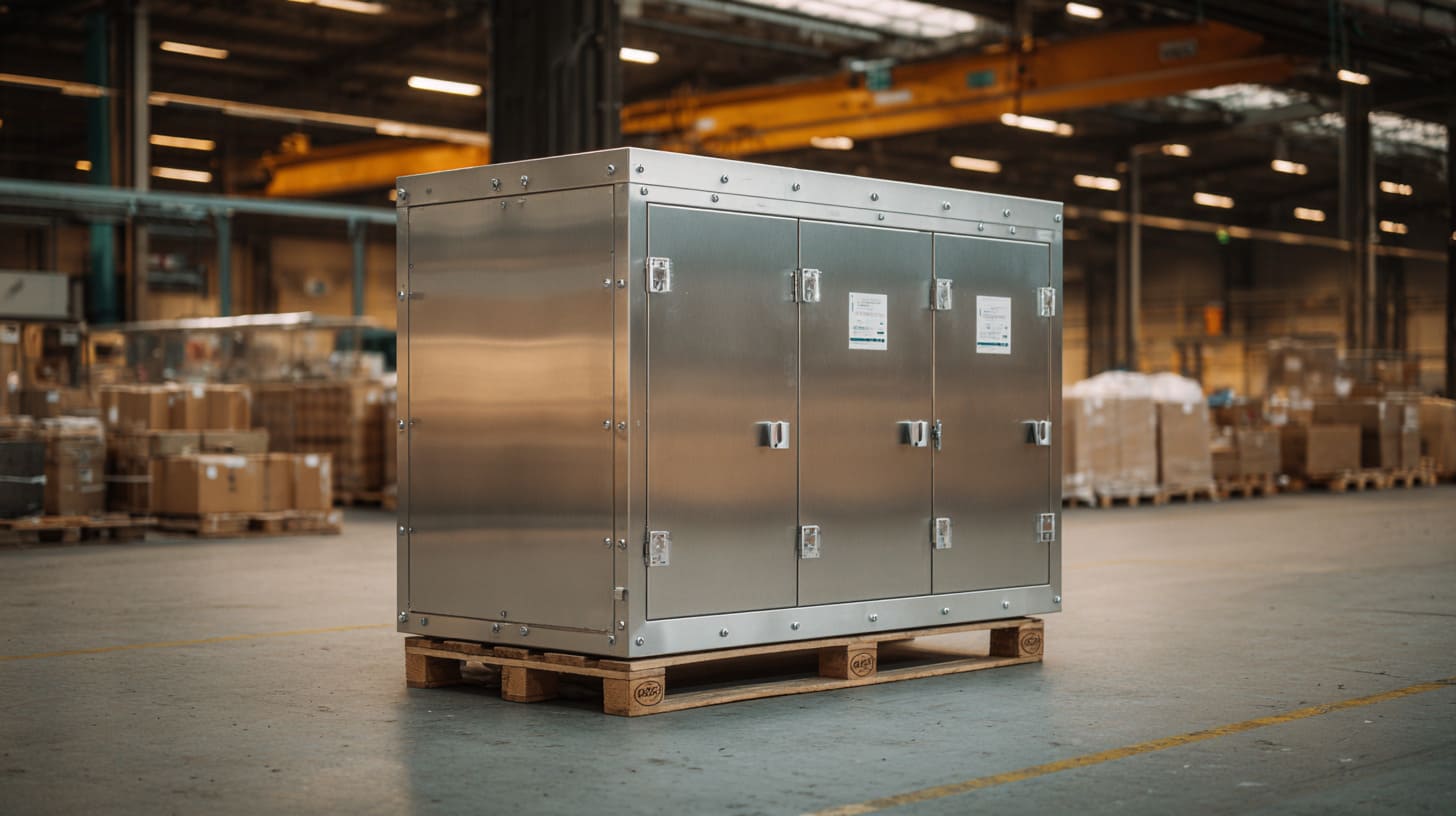
Stainless steel questions rarely come in a calm moment. They come when a project is already moving. A drawing is approved. A deadline is fixed. Then someone asks, “Are you sure this stainless steel grade is right?”
I have seen what happens when that question comes too late. Costs rise. Lead times stretch. Sometimes the enclosure looks perfect at delivery, but starts to show rust months later. That kind of problem never feels small.
Many buyers treat stainless steel as one material. Engineers know better, but even then, pressure makes people simplify. In this article, I want to slow things down. I want to explain how I think about “best” stainless steel for enclosures, based on real projects, not textbook answers.
Before we talk about grades, we need to understand why stainless steel works at all.
What Makes Stainless Steel Suitable for Enclosures
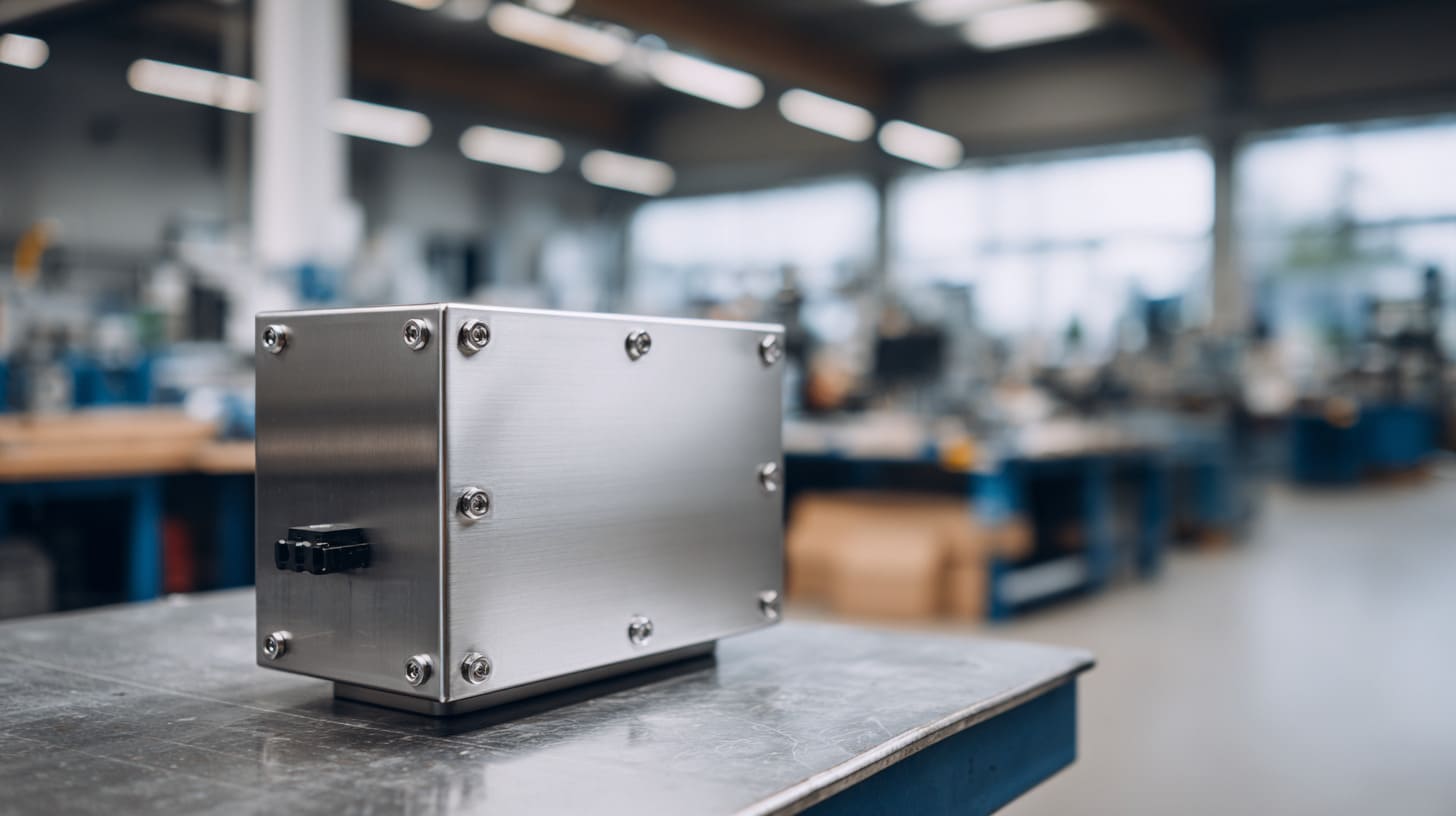
I often tell clients that stainless steel is not strong because of its name. It works because of chemistry, structure, and how it behaves in the real world.
Corrosion resistance basics
Corrosion resistance is the first reason people choose stainless steel. But it is also the most misunderstood.
- Chromium creates a thin protective layer on the surface
- Nickel improves stability and toughness
- Molybdenum boosts resistance in harsh environments
This protective layer is called a passive layer. It is invisible, but it matters more than thickness in many cases. When it is damaged, it can heal itself in normal air. That is the real value.
| Element | Main role in enclosures |
|---|---|
| Chromium | Basic corrosion protection |
| Nickel | Toughness and formability |
| Molybdenum | Resistance to salt and chemicals |
Mechanical and fabrication considerations
Strength alone is not enough. I have rejected designs that were “strong on paper” but painful to manufacture.
- Some grades bend cleanly
- Some crack at corners
- Some weld smoothly
- Some fight back during machining
This matters when you need tight tolerances or clean edges.
| Factor | Why it matters |
|---|---|
| Formability | Clean bends, fewer cracks |
| Weldability | Strong seams, less rework |
| Machinability | Faster CNC time |
Cost and availability factors
Cost is never just material price. I have seen cheaper steel delay a whole project.
- Some grades are always in stock
- Some need special sourcing
- Some increase scrap rate
| Aspect | Impact |
|---|---|
| Raw material price | Budget planning |
| Availability | Lead time control |
| Scrap risk | Hidden cost |
Once these basics are clear, grade selection starts to make sense.
Common Stainless Steel Grades Used for Enclosures
In enclosure work, I see three grades again and again. Each one has a personality.
304 stainless steel
304 is the default choice for many buyers, and for good reason.
- Balanced corrosion resistance
- Easy to form and weld
- Widely available
I use 304 for indoor enclosures, lab equipment, and clean industrial spaces.
| Property | 304 Stainless Steel |
|---|---|
| Corrosion resistance | Good |
| Cost | Medium |
| Availability | Very high |
316 stainless steel
316 adds molybdenum. That small change makes a big difference.
- Better resistance to salt
- Strong against chemicals
- Ideal for outdoor and coastal use
I recommend 316 when failure is expensive.
| Property | 316 Stainless Steel |
|---|---|
| Corrosion resistance | Excellent |
| Cost | Higher |
| Environment | Harsh |
430 stainless steel
430 is ferritic and magnetic. It surprises many buyers.
- Lower corrosion resistance
- Lower cost
- Good for indoor use
It works well when the environment is controlled.
| Property | 430 Stainless Steel |
|---|---|
| Corrosion resistance | Basic |
| Cost | Low |
| Magnetism | Yes |
Once you see these differences clearly, comparison becomes easier.
Comparing Stainless Steel Grades for Enclosure Use
This is where many decisions go wrong. People compare specs, not scenarios.
Corrosion resistance comparison
Environment matters more than thickness.
| Environment | Recommended grade |
|---|---|
| Indoor dry | 430 / 304 |
| Outdoor | 304 |
| Coastal / chemical | 316 |
Strength and durability comparison
Strength is not just about impact.
- Thickness can compensate for strength
- Poor corrosion ruins strength over time
| Grade | Durability over time |
|---|---|
| 430 | Moderate |
| 304 | Strong |
| 316 | Very strong |
Fabrication and finishing comparison
Finishing quality affects perception.
| Process | 430 | 304 | 316 |
|---|---|---|---|
| CNC machining | Fair | Good | Good |
| Brushing | Fair | Excellent | Excellent |
| Polishing | Limited | High | High |
Now the real question appears: how do you choose?
How to Choose the Best Stainless Steel for Your Enclosure
I never start with grade. I start with use.
Based on application environment
- Indoor electronics cabinets → 304 or 430
- Outdoor equipment → 304
- Chemical or coastal → 316
Based on budget and lifecycle cost
Cheap material often costs more later.
| Choice | Short-term cost | Long-term risk |
|---|---|---|
| 430 | Low | Medium |
| 304 | Medium | Low |
| 316 | High | Very low |
Based on customization and production needs
OEM and ODM projects need flexibility.
- Logo engraving
- Clean surface finish
- Stable welding
304 and 316 make life easier here.
Still, stainless steel is not always the answer.
Stainless Steel vs. Other Enclosure Materials
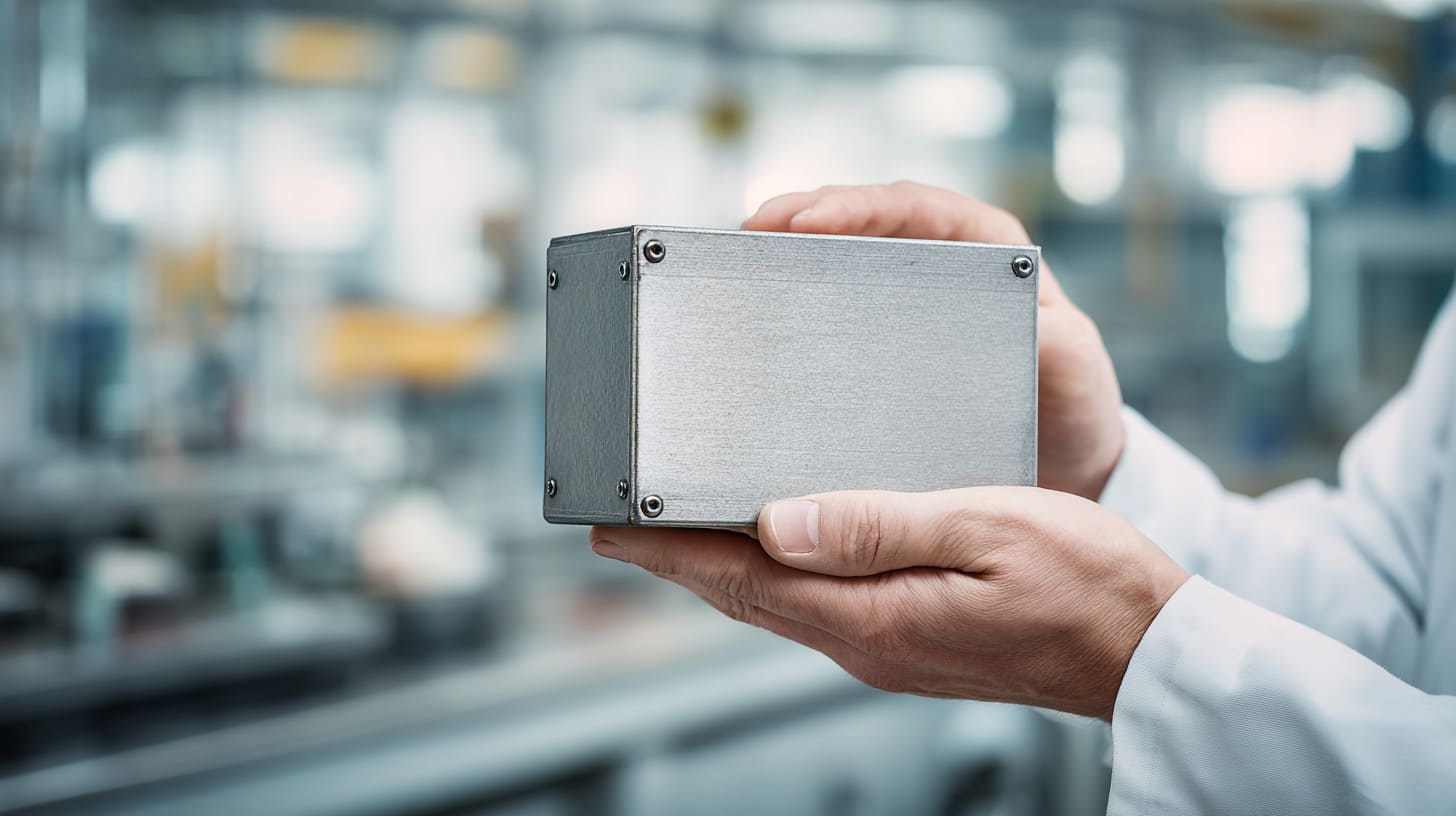
I often help clients step back and rethink material choice.
Stainless steel vs. aluminum enclosures
| Factor | Stainless steel | Aluminum |
|---|---|---|
| Weight | Heavy | Light |
| Corrosion | Excellent | Good |
| Cost | Higher | Lower |
Aluminum wins when weight matters.
Stainless steel vs. painted carbon steel
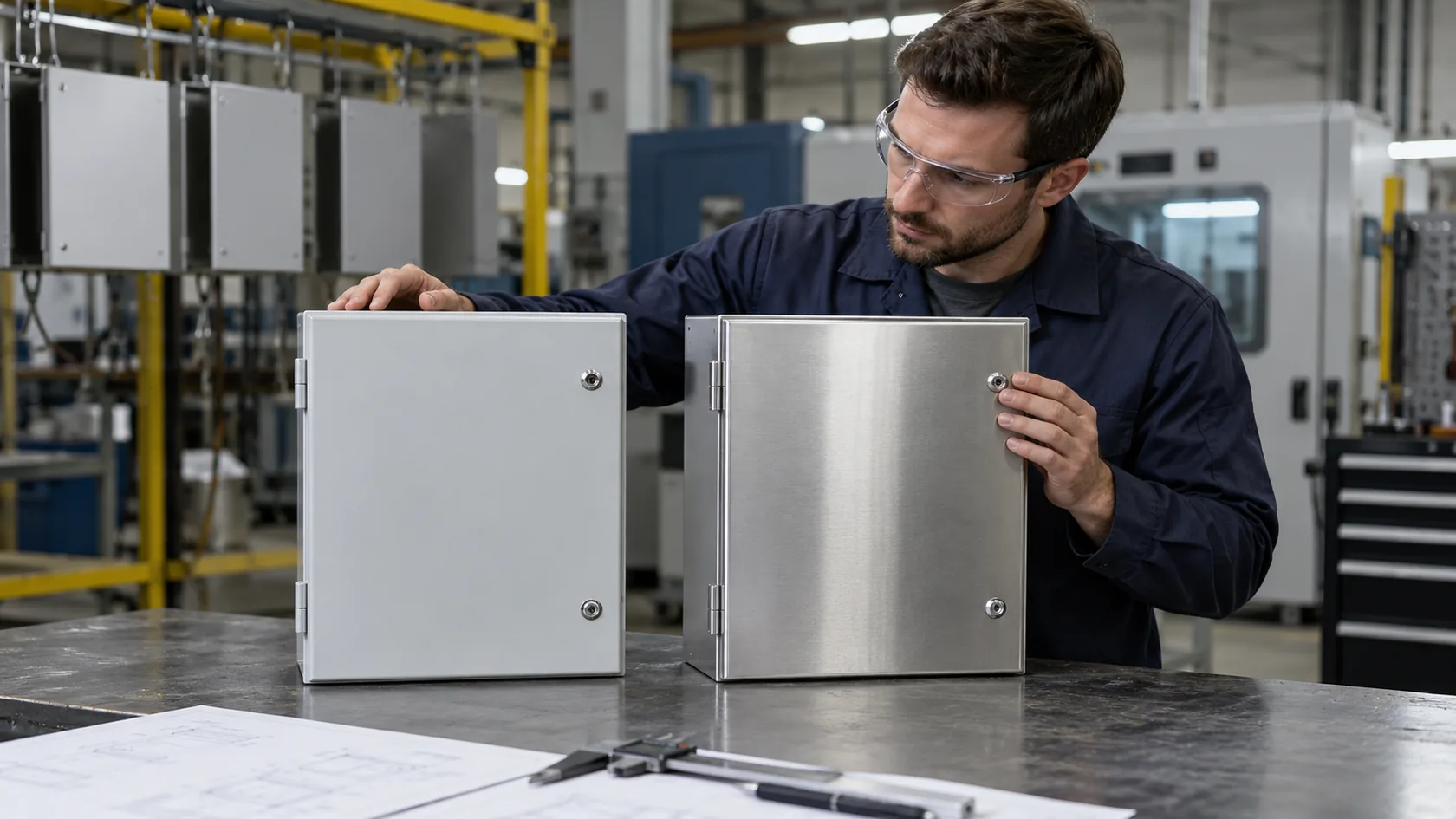
Paint hides problems. Stainless avoids them.
| Factor | Stainless | Painted steel |
|---|---|---|
| Maintenance | Low | High |
| Durability | High | Medium |
| Long-term cost | Lower | Higher |
Experience teaches these lessons the hard way.
Practical Advice from Enclosure Manufacturing Projects
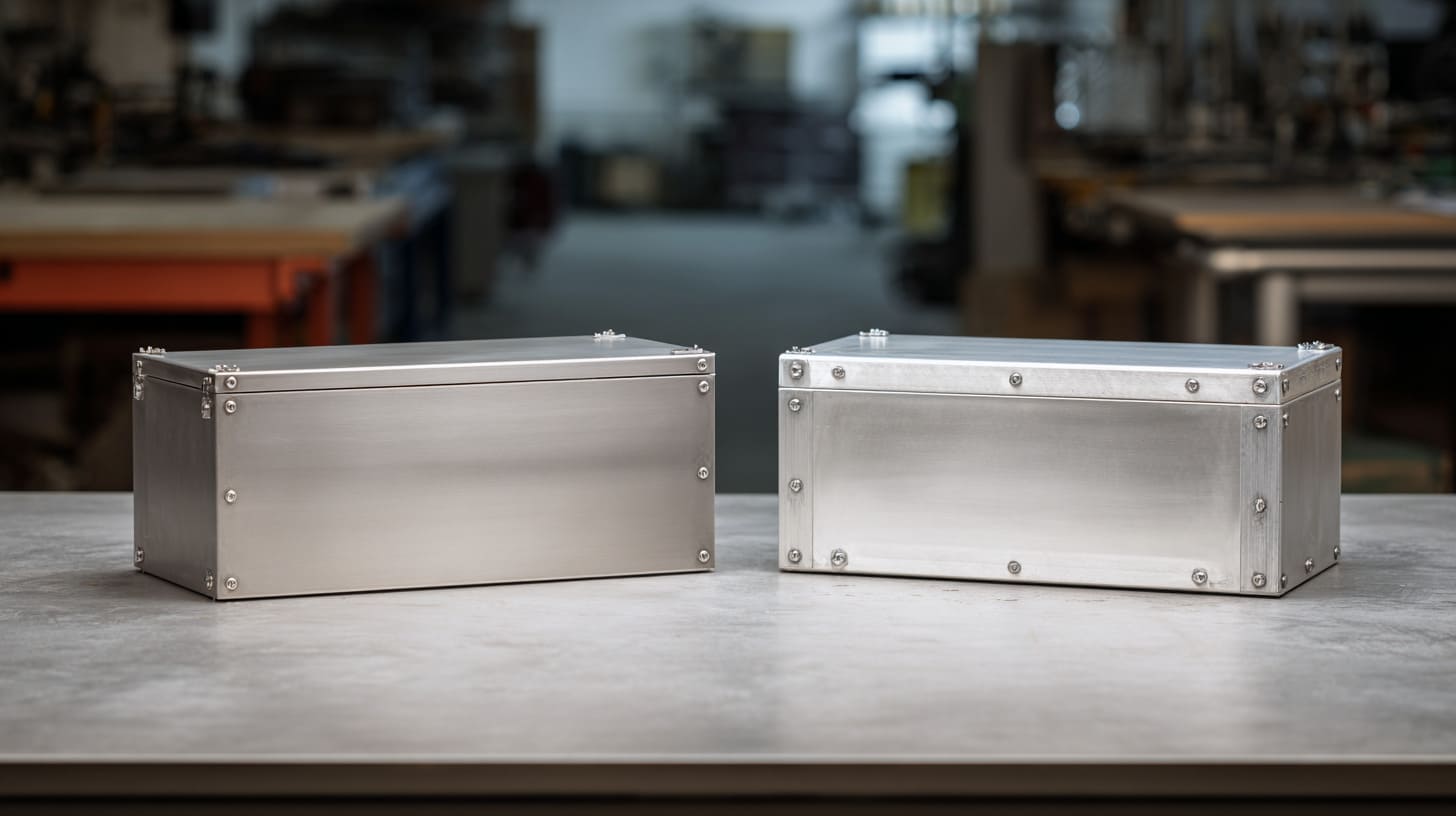
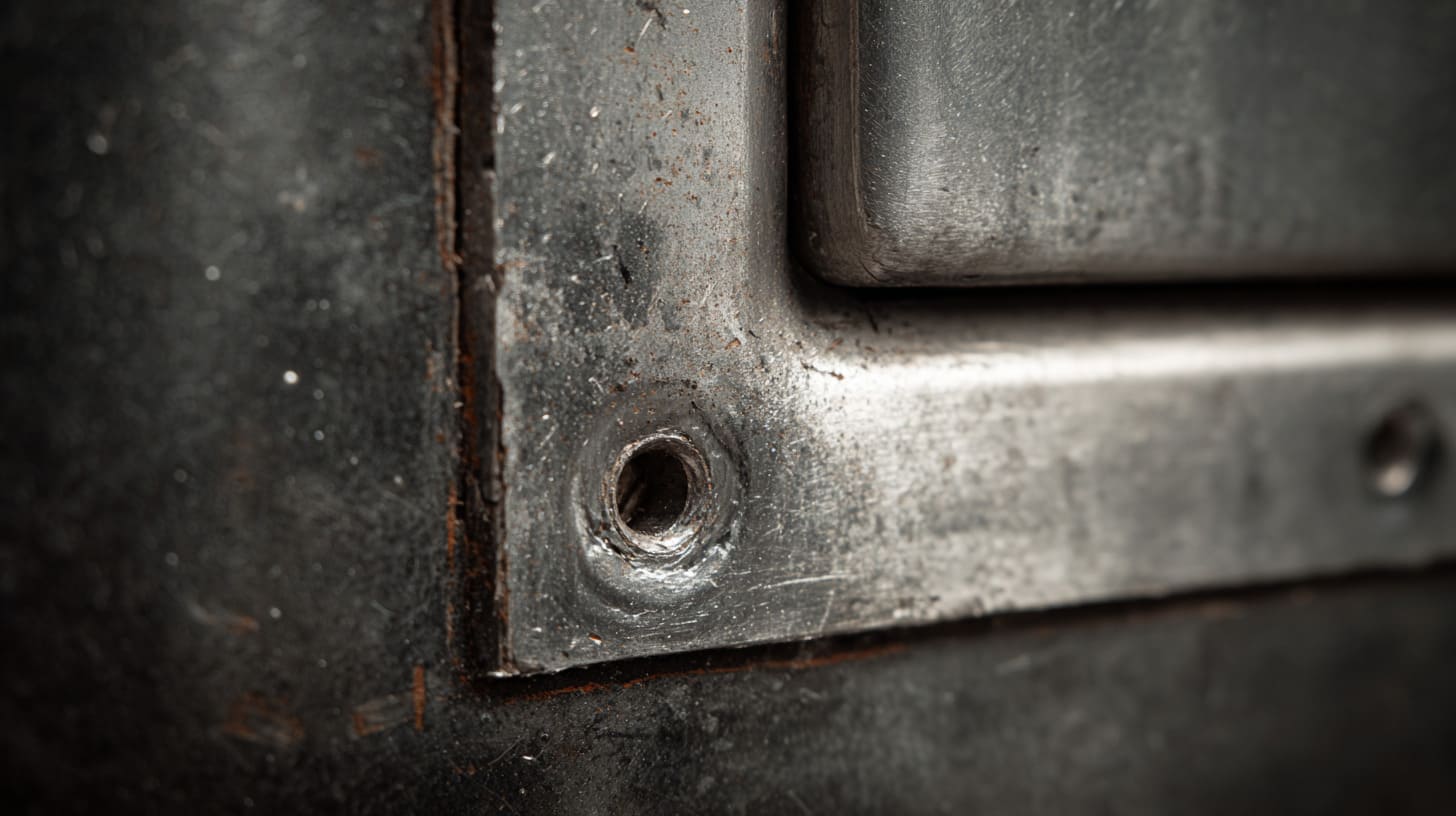
I have seen enclosures fail quietly.
Lessons from failed material choices
- Rust under gaskets
- Deformation after welding
- Extra cost after redesign
Each problem started with a “small” decision.
What experienced buyers and engineers prioritize
- Clear specs
- Honest environment description
- Balance, not perfection
That mindset saves time and trust.
Conclusion
There is no single best stainless steel for all enclosures. 304, 316, and 430 all have a place. The right choice depends on environment, cost, and how the enclosure will live its life.
When buyers talk to me early, we avoid stress later. If you are planning a custom enclosure and want a clear answer, not a sales pitch, feel free to reach out. A short conversation now can save months later.