Skip to content
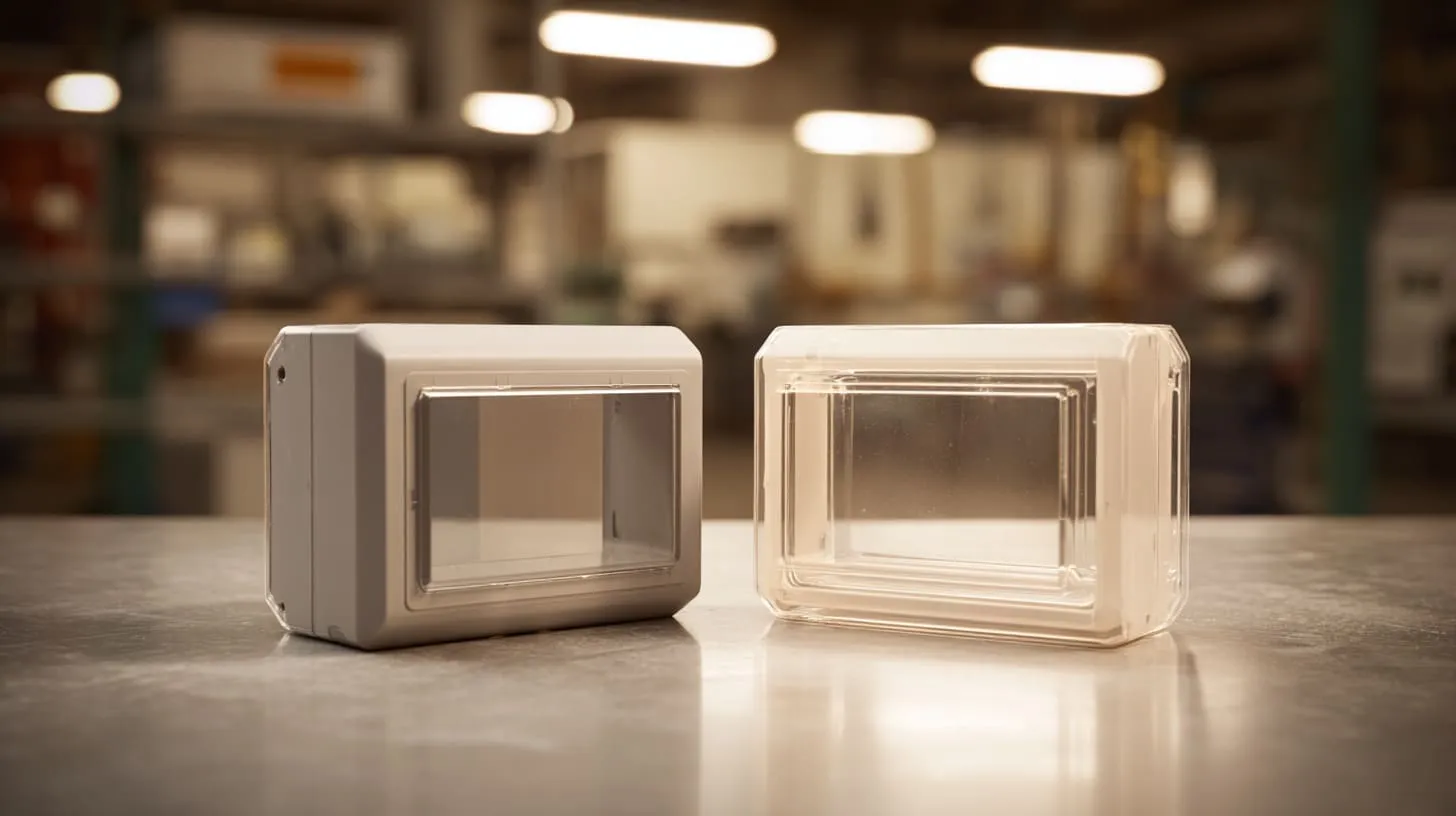
The moment ABS and polycarbonate show up in the same email, I already know how the conversation will go.
Someone will point at the price difference. Someone else will say, “The enclosure is simple.” And someone will suggest that plastic is the fastest place to save money. On paper, it looks clean. ABS costs less. Polycarbonate costs more. Decision made.
Except it rarely ends there.
In real enclosure projects, plastic is not just a shell. It carries screw stress. It absorbs impact during shipping. It sits next to heat. It survives being opened, closed, dropped, and sometimes abused by people who never saw the original design assumptions.
This is why I see projects go over budget after choosing the cheaper plastic. Not because ABS is wrong, but because the decision was made too early and judged too narrowly.
I write this for OEM buyers, product engineers, and enclosure decision-makers like Davide in Finland, or re-brand buyers like Jackson in Belgium and Germany. If your product ships, installs, or lives longer than a demo phase, the ABS vs polycarbonate choice deserves more thought than a unit price comparison.
When I look at this decision in real work, I don’t ask which plastic is cheaper. I ask which plastic will cause the first serious problem once the enclosure leaves the factory.
What Most Buyers Think the Cost Difference Is
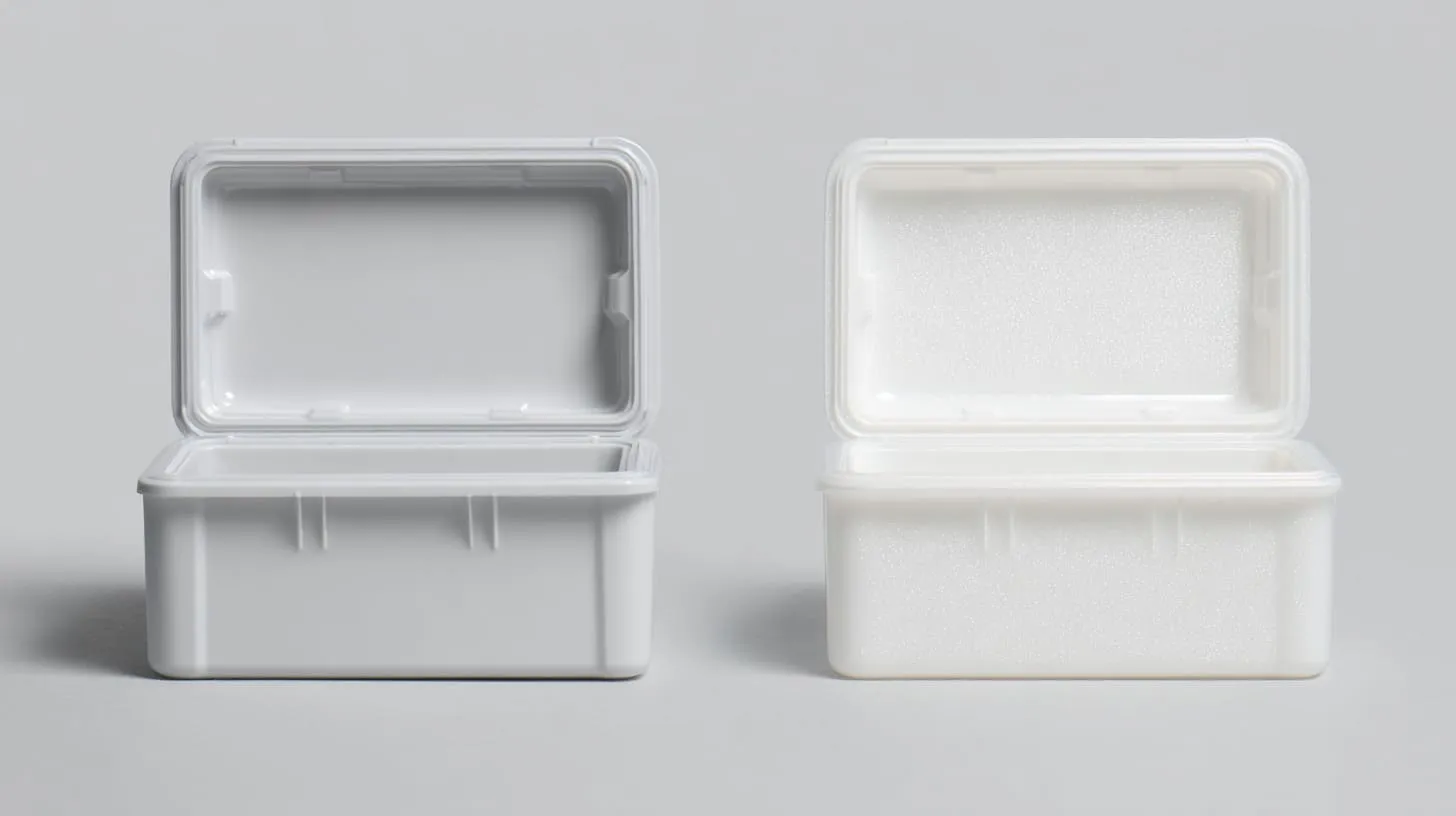
A lot of buyers treat ABS and polycarbonate like two buttons:
- ABS = cheaper, good enough
- PC (polycarbonate) = stronger, expensive, maybe overkill
That idea is not crazy. It just becomes dangerous when the enclosure touches real life.
Here is the pattern I see:
- The project is new.
- The use case feels “indoor.”
- The team wants a fast decision.
- The buyer looks at resin cost and chooses ABS.
Then the project hits heat, drops, screws, and shipping shocks. That is where the bill starts to grow.
The decision point that I watch most closely is this: If a buyer cannot describe the worst day of the product’s life, I assume that day will happen, and I pick the safer material.
ABS as the “budget-friendly default”
ABS is popular for a reason. ABS molds well. ABS looks clean. ABS feels solid in the hand. And yes, ABS is often cheaper.
But “cheaper” is only the first line on the spreadsheet.
Common perception of ABS pricing
- Buyers see ABS as the standard plastic for consumer electronics housings.
- Many suppliers quote ABS first because it fits many normal indoor use cases.
- Many factories have stable ABS supply and stable process settings.
Why ABS is often quoted first by factories and distributors
- Factories can run ABS with fewer surprises in normal conditions.
- ABS often has shorter lead time because suppliers keep it in common colors.
- ABS often needs less drying control than PC, so some factories feel safer offering ABS quickly.
Here is a quick table I use when I talk with buyers who only want the “cost picture.”
| What buyers often compare | What they should also compare |
|---|---|
| Resin price per kg | Redesign risk after testing |
| Quoted part price | Failure cost after shipping |
| Mold cost today | Mold changes next month |
| “Indoor use” claim | Heat, cleaners, drop, and packaging reality |
Polycarbonate gets labeled as the “premium plastic,” and that label creates a mental problem.
Buyers sometimes think:
- “PC is for helmets and safety gear.”
- “PC is too strong for a simple box.”
- “PC is a luxury choice.”
But PC is not a luxury in many enclosure projects. PC is often a way to buy certainty.
How PC gets labeled as overkill
- Buyers focus on strength and think strength is the only reason to pay more.
- Teams ignore heat, screw stress, and drop behavior because these do not show up on day one.
- People assume “ABS works for other products, so it will work for mine.”
The psychological gap between material price and perceived value
If a buyer sees ABS at $X and PC at $X+something, the buyer feels the pain immediately. But the buyer does not feel:
- the cost of 2 weeks delay,
- the cost of a mold revision,
- the cost of warranty replacement,
- the cost of bad reviews.
That “invisible” cost is the real trap.
Now, here is the part nobody loves: datasheets.
The next section is where most teams get false confidence.
What the Material Datasheets Don’t Tell You
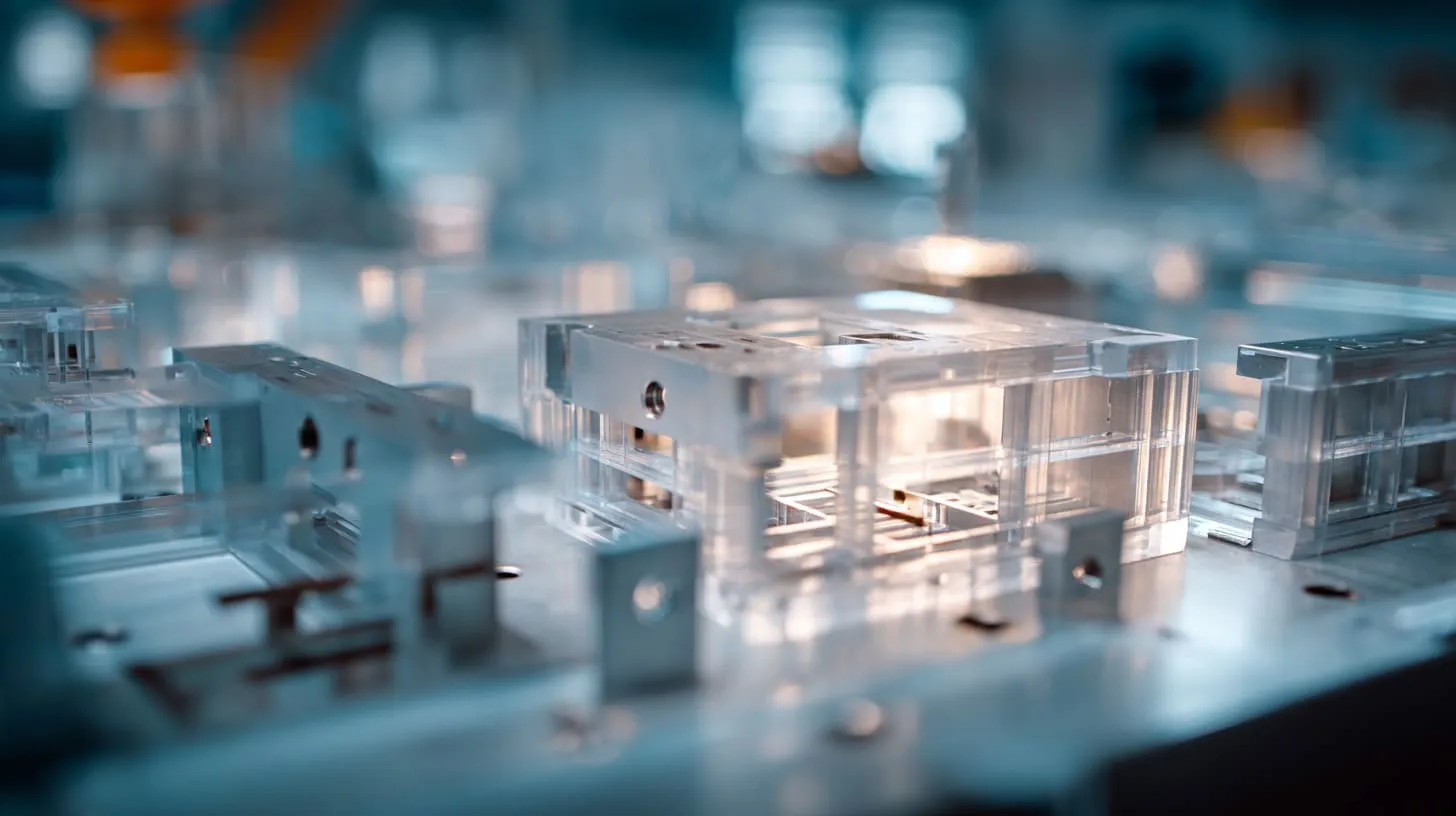
Datasheets are useful. I read them. I use them.
But datasheets are like a passport photo. They show a clean version of reality. They do not show:
- your rib design,
- your screw choice,
- your boss wall thickness,
- your drop height,
- your packaging,
- your shipping route,
- your user behavior.
A sentence I say to myself before I trust a datasheet is this: I only believe a property when I can connect it to a real failure mode in the enclosure.
Mechanical behavior under real-world stress
ABS can feel strong in the hand. PC can feel similar in the hand. But impact behavior is not the same.
Impact resistance vs brittle failure
- ABS can crack when impact hits a sharp corner or a thin boss area.
- PC usually absorbs impact better, so it cracks less in the same design.
Deformation, cracking, and long-term fatigue
Fatigue sounds like a big word, so I keep it simple: repeated stress makes plastic tired.
- ABS can develop cracks around screws and clips after repeated load.
- PC often holds up better when the product gets opened, closed, and tightened many times.
Here is a practical view:
| Real stress event | What ABS often does | What PC often does | Why it matters |
|---|---|---|---|
| Drop on corner | Cracks at corner or boss | Bends more, cracks less | Corner cracks look like “quality failure” |
| Screw tightened too hard | Boss splits | Boss survives longer | Assembly mistakes happen |
| Clip flexed many times | Clip turns white, then breaks | Clip lasts longer | Service teams hate broken clips |
Temperature and heat exposure limits
Many “indoor” products still see heat. They sit near power supplies. They sit in cars. They sit in warm warehouses. They sit next to motors.
ABS softening points in electronics enclosures
ABS can soften sooner than people expect. Softening does not always mean “melting.” It can mean:
- bosses deform,
- snap fits lose bite,
- covers warp a little,
- gaps show up.
Those “small” changes become:
- loose fit,
- rattling noise,
- poor seal contact,
- customer complaints.
Polycarbonate performance near heat sources
PC usually keeps shape better in higher heat. That extra margin can protect you when the real environment is hotter than the plan.
Here is the question I ask buyers when they say “indoor use”:
- “Will the product ever sit in a car trunk, a shipping container, or near a power supply?”
If the answer is “maybe,” PC starts to look less expensive.
Aging, UV, and environmental exposure
Most products do not live in lab conditions. People put enclosures near windows, near doors, near cleaning sprays, and near sunlight.
Color change, getting brittle, and surface degradation
- Some ABS grades can age faster and become more brittle over time.
- PC can also yellow in UV if it is not the right grade, so PC is not magic.
- Both materials need the right grade if sunlight is real.
Indoor vs semi-outdoor assumptions buyers overlook
I see this mistake a lot:
- A buyer says “indoor.”
- The end user installs near a window or near a door.
- Sunlight hits every day.
- The part ages faster than expected.
So I do not accept “indoor” as a safe word. I ask “where indoor?”
To keep it simple, I use this checklist:
| Environment detail | Why it changes the plastic choice |
|---|---|
| Near window sunlight | UV aging can speed up |
| Near heat source | Warping and stress cracks can show up |
| Near cleaning chemicals | Stress cracking risk grows |
| Near vibration | Screws and clips get tired faster |
Now we can talk about the real reason ABS becomes expensive.
The Real Cost Traps Hidden Behind ABS
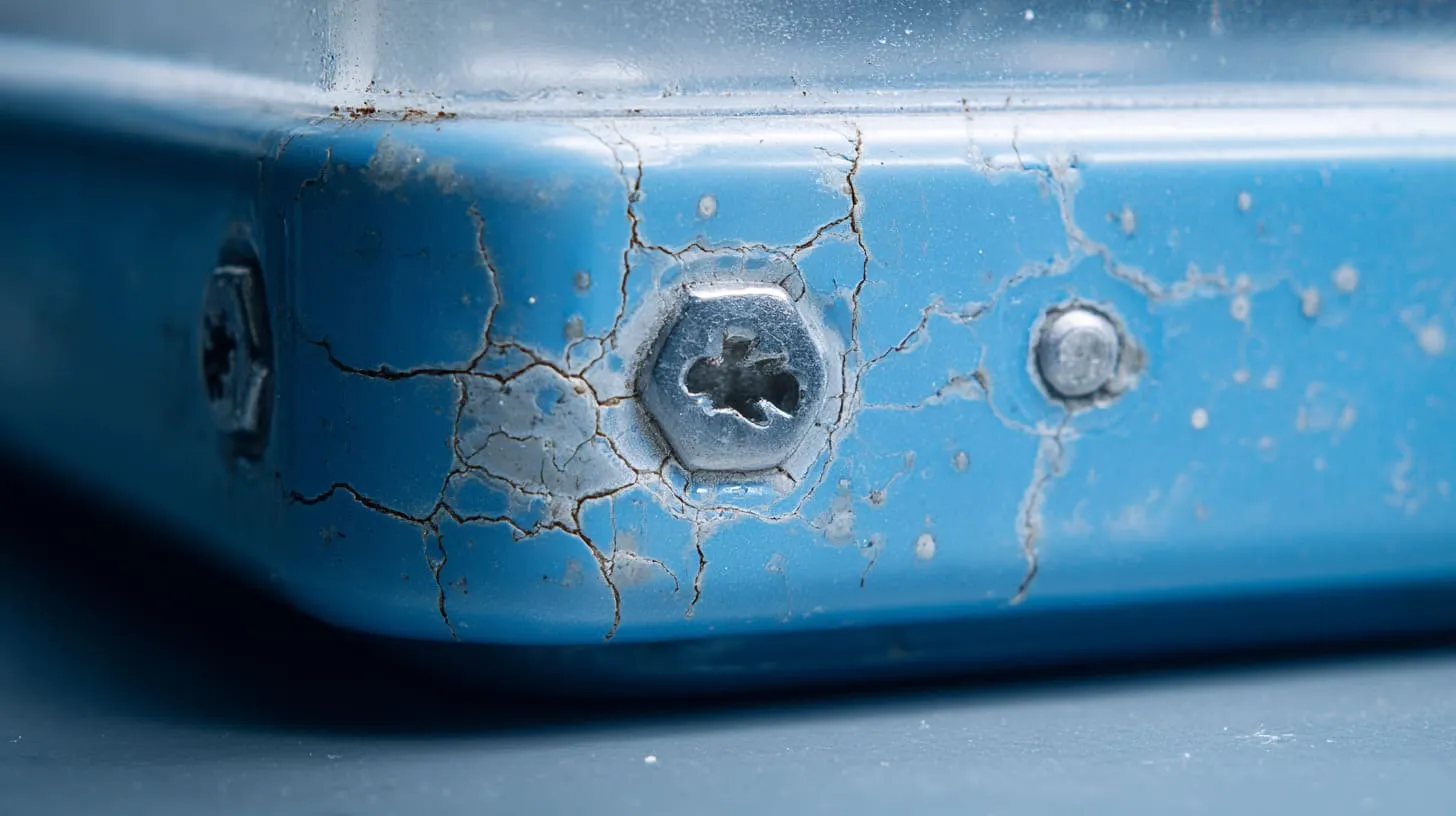
I want to say this clearly: ABS is not “bad.” ABS is often the right choice.
But ABS becomes a trap when the team picks it for the wrong reason: “It is cheaper.”
The cost trap is not the material. The cost trap is what you have to do around that material to make it survive.
When I review a project that wants ABS, I usually ask myself one tough question: If this enclosure fails in the field, will the buyer blame the plastic or blame the supplier?
Because the blame often becomes a business cost, not just a technical cost.
Redesign and reinforcement costs
ABS often needs help to survive the same abuse.
Thicker walls, ribs, and added structure
To keep ABS safe, designers may add:
- thicker walls,
- more ribs,
- stronger bosses,
- larger fillets.
That sounds small, but it can trigger:
- weight increase,
- size increase,
- mold change,
- cooling time change,
- cycle time change.
Mold and CNC changes after testing failures
This is where the “cheap” choice bites.
A common chain looks like this:
- Team chooses ABS to save cost.
- Testing shows cracking near screws.
- Team asks for bigger bosses and ribs.
- Mold needs modification.
- Project schedule slips.
- Total cost grows.
Here is a table that shows the hidden cost pattern.
| ABS problem trigger | What you see first | What it turns into | What you pay for |
|---|---|---|---|
| Thin boss walls | Small hairline crack | Boss split in assembly | Mold revision + scrap |
| Sharp corner | Corner crack after drop | Returns or warranty | Replacement + shipping |
| Tight snap fit | White marks and stress | Clip breaks later | Redesign + rework |
| Heat exposure | Slight warping | Gaps and loose fit | Tool change + delay |
Higher rejection and warranty risk
ABS can crack at weak spots. And weak spots always exist because real designs have constraints.
Cracking during shipping or installation
Shipping damage is a silent killer. Parts can crack inside cartons and nobody notices until assembly.
Then the factory sees:
- higher rejection,
- more sorting,
- more urgent messages,
- more blame.
Customer complaints and replacement cycles
If you sell online, small failure rates become loud. A few broken units can create:
- bad reviews,
- support tickets,
- lost listings,
- lost customer trust.
And yes, that is money.
Shorter product lifecycle
Some products have a short life. ABS can be perfect there.
But many products live longer than the team expects. Even “training products” get abused.
When “good enough” fails after one season or one project phase
I have seen this exact story:
- Buyer says “It is only for trial.”
- Customers like it.
- Buyer scales up.
- The same part now gets used harder.
- Failures show up in the second batch.
Then the buyer needs a fast fix, and fast fixes are rarely cheap.
If ABS can create this chain, you might ask: “So should I always choose PC?”
Not always. But PC has a quiet way of reducing risk that buyers do not see on the quote.
Where Polycarbonate Quietly Saves Money
Polycarbonate often costs more per kg, and many buyers stop thinking right there.
But PC can reduce other costs that feel “separate,” even though they are part of the same project.
A thought I use when I see a PC quote is this: I treat PC as an insurance fee against redesign and field failure, and I compare it to the cost of one schedule slip.
Reduced design compromises
Thinner walls with higher strength
PC can allow:
- thinner walls,
- fewer ribs,
- smaller reinforcements.
That can help:
- keep the part compact,
- keep mold design simpler,
- keep assembly smoother.
Fewer structural add-ons
When a design needs fewer add-ons, it often needs:
- fewer mold changes,
- fewer “patch fixes,”
- fewer last-minute compromises.
Here is a simple way to see it:
| Design area | ABS often needs | PC often allows |
|---|---|---|
| Boss strength | Thicker boss + ribs | Cleaner boss design |
| Corner drop | Larger fillet + thicker walls | More impact margin |
| Snap fit | Softer geometry to avoid cracks | Stronger snap with less fear |
Better tolerance for unknown use cases
Unknown use cases are normal in real business. Buyers do not always know where the end user will install.
Safety margin when end-use conditions are unclear
PC gives you margin when:
- the product gets dropped more,
- the product gets tightened too hard,
- the product sits near heat,
- the product gets shipped far.
Why PC protects projects from spec creep
Spec creep happens when:
- the customer adds “light outdoor exposure,”
- the customer adds “higher temp,”
- the customer adds “better durability.”
If you already chose PC, you might survive those changes without redesign.
Lower long-term ownership cost
Fewer field failures
Field failures cost money and time. They also cost trust.
More stable performance across batches
When materials behave more predictably, the project feels calmer. Buyers can focus on sales instead of damage control.
Now, I am not going to act like PC is always the right answer.
ABS can be the best choice when you use it with discipline.
ABS Is Not a Bad Choice—If You Use It Correctly
ABS is a workhorse. Many products succeed with ABS for years.
The problem is not ABS. The problem is the lazy reason for choosing ABS: “It is cheaper.”
A rule I follow when I approve ABS is this: I only say yes to ABS when I can list the limits of the product, and I can enforce those limits in design and packaging.
Scenarios where ABS truly makes sense
Indoor, low-impact, cost-driven applications
ABS can be a great choice if:
- the product stays indoors,
- the product does not see high heat,
- the product does not get dropped often,
- the product has stable assembly conditions.
Short lifecycle or disposable products
If the product is meant to be replaced often, ABS can fit the business model.
Here is a quick scenario guide:
| Use case | ABS fit | PC fit | My reason |
|---|---|---|---|
| Office device, stable temp | Strong | Also strong | ABS can be enough |
| Consumer device, high shipping | Risky | Strong | PC reduces shipping cracks |
| Near power supply or heat | Risky | Strong | PC keeps shape better |
| Outdoor or sun exposure | Grade-dependent | Grade-dependent | Both need UV planning |
Design rules that keep ABS safe
ABS works best when the design respects ABS behavior.
Thickness guidelines
- ABS often needs enough wall thickness to avoid cracking at stress points.
- ABS often benefits from smooth transitions and good fillets.
Mounting and fastening considerations
Screws create stress. Bosses carry stress. That is where ABS often fails.
I like to review these points:
- boss wall thickness,
- screw type,
- torque limit,
- insert choice (if any),
- rib support.
Here is a practical design table.
| Design element | What can go wrong in ABS | Safer approach |
|---|---|---|
| Screw boss | Split boss | Add ribs, increase boss wall, manage torque |
| Sharp internal corner | Stress crack | Add radius, reduce stress concentration |
| Snap fit | Clip breaks later | Reduce stress, widen snap, control flex |
| Thin wall near opening | Crack at drop | Add local thickness or reinforcement |
How to avoid “false savings” with ABS
The best tool is not a material. The best tool is a question.
Here are questions I ask buyers before locking ABS:
- “What is the maximum drop height you expect?”
- “Who installs it, and how careful are they?”
- “Does anyone open the enclosure often?”
- “What is the highest temperature near the enclosure?”
- “How far do you ship, and how rough is the route?”
If the buyer cannot answer most of these, ABS becomes a guess. And guesses are where costs hide.
After you tighten ABS discipline, the next step is decision-making style.
Experienced buyers do not pick materials like a shopping cart. They pick materials like a risk manager.
How Experienced Buyers Decide Between ABS and PC
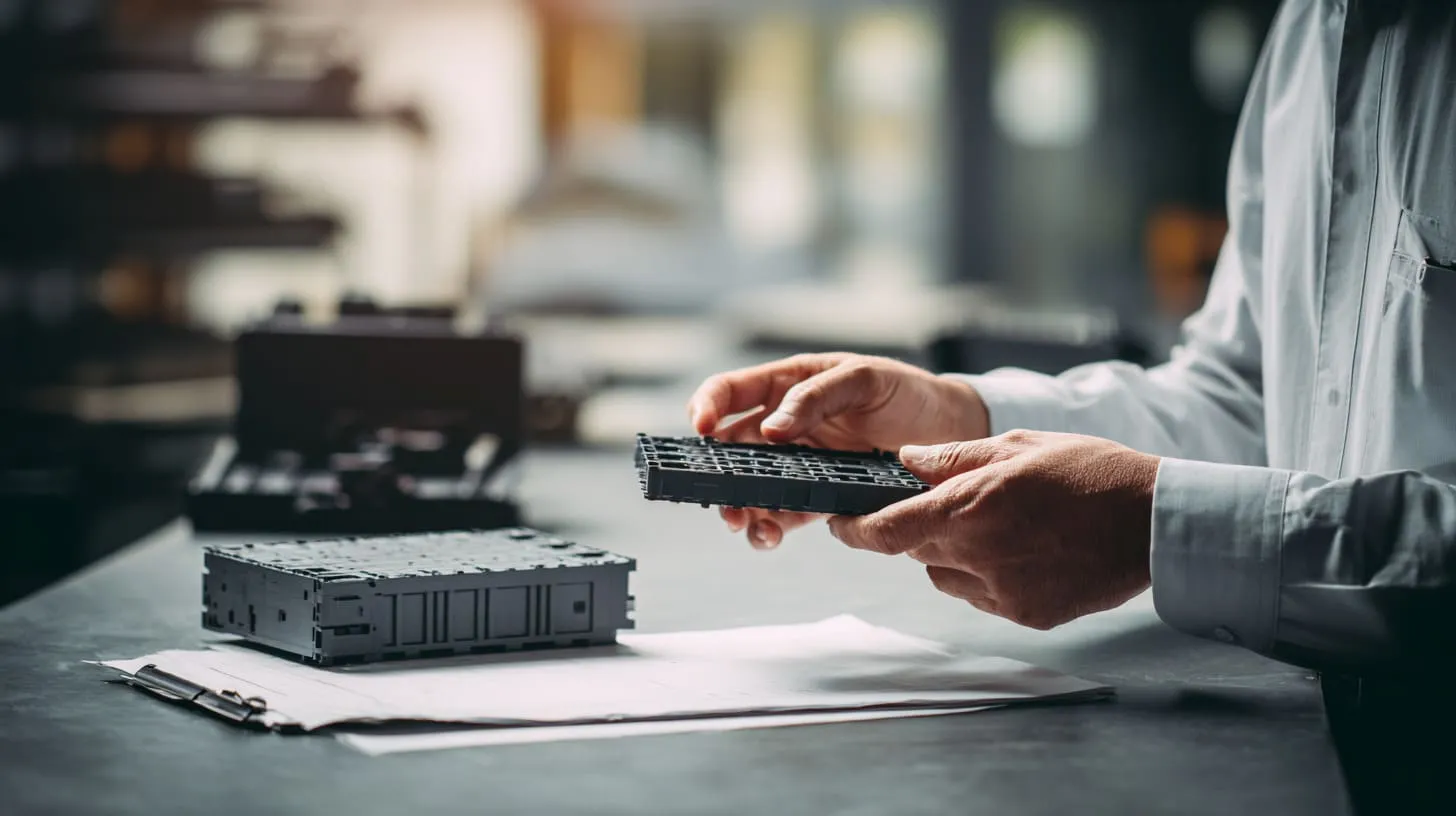
I can often tell if a buyer is experienced by the first question they ask.
New buyers ask: “Which one is cheaper?”
Experienced buyers ask: “Which one will reduce surprises?”
A decision habit that saves projects is this: I do not ask “Which plastic is better?” I ask “Which plastic makes the worst failure less likely?”
Risk-based material selection
Cost vs consequence thinking
A small cost increase is fine if it prevents a big consequence.
I ask buyers to list consequences like:
- schedule slip,
- warranty returns,
- bad reviews,
- rework time,
- customer trust loss.
Then we compare those to the extra cost of PC.
Here is a simple decision matrix.
| If this failure happens… | The project impact is… | Material choice pressure |
|---|---|---|
| One unit cracks in shipping | Medium | PC helps |
| Many units crack at assembly | High | PC helps a lot |
| Slight warp near heat | Medium to high | PC helps |
| Cosmetic scratch only | Low | ABS can be fine |
Application-first, not price-first decisions
Matching material behavior to real usage
I like to map the “life path” of a product:
- Factory assembly
- Packaging
- Shipping
- Customer unboxing
- Installation
- Long-term use
- Repairs or opening
Then I ask where the stress is highest.
If stress is highest in shipping and installation, PC often wins because those events are messy.
Supplier communication mistakes to avoid
This is where many buyers lose time, especially across time zones.
Vague requirements that lead to wrong material quotes
A buyer might say:
- “indoor use”
- “normal temp”
- “safe material”
- “strong plastic”
Those words are too soft. They create confusion.
I prefer buyers send:
- temperature range,
- drop expectation,
- assembly method,
- screw type,
- end user environment,
- packaging plan.
Here is a communication table I share with buyers like Jackson:
| Buyer message | Why it causes trouble | Better message |
|---|---|---|
| “Indoor use” | Indoor can still be hot or sunny | “Indoor, near window, max 45°C” |
| “Strong plastic” | Strength means different things | “Must survive 1m drop on corner” |
| “Standard screws” | Screw style changes stress | “M3 self-tapping, torque limit X” |
| “Normal shipping” | Shipping can be rough | “Air + last-mile delivery, carton drop risk” |
At this point, you might want a clean comparison that does not feel like a textbook.
So I will give you the kind of table I would want if I were the buyer trying to decide fast.
ABS vs Polycarbonate: A Practical Comparison Table
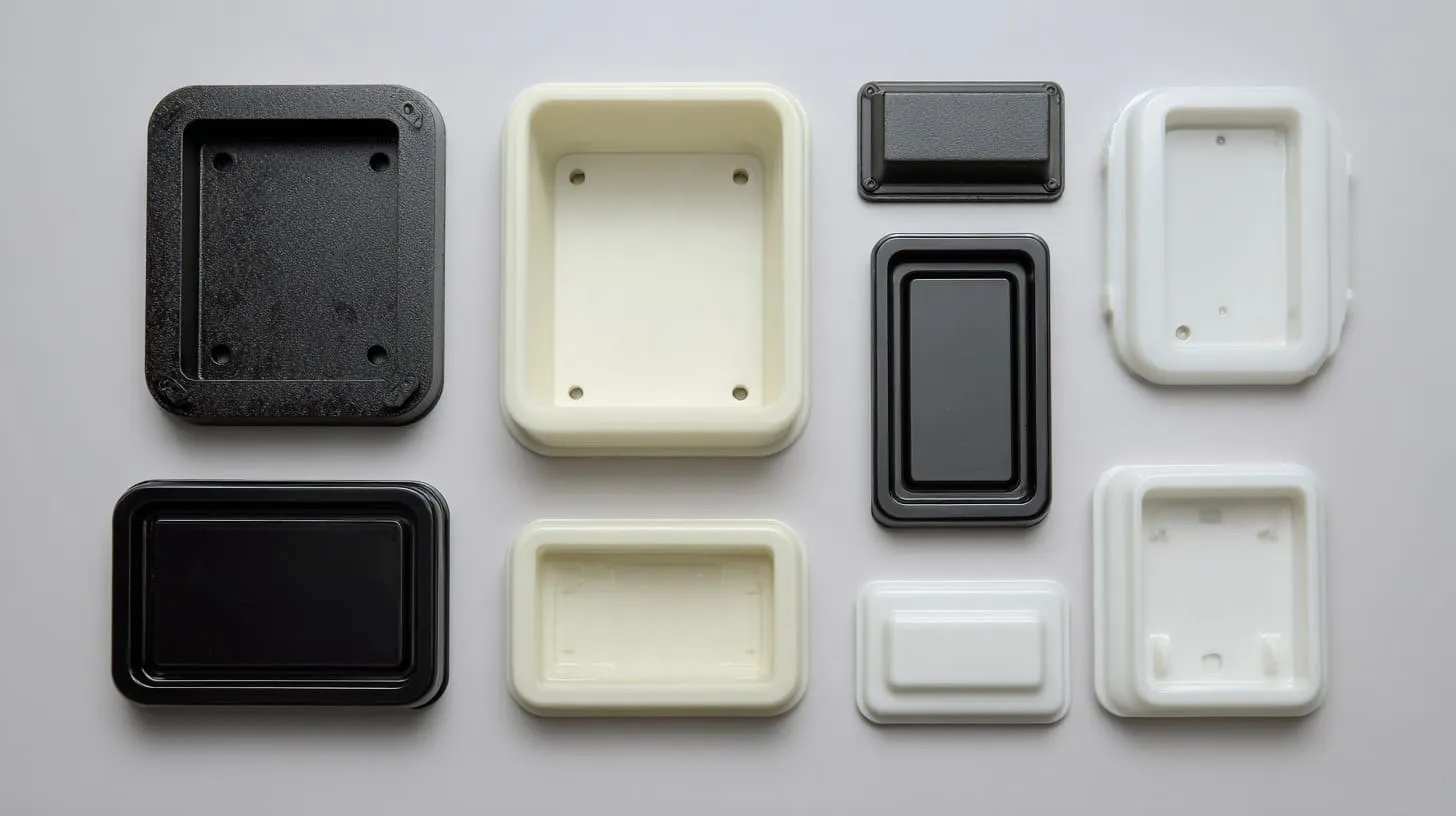
I like tables because tables stop people from arguing with feelings.
A judgment I use before I send a quote is this: If the project has unknown handling or unknown temperature, I lean to PC because it buys me breathing room when reality gets messy.
Key performance and cost factors side by side
| Factor | ABS (common reality) | PC (common reality) | What it means for buyers |
|---|---|---|---|
| Resin cost | Lower | Higher | Material line item changes fast |
| Impact behavior | Can crack at weak points | Usually absorbs impact better | Shipping and drops matter |
| Heat tolerance | Lower margin | Higher margin | Warping risk changes |
| Screw boss durability | More sensitive | More forgiving | Assembly mistakes happen |
| Snap fit durability | More sensitive | Often stronger | Service life changes |
| UV behavior | Grade-dependent | Grade-dependent | You must pick the right grade |
| Redesign risk | Higher if use case is unclear | Lower because margin is higher | Schedule protection matters |
| Total project cost | Can rise from fixes | Can stay stable | Buyers feel this later |
And here is the “hidden cost” view that most buyers do not write down.
| Hidden cost item | ABS risk | PC risk | Why it matters |
|---|---|---|---|
| Mold revision after testing | Medium to high | Lower | Revisions eat time |
| Assembly scrap | Medium | Lower | Scrap kills margins |
| Warranty replacement | Medium | Lower | Bad reviews hurt |
| Emergency air shipment | Higher chance | Lower chance | Delays force expensive shipping |
If you read that table and think “I need a simple rule,” I get it.
But I also want you to leave with the right mindset, not a lazy shortcut.
So I will close this with how I personally think about it, and what I want buyers to do next.
Conclusion
ABS vs polycarbonate looks like a cost question, but I have learned it is really a risk question.
I believe the cheapest plastic often becomes the most expensive decision because the project does not pay the real bill at the material line. The project pays the bill later:
- when a boss splits,
- when a corner cracks in shipping,
- when heat warps the fit,
- when the mold needs a change,
- when the schedule slips and everyone panics.
I do not think this way because a datasheet told me to. I think this way because I have watched buyers try to “save $0.30” and then spend weeks fixing problems that cost thousands. I have also watched smart buyers pay a little more for the right plastic and then enjoy a calm project with fewer late-night messages.
My decision logic is simple, and it comes from real work: When I sense that the use case is unclear, I choose the material that reduces surprises, even if it looks more expensive on the first quote.
If you want to escape the ABS vs PC cost trap, you can do one small thing that changes everything: stop asking “Which one is cheaper?” and start asking “Where will it fail first?”
If you want, you can send me your enclosure use case and CAD notes, and I will help you judge it the same way I do in factory work:
- your heat exposure,
- your drop and shipping risk,
- your screw and boss design,
- your expected lifecycle,
- your real environment.
You can reach me at info@maidatech.com, and you can also find our custom enclosure work at maidatechenclosure.com. I will give you a straight answer, even if it means I tell you not to choose the plastic you came in with.