Skip to content
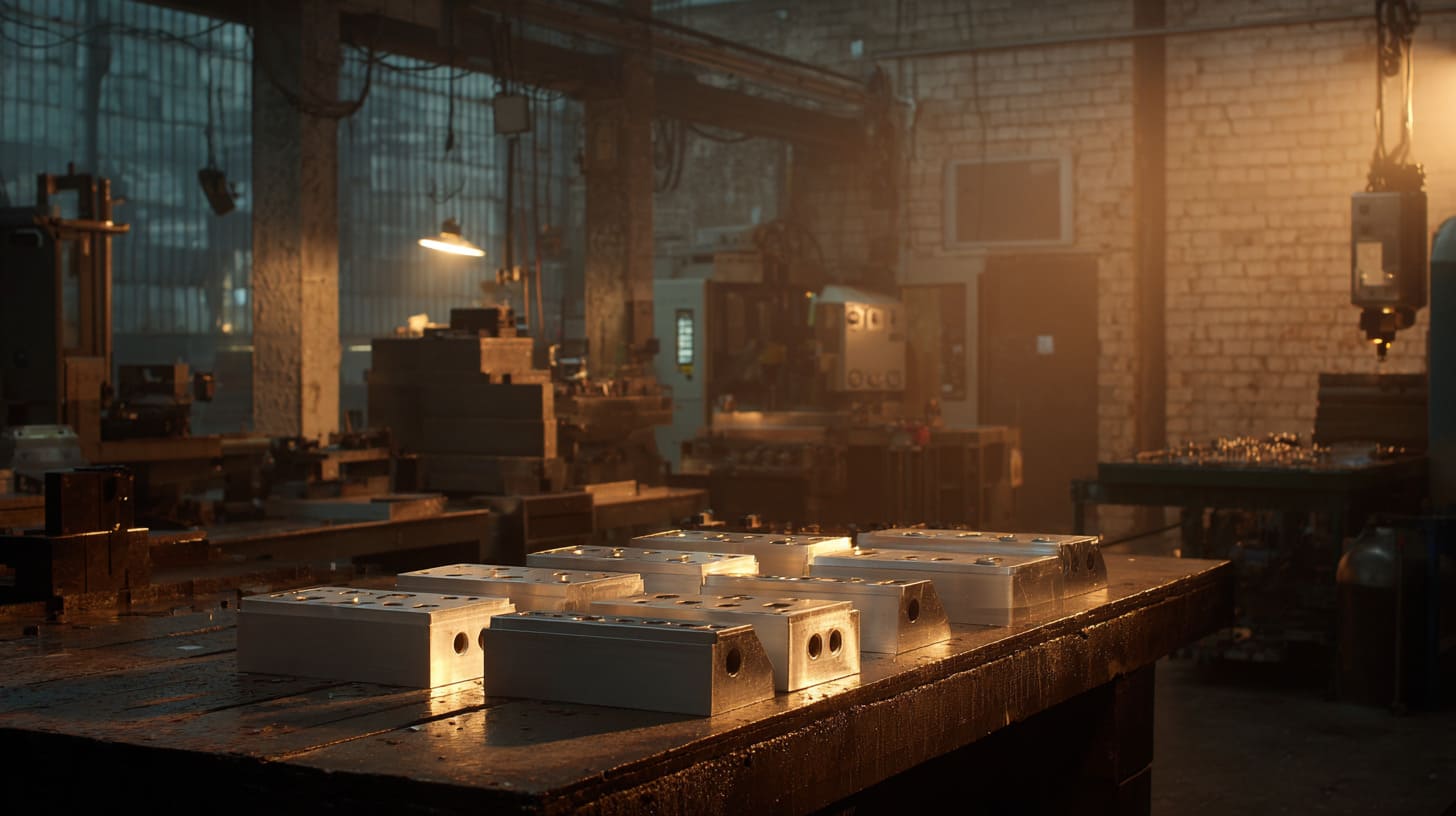
The workshop was waking up slowly that morning. The machines were warming, the air smelled faintly of metal and cutting oil, and I was preparing to review a new batch of enclosures when a message from Davide in Finland appeared on my screen. It wasn’t dramatic or emotional—just a calm engineer’s update: “We may have an issue with moisture getting inside.” Those simple words can shift the tone of a whole workday.
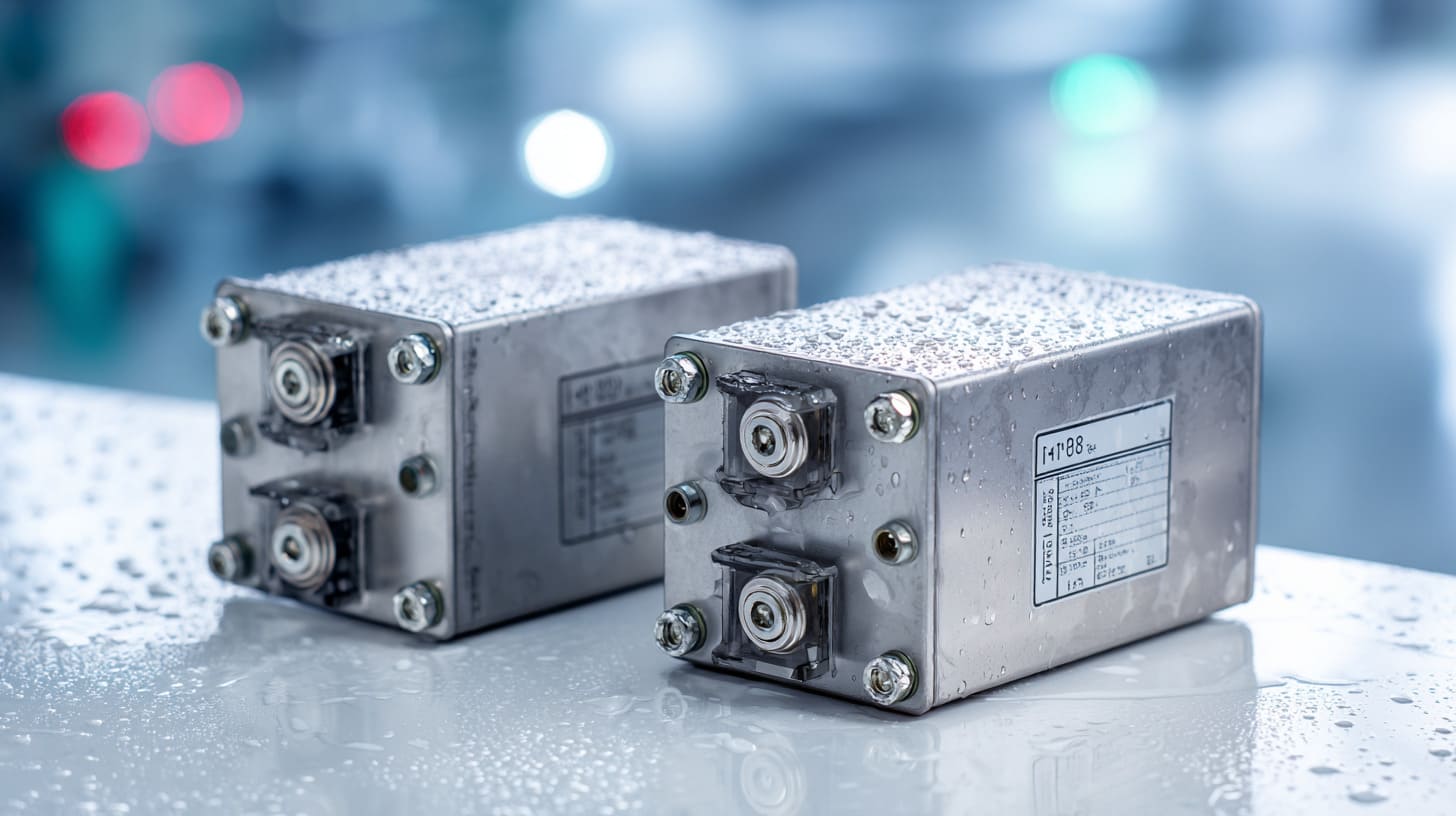
He soon sent a few photos. A light mist had slipped into enclosures that were labeled as “water‑resistant.” The installation site, however, demanded fully waterproof protection. Nothing broke, nothing short‑circuited, but the delay was real. And delays cost money, trust, and patience.
This is why the distinction between water‑resistant and waterproof matters so much, especially for people like us who design, buy, or customize enclosures for real‑world environments.
When I think about my B2B readers—engineers, product designers, OEM buyers from Europe, North America, Japan—I know how easy it is to assume these terms mean the same thing. But they don’t. Not even close.
Let’s walk into this topic naturally and calmly, and break down the difference in a way that feels clear and practical.
What Do “Water‑Resistant” and “Waterproof” Actually Mean
What is an enclosure’s protection goal
When I design an enclosure with a client, I always start with a simple idea: the enclosure is the shield. It protects the electronics from water, dust, humidity, and all the strange things the environment throws at us.
But the real challenge shows up when words confuse the truth. I’ve seen labels like “water‑resistant,” “weatherproof,” and “splash‑proof” used so loosely that even I have to take a breath before explaining what they actually mean.
Here’s the simple view:
- “Water‑resistant” protects a little
- “Waterproof” protects a lot
- Marketing terms protect nothing unless backed by a standard
I learned this lesson the hard way the first time I saw a customer’s device fail due to condensation—not even direct water. Just moisture slipping in quietly. That moment stays with you.
The formal standard: Ingress Protection (IP) code (and sometimes NEMA enclosure rating)
Whenever someone asks me for a “waterproof enclosure,” my first question is, “Which IP rating do you need?” The IP code turns vague words into something measurable.
The structure is simple:
- The first digit = dust protection
- The second digit = water protection
Here’s a small reference table I often share with customers:
| IP Rating | Dust Protection | Water Protection Meaning |
|---|---|---|
| IPx3 | — | Light spray |
| IPx4 | — | Splashes |
| IPx5 | — | Low‑pressure jets |
| IPx6 | — | High‑pressure jets |
| IPx7 | — | Short‑term immersion |
| IPx8 | — | Long‑term immersion |
In the U.S. industrial world, many clients also use NEMA ratings. They add clarity about corrosion, ice, and environmental durability. Sometimes an enclosure needs to meet both systems.
All of this removes the guesswork. And honestly, when you’ve had a production line waiting because someone misread “water‑resistant,” you learn to respect standards.
Water‑Resistant Enclosures: What They Are, Strengths & Limitations

Definition & typical IP rating range
Water‑resistant enclosures protect against light moisture, splashes, drips, and occasional rain. They do NOT protect against immersion or high‑pressure water.
Typical water‑resistant IP ratings:
| Rating | Meaning |
|---|---|
| IPx3 | Light spray |
| IPx4 | Splashes |
| IPx5 | Low‑pressure jets |
| IPx6 | Heavy spray or stronger jets |
When a buyer tells me, “We only need something that can survive outdoors under a small roof,” this is usually the category they need.
Construction & materials for water‑resistant enclosures
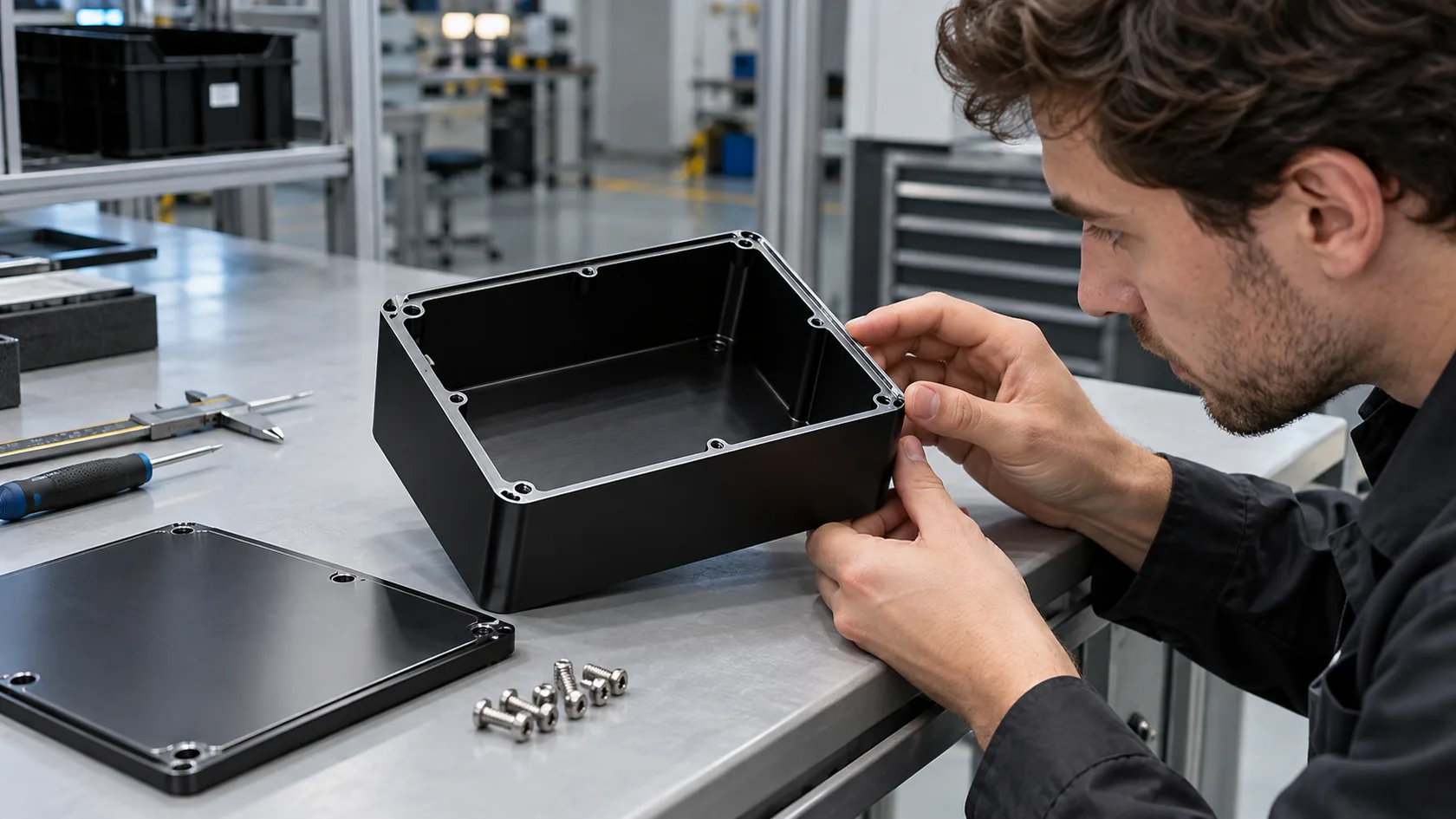
Most water‑resistant enclosures use lighter protection methods. Things like:
- Simple silicone seals
- Basic gasket strips
- Snap‑fit or screw‑fit closures
- Waterproof coatings instead of fully sealed joints
Common materials include:
| Material | Why it’s used |
|---|---|
| Plastic | Lightweight and cost‑friendly |
| Rubber | Good for light sealing |
| Silicone | Flexible moisture barrier |
| Thin aluminum or sheet metal | Works for splash environments |
These enclosures are easy to carry, easy to produce, and cost‑effective. But they’re not meant to fight heavy rainstorms.
Typical use‑cases (when water‑resistant is “enough”)
I like to share everyday examples because they stick in the mind:
- Garden control boxes under a small awning
- Bathroom devices that face steam but not direct water
- Outdoor sensors mounted under a roof
- Kitchen electronic accessories
- Indoor control panels exposed to humidity
These cases rarely involve heavy water exposure. They need a shield, not a submarine.
Pros & Cons of Water‑Resistant Enclosures
Here’s an honest breakdown:
| Pros | Cons |
|---|---|
| Lower cost | Not for heavy rain |
| Lightweight | Not for jets or immersion |
| Easier to manufacture | Seals may weaken over time |
| Good enough for mild environments | Moisture can still creep in |
When I work with clients, I always explain that “enough” depends on the real environment—not just the expected one.
A gentle transition before we dive deeper:
Sometimes a small splash turns into a big problem. And that’s where waterproof enclosures enter the story.
Waterproof Enclosures: What They Are, Strengths & Construction
Definition & typical IP/NEMA rating range
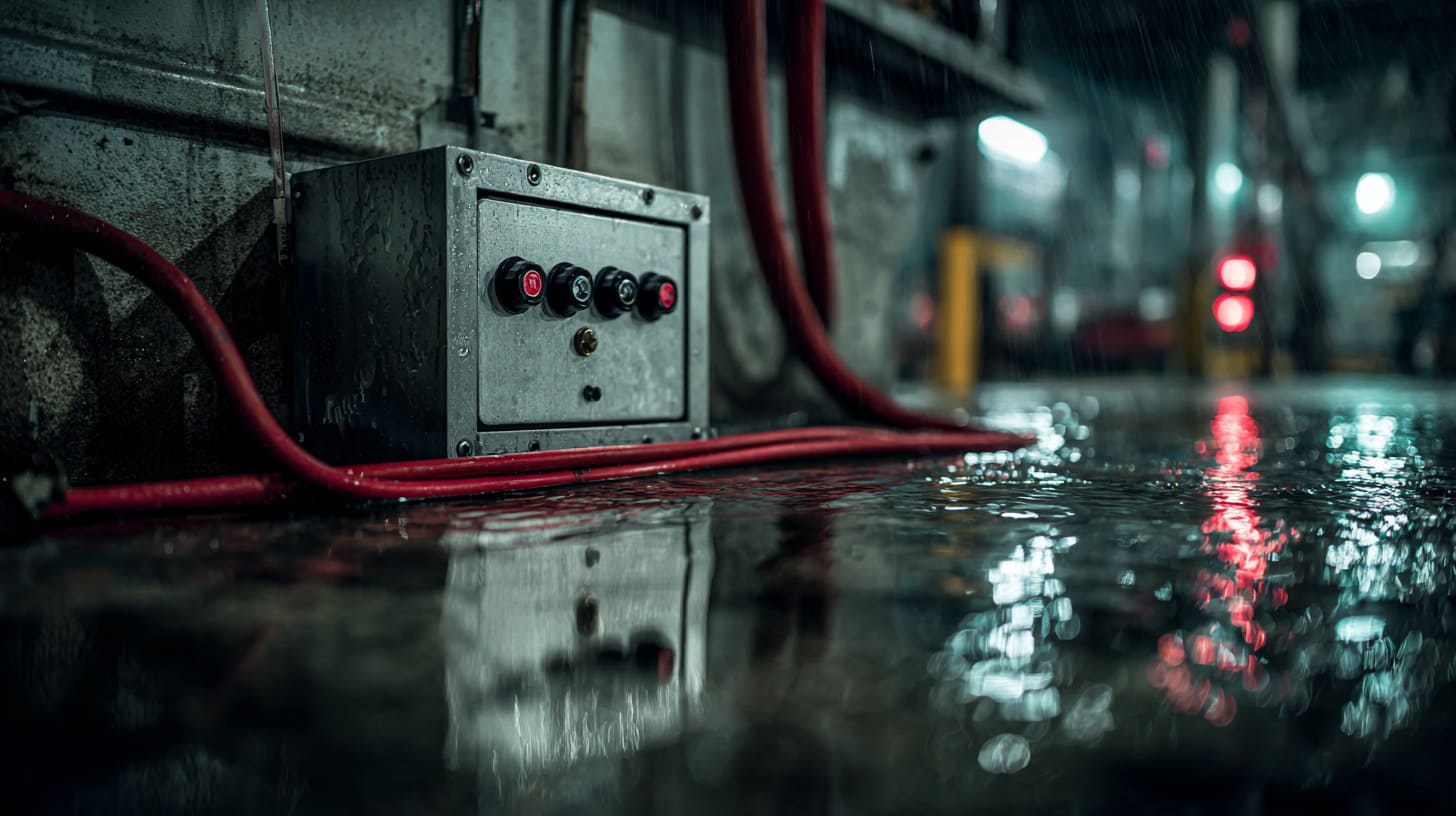
Waterproof enclosures are built to block water completely, even in extreme conditions. They handle scenarios like:
- Heavy rain
- Full submersion
- High‑pressure cleaning
- Waves, snow, or constant moisture
Typical waterproof IP ratings:
| Rating | Meaning |
|---|---|
| IPx7 | Temporary immersion |
| IPx8 | Continuous immersion |
| IPx9 | High‑pressure, high‑temperature jets |
In industrial settings, I often see requests for:
- NEMA 4 / 4X for outdoor rain or wash‑down
- NEMA 6 for occasional submersion
These ratings remove any doubt about how tough the enclosure needs to be.
Construction, sealing methods, materials used
Waterproof enclosures use stronger structures and better sealing techniques. Things like:
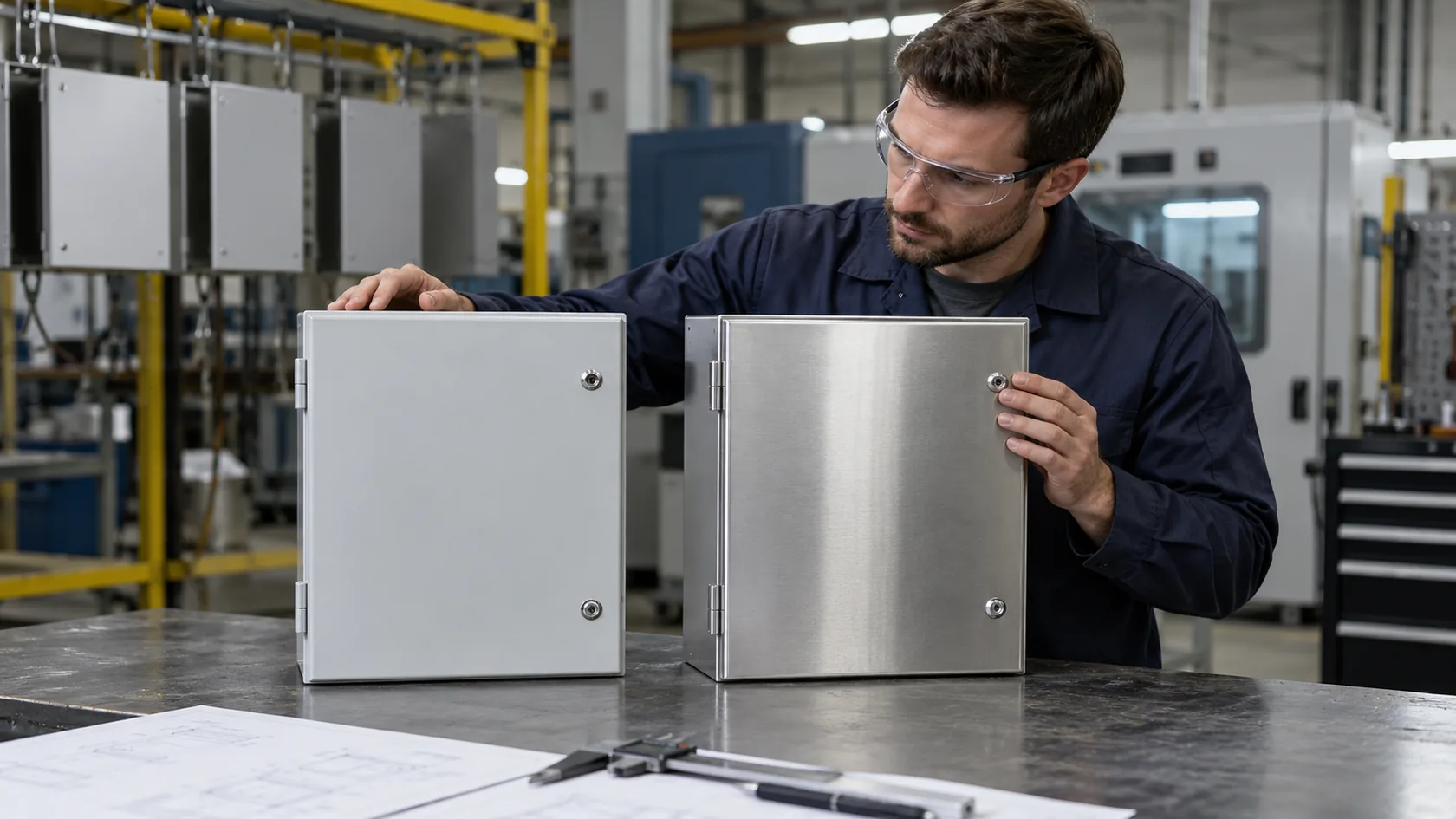
- Thick aluminum or stainless steel
- High‑grade plastics
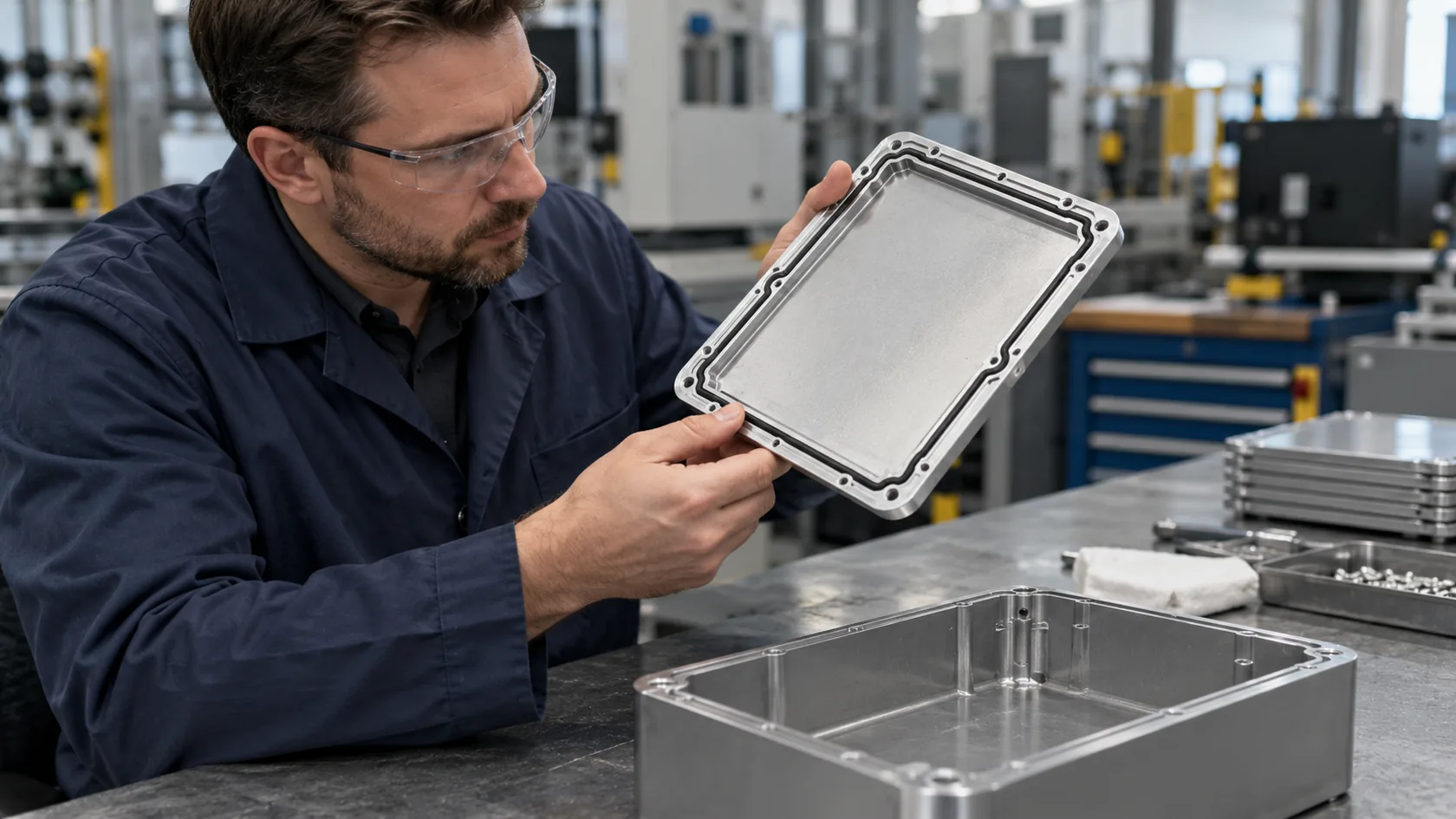
- Heavy O‑rings and gasket channels
- Sealed cable entry points
- Tight‑fit joints
- Corrosion‑resistant coatings
- Weatherproof finishes
- Marine‑grade materials
These designs take more time and cost more, but they also survive hostile environments.
Typical use‑cases (where waterproof is necessary)
I’ve seen waterproof enclosures used in so many extreme places:
- Coastal installations exposed to salt spray
- Outdoor control panels in heavy rain
- Equipment mounted near ponds, lakes, and rivers
- Machinery that needs cleaning with high‑pressure hoses
- Underground sensors
- Marine and dockside systems
- Industrial automation in wet environments
When the cost of damage is high, these enclosures pay for themselves.
Pros & Cons of Waterproof Enclosures
Here’s the reality of investing in waterproof protection:
| Pros | Cons |
|---|---|
| Maximum water protection | Higher cost |
| Long‑term reliability | Heavier |
| Suitable for harsh environments | More complex manufacturing |
| Often dust‑tight too | Less flexible design options |
Every engineer I’ve worked with feels that waterproofing is an investment, not just a feature.
A quick bridge to the next section:
So when do you choose one over the other? This is where real‑world decision‑making matters.
How to Choose: Water‑Resistant vs Waterproof (for Custom Enclosure Buyers & Engineers)

Assess your application’s environmental risks
This step changes everything, and it’s usually where most misunderstandings start. I ask clients questions like:
- Will water spray hit it directly?
- Is there a chance of submersion?
- How long will it stay outdoors?
- Is the location humid or salty?
- Are there cleaning routines involving water jets?
You’d be amazed how many people say “just rain,” but later reveal the device sits near sprinklers or drainage pipes.
Match IP / NEMA rating to your needs
Here’s the simple matching guide:
| Environment | Suggested Rating |
|---|---|
| Light moisture | IPx3–IPx4 |
| Rain or splashes | IPx4–IPx5 |
| Heavy rain or jets | IPx6 |
| Temporary immersion | IPx7 |
| Continuous immersion | IPx8 |
| Harsh industrial settings | NEMA 4 / 4X |
| Submersion environments | NEMA 6 |
This chart alone has helped many of my clients avoid costly redesigns.
Balance cost, materials, and long‑term reliability
A lot of readers—especially purchasing managers—come to me with budget concerns. And I get it. A waterproof enclosure is more expensive.
But I always offer a balanced view:
| Scenario | Best Choice |
|---|---|
| Light‑duty indoor | Water‑resistant |
| Low‑risk outdoor | Water‑resistant with higher rating |
| Long‑term outdoor | Waterproof |
| Industrial site | Waterproof or NEMA |
| Marine or corrosive area | Waterproof + corrosion protection |
Cost, reliability, and environment must be evaluated together. It’s a triangle you can’t ignore.
Time for another soft transition:
And that brings us to a part I care about deeply—how suppliers like us support clients through these choices.
Implications for Custom Enclosure Manufacturing & B2B/OEM Orders (Perspective for Suppliers like Us)

Why clarity in labeling matters (IP/NEMA rating vs ambiguous words)
When we label an enclosure “water‑resistant,” that word doesn’t tell the full story. Standards do. And engineers like Davide or John depend on clarity.
When clients know exactly what IP rating they’re getting, trust grows. Incorrect labeling, on the other hand, destroys relationships.
Designing custom enclosures: what to ask clients to determine required protection
These are the things I always ask upfront:
- Indoor or outdoor?
- Any chance of splashes?
- Any chance of immersion?
- Do you need dust protection too?
- Exposure to salt, chemicals, humidity?
- Expected lifespan of installation?
Then we match:
- The right IP rating
- The right material (aluminum, steel, plastic)
- The best sealing method
- Cable gland requirements
- Mounting style
- Durability enhancements
This is how we prevent surprises after production.
Cost vs protection — how to offer tiered options (water‑resistant vs waterproof) to clients
I’ve learned that not all clients want the highest level of protection. Many only want appropriate protection.
So we offer:
- Water‑resistant options: Light, cost‑effective, for mild environments
- Waterproof options: Rugged, sealed, reliable, meant for the toughest conditions
And the most important part:
We explain what each option really protects against. No vague terms. No assumptions.
A smooth transition to wrap everything up:
So after all of this, what’s the final takeaway?
Conclusion
Water‑resistant and waterproof are not the same at all. One handles mild moisture, and the other stands up to harsh, unpredictable water exposure. Once you understand IP and NEMA ratings, the choice becomes clearer.
For anyone buying or designing custom enclosures—especially OEM, ODM, or engineering teams—the key is to look at the environment first. Then pick the level of protection that truly matches the real conditions.
As a supplier, my job is to give you clear information, reliable materials, and flexible customization options so your projects stay on schedule, on budget, and protected in the long run.
If you ever have questions or want help choosing the right level of water protection, I’m right here—just send me a message at info@maidatech.com.