Skip to content
A material question usually looks simple at first.
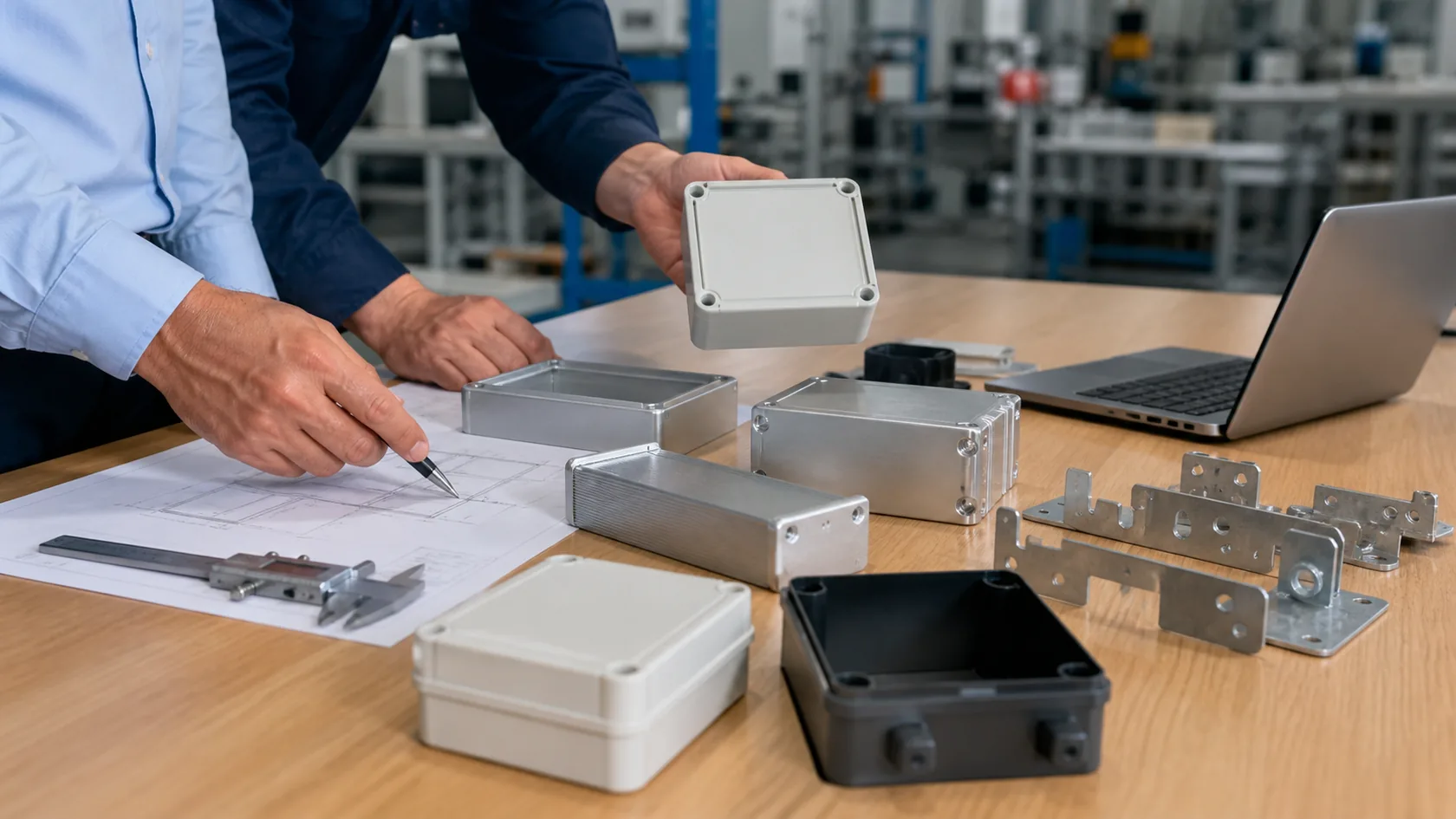
A buyer sends a drawing and asks, "Can we use aluminum instead of plastic?" Or an engineer says, "We want the strongest material, but the cost must stay low." I understand why they ask this way. In sourcing work, the material name feels like the starting point. Aluminum. ABS. Stainless steel. Sheet metal. The word is easy to compare.
But in real production, the material name is only the beginning.
At MaidaTech, we make custom aluminum enclosures, plastic enclosures, sheet metal enclosures, and redesigned cases for electronic projects. I have seen good designs become difficult because one small material decision was made too early. The part looked fine in the 3D file. The prototype looked fine on the desk. Then the real problem appeared in assembly, outdoor use, surface finishing, screw strength, heat, or shipment.
I usually judge material choice by asking what can go wrong after the buyer receives the parts, not only what looks good in the quotation sheet. A low-cost material can become expensive when it causes rework, weak threads, color mismatch, or delayed certification.
So this article is not a textbook list of materials. It is a practical way to think about industrial materials before you confirm a custom enclosure order.
Start With the Working Environment
The first factor is not strength. It is the environment.
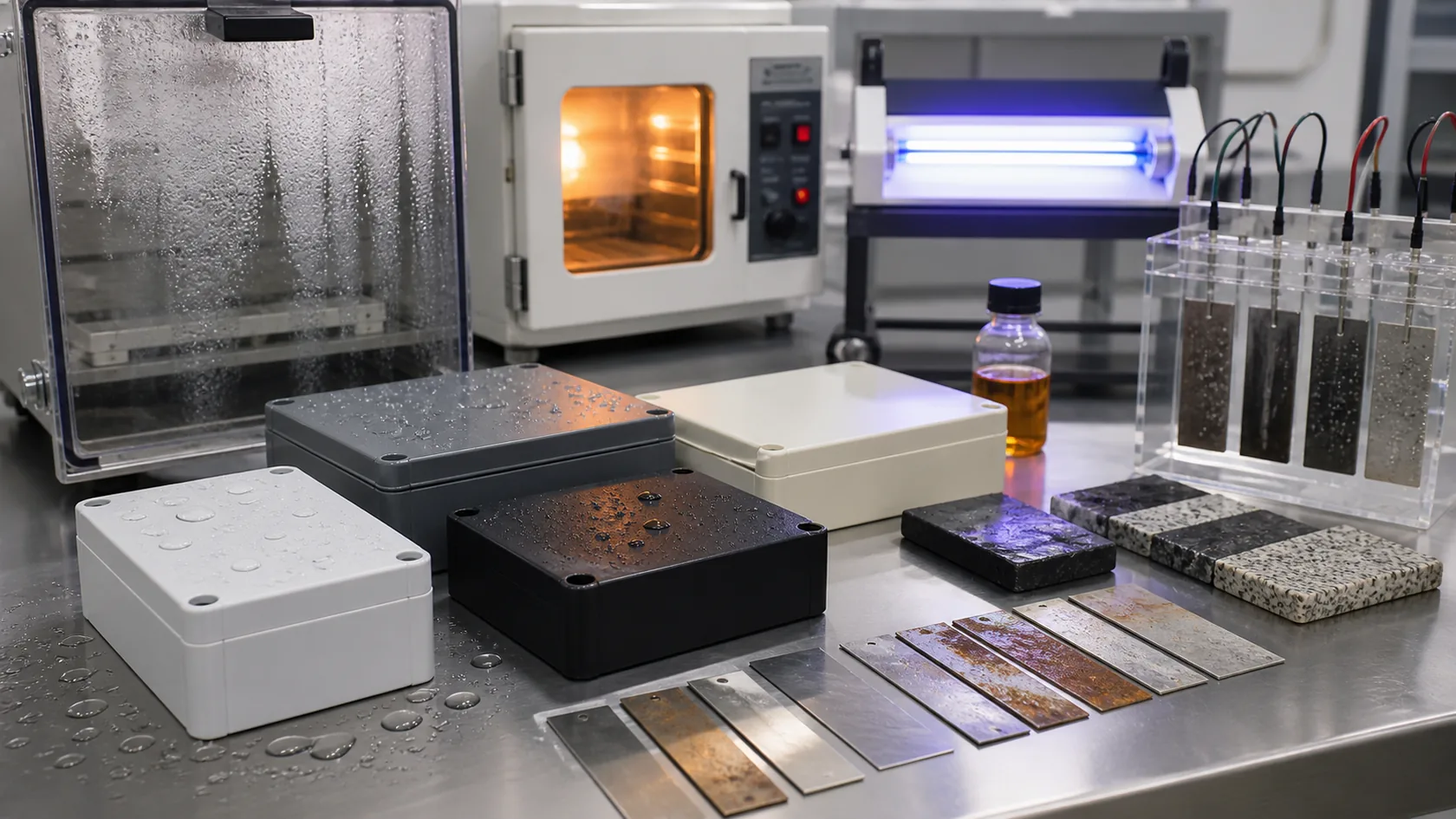
Where will the enclosure work? Indoors or outdoors? Dry office or wet workshop? Near oil, cleaning chemicals, salt air, heat, vibration, or UV light? Will people touch it every day? Will it sit inside another machine where nobody sees it, but heat builds up slowly?
These questions matter because materials do not fail in a vacuum. They fail in a place.
Temperature, Moisture, UV, and Chemicals
For outdoor electronic enclosures, UV resistance and sealing matter a lot. Some plastics have good impact strength indoors, but they age badly under sunlight unless the correct grade or additive is used. Some metals look safe, but corrosion appears around holes, edges, fasteners, or damaged coating.
If the product will face moisture or salt spray, the buyer should not only ask, "Is this stainless?" or "Is this anodized?" A better question is, "What corrosion risk do we have at cut edges, threaded holes, contact points, and fasteners?"
For metal corrosion checks, I like buyers to understand the idea behind pitting corrosion, because small pits can become a bigger risk than a broad stain on the surface.
Indoor Use Is Not Always Easy Use
Indoor equipment can also be hard on materials. A control box may sit near motors and heat. A handheld scanner may be dropped many times. A medical or laboratory device may need cleaning with alcohol or other agents. A retail device may need a good surface feel because the end user touches it every day.
In my work, I do not accept "indoor use" as a full requirement. I ask about heat, cleaning, handling, mounting, and service life, because those details decide whether ABS, PC, aluminum, stainless steel, or sheet metal makes sense.
Once the working environment is clear, the next step is to decide what kind of mechanical behavior the part must have.
Match Strength, Weight, and Dimensional Stability
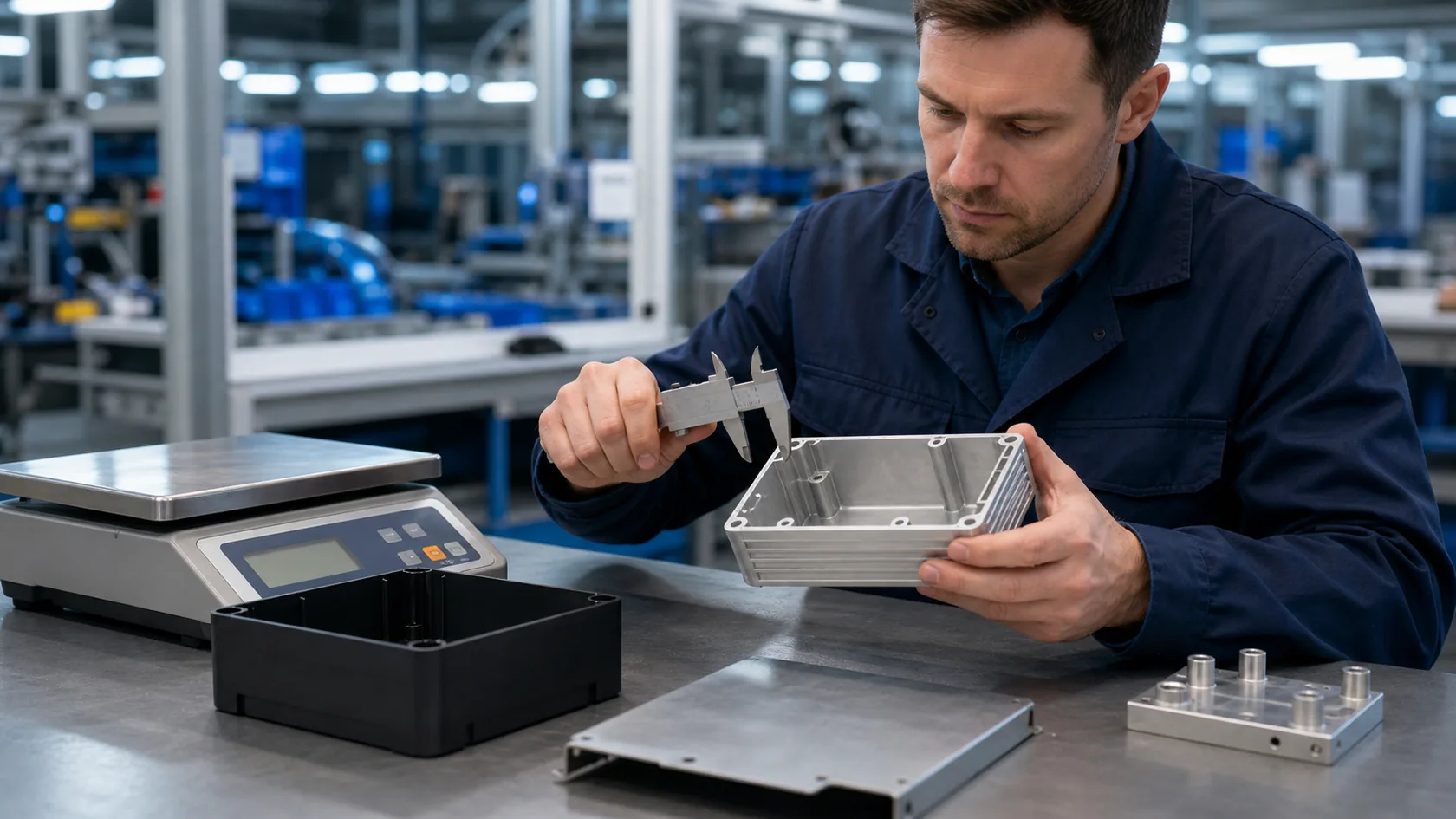
Many buyers ask for the strongest material. I understand the feeling. Strong sounds safe.
But the strongest material is not always the best material. A heavy material can increase shipping cost. A very hard material can raise machining cost. A stiff material can crack instead of bend. A soft material can deform around screws. A plastic that is tough at room temperature may become weak in heat.
Strength Is More Than One Number
Industrial products need different types of strength:
| Requirement | What It Means In Real Use | Common Material Concern |
|---|---|---|
| Tensile strength | Resistance to pulling force | Brackets, hooks, handles, mounting tabs |
| Impact resistance | Survival under drops or knocks | Handheld devices, portable cases, exposed covers |
| Stiffness | Resistance to bending | Large covers, flat panels, precision assemblies |
| Thread strength | Screw holding force over time | Bosses, inserts, tapped holes, repeated service |
| Fatigue resistance | Survival under repeated loading | Hinges, vibrating equipment, moving parts |
A material data sheet can help, but it does not replace application thinking. Good material property data is useful only when the buyer has already defined the load, environment, and life expectation.
Weight Can Change the Whole Product
Aluminum is popular because it gives a good strength-to-weight balance. It also machines well, dissipates heat, and gives a premium product feel after anodizing or brushing. For many electronic enclosures, it is a very practical choice.
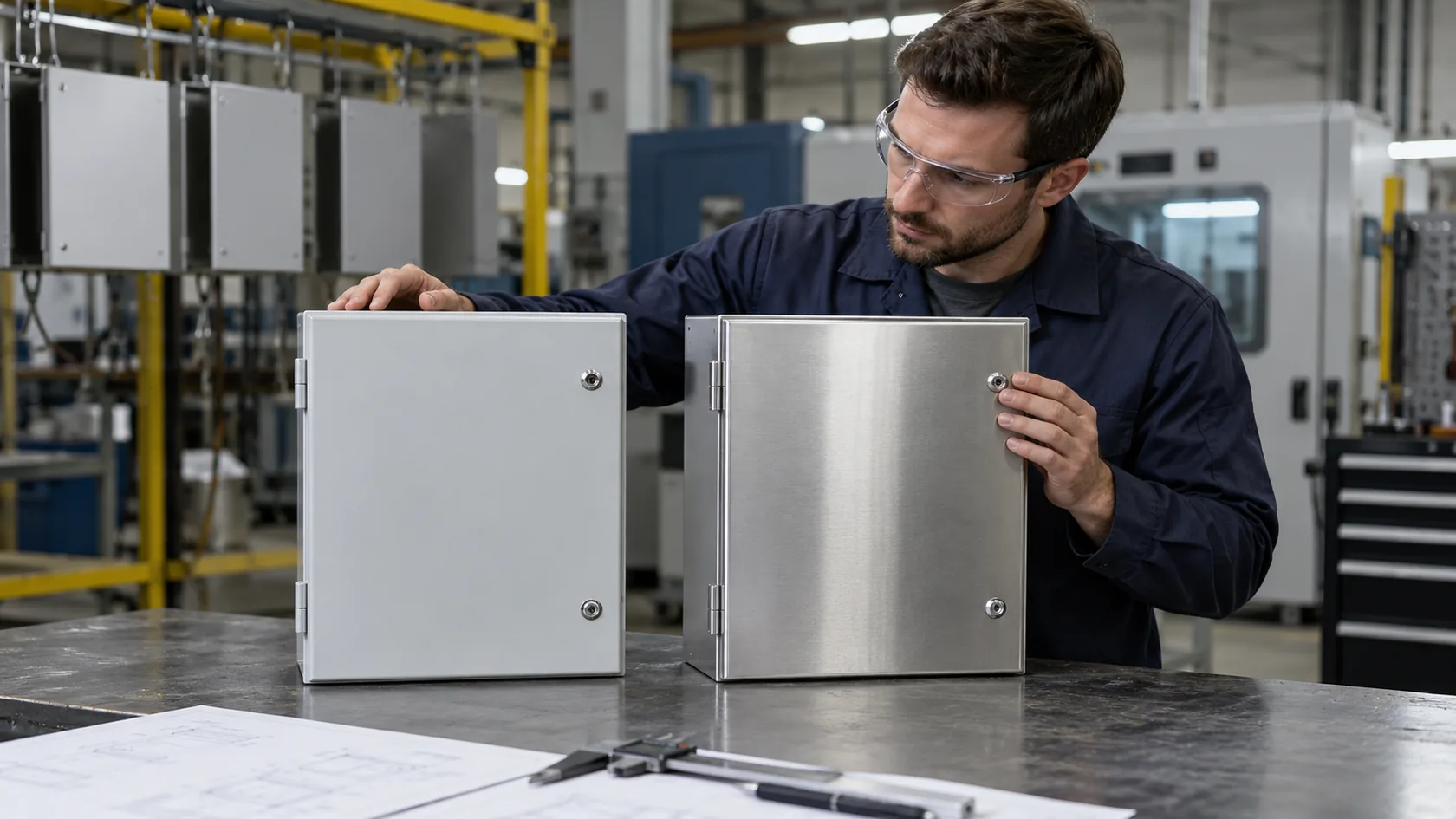
Steel can be cheaper and stronger in many sheet metal structures, but it is heavier and needs the right finish to prevent rust. Stainless steel can resist corrosion well, but it is harder to machine and form, and it can make the project cost jump quickly.
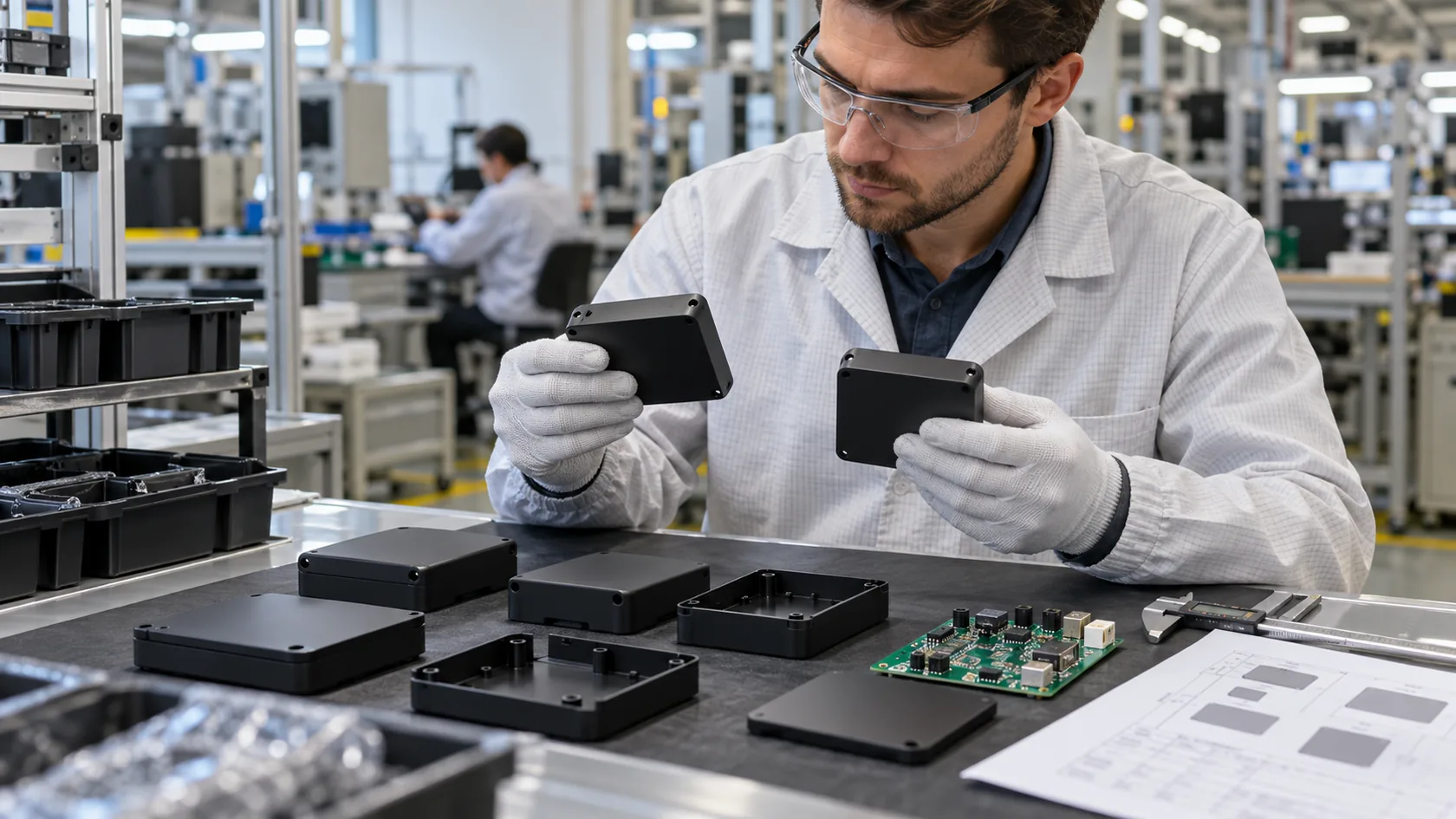
Plastic can reduce weight and allow more complex shapes, especially with injection molding. But plastic needs careful wall thickness, ribs, bosses, and mold design. If the project is low volume, tooling cost may be the real wall in front of the buyer.
When I compare material options, I always look at the weak feature in the design, not only the strongest area. A thick aluminum wall means little if the problem is a thin screw hole, a sharp corner, or a long unsupported plastic cover.
After strength and weight are understood, the buyer must check whether the material can actually be made well with the chosen process.
Check Manufacturing and Surface Finishing Fit
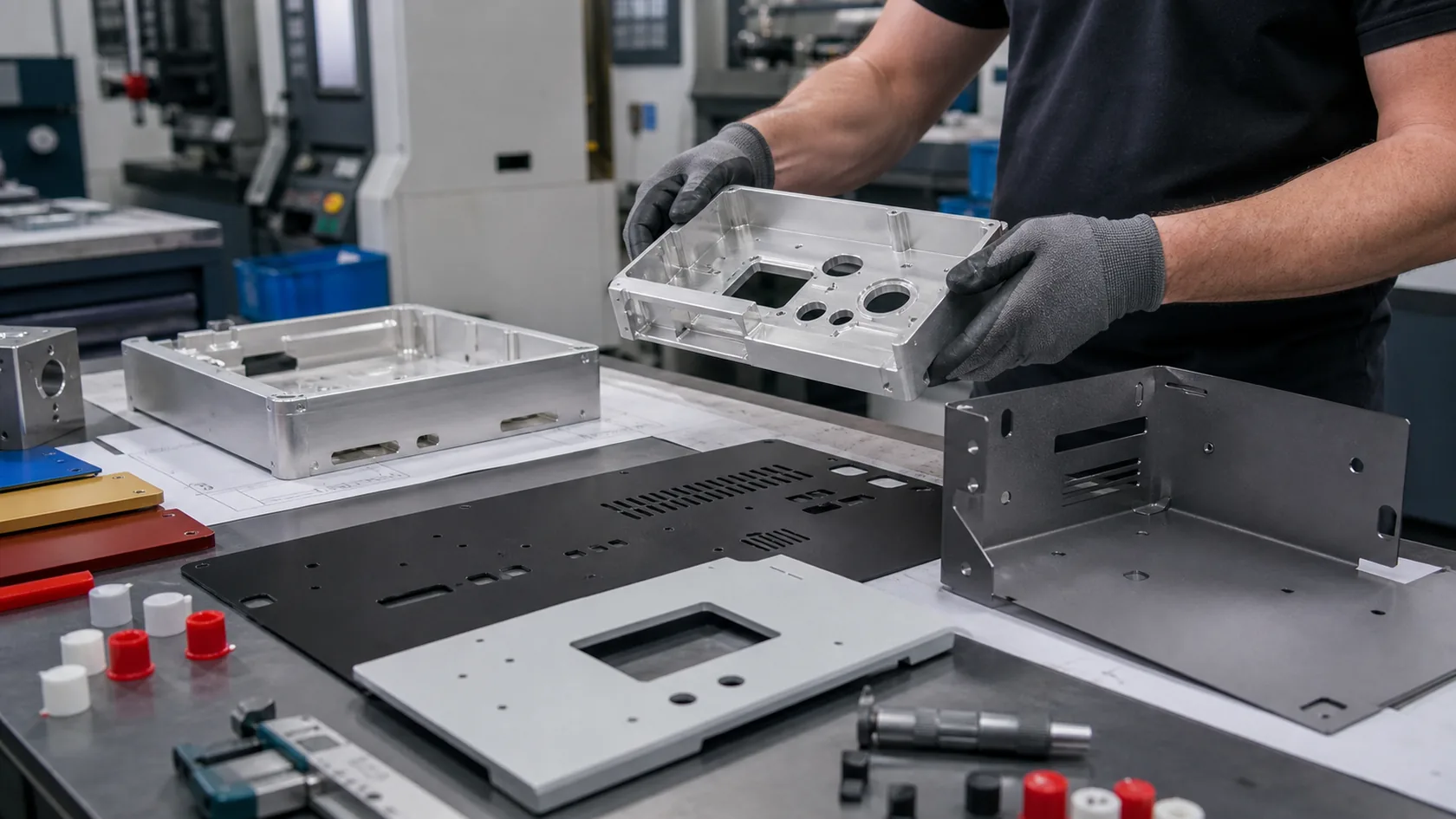
A material can be good on paper and still be wrong for the process.
For custom enclosures, this is a big point. The same material behaves differently in CNC machining, extrusion, die casting, sheet metal bending, injection molding, or 3D printing. Even the same alloy or resin can have different grades and different supply conditions.
Process Compatibility Comes First
Here is a simple way to think about it:
| Process | Material Choice Must Consider | Typical Risk |
|---|---|---|
| CNC machining | Machinability, burrs, tool wear, flatness | High cost or unstable tolerance |
| Sheet metal fabrication | Bend radius, cracking, weldability, coating | Deformation or finish damage |
| Extrusion | Alloy, profile shape, MOQ, secondary machining | Limited geometry flexibility |
| Injection molding | Shrinkage, flow, wall thickness, mold cost | Warping, sink marks, weak bosses |
| Die casting | Draft angle, porosity, tooling, finish limits | Hidden defects or poor cosmetic yield |
For example, 6061 aluminum is common for CNC enclosures because it machines cleanly and finishes well. But if the buyer needs a thin, long housing with high volume, extrusion may be better. If the buyer needs complex plastic clips, injection molding may be the right answer, even if a machined prototype came first.
Surface Finish Can Change the Material Decision
Surface finishing is often treated as decoration. That is a mistake.
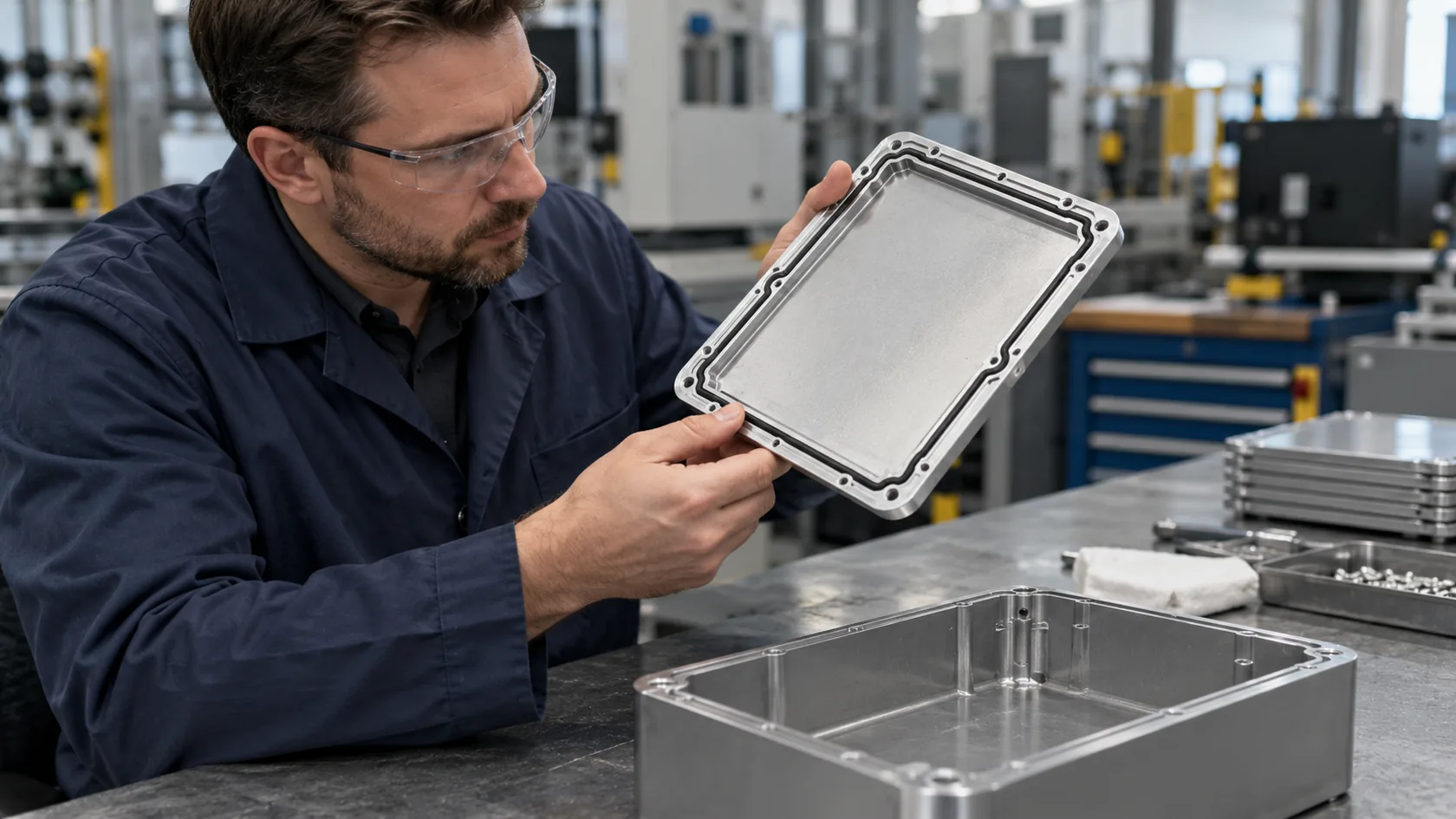
Anodizing, powder coating, polishing, brushing, painting, laser engraving, silk printing, and conductive coating all interact with the base material. A finish can protect the enclosure, improve appearance, support branding, or help electrical grounding. It can also create problems.
Coating thickness can affect assembly. Anodizing color can vary between batches. Powder coating can build up around holes. Brushing can expose small machining marks. Some plastics do not accept paint or printing easily without surface treatment.
From my factory side, I check the finish together with the material, because a beautiful finish that blocks a screw hole is not beautiful anymore. It is just a small problem with a very loud voice during assembly.
Manufacturing fit is also where many cost surprises begin, so the next factor is total cost, not just raw material price.
Compare Total Cost, Supply, and Compliance
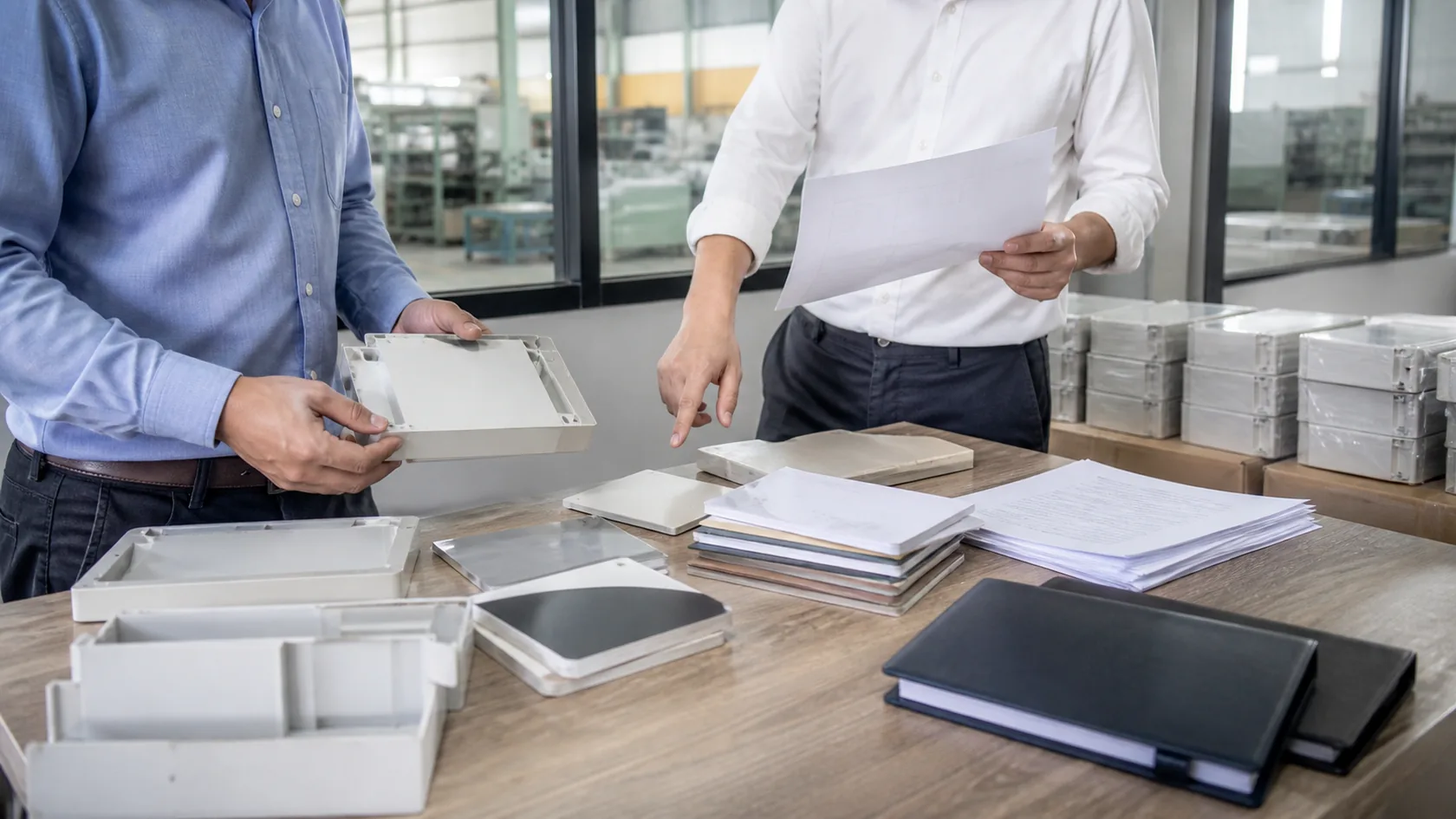
Raw material price is easy to see. Total project cost is harder.
Two materials may look close in price per kilogram, but the final enclosure cost can be very different. One material may machine faster. Another may need special tools. One may have better surface finish yield. Another may need more inspection. One may be easy to buy this month and difficult next month.
Total Cost Includes More Than Material
Buyers should compare these points:
- Raw material price and waste rate.
- MOQ and available stock size.
- Machining speed, tool wear, and setup time.
- Scrap risk from bending, cracking, warping, or poor finish.
- Surface treatment cost and color stability.
- Inspection time for tolerance, appearance, and assembly.
- Packaging needs to avoid scratches or deformation.
- Shipping weight and replacement cost.
I have seen buyers choose a cheaper material and then pay more because the part needed extra polishing, slower machining, or many cosmetic rejects. The invoice did not say "bad material choice" on one line, but the cost was there.
Compliance Should Be Asked Early
For electrical and industrial products, compliance can narrow the material list quickly.
Plastic enclosures may need a certain UL 94 flammability rating. Export products may need to meet RoHS requirements. Some industries need food contact, medical, railway, automotive, or customer-specific material declarations.
Do not wait until mass production to ask for these documents. The correct grade, supplier, colorant, coating, insert, and packaging material may all need to match the requirement.
My habit is to ask about destination market and compliance documents before confirming the material, because changing material after the sample is approved wastes time and makes everybody a little tired.
After the cost and compliance picture is clear, the safest step is still testing with real parts.
Validate the Material Before Production
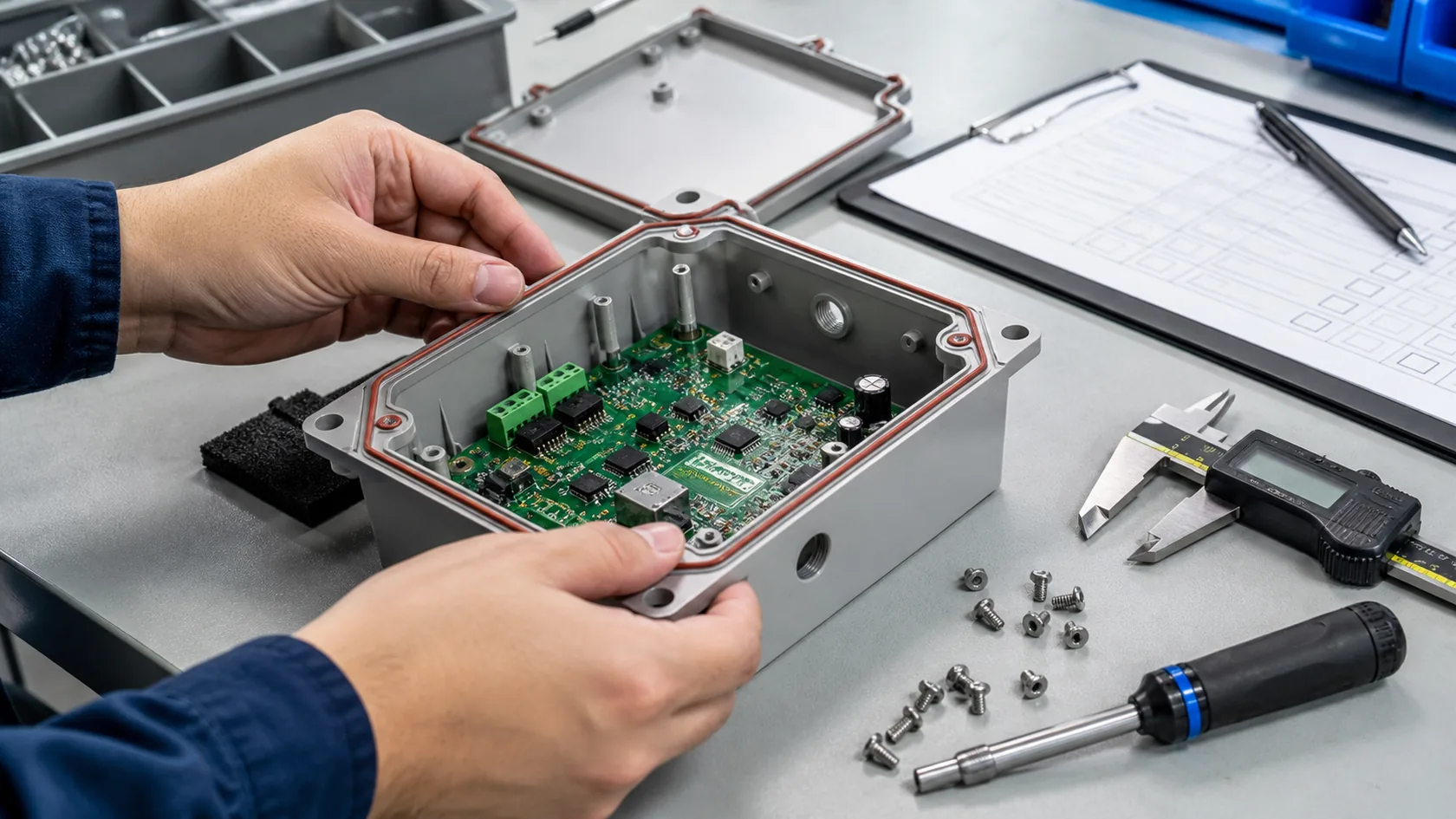
Material selection should end with validation, not opinion.
A supplier can give advice. A buyer can share experience. A data sheet can guide the first choice. But the final check should come from samples, assembly, and use conditions that are close to the real product.
Prototype the Right Things
A prototype should test the risky details, not only the overall shape.
For a custom enclosure, I like to check:
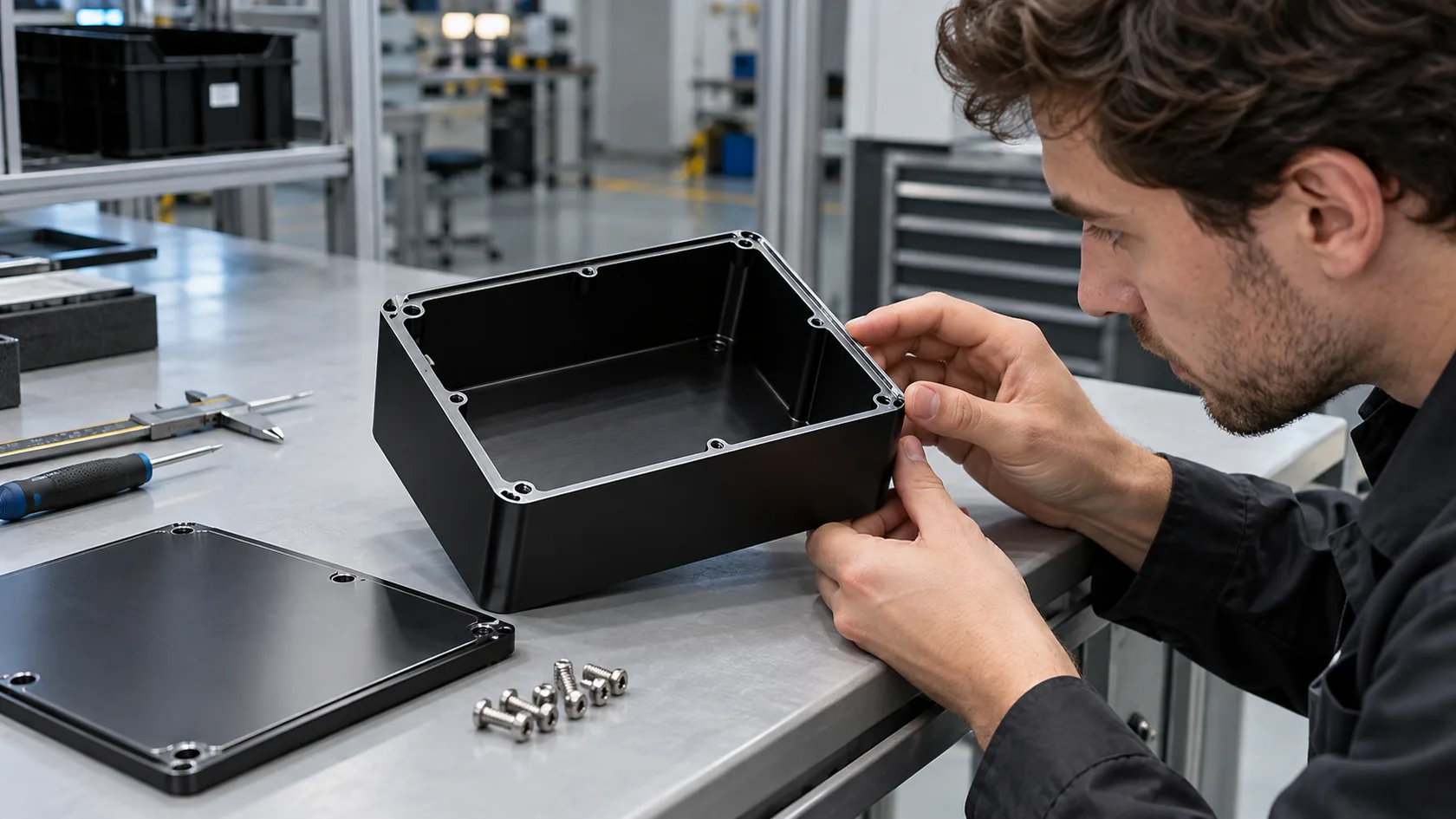
- Screw fit and repeated assembly.
- Insert strength or thread strength.
- Cover flatness after machining or forming.
- Heat dissipation with real components inside.
- Seal compression if the product needs water or dust protection.
- Surface finish after handling, cleaning, and packaging.
- Logo printing, laser engraving, or label adhesion.
- Drop, vibration, or mounting stress if the product will face it.
A shiny sample photo is useful, but it is not enough. The buyer should assemble the PCB, tighten the screws, mount the enclosure, hold it, clean it, and check the parts again after a few days.
Ask For Supplier Feedback Before Locking the Drawing
A good factory should not only quote the drawing. It should point out material and process risks.
Sometimes we suggest a larger bend radius, a thicker boss, a different aluminum grade, a changed coating area, or a small tolerance adjustment. These changes may not look exciting, but they can save the project from repeated defects.
I trust a material decision more when the prototype has already exposed the small annoying issues, because those are the issues that become expensive when the order quantity grows.
Once the material passes real checks, the buyer can move into production with much better confidence.
Conclusion
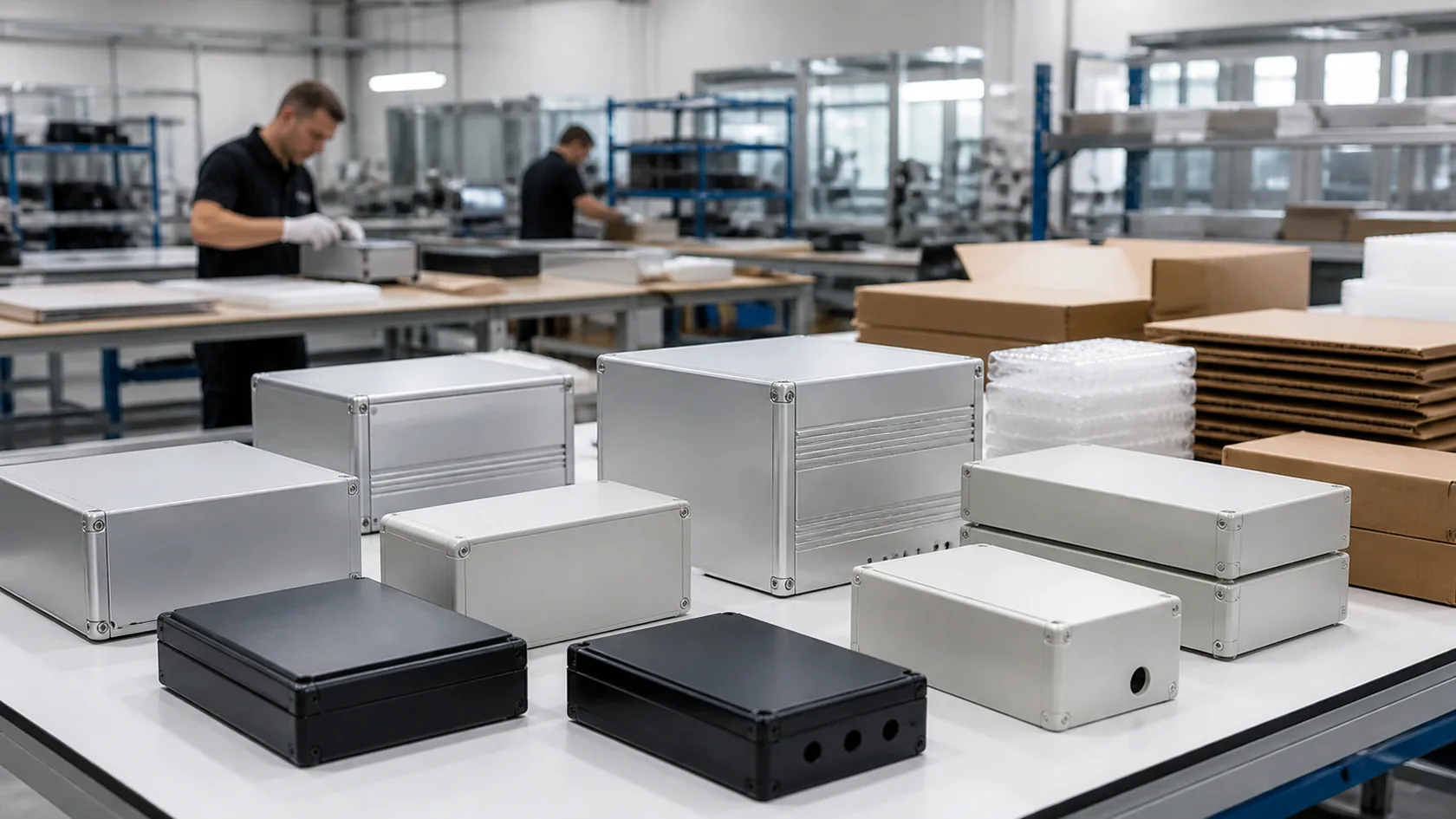
Choosing industrial materials is not about finding the most famous material name. It is about finding the best fit for the real job.
The right choice starts with the working environment. Then it moves through strength, weight, dimensional stability, manufacturing process, surface finishing, total cost, supply, compliance, and validation. Each factor affects the others. That is why a material that works well for one enclosure can be wrong for another enclosure that looks almost the same.
My view is simple: I would rather spend more time asking practical questions before production than spend more time explaining defects after production. That is better for the buyer, better for the factory, and better for the final product.
If you are choosing materials for a custom aluminum enclosure, plastic enclosure, sheet metal enclosure, or redesigned electronic case, MaidaTech can help you compare the practical options. We can review your drawing, discuss the working environment, suggest material and finish choices, and help you move from prototype to stable production with fewer surprises.