Skip to content
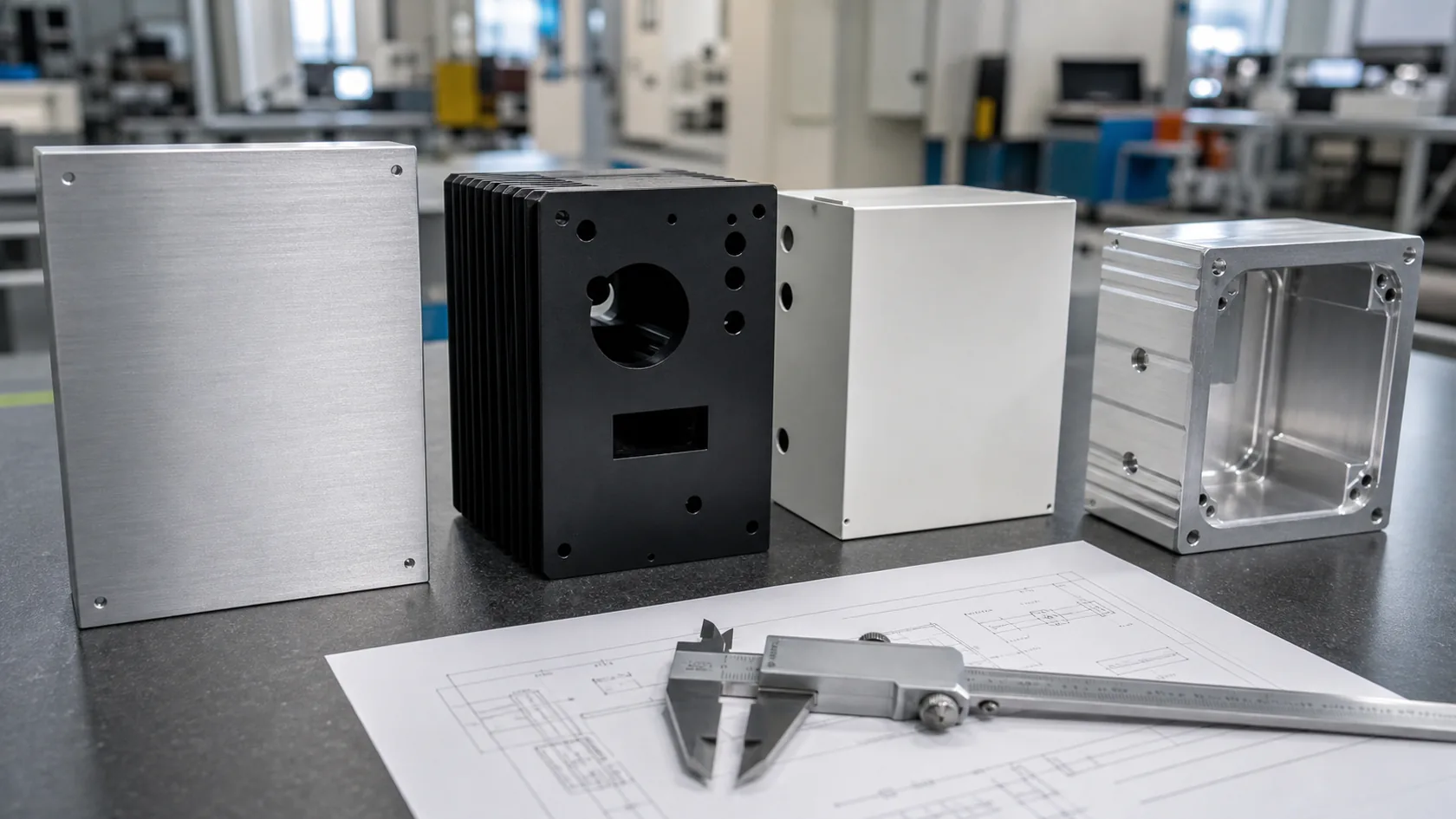
Aluminum looks simple when it arrives as a clean machined housing or a bent sheet metal enclosure. It is light, neat, and already has a natural oxide layer. So many buyers ask a fair question: why do we need so many aluminum surface finishing methods?
The answer is that the finish is not only decoration. It decides corrosion resistance, color stability, electrical contact, scratch resistance, dimensional fit, logo effect, cleaning method, packaging risk, and sometimes even the real cost of the whole project.
In our factory, I often see two RFQs with the same drawing but very different finishing problems. One buyer needs a black anodized enclosure for indoor electronics. Another needs a white powder-coated outdoor box near salty air. A third buyer needs raw aluminum contact areas for grounding. These are not the same finishing decision.
My practical rule is simple: I do not choose an aluminum finish from the product photo first; I choose it from the use environment, tolerance, assembly method, and the buyer's real quality risk. Appearance matters, of course. Nobody wants an ugly enclosure. But appearance alone is a weak way to specify a finish.
This guide explains the main types of aluminum surface finishes and when each one makes sense for custom enclosures, panels, housings, and OEM aluminum parts.
Mechanical Finishes: Brushing, Polishing, and Bead Blasting
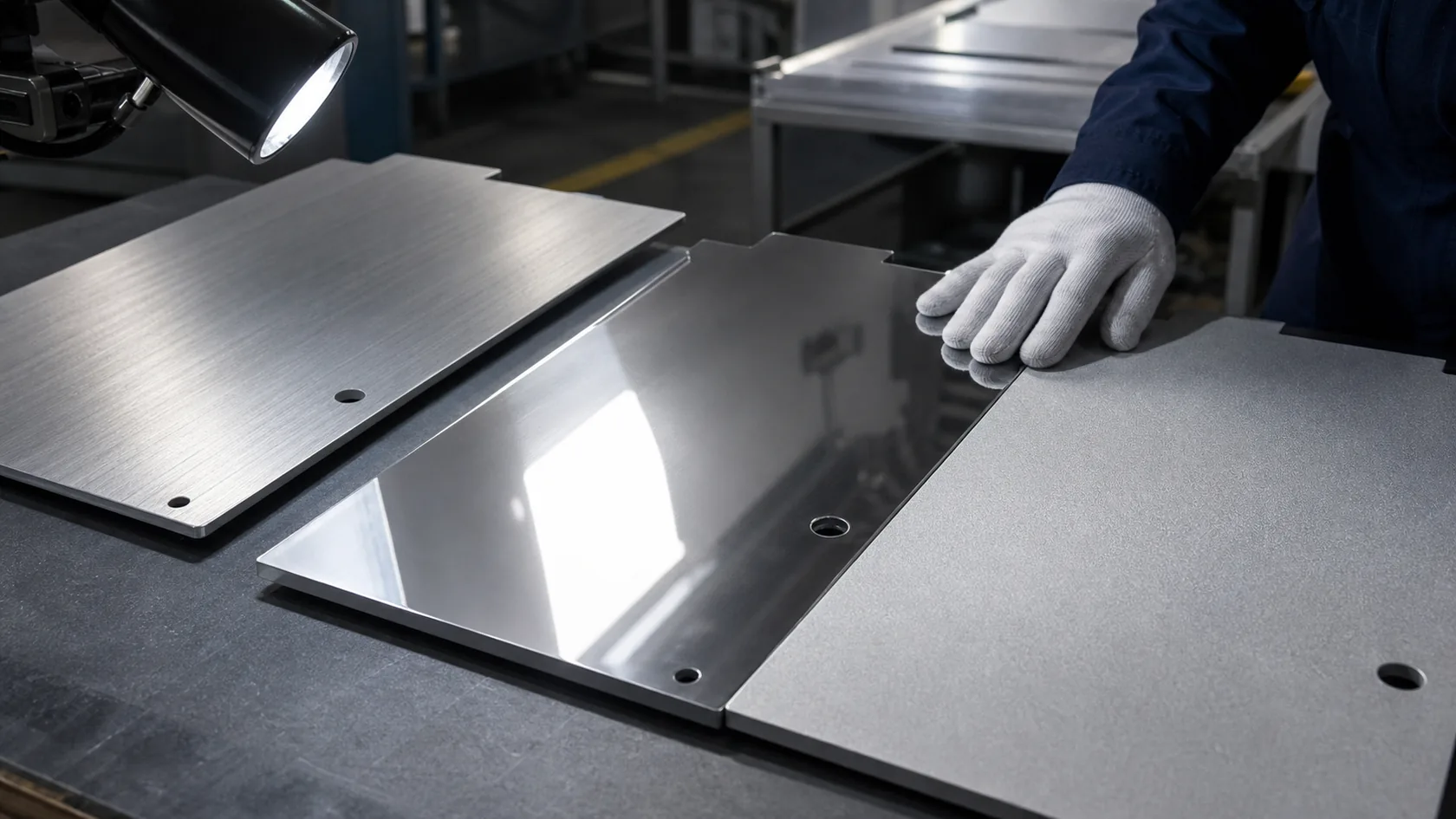
Mechanical finishing changes the texture of the aluminum surface before any chemical or coating process. It can also be used as the final finish for some indoor products.
Brushing
Brushing creates a directional grain on the aluminum surface. It gives the part a clean technical look, especially on front panels, audio cases, control boxes, and consumer-style electronics.
The important detail is direction. If one panel is brushed left to right and another is brushed up and down, the product can look like two different batches. Brushing also makes scratches less obvious in the grain direction, but more obvious across it.
Polishing
Polishing makes aluminum brighter and smoother. It can be useful before bright anodizing or decorative parts. But highly polished aluminum also shows fingerprints, waves, dents, and small handling marks more easily.
For large enclosure covers, polishing can become expensive because the operator must keep the surface even across a wide area. A small bright logo plate is one thing. A large polished sheet metal cover is another little adventure, and not always a cheap one.
Bead blasting
Bead blasting gives aluminum a matte, uniform texture. It can hide small machining marks and gives CNC aluminum enclosures a premium technical feel. Many black or clear anodized CNC parts use bead blasting before anodizing.
The trade-off is control. Blasting pressure, media size, and operator distance affect the final texture. If a buyer wants different factories to match the same matte surface, sample approval becomes very important.
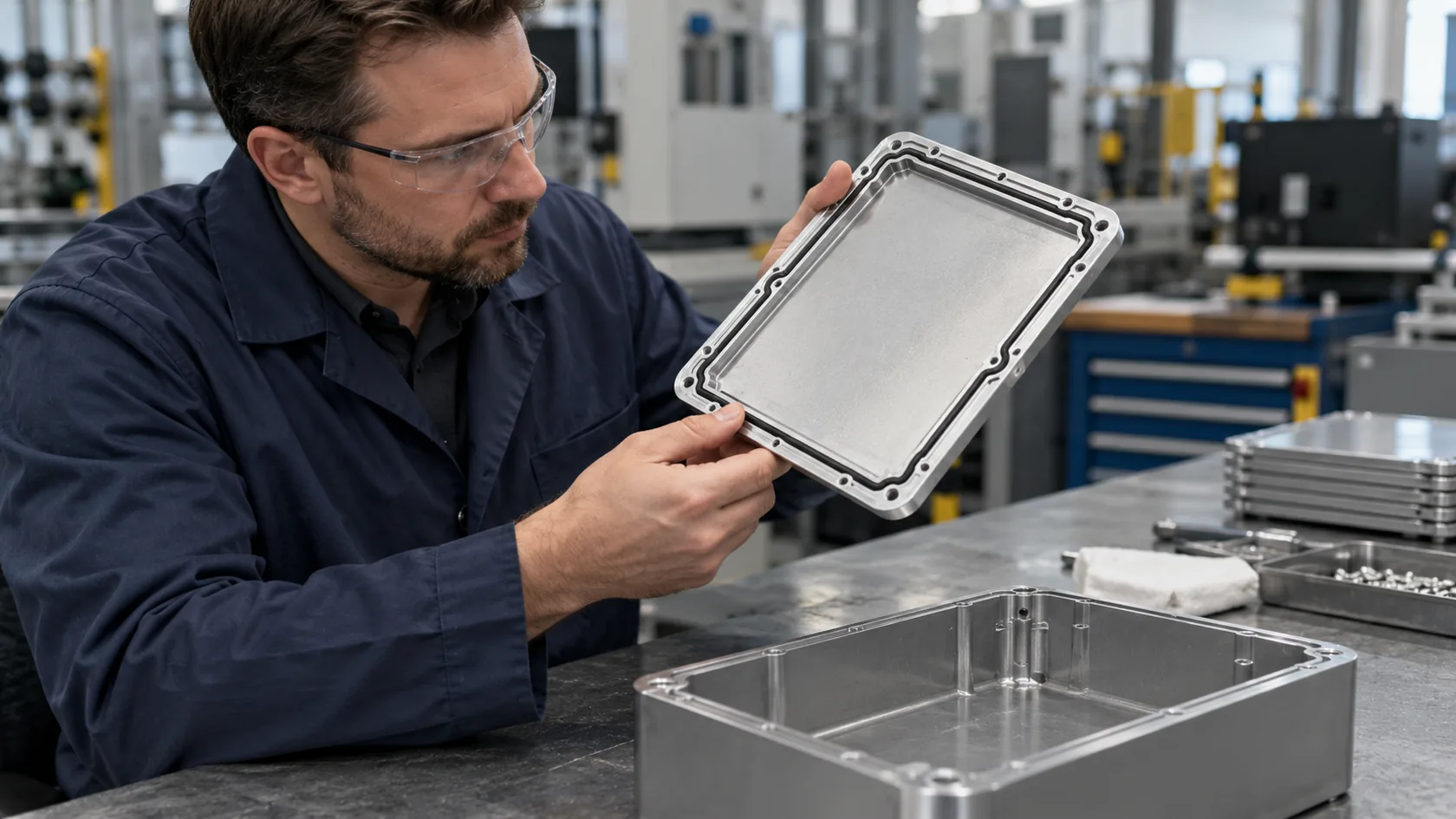
I usually check mechanical finishes by holding parts under side light, because this angle exposes scratches, waves, and uneven grain faster than a normal front view.
Mechanical finishes often prepare the surface for anodizing or coating, so the next choice is usually the protective layer.
Anodizing: Clear, Colored, and Hardcoat Options
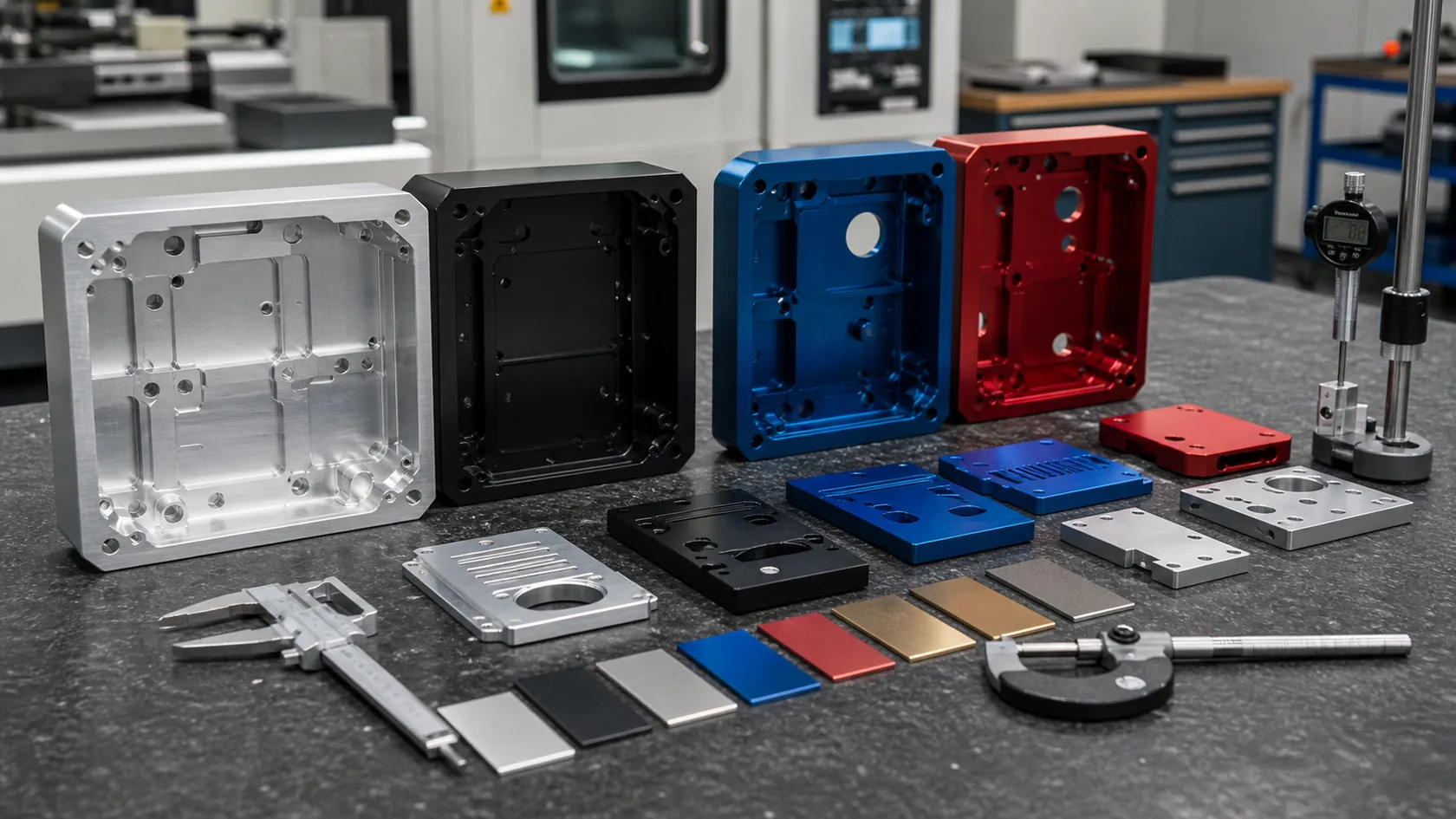
Anodizing is one of the most common aluminum surface finishing methods. It grows a controlled aluminum oxide layer from the base metal. That layer improves corrosion resistance and wear resistance, and it can also absorb dye for color.
The Aluminum Anodizers Council guide to anodized finishes explains that anodized finish selection depends on alloy, mechanical finish, chemical preparation, oxide requirements, and final use. That is exactly how buyers should think about it.
Clear anodizing
Clear anodizing keeps the metal look. It is often used for industrial aluminum parts, brackets, panels, and machined enclosures. It is clean, practical, and more stable than many dyed colors.
However, clear anodizing does not make all alloys look identical. 6061, 5052, and die-cast aluminum can show different tones after finishing. Welded areas can also appear different from the base sheet.
Colored anodizing
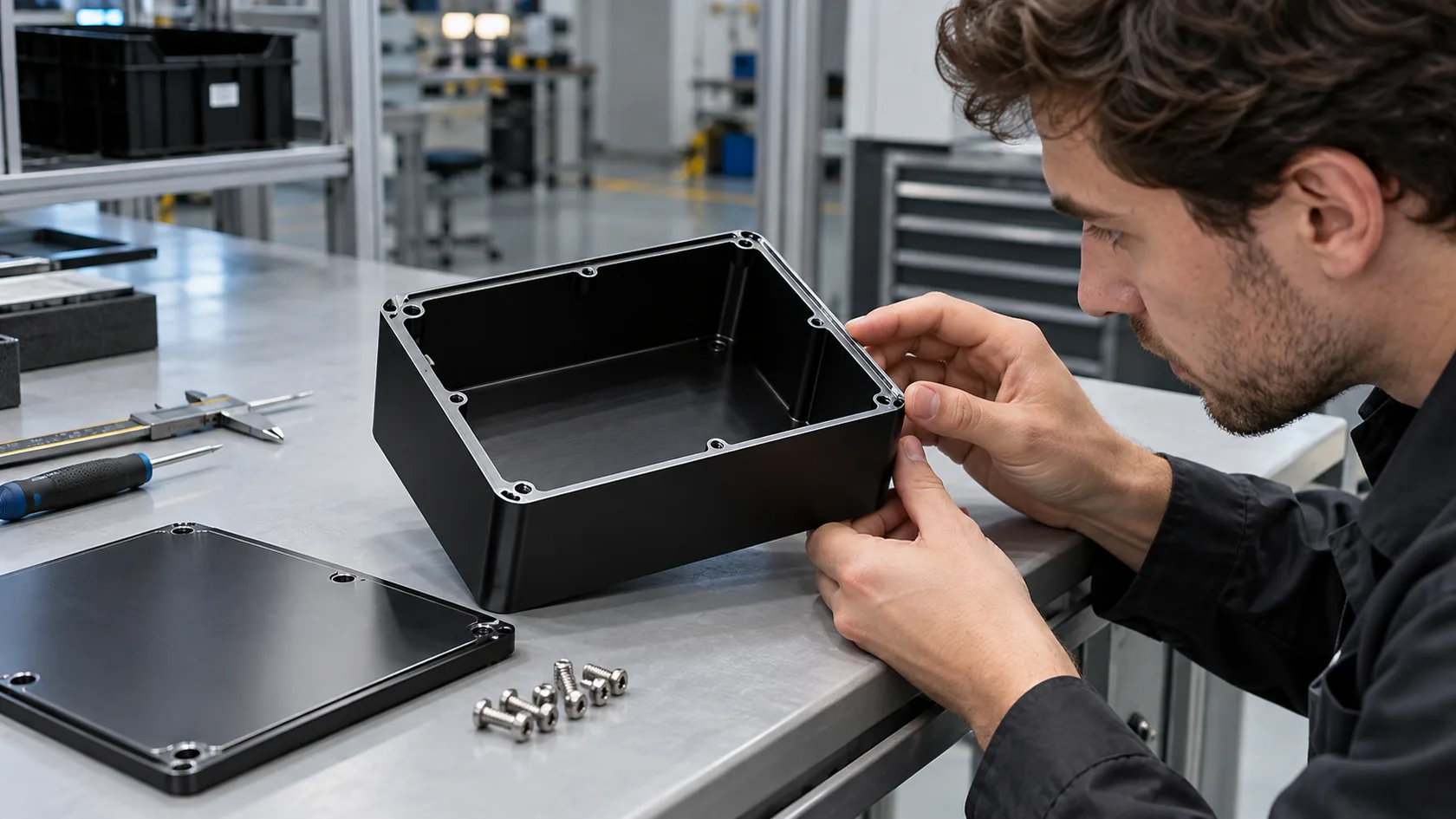
Colored anodizing is popular for branding, black electronics housings, red or blue product parts, and consumer-facing aluminum accessories. It gives a thinner, more integrated finish than powder coating, so it usually keeps edges sharper.
The weak point is color consistency. Different aluminum alloys, different batches, and different coating thickness can shift the color. Black is easier than champagne, red, blue, or bright decorative colors. Outdoor UV exposure can also change some dyed colors over time.
Hardcoat anodizing
Hardcoat anodizing, often connected with Type III anodizing under MIL-A-8625 anodic coating guidance, is thicker and harder than standard decorative anodizing. It is useful for wear surfaces, sliding parts, and harsh-use components.
But hardcoat is not a magic upgrade for every enclosure. It can make dimensions grow, reduce color choice, and create darker or less decorative surfaces. On tight-fitting covers, threads, grooves, or sliding rails, thickness must be planned in the drawing.
When I review anodizing for enclosure projects, I look first at alloy, tolerance, and contact areas. If those three are wrong, a beautiful anodized sample can still become a production headache.
Anodizing is excellent for many aluminum parts, but it is not always the best choice when the buyer needs thick color coverage or strong outdoor color stability.
Powder Coating and Wet Painting
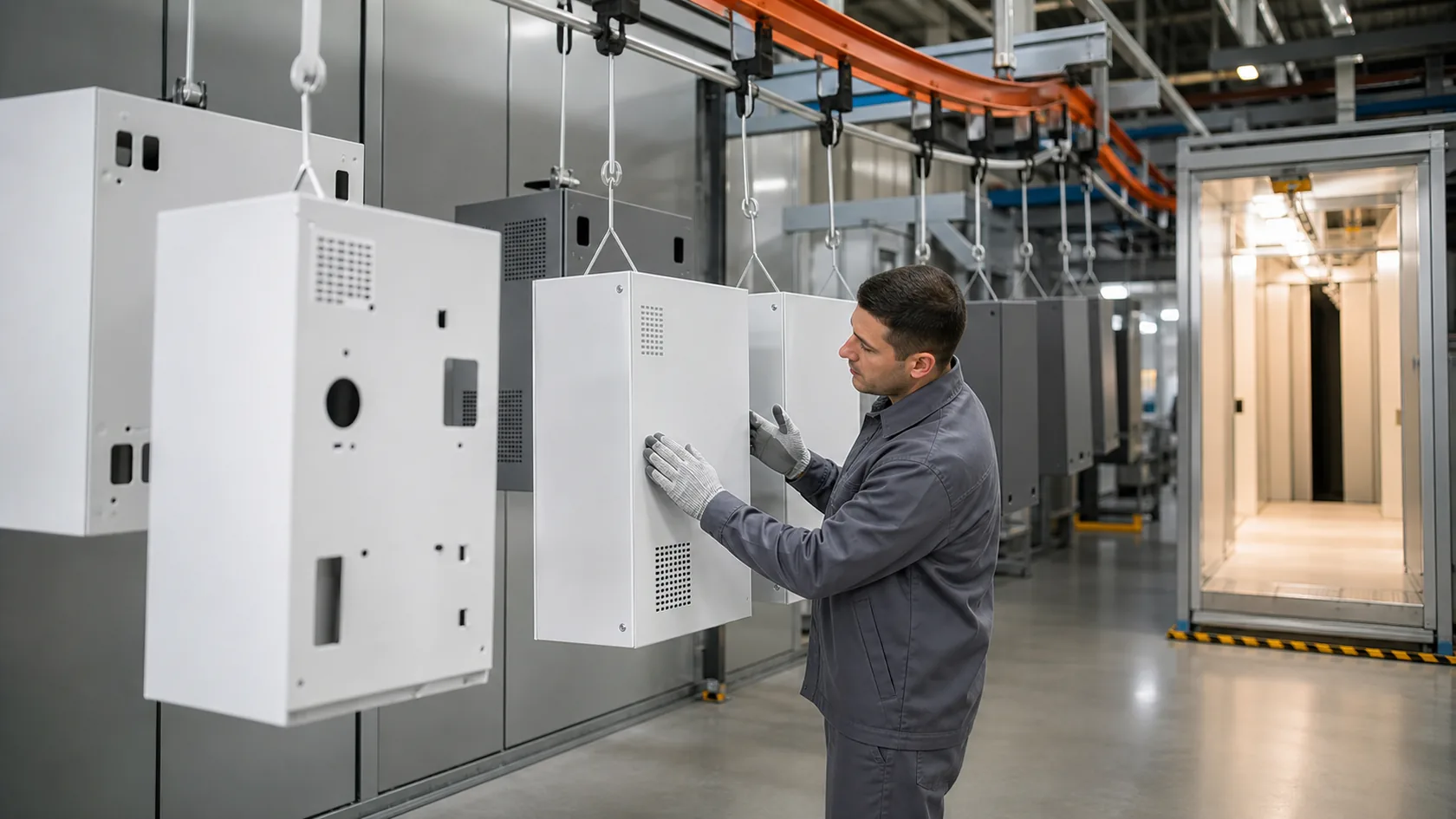
Powder coating and wet painting add an organic coating on top of aluminum. They are common for sheet metal enclosures, outdoor boxes, electrical cabinets, control housings, and parts that need a specific brand color.
Powder coating
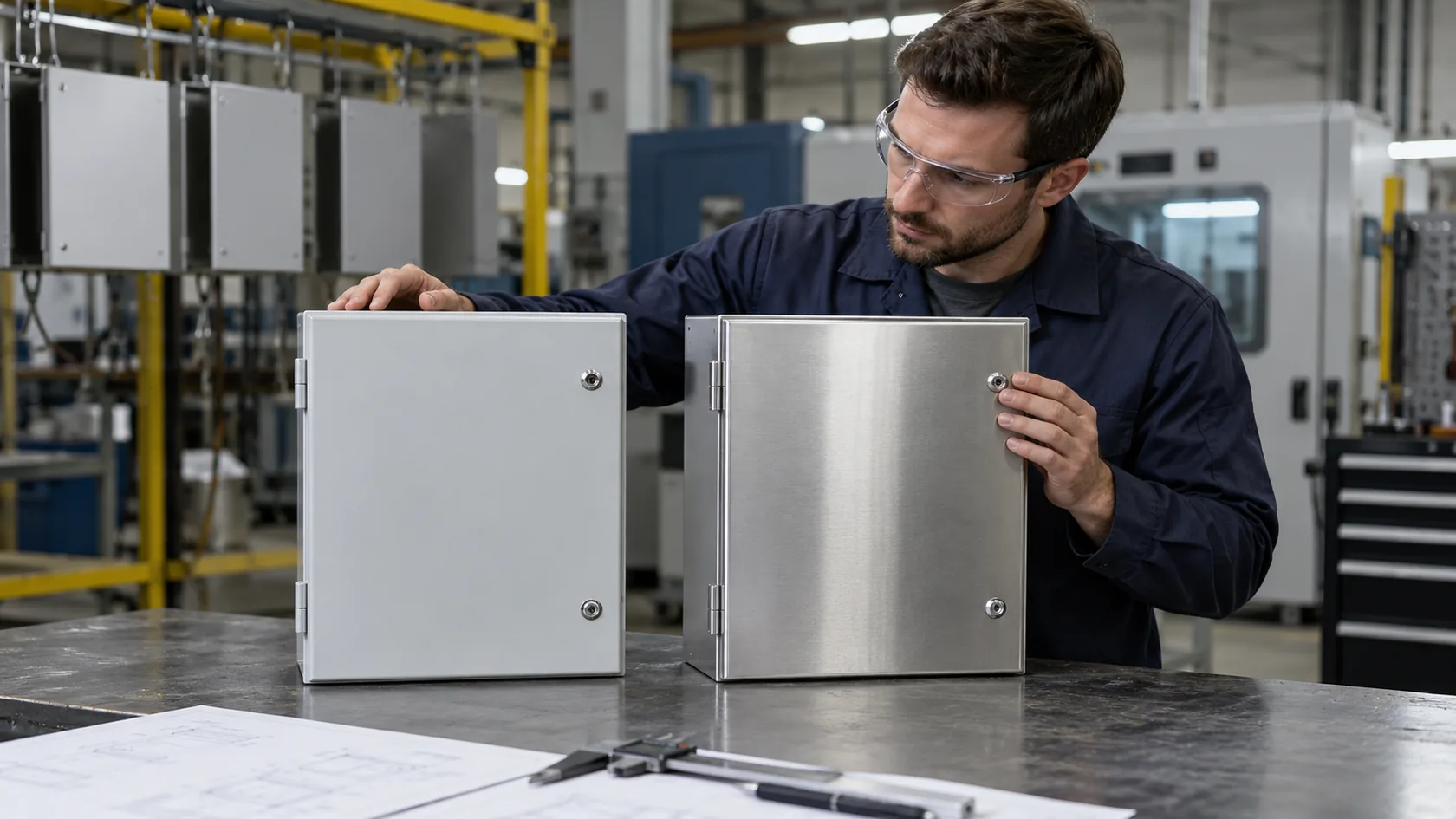
Powder coating uses charged powder sprayed onto the part, then cured in an oven. It can create a durable, attractive layer with many colors and textures. It also covers small surface marks better than anodizing.
For aluminum enclosures, powder coating is often the right choice when the buyer wants:
- RAL colors
- white, gray, or custom brand colors
- outdoor housing appearance
- better hiding of small sheet metal marks
- thicker film coverage
- textured or semi-gloss surfaces
QUALICOAT specifications are often used as a reference for quality requirements in coated aluminum, especially architectural applications. Even when an electronics enclosure does not require QUALICOAT, the idea is useful: pretreatment, powder quality, curing, adhesion, and inspection all matter.
Wet painting
Wet painting is more flexible for special colors, small batches, metallic effects, and some coating systems. It can work well when powder coating color availability is limited or when the finish needs a very specific visual effect.
The downside is that wet paint can involve more solvent control, longer drying, and more process sensitivity. It also depends heavily on surface preparation and operator skill.
Powder coating versus anodizing
| Requirement | Powder coating usually helps | Anodizing usually helps |
|---|---|---|
| Strong RAL color match | Yes | Limited |
| Thin sharp edges | Less ideal | Yes |
| Outdoor color system | Often yes, with correct powder | Depends on dye and environment |
| Wear surface | Not usually | Hardcoat can help |
| Electrical contact | Needs masking | Conductive areas can still need masking |
| Hide small marks | Better | Less forgiving |
I judge powder coating by asking where the part will be touched, screwed, packed, and scratched during real use. A coating that survives the oven but fails during assembly has not really passed the project.
Painting and powder coating solve many visual and outdoor needs, but aluminum sometimes needs a very different kind of finish for electrical function.
Chemical Conversion Coating for Conductivity and Paint Base
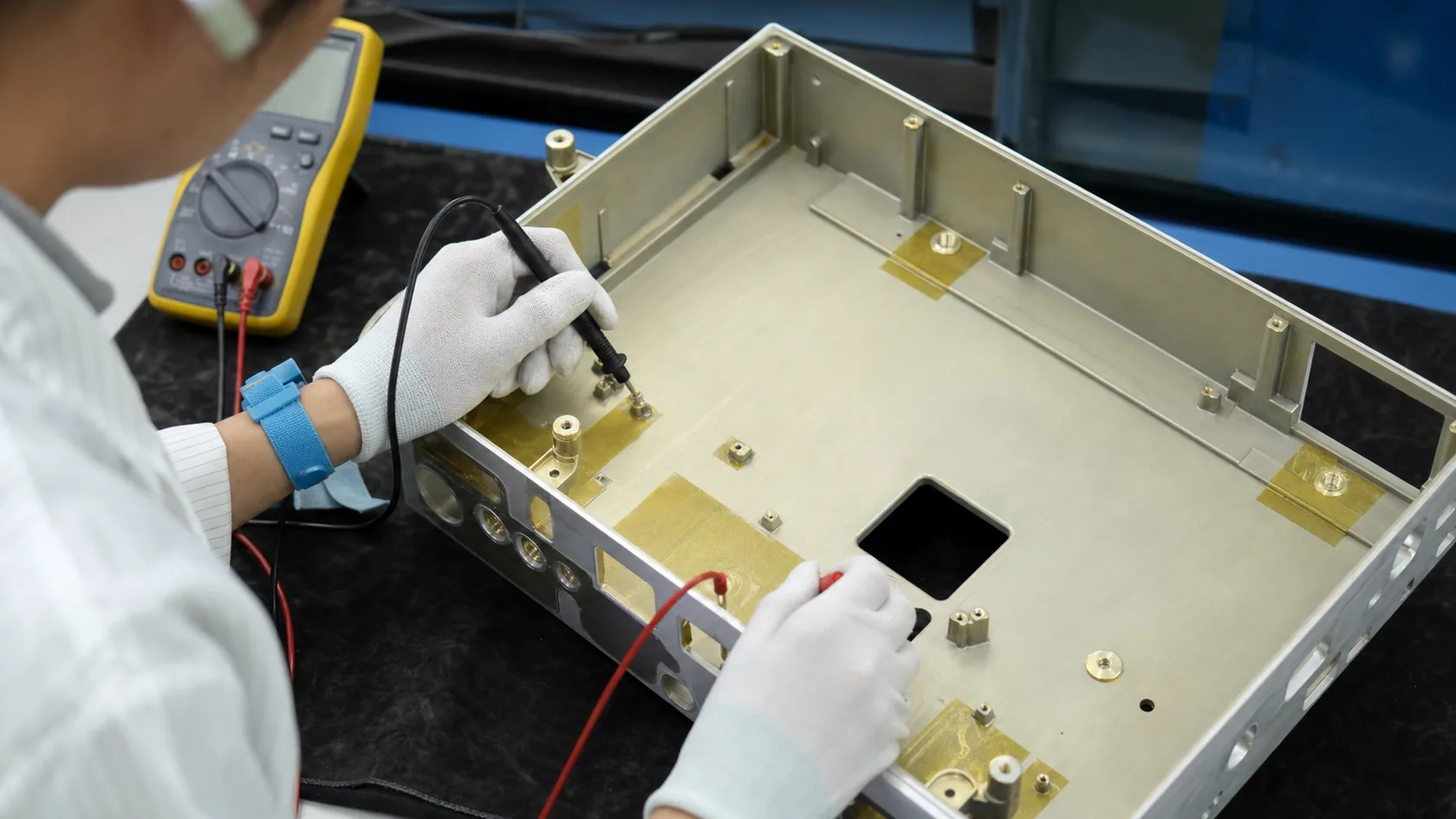
Chemical conversion coating creates a thin protective film on aluminum. It is often used when a part needs corrosion resistance but must still keep good electrical conductivity, or when it needs a base layer before painting or powder coating.
The classic example is chromate conversion coating. ASTM B449 describes chromate coatings on aluminum alloys for corrosion protection, as a base for organic coatings, and for low electrical contact impedance.
Why buyers use conversion coating
Conversion coating is common for electronic enclosures, RF housings, grounding areas, military-style aluminum parts, and internal chassis components. It does not create the thick appearance of powder coating. It also does not behave like anodizing.
Buyers often choose it when they need:
- electrical grounding
- EMI contact areas
- corrosion resistance inside an enclosure
- paint or powder coating adhesion support
- minimal dimensional change
- a thin functional finish
RoHS and environmental choices
Older chromate systems can involve hexavalent chromium, which creates environmental and compliance concerns. Many projects now use trivalent or chromium-free alternatives, depending on the required specification.
This point should be agreed early. A vague drawing note like "chem film" can mean different things to different suppliers. If the part goes into electronics, medical, automotive, or export markets, compliance wording should be clear.
In my own quoting process, I treat conductive surfaces like critical dimensions. If the buyer needs grounding after coating, we must define the exact areas before production, not after the first batch comes back insulated in all the wrong places.
Conversion coating is a functional finish. It rarely wins a beauty contest, but it can quietly prevent serious assembly and performance problems.
Electrophoresis, Plating, and Special Coatings
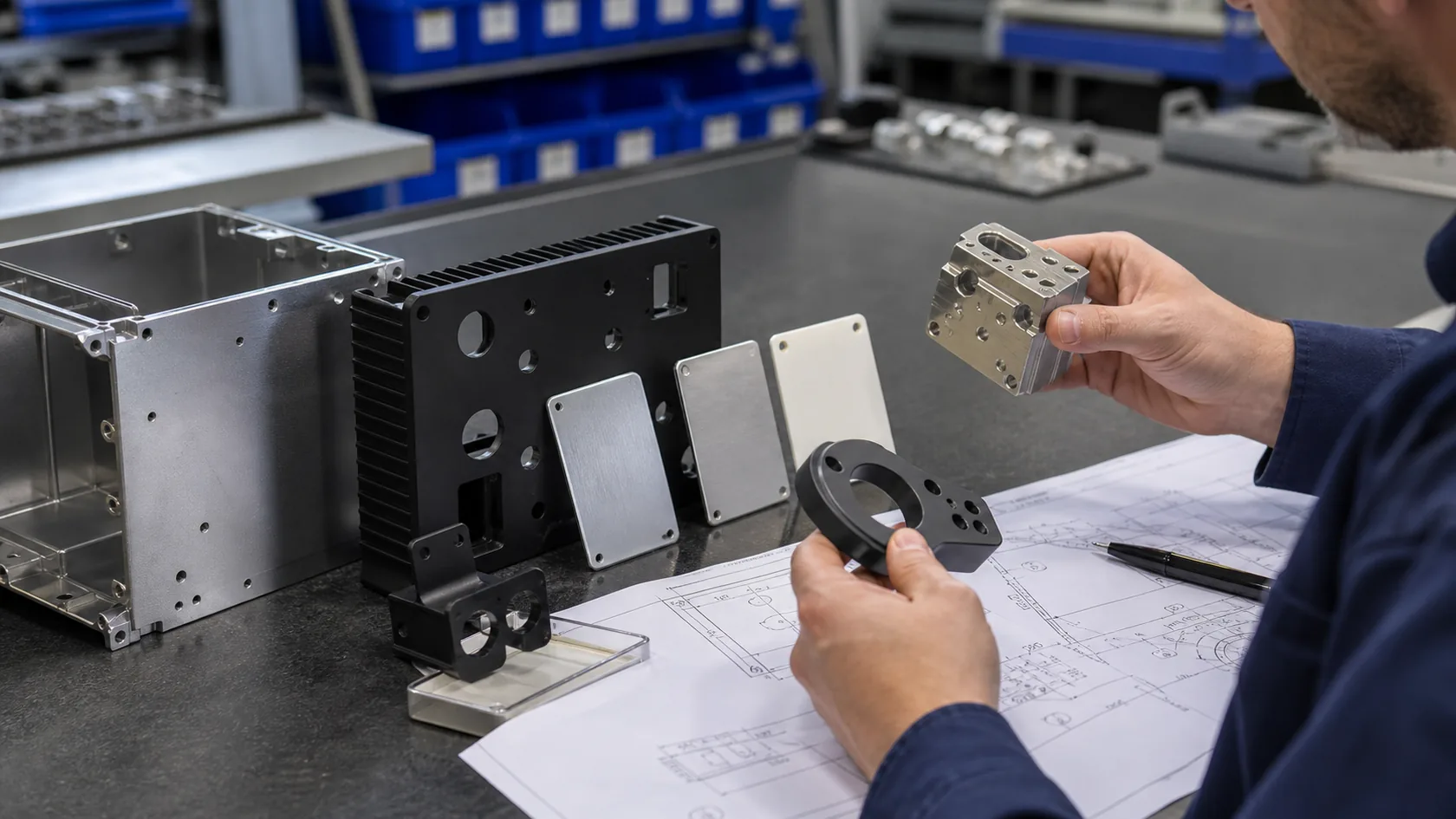
Some aluminum projects need finishing methods beyond the common choices. These are less universal, but they are important in the right application.
Electrophoresis coating
Electrophoresis coating, also called e-coating, uses an electrical process to deposit a coating film. It can provide even coverage and good corrosion resistance on complex shapes. It is more common in automotive and industrial applications than in small custom enclosure orders.
For enclosure buyers, e-coating may be useful when the part has many cavities or needs uniform coverage in areas that are hard to spray. But minimum order quantity, process availability, and color choice must be checked early.
Plating on aluminum
Plating aluminum is possible, but it requires special pretreatment because aluminum forms oxide quickly. Nickel plating, tin plating, and other metal layers can be used for special conductivity, solderability, wear, or appearance needs.
This is not a casual decorative choice for most custom enclosures. It needs good process control and a clear reason. If the reason is only "make it shiny," polishing or anodizing may be simpler.
Ceramic, PTFE, and other special coatings
Some aluminum parts use ceramic coatings, PTFE sealing, anti-stick surfaces, thermal coatings, or other special finishes. These are normally driven by function: heat, friction, chemical exposure, wear, or cleaning.
The practical issue is supplier matching. Not every enclosure factory controls these coatings in-house. Sometimes the right answer is to involve a specialist finishing partner and design the part around that process.
I become careful when a buyer asks for a rare finish but has no test requirement. A special coating without a test method is just an expensive word on a drawing.
Special finishes can solve real problems, but they should be chosen from performance needs, not from a product brochure.
Choosing a Finish for Custom Aluminum Enclosures
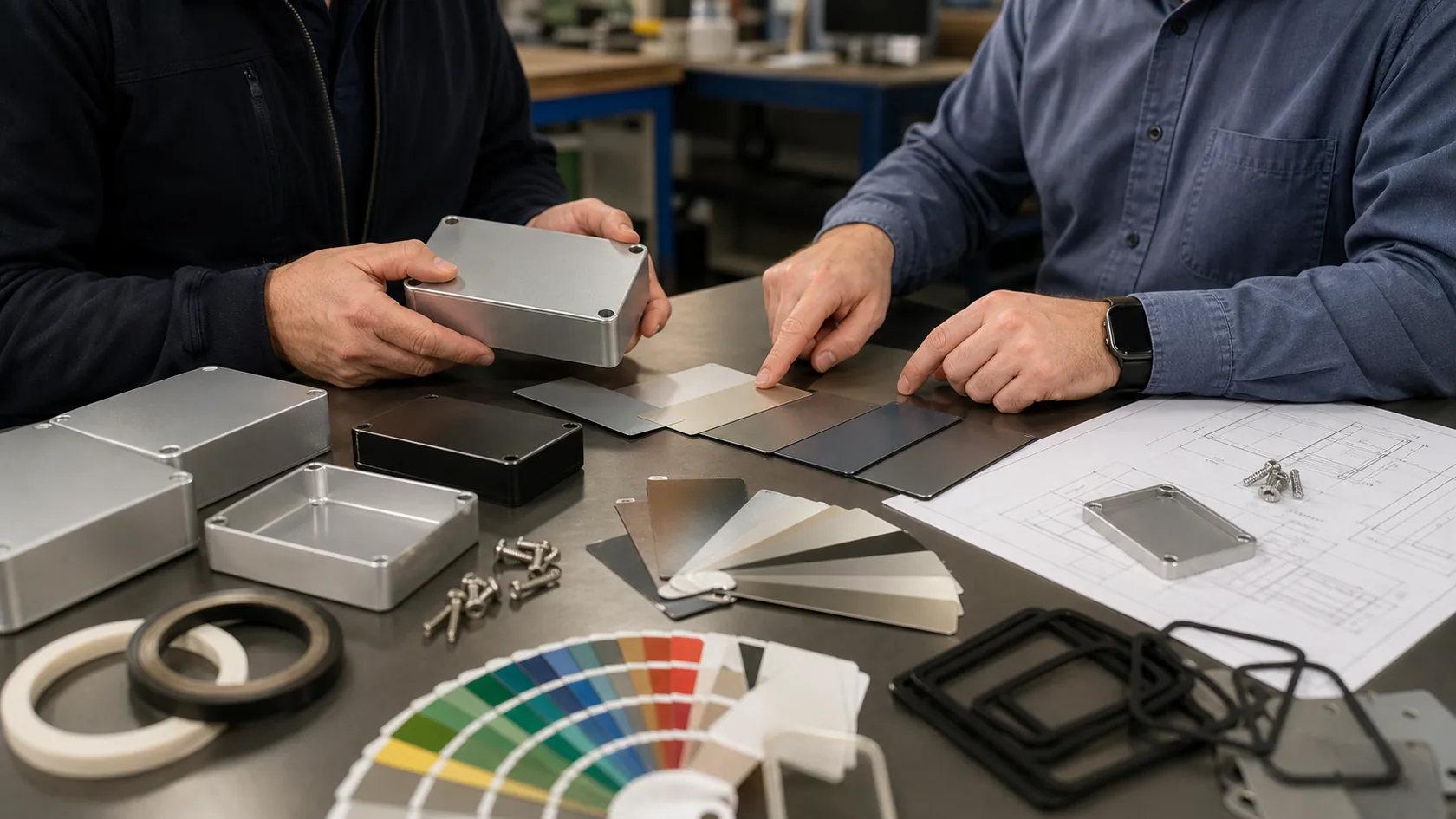
The best aluminum finish depends on the full product situation. For MaidaTech projects, I normally ask a few practical questions before recommending a finish.
Start with the use environment
Indoor electronics, outdoor telecom boxes, marine-adjacent housings, handheld devices, industrial control panels, and display products all need different surface priorities.
If the enclosure stays indoors, a standard black anodized or powder-coated finish may be enough. If it sits outdoors, the coating system, pretreatment, edge protection, drainage, and fastener material become more important.
Check tolerance and assembly
Finishes add thickness, change surface friction, and sometimes grow into threads or tight grooves. Anodizing grows from the aluminum surface. Powder coating adds a thicker layer. Masking can protect threaded holes, grounding pads, gasket surfaces, and sliding features.
The drawing should show these details. If it does not, the supplier may guess. And supplier guessing is a small comedy until the parts do not assemble.
Match finish to branding and volume
For small batches, black anodizing, clear anodizing, or common powder colors are usually easier. For custom colors, buyers should expect color sample approval. For repeated production, it is worth locking the approved finish sample, gloss level, texture, and inspection standard.
The Aluminum Extruders Council overview of painting aluminum notes that liquid and powder coating systems can offer broad color choices, while many projects use AAMA-type specifications to define performance. That idea applies well to custom enclosure sourcing: do not only say the color; say the performance expectation.
A quick selection table
| Finish method | Best for | Watch out for |
|---|---|---|
| Brushing | directional decorative texture | grain direction and scratches |
| Polishing | bright decorative surfaces | fingerprints and uneven reflection |
| Bead blasting | matte CNC texture | batch consistency |
| Clear anodizing | clean aluminum look | alloy color variation |
| Colored anodizing | thin color on machined parts | color shift and UV fading |
| Hardcoat anodizing | wear and functional surfaces | thickness and limited color |
| Powder coating | RAL colors and outdoor housings | masking, curing, edge buildup |
| Wet painting | special colors and effects | process control and drying |
| Conversion coating | grounding and paint base | compliance and appearance limits |
For me, the correct finish is the one that survives the buyer's real product life, not just our sample photo. This is why I like to discuss installation, screws, cable glands, labels, cleaning, and packing before confirming the surface process.
Once the finish is chosen clearly, production becomes easier to control and the buyer has fewer surprises.
Conclusion
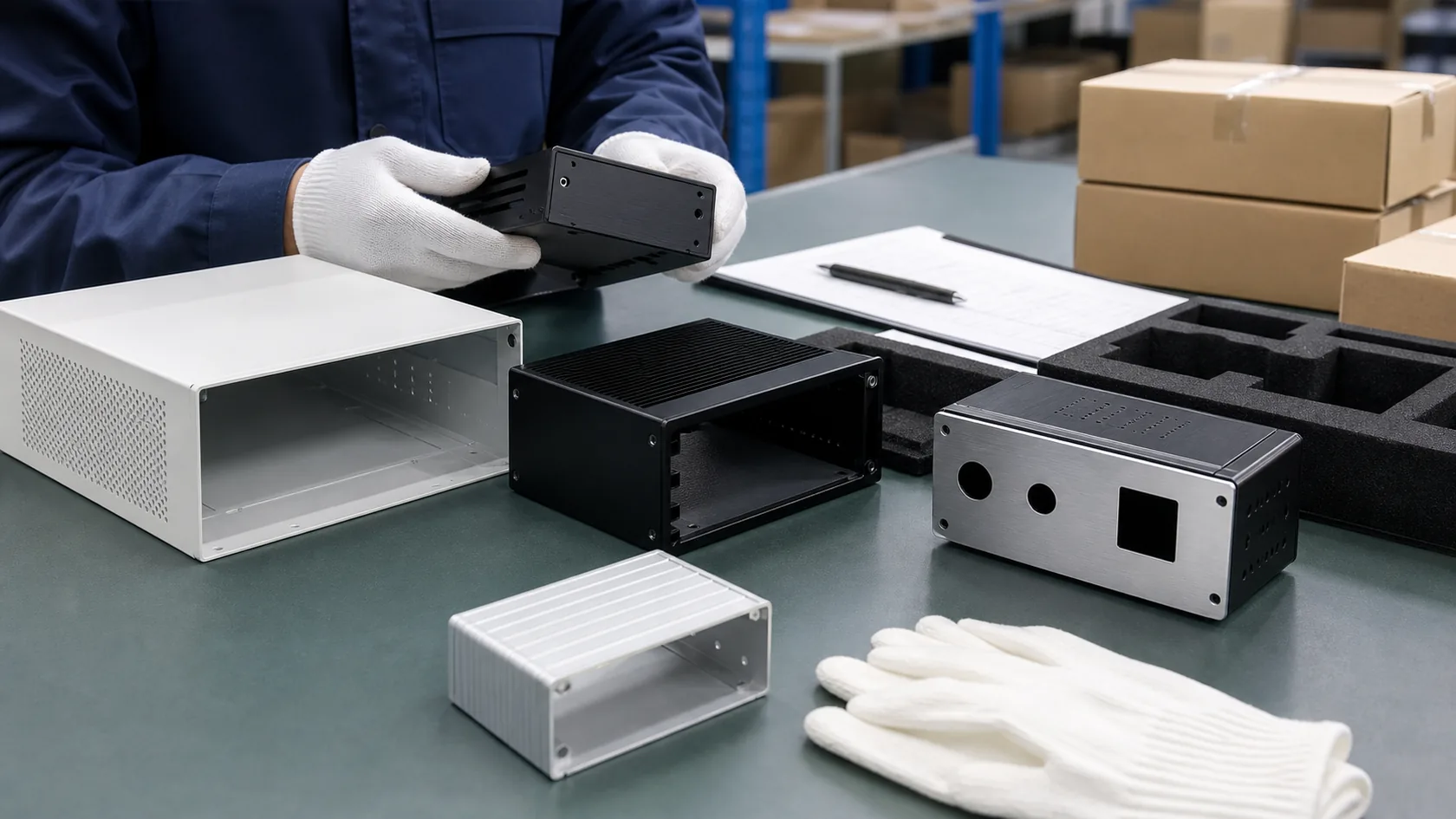
Aluminum surface finishing methods look like a visual topic at first. Brushed, polished, anodized, powder-coated, painted, conversion-coated. It is easy to treat them as style options.
But in real enclosure manufacturing, the finish is part of the engineering decision. It affects tolerance, corrosion resistance, grounding, color control, scratch behavior, assembly, packaging, cost, and lead time.
My usual advice is simple. Do not ask only, "Which finish looks best?" Ask:
- Where will the enclosure be used?
- Does it need grounding or EMI contact?
- Are there tight threads, grooves, or mating surfaces?
- Does the color need to match a brand standard?
- Will the product be touched, cleaned, or installed outdoors?
- Is this a prototype or repeat production?
If you answer those questions first, the finish choice becomes much clearer.
At MaidaTech, we help buyers choose practical surface finishes for custom aluminum enclosures, sheet metal housings, Raspberry Pi-style cases, and OEM/ODM projects. If you are not sure whether anodizing, powder coating, brushing, or another finish fits your product, send us your drawing, use environment, and finish target. We can help you choose the safer route before the surface becomes an expensive surprise.