Skip to content

Surface finishing cost for sheet metal parts looks simple from the outside.
A buyer sends a drawing and asks, “How much for powder coating?” Or, “Can you quote zinc plating?” Or, “What is the cost for black finish?”
I understand this question. Buyers need a number. They need to compare suppliers. They need to control the budget before the project moves too far.
But in real sheet metal production, surface finishing cost is not only a finish name. It is affected by the base material, part condition, surface area, geometry, masking, color, batch quantity, inspection, packaging, and the risk of rework.
Two sheet metal parts can use the same finish and still have very different finishing costs. A flat cover is easy. A welded electrical enclosure with threaded inserts, grounding pads, deep corners, louvers, and cosmetic front surfaces is not the same job.
At MaidaTech, I usually treat finishing cost as part of the whole enclosure design, not as the last decoration. If the finish is quoted too casually, the price may look good at first and become painful during samples or mass production.
In this article, I will explain the main factors that affect surface finishing cost for sheet metal parts, especially for custom enclosures, cabinets, brackets, panels, and OEM metal housings.
Let’s start with the material before we talk about the coating.
Material and Surface Condition
The base material is one of the first cost drivers. Steel, stainless steel, galvanized steel, aluminum, and pre-coated sheet all behave differently during finishing.
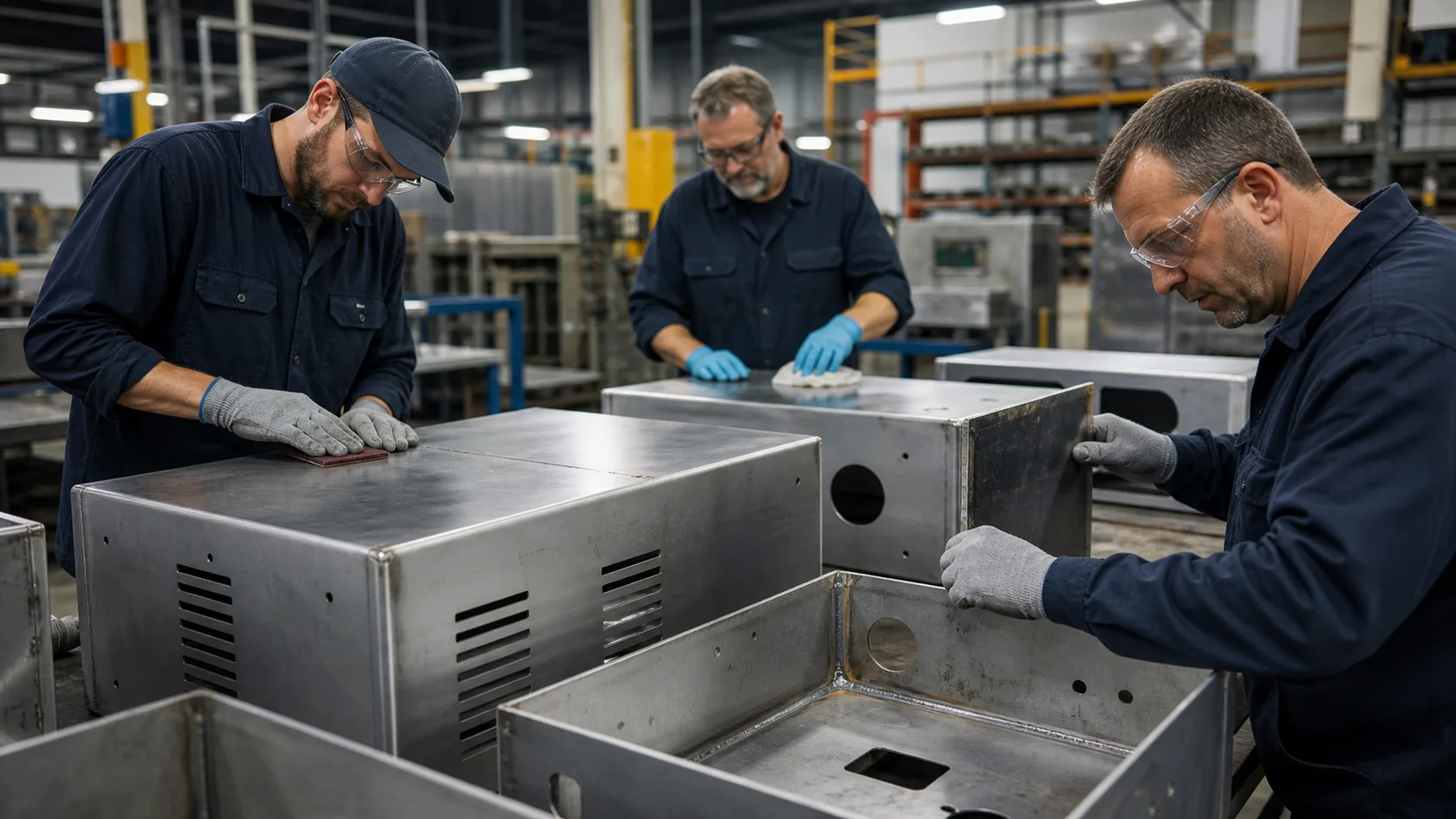
A clean new sheet metal part is much easier to finish than a rusty, oily, welded, or scratched part.
Clean Material Costs Less to Prepare
For powder coating, the part usually needs degreasing and chemical pretreatment. For plating, the part needs cleaning and surface activation. For painting, the surface may need sanding, primer, or conversion treatment.
If the material arrives with oil, oxidation, rust, weld discoloration, adhesive residue, or heavy scratches, the supplier must spend more time preparing it.
Common preparation work includes:
- Degreasing
- Sanding
- Deburring
- Grinding weld marks
- Removing rust or oxide
- Sandblasting
- Chemical pretreatment
- Cleaning inside corners and holes
Pretreatment is not glamorous, but it protects the whole job. Organizations such as QUALICOAT put strong attention on pretreatment and process control for coated aluminum because coating performance depends on more than the final color.
Welded Parts Need More Judgment
Welded sheet metal enclosures often cost more to finish because weld areas need grinding, cleaning, and extra cosmetic control. Heat marks, spatter, and uneven surfaces can show through the finish if the preparation is weak.
When I review a welded enclosure, I always check which welds are visible after assembly. A hidden weld only needs functional control. A visible front corner may need much more work, and that difference should be reflected in the finishing cost.
Once the material condition is clear, the next question is how much surface the finish must cover.
Part Size, Surface Area, and Geometry
Surface finishing cost is often linked to surface area, but area is only the beginning.
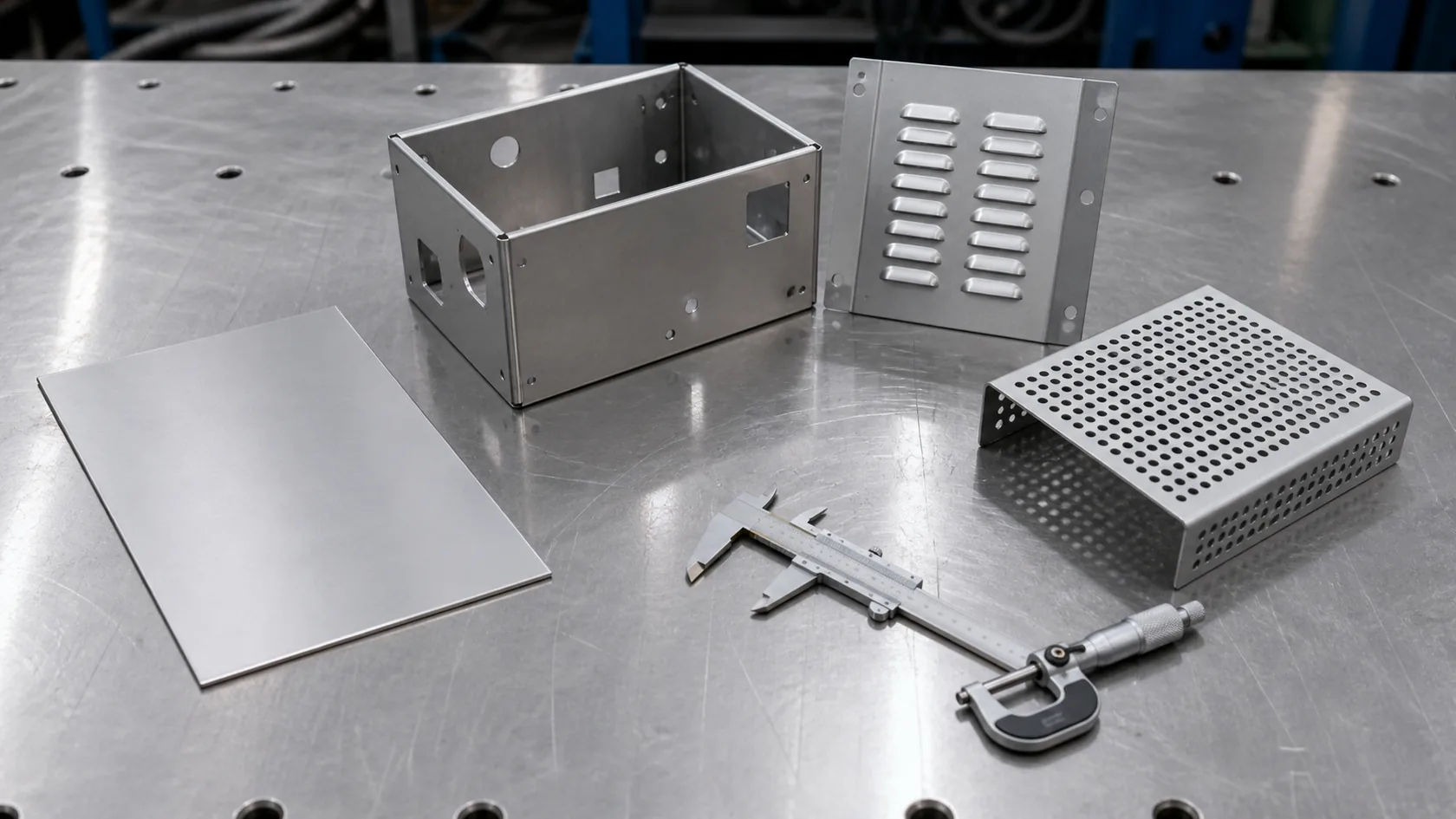
A large flat panel is easier to finish than a smaller part with many bends, holes, louvers, deep boxes, and internal corners. The coating must reach the surfaces, the worker must handle the part, and the inspection team must check the result.
Geometry Changes Handling Time
Sheet metal parts can be simple or annoying. I say “annoying” with affection because some parts look easy on the drawing and then fight the finishing line like a stubborn cat.
Cost can increase when the part has:
- Deep boxes
- Narrow channels
- Small punched holes
- Louvers
- Welded corners
- Threaded inserts
- Sharp inside bends
- Large thin panels
- Fragile tabs
- Areas that trap liquid or powder
The part may need special racking. It may need more rotation during spraying. It may need extra drainage control during pretreatment. It may also need more careful packing after finishing because large flat cosmetic surfaces scratch easily.
Internal Surfaces Are Not Free
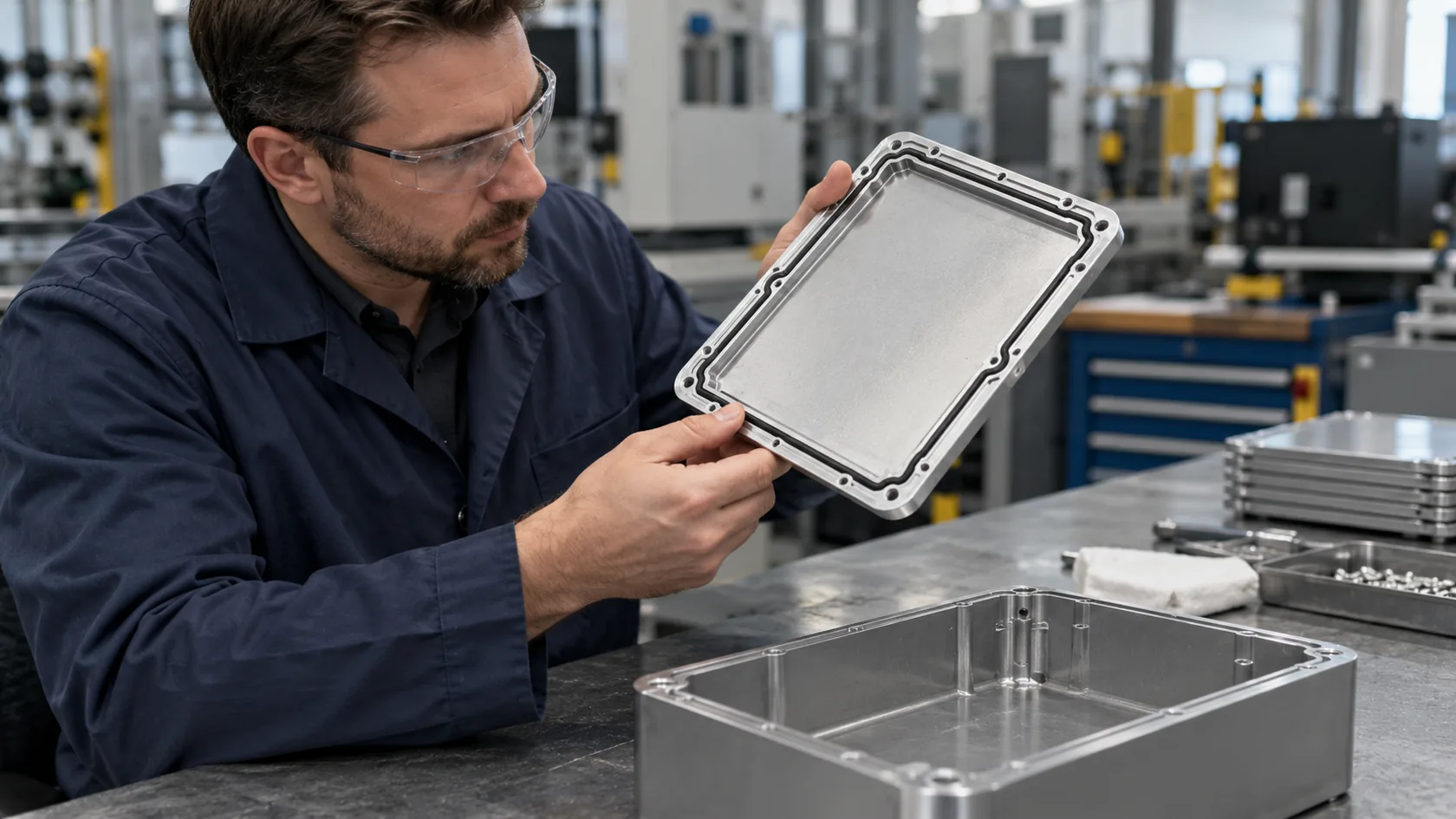
Buyers sometimes care only about the outside appearance, but finishing suppliers may still need to process inside surfaces. For an enclosure, the inside corners and flanges can add real area and labor.
| Geometry issue | Cost impact |
|---|---|
| Large flat cover | More area and packaging care |
| Deep enclosure box | Harder coverage and pretreatment drainage |
| Many perforations | More edges and inspection time |
| Louvers | Harder spray access and color control |
| Welded seams | Grinding and cosmetic preparation |
| Thin panels | Higher handling risk and possible deformation |
In my quoting work, I do not only look at length, width, and height. I look at how a real worker will hold, hang, spray, inspect, and pack the part.
Now the finish specification begins to matter.
Finish Type and Performance Requirements
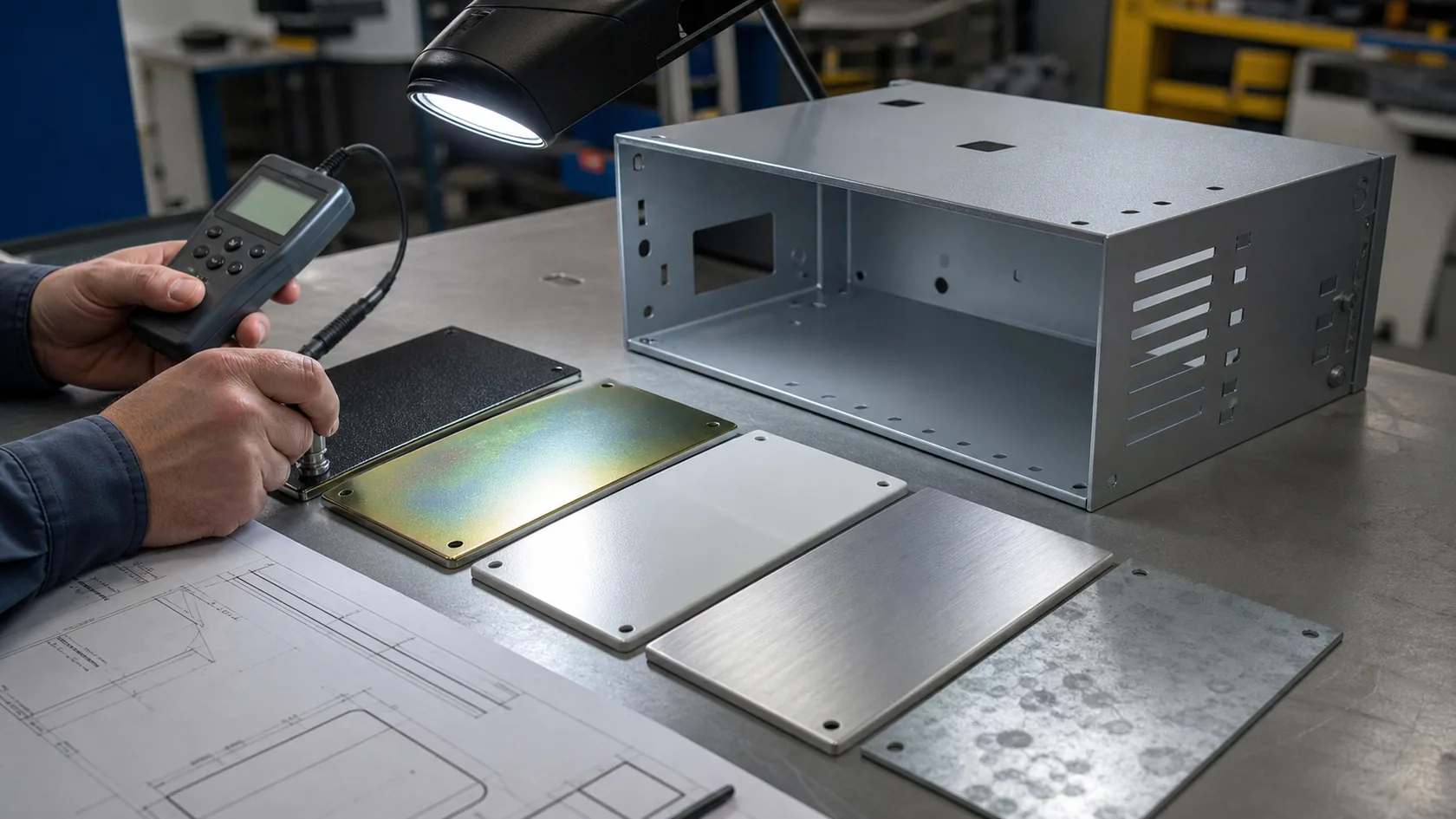
Different finishes have different cost structures. Powder coating, wet painting, zinc plating, nickel plating, passivation, brushing, polishing, and electrophoresis do not use the same labor, equipment, chemistry, or inspection.
Even within one finish type, the cost can change a lot.
Standard Finish Is Usually More Economical
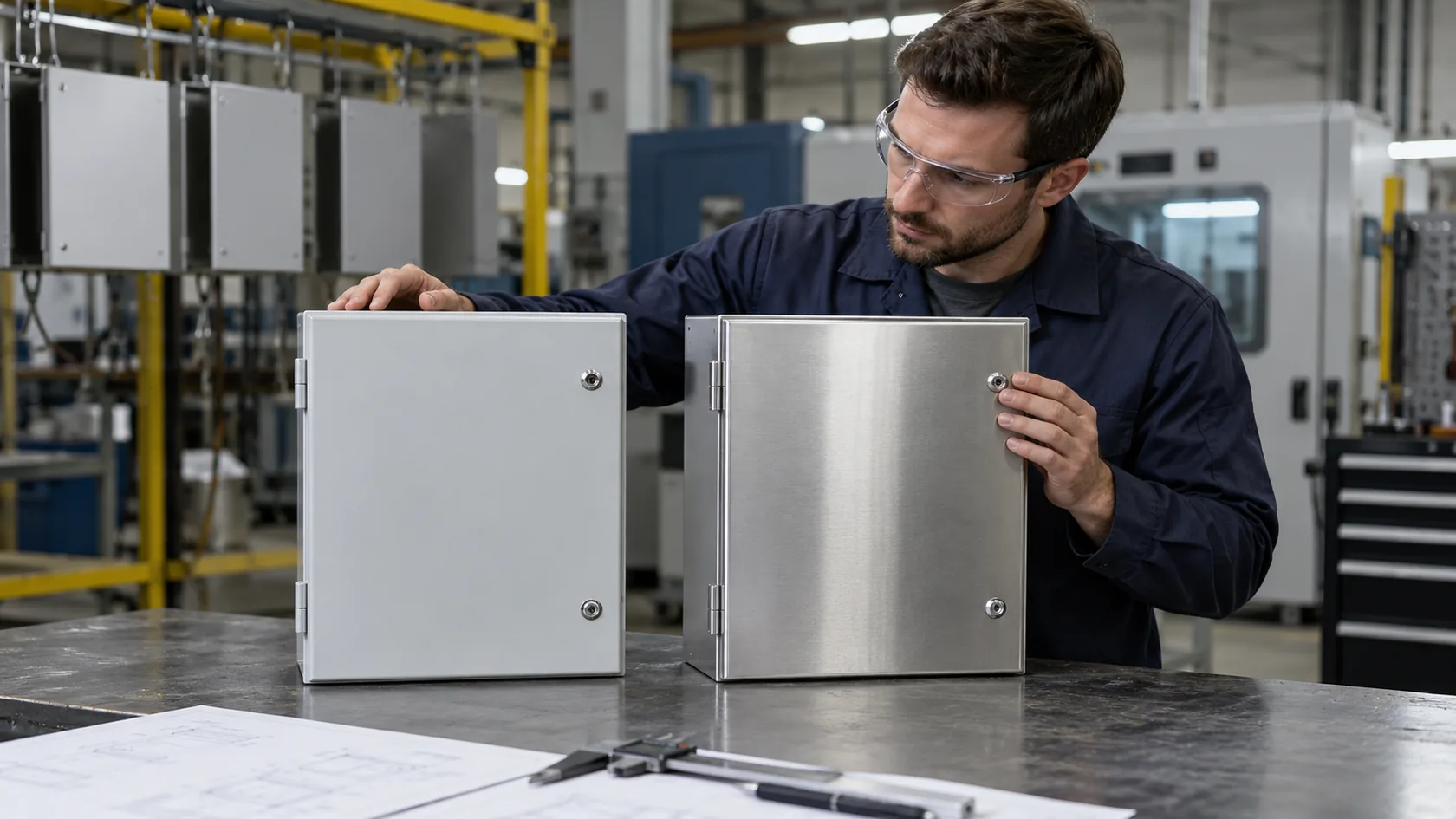
A standard black or gray powder coating is usually easier to quote than a custom texture, special outdoor-grade system, two-tone finish, or strict color match.
For sheet metal parts, powder coating cost may change because of:
- Powder type
- Color and gloss
- Texture
- Film thickness
- Pretreatment system
- Oven capacity
- Masking
- Color change time
- Batch size
- Inspection standard
Coating thickness is not only a visual detail. Methods such as ASTM D7091 are used for nondestructive dry film thickness measurement on metal substrates. When thickness becomes a formal requirement, inspection time and process control increase.
Corrosion Requirements Can Raise Cost
If the part is used indoors, a standard finish may be enough. If it is used outdoors, near salt air, in industrial environments, or inside equipment exposed to moisture, the finish system may need stronger pretreatment or a higher-performance coating.
For steel structures, standards such as ISO 12944 discuss corrosion protection by protective paint systems. A small sheet metal enclosure is not always a bridge or marine structure, but the same idea applies: environment changes the finish requirement.
When I see “outdoor use” on a project, I do not quote the same finish as a simple indoor control box. The risk is different, so the process and cost may be different.
The next cost driver is small but powerful: masking.
Masking, Threads, and Functional Areas
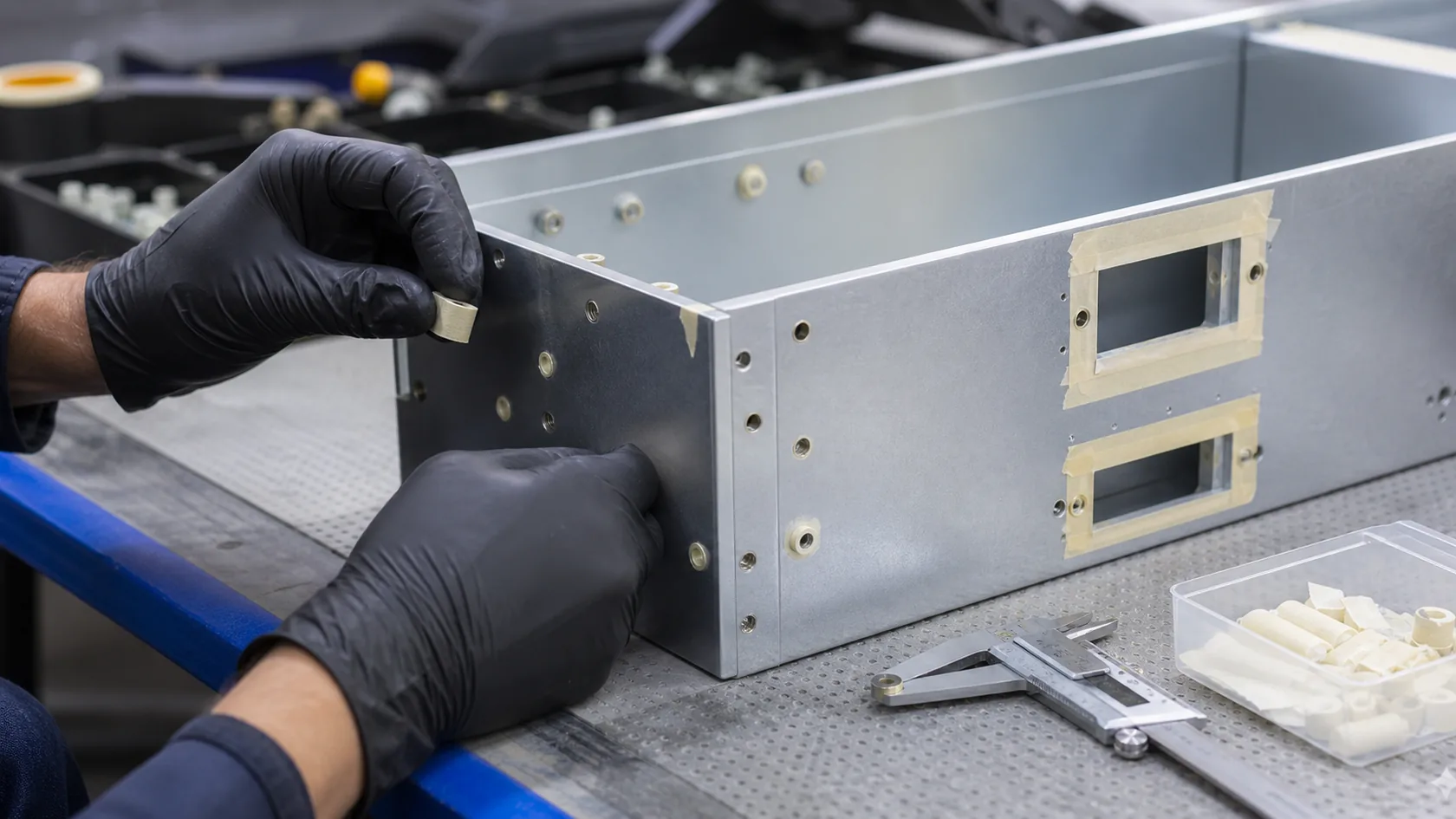
Masking can quietly change the finishing cost for sheet metal parts.
Masking means protecting surfaces that should not receive coating, plating, or paint. It is often manual work. Someone must apply plugs, caps, tape, or special masking before finishing and remove them afterward.
Small Features Can Create Big Labor
Masking is common for:
- Threaded holes
- PEM nuts and studs
- Grounding pads
- Bearing surfaces
- Sliding areas
- Connector cutouts
- Sealing faces
- Contact points
- Label or logo areas
If a part has two masked holes, the cost impact may be small. If it has 80 threaded holes, several grounding areas, and many tight openings, the labor becomes serious.
This is why the drawing should clearly show which areas must remain uncoated or controlled after finishing.
Functional Surfaces Need a Clear Plan
Sheet metal parts often need grounding, shielding, or reliable assembly. A beautiful coating can become a problem if it blocks electrical contact or fills a threaded feature.
For example, a powder-coated enclosure may look perfect, but screws may not enter smoothly because coating built up around threaded inserts. A plated bracket may pass appearance checks but fail because a contact surface was not controlled.
My habit is to mark functional surfaces before discussing appearance. That saves cost because the finishing supplier knows where to spend labor and where normal finish is acceptable.
Masking is connected closely to batch quantity, because manual work does not disappear just because the order is larger.
Quantity, Color Changes, and Lead Time
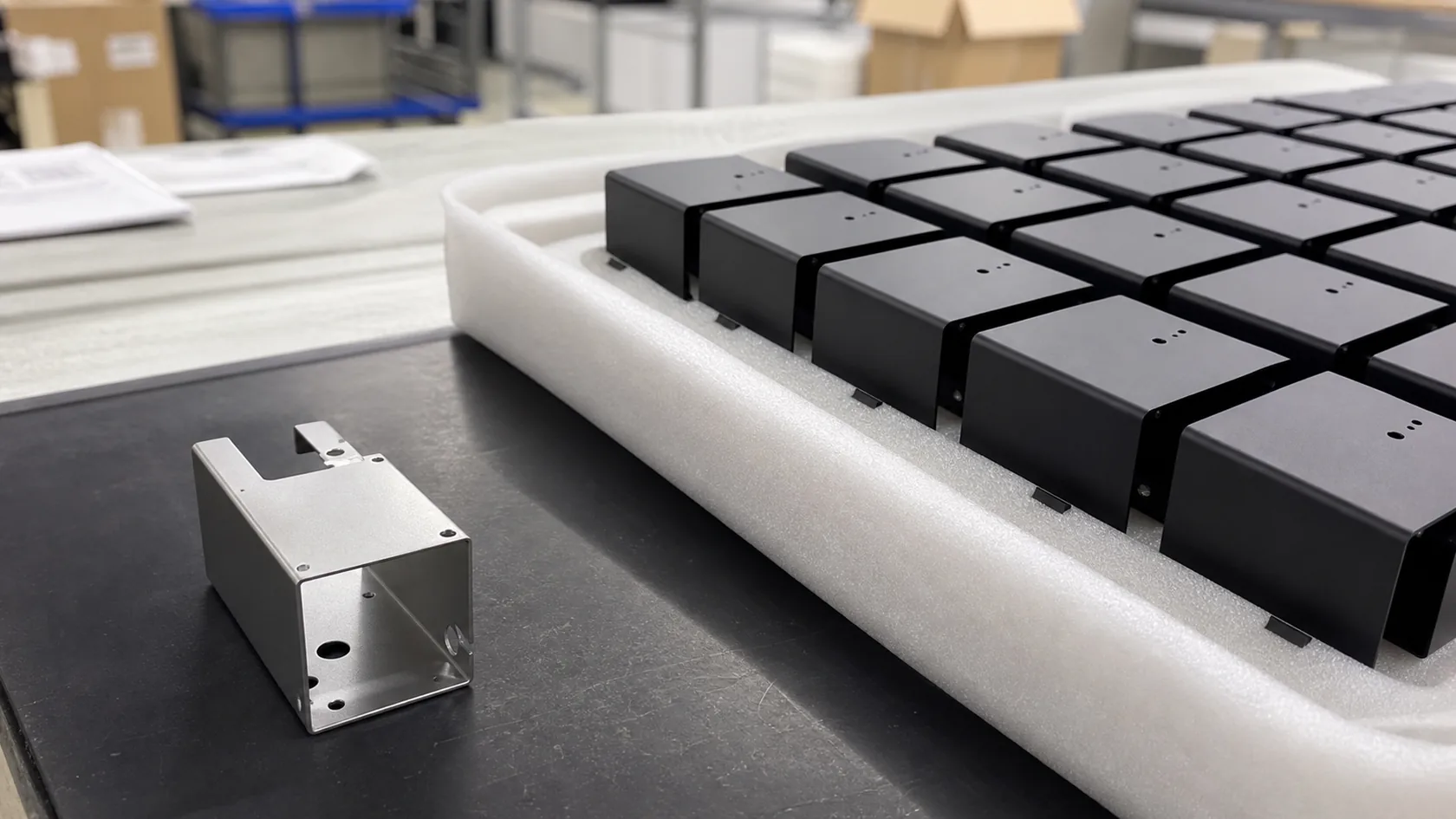
Surface finishing has batch economics. This is one of the reasons prototype orders can feel expensive.
The finishing supplier may need setup time, color preparation, line cleaning, racking, oven time, inspection, and packing whether the batch has 5 parts or 500 parts.
Small Batches Carry More Setup Cost
A small prototype batch often has a high unit cost because the setup cost is spread across very few pieces.
For powder coating, color changes can add cost because the booth or gun may need cleaning. For plating, tanks and fixtures still need setup. For painting, mixing, spraying, curing, and cleaning all take time.
| Quantity situation | Typical cost behavior |
|---|---|
| One prototype | High unit cost because minimum charge dominates |
| Small pilot batch | Better than prototype, but setup still matters |
| Stable production batch | Lower unit cost if process is repeatable |
| Mixed colors in one order | Higher setup and sorting cost |
| Rush order | Higher cost or higher quality risk |
Standard Colors Help Control Cost
Standard colors and stable batch planning reduce cost. Special colors, custom gloss, two-tone finishes, and urgent changes can increase cost.
If a buyer changes color after samples are approved, the supplier may need new powder, new samples, new approval, and new scheduling. That is not only a color change. It is a process reset.
When customers ask me how to reduce finishing cost without reducing quality, I usually suggest stable color selection, realistic cosmetic standards, and combining parts into a practical batch. Boring advice, yes. Useful advice, absolutely.
After production, the finish still has to pass inspection and survive shipping.
Inspection, Packaging, and Rework Risk
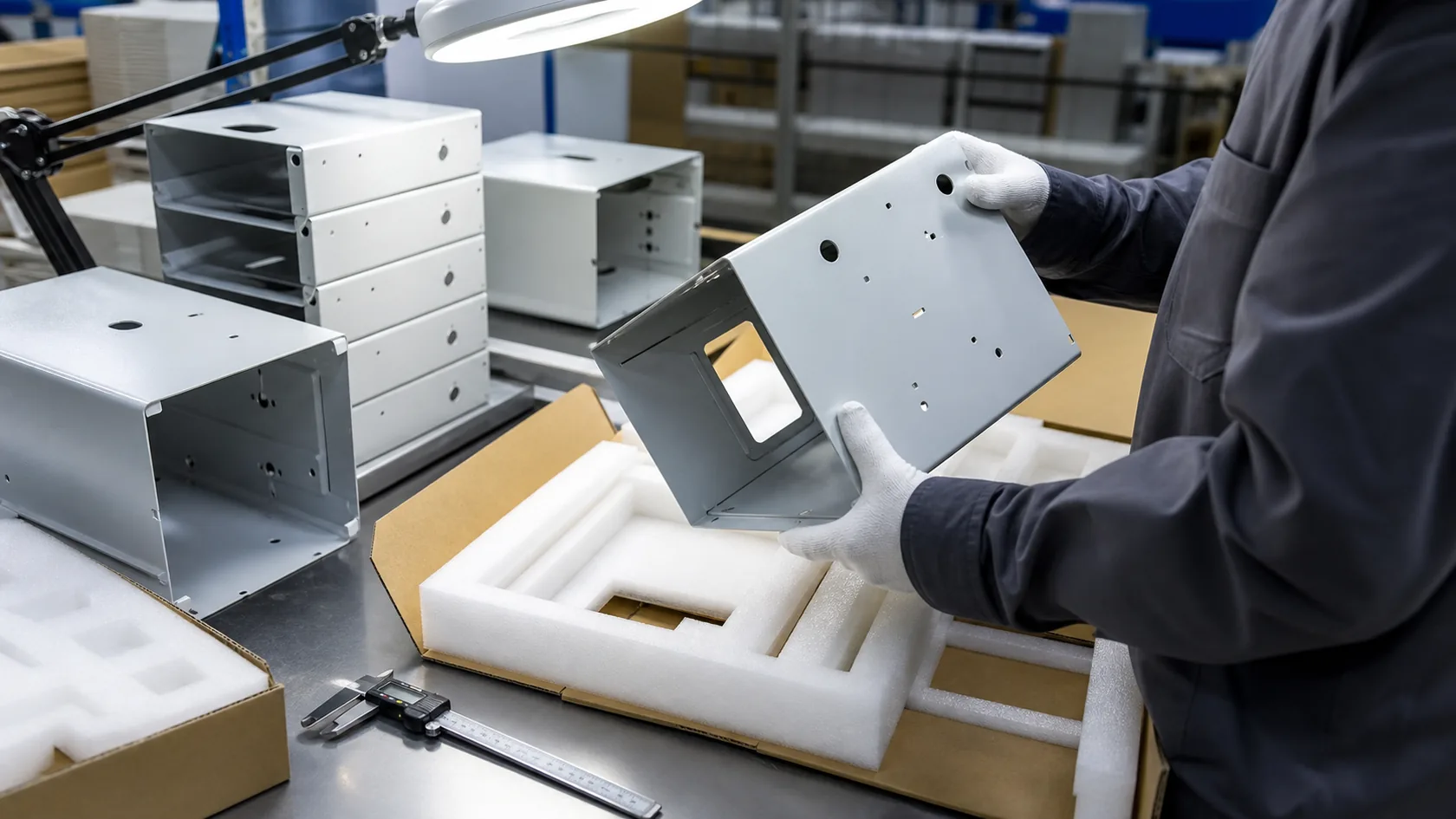
Finishing cost also includes quality control. If the buyer requires strict inspection, test reports, photos, color comparison, coating thickness records, adhesion checks, or special packaging, the cost will change.
Some of these checks are normal. Some are project-specific.
Inspection Should Match the Real Risk
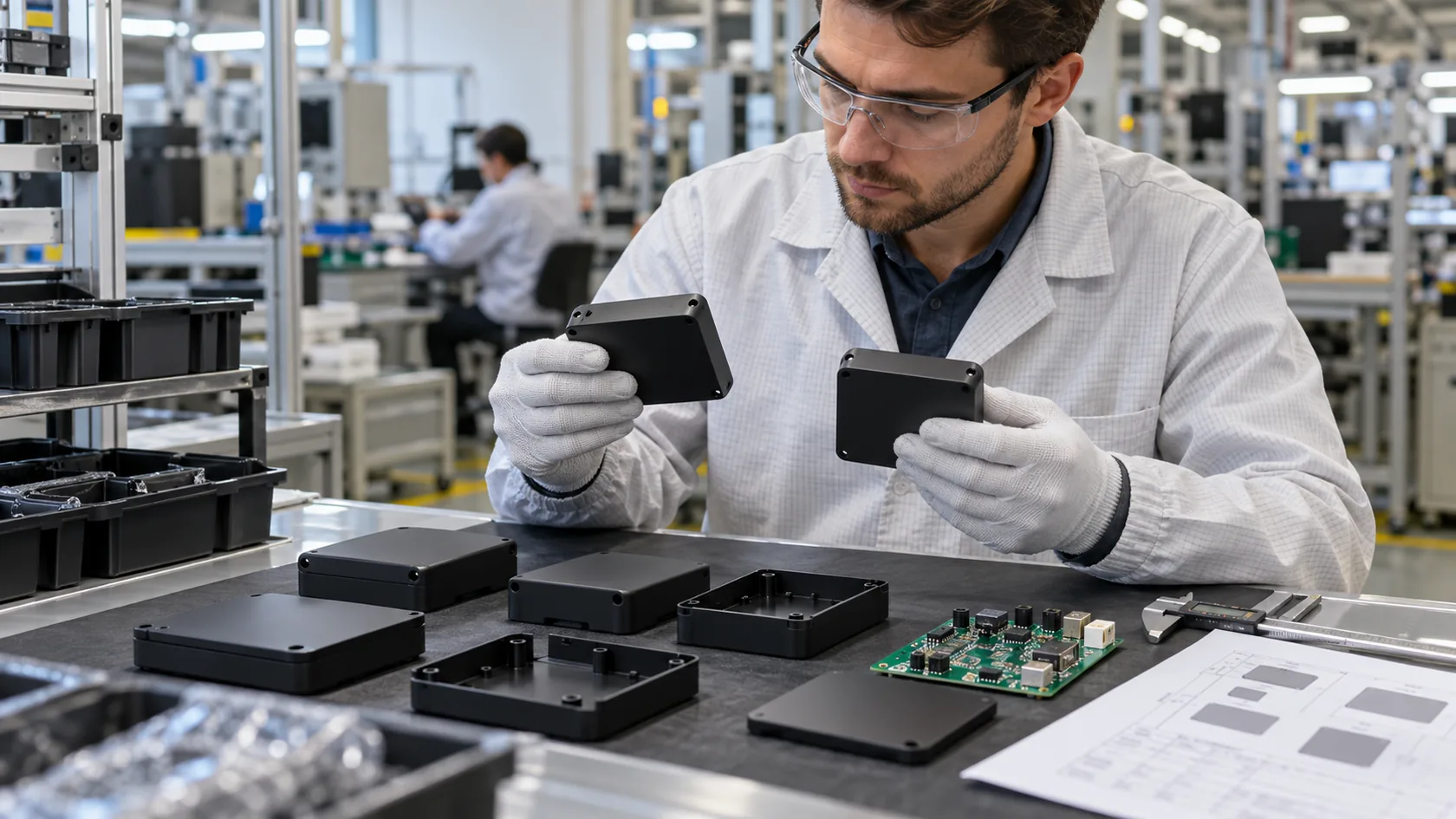
A simple internal bracket may only need basic appearance and fit checks. A front panel for a branded product may need much more care.
Inspection can include:
- Visual appearance
- Color and gloss comparison
- Film thickness
- Adhesion
- Scratch checks
- Thread function
- Grounding continuity
- Logo position
- Packaging protection
ASTM has standards such as ASTM D3359 for evaluating coating adhesion by tape test. Not every project needs formal adhesion testing, but the example shows that finish quality can be tested, documented, and controlled when required.
Packaging Is Part of the Finish Plan
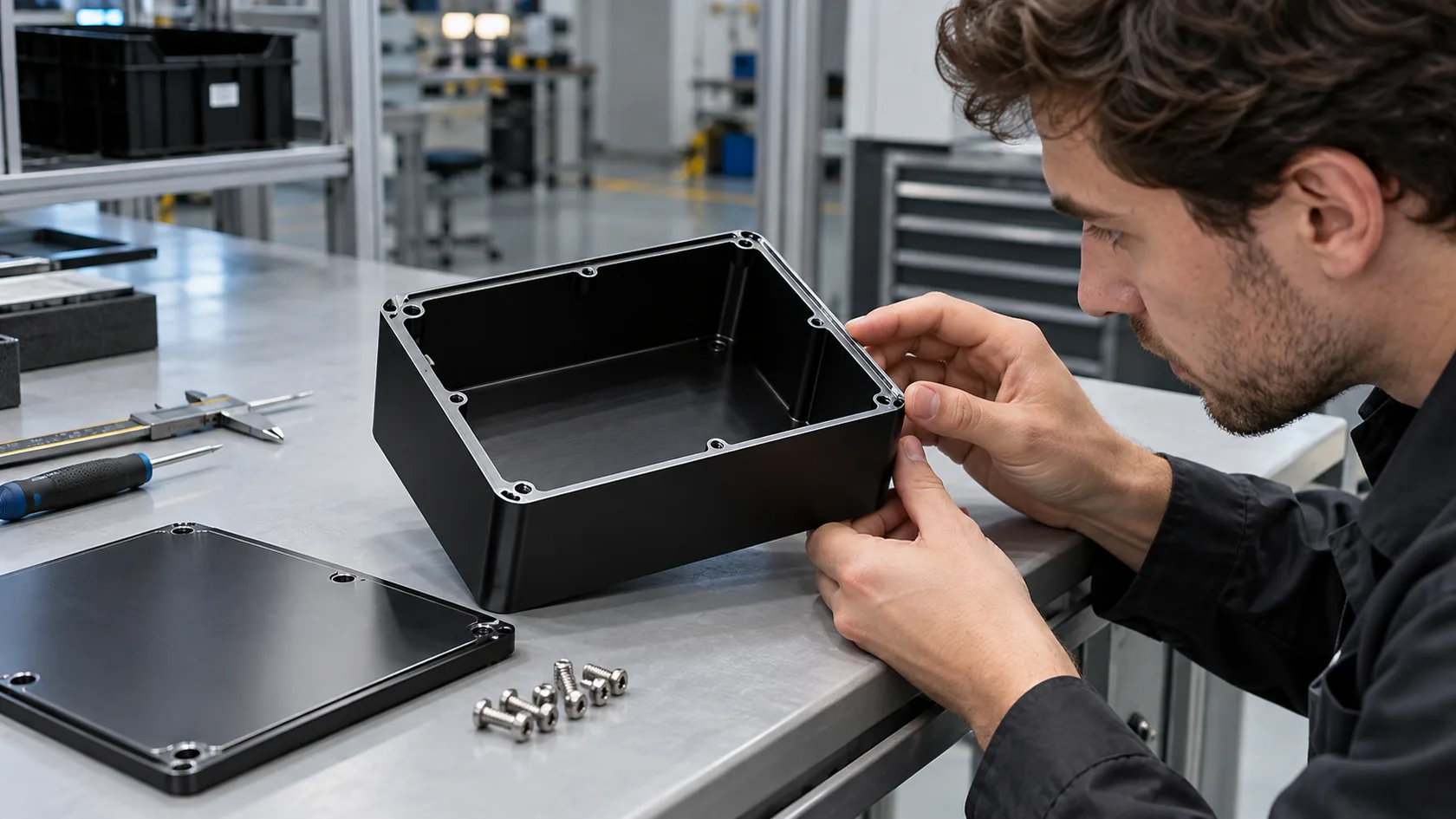
Finished sheet metal parts can scratch during transport. Large panels, black coatings, glossy finishes, and visible enclosure covers need careful packing.
Foam, plastic film, separators, cartons, corner protection, and custom packaging all add cost. But poor packaging can cost much more if the parts arrive scratched and need replacement.
I sometimes tell customers that finishing does not end at the oven or plating line. It ends when the buyer opens the carton and the part still looks like the approved sample.
Now we can turn all these details into a practical RFQ checklist.
Conclusion
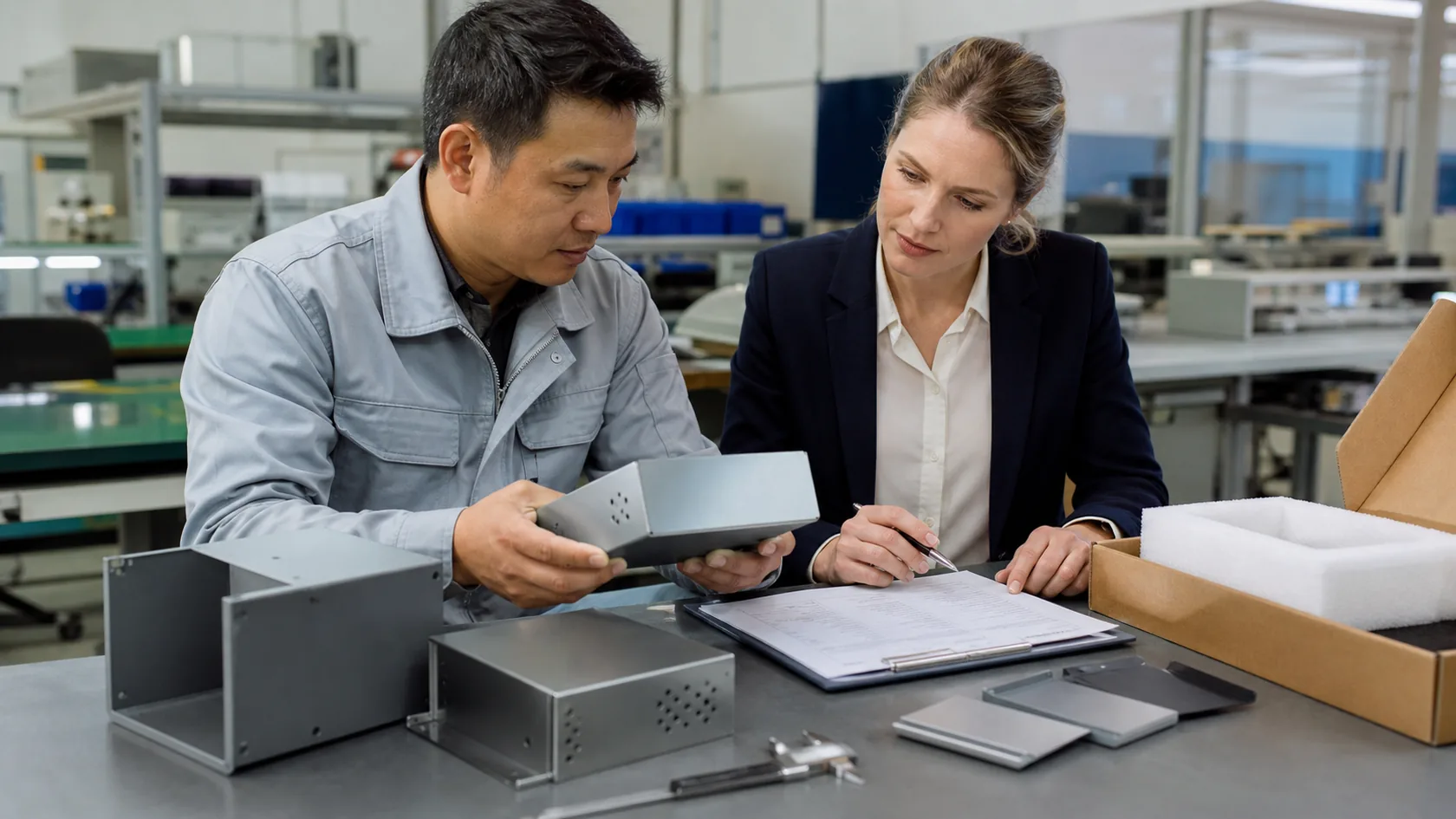
Surface finishing cost for sheet metal parts is affected by many practical factors, not only the finish name.
Material condition, surface area, part geometry, finish type, performance requirements, masking, batch size, color changes, inspection, packaging, and rework risk all affect the final price.
If you want a faster and more accurate quote, send your supplier:
- 2D drawing and 3D file
- Material type and thickness
- Finish type, color, gloss, and texture
- Required cosmetic surfaces
- Masking areas and grounding points
- Critical dimensions after finishing
- Quantity for prototype and mass production
- Indoor or outdoor use environment
- Logo, label, or printing requirements
- Packaging and inspection requirements
This information helps the supplier quote the real work instead of guessing from one finish name.
At MaidaTech, we support custom sheet metal enclosures, aluminum enclosures, powder coating, anodizing, plating coordination, logo printing, engraving, packaging, and OEM/ODM production. If you are comparing finishing costs for sheet metal parts, send us your drawing and tell us how the part will be used. We can help you find a finish plan that controls cost without creating assembly or quality problems.
The lowest finishing price is not always the best price.
The best price is the one that includes the right control before the part reaches your customer.