Skip to content
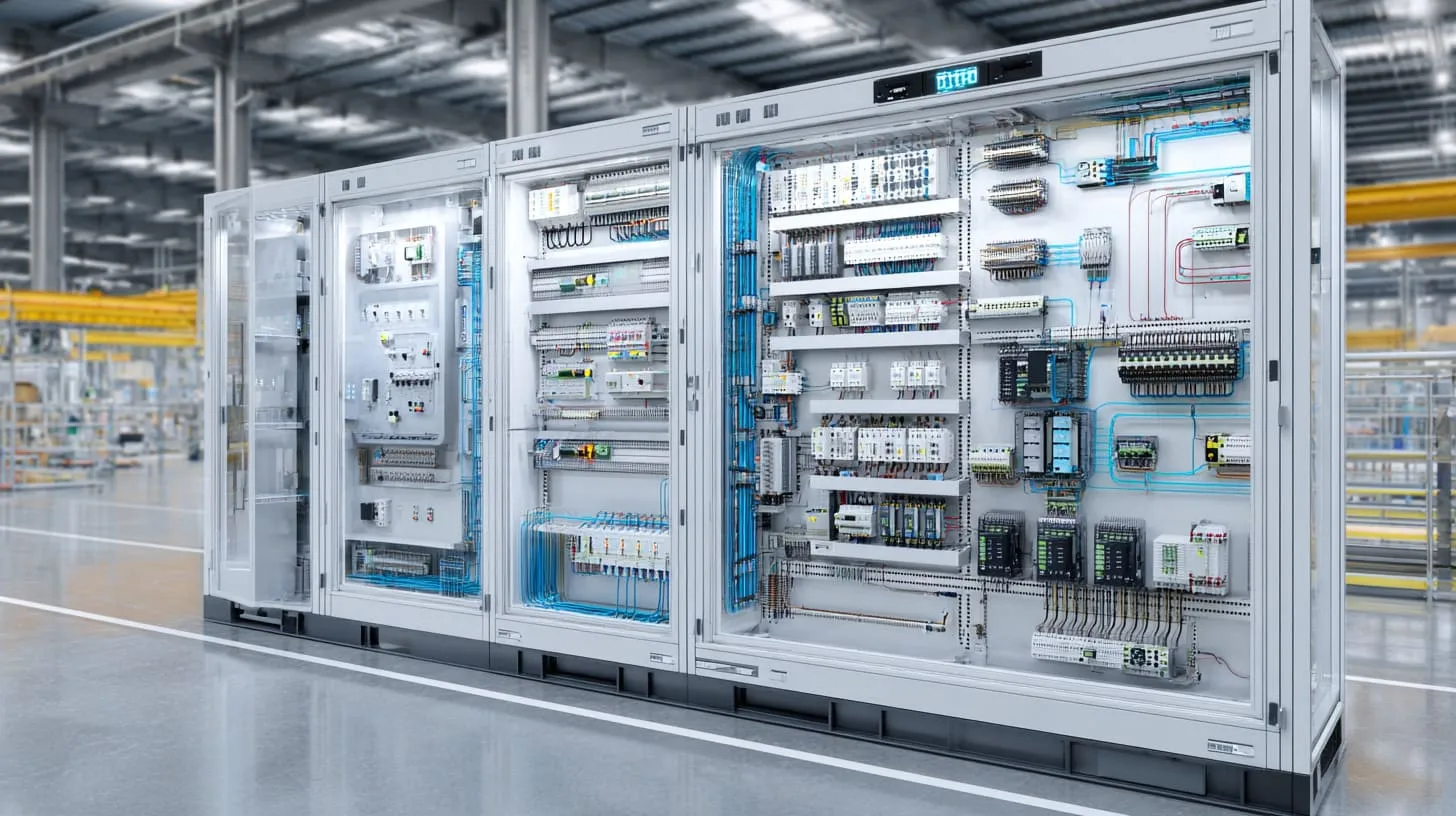
A machine can look impressive on paper and still become a headache once real work starts. I have seen this happen when the mechanical design was solid, the motor size looked right, and the production goal made sense, but the control side was weak. The machine stopped too often. The fault tracing took too long. The wiring felt cramped. The cabinet ran hotter than expected. That was usually the moment when people stopped talking about the machine as an idea and started talking about the panel as a real problem.
A PLC panel is the control center that helps a machine or process run in a stable, safe, and organized way. It brings together the PLC, power parts, wiring, protection devices, and control logic in one enclosure so the system can receive signals, make decisions, and drive outputs.
I think this topic matters because buyers often focus first on the visible parts of a machine. They look at motors, sensors, frames, and software screens. That makes sense. Still, the panel is often the part that decides whether daily operation feels smooth or painful. A good PLC panel gives structure to the whole system. A bad one creates delays, heat, confusion, and service trouble.
For me, PLC panels are not just electrical boxes. They are practical business tools. They affect machine uptime, operator safety, maintenance speed, and even the buyer’s trust in the final product. When I talk with people like Davide in Finland or John in Hungary, I notice the same pattern. They do not only want a panel that works. They want one that is easy to understand, easy to maintain, and realistic for their project budget.
A simple table helps show why this matters so much:
| Area | What a good PLC panel does | What a poor PLC panel causes |
|---|---|---|
| Reliability | Keeps control stable | Frequent faults and stops |
| Safety | Protects users and equipment | Higher risk of damage |
| Maintenance | Makes service easier | Wasted time during repair |
| Expansion | Leaves room for changes | Costly redesign later |
| Appearance | Looks organized and professional | Feels messy and rushed |
When I look at a control system, I do not judge it by how full the cabinet is. I judge it by how clearly each part earns its place and how calmly a technician can work on it under pressure.
A lot of buyers first meet the term PLC panel through a drawing, a quote, or a supplier email. Then the questions start. What exactly is it? What sits inside it? Why does the layout matter so much? That is where I want to go next.
What Is a PLC Panel?
A PLC panel is an enclosure that holds the main control parts of an automated system. It usually includes the PLC itself, input and output modules, power supply, protection devices, relays, terminals, and internal wiring. In many cases, it also includes an HMI, network parts, cooling devices, and labeled cable routes that make operation and service easier.
A PLC panel is the practical control hub of an automation system. It collects signals from the field, sends them to the PLC for logic processing, and then drives outputs such as motors, valves, alarms, or indicators.
I often find that people mix up three ideas: the PLC, the control panel, and the electrical panel. They are related, but they are not the same thing.
What is the PLC itself?
The PLC is the brain. It is the programmable controller that reads input signals, follows logic, and sends output commands. By itself, the PLC is only one part. It still needs power, wiring, protection, and connection to real devices.
What is the control panel?
The control panel is the full assembly. It includes the PLC and all the support parts around it. This is the actual built cabinet or box that helps the machine run.
What is the electrical panel?
An electrical panel can be a broader term. Sometimes it refers to power distribution. Sometimes it refers to a control assembly. In real conversations, people use the term loosely, which is why clear definition matters during quoting and design review.
Here is a simple comparison:
| Term | Main meaning | Main job |
|---|---|---|
| PLC | Programmable controller | Executes logic |
| PLC panel | Complete control cabinet with PLC | Controls machine or process |
| Electrical panel | General electrical enclosure | Distributes power or houses controls |
| Control panel | User and control assembly | Manages operation and interface |
A lot of industries rely on PLC panels because automation needs order. Sensors send data. Motors need commands. Alarms must react at the right time. If these signals are scattered across different loose boxes, service becomes harder and failure risk goes up.
There is also a human side to this. Operators need consistency. Maintenance teams need labels. Engineers need logic that matches the actual wiring. Without that structure, even a smart system starts feeling unreliable.
One thing I pay close attention to is whether the customer really needs a PLC panel or only a simpler electrical box, because overbuilding a small project can waste money just as badly as underbuilding a serious one.
That leads to the next question, and it is the one buyers ask most often once they see the cabinet door open: what exactly is inside?
What Are the Main Components Inside a PLC Panel?
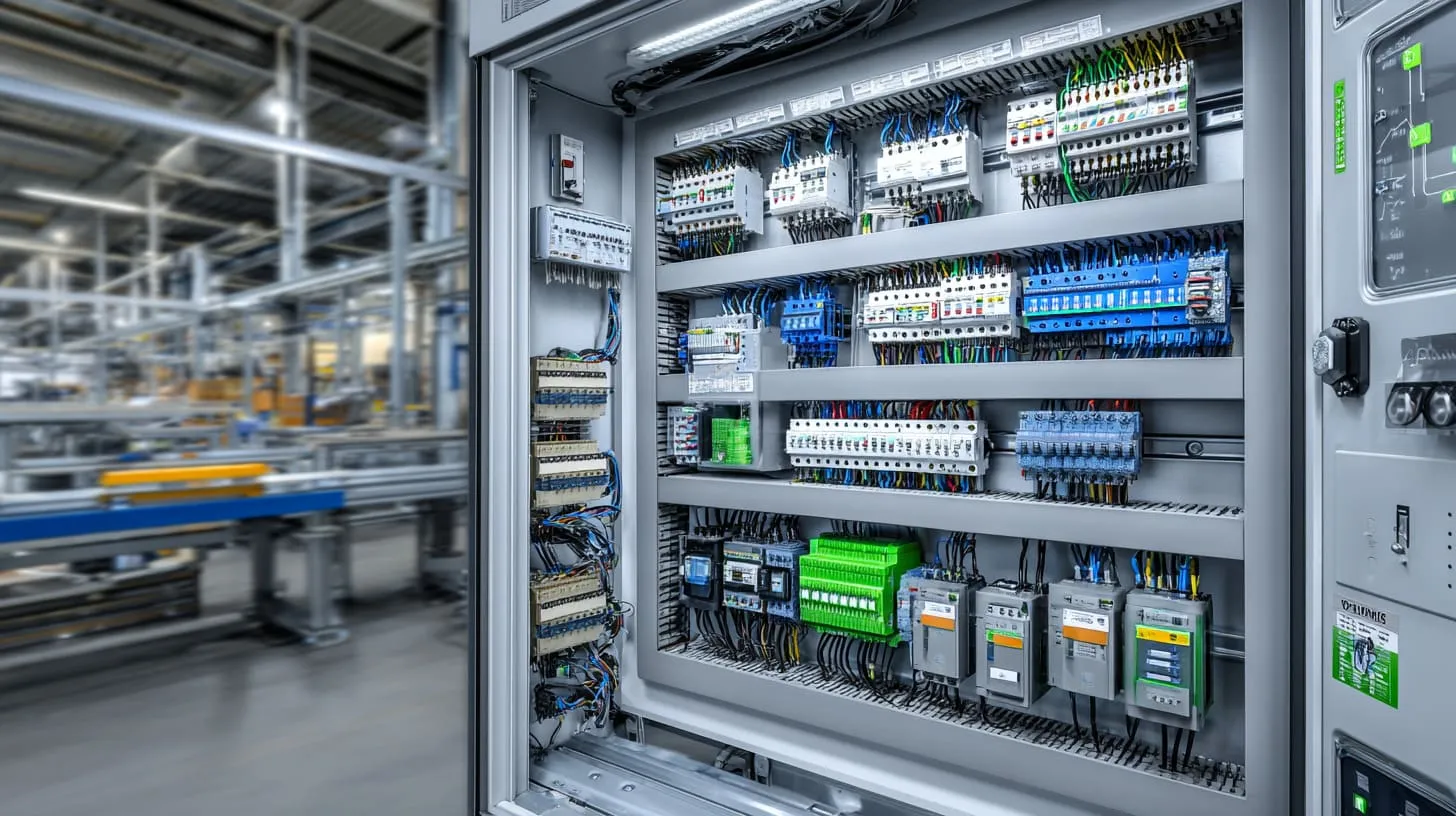
When I open a well-built PLC panel, I want the inside to feel calm. That may sound strange, but it is true. A good panel has rhythm. The wiring paths make sense. The device spacing makes sense. The labels help instead of confuse. Every component has a job. Nothing feels random.
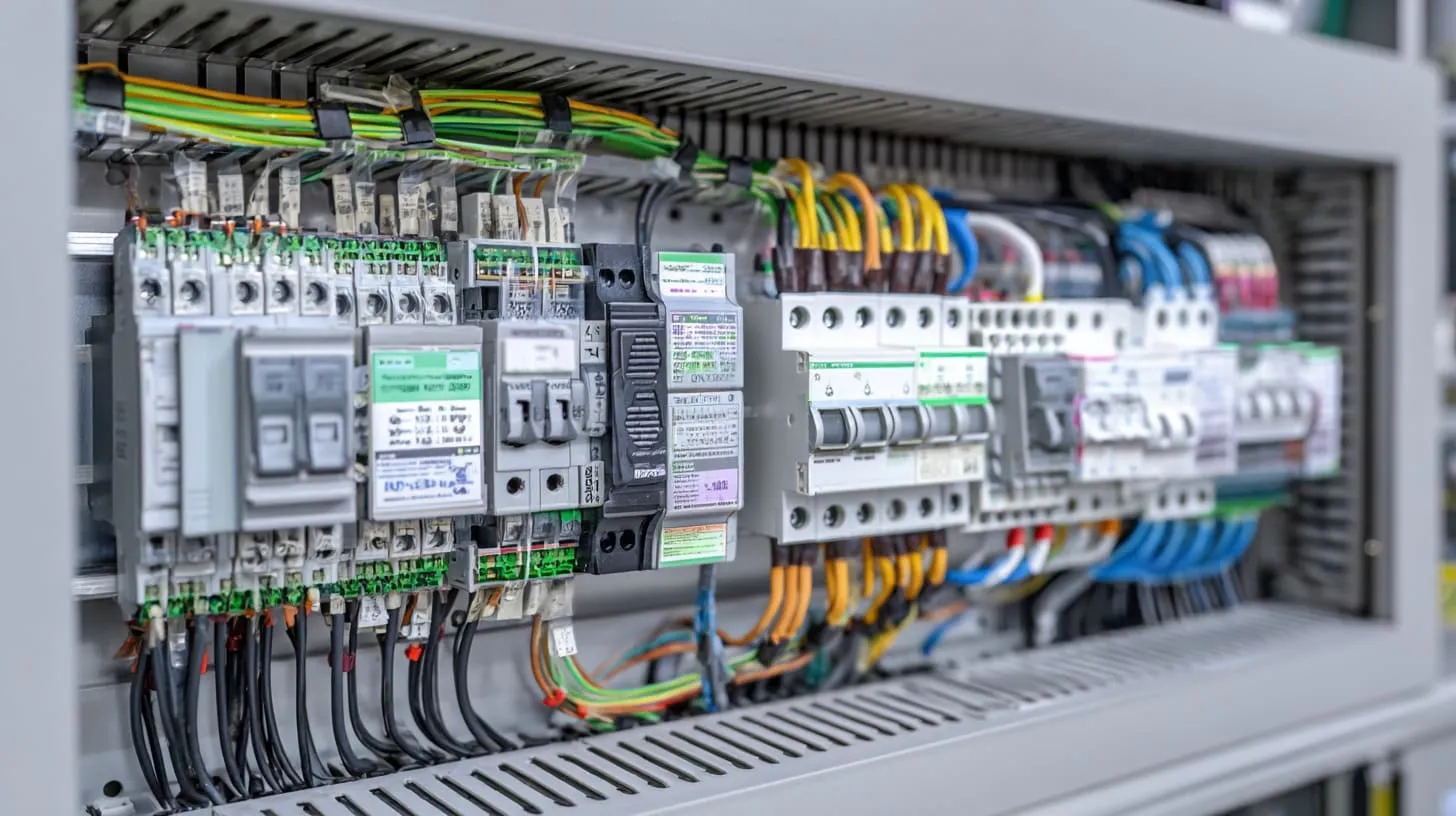
The main components inside a PLC panel usually include the PLC, power supply, breakers, relays, contactors, terminal blocks, I/O modules, HMI-related parts, communication modules, and cooling devices.
PLC unit
The PLC is the control core. It reads inputs, runs the program, and controls outputs. Some panels use compact PLCs for smaller jobs. Some use modular PLCs for larger and more flexible systems.
I normally match the PLC type to the project scale. A compact unit may be enough for a basic pump station. A modular system fits better when the machine may grow later.
Power supply module
The power supply converts incoming power into the voltage needed by control devices, often 24V DC. Stable power is critical. If the power supply is weak or poorly matched, strange faults may appear and waste hours.
Circuit breakers and protection devices
These parts protect circuits and equipment. They help isolate faults and reduce damage. Common items include miniature circuit breakers, fuses, surge protection, overload relays, and sometimes residual current protection.
Relays and contactors
Relays help switch signals. Contactors help switch higher loads, such as motors or heaters. These devices let the control side command the power side safely.
Terminal blocks and wiring systems
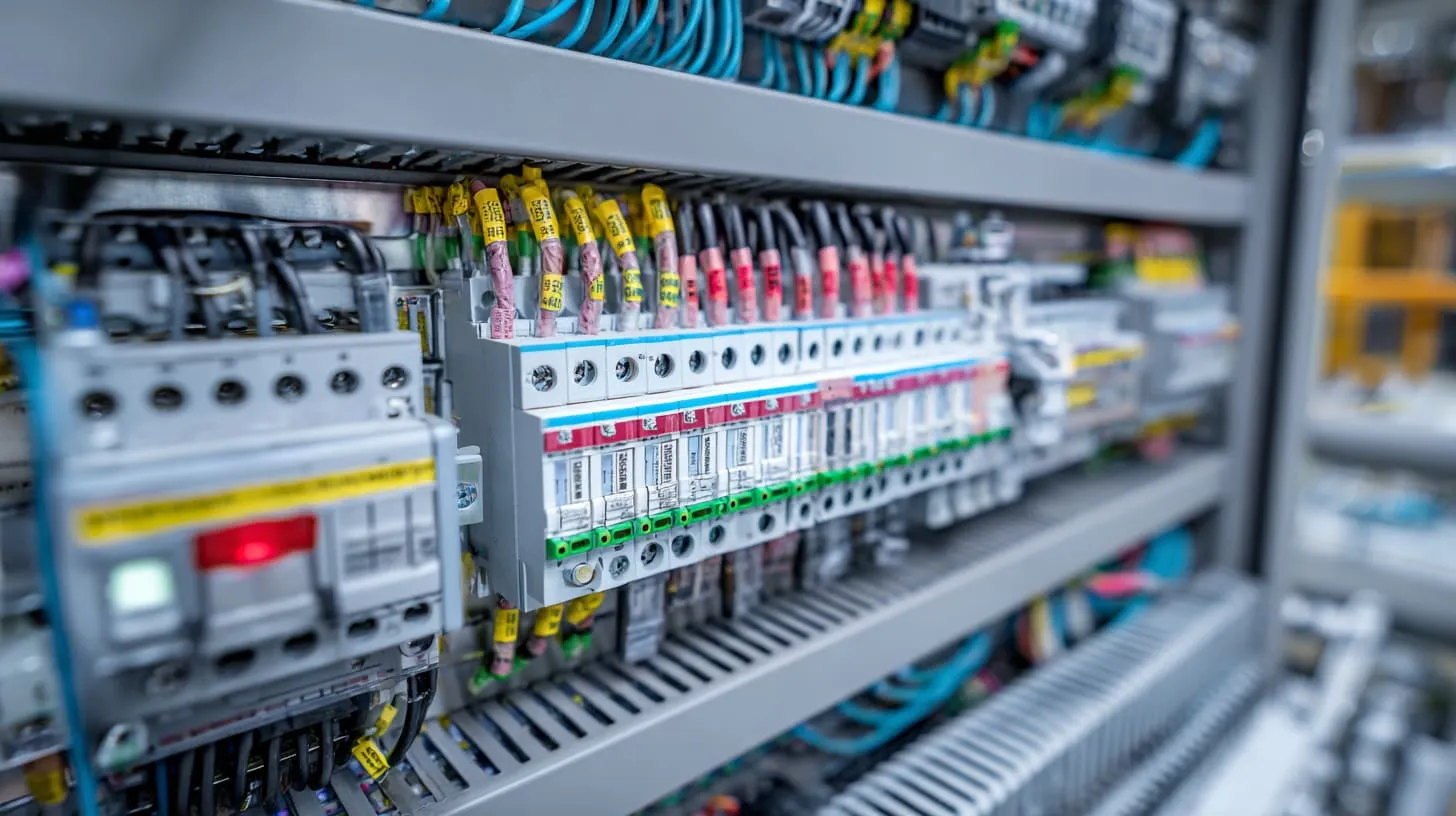
Terminal blocks create clean connection points for field wiring. They make testing, maintenance, and expansion easier. Good wire ducting and clear numbering matter more than many people expect.
HMI and operator interface parts
Some panels include HMI screens on the door or as separate units. They allow operators to start, stop, adjust, and monitor the machine.
Sensors and I/O modules
Inputs bring field signals into the PLC. Outputs send actions back out. Analog and digital modules support different device types, such as proximity sensors, temperature sensors, solenoid valves, and motor starters.
Cooling and thermal control
Panels may use fans, vents, filters, thermostats, or heat exchangers. Larger or sealed cabinets may even use panel air conditioners.
Here is a more detailed table:
| Component | Main role | Common risk if chosen badly |
|---|---|---|
| PLC | Runs control logic | Not enough I/O or memory |
| Power supply | Feeds control voltage | Voltage drop or unstable output |
| Breakers/Fuses | Protect circuits | Poor fault isolation |
| Relays/Contactors | Switch loads | Short life under wrong load |
| Terminal blocks | Connect field wiring | Messy service work |
| HMI | Operator control | Weak visibility or poor interface |
| I/O modules | Read and send signals | Wrong signal type support |
| Cooling devices | Control panel temperature | Heat buildup and failure |
Why layout matters as much as component list
A panel can contain all the right brand names and still be annoying in daily use. I have seen expensive panels that looked impressive in a quotation but became frustrating during installation because the terminals were too crowded or the service space was too tight.
That is why I do not only ask, “What components are inside?” I also ask:
- How are they arranged?
- Is power separated from signal wiring?
- Is future expansion possible?
- Can a technician replace one failed part without pulling half the panel apart?
When a panel is badly arranged, even good components lose value. That is the uncomfortable truth.
The next step is even more important. Once the parts are inside, how do they actually work together as one system?
How Does a PLC Panel Work?
A PLC panel works by turning field signals into decisions and then turning those decisions into actions. That sounds simple. In real work, it is a chain. If one link is weak, the whole system feels unstable.
A PLC panel works by receiving input signals from sensors or switches, processing them through the PLC program, and then sending output commands to devices like motors, valves, lights, alarms, or actuators.
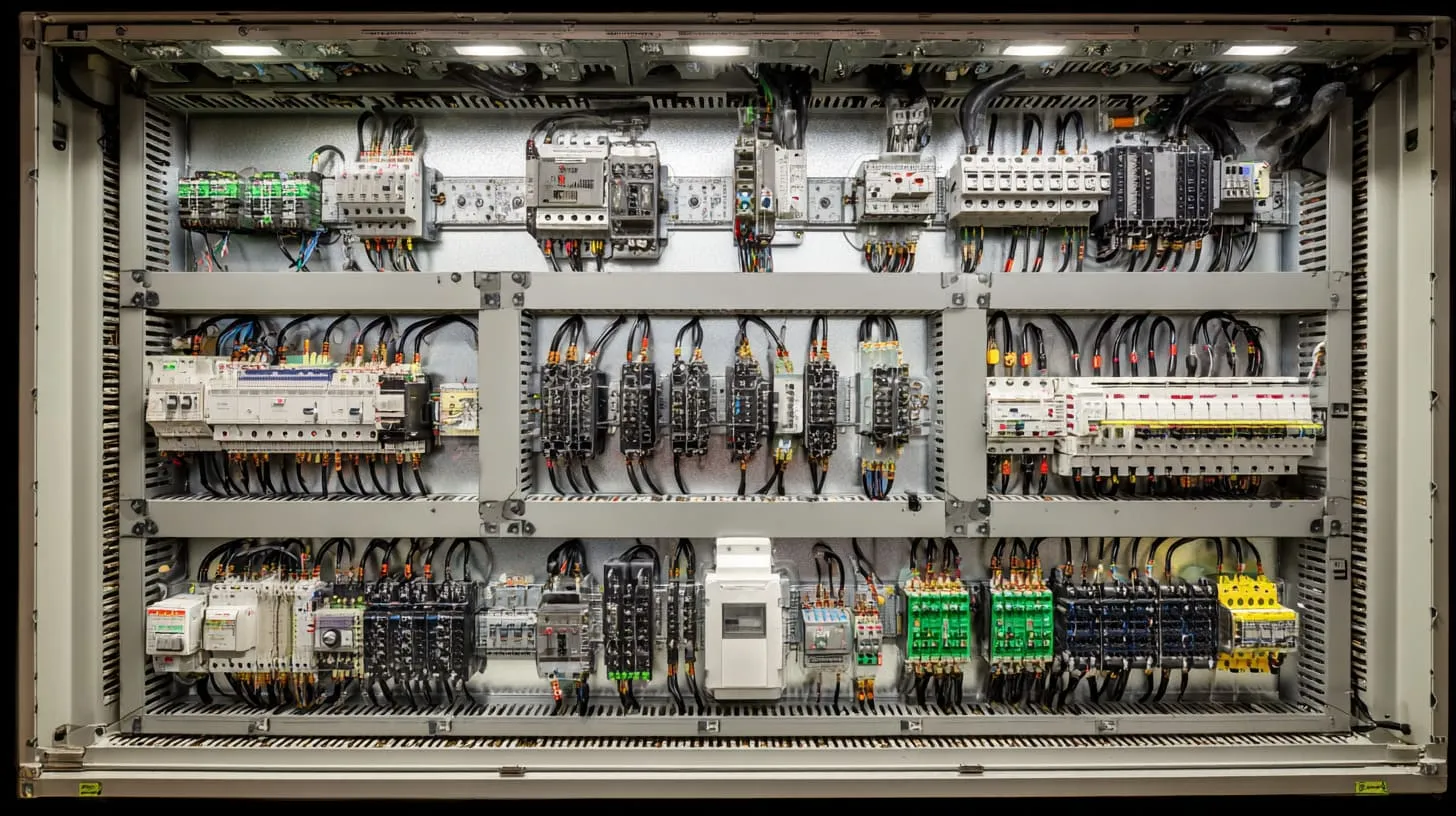
Step 1: Input signals come into the panel
A machine starts with information. A sensor detects position. A pressure switch changes state. A temperature transmitter sends a value. A push button tells the system what the operator wants.
These signals travel into the panel through terminal blocks and then into the PLC input modules.
Step 2: The PLC processes the logic
The PLC compares the incoming data with the control program. It asks basic questions in machine language:
- Is the safety circuit healthy?
- Has the timer finished?
- Is the motor overload clear?
- Did the product reach the sensor?
- Is the temperature too high?
Based on the answers, the PLC makes a decision.
Step 3: Outputs are activated
The PLC then sends output signals. These signals may energize relays, start contactors, open valves, trigger alarms, or stop equipment.
Step 4: Feedback returns to the PLC
A strong system does not just command action. It also checks whether the action really happened. That feedback loop is one reason PLC control feels more dependable than a simpler hard-wired setup in many applications.
Here is a basic logic flow:
| Stage | What happens | Example |
|---|---|---|
| Input | Sensor or switch sends signal | Limit switch detects position |
| Logic | PLC program evaluates condition | If position is confirmed, continue cycle |
| Output | PLC sends command | Start conveyor motor |
| Feedback | System verifies result | Motor run signal returns |
Communication with other devices
Modern PLC panels often talk to more than one device. They may connect to VFDs, HMIs, remote I/O, SCADA systems, barcode readers, and building networks. Communication protocols can include Modbus, Profinet, Ethernet/IP, Profibus, and others.
This is where things can get tricky. A panel may be fine electrically and still fail in practice because the communication side was not thought through early enough.
Real-time control and monitoring
A PLC panel helps machines react in real time. That matters in packaging, conveyors, filling lines, and process systems where seconds matter. Operators want clear status. Maintenance teams want traceable faults. Managers want stable uptime.
From my side, the detail I watch most carefully is not only whether the logic works in normal conditions, but whether the panel still behaves clearly when one sensor fails, one overload trips, or one operator presses the wrong button at the wrong time.
That question naturally pushes us to another one: if different jobs need different logic and load levels, what kinds of PLC panels do people actually use?
What Are the Different Types of PLC Panels?
Not every PLC panel is built for the same job. Some control a small machine with a few sensors and a couple of outputs. Some manage heavy motor loads. Some run process lines. Some serve outdoor pumping systems. So when someone says “PLC panel,” the real answer is always, “Which kind?”
The main types of PLC panels include control panels, power control panels, automation panels, MCC-related PLC panels, distribution panels, indoor panels, outdoor panels, and custom-built panels for specific industrial needs.
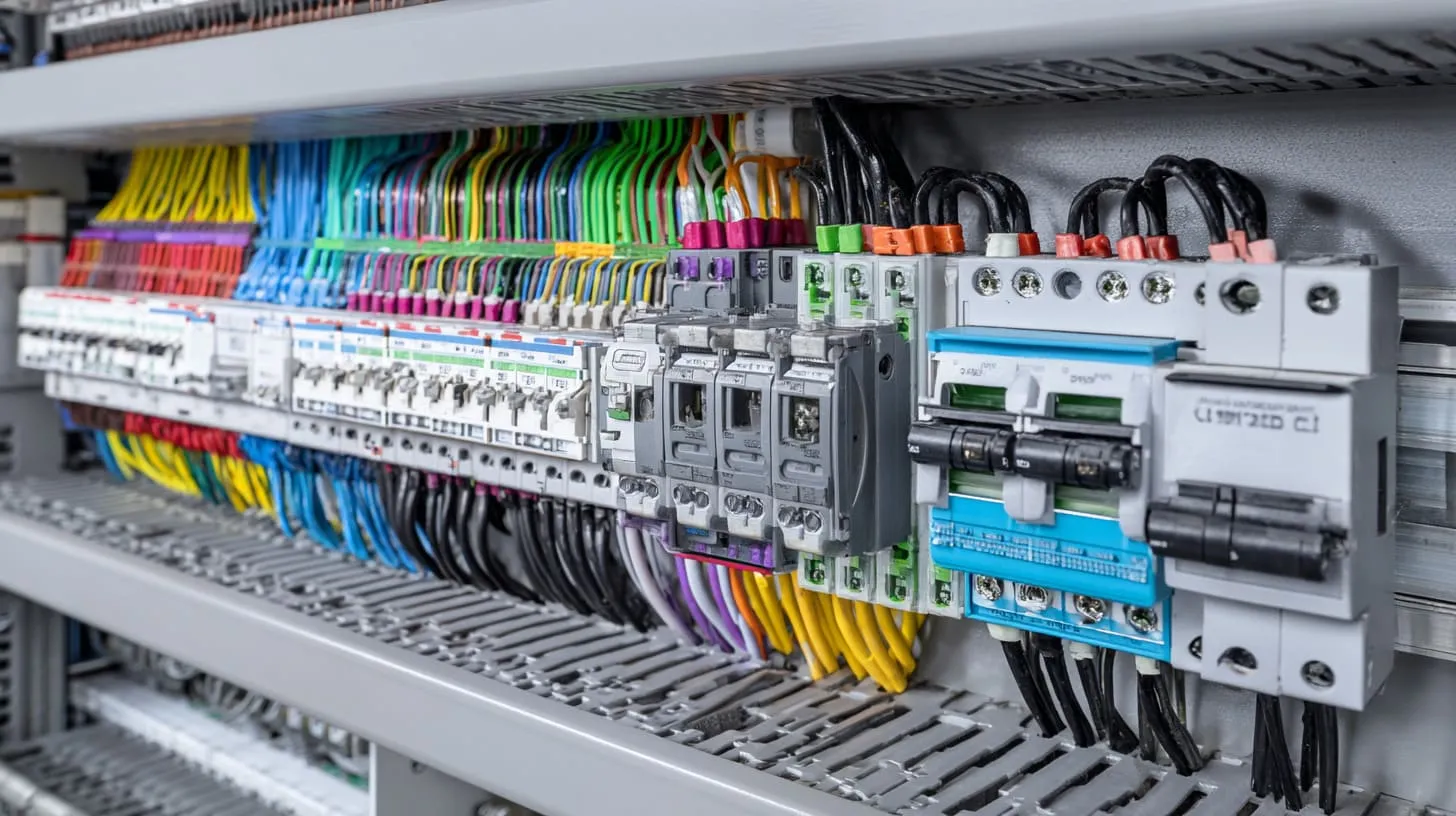
PLC control panels
These are common in machine automation. They handle logic, sequences, interlocks, and operator commands. They are often used in conveyors, filling machines, cutting equipment, and assembly stations.
PLC power control panels
These combine control logic with more direct power-side management. They may include contactors, overloads, and motor starters for larger loads.
PLC automation panels
This term is often used broadly. It usually refers to panels built to automate a complete process or machine system. In practice, the label is less important than the actual design scope.
PLC MCC panels
MCC means Motor Control Center. These panels are used where multiple motors need coordinated control and protection. PLC logic may be integrated to manage motor sequences, status, and alarms.
PLC distribution panels
Some projects need both control and power distribution in one broader system. These panels may support multiple outgoing circuits while still housing PLC-related parts.
Indoor vs outdoor PLC panels
Indoor panels can often use simpler protection if the room conditions are controlled. Outdoor panels must deal with dust, rain, sunlight, humidity, and bigger temperature swings.
Custom PLC panels
Custom panels are common in OEM work. A customer may need special dimensions, branding, cable entry positions, mounting style, or unusual device combinations.
Here is a simple comparison:
| Type | Best for | Main design focus |
|---|---|---|
| Control panel | Machine logic | Signal handling and sequence control |
| Power control panel | Load switching | Control + power coordination |
| Automation panel | Full process tasks | Integrated system control |
| PLC MCC panel | Multi-motor systems | Motor safety and sequencing |
| Distribution panel | Mixed control and power | Circuit organization |
| Outdoor panel | Harsh environment | Protection and sealing |
| Custom panel | OEM or unique project | Layout and application fit |
Why the right type matters
I have seen buyers ask for a “standard PLC panel” when their real need was much more specific. One needed outdoor sealing. Another needed easy access for frequent wiring changes. Another needed enough door space for a larger HMI and branded labels.
That is why I think panel type should be chosen from the application backward, not from a generic product name forward.
I usually slow down when a buyer asks for one cabinet to do everything, because that often sounds efficient at first but can create heat, service, and wiring problems later.
Once the types are clear, the next logical question becomes very practical: where do these panels actually get used?
What Are PLC Panels Used For in Industry?
PLC panels are used in more places than many people realize. They sit behind neat machine doors. They hide inside factory corners. They run pumps, lines, and systems that most end users never see. Yet they quietly shape output, safety, and uptime every day.
PLC panels are used across many industries to automate machines, control processes, improve consistency, reduce manual work, and make equipment easier to monitor and maintain.
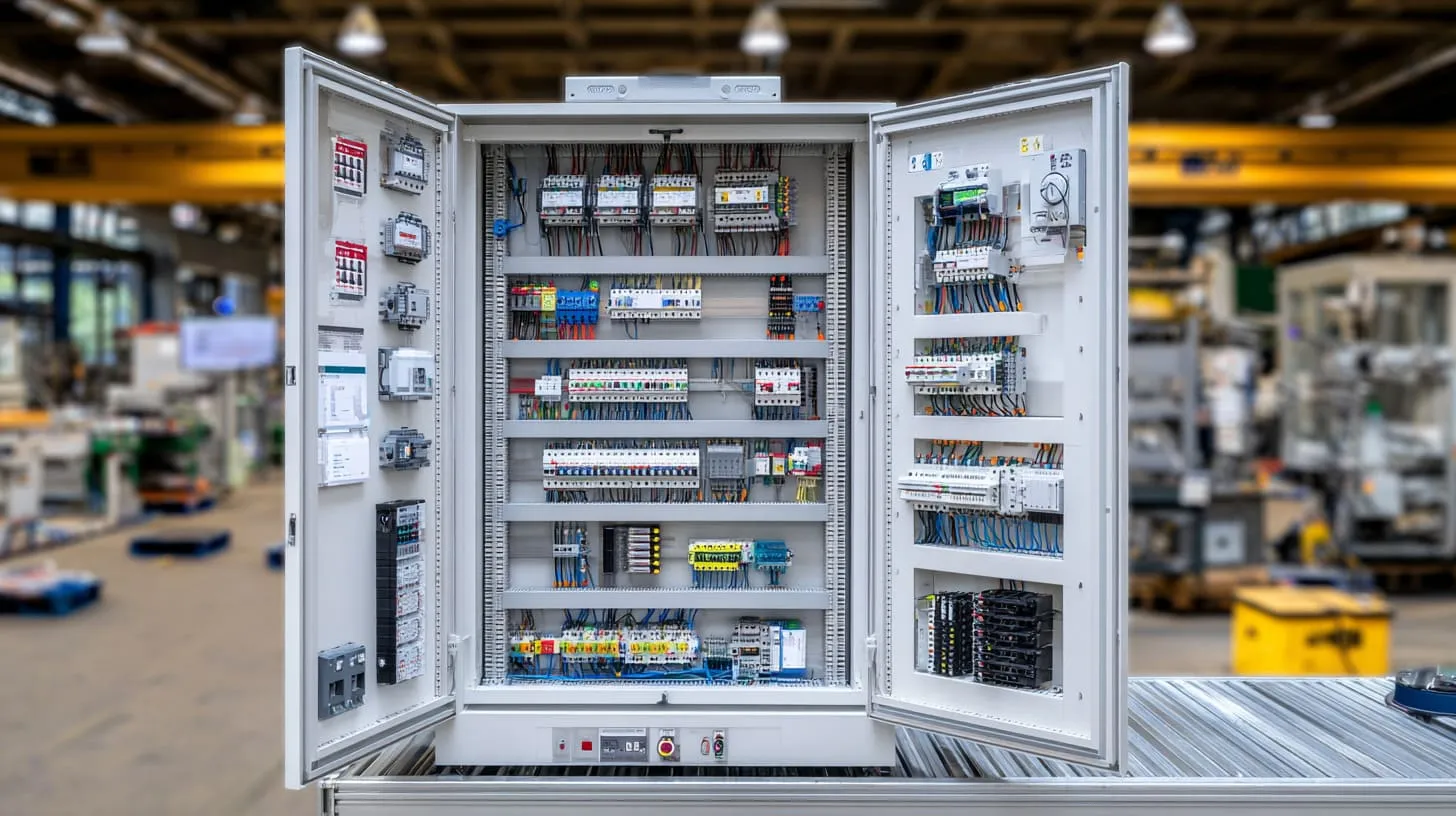
Manufacturing automation systems
This is the most familiar use. PLC panels control conveyors, presses, assembly lines, labeling machines, and packaging stations. They help machines follow repeatable steps with fewer human errors.
Chemical and oil process control
In process industries, PLC panels help monitor pressure, flow, level, and temperature. They react to changes fast and can support alarms, shutdowns, and sequence logic.
HVAC systems
Buildings and facilities use PLC or PLC-like control panels to manage fans, pumps, chillers, dampers, and temperature zones. In larger projects, centralized control matters a lot.
Water treatment and pumping stations
PLC panels are common in pump control, tank level management, filter systems, and remote monitoring for water and wastewater setups.
Packaging and conveyor lines
These systems need timing and coordination. A delay in one point can affect the whole line. PLC panels help keep movement and signal logic aligned.
Power and energy systems
Panels can support gensets, energy monitoring, switch logic, and other utility-related control tasks.
Robotics and smart factory systems
Modern automation often combines robotics, sensors, data collection, and network communication. PLC panels help connect that complexity to real operation.
A quick overview:
| Industry | Typical PLC panel use |
|---|---|
| Manufacturing | Machine sequencing and interlocks |
| Chemical/Oil | Process monitoring and alarms |
| HVAC | Fan, pump, and temperature control |
| Water treatment | Pump logic and level control |
| Packaging | Conveyor timing and machine sync |
| Energy | Load control and monitoring |
| Robotics | Cell coordination and safety logic |
A practical way I look at applications
In small projects, people sometimes ask whether a PLC panel is really necessary. Sometimes the honest answer is no. A very basic function may not need a full PLC setup. But once the process starts involving several signals, timing logic, alarms, operator input, and future flexibility, the case for a PLC panel gets much stronger.
One small clue I use is this: if the machine will create expensive downtime when something minor goes wrong, then cleaner control design is usually worth more than people first assume.
And once the use cases become clear, the next thing buyers care about is obvious: what do they really gain from using one?
What Are the Key Benefits of Using a PLC Panel?
Most buyers do not purchase a PLC panel because they enjoy looking at wiring diagrams. They purchase it because they want smoother production, fewer surprises, and less time wasted. The panel is a means to an end. It is there to make work more stable.
The key benefits of a PLC panel include better automation efficiency, more reliable control, fewer manual mistakes, easier maintenance, stronger flexibility, and better integration with modern industrial systems.
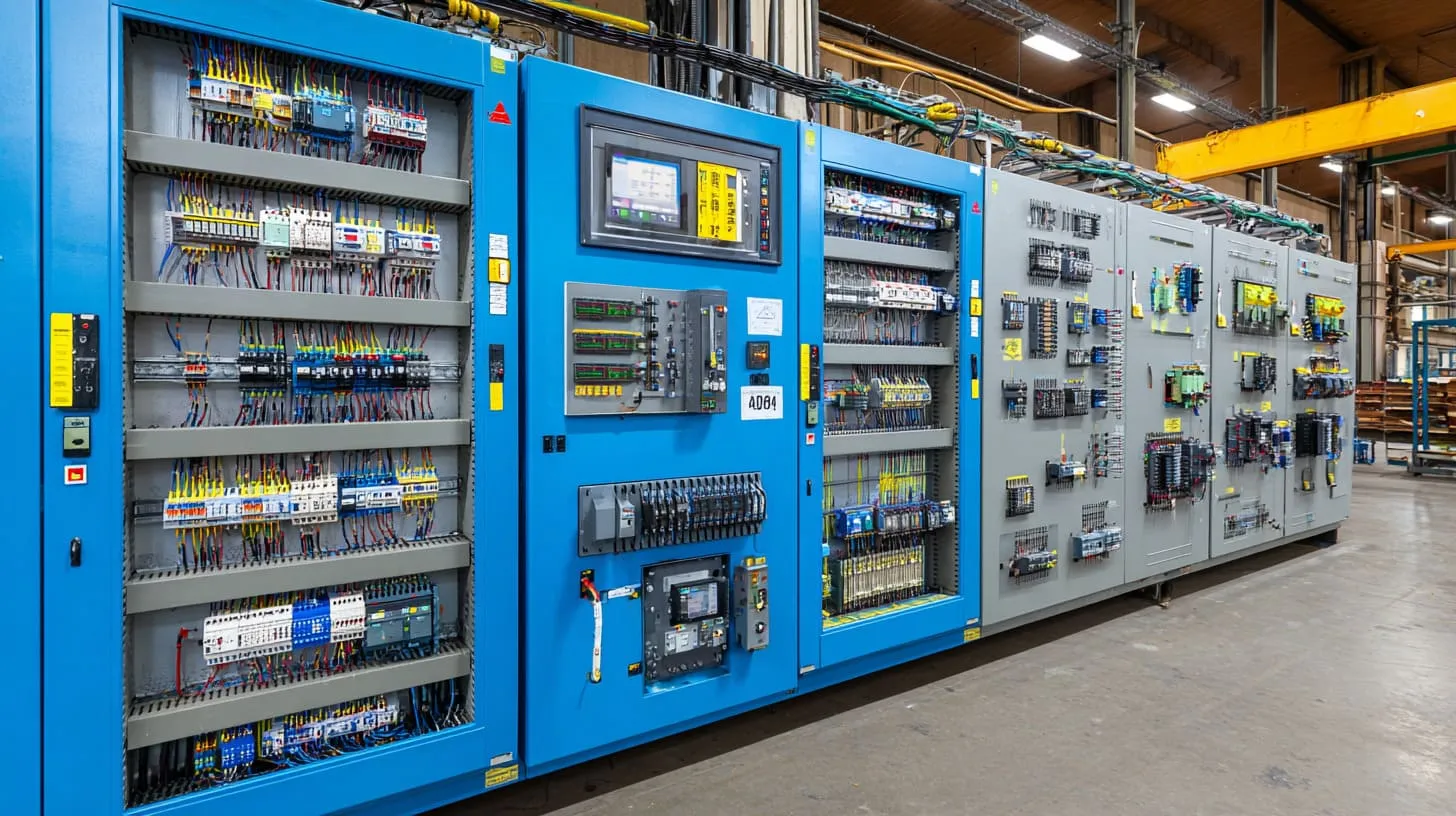
Better efficiency
A PLC panel helps automate repeat tasks. That means better cycle consistency, fewer missed steps, and lower dependence on manual timing. Machines can run with more predictable behavior.
More reliable control
Because PLC logic is structured and repeatable, the system can handle sequences, conditions, and alarms more clearly than many purely hard-wired setups.
Fewer manual errors
Operators still matter, of course. But a strong control system reduces the chance of missed steps, wrong timing, and unsafe start conditions.
Easier maintenance
Clear labels, organized wiring, and fault logic make repair work faster. Service teams can track issues with less guesswork.
Flexible programming
When the process changes, software updates are often easier than major rewiring. That matters in factories where product types or customer needs change often.
Better network integration
Modern plants want data. They want status feedback, alarms, remote access, and integration with SCADA, HMI, MES, or ERP layers. PLC panels support that bridge.
Here is a benefit table with a more practical angle:
| Benefit | Daily value | Business effect |
|---|---|---|
| Efficiency | Faster and steadier cycles | Better output |
| Reliability | Fewer random stops | Lower downtime cost |
| Accuracy | Repeatable control | Better product consistency |
| Easier service | Faster fault tracing | Lower maintenance hours |
| Flexibility | Easier process updates | Better long-term value |
| Connectivity | Better monitoring | Smarter management decisions |
There is also something less obvious. A good PLC panel improves confidence. Operators trust the machine more. Engineers troubleshoot with less frustration. Buyers feel the system was built with care.
To me, the hidden gain is not only speed. It is clarity. When a system is clear, people make better decisions around it.
I get cautious when someone chases the lowest upfront panel price without checking how much fault-finding time, missed production, and future modification cost may come back later.
Once people understand the value, they usually start asking how these panels are actually designed and built in the real world.
How Are PLC Panels Designed and Built?
Designing and building a PLC panel is not only about fitting parts into a cabinet. It is about turning a machine need into a control system that someone can actually install, use, and maintain without losing their patience.
PLC panels are designed through system planning, electrical schematic development, component selection, enclosure choice, safety review, assembly, wiring, testing, and final quality checks.
System planning comes first
Before drawing starts, I want to know the real job of the panel:
- What machine or process will it control?
- How many inputs and outputs are needed?
- What power loads are involved?
- Does the customer need room for future changes?
- Will the panel live indoors or outdoors?
If those answers are vague, the whole design stage becomes shaky.
Electrical schematics and wiring layout
After planning, the schematic defines how the system will work electrically. It maps power circuits, control circuits, safety links, and terminal assignments. Then the physical layout turns that idea into a real cabinet arrangement.
Choosing the PLC and modules
The brand and model depend on the project. Some customers want Siemens, Allen-Bradley, Schneider, Delta, or Omron because their team already knows that ecosystem. Others care more about budget.
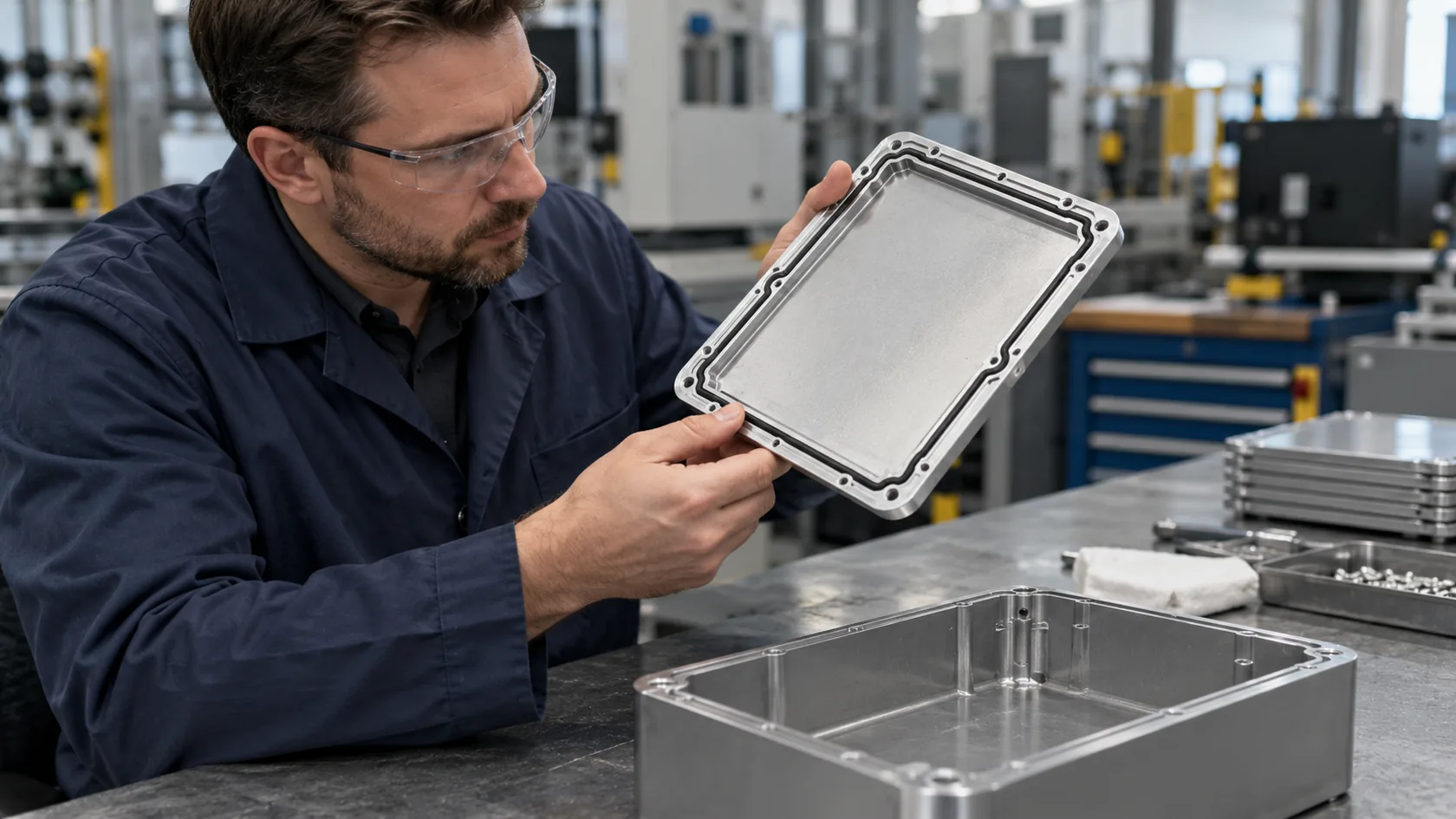
Selecting the enclosure
This matters a lot to my work because enclosure choice shapes protection, heat behavior, mounting method, internal space, and even final appearance.
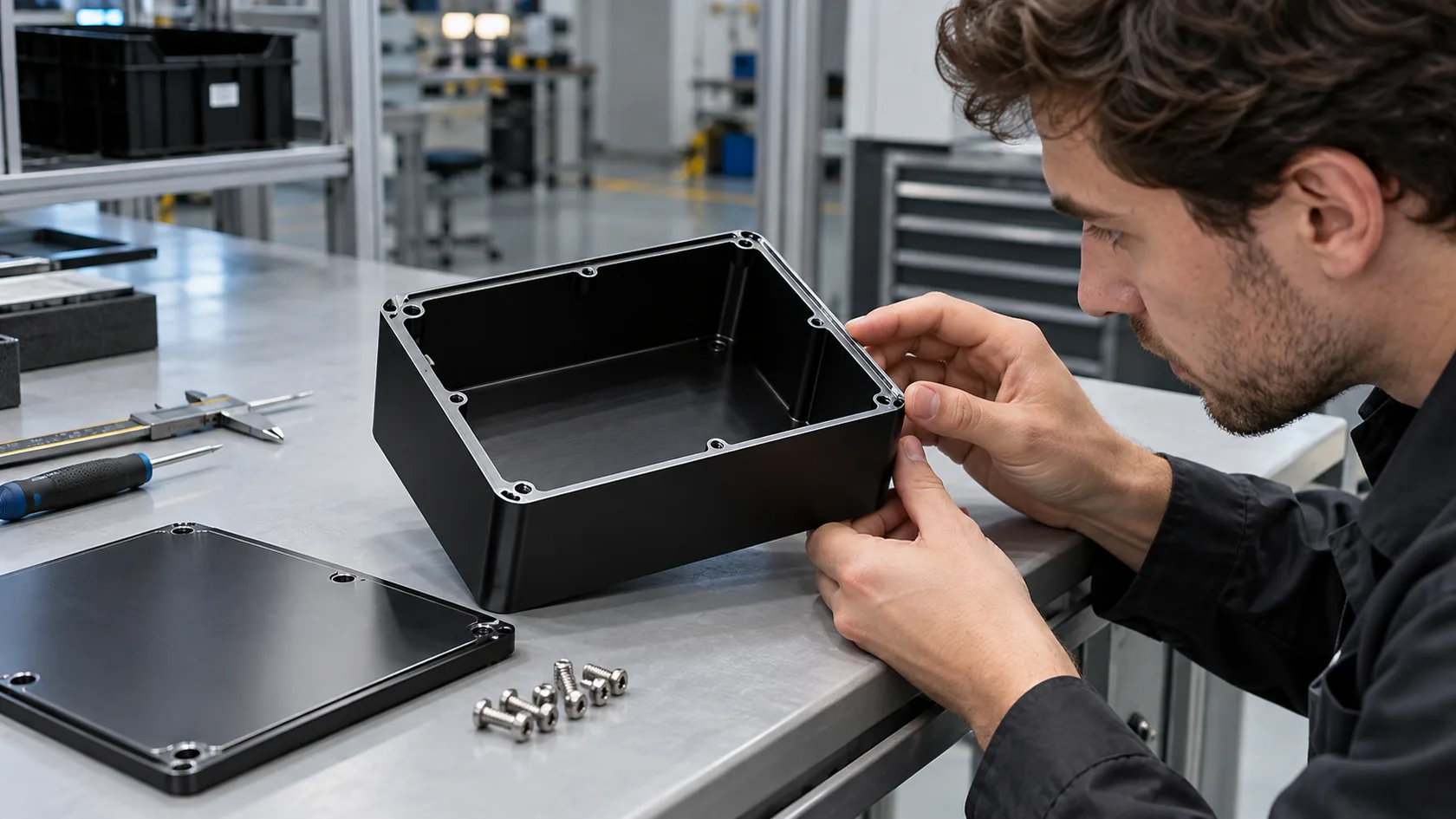
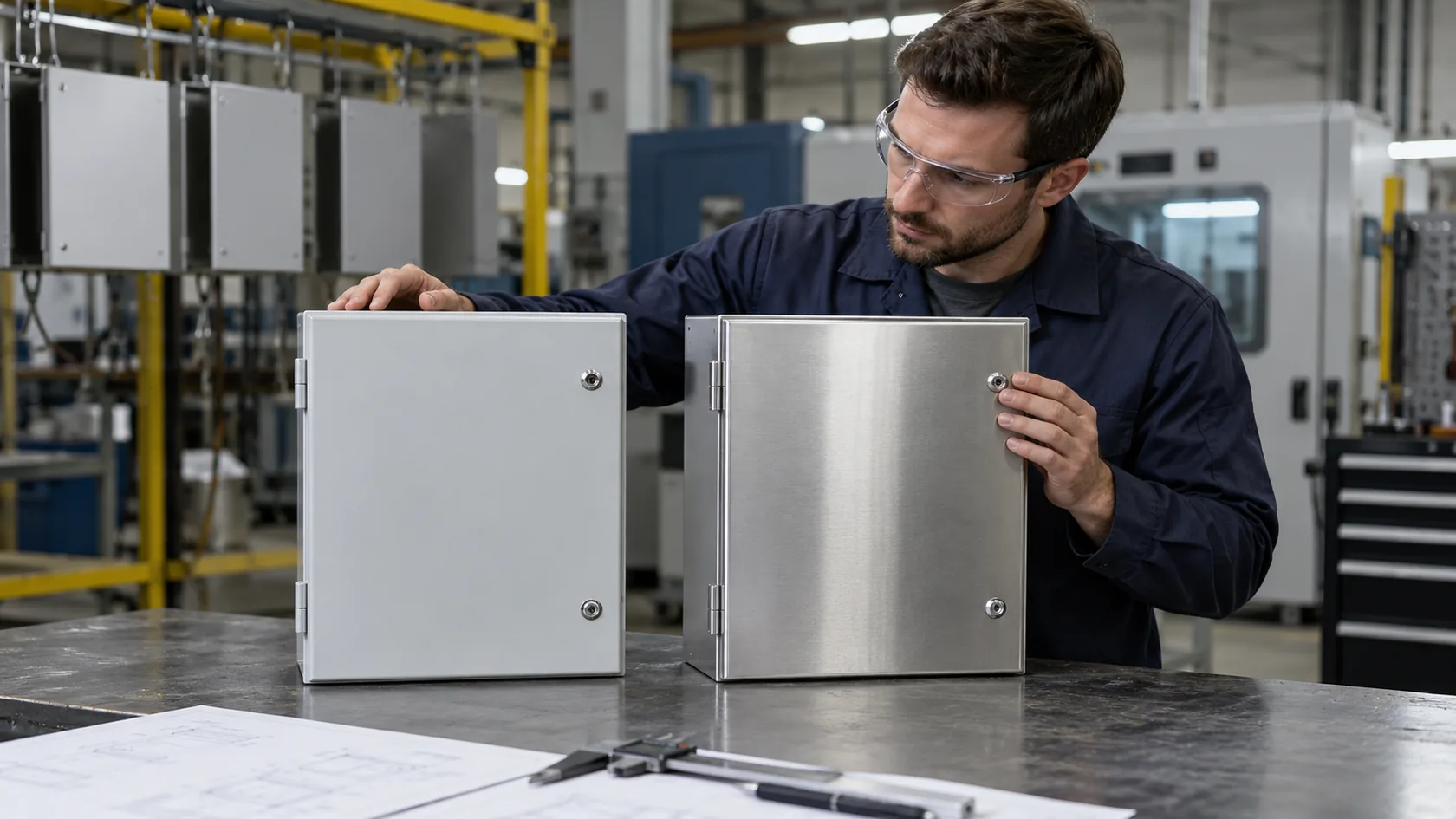
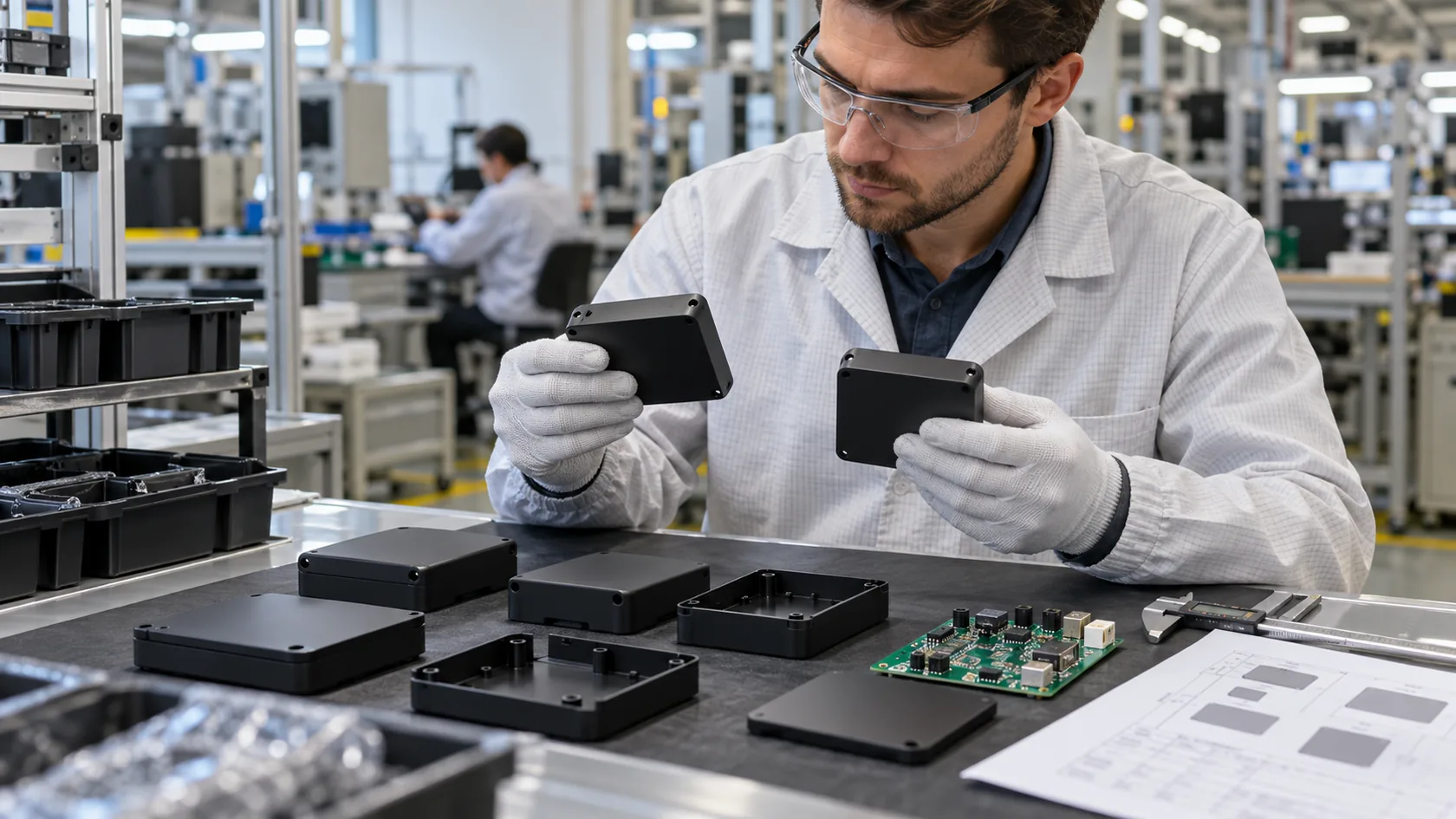
Common enclosure materials include:
| Material | Strength | Common reason to use it |
|---|---|---|
| Mild steel | Strong and common | Indoor industrial use |
| Stainless steel | Better corrosion resistance | Washdown or harsh environments |
| Aluminum | Light and clean-looking | Weight-sensitive projects |
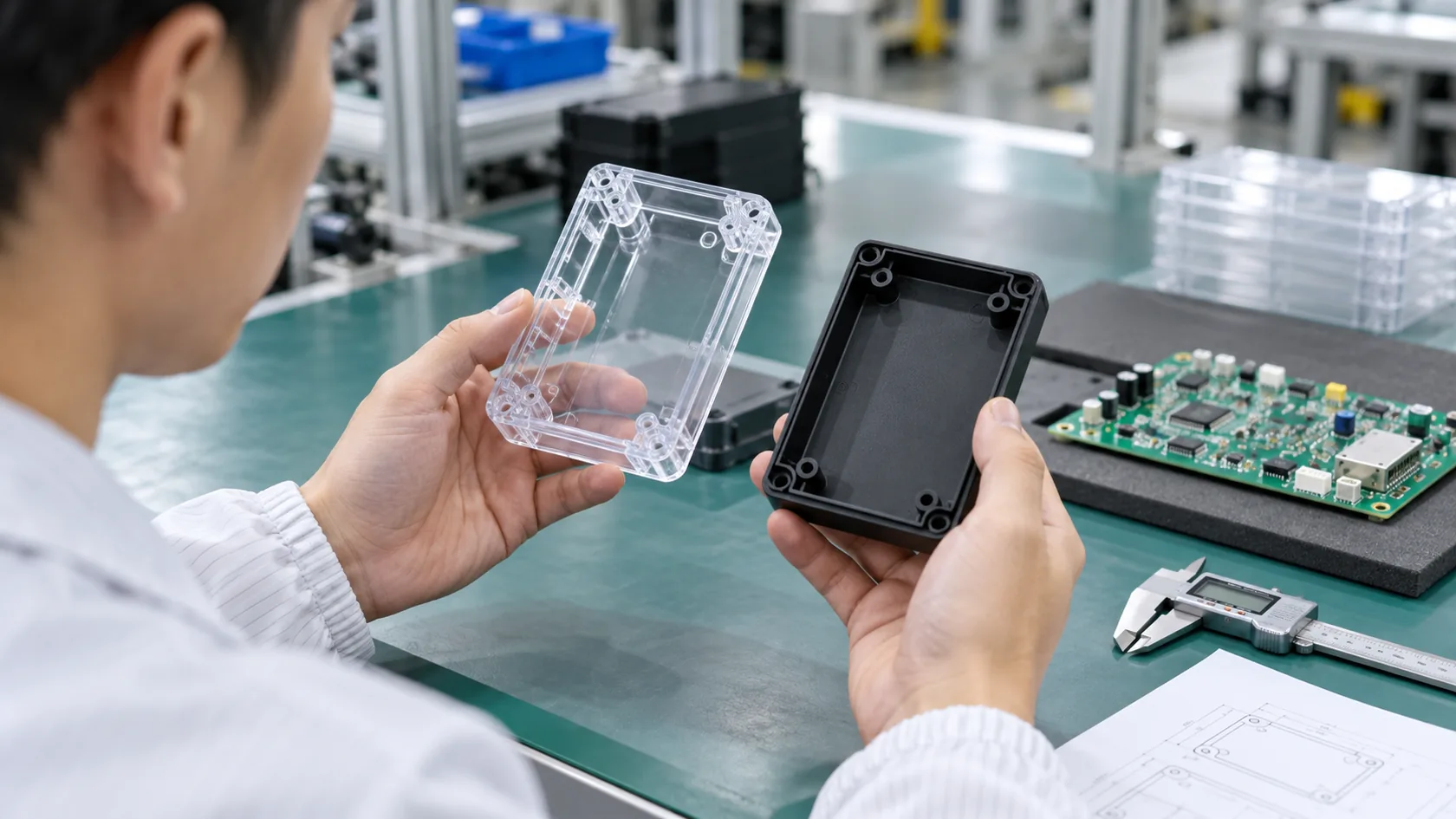
| Plastic | Non-metal and corrosion-resistant | Light-duty or specific environments |
Safety and compliance
Panel design often needs to consider local standards, protection ratings, grounding, short-circuit protection, and safety circuits. Requirements can vary by country, industry, and end use.
Assembly and wiring
This is where design quality becomes visible. Bad assembly shows itself fast. Wire lengths feel random. Labels go missing. Ducts become crowded. Door devices are hard to access.
Testing and quality control
A proper build process includes:
- Visual inspection
- Wiring check
- Continuity testing
- Power-on testing
- Functional logic testing
- Sometimes FAT before shipment
I tend to trust a supplier much more when their drawings, wiring, labels, and test habits all tell the same story, because neat appearance alone can hide weak engineering for a surprisingly long time.
Once a panel is designed and built, the buyer still has one very important task left: choosing the right one in the first place.
What Should Buyers Consider When Choosing a PLC Panel?
Choosing a PLC panel is not just about asking for a quote and comparing a few numbers. I wish it were that easy. In real projects, the wrong choice often looks acceptable at the start. The trouble shows up later, when the panel is too small, too hot, too hard to service, or too weak for the environment.
Buyers should look at enclosure size, protection level, component quality, expansion room, thermal design, maintenance access, supplier strength, lead time, and long-term support before choosing a PLC panel.
Panel size and protection level
The enclosure must fit the actual devices with proper spacing. It also needs the right protection rating for the environment.
For example:
| Environment | What I usually prefer |
|---|---|
| Clean indoor workshop | Standard indoor cabinet |
| Dusty industrial area | Better sealing and filtered ventilation |
| Outdoor location | Stronger weather protection |
| Wet or washdown area | Higher sealing and corrosion resistance |
Many buyers also check IP or NEMA ratings. That is smart, but only if those ratings match the real site condition rather than a copied specification.
Component quality and compatibility
A panel is a system, not a collection of random parts. Good compatibility between PLC, HMI, VFD, communication modules, and protection devices can save a lot of future frustration.
Customization for the machine
Cable entry position, door layout, internal arrangement, branding, mounting style, and service access can all matter. OEM buyers often need these details to match their machine design.
Thermal management
Heat is easy to ignore during quoting. It becomes much harder to ignore after the panel is installed and faulting.
Easy maintenance
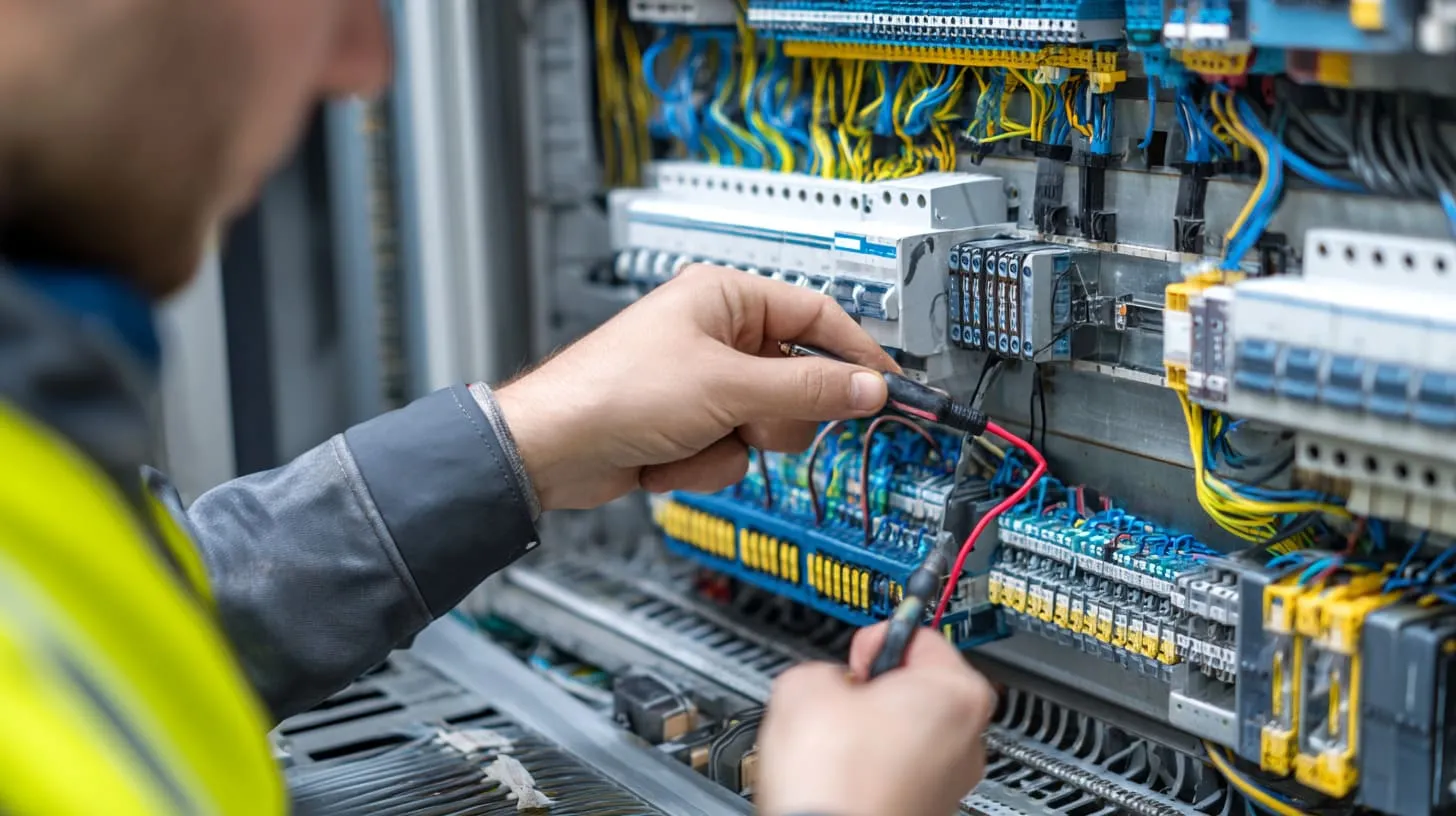
I care a lot about whether a technician can work on the panel quickly. Good layout saves labor later. Crowded layout steals it back.
Lead time and supplier support
A panel is not only a product. It is also a service relationship. If the supplier confirms slowly, explains poorly, or ignores drawing details, the project risk rises.
Here is a buyer checklist table:
| Question | Why it matters |
|---|---|
| Is the enclosure size realistic? | Prevents crowding and heat issues |
| Are the components from trusted brands? | Improves reliability and service |
| Is the layout service-friendly? | Reduces maintenance time |
| Is there space for expansion? | Avoids early redesign |
| Does the supplier understand my market? | Helps with standards and delivery |
| Is support responsive? | Reduces delay during project changes |
When I review a panel quote, I pay more attention to layout logic, device fit, and support quality than to the cheapest total price, because the cheapest panel can become the most expensive one after installation.
At this point, one part of the discussion often becomes much bigger than buyers first expect: the enclosure itself.
Why Custom PLC Panel Enclosures Matter for Industrial Projects?
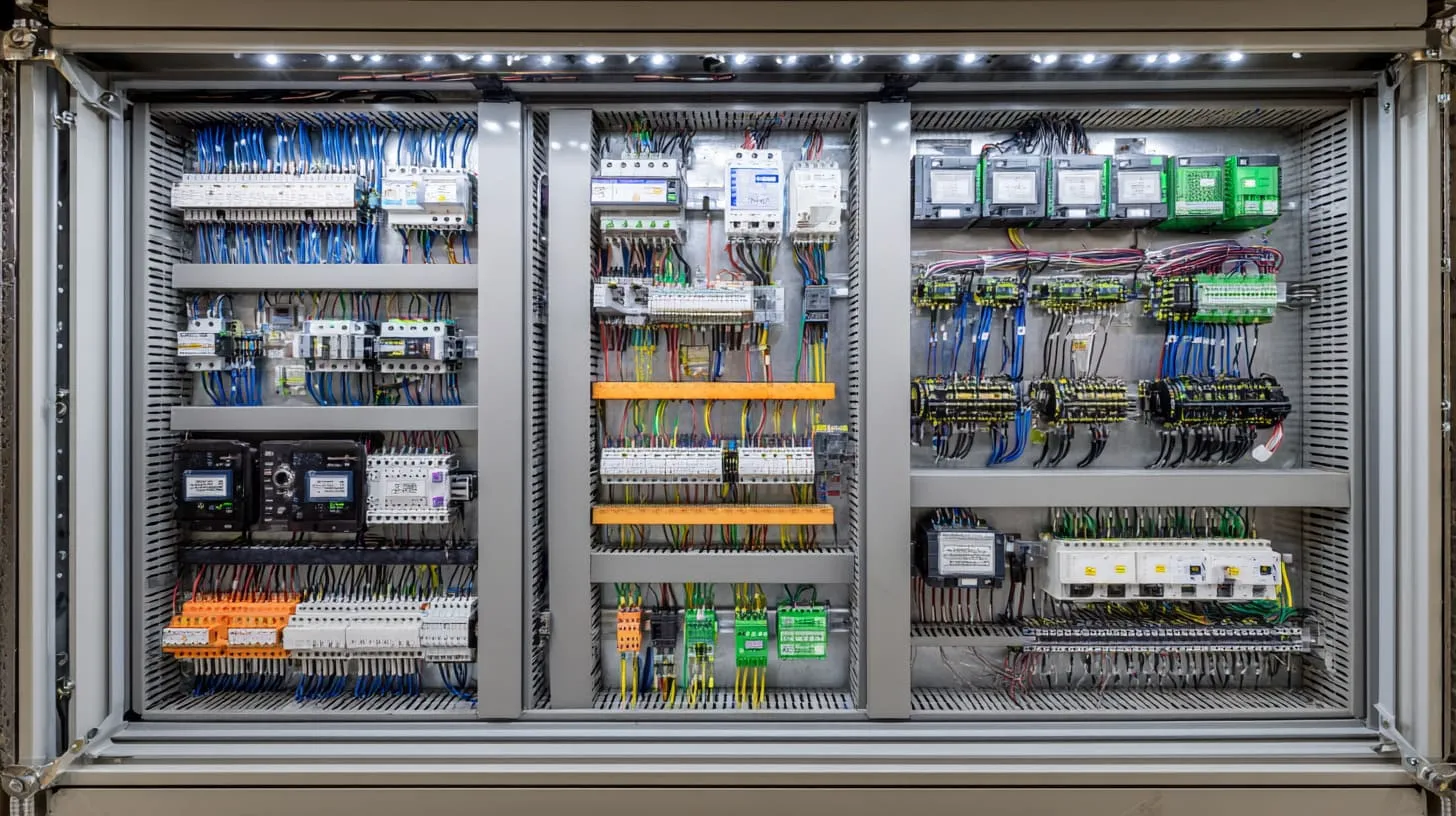
Many people talk about the PLC, the software, or the internal parts first. I understand that. They are the active parts of control. Still, the enclosure quietly affects almost everything around them. It affects protection. It affects temperature. It affects service. It affects how the project feels when the customer opens the cabinet door.
Custom PLC panel enclosures matter because they protect the internal control system, support proper layout, improve thermal behavior, match installation needs, and help OEM projects look more professional and work more reliably.
Protection from dust, moisture, and vibration
The enclosure is the first physical barrier. In industrial work, this is not a minor detail. Dust can build up. Moisture can shorten component life. Vibration can loosen weak layouts over time.
Material choice changes real performance
Different projects call for different materials. I never like treating enclosure material as a cosmetic choice only.
| Material | Best point | Limitation |
|---|---|---|
| Aluminum | Light weight, clean finish | May cost more in some builds |
| Mild steel | Strong and economical | Needs coating against corrosion |
| Stainless steel | Strong corrosion resistance | Heavier and usually more costly |
| Plastic | Corrosion-resistant and light | Not ideal for every industrial load |
Thermal management starts with enclosure thinking
Internal heat is not solved by adding a fan at the last minute. Cabinet size, material, mounting style, spacing, and device placement all influence heat behavior.
Mounting and layout shape daily usability
A wall-mounted enclosure, floor-standing cabinet, or machine-mounted box each creates different service conditions. Internal backplate layout also matters a lot.
Branding and OEM value
For OEM and custom buyers, the enclosure is often part of the product identity. That includes:
- Logo printing
- Engraved nameplates
- Color choice
- Label consistency
- Cable entry planning
- Packaging fit
I have seen projects where the internal electrical design was good, but the enclosure choice still made the final product feel cheap, awkward, or harder to maintain than it needed to be.
The small detail I often think about is this: if a panel door opens and the technician immediately feels cramped or confused, the enclosure design has already failed part of its job.
That brings me to the natural close of the topic. Once we have looked at the parts, the logic, the types, the uses, and the enclosure, the full picture becomes much clearer.
Conclusion
A PLC panel is much more than a box full of electrical parts. I see it as the working center of an automated system. It brings signals in, processes logic, sends actions out, and helps machines run in a way that feels controlled instead of chaotic. That is why components matter. Layout matters. Cooling matters. Protection matters. And yes, enclosure choice matters more than many people first think.
Across this article, I have tried to show the topic from the angle I use in real work. A PLC panel needs the right parts, but it also needs the right judgment. The design has to fit the job. The type has to fit the environment. The supplier has to fit the pace and demands of the project. In my experience, the best results do not come from chasing the most features or the lowest price alone. They come from matching the panel to the real use case with care.
If I were advising a buyer like Davide, John, or Jackson, I would say this very simply: do not only ask whether the PLC panel can run the machine. Ask whether it can still be understood, maintained, expanded, and trusted after months of real operation.
If you are sourcing a custom PLC panel enclosure, or if you are comparing design options for an OEM project, you can use this topic as a practical checklist for your next step. And if you want to discuss custom metal or plastic enclosure options for industrial control systems, I would be glad to look at your drawing, layout idea, or application needs and help you think through the details before they become expensive problems.