
I have seen one small sentence in an RFQ change the whole cost of an enclosure project.
The sentence usually looks simple:
“We need NEMA 4.”
At first, it sounds reasonable. NEMA 4 feels stronger. It feels safer. It feels like a better choice than NEMA 13. Many buyers think this way, and I understand it. When someone is buying custom electrical enclosures for a machine, control device, or OEM product, nobody wants a failure in the field. Nobody wants water, oil, or dust to damage the inside components.
But here is the problem.
A stronger-sounding rating is not always the right rating.
Sometimes, a buyer asks for NEMA 4 because they believe it gives better protection in every case. But the real working environment may be an indoor machine area with oil mist, coolant splash, dust, lint, or small flying particles. In that kind of application, NEMA 13 may match the real risk better than NEMA 4.
I do not like to choose an enclosure rating only by looking at which number sounds higher. I like to ask one simple question first: What is actually attacking the enclosure in daily use?
Is it outdoor rain?
Is it hose-directed water?
Is it oil?
Is it coolant?
Is it dust from a production line?
Is it cleaning chemical?
Is it only an indoor machine-side control box that will never see hose washing?
That answer matters more than the rating name.
For custom OEM enclosure projects, this decision is not just a technical detail. It affects cost, material, gasket design, cable entry, heat dissipation, lead time, and even the buyer’s project schedule. If the wrong rating is chosen, the buyer may pay more and still not solve the real protection problem.
This is where I think many projects go wrong: the buyer tries to buy “more protection,” but they do not first define the real failure risk.
In this article, I will compare NEMA 13 and NEMA 4 in a practical way. I will not only explain the definitions. I will also talk about when the more expensive option adds no real value, and when NEMA 4 is really needed.
What Is the Real Difference Between NEMA 13 and NEMA 4?

The first thing I want to make clear is simple: NEMA 13 and NEMA 4 are not two versions of the same protection idea.
They are built for different problems.
NEMA 13 is mainly used for indoor industrial environments where dust, lint, fibers, flying particles, oil, and non-corrosive coolant may touch the enclosure. NEMA 4 is used for indoor or outdoor locations where the enclosure must resist windblown dust, rain, splashing water, and hose-directed water.
So the question is not, “Which one is better?”
The better question is, “Which one matches the real job site?”
A buyer once sent us a drawing for a small control box used beside a CNC machine. The drawing said NEMA 4. But after checking the real environment, we found that the enclosure was not installed outdoors. It was not washed by hose. It only faced coolant splash and some oil mist. In that case, the first conversation should not be about upgrading sealing. It should be about whether NEMA 13 is the correct direction.
I always get a little careful when I see a rating request without a use environment, because a rating without a working condition is like a shoe size without knowing the person’s foot.
NEMA 13 in Simple Terms
NEMA 13 is for indoor use.
It is often related to industrial machine environments. These areas may have dust, lint, small particles, oil, and non-corrosive coolant. The enclosure may be placed close to machines, control buttons, limit switches, operator panels, and production equipment.
NEMA 13 is not mainly about outdoor rain. It is not mainly about hose-directed water. It is more about a machine-side environment where liquids are not always clean water.
A simple way to think about it:
| Question | NEMA 13 Answer |
|---|---|
| Is it for indoor use? | Yes |
| Is oil or coolant exposure possible? | Yes |
| Is it mainly for outdoor weather? | No |
| Is hose-directed water the main risk? | No |
| Is it common in machine tool areas? | Yes |
This is why NEMA 13 is often seen around machine tools, production equipment, and industrial control devices. The environment may look dry from far away, but close to the machine, the enclosure may face fine oil mist, coolant splash, and metalworking dirt every day.
NEMA 4 in Simple Terms
NEMA 4 is different.
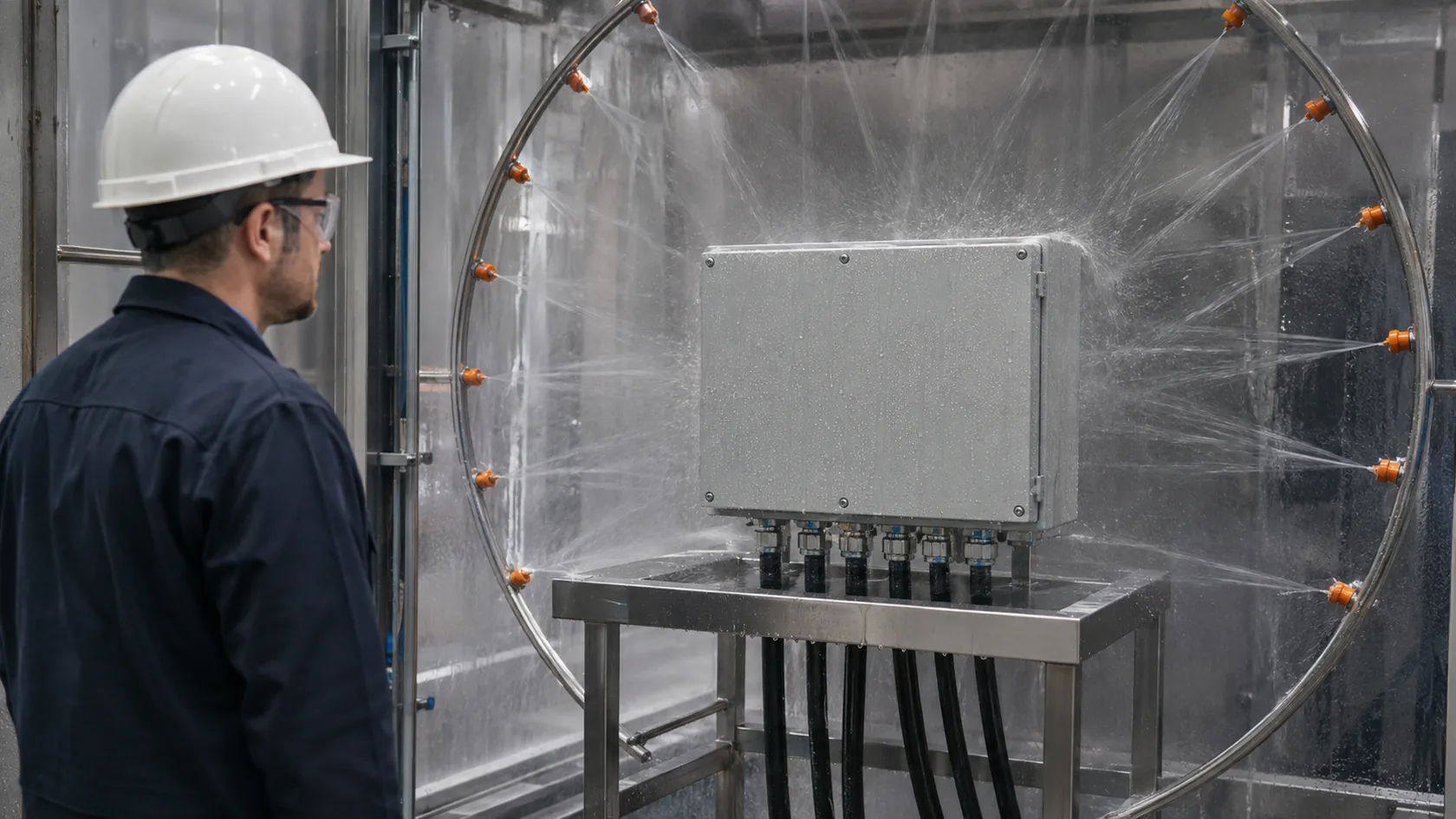
NEMA 4 can be used indoors or outdoors. It is designed to protect against windblown dust, rain, splashing water, and hose-directed water. This makes it useful for wet industrial locations, outdoor installations, and washdown areas.
If a control panel is installed on an exterior wall, NEMA 4 can make sense. If a production line is cleaned by hose, NEMA 4 can make sense. If rain or heavy water spray is part of the real environment, NEMA 4 should be seriously considered.
| Question | NEMA 4 Answer |
|---|---|
| Is it for indoor use? | Yes |
| Is it for outdoor use? | Yes |
| Does it resist rain? | Yes |
| Does it resist hose-directed water? | Yes |
| Is it mainly about oil and coolant? | Not mainly |
| Is it always better than NEMA 13? | No |
NEMA 4 sounds strong because it covers water exposure well. But water is not the only enemy in industrial use.
The Key Difference Buyers Often Miss
Many buyers compare NEMA 13 and NEMA 4 like a simple ranking.
They may think:
- NEMA 4 has a higher number.
- NEMA 4 sounds more waterproof.
- NEMA 4 must be safer.
- So NEMA 4 must be the better choice.
That logic is easy to understand. But it is not always correct.
The key difference is the type of hazard.
| Real Hazard | Better Direction |
|---|---|
| Oil splash | Often NEMA 13 |
| Non-corrosive coolant | Often NEMA 13 |
| Indoor dust and lint | Often NEMA 13 |
| Outdoor rain | NEMA 4 |
| Hose-directed water | NEMA 4 |
| Frequent washdown | NEMA 4 or higher |
| Corrosive environment | Often NEMA 4X, not just NEMA 4 |
A higher-looking rating does not always match the real hazard.
If the enclosure is used beside a machine and the main risk is coolant, NEMA 13 may be more relevant. If the enclosure is outside a building and rain is the main risk, NEMA 4 is more relevant.
That is the difference.
Not stronger or weaker.
Just different.
One rating is not a trophy. It is a tool. And a tool only works well when it fits the job.
When Does NEMA 13 Make More Sense Than NEMA 4?
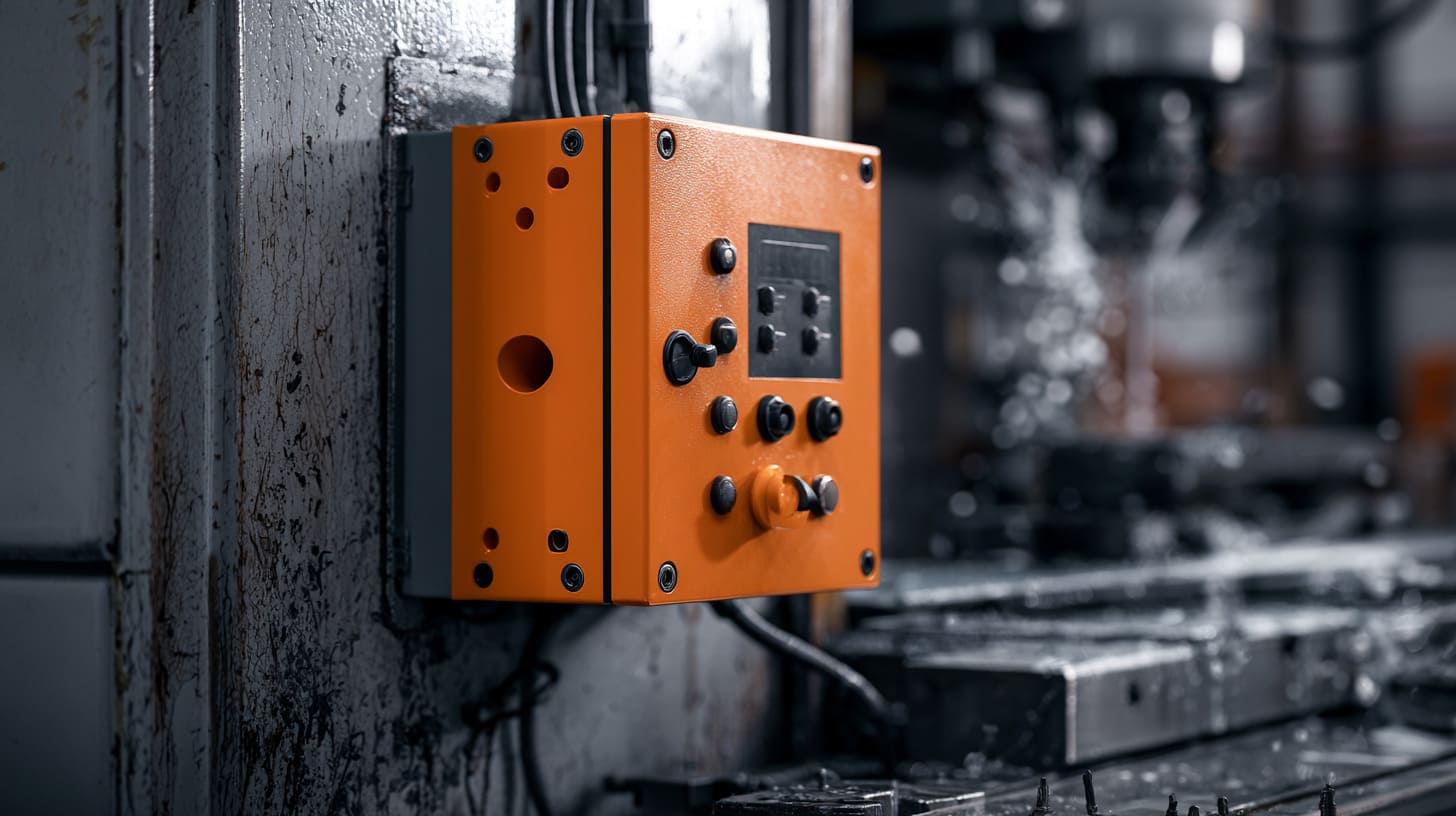
NEMA 13 can make more sense when the enclosure works indoors and faces machine-side contamination.
This is common in real factories. The environment may not look extreme on paper. But when the enclosure is mounted close to a CNC machine, a hydraulic unit, or a metalworking system, the daily risk can be oil, coolant, dust, and small particles.
A buyer may still ask for NEMA 4 because they want “good protection.” But if there is no outdoor rain and no hose washing, the extra NEMA 4 direction may not solve anything important.
One thing I like to check early is whether the enclosure will be cleaned by people with a hose, because that one detail can completely change the correct rating direction.
Indoor Machine Areas with Oil or Coolant Exposure
NEMA 13 is often useful in indoor machine areas.
These are not clean office rooms. They are also not outdoor weather zones. They sit in the middle. They are industrial areas where the enclosure may face small but repeated exposure to machine fluids.
Common examples include:
- CNC machines
- Milling machines
- Turning machines
- Metalworking equipment
- Hydraulic systems
- Lubrication-heavy production areas
- Machine-side control boxes
- Operator panels
- Pushbutton stations
- Limit switch boxes
In these places, the failure risk may not come from a big water spray. It may come from slow, repeated exposure.
A small amount of coolant reaches the cover seam.
Oil mist settles around the cable entry.
Dust sticks to the gasket area.
Fine particles collect around the button holes.
This kind of problem is easy to underestimate because it does not look dramatic. There is no big splash. There is no rainstorm. But after months of use, small contamination can become a real failure reason.
| Machine Area Condition | Why NEMA 13 May Fit |
|---|---|
| Coolant splash | NEMA 13 is relevant for non-corrosive coolant exposure |
| Oil mist | NEMA 13 is relevant for oil-related indoor use |
| Dust and lint | NEMA 13 helps in indoor dirty environments |
| Small flying particles | Common around machine tools |
| No hose washing | NEMA 4 may not be needed |
For a machine-side custom enclosure, I would rather understand the real fluid and cleaning process than blindly increase the enclosure rating.
Where Hose-Directed Water Is Not Part of the Use Case
NEMA 4 becomes important when hose-directed water is a real condition.
But many indoor machine enclosures are not cleaned by hose. They are wiped by hand. Or they only receive light splash during operation. Or they sit behind a machine cover where direct water spray is not expected.
In these cases, asking for NEMA 4 may add cost but not much protection value.
A simple check helps:
| Question | If the Answer Is “No” |
|---|---|
| Will workers use a hose to clean this area? | NEMA 4 may not be needed |
| Will the box face outdoor rain? | NEMA 4 may not be needed |
| Will the enclosure receive direct water jet? | NEMA 4 may not be needed |
| Is high-pressure cleaning used nearby? | NEMA 4 may not be needed |
| Is oil/coolant the main liquid? | NEMA 13 may be more suitable |
I do not mean NEMA 4 is wrong in every indoor case. Some indoor factories have strong washdown processes. Some areas have water spray every shift. Some production lines are cleaned very aggressively.
But if the enclosure is never washed by hose, then NEMA 4 may become an expensive answer to a question nobody asked.
That is a quiet way to waste budget.
When Cost and Practical Design Matter
NEMA ratings also affect the enclosure structure.
A higher protection direction can mean:
- More careful gasket design
- More complex cover or door structure
- Better sealing around cable entries
- More attention to fabrication tolerance
- More testing time
- Higher material or assembly cost
For a one-piece project, the cost increase may not feel too painful. But for OEM or wholesale orders, the difference can become serious. If a buyer orders 500 pieces, 1,000 pieces, or more, a small extra cost per unit becomes a real purchasing issue.
| Project Factor | NEMA 13 Direction | NEMA 4 Direction |
|---|---|---|
| Indoor machine use | Often suitable | Sometimes over-specified |
| Oil/coolant exposure | Relevant | Not the main focus |
| Hose washdown | Not the main focus | Relevant |
| Cost control | Usually easier | May increase cost |
| Compact control devices | Often practical | May need more sealing structure |
| OEM batch cost | Can be more efficient | Can raise unit cost |
NEMA 13 can also be easier to match with compact control devices and machine-mounted boxes. The enclosure does not need to be built like an outdoor washdown box if the real job is indoor oil and coolant protection.
There is a practical trade-off here: if the enclosure sits indoors beside a machine, I may care more about oil and coolant resistance than hose-water resistance, because that is what will actually touch the box every day.
This is why I push buyers to describe the working environment before we talk about the final rating.
A better enclosure is not always the more sealed one.
A better enclosure is the one that survives the real use.
When Is NEMA 4 Actually the Better Choice?
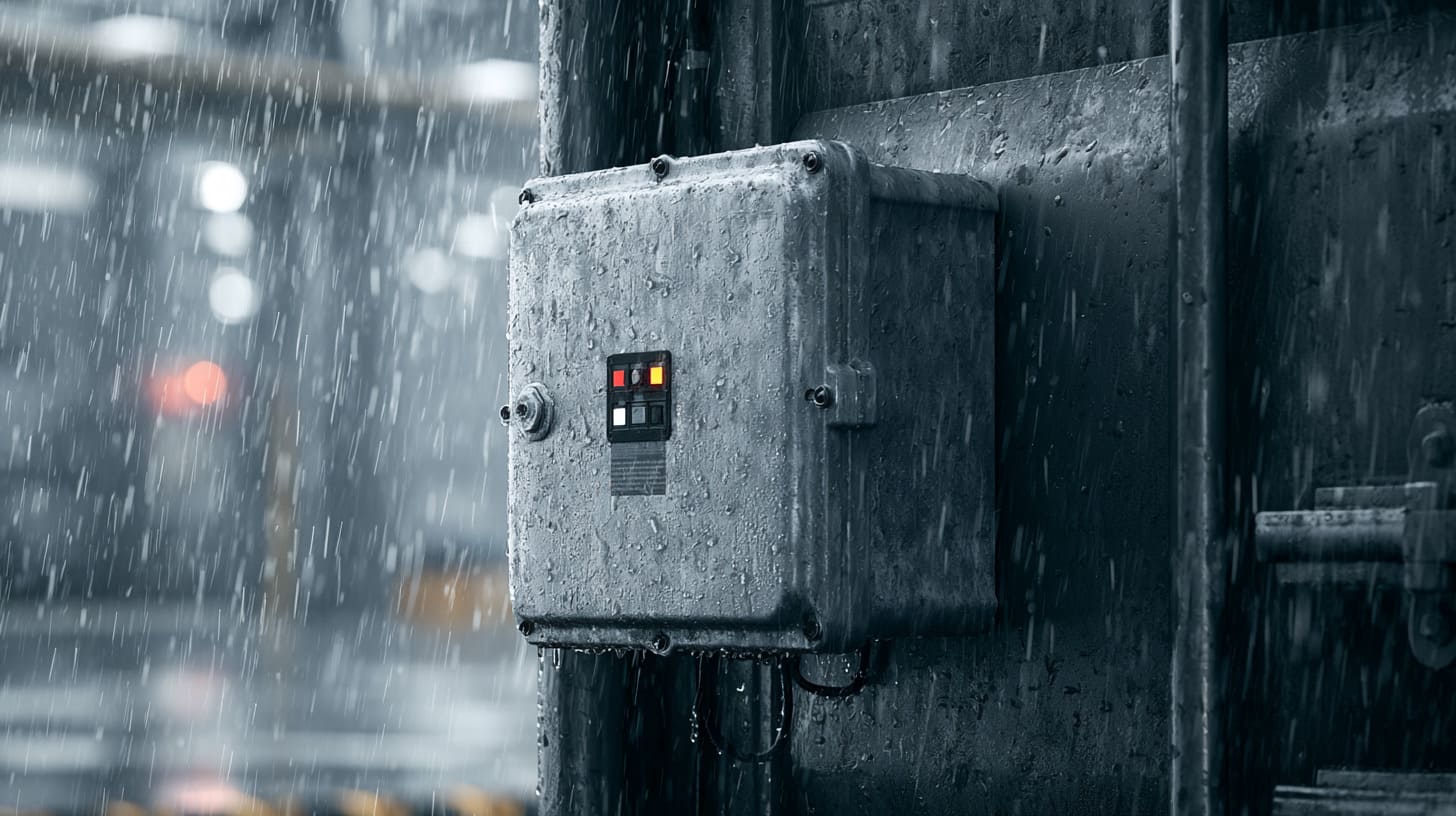
NEMA 4 is not a bad choice. It is a very useful rating when the environment truly needs it.
The mistake is not choosing NEMA 4. The mistake is choosing it without knowing why.
There are many cases where I would not argue against NEMA 4 at all. If the enclosure is outdoors, exposed to rain, installed in a washdown area, or facing hose-directed water, NEMA 4 becomes a serious and reasonable choice.
The detail that changes my mind fastest is direct water cleaning; once a worker points a hose at the enclosure, the design problem is no longer the same.
Outdoor or Semi-Outdoor Installation
Outdoor installation is one of the clearest reasons to consider NEMA 4.
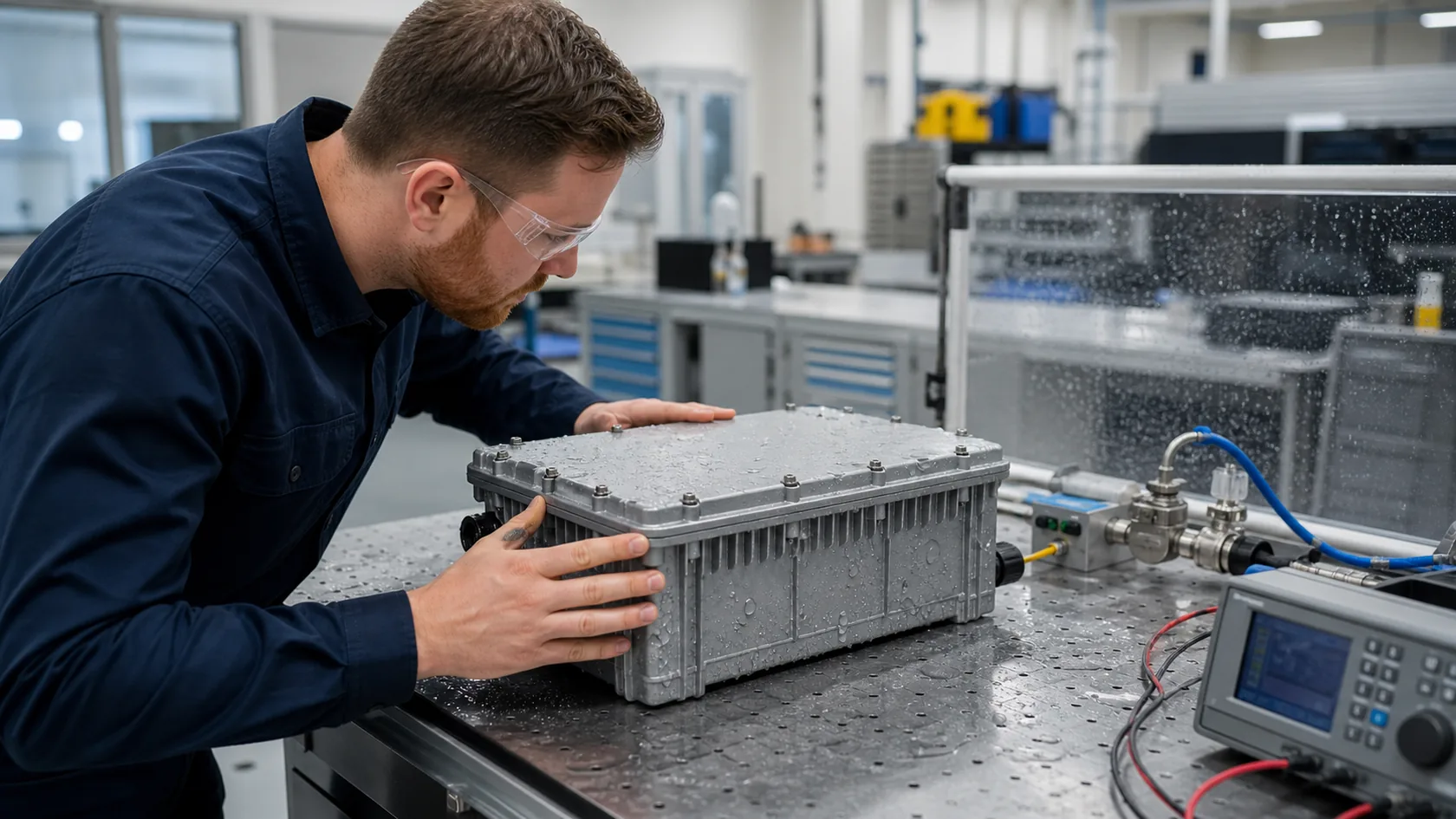
Outdoor boxes face more than simple water drops. They may face windblown dust, rain from different directions, temperature changes, and installation mistakes that create water paths. If the box is mounted on a building exterior, fence, outdoor equipment frame, or utility area, the enclosure needs stronger water protection than a typical indoor machine-side box.
Common outdoor or semi-outdoor examples include:
- Outdoor control panels
- Utility equipment boxes
- Exterior building-mounted enclosures
- Factory wall installations exposed to weather
- Equipment installed under a roof but still exposed to wind-driven rain
- Outdoor power or signal junction boxes
| Installation Type | NEMA 4 Need |
|---|---|
| Fully indoor machine area | Usually not the first choice |
| Outdoor wall-mounted box | Often needed |
| Under canopy but rain can blow in | Often needed |
| Exterior utility equipment | Often needed |
| Dry indoor warehouse | Usually not needed |
Semi-outdoor applications are tricky. A buyer may say, “It is under a roof, so it is not outdoor.” But if wind can push rain toward the box, the enclosure still needs serious water protection.
I always ask for photos or at least a clear installation description when the location is between indoor and outdoor. A small roof does not always protect the enclosure the way people imagine.
Washdown or Hose-Cleaning Areas
Washdown areas are another clear reason to use NEMA 4.
This is common in food processing, beverage production, packaging lines, and wet industrial floors. The enclosure may not be outdoors, but it still receives direct water spray during cleaning.
That cleaning process changes everything.
A normal splash is one thing.
A hose spray is another thing.
A worker cleaning fast at the end of a shift may not gently avoid the enclosure. The water may hit the cover seam, cable glands, hinges, buttons, and mounting holes.
Common washdown areas include:
- Food processing lines
- Beverage production areas
- Packaging lines with water cleaning
- Wet industrial floors
- Clean rooms with spray cleaning
- Equipment near washing stations
| Cleaning Condition | Rating Direction |
|---|---|
| Dry cloth wipe | NEMA 13 may be enough |
| Light splash during use | Depends on liquid type |
| Spray cleaning nearby | Check carefully |
| Hose-directed washing | NEMA 4 is usually needed |
| High-pressure washdown | May need higher design review |
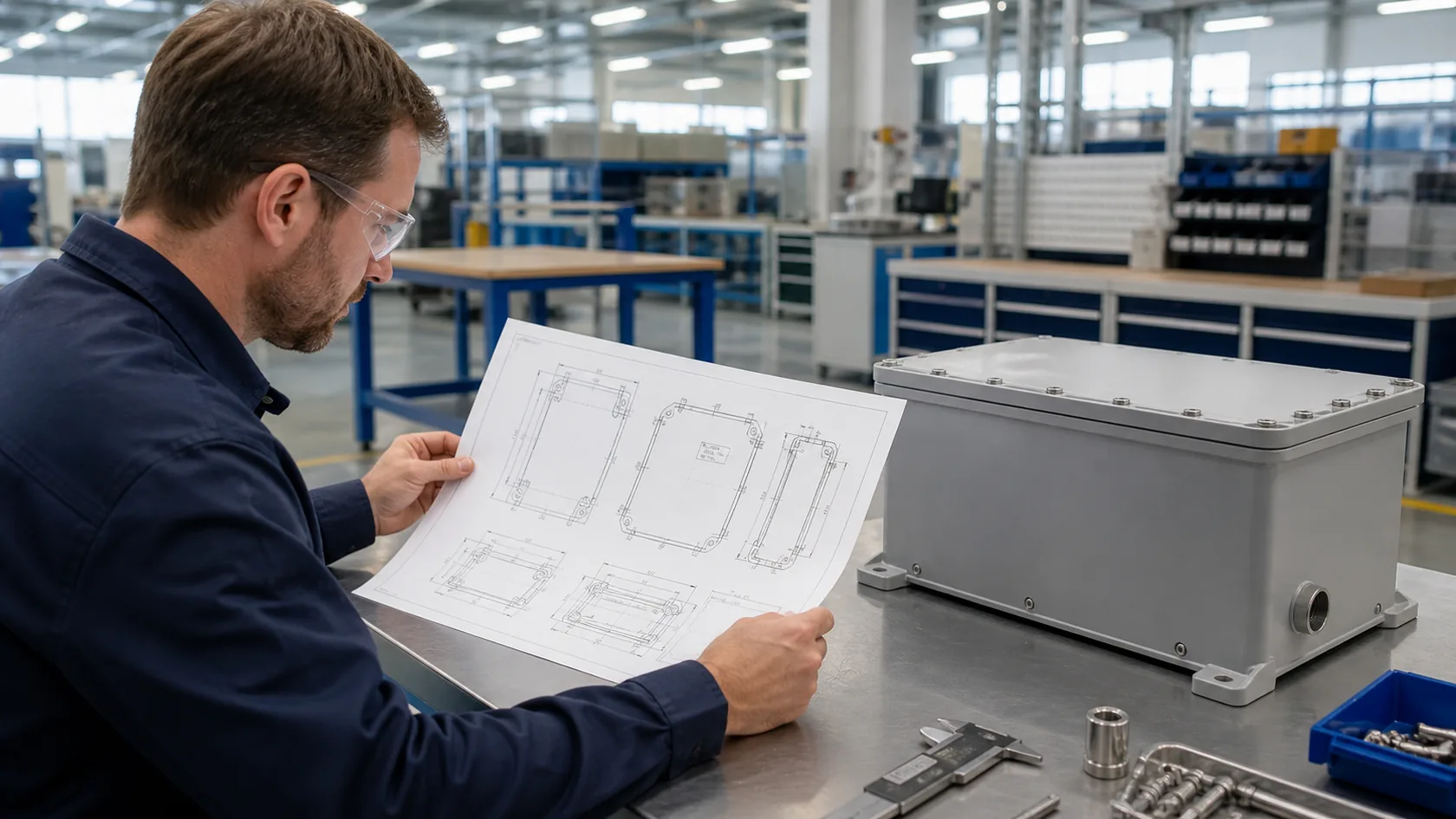
For washdown areas, the enclosure structure matters a lot. It is not enough to write NEMA 4 on a drawing. The gasket, cover, cable glands, fasteners, and mounting design must all support the rating.
If one cable entry is poorly sealed, the label on the enclosure will not save the electronics.
Heavy Water Spray or Rain Risk
NEMA 4 is also important where heavy water spray or rain is expected.
This can happen outdoors, but it can also happen indoors. Some industrial areas use water in the process. Some equipment is installed near wet operations. Some factories have moisture-heavy zones where water exposure is normal.
Examples include:
- Repeated water splash
- Hose-directed cleaning
- Wind-driven rain
- Moisture-heavy production areas
- Water treatment equipment areas
- Outdoor machinery controls
The important point is repetition. A single splash may not damage a box. But repeated exposure can find weak points.
Water does not need a large opening. It only needs a path.
| Weak Point | Why It Matters |
|---|---|
| Cover seam | Water can follow the gasket line |
| Cable gland | Poor gland selection can leak |
| Door hinge | Moving parts may weaken sealing |
| Fastener hole | Small gaps can become water paths |
| Bottom opening | Water may collect or enter by pressure |
When I review a custom enclosure for water exposure, I do not only look at the box body. I look at the complete system. The best enclosure shell can still fail if the cable entry is treated like an afterthought.
When Customer Specification Requires It
Sometimes the decision is not only technical.
If the engineering drawing, project document, contractor requirement, or end customer specification clearly says NEMA 4, the supplier should not downgrade it without written approval.
This happens often in B2B work. A buyer may be purchasing for another company. The buyer may not have freedom to change the rating. The project may need to pass internal review. The final client may require a certain rating for safety, insurance, or standardization.
In this case, the right action is not to quietly change the rating.
The right action is to clarify.
I would ask:
- Is NEMA 4 required by the final project document?
- Is it required by the end customer?
- Can NEMA 13 be accepted if the use is indoor oil/coolant exposure?
- Is there any inspection or approval process?
- Should we quote both options for comparison?
| Situation | Safe Supplier Action |
|---|---|
| Drawing clearly says NEMA 4 | Do not downgrade without approval |
| Buyer is unsure why NEMA 4 is listed | Ask for use environment |
| Cost is too high | Offer NEMA 13 and NEMA 4 comparison |
| End customer requires NEMA 4 | Follow the requirement |
| Application does not need NEMA 4 | Explain the trade-off clearly |
If the written specification says NEMA 4, I treat it with respect, even if I think NEMA 13 may be enough. The cost of being “technically clever” but commercially wrong can be very high.
That is especially true for OEM projects.
The buyer may not only be buying a box.
They may be protecting a larger project schedule.
Why the More Expensive Option May Add No Real Protection
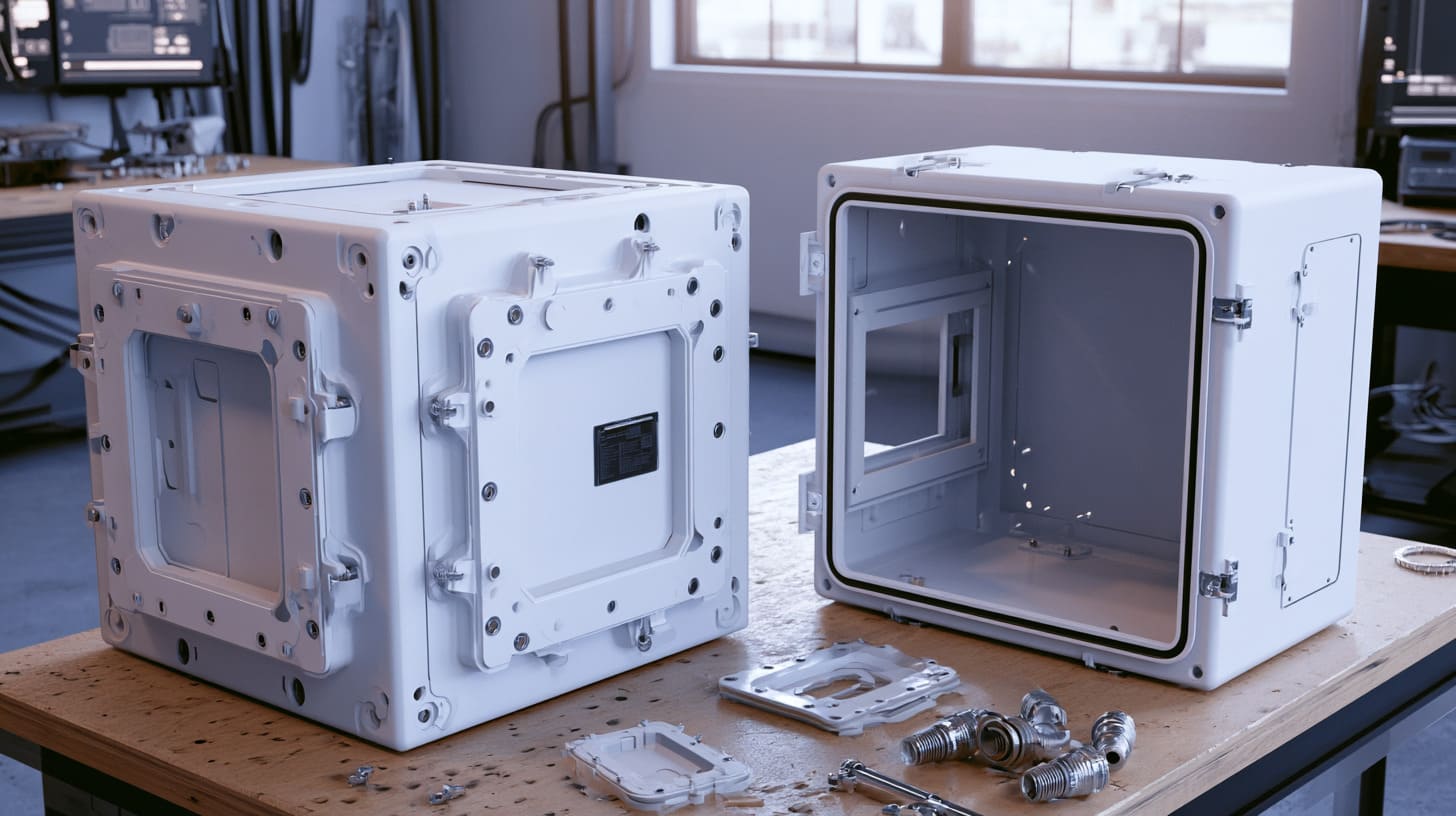
The more expensive option only makes sense when it protects against a real failure.
This sounds obvious. But in custom enclosure projects, it is easy to forget.
A buyer may think, “Let us use NEMA 4 to be safe.” The sales person may be happy because the unit price is higher. The engineer may not push back because nobody wants responsibility for a lower rating.
But if the real environment is indoor oil and coolant splash, NEMA 4 may not add the kind of protection the project actually needs.
I become suspicious when a specification adds cost but does not reduce a clear field risk, because that usually means the project is paying for comfort instead of performance.
Protection Must Match the Failure Mode
Every enclosure failure has a reason.
Water enters.
Oil damages a seal.
Coolant reaches the internal component.
Dust builds up.
Condensation forms.
Cable glands leak.
A gasket loses compression.
The wrong material corrodes.
The rating should match that failure mode.
If the failure mode is oil/coolant exposure, NEMA 13 may be more relevant. If the failure mode is hose water, NEMA 4 may be more relevant. If the failure mode is corrosion, NEMA 4 alone may not be enough. NEMA 4X or a different material choice may be needed.
| Failure Mode | Better Question |
|---|---|
| Oil seepage | Is NEMA 13 more suitable? |
| Coolant splash | Is the coolant non-corrosive? |
| Hose water | Is NEMA 4 required? |
| Outdoor rain | Is NEMA 4 enough? |
| Corrosion | Do we need NEMA 4X or stainless steel? |
| Heat build-up | Can the sealed enclosure release heat? |
| Cable leak | Are cable glands matched with the rating? |
This is why I do not like vague words like “waterproof” in technical discussions.
Waterproof against what?
A light splash?
Rain?
Hose spray?
High-pressure washdown?
Temporary immersion?
These are not the same.
A custom enclosure can only be designed well when the risk is clear.
Extra Sealing Can Increase Cost Without Improving Performance
Extra sealing is not free.
It may require better gasket material. It may require tighter fabrication control. It may require a stronger cover design. It may require more careful assembly. It may require more testing and inspection.
For small batches, this may only feel like a small increase. For wholesale or OEM production, it matters.
| Cost Area | How NEMA 4 Direction Can Affect It |
|---|---|
| Gasket | Better material and compression control may be needed |
| Cover design | More attention to sealing path |
| Door structure | Stronger structure may be required |
| Cable entry | Better glands and sealing parts |
| Fabrication tolerance | Less room for loose fit |
| QC | More inspection time |
| Lead time | Longer confirmation and production process |
In our factory work, I have seen many cases where the enclosure body is not the biggest problem. The real cost comes from details: gasket groove, mounting hole, cable gland, hinge, screw spacing, and surface treatment.
These small details decide whether the rating is realistic.
If the buyer does not need hose-directed water protection, it may not be wise to pay for all these extra design details.
Over-Specification Can Create Hidden Problems
Over-specification does not only increase cost. It can create other problems.
A more sealed enclosure can trap heat.
A more complex cover may be harder to assemble.
A larger gasket area may need more careful maintenance.
Cable entry may become more limited.
The enclosure may become heavier or more expensive than necessary.
For electronic devices, heat can be a serious issue. A buyer may focus only on water protection and forget that the internal PCB, power module, or controller also needs stable temperature.
| Over-Specification Problem | Possible Result |
|---|---|
| Too much sealing | Heat stays inside |
| More complex structure | Higher production cost |
| Larger gasket system | More assembly control needed |
| More expensive material | Higher unit price |
| More difficult cable entry | Installation becomes harder |
| Heavier enclosure | Shipping and mounting cost increase |
| Longer production process | Project schedule risk |
For a real OEM project, paying more only makes sense when it prevents a real field failure. If the extra rating does not reduce the actual risk, it becomes a cost burden.
And buyers do feel that burden.
They may accept it for 20 pieces.
They may question it for 500 pieces.
They may reject it for 5,000 pieces.
That is why I prefer to solve the real risk, not the imagined one.
NEMA 13 vs NEMA 4: Application Comparison Table
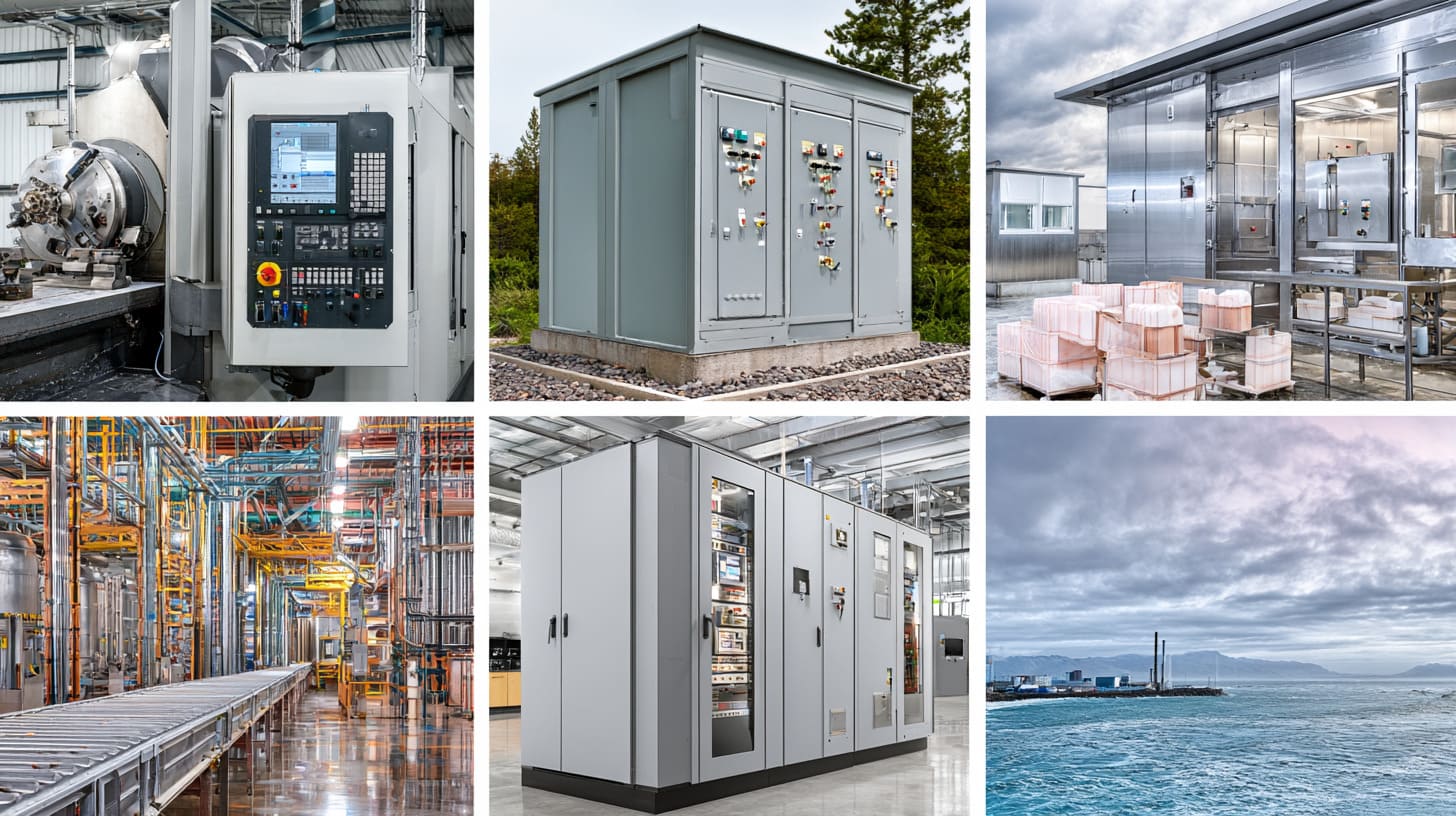
Sometimes the easiest way to compare NEMA 13 and NEMA 4 is not by reading definitions. It is by looking at real applications.
Buyers and engineers often make faster decisions when they see the environment clearly.
I use comparison tables a lot in early communication because they reduce misunderstanding. A table can show in one minute what ten emails may fail to explain.
Here is a practical application comparison.
| Application | Better Fit | Why |
|---|---|---|
| Machine tool control box | NEMA 13 | Oil, coolant, dust, and indoor machine-side exposure |
| Outdoor electrical control panel | NEMA 4 | Rain, windblown dust, and outdoor water exposure |
| Food processing washdown area | NEMA 4 or NEMA 4X | Hose-directed water and frequent cleaning |
| Indoor automation cabinet near conveyor | Depends | Dust, liquid type, and cleaning method decide |
| Coastal or corrosive area | Usually NEMA 4X | Corrosion resistance becomes the key factor |
A table is helpful, but it should not become a shortcut that replaces real judgment. The same factory can have a dry zone, an oil zone, a washdown zone, and a corrosive zone under one roof.
Machine Tool Control Box
For a machine tool control box, NEMA 13 is often a better fit.
The box may sit beside a CNC machine, cutting machine, or metalworking system. It may face dust, oil mist, coolant splash, and small particles. The enclosure is indoors. It is not exposed to rain. It is not cleaned by hose.
In that case, NEMA 13 may match the real environment well.
| Condition | Typical Machine Tool Box |
|---|---|
| Indoor use | Yes |
| Oil exposure | Possible |
| Coolant exposure | Possible |
| Hose washdown | Usually no |
| Outdoor rain | No |
| NEMA 13 fit | Often good |
This does not mean every machine tool box must be NEMA 13. But it does mean buyers should not jump to NEMA 4 just because they want something “stronger.”
Outdoor Electrical Control Panel
For an outdoor electrical control panel, NEMA 4 is usually a better direction.
The enclosure may face rain, windblown dust, and splashing water. It may be installed on a wall, frame, pole, or outdoor machine. It needs to survive weather changes.
NEMA 13 is not meant for this kind of use.
| Condition | Outdoor Control Panel |
|---|---|
| Indoor use only | No |
| Rain exposure | Yes |
| Windblown dust | Possible |
| Hose-directed water | Possible |
| NEMA 4 fit | Often good |
Outdoor projects also need extra questions. Is the area coastal? Is the box under direct sun? Is corrosion a problem? Is plastic, aluminum, powder-coated steel, or stainless steel better?
NEMA 4 may solve water exposure, but it does not automatically solve corrosion or heat from direct sunlight.
Food Processing Washdown Area
Food processing and beverage areas often need washdown protection.
In these places, cleaning is not gentle. Workers may use hoses often. Water may hit the enclosure from different angles. Cleaning chemicals may also be present.
NEMA 4 may be needed. But in some food, chemical, or coastal environments, NEMA 4X may be a better direction because corrosion resistance matters too.
| Condition | Food Washdown Area |
|---|---|
| Hose cleaning | Yes |
| Frequent water exposure | Yes |
| Cleaning chemicals | Possible |
| Corrosion risk | Possible |
| NEMA 4 fit | Often good |
| NEMA 4X fit | Often better if corrosion matters |
This is a good example of why “NEMA 4 vs NEMA 13” is sometimes not enough. The real decision may be NEMA 4 vs NEMA 4X, or stainless steel vs aluminum, or sealed box vs thermal design.
Indoor Automation Cabinet Near Conveyor
An indoor automation cabinet near a conveyor is not always easy to judge.
Some conveyors run in dry warehouses. Some run near packaging lines. Some run in dusty areas. Some run in food factories with washdown cleaning. Some are close to oil or coolant.
So the answer depends.
| Condition | Possible Rating Direction |
|---|---|
| Dry indoor conveyor | Lower rating may be enough |
| Dusty indoor conveyor | Check dust protection |
| Oil/coolant nearby | NEMA 13 may fit |
| Hose washdown nearby | NEMA 4 may fit |
| Corrosive cleaning | Consider NEMA 4X or material upgrade |
This kind of project needs more conversation before quoting.
If the buyer only says “automation cabinet,” the supplier should ask more. The word “automation” does not tell us whether the box will face oil, dust, rain, or washdown water.
Coastal or Corrosive Area
A coastal or corrosive area is a different problem.
Many buyers think NEMA 4 is enough because it is water-tight. But corrosion is not only a water problem. Salt mist, chemicals, and cleaning agents can attack the enclosure material, fasteners, hinges, and surface finish.
In these cases, NEMA 4X may be needed.
| Environment | Better Direction |
|---|---|
| Outdoor rain, no corrosion risk | NEMA 4 may fit |
| Coastal air | Consider NEMA 4X |
| Chemical cleaning | Consider NEMA 4X |
| Food washdown with chemicals | Consider NEMA 4X |
| Marine-like exposure | NEMA 4X or stainless solution |
This is a common hidden mistake. The buyer pays for NEMA 4, but the real enemy is corrosion. The box may resist water entry, but the surface, screws, or hinges may still fail over time.
That is not a rating victory.
That is a design miss.
What Should Engineers Check Before Choosing?
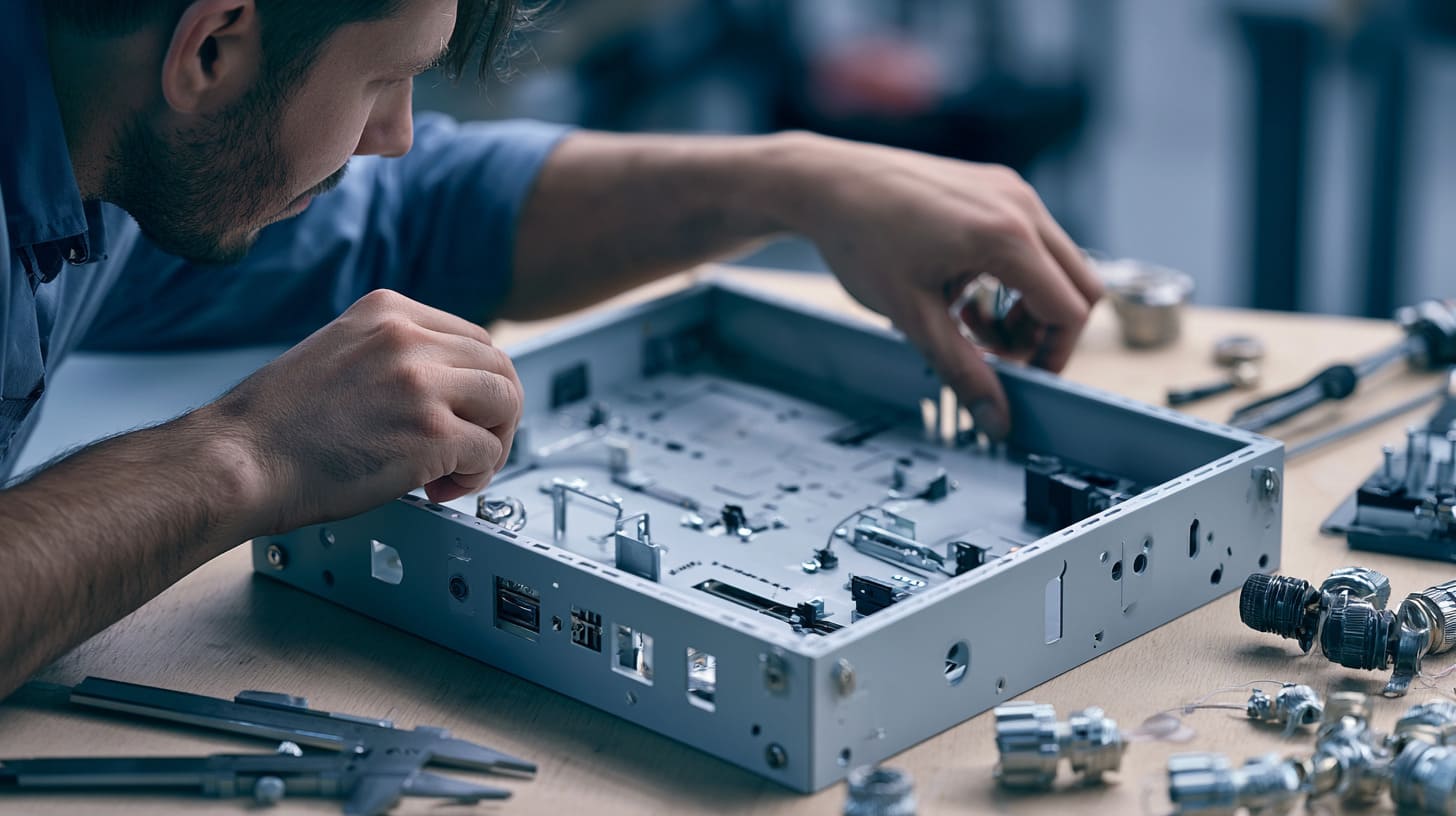
Before choosing between NEMA 13 and NEMA 4, engineers should slow down and check the working conditions.
This does not need to be complicated. A few clear questions can prevent many wrong choices.
In custom enclosure work, the rating is only one part of the design. The installation location, liquid type, cleaning method, cable entry, mounting style, and heat condition all affect the final result.
My first check is usually not the rating itself; I check the installation story, because the enclosure will live in a real place, not inside a product catalog.
Installation Location
The installation location is the starting point.
Is the enclosure indoor or outdoor?
Is it exposed to rain?
Is it protected by a machine frame?
Is it mounted near coolant, oil, or cutting fluids?
Is it installed on a wall, pole, machine body, or production line?
| Location Question | Why It Matters |
|---|---|
| Indoor or outdoor? | Outdoor use may need NEMA 4 |
| Near machine tools? | NEMA 13 may be relevant |
| Exposed wall or protected area? | Water direction changes |
| Close to coolant or oil? | Liquid type changes the rating logic |
| Near workers or moving parts? | Mounting and damage risk matter |
Location also affects access and maintenance. A wall-mounted outdoor box may need different fasteners and cable entry than a machine-mounted control box inside a factory.
A box does not fail only because of the rating. It can fail because the installation makes the protection weak.
Liquid Type
Liquid type is one of the most important checks.
Water, oil, coolant, cleaning chemical, and salt mist are not the same. They behave differently. They attack materials differently. They create different sealing risks.
| Liquid Type | Design Concern |
|---|---|
| Water | Splash, rain, hose spray |
| Oil | Gasket compatibility and surface contamination |
| Non-corrosive coolant | Machine-side seepage and splash |
| Cleaning chemical | Material and corrosion resistance |
| Salt mist | Corrosion resistance |
| Mixed fluids | More careful material review |
If the buyer only says “liquid exposure,” I cannot make a good judgment yet.
I need to know what liquid.
For example, a CNC coolant splash is not the same as a washdown hose in a food plant. A light water splash is not the same as salt spray near a coastal facility.
The liquid tells us what the enclosure must survive.
Cleaning Method
Cleaning method can change the correct rating quickly.
Many buyers forget this detail. They describe the machine operation, but they do not describe how workers clean the area after operation.
That can be dangerous.
| Cleaning Method | Rating Impact |
|---|---|
| Dry wipe | Lower sealing may be acceptable |
| Light splash | Check liquid type |
| Spray cleaning | More sealing review needed |
| Hose-directed washdown | NEMA 4 is often needed |
| High-pressure washdown | Needs deeper design check |
| Chemical cleaning | Material and finish matter |
A factory may look dry during production. But at the end of the day, workers may wash the area with water. If the enclosure is in the spray path, the design must handle that.
This is why I ask about cleaning before finalizing a quote.
A working machine is only half the story.
Cleaning is the other half.
Cable Entry and Mounting
Cable entry is one of the most common weak points.
A buyer may spend money on a better enclosure body, but use the wrong cable gland. Then water or oil enters from the cable area. The box gets blamed, but the real issue is the entry design.
Key points include:
- Bottom cable glands
- Side cable glands
- Cable gland material
- Cable diameter matching
- Sealing washer
- Mounting ears
- Wall-mounted or machine-mounted structure
- Gasket compression around covers and doors
| Detail | Possible Risk |
|---|---|
| Bottom cable entry | Usually safer for water shedding |
| Side cable entry | May face direct splash |
| Oversized cable gland | Poor sealing |
| Poor washer | Leak path |
| Internal mounting holes | Possible water path |
| Weak cover screws | Uneven gasket compression |
Mounting also matters. If the enclosure is mounted on a vibrating machine, the screws, gasket, and cable entries must stay stable. Vibration may loosen parts over time.
This is one reason custom design should not only copy the outside size. It should also consider how the enclosure is installed.
Heat and Ventilation Needs
Sealed boxes trap heat.
This is a simple truth, but it is often ignored.
If the enclosure contains electronics, power modules, controllers, or industrial components, heat dissipation matters. A more sealed design may protect better against water, but it may make heat worse.
| Heat Factor | What to Check |
|---|---|
| Internal power load | More heat inside |
| Outdoor sun | Higher surface temperature |
| Sealed structure | Less air exchange |
| Plastic material | Different heat behavior |
| Aluminum enclosure | Better heat conduction |
| Ventilation requirement | May reduce sealing level |
For outdoor boxes, sun exposure can also raise internal temperature. For sealed indoor boxes, heat may slowly reduce component life.
So the enclosure rating should be chosen together with heat, cable, and mounting design. If we only chase sealing, we may create a thermal problem that appears later.
I would rather ask five more questions before production than repair one wrong design after delivery.
What Should Buyers Ask Suppliers Before Ordering?
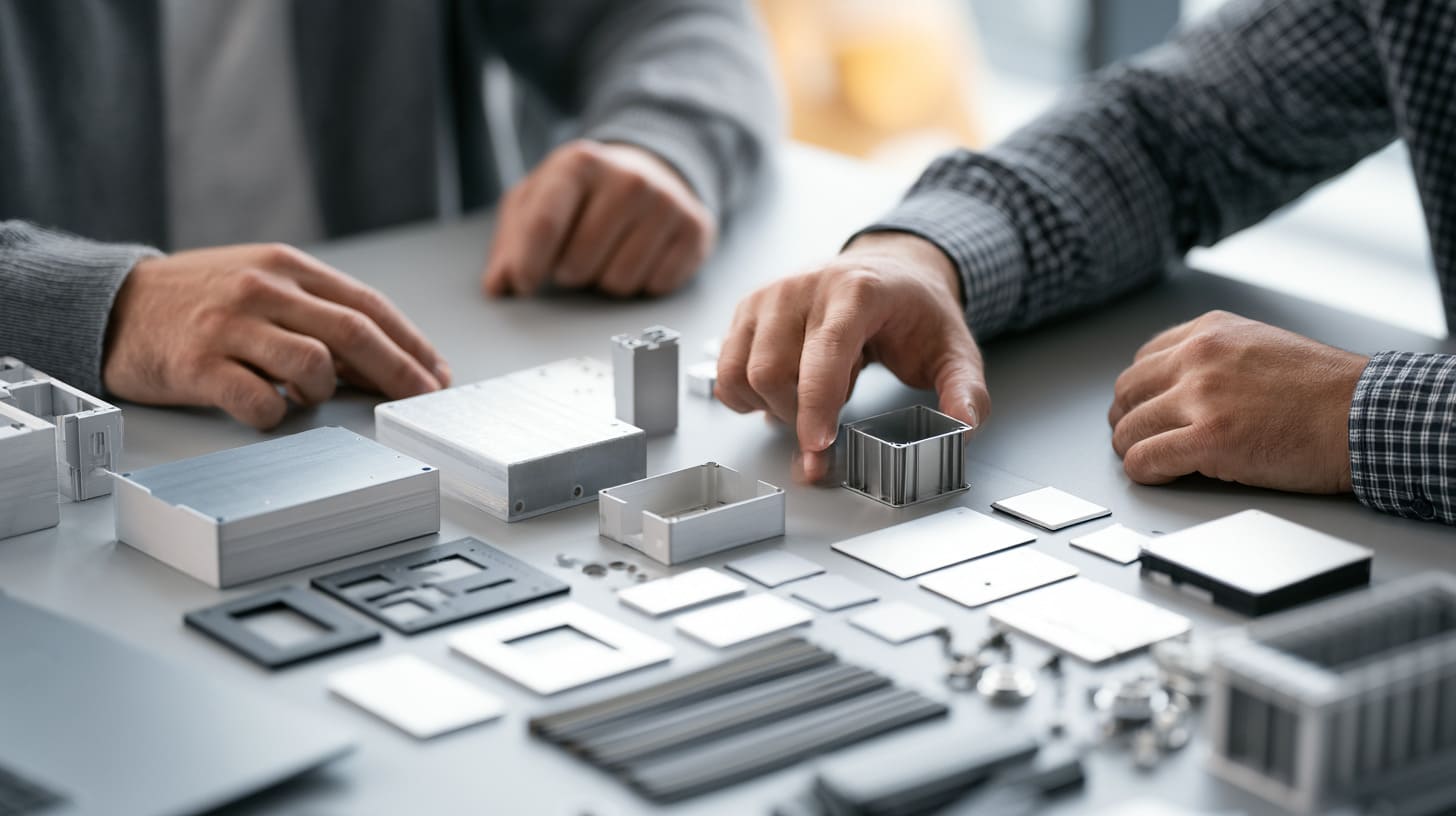
A buyer does not need to be a NEMA expert to make a better decision.
But the buyer should ask better questions.
Good questions make the supplier think. They also help avoid vague quoting. When the supplier understands the real environment, the quote becomes more accurate, and the design becomes safer.
The question I respect most from buyers is not “Can you make NEMA 4?” It is “Based on this use environment, which rating and structure do you suggest?”
That question opens the door to real engineering discussion.
Ask About the Real Test Environment
The first question should always be about the real environment.
Buyers can ask:
- Will this enclosure face oil, coolant, water spray, or outdoor rain?
- Is there hose washing?
- Will the box be mounted on a machine or outside a building?
- Are chemicals or corrosive substances present?
- Is the enclosure cleaned daily, weekly, or rarely?
- Will workers spray water near the enclosure?
| Buyer Question | Why It Helps |
|---|---|
| Is it indoor or outdoor? | Defines basic rating direction |
| Is there hose washing? | Decides if NEMA 4 may be needed |
| Is oil or coolant present? | Helps judge NEMA 13 relevance |
| Are chemicals present? | May require material upgrade |
| Is it coastal? | May require corrosion resistance |
| Is vibration present? | Affects mounting and fasteners |
A supplier can only give useful advice if the real environment is clear.
If the buyer hides details, the supplier may quote the safest and most expensive option. That may protect the supplier, but it may not protect the buyer’s budget.
Ask About Material and Surface Treatment
Material choice can be just as important as rating.
A NEMA rating does not automatically tell you which material is best. Aluminum, steel, stainless steel, plastic, and polycarbonate all behave differently.
| Material | Common Strength | Common Concern |
|---|---|---|
| Aluminum | Light, good appearance, good heat transfer | Surface treatment needed for some environments |
| Powder-coated steel | Strong and cost-effective | Corrosion risk if coating is damaged |
| Stainless steel | Good corrosion resistance | Higher cost |
| Plastic | Lightweight, easy for some electrical use | Heat, impact, and UV must be checked |
| Polycarbonate | Good impact resistance | Cost may be higher than basic plastic |
Surface treatment also matters.
For aluminum, anodizing or powder coating may be considered. For steel, powder coating is common. For stainless steel, the grade and finish matter. For plastic, UV resistance and impact performance may matter.
A buyer should not ask only, “What is the rating?”
They should also ask, “What material and finish make sense for this environment?”
Ask About Gasket and Sealing Details
A sealed enclosure depends heavily on the gasket and structure.
The gasket is not exciting. It does not look impressive in product photos. But it decides whether water, oil, dust, or coolant can pass through the cover seam.
Important details include:
- Gasket material
- Gasket compression
- Gasket placement
- Door or cover structure
- Cable gland sealing
- Fastener spacing
- Hinge design
- Surface flatness
| Sealing Detail | Why It Matters |
|---|---|
| Gasket material | Must match liquid and temperature |
| Compression | Too loose can leak, too tight can deform |
| Screw spacing | Affects even pressure |
| Cover flatness | Poor flatness creates gaps |
| Cable glands | Common leak point |
| Hinges | Moving area can weaken sealing |
For custom enclosures, cutouts and holes can affect sealing too. If the buyer adds buttons, displays, connectors, or cable entries, those parts must support the same protection target.
A good enclosure rating can be ruined by one careless hole.
Ask About Custom OEM Requirements
Custom OEM work adds more details than standard box purchasing.
Buyers may need:
- Logo printing
- Logo engraving
- Custom holes
- Connector cutouts
- Mounting brackets
- Internal standoffs
- Custom color
- Custom packaging
- Batch consistency
- Redesign support
Each custom detail can affect the enclosure.
A logo engraving may be simple. But a connector hole near a gasket line may create a sealing risk. A mounting bracket may change the water path. A side cable entry may face splash directly.
| OEM Requirement | What to Check |
|---|---|
| Logo printing | Surface treatment compatibility |
| Engraving | Depth and position |
| Custom cutouts | Sealing around components |
| Internal standoffs | PCB clearance and assembly |
| Mounting brackets | Water path and strength |
| Custom packaging | Scratch and surface protection |
| Batch consistency | Repeatable tooling and QC |
A custom enclosure can meet the right protection level only if the design details support the rating. The rating is not a sticker we add at the end. It is built into the structure from the beginning.
That is why early communication matters so much.
Good custom work is not magic.
It is careful questions, clear drawings, and fewer assumptions.
Common Mistakes When Comparing NEMA 13 and NEMA 4
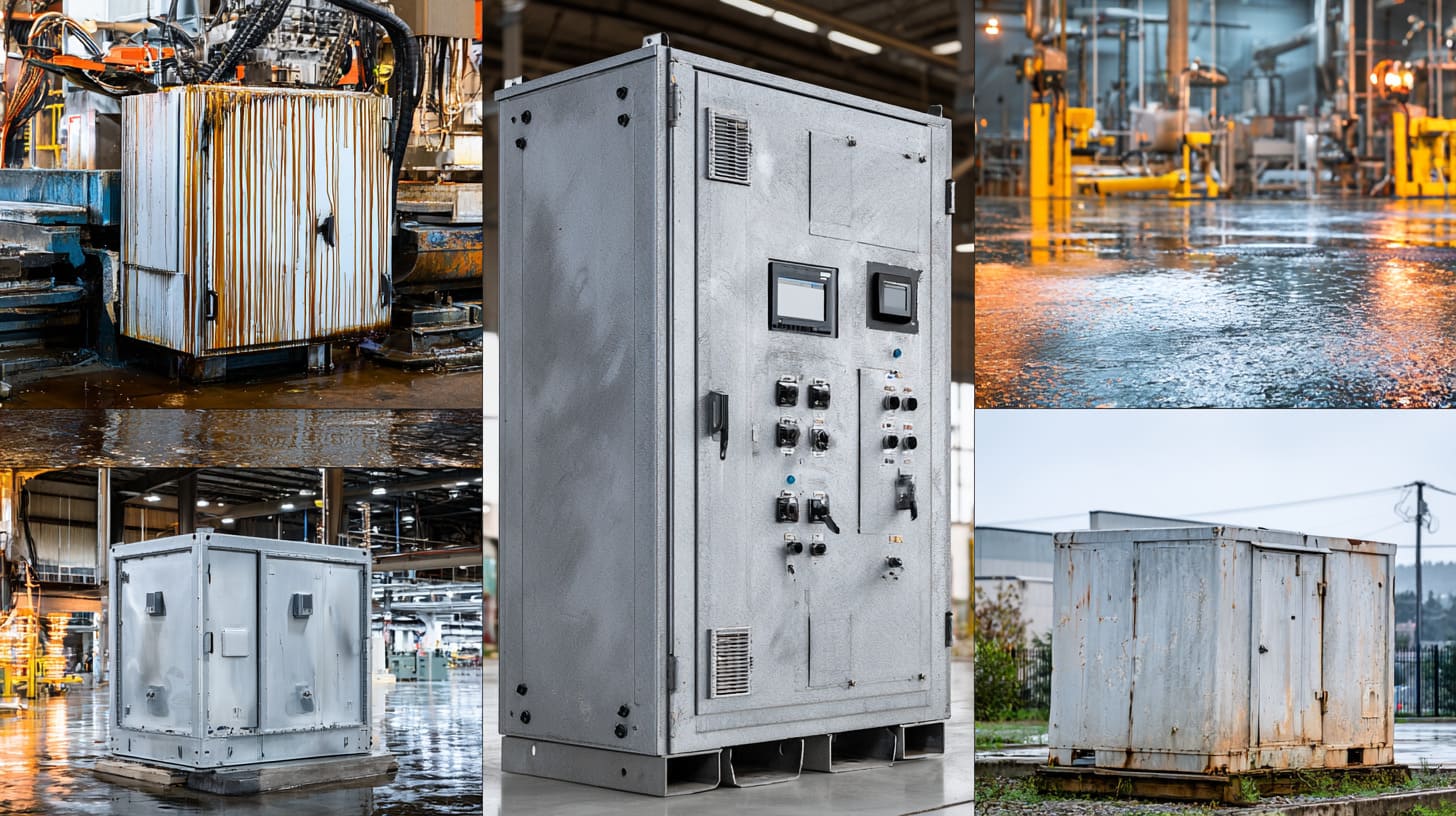
Most wrong choices do not come from bad intentions.
They come from simple assumptions.
The buyer wants safety. The engineer wants fewer problems. The supplier wants to quote fast. Then everyone agrees on a rating before anyone has fully checked the environment.
That is how over-specification happens.
I pay attention to the first few emails in a project, because early wording often shows whether the buyer is solving a real problem or just repeating a rating they heard from someone else.
Mistake 1: Thinking NEMA 4 Is Always an Upgrade
This is the most common mistake.
NEMA 4 is strong for water and outdoor exposure. But it is not automatically better for every industrial environment.
If the enclosure faces indoor oil, coolant, lint, and machine dust, NEMA 13 may be the more logical choice.
| Wrong Thinking | Better Thinking |
|---|---|
| NEMA 4 is higher, so it is better | NEMA 4 is different, not always better |
| More waterproof means more protection | Only if water is the real risk |
| NEMA 13 is weaker | NEMA 13 may fit oil/coolant areas better |
| Choose the highest rating to be safe | Choose the rating that matches the hazard |
A higher rating can feel safe emotionally. But engineering should not only follow feelings. It should follow use conditions.
Mistake 2: Ignoring Oil and Coolant Exposure
Many machine shops do not have a water problem.
They have an oil and coolant problem.
That difference matters.
Oil and coolant can reach the enclosure slowly. They may collect around seams. They may affect gaskets or dirty the surface. They may carry particles. If the box is beside a machine, this exposure can repeat every day.
NEMA 13 is specifically relevant for these indoor conditions.
If the buyer ignores oil and coolant, they may choose a water-focused rating and miss the real daily exposure.
Mistake 3: Confusing NEMA 4 with NEMA 4X
NEMA 4 and NEMA 4X are also not the same.
NEMA 4 focuses on protection against water and dust. NEMA 4X adds corrosion resistance.
This matters in coastal, chemical, food, and washdown environments.
| Rating | Main Idea |
|---|---|
| NEMA 4 | Water-tight and dust protection for indoor/outdoor use |
| NEMA 4X | NEMA 4 type protection plus corrosion resistance |
| NEMA 13 | Indoor dust, lint, oil, and coolant exposure |
If the environment includes salt mist, cleaning chemicals, or corrosive vapor, NEMA 4 may not be enough. The buyer may need NEMA 4X or a better material and finish.
This is a painful mistake because corrosion failure can appear slowly. By the time it becomes visible, the enclosure may already be in the field.
Mistake 4: Choosing Rating Before Understanding Installation
The same enclosure can face different risks in different locations.
A box mounted indoors beside a machine is different from a box mounted outside a building. A box near a dry conveyor is different from a box inside a washdown area. A box under a roof is different from a box protected inside a cabinet.
Installation changes everything.
| Installation Detail | Why It Changes the Decision |
|---|---|
| Outdoor wall | Rain and wind matter |
| Machine side | Oil and coolant may matter |
| Washdown zone | Hose water matters |
| Coastal area | Corrosion matters |
| High vibration | Mounting and fasteners matter |
| Direct sunlight | Heat and UV matter |
Choosing the rating before understanding installation is like choosing packaging before knowing the product. It may work by luck, but it is not a good process.
Mistake 5: Overpaying for a Rating the Customer Never Uses
This mistake hurts buyers most in bulk orders.
If there is no hose-down process, NEMA 4 may add no practical value. If there is no outdoor exposure, outdoor protection may be wasted. If the real risk is oil and coolant, a water-focused upgrade may not be the best use of money.
| Buyer Pays For | But Real Use Needs |
|---|---|
| Hose-directed water protection | Oil/coolant splash protection |
| Outdoor rain protection | Indoor machine-side protection |
| Extra sealing cost | Better cable gland design |
| Stronger water rating | Better heat management |
| More complex structure | Lower unit cost and faster lead time |
The best enclosure is not the highest-rated one. It is the one that matches the risk, protects the components, fits the budget, and can be produced consistently.
I know this sounds less exciting than “choose the strongest box.”
But it is more useful.
And in B2B manufacturing, useful beats exciting almost every time.
How MaidaTech Would Help Choose the Right Custom Enclosure

When we work on custom enclosure projects, I do not want the buyer to send only one rating and wait for a price.
That is not enough.
I prefer to understand the real working environment, the product inside, the mounting method, the cable entry, and the buyer’s cost target. This helps us give a better suggestion instead of just quoting a box.
I treat the rating as one part of the project, not the whole project, because a custom enclosure fails or succeeds through many small details together.
Start with the Use Environment
The first step is always the use environment.
I want to know:
- Is the enclosure indoor or outdoor?
- Is there oil, coolant, water, or chemical exposure?
- Is the box cleaned by dry cloth, spray, or hose?
- Is it mounted on a machine, wall, pole, or equipment frame?
- Is the area dusty, wet, hot, or corrosive?
- Is vibration present?
- Is the project for one machine or repeated OEM production?
| Information Needed | Why We Ask |
|---|---|
| Indoor or outdoor | Defines basic rating direction |
| Oil/coolant/water exposure | Defines real failure risk |
| Cleaning method | Shows if hose protection is needed |
| Mounting location | Affects structure and holes |
| Internal components | Affects heat and layout |
| Order quantity | Affects cost and production method |
A buyer like Davide may already have drawings and clear product requirements. A buyer like John may have a new project idea and need more design support. In both cases, the environment comes first.
If we miss that part, the quote may look fast, but the design may be wrong.
Match Rating with Structure
After the environment is clear, the enclosure structure must match the rating target.
This includes:
- Gasket design
- Cover style
- Cable gland position
- Screw spacing
- Mounting ears
- Door or lid design
- Material
- Surface treatment
- Internal standoffs
- Cutout position
| Structure Detail | Why It Matters |
|---|---|
| Gasket design | Controls cover sealing |
| Cover style | Affects water and dust entry |
| Cable gland position | Common leak path |
| Mounting ears | Affects installation and water path |
| Material | Affects strength, heat, and corrosion |
| Surface finish | Affects appearance and durability |
| Cutouts | Can weaken sealing if placed poorly |
For example, a buyer may want an aluminum enclosure with logo engraving and several connector holes. That sounds simple. But if those connector holes face direct splash, the sealing plan must be checked. If the box is outdoor, the cable entry direction matters. If the internal board creates heat, the material and thermal path matter.
Custom work is not only cutting metal to size.
It is making all details work together.
Balance Protection, Cost, and Lead Time
A good supplier should not only say yes.
A good supplier should help the buyer balance protection, cost, and lead time.
For many OEM orders, the buyer does not want the most expensive enclosure. They want the right enclosure that can protect the product, match the brand, stay within budget, and arrive on time.
| Project Goal | Supplier Thinking |
|---|---|
| Strong protection | Match rating with real risk |
| Competitive price | Avoid unnecessary over-specification |
| Fast delivery | Keep design manufacturable |
| Good appearance | Choose suitable finish and logo process |
| OEM batch production | Control consistency |
| Custom packaging | Protect surface during shipping |
At MaidaTech, we can support custom aluminum enclosures, plastic enclosures, sheet metal enclosures, and custom OEM enclosure projects. We also support logo printing, engraving, custom holes, redesign, and packaging.
But I still believe the most valuable part is not only production.
It is early judgment.
If we can help the buyer avoid the wrong rating, wrong material, or wrong sealing direction before production, we save more than money. We save time, emails, samples, and project stress.
That is often what buyers remember.
Not only the price.
The smoothness.
Conclusion

NEMA 13 and NEMA 4 solve different problems.
NEMA 13 is often the smarter choice for indoor machine-side environments where oil, coolant, dust, lint, and small particles are the real concern. NEMA 4 is the better choice when the enclosure must face outdoor weather, rain, splashing water, or hose-directed washdown.
The more expensive option only adds value when it protects against the actual field hazard.
This is why I do not like choosing enclosure ratings by feeling. I prefer to ask where the enclosure will be used, what liquid will touch it, how people will clean it, where the cable enters, how the box is mounted, and whether heat needs to escape.
That is how I reach my view.
I have seen too many projects where the buyer pays for a higher-looking rating but still ignores the real weak point. Sometimes the weak point is oil. Sometimes it is a cable gland. Sometimes it is corrosion. Sometimes it is heat. The rating matters, but the design details decide whether the enclosure really works.
So before choosing NEMA 4, I would ask one honest question:
Does this enclosure truly need outdoor and hose-directed water protection, or does NEMA 13 already solve the real indoor oil, coolant, and dust problem at a better cost?
If you are working on a custom enclosure project and you are not sure whether NEMA 13, NEMA 4, NEMA 4X, aluminum, plastic, or sheet metal is the better direction, you can send us your drawing, use environment, quantity, and special requirements.
At MaidaTech, we can help review the enclosure structure, material, surface treatment, sealing details, custom holes, logo process, and packaging plan before production.
A clear decision at the beginning is always cheaper than a correction after shipment.