Skip to content
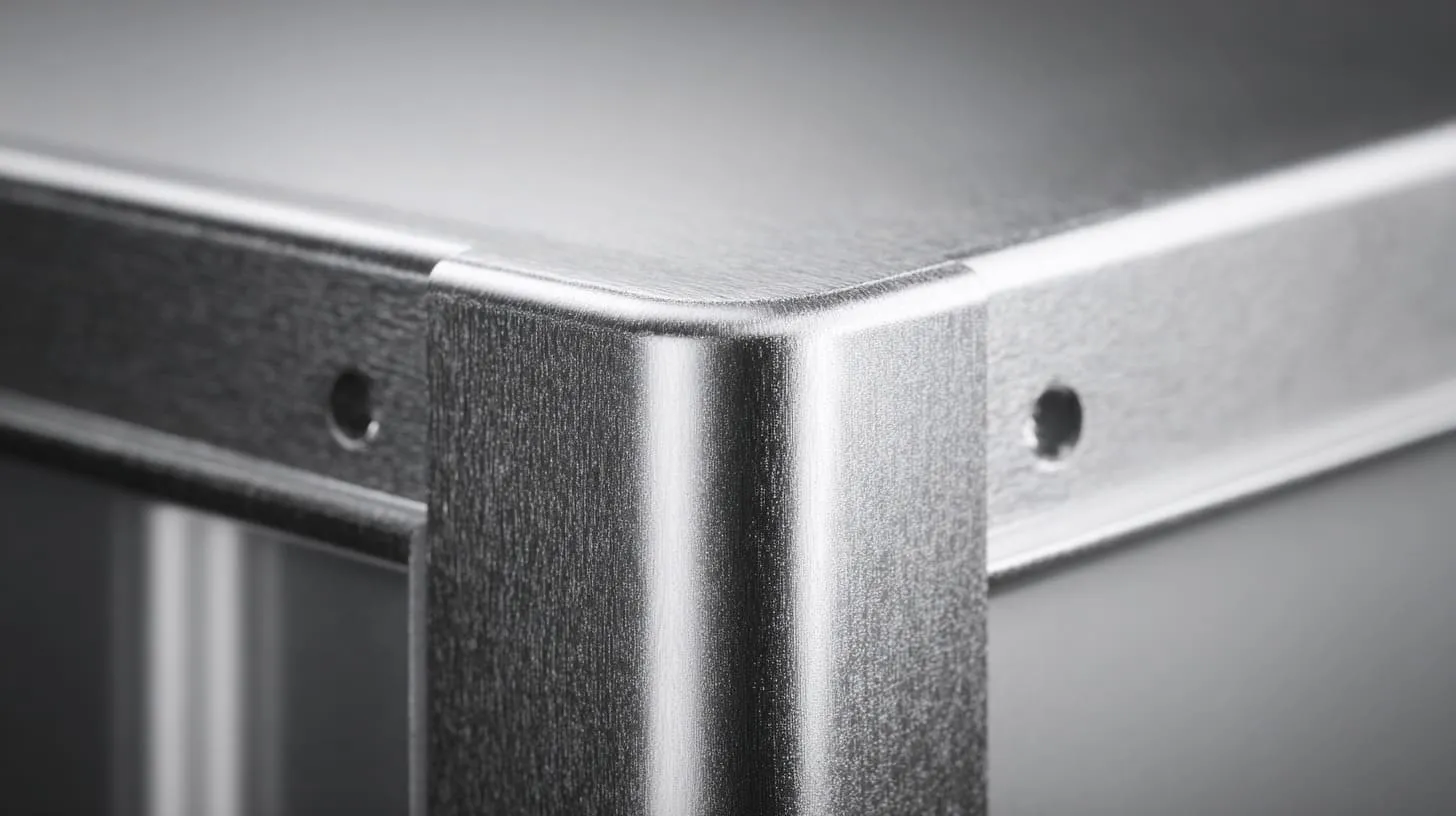
A metal enclosure can look solid, clean, and professional on the outside, yet still hide a weak point in a place many buyers barely notice.
That weak point is often the mating surface.
I work with custom metal enclosures all the time, and I have learned that many enclosure problems do not begin with the outer shape, the material grade, or even the machining quality people notice first. They begin where two parts meet. A lid meets a base. A panel meets a frame. A door closes against a flange. That line looks small. It is not small.
I have seen projects where a buyer focused hard on wall thickness, logo position, and finish color, only to run into trouble later because the mating surfaces were not handled well. The enclosure looked finished. The product did not behave like a finished product. Water got in. EMC results became unstable. The seam looked uneven. Assembly slowed down. All of that came from a detail people often treat like a background feature.
That is why I think mating surfaces deserve much more attention than they usually get.
I do not see them as a tiny mechanical detail. I see them as a decision point. They affect sealing, grounding, shielding, assembly feel, long-term wear, and even brand image. A customer may never use the words mating surface. Still, they will absolutely notice the result if that part of the enclosure is done badly.
What pushes me to look closely at this area is simple: a bad mating surface creates expensive problems in quiet ways. It does not always fail dramatically. Sometimes it leaks slowly. Sometimes it radiates noise. Sometimes it just makes the product feel cheap in the hand. That kind of failure is dangerous because it hides behind a product that still looks acceptable at first glance.
So in this article, I want to break this topic down in a practical way. I want to explain what mating surfaces are, why they matter, how they affect EMC and sealing, and how I judge them in real projects before they become a headache later.
That quiet seam between two metal parts may look like a line. In real work, it behaves more like a test.
What Are Mating Surfaces in Metal Enclosures?
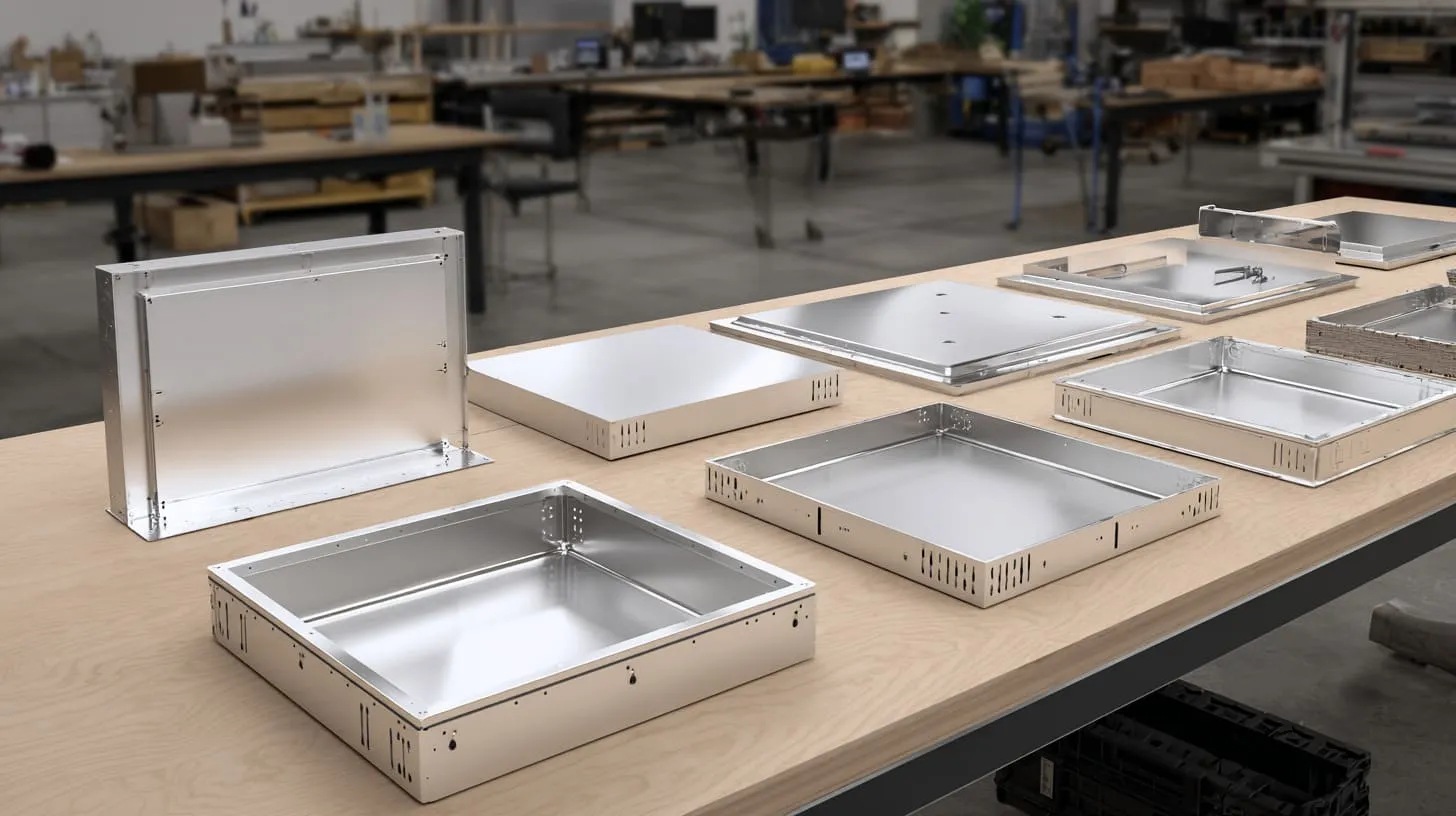
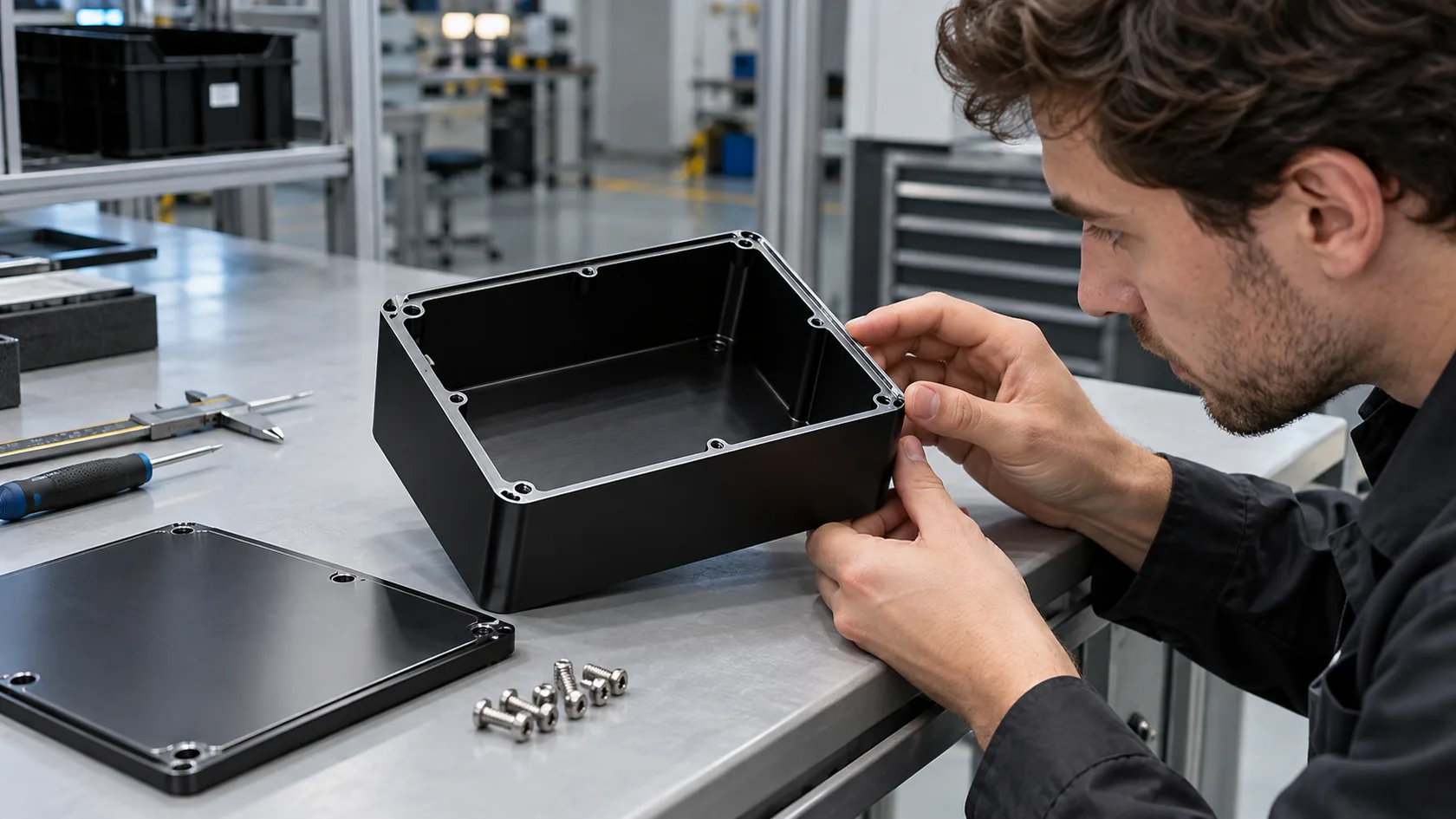
Mating surfaces are the areas where two enclosure parts come together and make contact.
That is the simple definition. But simple definitions can sometimes hide the real weight of a thing. In metal enclosures, those contact areas do a lot more than just touch each other. They help hold the structure together. They help block dust and water. They can carry grounding and bonding paths. They also shape how the enclosure feels during assembly.
I usually explain it in plain words to buyers: if two enclosure parts need to meet and work together, the place where they meet is a mating surface.
Basic Definition and Role
A mating surface can be found in many common enclosure connections:
- Lid to base
- Door to frame
- Side panel to main body
- Removable cover to flange
- Front panel to housing
These areas may look passive, but they are not passive at all. They are working surfaces.
Here is a simple way I look at their role:
| Function | What the mating surface helps do |
|---|---|
| Mechanical | Keeps parts aligned and stable |
| Environmental | Supports sealing against dust and water |
| Electrical | Creates contact for grounding, bonding, or shielding |
| Cosmetic | Controls visible gaps and fit quality |
| Assembly | Affects ease of closing, opening, and fastening |
One thing I have learned from factory work is this: if the mating surface is weak, the whole enclosure starts to depend too much on screws, luck, and operator patience. That is never a strong position.
Typical Locations in Enclosures
In practice, mating surfaces are everywhere in enclosure design, though some are more critical than others.
Lid-to-base joints
This is one of the most common examples. A top cover sits on a lower housing. The contact zone may be flat, stepped, or gasketed. If this area is uneven, many problems start here first.
Door frames and removable panels
Larger industrial enclosures often use hinged doors or service panels. The mating surface around the edge matters a lot because it affects both sealing and perceived build quality.
Flanges and seam edges
Sheet metal enclosures often depend on flanges and folded edges to create mating contact. These are not glamorous features, but they do the heavy lifting in many designs.
Here is a quick overview:
| Enclosure area | Why the mating surface matters |
|---|---|
| Top and bottom shell | Sealing, structure, alignment |
| Front panel | Fit, aesthetics, access, EMI control |
| Door frame | Gasket compression, closure feel |
| Folded seam | Rigidity, contact quality |
| Rear panel | Cable area shielding and service access |
Types of Mating Interfaces
Not all mating surfaces are built the same. The shape of the interface changes the behavior.
Flat-to-flat surfaces
This is the most direct type. Two flat areas press together.
This design can work very well, but it asks for good flatness and consistent pressure. If the surface is warped, flat-to-flat contact becomes unreliable very fast.
Tongue-and-groove designs
This type uses one feature that fits into another. It helps alignment and can improve sealing. It can also make the enclosure feel more controlled during assembly.
I often like this design when a project needs better positioning and repeatability.
Step joints and overlapping seams
A stepped or overlapping design adds structure. It can help hide gaps, guide assembly, and support better shielding. It also makes the seam less direct from the outside, which often looks better.
Here is a comparison:
| Interface type | Main strength | Main risk |
|---|---|---|
| Flat-to-flat | Simple and low cost | Sensitive to flatness problems |
| Tongue-and-groove | Good alignment and sealing support | More machining or forming complexity |
| Step joint | Better structure and hidden seam | Can raise cost if tolerances are tight |
| Overlap seam | Better visual control and some EMI benefit | May trap tolerance issues if poorly planned |
What matters to me is not which style sounds more advanced. What matters is whether the interface fits the job. A simple flat seam can be excellent in one enclosure and weak in another. A more complex joint can help a lot, but it can also create extra cost with little real gain if the product does not need it.
That is where the topic starts to get interesting, because mating surfaces are rarely judged by appearance alone. Their real value shows up when the enclosure starts doing actual work.
Why Mating Surfaces Matter More Than Most Engineers Expect
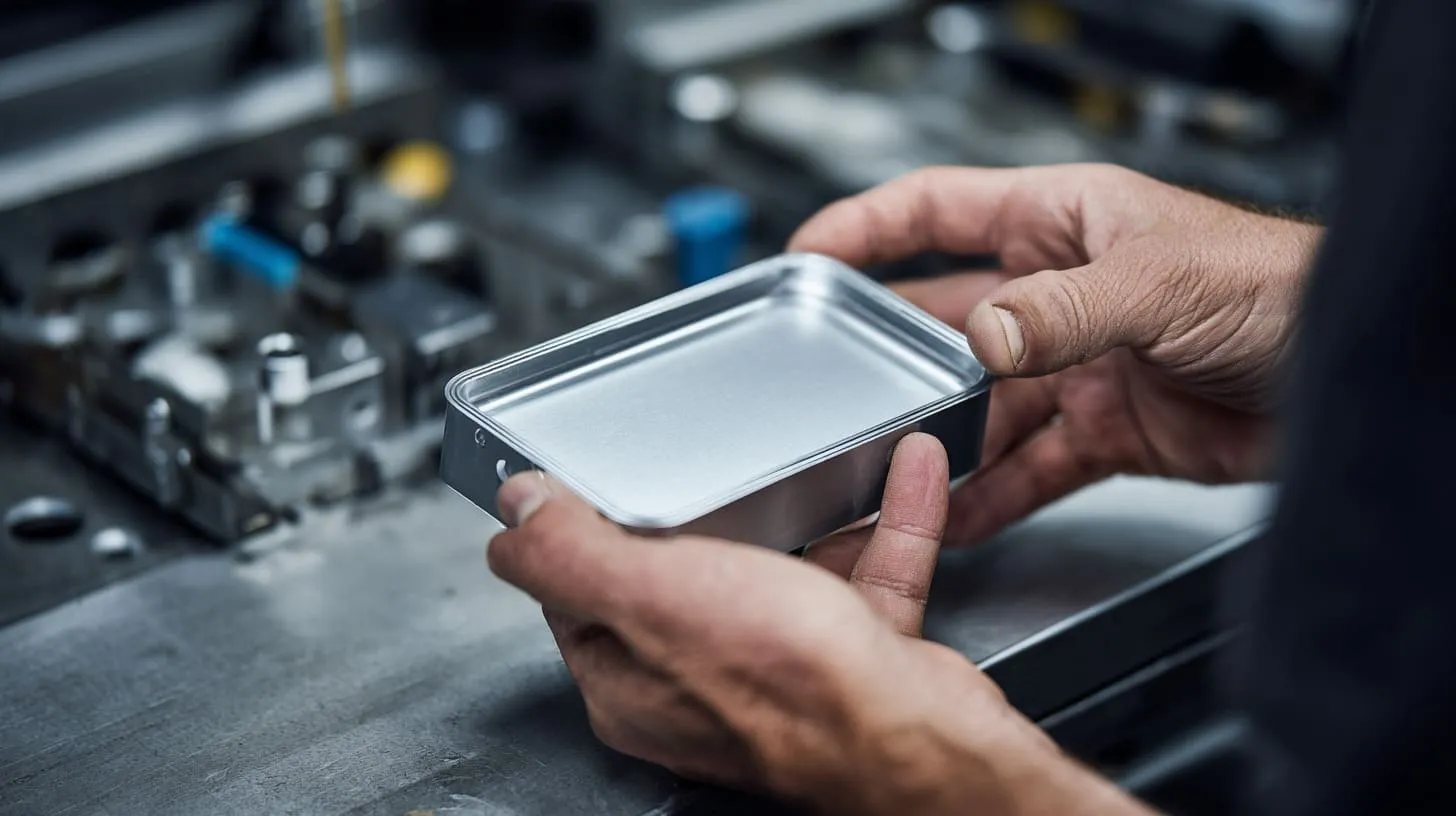
A lot of design features get attention because they are easy to see. Mating surfaces are different. They are often quiet. They sit inside the product. They hide in the seam. But they affect more parts of enclosure performance than many people expect.
I have watched teams spend long meetings on material grade and finish color, then rush through seam design as if it were a minor follow-up detail. That choice usually comes back later.
The first thing that makes mating surfaces important is simple: they influence several performance areas at the same time. That alone makes them dangerous to ignore.
Mechanical Integrity and Fit
When two parts meet well, the whole enclosure feels right. The product closes properly. The screws tighten evenly. The seam looks controlled. The structure feels calm in the hand.
When they do not meet well, the problems start to stack up.
Misalignment changes the whole product feel
A small mismatch at the mating surface can make a good enclosure feel sloppy. The panel may sit a little proud. The seam may look uneven. The lid may twist as screws are tightened.
That kind of problem is not always a structural failure, but it still damages trust.
Poor contact can lead to movement and noise
A weak mating surface lets the enclosure shift under vibration or repeated handling. Over time, that can cause rattling, wear marks, or looseness.
Here is how I think about it:
| Surface condition | Likely result |
|---|---|
| Even and controlled | Stable fit, clean seam, strong assembly feel |
| Slightly uneven | Visible gap, local stress, harder assembly |
| Poorly aligned | Rattle risk, cosmetic defects, reduced confidence |
What makes this tricky is that the enclosure may still assemble. It just does not assemble well. That difference matters.
Environmental Sealing and IP Performance
This is one of the biggest reasons mating surfaces matter.
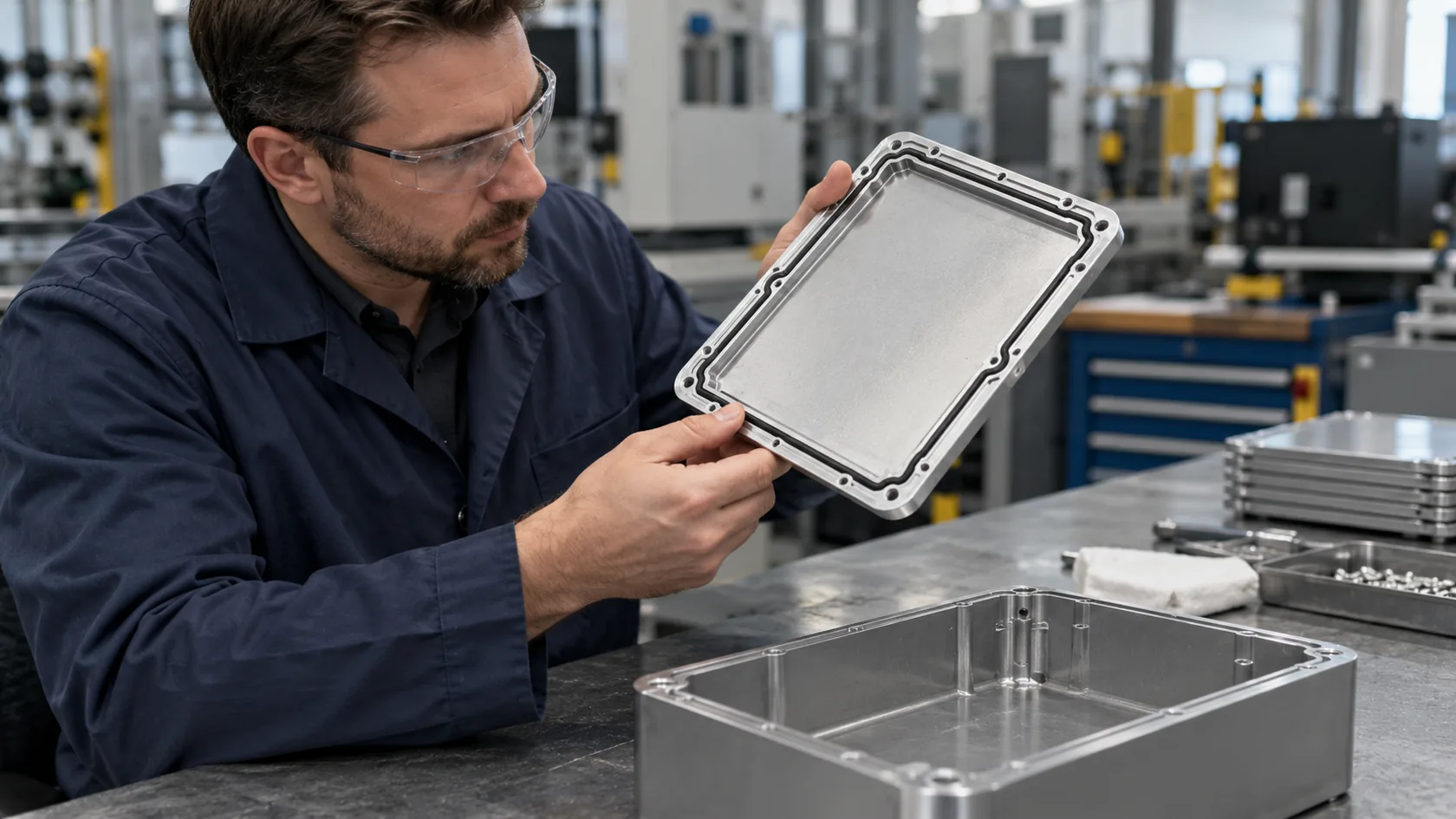
If an enclosure must resist dust, splashes, rain, or washdown, the mating surface becomes part of the sealing system. The gasket alone is not enough. A gasket needs a good partner. That partner is the mating surface.
Gasket compression depends on surface quality
A gasket only works if compression is even. If the mating surface is warped, tilted, or inconsistent, the gasket will be compressed too much in one place and too little in another.
That creates a very human kind of problem. People look at the gasket and assume the product is sealed. The real question is not whether the gasket exists. The real question is whether the surface lets it work.
Flatness matters more than many buyers expect
I have seen buyers focus on gasket material and hardness, which is fair, but ignore the condition of the metal it presses against. That is like buying a good lock for a crooked door.
Here is a quick breakdown:
| Factor | Effect on sealing |
|---|---|
| Surface flatness | Controls even contact |
| Pressure distribution | Controls real gasket performance |
| Joint design | Helps guide compression |
| Fastener spacing | Affects leak risk between screw points |
The part people often miss is this: sealing is not a single-feature result. It is a system result.
Electrical Continuity and Grounding
This is where mating surfaces move from mechanical design into electrical behavior.
Many metal enclosures rely on contact across mating surfaces to create grounding and bonding paths. If that path is weak or blocked, the enclosure may still look finished while behaving badly in real use.
Contact quality affects bonding
A metal enclosure often needs reliable conductivity across parts. That does not happen by wishful thinking. It happens because the mating surfaces actually touch in a conductive way.
Paint, anodizing, dirt, oxide, and weak pressure can all interrupt that path.
Shielding depends on continuity, not just metal presence
People sometimes think that because the enclosure is made of metal, shielding is already taken care of. I do not trust that assumption. A metal box with poor seam contact is not the same as a continuous shield.
I judge this area very carefully because the failure is often hidden until testing starts.
Long-Term Durability
A mating surface also tells me how the enclosure will age.
A design may work fine during first assembly. But the real question is what happens after transport, vibration, maintenance, and repeated opening and closing.
Repeated use weakens bad designs faster
When surfaces rub badly, tilt, or press unevenly, wear builds up in focused spots. Coatings break. Bare areas appear. Contact changes over time.
Corrosion often starts where conditions are less controlled
Edges, seams, and compressed zones can become the first place where moisture, salt, or dirt causes trouble. That is especially important in outdoor or industrial use.
Here is how long-term thinking changes the design conversation:
| Short-term view | Long-term view |
|---|---|
| It closes today | Will it still close well after service cycles? |
| The seam looks okay now | Will wear make the seam worse later? |
| Continuity exists in the sample | Will coating damage or oxidation change it? |
A good mating surface does not just solve a present problem. It protects the future behavior of the enclosure too.
Once I explain this to buyers, the seam stops looking like a boring detail. It starts looking like what it really is: a point where many risks gather in one narrow line.
That becomes even more obvious when EMC enters the discussion, because the seam that looks harmless on the bench can act very differently in the test room.
How Mating Surfaces Affect EMC and Shielding Performance
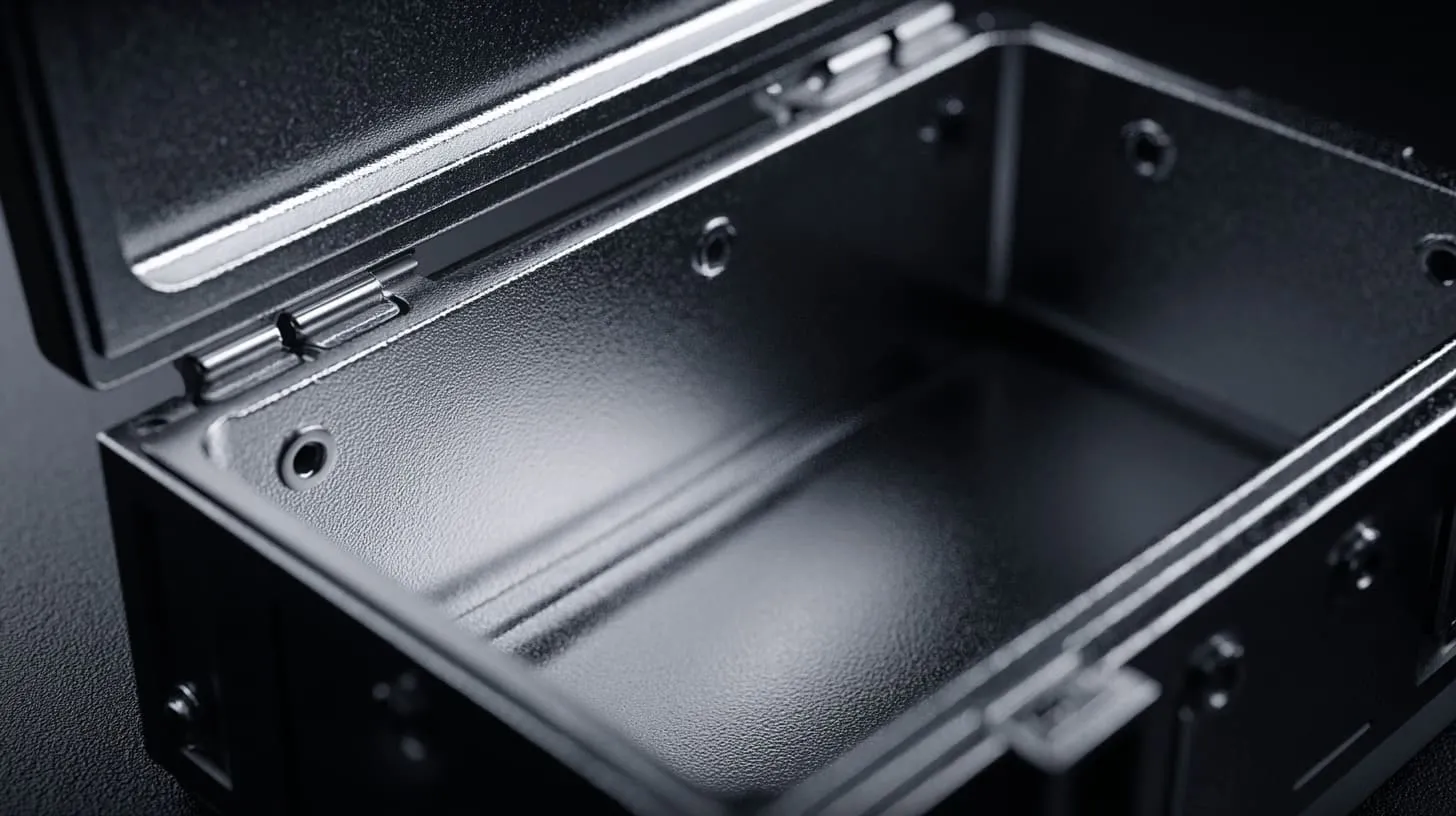
EMC problems have a way of turning a calm project into a blame game.
I have seen it happen more than once. The hardware engineer checks the board. Someone else questions the cable. The grounding wire gets inspected. Then people start changing parts that were not even the real problem. Meanwhile, the enclosure seam sits there quietly, doing damage without attracting much attention.
That is why I take mating surfaces seriously in EMC work.
A metal enclosure can help with shielding, but only if it behaves like a continuous conductive shell. The moment the seams break that continuity, the shell stops acting as people imagine it should.
Conductivity Across Seams
A seam in a metal enclosure is not automatically conductive just because it looks metallic.
That sounds obvious when I say it directly. Still, many projects behave as if metal appearance equals metal performance. It does not.
Metal-to-metal contact is what matters
For shielding to work across mating surfaces, there needs to be real electrical contact. That contact must be stable enough to support continuity along the seam.
A visible joint is not enough. A screwed joint is not enough. A painted joint is definitely not enough.
Gaps can behave like leak points for EMI
A gap in shielding is not always dramatic to the eye. Sometimes it is tiny. But a small break in contact can create an opening where unwanted energy leaks in or out.
That is why I often say a seam can behave like a silent antenna if it is not handled well.
| Seam condition | EMC impact |
|---|---|
| Continuous conductive contact | Better shielding performance |
| Interrupted contact | Higher leakage risk |
| Uneven pressure | Unstable EMC behavior |
| Coated contact area | Weak or blocked conductivity |
Common Failure Scenarios
The biggest EMC seam failures I see are not mysterious. They usually come from ordinary decisions that nobody questioned early enough.
Anodized or painted contact surfaces
This is very common. The enclosure is finished nicely. The seam looks premium. But the coating blocks conductivity.
This catches people because anodized aluminum still looks like metal. Powder-coated steel still feels robust. The eye says one thing. The electrical path says something else.
Inconsistent contact pressure
Even if a contact area is conductive, poor pressure distribution can break the result. One side may press tightly. Another side may float slightly. That makes shielding inconsistent.
This is one reason screw spacing and flange stiffness matter more than some buyers expect.
Real-World Engineering Mistakes
Some mistakes repeat themselves so often that they stop being surprises.
Trusting screws too much
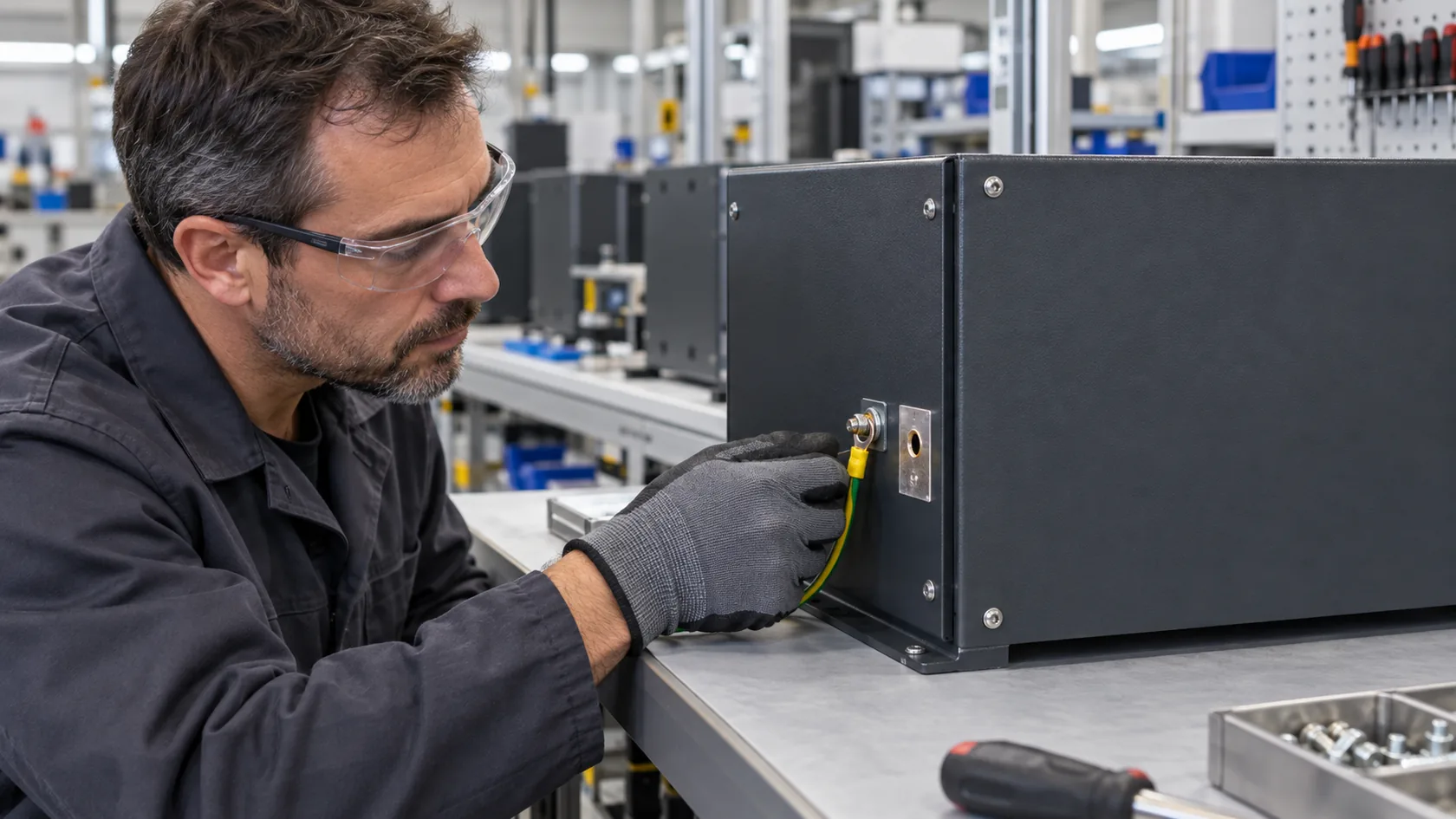
I do not treat screws as magic. Screws can help create contact, but they do not fix a bad mating surface by themselves.
If the seam between screws is weak, the screw heads will not save the whole path.
Ignoring seam design before testing
A lot of teams think about EMC too late. They focus on seam behavior only after the first test result goes wrong. That makes the fix slower and more expensive.
This is one of those areas where early thinking saves real money.
Here is a useful comparison:
| Design habit | Likely outcome |
|---|---|
| Plan conductive seam path early | Fewer EMC surprises |
| Add screws later and hope | Inconsistent performance |
| Mask contact zones before finishing | Better continuity |
| Finish everything uniformly | Higher risk of blocked contact |
I have learned to distrust “it should be fine” whenever EMC depends on a seam. If a project really needs shielding performance, I want to know exactly where the conductive path is, how pressure is applied, what finish is present, and how the seam behaves across the full length.
That brings us to surface finishing, which is where many enclosure teams accidentally damage the very contact they needed.
Surface Finishes and Their Hidden Impact on Mating Surfaces
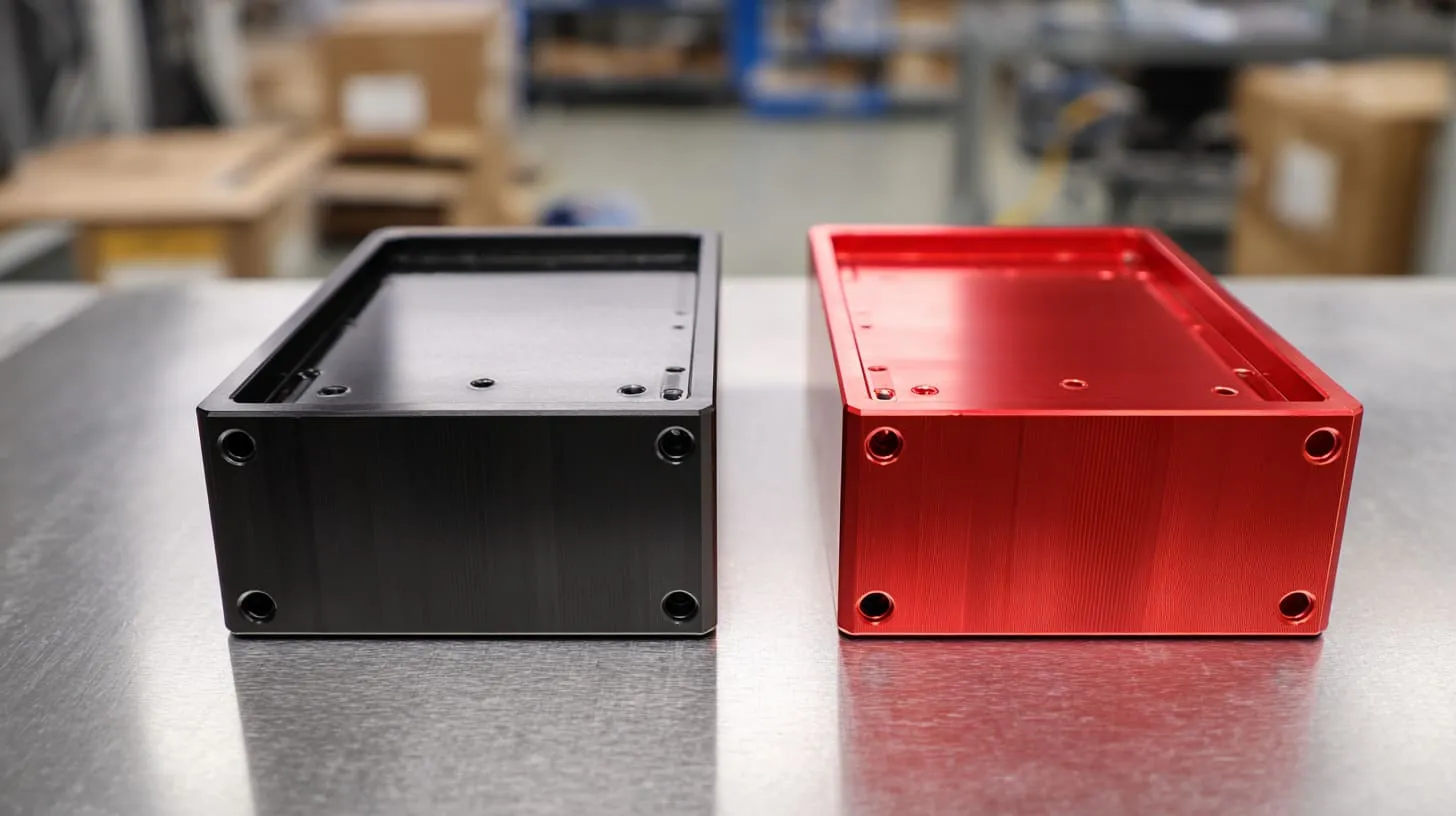
A nice surface finish can make an enclosure easier to sell. It can also make the enclosure harder to trust if the mating surfaces were not planned properly.
This is one of those trade-offs that looks small on paper and very real on the shop floor.
I like clean anodizing. I like a good powder-coated finish too. Customers like them as well. They improve appearance, corrosion resistance, and brand feel. But I never assume a finish is harmless just because it looks professional. On mating surfaces, finishes can change everything.
Anodizing and Its Insulating Effect
Anodizing is useful. I use it often in aluminum enclosure projects. But it creates an oxide layer, and that layer is not a friend of electrical continuity.
Why anodizing changes seam behavior
The anodized layer acts as an insulator. So if two anodized aluminum parts come together at a seam, they may not conduct well through that contact area.
That matters for:
- Grounding paths
- Bonding paths
- EMC shielding continuity
Why this causes confusion
The confusing part is visual. The enclosure still looks like aluminum. The finish feels premium. It is easy for teams to assume the contact is still electrically good.
I do not make that assumption. I check whether the contact zone needs conductivity before I approve the finish plan.
| Finish type | Conductivity across seam |
|---|---|
| Bare aluminum | Usually good, but oxide can still matter |
| Anodized aluminum | Poor unless contact area is treated or masked |
| Conductive treated area | Better for controlled contact |
Powder Coating and Painting Challenges
Powder coating and paint can create the same kind of problem, sometimes even more clearly.
Thick coating blocks direct contact
If a seam is fully coated, the two parts may press coating against coating instead of metal against metal. That may be fine for visual finish. It is not fine for conductive contact.
Sealing and fit can also be affected
A thicker coating also changes dimensions slightly. In some designs, that can affect fit, compression, and closure feel.
This is where things often go wrong on mixed-priority projects. One team wants beauty. Another wants shielding. A third wants low cost. The finish looks like a safe compromise until the seam starts underperforming.
Bare Metal vs Treated Surfaces
This is not a simple good-versus-bad choice. It is a real trade-off.
Bare metal usually gives better conductivity. Treated surfaces usually give better corrosion protection and appearance. So the question is not which one is universally right. The question is what the enclosure actually needs.
When bare contact zones make sense
I often prefer masked or locally treated contact areas when the project needs:
- Reliable bonding
- Better EMC seam performance
- Controlled gasket compression on critical interfaces
When full treatment may still be acceptable
If the enclosure does not rely on seam conductivity, and the design priority is corrosion resistance or appearance, a full treated finish may be fine.
Here is a practical comparison:
| Option | Benefit | Drawback |
|---|---|---|
| Bare mating area | Better conductivity | Lower corrosion resistance if exposed badly |
| Fully anodized/painted seam | Better visual consistency | Poor electrical contact |
| Masked contact zone | Balanced solution | More process control needed |
| Conductive gasket or coating | Can restore function | Adds cost and complexity |
I always tell buyers this part clearly: finish decisions should not come after seam decisions. They need to be connected from the start. A beautiful finish that destroys a critical contact path is not a premium choice. It is just an expensive misunderstanding.
Once finishes enter the conversation, design choices become even more important, because a good mating surface rarely comes from material alone. It comes from how the interface is designed from the beginning.
Design Considerations for Effective Mating Surfaces
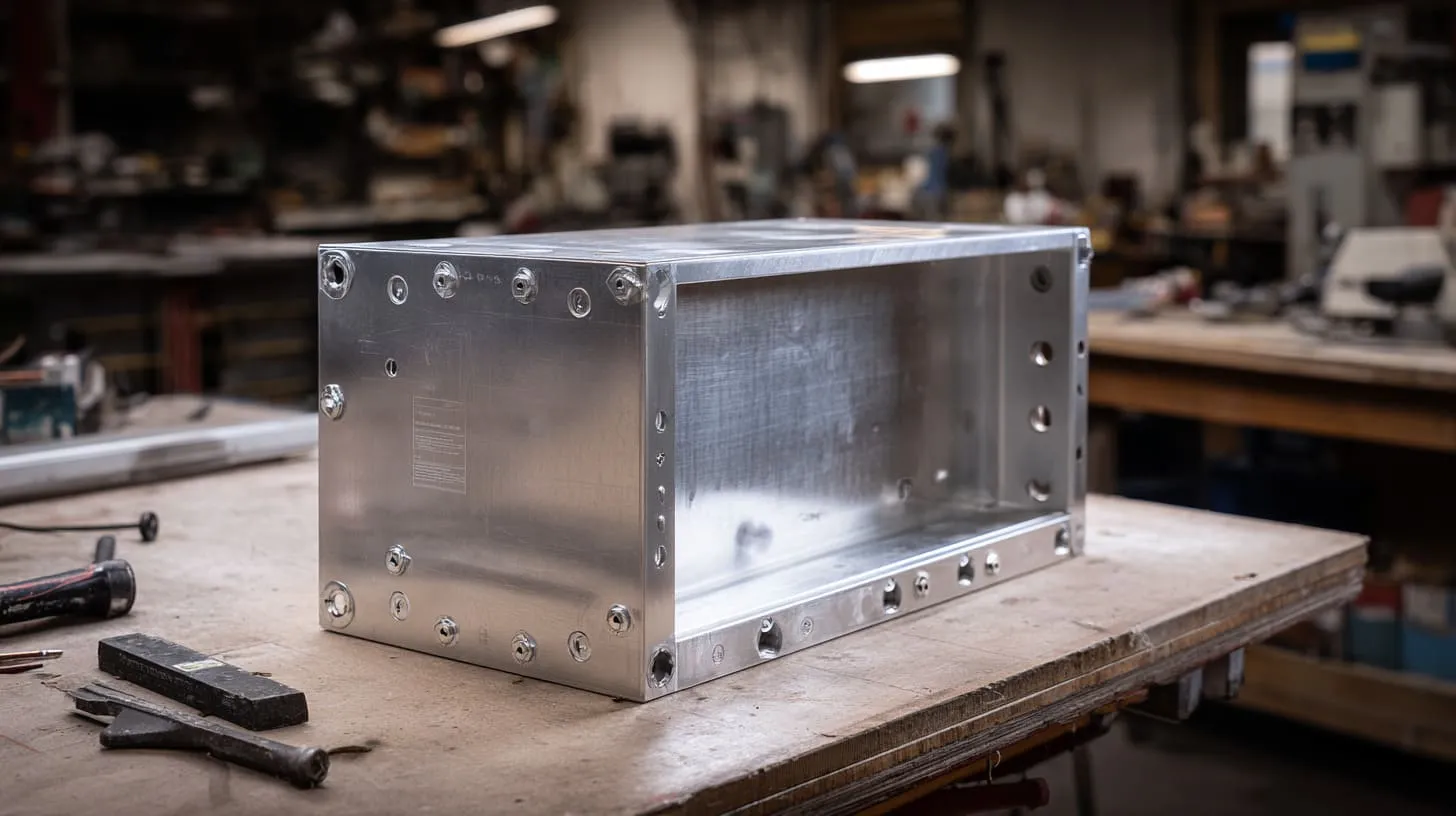
Good mating surfaces do not happen by accident.
They come from design choices that look small in drawings but become very visible in manufacturing, assembly, testing, and long-term use. I have seen average-looking enclosures perform very well because the seam design was thoughtful. I have also seen beautiful CAD files create frustrating products because the mating surfaces were treated like leftover geometry.
When I review enclosure drawings, I do not just ask whether the seam exists. I ask whether the seam is doing its job under real conditions.
Flatness and Tolerance Control
A mating surface needs controlled geometry. If the surface is warped, twisted, or inconsistent, everything built on that contact becomes weaker.
Flatness affects contact quality
This is especially important for:
- Gasket sealing
- Conductive contact
- Visual seam quality
- Fastener load distribution
A seam can look acceptable in CAD and still lose contact in real production if the flatness is poor.
Several small variations can combine into one annoying problem. That is the kind of issue that does not sound dramatic in a drawing review, but shows up very clearly during assembly.
| Design factor | What can go wrong |
|---|---|
| Loose flatness control | Local gaps and poor compression |
| Weak flange rigidity | Surface distortion after fastening |
| Unmanaged tolerance stack-up | Inconsistent assembly fit |
| Thin unsupported edge | Bending and seam movement |
When I see a long mating edge with little support, I slow down and look harder. Long, unsupported seams often become troublemakers.
Contact Pressure and Fastening Strategy
A seam works better when pressure is applied evenly. That sounds simple, but the design details behind it are not always simple.
Screw spacing matters
If screws are too far apart, the seam may press well near the fasteners and lift slightly between them. That creates weak zones.
Torque behavior matters too
Even a good design can behave badly if torque is poorly controlled. But I do not use assembly torque as an excuse for weak design. The design should help create stable results, not depend on perfect operator behavior every time.
| Fastening choice | Typical effect |
|---|---|
| Even screw spacing | Better pressure distribution |
| Wide screw gaps | More seam lifting risk |
| Rigid flange design | More stable contact |
| Soft unsupported edge | Pressure becomes uneven |
Gasket Integration
A gasket is part of the seam system, not a separate rescue tool.
I have seen people talk about gasket selection as if it can cover every design weakness. It cannot.
Material selection matters
Common gasket options include:
- Silicone
- EPDM
- Foam materials
- Conductive gasket materials for EMC support
Each one behaves differently in compression, weathering, and cost.
Groove and compression design matter just as much
A good gasket in a poor groove is still a poor result.
Here is a simple comparison:
| Gasket factor | Why it matters |
|---|---|
| Material | Affects weather resistance and compression behavior |
| Shape | Affects sealing consistency |
| Compression ratio | Too much or too little both cause problems |
| Groove design | Helps hold gasket in place and guide sealing |
Structural Reinforcement
A mating surface often needs help from nearby structure.
This part gets overlooked a lot. People talk about the seam itself, but the surrounding shape controls whether that seam stays stable.
Ribs, flanges, and stepped geometry can improve results
These features help the enclosure resist bending and maintain alignment.
Reinforcement can reduce stress on fasteners and gaskets
That is useful because it spreads load through structure instead of concentrating everything on a few points.
I often trust a seam more when the surrounding geometry supports it naturally. If the seam only works because screws force it into place, I already see risk.
Here is a good way to think about the design:
| Design approach | Real-world result |
|---|---|
| Seam supported by structure | More repeatable performance |
| Seam forced shut by screws alone | More variation and long-term risk |
| Controlled flange and step design | Better alignment and fit |
| Weak edge with no support | More movement and distortion |
A mating surface is not just a line between parts. It is part of a structural system. Once I started viewing it that way, many enclosure issues became much easier to predict.
That prediction matters, because poor seam design rarely creates only one problem. It usually creates a chain of problems that hits testing, assembly, appearance, and cost all at once.
Common Problems Caused by Poor Mating Surface Design
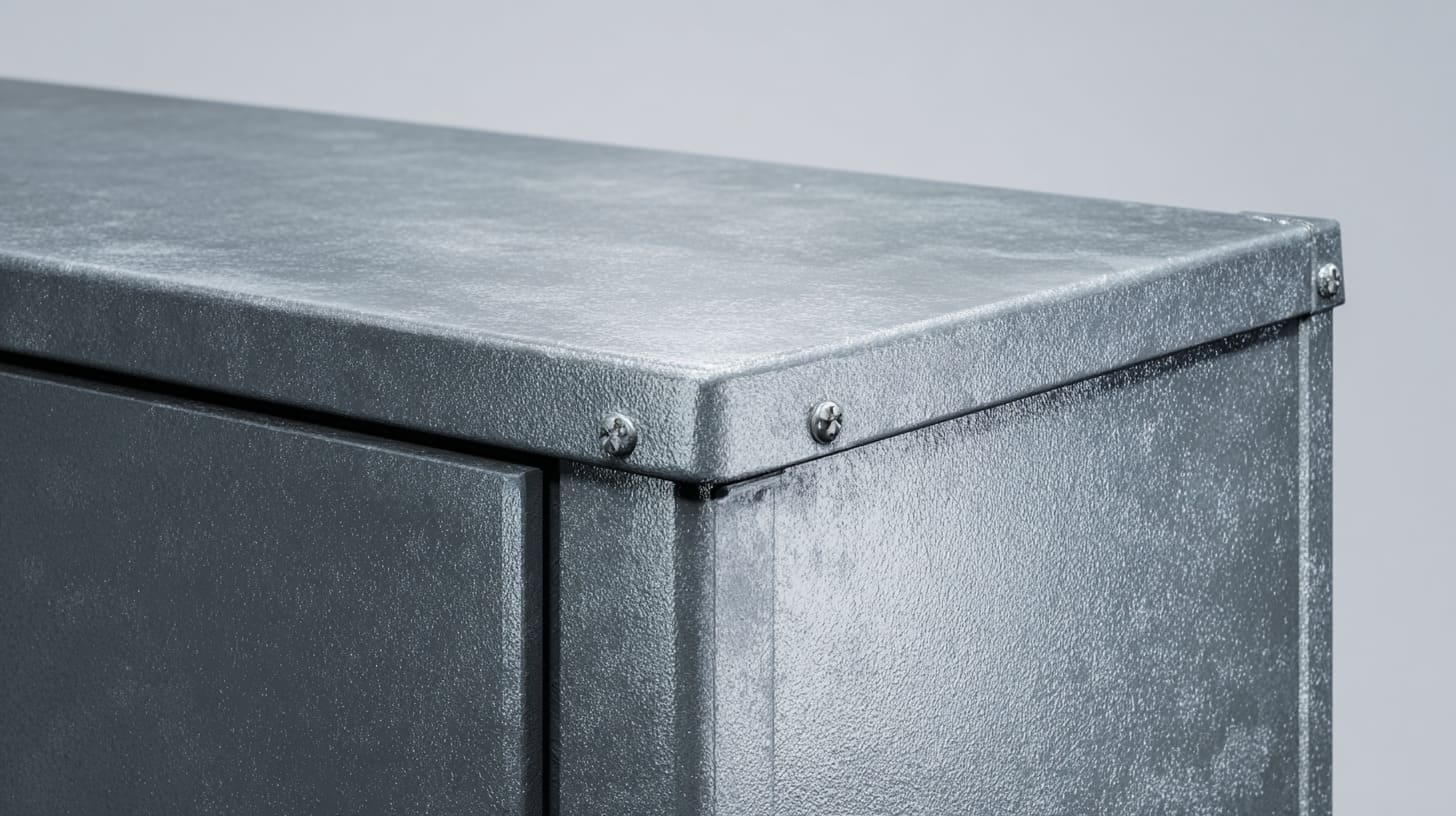
Poor mating surface design does not always fail in a dramatic way. That is one reason it slips through early discussions so often.
A bad seam may not snap. It may not collapse. It may not create an obvious disaster on day one. Instead, it creates a pattern of smaller problems. Those smaller problems then spread into quality complaints, test issues, rework, and customer frustration.
I pay close attention to this because a weak seam tends to make the whole product feel less reliable, even when the main body is strong.
Leakage Issues
Water and dust do not need a large opening. They only need one weak area.
Uneven surfaces break sealing consistency
If the mating area is not flat or pressure is uneven, the gasket will not seal properly across the full perimeter.
Local defects turn into entry points
A small gap in one corner can ruin the whole sealing claim. That is why I do not judge sealing by the best section of the seam. I judge it by the weakest one.
| Poor seam condition | Leakage risk |
|---|---|
| Uneven compression | High |
| Gasket over-compressed in one area | Medium to high |
| Gap between fasteners | High |
| Warped panel edge | High |
EMC Test Failures
This is one of the most expensive surprises.
Seams can leak radiation
Even if most of the enclosure is conductive, weak contact across a seam can create a shielding break.
That is what makes this issue so frustrating. Teams often start by checking the PCB or cable layout. The enclosure seam gets blamed late.
I have learned to question the seam early when EMC results do not match what the metal housing seems to promise.
Assembly Inefficiency
This problem gets less attention than leakage or EMC, but it costs real money.
Misalignment slows production
If operators need to push, adjust, re-seat, or retry screws, the mating surface is already hurting the process.
A difficult seam often creates rework
That means longer assembly time, more handling, and higher labor cost.
| Assembly symptom | Likely seam issue |
|---|---|
| Screw holes do not line up easily | Poor alignment or tolerance stack-up |
| Panel rocks before tightening | Uneven mating surface |
| Operator needs force to close | Geometry or pressure issue |
| Frequent rework | Weak seam repeatability |
Cosmetic and Brand Perception Issues
A seam is not only technical. It is visual.
Customers may not know how to explain a poor enclosure fit, but they still react to it.
Visible gaps reduce trust
An uneven line, a lifted edge, or a twisted corner makes the product feel less controlled.
Premium finish cannot hide poor fit forever
I have seen nice coatings lose their power the moment the seam starts looking sloppy. A clean surface finish cannot rescue a seam that looks uncertain.
This matters a lot for OEM buyers who care about brand image. If the enclosure carries their logo, every visible seam becomes part of their reputation too.
Here is a simple summary:
| Problem type | What the buyer or user feels |
|---|---|
| Leakage | “This product is not reliable” |
| EMC issue | “The product is unstable or risky” |
| Slow assembly | “This product is costing more than planned” |
| Visible gap | “The quality feels cheap” |
A poor mating surface rarely stays inside one technical category. That is why I do not treat it as a narrow engineering issue. It is a business issue too.
The good news is that most of these problems can be reduced a lot if the seam is handled well from the design and manufacturing side. That is where practical improvement starts.
How to Improve Mating Surface Performance in Custom Enclosures
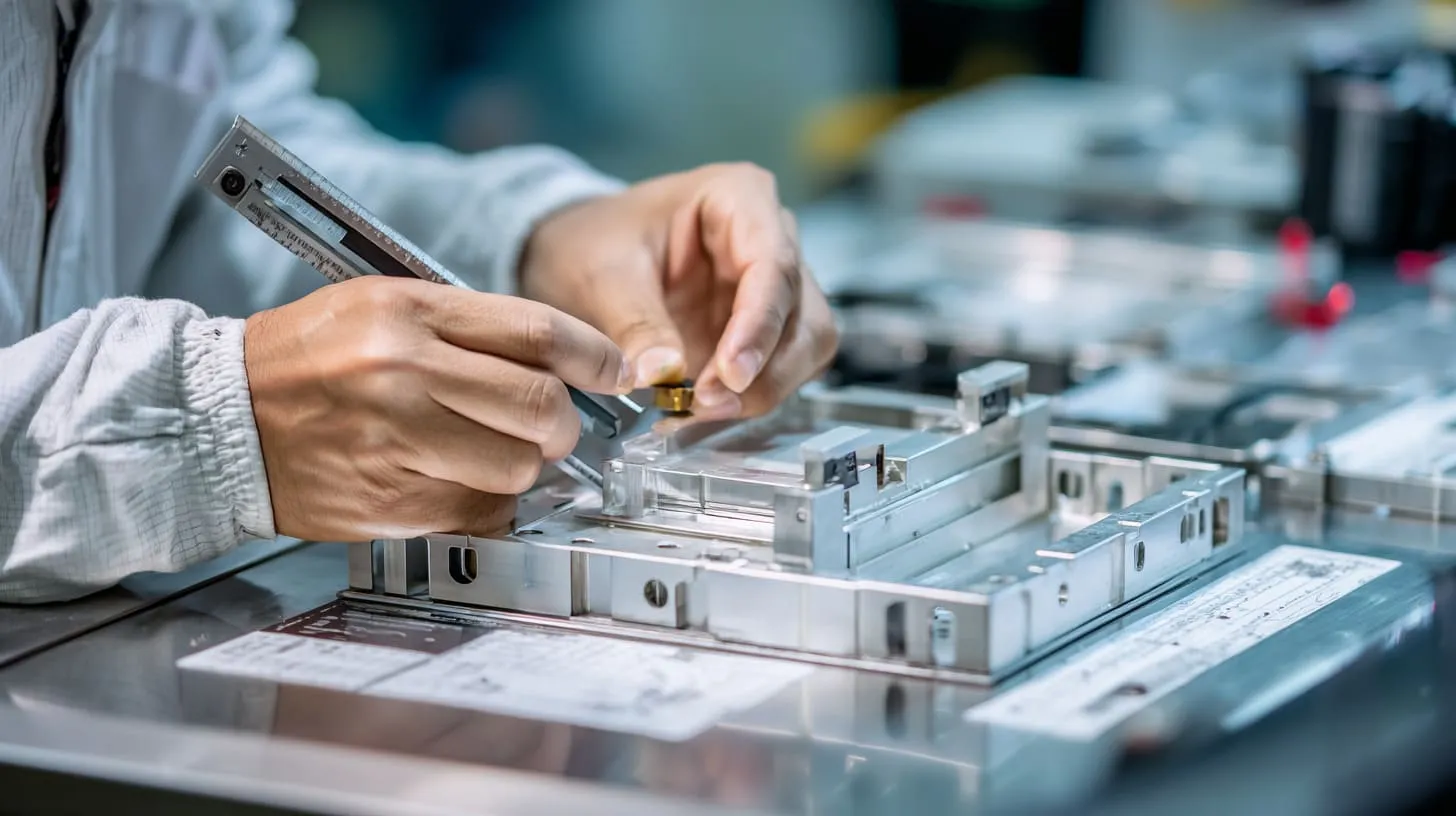
I do not believe in fixing seam problems with a single magic trick.
Better mating surface performance usually comes from several ordinary decisions made early and made well. That may sound less exciting than a special material or a smart add-on part, but it is more reliable. Most seam improvements come from planning, control, and honest testing.
When a project has sealing, EMC, or fit concerns, I prefer to solve as much as possible in the design stage before the factory starts chasing problems later.
Design-Stage Improvements
This is the cheapest stage to think clearly.
Plan bonding paths early
If the enclosure needs electrical continuity across the seam, I want that path defined before the finishing plan is locked.
That means asking practical questions like:
- Which contact areas must stay conductive?
- Where should masking happen?
- Does the seam need a conductive gasket?
- Is the screw layout enough for pressure control?
Keep seam geometry realistic
I do not admire complexity for its own sake. A seam that looks clever in CAD can become expensive, hard to make, and hard to control.
I usually prefer a cleaner geometry that supports the real job instead of a fancy one that creates tolerance stress.
Manufacturing Controls
Good design still needs disciplined execution.
CNC precision and forming consistency
Even the right seam design will underperform if machining, bending, or forming is inconsistent.
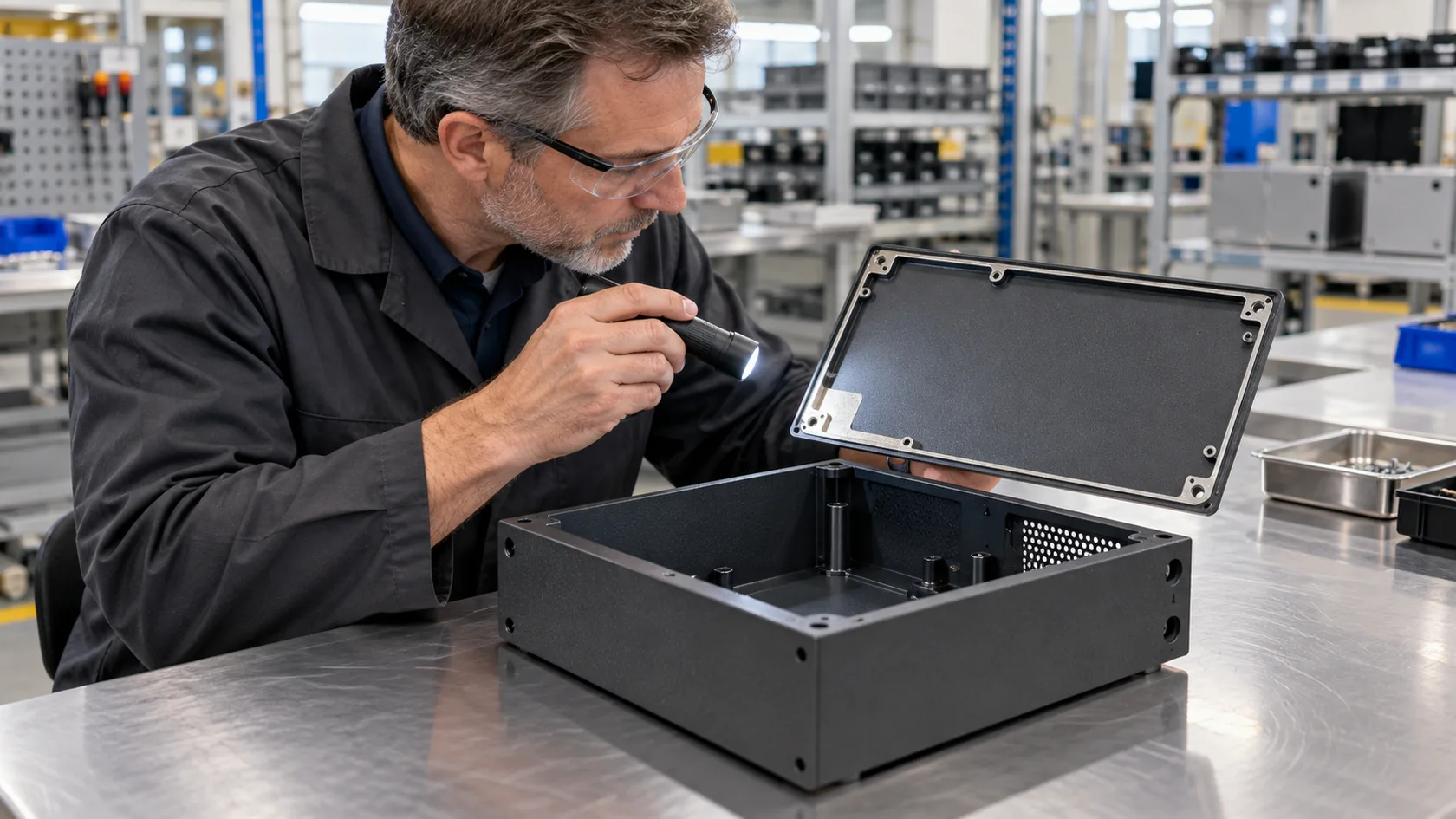
Inspection should focus on critical seam features
I like to check:
- Flatness
- Coating thickness near contact zones
- Hole alignment
- Gasket seating area
- Visible seam consistency after assembly
| Manufacturing check | Why I care |
|---|---|
| Flatness of contact edge | Protects sealing and contact |
| Coating build-up | Can block fit or conductivity |
| Hole position | Affects easy assembly |
| Flange shape | Supports even pressure |
| Final seam appearance | Shows whether design and process match |
Surface Treatment Strategies
This is where many seam problems can either be prevented or accidentally created.
Mask critical conductive zones before finishing
This is one of the most practical fixes for seams that need conductivity. It sounds like a small process detail, and it is. But it can save a lot of later confusion.
Use conductive support where needed
Some projects benefit from:
- Conductive gaskets
- Conductive coatings
- Local grinding or treatment at contact points
I only add these when the project really needs them. I do not like adding cost just to cover a weak base design. But when the use case requires it, these tools can help a lot.
Testing and Validation
I trust testing more than assumptions.
Pre-compliance EMC checks save pain later
Even simple early checks can reveal whether the seam is behaving as intended.
Water ingress and compression checks matter too
If an enclosure is sold on sealing performance, then the seam should be tested as a system, not just admired in a sample photo.
| Validation method | What it helps confirm |
|---|---|
| Pre-compliance EMC test | Shielding path performance |
| Water ingress test | Real sealing behavior |
| Compression check | Gasket consistency |
| Assembly trial | Ease of production and fit |
| Repeated open-close cycle | Long-term durability |
My own habit is very simple here: if a seam looks important on paper, I want proof of behavior in reality. That proof may come from testing, sample review, or assembly trials. But I do not like guessing.
Once seam performance improves, the next question becomes practical: how far should a project go? Because not every enclosure needs the same level of seam refinement, and cost always has something to say.
Practical Trade-offs: Cost vs Performance in Mating Surface Design
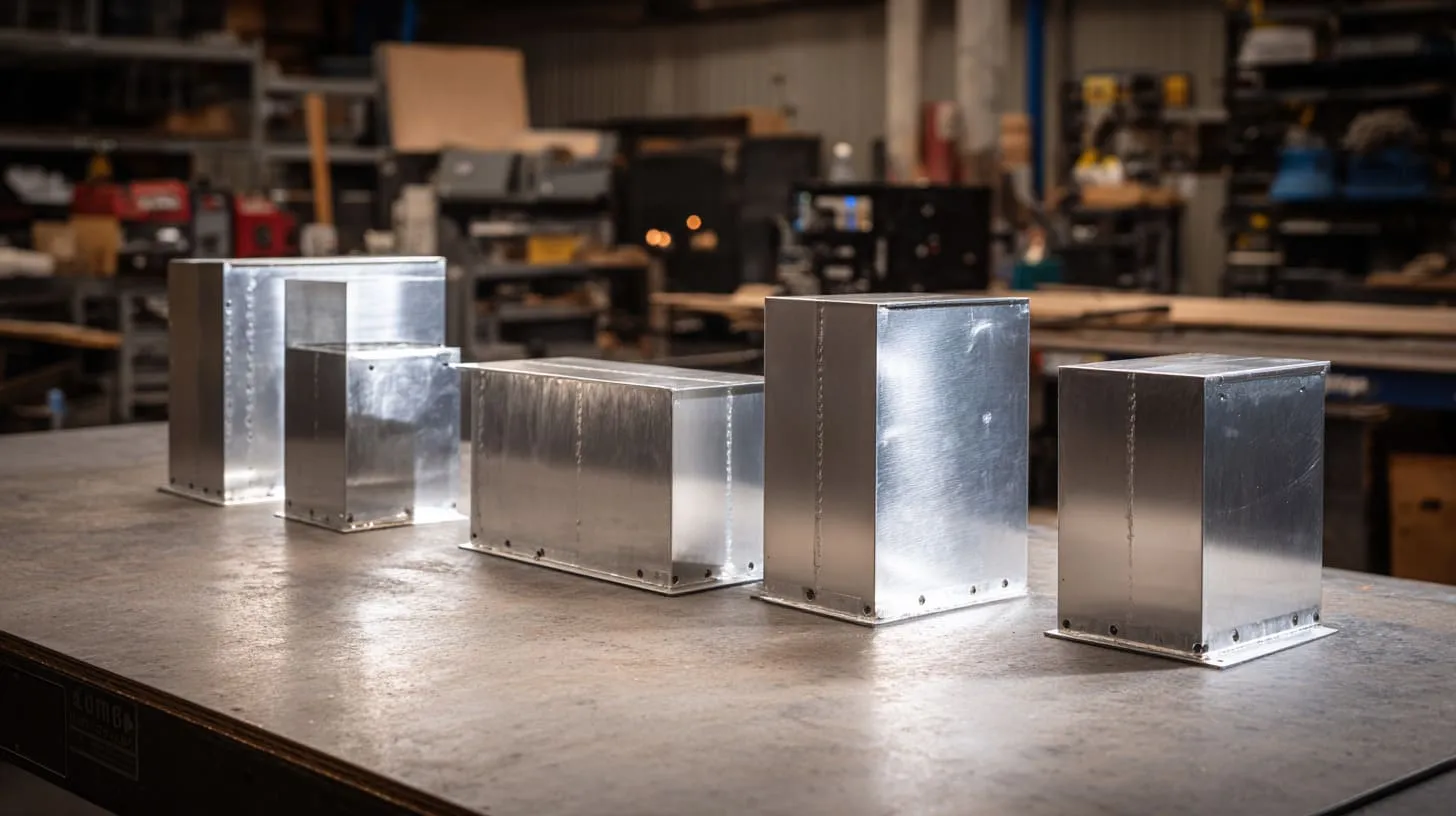
This is where real enclosure work becomes more honest.
Every project has limits. Some buyers need strong EMC control. Some need outdoor sealing. Some mainly need a clean enclosure at a workable price. If I ignore those differences and push every project toward the most optimized seam possible, I am not helping. I am just adding cost.
So I do not ask, “What is the best mating surface design in theory?” I ask, “What level of seam performance does this product truly need?”
When to Simplify vs Optimize
Not every enclosure needs a high-spec seam.
A simpler seam may be enough
For indoor products with low environmental risk and no serious EMC demand, a basic, well-controlled seam can do the job very well.
Some products need more attention
Outdoor, industrial, medical, or EMI-sensitive products usually ask for more careful seam design, more validation, and more process control.
I think this is one of the most important judgment points in enclosure work. Over-design wastes money. Under-design creates failure. The hard part is staying between those two.
Cost Drivers
A better mating surface often adds cost in specific ways.
Tight tolerances raise machining or forming cost
That is normal. More control usually means more effort.
Masking and special treatments add labor
Surface treatment plans become more complex when some seam zones must stay conductive or dimensionally controlled.
Extra testing and validation also cost time
That cost may be worth it. Sometimes it is the cheapest part of the project if it prevents a failure later.
| Cost driver | Why cost goes up |
|---|---|
| Tighter tolerances | More precision required |
| Added masking | More finishing process steps |
| Conductive materials | Higher material and handling cost |
| Extra fasteners or features | More parts and assembly work |
| Validation testing | More development time |
A Simple Decision-Making Framework
When I judge how much seam optimization a project needs, I usually look at three practical groups of questions.
Environment
- Indoor or outdoor?
- Dry or wet?
- Clean office or dirty industrial site?
- Frequent opening or mostly closed use?
Compliance and performance
- Is EMC performance important?
- Is an IP rating required?
- Does the enclosure depend on grounding across seams?
Product life and brand expectation
- Is this a short-cycle project or a long-life product?
- Will the end user notice seam quality easily?
- Is the buyer selling under a premium brand image?
Here is a simple guide:
| Project condition | My usual seam approach |
|---|---|
| Basic indoor electronics | Keep seam simple but controlled |
| Outdoor or dusty use | Focus harder on sealing and compression |
| EMC-sensitive equipment | Prioritize conductive seam path |
| Premium branded product | Watch seam appearance very closely |
| Serviceable enclosure | Consider long-term wear and repeat assembly |
What often surprises buyers is that the seam does not need to be “perfect.” It needs to be right for the product. That difference saves money and reduces bad decisions.
I have learned that mature design is not about doing the most. It is about doing what the product actually needs, then doing that part well.
That brings me to the point I care about most, because mating surfaces are easy to ignore until they start causing very expensive lessons.
Conclusion
I care about mating surfaces because I have seen how often they decide whether an enclosure feels dependable or just looks acceptable.
That is really the heart of my view.
Two metal parts meeting each other may sound like a small technical detail. In real work, it is never just that. That seam controls pressure, fit, sealing, contact, wear, and confidence. It affects whether the enclosure closes with authority or with resistance. It affects whether the shielding path stays real or only looks real. It affects whether the buyer feels proud of the final product or quietly disappointed after the first round of use or testing.
The reason I think this way is simple: I have watched too many enclosure problems begin in places that nobody wanted to discuss deeply at the start. A mating surface is one of those places. It hides behind better-looking topics like finish, shape, and thickness. But once problems appear, that hidden line between parts suddenly becomes the most expensive line in the whole drawing.
What pushes me to judge mating surfaces carefully is not theory. It is the pattern I keep seeing. If the seam is handled well, many other things get easier. Assembly gets smoother. Sealing becomes more believable. EMC risk comes down. The enclosure looks more refined. The product carries the customer’s brand with more confidence. If the seam is weak, the project starts paying for that weakness again and again.
I do not think the right goal is to chase the most complex seam design. I think the right goal is to understand what the enclosure truly needs, then shape the mating surface around that need with discipline. That is why I often check the seam before I get too excited about finish or styling. The seam tells me whether the product is only attractive, or actually trustworthy.
If you are working on a custom metal enclosure and want to reduce sealing risk, improve EMC behavior, or simply make the product feel better in the hand, I strongly suggest looking harder at the mating surfaces in your design. That is often where the real answer is waiting.
If you want, you can send me your enclosure drawing or project idea, and I can help you review the mating surface design, fit risk, and manufacturing approach before those small details turn into bigger problems later.