Skip to content
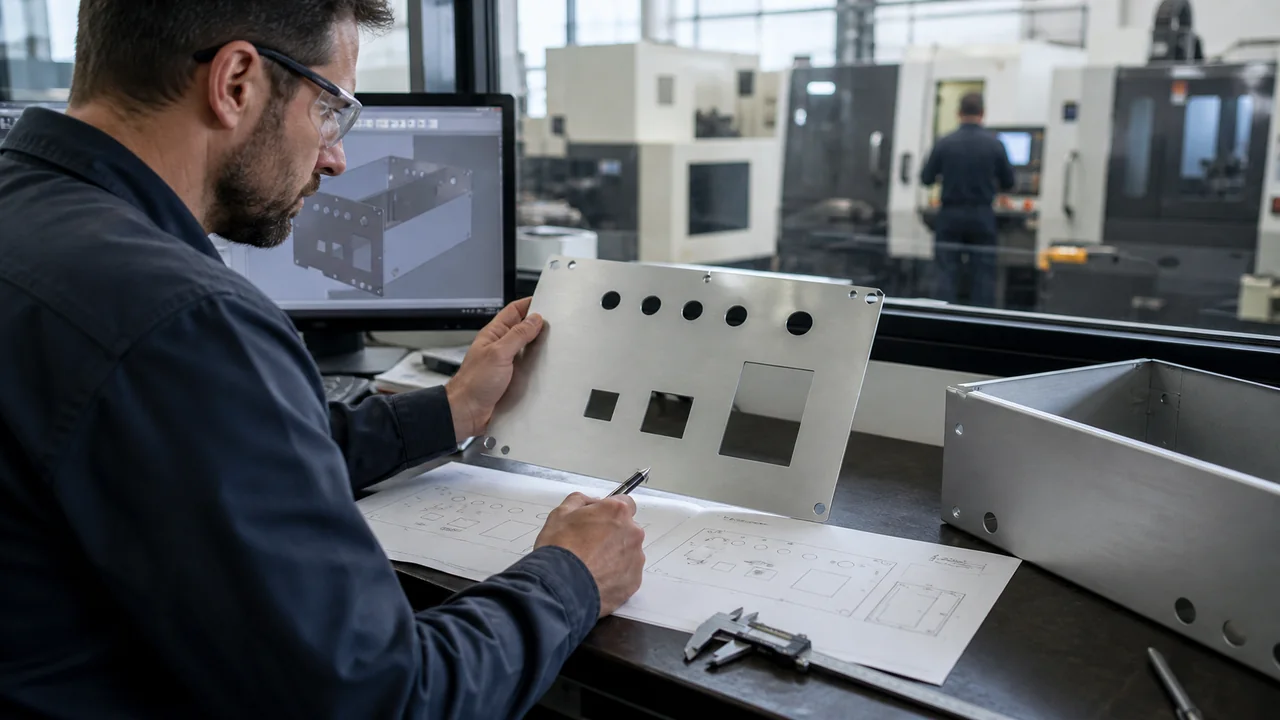
When I review a new enclosure quotation, I usually look at the cutout page before I look at the outside size. The outside size tells me the material. The cutout page tells me the risk.
Custom electrical enclosure cutouts can look very small on a drawing. A cable gland hole. A display window. A row of push buttons. A USB port. Maybe a fan opening. Each one looks like a simple operation, so many buyers expect a small price increase.
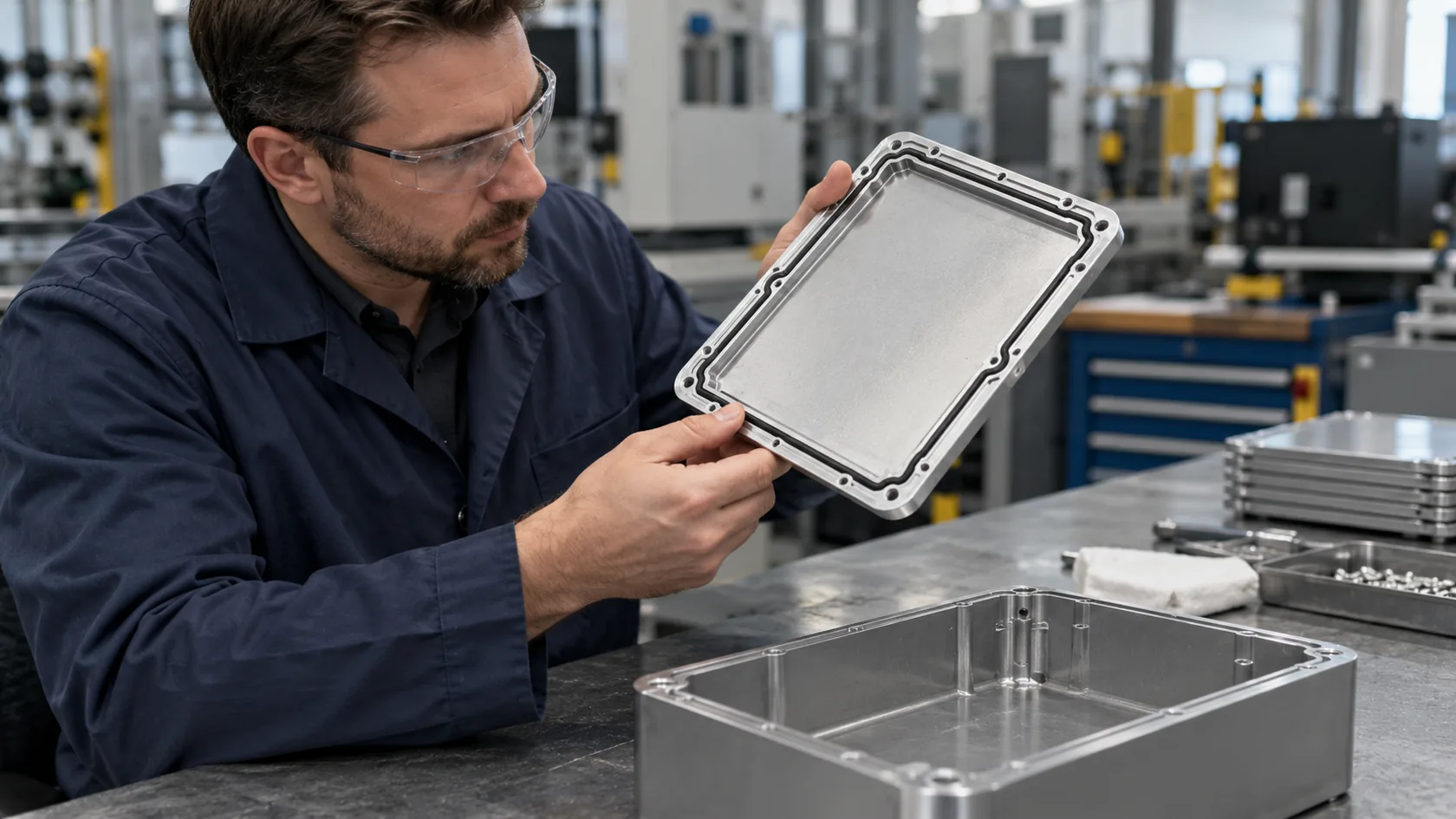
But in real production, a cutout is not only a hole. It affects programming, machine setup, deburring, coating, gasket contact, component fit, inspection, packing, and sometimes certification expectations. If the design changes after the sample, the cost grows again.
In my work, I treat every cutout as a promise: the enclosure must still protect the electronics, fit the components, look clean, and be repeatable in the next batch. That promise is where the real cost comes from.
So let us look at why these cutouts create more cost than expected, and how buyers can control the cost before production starts.
Why a Simple Cutout Changes the Cost Picture
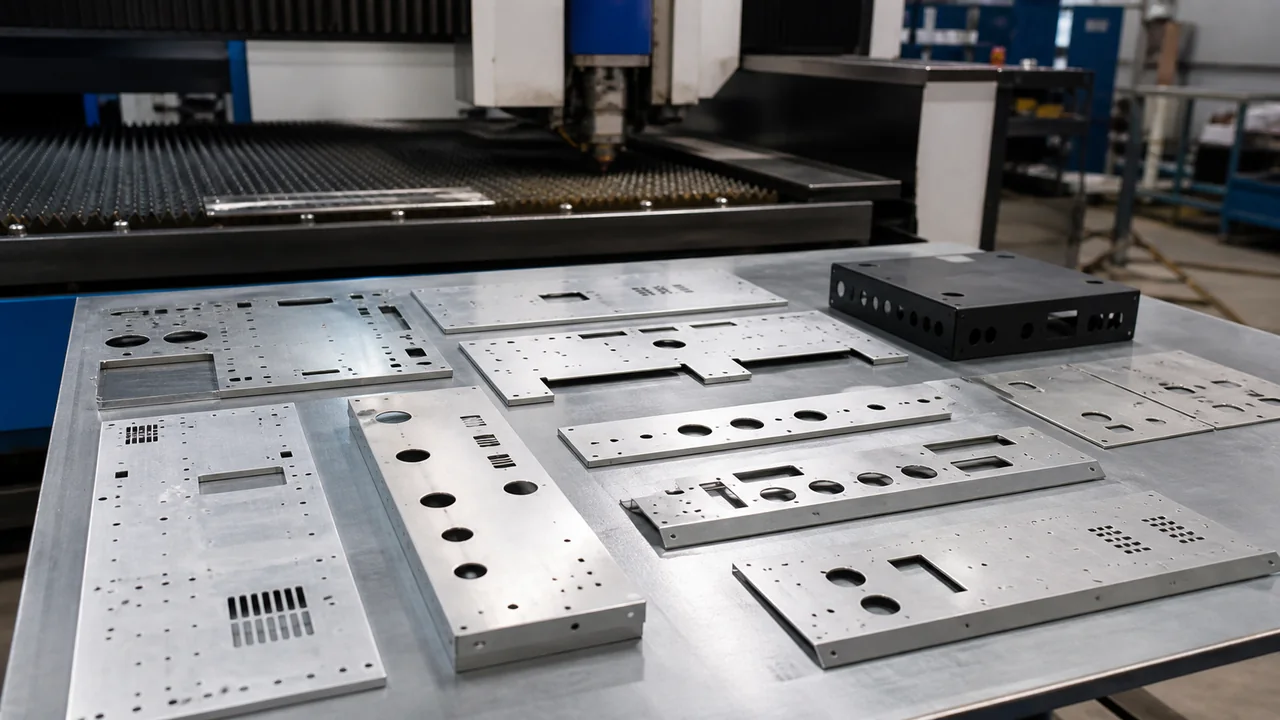
The cheapest cutout is usually the one that is simple, standard, easy to hold, and easy to inspect. The expensive cutout is often the one that looks harmless but creates extra steps.
Machine Time Is Only One Part
Many buyers think the cost is only the cutting time. That is not the full picture. Before we cut the part, an engineer needs to check the file, confirm the location, create or adjust the machining program, and choose the fixture method. After cutting, workers may need to deburr the edge, clean the part, inspect the dimensions, and protect the surface.
A few large round holes are normally easy. A dense vent pattern with many small slots can take much longer. A rectangular display window may also need clean corners, smooth edges, and a controlled surface around the opening.
Here is the simple way I explain it:
| Cutout Feature | Why It Adds Cost | Common Buyer Surprise |
|---|---|---|
| Many small holes | More machine movement and inspection points | The panel looks simple but takes longer to run |
| Tight display window | Needs clean edge quality and accurate position | The display bezel may not hide mistakes |
| Countersunk holes | Adds a second operation | Screw heads may sit unevenly if skipped |
| Cutouts near bends | Can deform during forming | A good flat drawing may become a bad bent part |
| Large openings | May reduce panel stiffness | The door or cover can feel weak |
When I judge this in a quote, I do not only ask, "Can we cut it?" I ask whether the same result can be made cleanly for 10 pieces, 100 pieces, and then the next repeat order without creating extra handling or rework.
This is also why two suppliers may quote very different prices from the same drawing. One supplier may include the engineering and inspection work. Another may quote only the cutting step and leave the problem for later.
The Drawing Details That Decide the Quote
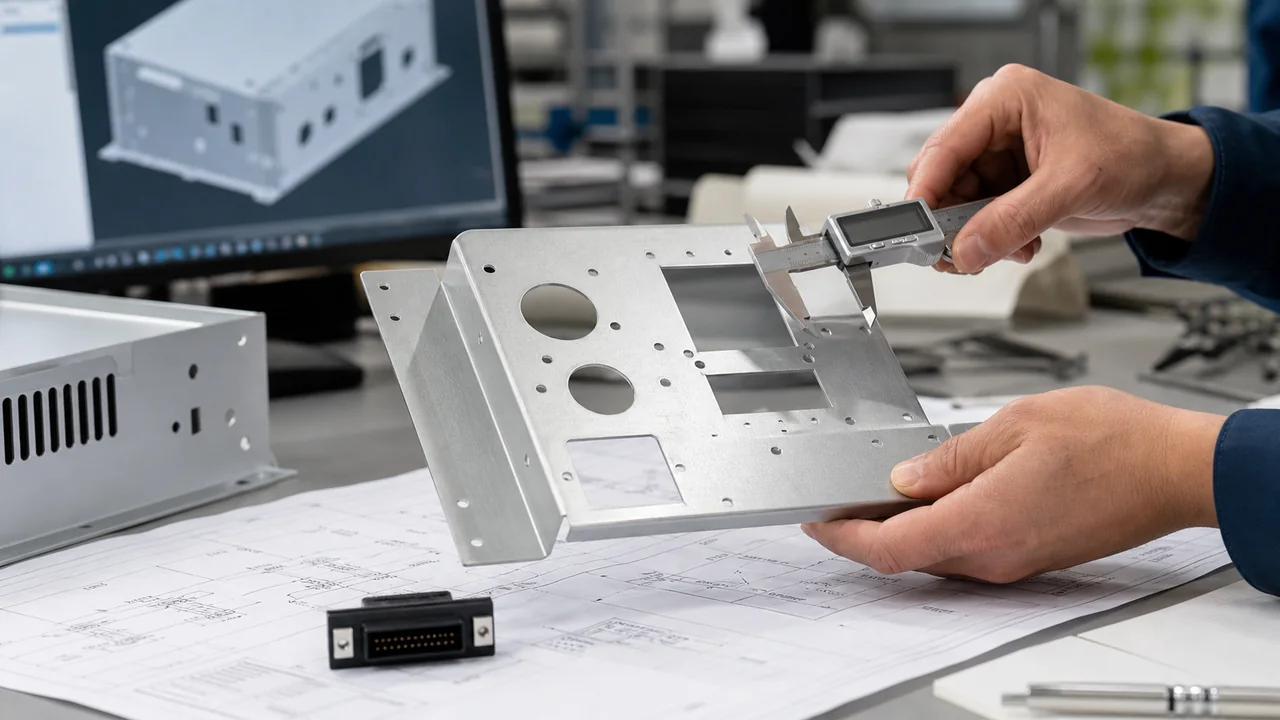
A cutout without clear drawing details is not cheaper. It is just unfinished. The cost may appear later through emails, sample revisions, or rejected parts.
Location, Tolerance, and Reference Points
For enclosure cutouts, the most important drawing details are usually basic:
- Hole diameter or window size
- Center location or edge distance
- Corner radius
- Tolerance
- Material thickness
- Bend direction
- Surface finish
- Which side is outside
- Whether the cutout is before or after coating
The reference point matters. If a buyer gives one hole location from the left edge and another from a bend line, the supplier may need to confirm how the enclosure will be formed and measured. If the cutout is for a PCB-mounted connector, the opening must match the PCB position, not just the outside cover.
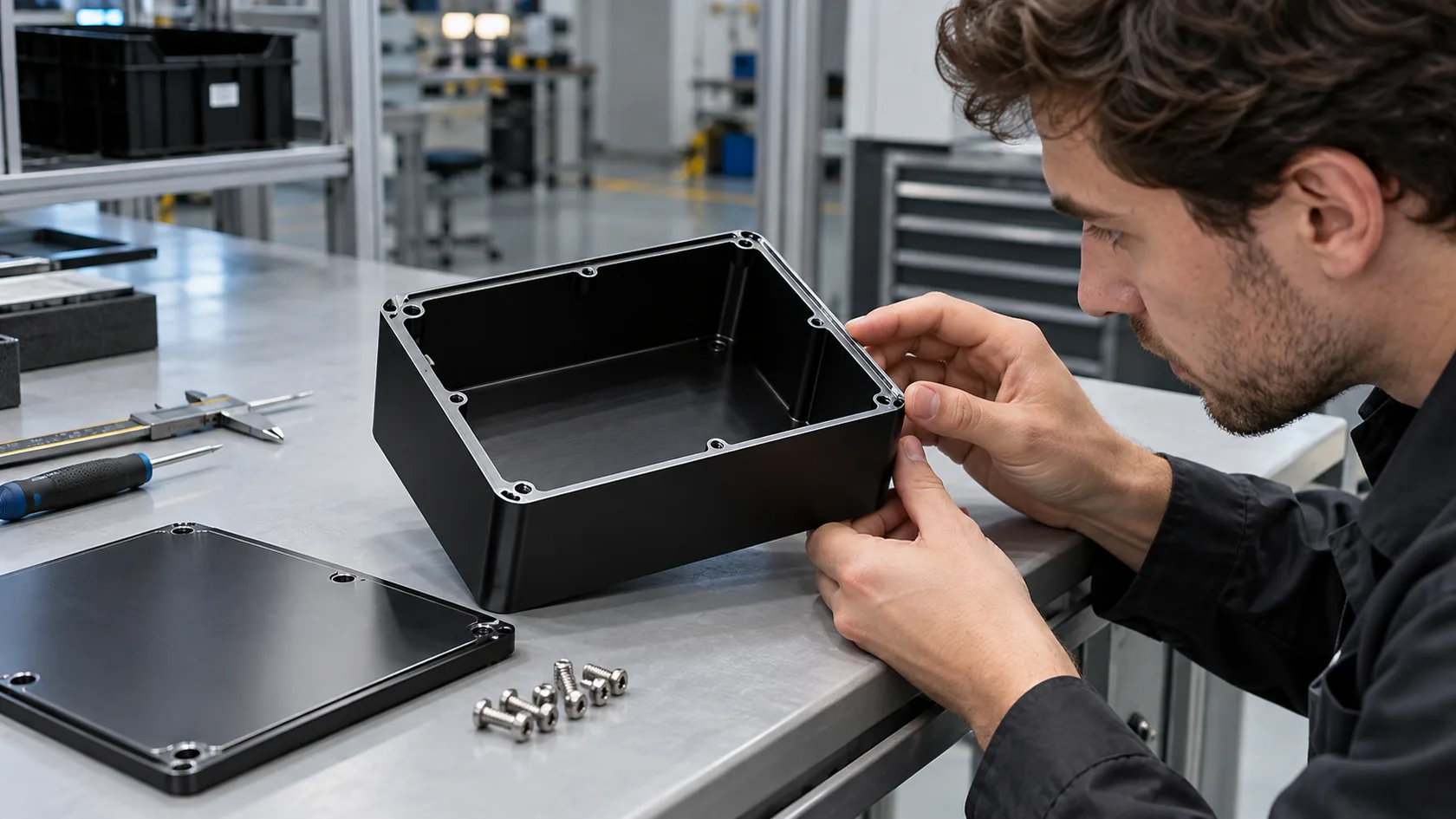
I prefer to check the component fit before we freeze the drawing, because a 1 mm mistake around a connector can be more expensive than a larger material change. The material can often be changed in the quote. A wrong cutout may damage the whole batch.
Components Should Be Checked Before Cutting Metal
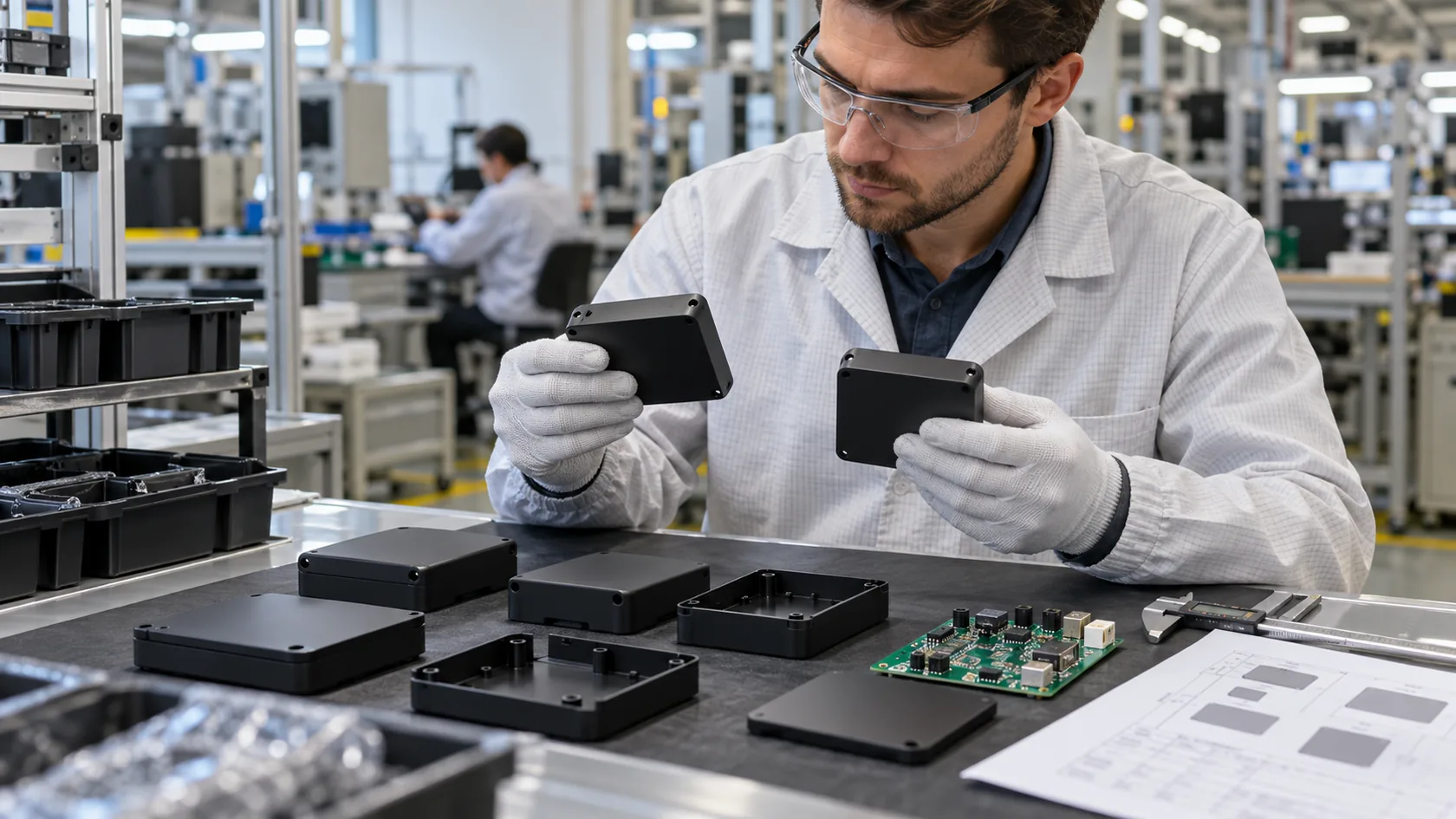
The enclosure does not work alone. It has switches, connectors, cable glands, screens, keypads, fans, antennas, labels, and sometimes customer hardware that we never see unless the buyer sends it.
For a better quote, send these files when possible:
| File or Information | Why It Helps |
|---|---|
| 2D PDF or DXF drawing | Confirms cutout size, position, and tolerance |
| STEP or STP assembly | Shows real component clearance |
| Component datasheets | Confirms panel opening and mounting method |
| Quantity plan | Helps choose CNC, laser, punching, or tooling |
| Rating requirement | Helps review gasket and cable entry risk |
| Finish requirement | Helps avoid exposed raw edges or coating damage |
Some online services, such as a custom enclosure configurator, are useful because they force the buyer to define drawings, cutouts, holes, and approval steps. The same discipline helps when working directly with a factory.
Clear details do not make the project complicated. They make the cost visible earlier.
Cutouts Can Affect Sealing, Ratings, and Finish
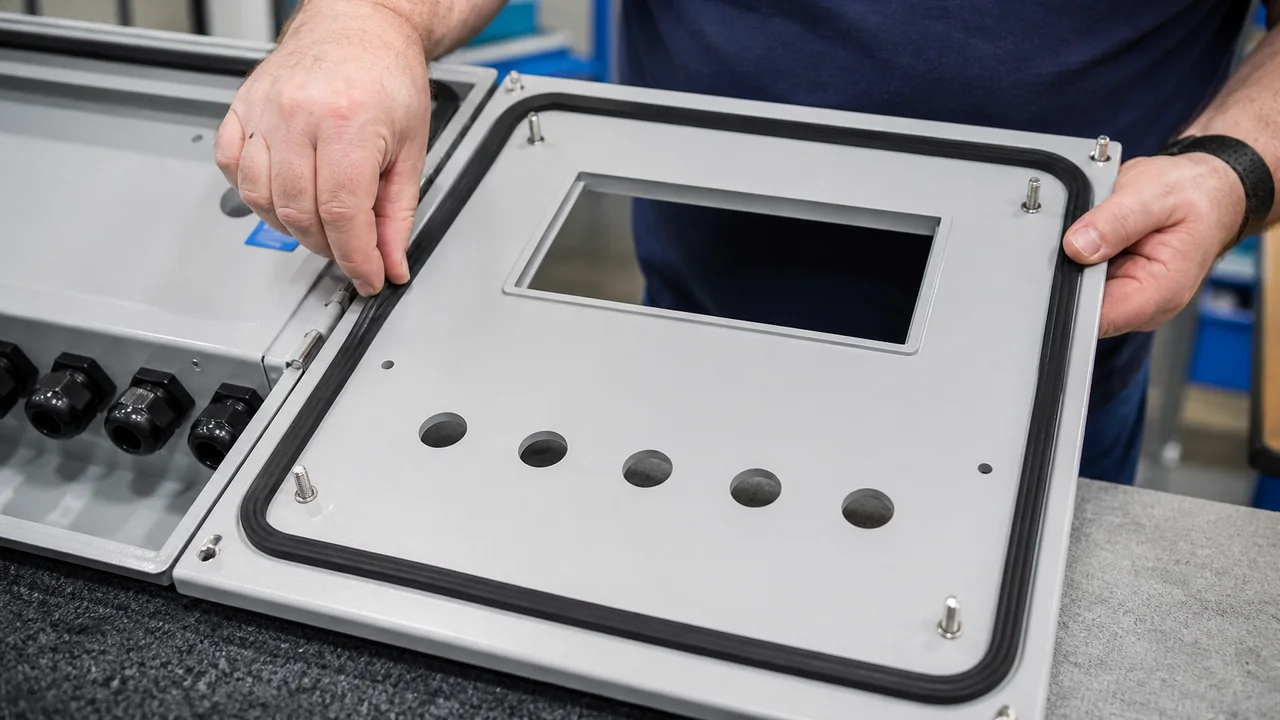
The cutout is also part of the protection system. If the enclosure needs dust, water, oil, washdown, or outdoor resistance, the opening cannot be treated like a normal cosmetic detail.
Ratings Are Not Only Labels
Many buyers use words like waterproof, outdoor, IP65, NEMA 4, or NEMA 4X. These words are important, but they do not protect the product by themselves. The actual protection depends on the enclosure body, gasket compression, door design, cable entry, hardware, and installation.
The ANSI/NEMA 250 enclosure standard covers construction and performance expectations for enclosure types. The IEC 60529 IP Code is also widely used for ingress protection. For many electrical products, buyers may also need to think about UL 50E or related certification requirements.
This matters because a cutout can create a weak point. A screen window needs a seal. A cable gland hole needs the correct gland. A fan opening may reduce water protection unless the design uses a proper hood, filter, or alternative cooling method.
I become careful when a buyer asks for many field-installed cable holes on a sealed enclosure, because the final protection may depend more on installation behavior than factory machining. A perfect box can still fail if the wrong gland or gasket is used on site.
Finish Repair Is Easy to Overlook
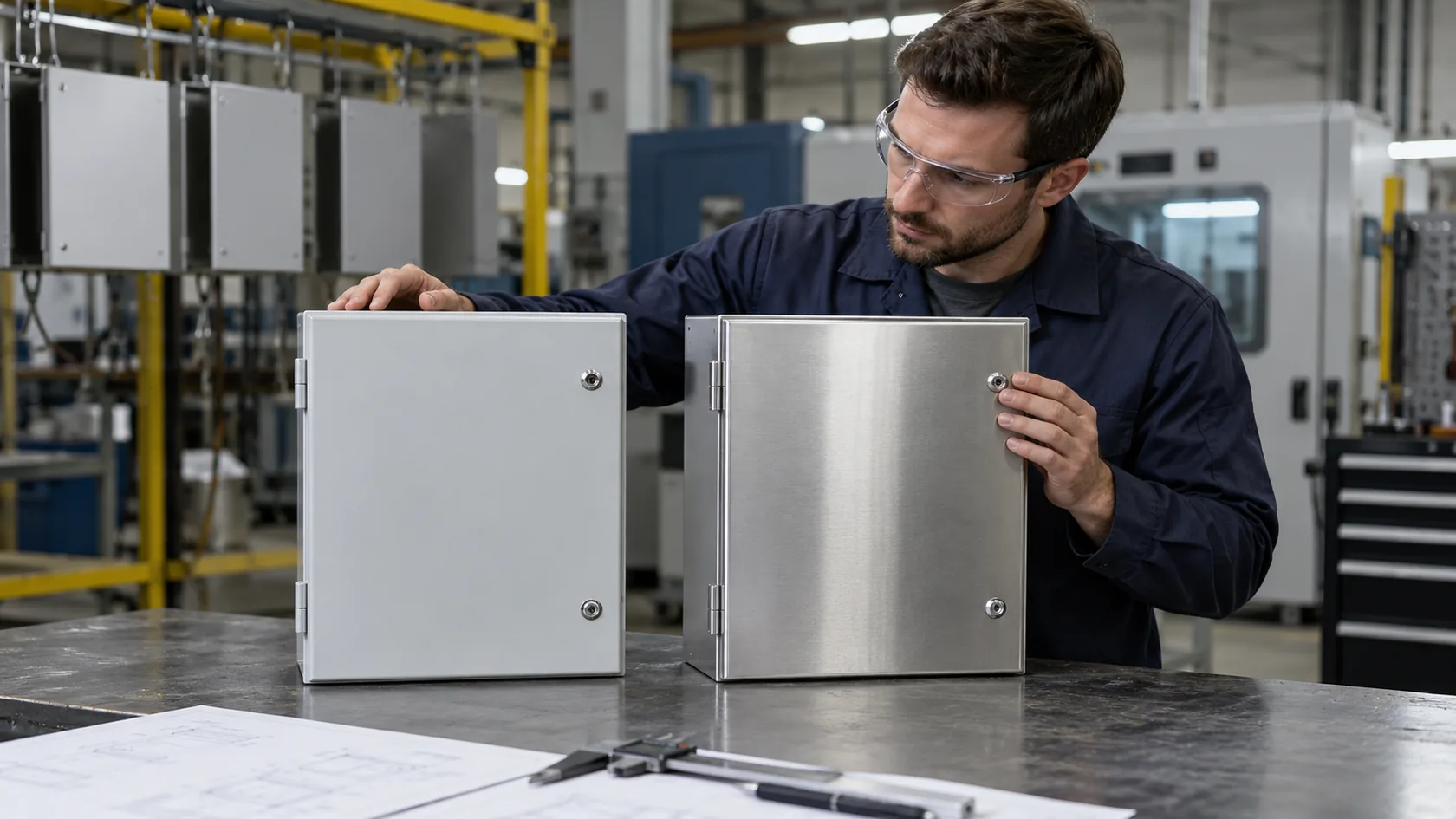
Finish is another hidden cost. If cutouts are made before powder coating, the edges can be coated cleanly. If cutouts are added after coating, the raw edge may need touch-up, and the cosmetic result may not be as good.
Aluminum has better natural corrosion resistance than mild steel, but the edge still matters for appearance and long-term use. Stainless steel may avoid paint repair, but it costs more and can be harder on tools. Plastic enclosures have different risks, such as cracking, melting, or rough edges if the process is wrong.
This is why "just add one more hole" is sometimes not one more hole. It may be one more machining operation, one more finish question, and one more sealing check.
Process Route: CNC Machining, Laser Cutting, and Tooling
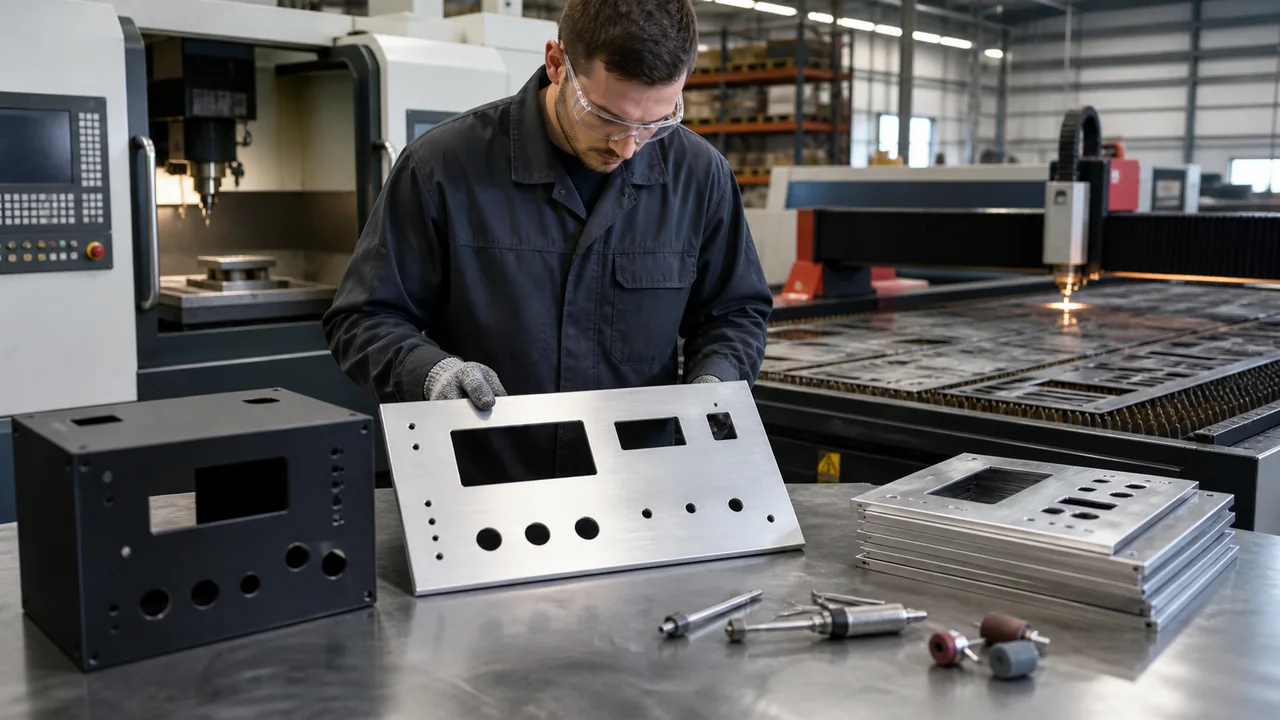
The correct process depends on material, thickness, shape, tolerance, and quantity. A good supplier should not choose the process only because one machine is free that day.
Match the Cutout to the Material and Order Size
For aluminum enclosures, CNC machining can give very clean openings, especially for smaller batches or machined profiles. For sheet metal enclosures, laser cutting is common for flat panels before bending. Punching can be efficient for repeated standard holes or higher quantities. Tooling can reduce unit cost in volume, but it creates upfront cost and less flexibility.
Here is a practical comparison:
| Process | Best Use | Cost Risk |
|---|---|---|
| CNC machining | Aluminum profiles, precise windows, small batches | More machine time for complex patterns |
| Laser cutting | Sheet metal panels, flexible shapes, prototypes | Dense patterns can increase cutting time |
| Punching | Repeated round or standard holes | Tool availability and setup cost |
| Dedicated tooling | Stable high-volume production | Upfront tooling cost and revision risk |
My decision is usually based on the next stage, not only the first order. If a buyer plans one prototype and then 2,000 pieces, I want the prototype design to support the future production method, or we may save a little now and pay much more later.
Design Changes After Sampling Cost More
Cutout changes are cheap on a drawing. They are more expensive after sample production. They are much more expensive after coating, printing, assembly, or packing.
A late change may require:
- Updated drawings
- New CNC or laser programs
- New inspection files
- New samples
- New gaskets or accessories
- New packaging inserts
- Reconfirmation with the buyer's engineer
This is one reason I ask buyers to review the actual components during the sample stage. Do not only check the enclosure photo. Install the PCB. Fit the display. Tighten the cable gland. Open the lid. Route the wires. Then approve production.
That small review can prevent a very expensive second batch.
How to Reduce Cutout Cost Before Production
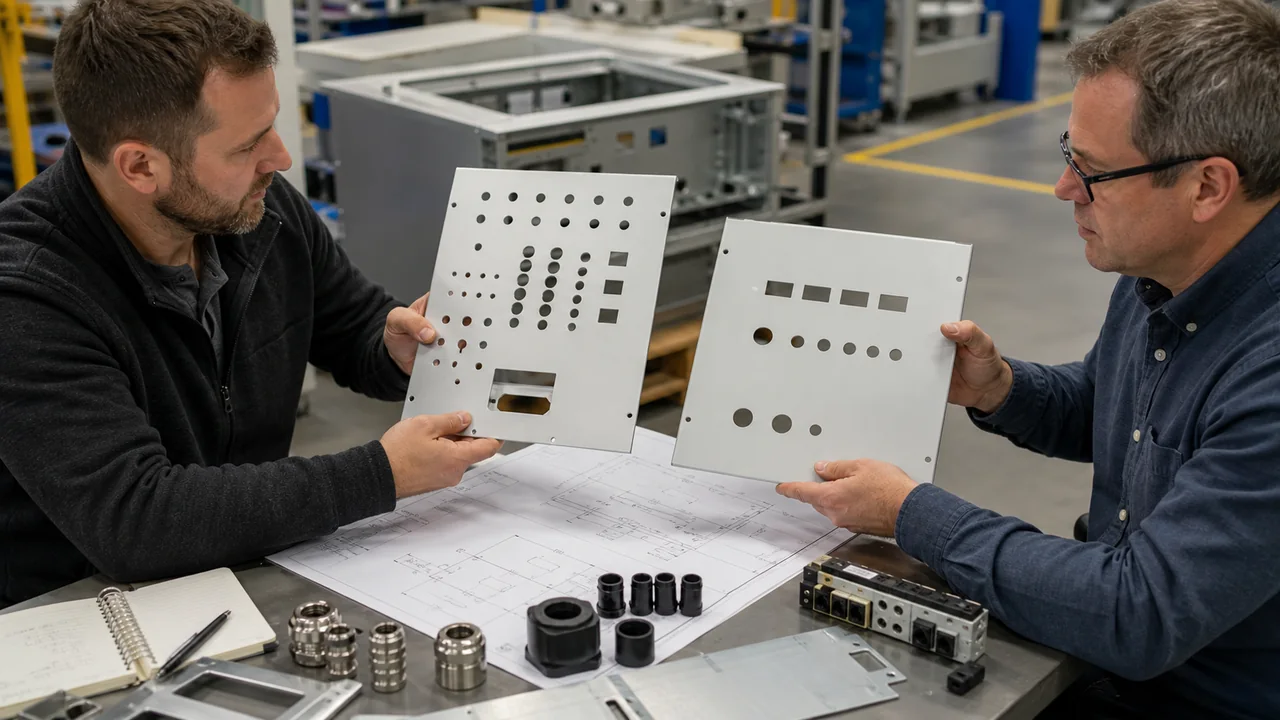
The goal is not to remove every custom feature. A custom enclosure should fit the product. The goal is to remove features that add cost without adding real value.
Group, Standardize, and Simplify
Several simple decisions can reduce cutout cost:
- Use standard cable gland sizes when possible.
- Group connectors instead of scattering them across several faces.
- Avoid very small slots unless they are really needed.
- Replace many tiny ventilation holes with fewer slots or a standard vent part when suitable.
- Keep cutouts away from bend lines when possible.
- Use the display bezel to hide normal edge tolerance.
- Keep screw types and hole sizes consistent.
- Decide logo printing, labels, and cutout positions together.
I often look for the feature that creates work but does not help the user. If a vent pattern looks nice but doubles machine time, I will suggest a simpler pattern, unless the appearance is part of the customer's product value.
Ask for Manufacturability Feedback Early
The best time to reduce cost is before the first sample. At that stage, a supplier can suggest a different radius, a standard hole size, a better connector position, or a lower-risk process route.
For a useful review, send:
- The enclosure drawing
- A STEP file if available
- Component datasheets
- Target quantity
- Required material and finish
- Environment and rating expectation
- Photos of similar products if you have them
This does not slow the project down. It usually saves time because the supplier can quote with fewer assumptions.
If your supplier only says "yes, we can make it" without asking any questions, be careful. For custom cutouts, good questions are not a delay. They are part of cost control.
Conclusion
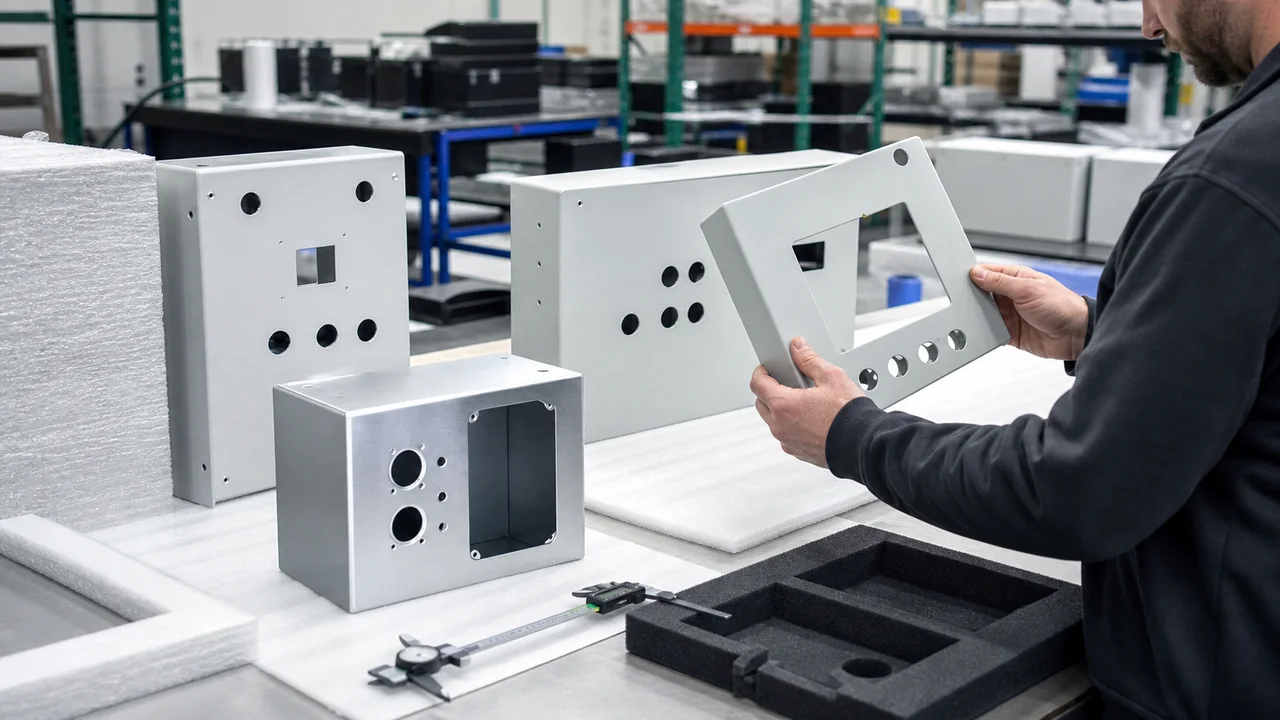
Custom electrical enclosure cutouts create extra cost when they affect more than the cutting operation. In my factory view, the real cost comes from setup, precision, sealing, finishing, inspection, revisions, and the risk of a part that fits on paper but fails in assembly.
This is why I do not like to quote cutouts casually. A small hole can be easy. A small hole in the wrong place can stop the whole project.
My best advice is simple: confirm the components, define the drawing clearly, and ask for manufacturability feedback before sample production. If the enclosure needs an IP, NEMA, or UL-related requirement, discuss the cutouts and cable entries early, not after the enclosure is already coated.
If you are preparing a custom aluminum enclosure, plastic enclosure, or sheet metal enclosure with cutouts, you can send MaidaTech the drawing and component details before the order is fixed. We can review the layout, point out cost risks, and suggest practical changes before those small openings become expensive surprises.