Skip to content
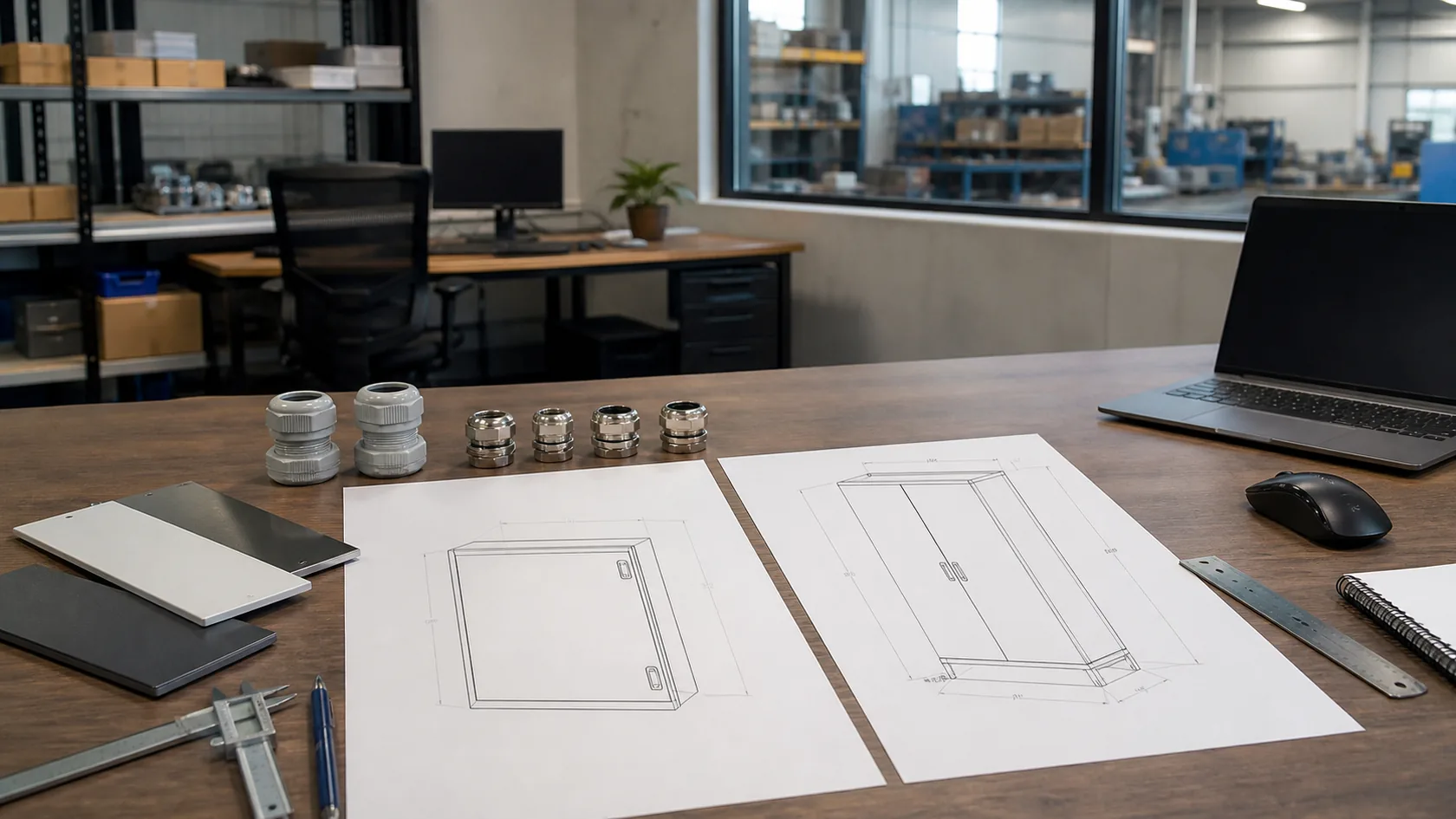
On my quotation desk, the same enclosure drawing can look simple or risky depending on one small note: wall mount or floor standing.
The metal thickness may be clear. The cutouts may be clear. The buyer may already know the color, gasket, lock, cable gland size, and logo position. But if the mounting style is wrong, the project can still become expensive after the enclosure arrives on site.
I have seen small wall-mounted boxes work beautifully for local control panels. I have also seen buyers try to put too much equipment into one wall box because it looked neat in the drawing. The opposite also happens. A floor-standing cabinet is chosen because it feels more professional, but the system only needed a compact wall-mounted enclosure.
For electrical enclosures, the question is not only "Which one is stronger?" The better question is: "Which one fits the equipment, the installation site, the people who maintain it, and the future changes?"
When I review this choice, I always look past the empty enclosure size and check the loaded weight, cable direction, door opening, heat, wall condition, and service space. A small mistake here can create a big cost later, so it deserves a practical review before production starts.
Let us compare wall mount and floor standing electrical enclosures in the way I normally discuss them with engineers and purchasing teams.
Quick Answer: Match The Enclosure To The Job
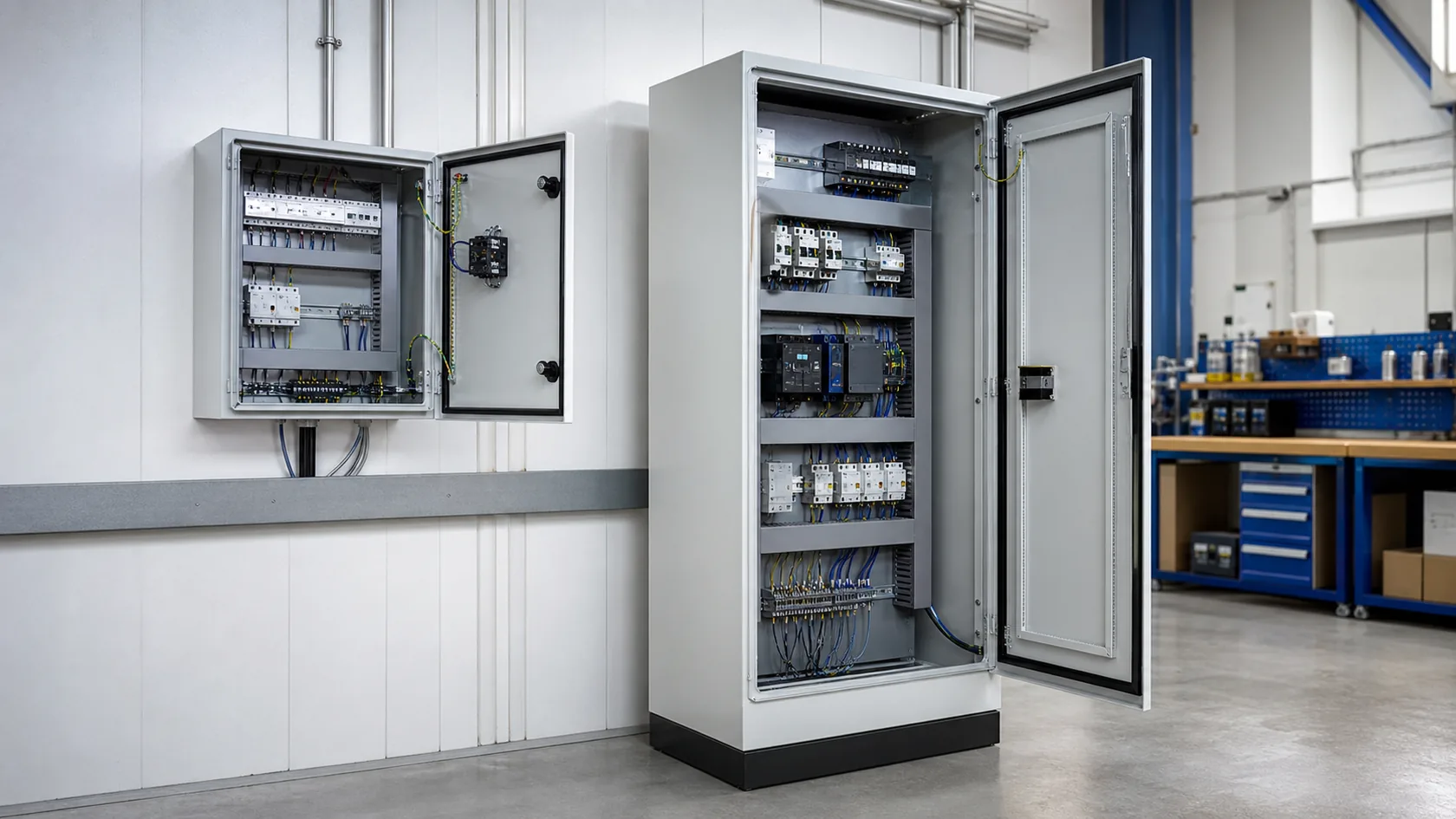
A wall-mounted electrical enclosure is usually the better choice when the system is compact, not too heavy, and only needs front access. It saves floor space and works well for junction boxes, small PLC panels, metering boxes, telecom boxes, and local machine control.
A floor-standing electrical enclosure is usually the better choice when the system is heavier, deeper, more complex, or likely to expand. It gives more internal space, better cable organization, stronger support for large mounting plates, and easier service access.
Here is the short comparison:
| Decision point | Wall mount enclosure | Floor standing enclosure |
|---|---|---|
| Best for | Small control systems, junction boxes, local panels | Large automation, power distribution, complex control cabinets |
| Space use | Saves floor space | Uses floor space but gives more capacity |
| Loaded weight | Limited by wall and anchors | Better for heavy equipment |
| Cable routing | Good for simple top, bottom, or side entry | Better for large cable bundles, bottom entry, and cable trays |
| Maintenance | Usually front access only | Can support front, rear, and side access |
| Expansion | Limited | Easier to reserve space |
| First cost | Usually lower | Usually higher |
| Installed cost | Can rise with reinforcement or multiple boxes | Can be better for complex systems |
I do not treat wall mount as the "cheap option" or floor standing as the "premium option." In real work, the wrong cheap option becomes expensive, and the wrong large cabinet wastes space, shipping cost, and installation effort.
This is why I prefer to choose the form factor from the project conditions, not from habit.
Space And Mounting Surface
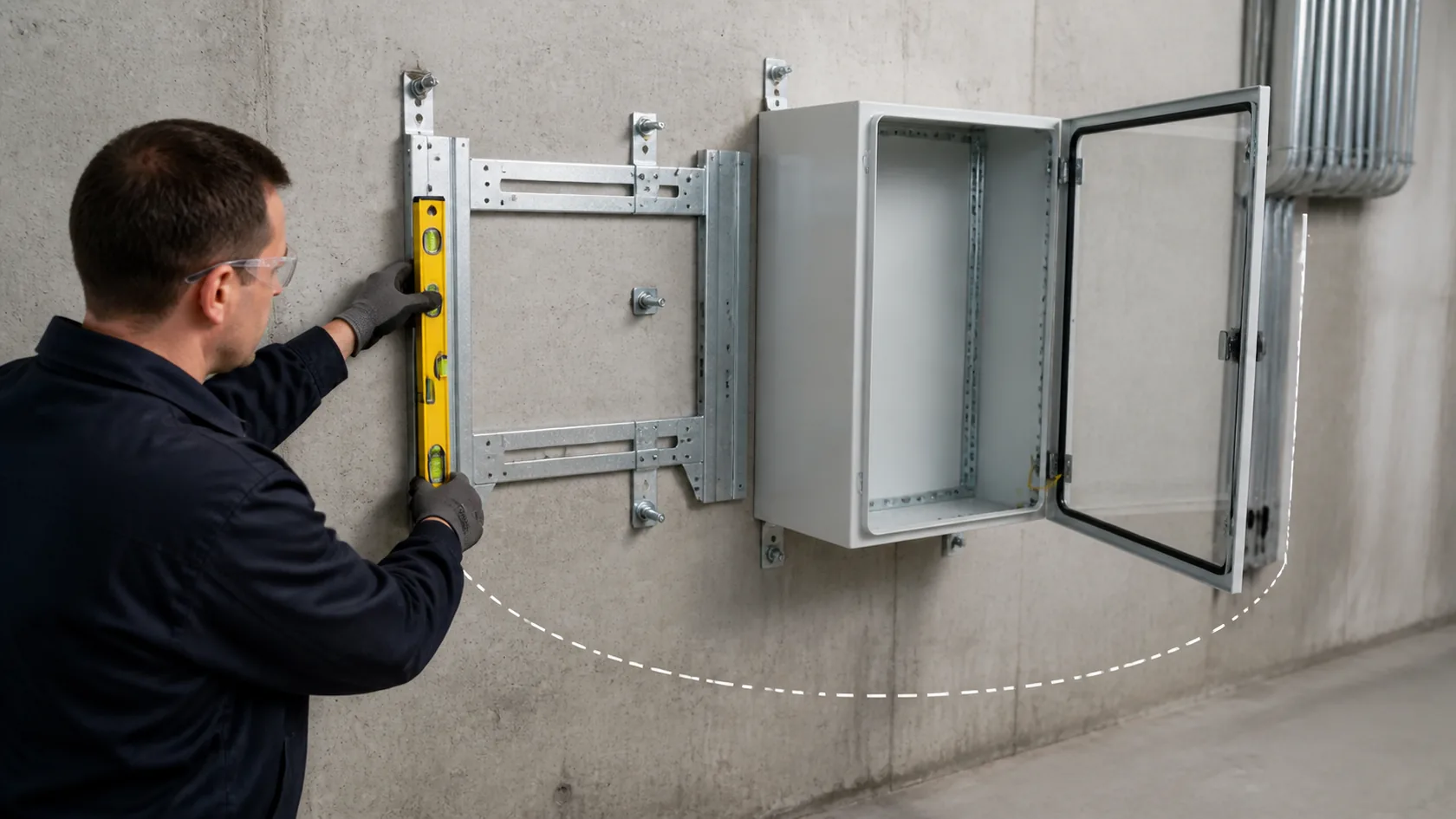
Wall-mounted enclosures are attractive because they keep the floor clear. In workshops, food processing areas, pump stations, warehouses, and machine-side control areas, free floor space can be valuable. Cleaning is easier. Forklift paths stay open. Operators can see the controls at a comfortable height.
But the wall must be able to carry the enclosure after it is loaded. An empty box may be easy to lift. After adding a mounting plate, power supplies, breakers, relays, terminal blocks, fans, cable glands, and wire duct, the real load can be much higher.
The wall material matters too. Concrete, steel frame, brick, insulated panel, drywall, and machine frame mounting all behave differently. A wall-mounted enclosure on a weak partition is not a strong installation just because the enclosure itself is strong.
Floor-standing enclosures move that load to the ground. They are easier to use when the equipment is tall, heavy, or deep. They also make sense when the wall is not reliable or when the site needs a cabinet row with similar height and service clearance.
Working space is another point. In the United States, NFPA 70 Article 110.26 discusses working space around electrical equipment, including access and door opening issues. The exact requirement depends on the installation and local code, but the principle is simple: technicians need room to open the door, see the components, and work safely.
I often check the door swing on the drawing before I look at the paint color. A beautiful enclosure that opens into a pipe, wall, railing, or walkway becomes annoying on the first maintenance day.
So when space is tight, wall mount may solve one problem and create another. The right answer depends on both the available wall and the working area in front of the enclosure.
Weight And Internal Layout
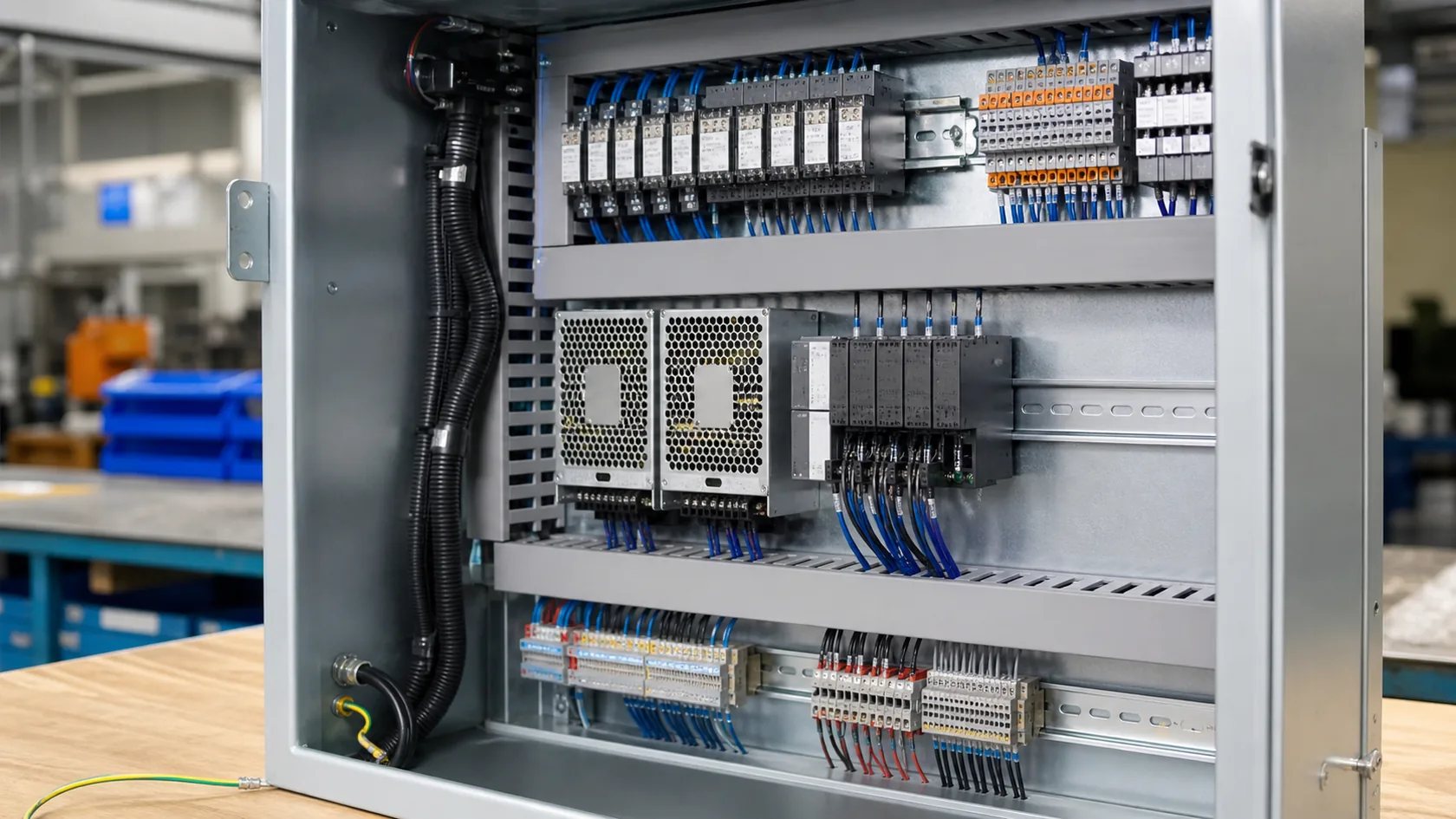
The empty enclosure weight is only the starting point. The loaded weight is what the wall, bracket, feet, base, and packaging must handle.
For wall-mounted enclosures, internal layout discipline matters a lot. The cabinet is usually shallower. Components must be arranged carefully so the door can close, wiring bends are not too tight, and heat does not concentrate in one corner. If the buyer adds more parts later, the enclosure can become crowded very quickly.
Common wall-mounted applications include:
- Small PLC panels
- Junction boxes
- Local push-button stations
- Light power distribution
- Sensor or instrument boxes
- Outdoor communication equipment
- Compact machine control boxes
Floor-standing enclosures give the designer more room to separate power, control, wiring ducts, terminal blocks, and thermal equipment. A large back plate also makes assembly more comfortable in the workshop. For some projects, this improves wiring quality because the technician is not fighting for every millimeter.
Floor-standing cabinets are often used for:
- Large automation control panels
- Power distribution cabinets
- Motor control systems
- Battery or UPS-related cabinets
- Industrial network cabinets
- Multi-zone machine control
- Systems with future expansion plans
When I review a crowded layout, I do not only ask whether all components can fit. I ask whether a worker can still install, inspect, replace, and label them cleanly after the wiring is complete.
That point is important for OEM projects. A layout that barely fits may pass the first build, but it can become slow during repeat production. A few extra hours of assembly cost on every unit can be more painful than choosing the larger enclosure from the beginning.
Cable Entry, Cooling, And Service Access
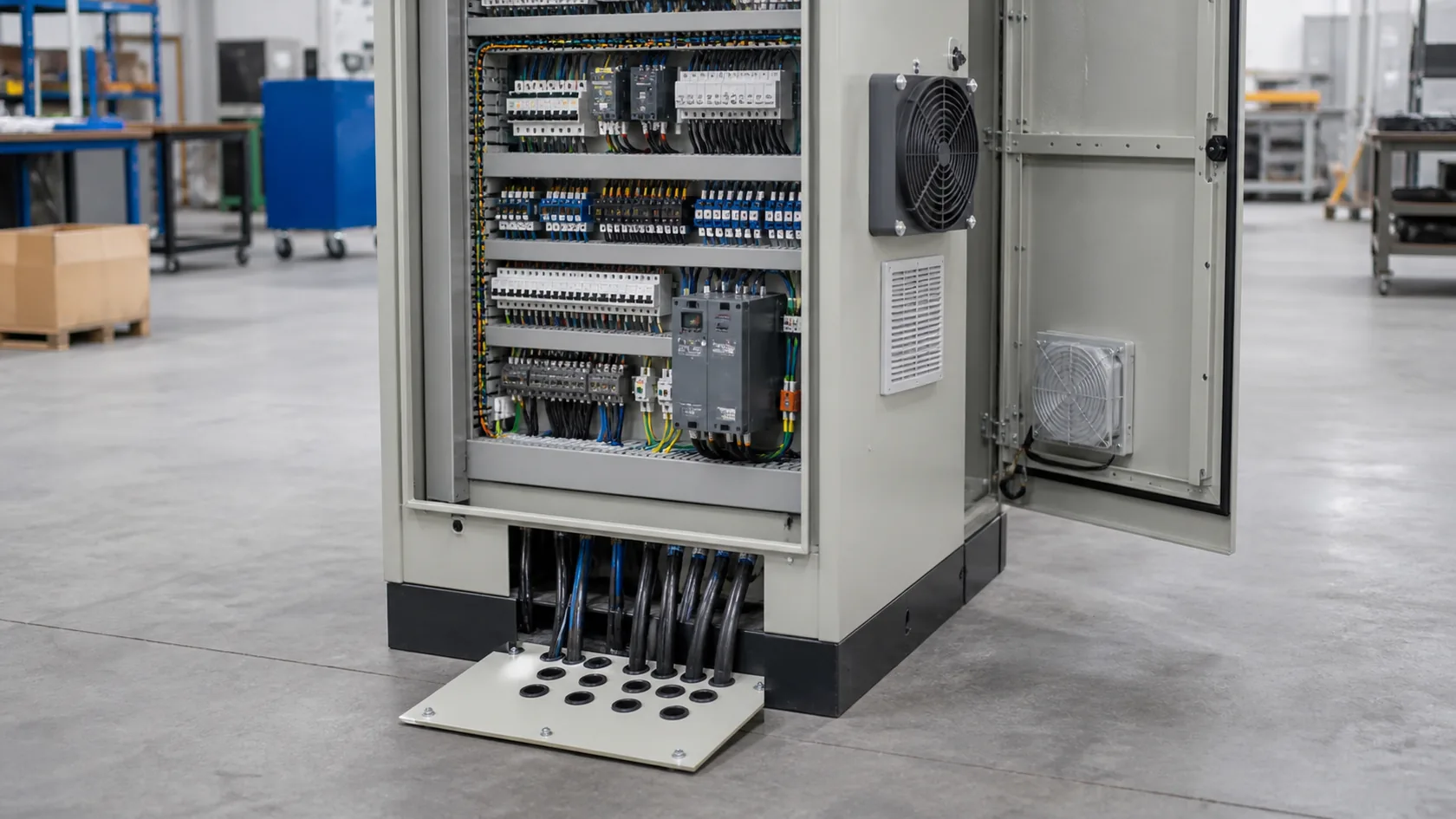
Cable entry can quietly decide the enclosure style. If the project uses only a few small cables, a wall-mounted enclosure with bottom or side glands may be simple. If the project needs many large cables, heavy conduits, or floor trench entry, a floor-standing enclosure is often cleaner.
The cable route affects more than appearance. Large cables need bend radius. Conduits add stress. Cable glands need spacing. Terminal blocks need room near the entry point. If these details are ignored, the installer may drill extra holes on site, and that can damage the finish, sealing, or certification plan.
Cooling also changes with size and equipment density. A compact wall enclosure with a few low-heat parts may only need natural ventilation or no ventilation at all. A larger control cabinet with drives, power supplies, relays, and dense wiring may need fans, filters, vents, heat exchangers, or air conditioning.
For protection ratings, the mounting style is not the rating by itself. The enclosure still needs the correct gasket, door structure, cable entry method, and material. NEMA explains that electrical enclosures protect equipment and people and are rated for different environmental conditions. The IEC also publishes the IEC 60529 IP Code, which classifies degrees of protection provided by enclosures.
But a rating can be weakened by poor installation. A good gasket cannot save a badly placed cable hole. A stainless steel cabinet can still leak if the gland plate is not designed correctly.
My habit is to check cable entry and service access together, because the person who installs the cable is often the same person who must maintain the cabinet later. If the cable route blocks the components, the enclosure will look organized only in the first drawing.
For service access, wall-mounted enclosures are usually front-only. This is fine for simple systems. Floor-standing cabinets can support front-and-rear doors, removable side panels, or bayed arrangements. That extra access can reduce service time, especially when the cabinet is deep or heavily wired.
Environmental Rating And Material Choice
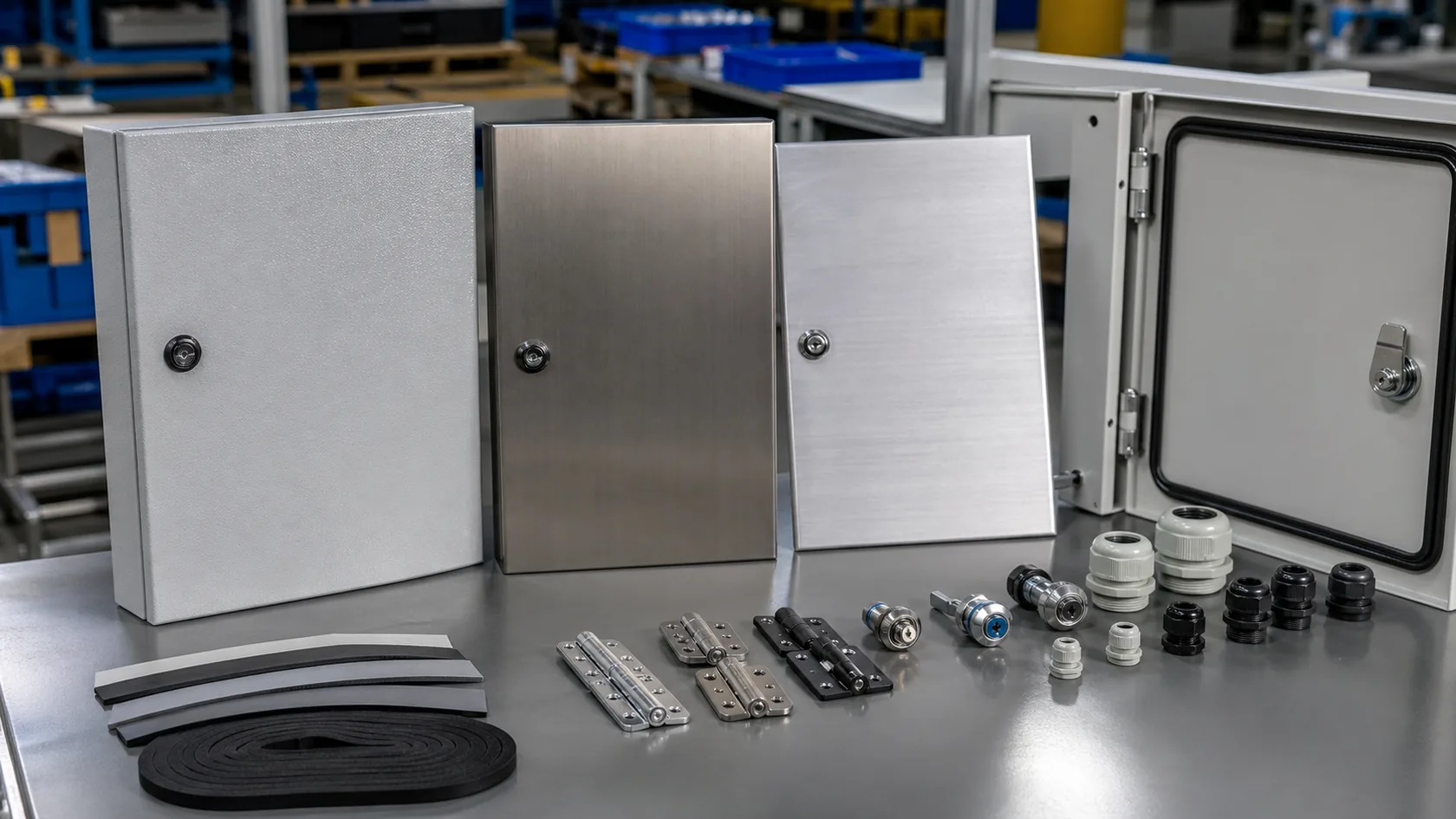
Wall mount versus floor standing does not replace environmental selection. You still need to choose the right material, surface finish, gasket, rating, lock, hinge, ventilation, and cable entry method.
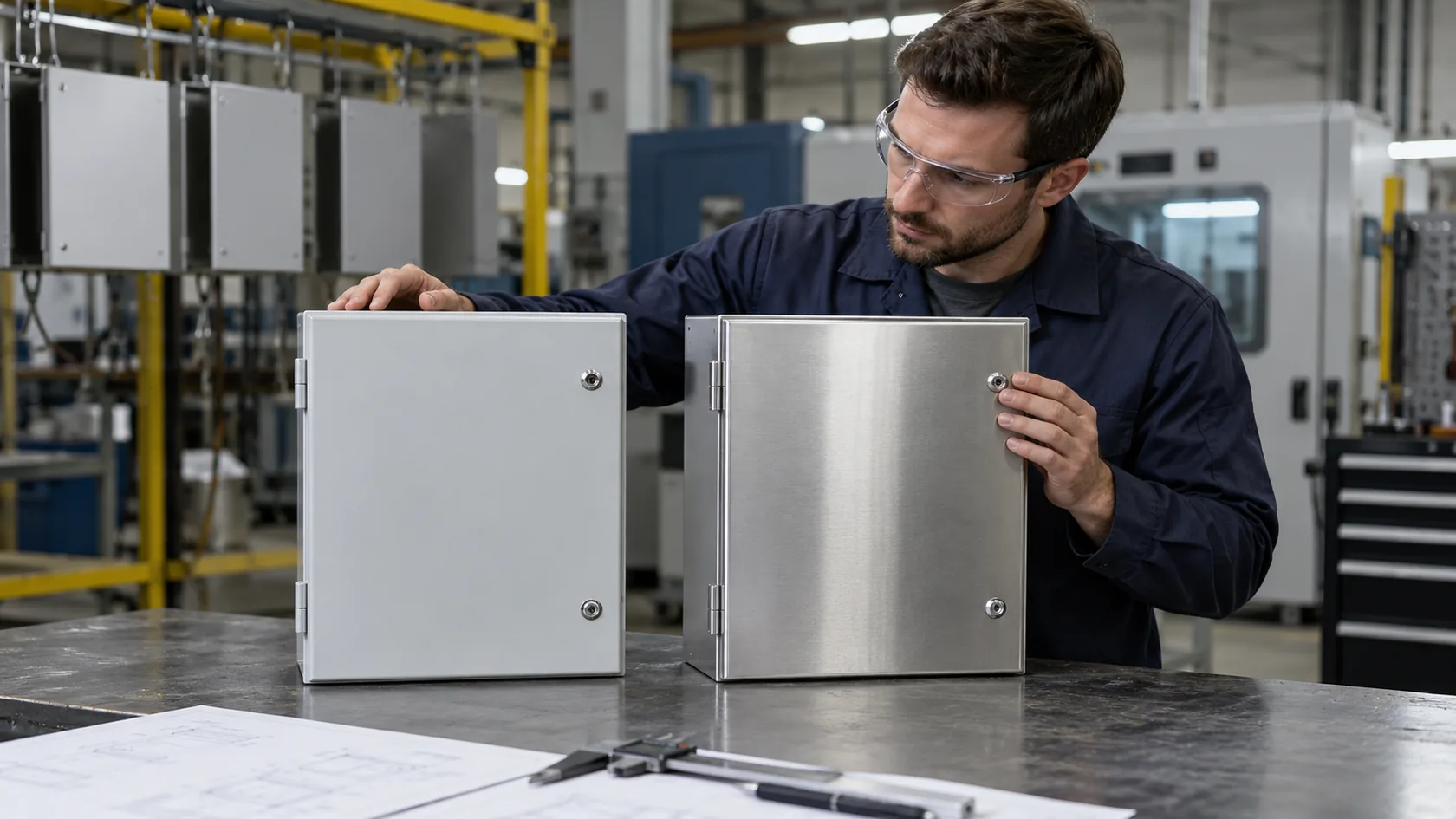
For indoor dry environments, powder-coated steel may be enough. For outdoor projects, the decision becomes more careful. Rain, UV, dust, condensation, salt air, cleaning chemicals, and temperature swings can all affect the enclosure. For washdown or corrosive sites, stainless steel, aluminum, fiberglass, or certain plastics may be considered depending on the actual risk.
The mounting style changes the material discussion because weight changes the installation. A small stainless steel wall box may be easy to mount on concrete. A large stainless steel wall-mounted cabinet can become heavy and difficult to handle. A floor-standing cabinet can carry weight better, but shipping, lifting, base design, and site handling become more important.
Standards and certifications also matter for control panels. For example, UL 508A covers industrial control panels for general industrial use and includes requirements related to industrial control panel enclosures. The enclosure supplier, panel builder, and installer should understand which standard or local rule applies to the project.
I am careful with rating requests because "IP65" or "NEMA 4X" written in an email is not enough information for production. I still need to know where the holes are, what accessories pass through the wall, how the door is used, and whether the site has vibration, sun, spray, or chemicals.
In short, do not choose wall mount or floor standing first and then force the rating into it. Choose the environment, rating, material, and mounting style as one system.
Cost: Purchase Price Versus Installed Cost
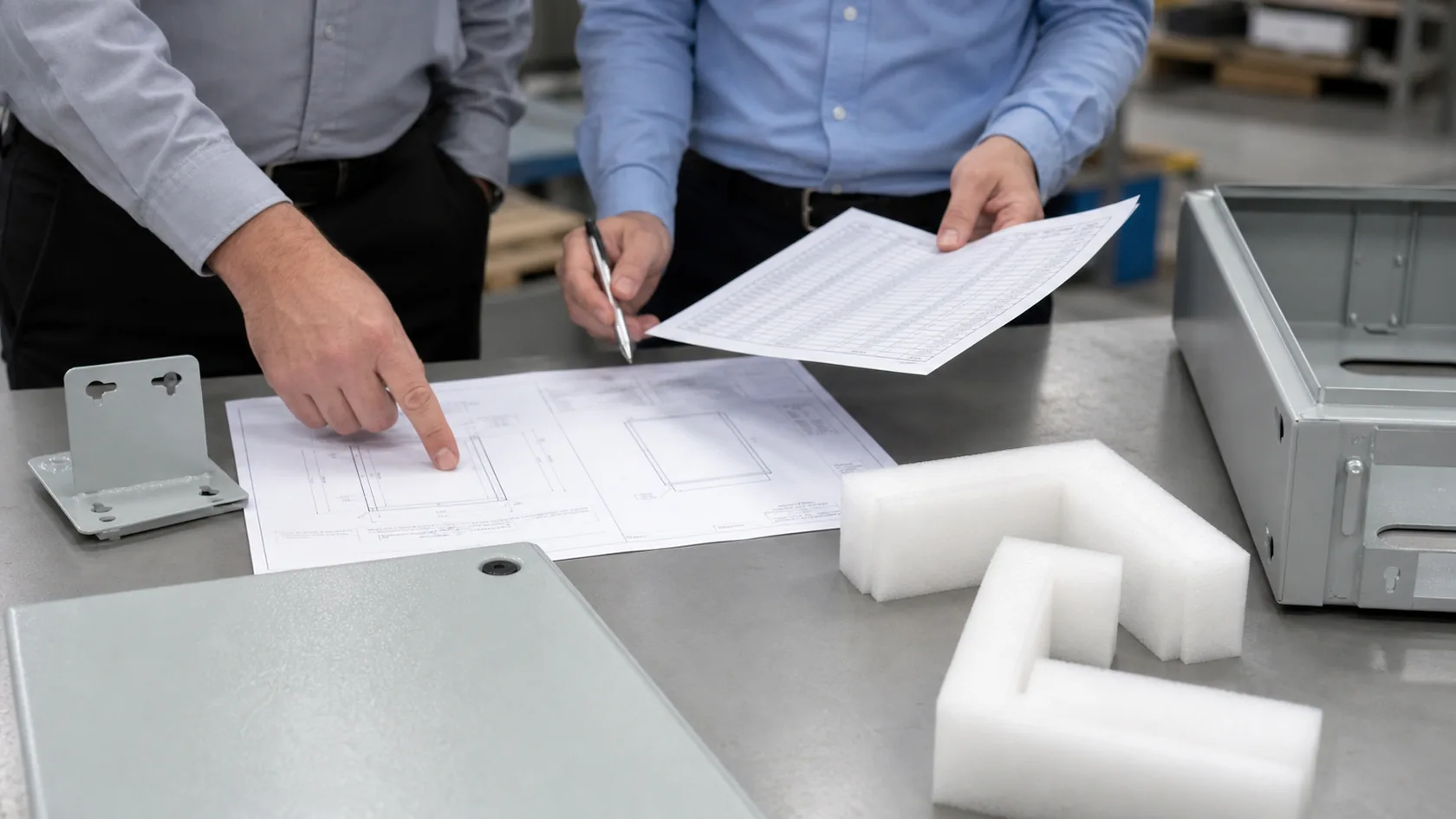
A wall-mounted enclosure usually has a lower purchase price because it is smaller, uses less material, and is easier to package. For simple systems, that is a real advantage.
But the installed cost may include more than the enclosure:
- Wall reinforcement
- Special mounting brackets
- Extra drilling or anchors
- Longer conduit runs
- Additional smaller enclosures
- More wiring between boxes
- On-site sealing work
- Later replacement if the system grows
Floor-standing enclosures usually cost more at the beginning. They use more material and may need a base, lifting support, stronger packaging, and more shipping space. For a large project, however, one clean floor-standing cabinet can sometimes be cheaper than two or three crowded wall-mounted boxes after wiring and installation are counted.
The cost question should also include production repeatability. If an OEM needs the same cabinet every month, a slightly larger enclosure may make wiring faster and inspection cleaner. If the project is a one-time small local panel, a compact wall-mounted box may be the best value.
When I quote custom enclosures, I do not like to save five percent on the box if it creates ten percent more cost at assembly or installation. The drawing should reduce total project risk, not only make the enclosure line item look small.
Packaging is another quiet cost. A floor-standing cabinet needs stronger protection against corner dents, door twist, and base damage during shipping. A wall-mounted box is easier to pack, but if it has many cutouts, windows, fans, or surface treatment requirements, it still needs proper protection.
The cheapest enclosure is not always the one with the lowest unit price. It is the one that arrives safely, installs cleanly, and does not need rework.
A Practical Selection Checklist
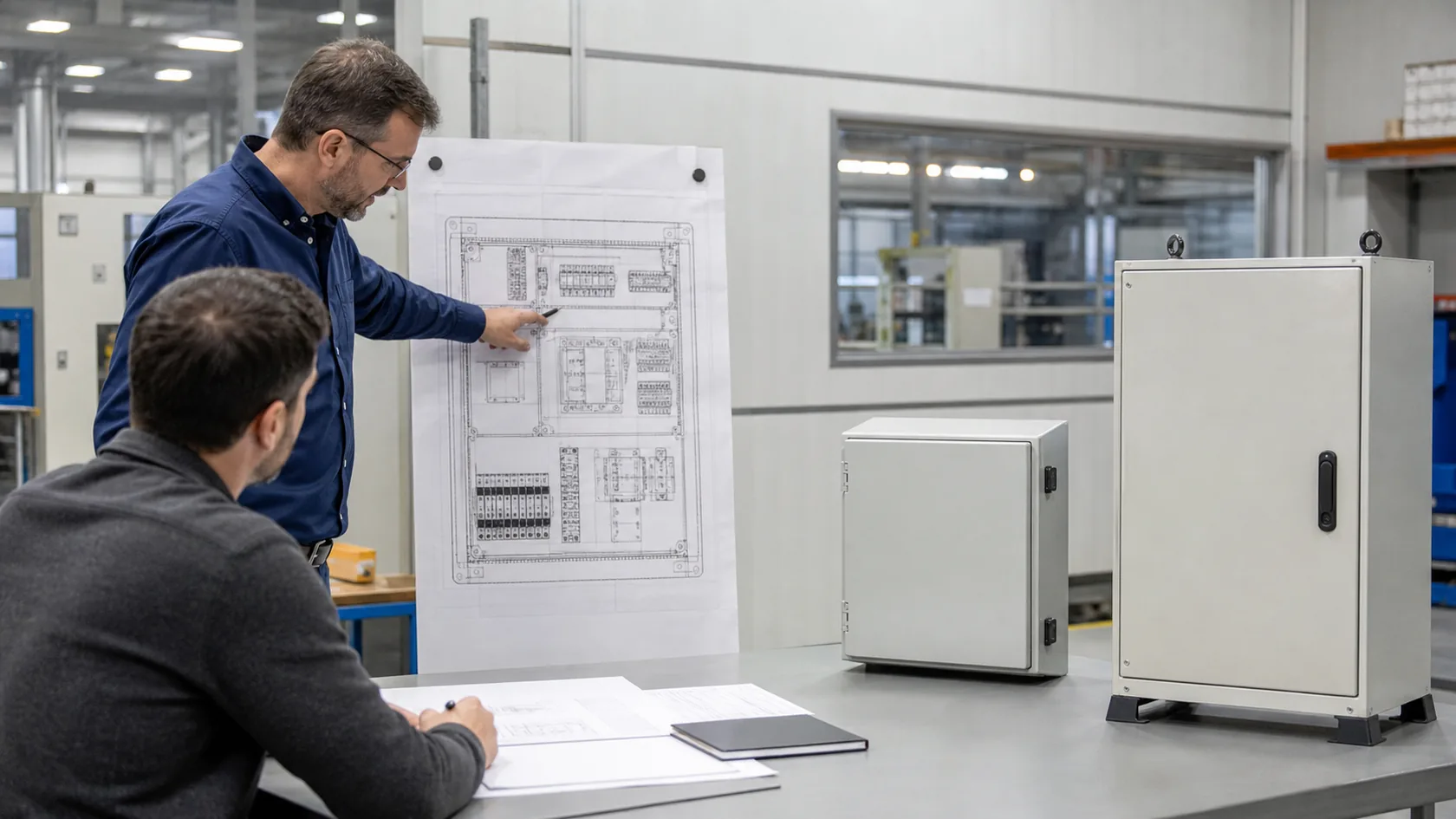
Before asking for a quote, I suggest answering these questions:
- What is the approximate loaded weight, not only the empty enclosure weight?
- What components will be installed, and how much free space should remain?
- Is the wall strong enough for the final load and vibration?
- Where will cables enter, and how large are they?
- Does the technician need front-only access or front-and-rear access?
- What environmental rating is needed?
- Will the system expand later?
- Is the installation indoor, outdoor, washdown, dusty, corrosive, or high vibration?
- Are there local code, UL, IEC, NEMA, or customer-specific requirements?
- How will the enclosure be packed, shipped, lifted, and installed?
Here is a simple decision guide:
| Project condition | Better starting point |
|---|---|
| Small local control panel | Wall mount |
| Limited floor space and strong wall | Wall mount |
| Weak wall or uncertain wall structure | Floor standing |
| Heavy transformers, drives, or large back plate | Floor standing |
| Many large cables from floor trench | Floor standing |
| Simple front-only maintenance | Wall mount |
| Rear access or side access needed | Floor standing |
| Future expansion expected | Floor standing |
| Low-cost compact outdoor junction box | Wall mount |
| Large automation or power cabinet | Floor standing |
These are starting points, not fixed rules. A custom wall-mounted enclosure can be reinforced. A floor-standing cabinet can be made compact. A hybrid solution, such as a pedestal, frame, pole mount, or wall bracket with support legs, may also solve the problem.
My practical check is this: if the enclosure choice makes installation, wiring, sealing, and maintenance easier, it is probably moving in the right direction. If it only looks good on the first quote, I slow down and ask more questions.
For custom projects, sending a drawing, component list, installation photo, or cable entry sketch helps the supplier catch problems early.
Conclusion
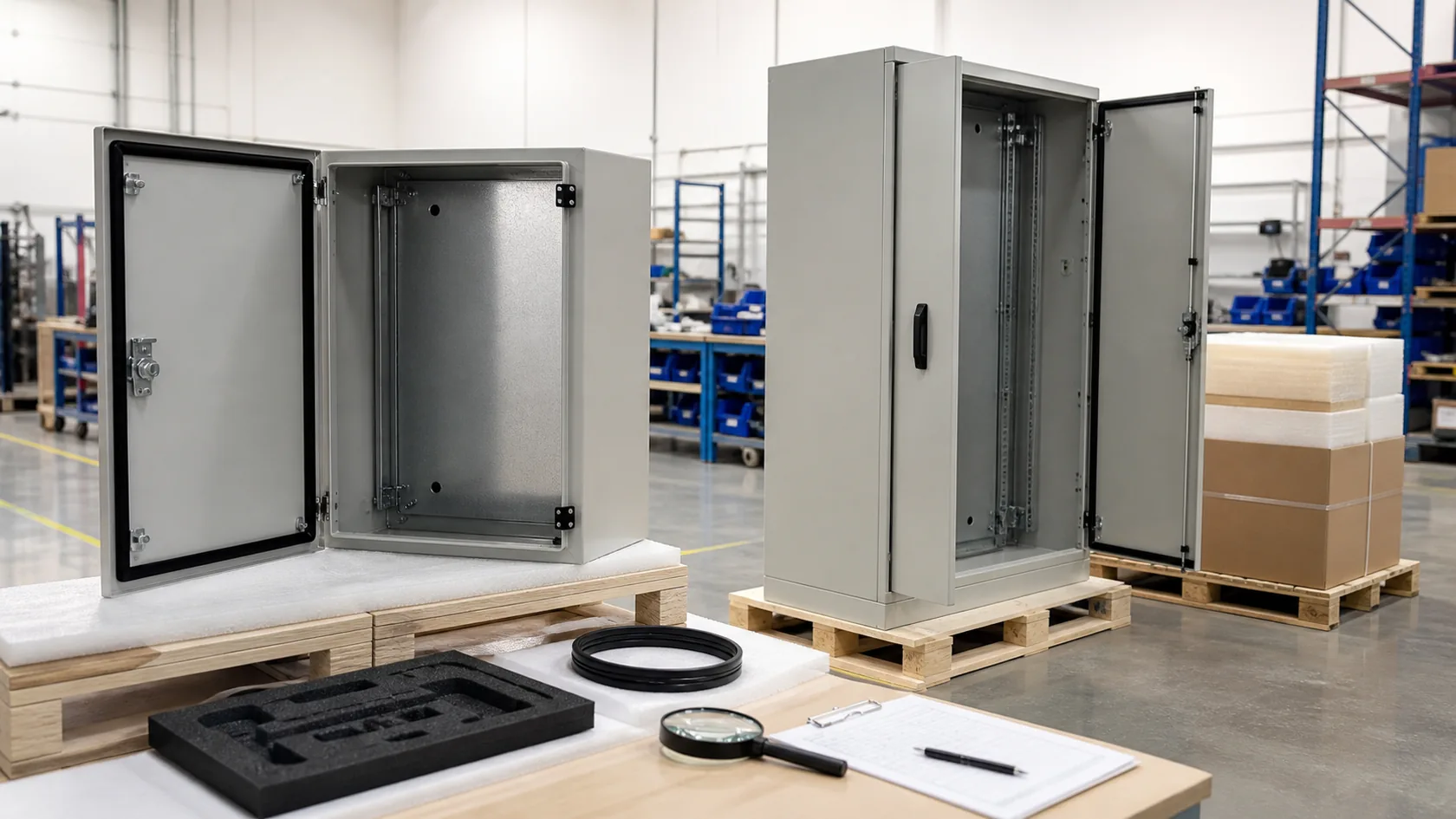
Wall mount and floor standing electrical enclosures both have a place. Wall mount is compact, efficient, and often the best answer for smaller systems. Floor standing is stronger for heavy, complex, expandable, or service-intensive projects.
The mistake is treating the choice as a simple size comparison. The real decision includes wall strength, loaded weight, cable routing, heat, rating, service space, future changes, shipping, and installation cost.
This is why I prefer to review the complete working condition before recommending a form factor. In our factory work, a good enclosure is not only a box that holds components. It is a small part of the whole project that must protect the equipment, help the installer, and make future maintenance less painful.
If you are choosing between a wall-mounted enclosure and a floor-standing cabinet for a custom project, send us the component list, rough layout, installation photos, or drawing. We can help review the mounting style, material, cutouts, gasket, finish, and manufacturability before the design becomes expensive to change.