Skip to content
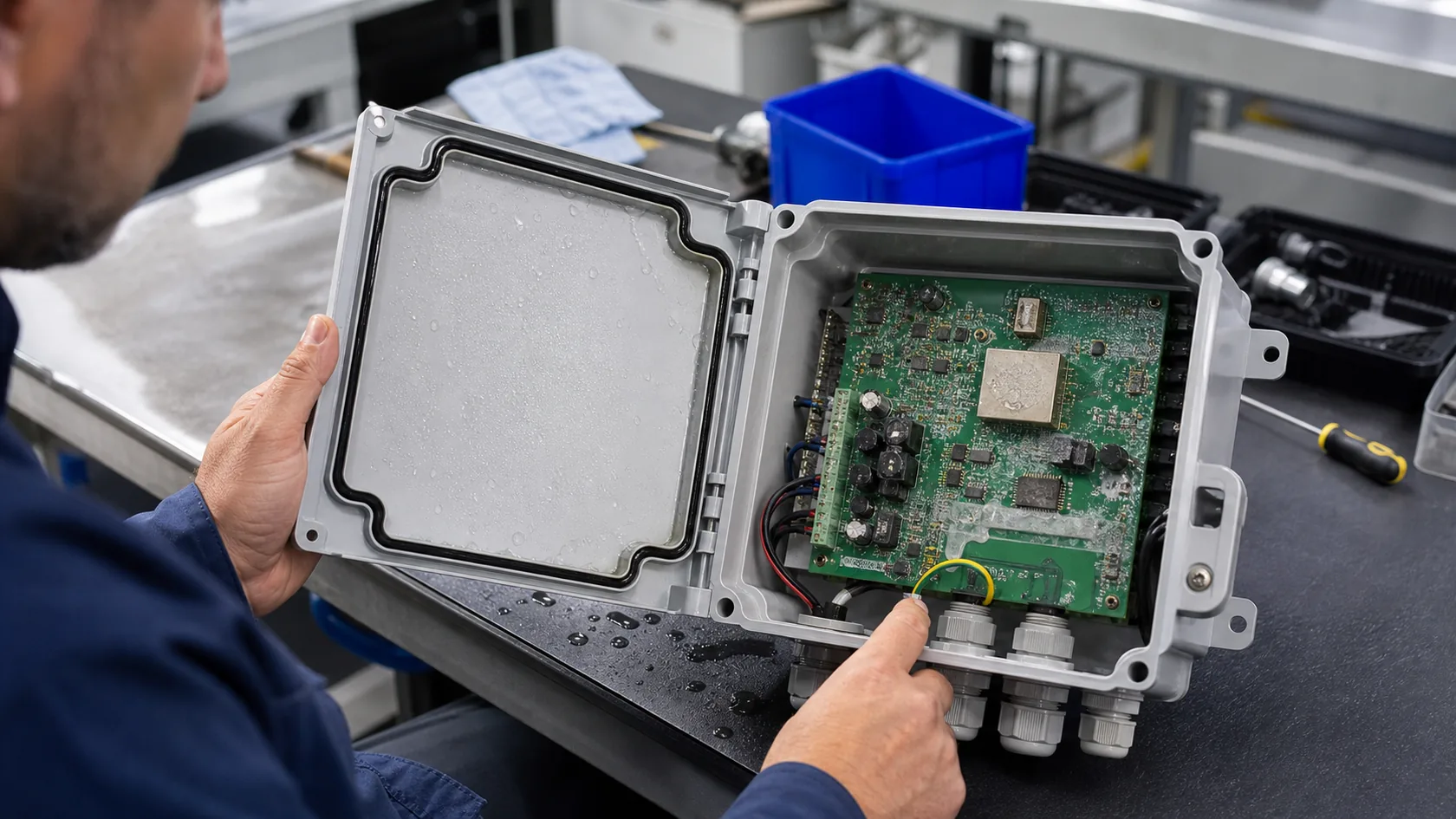
A buyer once sent me photos of a failed outdoor control box. From the outside, the box looked fine. The cover was not broken. The screws were still there. The supplier had sold it as waterproof.
Inside, the PCB told a different story.
There was corrosion near the terminals. A connector had turned green. The customer said, "But this was an IP-rated box." I understood his frustration, because many people buy outdoor enclosures with the same belief: if the box is waterproof, the electronics should be safe.
That belief is only half true.
An outdoor enclosure is not just a box. It is a small protection system. The enclosure body, gasket, cable glands, vents, screws, mounting direction, heat, and maintenance all work together. If one part is wrong, water or moisture may still win.
When I review an outdoor enclosure project, I do not only ask what IP rating the customer wants; I ask how cables enter, where the box will be mounted, how often it will be opened, and whether the electronics generate heat. Those answers often tell me more than the word "waterproof."
So let us talk about why waterproof outdoor boxes still destroy electronics, and how buyers can avoid this expensive mistake.
Waterproof Does Not Mean Dry Inside
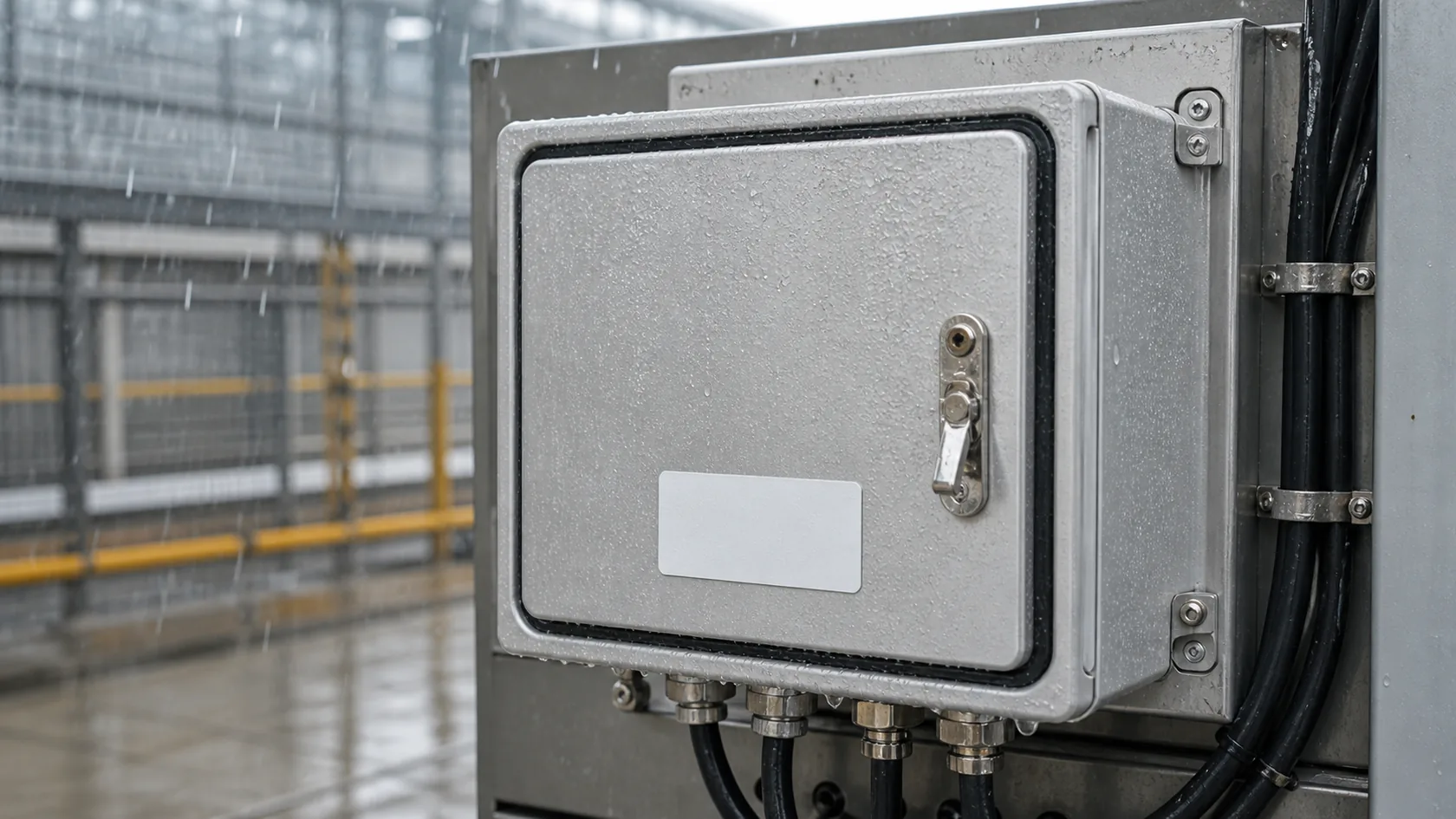
The word "waterproof" sounds simple. In real projects, it is not simple.
An IP rating such as IP65, IP66, or IP67 mainly describes protection against solid objects and liquid water under defined test conditions. The IEC 60529 IP Code is useful, but it does not mean the enclosure is magic. It does not promise that the inside will stay dry forever in every installation.
NEMA ratings are also useful, especially for North American projects. The NEMA enclosure guidance explains enclosure types for different environmental conditions. Still, the final protection depends on the complete installed assembly.
The rating is for a tested condition
Most tests are controlled. Real outdoor use is not controlled.
Rain may hit from one direction in the morning and another direction in the afternoon. A box may sit under strong sun, then cool quickly at night. A technician may open it for service with dirty hands. A cable installer may drill an extra hole on site.
The label on the box cannot control these details.
The weakest part sets the real protection
A good enclosure body can lose its protection because of one weak accessory.
| Part | Common mistake | Result |
|---|---|---|
| Cable gland | Wrong size for cable diameter | Poor sealing around cable jacket |
| Gasket | Uneven compression | Small leakage path |
| Vent | Not matched to rating | Lower real protection |
| Connector | Lower IP rating than enclosure | Water enters through connector |
| Field hole | Drilled without sealing plan | Rating is no longer meaningful |
In factory work, I judge a waterproof design by the lowest-rated and worst-installed part, not by the nicest number printed on the enclosure drawing. A beautiful box with a cheap wrong gland is still a risky box.
Once buyers understand this, the next problem becomes easier to see: sometimes water does not enter as rain. It forms inside.
Condensation Is the Quiet Failure
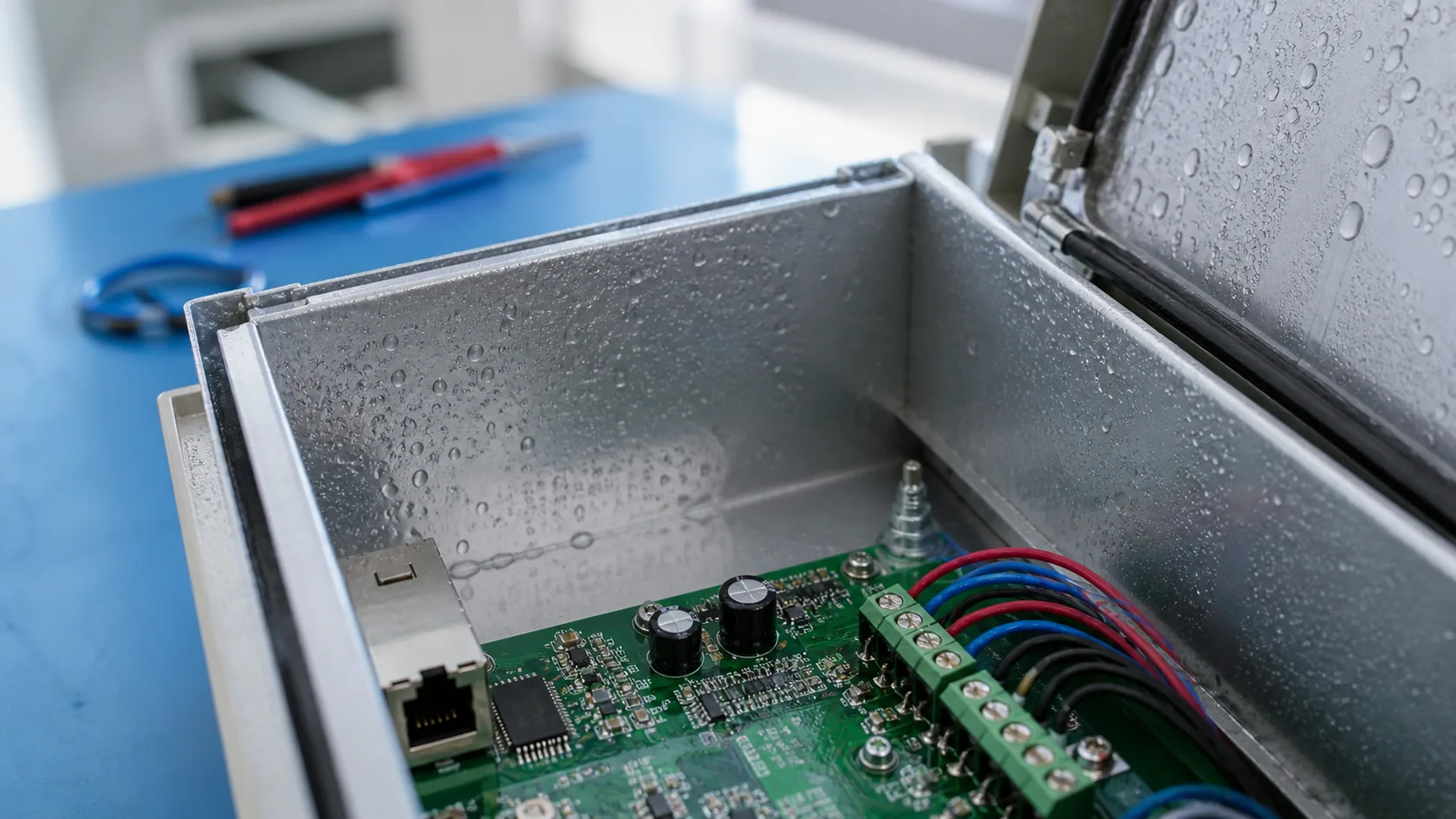
Many failed outdoor boxes do not fail because rain poured in. They fail because moisture was already inside the air, and then the temperature changed.
Warm air can hold more water vapor than cold air. When air cools to the dew point, water vapor becomes liquid droplets. In an outdoor enclosure, this can happen on the inner wall, PCB surface, terminals, screws, or metal mounting plate.
That is why a sealed box may still look wet inside.
The day-night cycle creates internal rain
Here is a common outdoor pattern:
- Sun heats the enclosure during the day.
- Electronics add more heat inside.
- Warm air carries moisture.
- Temperature drops at night.
- Moisture condenses on cooler surfaces.
- The cycle repeats.
This does not look dramatic at first. It may start as a thin film. Then terminals corrode. Then resistance changes. Then the product fails in a way that is hard to explain to the end user.
Sealing can trap the problem
More sealing is not always the full answer. A tighter enclosure can reduce liquid water entry, but it can also trap humid air if the moisture source is already inside. That moisture may come from assembly, packaging, cable ends, service work, or slow vapor movement through materials and interfaces.
I usually treat condensation as a system risk, not a simple leak complaint, because replacing one gasket may not fix a box that has poor heat control, no pressure balance, and wet cable routing. The trade-off is uncomfortable, but honest: sealing matters, and moisture management also matters.
After condensation, the next place I check is usually the cable entry area.
Cable Entries Often Decide the Result
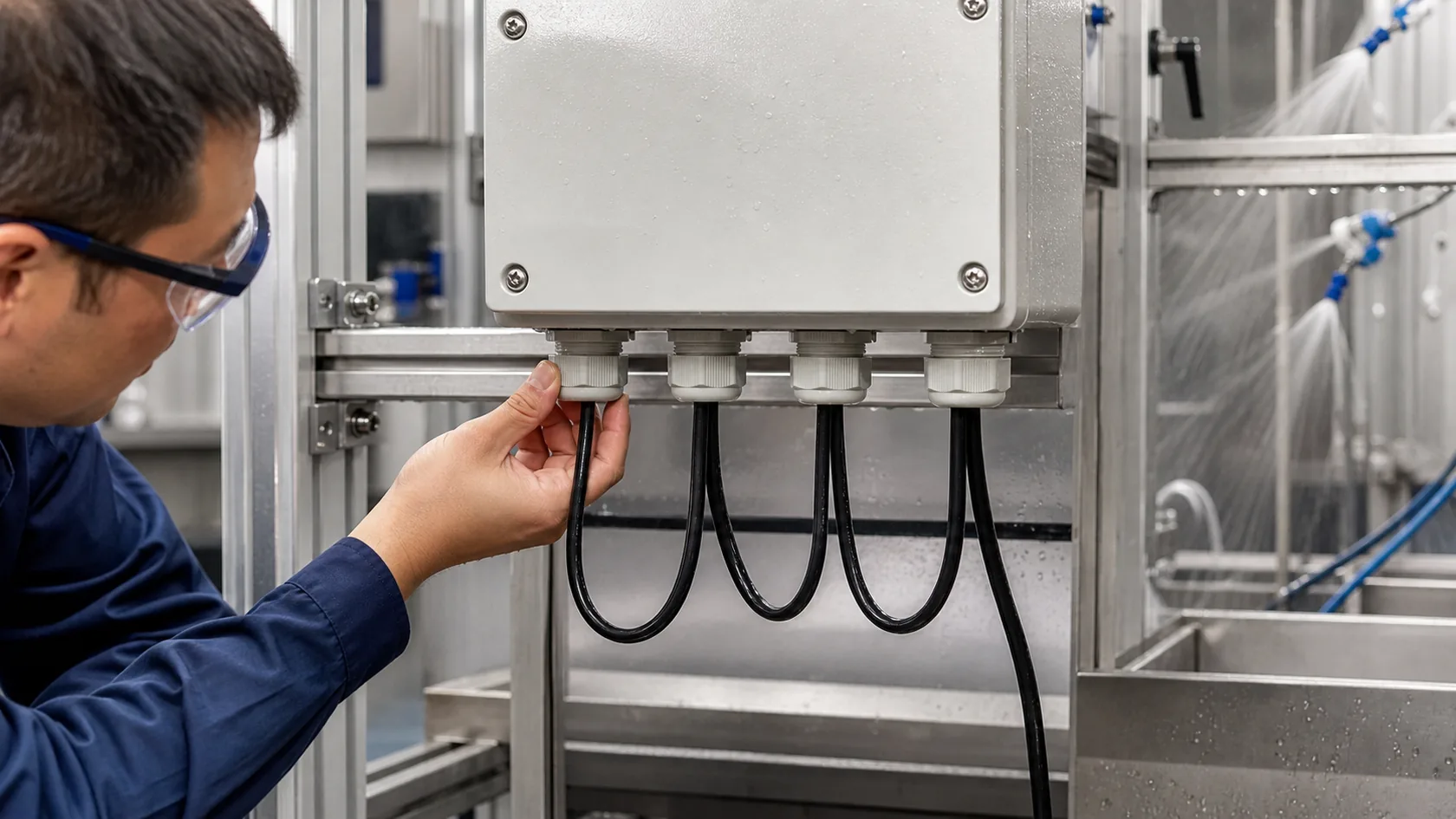
Cable entries are small, but they can decide the life of the whole product.
The enclosure body may be well made. The gasket may be clean. The coating may be thick enough. Then a cable enters from the wrong direction, and rain follows the cable jacket straight to the gland.
Water is patient. It does not need a large opening.
Cable gland size must match the real cable
A cable gland only seals well within its designed cable diameter range. If the cable is too small, the rubber insert cannot compress enough. If the cable is too large, the gland may deform or be installed with too much stress.
For custom enclosure projects, buyers should send actual cable outer diameter, connector size, bend radius, and entry direction before production. A drawing with "M20 gland" is not enough.
Cable direction matters
Top entry can work, but it needs more protection. Without a drip loop or cover, water can run down the cable and sit near the gland.
Bottom entry is often safer for rain, but it is not perfect. If the box is mounted close to wet ground, splash water, standing water, or underground conduit moisture can still create problems.
| Entry direction | Benefit | Risk to check |
|---|---|---|
| Top entry | Short wiring path | Rain follows cable downward |
| Bottom entry | Better for gravity and drip loops | Ground moisture and service access |
| Side entry | Flexible layout | Needs downward cable bend or shield |
| Back entry | Clean front appearance | Wall sealing and hidden water path |
When I check cable entries, I imagine where water will travel after ten hours of rain, not where the cable looks clean in a 2D drawing. This small habit prevents many arguments later.
Cable entry is only one interface. The cover, screws, gasket, latch, and accessories can create the next weak point.
Gaskets, Screws, and Accessories Can Lower the Rating
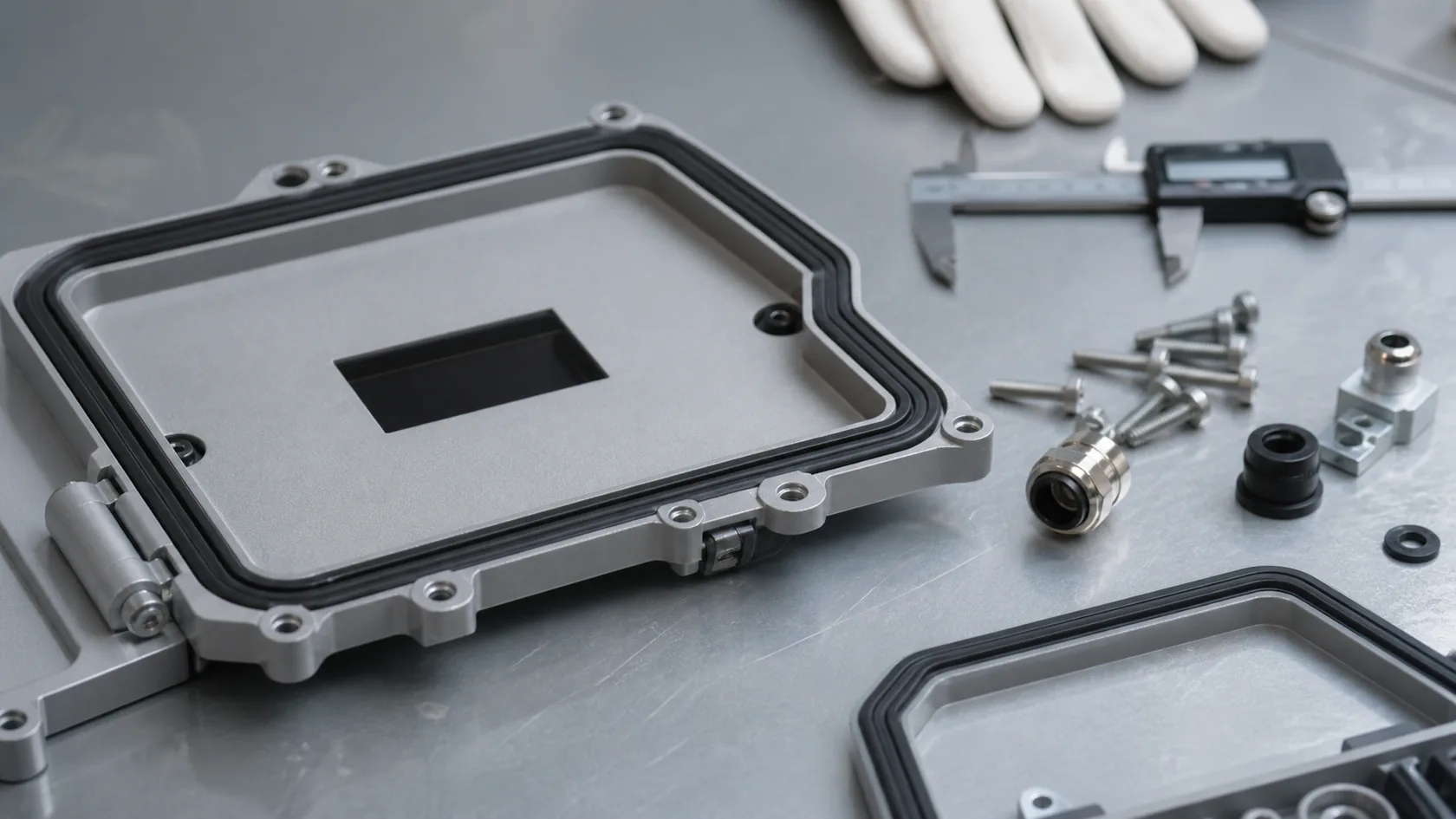
A gasket looks simple. In production, it is not simple.
The gasket needs the right material, shape, compression, groove design, and long-term recovery. If the cover is uneven, the gasket may press too much in one area and too little in another area.
Compression must be even
Under-tightened screws may not compress the gasket enough. Over-tightened screws may damage the gasket or bend the cover. Both can cause failure.
This is common when buyers use a standard plastic box for electronics that need frequent service. The first installation may be fine. After several openings, the gasket gets dirty, twisted, or tired.
Accessories must match the enclosure goal
An outdoor box often needs more than a cover and base. It may need a display window, switch, antenna, connector, vent, mounting bracket, or grounding point.
Each accessory should match the required protection level. The UL enclosure certification page is a useful reminder that rated enclosures and rated accessories both matter. A high-rated enclosure with a weak accessory is not a high-rated system.
Materials age outside
Outdoor use adds UV, heat, cold, dust, salt, oil, and cleaning chemicals. Plastic may become brittle. Rubber may lose elasticity. Screws may rust. Aluminum may need the right surface treatment. Stainless steel may be better in coastal areas, but it costs more and is harder to machine.
For custom projects, I prefer to discuss gasket material and service life early, because the cheapest gasket can make the most expensive electronics look unreliable. The risk is not only water entry; it is warranty cost, field service, and customer trust.
Even when every seal looks correct, heat and pressure cycles still need a design plan.
Heat, Pressure, and Venting Need a Plan
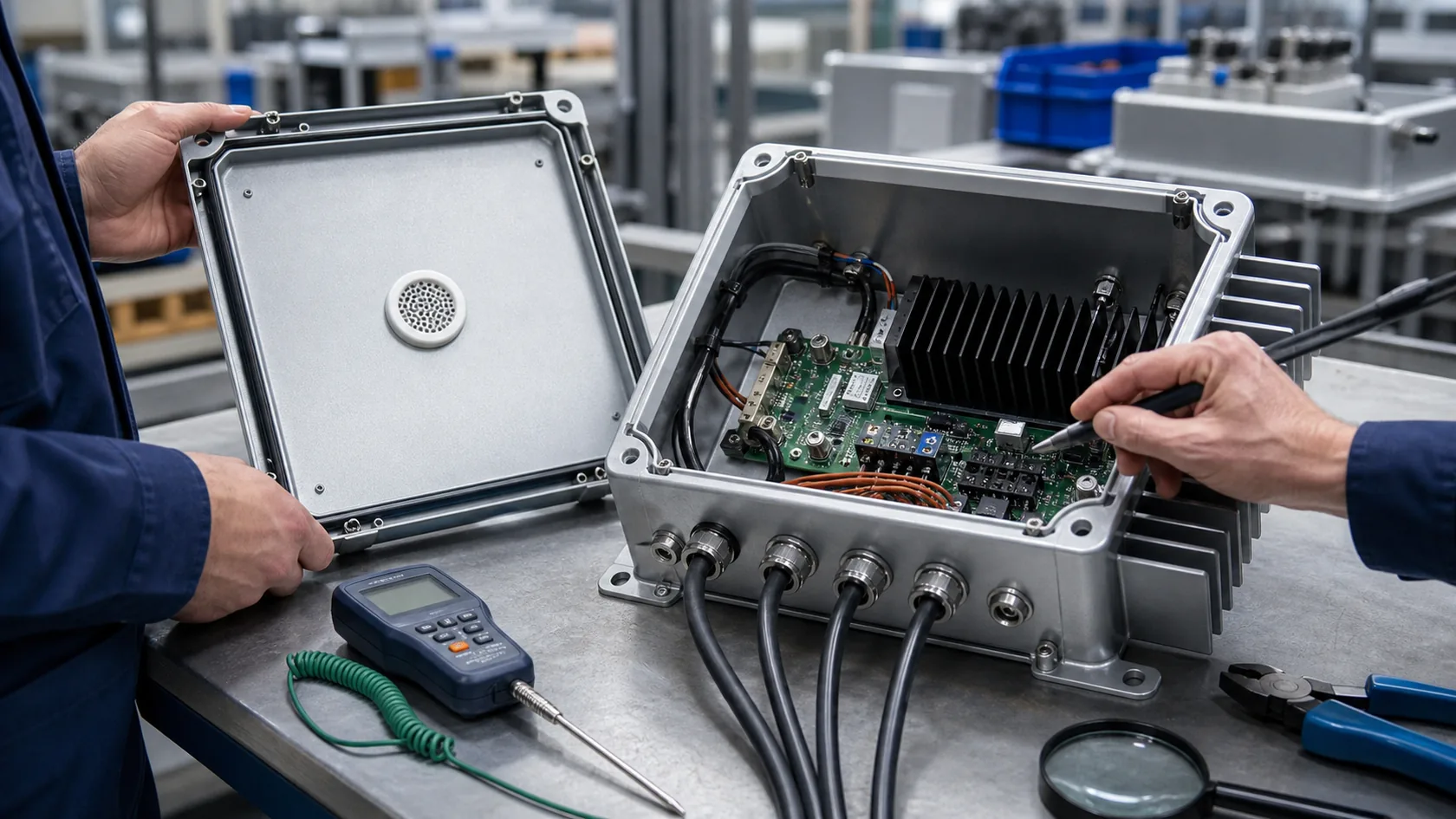
Outdoor electronics create heat. Sunlight adds more heat. Then rain or night air cools the box quickly.
This creates pressure changes inside the enclosure. If the box cannot breathe in a controlled way, it may breathe through the weakest point: gasket edge, cable gland, connector, or plastic joint.
Pressure stress is real
Repeated pressure changes can stress seals over time. This is one reason some outdoor designs use a protective vent. A proper vent can help equalize pressure while blocking liquid water and dust under its rated conditions.
But a vent is not a decoration. It must be selected by airflow need, IP target, enclosure volume, location, and exposure. It must also be installed correctly.
Venting does not replace good sealing
Some buyers hear "vent" and think it means a hole in the waterproof box. I understand that reaction. A bad vent or wrong vent can create a problem.
A good membrane vent can reduce pressure stress and help moisture exchange. It cannot fix a badly matched cable gland, a damaged gasket, or a box mounted where water sits on the cover all day.
Heat needs its own path
If the electronics produce heat, the enclosure material and structure matter.
| Heat condition | Possible design choice | Caution |
|---|---|---|
| Low heat, mild climate | Sealed plastic enclosure | Watch condensation |
| Medium heat | Larger enclosure or aluminum body | Check cost and space |
| High heat | Heat sink, metal plate, thermal path | Avoid hot spots near gasket |
| Humid outdoor site | Rated vent plus sealing plan | Do not use random holes |
| Coastal or chemical site | Better material and coating | Check corrosion, screws, brackets |
My own rule is simple: if heat, humidity, and sealing are all strong requirements, we cannot solve the project with one word like IP66. We need a real design conversation.
That conversation should happen before production, not after a failed field installation.
Factory Checks I Prefer Before Production
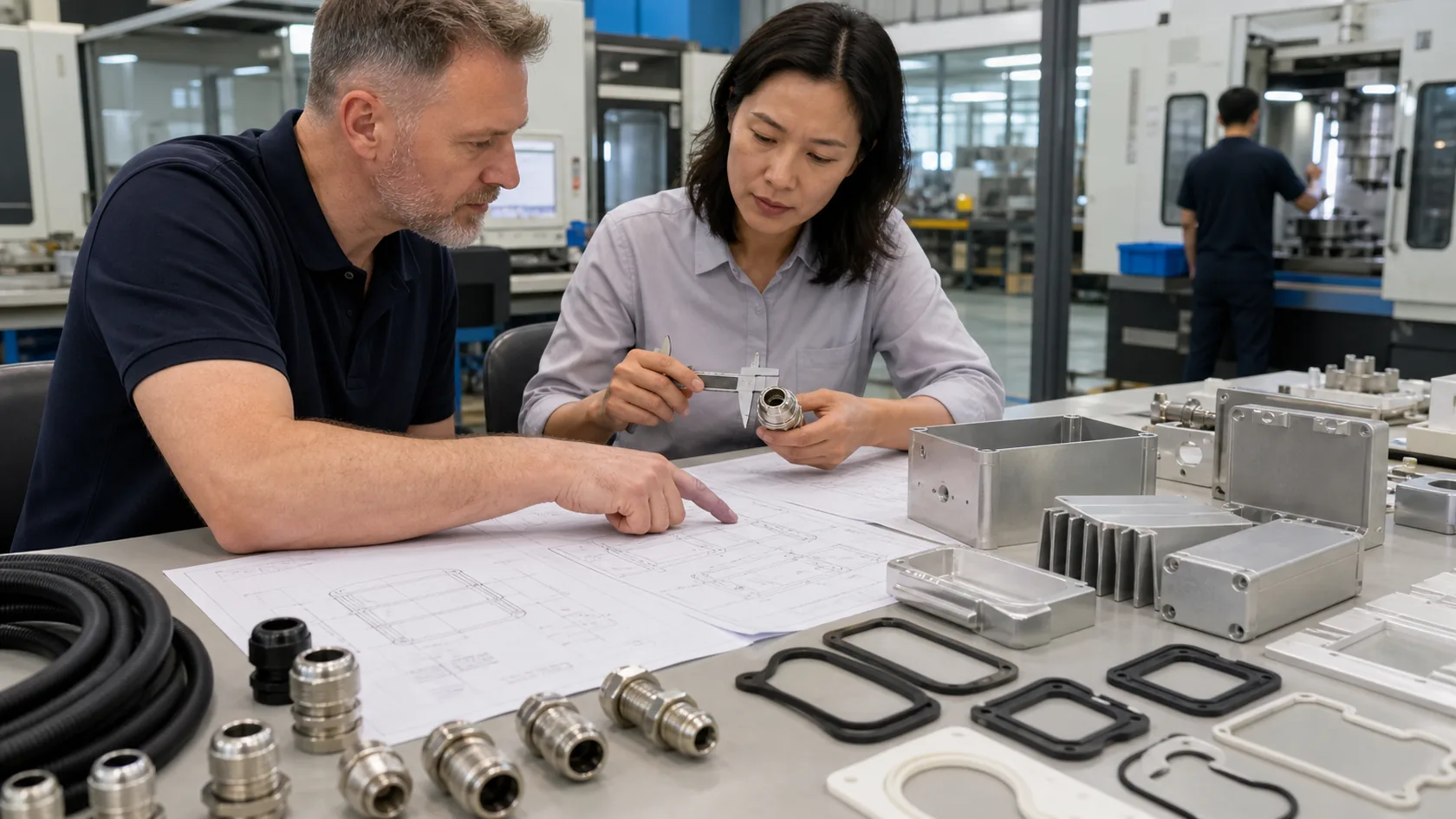
For a custom outdoor enclosure, I like to slow down before cutting metal or opening a mold. A few careful questions at the beginning can save weeks later.
Questions I ask buyers
- Where will the enclosure be installed?
- Will rain hit it directly?
- Is the site coastal, dusty, hot, cold, or chemical?
- What are the cable outer diameters?
- Will cables enter from top, bottom, side, or back?
- How often will the box be opened for service?
- Does the PCB or power supply generate heat?
- Is there a required IP, NEMA, UL, or customer test standard?
- Will the enclosure need logo printing, engraving, labels, or custom packaging?
These questions are not paperwork. They change the design.
Details I check in drawings
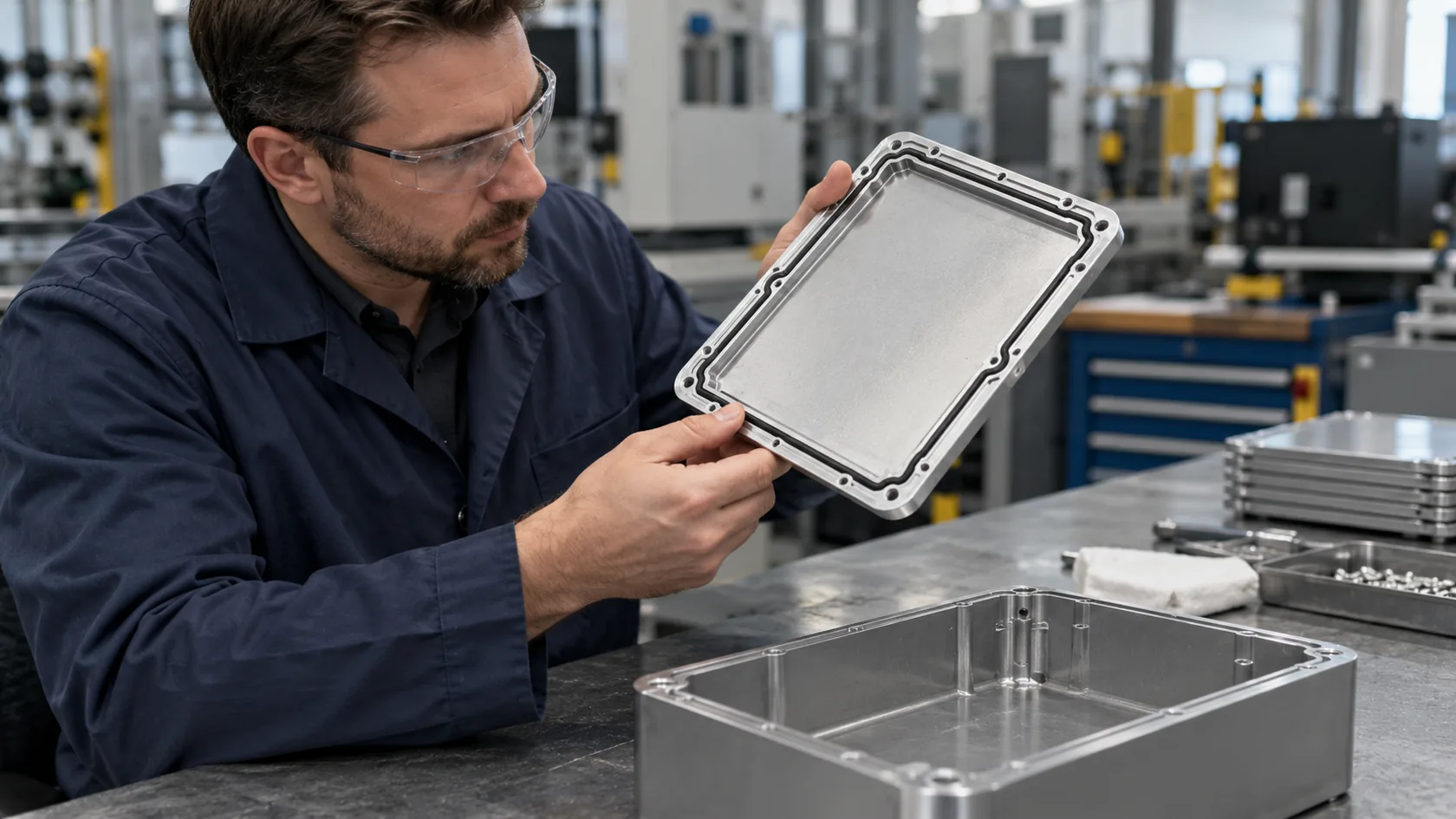
I check the gland plate thickness, gasket groove, screw spacing, cover flatness, cable bend space, drainage direction, wall bracket position, vent location, and whether the internal parts block assembly.
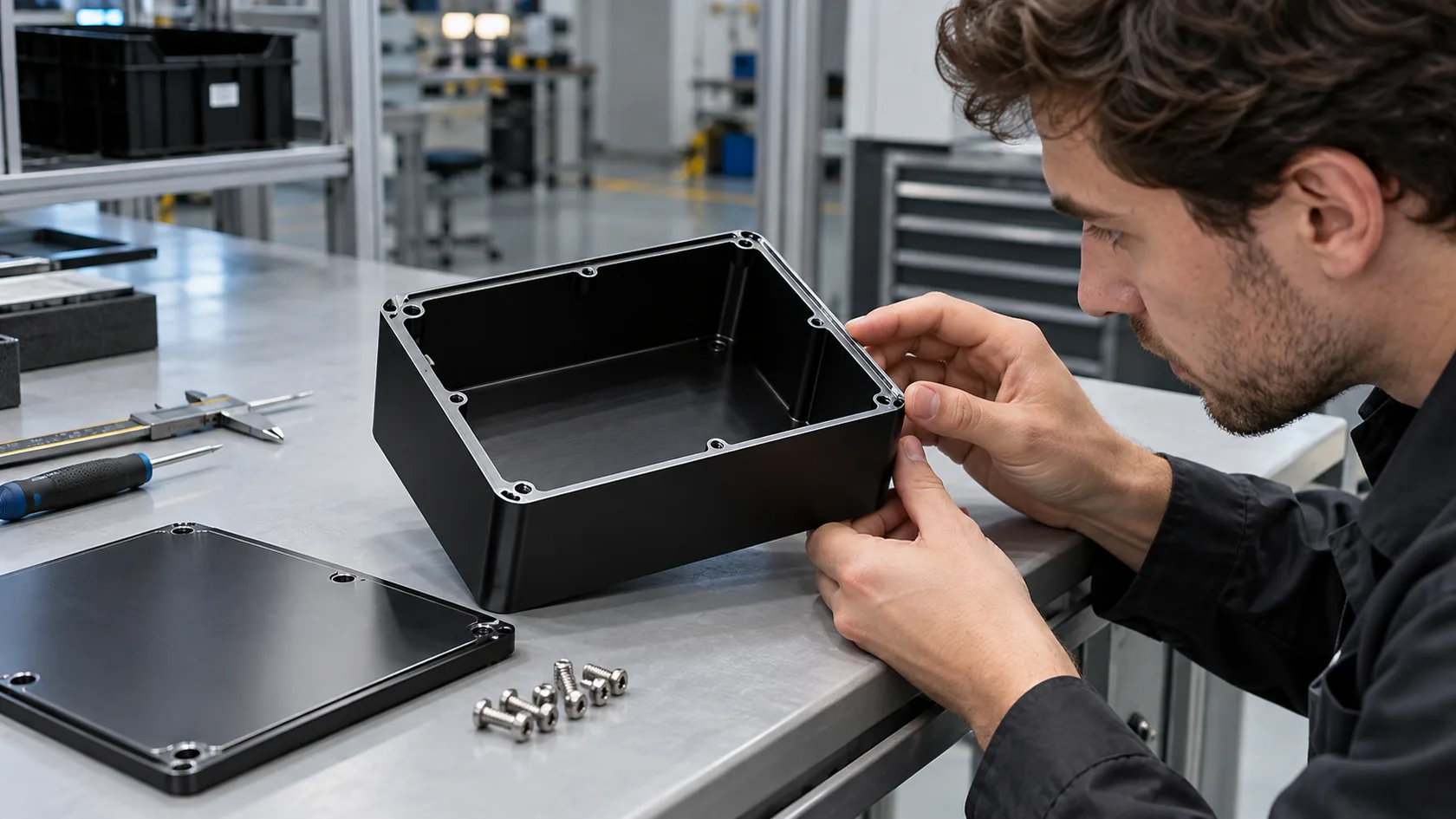
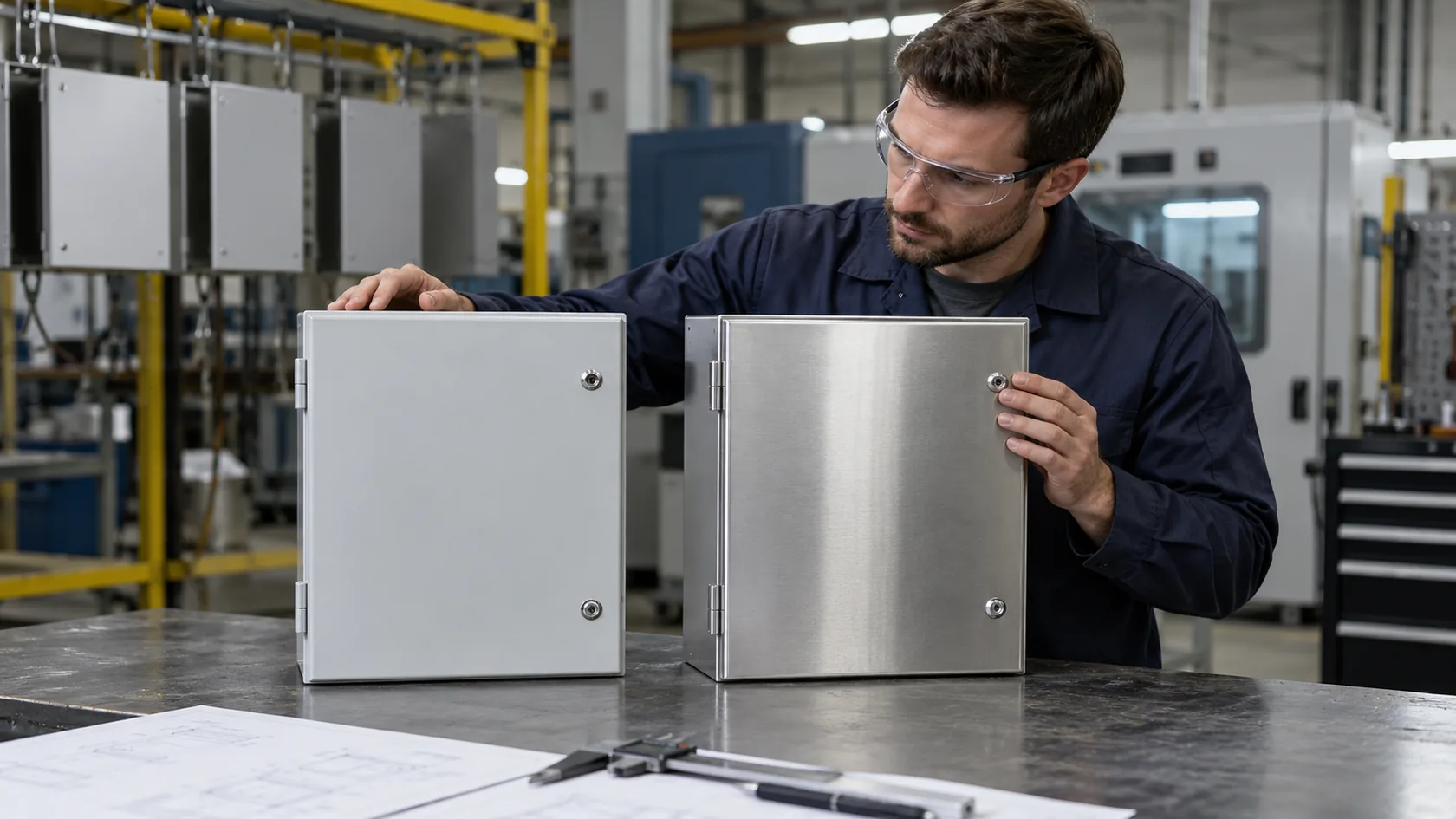
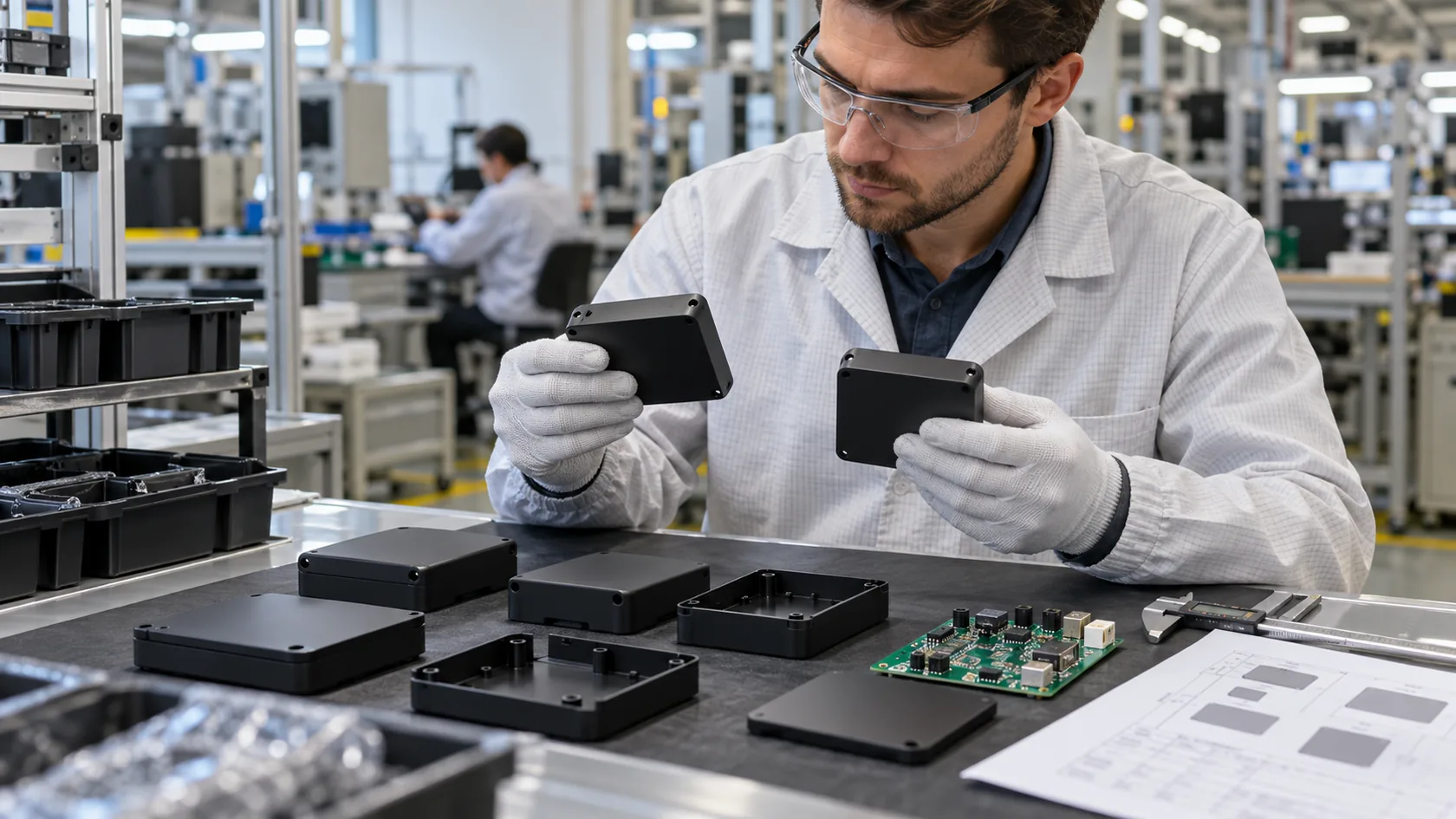
For aluminum enclosures, I also check surface finish, grounding, machining tolerance, and whether powder coating or anodizing will affect assembly. For plastic enclosures, I pay more attention to rib strength, insert position, UV exposure, and gasket seat design.
Prototype testing helps, but use real conditions
A prototype test should not only spray water on a perfect empty box. It should include the actual cable glands, cables, accessories, mounting direction, and internal heat if possible.
In our factory, I would rather find a cable entry problem during sample review than let the buyer discover it after the enclosure has electronics, branding, and customer deadlines attached. The sample stage is cheaper than the apology stage.
This is the practical reason MaidaTech talks about custom details so much. The details are the product.
Conclusion
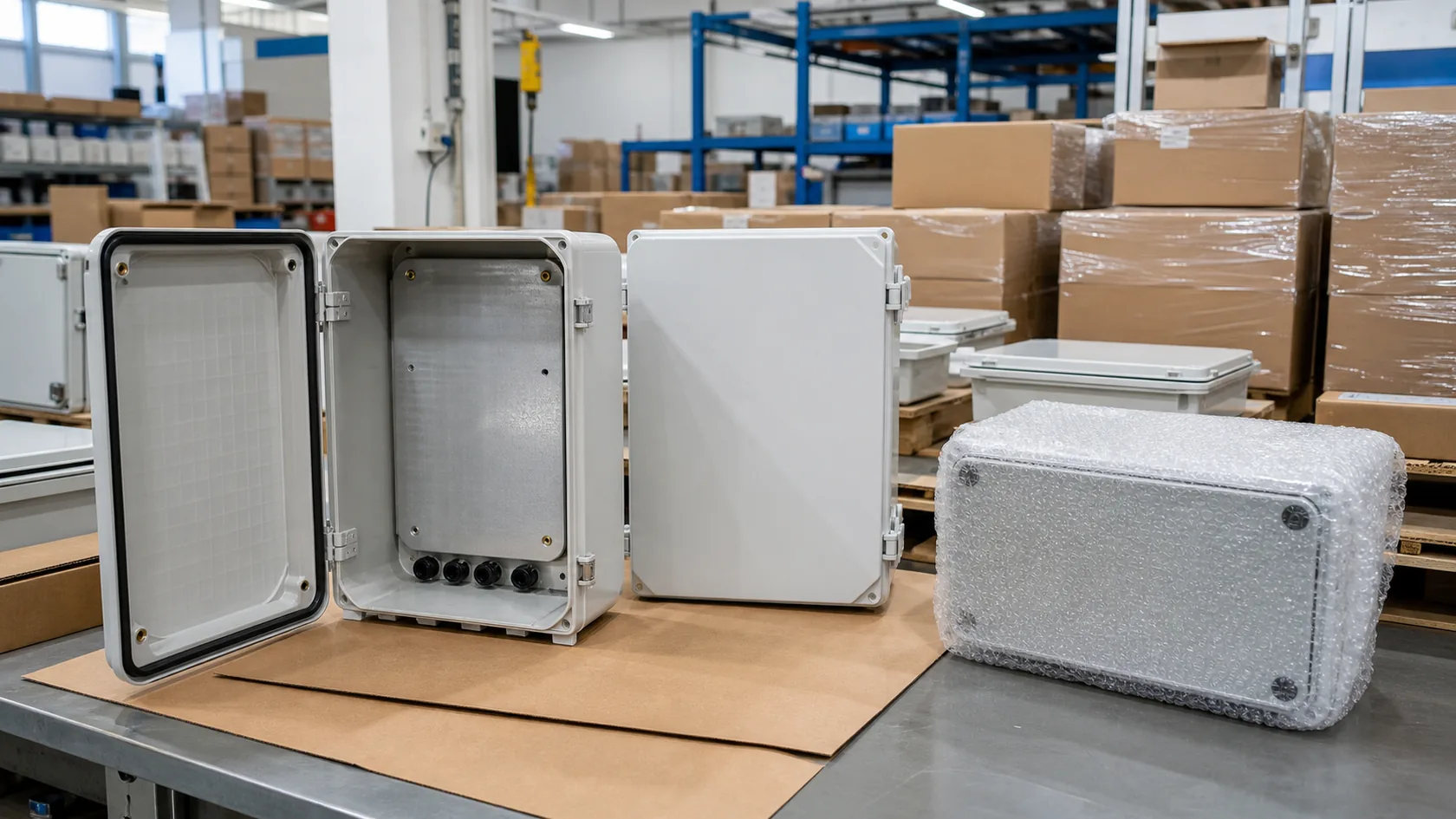
Waterproof outdoor boxes still destroy electronics because "waterproof" is often treated as a label instead of a system.
The IP or NEMA rating matters. Good materials matter. A strong enclosure body matters. But the real outdoor result also depends on condensation, cable routing, gasket compression, accessory ratings, pressure balance, heat, installation, and service.
That is why I do not like selling outdoor enclosures with only a quick "yes, waterproof" answer. It sounds easy, but it can create trouble for the buyer later.
From my experience, a reliable outdoor enclosure is built by asking practical questions before production and checking the weak points that rain, humidity, heat, and installers will test in real life. This is slower at the beginning, but it is faster than repairing failed electronics in the field.
If you need a custom outdoor enclosure for electronics, MaidaTech can help review the material, cable entry, gasket, venting, finish, logo, packaging, and production details before the order moves forward. A good box should protect your product after it leaves the factory, not only look waterproof on the quotation sheet.