Skip to content
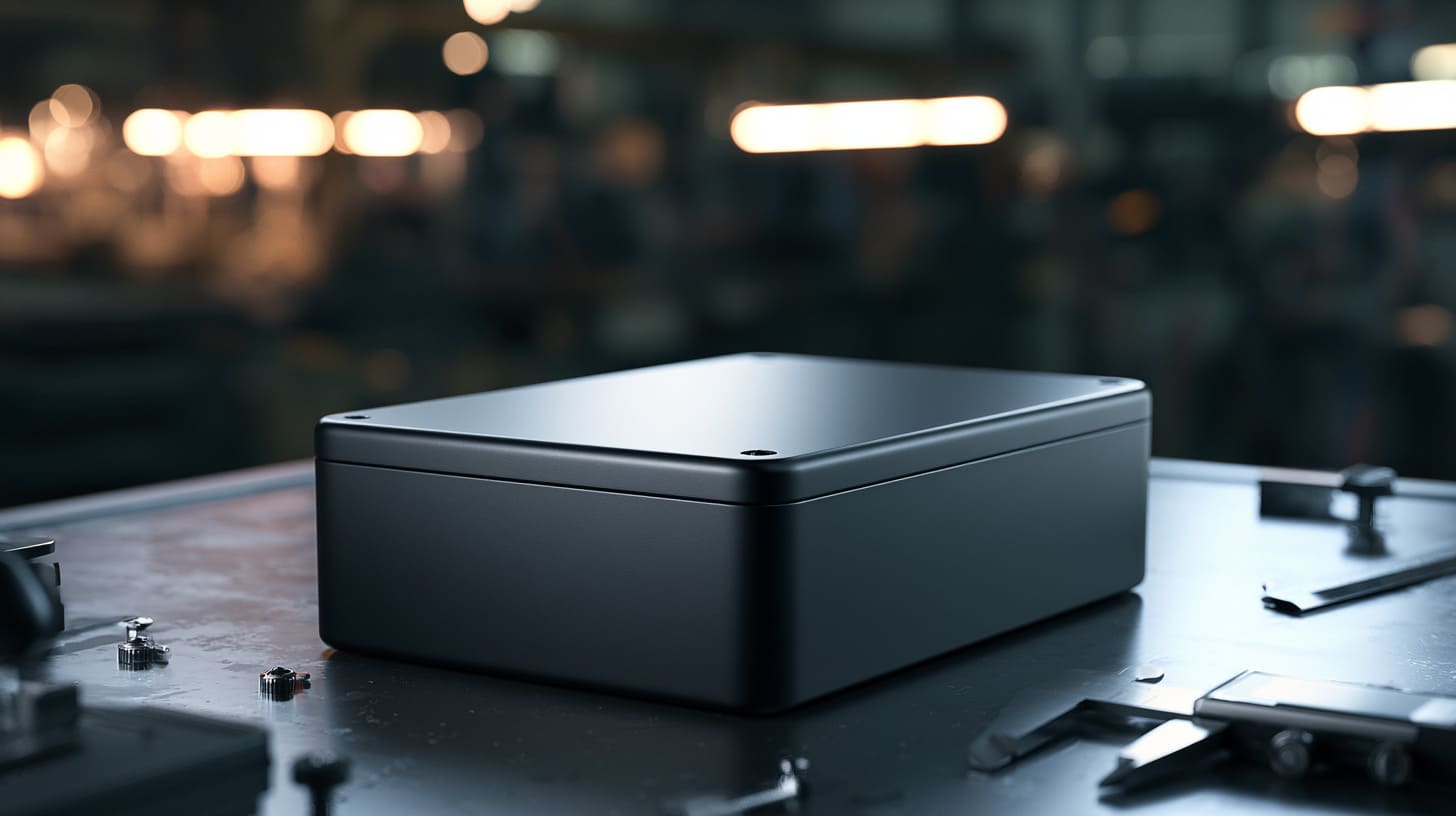
A buyer once sent me two enclosure samples on the same day.
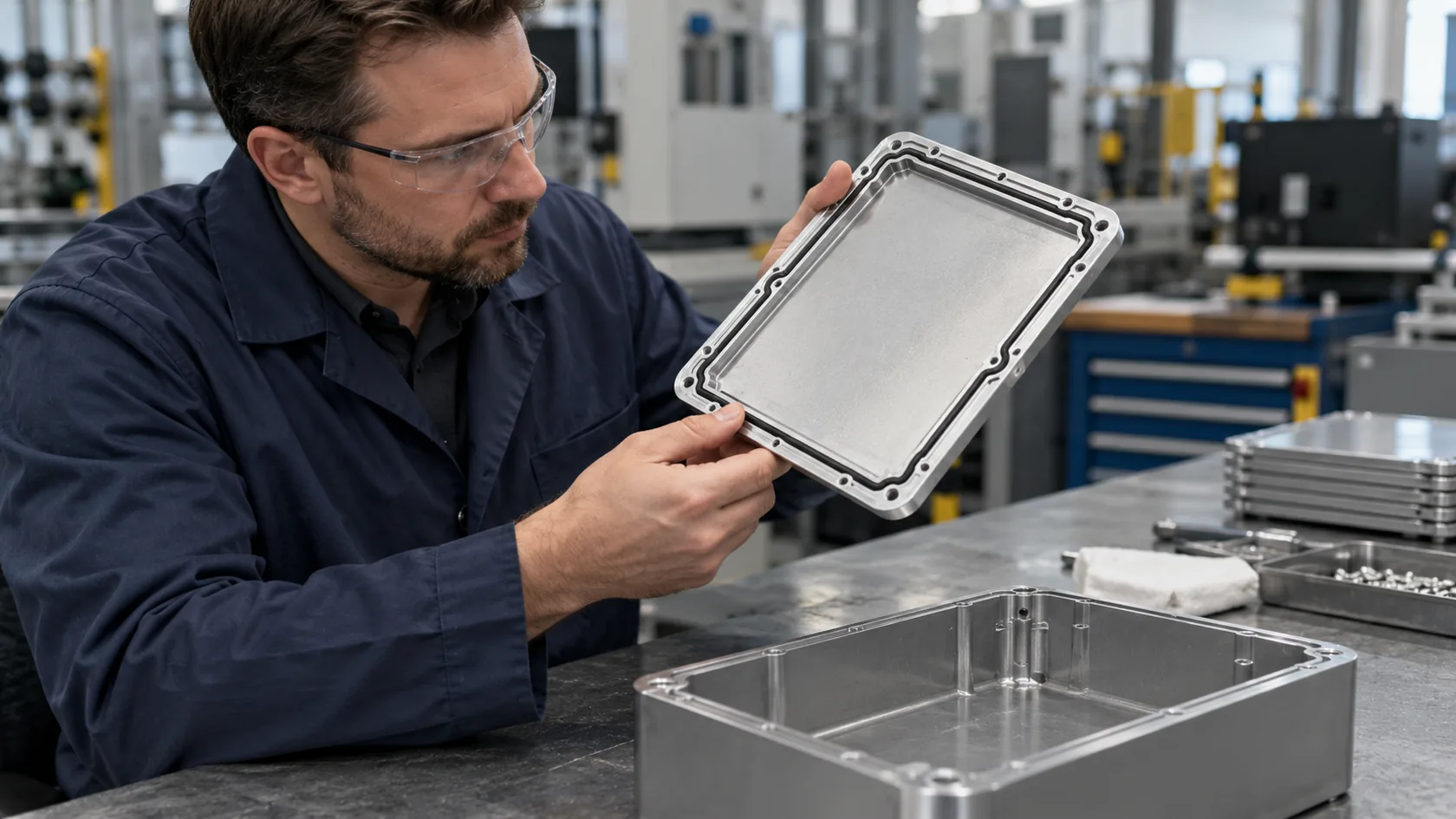
One sample looked clean, solid, and ready for the market. The surface was smooth. The color felt stable. The edges looked protected. Even before I opened the enclosure, I already had one feeling: this product was ready to be sold.
The other sample had the same structure. The same metal thickness. Almost the same design.
But the finish told another story.
There were small scratches near the screw holes. The color looked a little uneven near the bent corners. The surface did not feel “wrong,” but it also did not give me confidence. It felt like a product that might create problems after shipping, after assembly, or after the first customer complaint.
That is when I often tell customers: surface finish is not decoration only. It is part of the product.
For high-volume OEM production, this becomes even more important. A nice sample is not enough. The real question is simple:
Can the factory repeat the same finish on 500 pieces, 2,000 pieces, or 10,000 pieces?
Powder coating can be a very practical answer for many OEM enclosure projects. I use the word “can” because I do not think powder coating is always the best choice. Anodizing, liquid painting, e-coating, and other surface treatments all have their place.
But when the project needs stable quality, flexible colors, strong protection, controlled cost, and repeatable production, powder coating often becomes one of the smartest choices.
For custom aluminum enclosures, sheet metal enclosures, control boxes, outdoor device housings, and branded OEM products, I see powder coating used again and again. Not because it sounds fancy. It does not. It is actually very practical.
And in OEM manufacturing, practical is powerful.
For me, the first question is never “Which finish looks best?” but “Which finish can survive the whole project, from production line to customer hand?”
In this article, I will share how I think about powder coating from a factory and OEM production angle. I will also compare it with anodizing and liquid painting, and show where it works well, where it does not, and what buyers should check before mass production.
Now let’s start with the basic thing many people overlook.
The enclosure is quiet. It does not talk. But its surface speaks before your sales team does.
Why Does Surface Finish Matter So Much in OEM Production?
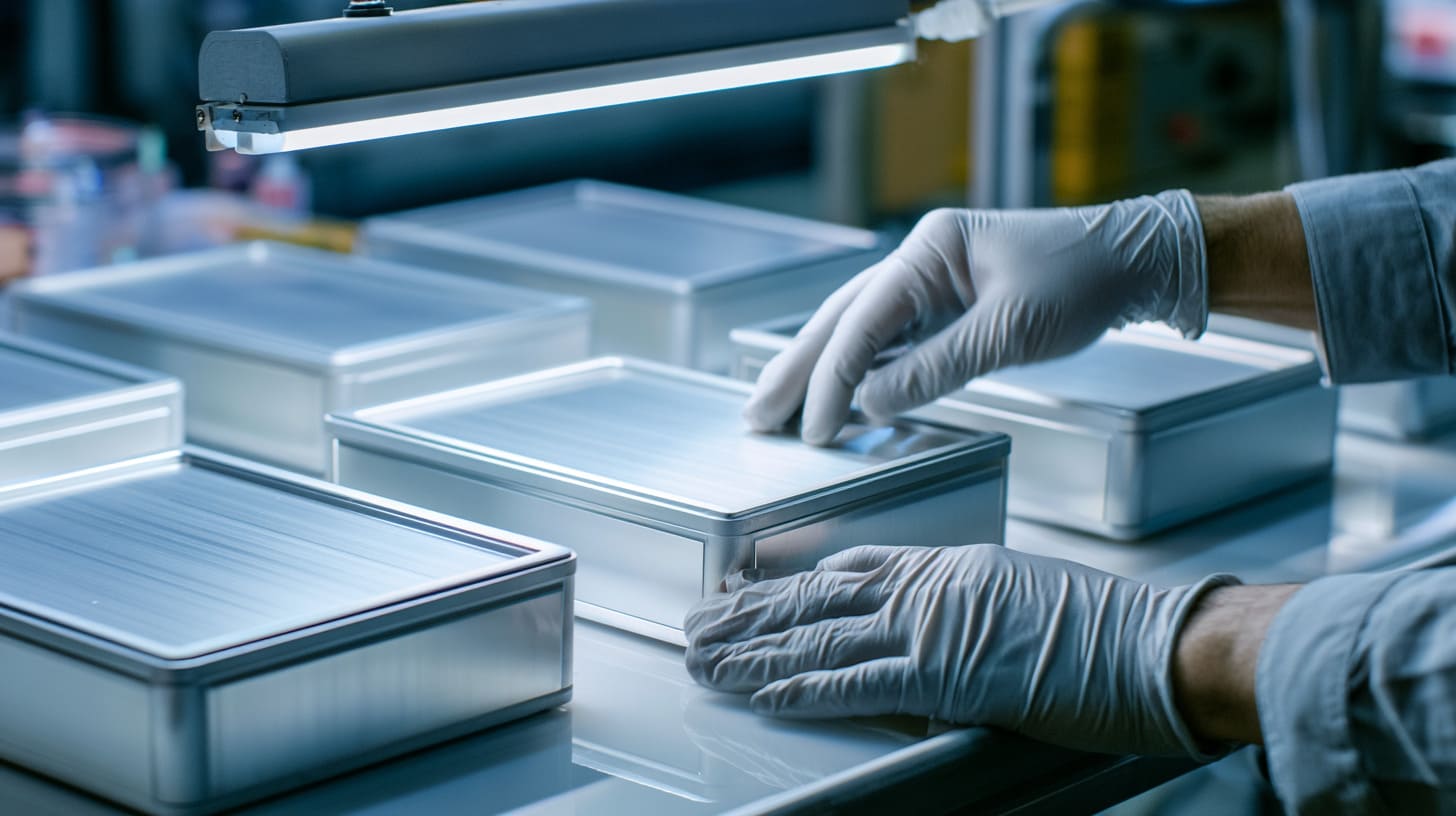
Many people think surface finish is the last step.
I understand why. In drawings, the finish is often written near the bottom. In quotation talks, buyers often ask about size, material, thickness, and price first. Surface finish comes later.
But in real production, the finish is not a small ending detail. It affects the whole product feeling.
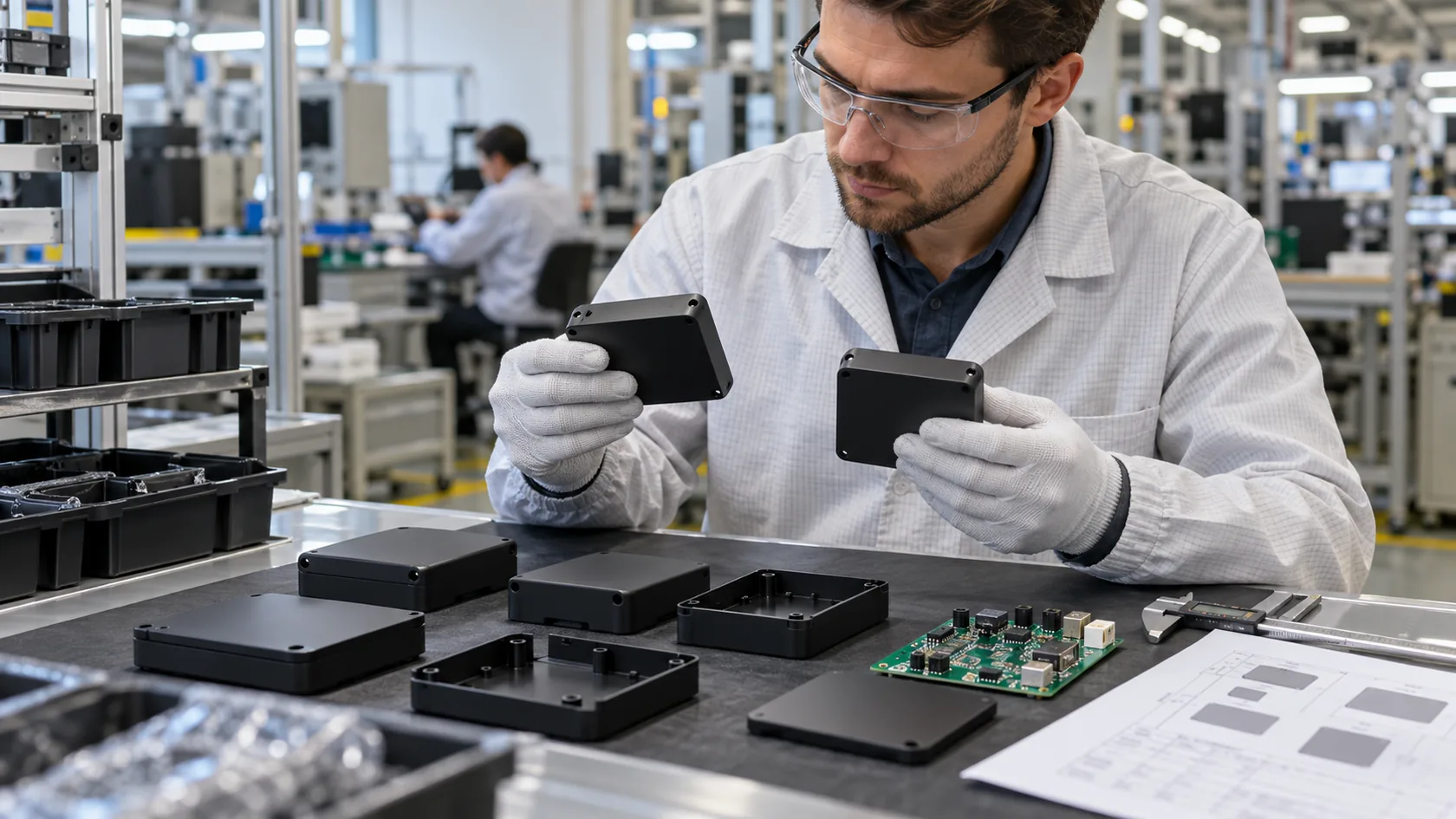
A custom enclosure may protect a PCB, power module, IoT device, controller, sensor, or Raspberry Pi style board. The internal function matters most, of course. But the enclosure is what the customer sees, touches, installs, and remembers.
A bad finish creates doubt.
It affects both product protection and brand image
The surface finish has two jobs.
It protects the metal.
It also protects the product image.
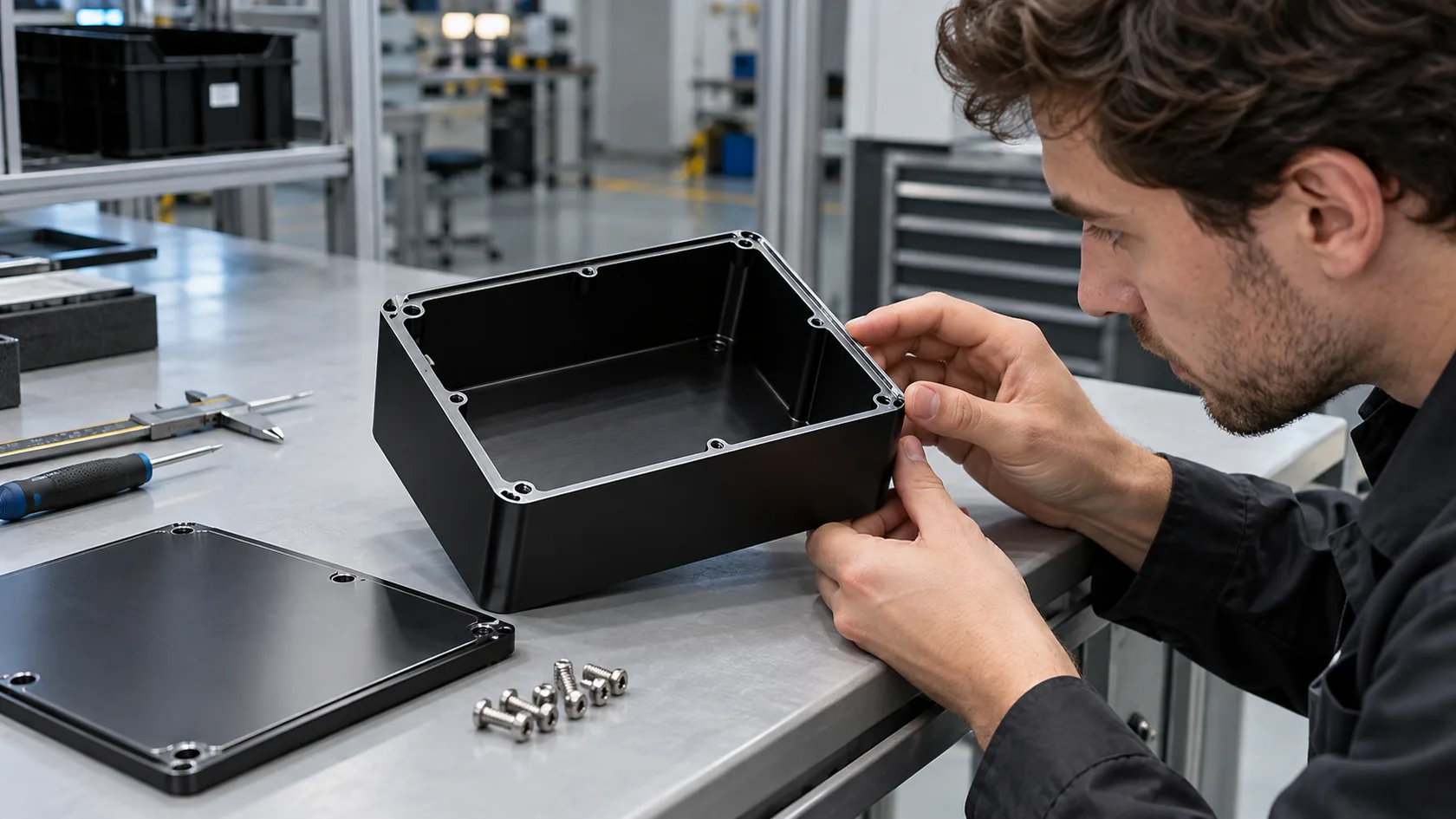
For example, a black powder-coated aluminum enclosure for an industrial controller may look simple. But if the surface is smooth, the color is even, and the corners are clean, the buyer feels the product is well made.
If the same enclosure has scratches, thin coating on edges, and poor color control, the buyer may start to worry.
Not only about the finish.
They may also worry about the PCB, the assembly, the screws, the packaging, and the supplier’s process.
That sounds unfair, but this is how people judge products.
I have seen this many times with OEM buyers. They may be engineers, but they are still human. They touch the enclosure and form an opinion in seconds.
| Surface condition | Buyer feeling | Possible business result |
|---|---|---|
| Smooth and even finish | Product feels reliable | Easier approval |
| Scratches near holes | Factory control feels weak | More questions |
| Color difference between batches | Brand image feels unstable | Repeat order risk |
| Peeling or poor adhesion | Product feels unsafe | Complaint or rejection |
| Clean texture and protected edges | Product feels ready for market | Stronger confidence |
The finish is like a suit for the product. The electronic part may be the brain, but the enclosure is the face.
And people judge faces fast.
It influences assembly, packaging, shipping, and after-sales risk
A surface finish also affects the boring things.
And boring things are often the things that cost money.
During assembly, workers touch the enclosure many times. They install screws, panels, rubber feet, labels, connectors, and sometimes internal brackets. If the finish is weak, damage may happen before the product even leaves the factory.
During packaging, parts rub against foam, cartons, and other parts. If packaging is not good, even a nice finish can arrive with marks.
During shipping, cartons move, shake, and stack. A weak finish may create after-sales trouble.
This is why I do not look at finish only under good light. I also ask:
- Will the coating survive screw assembly?
- Will the corners chip during handling?
- Will the surface get white marks from packaging friction?
- Will the finish still look good after sea freight or express delivery?
- Will customers complain when they open the carton?
Small scratches can become big emails.
And those emails always arrive at the worst time.
It becomes more important when the order quantity grows
For one sample, many finishes look fine.
For 1,000 pieces, the truth appears.
High-volume OEM production does not forgive unstable processes. One small problem can repeat again and again. If the coating thickness is not controlled, maybe 100 covers do not fit well. If color is not stable, maybe half the batch looks different from the other half. If pretreatment is poor, peeling may happen after installation.
This is why surface finish becomes a production strategy.
| Order stage | Main concern | Finish requirement |
|---|---|---|
| Prototype | Looks close to idea | Fast sample, acceptable appearance |
| Small batch | Function and first market test | Stable enough for user feedback |
| Medium batch | Repeatability | Controlled color and thickness |
| High-volume OEM | Cost, speed, consistency, rejection rate | Strong process control |
| Repeat orders | Batch-to-batch match | Documented color and process standard |
A finish that works for 10 pieces may not work for 2,000 pieces.
That is the painful truth.
One time, a customer cared only about the first sample photo. The photo looked nice. But when the batch came, the color under natural light and factory light looked different. Then the customer asked why the “same black” did not look the same.
Black is not always black.
Gray is not always gray.
Texture is not always texture.
For high-volume OEM work, the finish must be repeatable. It must behave like a process, not like luck.
I usually judge a surface finish by asking how many small risks it can remove later, because the cheapest finish on paper can become expensive if it causes sorting, rework, delay, or customer complaints.
And this is one reason powder coating often gets my attention.
It is not magic. But it is built for repeatable production better than many people think.
What Makes Powder Coating Suitable for High-Volume OEM Orders?
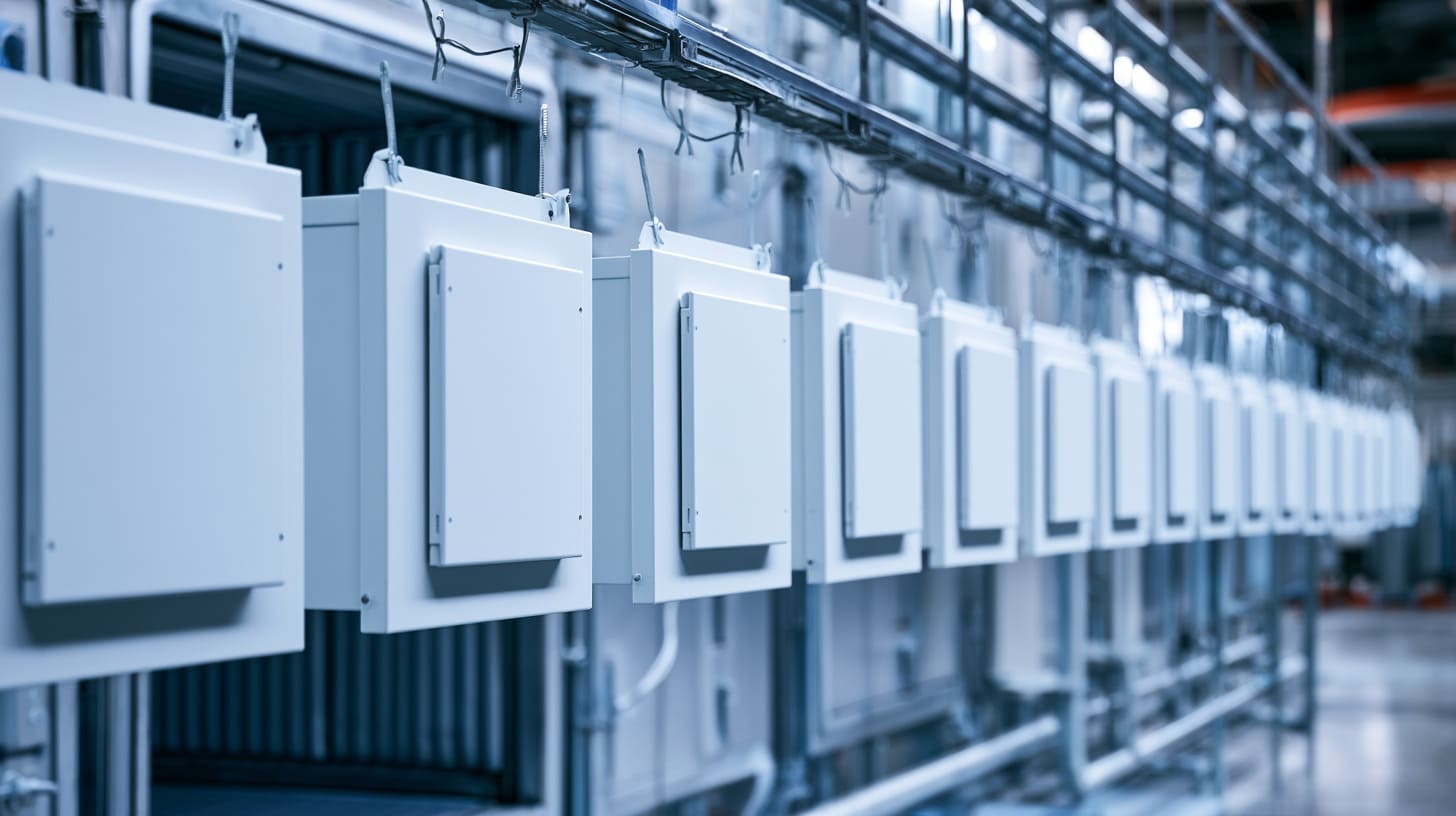
Powder coating feels very “factory.”
That may not sound romantic. But for OEM production, it is a good thing.
The process is simple to understand. Fine powder is sprayed onto the metal surface. The part is then heated, and the powder melts and forms a solid coating. Before this, the part must be cleaned and treated properly.
The result can be strong, even, and attractive.
But the real advantage appears when the quantity grows.
It works well with batch production
High-volume OEM production needs rhythm.
Cutting has a rhythm. Bending has a rhythm. CNC machining has a rhythm. Assembly has a rhythm. Powder coating can also fit into that rhythm.
Once the part design, color, fixture method, spray setting, and curing condition are confirmed, the production team can repeat the process with much better control.
This matters for custom enclosures.
Many enclosure projects include:
- Aluminum extrusion enclosures
- Sheet metal control boxes
- Wall-mounted electronic housings
- Industrial device covers
- Power supply housings
- IoT gateway enclosures
- Custom Raspberry Pi style cases
- Brackets and mounting plates
These parts often need the same finish across many units. Powder coating is strong in this area because the process can be organized for batch work.
It offers strong cost control at scale
In OEM production, cost is not only material price.
Cost includes:
- Reject rate
- Rework time
- Labor handling
- Packaging protection
- Finish stability
- Production planning
- Delivery risk
Powder coating can help control several of these areas.
The unit cost often becomes more attractive when the order quantity increases. Powder can also be recovered in many coating systems, depending on the color and equipment. That can reduce waste.
For a small order, setup cost may feel heavier. For a high-volume order, the setup cost spreads across more parts.
| Cost factor | Why powder coating can help |
|---|---|
| Material waste | Overspray powder may be recovered in suitable systems |
| Labor cost | Batch processing can improve efficiency |
| Rework cost | Strong coating can reduce handling damage |
| Color management | Standard powder color can be repeated |
| Packaging loss | Tougher surface can reduce shipping marks |
| Production schedule | Repeat process is easier to plan |
This does not mean powder coating is always cheaper.
It means powder coating can become cost-friendly when the order is large enough and the factory controls the process well.
That last part matters.
A poor powder coating factory can still create poor results.
It supports consistent appearance across many units
OEM buyers do not want surprises.
They want the same surface on every enclosure. Same color. Same texture. Same gloss. Same touch feeling.
This is where powder coating can do well.
For example, a distributor may sell an industrial enclosure kit under their own brand. The first batch is 500 pieces. The second batch is 1,000 pieces. The third batch is 3,000 pieces. If each batch looks different, the brand feels unstable.
A stable powder coating process helps prevent this.
The factory can record:
- Powder brand
- Powder color code
- Texture type
- Gloss level
- Pretreatment method
- Curing temperature
- Curing time
- Coating thickness range
- Masking points
- Inspection standard
For repeat orders, this record becomes very useful.
Without records, people rely on memory.
And memory is a terrible production system.
Powder coating gives room for both function and design
Some finishes look good but are difficult to scale.
Some finishes protect well but offer limited appearance options.
Powder coating sits in a useful middle area. It can protect the enclosure and still allow many visual styles.
| Buyer need | Powder coating response |
|---|---|
| Industrial black enclosure | Matte or textured black |
| Clean indoor electronic box | Smooth white or light gray |
| Outdoor equipment housing | Durable outdoor-grade powder |
| Branded OEM device | Custom color and logo area |
| Anti-fingerprint look | Fine texture or matte finish |
| Premium product feel | Controlled gloss and smooth coating |
For buyers like David, who already have sales channels and care about brand image, this flexibility is helpful.
For buyers like John, who may be building a new project and changing the design, powder coating gives enough room to test market style without making the process too complicated.
When I check a high-volume OEM project, I pay close attention to whether the finish can be repeated without creating too much special handling, because special handling is where cost and mistakes often hide.
Powder coating is not the only answer.
But it is often a practical answer when production quantity starts to grow.
And this naturally leads to another common question: how does it compare with anodizing?
How Does Powder Coating Compare With Anodizing for OEM Enclosures?
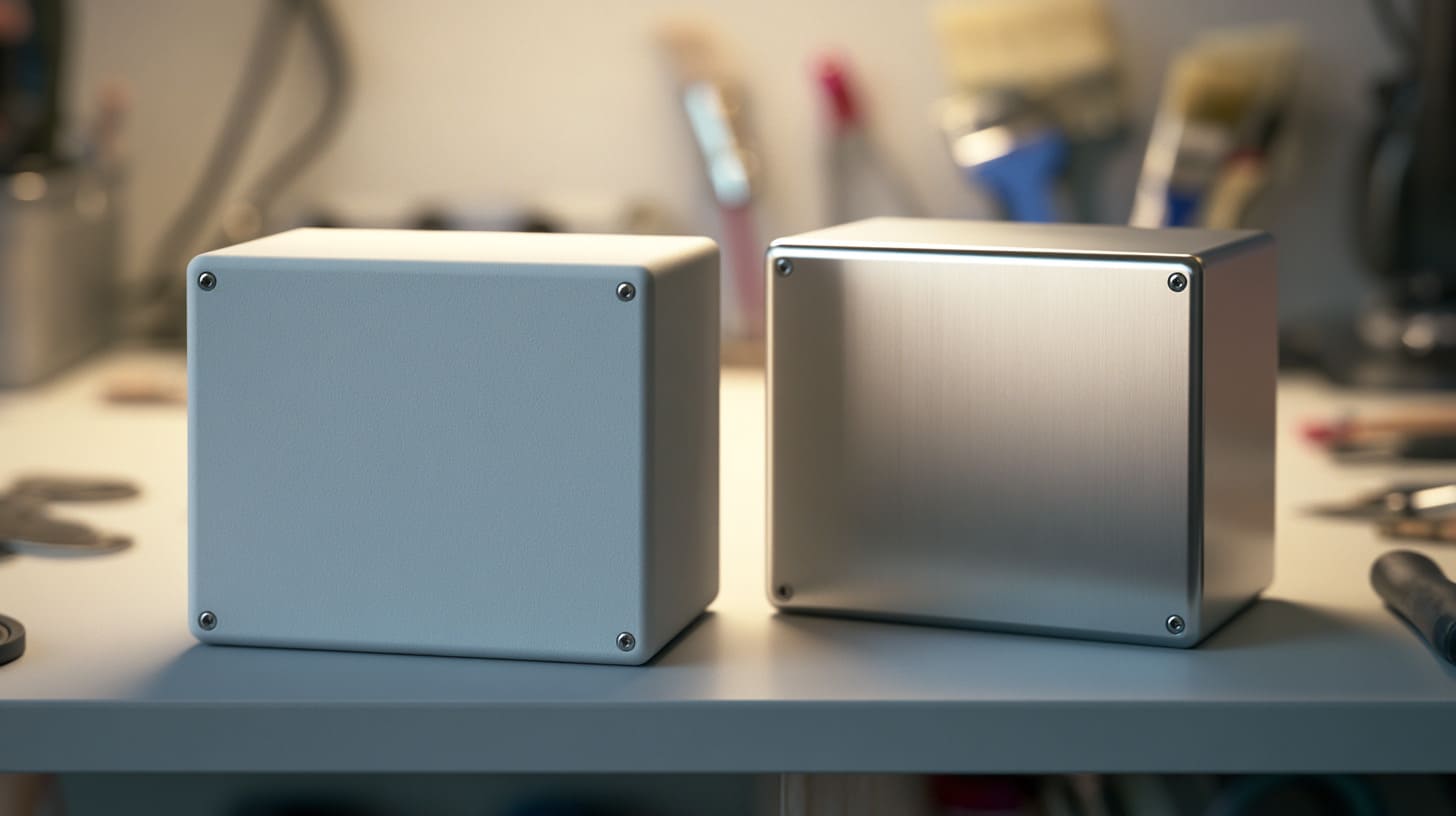
Powder coating and anodizing are often compared because both are common on aluminum enclosures.
I do not like saying one is “better” in a simple way.
That sounds nice in a blog title, but it is not how real projects work.
Anodizing can be excellent. Powder coating can also be excellent. The better choice depends on product use, design, tolerance, appearance, and order target.
Powder coating is better when color flexibility matters
Powder coating gives more color freedom.
You can choose black, white, gray, blue, red, orange, green, and many custom shades. You can choose matte, gloss, semi-gloss, fine texture, rough texture, sand texture, and other styles.
This is very useful for branded products.
If the buyer wants the enclosure to match their company color or product series, powder coating gives more options.
For example, a customer may sell different IoT devices for different environments:
- Black for industrial version
- White for indoor smart control version
- Gray for outdoor equipment
- Blue for a special distributor version
The same enclosure structure can become different product lines.
That is powerful for OEM sales.
Anodizing is better when metallic appearance and thin coating matter
Anodizing is different.
It does not cover the aluminum in the same way. It creates an oxide layer on the aluminum surface. The result often keeps a metallic look. Many customers like this because it feels clean and premium.
Anodizing is also thinner than powder coating.
That matters for precision parts.
If the enclosure has very tight sliding structures, precise fitting grooves, or small holes, anodizing may be easier to control. It also works well when the buyer wants a natural aluminum appearance.
I often see anodizing used for:
- CNC aluminum cases
- Heat sink enclosures
- Premium small electronic housings
- Parts with tight tolerance
- Products where the metal texture is part of the design
But anodizing also has limits. Color choices can be more limited. Color matching can be harder across batches. Some colors may look different depending on aluminum material, surface preparation, and process.
The judgment depends on the project
Here is how I often compare them for enclosure projects.
| Factor | Powder coating | Anodizing |
|---|---|---|
| Color choice | Very flexible | More limited |
| Texture choice | Many options | Mostly metallic surface |
| Coating thickness | Thicker | Thinner |
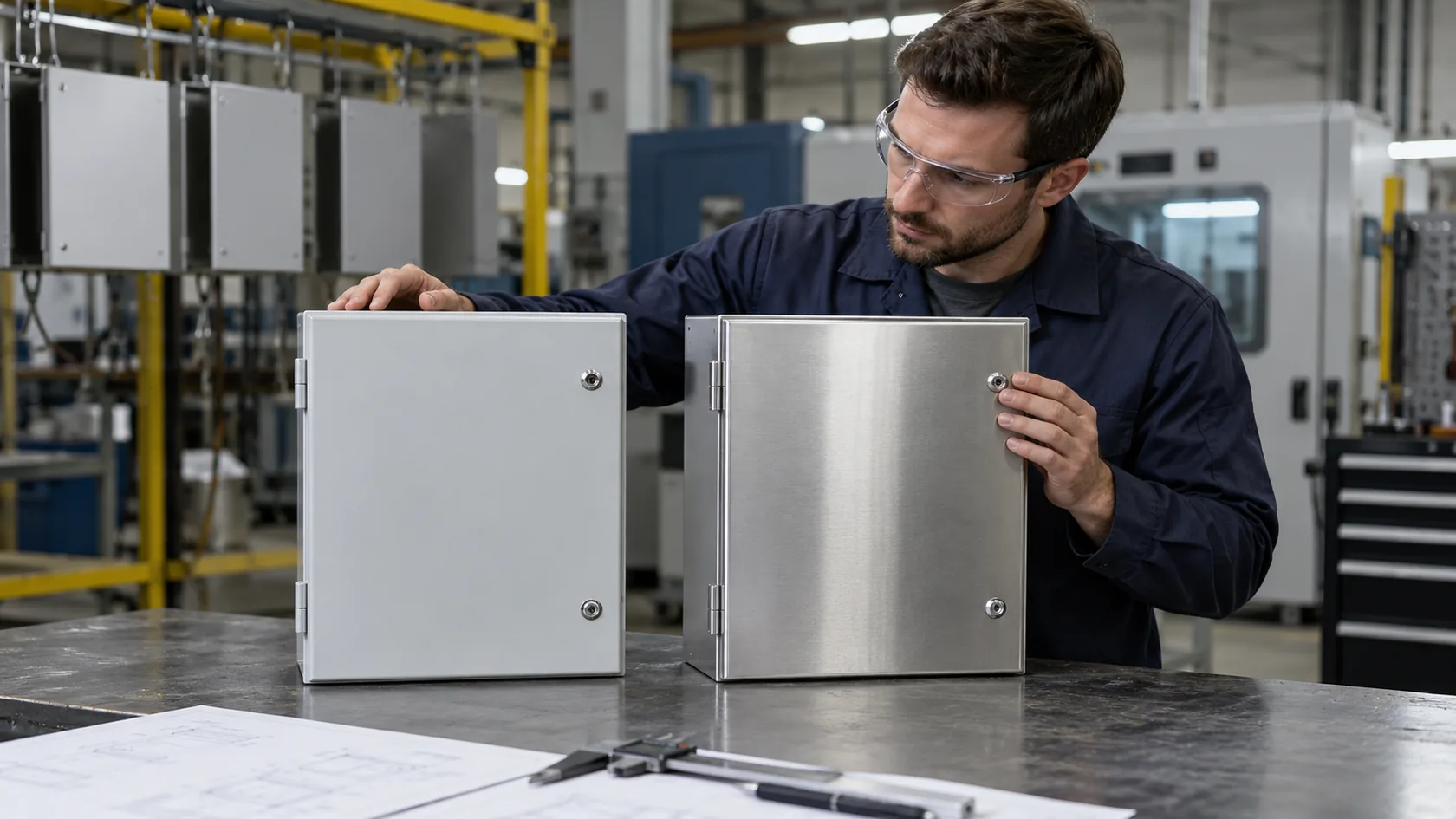
| Metallic look | Covered surface | Keeps aluminum look |
| Batch brand color | Easier for custom color style | May be harder for exact color |
| Tight tolerance | Needs design allowance | Better for thin finish |
| Outdoor use | Good with proper powder | Good in many cases, depends on spec |
| Scratch behavior | Tough, but can chip if impacted | Hard surface, but color can show marks |
| Repair | Hard to repair perfectly | Also hard to repair perfectly |
| Best use | Branded OEM enclosures, sheet metal boxes | CNC aluminum parts, premium metal look |
I sometimes explain it like clothing.
Powder coating is like giving the enclosure a strong colored jacket.
Anodizing is like treating the skin of the aluminum itself.
Both can be good. But they feel different. They behave differently. They create different risks.
A simple decision example
Let’s say a customer wants a custom enclosure for an indoor control device.
The buyer wants:
- Matte black color
- Logo printing
- 1,000 pieces per batch
- Good scratch resistance
- Stable look across orders
- Reasonable cost
Powder coating is likely a strong choice.
Now let’s say another customer wants:
- CNC aluminum body
- Natural silver metal look
- Very tight sliding cover
- Small precision holes
- Premium touch feeling
Anodizing may be better.
The mistake is not choosing powder coating or anodizing.
The mistake is choosing without thinking about the real product.
For aluminum OEM enclosures, I try not to ask which finish is more popular; I ask which finish will create fewer problems after machining, assembly, branding, and repeat orders.
That question usually gives a clearer answer.
But anodizing is not the only comparison buyers ask about. Many also ask about liquid painting.
How Does Powder Coating Compare With Liquid Painting?
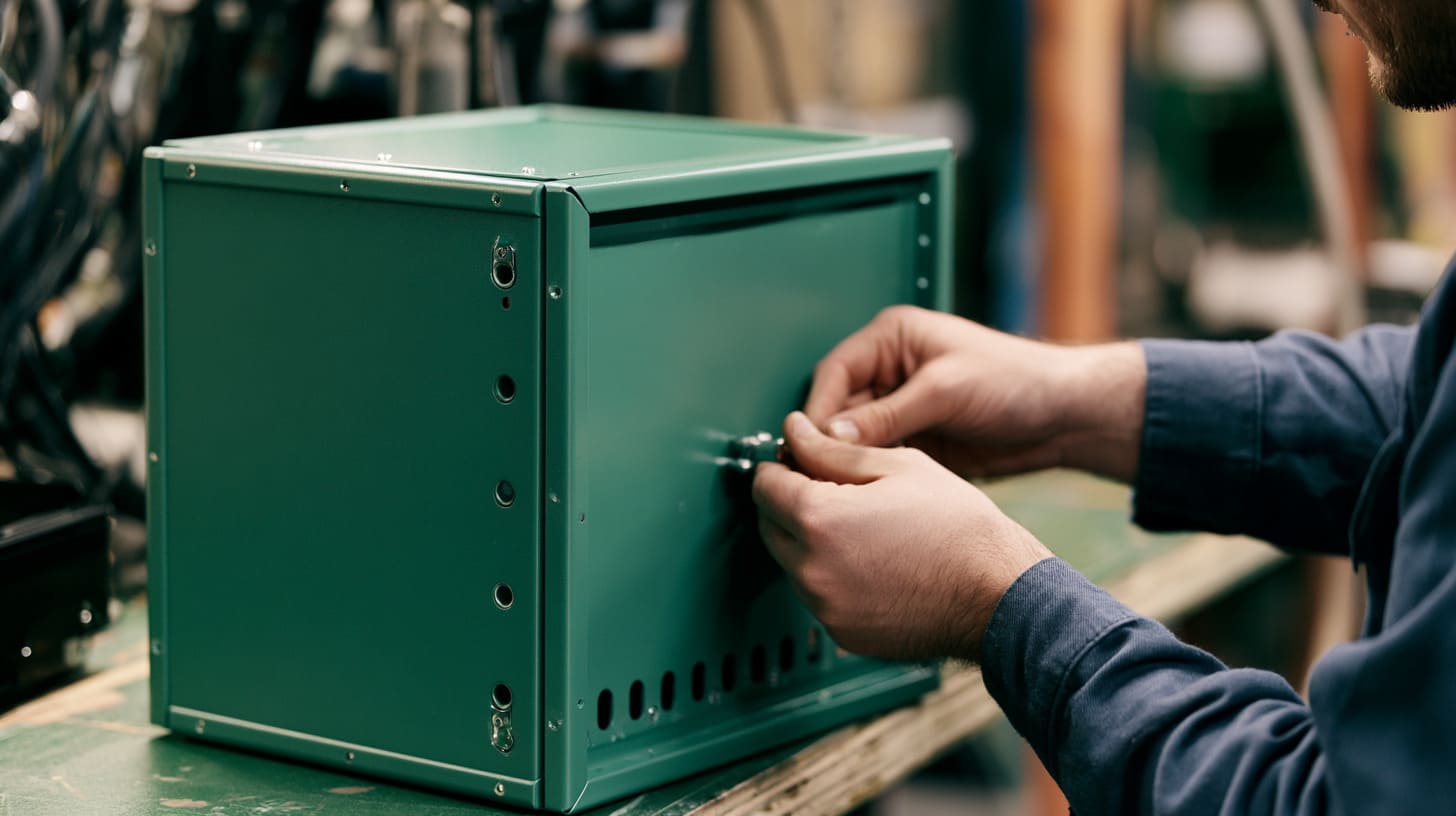
Liquid painting is familiar.
Many people understand it quickly because we see painted products everywhere. It can create nice colors. It can work for special surfaces. It can be useful for some small projects and repair needs.
But for high-volume metal enclosure production, powder coating often has some clear advantages.
Powder coating usually creates a tougher finish
Powder coating usually forms a hard and durable surface. It can resist handling damage better than many liquid paint finishes.
This matters because enclosures go through many hands.
A part may move from coating line to inspection table. Then to assembly. Then to packaging. Then to warehouse. Then to truck. Then to air or sea shipment. Then to the customer’s warehouse. Then to installation.
That is a long trip.
A weak finish will complain before the customer does.
It will show scratches, chips, or marks.
| Real production situation | Why finish strength matters |
|---|---|
| Screws installed by workers | Weak coating can scratch around holes |
| Parts stacked before packing | Surface marks may appear |
| Long-distance shipping | Vibration can create rub marks |
| Outdoor installation | Finish must handle weather better |
| Customer returns | Surface damage becomes after-sales cost |
Powder coating is not impossible to damage. Sharp impact can still chip it. Poor pretreatment can still cause peeling.
But when it is done well, it gives a tough surface for many OEM enclosure uses.
Liquid paint often uses solvents. This creates smell, VOC concerns, and more environmental control issues.
Powder coating usually does not use liquid solvents in the same way. This can make the process cleaner and easier to manage from an environmental point of view.
For some OEM buyers, this matters.
Not every buyer asks about it in the first email. But larger companies often care about supplier process, compliance, and environmental responsibility. They may ask about finishing method, material safety, and production control.
Powder coating can be easier to explain in this area.
It sounds simple.
Dry powder. Electrostatic spray. Heat curing. Strong finish.
No long speech needed.
Liquid painting still has its place
I do not want to make liquid painting sound useless.
It is not.
Liquid painting can be useful when:
- The part material cannot handle powder coating curing temperature
- The buyer needs a very special color effect
- The part shape is difficult for powder coating
- The order quantity is very small
- A repair or touch-up is needed
- The project needs a special coating system
Sometimes, liquid painting is more flexible for small and unusual projects.
But for many repeated metal enclosure orders, powder coating can be more efficient and stable.
The practical comparison
| Factor | Powder coating | Liquid painting |
|---|---|---|
| Durability | Usually stronger | Depends on paint system |
| Solvent use | Usually lower | Often higher |
| Production speed | Good for batch production | Can be slower with drying time |
| Finish thickness | Usually thicker | Can be thinner |
| Special effects | Good, but limited by powder type | More flexible in some cases |
| Repair | Difficult to repair invisibly | Easier for touch-up |
| High-volume OEM use | Very suitable | Suitable in some cases |
| Environmental control | Often cleaner | Needs more solvent control |
A buyer may ask me, “Can we paint this part instead?”
My answer is usually: yes, maybe.
But then I ask what they really need. Is it cost? Is it color? Is it durability? Is it a special effect? Is it small batch testing?
The finish should serve the project. It should not become a habit.
This is where I watch the hidden cost carefully, because a finish that is easy for one sample can become slow and fragile when the order becomes a real production batch.
That hidden cost brings us to one of the biggest reasons OEM buyers look at powder coating.
Money.
Not just price.
Real production cost.
Why Can Powder Coating Help Reduce OEM Production Cost?
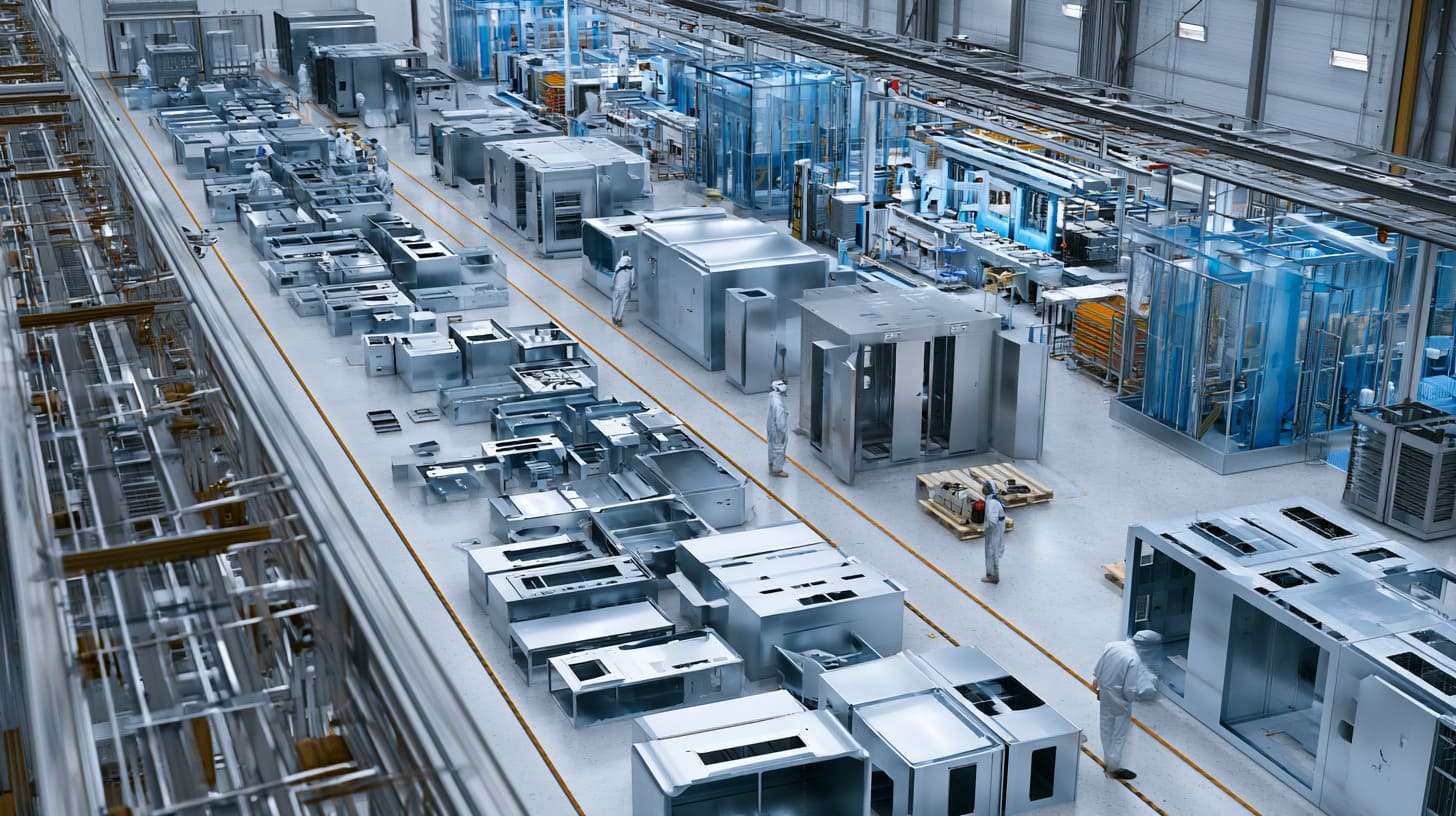
Price is the number everyone sees.
Cost is the number many people feel later.
In OEM projects, these two things are not always the same.
A lower finishing price can look attractive in the quotation. But if it creates scratches, rework, delays, bad packaging, or customer returns, the real cost becomes higher.
Powder coating can help reduce OEM production cost because it works well with repeat production and durable handling.
It improves material utilization
Powder coating can reduce waste in suitable systems because overspray powder may be collected and reused.
This depends on the equipment, powder type, color, and factory management. It is not automatic. But in a controlled line, material use can be more efficient than some liquid coating methods.
For high-volume orders, small savings become meaningful.
Imagine saving a small amount on one enclosure. It sounds tiny.
Now multiply it by 5,000 pieces.
Suddenly, tiny has a voice.
It reduces touch-up and rework risk
Rework is one of the quiet killers in manufacturing.
Nobody likes talking about it. But every factory knows it.
A part comes back from coating. The hole area is scratched. The corner has poor coverage. The texture is uneven. The customer wants a cleaner appearance. The production team sorts parts. Some parts need recoating. Some need repair. Some become scrap.
Time disappears.
Profit disappears.
Patience disappears too.
A strong powder coating process can reduce this risk. It gives the part better resistance during handling, assembly, and packaging.
| Cost problem | Possible result | How powder coating can help |
|---|---|---|
| Scratches during assembly | Rework or rejection | Tougher coating surface |
| Poor color repeatability | Customer complaint | Standard powder and process record |
| Thin edge coverage | Corrosion or appearance issue | Proper spray control and design review |
| Weak adhesion | Peeling risk | Better pretreatment and curing |
| Shipping marks | Replacement or discount | Durable finish plus proper packaging |
Powder coating does not remove the need for quality control.
It rewards quality control.
That is an important difference.
It supports faster production planning
High-volume production needs planning.
The factory must plan material, cutting, punching, bending, machining, welding, cleaning, coating, inspection, assembly, and packaging.
If the finish process is unstable, the whole plan becomes unstable.
Powder coating can help because once the process is confirmed, repeated batches can be scheduled more easily.
For example:
- Same powder code
- Same curing setting
- Same masking method
- Same hanging fixture
- Same inspection standard
- Same packaging method
This makes production more predictable.
And for OEM buyers, predictable is valuable.
A buyer may forgive a slightly higher price if the delivery is stable.
But if the shipment delays their whole project, the buyer will remember that pain.
The cost view buyers should use
Many buyers compare only the unit finishing price.
I think that is too narrow.
They should compare total finishing cost.
| Cost area | Question to ask |
|---|---|
| Unit coating price | What is the price per part? |
| Setup cost | Is there a minimum coating charge? |
| Rework risk | What happens if coating defects appear? |
| Assembly impact | Will coating thickness affect fit? |
| Packaging cost | Does the surface need special protection? |
| Delivery risk | Can the coating process match the schedule? |
| Repeat order cost | Can the same finish be repeated later? |
The cheapest surface treatment is not always the most economical.
That sentence sounds boring.
But it can save real money.
Before I call a finish “cost-effective,” I look at the whole route of the part, because the part does not stop at the quotation sheet; it still has to be coated, assembled, packed, shipped, installed, and judged by the final customer.
Cost control is one side.
Brand feeling is another side.
And for OEM buyers, the two often meet on the surface of the enclosure.
Why Is Powder Coating Good for Brand Customization?
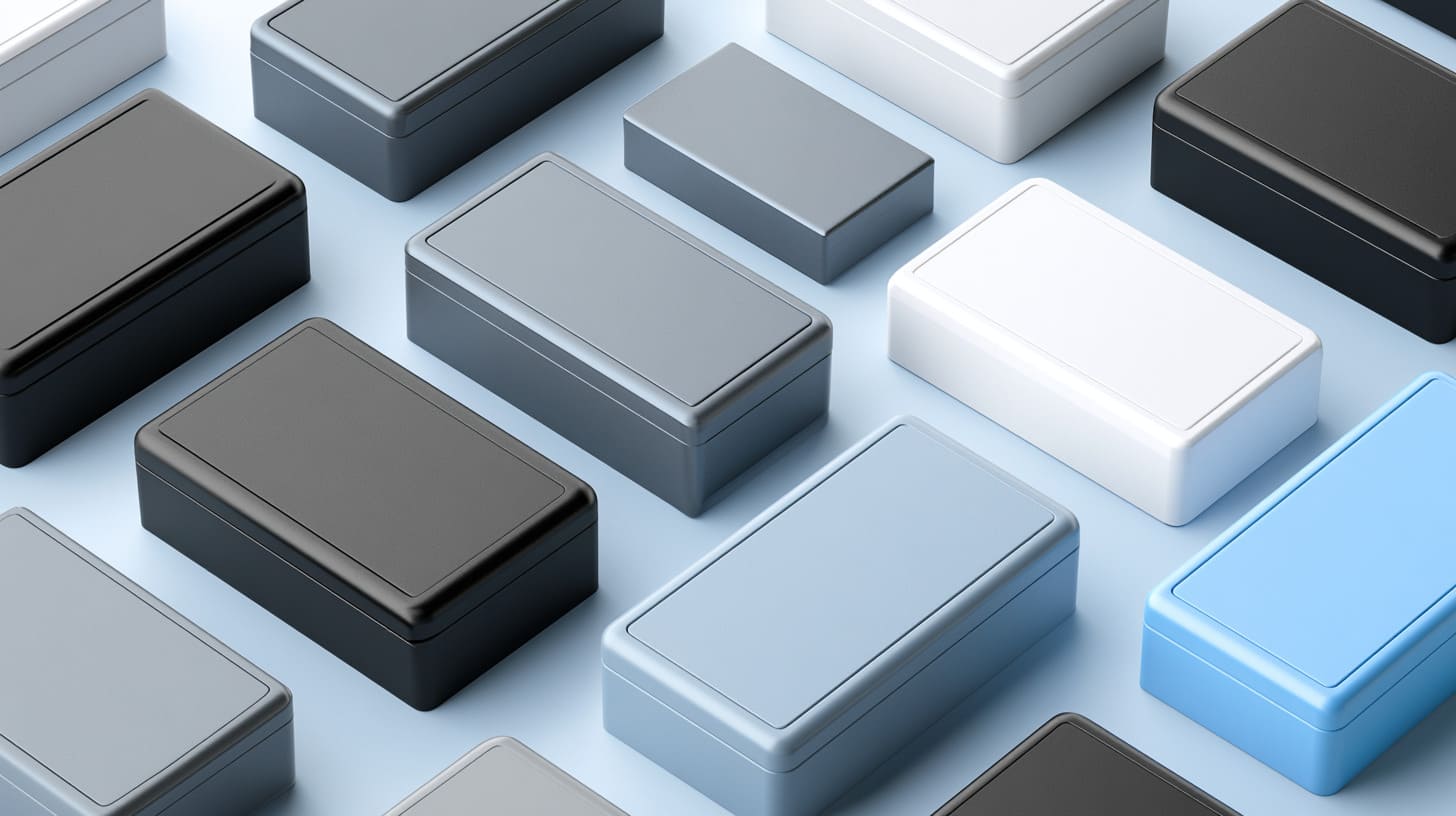
A plain enclosure can protect electronics.
A branded enclosure can help sell the product.
That is the difference many OEM buyers care about.
For buyers who sell on Amazon, Facebook, local distribution channels, or industrial project channels, the enclosure is not only a box. It is part of the brand package.
Powder coating gives them many ways to shape that package.
It offers many color and texture choices
Powder coating can create many looks.
Some are quiet and industrial. Some are clean and modern. Some are bold and easy to notice.
Common choices include:
- Matte black
- Gloss white
- Semi-gloss gray
- Fine texture black
- Sand texture gray
- Orange peel texture
- Custom brand color
- Outdoor-grade coating
- Anti-fingerprint style texture
For a product engineer, these choices may feel like design details.
For the sales team, these choices may affect how the product is remembered.
A matte black industrial enclosure feels serious.
A smooth white smart device housing feels clean.
A textured gray outdoor box feels strong and practical.
The function may be the same. The feeling is not.
It can make standard enclosures look custom-made
Not every OEM buyer wants to pay for a fully new structure.
Sometimes they need a standard enclosure with custom holes, logo, packaging, and color.
Powder coating helps here.
The same base enclosure can look like a custom product when the finish is selected well.
For example:
| Base product | Powder coating choice | Brand effect |
|---|---|---|
| Standard control box | Matte black | Industrial and strong |
| IoT gateway housing | Smooth white | Clean and modern |
| Sensor enclosure | Fine texture gray | Technical and reliable |
| Raspberry Pi style case | Custom blue | Young and project-based |
| Power module housing | Textured black | Durable and professional |
This is useful for re-brand customers like Jackson.
He may have local customers who want small changes. He may send a logo file, a custom cutout drawing, and a color idea. He does not always need a completely new product. He needs a product that looks like it belongs to his brand or his customer’s system.
Powder coating supports that.
It works with logo and packaging decisions
Brand customization is not only the surface color.
It may include:
- Logo printing
- Laser engraving
- Screen printing
- Product label area
- Custom carton
- Foam insert
- User manual
- Accessory bag
- Screw pack
- Barcode label
The finish must work with these details.
For example, logo printing on a rough texture may not look as clean as printing on a smoother surface. Laser engraving may behave differently depending on coating color and thickness. A label may stick better on some textures than others.
These small details matter.
A buyer may approve the enclosure color but forget the logo method. Then the logo result does not match the idea.
That is why I like to confirm the full brand plan before mass production.
It helps buyers build a complete product identity
Many buyers think customers only care about function.
I disagree.
Customers care about function first, but they also feel the product through small details.
A clean surface, good color, sharp logo, and safe packaging all tell the customer one thing:
This product was made carefully.
And careful products are easier to trust.
| Brand element | Why it matters |
|---|---|
| Enclosure color | Creates first visual impression |
| Texture | Affects touch feeling |
| Logo | Builds identity |
| Packaging | Protects and presents |
| Accessories | Improves user experience |
| Finish consistency | Supports repeat sales |
Powder coating gives OEM buyers more room to design that identity.
For branding projects, I always check the logo method together with the coating texture, because a beautiful color means little if the logo looks weak, blurry, or poorly positioned after production.
That detail sounds small.
But buyers remember small details when they open the carton.
And now, we need to talk about the part that decides whether powder coating works well or fails badly.
Quality control.
What Quality Factors Must Be Controlled in Powder Coating?
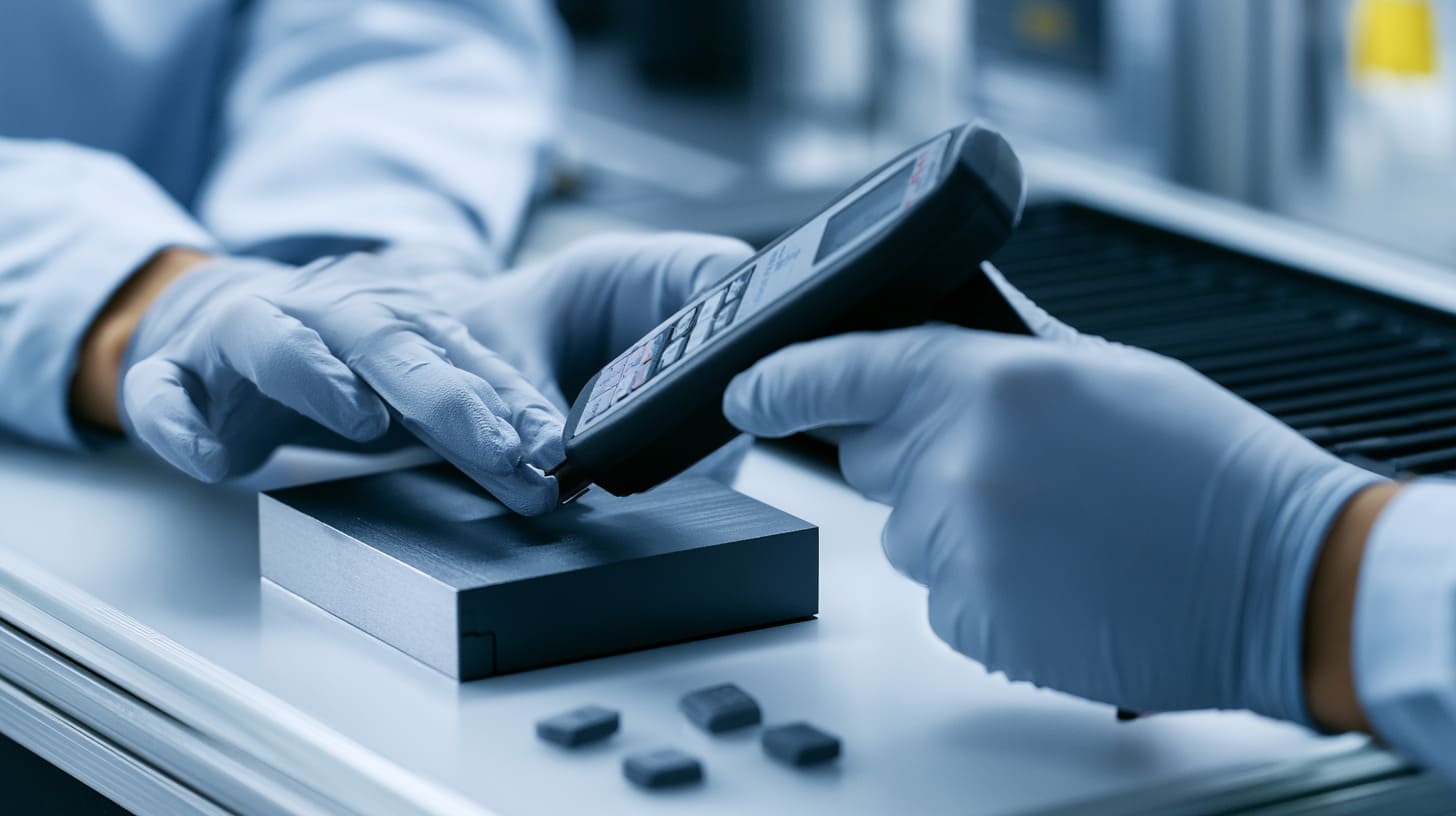
Powder coating is not just “spray powder and bake it.”
That sentence makes it sound too easy.
A good powder coating finish depends on many steps. If one step is weak, the final result may still look fine at first. But problems may appear later.
This is why I care about process control.
Surface pretreatment is the foundation
The coating must stick to the metal.
This sounds basic. But it is where many problems begin.
Before powder coating, the surface usually needs cleaning and pretreatment. The exact method depends on material and project requirements, but it may include degreasing, washing, sanding, sandblasting, or chemical pretreatment.
If oil, dust, oxide, or dirt remains on the surface, the coating may not bond well.
Then the buyer may see:
- Peeling
- Bubbles
- Poor adhesion
- Uneven surface
- Weak corrosion resistance
- Coating failure around edges
Pretreatment is like washing your hands before cooking.
You may not see the problem immediately if you skip it.
But the result can still become ugly.
Coating thickness must match the design
Powder coating has thickness.
This is good for protection, but it can be bad for tight assembly.
If the coating is too thin, protection may be weak.
If the coating is too thick, parts may not fit.
This is especially important for:
- Sliding covers
- Screw holes
- Threaded holes
- Hinges
- Mating surfaces
- Grounding points
- Connector openings
- Internal brackets
- Tight PCB mounting areas
For custom enclosures, the drawing should consider coating thickness early.
Not after production.
After production is too late. Then everyone starts discussing who should fix the problem.
And that is not a fun discussion.
| Area | Possible powder coating issue | Control method |
|---|---|---|
| Threaded holes | Screws do not fit | Masking or post-tapping |
| Sliding cover | Cover becomes too tight | Design clearance |
| Grounding area | Electrical contact blocked | Masking |
| Connector hole | Connector does not sit well | Tolerance check |
| Logo zone | Printing not clean | Smooth coating area |
| Assembly seam | Gap becomes uneven | Thickness control |
Curing temperature and time must be stable
Powder coating needs heat curing.
If curing is not enough, the coating may look okay but perform poorly. Adhesion may be weak. Surface hardness may be low. Chemical resistance may be poor.
If curing is too much, color may change or the surface may not match the approved sample.
Curing control becomes more important in high-volume production because different part sizes and thicknesses may heat differently.
A small thin cover and a thick aluminum body do not behave the same in the oven.
The factory must understand this.
Inspection should not only look at beauty
Appearance is important.
But powder coating quality is more than appearance.
A good inspection plan may include:
| Inspection item | Why it matters |
|---|---|
| Visual check | Finds scratches, pinholes, dirt, uneven texture |
| Color comparison | Controls batch consistency |
| Gloss check | Confirms surface style |
| Thickness test | Protects fit and durability |
| Adhesion test | Checks coating bonding |
| Cross-cut test | Helps judge peeling risk |
| Impact or bend check | Useful for some sheet metal parts |
| Salt spray test | Needed for some outdoor or corrosion projects |
| Packaging test | Checks shipping protection |
Not every project needs every test.
A small indoor device does not need the same test plan as an outdoor telecom enclosure.
But the buyer and factory should agree on the standard.
Sample approval must be serious
A powder coating sample is not only for color.
It should confirm:
- Color
- Texture
- Gloss
- Thickness
- Logo method
- Masking area
- Packaging protection
- Assembly fit
- Surface defect standard
Many projects go wrong because the sample approval is too casual.
A customer approves a photo.
The factory produces the batch.
Then the customer says the real part does not feel like the photo.
Photos lie sometimes.
Light lies too.
Screens lie even more.
For important OEM projects, a physical sample is much safer.
The detail I do not ignore is pretreatment, because a coating problem that starts under the surface may not show itself during sample approval, but it can embarrass everyone after the product reaches the customer.
Quality control is not only the factory’s job.
Design also plays a big part.
So next, let’s look at what engineers should think about before choosing powder coating.
What Design Details Should Engineers Consider Before Choosing Powder Coating?
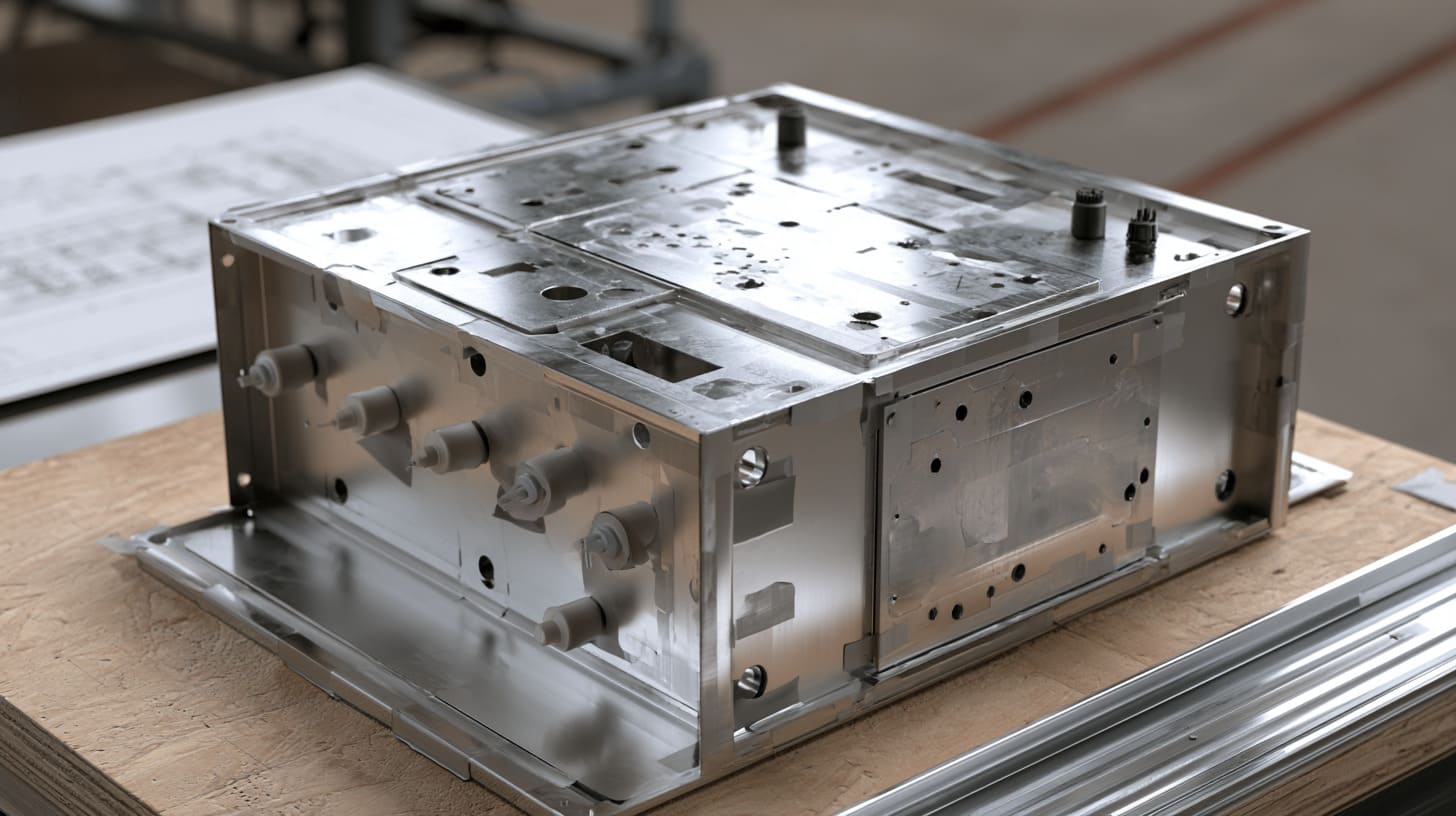
A good finish starts in the drawing.
This is something I learned through many custom enclosure projects.
If the design does not leave room for the coating, the production team has to fight the drawing. And when production fights the drawing, problems usually win.
Powder coating is strong and useful, but it adds a layer to the part. That layer must be respected.
Holes, threads, and grounding points
Powder coating can cover holes and threads if they are not protected.
This may create assembly trouble.
For example, if a threaded hole gets coated, the screw may not go in smoothly. The worker may force the screw. The coating may crack. The thread may be damaged. The assembly time may increase.
A small hole becomes a big headache.
Some areas may need masking before coating. Other areas may need post-processing after coating.
Common areas include:
- Threaded holes
- Countersunk holes
- Grounding points
- Contact surfaces
- Hinge areas
- Connector mounting surfaces
- Label zones
- Logo zones
- Sliding rails
For electronic enclosures, grounding points are especially important. Powder coating is not conductive like bare metal. If the product needs electrical contact, the coating must be removed or masked in that area.
Tolerance and fit
Powder coating thickness affects fit.
This is not a problem if the design allows space. But it becomes a problem when the structure is tight.
For example, a sliding aluminum cover may work perfectly before coating. After coating, it may become hard to slide. A lid may fit before coating, but the gap may become too small after coating. A connector may not sit flat because the coating adds thickness around the cutout.
The solution is not to blame the coating.
The solution is to design for it.
| Design area | Risk if ignored | Better planning |
|---|---|---|
| Cover fit | Too tight after coating | Add clearance |
| Screw holes | Screw assembly difficulty | Mask or enlarge slightly |
| Threads | Coating blocks thread | Mask or tap after coating |
| Grounding | Poor electrical contact | Mask grounding area |
| Connector cutouts | Poor installation | Check coating thickness allowance |
| Logo area | Poor printing result | Choose proper texture |
| Hinges | Movement becomes stiff | Protect hinge contact surfaces |
Masking areas must be clear
Masking sounds simple.
But unclear masking instructions can create big confusion.
The buyer may assume one area should not be coated. The factory may not know. The production team coats everything. Then assembly fails.
This is avoidable.
The drawing should clearly mark:
- No coating area
- Masking area
- Conductive area
- Thread protection area
- Critical dimension area
- Visible surface standard
- Non-visible surface standard
A simple marked drawing can save many emails.
I like marked drawings.
They reduce guessing.
And in manufacturing, guessing is expensive.
The finish should match the product environment
Design is not only size.
Design also includes where the product will be used.
A powder-coated indoor enclosure and an outdoor enclosure may need different powder types and pretreatment standards.
A device used in a dry office is different from a device used near the sea.
A control box in a warehouse is different from a telecom enclosure on a pole.
| Environment | Finish concern |
|---|---|
| Indoor office | Appearance, touch feeling, light scratch resistance |
| Factory floor | Oil, dust, handling damage |
| Outdoor installation | UV, rain, temperature change |
| Coastal area | Salt and corrosion risk |
| Electrical cabinet | Grounding and insulation areas |
| Moving equipment | Impact and vibration |
Before finishing, I like to ask where the enclosure will live.
Not where it will be sold.
Where it will live.
Because the environment is the real test.
Prototype testing should include coated parts
Some buyers test only raw metal samples.
That is useful, but not enough.
If the final product will be powder coated, the test should include coated parts too.
The buyer should check:
- Assembly fit after coating
- Screw installation
- Connector fit
- Label sticking
- Logo appearance
- Grounding performance
- Packaging protection
- User touch feeling
A raw part can pass.
A coated part can fail.
That is why final sample approval matters.
For tight enclosure designs, I do not trust the raw metal fit alone, because a cover that slides beautifully before coating may become a stubborn little monster after the coating layer is added.
That little monster is avoidable.
But only if the design team thinks ahead.
Now, powder coating has many strengths. But it is not perfect. Let’s be honest about that too.
When Is Powder Coating Not the Best Choice?
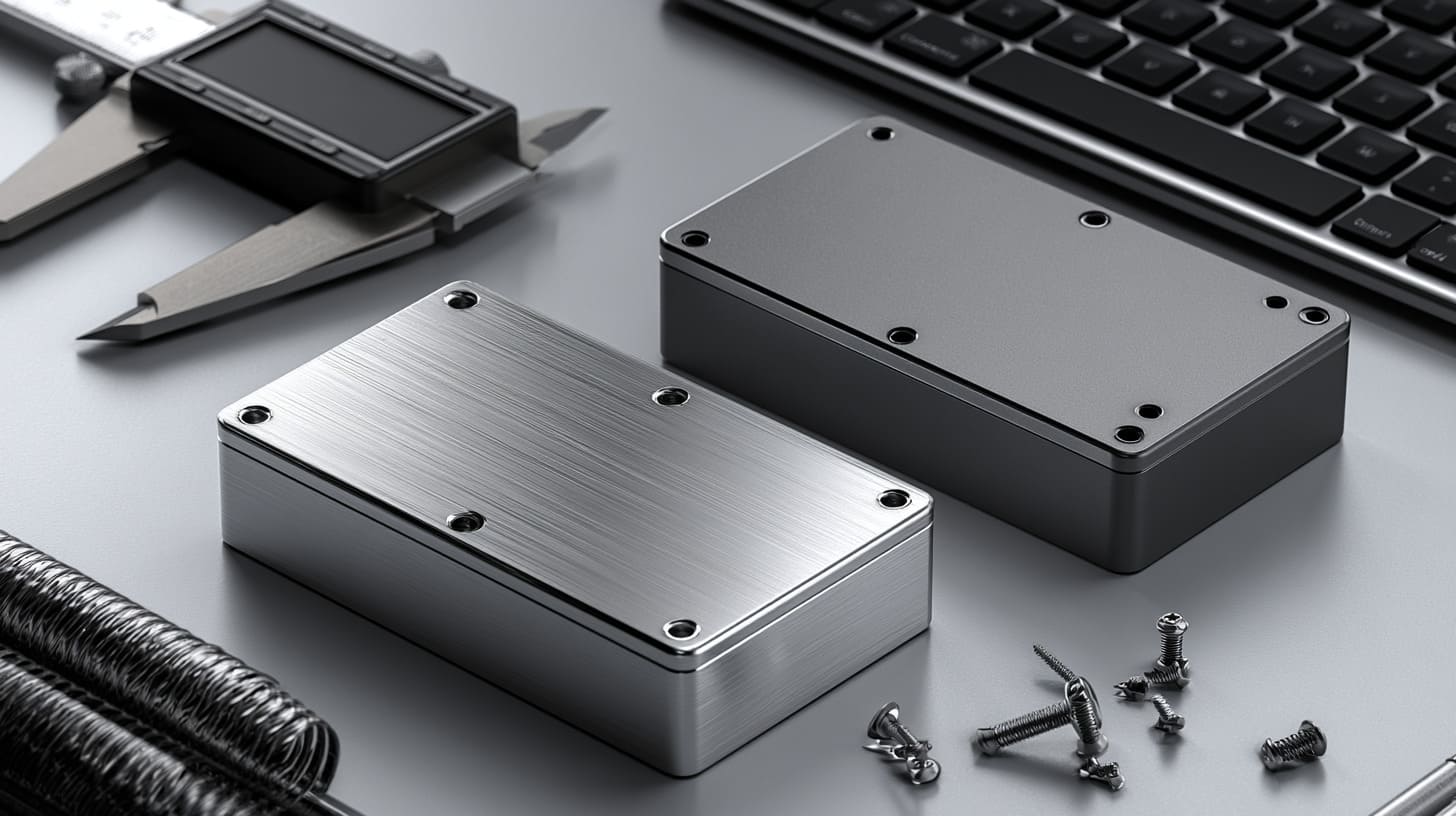
A good supplier should not push one finish for every project.
That is lazy.
Powder coating is useful, but it has limits. If the project does not fit powder coating, forcing it can create problems.
I prefer to tell customers early when another finish may be better. It saves time. It also builds trust.
When the part needs a natural aluminum appearance
Some buyers want the aluminum to look like aluminum.
They want that clean metal feeling. They want silver, champagne, black anodized, or natural aluminum texture. They want the surface to show the material itself.
Powder coating covers the metal.
It can look beautiful, but it does not show the natural aluminum in the same way.
So if the product’s value comes from a premium machined aluminum look, anodizing may be better.
For example:
- CNC audio device enclosure
- High-end controller housing
- Precision instrument case
- Premium Raspberry Pi style aluminum case
- Heat sink enclosure with visible fins
These products may look better with anodizing.
Not always, but often.
When the part has extremely tight tolerance
Powder coating adds thickness.
If the design has very tight fit, this can be a problem.
I am especially careful with:
- Sliding structures
- Interlocking covers
- Fine threads
- Press-fit parts
- Small connector holes
- Precision grooves
- Moving parts
- Heat sink fin gaps
If the product cannot allow coating thickness, a thinner finish may be better.
Or the design must be changed.
There is no shame in changing the design. There is only pain in pretending the problem will not happen.
Powder coating is sprayed.
That means deep corners, narrow cavities, and hidden internal areas can be harder to cover evenly.
There is also something called the Faraday cage effect. In simple words, powder may have difficulty reaching some inside corners or recessed areas because of electrostatic behavior.
For basic enclosure shapes, this can be managed.
For very complex shapes, it needs careful review.
If the part needs full internal coverage in deep hidden areas, another coating method may be better.
When high heat exposure is part of product use
Powder coating can handle many normal use environments, but the right powder type must be selected for heat exposure.
If the enclosure is near strong heat, the buyer should tell the factory clearly.
For example:
- Power electronics
- Motor controller
- Outdoor solar equipment
- Heat sink housing
- LED driver box
- Industrial machine housing
The wrong finish may discolor, soften, or age faster.
Material, coating type, and product temperature should be reviewed together.
When repair appearance matters a lot
Powder coating is durable, but if it chips badly, perfect repair can be difficult.
Touch-up may protect the area, but it may not look exactly the same.
For some products, this is acceptable.
For others, especially premium visible products, it may be a concern.
| Situation | Powder coating concern | Possible alternative |
|---|---|---|
| Natural metal look needed | Covers aluminum texture | Anodizing |
| Very tight tolerance | Coating thickness affects fit | Anodizing or design adjustment |
| Deep hidden cavities | Uneven coverage risk | E-coating or other process |
| Very small trial batch | Setup may not be cost-effective | Liquid painting or anodizing |
| High-heat use | Need special powder | Heat-resistant finish |
| Perfect repair needed | Touch-up may show | Liquid paint may be easier |
This is why I do not sell powder coating as a miracle finish.
It is not.
It is a practical tool. And like any tool, it works best in the right job.
The point I watch closely is whether the finish supports the product’s real use, because choosing powder coating only because it looks strong can backfire if the part needs metal texture, tight sliding fit, or deep internal coverage.
That honest view actually makes powder coating more valuable.
Because when it is the right fit, it performs very well.
Especially for custom enclosure factories.
Why Is Powder Coating a Practical Choice for Custom Enclosure Factories?
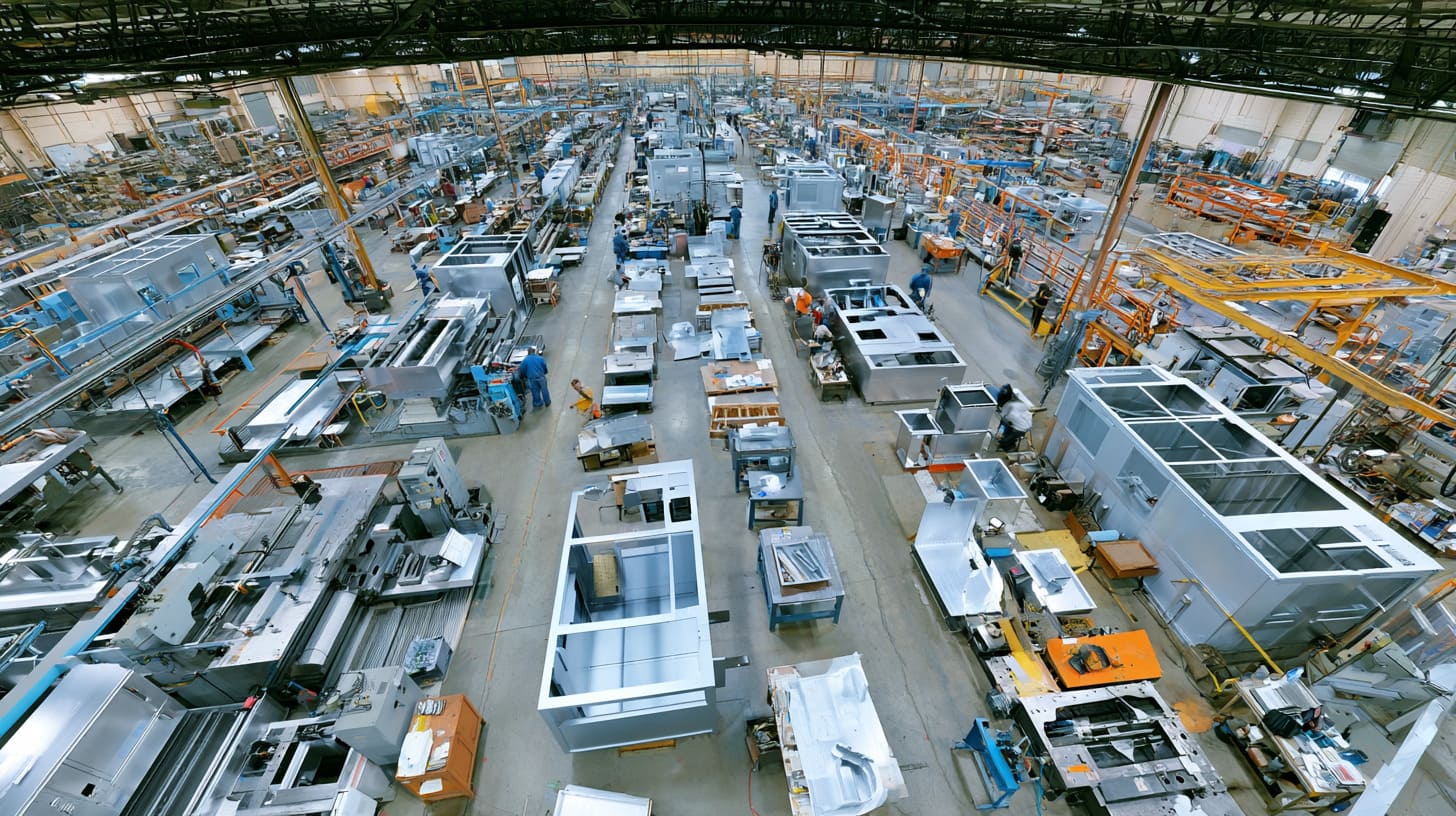
In a custom enclosure factory, no two days feel exactly the same.
One customer sends an aluminum control box drawing.
Another customer asks for a plastic electronic enclosure.
Another buyer needs a sheet metal housing with many holes.
Then someone sends a Raspberry Pi style case and says, “Can you redesign this for our board?”
This is normal.
Custom manufacturing is not clean and simple like a catalog business. It has many small changes, many drawings, and many details.
Powder coating fits this kind of work because it can support many enclosure types and many customer needs.
It fits aluminum and sheet metal enclosure production
Many custom enclosures need several production steps.
For example:
- Material cutting
- CNC machining or punching
- Bending
- Welding or riveting
- Grinding or polishing
- Cleaning
- Powder coating
- Logo printing or engraving
- Assembly
- Inspection
- Packaging
Powder coating can fit into this flow well.
It can cover aluminum and steel parts. It can work for many industrial and electronic housings. It can also help create a consistent look across parts made by different processes.
For example, one product may include a bent sheet metal cover, CNC aluminum front panel, and steel bracket. Powder coating can help make these parts look more unified.
It supports OEM and ODM flexibility
OEM customers often have clear drawings.
They want the factory to produce according to design.
ODM customers may have only an idea, a PCB, a rough sample, or a reference product.
They need more support.
Powder coating helps both sides because it offers design flexibility after the structure is decided.
| Customer type | Typical need | How powder coating helps |
|---|---|---|
| Product engineer | Enclosure made to drawing | Stable finish and protection |
| Re-brand buyer | Logo and color customization | Strong brand appearance |
| Distributor | Repeatable batches | Consistent product line |
| Project buyer | Practical protection | Durable finish |
| Startup owner | New product appearance | Flexible color and texture |
| Online seller | Better product photos | Attractive surface style |
For John-type customers, this is important.
He may be creative, but he may not know every detail of Chinese factory production. He needs suggestions. He may ask if a design can be made like a Raspberry Pi case but changed for his own board.
In that situation, I do not only look at the box shape.
I also think about finish, assembly, holes, heat, logo, packaging, and batch production.
It balances quality, price, and delivery
OEM buyers want everything.
They want high quality, low price, fast delivery, stable communication, custom design, good packaging, and no mistakes.
I understand them. If I were the buyer, I would want the same.
But manufacturing is about balance.
Powder coating helps because it often gives a good balance between:
- Durability
- Appearance
- Cost
- Color choice
- Batch repeatability
- Production speed
- Brand customization
It is not the cheapest in every case. It is not the thinnest. It is not always the most premium-looking.
But it is balanced.
And balance is useful in OEM production.
It helps factories manage repeat orders
Repeat orders are the heart of B2B business.
A first order is good.
A repeat order is trust.
When a customer comes back six months later and asks for the same enclosure, the factory must repeat the same finish.
This is easier when the coating process is recorded.
A good factory should keep:
- Drawing version
- Powder color code
- Texture standard
- Coating thickness range
- Masking requirement
- Logo position
- Packaging method
- Inspection notes
- Customer sample record
Without these records, repeat production becomes a memory test.
And factories should not run on memory.
They should run on process.
Inside a custom enclosure project, I care most about whether the finish can follow the customer from sample to repeat order, because a finish that cannot be repeated will slowly damage trust even if the first batch looks good.
Trust is built in boring details.
And boring details often decide whether the customer sends the next order.
But before any mass production starts, buyers and suppliers need to work together in a smarter way.
How Should Buyers Work With a Supplier Before Mass Production?
Many coating problems start before coating.
They start in unclear communication.
A buyer may think the factory understands the environment. The factory may think the buyer only needs normal indoor finish. The buyer may assume screw holes will be protected. The factory may not mask them because the drawing does not show it.
Then the batch comes out.
Everyone becomes busy.
Nobody becomes happy.
So before mass production, buyers should confirm the key points clearly.
Confirm the working environment first
The product environment affects the finish choice.
I usually ask simple questions:
- Is the enclosure used indoors or outdoors?
- Will it face rain or sunlight?
- Is the area humid?
- Is it near the sea?
- Will it touch oil, chemicals, or dust?
- Will users handle it often?
- Will it need grounding?
- Will it be installed in a cabinet or exposed?
These questions are not decoration.
They guide the coating standard.
| Use environment | What to confirm |
|---|---|
| Indoor office | Appearance, texture, scratch resistance |
| Factory workshop | Oil, dust, impact, cleaning method |
| Outdoor normal area | UV, rain, temperature |
| Coastal area | Salt spray and corrosion protection |
| Electrical cabinet | Grounding, masking, safety |
| Consumer product | Touch feeling, logo, color consistency |
| Industrial project | Durability, installation damage |
If the buyer says “outdoor,” that is not enough.
Outdoor in Finland is different from outdoor in Singapore.
Outdoor near the sea is different from outdoor in a dry area.
Details matter.
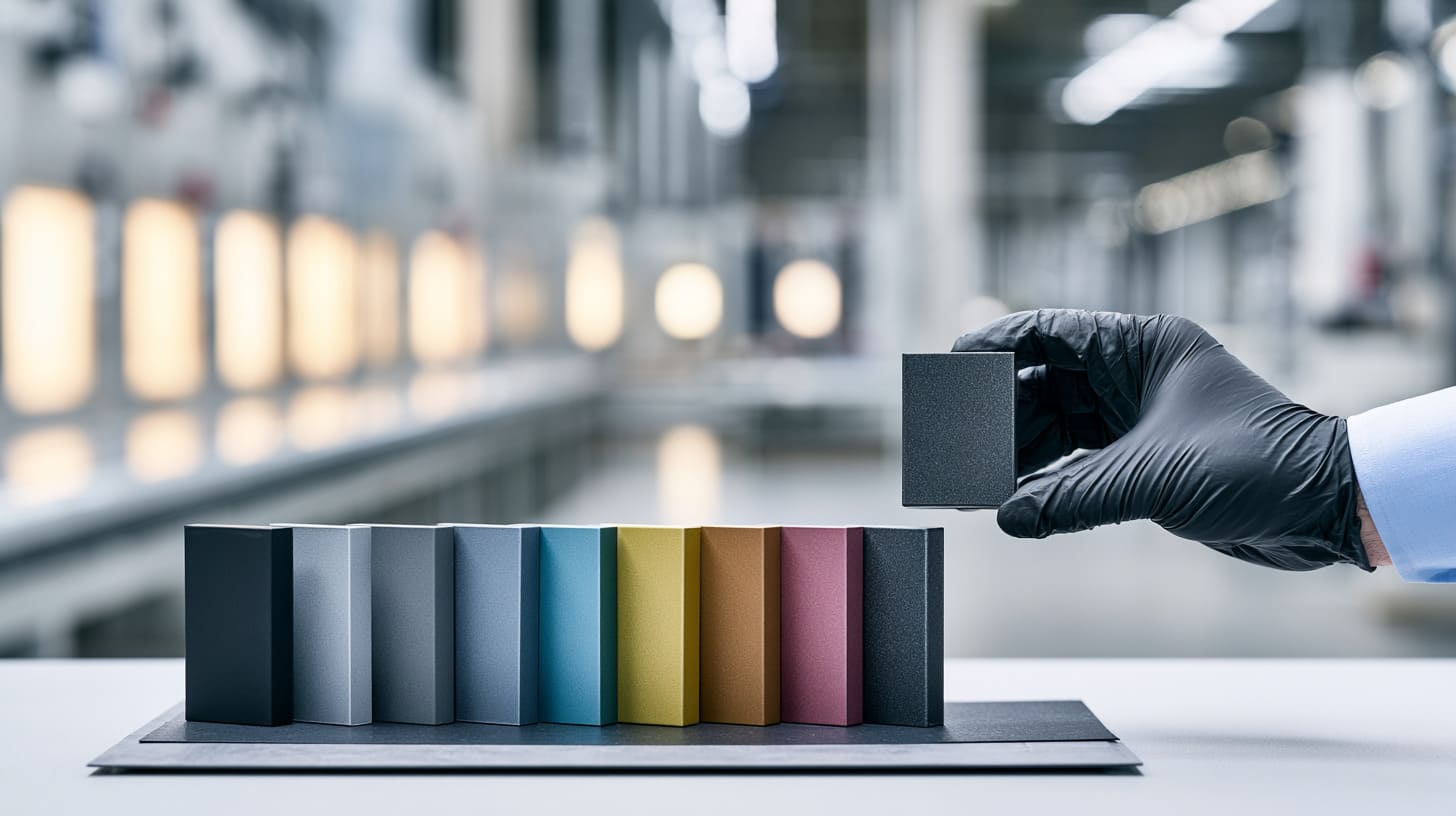
Confirm the finish sample before production
A physical sample is very important for important OEM orders.
Photos help, but photos are not enough.
A finish can look different under:
- Factory light
- Office light
- Sunlight
- Phone camera
- Computer screen
- Different viewing angles
For color and texture, physical confirmation is safer.
The buyer should approve:
- Color
- Gloss
- Texture
- Surface smoothness
- Coating thickness
- Logo effect
- Masking area
- Packaging protection
- Assembly fit
I also suggest keeping one approved sample at the factory and one with the customer.
That way, both sides have a reference.
Confirm inspection standards
“Good quality” is too general.
It sounds nice, but it does not solve arguments.
A better way is to define what good means.
For example:
| Inspection point | Possible standard |
|---|---|
| Visible surface | No obvious scratches, dents, bubbles, peeling |
| Hidden surface | Minor marks acceptable if function is not affected |
| Color | Match approved sample within agreed tolerance |
| Thickness | Within agreed range |
| Adhesion | Pass agreed adhesion test |
| Logo | Position and clarity match approved sample |
| Threads | Screws install smoothly |
| Packaging | No surface damage after transport test |
The standard does not need to be complicated for every project.
But it must be clear.
Clear standards reduce emotional arguments later.
Confirm packaging protection
Many buyers focus on coating but forget packaging.
That is a mistake.
A perfect powder-coated part can still get damaged during shipping.
For enclosures, packaging may need:
- Protective film
- Foam bag
- EPE foam
- Corner protection
- Separate compartments
- Carton strength check
- Pallet packing
- Moisture protection
- Accessory separation
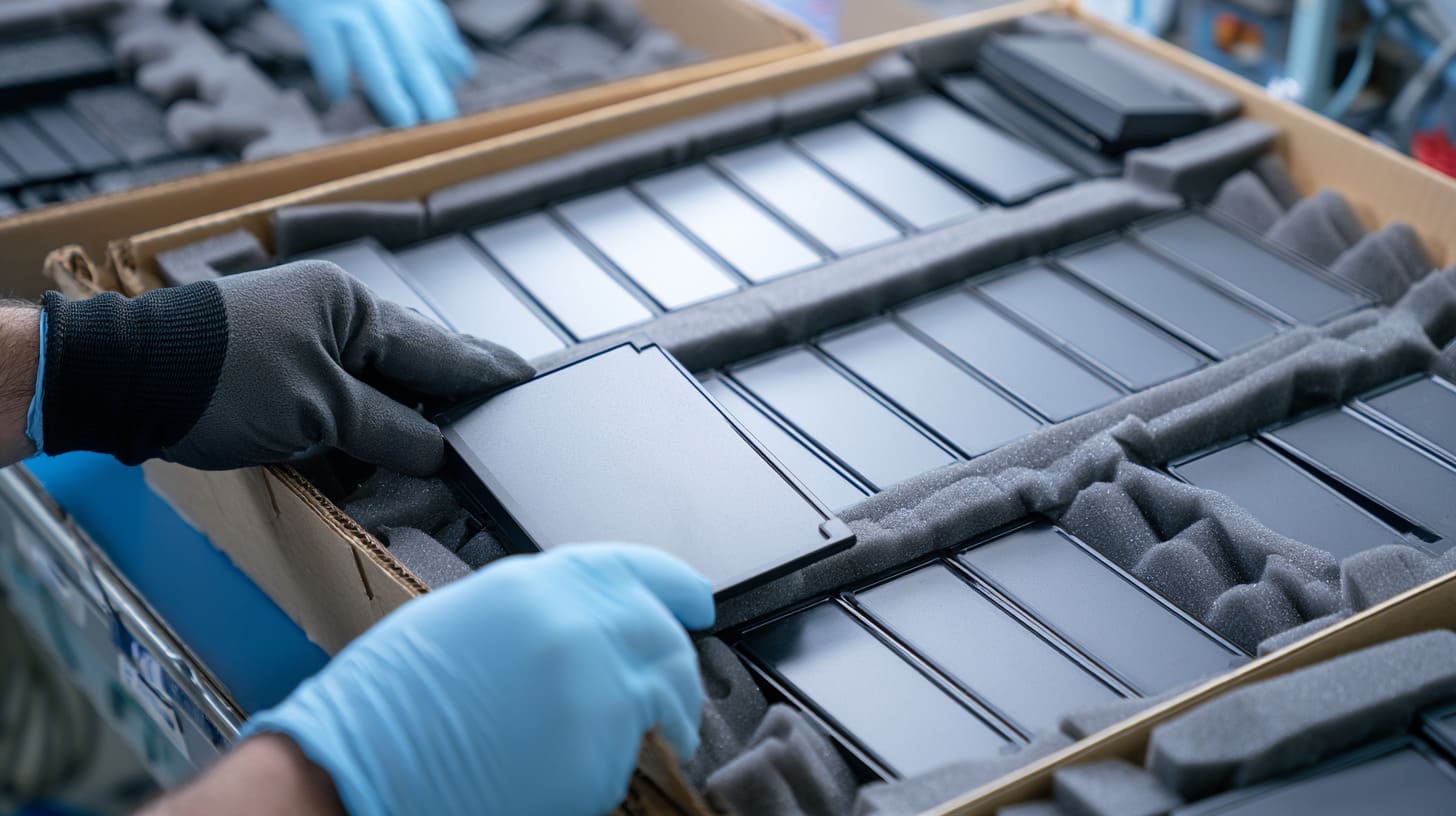
If screws or accessories rub against the coated surface, damage can happen inside the box.
That is painful because the product leaves the factory looking good and arrives looking careless.
Confirm communication speed and responsibility
OEM projects often fail because of slow confirmation.
Not because the factory cannot make the part.
A buyer sends a question. The sales rep waits for the engineer. The engineer waits for production. Production waits for the coating line. The buyer waits across time zones.
Days disappear.
For high-volume projects, communication must be organized.
A good supplier should confirm:
- Drawing questions
- Finish options
- Sample schedule
- Mass production lead time
- Coating standard
- Packaging method
- Shipping plan
- QC report format
For buyers like David, this is very important. He may understand China sourcing, but he may not have patience for slow replies when his project is urgent.
Before I accept mass production pressure, I want the buyer and factory to agree on the sample, coating standard, and packaging method first, because fast production without clear agreement is just a faster way to make the wrong parts.
That may sound strict.
But it protects both sides.
Now let’s turn this into a simple question list buyers can use before choosing powder coating.
What Should OEM Buyers Ask Before Choosing Powder Coating?

Good questions save money.
Bad assumptions spend it.
When an OEM buyer talks with a supplier about powder coating, they do not need to become a coating expert. But they should ask enough questions to know whether the supplier understands the project.
Here are the questions I think are worth asking.
Can the supplier control color consistency across batches?
This is one of the biggest points for OEM products.
A buyer may place one order now and another order later. If the second batch looks different, the product line may feel inconsistent.
The buyer should ask:
- What powder brand or color code will be used?
- Can the factory keep the same powder for repeat orders?
- Will the sample be kept as a reference?
- How will color difference be checked?
- What happens if the powder supplier changes?
For standard black or gray, this may sound too careful.
But even black can have differences in gloss, texture, and depth.
Can the supplier protect critical dimensions?
Powder coating can affect dimensions.
The buyer should ask about:
- Threaded holes
- Screw holes
- Sliding covers
- Connector openings
- Grounding points
- Hinges
- Assembly surfaces
- Internal PCB mounting points
The question is not only “Can you powder coat it?”
The better question is:
“Which areas should not be coated?”
This question often reveals whether the supplier has real experience.
Can the supplier support both sample and mass production?
A sample can be made with extra care.
Mass production tests the system.
The buyer should ask:
- Can you produce the same finish in large quantity?
- What is the normal coating lead time?
- How do you inspect coating thickness?
- How do you handle rejected parts?
- Can you provide photos or videos during production?
- Can you keep a golden sample?
- Can you support repeat orders with the same finish?
A good sample is only the beginning.
The factory must prove it can repeat the result.
Can the supplier suggest the right finish instead of only following words?
This is important.
Some buyers write “powder coating” on the drawing because they heard it is durable. But maybe anodizing is better. Some buyers write “anodizing” because it sounds premium. But maybe powder coating is better for their brand color and volume.
A responsible supplier should be able to say:
- This finish is suitable.
- This finish is risky.
- This area needs masking.
- This tolerance needs adjustment.
- This texture may affect logo printing.
- This outdoor use needs better pretreatment.
- This color may need sample approval first.
That is supplier value.
Not just quoting.
Can the supplier explain the trade-offs clearly?
Every finish has trade-offs.
Powder coating has strengths and limits. A good supplier should explain both.
| Buyer question | What a good supplier should explain |
|---|---|
| Is powder coating durable? | Yes, if pretreatment and curing are controlled |
| Is it good for outdoor use? | It depends on powder type and corrosion requirement |
| Will it affect assembly? | Yes, if tolerances and masking are not planned |
| Can I print logo on it? | Yes, but texture affects logo clarity |
| Can I get the same color next time? | Yes, if color code and sample records are kept |
| Is it cheaper than anodizing? | Depends on part, quantity, color, and process |
| Can it cover inside corners? | Some deep areas may be difficult |
A supplier who only says “yes, no problem” to everything may create problems later.
Sometimes “we need to check this point” is a better answer.
It means the supplier is thinking.
A short buyer checklist
Before confirming powder coating, I suggest buyers check this list:
| Item | Confirmed? |
|---|---|
| Product use environment | Yes / No |
| Color and texture sample | Yes / No |
| Coating thickness range | Yes / No |
| Masking drawing | Yes / No |
| Thread protection | Yes / No |
| Grounding points | Yes / No |
| Logo method | Yes / No |
| Packaging method | Yes / No |
| Inspection standard | Yes / No |
| Repeat order color record | Yes / No |
This checklist is simple.
But simple things work when people actually use them.
When I hear a buyer ask only for the lowest coating price, I usually slow the conversation down, because the better question is whether the finish can protect their product, their brand, and their delivery schedule at the same time.
That is the real OEM question.
Not “How cheap is the coating?”
But “Will this finish help the project succeed?”
Conclusion
I choose powder coating for many high-volume OEM enclosure projects because it gives a useful balance.
It protects well.
It looks clean.
It supports many colors and textures.
It can be repeated in batch production.
It can help control cost when the quantity grows.
It also fits the way many custom enclosure projects really work. Buyers send drawings. They need branding. They need fast confirmation. They need stable quality. They need parts that arrive clean, assemble smoothly, and look ready for the market.
That is why powder coating often makes sense.
But I do not believe in choosing it blindly.
Powder coating is not always better than anodizing. It is not always better than liquid painting. It is not always the right answer for tight tolerance, natural aluminum appearance, deep hidden structures, or special working environments.
The right finish comes from the real project.
That is why I always look at several things before I give my opinion:
- What is the enclosure used for?
- Is it indoor or outdoor?
- Does the buyer need brand color?
- Does the product need tight fitting?
- Are there threaded holes or grounding points?
- Will the order repeat later?
- Can the finish survive assembly and shipping?
- Can the factory control the same result in mass production?
This is how I think after working with custom enclosures for real buyers.
I do not see powder coating as a beautiful surface only. I see it as a production decision. A cost decision. A brand decision. A risk control decision.
For a buyer like David, powder coating can help his OEM enclosure look professional and stay consistent across wholesale and retail channels.
For a buyer like John, powder coating can help turn a new idea into a real product that feels finished, not just assembled.
For re-brand customers like Jackson, powder coating can make a standard or semi-custom enclosure feel like part of a complete product line.
My view is simple: when the project needs color flexibility, durable protection, repeatable batch quality, and controlled cost, powder coating deserves serious attention.
At MaidaTech, we make custom aluminum enclosures, plastic enclosures, sheet metal enclosures, Raspberry Pi style enclosures, and OEM/ODM enclosure solutions for B2B customers. If you already have a drawing, sample, PCB, or only a rough idea, you can send it to us.
I can help you check the structure, material, finish, logo method, packaging, and production risk before you move into mass production.
A good enclosure should not only protect electronics.
It should protect your project from avoidable mistakes.