Skip to content
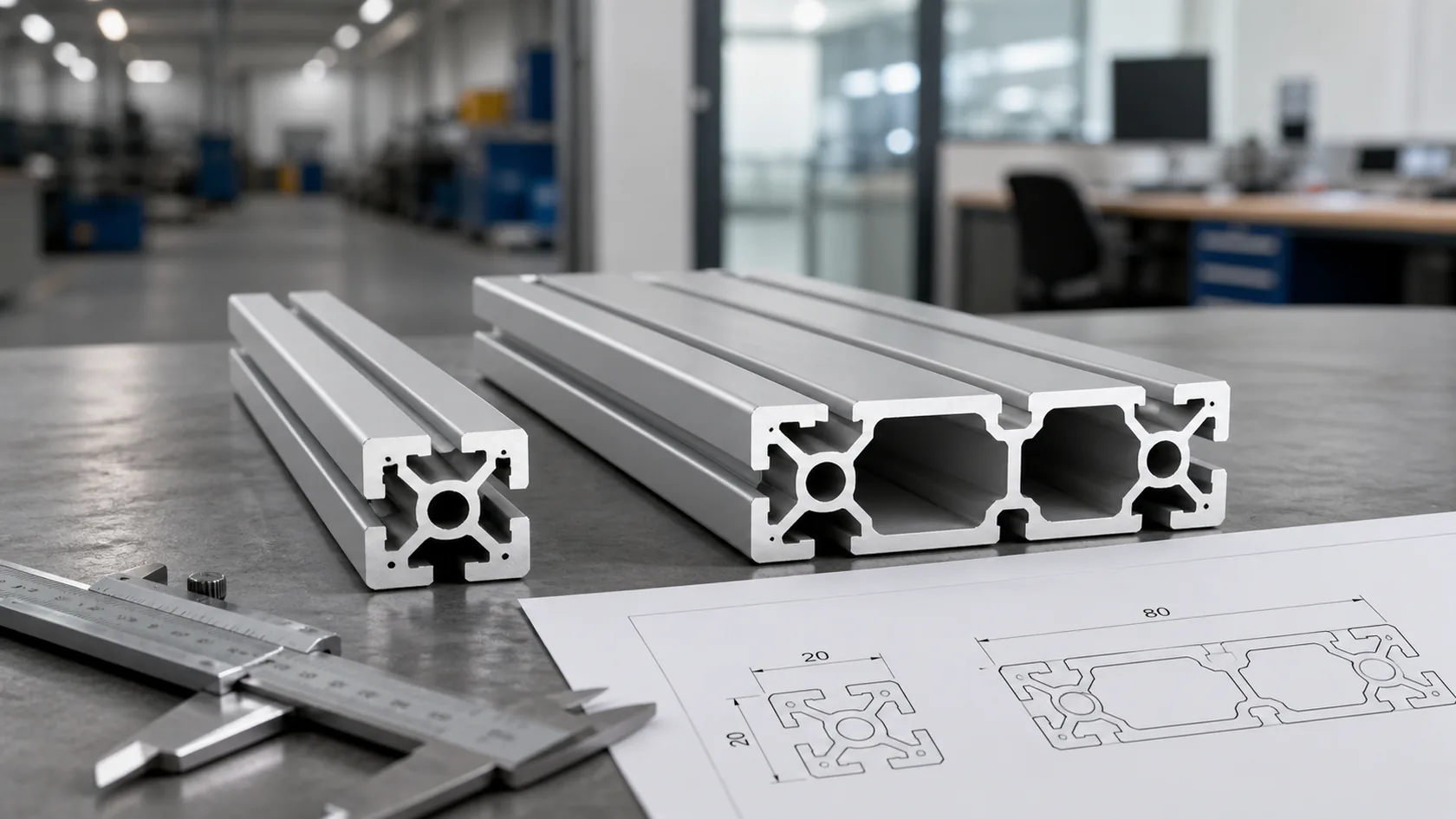
At the quotation bench, two pieces of silver profile can look almost identical in a phone photo. One is a compact 20 × 20 mm rail. The other is a much wider 80 × 20 mm member. Both may be described with a short number, and that is exactly where expensive ordering mistakes begin.
Buyers often ask about “8020 versus 2020 aluminum extrusion” as if the numbers describe two fixed, universal products. They do not. In most metric catalogues, 2020 means a 20 × 20 mm T-slot or V-slot profile. “8020” may mean an 80 × 20 mm profile, but it is also commonly used for the 80/20 brand and for modular T-slot framing in general.
The practical difference is therefore larger than size alone. You need to check the cross-section, slot family, wall design, alloy and temper, accessories, and the load direction. A label tells me where to start a conversation; a drawing tells me what can actually be made and assembled.
This article separates the naming issue from the engineering choice, so you can request the right profile before you buy the wrong brackets, T-nuts, or enclosure panels.
First, Define What “8020” Means

A System Name and a Size Can Use the Same Digits
The word “8020” causes the first problem. 80/20 Inc. is a well-known maker of modular T-slot aluminum framing. Its catalog includes fractional and metric profile families, so “80/20” is not one cross-section or one alloy. The company’s profile identification guide distinguishes fractional and metric naming systems.
In many supplier listings, however, “8020” means an 80 mm × 20 mm profile. In that usage, the first two digits describe one outside dimension and the second two describe the other. It is a useful shorthand only when the supplier has already defined the slot series and section drawing.
| Term on an inquiry | What it may mean | What you should request |
|---|---|---|
| 2020 | A 20 mm × 20 mm metric profile | Section drawing, slot width, kg/m, alloy/temper |
| 8020 | An 80 mm × 20 mm metric profile | Section drawing and orientation of the 80 mm face |
| 80/20 | A brand or modular framing system | Exact series, SKU, compatible hardware list |
When I see “8020” on an RFQ without a drawing, I do not assume the buyer means 80 × 20 mm. I ask whether they mean a physical size, an 80/20-branded series, or simply a T-slot frame. That one question is much cheaper than replacing a mixed shipment.
Once the name is clear, the next issue is whether the section is strong enough in the direction it will be used.
Cross-Section, Stiffness, and Typical Jobs
A Narrow Rail and a Wide Rail Do Different Work
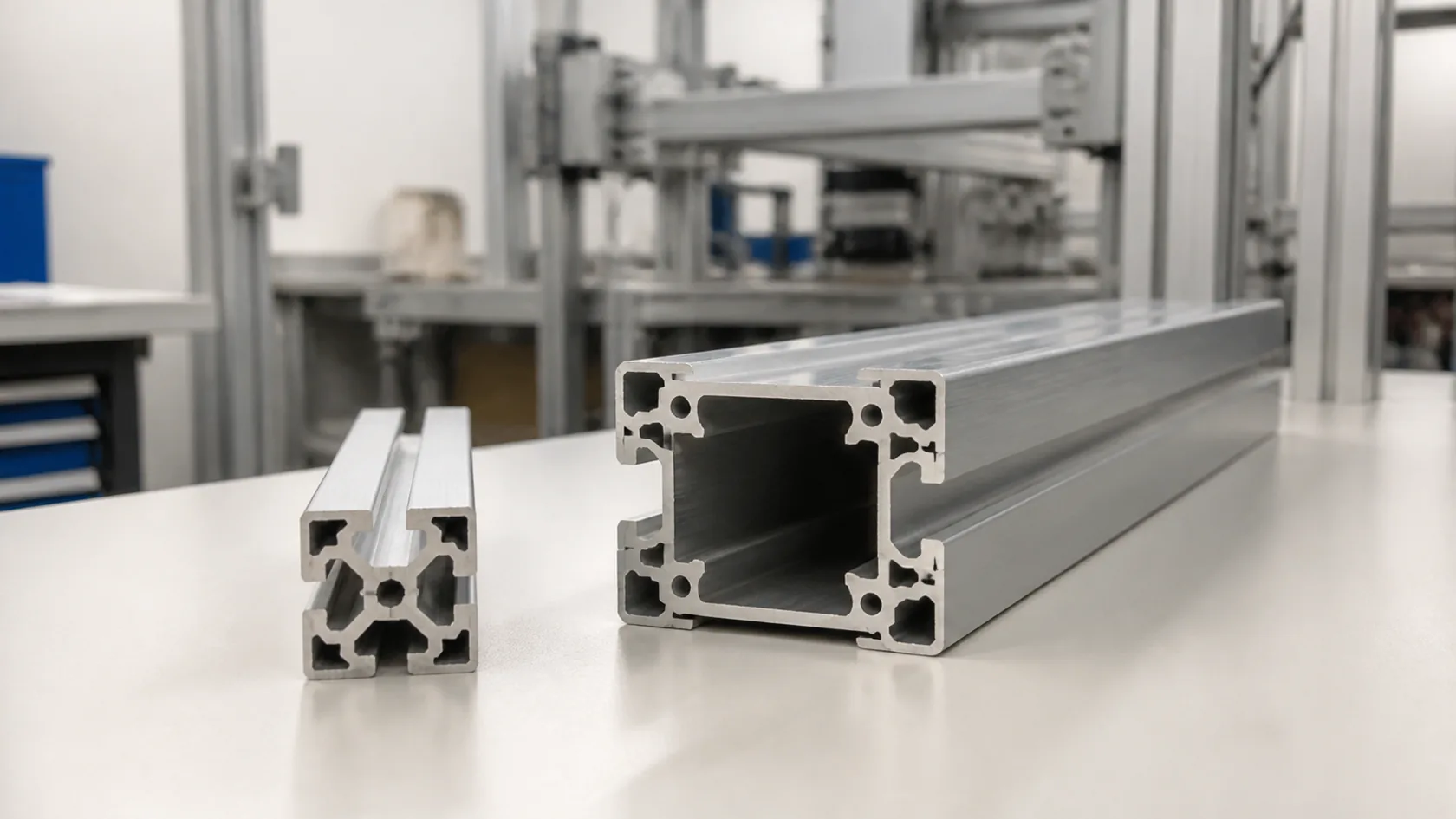
A 2020 profile is compact. One published 20 × 20 mm profile uses four 6.2 mm slots and is positioned for light frames, guards, small equipment covers, and display structures; its listed weight is 0.6 kg/m. See the supplier’s 20 × 20 profile data for an example of why a full section specification matters.
An 80 × 20 mm section has more material spread farther from one axis. When it is oriented with the 80 mm dimension in the direction that resists bending, it is normally much stiffer than a 20 × 20 mm member of the same length. Turn it ninety degrees and the behavior changes again. This is why a profile cannot be selected by its name or by a front-view photo.
| Decision point | 2020 profile, typically 20 × 20 mm | 8020 profile, when it means 80 × 20 mm |
|---|---|---|
| Typical role | Light guards, compact jigs, small covers | Longer spans, machine bases, panels, heavier frames |
| Section geometry | Square and compact | Rectangular; stiffness depends on orientation |
| Space and weight | Lower material use and smaller footprint | More material and a wider mounting face |
| Common risk | Excessive deflection on a long unsupported span | Paying for a large section where a smaller rail would work |
I compare span, load, connection points, and allowable deflection before I compare price per metre. A light rail may be perfect for a small instrument cover, while a long guard door may need a deeper member or an intermediate support. The correct answer comes from the load case, not from the popularity of the profile name.
Strength is only half the decision. The other half is whether the hardware actually fits the grooves.
Slot Series and Accessories Decide Compatibility
Outside Dimensions Do Not Define the Interface
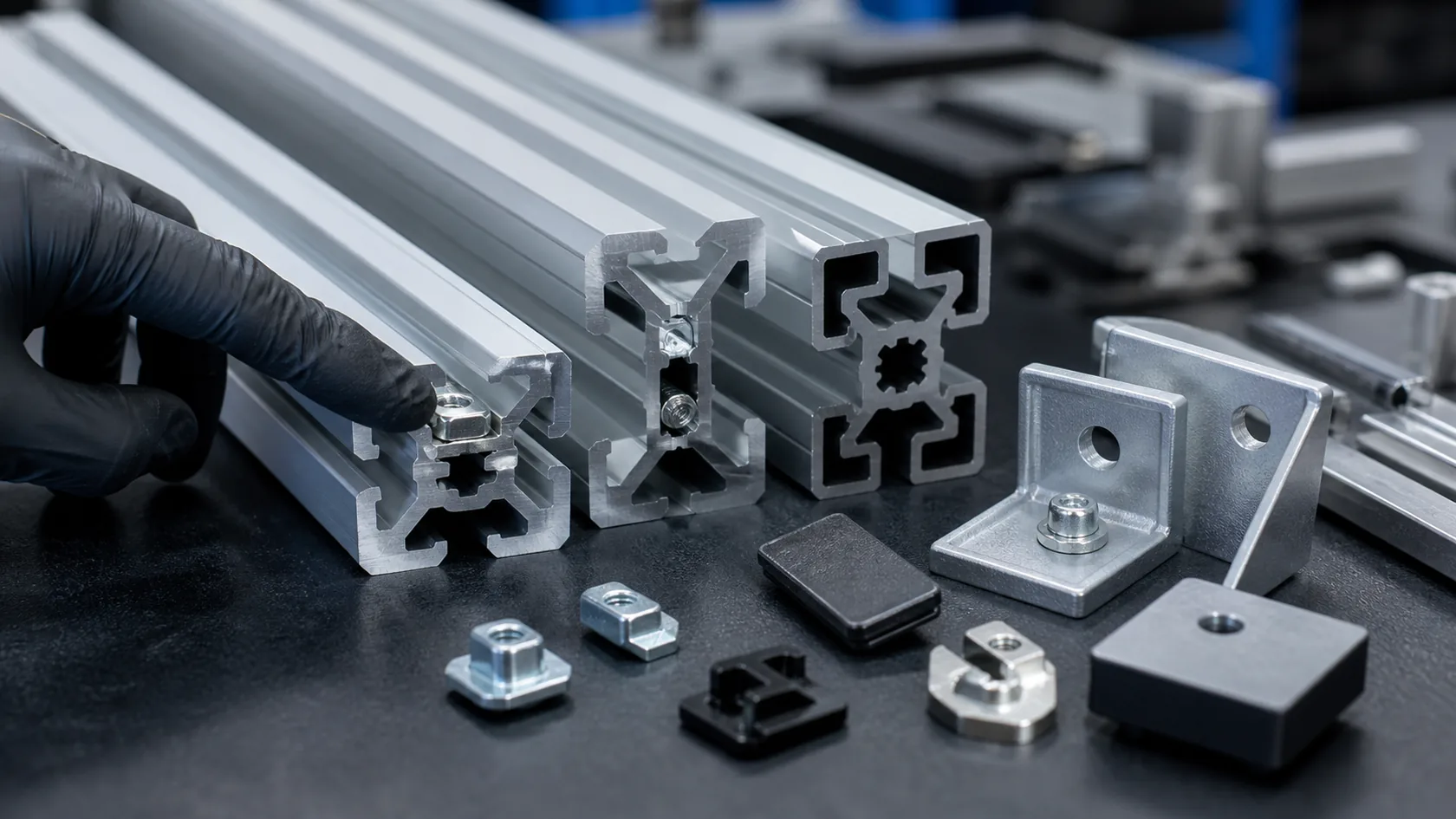
Two profiles can both measure 20 × 20 mm and still reject each other’s T-nuts, brackets, end caps, and panel retainers. The slot may be a 6 mm nominal groove, an 8 mm family, or a proprietary shape. Its mouth width, undercut, core bore, and corner radius can all differ.
That is why a 2020 extrusion is not a complete specification. A profile marketed as 20 × 20 mm can use 6.2 mm slots, while another supplier can use a different interface. The Aluminum Association’s tolerance guidance is also a useful reminder that actual extrusion dimensions need defined tolerances, not assumptions.
| Check before ordering hardware | Why it matters |
|---|---|
| Slot width and undercut shape | Determines whether the T-nut enters and locks |
| Number and location of slots | Determines where a panel or bracket can attach |
| Core bore and tapping method | Affects end fasteners and internal connectors |
| Corner radius and outer face shape | Affects end caps, covers, and flush panel fit |
| Bracket and fastener family | Prevents mixing systems that look alike but do not clamp correctly |
In factory work, I treat accessories as part of the profile specification, not as afterthoughts. A frame may look fine during dry assembly but loosen under vibration if the nut or bracket was chosen from a different groove family. A cut-end drawing and a hardware sample prevent that surprise.
With compatibility under control, the purchase order needs enough information for every supplier to quote the same item.
What to Put on Your Drawing and RFQ
Use a Short Specification That Cannot Be Reinterpreted
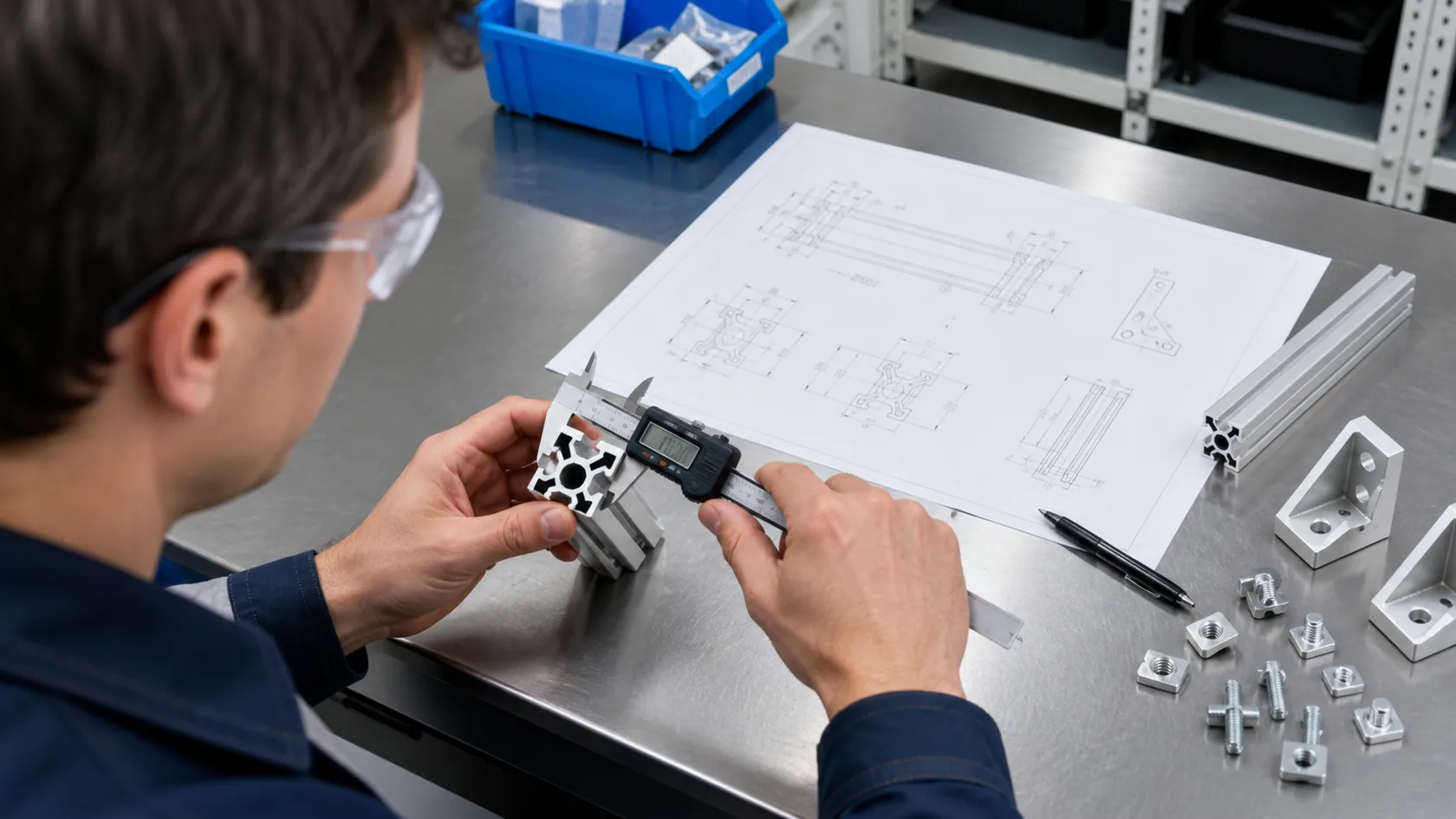
“2020 anodized profile, 20 pieces” is not an adequate RFQ. It leaves too much open: wall thickness, slot design, length tolerance, alloy, finish, and accessories can all change while the outside dimensions remain the same.
Use this checklist instead:
- Outside cross-section in millimetres, with a dimensioned section drawing.
- Slot width, slot shape, and the number of slotted faces.
- Wall thickness, internal bore, and weight per metre.
- Alloy and temper, such as 6063-T5 where appropriate.
- Surface finish, colour, and anodizing or coating requirement.
- Cut length, cut tolerance, and end-treatment requirement.
- Required T-nuts, bolts, brackets, end caps, and panel accessories.
- Load direction, span, environment, and any deflection limit.
My quotation review starts by checking whether the buyer has included weight per metre and the exact accessory family. These details make it much harder for a thin-wall substitute or an incompatible nut to enter the project unnoticed. They also make competing quotes genuinely comparable.
This specification is useful even when the extrusion is only the structure around a more important electronics assembly.
When an Extrusion Frame Needs an Enclosure
A Strong Frame Does Not Protect Electronics by Itself
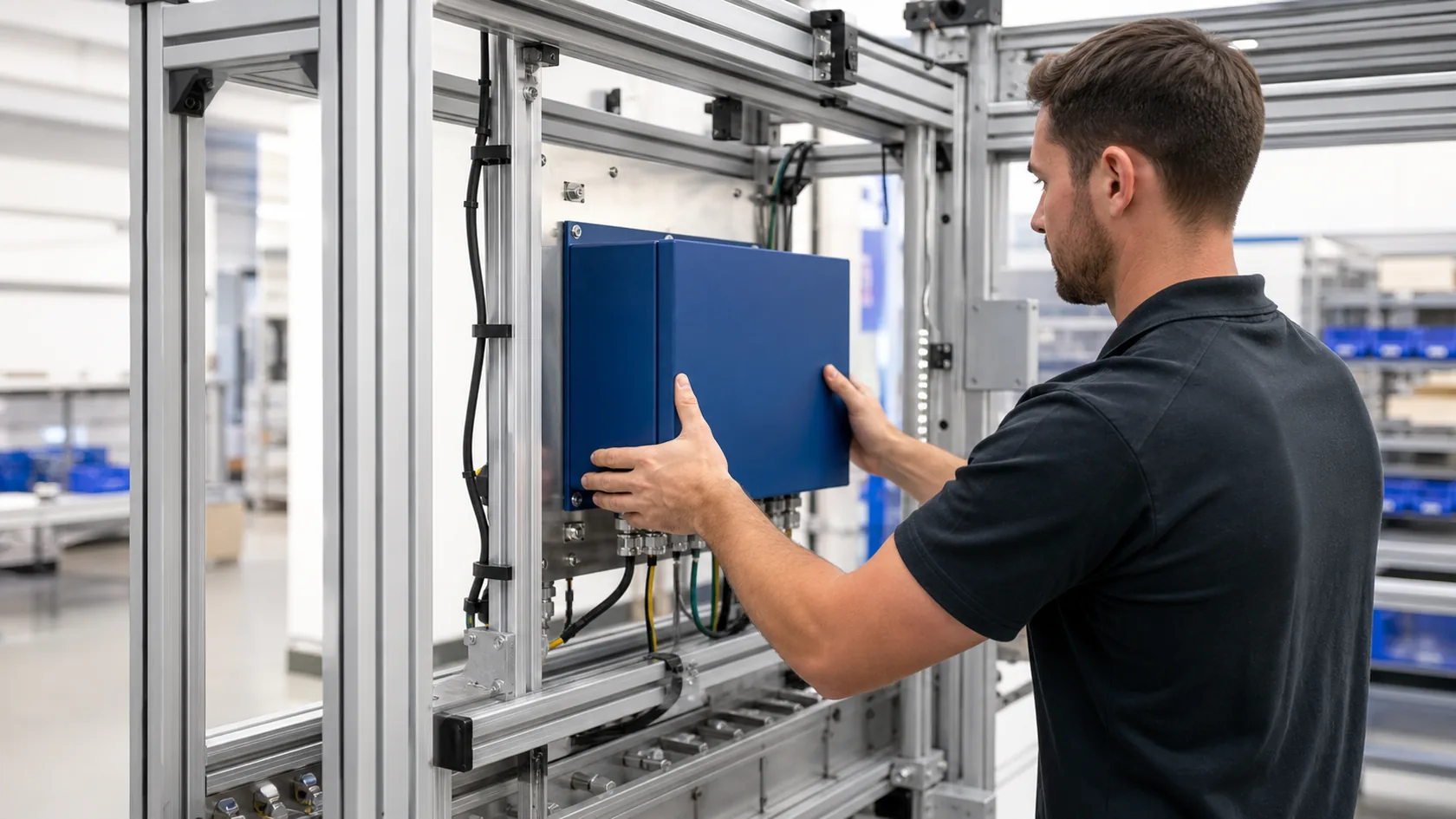
Aluminum extrusion is excellent for adjustable machine frames, safety guards, test fixtures, and equipment supports. It is not automatically an electrical enclosure. A T-slot leaves open grooves, joint lines, and many possible cable paths. Dust control, water resistance, electrical access, EMC needs, and a finished customer-facing appearance require separate design decisions.
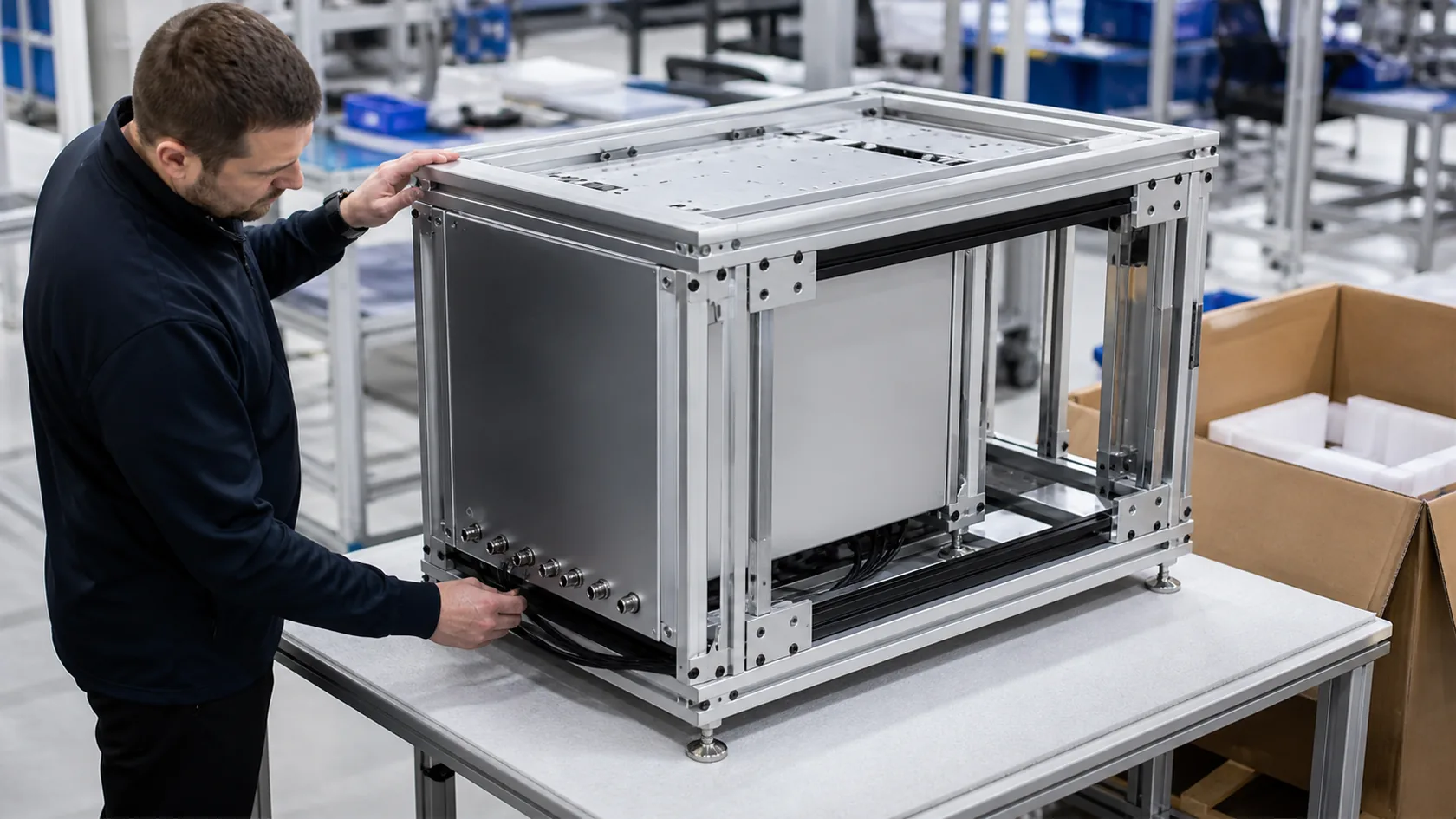
For many equipment projects, the clean approach is to use extrusion for the frame and add a purpose-made aluminum or sheet-metal enclosure for controls, power supplies, displays, and connectors. Custom panels can be drilled, machined, printed, and finished around the real components rather than forcing those components into a generic profile groove.
I look closely at cable routing and service access when a customer wants to hide electronics inside an extrusion frame. Saving one enclosure at the start can create a difficult maintenance job later, especially when a technician must reach a power supply, terminal block, or connector through a narrow slot.
The best frame choice therefore supports the enclosure design instead of competing with it.
Conclusion
The difference between 8020 and 2020 aluminum extrusion begins with language. 2020 usually means a 20 × 20 mm metric profile. 8020 may mean an 80 × 20 mm section, or it may refer to an 80/20 modular framing brand or system. Neither label tells you enough to buy safely.
From my experience, the reliable choice comes from a dimensioned section drawing, a defined slot and accessory family, weight per metre, load direction, and a clear plan for the electronics enclosure. Those details decide stiffness, assembly speed, compatibility, and long-term serviceability.
If you are building equipment around a T-slot frame and need a custom aluminum enclosure, front panel, or protective cover, send MaidaTech the profile drawing and component layout. We can review the fit, cable entry, finish, and manufacturability before the frame and enclosure become two separate problems.