Skip to content
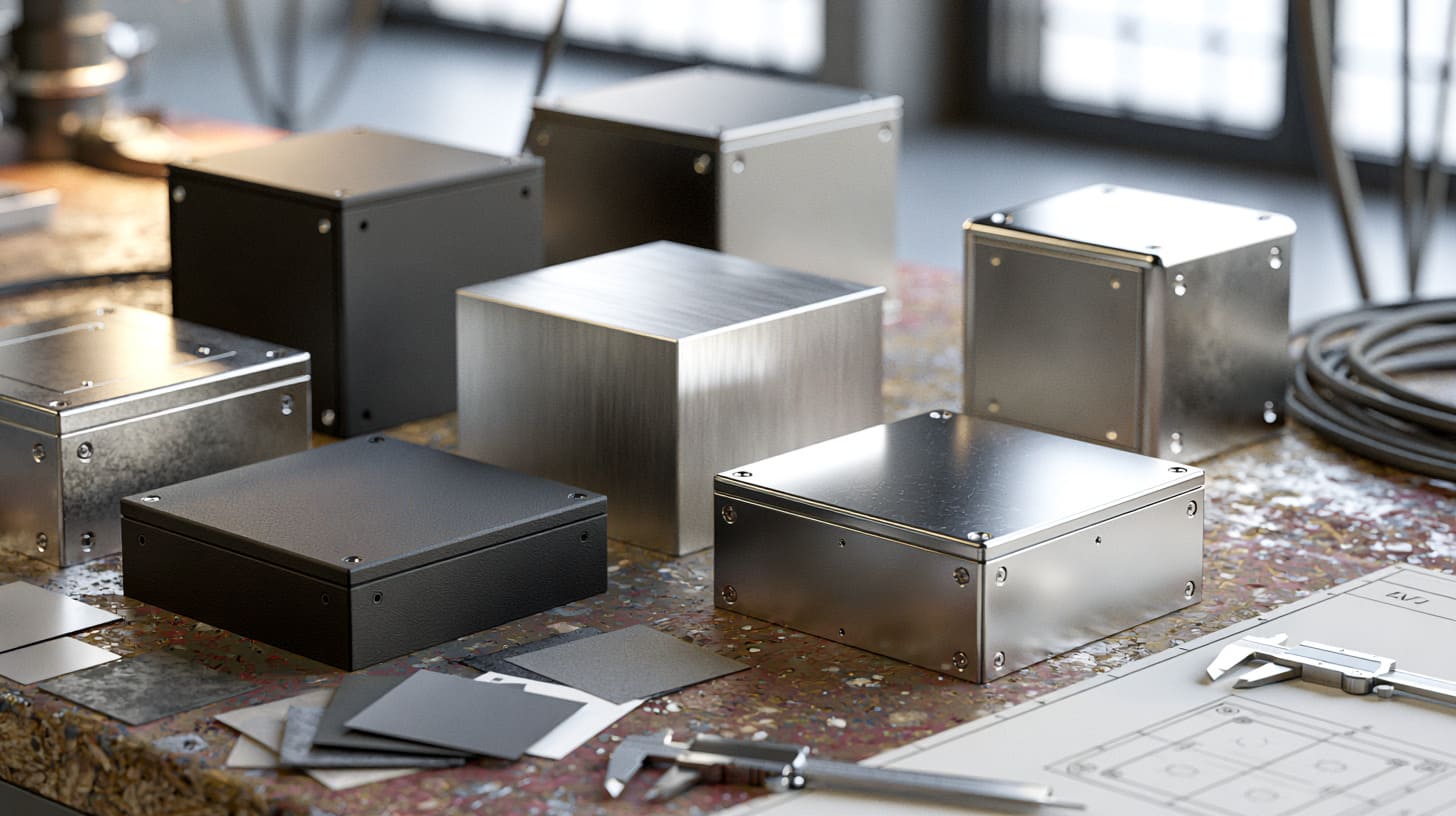
A clean 3D drawing arrives in my inbox. The dimensions look clear. The cutouts are marked. The buyer has even included the Pantone color.
Then I read the final line:
“Which surface treatment is the best?”
I receive this question often from OEM buyers, product engineers, and business owners. They may already be comparing powder coating, anodizing, wet painting, plating, brushing, or polishing. They usually want one simple answer.
I understand why.
Surface treatment looks like a separate item on a quotation sheet. Buyers can compare the price, appearance, color, and lead time. It feels like choosing a finish for a kitchen cabinet.
An industrial enclosure is not a kitchen cabinet, though.
The surface may need to survive humidity, sunlight, chemicals, salt air, repeated assembly, scratches, heat, and years of handling. It may also need to maintain electrical conductivity at grounding points.
A finish that looks perfect on a sample may fail after installation.
Before I discuss a finish, I first judge whether the buyer has described the product’s real working life.
That is the part many buyers miss.
The most expensive finish is not always the best. The hardest surface is not always the most suitable. A beautiful finish may even create new problems if the enclosure needs grounding, heat transfer, tight assembly tolerances, or later machining.
The better question is not:
Which surface treatment is the best?
The better question is:
Which surface treatment matches the enclosure material, application environment, manufacturing process, expected lifetime, and business target?
That question changes the whole discussion.
It moves the conversation away from a finish catalog and toward the real product.
When buyers start with the wrong question, they may face:
- Rust around welded areas
- Coating peeling from edges
- Color differences between production batches
- Poor grounding performance
- Scratches during assembly
- Higher maintenance costs
- Unexpected redesign work
- Project delays
- Customer complaints after delivery
I do not choose a surface treatment because it sounds premium. I choose it because it helps the enclosure perform its job at a reasonable cost.
The difference sounds small, but it can decide whether an OEM project runs smoothly or becomes an expensive lesson.
“Which Surface Treatment Is the Best?” Is Usually the Wrong Starting Point
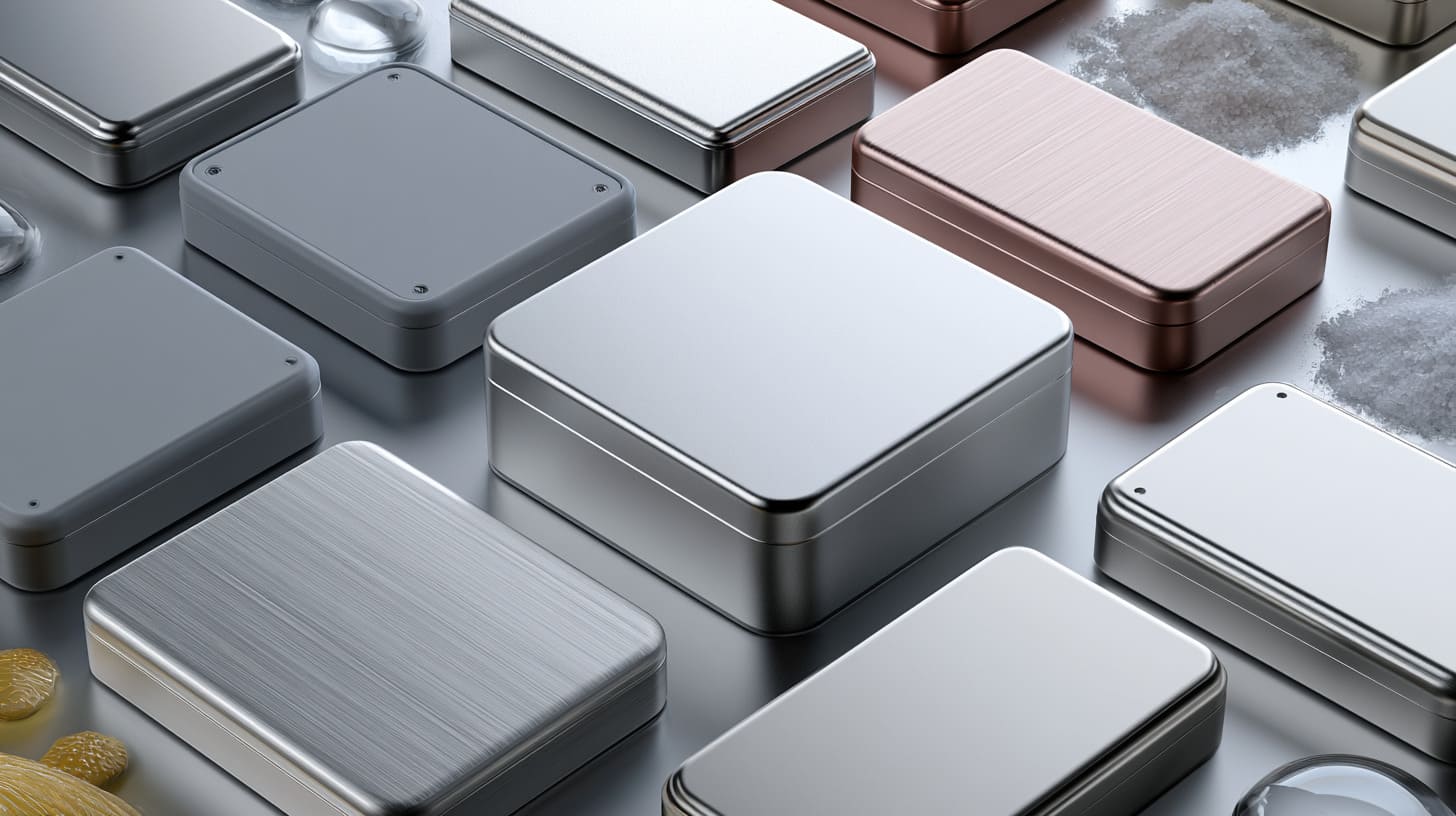
When a buyer asks for the best finish, I treat that as a sign that the application is still under-defined.
The question is not foolish. It is simply too broad.
A buyer may want a quick comparison like this:
| Surface Treatment | Common Buyer Impression |
|---|---|
| Powder coating | Durable and colorful |
| Anodizing | Premium and corrosion-resistant |
| Wet painting | Flexible and easy to match |
| Plating | Technical and protective |
| Brushing | Clean metallic appearance |
| Polishing | Smooth and high-end |
This table is not completely wrong. It is just incomplete.
The word “best” needs a target.
Best for what?
- Best appearance?
- Best salt-spray resistance?
- Best scratch resistance?
- Best electrical conductivity?
- Best color consistency?
- Best price for 100 pieces?
- Best price for 10,000 pieces?
- Best outdoor lifetime?
- Best option for later laser marking?
- Best option for a heat-sensitive assembly?
A finish can lead in one area and perform poorly in another.
Why OEM Buyers Naturally Focus on Surface Treatment Types
Most buyers see surface treatment as a visible feature. They can touch it, photograph it, and compare it with a competitor’s product.
The working environment is less visible.
A black powder-coated enclosure looks simple in a product photo. The buyer may not see the phosphate pretreatment, masking method, coating thickness, curing temperature, edge coverage, or corrosion test behind it.
An anodized aluminum housing may look premium. The buyer may not know that different aluminum alloys, machining marks, welding areas, and extrusion batches can produce visible color differences.
I once discussed a custom enclosure with a buyer who wanted black anodizing because a competing product used it. His product had several welded parts and cosmetic surfaces from different material batches.
Black anodizing sounded right from a marketing point of view.
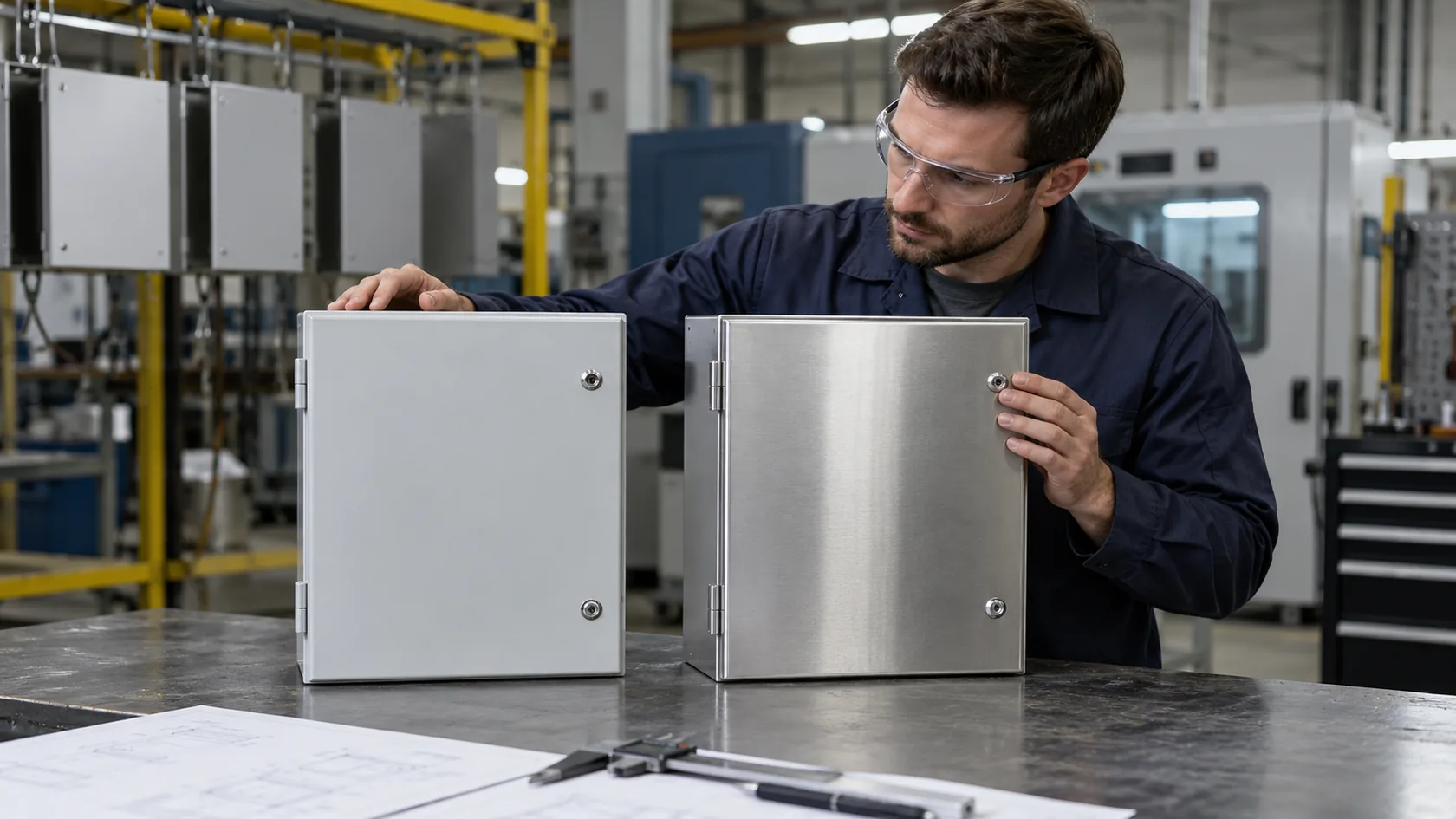
From a production point of view, it carried a real risk. The welded areas and different aluminum parts could show uneven shades. Powder coating offered better visual consistency for that structure.
The buyer was not wrong to like anodizing. He was using the wrong reason to select it.
Why There Is No Universal Best Surface Treatment
Different environments create different types of failure.
| Application | Main Risk | Surface Treatment Priority |
|---|---|---|
| Indoor electronic equipment | Scratches, fingerprints, appearance | Cosmetic quality and basic protection |
| Outdoor telecom equipment | Rain, UV, temperature changes | Corrosion and UV resistance |
| Coastal installation | Salt and moisture | Strong corrosion protection |
| Factory equipment | Oil, chemicals, impact | Chemical and mechanical resistance |
| Consumer electronics | Appearance and touch | Cosmetic consistency |
| Electrical cabinet | Corrosion and grounding | Protection plus electrical contact control |
| Food-related equipment | Cleaning and hygiene | Cleanability and chemical compatibility |
A finish that works well indoors may not last near the sea.
A finish that gives strong corrosion protection may cover grounding areas unless the supplier masks them correctly.
A finish that looks beautiful may show every machining line underneath.
A thick coating may also interfere with hinges, threaded holes, connector openings, press-fit parts, or sliding covers.
I therefore do not rank surface treatments from best to worst.
I rank them from suitable to unsuitable for a specific product.
Once I stop asking for the best finish, I can start asking what the enclosure must survive.
Surface Treatment Should Be Selected Based on Application Conditions
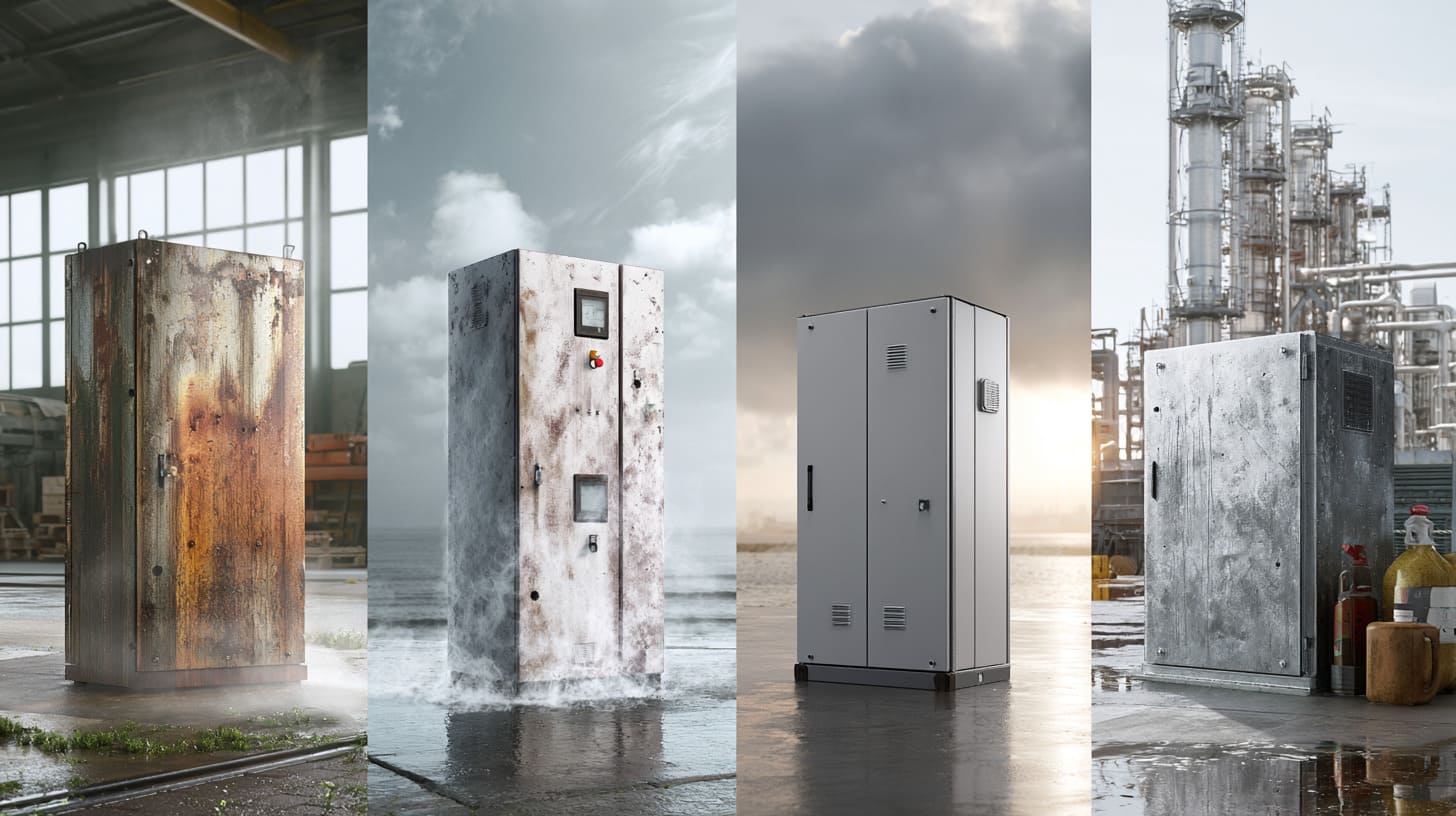
The detail I trust most is not the product photo but the place where the enclosure will spend 99% of its life.
A beautiful sample tells me how the product looks today. The application environment tells me how it may look three years later.
Environmental Factors OEM Buyers Should Evaluate
Before I recommend a finish, I want to understand the actual exposure.
Moisture and Humidity
Humidity can enter small scratches, uncoated edges, welded seams, threaded holes, and poorly protected contact areas.
For a dry indoor enclosure, normal powder coating may provide enough protection.
For an enclosure installed in a humid workshop, outdoor cabinet, basement, greenhouse, or tropical region, I need to look more closely at:
- Base material
- Pretreatment
- Coating thickness
- Edge coverage
- Drainage design
- Sealing structure
- Fastener material
- Contact between different metals
Surface treatment cannot correct every structural problem.
If water remains trapped inside a folded edge, even a good coating system may eventually face trouble.
Salt Spray and Coastal Air
Salt speeds up corrosion. It also finds weak areas quickly.
For coastal equipment, I do not only ask whether a finish has passed a salt-spray test. I also ask:
- How many hours were tested?
- Which test standard was used?
- Was the test performed on a flat panel or a finished enclosure?
- Were scratches added before testing?
- How were cut edges protected?
- Were welded corners included?
- What happened around screws and joints?
A flat coated test panel and a finished fabricated enclosure are not the same thing.
The finished enclosure has bends, holes, welds, sharp edges, and assembly points. Those areas often fail first.
UV Sunlight
Outdoor sunlight can cause fading, chalking, loss of gloss, and gradual coating damage.
Dark colors absorb more heat. This can affect the internal temperature of an electronic enclosure.
A buyer may choose matte black because it matches the brand. I may still need to ask whether the unit sits under direct sunlight in Arizona, Spain, Australia, or the Middle East.
The color decision is then no longer only about branding.
It also affects:
- Surface temperature
- UV aging
- Internal heat
- Touch safety
- Long-term appearance
Chemicals and Cleaning Agents
Some industrial enclosures face oil, fuel, alcohol, cleaning chemicals, acids, or alkaline solutions.
A standard coating may work well in a normal room but soften or stain after repeated chemical contact.
I want to know the chemical name, concentration, contact time, and cleaning frequency.
“Chemical-resistant” is too broad. Water-based cleaner and strong industrial solvent create very different risks.
Temperature Changes
Temperature affects more than the coating itself.
Repeated heating and cooling can create expansion differences between the metal and the surface layer. It can also affect seals, adhesives, labels, and printed logos.
For high-temperature equipment, I check:
- Normal operating temperature
- Maximum short-term temperature
- Heat source position
- Outdoor temperature range
- Curing limits for assembled parts
- Whether coating is applied before or after assembly
Mechanical Wear
An enclosure may be handled once during installation, or it may be opened every week.
These are different products.
A portable controller, test instrument, battery box, or field device may face:
- Scratches
- Impacts
- Tool contact
- Repeated cleaning
- Sliding friction
- Frequent assembly
A wall-mounted indoor cabinet may face very little wear after installation.
How Working Conditions Change My Recommendation
| Working Condition | What I Focus On | Possible Direction |
|---|---|---|
| Dry indoor use | Appearance and cost | Standard powder coating or anodizing |
| Humid indoor use | Pretreatment and edge protection | Enhanced powder-coating system |
| Outdoor use | UV and corrosion | Outdoor-grade powder coating or suitable anodizing |
| Coastal use | Salt resistance | Strong pretreatment, marine-grade material, or multi-layer protection |
| Chemical environment | Chemical compatibility | Tested coating or suitable stainless steel |
| High-wear use | Scratch and impact resistance | Harder coating or anodizing |
| High-heat use | Thermal stability | High-temperature coating or bare conductive areas |
| Electrical grounding required | Contact resistance | Masked areas or conductive treatment |
I do not use this table as an automatic answer.
I use it to decide which questions need more attention.
The environment narrows the choices, but the base material can narrow them even further.
The Same Surface Treatment Performs Differently on Different Materials
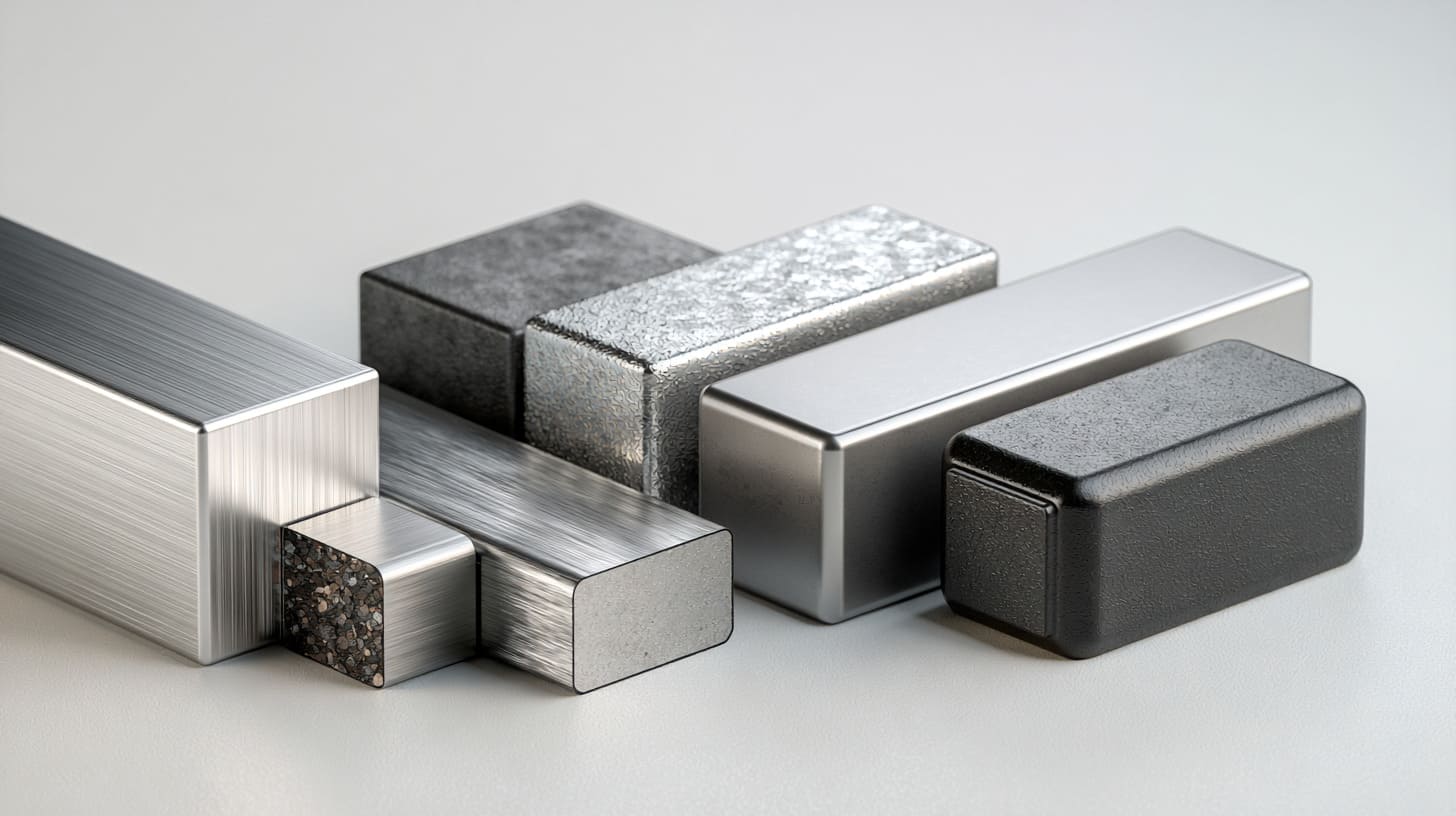
I would rather change the base material early than use an expensive coating to hide a poor material choice.
Surface treatment and material should not be selected in separate meetings.
They work together.
Aluminum Enclosure Surface Treatment Considerations
Aluminum already forms a thin natural oxide layer. That gives it some corrosion resistance, but the actual performance still depends on the alloy, environment, design, and finish.
For custom aluminum enclosures, I often discuss anodizing and powder coating.
Anodizing
Anodizing grows a controlled oxide layer from the aluminum surface.
It can provide:
- Better corrosion resistance
- Improved surface hardness
- A metallic appearance
- Better wear resistance
- A suitable surface for laser marking
- A thin finish that normally changes dimensions less than thick paint
Anodizing works well for many extruded and CNC-machined aluminum housings.
However, anodizing does not hide the material underneath.
Machining lines, scratches, dents, extrusion marks, alloy differences, and welding areas may remain visible.
The aluminum surface becomes part of the final appearance.
Powder Coating on Aluminum
Powder coating adds a colored protective layer over the aluminum.
It provides:
- A wide color range
- Better visual coverage
- Different gloss and texture options
- Good impact resistance
- More consistent appearance across mixed surfaces
- Better ability to hide minor material differences
Powder coating is useful when the buyer needs a specific brand color or a more uniform look.
However, pretreatment still matters.
Powder does not bond well simply because aluminum is clean to the eye. The supplier needs a controlled cleaning and conversion process.
Steel Enclosure Surface Treatment Considerations
Steel can offer good strength and cost performance. It also needs proper corrosion protection.
Powder Coating on Steel
Powder coating is common for:
- Electrical cabinets
- Control boxes
- Machinery covers
- Indoor industrial enclosures
- Wall-mounted cabinets
- Equipment frames
The final result depends heavily on pretreatment.
Steel may require:
- Degreasing
- Rust removal
- Phosphating or another conversion treatment
- Drying
- Controlled powder application
- Correct curing
If pretreatment is weak, the coating may look fine at delivery and still fail later.
Galvanizing
Galvanizing adds zinc protection to steel.
The zinc helps protect the steel even when small areas are damaged.
It is often considered for:
- Outdoor structures
- Utility boxes
- Harsh industrial environments
- High-corrosion applications
However, galvanizing has its own design and appearance limits.
It may create:
- Surface variation
- Additional thickness
- Drainage and venting requirements
- Distortion risk on thin parts
- More difficult cosmetic control
- Extra challenges for threads and close tolerances
A galvanized product is not automatically better than a powder-coated product. It is better only when its protection method fits the application.
Why Material and Treatment Must Be Considered Together
| Base Material | Common Finish | Main Strength | Point I Check Carefully |
|---|---|---|---|
| Extruded aluminum | Anodizing | Metallic look and wear resistance | Batch color variation |
| Sheet aluminum | Powder coating | Color and coverage | Pretreatment and masking |
| Carbon steel | Powder coating | Cost and appearance | Rust protection under coating |
| Galvanized steel | Powder coating | Combined corrosion protection | Adhesion and cut edges |
| Stainless steel | Brushing or passivation | Natural corrosion resistance | Grade and contamination |
| Die-cast aluminum | Powder coating | Uniform appearance | Porosity and outgassing |
I also check material thickness and fabrication method.
Welding changes the local surface. Bending may create sharp edges. CNC machining exposes fresh metal. Laser cutting can leave oxide. Die casting may contain trapped gas.
These manufacturing details affect the finish.
The material creates the foundation, but many poor decisions still begin with appearance.
Choosing Based Only on Appearance
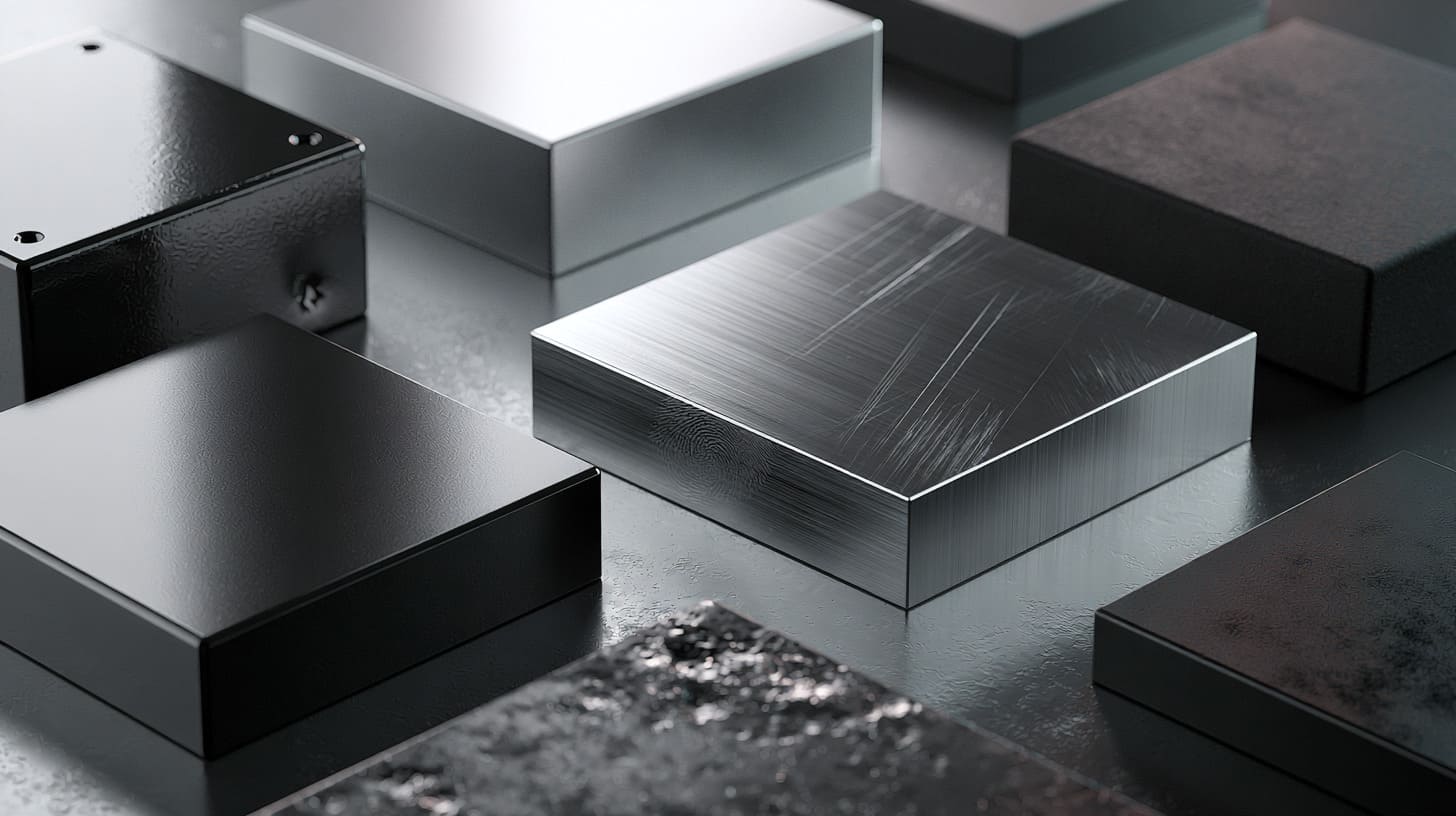
When appearance is the main reason, I always ask what happens after the first scratch.
Appearance matters. I never tell a buyer to ignore it.
OEM products need to match a brand. They need to look professional. A rough finish can reduce the value of a well-designed product.
The problem starts when appearance becomes the only requirement.
Why Buyers Follow Competitor Finishes
A buyer may send me a product photo and say:
“Please make our enclosure with the same finish.”
That request sounds clear, but a photo cannot tell me:
- The base material
- The exact surface process
- The coating thickness
- The pretreatment method
- The gloss level
- The texture
- The lighting conditions
- The product environment
- The expected lifetime
A competitor may use anodizing because the housing is made from one extrusion profile.
The buyer’s new enclosure may use several welded sheet-metal parts.
The same finish may not produce the same visual result.
A competitor may use a soft-touch coating for an indoor consumer device.
The buyer’s product may be handled with oily gloves in a workshop.
The same appearance can create a different performance.
Premium Appearance Does Not Always Mean Premium Performance
Brushed aluminum can look clean and expensive. It can also show fingerprints and scratches.
High-gloss paint can look impressive in a showroom. It can highlight every dent, weld mark, and surface wave.
Fine-texture powder coating can hide small defects. It can also collect dirt more easily in some environments.
Matte black looks modern. It may absorb heat outdoors and show oil marks during assembly.
| Finish Choice | Visual Benefit | Possible Hidden Issue |
|---|---|---|
| Matte black | Modern and industrial | Heat absorption and handling marks |
| High gloss | Bright and premium | Shows dents and surface defects |
| Fine texture | Hides small imperfections | Can trap dirt |
| Brushed metal | Clean metallic look | Directional scratches and fingerprints |
| Polished metal | Reflective and premium | High labor cost and visible marks |
| Dark anodizing | Technical appearance | Color variation between batches |
I therefore ask buyers to define appearance more clearly.
Instead of saying “premium,” I suggest defining:
- Color reference
- Gloss range
- Texture level
- Acceptable color difference
- Viewing distance
- Cosmetic surface class
- Sample approval method
- Packaging protection
- Assembly handling rules
Appearance should be controlled as a requirement, not used as a guess.
A beautiful finish may win attention, but cost decides whether many buyers approve it.
Choosing Based Only on Initial Cost
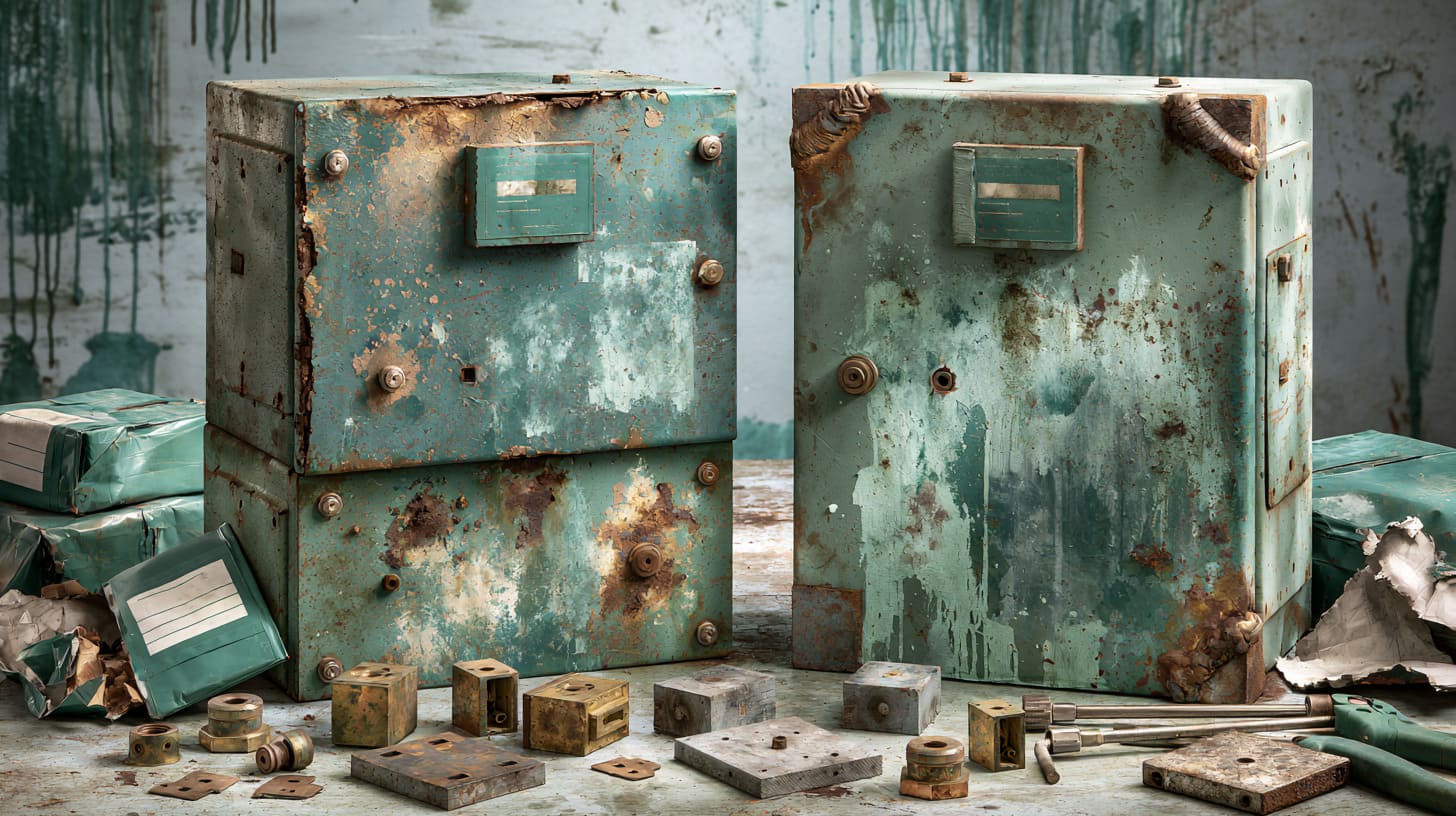
A low coating price only matters when the finish can survive the warranty period.
OEM buyers work under budgets. I respect that.
I also understand why a buyer may choose the lowest quoted finish. The product may still be under development. The first order may be small. Cash flow may be tight.
Still, the lowest unit price can hide costs that appear later.
Why a Cheaper Treatment Can Become More Expensive
A low-cost finish may reduce the first purchase price. It may also create:
- More rejected parts
- Rework
- Delayed assembly
- Replacement orders
- Warranty claims
- Field maintenance
- Customer complaints
- Brand damage
- Emergency shipping costs
Imagine that a buyer saves USD 1.20 per enclosure by selecting a basic coating.
The project uses 1,000 enclosures, so the initial saving is USD 1,200.
Six months later, 80 units show corrosion near cut edges. The buyer needs to replace them.
The real cost may include:
| Cost Item | Possible Impact |
|---|---|
| Replacement enclosures | New manufacturing cost |
| Air shipment | High emergency freight |
| Technician visits | Labor and travel |
| Customer support | Lost time |
| Project delay | Contract or schedule risk |
| Reputation damage | Difficult to measure |
| Internal investigation | Engineering resources |
The original USD 1,200 saving may disappear quickly.
Total Product Cost Matters More Than Finish Price
I prefer to compare three levels of cost.
Level 1: Purchase Cost
This includes:
- Material
- Surface treatment
- Packaging
- Inspection
- Freight
Level 2: Manufacturing Cost
This includes:
- Masking
- Rework
- Rejected parts
- Thread cleaning
- Assembly problems
- Color matching
- Extra handling
Level 3: Lifetime Cost
This includes:
- Maintenance
- Replacement
- Warranty
- Customer complaints
- Product downtime
- Brand reputation
| Option | Initial Cost | Production Risk | Lifetime Risk |
|---|---|---|---|
| Basic indoor coating | Low | Low to medium | High outdoors |
| Enhanced powder system | Medium | Medium | Lower in suitable use |
| Anodizing | Medium | Depends on cosmetics | Low in suitable aluminum use |
| Galvanizing plus coating | High | Higher process complexity | Low in harsh steel applications |
| Stainless steel with simple finish | High material cost | Lower coating dependency | Good in suitable environments |
I do not always recommend the most durable option.
That would also be poor judgment.
A heavily protected enclosure used in a clean indoor office may waste money. The buyer may pay for performance that the product never needs.
The goal is not maximum protection at any cost.
The goal is enough protection, with a sensible safety margin.
To find that balance, I need product requirements before I look at available finishes.
Start With Product Requirements, Not Available Finishes
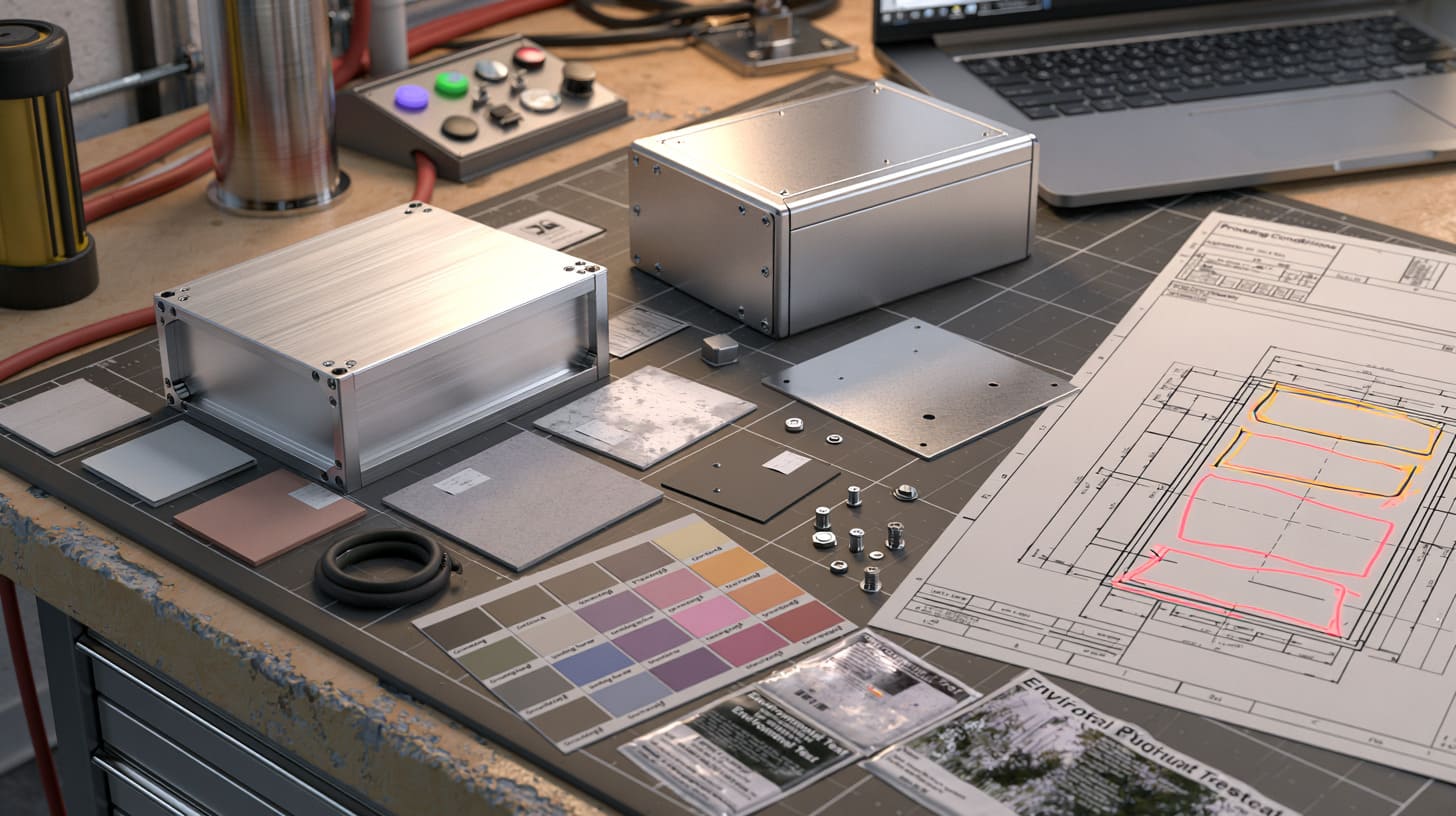
I judge a finish by the failure it must prevent, not by the sample board it looks best on.
Surface-treatment suppliers often show attractive sample panels. These samples help with color and texture selection.
They do not define the product requirement.
I begin with the product.
Questions I Ask Before Recommending a Finish
Where Will the Enclosure Be Installed?
I ask for the real location.
“Outdoor” is not enough.
An enclosure under a roof in Germany faces a different environment from an enclosure beside the sea in Florida.
I may ask:
- Is the enclosure protected by a shelter?
- Does rain hit it directly?
- Is it close to the coast?
- Does water collect around it?
- Is it mounted horizontally or vertically?
- Is it exposed to dust, oil, or chemicals?
- Can sunlight reach it all day?
How Long Should the Product Last?
A temporary test unit and a ten-year infrastructure product need different decisions.
I ask about:
- Expected service life
- Warranty period
- Maintenance schedule
- Replacement difficulty
- Cost of product failure
A finish for a two-year indoor device may not suit a remote installation that must operate for ten years.
How Important Is Appearance?
I ask which surfaces are cosmetic.
A hidden mounting bracket does not need the same visual control as a customer-facing front panel.
This can reduce cost.
The buyer may use:
- Class A surfaces for visible front areas
- Class B surfaces for side areas
- Functional standards for hidden parts
I prefer this approach to demanding perfect cosmetics on every surface.
Is Electrical Conductivity Required?
Surface treatment can block electrical contact.
This matters for:
- Grounding points
- EMI shielding
- Connector contact areas
- Threaded grounding studs
- Chassis bonding
- Antenna mounting
- Heat-transfer surfaces
I may recommend masking selected areas or using conductive treatments.
A fully coated enclosure can look excellent and still fail an electrical test.
Are There Certification Requirements?
Some projects need compliance with specific industry, customer, or environmental requirements.
I ask about:
- Salt-spray requirements
- RoHS
- REACH
- Food-contact limitations
- Fire-related requirements
- Medical-device requirements
- Customer coating specifications
- Approved color systems
A Requirement Sheet Produces Better Decisions
| Requirement | Buyer Information |
|---|---|
| Base material | Aluminum, carbon steel, stainless steel |
| Installation | Indoor, outdoor, sheltered, coastal |
| Temperature | Normal and maximum |
| Exposure | Water, UV, salt, chemicals, abrasion |
| Expected life | Number of years |
| Cosmetic level | Visible and hidden surfaces |
| Color | RAL, Pantone, or approved sample |
| Electrical needs | Grounding, shielding, conductivity |
| Production quantity | Prototype and mass production |
| Test requirement | Adhesion, thickness, salt spray, color |
| Assembly needs | Masking, threads, tight fits |
| Packaging | Scratch and surface protection |
This information gives me a real starting point.
The product requirement tells me what I need. The manufacturing process tells me whether the supplier can produce it consistently.
Evaluate Surface Treatment From a Manufacturing Perspective
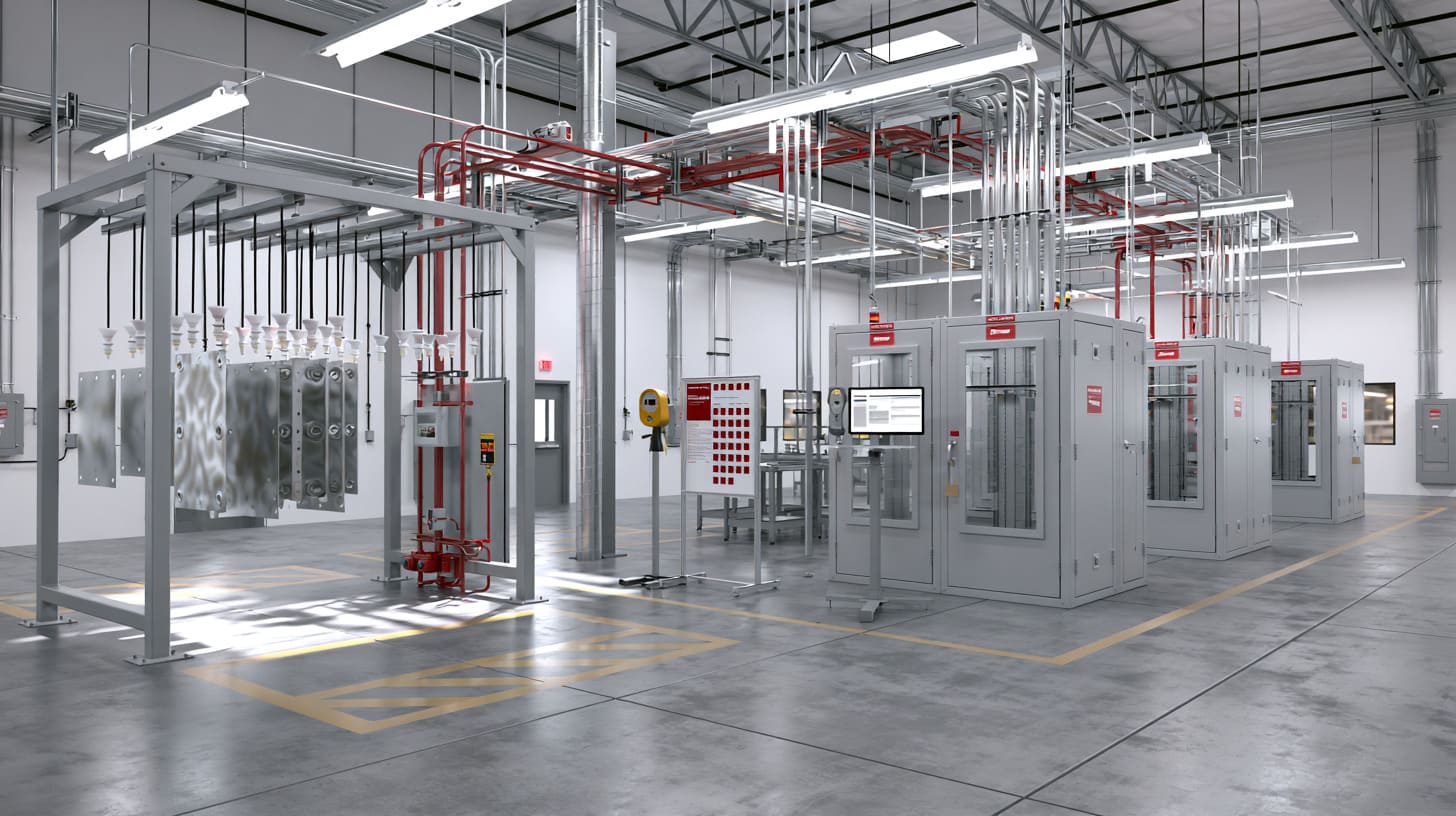
A finish name tells me little until I know the pretreatment, thickness control, masking, and inspection method.
Two suppliers may both quote “black powder coating.”
The words are the same.
The result may not be.
Surface Preparation Controls Adhesion
Paint and powder need a clean, prepared surface.
Oil, dust, oxidation, laser scale, polishing residue, and fingerprints can reduce adhesion.
The surface may require:
- Degreasing
- Cleaning
- Rinsing
- Conversion treatment
- Drying
- Coating
- Curing
- Inspection
If a supplier skips or weakens these steps, the coating may peel or bubble.
The buyer may not see the problem during delivery inspection.
The failure may appear after humidity, heat, or impact enters the picture.
Coating Thickness Needs Control
A thicker coating is not always better.
Too little thickness may reduce protection and coverage.
Too much thickness may cause:
- Poor fit
- Covered threads
- Tight sliding parts
- Rounded edges
- Connector interference
- Uneven appearance
- Curing problems
| Area | Possible Thickness Issue |
|---|---|
| Threaded holes | Powder blocks the thread |
| Hinges | Movement becomes tight |
| Connector openings | Connector no longer fits |
| Sliding covers | Friction increases |
| Grounding points | Electrical contact is lost |
| Gasket channels | Seal compression changes |
| Sharp edges | Coverage may become thin |
I therefore need to know both the general thickness range and the critical areas.
Masking Is Part of the Design
Masking should not be treated as a last-minute workshop decision.
The drawing should identify areas that must remain uncoated.
These may include:
- Grounding points
- Threaded holes
- Press-fit holes
- Bearing surfaces
- Heat-transfer surfaces
- Electrical contacts
- Gasket contact areas
- Connector interfaces
Clear masking drawings reduce mistakes.
They also make quotations more accurate because masking adds labor.
Curing Temperature Can Affect Parts
Powder coating usually requires oven curing.
This may affect:
- Plastic inserts
- Adhesives
- Rubber parts
- Pre-installed electronics
- Certain magnets
- Labels
- Seals
I prefer to complete coating before heat-sensitive assembly whenever possible.
If the design requires coating after assembly, I check every installed component.
Production Consistency Matters
A sample can be excellent because the supplier gives it special attention.
Mass production is the real test.
I evaluate whether the supplier can control:
- Color
- Gloss
- Texture
- Thickness
- Adhesion
- Masking
- Hanging marks
- Dust
- Scratches
- Packaging
| Inspection Item | What It Helps Control |
|---|---|
| Visual inspection | Dirt, scratches, uneven coverage |
| Thickness test | Protection and assembly fit |
| Cross-cut adhesion test | Coating bond |
| Color comparison | Batch consistency |
| Gloss measurement | Appearance consistency |
| Salt-spray test | Corrosion performance |
| Fit check | Assembly interference |
| Packaging test | Transport damage |
A good finish needs a good process.
This becomes especially clear with powder coating, because buyers often see it as the default answer.
Powder Coating: Flexible Protection for Many Applications
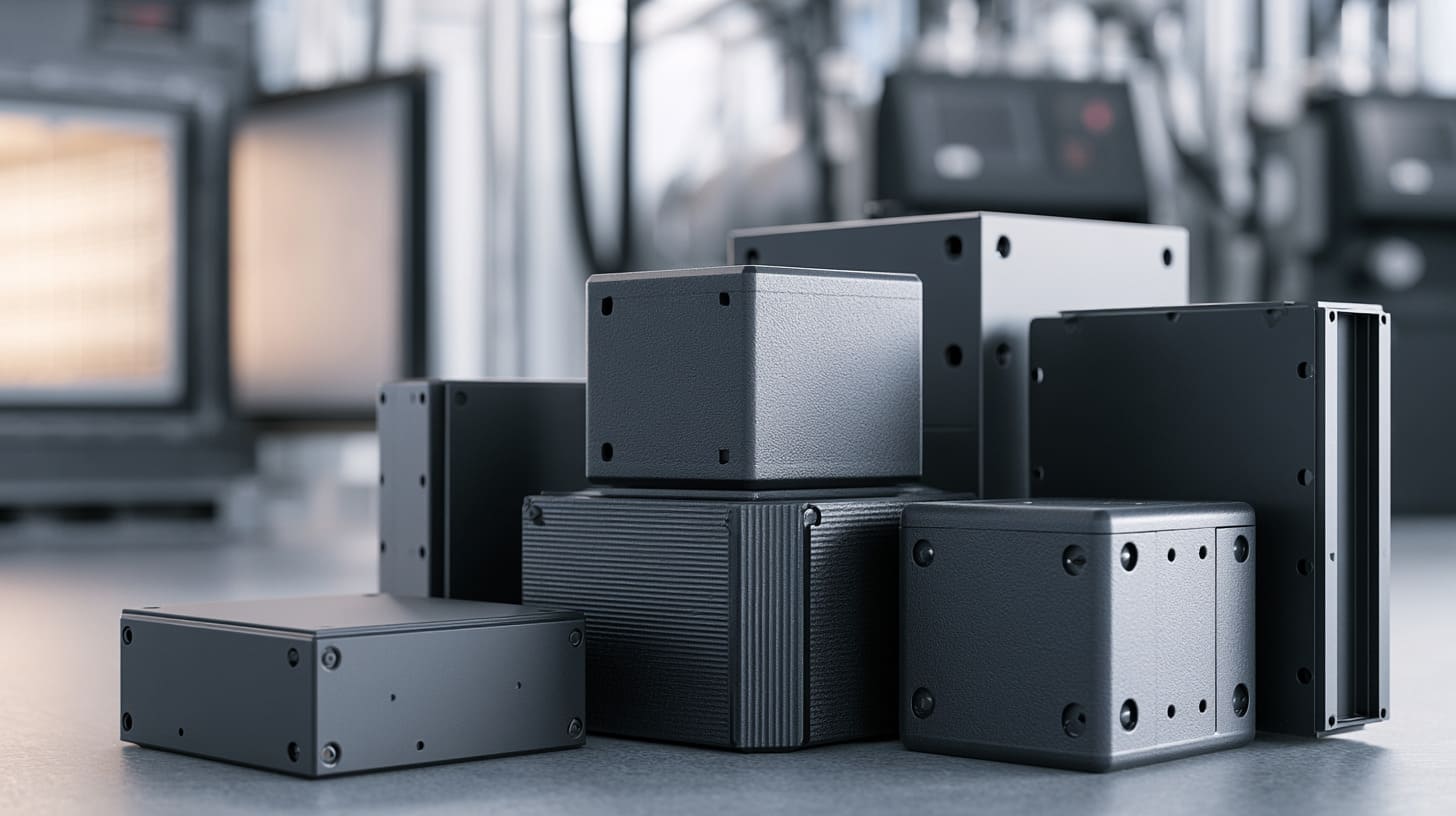
I normally choose powder coating when I need color, coverage, and practical durability, but I do not use it to solve every corrosion problem.
Powder coating is one of the most common finishes for custom enclosures.
It works on many aluminum and steel products. It also gives buyers many choices in color, gloss, and texture.
Why Powder Coating Is Popular
Powder coating can offer:
- Wide color selection
- Good impact resistance
- Good surface coverage
- Matte, gloss, and textured options
- No liquid solvent in the application material
- Strong visual consistency
- Suitability for small and large enclosures
It can also cover minor visual differences better than anodizing.
For a fabricated enclosure with several panels, welds, and different surface directions, this can be useful.
Powder Coating Still Depends on Pretreatment
Powder is not a magic skin.
If rust, oil, oxidation, or contamination remains under the surface, the coating may fail.
I pay close attention to:
- Cleaning
- Conversion treatment
- Drying
- Coating thickness
- Oven temperature
- Curing time
- Edge coverage
Steel and aluminum may need different pretreatment systems.
The product environment should decide how strong that system needs to be.
Edge Coverage Is Often Overlooked
Powder tends to pull away from very sharp edges.
This can leave a thinner protective layer in the exact area where corrosion may start.
I may suggest:
- Adding a small edge radius
- Removing sharp burrs
- Improving pretreatment
- Using a primer system
- Redesigning water-trapping seams
Good corrosion performance starts before the coating line.
Powder Coating Can Create Assembly Problems
I have seen buyers approve the color and forget the fit.
A coating thickness of only a few tenths of a millimeter can matter when both mating parts are coated.
For example:
- A cover slides into a body.
- The body receives coating on both inner sides.
- The cover receives coating on both outer sides.
- The total clearance becomes too small.
The drawing may have worked perfectly before coating.
The assembled product does not.
I therefore include coating allowance in the mechanical design.
When Powder Coating Is a Good Fit
| Situation | My View |
|---|---|
| Brand color is important | Usually a strong option |
| Fabricated steel cabinet | Common and practical |
| Mixed cosmetic surfaces | Good visual coverage |
| Moderate outdoor use | Suitable with correct powder and pretreatment |
| High-impact handling | Often suitable |
| Tight precision fits | Needs masking or allowance |
| Strong grounding needs | Needs planned bare contact areas |
| Severe coastal exposure | May need a stronger full protection system |
Powder coating is flexible, but aluminum buyers often compare it directly with anodizing.
That comparison needs more than a list of advantages.
Anodizing: A Premium Finish for Aluminum Enclosures
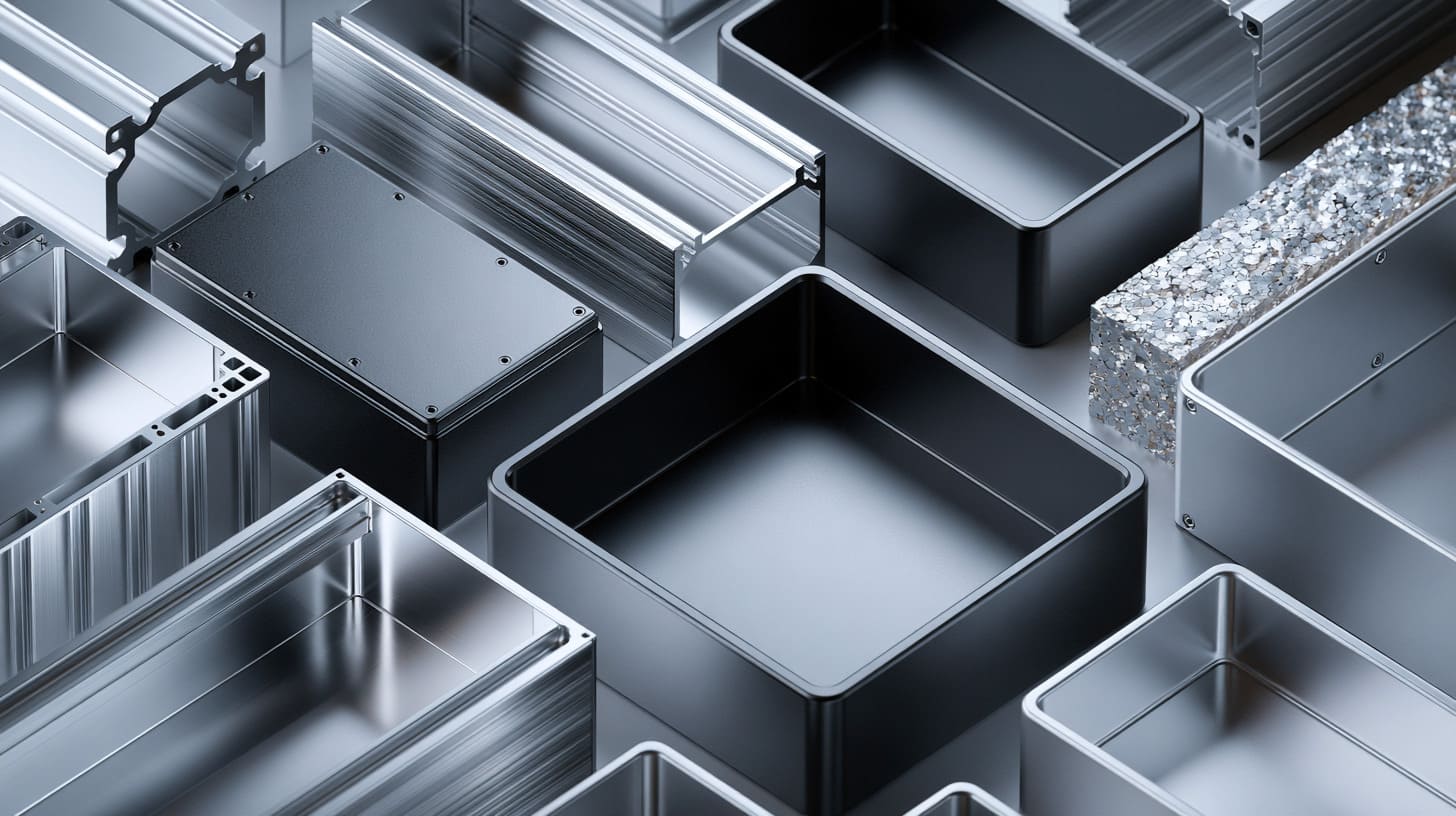
I choose anodizing when the aluminum itself should remain part of the visual design, not when the buyer expects paint-like color consistency.
Anodizing does not sit on aluminum in the same way that paint does.
The process changes the aluminum surface and creates a controlled oxide layer.
This gives anodized parts their metallic character.
Main Advantages of Anodizing
Anodizing can provide:
- Good corrosion resistance
- Improved surface hardness
- Better wear resistance
- A metallic appearance
- Thin and controlled surface growth
- Good laser-marking contrast
- No risk of paint peeling in the same form as a coating layer
It is common for:
- Extruded aluminum housings
- Electronic instrument cases
- Audio equipment
- Industrial controllers
- Small CNC-machined enclosures
- Consumer electronic products
Anodizing Does Not Hide Surface Defects
This point causes many cosmetic disputes.
Anodizing may reveal:
- Extrusion lines
- Milling marks
- Scratches
- Dents
- Welding zones
- Surface repair
- Alloy differences
- Different grain directions
The buyer may approve a beautiful sample made from one CNC-machined block.
The mass-production parts may come from extrusions with visible die lines.
The process name is the same, but the base surface is different.
Color Variation Is Normal, but It Must Be Controlled
Anodized color can vary because of:
- Aluminum alloy
- Material batch
- Surface finish
- Part shape
- Anodizing time
- Bath condition
- Dye condition
- Sealing process
Black anodizing usually offers more visual tolerance than light colors, but black can still vary.
Parts from different suppliers or different batches may not match perfectly.
For assemblies with several visible aluminum parts, I prefer to process them together when possible.
Welding and Anodizing Need Careful Review
Welded areas may anodize differently from the surrounding material.
The color may become uneven. The weld line may remain visible.
If the product requires a perfectly uniform cosmetic finish, powder coating may be safer.
If the buyer values a real metallic surface and accepts some natural variation, anodizing may still be suitable.
Powder Coating and Anodizing Compared
| Factor | Powder Coating | Anodizing |
|---|---|---|
| Material | Aluminum and steel | Mainly aluminum |
| Color range | Very wide | More limited |
| Metallic appearance | Usually covered | Maintained |
| Surface defect hiding | Better | Limited |
| Thickness | Higher | Lower |
| Scratch behavior | Can chip or scratch | Harder surface in many cases |
| Batch color consistency | Usually easier | More sensitive to material and process |
| Electrical conductivity | Usually insulating | Usually insulating unless treated or masked |
| Laser marking | Possible with planning | Often very suitable |
| Complex welded parts | Better visual coverage | Welds may remain visible |
Anodizing and powder coating cover many OEM needs, but some projects require different functions.
Other Surface Treatments OEM Buyers Should Understand
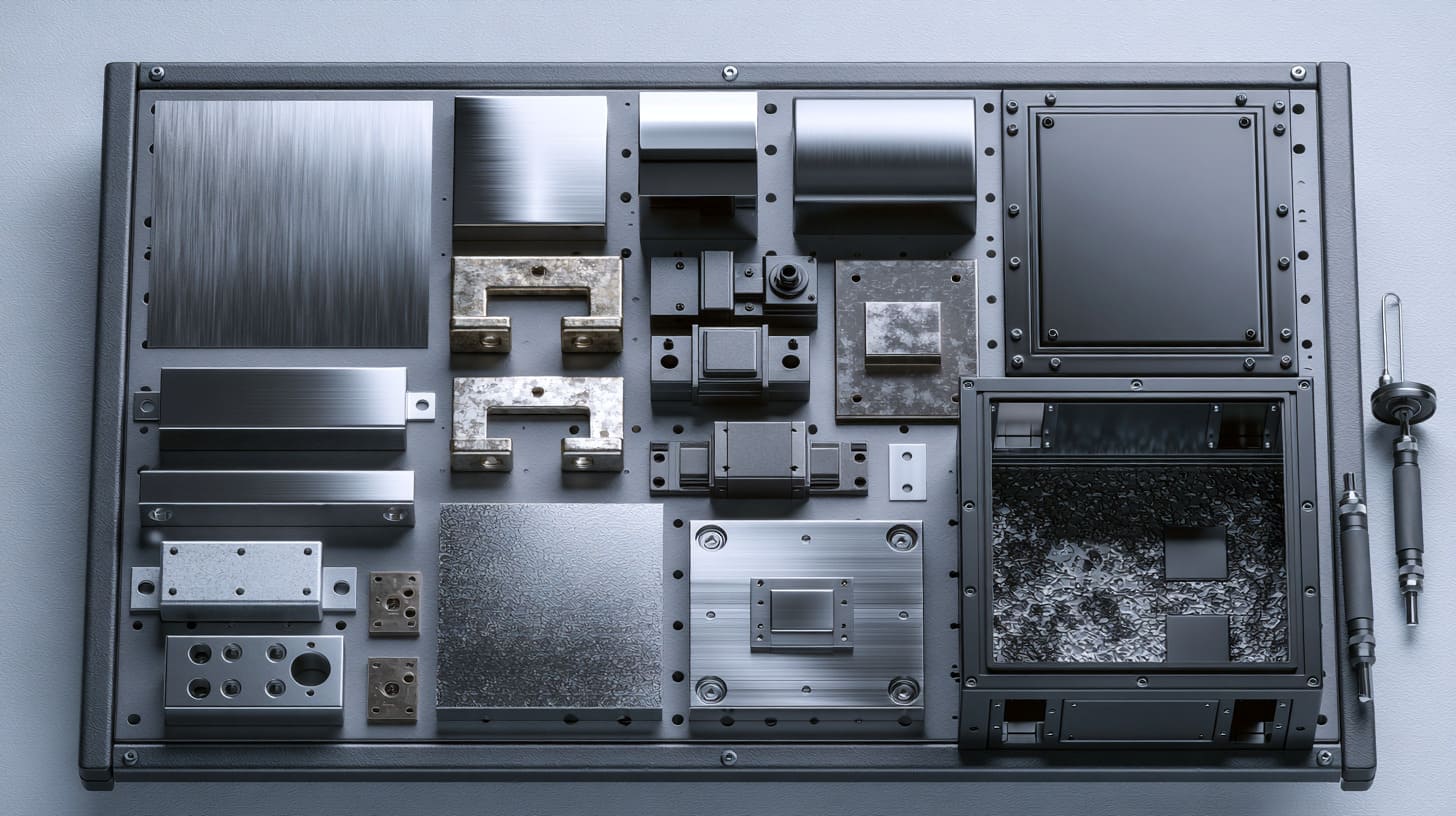
I only add special coatings when there is a clear electrical, wear, or environmental reason.
A longer list of processes does not make a product better.
Every additional process adds cost, lead time, and another point of failure.
Brushing and Polishing
Brushing creates a directional surface pattern.
It is commonly used on:
- Aluminum panels
- Stainless-steel covers
- Consumer products
- Audio equipment
- Decorative front plates
Brushing can make a product look clean and technical.
However, the brushing direction needs control. Parts placed next to each other should follow the same direction.
Brushed surfaces may also show:
- Fingerprints
- Oil marks
- Cross-direction scratches
- Handling damage
Polishing creates a smoother and more reflective surface.
It can look premium, but it requires more labor and careful packaging.
A mirror-like surface may show even small defects.
Wet Painting
Wet painting can be useful when:
- The part cannot handle powder-curing temperature
- A special paint system is required
- Small-batch color matching is needed
- The product shape makes powder coating difficult
- Touch-up repair is important
Wet paint can provide many color and performance options.
However, the process may involve:
- Longer drying time
- Solvent control
- More sensitivity to runs and dust
- Lower impact resistance in some systems
- Greater operator dependence
I do not assume wet painting is weaker than powder coating. The actual paint system matters.
Plating
Metal plating can provide functional benefits.
Depending on the process, plating may improve:
- Corrosion resistance
- Conductivity
- Wear resistance
- Solderability
- Appearance
Common examples include:
- Zinc plating
- Nickel plating
- Chrome plating
- Tin plating
Plating may be useful for brackets, fasteners, contacts, and internal components.
It may not be the best choice for every large enclosure because cost, appearance, and environmental controls vary.
Chemical Conversion Coatings
Some aluminum products use chemical conversion treatments when electrical conductivity or paint adhesion is important.
These treatments may be used:
- Under paint
- On internal conductive surfaces
- For grounding
- For EMI control
- For basic corrosion protection
The exact process should match the required standard.
A vague drawing note such as “chemical film” may not give the supplier enough information.
Passivation for Stainless Steel
Stainless steel resists corrosion because of its passive surface layer.
Fabrication can contaminate that surface with iron particles, welding residue, or handling marks.
Passivation helps restore and improve the protective condition.
I still need to check:
- Stainless-steel grade
- Welding quality
- Surface contamination
- Cleaning method
- Final environment
Passivation cannot turn an unsuitable stainless-steel grade into the right material for every environment.
Special Functional Coatings
Some projects need:
- Conductive coatings
- Anti-fingerprint coatings
- Anti-graffiti coatings
- High-temperature coatings
- Wear-resistant coatings
- Antimicrobial coatings
- Marine coating systems
| Special Requirement | Possible Direction |
|---|---|
| EMI shielding | Conductive coating or controlled bare metal contact |
| Frequent touching | Anti-fingerprint finish |
| High heat | High-temperature paint |
| Severe abrasion | Hard anodizing or wear-resistant coating |
| Marine environment | Multi-layer corrosion system |
| Medical cleaning | Tested chemical-resistant finish |
| Outdoor public equipment | UV-resistant and anti-graffiti system |
I ask for evidence before adding a special coating.
A marketing name is not enough. I want test data, process control, or experience from a similar product.
The manufacturer can only make a sound recommendation when the buyer shares complete information.
Provide Complete Application Information to the Manufacturer
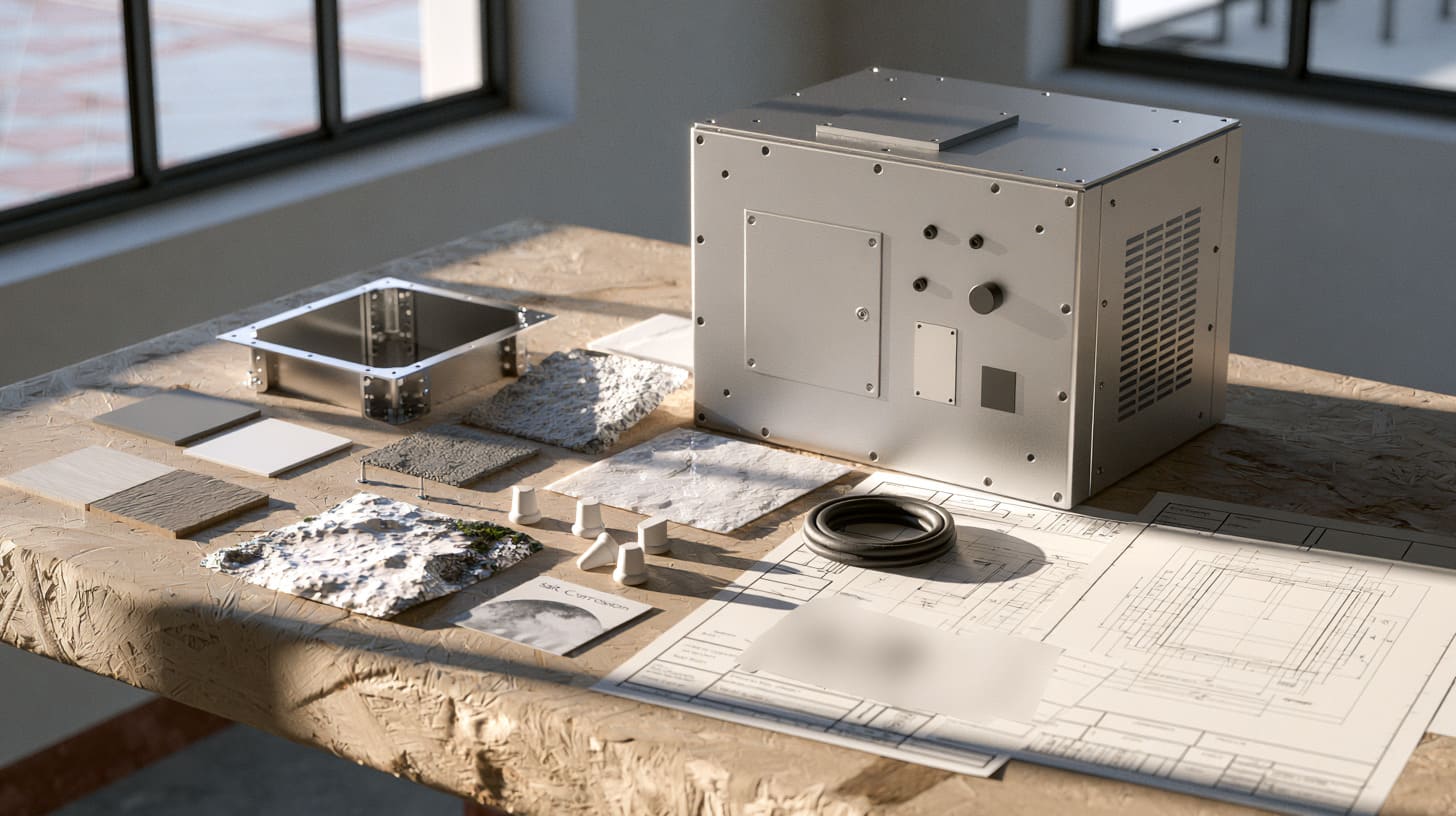
The faster a buyer shares the real installation conditions, the faster I can remove unsuitable options.
Some buyers hold back information because they worry about confidentiality.
I understand that concern.
The buyer does not always need to send the full product design. However, the supplier still needs enough technical context to recommend a finish.
Information I Need From the Buyer
At minimum, I ask for:
- Base material
- Product dimensions
- Indoor or outdoor use
- Installation location
- Humidity level
- Salt or chemical exposure
- Temperature range
- Expected service life
- Required color and texture
- Cosmetic requirements
- Electrical grounding needs
- Order quantity
- Prototype quantity
- Relevant test standards
Useful Information Can Be Simple
The buyer does not need to write a long technical report.
A short description can already help:
The enclosure will be mounted outdoors under a partial roof in a coastal city. It will face humidity and indirect rain. The product should last at least five years. The front panel is cosmetic. The rear panel is hidden. Two grounding points must remain conductive.
This description gives me more useful information than:
Please quote the best black surface treatment.
Drawings Should Include Surface Requirements
I suggest adding clear notes to the drawing.
| Drawing Note | Why It Matters |
|---|---|
| Material grade | Confirms base-metal compatibility |
| Finish type | Defines the main process |
| Color reference | Controls appearance |
| Gloss or texture | Avoids subjective descriptions |
| Coating thickness | Supports protection and fit |
| Masking areas | Protects threads and contact points |
| Cosmetic surfaces | Focuses inspection |
| Testing requirement | Defines acceptance |
| Packaging method | Prevents transport damage |
I also recommend using marked drawings for masking.
A sentence such as “mask all important areas” is not clear enough.
The supplier may not know which areas affect grounding, fit, or sealing.
Early Communication Prevents Redesign
Surface treatment affects the mechanical design.
If the buyer waits until the final quotation stage, the team may discover that:
- The sliding clearance is too small
- The threaded holes need masking
- The welded surface cannot meet the anodized appearance target
- The plastic insert cannot survive curing temperature
- The color needs an expensive custom batch
- The selected material cannot meet corrosion expectations
- The coating blocks electrical contact
These issues are easier to solve during design.
They are more expensive after tooling, prototypes, or mass production begin.
Good information helps, but the supplier still needs the experience to interpret it correctly.
Work With a Supplier Who Understands Enclosure Manufacturing
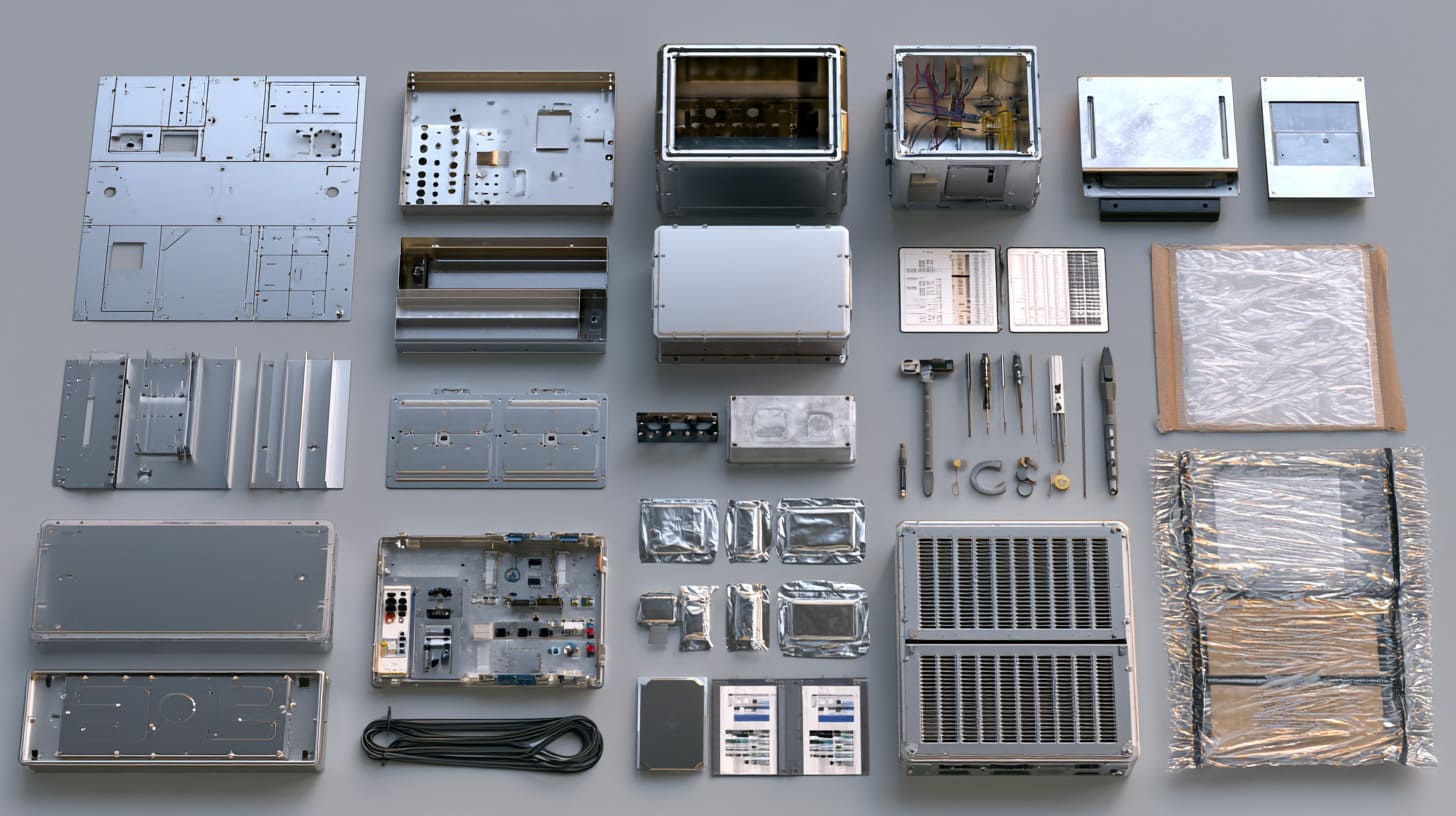
I trust a supplier more when they challenge an unsuitable finish than when they agree to everything.
A fast “yes” can feel helpful.
It can also hide a lack of technical review.
For custom OEM enclosures, surface treatment connects with the whole manufacturing process.
Surface Treatment Starts Before the Finishing Workshop
The final result depends on:
- Material purchasing
- Laser cutting
- CNC machining
- Deburring
- Bending
- Welding
- Grinding
- Surface preparation
- Masking
- Coating
- Assembly
- Packaging
A poor weld cannot always be hidden by powder.
A deep machining mark cannot always be hidden by anodizing.
A sharp edge may receive weak coating coverage.
A badly designed joint may trap water.
The finishing supplier cannot fix every earlier decision.
Questions I Expect a Good Supplier to Ask
A capable supplier should ask more than the color.
They may ask:
- Where will the product be used?
- What material grade is required?
- Which surfaces are cosmetic?
- Are there welded areas?
- Does the product need grounding?
- Are there tight-fitting parts?
- What coating thickness is acceptable?
- Does the product need UV resistance?
- Is salt-spray testing required?
- How will the product be packaged?
- Will different parts need color matching?
These questions may slow the quotation slightly.
They can save weeks later.
Experience With Similar Products Matters
A supplier who produces decorative indoor boxes may not understand outdoor telecom cabinets.
A supplier who anodizes simple extrusion profiles may struggle with welded cosmetic assemblies.
I look for relevant experience, not only general experience.
| Supplier Capability | What I Want to See |
|---|---|
| Similar projects | Enclosures used in comparable conditions |
| Material knowledge | Understanding of aluminum, steel, and stainless steel |
| Process control | Clear pretreatment and curing procedures |
| Engineering support | Feedback on masking, tolerance, and design |
| Inspection ability | Thickness, adhesion, color, and visual checks |
| Traceability | Batch and process records |
| Packaging experience | Protection for finished surfaces |
| Problem response | Clear root-cause analysis and corrective action |
Engineering Advice Should Be Practical
I do not expect every buyer to accept my first suggestion.
The buyer may have branding, cost, or certification limits that I cannot see at first.
A good technical discussion should include trade-offs.
For example:
- Anodizing may offer a metallic look, but powder coating may give better color consistency.
- Stainless steel may reduce coating dependence, but it may raise material and fabrication cost.
- A thicker powder layer may improve coverage, but it may affect assembly.
- Galvanizing may improve corrosion protection, but it may reduce cosmetic control.
- A custom color may match the brand, but it may increase the minimum order and lead time.
I explain these trade-offs so the buyer can make a commercial decision, not only a technical one.
The final choice should balance performance, production, appearance, and cost.
Conclusion
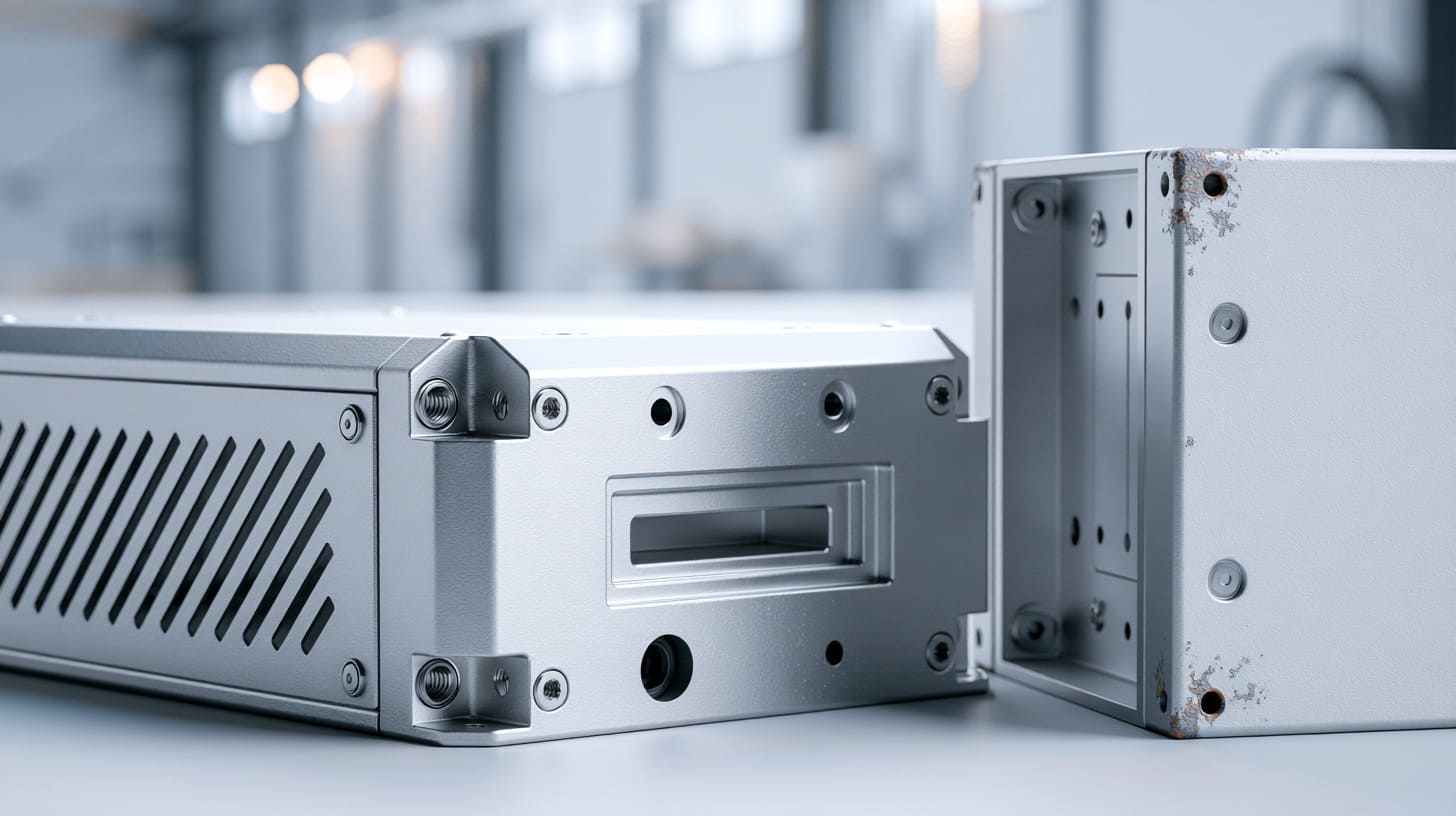
My final decision is always based on the weakest point in the product, because failure usually starts there.
That weak point may be a sharp edge, a welded corner, an unprotected thread, a grounding point, a scratched surface, or a joint that traps water.
This is why I do not answer the question “Which surface treatment is the best?” with one process name.
I do not believe powder coating is always better than anodizing.
I do not believe anodizing is always more premium.
I do not believe galvanizing is always necessary outdoors.
I also do not believe that the cheapest finish is always the most economical.
I look at the complete enclosure.
I consider:
- The base material
- The working environment
- The manufacturing method
- The appearance target
- The expected lifetime
- The electrical requirements
- The maintenance plan
- The production quantity
- The buyer’s budget
I follow this approach because I have seen small surface decisions create large project problems.
A coating can look perfect during inspection and fail after installation. A premium finish can expose every machining mark. A thick protective layer can block a connector or grounding point. A low-cost option can create expensive warranty work.
The surface treatment is not a decorative step added after the engineering work.
It is part of the engineering work.
At MaidaTech, I prefer to review the application before I recommend the finish. I would rather ask several practical questions at the beginning than explain a coating failure after delivery.
If you are developing a custom aluminum or sheet-metal enclosure, you can send me your drawing, material requirement, application environment, expected quantity, and finish target.
I will help you compare the practical options and identify the risks before production begins.
You can contact me at info@maidatech.com or visit maidatechenclosure.com to discuss your OEM enclosure project.