Skip to content
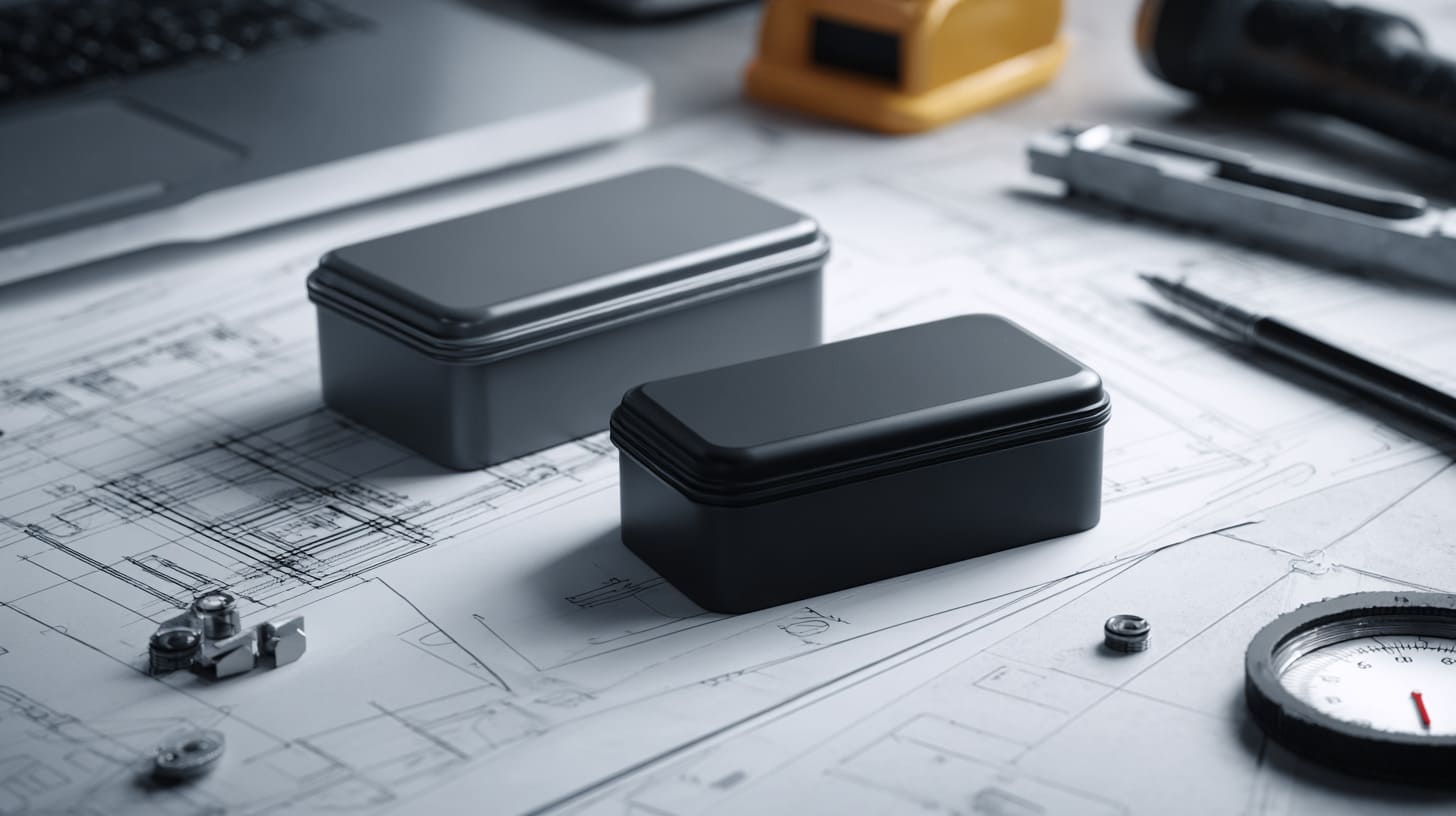
ABS and polycarbonate are often placed on the same table during enclosure projects.
A buyer sends me a drawing.
The shape looks simple.
The quantity is not small.
The target price is tight.
Then the question comes very fast:
“Can we use ABS instead of polycarbonate?”
I understand that question.
In custom enclosure manufacturing, nobody wants to waste money. A product engineer like David may already have pressure from his boss, his customer, and his launch schedule. A younger ODM buyer like John may be building a new electronic device, and he needs every cost detail to stay under control. Even experienced buyers like Jackson may compare different suppliers and ask why one factory suggests ABS while another suggests PC.
At first, ABS looks attractive.
It is cheaper.
It is easy to mold.
It gives a clean surface.
It works well for many indoor products.
But plastic is not chosen only for the sample room.
A sample sits on the table for ten minutes. A real enclosure may sit near heat for three years. A sample may be touched by one engineer. A real product may be dropped by a warehouse worker, exposed to sunlight, installed in a factory, or shipped across countries inside a shaking carton.
That is where the cheaper plastic can quietly become the expensive choice.
ABS is cost-effective for many indoor, low-stress applications. Polycarbonate becomes the better value when heat, impact, UV exposure, safety, or long-term reliability matter.
I do not say this because polycarbonate sounds more premium. I say it because I have seen what happens when the material is selected only by unit price. The first quotation looks good. The first sample looks fine. Then cracks, deformation, yellowing, warranty claims, redesign, delayed delivery, and customer complaints arrive one by one.
That is not savings.
That is a bill waiting in another room.
For me, the first real decision is not “Which plastic is cheaper?” but “What kind of trouble will this enclosure face after it leaves the factory?”
This small shift changes the whole conversation.
And that is why ABS vs polycarbonate is not only a material comparison. It is a risk comparison.
What Is the Difference Between ABS and Polycarbonate?
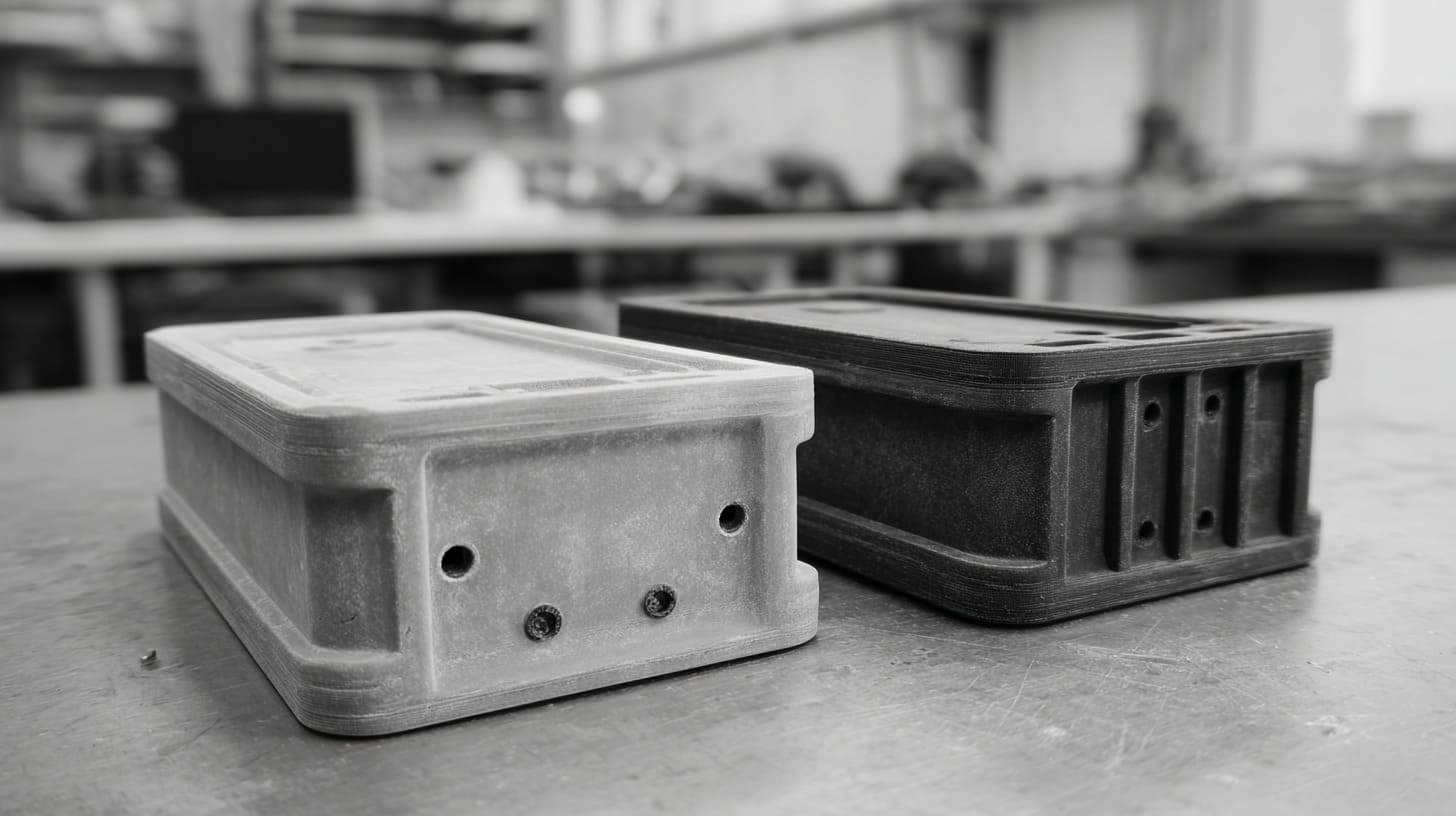
ABS and polycarbonate can look similar after molding.
Both can be black.
Both can be white.
Both can be textured.
Both can be used for electronic housings.
Both can hold screws, bosses, ribs, labels, and logos.
So I understand why buyers compare them. From the outside, the difference does not always shout.
But inside the material, the personality is different.
One is more cost-friendly.
One is tougher.
One is easier to process.
One is better when the product may face heat, impact, and outdoor stress.
The tricky part is this: buyers often compare the two materials after seeing only the shape. I prefer to compare them after understanding the working environment, because the same enclosure drawing can need two very different materials depending on where the product will live.
What is ABS plastic?
ABS stands for Acrylonitrile Butadiene Styrene. That sounds technical, but the practical meaning is simple.
ABS is a useful plastic when you need a good balance of cost, appearance, and easy production.
Many consumer products use ABS because it can be molded into clean shapes. It can take color well. It can accept surface texture. It can be painted, printed, or finished in different ways. It also gives a nice “product” feeling when the application is not too harsh.
For indoor electronic enclosures, ABS can be a very practical choice.
For example:
| ABS advantage | What it means in real enclosure work |
|---|---|
| Lower material cost | Better for budget-sensitive projects |
| Easy injection molding | Stable for many high-volume plastic parts |
| Good surface finish | Useful for branded consumer products |
| Decent toughness | Works for normal indoor handling |
| Easy customization | Can support logo, texture, and color options |
I have used ABS in many enclosure discussions where the product is simple, indoor, and not under serious heat or stress. In that kind of project, ABS does not feel like a compromise. It feels like a smart choice.
But every material has a border.
ABS becomes risky when the buyer expects it to behave like a stronger engineering plastic. It can lose shape under heat. It can age under sunlight. It can crack under strong impact. It may also need special grades if flame resistance is required.
So I do not treat ABS as weak.
I treat it as honest.
It works well when the project is honest about the environment.
What is polycarbonate plastic?
Polycarbonate is often called PC in manufacturing.
It is a stronger engineering plastic. It is known for high impact resistance, better heat resistance, and better durability in demanding applications.
When I hold a PC enclosure sample, I do not only think about its appearance. I think about what it can survive.
Can it handle a drop better?
Can it stay stable near heat?
Can it survive a rougher installation?
Can it give the buyer more safety margin?
In many cases, yes.
Polycarbonate is used in many products where toughness matters. Protective covers, machine guards, electrical parts, industrial housings, and outdoor devices may use PC or PC blends because the material gives more confidence when the product cannot fail easily.
| Polycarbonate advantage | Why buyers care |
|---|---|
| High impact resistance | Reduces cracking risk |
| Better heat resistance | More stable near warm components |
| Better durability | Helps product last longer |
| Stronger structure | Useful for industrial handling |
| Good transparency in some grades | Useful for covers, windows, and display parts |
But PC is not magic either.
It costs more. It can be more sensitive in processing. Some grades may need UV stabilization for outdoor use. Some designs still need good wall thickness, proper ribs, and smart screw boss design.
A strong material cannot save a bad design.
That is something I remind buyers often.
Why are these two plastics commonly compared?
ABS and polycarbonate are compared because buyers are usually standing between two pressures.
One pressure says, “Save cost.”
The other pressure says, “Avoid failure.”
That is the real fight.
A product engineer may want PC because he worries about impact or heat. The purchasing team may push for ABS because the quotation looks better. A supplier may suggest ABS to win the order. Another supplier may suggest PC to reduce risk.
So the comparison is not only technical.
It is also commercial.
Here is how I usually see the difference in real projects:
| Project question | ABS answer | Polycarbonate answer |
|---|---|---|
| Is the product indoor? | Often suitable | Also suitable, but may cost more |
| Is heat low? | Usually acceptable | Safer margin |
| Is impact risk high? | May be risky | Better choice |
| Is outdoor use expected? | Risk increases | Better with proper UV grade |
| Is certification required? | Grade must be checked | Grade must also be checked |
| Is price the top concern? | Strong advantage | Higher cost |
This is why I do not like one-sentence answers like “PC is better” or “ABS is cheaper.”
Both are too simple.
A material choice is more like choosing shoes. A soft pair of shoes is fine for an office. It is not fine for a wet factory floor. The shoe is not bad. The place is wrong.
That same idea applies to plastic enclosures.
A buyer once told me, “The customer will only use it indoors.” Then after a few more questions, we found out the product would be installed beside a machine that produced heat and vibration. That changed the material discussion immediately.
The label “indoor” was true.
But it was not complete.
That small detail can decide whether the enclosure works smoothly or becomes a complaint six months later.
Why Does ABS Usually Cost Less Than Polycarbonate?
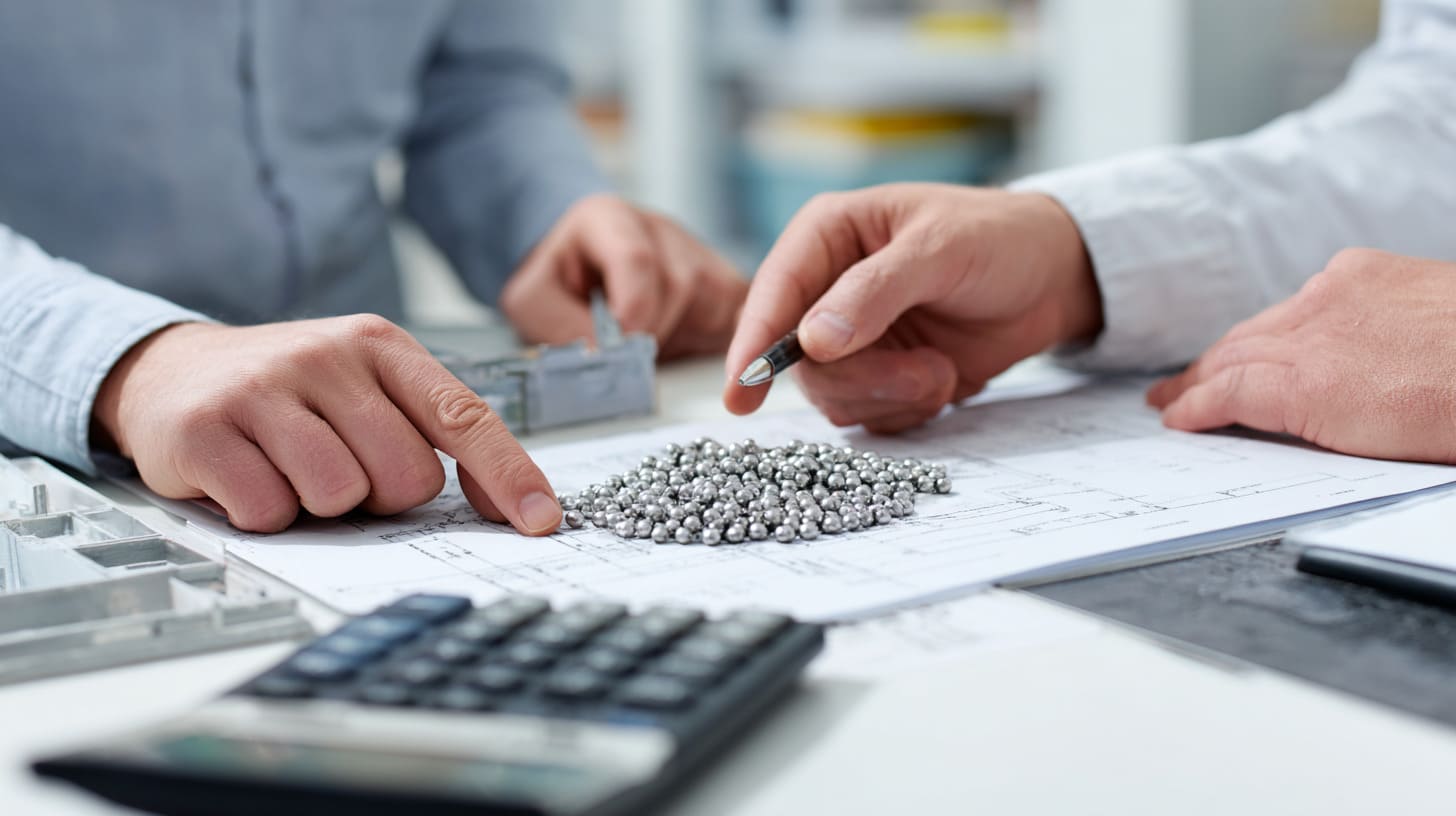
ABS usually costs less because the resin is cheaper, the processing is easier, and the production window is often more friendly.
That is the simple answer.
But the deeper answer is more useful: ABS costs less at the purchase stage, while polycarbonate may cost less at the risk stage.
This is where many buyers get trapped. They compare material cost like they are comparing two numbers on a calculator. But enclosure cost is not only resin price. It also includes molding stability, scrap rate, testing, shipping damage, field failure, customer service, and redesign risk.
The number on the quotation is only the first number.
The last number may appear much later.
When I review a plastic enclosure quotation, I do not only look at the material price line. I also think about what this material may cost the buyer after the product has entered real use, because a cheap part can become expensive when it forces a second mold change or a late project delay.
Raw material price differences
ABS resin is usually more affordable than polycarbonate resin. That is one of the biggest reasons buyers choose it.
For high-volume projects, even a small price difference per piece can become important. If a buyer needs 10,000 pieces, 50,000 pieces, or more, the pressure is real. Nobody wants to pay extra for a material that the product does not need.
That is fair.
But the material price must be judged against the application.
| Cost factor | ABS | Polycarbonate |
|---|---|---|
| Resin cost | Lower | Higher |
| Common availability | Very common | Common, but grade selection matters |
| Processing difficulty | Easier | More demanding |
| Typical use | Consumer and indoor products | Tougher industrial or safety-focused products |
| Risk buffer | Lower | Higher |
A buyer may ask:
“Can we save 15% by using ABS?”
Sometimes the answer is yes.
But I will ask:
“What happens if 2% of the products crack in shipping?”
“What happens if the enclosure softens near heat?”
“What happens if the customer asks for a better flame-retardant grade later?”
“What happens if the outdoor version needs redesign?”
These are not scary questions. They are normal engineering questions.
Price needs context.
Without context, the cheapest option can look smarter than it really is.
Easier processing lowers ABS production cost
ABS is friendly in manufacturing.
It usually molds more easily than polycarbonate. It has a lower processing temperature. It can fill molds well. It often gives a clean surface finish. It is also easier for many factories to manage in mass production.
This matters because production is not only about material. It is also about stability.
A stable molding process means fewer problems like:
- Short shots
- Burn marks
- Sink marks
- Warpage
- Surface defects
- High scrap rate
- Slow cycle time
ABS often helps reduce these production risks.
Polycarbonate needs more careful processing. The material may need proper drying. The mold temperature and injection settings need control. If the factory does not manage it well, the finished part may have stress, defects, or poor appearance.
So PC is stronger, but it asks more from production.
That is why I never suggest PC only because it sounds better. I also check whether the factory process, mold design, and product structure can support the material properly.
A better material with poor molding control can still create a bad enclosure.
Why low material price can mislead buyers
The most dangerous phrase in plastic enclosure projects is:
“The sample looks fine.”
A sample can hide many future problems.
One sample may not show long-term heat aging.
One sample may not show UV damage.
One sample may not show shipment vibration.
One sample may not show screw boss cracking after repeated assembly.
One sample may not show what happens after the product sits in a hot warehouse.
I have seen buyers feel comfortable too early because the sample looks clean. I understand it. A good sample gives people confidence. It makes the project feel real.
But mass production has a colder personality.
It does not care that one sample looked good. It cares about whether 5,000 pieces can survive the same conditions again and again.
| What buyers see early | What may appear later |
|---|---|
| Nice surface | Scratches, fading, yellowing |
| Good fit | Warping after heat exposure |
| Clean screw assembly | Boss cracking after stress |
| Low unit price | Warranty and replacement cost |
| Fast sample approval | Slow redesign if material fails |
This is where ABS can become expensive.
Not because ABS is bad.
Because the buyer asked ABS to do a job that belonged to a stronger material.
A small saving in the beginning may create a large cost later.
And in B2B projects, late cost is painful. It affects delivery promises, customer trust, online reviews, and sometimes even the buyer’s own brand.
A material does not only protect electronics.
It protects the project.
That is why the next question matters even more: when does ABS cross the line from smart choice to wrong choice?
When Does ABS Become the Wrong Choice?
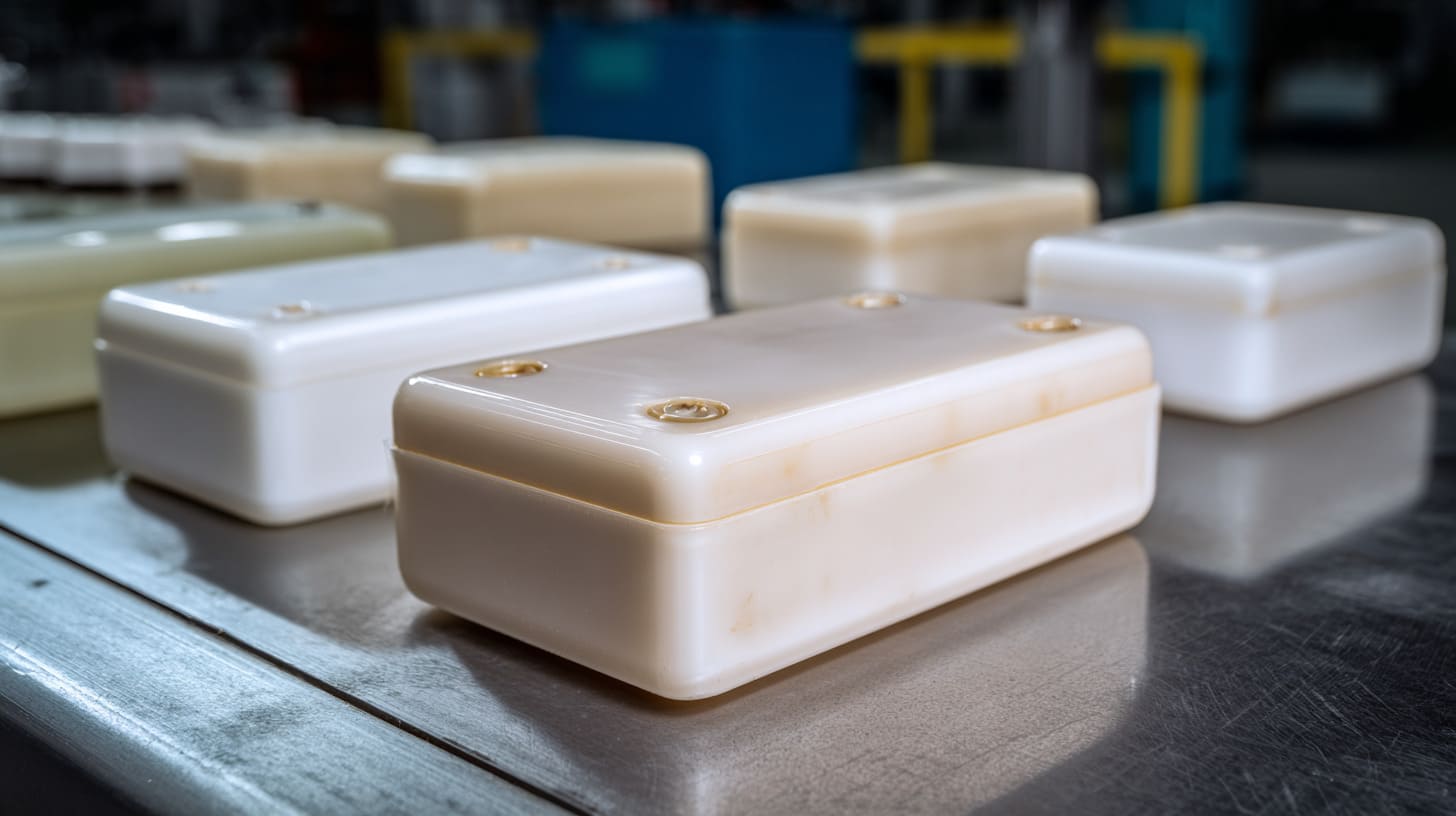
ABS becomes the wrong choice when the enclosure faces conditions that are stronger than the material’s comfort zone.
This sounds simple, but it is not always easy in real projects.
Many buyers describe their application in a soft way:
“It is only indoor.”
“It will not be used outside too much.”
“The heat is not very high.”
“The customer will be careful.”
“The product is not heavy.”
These sentences may be true. But they may also be incomplete.
A product does not fail in the perfect condition we imagine. It fails in the rough condition we forgot to ask about.
This is where things often go wrong for buyers: they choose ABS based on the product’s best-case use, but the material gets tested by the product’s worst-case use.
High-temperature environments
Heat is one of the first things I check in enclosure projects.
ABS can work well in normal room-temperature environments. But when the enclosure sits near heat sources, or when heat builds up inside, the risk rises.
The enclosure may not melt dramatically. It may not fail like a scene in a movie.
It may just slowly change shape.
The cover may no longer fit well.
The screw holes may shift.
The internal PCB may press against the wall.
The surface may bend slightly.
The customer may say, “It feels cheap.”
That kind of failure is quiet, but it is serious.
Common heat sources inside or near enclosures include:
| Heat source | Why it matters |
|---|---|
| Power supply | Creates continuous heat |
| CPU or processor | May heat up under load |
| Battery | Can warm during charging |
| Driver board | May create local hot spots |
| Relay or transformer | Can heat surrounding plastic |
| Sunlight through window | Raises surface temperature |
| Machine room | Ambient temperature may stay high |
I once discussed a plastic enclosure for a control device. At first, the buyer wanted ABS because the product was installed indoors. Then we found that the unit was mounted inside a cabinet near other equipment. The cabinet had poor airflow. That changed the risk.
Indoor did not mean cool.
That is the point.
ABS can be fine inside an office. ABS may not be fine inside a hot electrical cabinet.
Outdoor or UV exposure
Sunlight is not gentle.
It does not damage plastic in one loud moment. It works slowly. Day after day. Season after season.
ABS can become yellow, brittle, or cracked under UV exposure if the grade and additives are not suitable. This is especially important for outdoor boxes, sensor housings, terminal devices, and products near windows.
A buyer may say:
“It will only be outside sometimes.”
That word “sometimes” makes me careful.
Sometimes can mean one hour per week.
Sometimes can mean six hours per day.
Sometimes can mean the buyer is not fully sure.
Outdoor exposure also includes more than sunlight.
It includes:
- Rain
- Humidity
- Temperature swings
- Dust
- Wind
- Installation stress
- Cleaning chemicals
- User handling
ABS may still be used outdoors in some cases if the grade is selected properly and the design is not demanding. But for longer outdoor service, I become more cautious. Polycarbonate or other suitable materials may give the buyer a safer margin.
A plastic enclosure should not only look good in the first product photo.
It should still look acceptable after the customer has used it for months.
Impact-heavy industrial applications
Impact damage often starts at the corners.
A carton drops.
A worker bumps the box.
A technician tightens the screw too hard.
A device falls from a table.
A product hits the floor during installation.
Then one small crack appears.
At first, the crack may look harmless. But cracks are like rumors in a factory. Once they start, they can spread.
ABS has decent toughness for many normal uses. But in impact-heavy projects, polycarbonate usually gives better protection.
This matters for:
| Application | Why ABS may become risky |
|---|---|
| Portable electronic devices | Dropping risk is high |
| Industrial controllers | Rough handling during installation |
| Outdoor monitoring boxes | Wind, impact, and service work |
| Warehouse devices | Frequent movement and knocks |
| Shipping-heavy products | Long transport and stacking pressure |
I pay close attention to corners, screw bosses, clips, and thin walls. These are the places where material weakness often shows first.
A thick flat wall may survive.
A thin corner may not.
That is why material selection and structure design must work together.
Fire safety and certification requirements
Fire safety is another area where price-only thinking can hurt a project.
Some electronic products need flame-retardant materials. Some buyers need UL-rated plastic grades. Some markets require certain safety standards. Some end customers may ask for material datasheets before approving the product.
ABS and polycarbonate both can have flame-retardant grades. But the buyer must check the exact grade, not just the material name.
“ABS” alone is not enough.
“PC” alone is not enough.
The grade matters.
The supplier should confirm:
- Material brand and grade
- Flame rating requirement
- Datasheet availability
- Color impact on rating
- Wall thickness requirement
- Testing and certification needs
- Whether recycled material is allowed
| Question | Why it matters |
|---|---|
| Does the enclosure need UL94 V-0? | Material grade must support it |
| What is the minimum wall thickness? | Flame rating may depend on thickness |
| Is the part near power components? | Fire safety risk increases |
| Is the product exported? | Market rules may be stricter |
| Will the buyer need documents? | Datasheets and traceability matter |
The dangerous mistake is assuming that any ABS or any PC grade can pass the same requirement.
That is not how real production works.
Material name is only the cover of the book. The grade is the story inside.
ABS often fails slowly and quietly before buyers notice the real cost. That is why I become strict when the product faces heat, UV, impact, or safety requirements.
A good buyer does not wait for failure to teach the lesson.
He asks the harder questions before the mold is made.
Now, after talking about where ABS becomes risky, we can look at why polycarbonate often performs better in these harsher places.
Why Does Polycarbonate Perform Better in Harsh Conditions?
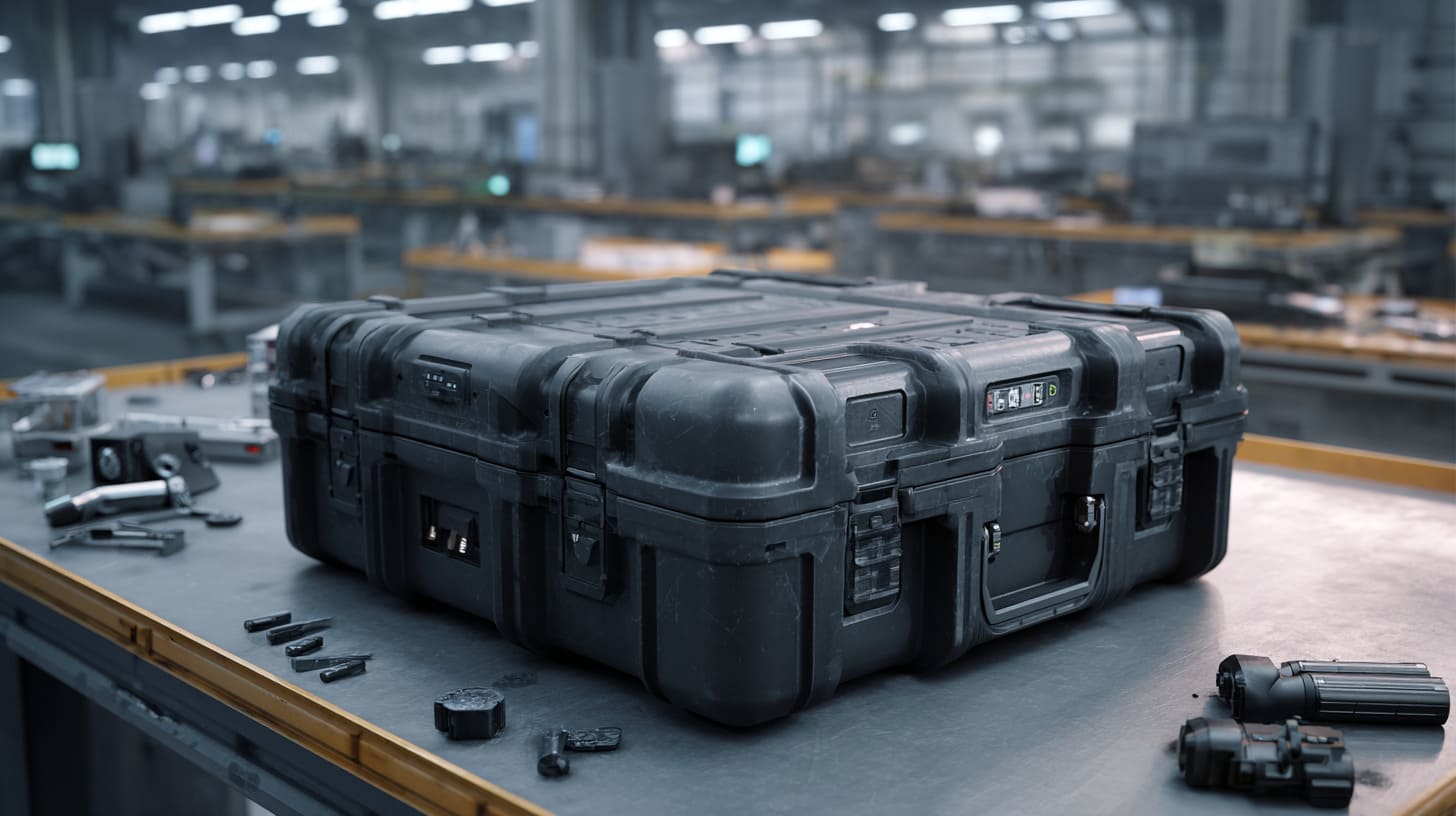
Polycarbonate performs better in harsh conditions because it has a stronger material character.
It can take more impact.
It can handle heat better.
It usually offers better durability.
It gives the designer more safety margin.
But I still like to say this carefully: polycarbonate is not a free pass. It must be the right grade. It must be molded correctly. It must be designed with proper wall thickness, ribs, bosses, and assembly details.
A strong material helps a weak design, but it cannot fully rescue it.
When I suggest polycarbonate, I usually do it because I want to reduce the chance of ugly surprises after delivery, not because I want the buyer to simply pay more.
Superior impact resistance
Polycarbonate is famous for toughness.
In enclosure work, this matters a lot because real products are handled by real people. And real people are not gentle all the time.
A device may fall from a desk.
A package may hit a warehouse floor.
A technician may press too hard during installation.
A customer may open and close the cover many times.
Polycarbonate gives better impact resistance than ABS in many situations. This can reduce cracking risk, especially in corners and thin sections.
| Impact situation | Why polycarbonate helps |
|---|---|
| Drop during shipping | Better crack resistance |
| Field installation | Handles knocks better |
| Portable device use | Survives daily handling better |
| Industrial maintenance | Less fragile under rough treatment |
| Long-distance export | Better safety margin in transport |
But I do not stop at material toughness. I also check the structure.
A PC enclosure with sharp internal corners may still crack under stress. A screw boss without proper support may still fail. A snap-fit design may still become weak if the geometry is poor.
Material is the muscle.
Design is the skeleton.
Both matter.
Better thermal stability
Polycarbonate can handle higher temperatures better than ABS. This makes it useful for electronic products that produce heat or work in warm environments.
For example, a Raspberry Pi-style project may look small, but the processor can get warm. A power module may make the enclosure hotter than expected. A sealed plastic case may trap heat inside. If the customer uses the product in a cabinet or near other equipment, the risk increases.
This is where PC can feel safer.
| Thermal issue | ABS risk | PC advantage |
|---|---|---|
| Internal heat buildup | Possible warping | Better stability |
| Nearby power parts | Higher deformation risk | Safer margin |
| Hot warehouse storage | Shape change risk | Better resistance |
| Long-term warm use | Aging risk rises | More stable performance |
Still, I do not believe material alone solves heat.
If the heat is high, I also think about:
- Ventilation holes
- Heat sinks
- Aluminum inserts
- Metal enclosure options
- Internal layout
- Component spacing
- Wall thickness
- Surface color
- Duty cycle
Sometimes the better answer is not PC.
Sometimes the better answer is aluminum.
That is why I like to understand the device, not just the enclosure drawing.
Better long-term durability
Durability is not only about surviving one test.
It is about surviving daily use.
A product may be opened for maintenance. It may be cleaned. It may be moved. It may face vibration. It may sit in a warehouse before installation. It may be handled by people who never read the manual.
Polycarbonate often gives a better long-term safety margin because it resists impact and heat better. In many projects, this reduces the chance of cracks, deformation, and early failure.
But durability also depends on the grade.
Some PC grades are better for outdoor use. Some are better for flame resistance. Some are better for transparency. Some are blended with ABS to balance cost and performance.
So the material name “PC” is still not enough.
A serious project needs a serious grade discussion.
| Need | Possible material direction |
|---|---|
| Better impact | PC or PC blend |
| Better heat | PC or metal |
| Better flame resistance | Certified flame-retardant grade |
| Better outdoor life | UV-stabilized material |
| Lower cost with balanced performance | PC/ABS blend may be considered |
For me, the best material is not always the strongest one.
The best material is the one that gives enough strength without creating unnecessary cost or process risk.
Improved safety for industrial electronics
Industrial electronics often have less room for mistakes.
If an enclosure cracks, water or dust may enter. If it deforms, the PCB may shift. If the cover cannot close well, the sealing may fail. If the material is wrong, the buyer may face customer complaints that are hard to explain.
Polycarbonate can improve safety in demanding projects because it gives more strength and stability.
This matters for:
- Control boxes
- Power devices
- Outdoor sensors
- Factory monitoring equipment
- Telecom devices
- Battery-related products
- High-value OEM devices
The enclosure is not the main product in many of these projects.
But if the enclosure fails, the whole product looks bad.
That is the unfair part.
Nobody praises the enclosure when everything works. But everyone blames it when it cracks.
A customer may not care whether the board inside is excellent if the outer case looks damaged. The enclosure becomes the face of the device.
And faces matter.
That is why polycarbonate often earns its higher cost in harsh environments.
But this also creates another question: if PC is stronger, should we always choose it?
Not so fast.
Is Polycarbonate Always Better Than ABS?
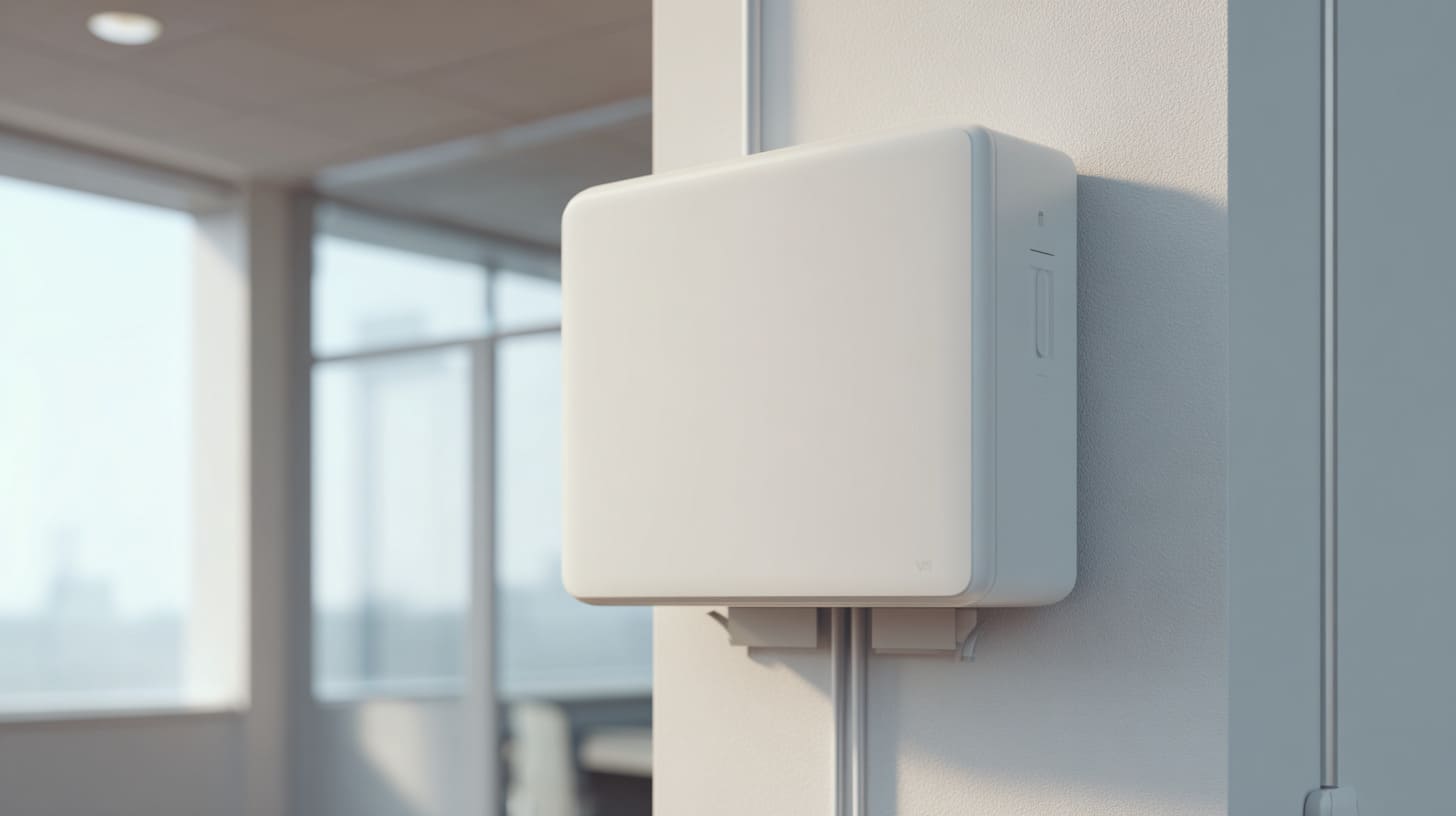
Polycarbonate is not always better.
It is stronger in many ways, but “stronger” does not always mean “more suitable.”
I know this sounds strange. Many buyers expect the premium material to be the correct answer. But good engineering is not about choosing the most expensive option. It is about choosing the right level of protection for the real situation.
A plastic material can be under-selected, but it can also be over-selected.
Both can waste money.
The decision becomes clearer when I ask one plain question: what failure are we actually trying to prevent?
Situations where ABS still makes sense
ABS makes sense when the product is used indoors, the heat is low, the impact risk is small, and the buyer needs a clean enclosure at a controlled cost.
For many consumer-grade electronic products, ABS is still a very useful material.
Examples include:
| Product type | Why ABS may work |
|---|---|
| Indoor control box | Low UV and normal temperature |
| Small consumer device | Good surface and low cost |
| TV box-style housing | Stable indoor use |
| Simple sensor case | Light stress if installed safely |
| Prototype housing | Lower cost for early testing |
ABS also works well when appearance matters and the environment is friendly. It can be molded with nice texture. It can be painted. It can support logo printing. It can be used for high-volume projects where cost must be controlled carefully.
I do not like pushing PC into every project.
If ABS can do the job safely, ABS may be the smarter choice.
When polycarbonate may be unnecessary
Polycarbonate may be unnecessary when the product does not face serious risk.
If the enclosure stays inside an office, does not carry high heat, does not need flame-retardant certification, and does not face strong impact, PC may be overengineering.
Overengineering sounds safe, but it has a cost.
It can raise the unit price.
It can make molding more demanding.
It can increase testing and sourcing work.
It can push the product above the buyer’s target price.
A buyer selling on Amazon or through local distributors may have a clear price range. If the enclosure becomes too expensive, the final product may lose its market advantage.
So I have to respect cost.
Cost is not the enemy of quality.
Bad judgment is.
The importance of matching material to environment
The best material decision starts from the application, not from the material catalog.
I like to ask practical questions:
| Question | Why I ask it |
|---|---|
| Where will the product be used? | Indoor, outdoor, factory, cabinet, vehicle, or home |
| What heat will it face? | Internal heat and outside temperature both matter |
| Will people move it often? | Portable products face more impact |
| Does it need certification? | Material grade must match |
| What is the target lifespan? | Short-term and long-term products need different thinking |
| How painful is failure? | A cracked toy box is different from a failed industrial controller |
A buyer once asked me to reduce the cost of a plastic enclosure. The first idea was ABS. After we reviewed the application, we found the product was used indoors and fixed on a wall. The heat was low. The product was not exposed to sunlight. No special flame rating was required.
In that case, ABS was reasonable.
Another buyer had a similar-looking enclosure, but his device was installed near industrial equipment and could face heat and impact. For him, ABS was much riskier.
The drawings looked similar.
The projects were not.
That is the lesson.
A material decision should not be copied from another product just because the shape looks close.
After this point, heat deserves a deeper look, because heat is one of the most common places where plastic projects become painful.
How Does Heat Affect ABS and Polycarbonate Enclosures?
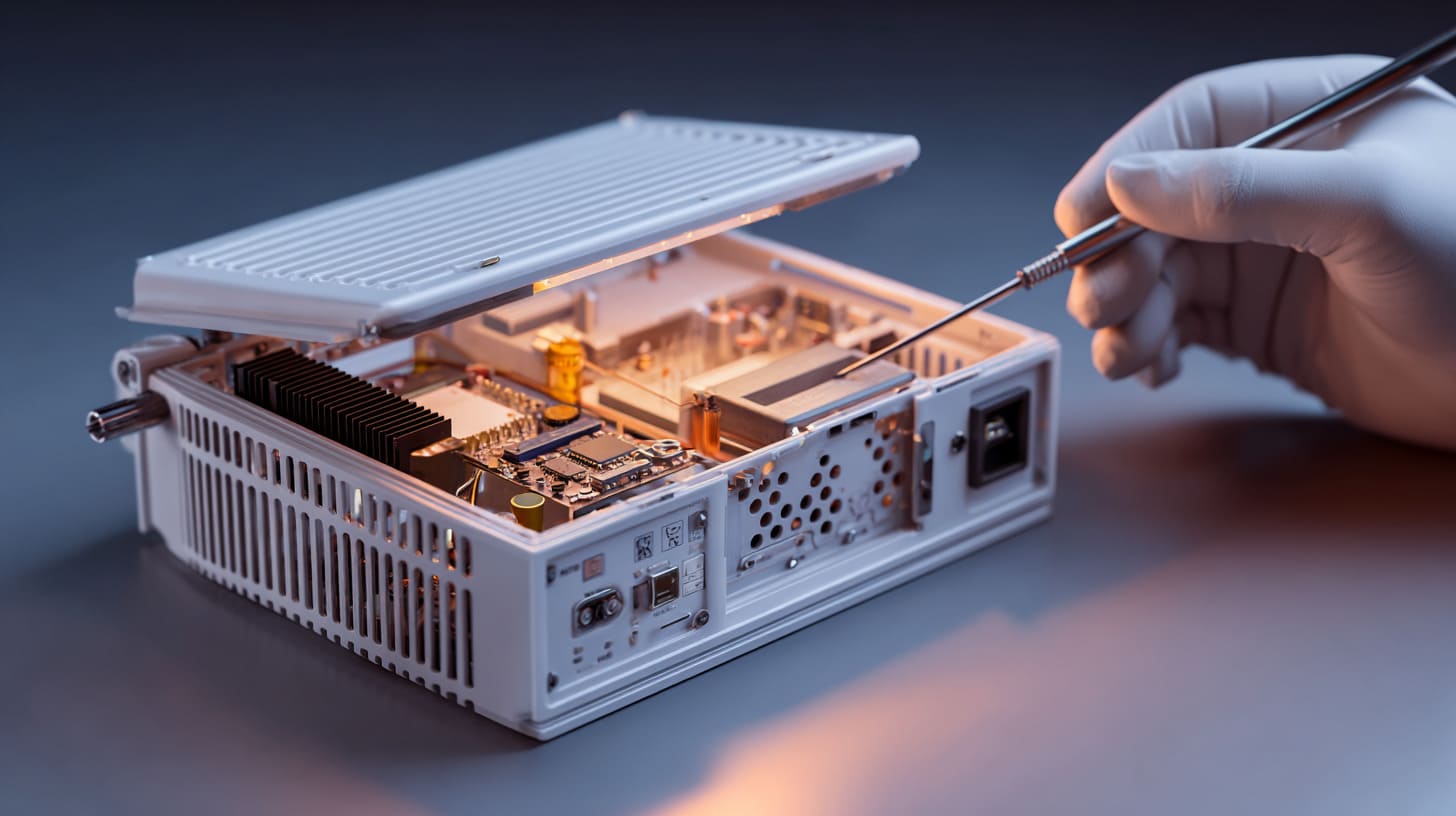
Heat is sneaky.
It does not always create a dramatic failure. It may only change the enclosure a little. A cover bends. A screw area weakens. A clip loses tension. A gap appears near the edge. The customer notices that the product no longer feels solid.
That small change can cause big trouble.
The part still exists.
The plastic did not disappear.
But the product quality has changed.
My habit is to treat heat as a design input, not a late-stage problem, because once the mold is finished, solving heat by hope becomes very expensive.
Heat deformation in ABS
ABS can deform when the temperature gets too high for the grade and design.
This can happen because of internal heat or outside heat. Sometimes buyers only think about room temperature. They forget about the temperature inside the enclosure.
A closed plastic box can become warmer than the room around it.
That matters.
Common deformation risks include:
- Warped covers
- Loose fitting between top and bottom shells
- Screw boss stress
- Clip weakness
- PCB contact with plastic walls
- Seal failure
- Poor appearance after long use
| Heat condition | ABS concern |
|---|---|
| Normal indoor room | Often fine |
| Warm office near window | Needs checking |
| Sealed power device | Higher risk |
| Factory cabinet | Higher risk |
| Outdoor sun exposure | Much higher risk |
ABS may still work if the heat is low and the design is safe. But if the enclosure is sealed and the device runs for long hours, I become careful.
A product that runs for ten minutes during testing may behave differently after running for eight hours every day.
That is where real use teaches the truth.
Polycarbonate under thermal stress
Polycarbonate generally gives better thermal stability than ABS. It can keep its shape better in warmer conditions.
This makes it useful for products with power boards, processors, drivers, or other heat-generating components.
But I still do not want buyers to think PC solves all heat problems.
If the inside temperature is too high, PC can also suffer. The electronics may also fail before the enclosure does. Heat management is a system issue, not only a plastic issue.
For better thermal control, I may suggest:
| Design option | When it helps |
|---|---|
| Vent holes | When sealing is not strict |
| Heat sink | When a chip or module gets hot |
| Aluminum enclosure | When heat transfer is critical |
| Thicker wall or ribs | When structure needs stability |
| Internal spacing | When parts are too close to plastic |
| Light color | When outdoor sun heating is a concern |
| Thermal test | When the project has real risk |
Polycarbonate gives more room.
But room is not unlimited.
Real enclosure heat sources buyers often ignore
Many buyers think only large components create heat.
That is not true.
Small products can also have hot spots.
A Raspberry Pi case can heat up.
A power adapter enclosure can heat up.
A battery charging device can heat up.
A small relay box can heat up.
A sealed IoT device can heat up under sunlight.
The heat source may be small, but the enclosure space may also be small. That makes the heat more serious.
| Component | Possible heat issue |
|---|---|
| CPU or processor | Local high temperature |
| Power module | Continuous heat |
| Battery | Heat during charging |
| LED driver | Hot spots |
| Relay | Heat and vibration |
| Transformer | Warm surrounding area |
| Sealed PCB | Heat trapped inside |
I like to ask buyers for real working details:
- How many hours per day will the product run?
- What is the highest ambient temperature?
- Is the enclosure sealed?
- Is there airflow?
- Is the product near sunlight?
- Is there a heat sink on the board?
- Does the PCB touch the enclosure?
These questions may feel small.
But small questions prevent expensive surprises.
Why enclosure ventilation alone may not solve the problem
Ventilation helps, but it is not always possible.
Some enclosures need dust protection. Some need splash resistance. Some must look clean. Some cannot have open holes because insects, moisture, or dust may enter.
So the buyer may ask for both cooling and sealing.
That is always a trade-off.
If the enclosure is sealed, heat has fewer ways to escape. If we add vents, protection may decrease. If we use plastic, heat transfer is limited. If we use aluminum, cost and design may change.
There is no free lunch.
| Requirement | Possible conflict |
|---|---|
| Better cooling | May reduce sealing |
| Better waterproofing | May trap heat |
| Lower cost | May limit material choices |
| Smaller size | May reduce airflow |
| Better appearance | May limit vent design |
| Plastic enclosure | Lower heat transfer than metal |
This is why material choice must connect with thermal design.
If heat is a serious part of the project, ABS vs PC may not be enough. We may need to talk about wall thickness, vents, heat sinks, metal inserts, or aluminum housing.
Heat does not care about our quotation target.
It only follows physics.
And after heat, outdoor use is the next place where plastic materials get tested in a very patient and unforgiving way.
Which Material Handles Outdoor Use Better?
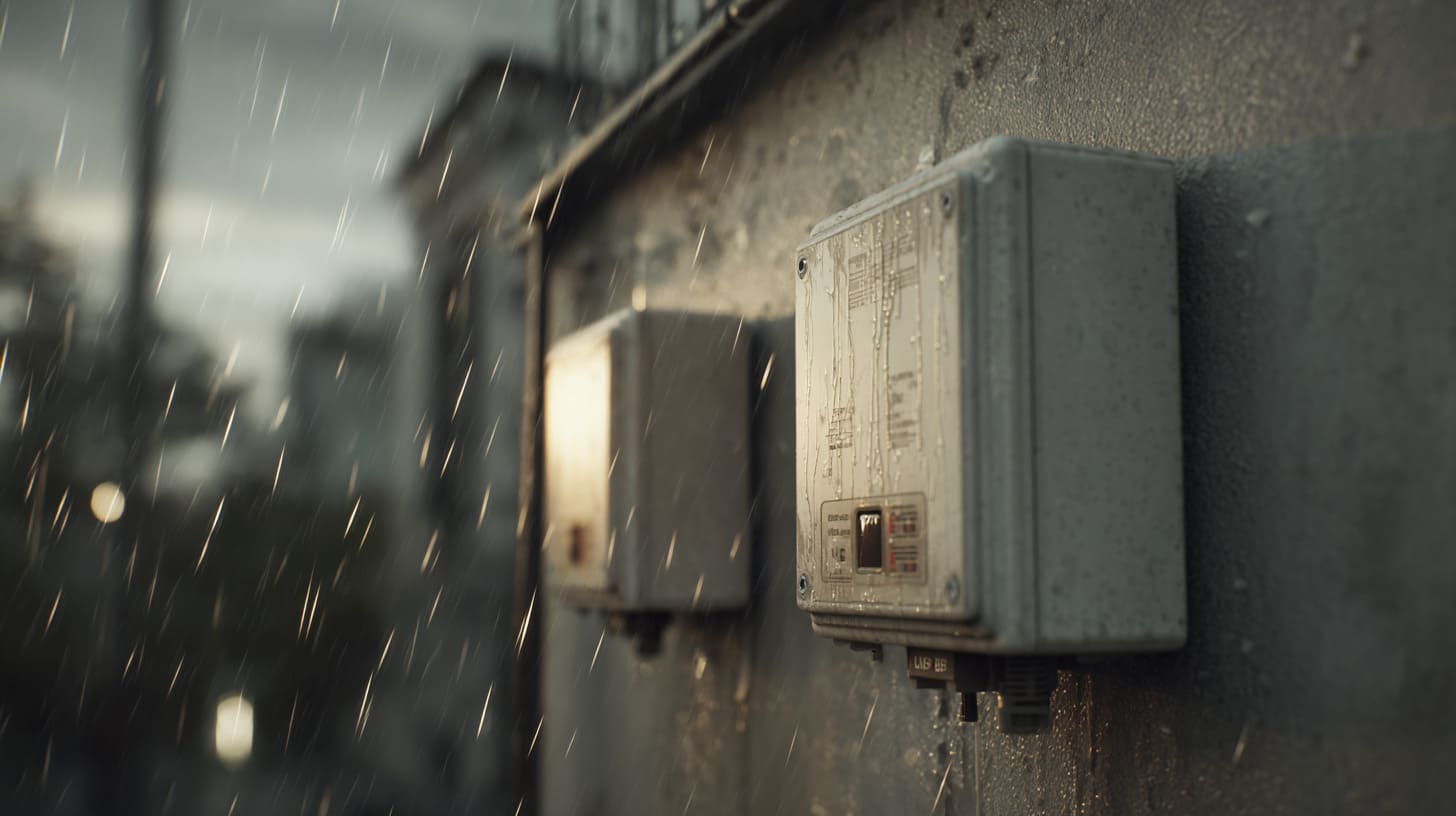
Outdoor use sounds simple until the product actually goes outside.
Sunlight, rain, wind, dust, humidity, temperature changes, and rough installation all work together. The enclosure does not fight one enemy. It fights many small enemies at the same time.
ABS may be suitable for some protected outdoor or short-term uses with the right grade. But for serious outdoor use, polycarbonate with proper UV stabilization usually gives me more confidence.
Before I accept “outdoor” as a simple label, I want to know whether the enclosure will face direct sunlight, rain, heat, or only a covered installation, because these small details change the material decision very quickly.
UV resistance comparison
Sunlight damages many plastics over time.
The surface may fade.
The color may change.
The plastic may become brittle.
Small cracks may appear.
ABS is more sensitive to UV aging if it is not modified or protected. Polycarbonate also needs the right UV-stabilized grade for outdoor use, but it often offers better performance in demanding applications when selected correctly.
The keyword is selected correctly.
A normal indoor PC grade should not be treated like an outdoor miracle material.
| Outdoor condition | ABS concern | PC concern |
|---|---|---|
| Direct sunlight | Yellowing and brittleness risk | Needs UV-stabilized grade |
| High heat | Deformation risk | Better but still needs checking |
| Rain and humidity | Sealing design matters | Sealing design still matters |
| Long service life | Higher aging risk | Better margin with right grade |
| Light outdoor exposure | May work with suitable grade | Often safer |
I always ask whether the buyer needs the product to last one year, three years, or longer.
A cheap material can look fine for three months.
That does not mean it will look fine after three summers.
Weather and moisture exposure
Outdoor failure is not only about UV.
Moisture can enter through gaps. Temperature changes can make materials expand and contract. Screws, seals, and cable glands may loosen. Dust can sit on the surface. Cleaning may add chemical stress.
The plastic material is only one part of the outdoor story.
The full enclosure system includes:
- Material
- Seal design
- Gasket
- Screw structure
- Cable gland
- Wall thickness
- Mounting method
- Surface texture
- Drainage or water path
- UV protection
| Design detail | Outdoor risk |
|---|---|
| Thin walls | Warping or cracking |
| Poor gasket groove | Water ingress |
| Weak screw bosses | Cover loosens |
| Wrong cable gland | Moisture enters |
| Dark color | Higher sun heat |
| Sharp corners | Stress cracking |
A buyer may ask for “waterproof plastic enclosure,” but waterproofing is not a magic word. It is a design result.
If the plastic ages, the sealing can also suffer.
So outdoor material selection must be more careful than indoor selection.
Outdoor enclosure applications
Outdoor enclosures are used in many projects:
- IoT monitoring devices
- Industrial controllers
- Telecom boxes
- Solar-related devices
- Security sensors
- Environmental monitors
- Smart agriculture equipment
- Outdoor Raspberry Pi projects
- Charging or power control boxes
Each one has a different risk profile.
A wall-mounted sensor under a roof is not the same as a box sitting in direct sun. A telecom housing in a cold country is not the same as a device installed in a hot, humid location.
This is why I do not like vague project descriptions.
“Outdoor” is not enough.
I need to know what kind of outdoor.
| Outdoor case | Material thinking |
|---|---|
| Under roof, low heat | ABS may be possible with right grade |
| Direct sunlight | PC with UV grade often safer |
| High impact risk | PC usually better |
| High sealing requirement | Design and gasket become critical |
| Long service life | Better material margin needed |
Outdoor use is where cheap decisions become visible.
The customer may not open the enclosure. But he will see color change, cracks, deformation, and broken corners.
And once a product is installed outside, replacing it is not easy.
Why outdoor failure becomes expensive for OEM buyers
Outdoor failure creates a special kind of pain.
It is not only the cost of the plastic case.
It may include:
- Sending replacement parts
- Paying service labor
- Losing customer trust
- Getting bad reviews
- Missing project deadlines
- Redesigning the enclosure
- Changing the mold
- Re-testing the product
| Failure type | Hidden cost |
|---|---|
| Yellowing | Product looks old and cheap |
| Cracking | Water or dust can enter |
| Warping | Seal may fail |
| Brittle corners | Installation complaints |
| Screw boss failure | Cover cannot stay tight |
For an OEM buyer, the enclosure is part of the brand.
If the enclosure fails outside, the customer does not say, “The plastic grade was wrong.” The customer says, “This product is poor.”
That hurts.
A small material saving can become a reputation problem.
And reputation is much harder to repair than a plastic part.
Outdoor exposure tests patience. Impact tests toughness. So now let us talk about what happens when the enclosure falls, hits, or gets abused before it even reaches the final user.
How Do ABS and Polycarbonate Compare in Impact Resistance?
Impact resistance is one of the clearest differences between ABS and polycarbonate.
ABS can handle normal use. Polycarbonate can handle much more abuse.
But impact risk is not only about the product falling from a table. It also includes shipping, assembly, installation, warehouse handling, and customer behavior.
The part I watch most closely is not the large flat surface. It is the corner, the screw boss, the latch, and the thin edge, because failures love small weak places.
What happens when an enclosure drops?
When an enclosure drops, the impact does not spread evenly.
It often attacks one corner first.
That corner may take most of the force. If the wall is thin, if the radius is too sharp, or if the material is not tough enough, the crack can start there.
A crack does not need permission.
It starts small, then grows.
Common drop-related problems include:
- Corner cracks
- Broken screw bosses
- Cover separation
- Internal PCB movement
- Broken clips
- Surface whitening
- Hidden stress marks
| Design area | Impact risk |
|---|---|
| Sharp outside corner | Crack may start easily |
| Thin wall | Less strength |
| Tall screw boss | Can break from stress |
| Snap-fit hook | Can become weak |
| Large flat panel | May flex under impact |
| Poor rib design | Force may concentrate |
ABS may be acceptable for low-impact products. But if the enclosure may be dropped, moved often, or handled roughly, PC usually gives more confidence.
This is especially important for portable devices and industrial products.
Polycarbonate’s reputation for toughness
Polycarbonate is widely known for toughness. That is why it is used in many protective applications.
In enclosure work, this toughness can reduce the chance of breakage during shipping and field use.
But I want to be careful again.
A tough material still needs a smart design.
If the screw boss is too thin, it may crack. If the ribs are poorly placed, stress may concentrate. If the molded part has internal stress because of poor processing, impact resistance may suffer.
So when I talk about impact resistance, I think about three things:
| Factor | Why it matters |
|---|---|
| Material | PC is tougher than ABS in many cases |
| Structure | Wall thickness, ribs, and radius affect strength |
| Processing | Poor molding can reduce performance |
This is why a serious supplier should not only say, “Use PC.”
A serious supplier should also review the drawing.
I like to check:
- Are the corners rounded enough?
- Are screw bosses supported?
- Are wall thicknesses too thin?
- Are ribs placed correctly?
- Are clips too stiff?
- Will the part face repeated opening?
- Will the product be shipped assembled or disassembled?
These questions turn material choice into real engineering.
Transportation and logistics considerations
Many enclosure failures happen before the end customer even uses the product.
They happen during shipping.
A carton may be stacked under heavy goods.
A container may shake for weeks.
A box may fall during handling.
A warehouse worker may move too fast.
A courier may not care about the “fragile” label.
This is normal.
Not good. But normal.
For export projects, I always think about the journey. A product made in China may travel to Europe, North America, Japan, or South Korea. It may pass through several hands before the customer opens the carton.
| Shipping risk | Enclosure concern |
|---|---|
| Vibration | Screws, bosses, and clips face stress |
| Drop | Corners and edges may crack |
| Compression | Large panels may deform |
| Temperature changes | Plastic may expand or shrink |
| Rough handling | Surface and structure may be damaged |
ABS can survive normal shipping when packaging is good and the design is suitable. But for high-value products or rough handling risk, PC can reduce the chance of breakage.
Packaging also matters.
A strong material inside poor packaging is still risky.
So I may suggest better carton structure, foam protection, corner protection, or separated packaging depending on the product.
Material is one layer of safety.
Packaging is another.
Many enclosure failures happen during shipping, not during assembly
Assembly often happens in a controlled factory space. People have tools. Workers follow steps. Parts are checked.
Shipping is different.
Shipping is a long road full of unknown hands.
That is why I do not only ask whether the enclosure can be assembled. I ask whether it can survive the trip after assembly.
This changes the decision.
If the product has sharp corners, thin screw posts, heavy internal parts, or long overseas shipping, I become more cautious about using ABS. Polycarbonate may cost more, but it may prevent the ugly moment when the buyer opens a carton and sees cracked housings.
Every manufacturer knows that feeling.
Nobody wants to send a message to the customer saying, “Some pieces broke during shipping.”
That is the kind of problem that eats time, profit, and trust at the same time.
Now we can move from material behavior to the real buying question: which one should be used for custom electronic enclosures?
Which Plastic Is Better for Custom Electronic Enclosures?
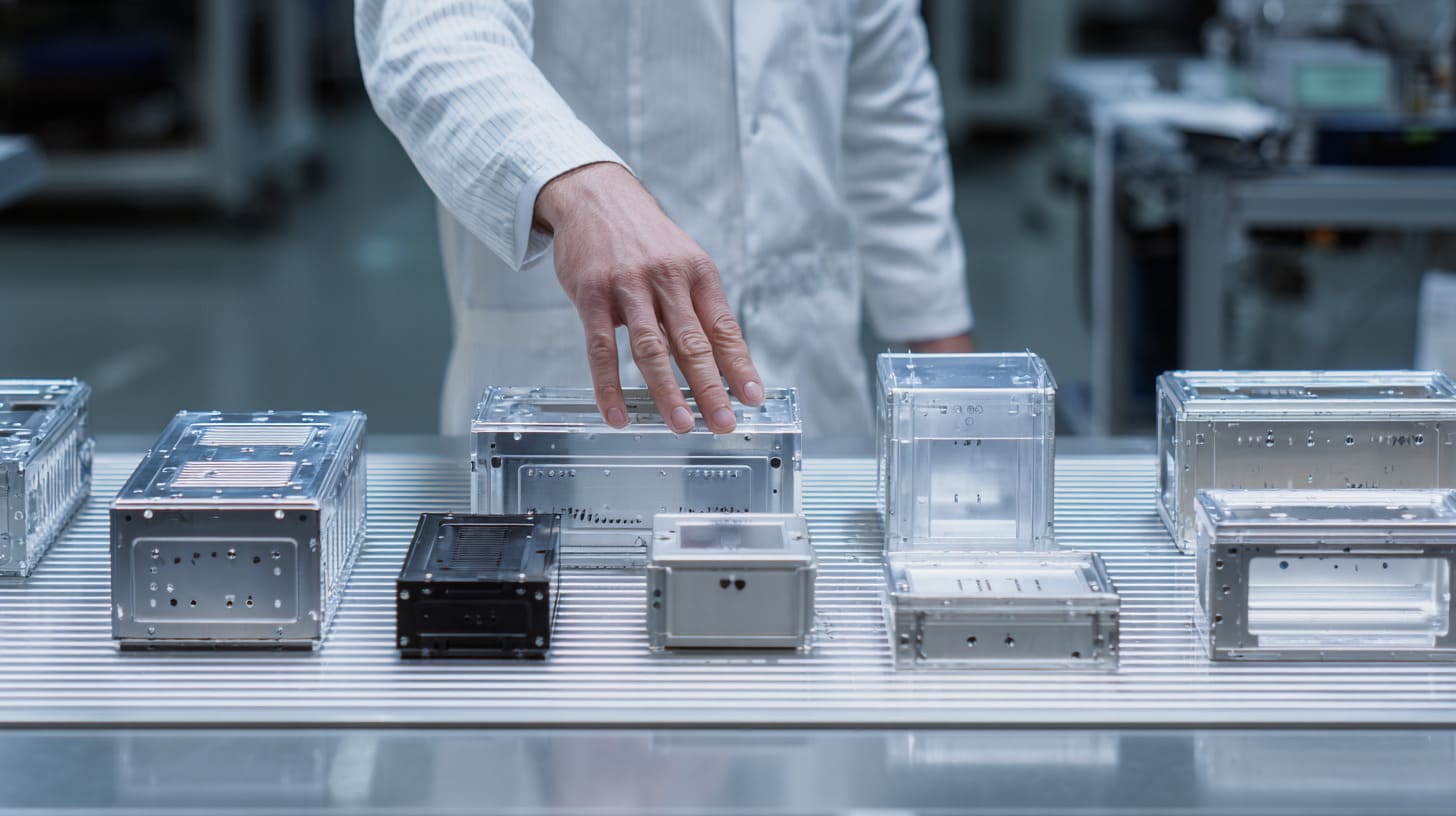
The better plastic depends on the enclosure’s job.
That may sound too plain, but it is the most honest answer.
ABS is better when the project needs cost control and the working environment is friendly. Polycarbonate is better when the project needs toughness, heat resistance, and a higher safety margin.
For custom electronic enclosures, I do not start with the material name. I start with the product’s life after delivery, because the enclosure must protect the customer’s product in the real world, not only pass our sample check.
ABS for consumer-grade electronics
ABS is often a good fit for consumer-grade electronic enclosures.
It can be used for products like:
- Indoor controllers
- Small electronic boxes
- TV box-style housings
- Simple sensor housings
- Low-heat devices
- Office-use electronics
- Budget-friendly plastic cases
The reasons are clear.
ABS keeps cost under control. It molds well. It can look clean. It supports color and texture. It works well when the product does not face harsh heat, sunlight, or impact.
| Consumer-grade need | Why ABS may fit |
|---|---|
| Low cost | ABS has price advantage |
| Good appearance | Surface finish is friendly |
| Indoor use | Lower environmental stress |
| High quantity | Cost saving becomes important |
| Basic protection | Enough for many simple devices |
But I still check the details.
If the product has a hot PCB inside, I do not approve ABS too quickly. If the product has a clip that users open often, I check whether ABS can handle repeated use. If the part needs a flame-retardant rating, I ask for the exact grade.
ABS is simple only when the application is simple.
Polycarbonate for industrial-grade projects
Polycarbonate is often the better choice for industrial-grade electronic enclosures.
Industrial products face more stress. They may be installed by technicians, used near machines, exposed to heat, handled roughly, or placed in environments where failure is costly.
PC can be a better fit for:
| Industrial product | Why PC may be better |
|---|---|
| Control systems | Better strength and heat resistance |
| Power devices | Higher safety margin |
| Outdoor electronics | Better durability with UV grade |
| Factory sensors | Better impact resistance |
| Telecom devices | Stronger for long-term use |
| Portable industrial tools | Better drop resistance |
In these projects, the enclosure is not just a shell.
It is part of the reliability system.
If it cracks, the electronics may be exposed. If it deforms, the seal may fail. If it looks cheap after use, the brand loses trust.
That is why PC often makes sense for serious industrial projects.
Material selection based on project stage
The project stage also affects material choice.
A prototype is not the same as mass production.
For early testing, a buyer may use a lower-cost material or even 3D printing to confirm shape and layout. But once the product moves toward mass production, the material decision becomes more serious.
| Project stage | Material thinking |
|---|---|
| Concept idea | Focus on shape and function |
| Prototype | Test fitting and basic use |
| Pilot run | Check real material behavior |
| Mass production | Choose material based on long-term risk |
| Market launch | Reliability and brand image matter more |
For ODM buyers like John, the early stage may feel flexible. He may want to save cost because he is still testing the market. I understand that.
But if the product is going to be sold to customers, especially under his own brand, the enclosure must not create future embarrassment.
A cheap case can make a good board look poor.
That is a painful way to save money.
What experienced engineers usually check first
Experienced engineers do not only ask, “ABS or PC?”
They ask better questions.
| Check item | Why it matters |
|---|---|
| Heat | Prevents deformation and aging |
| Impact | Prevents cracks and breakage |
| Certifications | Avoids late compliance problems |
| Environment | Indoor, outdoor, factory, vehicle, or home |
| Product lifespan | Short use and long use need different thinking |
| Assembly method | Screws, clips, inserts, and gasket affect stress |
| Shipping route | Export packaging may need extra safety |
I also check user behavior.
Will the customer open the enclosure often?
Will the technician over-tighten screws?
Will the product sit near a window?
Will the seller ship it again after receiving it?
Will the final user judge the product by the outer case?
These questions may sound simple, but they are where real project decisions live.
A drawing tells me the shape.
The use case tells me the risk.
And risk is where long-term cost begins.
How Does Material Choice Affect Long-Term Project Cost?
Material choice affects long-term project cost because a failed enclosure creates costs that do not appear in the first quotation.
The quotation shows material, tooling, production, packaging, and shipping.
It does not show the cost of angry customers.
It does not show the cost of a delayed launch.
It does not show the cost of replacing parts in another country.
It does not show the cost of losing trust.
Those costs are real.
The painful cost is not always the part price. Sometimes it is the time lost after everyone already believed the material decision was finished.
Cheap material vs total project cost
A cheaper material can reduce unit cost. That is useful. But if the material causes failure, the total cost can grow quickly.
Let us say a buyer saves money by choosing ABS. The sample looks good. The first production run ships. Then the product faces heat, impact, or outdoor exposure. Complaints appear.
Now the buyer may need to pay for:
- Replacement enclosures
- Extra shipping
- Customer service
- Repair labor
- New testing
- Mold modification
- New material trial
- Delayed sales
- Brand damage
| Cost type | When it appears |
|---|---|
| Unit material saving | Before production |
| Warranty claim | After customer use |
| Replacement shipping | After failure |
| Redesign cost | After root cause analysis |
| Re-tooling | If structure must change |
| Lost trust | After repeated complaints |
This is why I like total cost thinking.
The lowest unit price is not always the lowest project cost.
Delayed project timelines caused by wrong material choice
Time is often more expensive than plastic.
If the enclosure material fails after the mold is made, the buyer may lose weeks or months.
The team may need to review the design again. The factory may need to test another material. The mold may need adjustment. The customer may need to approve a new sample. If certification is involved, the timeline becomes even more painful.
A wrong material choice can affect:
| Project area | Possible delay |
|---|---|
| Sample approval | New samples required |
| Tooling | Mold changes may be needed |
| Testing | Heat, impact, or flame tests repeated |
| Production | Schedule pushed back |
| Customer launch | Market timing missed |
| Sales plan | Inventory and promotion delayed |
For a buyer selling online, timing can matter a lot.
If the launch misses the season, the cost is not only production delay. It may affect sales ranking, customer demand, and cash flow.
I have seen buyers focus hard on saving a few cents per enclosure, then lose far more because the product could not launch on time.
That kind of saving feels very expensive.
Brand reputation risks
A plastic enclosure is often the first thing a customer touches.
The customer may not understand the PCB.
The customer may not see the internal design.
The customer may not know the engineering effort.
But he sees the case.
If the case cracks, yellows, warps, or feels weak, he judges the whole product.
That is human nature.
For re-brand buyers like Jackson, this is very important. He may add his own logo, sell to local customers, and build trust over time. If the enclosure fails, the customer may not blame the factory in China. The customer blames Jackson’s brand.
That is a heavy cost.
| Enclosure problem | Customer feeling |
|---|---|
| Crack | Product feels unreliable |
| Yellowing | Product looks old |
| Warping | Product feels cheap |
| Loose cover | Product feels unsafe |
| Broken screw boss | Product feels poorly made |
Brand trust is built slowly.
It can be damaged quickly.
That is why material choice is not only engineering. It is also customer experience.
Why experienced buyers think beyond unit price
Experienced buyers still care about price. They are not careless with money.
But they also know that the cheapest part can become expensive if it creates risk.
They ask better questions:
- What happens if this fails?
- How likely is failure?
- How expensive is replacement?
- How hard is field service?
- How long should the product last?
- What will the customer think if the enclosure looks damaged?
This kind of thinking is mature.
It does not reject ABS.
It does not worship PC.
It studies the project.
That is how I prefer to work with customers. I want the buyer to save money where saving money is safe. I also want the buyer to spend more where the extra cost protects the project.
Good sourcing is not about always paying less.
It is about paying correctly.
Now we can turn this into a practical decision, because buyers do not only need theory. They need to know what to choose for the next project.
Should You Choose ABS or Polycarbonate for Your Next Enclosure Project?
You should choose ABS if the project is indoor, low-heat, low-impact, and cost-sensitive.
You should choose polycarbonate if the project faces heat, impact, outdoor exposure, safety requirements, or long service life.
That is the clean answer.
But real projects need a little more care.
Before I suggest one material, I try to imagine the enclosure after six months of real use, because the right choice is the one that still makes sense after shipping, installation, customer handling, and daily work.
Choose ABS when:
ABS may be the right choice when the product is simple and the risk is controlled.
I would feel more comfortable with ABS when:
- The product is used indoors
- The working temperature is normal
- The internal heat is low
- The product is not dropped often
- The product does not need long outdoor life
- The budget is tight
- The design needs a clean surface
- The application is consumer-grade
- No special certification is required, or the correct ABS grade is available
| Good fit for ABS | Reason |
|---|---|
| Indoor electronics | Environment is friendly |
| Budget devices | Cost control matters |
| Low-heat products | Less deformation risk |
| Fixed wall devices | Lower impact risk |
| Simple housings | ABS process is efficient |
ABS can be a smart choice.
I want to say that clearly.
Not every enclosure needs PC. Not every buyer should spend more. If the working condition is safe, ABS can give good value.
The danger starts when buyers use ABS because they do not want to discuss risk.
That is different.
Choose polycarbonate when:
Polycarbonate becomes more attractive when the product needs extra protection.
I would look seriously at PC when:
- The enclosure may face impact
- The product may be used outdoors
- The internal temperature may be high
- The product is industrial-grade
- Long service life matters
- Field replacement is expensive
- The buyer needs better toughness
- The product may need flame-retardant grades
- The brand cannot accept visible failure
| Good fit for PC | Reason |
|---|---|
| Industrial control device | Better durability |
| Outdoor sensor housing | Better material margin |
| Power electronics | Better heat resistance |
| Portable device | Better drop resistance |
| High-value OEM product | Lower failure risk |
| Long-life installation | Better long-term confidence |
PC costs more at the start.
But if it prevents cracking, warping, returns, or redesign, the higher cost may be cheaper in the full project.
That is the part many buyers understand only after one painful failure.
I prefer to discuss it before failure.
Questions buyers should ask suppliers before choosing
A good supplier should not only answer “ABS or PC?” quickly.
A good supplier should ask about the real application.
Here are the questions I think buyers should ask before deciding:
| Question | Why it matters |
|---|---|
| What is the working temperature? | Heat may decide the material |
| Will the product be used outdoors? | UV and weather matter |
| Is there internal heat? | Electronics can warm the enclosure |
| Will the product be dropped or moved often? | Impact resistance may be needed |
| Does the product need flame rating? | Material grade must match |
| How long should the product last? | Lifespan changes material choice |
| How will it be shipped? | Export transport adds risk |
| Will the case be opened often? | Screw and clip durability matter |
| Is the product sealed? | Heat and moisture trade-offs matter |
| What is the customer’s failure tolerance? | Some failures are far more costly |
For custom enclosure projects, I also like to review the drawing.
Material choice and structure design should support each other.
If a buyer sends only a 3D file and asks for the cheapest material, I may still ask about the use case. I do this not to slow the project down. I do it to protect the project from the kind of mistake that looks small today and becomes large later.
A few questions before tooling can save many problems after production.
That is a trade I like.
Conclusion
ABS is not a bad material.
Polycarbonate is not always necessary.
This is the first thing I want to make clear.
I do not believe good manufacturing means always choosing the strongest material. I also do not believe good sourcing means always choosing the cheapest material. Both ideas are too simple for real projects.
In my work, I see ABS as a practical plastic for many indoor, low-stress, cost-sensitive enclosure projects. It can look good. It can mold well. It can help buyers control price. For the right product, it is a smart choice.
But I become careful when the enclosure faces heat, sunlight, impact, safety requirements, or long service life. In those cases, polycarbonate can become the better value, even with a higher material cost.
Why do I think this way?
Because I have seen how enclosure problems appear in real life.
A small crack does not only damage one plastic part. It damages the buyer’s confidence.
A warped cover does not only change one shape. It may affect sealing, assembly, and customer trust.
A yellowed outdoor box does not only look ugly. It makes the whole product feel old.
A delayed redesign does not only cost tooling money. It costs time, energy, and sometimes a market opportunity.
That is why I care so much about material selection.
I do not choose material only for the sample table. I choose it for shipping, installation, daily use, customer complaints, and long-term brand feeling.
The cheaper plastic becomes expensive when it creates failure, delays, redesign, warranty claims, or brand damage.
So my final view is simple:
Choose ABS when the application is friendly and the risk is low. Choose polycarbonate when the project needs stronger protection, longer life, and more safety margin.
Good enclosure design is not about choosing the cheapest material.
It is about choosing the material that creates the lowest total project risk.
If you are developing a custom plastic enclosure, aluminum enclosure, Raspberry Pi-style case, or OEM electronic housing, I suggest you do not start only with price. Start with the environment. Start with heat. Start with impact. Start with the customer’s real use.
Then the material choice becomes much clearer.
If you already have a drawing, sample, or project idea, you can send us your requirements. At MaidaTech, we can help review the enclosure structure, material choice, logo customization, packaging, and production plan before the project moves too far.
It is always easier to make a smart decision before the mold is made than to fix an expensive mistake after production starts.