Skip to content
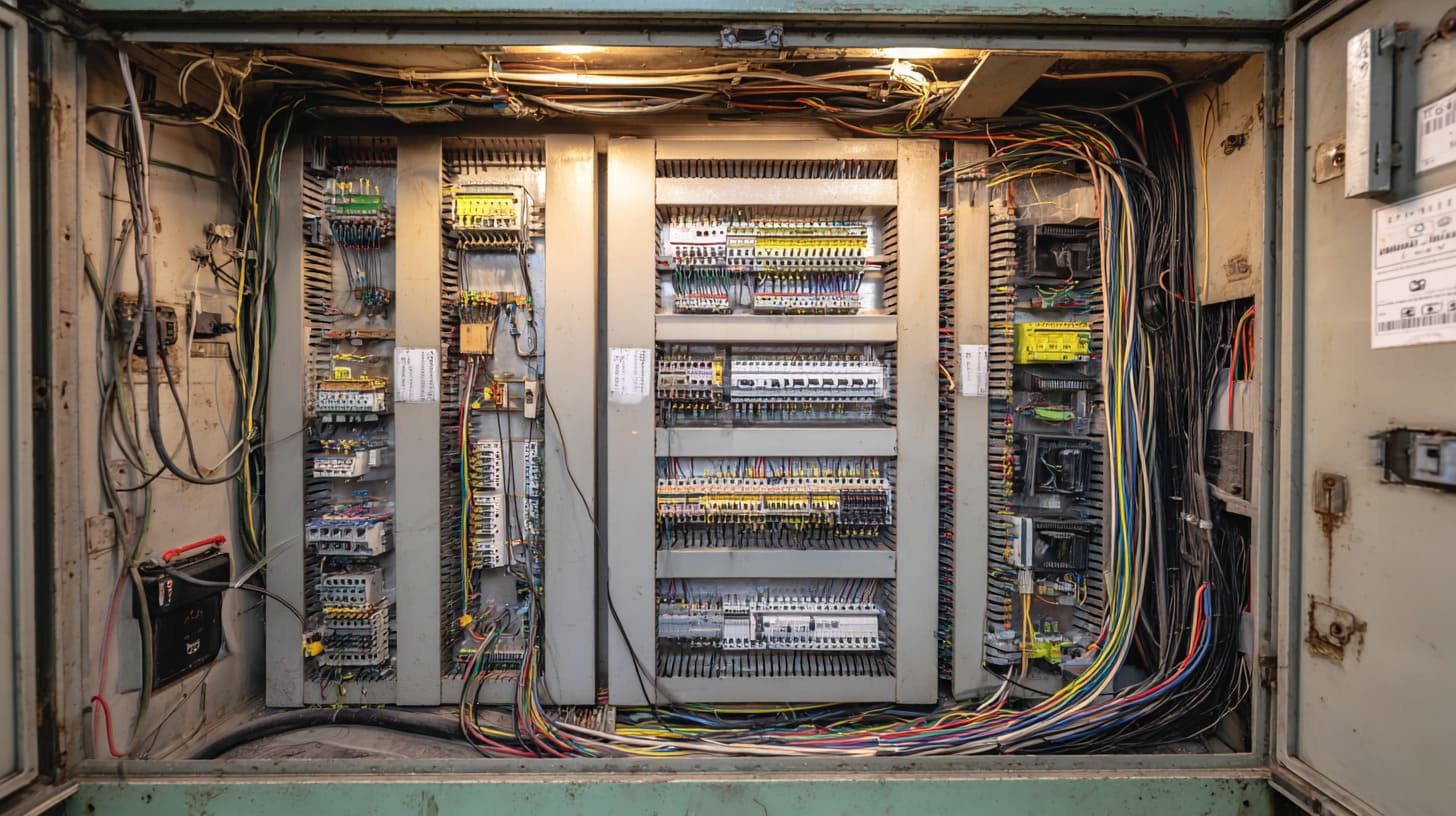
The conversation started during an ordinary afternoon call with a client in Belgium. He was frustrated because the enclosure he bought from another supplier looked solid from the outside, but inside everything felt like a small puzzle — components screwed at odd angles, wires squeezed in tight corners, no room to upgrade or fix anything without taking the whole thing apart.
As he described the mess, I could almost see the inside of that box in my mind. I’ve seen the same problem many times: a strong enclosure with no real system for arranging parts. That’s when the value of combining a DIN rail with a NEMA‑rated enclosure becomes clear. It’s like bringing order into a space that was never built to stay flexible.
In this article, I want to walk you through what a DIN rail is, what a NEMA enclosure is, and why the two work so well together — especially for OEM/ODM projects, industrial controls, or custom enclosures we build at MaidaTech. By the end, you’ll understand why this pairing makes installation easier, upgrades smoother, and systems more reliable.
What Is a DIN Rail

Sometimes, when a customer asks me to build a custom aluminum enclosure, they show me a design with a neat horizontal bar inside. I always smile. I know what’s coming next—they want DIN‑rail mounting. And honestly, I don’t blame them. It makes life easier.
What does “DIN” stand for and origin of the standard
I like to tell people that DIN stands for German engineering at its finest. The real name is “Deutsches Institut für Normung,” which means the German Institute for Standardization.
They created the DIN standard over a century ago to make mounting electrical components more consistent. It wasn’t glamorous, but it changed engineering forever. Before that, everyone mounted components however they liked. Imagine the chaos.
What is the physical form of a DIN rail
A DIN rail looks simple, but it has several versions. Most of the time, I work with the 35 mm top-hat rail, because nearly every modern device snaps onto it.
Here’s a quick table:
| DIN Rail Type | Shape | Common Use | Notes |
|---|---|---|---|
| Top‑hat (TS35) | Ω‑shape | Most electronics | Most universal |
| C‑section | C‑shape | Older or heavy components | Less common today |
| G‑section | Asymmetric | Transformers, heavy loads | Very stable |
| Mini TS15 | Smaller top‑hat | Compact devices | For small enclosures |
These rails are usually made from cold‑rolled carbon steel, often zinc-plated so they don’t rust.
What kinds of devices/components mount on DIN rails
DIN rails work like a public stage for many components. I’ve mounted all kinds of devices on them:
- Circuit breakers
- Power supplies
- Relays
- Terminal blocks
- PLC units
- Motor controllers
- Surge protectors
- Meters and sensors
The biggest advantage? Interchangeability. You can buy parts from Europe, the US, or China, and they still snap onto the same rail. That is the real magic.
Before we move forward, let me tell you this: the first time I realized how many brands fit on one rail, it felt like someone had handed me a universal charger for engineering.
Why Use a DIN Rail — Key Benefits
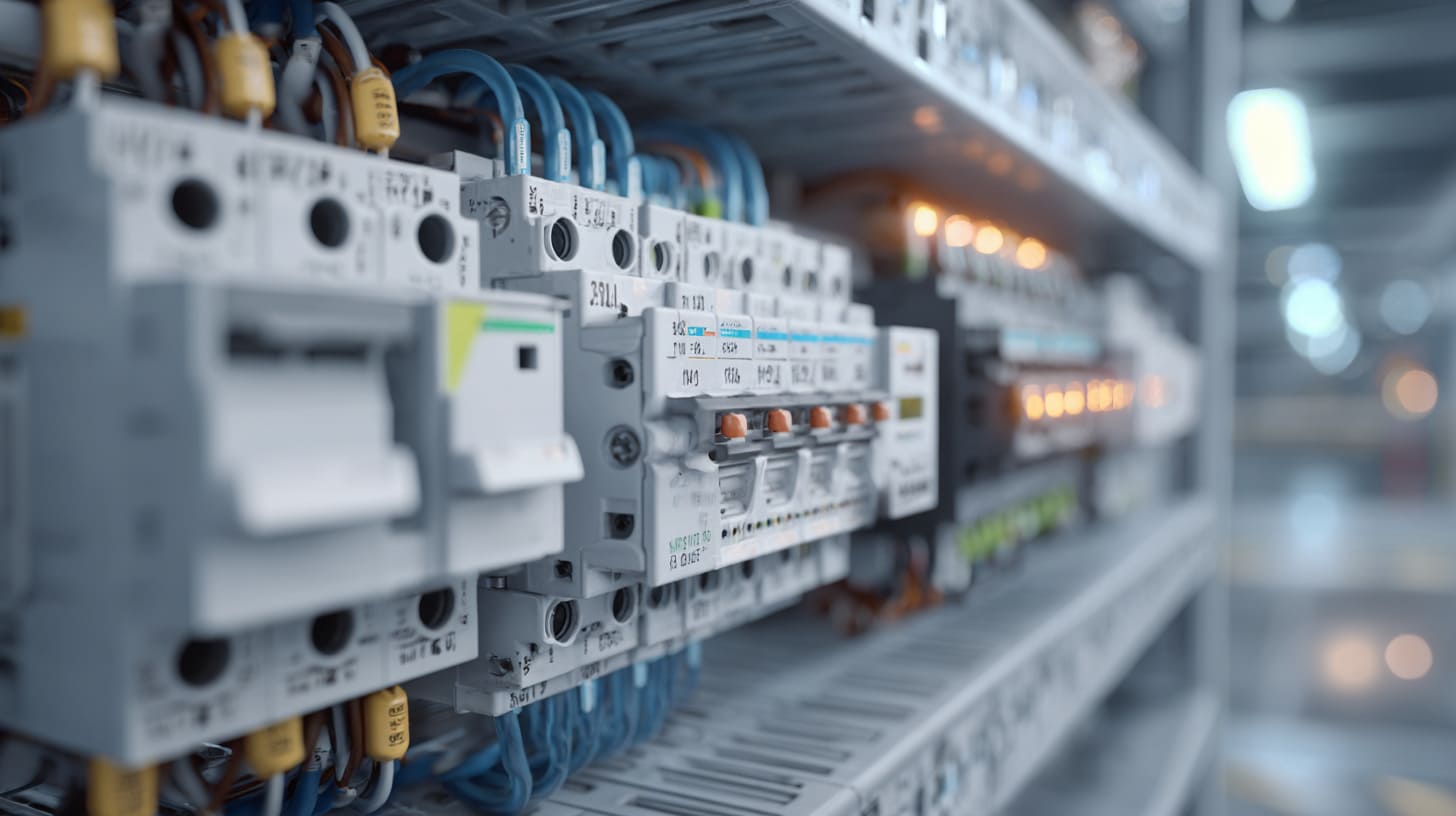
For customers like Davide or John—who often deal with redesigns, prototypes, and constant layout changes—a DIN rail saves time, money, and nerves.
Faster, easier installation and maintenance
I once spent half a day mounting devices inside a metal box before I understood DIN rails. After switching to rails, the same job took 20 minutes. Snap on, snap off.
Here’s why:
- No drilling many holes
- Less time positioning parts
- Quick module replacement
- Clean and predictable layout
A rail basically makes your enclosure behave like Lego.
Standardization and modularity
The beauty of DIN rails is global compatibility. My customers love this because they can source parts from the US or Europe without redesigning their enclosures.
A simple way to see this:
| Feature | Without DIN Rail | With DIN Rail |
|---|---|---|
| Compatibility | Depends on brand | Standard across brands |
| Upgrades | Requires drilling | Snap-on modules |
| Layout | Hard to keep neat | Modular and clean |
Space‑saving, scalable layout inside enclosures
DIN rails maximize every inch. When someone asks me to build a slim enclosure with many components, I know a DIN rail is the only logical solution.
The wiring also becomes cleaner because the devices line up perfectly.
When you finish a perfect row of components, it looks almost artistic—even if only you will ever see it.
And speaking of organization, let’s look at where these rails usually live: inside NEMA enclosures.
What Is a NEMA Enclosure — Overview

The first time I shipped a NEMA 4X enclosure to a customer near the coast, he told me, “If this box survives the salt air here, I’m never changing suppliers again.”
NEMA enclosures are tough. They are built for the real world.
What does “NEMA enclosure” mean and what standards govern it
NEMA stands for National Electrical Manufacturers Association. This organization sets the rules that say how much dust, water, or corrosion an enclosure can handle.
For example:
| NEMA Type | Protection Level | Typical Use |
|---|---|---|
| 3R | Rain, snow | Outdoor panels |
| 4 | Water spray | Industrial factories |
| 4X | Corrosion + water | Coastal or chemical environments |
| 12 | Indoor dust | Automation workshops |
A “NEMA enclosure” simply means the box meets one of these protection standards.
Common materials and purposes of NEMA enclosures
I work with many materials for NEMA-style enclosures:
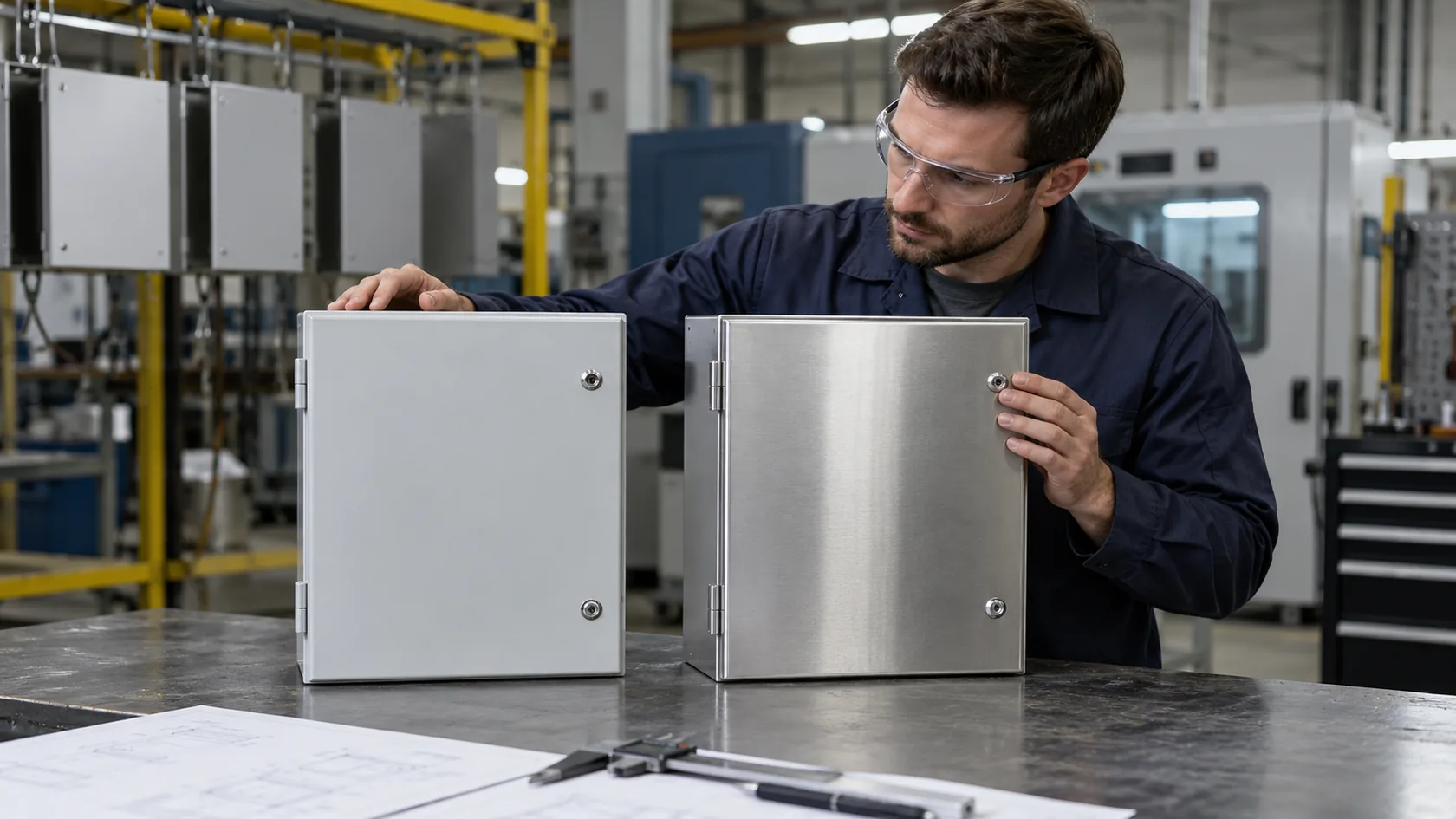
- Aluminum
- Stainless steel
- Sheet metal
- ABS plastic
- Polycarbonate
- Fiberglass-reinforced plastic
They all protect the electronics inside from dust, moisture, UV, impact, and chemical exposure.
Why NEMA rating matters
A NEMA rating isn’t just a number. It’s peace of mind. If your device lives outdoors, in a factory, or in a harsh environment, you want the enclosure to fight the weather—not your electronics.
When a customer asks me, “Do I really need NEMA 4X?”, I always ask:
Will your device face water or corrosion?
If yes, the answer is simple. You need it.
Let’s now bring these two worlds together.
How DIN Rails and NEMA Enclosures Work Together
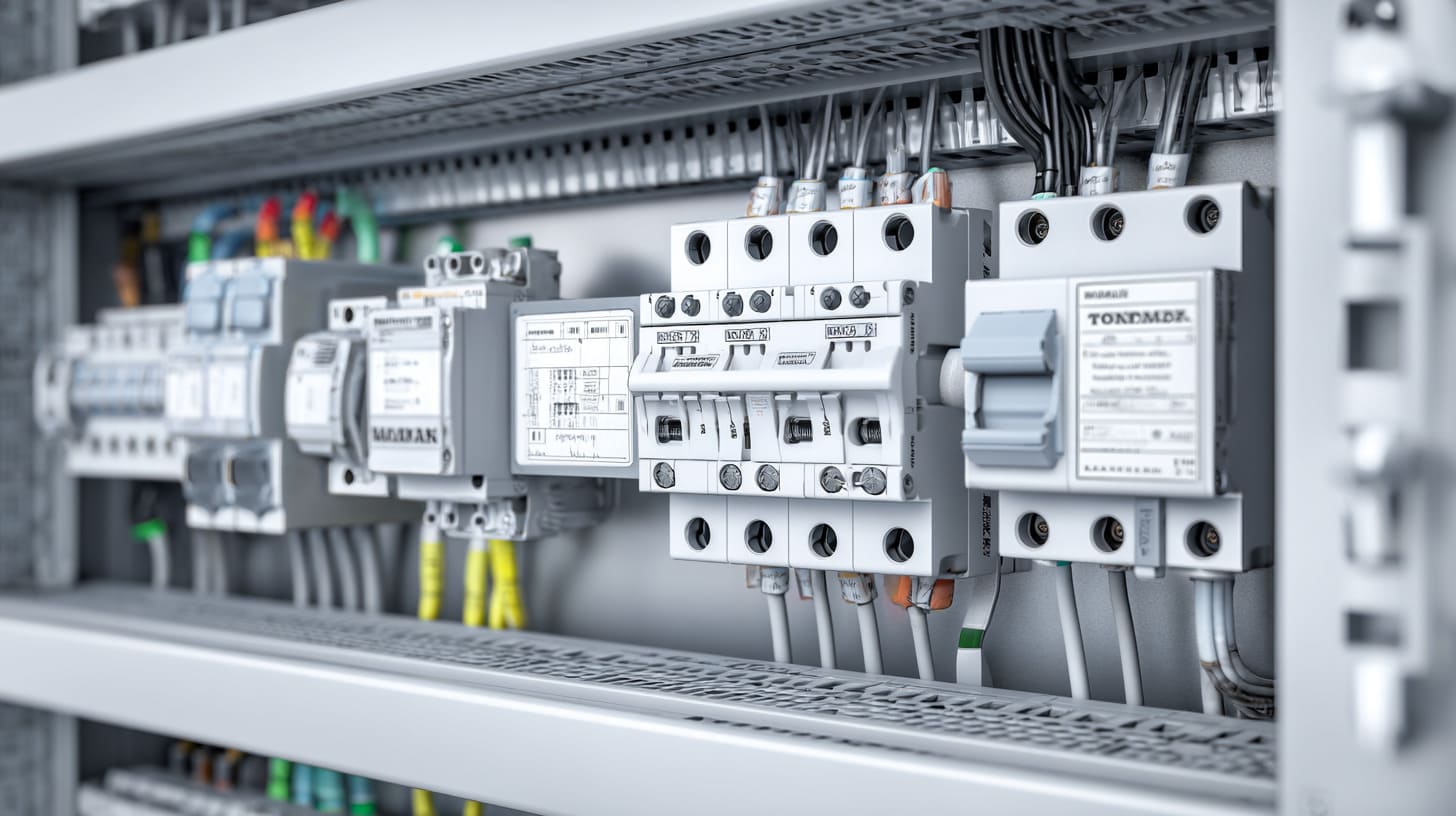
When a DIN rail sits inside a NEMA enclosure, it’s like putting a toolbox inside a safe. You get flexibility and protection.
How a DIN rail is integrated inside a NEMA‑rated enclosure
A NEMA enclosure designed for DIN‑rail mounting usually includes:
- Pre-made mounting bosses
- Pre-drilled holes
- Internal spacing for wiring
- Horizontal rail alignment positions
I’ve installed rails both horizontally and vertically, depending on the customer’s layout. Inside, components snap onto the rail while the enclosure shields them from the environment.
Benefits of the combination
This combo solves many engineering problems:
| Benefit | Description |
|---|---|
| Environmental protection | Keeps dust, water, and corrosion out |
| Modular mounting | Add or remove components easily |
| Cleaner wiring | Straight layouts, minimal clutter |
| Lower labor cost | Less drilling and manual mounting |
| Future-proof | Easy upgrades |
One of my clients once told me, “It feels like my system can grow without stress.” That is exactly the goal.
Typical use‑cases
DIN‑rail setups inside NEMA enclosures are popular in:
- Outdoor monitoring stations
- Industrial control panels
- PLC and automation cabinets
- IoT control boxes
- Pump and valve control systems
- Solar power controllers
- Traffic management boxes
If your system needs to stay safe while staying flexible, this combination is the sweet spot.
Time to think about what to consider before choosing one.
Considerations When Specifying DIN‑Rail + NEMA Enclosures (for OEM / B2B Use)
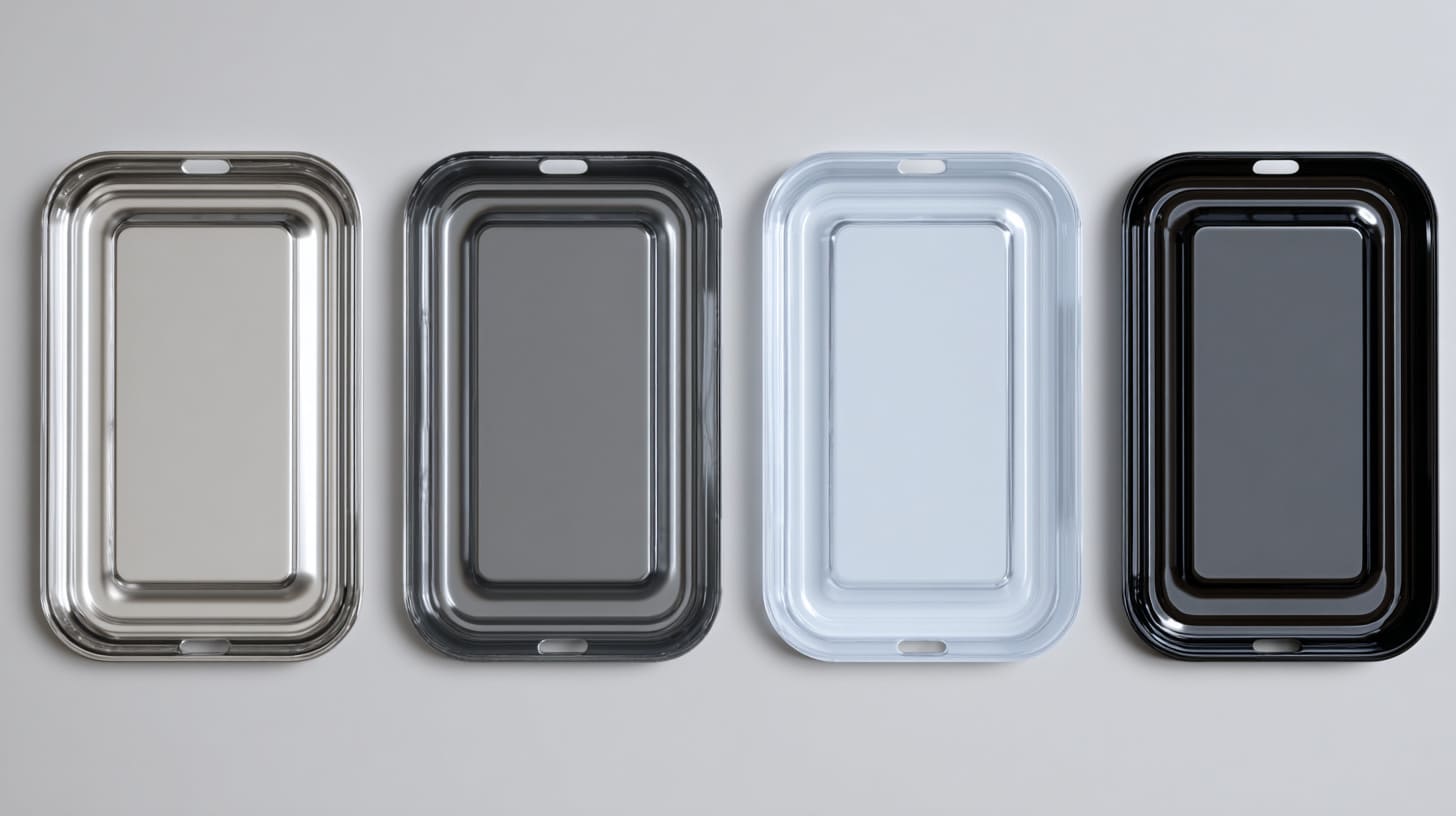
Over the years, I’ve seen many customers overlook small details that later caused headaches. Here’s how I help them prevent that.
Material selection and compatibility
Not all materials are equal. For corrosive or wet environments, I often recommend:
| Material | Strength | Corrosion Resistance | Weight | Cost |
|---|---|---|---|---|
| Stainless steel | Strong | Excellent | Heavy | High |
| Aluminum | Medium‑high | Good | Light | Medium |
| Fiberglass | Medium | Very good | Medium | Medium |
| Polycarbonate | Light | Good | Very light | Low |
And don’t forget: the DIN rail must match the enclosure interior. Spacing, grounding, and mounting bosses must line up perfectly.
Size, layout, and internal space
When planning space, I ask customers one simple question:
“How many modules do you need today—and how many might you add later?”
Key points:
- Allow room for wiring bending radius
- Leave clearance above and below the rail
- Plan for ventilation if the components run hot
- Consider grounding if needed
A simple layout sketch can save you days of redesign work.
Customization and modularity for OEM/ODM clients
Most of my clients come with their own layout ideas. Some want a special cutout for a display. Some want branding engraved. Some want two rails instead of one.
Customization options include:
- Rail position changes
- Extra internal bosses
- Printed or engraved logos
- Custom color or finish
- Custom packaging
- Re-designed enclosure shape
As long as the enclosure still meets the environmental standard, customization can make the product truly yours.
Now let’s bring everything together.
Conclusion
DIN rails bring order. NEMA enclosures bring protection. When you put them together, you get a system that is flexible, safe, and ready for almost any industrial or outdoor environment.
I’ve worked with customers across Europe, North America, and Asia who rely on this combination for automation, PLC control, IoT projects, and custom electronics. The key is choosing the right materials, the right layout, and the right partner who understands both engineering detail and real‑world applications.
If you ever need help designing a custom aluminum or plastic enclosure with a DIN‑rail setup, this is exactly the kind of work my team and I do every day at MaidaTech—with care, clear communication, and fast delivery.
Thanks for reading, and I hope this guide helps you build something that works better and lasts longer.