Skip to content
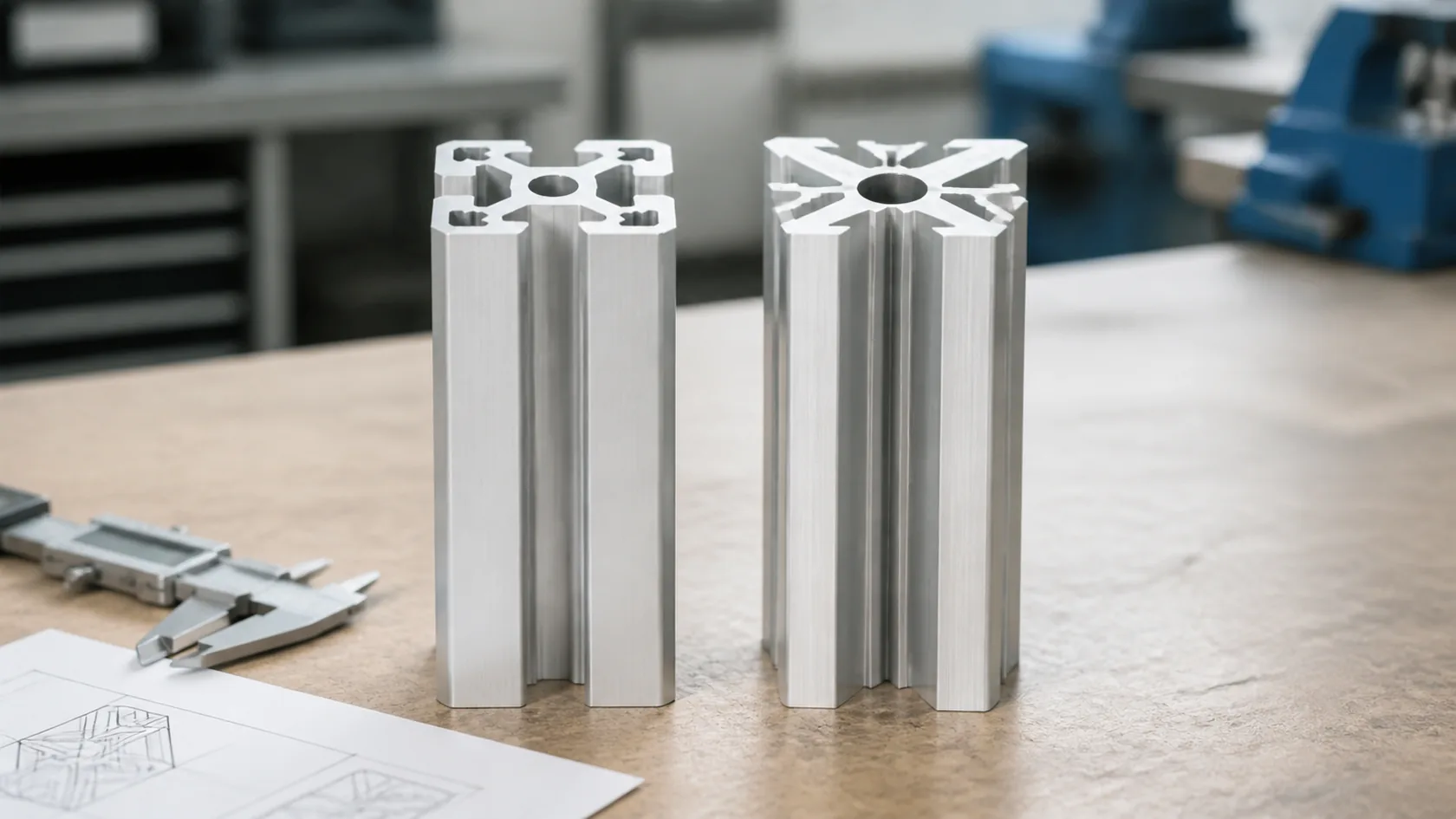
At a factory bench, a T-slot profile and a V-slot profile can both look like silver aluminum bars with grooves. That resemblance causes a common mistake: a buyer selects a profile by outside size, then discovers that the wheels, nuts, brackets, or expected motion do not match it.
The short answer is simple. T-slot aluminum is primarily a modular structural-framing system. Its slots accept nuts, bolts, brackets, panels, and accessories. V-slot aluminum is a related profile style with V-shaped outer edges intended to work as guide surfaces for compatible V-wheels. It can still offer slots for fastening, but its special value is simple linear motion.
Neither name is a universal standard for size, strength, alloy, or hardware. I treat the label as a clue, then confirm the section drawing and the job the profile must do. That prevents a small purchasing shortcut from becoming an assembly delay.
Start With the Correct Terms
T-Slot Names a Fastening Interface
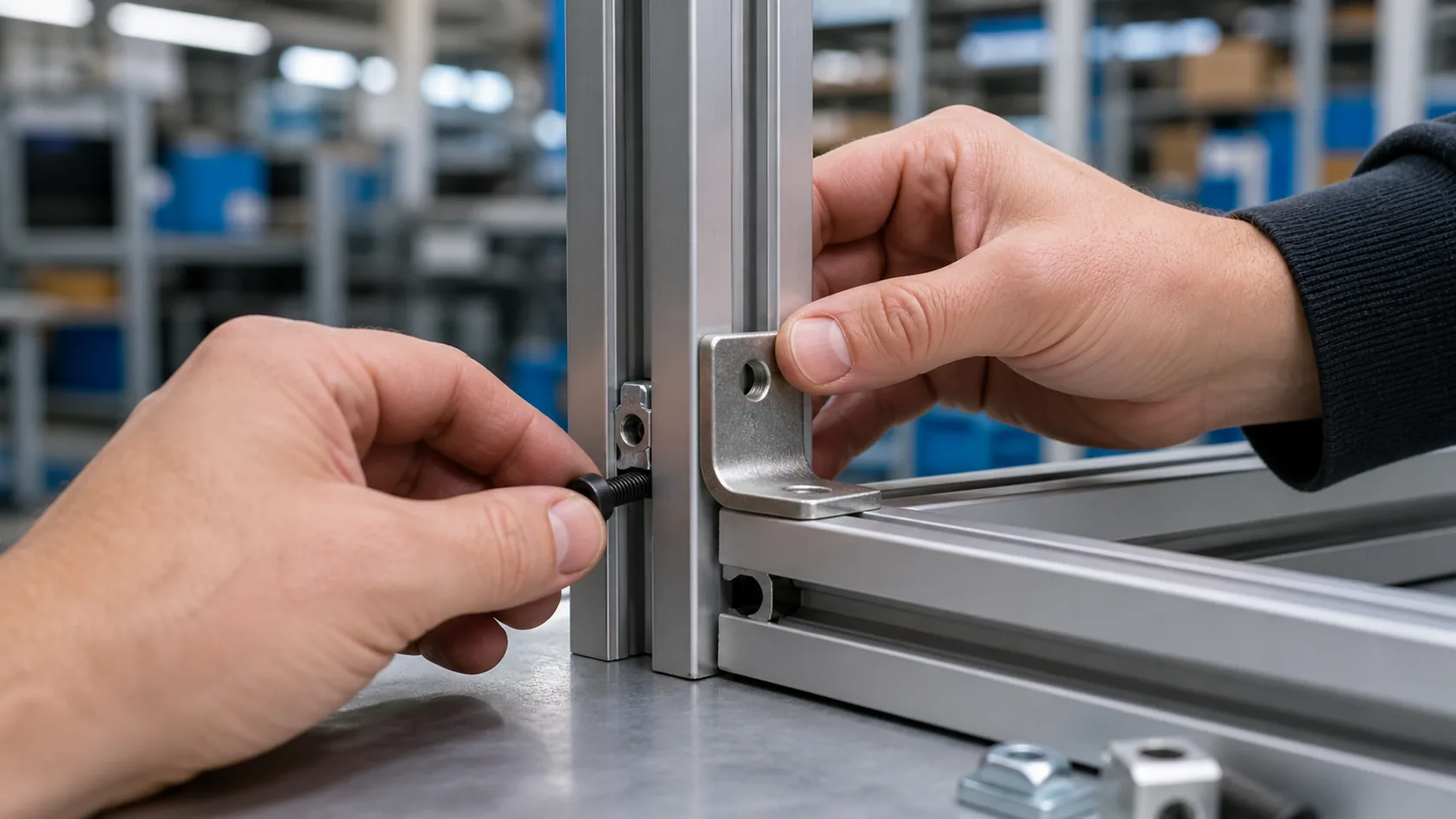
A T-slot is a channel with an undercut shape. A T-nut slides or drops into the channel, and a bolt clamps a bracket, panel, hinge, sensor, cable guide, or another profile to it. The great advantage is adjustment: you can move a component along the profile without drilling a new row of holes.
This is why T-slot framing is common in machine bases, safety guards, workstations, test fixtures, enclosure supports, and production aids. MISUMI describes T-slot profiles as a modular framing solution, but modular does not mean every supplier’s parts fit together.
V-Slot Adds a Wheel-Running Geometry
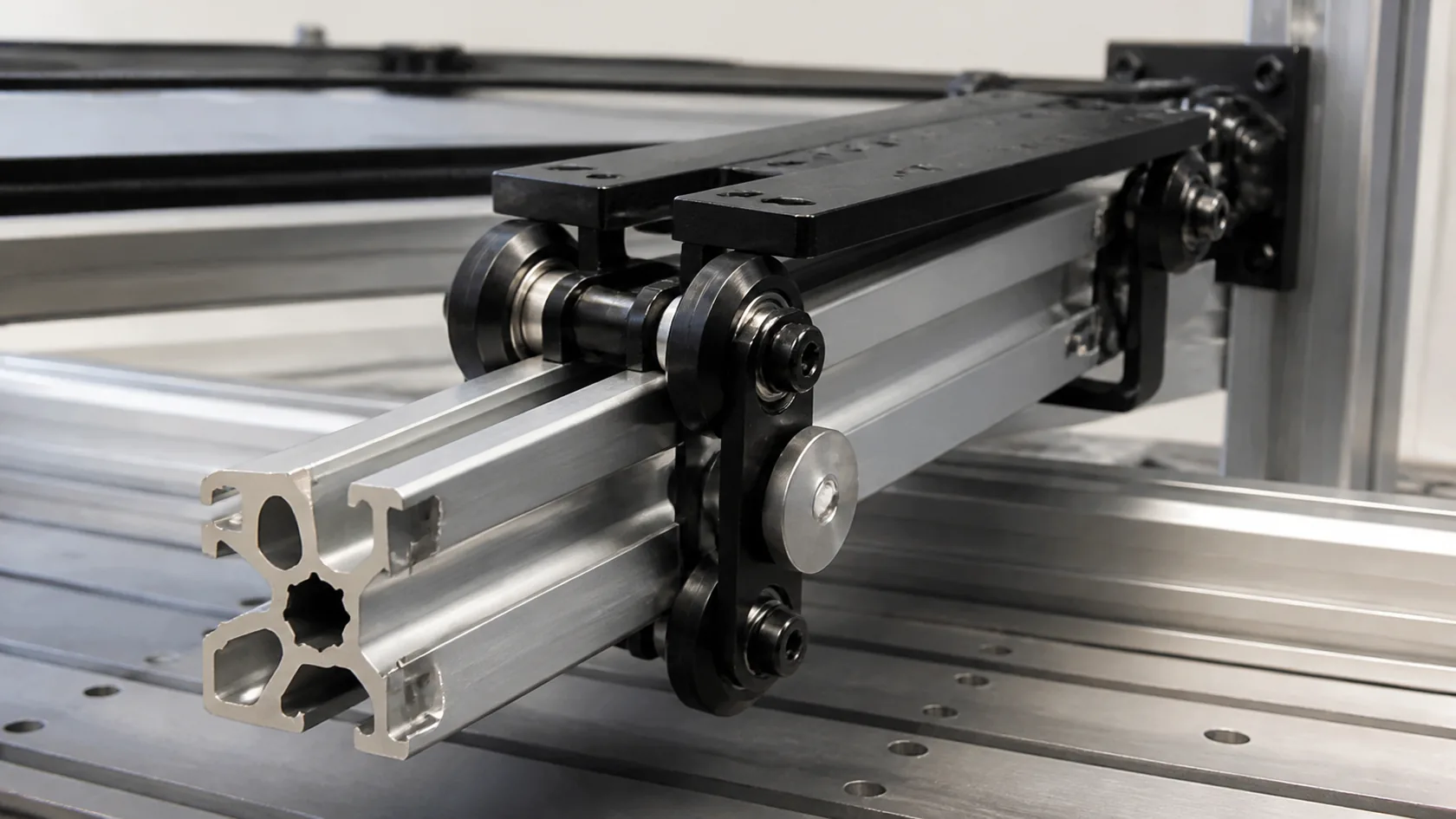
V-slot usually describes an extrusion whose exterior includes 90-degree V-shaped edges. Matching V-wheels run on those edges and form a simple carriage. The profile can therefore act as both a light structural member and a guide path.
In my view, that dual purpose is the real difference. If the groove needs to carry a wheel smoothly, use a profile and wheel system designed together. If the groove only needs to accept a nut and bolt, a conventional T-slot system is usually the more direct choice. The next question is how each design behaves in use.
How Each Profile Works
T-Slot Builds Adjustable Structural Frames
T-slot framing uses the slots as mounting locations. Internal connectors, angle brackets, gussets, joining plates, feet, handles, panels, and cable accessories build up a frame. A wide range of profile shapes makes it practical to place material where the frame needs stiffness.
For an enclosure project, this can mean a rigid equipment stand with a removable panel or a custom electronics enclosure mounted exactly where access and cable routing require it. The frame is not a precision linear guide just because it has straight sides; it is first a structure.
V-Slot Supports Simple Guided Motion
With V-slot, a plate holds several V-wheels around the profile. One wheel position is often adjustable so the carriage can be set with slight preload. Belts, lead screws, or other drives then move the carriage along the extrusion.
I check wheel contact and adjustment before I promise smooth travel, because a carriage can feel acceptable by hand yet bind when a cable load or off-center tool load is added. V-slot is useful for light-duty motion where simplicity, low part count, and easy assembly matter. For higher accuracy, high cycles, contamination, or substantial moment load, a dedicated linear rail is often the safer system.
Strength Is Not the Main Difference
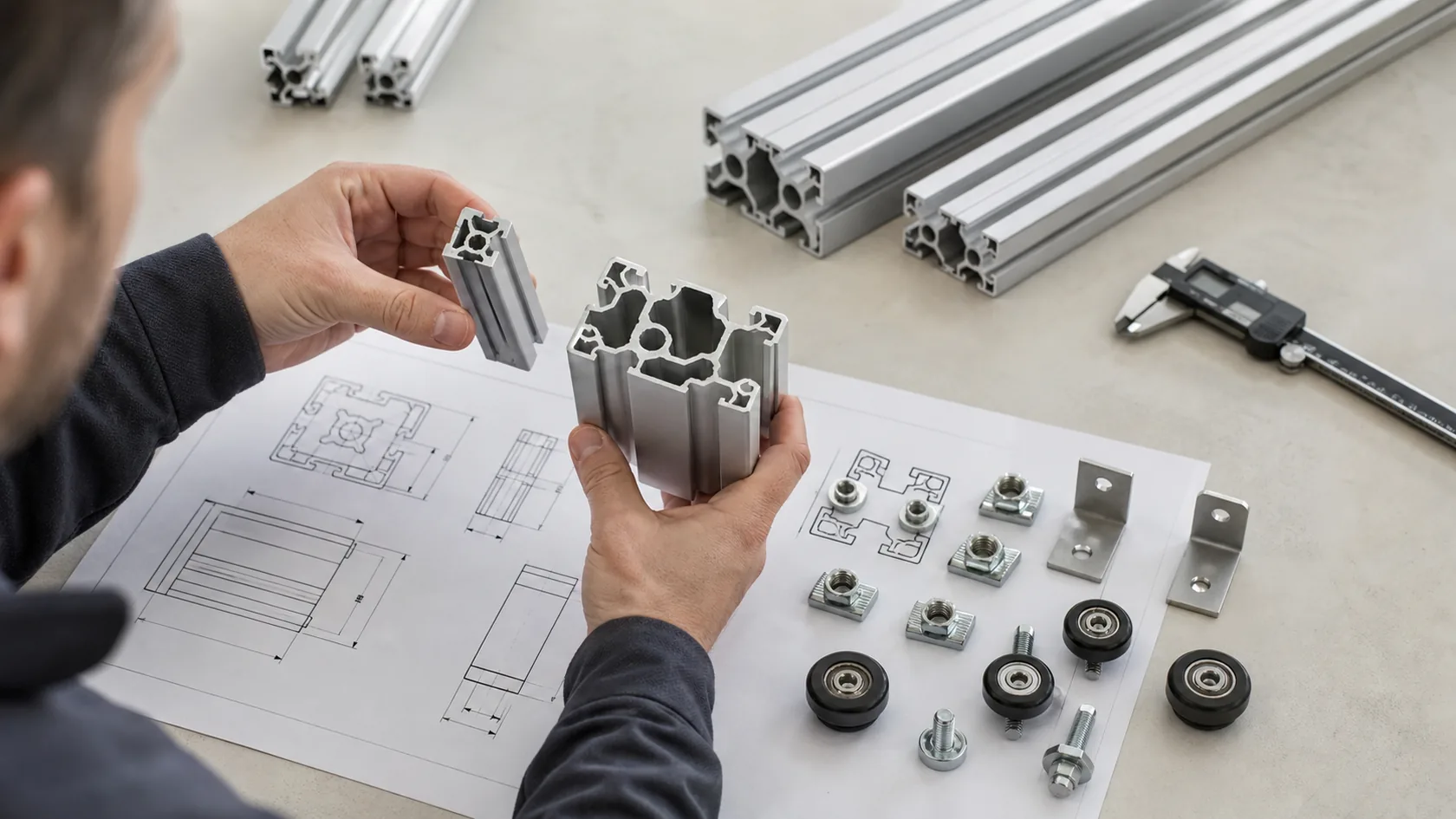
Compare Section Data and Load Path, Not the Label
It is tempting to call T-slot stronger and V-slot lighter. That is not a reliable engineering rule. Strength and deflection depend on outside dimensions, wall thickness, internal webs, alloy, temper, span, connection design, and the direction of the load.
Supplier catalogues publish properties such as mass and section moment of inertia for specific profiles. For example, MISUMI’s profile data lists these values by exact part number. A deeper rectangular section may resist bending far better in one direction than after it is rotated 90 degrees.
When I compare a frame option, I start with the unsupported span and the load path rather than the word printed in the supplier listing. A small V-slot may be adequate for a compact moving cover. A tall machine guard, a long door, or a heavy enclosure normally needs a section selected from actual load and deflection requirements.
Wheels, Grooves, and Deflection Need Their Own Checks
A V-wheel carriage adds limits that a stationary frame does not have. Wheel material, bearing quality, preload, dirt, alignment, and eccentric-spacer adjustment affect feel and wear. A flexible extrusion can also make the carriage rack or lose consistent contact along a long travel.
That does not make V-slot poor. It defines its best territory. Use it where the required precision and duty match the wheel system. Do not assume that using a larger profile automatically turns a wheel-on-extrusion arrangement into an industrial linear guide.
Hardware Compatibility Is the Real Purchasing Risk
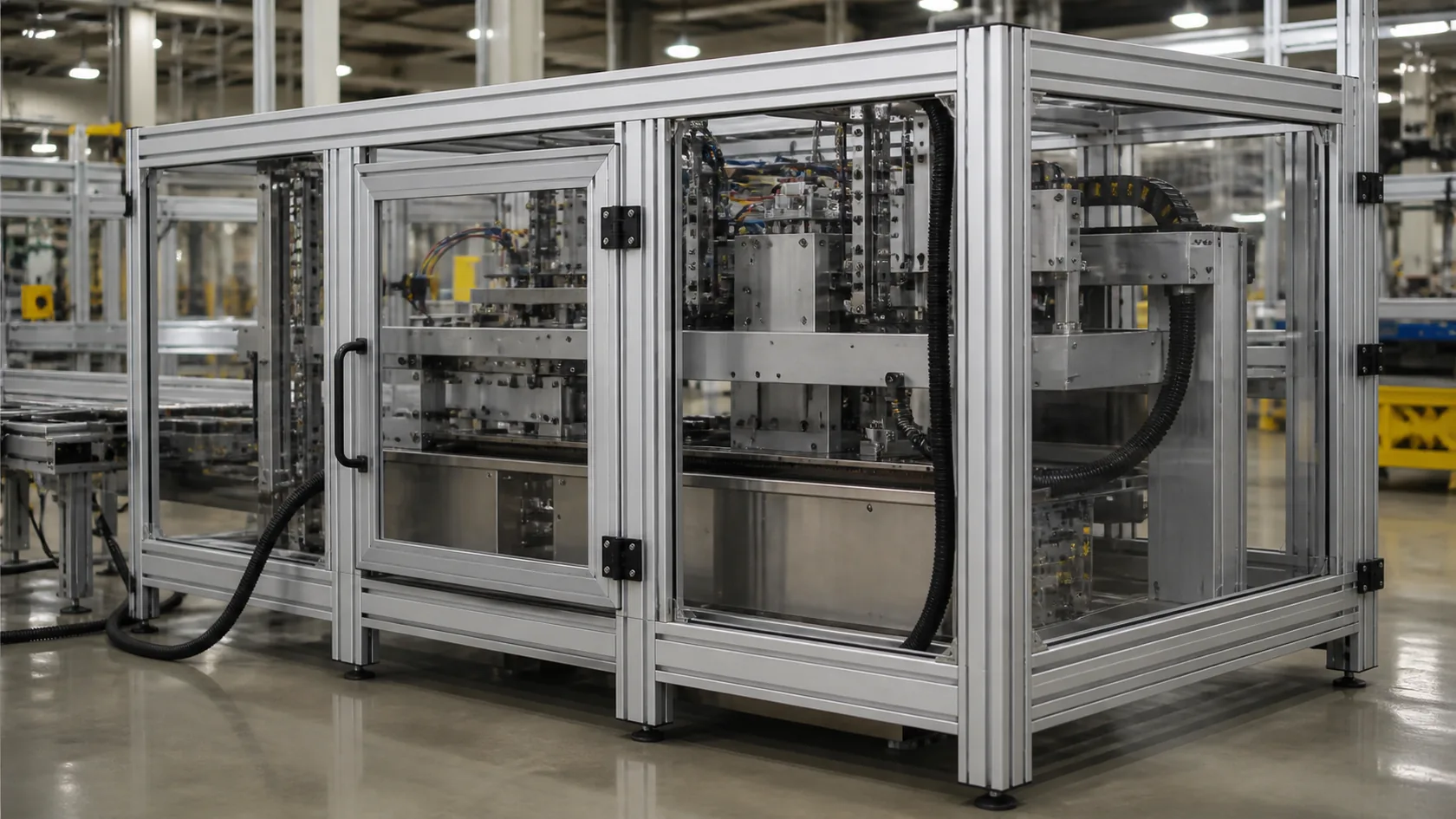
Slot Series, Nut Geometry, and Brackets Vary
Two profiles with the same 20 × 20 mm outside size can have different slot openings, depths, corner radii, center bores, and accessory systems. A nut that fits one may tilt, spin, or fail to engage in the other. Brackets also depend on the series and the profile face geometry.
MISUMI notes that slot series determines the hardware interface. That is why a request for “2020 T-slot” is incomplete without a drawing or a known supplier series.
I do not mix profiles and accessories from different catalogues based on photographs alone. A sample assembly or a dimensional check is inexpensive insurance before a production order.
A V-Slot Profile May Still Accept T-Slot Hardware
Many V-slot products include channels that accept a defined family of T-nuts and fasteners. This creates another source of confusion: a V-slot profile may be usable as framing, while a T-slot profile may look capable of guiding a wheel.
The question is not whether the names overlap. The question is whether the manufacturer specifies the exact nut, bracket, wheel, plate, and tolerance combination for that profile. The Aluminum Association’s tolerance guidance is also a useful reminder that fit and straightness should be specified when they matter to a build.
Choose by Application
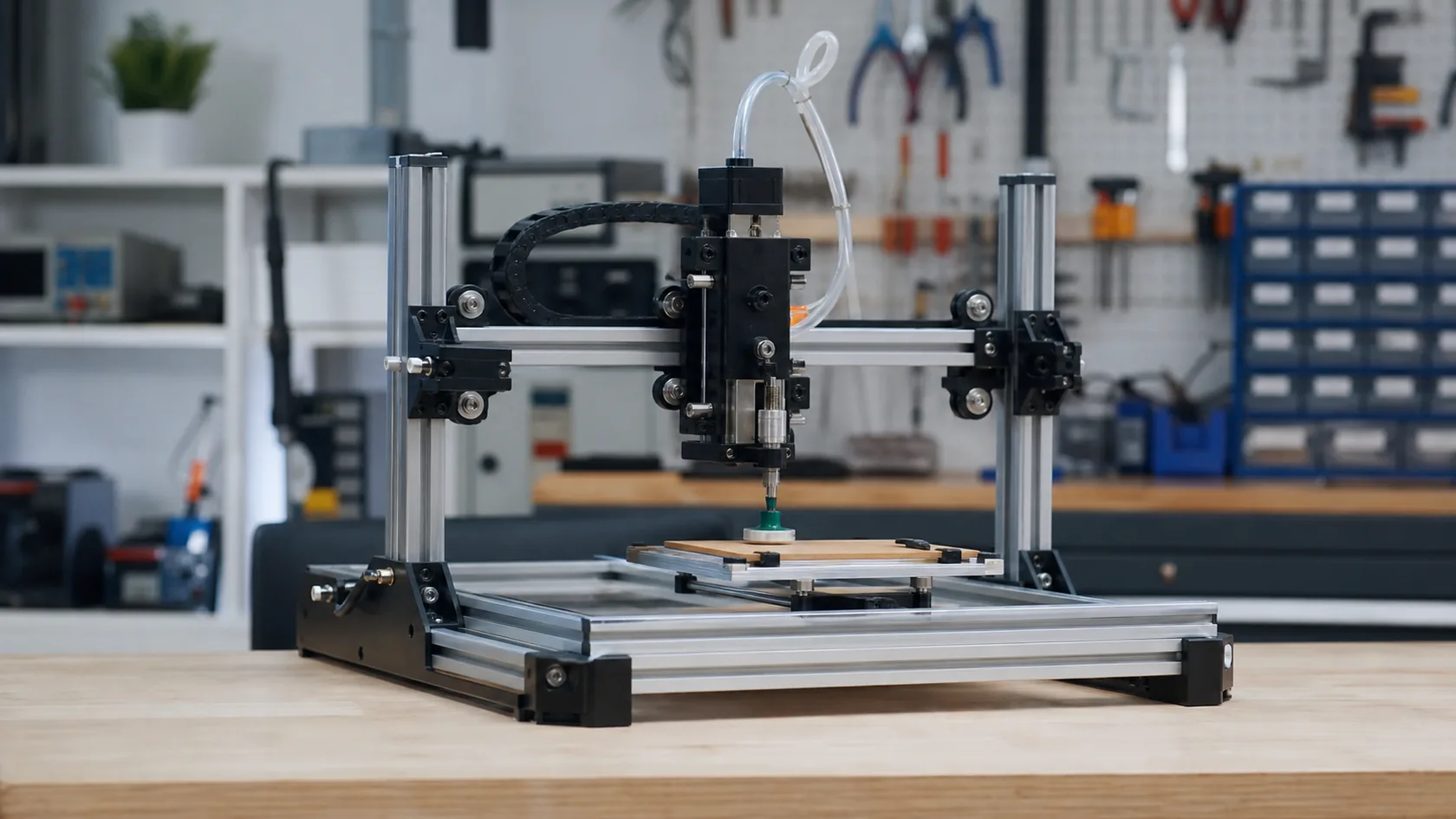
When T-Slot Is the Better Choice
Choose a T-slot framing family when the main goal is a stable, adjustable structure. It is usually the practical choice for:
- Machine frames, guards, workstations, racks, and test fixtures
- Supporting panels, custom enclosures, cable routes, doors, and accessories
- Builds that need a broad industrial accessory range
- Frames where structural stiffness and joint design matter more than moving a carriage
For MaidaTech enclosure work, T-slot is often a useful companion structure around an enclosure, not a substitute for the enclosure itself. It gives the installer a flexible way to mount and protect the finished equipment.
When V-Slot Is the Better Choice
Choose V-slot when you need simple, light-duty travel and the compatible wheel system meets the duty. Typical uses include compact CNC-style machines, small 3D printers, camera sliders, lightweight pick-and-place aids, and adjustable prototype equipment.
I would choose V-slot deliberately for a low-cost moving axis, but I would not use it merely because it is familiar from hobby equipment. Check the travel length, payload, acceleration, expected cycles, and maintenance conditions first. That keeps a prototype decision from becoming a production reliability problem.
What to Put on an RFQ
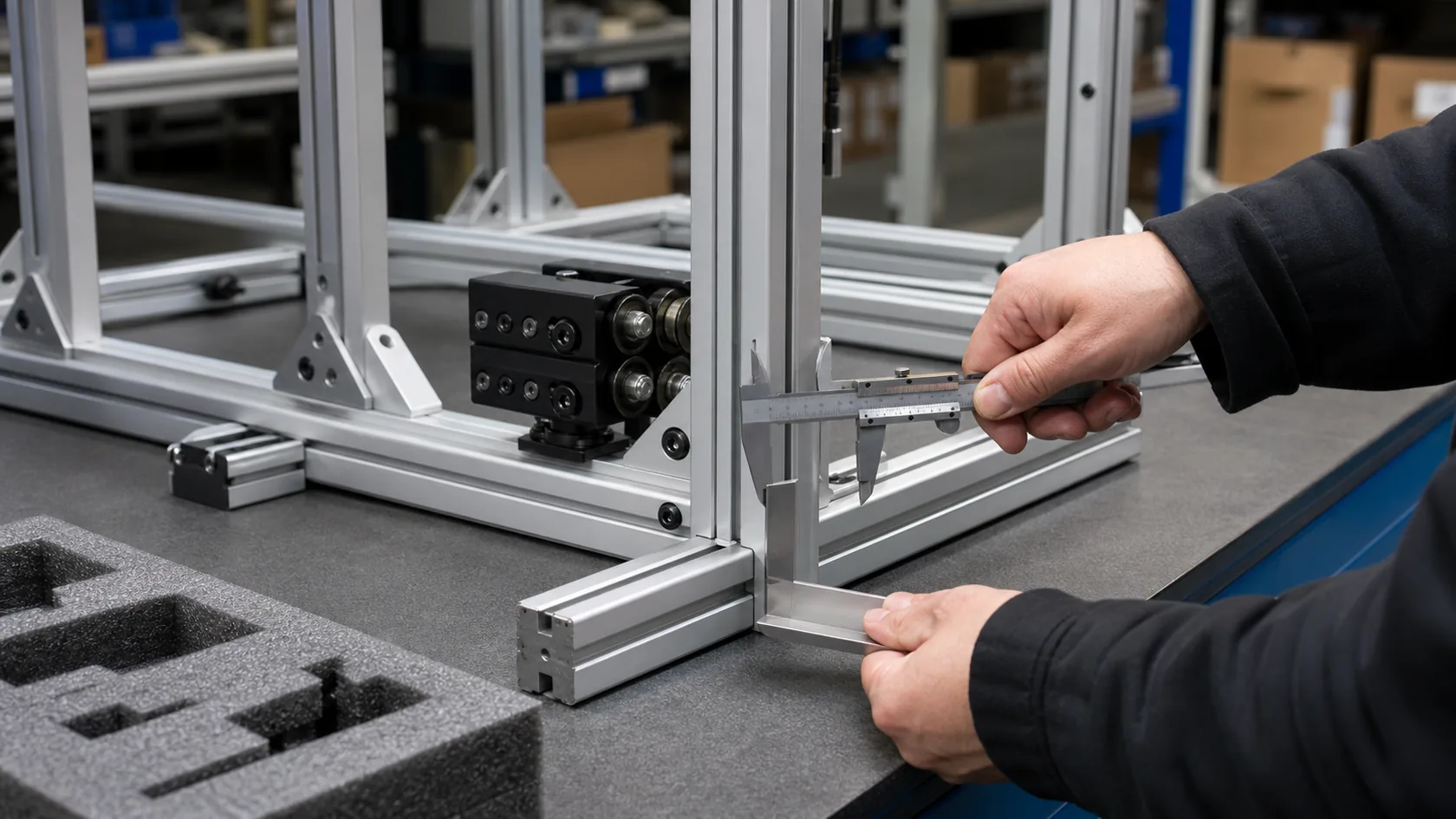
Specify the Drawing, Section, Interface, and Performance Requirement
A clear RFQ avoids the T-slot/V-slot naming trap. Include the following:
- Cross-section drawing or exact manufacturer part number
- Outside dimensions, length, cut tolerance, alloy, temper, and finish
- Slot series and approved nuts, brackets, plates, or wheels
- Static load, moving load, span, and allowed deflection where relevant
- For motion: travel, payload, speed, duty cycle, and required accuracy
- Required machining, end taps, panel interfaces, packaging, and inspection points
The best supplier response is not simply “yes, we have 2020.” It is a drawing and hardware list that show exactly what will arrive. I prefer to confirm that evidence before we release fabrication, especially when an enclosure, panel, or moving mechanism must fit the frame on the first assembly.
Conclusion
T-slot and V-slot aluminum are related modular profiles, but they solve different first problems. T-slot makes adjustable structures and mounting easy. V-slot adds geometry for compatible wheels, making it useful for simple motion. Neither term alone tells you the strength, tolerance, hardware fit, or expected precision.
I reach this conclusion because the costly failures are rarely about aluminum itself. They come from an unclear interface: the wrong nut, a wheel that does not run correctly, a frame that deflects, or an enclosure panel that has nowhere reliable to mount. If your project combines a custom enclosure with an extrusion frame, send MaidaTech the section drawing and mounting layout; we can help review the enclosure interfaces before production.