Skip to content
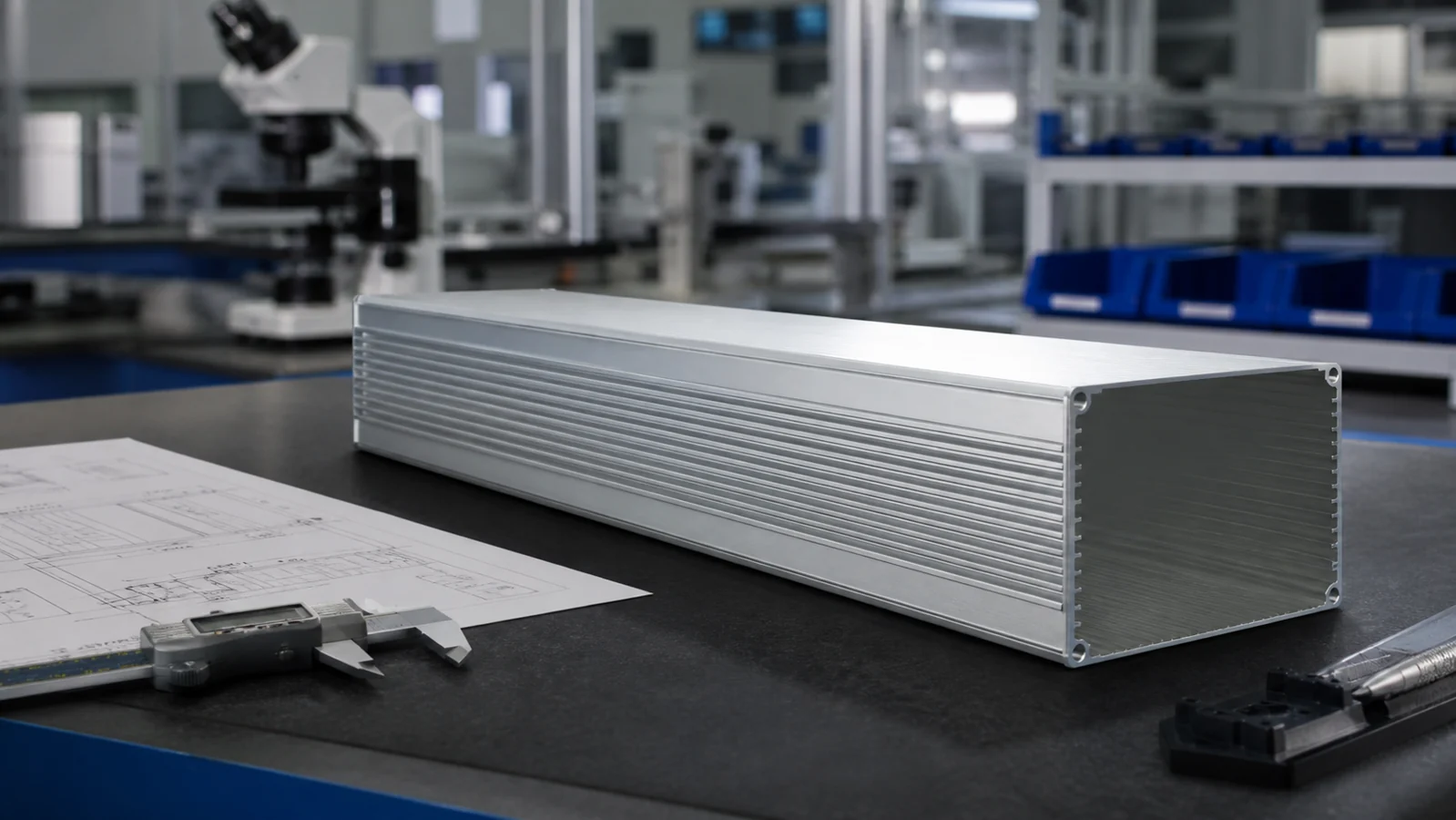
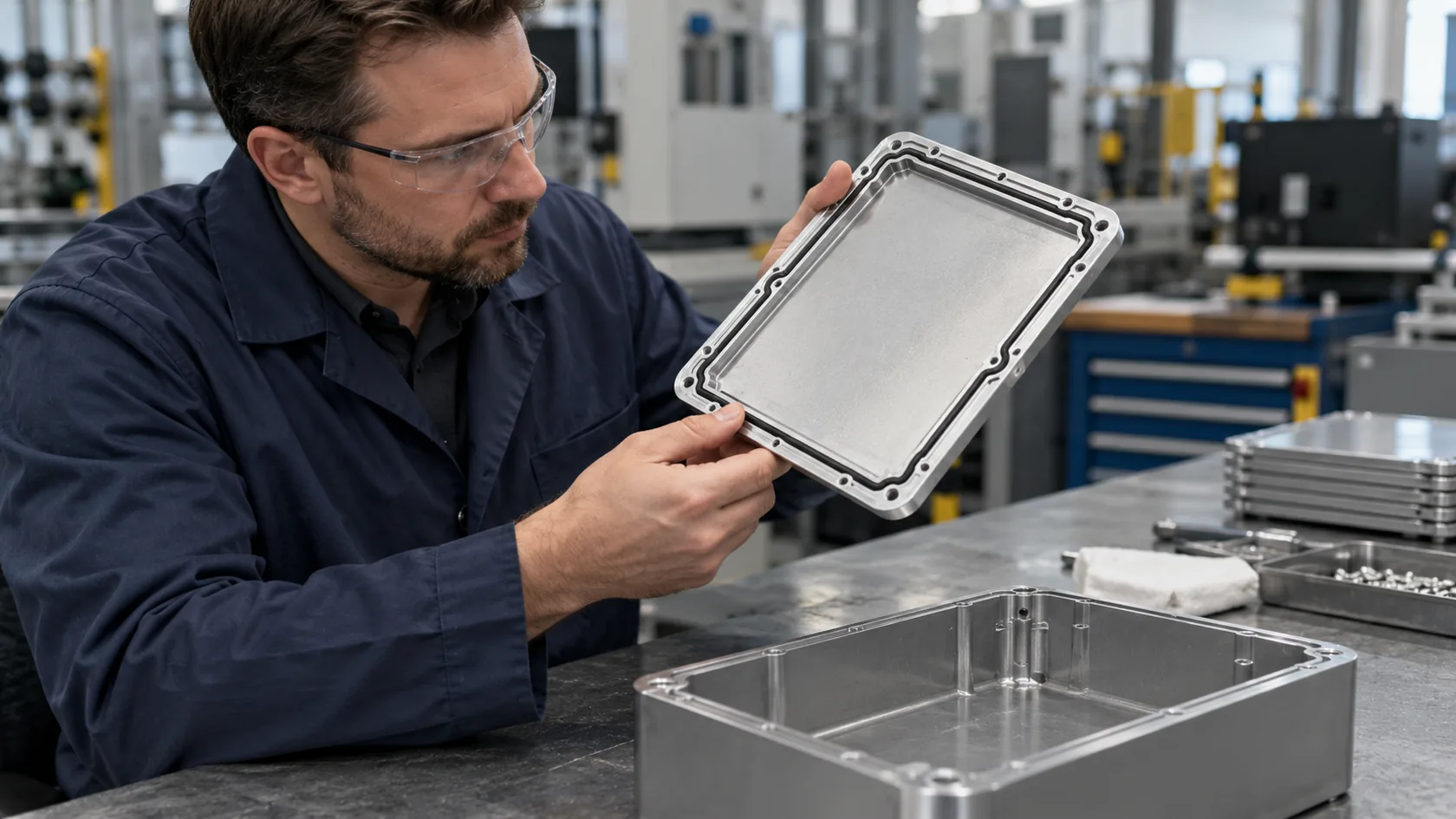
On a factory inspection table, a long aluminum enclosure body can look almost effortless: a clean profile, two cut ends, and a bright anodized surface. The difficult decisions are usually hidden inside that simplicity. A connector that sits on the wrong face, an over-thin internal rail, or a tolerance copied from a CNC drawing can turn an economical extrusion into a slow and costly project.
Extruded aluminum is an excellent route for long, constant-profile products. It is common in electronics housings, heat-sink cases, rails, frames, and power equipment. Still, it has real disadvantages. They are mostly process and design limits rather than proof that the material is poor. Knowing them early helps a buyer choose extrusion for the right job and avoid forcing it into the wrong one.
I do not judge extrusion from a product photo. I start with the cross-section, the critical dimensions, the annual quantity, and every feature that changes along the length. That review usually reveals whether the design will stay simple or accumulate expensive secondary work. The first limitation is also the one that shapes nearly every later decision.
The Main Limit: One Cross-Section Along the Length
What a Die Can and Cannot Form
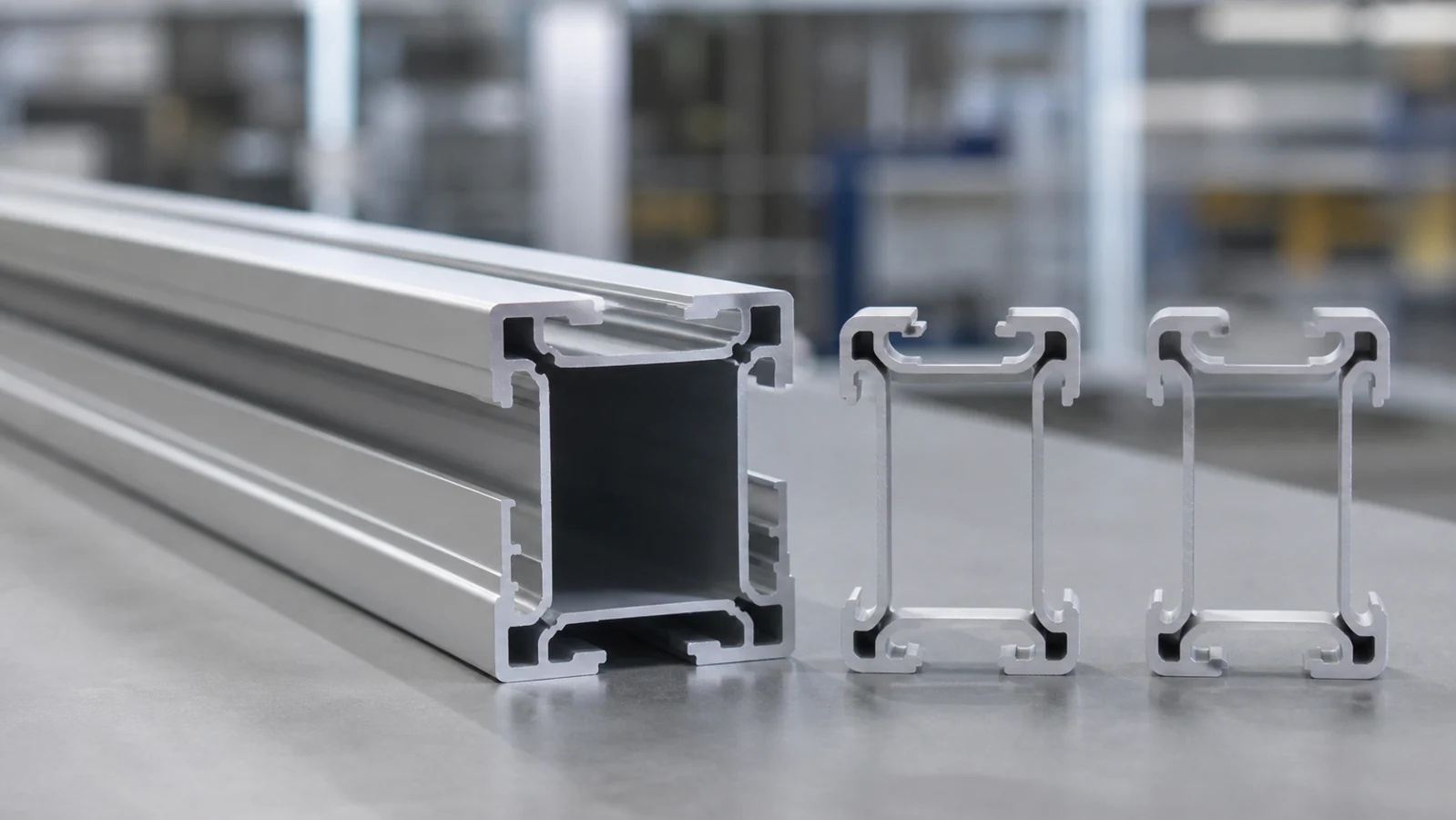
An extrusion die creates one continuous profile. The shape can be clever, with channels, ribs, grooves, and even hollow areas, but that cross-section stays the same from one end to the other. A feature that varies along the length—such as a recessed connector pocket, a local mounting boss, a curved side wall, or a changing internal cavity—cannot come directly from the extrusion die.
That does not make the feature impossible. It means it needs CNC machining, a separate end plate, an added bracket, or another manufacturing route. The Aluminum Extruders Council design guidance explains why profile geometry and die type need to be considered together rather than after the design is finished.
When a Casting or Fabricated Housing Fits Better
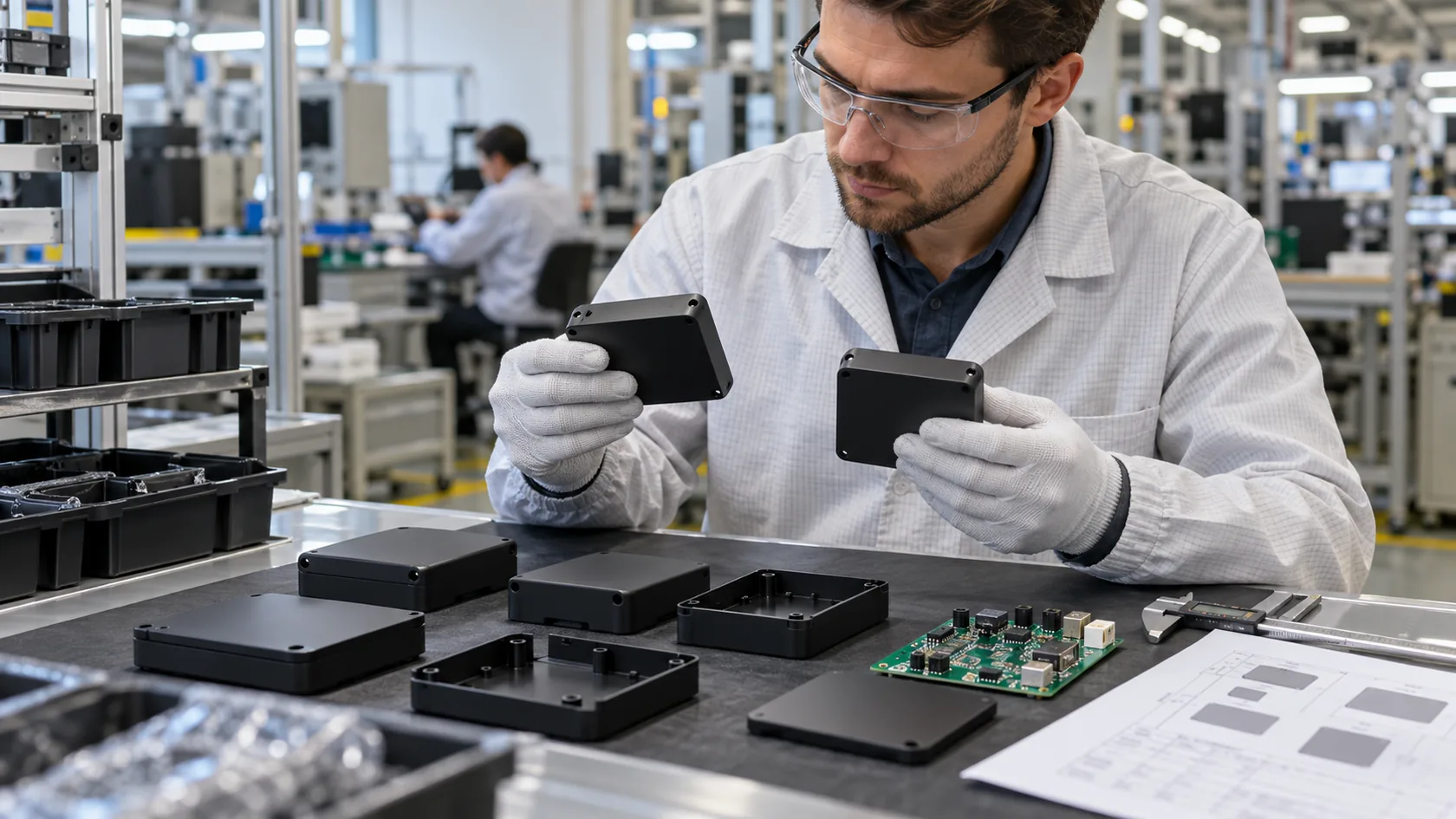
A compact enclosure with different geometry on all six faces may be a poor extrusion candidate. Die casting can integrate three-dimensional ribs, bosses, mounting ears, and local recesses. Sheet metal can make a broad box with different openings on several faces. An extrusion-plus-machining assembly can still work, but it should be chosen because it brings a benefit, not because the process was selected first.
When I see more than a few localized features on a supposedly simple profile, I pause the quotation and compare the finished part against a casting or fabricated alternative. A low raw-profile price is not useful if the design needs many setups after extrusion. Once the basic geometry is correct, the profile itself needs to be practical to push through a die.
Complex Shapes Can Increase Cost and Risk

Thin Walls, Deep Slots, and Uneven Metal Flow
Extrusion is not a free-form drawing tool. Very thin walls, wide thin flanges, deep narrow slots, sharp transitions, and strongly uneven wall thickness make aluminum flow unevenly through the die. That can increase distortion, twisting, surface defects, press time, die wear, and scrap. The practical limits depend on alloy, profile size, press capability, and the supplier's die design—not one universal minimum wall number.
The Aluminum Extruders Council recommends keeping wall thickness reasonably uniform, smoothing thick-to-thin transitions, avoiding knife edges, and using symmetry where possible. Those are not cosmetic preferences. They help the die survive and make the profile easier to straighten and inspect.
Hollow Profiles and Die Constraints
Hollow and semi-hollow profiles are valuable for enclosure bodies, but they often require more complex tooling. Tight enclosed cavities, unsupported die tongues, and very deep openings can be difficult to run consistently. A profile may be technically possible yet slow enough to make it a weak commercial choice.
In my drawing review, I look for a channel that is narrow and deep before I look at decorative details. That small feature can control die complexity, delivery, and profile stability. A qualified extruder can often suggest a larger opening, an added radius, or a separate cover that preserves the product function. Those design choices also influence how accurately the profile can be supplied.
Tolerances, Straightness, and Surface Variation
Why an Extrusion Is Not a Fully Machined Part
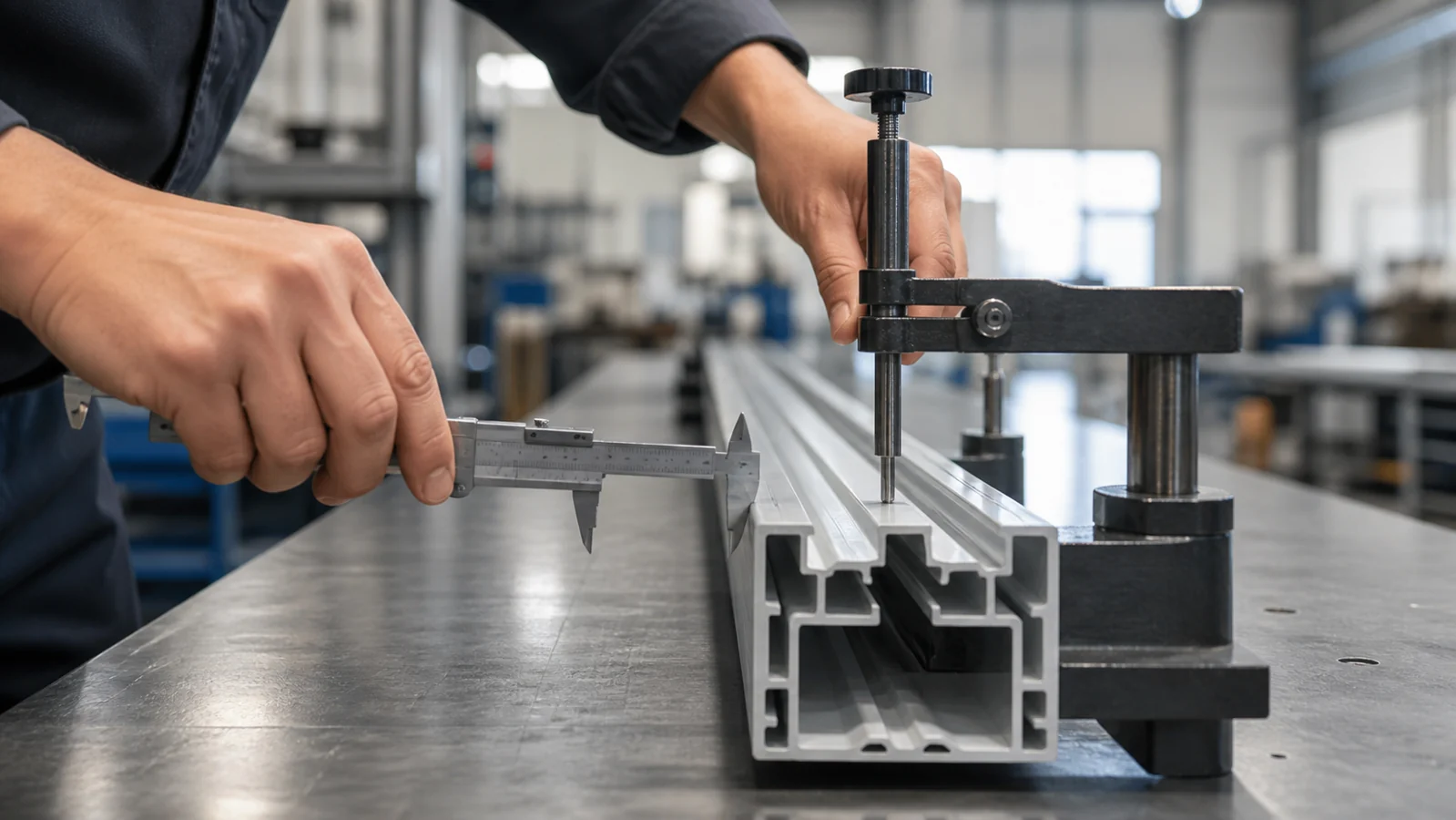
Extrusions are supplied to published or agreed extrusion tolerances. They are not automatically held to the same condition as a precision-machined enclosure. Overall dimensions, wall thickness, twist, flatness, corner shape, and cut length all have allowable variation. The Aluminum Association tolerance reference is a useful reminder that tolerance must be defined by feature and product form.
A buyer should mark the dimensions that actually control fit: PCB slide rails, gasket lands, bearing locations, connector datums, and mating interfaces. If every dimension is treated as critical, cost rises and the drawing becomes harder to make. If none are marked, a supplier may meet a general standard while the assembly still fits poorly.
Long Parts Need a Straightness Plan
Long extrusions can show bow, twist, or slight variation after cooling, stretching, cutting, machining, and finishing. Uneven wall thickness and an asymmetric profile make this more difficult. Long cosmetic surfaces can also show longitudinal die lines or handling marks that need a realistic finish specification.
For a long electronics body, I ask how it will be supported during machining, how straightness is measured, and whether the mating end plates establish the final datum. This matters more than a pleasing CAD render because a 1.5-meter enclosure does not behave like a 150-millimeter sample. The next question is what work remains after the profile leaves the press.
Secondary Machining Is Often Still Necessary
End Faces, Cutouts, Threads, and Sealing Features
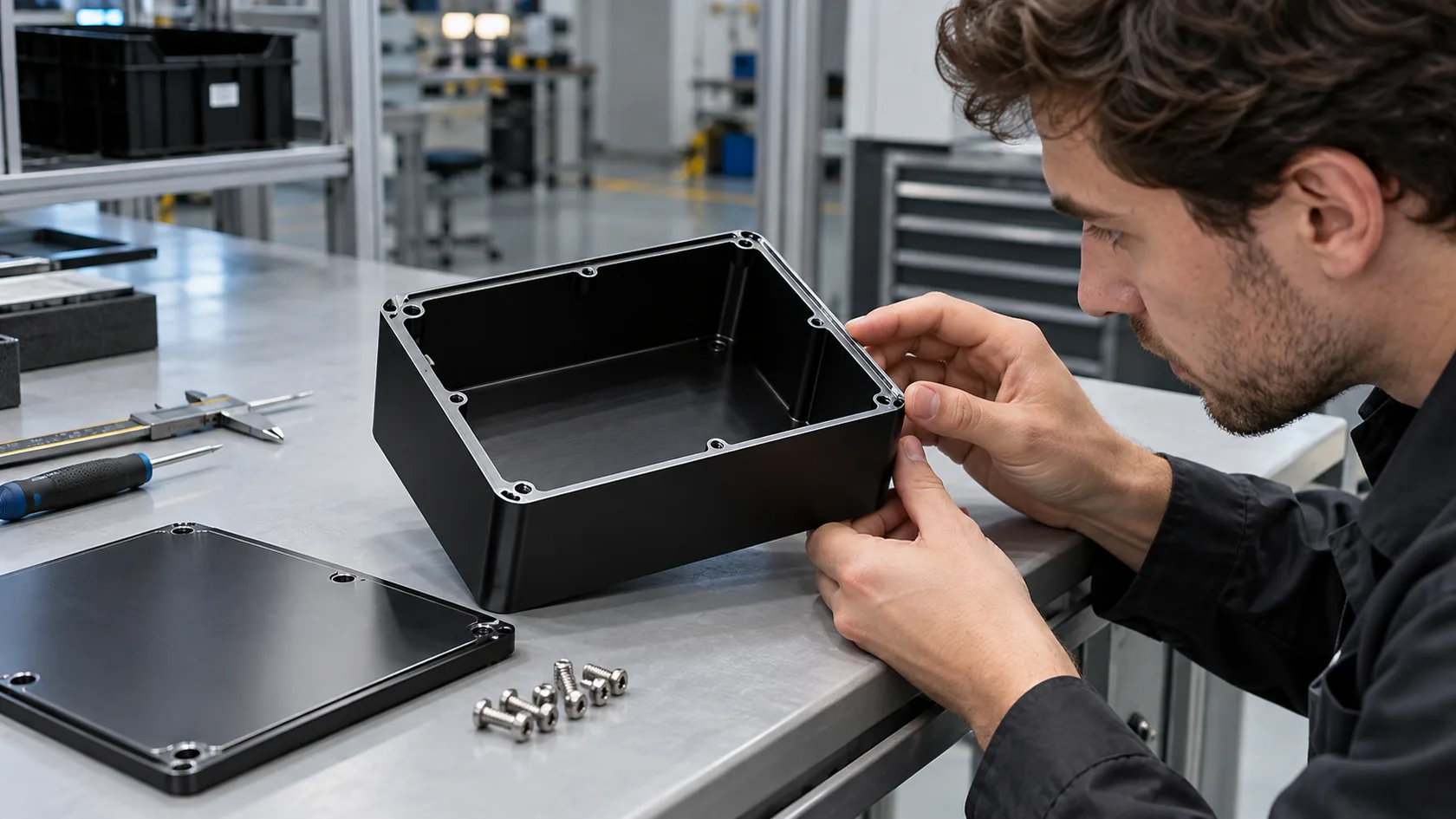
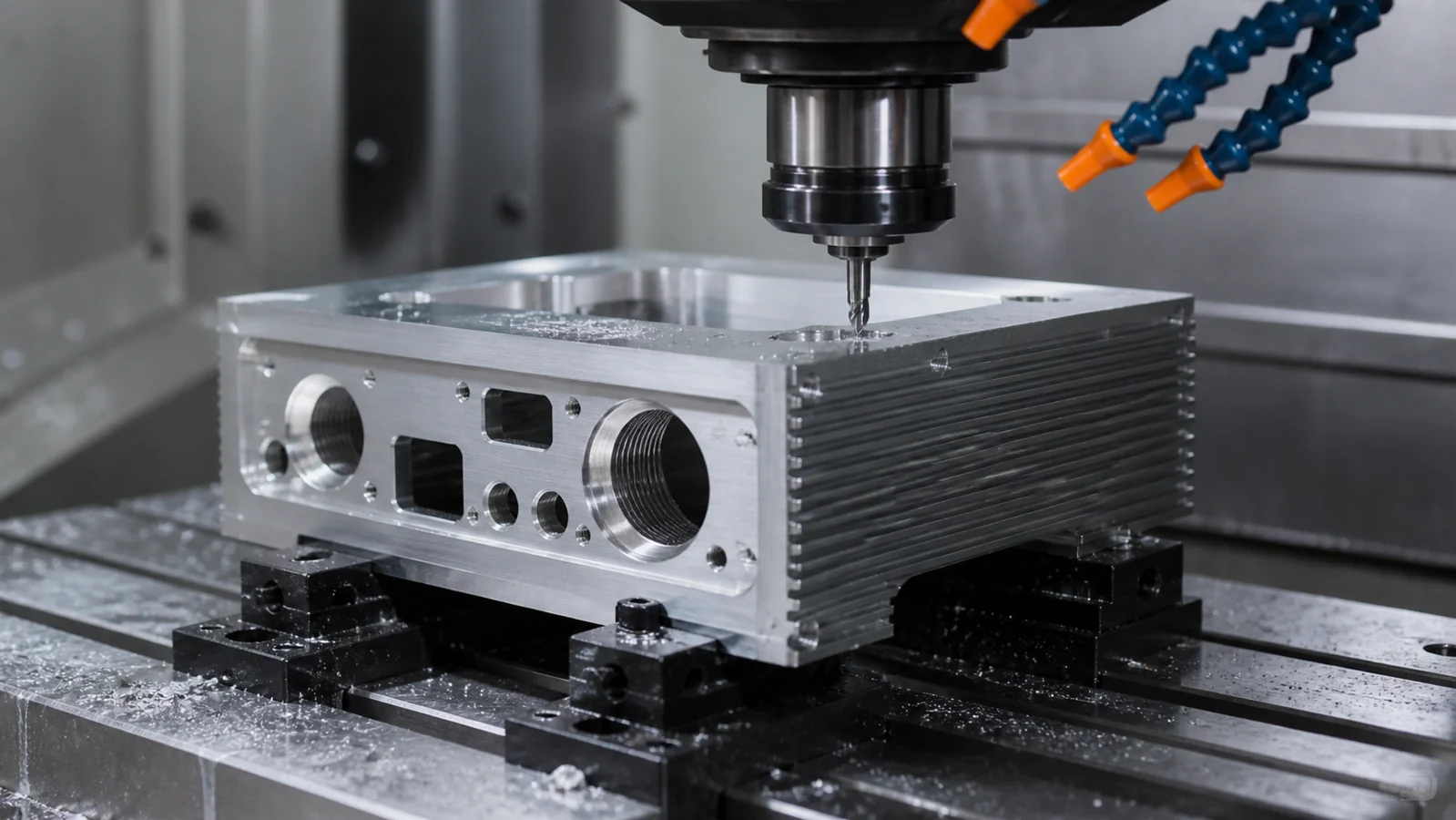
Most custom enclosures need more than an extruded profile. End faces may need squaring. Connectors, displays, cable entries, mounting holes, tapped threads, and gasket grooves commonly need CNC milling or drilling. A high ingress-protection design may require machined sealing faces because an as-extruded surface is not automatically the final gasket interface.
Extrusion can reduce machining by putting rails, heat fins, and general wall shape into the profile. It does not eliminate machining whenever the product needs local features. This is especially important when the two ends are different or when a cutout position must hold a close relation to an internal PCB.
The Real Cost Is the Finished Assembly
It is easy to compare only price per kilogram or price per meter. The better comparison includes scrap allowance, cut length, CNC setups, tooling, end plates, fasteners, inserts, finish, inspection, packaging, and assembly labor. A more complex extrusion can lower operations; it can also make the die expensive and slow. The answer depends on the complete process chain.
I compare a profile quote with the cost of the completed, inspected enclosure—not with the cost of aluminum alone. That prevents a cheap-looking profile from hiding several small operations that become a serious cost at volume. Tooling and order quantity create another layer of commitment.
Tooling, Minimums, and Design-Change Exposure
Custom Die Commitment
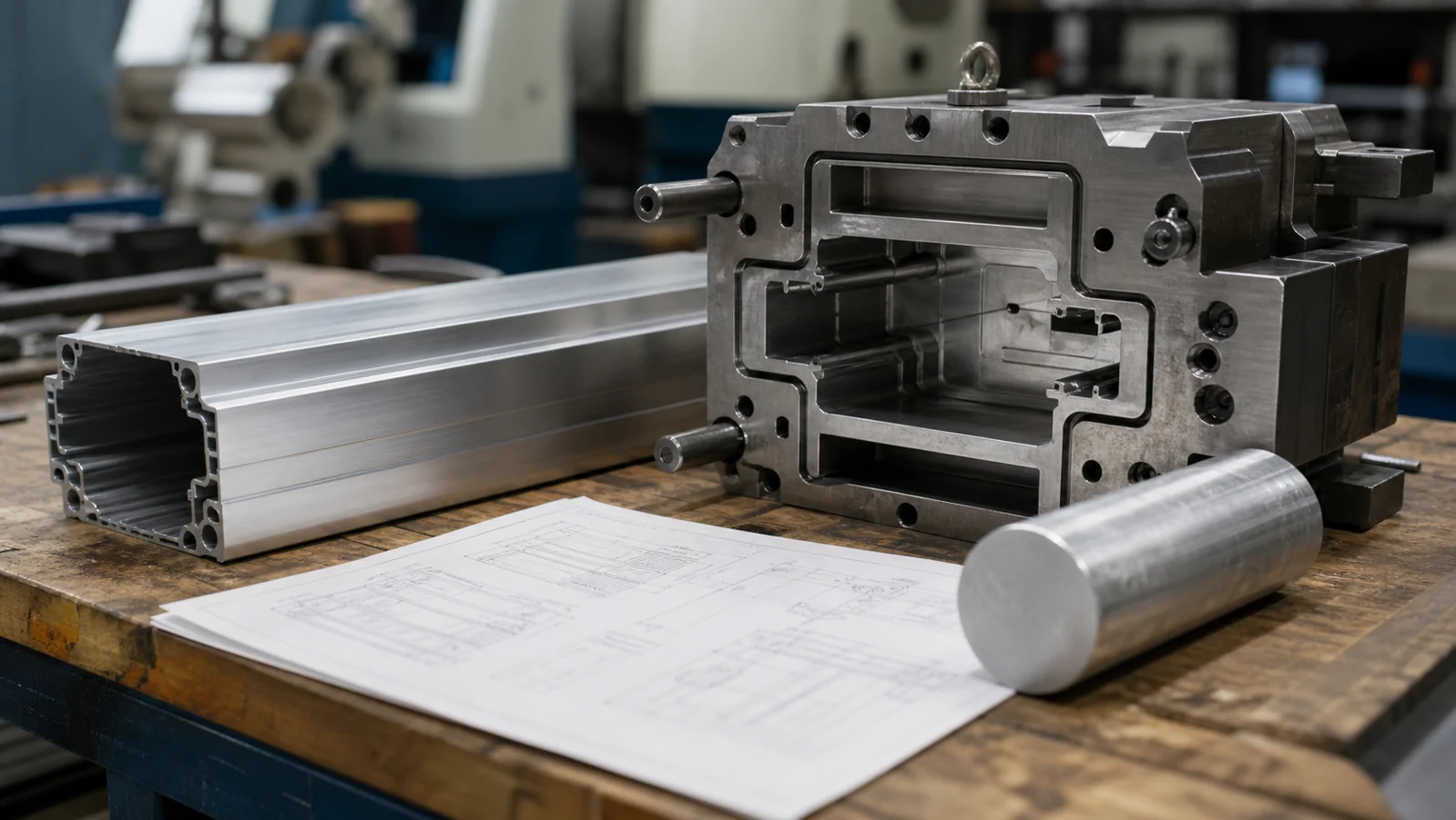
A custom extrusion needs a dedicated die. It is generally less expensive and less committing than a full die-casting tool, but it is still a cost, a lead-time item, and a design decision. Complex hollow shapes may require more specialized die construction and more development work. A revision after die release may mean rework or a new die.
The profile also needs trial production before it becomes a stable supply item. Early samples can reveal flow imbalance, distortion, surface expectations, or features that need a larger radius. No honest supplier should promise that a new complex profile will behave exactly like a familiar stock section without sampling.
Quantity and Change Control
Extrusion is often attractive from prototypes through medium-to-high volume, but it is not automatically economical for a very small order. Mills and presses have setup, billet, yield, and run-length constraints. A buyer may also need to accept practical length and weight variation, then cut and machine the profile into final pieces.
For a design that is still changing, I prefer to keep costly localized details out of the die when possible. We can machine them during the learning stage and freeze them into the profile only after the enclosure, PCB, connectors, and service method are stable. Material behavior and field conditions still need the same care.
Material and Field-Use Limitations
Alloy, Temper, and Section Design Matter
“Extruded aluminum” is not a complete mechanical specification. Common enclosure alloys such as 6063 and 6061 can have different strength, finish, weldability, and extrusion behavior. Temper changes the result again. Section depth, wall thickness, span, fastener placement, and cutouts determine stiffness and load capacity just as much as alloy selection.
Aluminum is also less stiff than steel for the same geometry. A long thin extrusion may deflect too much even if it does not permanently bend. For structural or highly loaded products, calculate the actual section, define the alloy and temper, and validate the assembled load path rather than relying on a generic claim.
Corrosion, Dissimilar Metals, and Finish
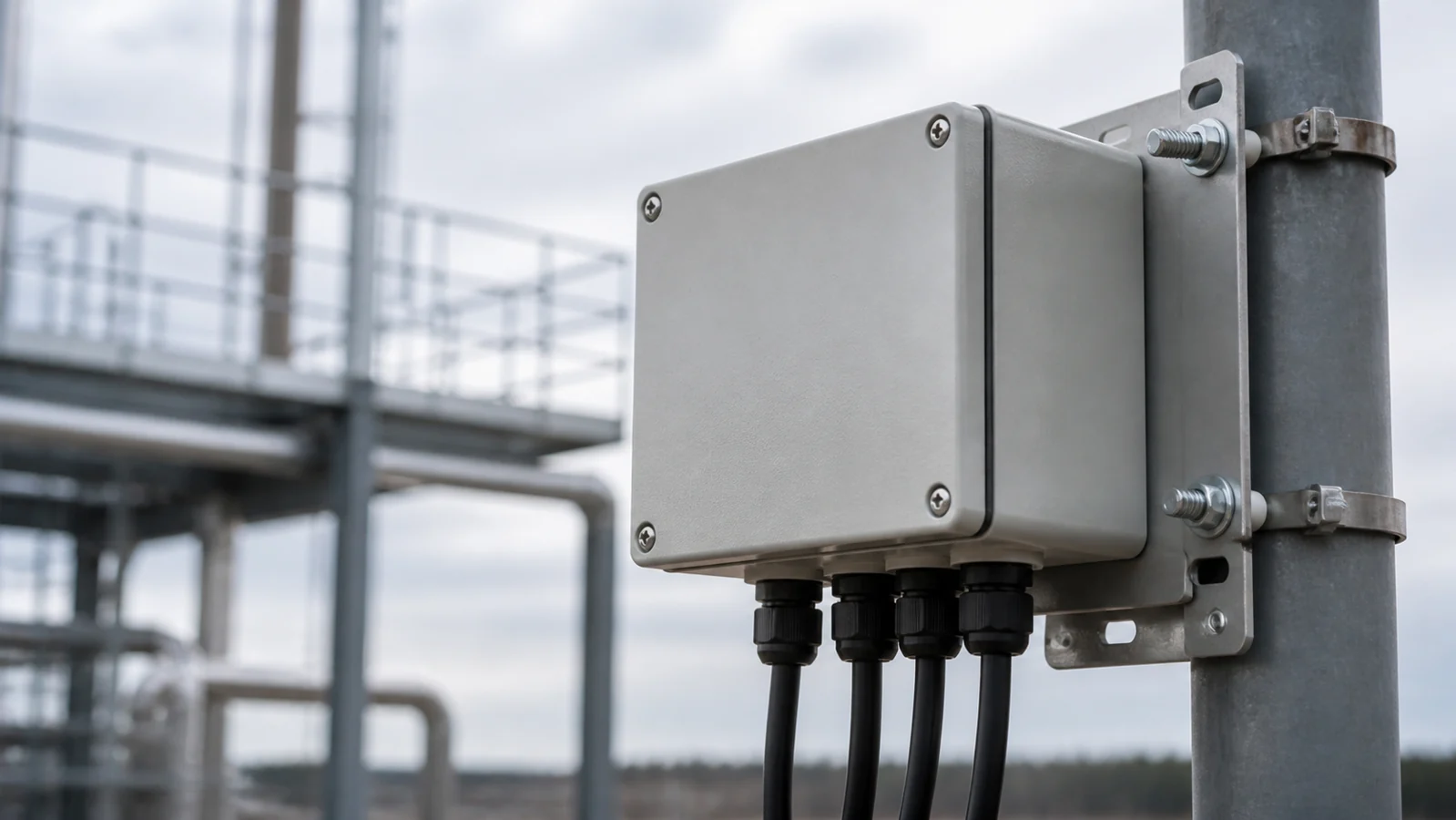
Aluminum forms a protective oxide film, but it is not maintenance-free in every environment. Salt exposure, trapped moisture, alkaline cleaners, and contact with dissimilar metals can create corrosion risk. Galvanic corrosion needs particular attention where stainless fasteners, copper conductors, or steel brackets contact a wet aluminum enclosure. The U.S. Federal Highway Administration corrosion guide describes the importance of isolating aluminum from incompatible materials in corrosive service.
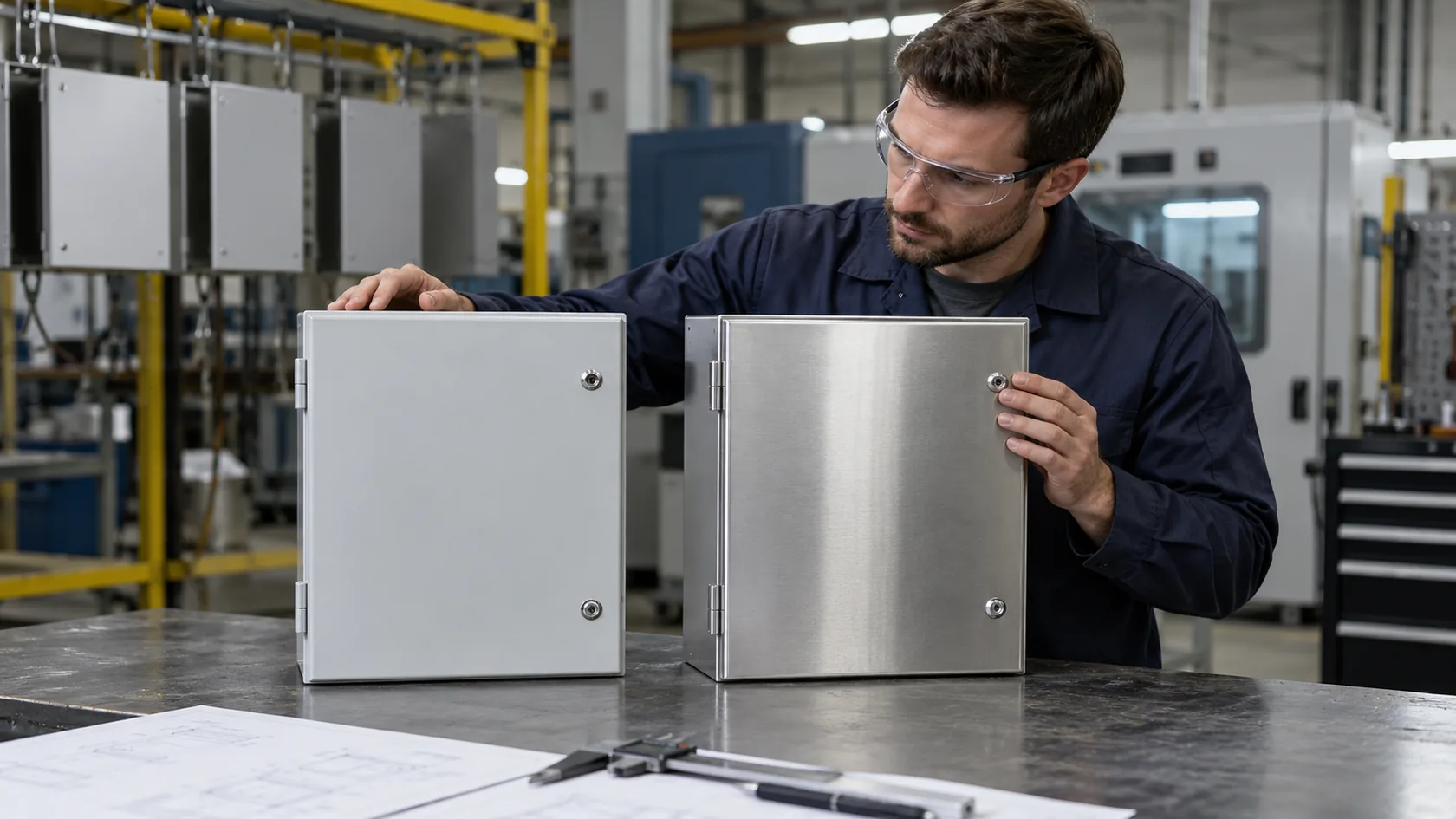
I flag outdoor hardware pairs early: fastener material, washers, coating damage, drainage, and grounding all belong on the drawing or assembly instruction. Anodizing, powder coating, suitable isolators, and good drainage can manage the risk, but they need to be specified. With these limits visible, extrusion can be selected much more confidently.
A Better Buying Decision for Custom Enclosures

RFQ Information That Avoids Surprises
Send a cross-section or 3D model, finished cut length, annual quantity, alloy and finish preference, critical dimensions, connector locations, sealing target, operating environment, and loading requirements. Ask the supplier which dimensions can be held as-extruded and which need machining. Ask for a profile review before paying for a die.
| Question | Why it matters |
|---|---|
| Does the cross-section remain constant? | It tests whether extrusion suits the core geometry. |
| Which features are truly critical? | It focuses tolerance and machining cost. |
| Are walls and channels practical? | It reduces flow, die, and distortion risk. |
| What changes along the length? | It exposes secondary operations. |
| What is the environment and finish? | It sets corrosion and cosmetic expectations. |
When Extrusion Remains the Right Choice
Extrusion remains a strong choice for long or repeated-profile enclosure bodies, heat-sink cases, rails, modular equipment, and products that benefit from built-in channels. It can be efficient, attractive, and easy to customize when the design accepts its directionality and reserves precision features for the right secondary process.
My practical rule is simple: let the die make the continuous geometry and let machining make the local precision. That division keeps the profile manufacturable while giving the final product the fit it needs. It also turns the disadvantages into predictable controls instead of late surprises.
Conclusion
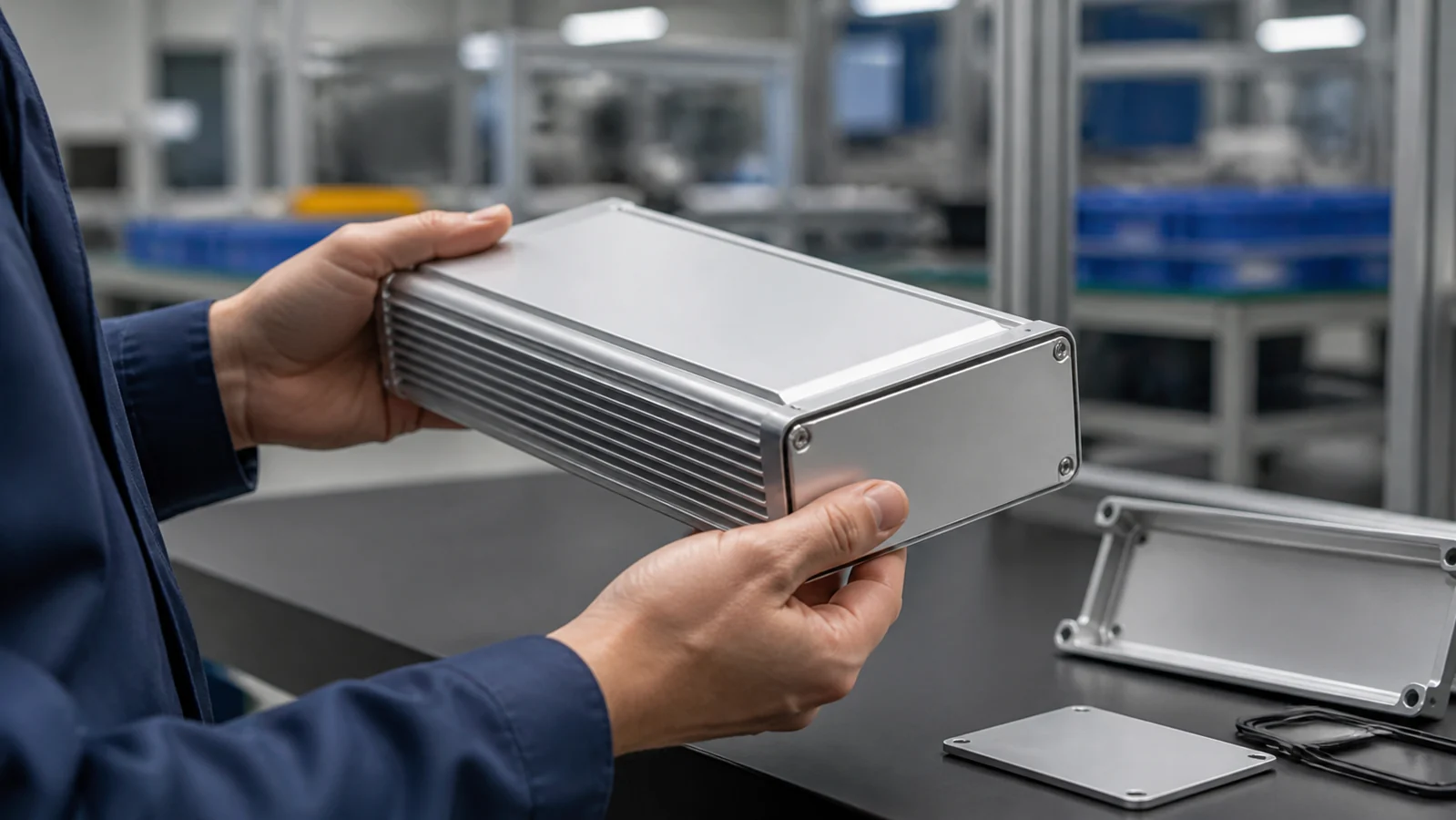
The disadvantages of extruded aluminum are real: a constant cross-section limits three-dimensional form, complex profiles can raise die and quality risk, long parts need tolerance control, and most custom enclosures still require machining and finishing. Tooling, minimum runs, alloy choice, and corrosion details also need an early decision.
I still recommend extrusion often because these are manageable conditions when the design suits the process. At MaidaTech, we can review your enclosure drawing, identify which features belong in the profile and which need machining, then help you compare a practical extrusion route with other manufacturing options before you commit to tooling.