Skip to content
The hum of hot metal pressing through steel dies is a sound you never forget — it’s steady, almost like breathing. That rhythm sums up what aluminium extrusion manufacturing is all about: precision, pressure, and the quiet strength of engineering.
In our industry, this process shapes far more than just raw material. It creates the frames, rails, and enclosures that define how modern devices look and perform. Whether you’re designing a control box, a Raspberry Pi enclosure, or an industrial casing, extrusion turns a simple aluminium billet into something purposeful — strong, lightweight, and beautifully consistent.
At MaidaTech, we work with this process daily. Many of our B2B clients come to us with designs that can’t be achieved through bending or casting alone. Extrusion fills that gap — giving them flexibility in design and finish without sacrificing precision or strength.
In this post, I’ll walk you through what aluminium extrusion manufacturing really means — how it works, what makes it unique, its advantages and limits, and why it matters so much in the world of custom enclosures. Let’s start from the basics.
1. What is aluminium extrusion manufacturing?
1.1 Definition of aluminium extrusion
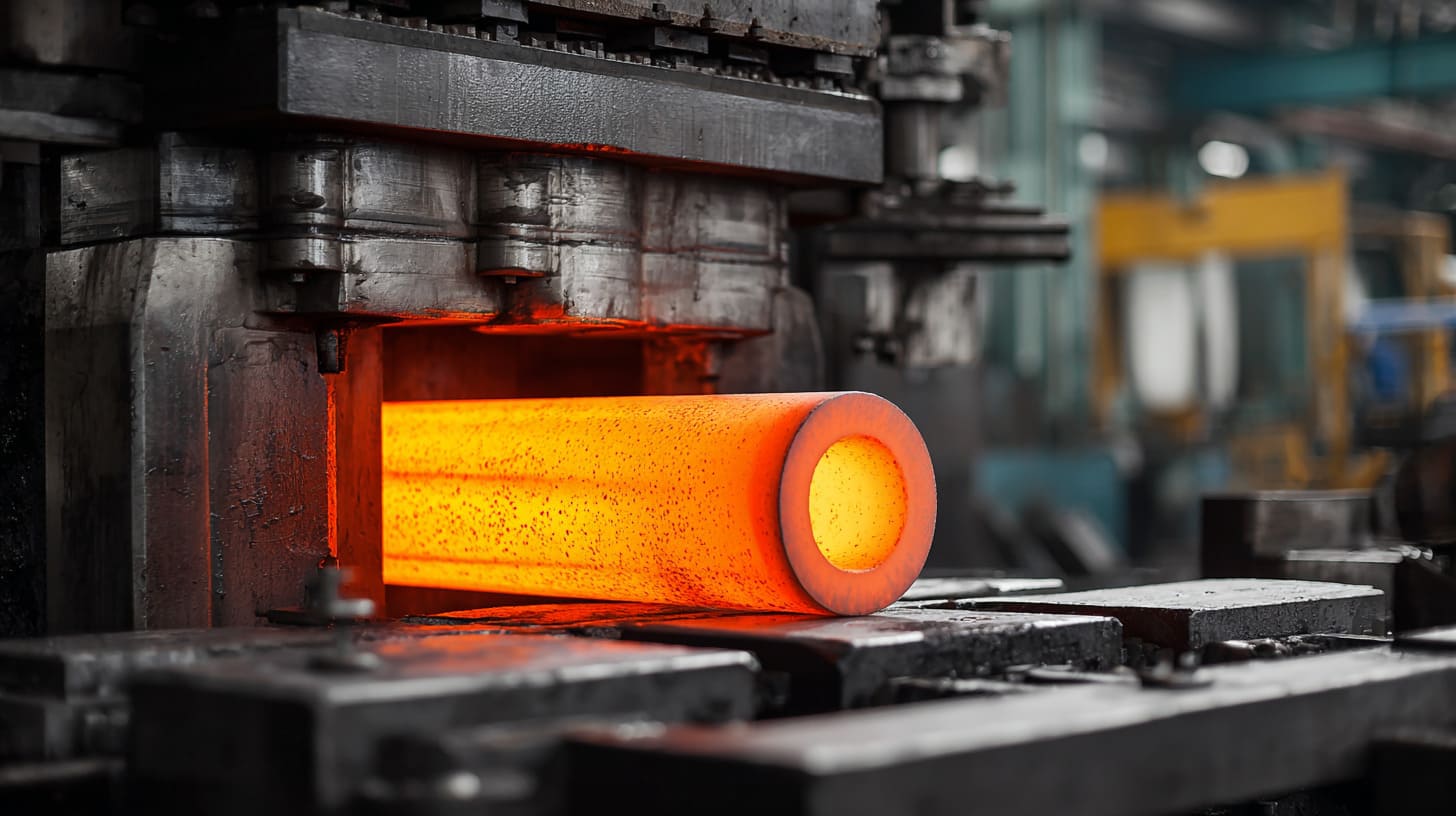
I like to picture extrusion as squeezing toothpaste out of a tube. In aluminium extrusion, a softened aluminium billet is forced through a die so it emerges in a specific cross‑sectional profile.
This means you can get long lengths of aluminium shapes that match exactly what you need.
From a buyer’s point of view, it means custom profiles, consistent shape, ready for your use.
1.2 How extrusion differs from other metal‑forming techniques (casting, stamping, die‑casting)
Here I step back and look critically: extrusion is neither casting nor stamping.
- With casting, molten metal is poured into a mould and solidifies.
- With stamping, sheet metal is pressed into a shape.
- With die‑casting, molten metal is forced into a die under high pressure.
In contrast, aluminium extrusion uses a solid (though heated) billet and pushes it through a shaped die. It works like this: you heat a billet, push it, and the metal flows through the die opening.
Because of this difference: extrusion allows continuous shapes, longer lengths, and often fewer seams. But it also has constraints (die cost, shape complexity) which we’ll discuss later.
1.3 Why aluminium is particularly suited for extrusion (material properties, ease, versatility)
Aluminium stands out for several reasons — again, stepping into the buyer’s mindset:
- It is lightweight yet strong, making it ideal for enclosures where weight matters.
- It’s quite malleable when heated properly, which makes it easier to extrude than many other metals. For example, extrusion temperatures are around 400‑500 °C for aluminium.
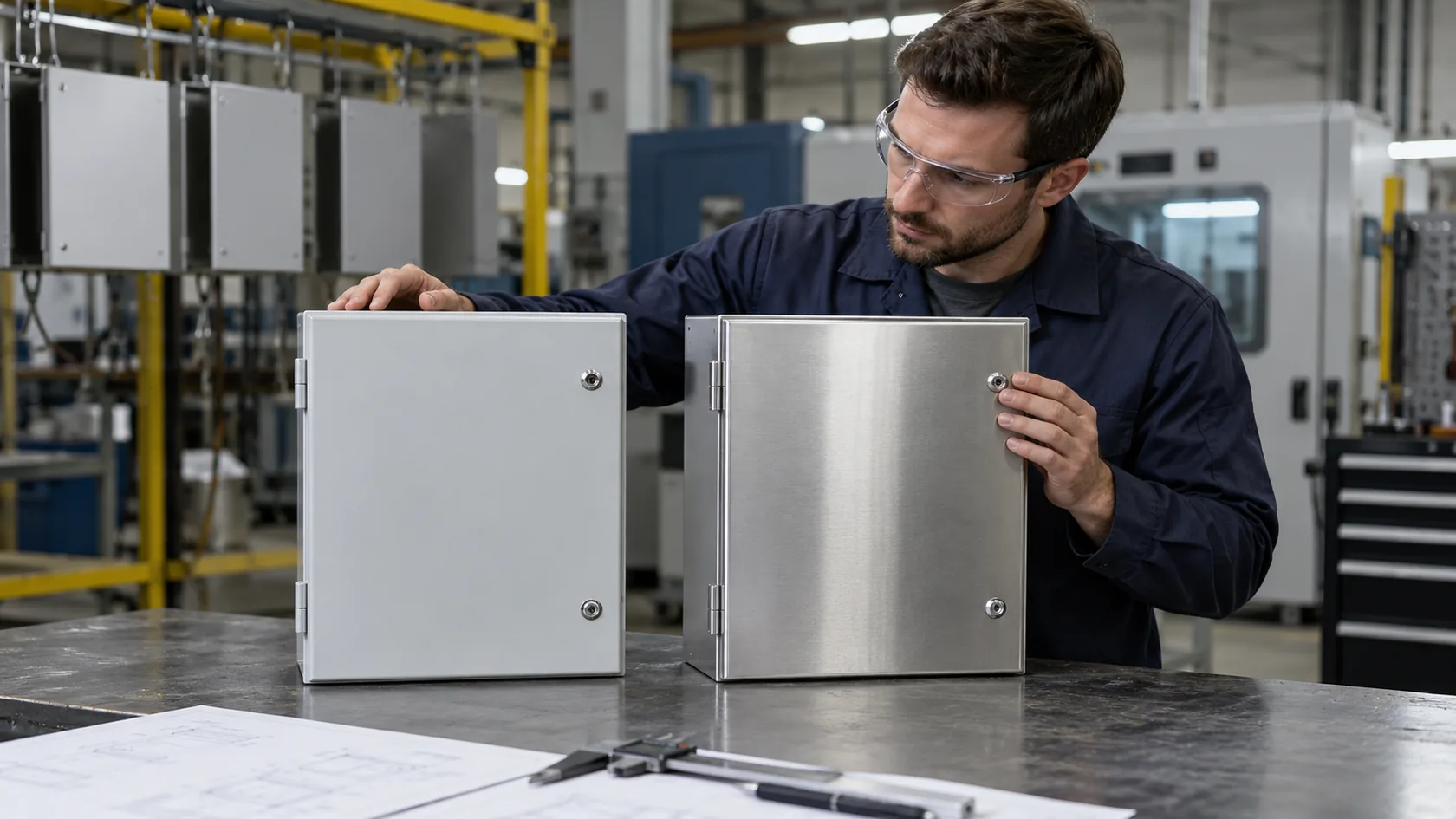
- It supports finishing options well: anodising, powder‑coating, engraving — all useful for us at MaidaTech when offering custom branding.
- It allows for custom, complex cross‑sections — we can tailor shapes to the needs of our buyers (engineers like Davide or creative buyers like John).
But let’s not ignore trade‑offs: even aluminium has limits (tooling cost, section complexity) which we’ll see in later sections.
Now that we understand what extrusion is and why aluminium fits well, let’s go deeper into how the process actually works.
2. How the aluminium extrusion process works
2.1 Key steps in the process (billet → pre‑heat → press → die → profile)
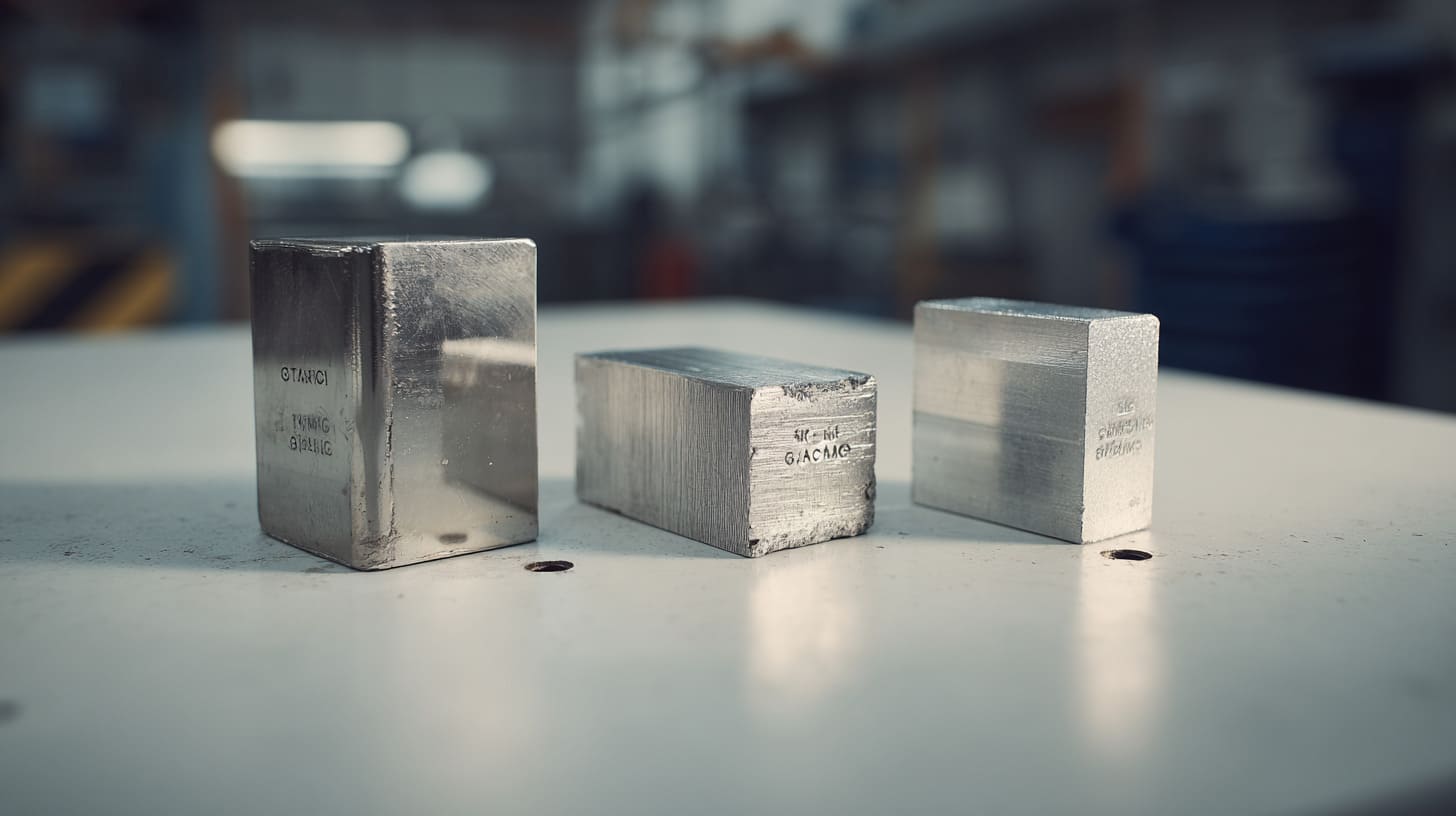
Here’s a step‑by‑step view (and yes, I’ve stood beside the machines while they ran):
- A cylindrical aluminium billet is cut or prepared.
- The billet is pre‑heated in a furnace to a set temperature (for example 400‑500 °C) so it becomes malleable but not molten.
- The extrusion die is prepared and heated.
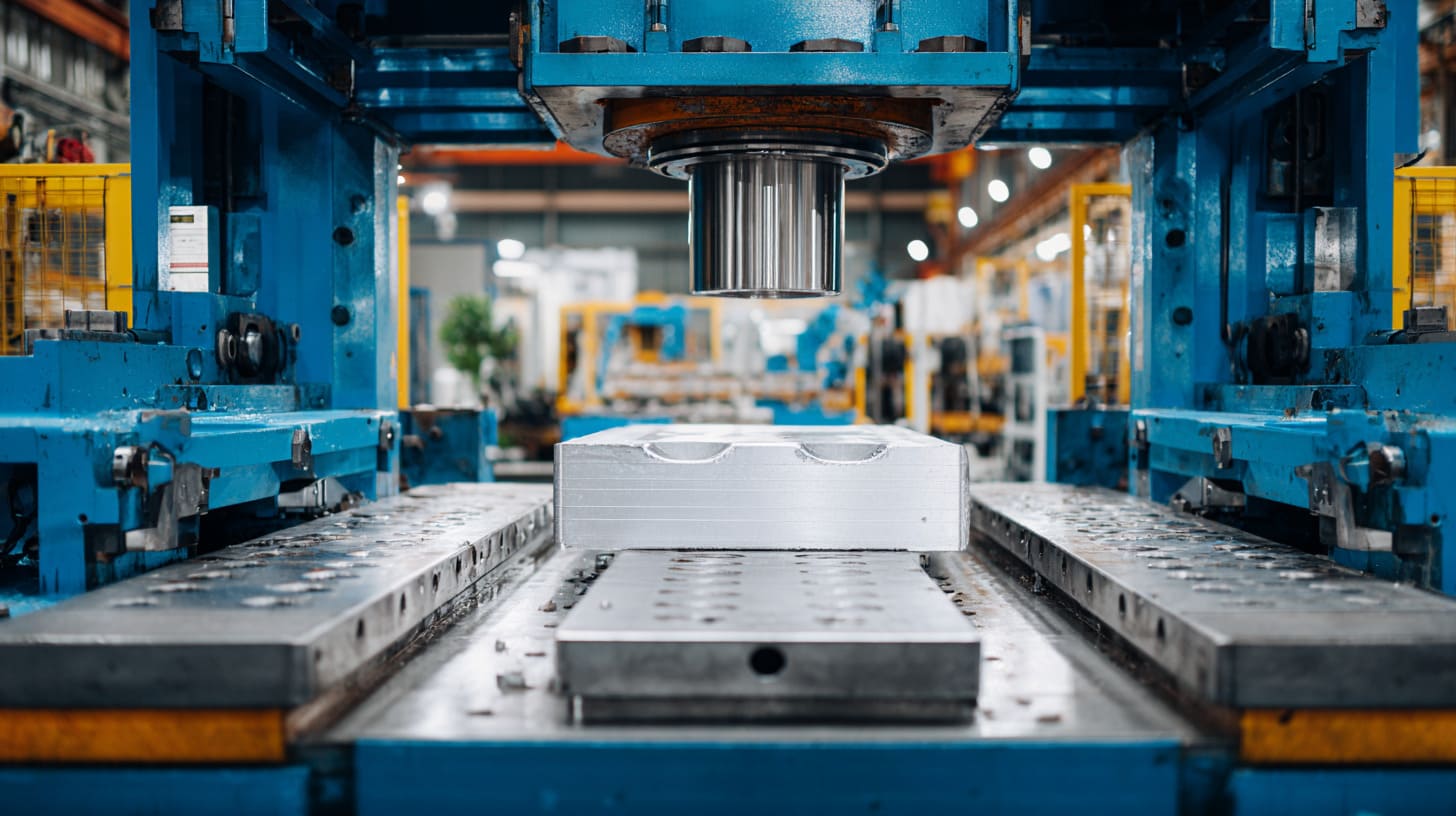
- The billet is loaded into the press container. A hydraulic ram applies huge pressure, pushing the aluminium through the die opening.
- As the material emerges from the die, it takes the exact cross‑sectional shape of the die.
- Then post‑operations: cooling/quenching, straightening/stretching, cutting to length, possibly heat treatment or finishing.
Here’s a small table for clarity:
| Step | Description |
|---|---|
| Billet prep | Cut billet from log |
| Pre‑heat | Heat billet and die to target temp |
| Extrude | Ram pushes billet through die |
| Cooling & straightening | Cool the profile, stretch it, cut to length |
| Secondary operations | Heat treatment, surface finish, custom modifications |
2.2 Direct vs indirect extrusion methods
Critically looking at methods: there’s more than one way to extrude.
- Direct (forward) extrusion: the die remains stationary, and the ram pushes the billet through. This is the most common method.
- Indirect (backward) extrusion: the billet (or container) moves and the die is stationary, or vice versa. This method produces less friction and can give better mechanical properties for certain profiles.
From a buyer’s perspective: you might not choose the method, but you care about quality, tolerance, and cost — and the method influences them.
2.3 Role of the die, ram, container and other tooling
Let’s dig deeper — tooling is a major cost and key lever of quality.
- The die defines the profile shape. It must be robust; under massive pressure.
- The ram supplies the force.
- The container holds the billet and controls temperature and flow.
- Ancillary tooling: dummy blocks, stem, backer, bolsters. These ensure alignment, distribute forces, protect the die.
For example, a misaligned die can cause warpage or inconsistent wall thickness — which as a buyer (or as a supplier to you) means bad parts. Tooling cost and maintenance are therefore important.
2.4 Post‑extrusion operations (cooling/quenching, straightening/stretching, heat‑treatment, surface finishing)
After the metal emerges, the process isn’t done. These extra steps matter a lot and affect final quality.
- Quenching or cooling: quick cooling helps set mechanical properties.
- Stretching/straightening: long extrusions may twist or bend; they need to be mechanically straightened.
- Cutting to length: saws or hot cutting.
- Heat‑treatment (for some alloys): to achieve required strength or temper.
- Surface finishing: anodising, powder‑coat, engraving etc. Especially relevant when we offer custom branding.
From a critical thinking view: a buyer should ask about all these post‑steps, not just “can you extrude this shape”. Because skipping or under‑investing them can hurt quality, lead time, or cost.
That covers how it works. Next: materials, alloys and design considerations — which really matter for custom enclosures.
3. Materials, alloys and design considerations
3.1 Typical aluminium alloys used for extrusion and their attributes
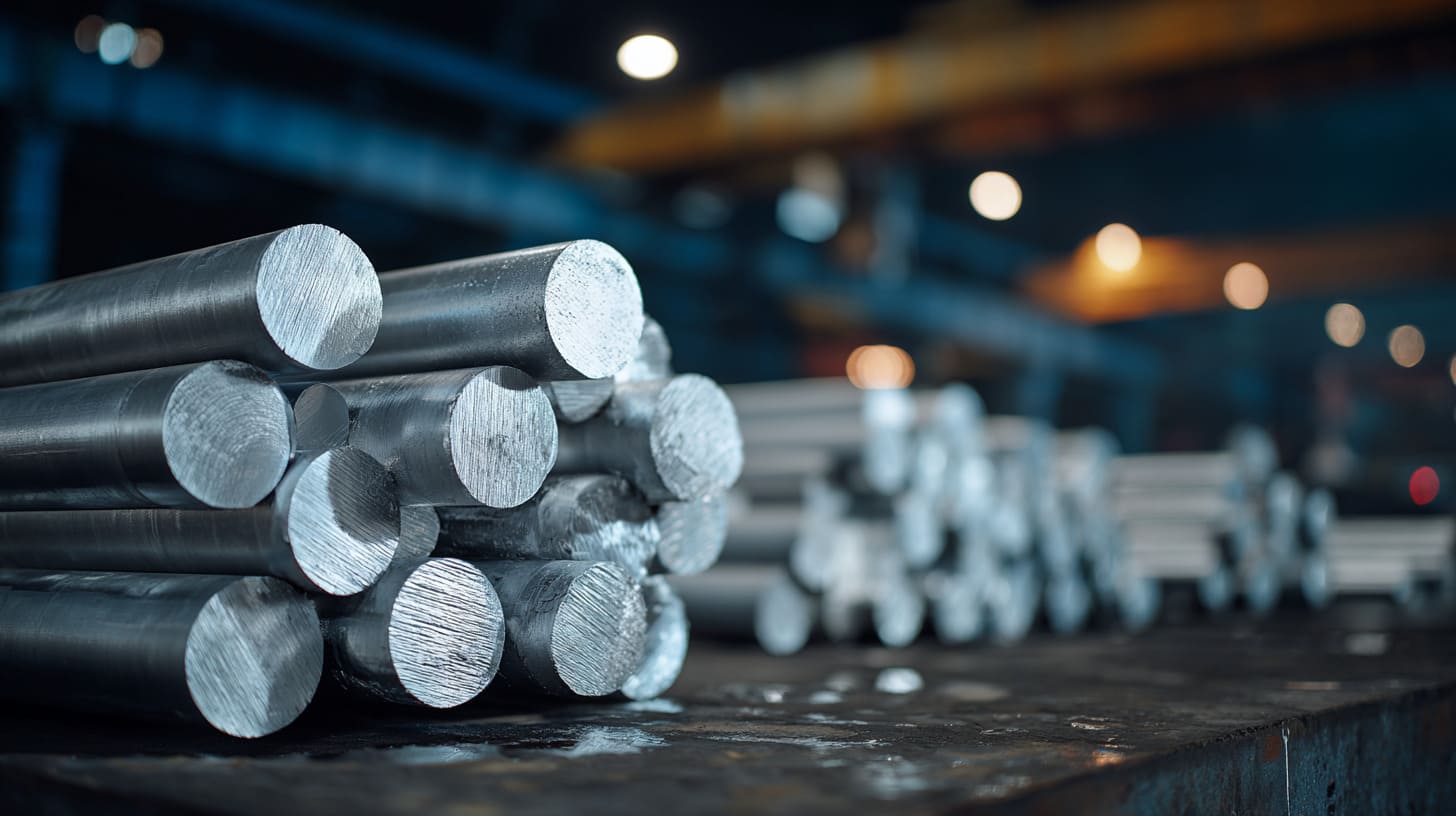
When I talk to clients like Davide or John, we always discuss alloy choice early. Because it affects strength, finish, cost.
Some common alloys for extrusion: 6063, 6061, 6005, etc. Each has trade‑offs.
For example: 6063 is often used for profiles requiring good surface finish and moderate strength; 6061 has higher strength but may cost more or need more finishing.
From a supplier point of view: make sure you check alloy certification, supply chain traceability.
Designers should ask: what alloy are you planning? Why? What are the mechanical/finish specs?
(While I don’t go into each alloy’s full spec here, as that would take a whole article, it’s critical to pick the right material.)
3.2 Design for extrusion: what shapes, wall‑thicknesses, tolerances are feasible
Good design for extrusion looks at what the process can and cannot do. Here are some key design‑for‑extrusion points:
- Shapes: Solid, hollow or semi‑hollow profiles are all possible.
- Wall thicknesses: Too thin walls can cause flow issues, warpage or defects. Too thick walls raise cost and weight.
- Tolerances: Extrusion can deliver good tolerances, but you must specify finish, straightness, heat‑treatment.
- Profile complexity: The more complex the shape (many cavities, tight corners), the higher tooling cost and risk.
I always tell my clients: “Let’s balance your ideal shape vs the cost of tooling and run‑difficulty.” Because a good supplier will guide you in that early design phase.
3.3 Trade‑offs: complexity vs cost, wall thickness vs strength, surface finish considerations
Now we zoom out and look critically at trade‑offs:
- Shape complexity increases tooling cost and lead time. A very complex profile may also lead to defects or scrap.
- Thinner walls reduce material and weight, but may reduce strength, may cause more warpage. Structure (like ribs or webbing) may help.
- Surface finish: Do you need high‑end anodising and branding engraving? That pushes cost and may require tighter tolerances.
- Quantity: Custom extrusions often amortize tooling cost over quantity. For a small project the cost per part may seem high.
For example: If John in Hungary wants a small run of a complex profile for his new board enclosure, we at MaidaTech would advise: maybe simplify shape, or choose a slightly thicker wall, or combine a standard profile with custom machining to reduce cost. These discussions help avoid surprises.
Having covered materials and design, let’s look at the big picture: advantages and limitations of extrusion.
4. Advantages and limitations of aluminium extrusion manufacturing
4.1 Key advantages: custom profile shapes, material efficiency, consistent quality, joinability, finishing options
It’s worth celebrating what extrusion brings:
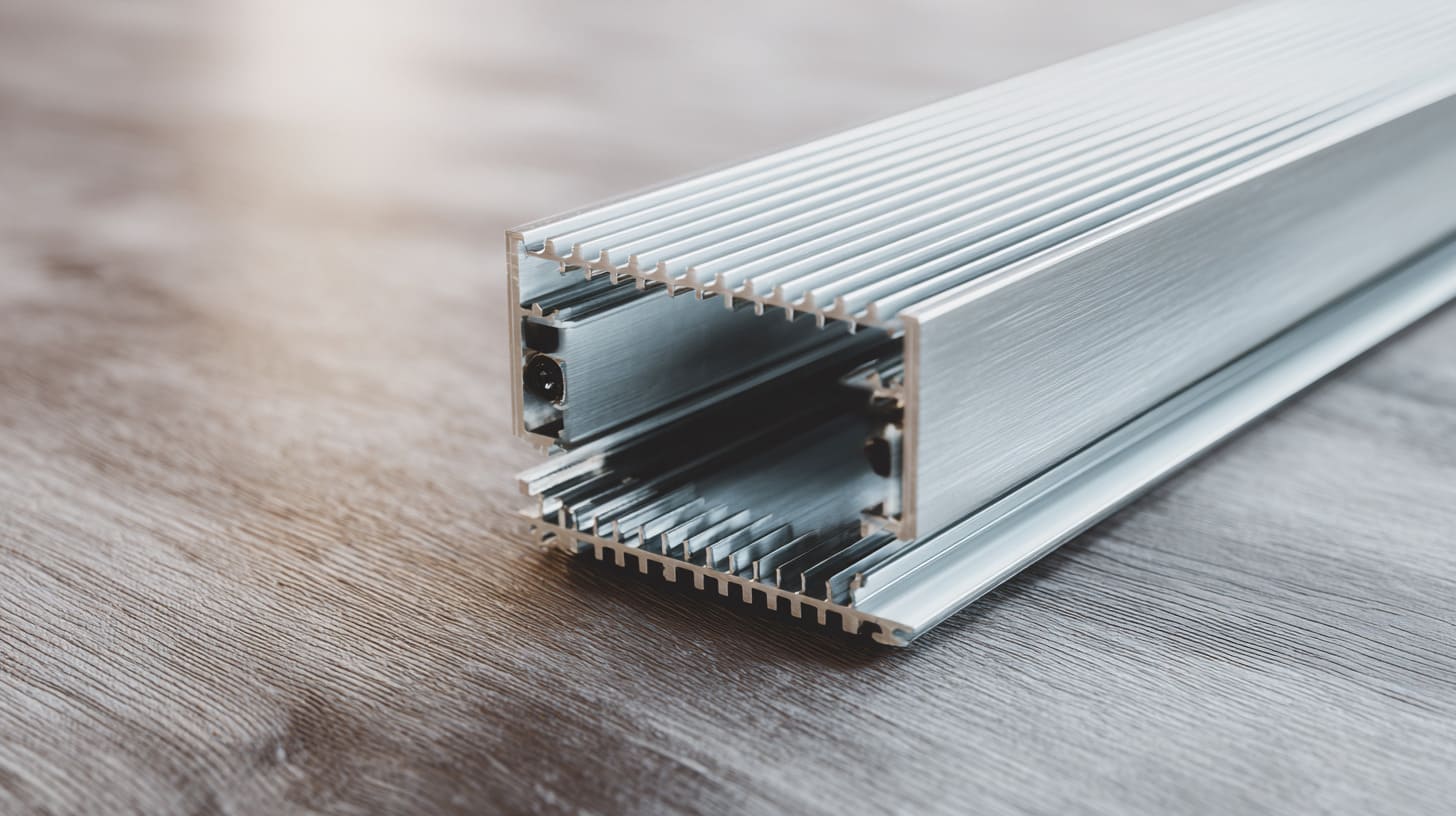
- Custom profiles: you can get shapes tailored to your product — walls, slots, fins, rails.
- Material efficiency: less waste compared to machining from thick blocks, especially for long runs.
- Consistent quality: extrusion gives long lengths with consistent cross‑section.
- Good for assemblies: extruded shapes often integrate slots, channels, mounting features. For a custom enclosure buyer that is a big plus.
- Finishing flexibility: anodise, powder‑coat, engraved branding — all lined up with what MaidaTech offers.
From a buyer’s view: these are the reasons you might choose extrusion over, say, sheet‑metal bending, casting or machining.
4.2 Limitations and challenges: tooling cost, minimum wall thickness, design constraints, extruding very complex profiles, lead times
Yet — and this is the critical thinking part — extrusion is not perfect. It has limitations:
- Tooling cost: To make a custom die is expensive, and the cost is amortised over quantity. For low volume, cost per part may be high.
- Minimum wall thickness / size constraints: Very thin walls or extremely fine features may not extrude well.
- Design constraints: Profiles with many hollow cavities, deep internal slots, or very high aspect ratios may cause flow issues or defects.
- Lead time: Designing and making the die takes time. If a buyer waits till late, they risk delaying project.
- Material and finish cost: High‑end finish or specialty alloys add cost.
I always tell clients: “Don’t assume extrusion solves all problems. Let’s look at your shape, run volume, finish and timeline together.” That helps manage expectations.
4.3 How to mitigate limitations (good design practices, supplier collaboration)
So how do we overcome or reduce those limitations? From my factory‑experience:
- Early collaboration in design: when the buyer (like Davide) involves us at the drawing stage, we can optimise profile for extrusion, reduce cost.
- Simplify the profile: fewer cavities, slightly thicker walls, fewer intricate details.
- Use standard profiles or modular design if possible, then machine only what’s necessary.
- Plan quantity and run size: higher quantity amortises tooling cost.
- Supplier capability: choose a factory that has strong tool‑making, finishing, quality control — so you don’t get surprises.
In our case at MaidaTech we emphasise these with our clients: “Let’s talk about timeline, quantity, finish and cost, so we get it right.” This helps avoid the common pain‑points (slow communication, hidden costs, delays) that many buyers face.
Now that we understand process, materials, pros & cons — let’s apply this to real‑world uses, especially for enclosures.
5. Applications of aluminium extrusions (with focus on your field: enclosures)
5.1 Typical sectors: construction, automotive, electronics, transportation

Extruded aluminium shows up all over industry:
- In construction: curtain walls, window frames, structural profiles.
- In automotive: roof rails, bumpers, structural elements, heat‑sinks.
- In electronics/transport: frames, heat‑dissipating fins, lightweight chassis.
Understanding this broad view helps you (as a buyer) see how extrusion fits into many applications. But let’s zero‑in.
5.2 Specific relevance for custom enclosures, heat‑sinks, rails, frames
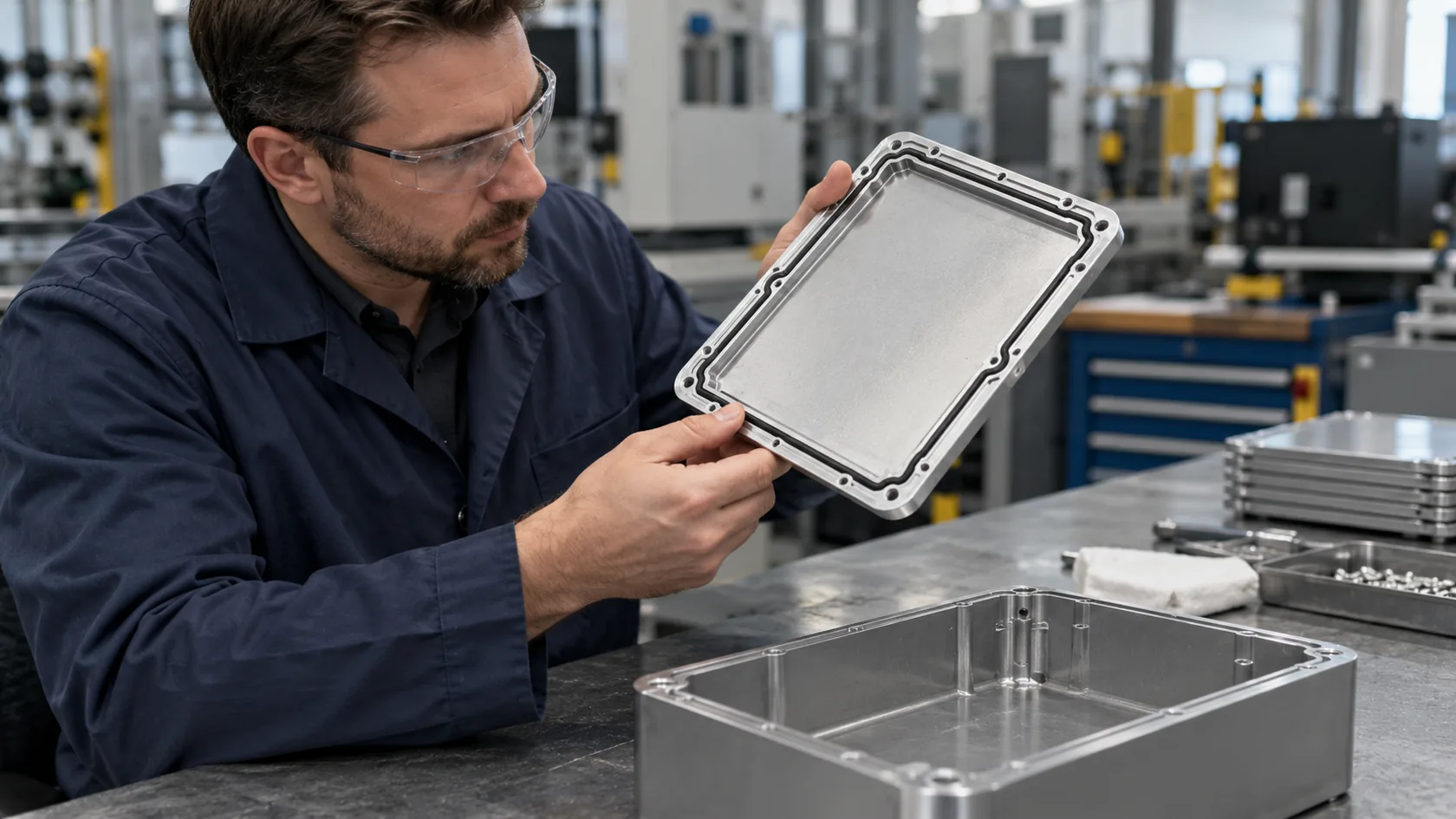
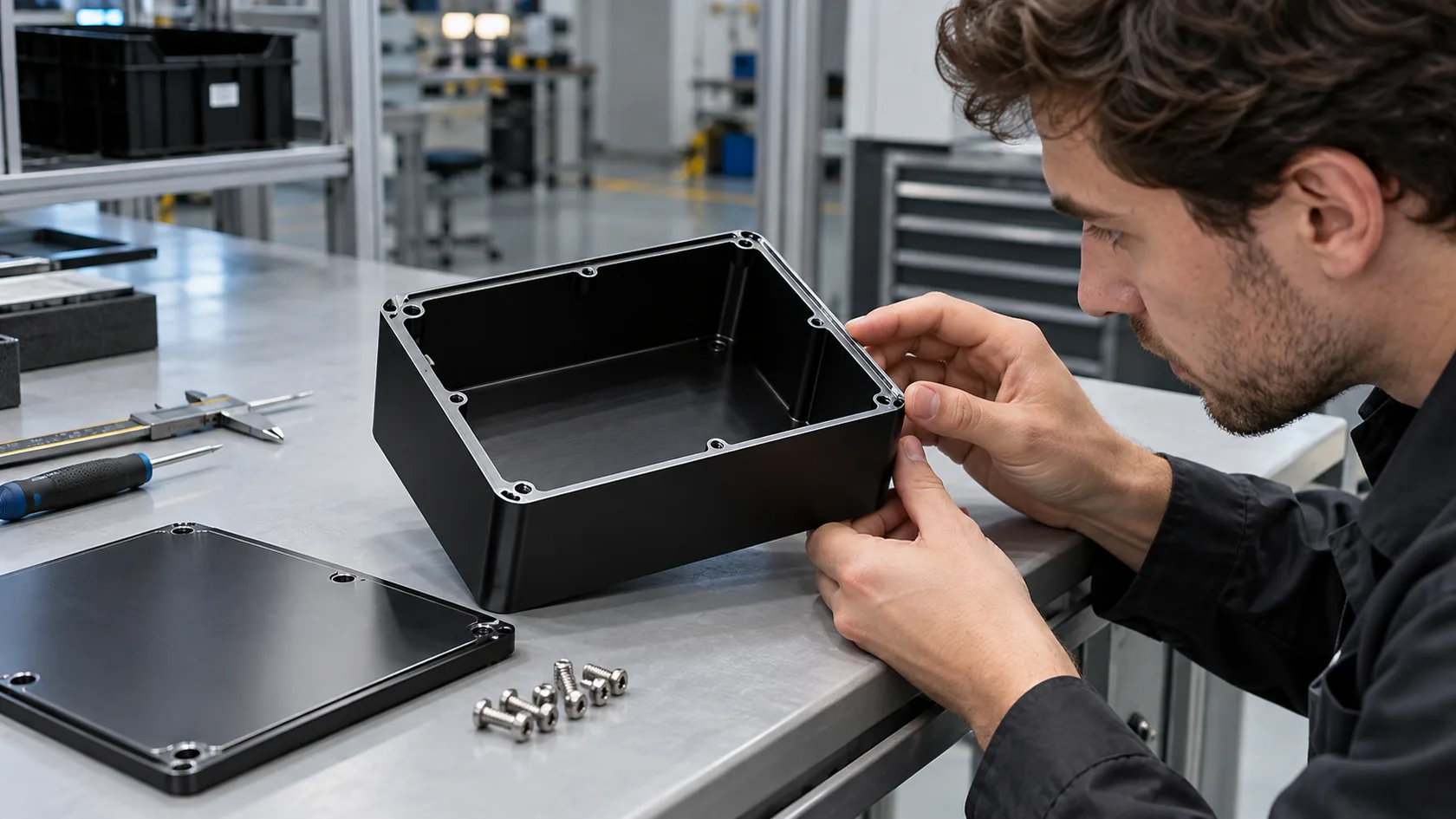
For custom enclosures (our specialty at MaidaTech) extrusion offers key advantages:
- We can extrude a profile that becomes the body of the enclosure: walls, mounting slots, cable channels all in one piece.
- Heat‑sink features integrated into the profile for electronics applications.
- Rails or frames for modular enclosures where you slide panels in or mount PCBs easily.
- Branding or engraving on the surface of the extrusion, or custom finish.
For example: a customer needs an aluminium enclosure for an embedded board product. Using an extruded profile allowed them to reduce part count (one piece vs multiple sheet‑metal bent parts) and achieve a clean finish with fewer welds.
But: as always, design early. Profile must be tuned to your application, volume, finishing needs.
5.3 Case example (fictional but relevant for your audience): how a custom aluminium extrusion helped an enclosure manufacturer reduce weight/cost
Let me share a quick story:
A client in Canada (let’s call him Davide) came to us. He had a product line of electronic modules with sheet‑metal enclosures. He said: “Vincent, I want to reduce weight and improve the appearance, but I fear cost will jump.”
We proposed an extruded aluminium body: we designed a custom profile with integrated fins, mounting rails, and a channel for branding. The tooling cost was higher upfront, but because his volume was large and he planned multiple SKUs, the cost per piece dropped. We achieved: 20% less weight, fewer parts (one body instead of body + rails + welds), cleaner finish, and faster assembly.
He was able to market a “premium aluminium housing” for his board — which his customers liked.
From his perspective: early design discussion, trade‑offs (tooling cost vs piece price) and supplier support made the difference.
From your perspective (if you’re a buyer sourcing custom enclosures) you might ask: “Could extrusion give me fewer parts, less assembly, a premium look — and what is the trade‑off?” This kind of thinking positions you ahead.
Now that we’ve seen applications, let’s shift to what a buyer should ask when dealing with a factory.
6. From a factory’s perspective: what buyers should ask and look for
6.1 Key supplier capabilities: extrusion press capacity, tool‑making, finishing, stock inventory
If I were you (as Jackson or as Davide), here’s what I’d ask a factory:
- What is your extrusion press capacity (tonnage, billet size, length)? Can you handle my profile size and length?
- Do you have in‑house tool‑making? Because that speeds die production and gives better control.
- What finishing options do you offer: anodising, powder‑coat, engraving/branding? Do you handle these in‑house or outsource?
- Do you maintain stock inventory of profiles or standard shapes, so you can reduce lead times?
At MaidaTech, we emphasise: we have advanced equipment, three production lines, and we can offer custom aluminium enclosures with branding. These are the exact things buyers worry about (communication, speed, stock) and we’ve targeted them.
6.2 Quality and control points: alloy certification, dimensional tolerance, surface finish, straightness
Quality is not optional — and from a buyer’s angle you should probe:
- Can you provide alloy certification and traceability?
- What dimensional tolerances do you hold? For extruded parts, warpage or twist is a common issue if not properly stretched.
- How do you ensure surface finish quality (anodising thickness, uniformity, no defects)?
- How do you ensure straightness/squareness after extrusion and stretching?
Remember: for your custom enclosure project, if the profile has a twist or the wall thickness varies too much, your PCB may not mount correctly, or the finish may show defects. Good suppliers will walk you through these metrics.
6.3 Customisation options relevant for your B2B customers: logo/branding engraving, anodising or powder‑coat finish, custom profile design
Customisation is one of your differentiators (for MaidaTech). As a buyer you should ask:
- Can the profile include logo or brand engraving or embossing?
- Can the finish match my brand colours (powder‑coat) or do I prefer a natural aluminium anodised look?
- Can the profile be tailored (dimensions, slots, mounting features) and can I get an initial sample or proto?
- Are there options for packaging or combining with our board assembly or other components?
When you engage with a supplier early and cover these customisation options, you reduce surprises later (costs, finish issues, compatibility).
6.4 Cost and lead‑time factors: tooling cost, minimum quantity, batch sizes, shipping/stock logistics
From a buyer’s viewpoint, cost and lead time often make or break a project. You should clarify:
- What is the tooling cost for the custom die? How is it amortised over unit price?
- What is the minimum order quantity? Some suppliers require large runs to make the tooling cost viable.
- How are batch sizes handled? Do you pay a premium for small runs?
- What are the lead times: for die making, sample, production run, finishing, delivery?
- Are stock profiles available that can reduce lead time? Does the supplier hold inventory?
- What are the shipping and logistics terms (from China to North America, Europe, Japan, South Korea) and lead time risks?
In my experience with MaidaTech, I’ve seen buyers get stuck because they underestimated the die‑cost or the lead time for finishing. So being transparent here upfront is key.
Finally: how does our business, MaidaTech, fit into all this — and how does that benefit you, the buyer?
7. How your business (MaidaTech) fits into this picture
7.1 Why custom aluminium extrusion manufacturing supports your product offering (custom aluminium enclosures)
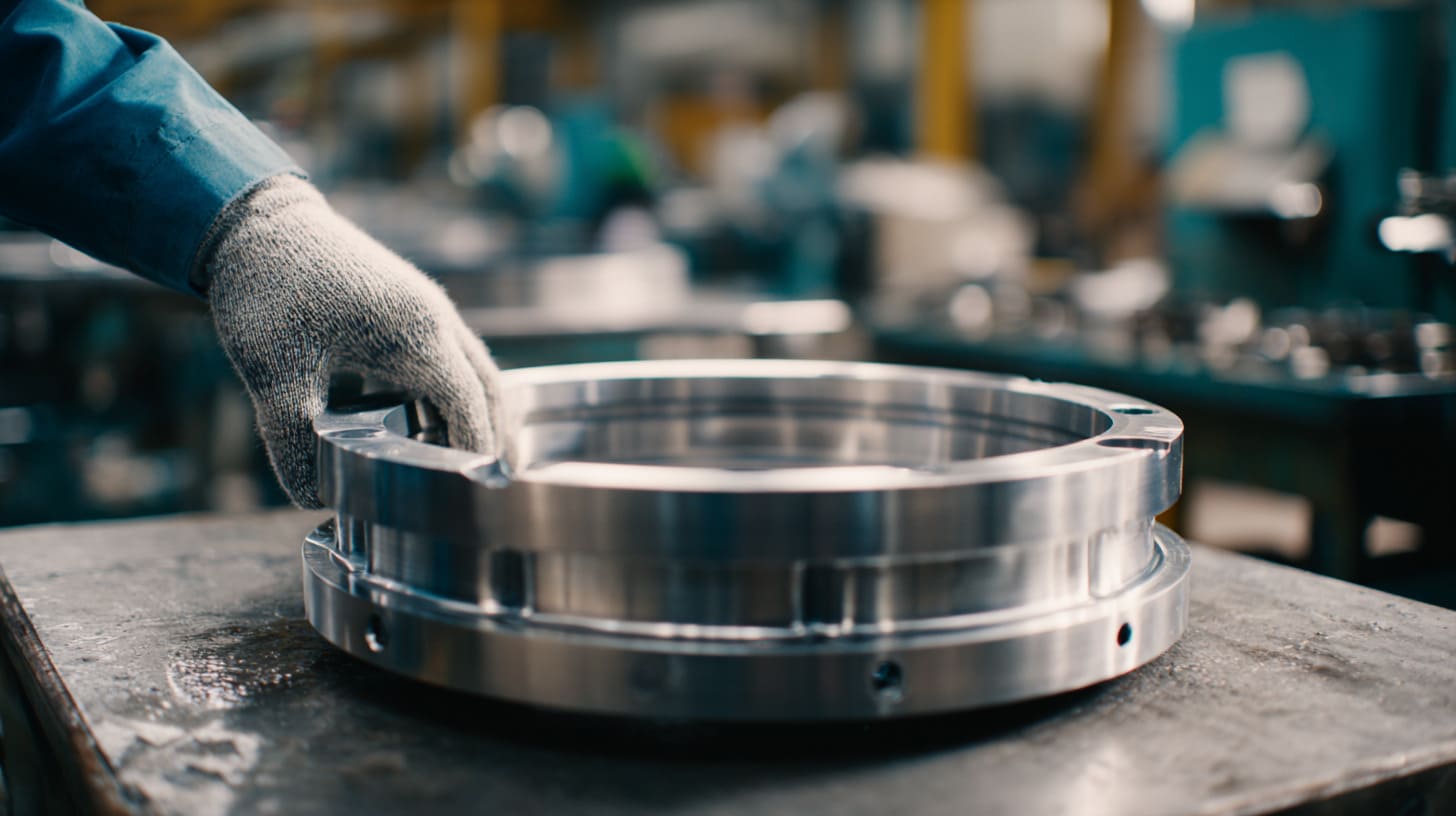
At MaidaTech we see extrusion as a powerful enabler for our custom enclosure business. For our B2B clients who need tailored aluminium enclosures (for electronics, industrial controls, project boxes) extrusion offers the shape flexibility, finish options, and consistency they demand.
Because we specialise in custom aluminium (and plastic) enclosures, we integrate extrusion‑based profiles into our offering to help our clients differentiate their products. From your viewpoint: working with a supplier who “gets” extrusion and custom enclosures means fewer surprises.
7.2 How your factory strengths (9 years, 3 production lines, OEM/ODM services, large stock) align with buyer pain‑points
In conversations with buyers like Davide (Canada) or John (Hungary), I hear consistent pain‑points: slow response, unclear details, pricing too high, delivery too slow. At MaidaTech, our strengths are:
- 9 years of factory experience — we know the ropes.
- Three production lines — meaning capacity to scale.
- OEM & ODM services — flexible to design demands.
- Large wholesale stock — means quicker turnarounds or backup stock for you.
So when you engage with us, you’re not just buying parts; you’re partnering with a factory that understands your needs: fast communication, custom options, competitive pricing (we offer factory price about 10% lower than many peers) and full custom branding + packaging support.
7.3 How you help the buyer (David from Canada, John from Hungary) by offering design input, fast turn, flexible stock & custom branding
Here’s how we help you, my friend in Canada or Europe:
- Design input: We provide suggestions early in the design stage — profile shape tweaks, wall thickness advice, finishing trade‑offs. That helps you avoid tooling surprises.
- Fast turn: Because we have stock, custom lines, and experience, we aim to shorten lead time and keep your project on schedule (which I know is critical when you’re sourcing overseas).
- Flexible stock: Large wholesale stock means you don’t always have to wait for a full new tooling run; sometimes we can adapt existing profiles or stock to your need.
- Custom branding: We engrave or print logos/brands; we do OEM/ODM; we support packaging and even drop‑ship or logistics to your market.
If you’re a design engineer or procurement specialist reading this: these are exactly the things you should check when selecting a supplier. And we’re built to support them.
Conclusion
- To recap: aluminium extrusion manufacturing is a powerful way to create custom profiles — ideal for tailored enclosures and many industrial applications.
- Buyers should remember: design early, pick the right alloy/profile, recognise cost/lead‑time trade‑offs, and choose a supplier who understands custom enclosures, finishing, and logistics.
- If you’re looking for custom aluminium enclosures — with design support, competitive factory price, custom branding and global shipping — let’s talk. I’m Vincent Li from MaidaTech. Feel free to reach out at info@maidatech.com — we’d love to partner with you.