Skip to content
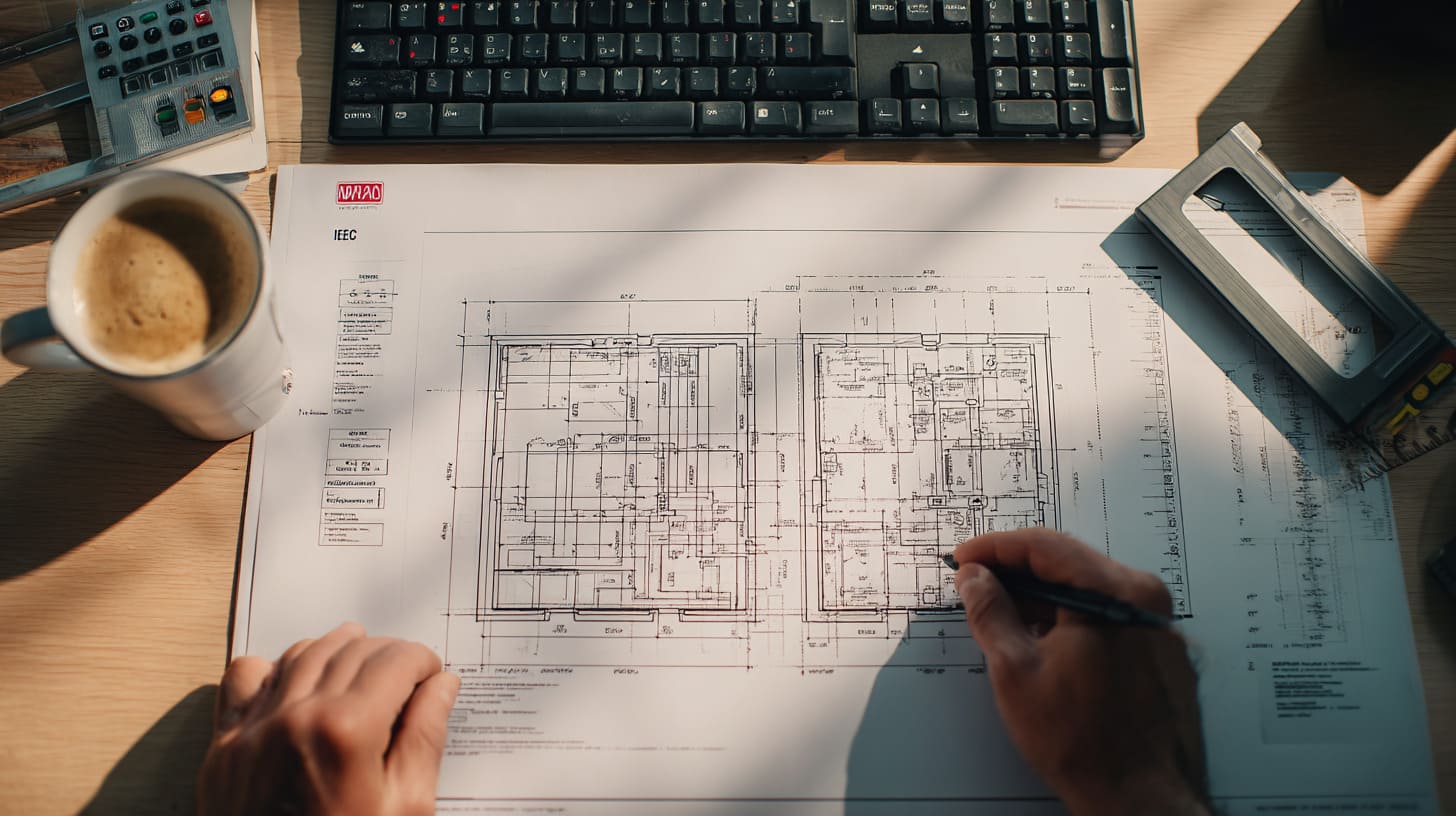
It usually starts in the middle of a project, not at the beginning.
The enclosure design is almost done. The PCB layout is locked. The timeline feels tight but manageable. Then a short question lands in my inbox:
“Should this be IEC or NEMA?”
That question looks simple on the surface. But I’ve learned it rarely is.
Behind it, there’s often pressure—an outdoor install, a new export market, or a buyer who wants zero risk once the product ships. I’ve seen engineers pause at this moment. I’ve seen buyers hesitate too. The rating on the enclosure suddenly feels heavier than the aluminum itself.
Comparing IEC and NEMA matters because these standards shape how an enclosure survives the real world. Not just water and dust, but climate, expectations, and even trust between buyer and supplier. If you’re a product engineer, a re‑brand buyer, or an OEM project owner, this choice can affect cost, lead time, and long‑term reliability.
So instead of treating IEC vs NEMA as a dry standards topic, I want to look at it the way we actually face it—mid‑project, under pressure, with real consequences. Let’s slow it down and walk through it together.
What does IEC stand for and what does it cover?

What is the full name of IEC and its origin?
IEC stands for International Electrotechnical Commission. It was founded way back in 1906, in London. Back then, people were just beginning to standardize electrical systems across countries. Fast forward to today, and IEC standards are used worldwide—from automation panels in Berlin to data centers in Singapore.
What kinds of standards does IEC define?
IEC doesn’t just focus on one thing. It covers:
- Electrical equipment safety
- Ingress protection (IP codes)
- Measurement systems
- Electromagnetic compatibility
But if you're like me—mostly dealing with enclosures—you're probably thinking about IEC 60529, the standard that defines IP ratings.
Here’s a breakdown:
| IEC Code | Meaning |
|---|---|
| IP65 | Dust tight, water jets |
| IP66 | Dust tight, strong water jets |
| IP67 | Dust tight, immersion in water |
Which industries primarily follow IEC standards?
IEC is the gold standard across:
- European manufacturing
- Global consumer electronics
- Medical devices
- Industrial control systems
Whenever I get orders from clients in Germany or France, they almost always ask for IP-rated enclosures, not NEMA.
So, what about NEMA then? Let's switch gears.
What does NEMA stand for and what does it cover?

What is the full name of NEMA and its background?
NEMA stands for National Electrical Manufacturers Association. Born in the U.S. in the 1920s, NEMA came into play when engineers and builders needed consistent performance benchmarks for electrical gear.
NEMA doesn't just do protection. It also sets standards for:
- Enclosure durability
- Gasket sealing
- Construction integrity
- Corrosion resistance
What does NEMA standardize in terms of electrical enclosures?
Here’s the neat thing about NEMA: it’s more than just water and dust.
| NEMA Type | Description |
|---|---|
| NEMA 1 | Indoor use, basic protection |
| NEMA 3R | Outdoor, rain-resistant |
| NEMA 4 | Watertight, outdoor, hose-down ready |
| NEMA 4X | Same as 4 + corrosion resistance |
Notice how it includes corrosion and even gasket integrity. That's where NEMA outperforms IEC in rugged settings like offshore rigs or snowy rooftops.
Which industries and countries use NEMA ratings?
Primarily:
- North America (U.S. and Canada)
- Oil and gas
- Construction
- Agriculture
- Telecommunications
If your clients sell in these regions, chances are they'll ask for a NEMA 4X or NEMA 12 box.
So how do these two standards stack up side-by-side?
Key differences between IEC and NEMA

Let me show you the clearest way I explain this to my clients:
Comparison table: IEC vs NEMA
| Feature | IEC (IP Rating) | NEMA Rating |
|---|---|---|
| Focus | Dust & Water | Dust, Water, Corrosion |
| Rating Examples | IP65, IP66, IP67 | NEMA 4, 4X, 12 |
| Corrosion Rated? | No | Yes (e.g. NEMA 4X) |
| Region | Global, esp. Europe | Mainly U.S., Canada |
Design intent: global harmonization vs U.S. performance
IEC was built to unify. NEMA was built to survive.
That’s the big philosophical difference.
IEC is more quantified. You test a sample, measure with tools, define exact tolerances.
NEMA is more performance-based. It’s about how a box handles real-world punishment.
Protection scope: ingress, corrosion, impact, and more
IEC doesn’t cover:
- Corrosion
- Gasket aging
- Ice formation
- External mechanical damage
NEMA does. That’s why it’s preferred for outdoor power systems in harsh climates.
Labeling and marking practices
NEMA allows the manufacturer to label the enclosure if it passes testing. IEC usually requires third-party validation. So in many cases, self-declared NEMA can be faster, but sometimes less consistent.
But what if you need to match these two systems?
How do IEC and NEMA ratings compare for enclosures?

What is the equivalent of NEMA 4 in IEC?
Roughly, NEMA 4 = IP66.
But here’s the twist: while IP66 protects from powerful water jets, NEMA 4 also covers things like:
- Windblown dust
- Hose-directed water
- Ice formation
So equivalence is not exact. NEMA tends to offer broader protection.
Are NEMA enclosures more rugged than IEC?
In most cases—yes. If you're putting a box on a pole in -30°C Canadian winter, NEMA 4X makes more sense than just IP66.
But if you’re building a sleek IoT device in Germany? IP65 might be perfect—and more compact.
Why don’t IEC ratings account for corrosion?
IEC assumes the material is chosen wisely. NEMA assumes the world will try to destroy your box.
That’s why marine or chemical environments almost always require NEMA 4X or 6P.
Can a product meet both IEC and NEMA?
Absolutely. In fact, we’ve done this for some clients.
Just keep in mind:
- It costs more
- You may need dual testing
- Certification takes longer
Now let’s zoom out: who uses what, and where?
Regional preferences and compliance

Where is NEMA preferred (e.g. USA, Canada)?
NEMA is everywhere in:
- North America
- Mining and oil fields
- Outdoor telecommunications
If you're selling control panels in the U.S., NEMA 4 or 4X is almost non-negotiable.
Where is IEC required (e.g. Europe, Asia)?
IEC dominates:
- Europe (mandatory in EU)
- Southeast Asia
- Middle East
Most automation equipment in these regions comes with IP65/IP66 labels.
How to choose based on your market or export region?
Simple rule of thumb:
| Market | Preferred Standard |
|---|---|
| USA/Canada | NEMA |
| Europe/Asia | IEC |
| Global Export | Dual-label (if budget allows) |
The key is to match your customer’s expectation. That’s what Jackson from Belgium always reminds me—local trust comes from familiar ratings.
Now, how do these standards affect your bottom line?
Impact on product design and cost

Does NEMA require thicker materials or more robust builds?
Often, yes. We’ve used:
- Thicker aluminum panels
- Reinforced seals
- UV-stabilized coatings
For NEMA 4X, you often need stainless steel screws, anti-corrosive paint, and extra gasketing.
Are IEC-rated enclosures more compact or minimal?
Usually. Since IEC doesn’t cover corrosion or ice, the designs can be sleeker. That’s ideal for consumer products or space-constrained control boxes.
How do the differences affect production cost?
Here's what I typically see:
| Standard | Material Cost | Testing Cost | Time to Market |
|---|---|---|---|
| IEC | Low-Medium | Medium | Fast |
| NEMA | Medium-High | High | Slower |
So your project goal really drives the choice.
Some myths still float around though…
Common misconceptions about IEC and NEMA

"IEC and NEMA are interchangeable" — True or False?
False.
IP66 ≠ NEMA 4X.
They’re close, but the scope is different.
"IEC is less durable than NEMA" — What’s the truth?
It depends. IEC just doesn’t test for corrosion or ice. That doesn’t mean the enclosure is weak—it just means the burden of proof is on the designer.
"You need dual certification" — When is that necessary?
Only if:
- You sell in both EU and North America
- Your clients require both labels for documentation
Otherwise, go with the one your customer trusts.
So… which one is right for you?
Which standard should you choose for your project?

For custom OEM designs: what matters more, compliance or performance?
If you’re like Davide—designing a product for resale—you need to balance:
- Compliance (what certs your clients expect)
- Performance (what the box actually handles)
In many OEM projects, we recommend NEMA if the product goes outdoors, IEC if the device stays indoors or in mild climates.
For export: how to align with buyer expectations (e.g., Davide or John)?
Know your client.
- Davide from Finland? He wants a clean label, fast delivery, and no surprises.
- John from Hungary? He’s all about price and design freedom.
We tailor the enclosure and the standard to fit their world.
For industrial applications: which standard gives you the most protection?
NEMA.
It’s like the all-weather coat for enclosures.
But again, if weight, size, or cost is key—IEC might win.
Still with me? Good. Let me bring this home with some examples.
Real-world examples and use cases

Enclosure for outdoor control panel in Canada — NEMA 4 or IEC IP66?
NEMA 4X, no question.
Snow, ice, road salt—it’s brutal out there.
European automation system — what IEC code would apply?
Most likely IP65 or IP66.
That covers dust-tight, and water-resistant for factory use.
Custom aluminum enclosure for OEM buyer — how to decide?
We usually ask:
- Where will the box be installed?
- What kind of certifications do their clients need?
- Do they sell locally or export globally?
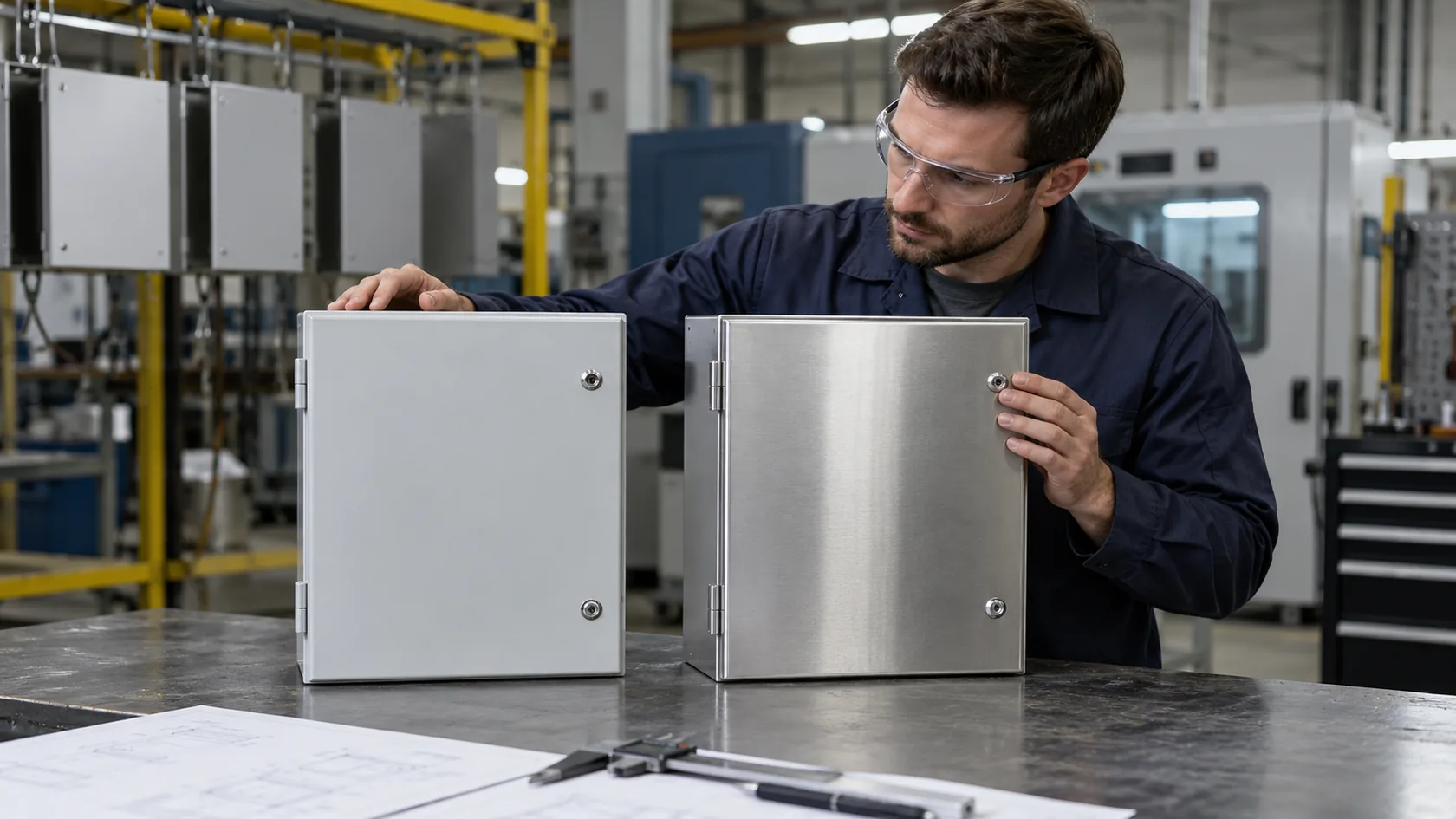
Then we offer the right mix—like aluminum with NEMA 4X specs, or IP66-rated ABS.
Conclusion

Choosing between IEC and NEMA isn’t just a technical decision—it’s a strategic one. It shapes how your product performs, how it’s sold, and how your brand is trusted.
Whether you're Jackson from Germany, rebranding enclosures for local clients, or Davide sourcing OEM cases for resale in Canada—this choice matters.
At MaidaTech, we get both sides. We’ve built IP-rated sleek cases for European automation. And we’ve reinforced NEMA 4X aluminum enclosures for North American utility boxes.
Need help figuring out which one fits your next project? I’m just one message away.
Let’s make the right box—together.